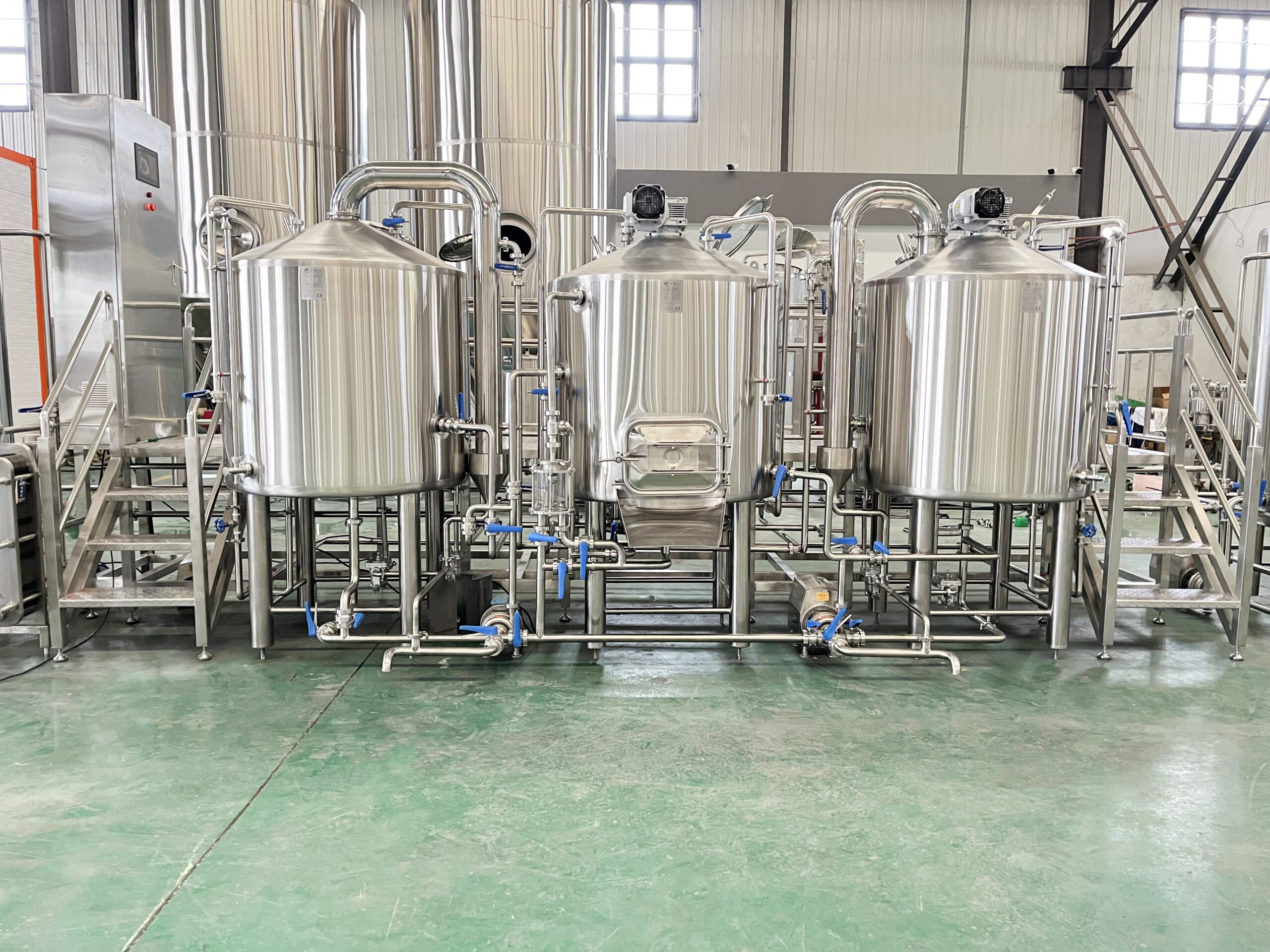











Dirty tanks, hidden pipe residues, and unstable hygiene routines can ruin a batch before anyone tastes it. For breweries, wineries, kombucha plants, distilleries, and beverage factories, the risk is real: contamination, downtime, product loss, and unhappy customers. A well-designed cip system solves this problem before it grows.
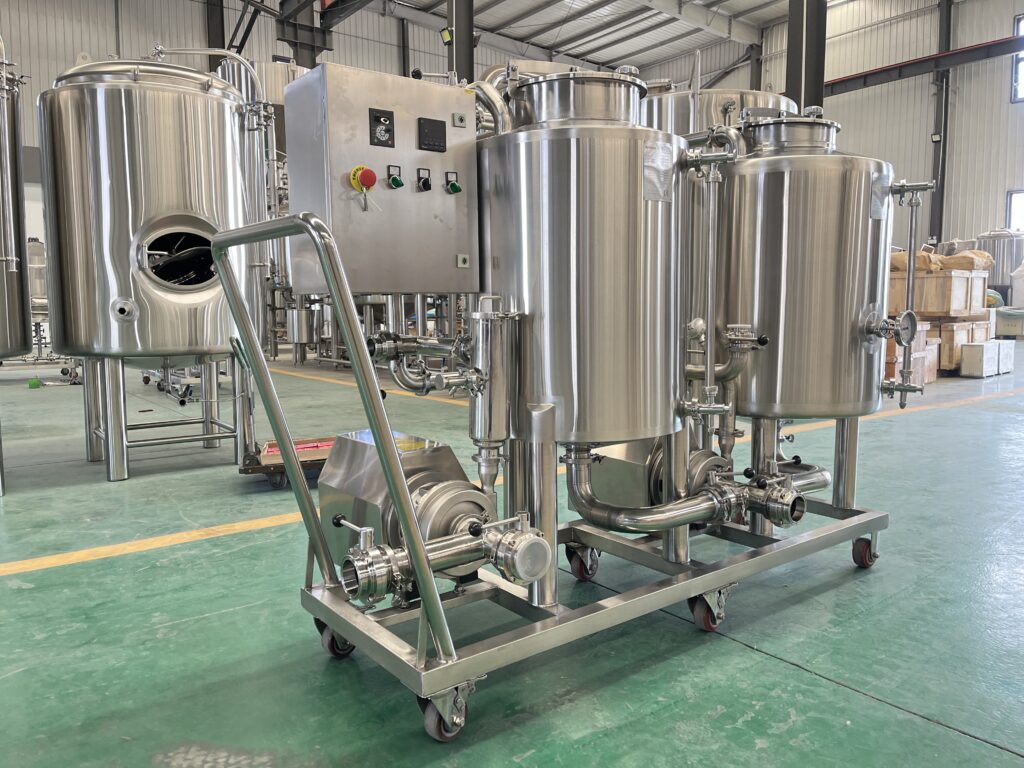
A cip system is a clean-in-place cleaning system that washes the inside of tanks, pipes, pumps, valves, heat exchangers, and other process equipment without taking everything apart. It uses controlled rinse water, cleaning solution, flow, temperature, and time to clean and sanitize sanitary process lines safely and consistently.
エグゼクティブ・サマリー
- CIP stands for clean-in-place, a method of cleaning closed systems without full disassembly.
- A reliable cip system helps breweries and beverage factories reduce manual cleaning, labor time, chemical waste, and batch contamination risk.
- The typical cip cycle includes pre-rinse, caustic wash, intermediate rinse, acid wash if needed, final rinse, and sanitizing.
- Good system design depends on tank size, pipe route, pump capacity, spray device, flow rate, temperature, and automation level.
- A cip skid can be portable, semi-automatic, or fully automated, depending on production scale and hygiene risk.
- Before buying, B2B buyers should check cleaning validation needs, utility supply, expansion plans, local standards, and after-sales support.
記事概要
- What is a CIP system and why does clean-in-place matter?
- How does the CIP process work step by step?
- What equipment is used in CIP?
- What are the main types of CIP systems?
- How should you design CIP for tanks, pipes, and process equipment?
- What CIP chemicals are used in brewery and beverage plants?
- What are the benefits of CIP systems for B2B producers?
- How do CIP skid systems compare with manual cleaning?
- Clean-in-place buying guide: how to choose the right CIP?
- Where are CIP applications used: brewery, winery, kombucha, distillery, food, and pharmaceutical?
- What should buyers know about compliance, validation, and documentation?
- FAQs and final summary.
What Is a CIP System and Why Does Clean-in-Place Matter?
A cip system is a controlled clean-in-place system used to clean the internal surfaces of sanitary equipment without opening every tank, removing every fitting, or manually scrubbing every pipe. In simple words, it lets you clean equipment from the inside by circulating water and cleaning solution through a closed loop.
In brewery cip, the system usually connects to brewhouses, fermenters, bright beer tanks, yeast tanks, filters, heat exchangers, and process piping. In food and beverage production, the same idea applies to juice tanks, kombucha fermenters, syrup tanks, dairy vessels, and beverage filling lines. In pharmaceutical manufacturing, the hygiene expectation is even stricter because residues and cross-contamination can affect safety and compliance.
From our experience as a professional brewery, distillery, winery, kombucha, and beverage equipment manufacturer, the most common mistake is treating CIP as “just a washing pump.” It is not. A well-designed cip system is part of your production quality strategy. It protects product flavor, improves food safety, and helps operators run a repeatable cleaning process every day.
How Does the CIP Process Work Step by Step?
A standard cip process follows a logical order. First, the system performs a rinse to remove loose soil, yeast, sugar, proteins, hop residues, fruit pulp, or product left inside the pipe and tank. This first rinse matters because it reduces the chemical load before the main wash begins.
Next, the cleaning solution circulates through the process system. In many brewery and beverage plants, an alkaline solution removes organic residues such as protein, fat, sugar, and biofilm. Then another rinse removes chemical residues. If mineral scale or beerstone is present, an acid cleaning solution may follow. Finally, the system completes a final rinse or sanitizing step before the line returns to production.
A typical cip routine may look like this:
| CIP Stage | 主な目的 | Buyer Notes |
|---|---|---|
| Pre-rinse | Remove loose residue | Saves chemicals and improves cleaning efficiency |
| Alkaline wash | Remove organic soil | Common in brewery and beverage cleaning |
| Intermediate rinse | Remove chemical residue | Check water clarity, pH, or conductivity |
| Acid wash | Remove mineral scale | Useful for beerstone, water scale, and wine minerals |
| Final rinse | Remove remaining chemical | Must match site hygiene rules |
| Sanitize | Reduce microbial risk | Often done before production starts |
A strong cip cycle is not only about chemicals. It depends on time, temperature, concentration, and mechanical force. If one factor is weak, the whole cleaning cycle may fail.
What Equipment Is Used in CIP?
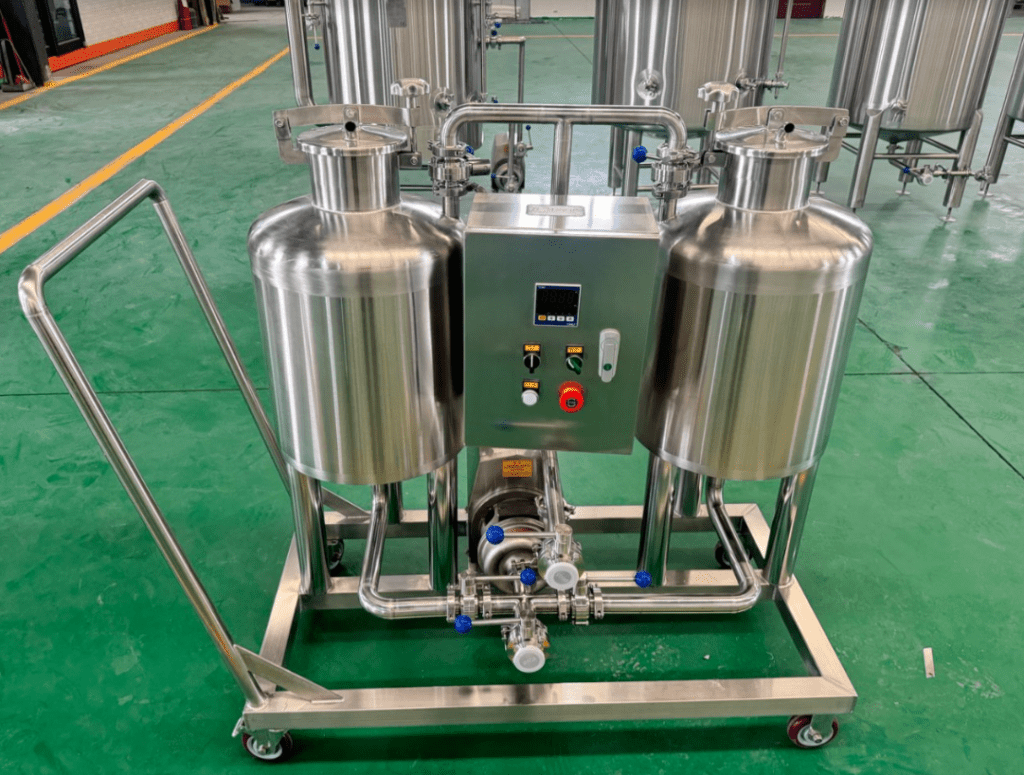
The main cip equipment usually includes a cip tank, pump, valves, pipe connections, heating device, return line, spray ball or rotary spray head, temperature sensor, conductivity meter, and control system. A simple portable cip skid may use one tank and one pump. A larger automated cip system may include several tanks for water recovery, caustic solution, acid solution, and final rinse water.
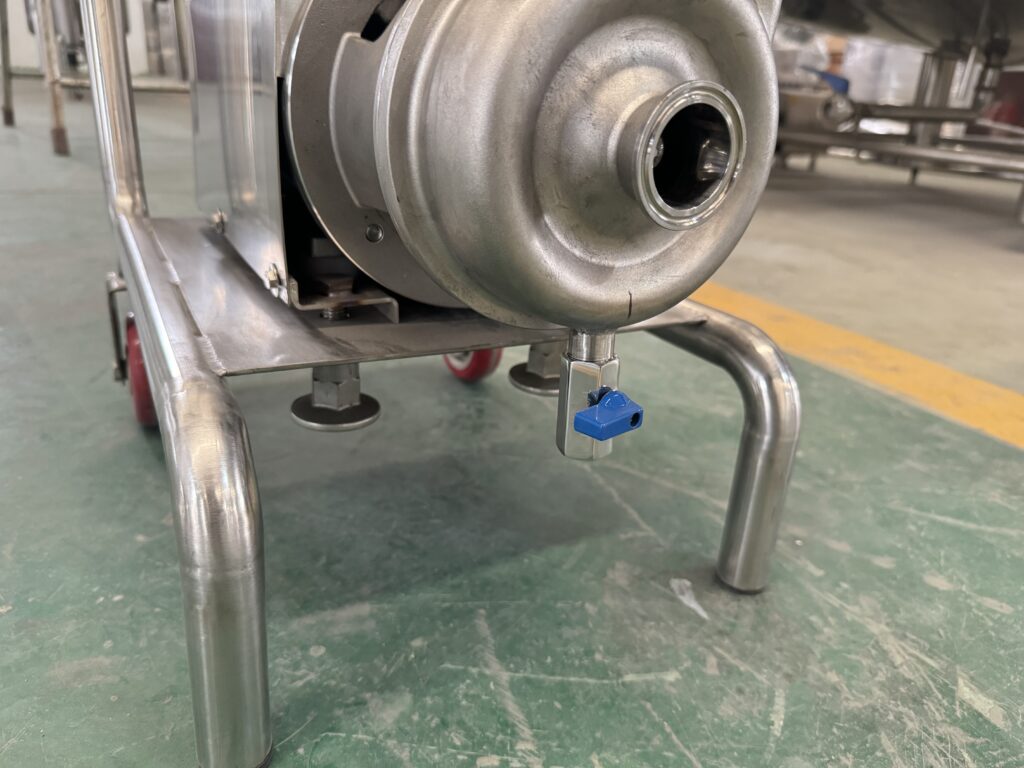
The pump is especially important. It must create enough flow and pressure to push the cleaning solution through the pipe and deliver enough impact at the spray device. If the pump is too small, the cleaning method may look correct on paper but fail in real production. If it is too large, it can waste energy, create foaming, or stress fittings.
Pipe route also matters. Long pipe runs, dead legs, low points, and poorly drained sections can trap residues. A good manufacturer should design cip around real equipment layout, not only around tank volume. That is why we often provide CAD or 3D layout support before recommending a cip system for a brewery, kombucha plant, winery, or beverage factory.
What Are the Main Types of CIP Systems?
There are several types of cip systems, and the right choice depends on production scale, product risk, budget, and automation needs.
| Type of CIP | Best For | Advantages | Limitations |
|---|---|---|---|
| Portable CIP | Startup breweries, small tanks, pilot plants | Flexible, lower cost, easy to move | More operator handling |
| Single-tank CIP | Small to medium production | Simple, compact, cost-effective | Less chemical recovery |
| Multi-tank CIP | Commercial breweries and beverage plants | Better reuse of water and chemicals | Higher investment |
| Centralized CIP | Large process plants | Can serve many lines | Needs careful system design |
| Automated CIP | High-volume or strict hygiene plants | Repeatable, traceable, lower labor | Requires stronger controls |
The types of cip also depend on whether the plant wants fixed piping or flexible hose connections. Portable cip can be useful for small breweries or used brewing system upgrades. Centralized cip skid systems work better when production grows and many tanks need scheduled cleaning.
In my professional view, many cip projects fail because the buyer chooses the cheapest skid instead of the right cip for the process. A small brewpub may not need full automation. A commercial brewery with many fermenters may lose money every week if operators depend too much on manual cleaning.
How Should You Design CIP for Tanks, Pipes, and Process Equipment?
Good system design starts with the equipment that needs cleaning. A fermenter, brewhouse, flash pasteurizer, heat exchanger, and filling pipe do not all clean the same way. Each process equipment group needs the right flow, pressure, temperature, and cleaning time.
When we design cip for global projects, we normally review:
- Tank volume and internal shape
- Spray ball or rotary spray head coverage
- Pipe diameter and pipe length
- Pump flow and return flow
- Heating method
- Drainage slope
- Valve arrangement
- Automation level
- Chemical recovery plan
- Operator safety
The goal is simple: the cip system must contact all product-contact surfaces. It must also drain fully after cleaning. Poor drainage creates water pockets, chemical carryover, and microbial risk. Hygienic design principles from groups such as EHEDG and 3-A Sanitary Standards also stress that equipment should be easy to clean and should avoid hidden areas where soil can stay.
For a startup project, we often recommend designing the cip skid design together with the brewhouse and cellar layout. Installing a cip system after production starts can work, but it is usually harder, more expensive, and less elegant.
What CIP Chemicals Are Used in Brewery and Beverage Plants?
CIP chemicals vary by product, soil type, water hardness, and local rules. In brewery, kombucha, cider, juice, and winery applications, common cleaning agents include alkaline cleaners, acid cleaners, sanitizers, and sometimes special descaling or oxygen-based products.
The alkaline cleaning solution usually handles organic residues. It helps remove yeast, proteins, sugar films, and product soil. Acid cleaning solution targets mineral scale, beerstone, water deposits, and some color residues. Sanitizers are used after cleaning when the plant needs to clean and sanitize the surface before production.
However, stronger chemical is not always better. Chemical choice must match stainless steel grade, gasket material, temperature, contact time, and operator safety. For example, a cleaning solution that works in one process may not be suitable for another process piping material or seal type. This is why professional suppliers should not only sell tanks and pumps; they should also guide the buyer on safe cleaning programs.
What Are the Benefits of CIP Systems for B2B Producers?
The benefits of cip systems are practical and measurable. A cip system reduces labor, supports repeatable cleaning, protects product quality, and shortens changeover time. For breweries, it helps protect beer flavor. For kombucha producers, it helps control yeast and bacteria balance. For wineries and cider plants, it helps reduce residue and mineral buildup.
CIP systems help operators avoid risky shortcuts. When a production team cleans manually, the result depends heavily on operator skill, time pressure, and visibility. In closed systems, you cannot always see the inside of a pipe or tank outlet. CIP systems reduce this uncertainty by using controlled flow, time, temperature, and concentration.
In B2B project planning, a robust cip system can also improve investor confidence. If you are building a new brewery, distillery, winery, or beverage factory, your hygiene plan is part of your operating risk. Reliable cip solutions can reduce batch loss, protect brand reputation, and make daily production more stable.
How Do CIP Skid Systems Compare With Manual Cleaning?
Manual cleaning still has a place. Some removable parts, gaskets, small fittings, and external surfaces need hand cleaning or clean-out-of-place work. But manual cleaning alone is not ideal for tanks, long pipe lines, heat exchangers, or closed systems.
A cip skid automates the flow of cleaning solution through internal surfaces. It makes the cleaning process easier to repeat. It can also improve worker safety because operators spend less time opening tanks or handling hot chemical solution directly.
| Factor | Manual Cleaning | CIP Skid Systems |
|---|---|---|
| Labor demand | High | Lower |
| Repeatability | Operator-dependent | More consistent |
| Closed pipe cleaning | Difficult | Strong advantage |
| Chemical control | Less precise | Easier to monitor |
| 清掃記録 | Manual logs | Can be automated |
| Best use | Small parts and visible surfaces | Tanks, pipe, valves, heat exchangers |
A good plant uses both methods wisely. CIP handles internal sanitary process routes. Manual cleaning handles parts that cannot be cleaned properly in place. Many cip operations still require inspection, record keeping, and operator judgment.
Clean-in-Place Buying Guide: How to Choose the Right CIP?
This clean-in-place buying guide is written for professional buyers who need a practical decision path. The best cip system is not always the largest or most automated. It is the system that fits your production size, cleaning risk, future expansion, and operator skill level.
Use this checklist before purchase:
| Buying Question | なぜ重要なのか |
|---|---|
| What products will the line process? | Beer, kombucha, wine, spirits, juice, and syrup leave different residues |
| How many tanks need cleaning each day? | Determines skid size and automation level |
| What is the pipe diameter and longest pipe run? | Affects cip flow and pump selection |
| Will chemicals be reused? | Impacts tank quantity and operating cost |
| Is cleaning validation required? | Important for pharmaceutical and regulated food processing |
| What utilities are available? | Steam, electricity, hot water, compressed air, and drainage all matter |
| Will the plant expand later? | A scalable cip system saves future replacement cost |
| Who provides installation guidance? | Poor installation can weaken effective cleaning |
For small startup breweries, a portable cip may be enough. For established breweries, beverage co-packers, and high-volume kombucha producers, automated cip systems or centralized cip skid systems may be more practical.
As a factory-direct equipment manufacturer and used brewing system supplier, we often evaluate both new and used equipment layouts. Used tanks can perform well, but the buyer must confirm spray coverage, weld condition, valve condition, pipe drainage, and CIP compatibility before installation.
Where Are CIP Applications Used?
CIP applications cover many industries. In the food and beverage industry, CIP is used for breweries, kombucha plants, wineries, cider lines, juice plants, dairy processing, sauce production, and beverage co-packing. In pharmaceutical systems, CIP supports cleaning validation and contamination control.
For brewery equipment, CIP systems are critical because beer residues can hide in tanks, heat exchangers, valves, and pipe turns. Breweries rely heavily on cip to protect flavor stability and reduce contamination risk. Distilleries use cip for mash tanks, fermentation tanks, transfer lines, and sometimes spirit-related process equipment. Wineries and cider producers use CIP to manage organic residues, mineral deposits, and seasonal production loads.
In pharmaceutical manufacturing, cip systems must support stricter documentation and validated cleaning procedures. In beverage projects, cip systems to maintain hygiene may not need the same level of validation, but they still need reliable process control.
What Should Buyers Know About Compliance, Validation, and Documentation?
CIP is not only equipment. It is also a program. Your team needs written steps, chemical concentration targets, rinse standards, inspection points, and records. In many regions, food safety rules follow a preventive approach. The FDA Food Safety Modernization Act is a good example because it focuses on preventing problems instead of only reacting after they happen.
For food processing and beverage plants, documentation may include cip programs, cleaning logs, chemical records, temperature records, conductivity checks, and operator sign-off. For pharmaceutical plants, validation is stricter. ISPE resources highlight lifecycle thinking for cleaning validation, including development, maintenance, and control of cleaning procedures.
The recommendation is clear: do not copy another factory’s CIP recipe without checking your own conditions. Water hardness, product soil, tank design, pipe length, pump flow, and chemical supplier recommendations all affect results. Effective cip requires testing, adjustment, and periodic review.
Practical Case Example: Startup Brewery Expanding from Manual Cleaning to CIP
A startup craft brewery may begin with a small brewhouse and a few fermenters. At first, operators can manage cleaning with hoses, spray devices, and manual checks. But once production grows, the same team may need to clean more tanks in less time. That is when manual cleaning becomes a bottleneck.
In this case, a portable cip skid can be a smart first upgrade. It can clean fermenters, bright tanks, and short transfer pipe runs without major rebuilding. The brewery can later move toward a larger multi-tank cip system when tank numbers increase.
The trade-off is simple. Portable CIP costs less and gives flexibility. A centralized automated cip costs more but improves efficiency and repeatability. Neither is “best” for every buyer. The right decision depends on batch frequency, tank count, hygiene risk, and growth plan.
Common Mistakes When Installing a CIP System
The first mistake is undersizing the pump. A weak pump may circulate cleaning solution but fail to create enough mechanical action. The second mistake is poor pipe routing. If the pipe does not drain well, cleaning residues and water can remain in the line.
The third mistake is ignoring return flow. CIP is a loop. If supply is strong but return is weak, the system may flood, foam, or lose temperature control. The fourth mistake is relying only on automation. Automated cleaning is useful, but operators still need training, inspection routines, and maintenance discipline.
A well-designed cip system should be simple to operate, easy to inspect, and matched to real production. It should not make daily work more confusing.
FAQs About CIP Systems
What does CIP stand for?
CIP stands for clean-in-place. It means cleaning internal surfaces of tanks, pipes, pumps, valves, and process equipment without taking the whole system apart.
Is CIP cleaning the same as sanitizing?
No. CIP cleaning removes soil, residues, organic matter, and mineral deposits. Sanitizing reduces microbial risk after cleaning. You usually need proper cleaning before sanitizing can work well.
Can I use CIP for all brewery equipment?
You can use cip for many tanks, pipe lines, heat exchangers, and closed systems. But some parts still need manual cleaning or disassembly. Gaskets, small fittings, and blocked areas may need separate inspection.
What is a typical CIP cycle for a brewery?
A typical cip cycle may include pre-rinse, caustic wash, rinse, acid wash when needed, final rinse, and sanitizing. The actual cycle depends on product residue, equipment design, chemical supplier guidance, and plant rules.
How do I know if I need portable CIP or automated CIP?
Choose portable cip if your plant is small, flexible, or budget-sensitive. Choose automated cip if you need repeatable cleaning, more records, higher throughput, or less operator handling.
Can a used brewing system work with a new CIP system?
Yes, but it must be checked carefully. Used tanks and pipe routes need inspection for spray coverage, weld quality, drainage, valve condition, dead legs, and material compatibility.
要点
- A cip system cleans tanks, pipe, pumps, valves, and process equipment without full disassembly.
- Clean-in-place improves hygiene, saves labor, and supports stable production.
- A good cleaning cycle depends on flow, temperature, time, chemical concentration, and proper rinse steps.
- The right cip depends on tank size, pipe route, production volume, automation needs, and hygiene risk.
- Portable cip is useful for startups; automated cip systems are better for larger and more regulated operations.
- CIP systems must be designed with sanitary process needs, operator safety, and future expansion in mind.
- Manual cleaning still matters for removable parts and inspection points.
- For breweries, wineries, kombucha producers, distilleries, and beverage factories, CIP is a production quality investment, not just an accessory.
If you are planning a new brewery, beverage plant, winery, distillery, kombucha line, or used brewing system upgrade, the best next step is to review your tank list, pipe layout, cleaning targets, and daily production schedule with an experienced equipment manufacturer. A practical CIP evaluation can help you avoid overspending, under-designing, or building a system that is hard to operate later.