
Turnkey Brewery Equipment with CE Certification
CE-certified turnkey brewery equipment, brewhouse systems, fermentation tanks, kombucha equipment, packaging lines, and global installation support for commercial breweries.
Distillery Equipment & Turnkey Solutions for Different Spirits
Distillery Equipment & Turnkey Solutions
Pot Still, Column Still & Hybrid Still
Why Breweries Choose Micet for Turnkey Equipment
Micet designs and supplies turnkey brewery equipment for commercial breweries that need CE-certified systems, stainless steel fabrication, layout planning, export packing, installation guidance, and long-term technical support.
Factory-Certified Refurbishment
Every tank and system is professionally inspected, repaired, polished, and pressure-tested in our factory to ensure reliable performance and sanitary brewing standards
Professional Manufacturer Quality
As a brewery equipment manufacturer, Micet applies CE-ready welding, sanitary polishing, insulation, pressure testing, and hygienic process standards across brewhouse systems, tanks, and packaging lines.
Cost-Effective Brewing Investment
Save 40–70% compared to new systems while still receiving durable stainless-steel equipment that performs like new after refurbishing
Global Export & Technical Support
We provide layout design, installation guidance, logistics support, and long-term technical service for breweries in 68+ countries
Turnkey Brewing Equipment with CE Certification
Every brewery project has different capacity, utilities, layout, and compliance needs. Micet configures turnkey brewing equipment with CE certification support, SUS304/SUS316L stainless steel, brewhouse controls, fermentation capacity, packaging options, and future expansion planning.
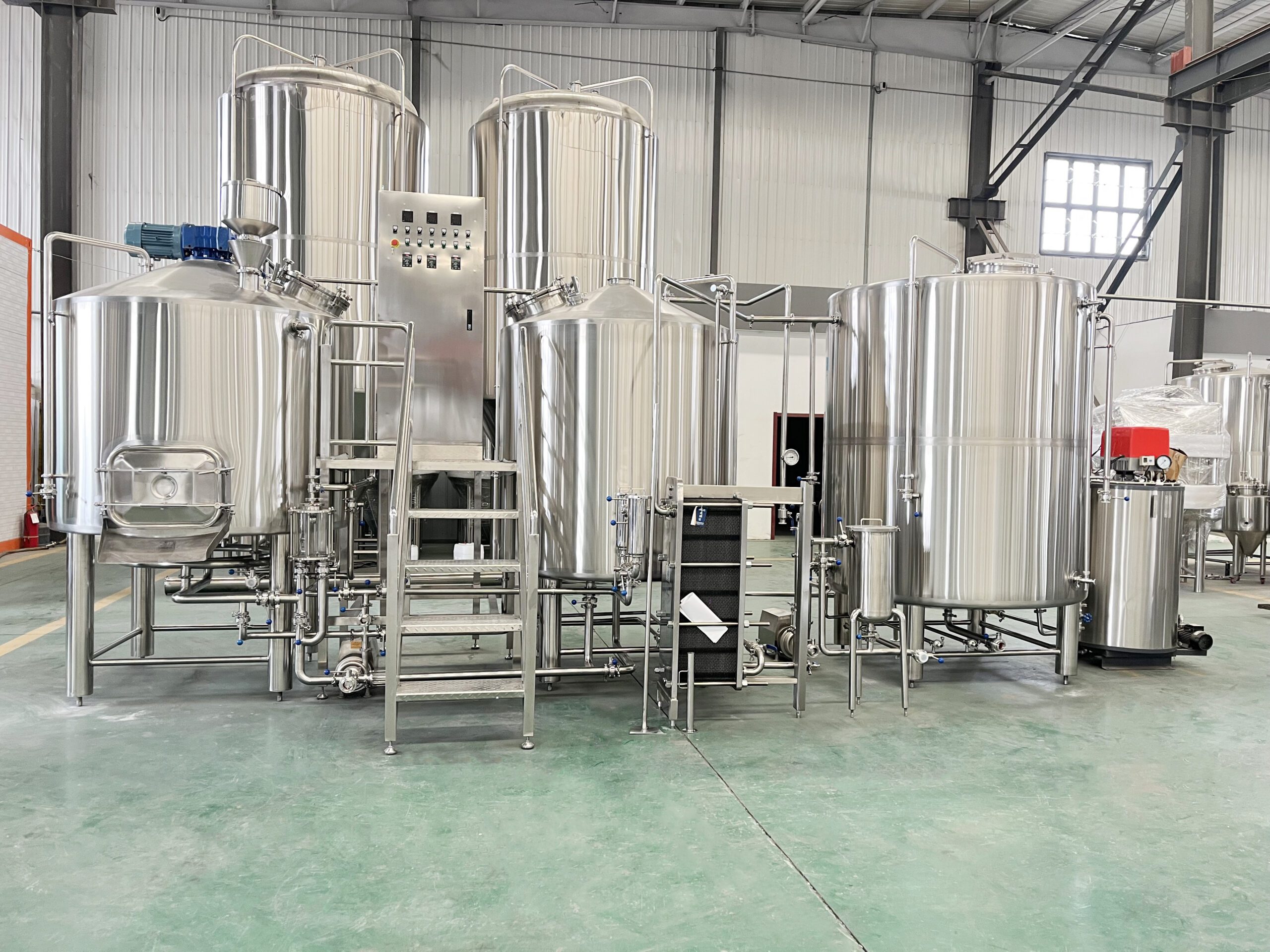
Used Brewery Equipment
Brewhouse systems, tanks, controls, and support equipment for complete turnkey brewery equipment projects, with options for new, used, and refurbished configurations.
-
2–10 bbl compact brewhouse configurations -
Mash tun + kettle + HLT package -
Pumps, heat exchanger, and control panel included -
Pumps, heat exchanger, and control panel included
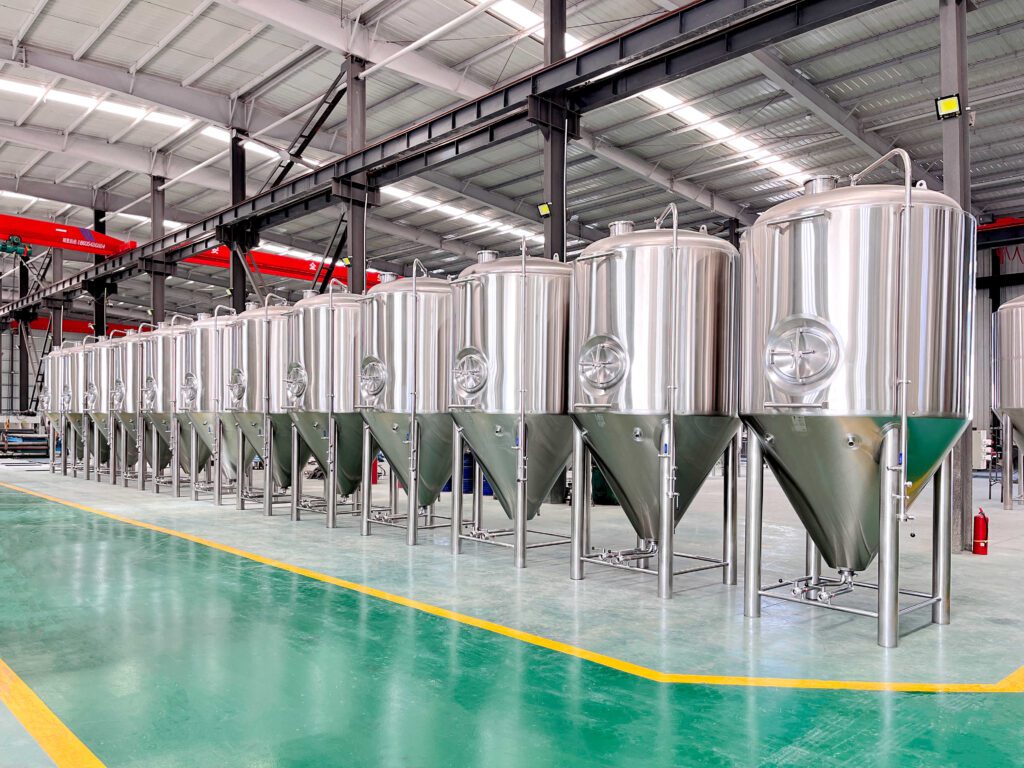
Used Fermentation Tanks
Cost-effective refurbished fermenters ready for brewing, conditioning, and temperature-controlled fermentation
-
3–5 bbl / 10 bbl / 20 bbl / 40 bbl sizes available -
Fully CIP-cleaned and sanitized -
Jacketed, insulated, pressure-tested -
Ready to ship worldwide
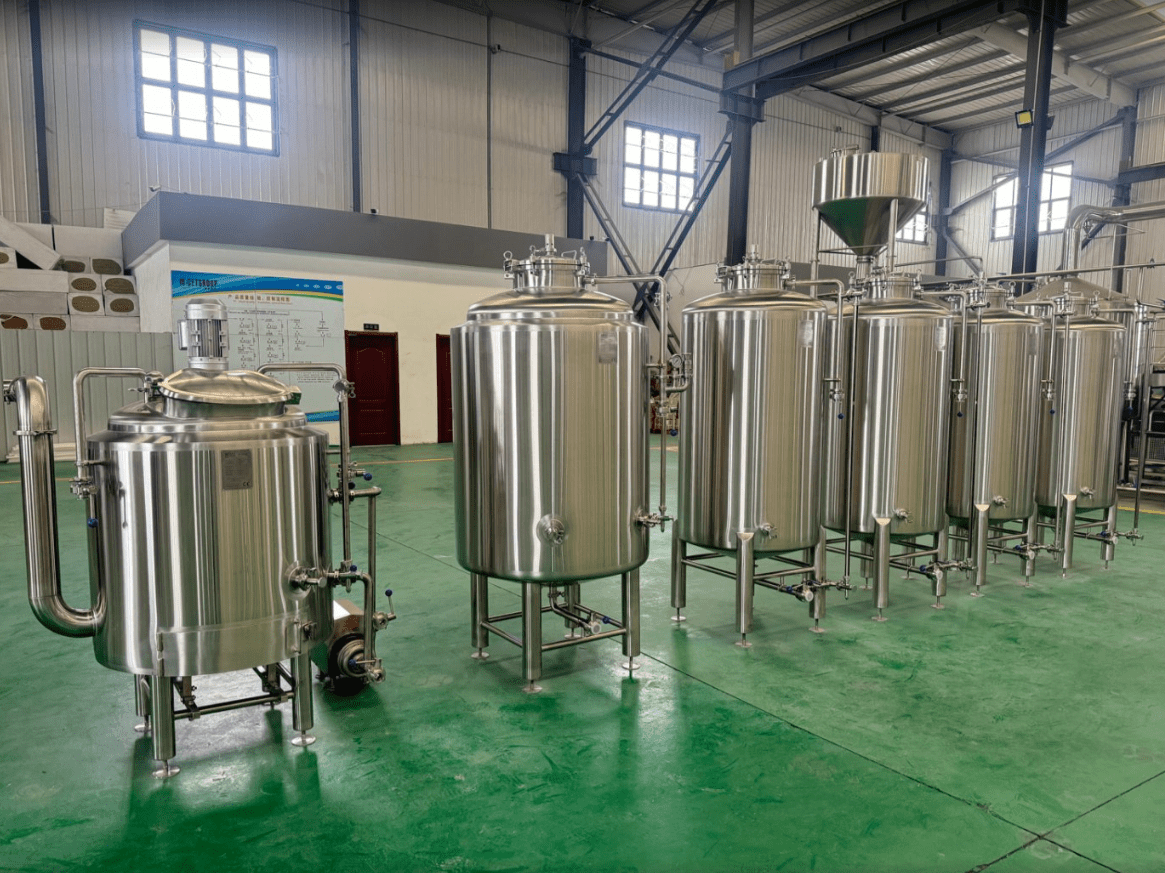
Kombucha Brewing Equipment
Reliable kombucha fermenting and processing tanks upgraded for tea fermentation and continuous brewing
-
Fermenters & brite tanks for kombucha -
Sugar dissolving and mixing system -
Includes yeast brink and pumps -
For tea fermentation and continuous brewing
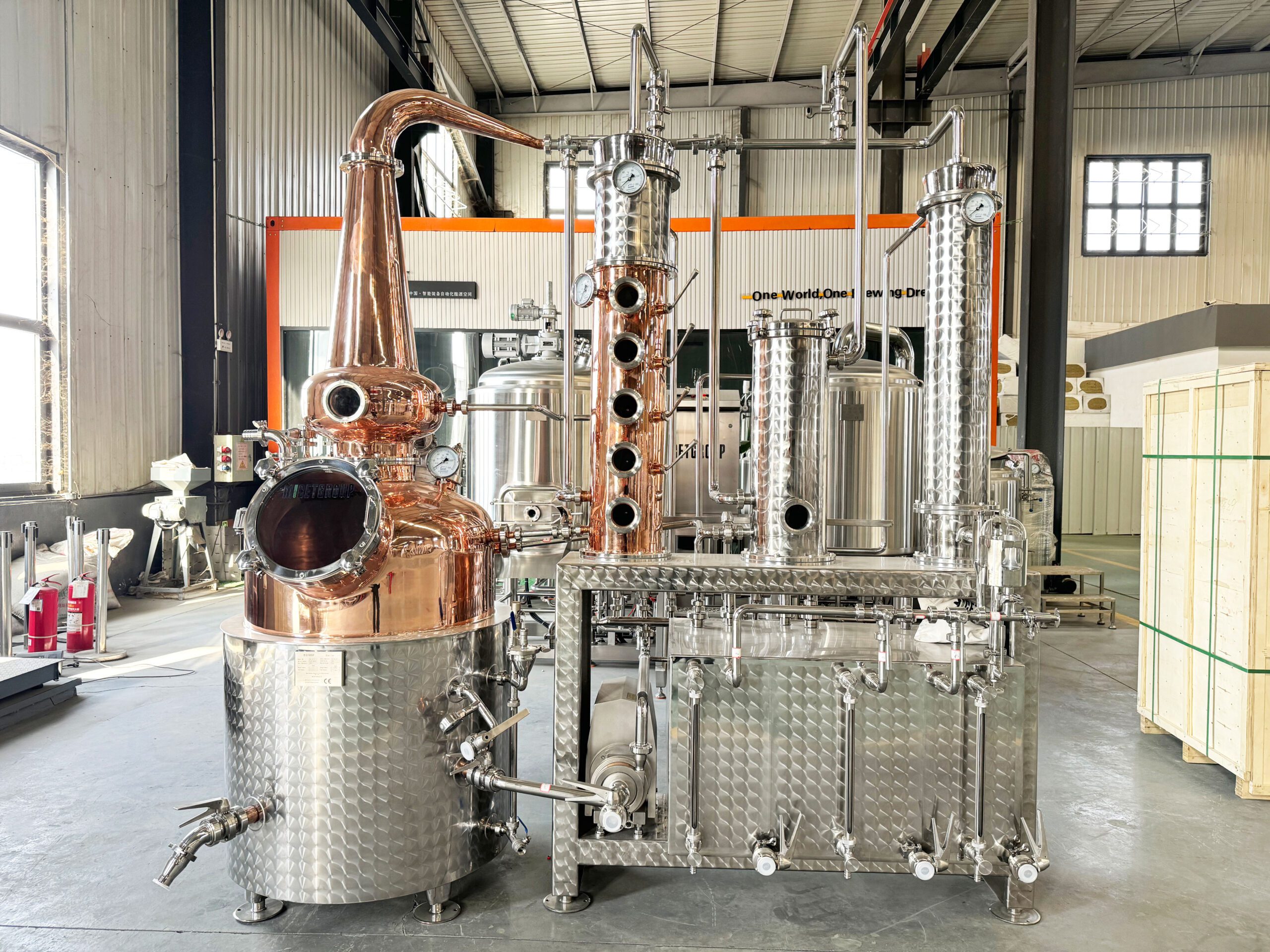
Distillery Equipment
Save 40–60% on your investment with high-quality new winery tanks, presses, pumps and filtration systems for wineries, juice plants and co-packers.
-
Process & Technical Design -
Distillery Equipment Manufacturing -
CAD & 3D distillery layout design -
Installation & Commissioning
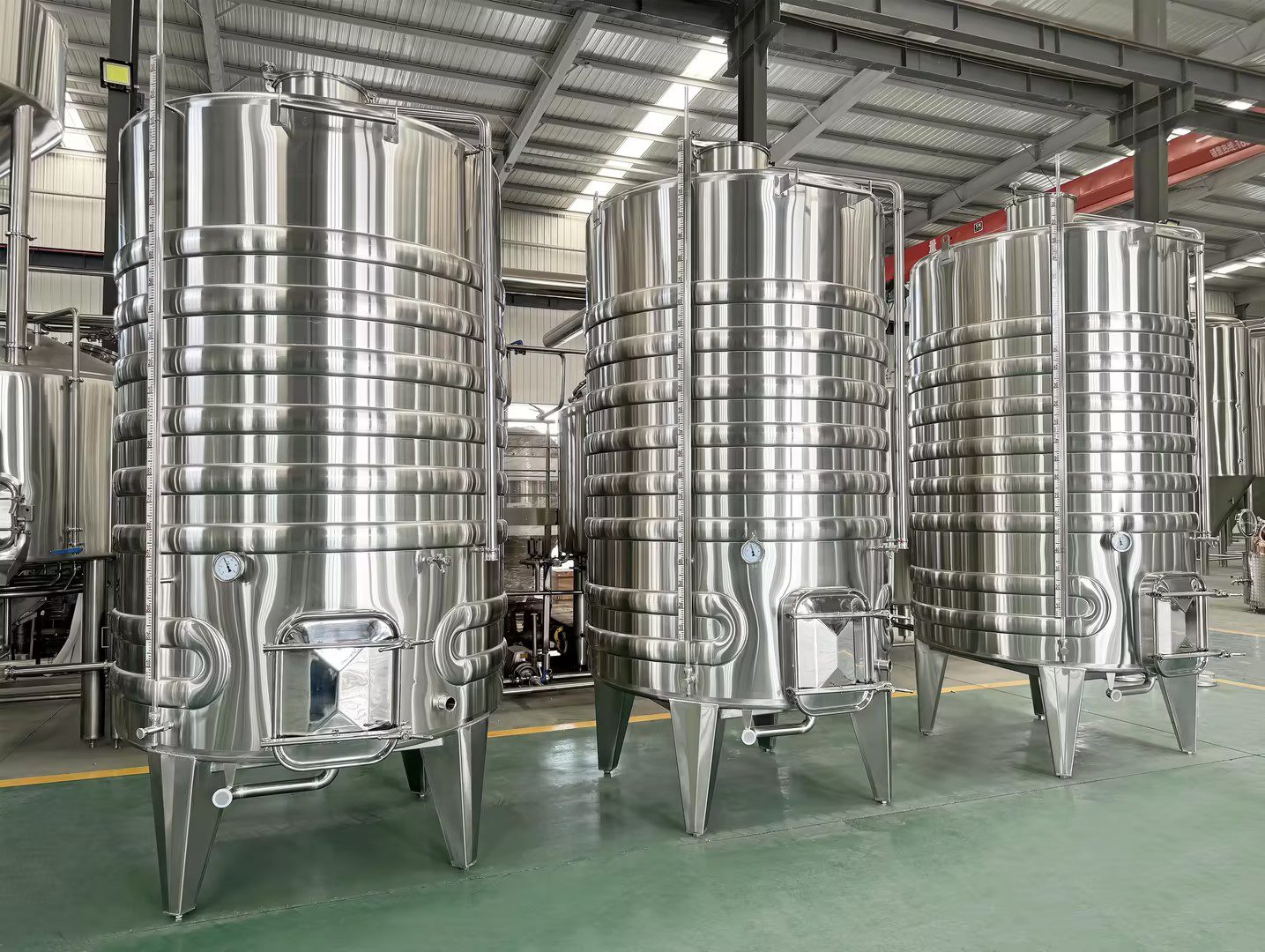
Wine Fermentation Tank
Explore winery fermentation tanks for commercial cellar layouts, including the 10000L wine fermentation tank with stainless steel construction, glycol cooling, CIP-ready design, and configurable accessories for red wine, white wine, and fruit wine production.
-
Mash Cookers & Kettles -
Distillery Fermentation Tanks -
Pot Stills & Hybrid Stills -
Column Stills
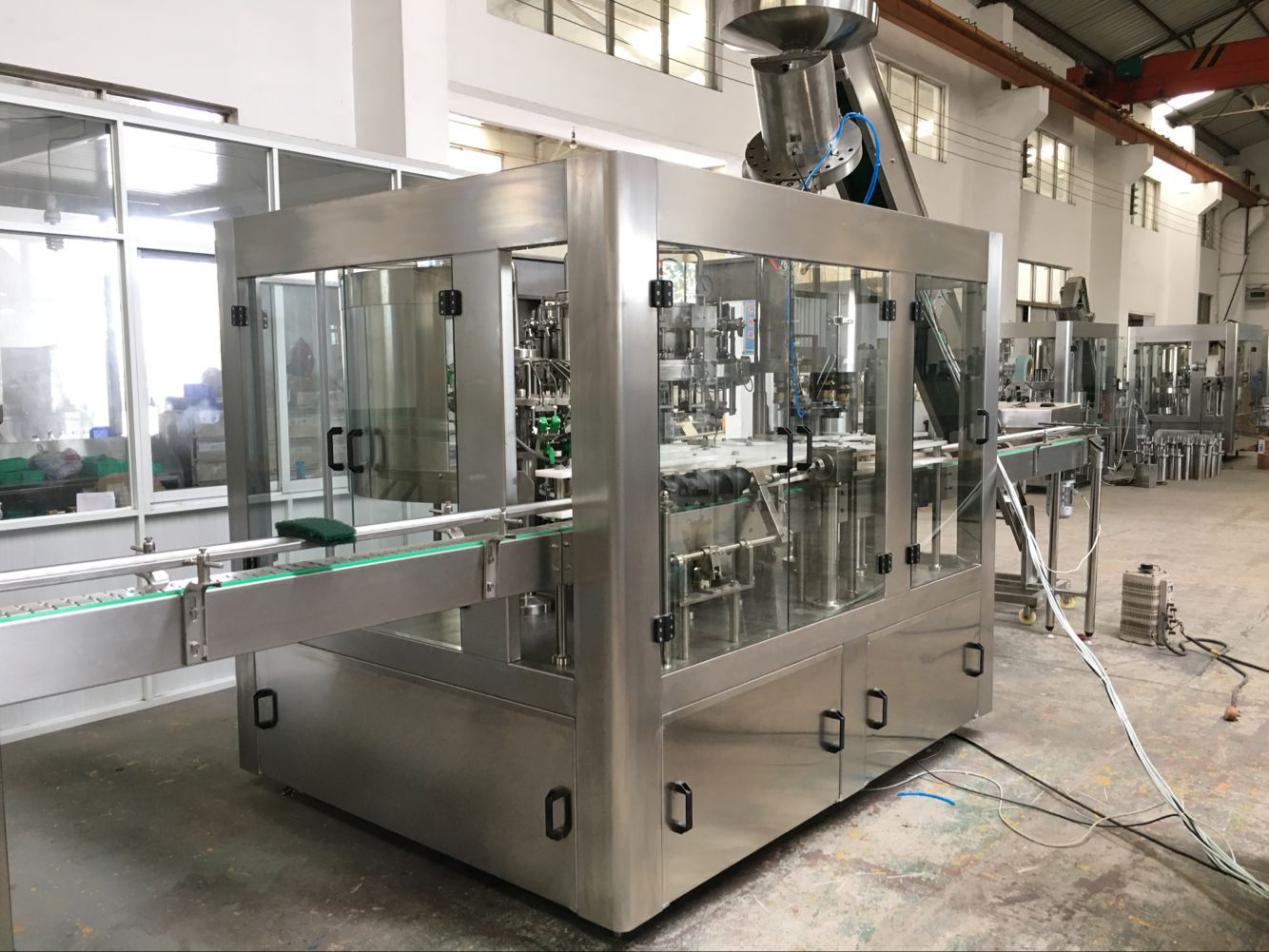
Packaging Equipment
Our Winery Equipment is rebuilt to modern design & technical standards, using food-grade stainless steel, hygienic internal finishes and CIP-friendly layouts
-
Bottle Packaging Lines -
Can Packaging Lines -
Keg Filling & Cleaning Systems -
Plastic Bottle Filling, Capping & Sealing Integrated
Hybrid New & Used Brewing Solutions – Smarter Investment for Your Project
Not every project has to be 100% used or 100% new. We design hybrid new & used brewery equipment solutions that combine refurbished brewhouses, tanks and support systems with new PLC control, CIP, valves and utilities. This approach helps breweries, kombucha producers and distilleries launch or expand with lower CAPEX while keeping critical process steps modern, safe and easy to upgrade.
Tell us about your project and our engineers will design a hybrid new + used solution just for you.
One-Stop Turnkey Brewery Equipment Solutions
Micet provides complete turnkey brewery solutions, including brewery layout planning, P&ID process flow, equipment matching, electrical and piping diagrams, CE documentation support, installation guidance, operation training, and maintenance planning for commercial breweries, microbreweries, craft pubs, kombucha plants, and pilot production labs.
Micet Company Strength
Micet delivers proven reliability with a 10,000+ m² certified facility, expert engineering support, and the trust of 1,000+ breweries worldwide.
Team
There are different teams of design, production, installation and electric automatization in our company, and turnkey project service also can be provided.
Experience
We are experienced in manufacturing stainless steel vessels for more than 22 years, especially in craft beer brewing equipment.
Customization
The strong professional R&D and production team can provide and produce the Craft Beer Equipment according to the drawings or samples offered by customers.
Professional
Professional order management system ensures us delivery on time, and good quality with QC & QA.
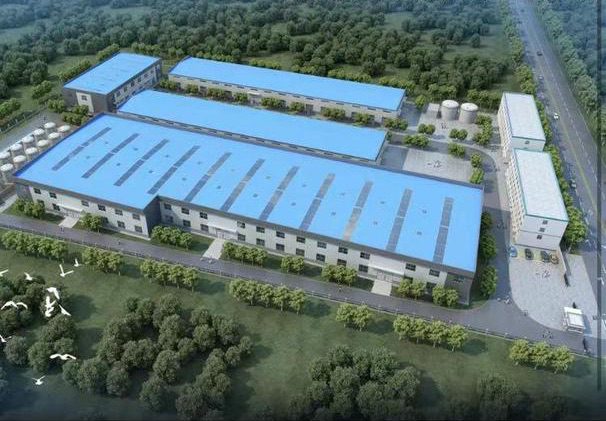
Micet Company Strength
Micet delivers proven reliability with a 10,000+ m² certified facility, expert engineering support, and the trust of 1,000+ breweries worldwide.
Team
There are different teams of design, production, installation and electric automatization in our company, and turnkey project service also can be provided.
Experience
We are experienced in manufacturing stainless steel vessels for more than 22 years, especially in craft beer brewing equipment.
Customization
The strong professional R&D and production team can provide and produce the Craft Beer Equipment according to the drawings or samples offered by customers.
Professional
Professional order management system ensures us delivery on time, and good quality with QC & QA.
Brewing experience
0
+
Modern Production Base
0
㎡
Senior Technical
0
+
Served Worldwide
0
+
How Our Used Equipment Program Works
Our used equipment program ensures every tank and system is inspected, refurbished, tested, and prepared for reliable production, giving you factory-verified quality at a lower investment.
Sourcing
Partner breweries upgrade systems through Micet
Inspection
Professional factory inspection checklist
Refurbish
Re-polish, replace parts, pressure test
Certification
Sanitary and safety compliance
List & Sell
Transparent specs, photos, videos
Ship Worldwide
Export-ready packaging
Real Project Cases & On-Site Photos
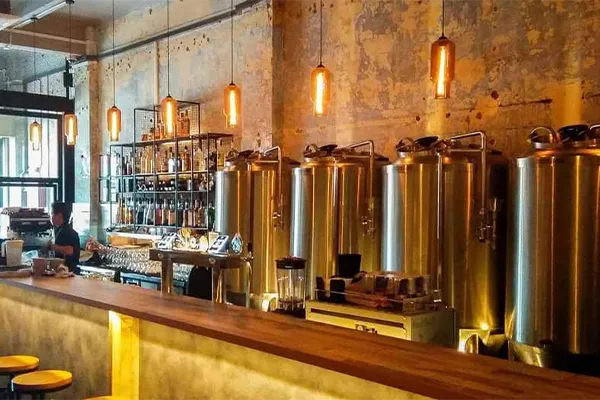
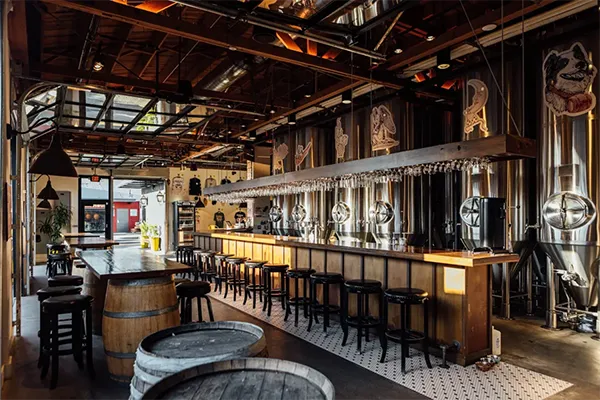
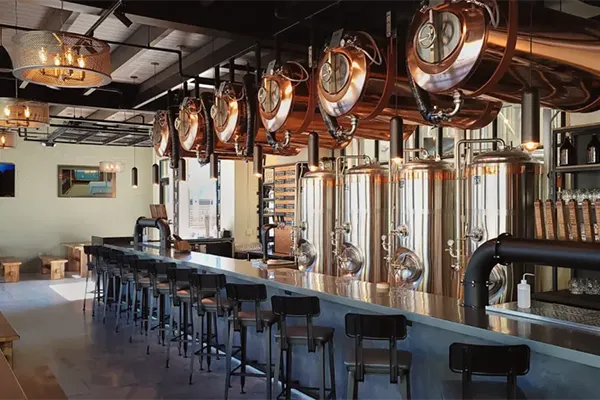
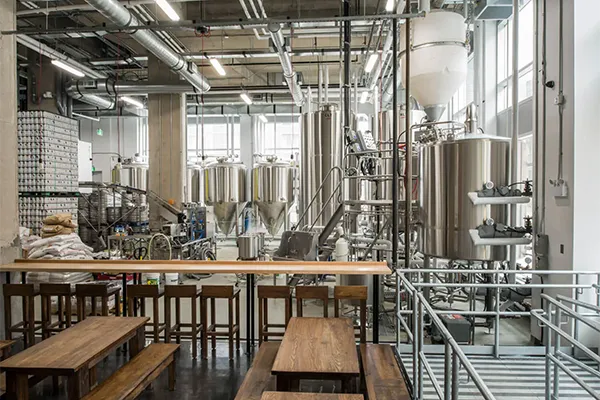
Our used brewery equipment is already working in brewpubs, microbreweries and regional breweries in many countries. Below you can see real installation photos, brewhouse layouts and cellar setups, so you know exactly what to expect in your own project.
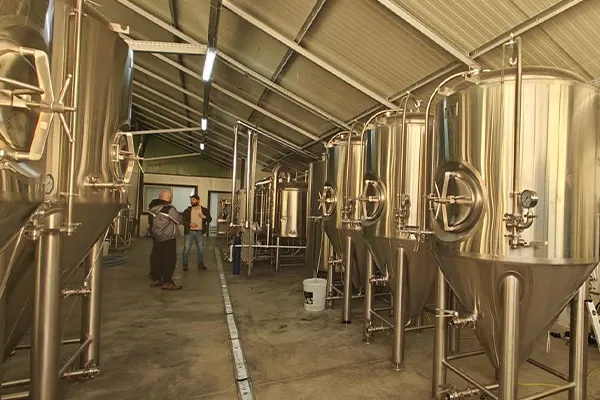
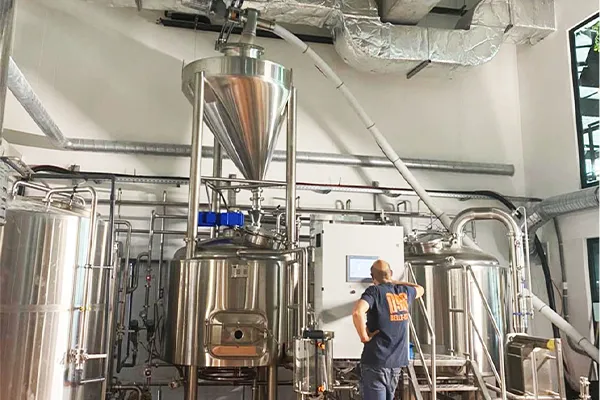
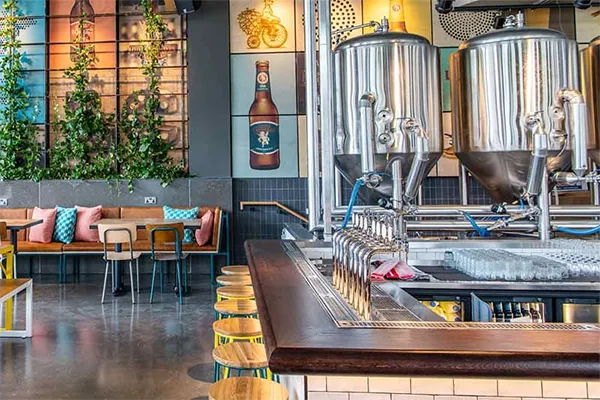
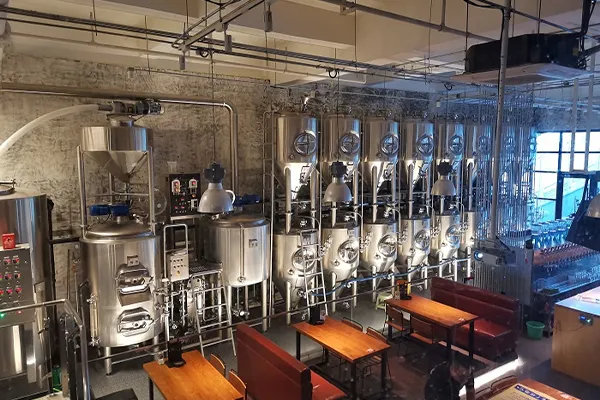
Customer Cases
MICET has performed actual installations in more than 100 countries—customized brewery, kombucha, distillery, winery systems, fermentation tanks, and stainless steel tanks.
Explore how we design, manufacture, install, and support turnkey projects from nano to commercial scale.
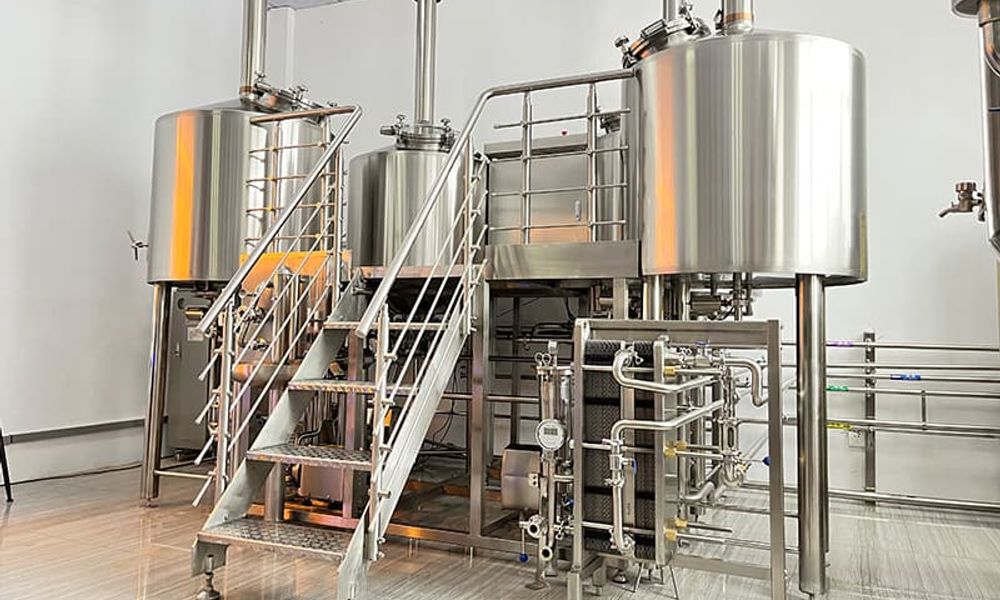
Brewery Equipment Manufacturers: Factory vs Broker Guide
Nancy Shang | Founder & CEO, MICET Brewing | Published: July 3, 2026
Brewery equipment manufacturers fall into four supply models: OEM factories, factories with in-house refurbishment lines, US-based brokers, and B2B aggregator platforms. Pricing spreads across roughly 40% for identical specs, and lead times run from 1 week to 140+ days. Which model fits depends on your compliance, budget, and timeline priorities.

What “Brewery Equipment Manufacturer” Actually Means
The phrase covers everyone from a 200-employee stainless-steel fabrication group with in-house welders and CE PED verification, to a two-person office that sources from partner factories and reships in a rebranded crate. Both call themselves “manufacturers” on their homepage. Both surface in the same Google results for “brewery equipment manufacturers.”
For a procurement team, the distinction that matters is whether the entity you are contracting with owns the fabrication capacity, the engineering team, and the compliance documentation for the specific vessels being delivered — or whether it acts as a marketing and logistics wrapper around someone else’s production.
Nothing in that distinction is automatically negative. The wrapper model exists because it solves real buyer problems: single point of contact, English-language sales, in-region service, escrow protection on smaller orders. But confusing a wrapper with a fabricator changes what your contract actually guarantees, and changes who is on the phone when a vessel arrives with a bad weld.
The rest of this guide separates the four supply models buyers actually encounter, with the pricing and lead-time observations to make the comparison work.
The Four Supply Models You’ll Encounter
1. OEM Factory (Direct Manufacturer)
A stainless-steel fabrication facility that designs, welds, tests, and ships brewing equipment under its own brand, from its own address. The sales team, engineering team, and production floor sit within the same legal entity.
Most volume in this category clusters in Shandong, Jiangsu, and Zhejiang provinces in China. Secondary clusters exist in Germany, Italy, Slovakia, and the US Midwest, at higher price points but shorter freight windows for their respective home markets.
Where it is strongest:
- Custom configurations outside catalog norms (12 BBL, 40 BBL, non-standard geometries, hybrid vessel designs)
- Direct control over material sourcing and mill certificate traceability
- Certification paperwork tied to the specific unit shipped, not a generic product family
- Lower price for the same spec because there is no reseller markup layer
Where it is weakest:
- English-language technical support depth varies factory to factory
- 12+ hour time-zone gap on urgent issues (Asia to EU/Americas)
- No physical inventory — every order is build-to-suit
- Post-sale service depends on the factory’s overseas dispatch network, which is uneven across the industry
Typical price band: USD 30,000–80,000 for microbrewery packages (2–15 BBL); USD 50,000–80,000 for small commercial systems (10–30 BBL); larger commercial systems (30–100 BBL) climb into higher six figures with automation scope. Refurbished configurations, where the factory offers them, sit meaningfully lower.
Typical lead time: 60–90 days fabrication + 30–45 days ocean freight from Asian ports. Total 100–140 days landed.
2. Factory with In-House Refurbishment Line
A subcategory of OEM factory that also operates a distinct workflow for used and refurbished equipment. Structural components (frames, shells, tanks) get inspected and reworked. Wear parts (seals, PLC modules, sight glasses, sensor probes) get replaced. Documentation gets refreshed against current directives before the unit ships.
Not every OEM factory has this capability. It requires mechanical fabrication depth: welders qualified for repair procedures, on-site passivation infrastructure, PLC engineers who can reprogram older control panels, and a QC process for source-unit intake. Assembly-focused shops that source shells from subcontractors cannot do this at scale.
Where it is strongest:
- Lower CAPEX path for buyers with tight budgets but real production-grade requirements
- Hybrid configurations: new fermenters paired with a refurbished brewhouse, or the reverse
- Direct engineering visibility into what was reconditioned and against which standard
- Extension of useful life for equipment that would otherwise scrap
Where it is weakest:
- No two units are identical; each refurb has its own service history
- Availability follows source-unit supply, not the factory’s production calendar
- Lead times cannot always match new-build if a matching source unit takes weeks to find
Typical price band: Refurbished configurations typically run 30–50% below equivalent new-build. Actual figures depend on refurb scope, source-unit condition, and certification refresh cost. Not published pricing — requires project-specific scoping.
Typical lead time: 45–75 days refurbishment + freight, once a source unit matching your spec is confirmed available. Source-unit sourcing itself may add 30–60 days.
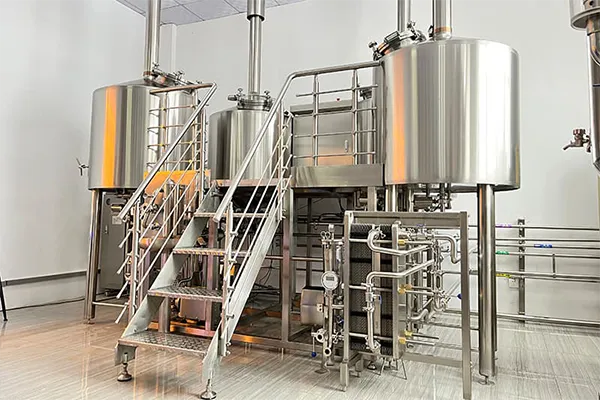
3. US-Based Equipment Broker
A trading operation, typically US or EU based, that maintains a rotating inventory of used and decommissioned brewery equipment. Sources from brewery closures, upgrades, and receivership sales. Sells as-is, or occasionally with light shop reconditioning done in a partner facility.
Common presences in this space in the US market include auction platforms and specialty resellers focused on stainless-steel process equipment. Their homepages read like manufacturer sites. Their business model is closer to a specialty resale dealership: they buy inventory, hold it, and mark it up on resale.
Where it is strongest:
- Immediate physical availability — you can inspect the exact unit before wire transfer
- Domestic freight only (no ocean logistics, no customs)
- Fast time-to-production if the specific unit fits your spec
- Established provenance on unique or hard-to-find pieces
Where it is weakest:
- Configuration flexibility is zero — you buy exactly what they have on the floor
- Wear-part replacement and remediation typically fall on the buyer’s account
- Original certifications may not transfer cleanly to your regulatory environment if the unit was sourced from a different market
- Prices reflect scarcity of the specific unit, not fabrication cost
Typical price band: Wide spread. Auction-pull prices for small used brewhouses commonly run USD 40,000–120,000 depending on condition, age, and completeness. Fully reconditioned lines with new controls approach new-build pricing at the top end.
Typical lead time: 1–4 weeks from purchase to on-site, assuming domestic freight and no additional reconditioning delay.
4. B2B Aggregator Platform
Online marketplaces that list thousands of “manufacturers” simultaneously — Made-in-China, Alibaba, IndiaMART, TradeIndia, and similar. Listed vendors range from actual fabrication factories to trading offices to individual sales agents. The platform provides discovery, messaging, and (on some platforms) escrow, but does not verify vendor legitimacy at the product level.
Where it is strongest:
- Fastest way to survey the field and generate quote comparisons across dozens of vendors
- Price benchmarking for identical spec, useful during early-stage budgeting
- Low barrier for first contact
- Escrow protection on smaller orders (varies by platform)
Where it is weakest:
- Distinguishing real factories from resellers on-platform is genuinely difficult
- Certification claims, factory addresses, and photos in listings frequently require independent verification
- Post-sale service depends entirely on which vendor you selected, with no platform-level fallback
- Photos of “our factory” and “our equipment” are frequently generic stock imagery, not documentation of the actual delivered unit
Typical price band: Widest of the four models. Quotes for the same nominal 10 BBL brewhouse spec can range from USD 15,000 to USD 90,000. Extreme low prices generally signal one of three things: scam, thin material below claimed thickness, or missing components that get quoted separately after order confirmation.
Typical lead time: No platform-level commitment. Depends entirely on which vendor is selected. From 30 days (small standard configs) to 180+ days (large custom, when the “manufacturer” turns out to be a middleman waiting on someone else’s schedule).
Side-by-Side Comparison
| Dimension | OEM Factory | Factory + Refurb Line | US Broker | Aggregator Platform |
| Owns fabrication | Yes | Yes | No | Varies by vendor |
| Owns physical inventory | No (build-to-order) | Partial | Yes | Rarely |
| Configuration flexibility | High | High (new+refurb hybrid) | None | Vendor-dependent |
| Certification paperwork | Direct, unit-specific | Direct, unit-specific | Legacy, may not transfer | Vendor-dependent |
| Custom engineering | Yes | Yes | No | Varies |
| Realistic time to production | 100–140 days landed | 60–100 days landed | 1–4 weeks | Highly variable |
| Best price for same new spec | Yes | Yes | No | Sometimes (with risk) |
| Best price if used works | Sometimes | Yes | Yes (auction pulls) | Highly variable |
| After-sales visibility | Direct engineering | Direct engineering | Broker’s service network | Nonexistent to poor |
| Language/documentation quality | Factory-dependent | Factory-dependent | English-native | Vendor-dependent |
| Risk of misrepresentation | Low to medium | Low to medium | Low | High |
Two rows deserve extra attention.
The certification paperwork row matters differently by destination market. For EU-bound orders, PED (Pressure Equipment Directive 2014/68/EU) verification tied to the specific vessel matters legally, not just commercially. A broker selling a US-market unit into an EU brewery may not be able to provide the paperwork you need for compliance. An OEM factory or factory-with-refurb-line can produce fresh documentation against current directives.
The best price if used works row rewards buyers open to used or refurbished, which is not the same buyer as one insisting on new-build. Refurbished from a factory-with-refurb-line typically produces the lowest total delivered cost, because you get factory-grade reconditioning at used pricing. Broker auction pulls compete on unit-specific opportunity — sometimes cheaper, sometimes not, depending on inventory that week.
Pricing Bands: What Each Model Actually Costs
The list price on a supplier’s homepage is not what you pay. What you pay reflects the model. For a 10 BBL brewhouse configured to a mid-range specification (single-vessel HERMS or 2-vessel steam-heated), reasonable market ranges look like this:
| Model | Price Range for 10 BBL Brewhouse |
| OEM Factory (China, new) | USD 35,000–65,000 |
| Factory + Refurb Line (refurbished) | USD 22,000–42,000 |
| US Broker (as-is used) | USD 30,000–95,000 |
| Aggregator Platform (varies wildly) | USD 15,000–70,000 |
Two things to notice in that table.
First, aggregator platforms can quote below OEM factory pricing not because they discovered a cheaper source, but because the quote frequently excludes items the OEM factory quote includes. Ask what is inside the price. Pumps? Heat exchanger? Control panel? Freight to port? Documentation package? Certification refresh? Every excluded line item is a claim in disguise.
Second, US broker pricing has a wide spread because unit condition varies. A refurbished-to-current-spec unit approaches new-build pricing. An as-is auction pull that needs USD 15,000 of remediation costs less on the invoice and more in total delivered.
For the specific product line covered in the next section — Used Brewery Equipment configurations at 2–10 BBL compact package — market-observed refurbished pricing generally lands within the Factory + Refurb Line band, with variation driven by source-unit condition and certification refresh scope.
Lead Times, Realistically
Lead-time claims on supplier sites are best-case, assuming clear specs, prompt payment, and zero revision cycles. What actually happens in practice runs longer.
| Model | Fabrication or Prep | Freight | Total Realistic |
| OEM Factory (China) | 60–90 days | 30–45 days ocean | 100–140 days |
| OEM Factory (Europe/US) | 90–180 days | 5–15 days regional | 100–200 days |
| Factory + Refurb Line | 45–75 days | 30–45 days ocean | 80–120 days |
| US Broker | 3–10 days prep | 5–15 days domestic | 1–4 weeks |
| Aggregator Platform | Undefined | Origin-dependent | 30 to 180+ days |
The freight leg is often underestimated. Ocean freight from Chinese ports to US West Coast runs 25–35 days; to US East Coast, 35–45 days; to Northern Europe, 30–40 days; to South American west coast, 40–55 days. Add 10–15 days for port congestion, customs clearance, and inland delivery to your facility.
Two operational implications for a procurement schedule.
If your production start date is fixed, work backward from the on-site delivery date, not from the ship date. Miscalculating that offset by two weeks is a common source of overshoot.
If your bank requires letter-of-credit financing, add another 15–30 days for L/C issuance, amendments, and document presentation. This does not affect physical lead time but does affect when you can actually place the order.
The Used Brewery Equipment Angle
Two of the four supply models (factory-with-refurb line, US broker) traffic in used equipment as a core or secondary business. Available used inventory typically presents in one of two package shapes.
The most commonly available refurbished configuration:
| Component | Configuration |
| Brewhouse capacity | 2, 3, 5, 7, 10 BBL |
| Vessel package | Mash tun + kettle + HLT |
| Pumps | Included |
| Heat exchanger | Included |
| Control panel | Included, typically reprogrammed |
Refurbishment scope on packages like this generally includes passivation refresh on interior surfaces, seal and gasket replacement across all connection points, control panel reprogramming or replacement PLC, hydrostatic re-testing on pressurized vessels at 1.5× design pressure, and updated certification against current directives (PED 2014/68/EU for pressure vessels; Machinery Directive 2006/42/EC and EMC Directive 2014/30/EU for the control assembly, referenced against standards including EN 1626:2008 and EN ISO 12100:2010).
A US broker selling the same nominal 5 BBL brewhouse “as-is” delivers the vessels and possibly the pumps, with no assumption of remediation done. The delta between “as-is” and “reconditioned” pricing is real and reflects real work.
If your evaluation lands between an aggregator-platform-sourced new unit and a factory-with-refurb-line refurbished unit at similar prices, the refurbished unit typically comes with more documentation and clearer accountability, because the refurb factory has attached its name to the reconditioning. This is not an absolute rule; some aggregator vendors are legitimate. But it is the base-rate observation across the market.
Which Model Fits Which Buyer
The decision is rarely which model is best in the abstract. It is which model best matches your specific project’s constraint stack.
Choose OEM factory when:
- You need a custom configuration outside catalog norms
- Your target market requires unit-specific certification documentation
- Your timeline allows 100+ days landed
- Price sensitivity is real but not extreme
Factory with refurb line makes sense if:
- Budget is tight but production requirements are commercial-grade
- You are open to hybrid new-and-used configurations
- You want direct engineering accountability on the refurbished portion
- Your timeline can absorb source-unit availability delay
US broker fits when:
- Timeline is short (1–4 weeks to production)
- An available unit already matches your spec (no configuration flexibility needed)
- You have in-house capability to handle any post-purchase remediation
- Certification transfer to your market is not a compliance blocker
Aggregator platforms belong in the mix only when:
- You are early-stage benchmarking prices for a spec you have not finalized
- Order size is small enough that platform escrow provides meaningful protection
- You have internal or third-party capability to verify supplier legitimacy independently
- The purchase is not production-critical at commercial scale
When each model is the wrong answer
OEM factory is the wrong answer when your production start date is under 90 days away and no other constraint gives.
Factory with refurb line is the wrong answer when you need multiple identical units at scale — refurb source availability rarely delivers matched sets.
US broker is the wrong answer when your spec is genuinely custom, or when your market’s regulatory environment requires paperwork the original manufacturer would need to issue.
Aggregator platform is the wrong answer when the cost of a bad delivery — production delay, missing components, uncertified pressure vessel — exceeds the price advantage of the low quote.
Compared with the common alternative of running all purchasing through a single preferred supplier relationship, a mix-and-match approach across models often produces the lowest total delivered cost. OEM factory for the brewhouse, US broker for a used bright tank when one becomes available, factory with refurb line for the fermenters. This costs more procurement effort. It rewards that effort in ways a single-supplier arrangement structurally cannot.
FAQ
Q: Are US-based brewery equipment brokers actually cheaper than importing from China?
A: Sometimes yes, sometimes no. Auction-pull used units can undercut new-build China imports significantly. Reconditioned broker inventory generally does not, because the shop reconditioning cost narrows the gap and no ocean-freight-side advantage exists on a domestic delivery. Compare landed cost with remediation included, not headline invoice price.
Q: Can B2B aggregator platform vendors provide genuine CE certification?
A: Some can, most cannot verifiably. Ask any aggregator vendor for the specific directive (PED 2014/68/EU or Machinery Directive 2006/42/EC), the specific standard (EN 1626:2008 for cryogenic valves, EN ISO 12100:2010 for machinery safety), and either a verification body name plus certificate number, or a Declaration of Conformity referencing a technical file. Vagueness on any of these means the certification claim is decorative rather than legal.
Q: What is the actual price difference between new and refurbished equivalent brewery equipment?
A: Typically 30–50% below equivalent new-build, though the range widens with equipment age, refurb scope, and certification refresh cost. A lightly used unit reconditioned to current standards may only be 20% below new-build; a heavily refurbished older unit may be 60% below.
Q: If a supplier appears on an aggregator platform and also has their own homepage, which do I contact through?
A: Direct through their homepage, using an email on the site’s own domain. Aggregator platforms take a per-inquiry fee from vendors, which the vendor sometimes passes back into your quote. Direct contact also eliminates ambiguity about which entity you are contracting with, and gives you a cleaner audit trail.
Q: How do I verify that a factory-with-refurb-line supplier has the fabrication capability they claim?
A: Ask specifically about welder qualification records covering repair procedures (not just new-build fabrication), on-site passivation infrastructure (framed as “what is your interior polish process for refurbished vessels”), and PLC engineering capacity (which brands they can reprogram, not just install new). Real capability answers specifically. Claimed capability that does not exist answers in generalities.
Q: For a first commercial brewery build with fixed opening date, which supply model is safest?
A: OEM factory or factory-with-refurb line, with third-party inspection before shipment, planned to complete no later than 120 days before your opening date. The trade-off is longer calendar time. The upside is unit-specific certification, engineering accountability, and configuration flexibility for the launch spec. A US broker fills the same role only if the exact unit you need is on their floor when you look.
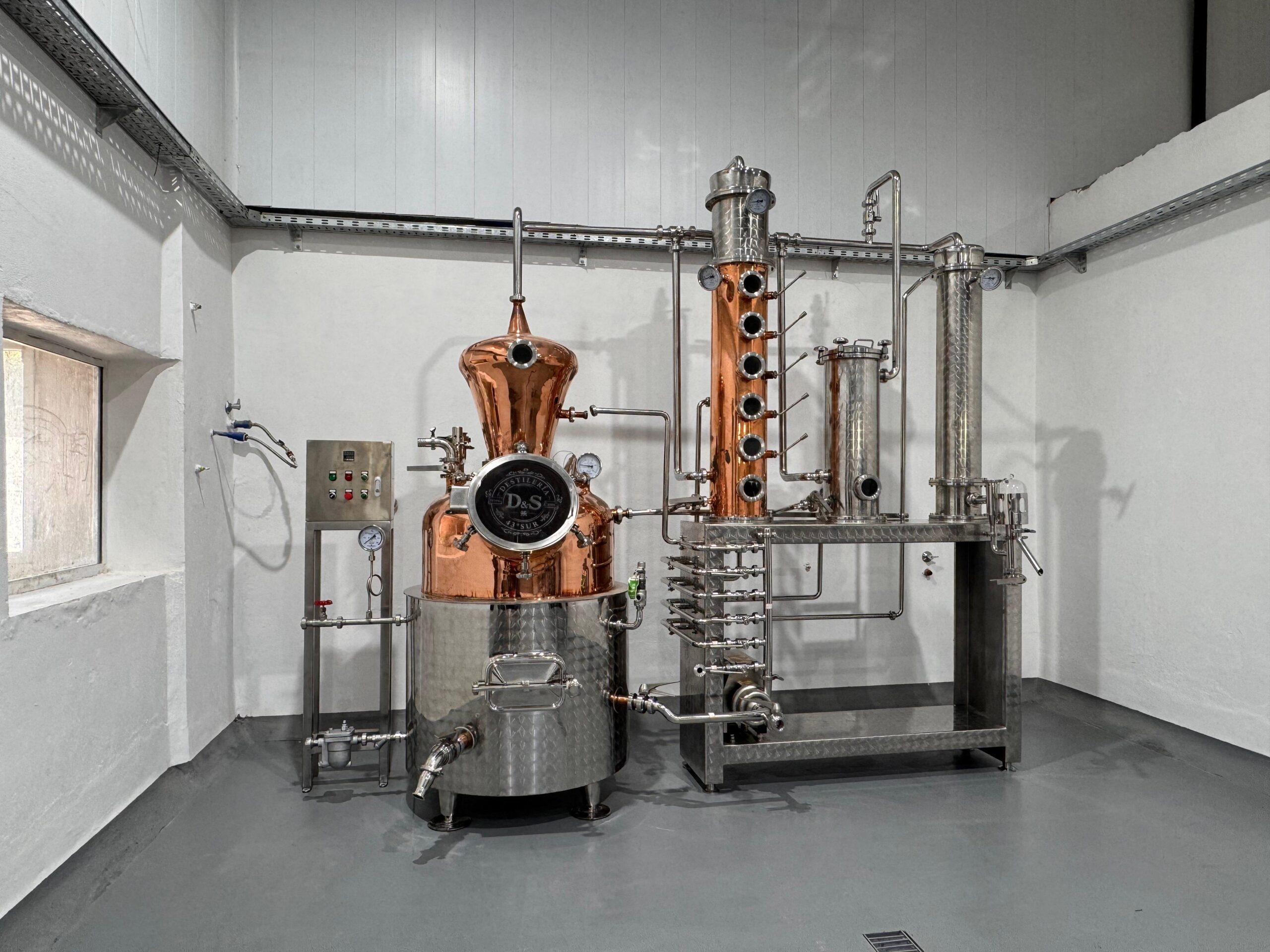
Refurbished 300L Distillation System Successfully Commissioned
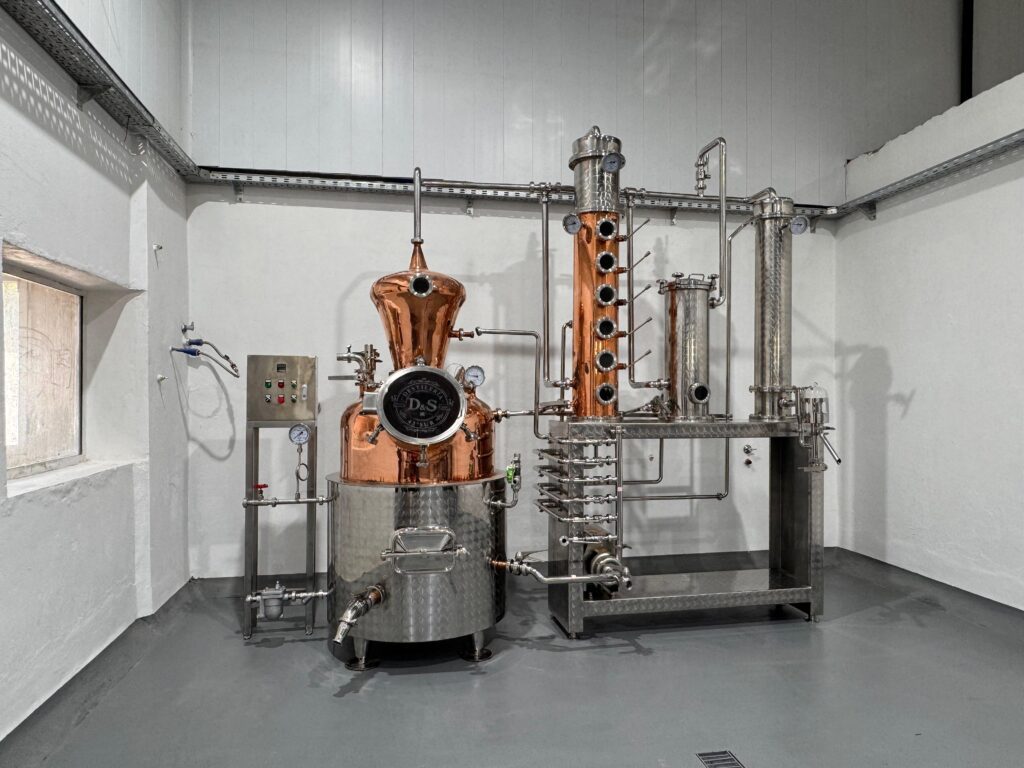
As demand for premium fruit spirits and craft distilled beverages continues to grow in South Korea, many distilleries are seeking reliable and cost-effective production equipment. Recently, we successfully refurbished and delivered a complete 300L five-plate distillation system along with a full fruit wine production line to a customer in South Korea. After installation and commissioning, the equipment has been operating smoothly, and the customer has expressed high satisfaction with its performance, efficiency, and overall production stability.
This project demonstrates how professionally refurbished used equipment can provide excellent value while helping distilleries reduce capital investment and shorten project timelines.
Project Overview
The South Korean customer specializes in the production of fruit wine and distilled spirits. To expand production capacity, they selected a complete processing line that includes fermentation, distillation, storage, cleaning, filling, and automated control systems.
Main Equipment Configuration
| System | Equipment Configuration |
|---|---|
| Fermentation System | 6 × 2,500L Fruit Wine Fermentation Tanks |
| Steam Supply | 1 × 50 kg/h Steam Boiler |
| Screw Pumps | 2 × 3T Variable Frequency Screw Pumps |
| Transfer Pumps | 4 × 3T Variable Frequency Mobile Pumps |
| Cooling System | 1 × 5T Glycol Chiller |
| Distillation System | 1 × 300L Five-Plate Distillation Unit |
| Storage System | 4 × 1,000L Storage Tanks |
| CIP Cleaning System | 1 × 200L CIP Unit |
| Filling System | 1 × 12-Head Siphon Filling Machine |
| Control System | PID Automatic Control Cabinet |
High-Efficiency 300L Five-Plate Distillation System
The centerpiece of this project is the 300L five-plate distillation system, which was professionally refurbished, pressure-tested, and fully inspected before shipment.
The five-plate column improves alcohol separation efficiency while preserving the delicate aroma and flavor of fruit-based spirits. It is suitable for producing fruit brandy, gin, whiskey base spirits, shochu, and other craft distilled beverages.
Manufactured from food-grade stainless steel, the equipment features polished product-contact surfaces for easy cleaning and excellent hygiene. Combined with a stable steam heating system, it delivers consistent distillation performance and high production efficiency.
Complete Production Line for Stable Operation
To ensure a continuous and efficient production process, the customer also invested in a complete supporting system.
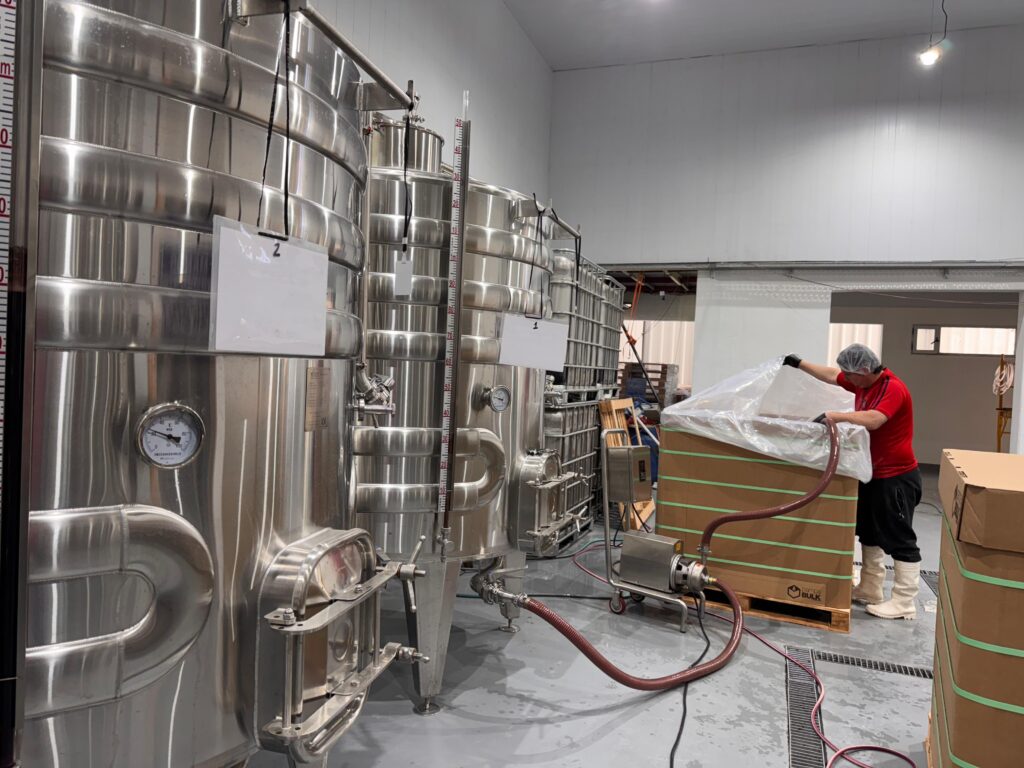
Six 2,500L fermentation tanks provide sufficient capacity for large-batch fruit wine fermentation, supplying a stable feedstock for the distillation process. The 50 kg/h steam boiler delivers reliable steam to maintain accurate heating temperatures throughout production.
The line is equipped with multiple variable-frequency screw pumps and transfer pumps, allowing flexible liquid transfer between different processing stages while reducing labor requirements.
Four 1,000L storage tanks provide ample capacity for temporary storage, blending, and aging before bottling. In addition, the 200L CIP cleaning system enables fast and effective cleaning of tanks and pipelines, minimizing downtime and ensuring hygienic production.
Finally, the 12-head siphon filling machine improves bottling efficiency while maintaining consistent filling accuracy.
Customer Feedback
After installation and commissioning, the South Korean customer reported that the complete production line operates smoothly and reliably.
According to the customer, the five-plate distillation column delivers excellent spirit purity while maintaining the natural fruit aroma. The PID control system simplifies daily operation, and the coordinated performance of the fermentation, distillation, storage, and filling systems has significantly improved production efficiency.
The customer was particularly impressed with the refurbishment quality of the used equipment, noting that its appearance, performance, and operational stability closely match those of new equipment while offering substantial cost savings.
Advantages of Refurbished Distillation Equipment
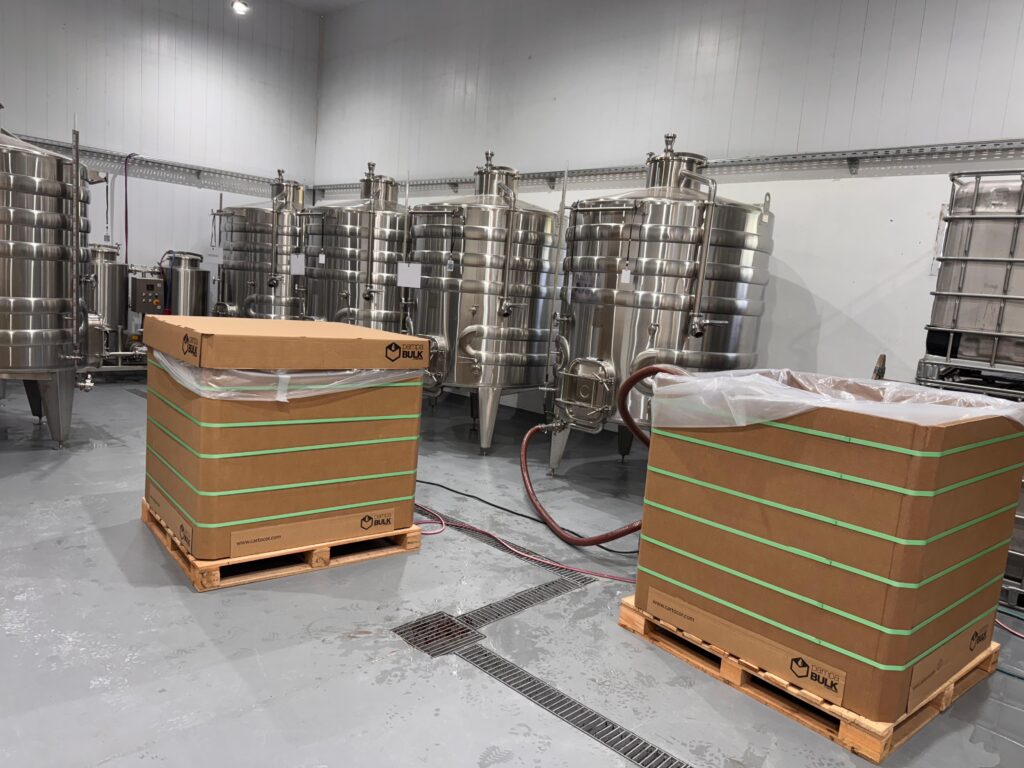
Choosing professionally refurbished distillation equipment offers several important benefits for craft distilleries and beverage manufacturers:
- Lower initial investment compared with new equipment
- Shorter delivery time for faster project completion
- Comprehensive inspection, refurbishment, and performance testing
- Customizable configurations based on production requirements
- Professional installation guidance and technical support
- Reliable operation with excellent cost-performance ratio
Every piece of equipment is carefully inspected before shipment, including weld inspection, pressure testing, leak testing, polishing, cleaning, and operational testing to ensure dependable performance.
Your Reliable Partner for Used Brewery & Distillery Equipment
We specialize in supplying refurbished brewery equipment, used distillation equipment, fermentation tanks, storage tanks, filling machines, and complete beverage production lines for customers worldwide.
Whether you are planning a new craft distillery, expanding an existing fruit wine facility, or looking for a cost-effective production solution, we can provide customized equipment packages, professional refurbishment services, engineering support, and after-sales assistance.
If you are looking for used 300L distillation equipment or a complete turnkey distillery solution, feel free to contact us for more information and a customized quotation.
如何使用自动化酿造系统实现啤酒酿造自动化
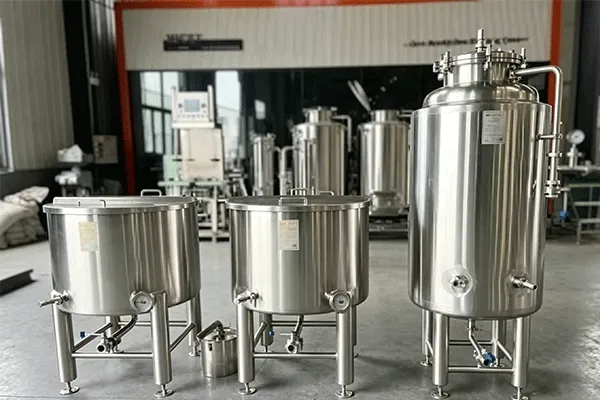
Manual work can slow a brew, raise labor costs, and make flavor change from batch to batch. When errors repeat, waste grows. An automated brewing system helps a brewery keep the brewing process stable, clean, and easier to scale.
An automated brewing system uses sensors, pumps, valves, software, and a control panel to monitor and control heating, mash steps, transfer, cooling, fermentation, and cleaning. It helps the brewer reduce manual steps, improve repeatability, protect flavor, and produce more consistent beer with less daily stress.
Article Outline
- What does it mean to automate a brew?
- Why is an automated brewing system important for modern brewery growth?
- How does automation improve the brewing process from mash to fermentation?
- What brewery equipment should be automated first?
- Can home brew and commercial brewing both benefit from automated beer brewing?
- How does temperature control help create high-quality beer?
- What are the benefits of automated brewing for craft beer producers?
- How should buyers compare types of automated equipment?
- What should you check when choosing the right automated brewing system?
- How can a turnkey supplier simplify your brewing journey?
What Does It Mean to Automate a Brew?
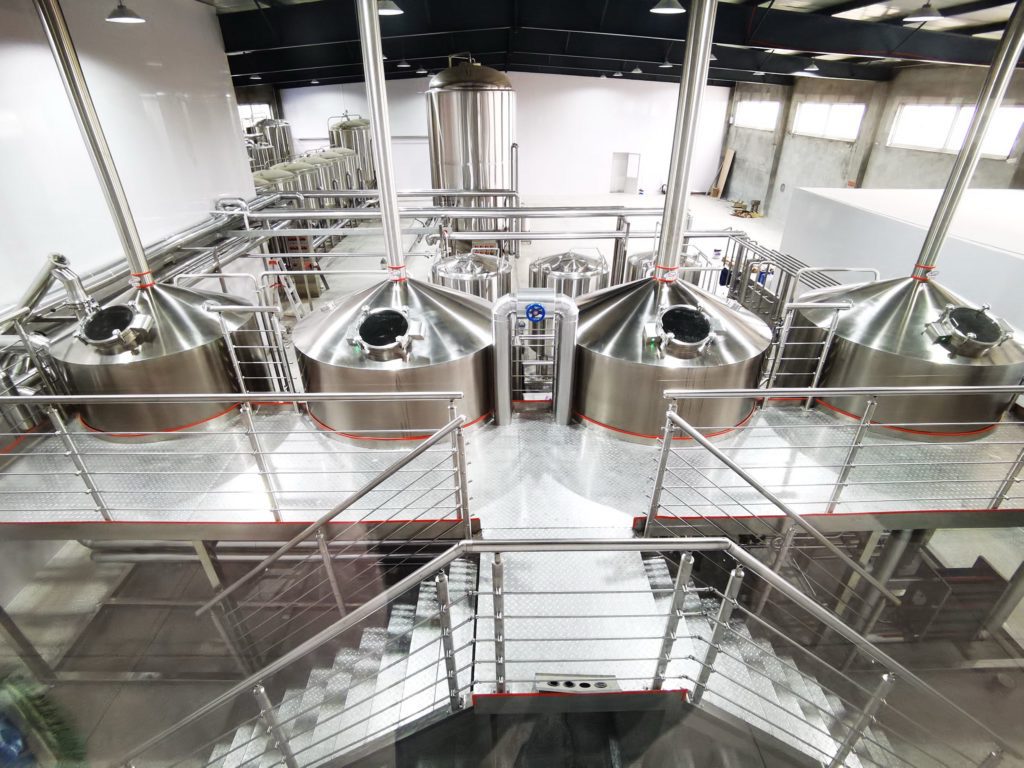
To automate a brew means using smart controls to help run key steps with less manual work. The system may control heating, water flow, mash timing, pump speed, transfer, cooling, and tank temperature. The goal is simple: give the brewer better control over the brewing process.
Automation does not remove the human touch. A skilled brewer still chooses the beer recipes, brewing ingredients, hop schedule, yeast plan, and beer style. The automated system helps repeat those choices with less variation.
In our work as a stainless steel brewery equipment manufacturer, we often tell buyers this: automation is not only about buttons and screens. It is about stable results. A good automated brewery setup helps teams brew with confidence, even when production gets busier.
Why Is an Automated Brewing System Important for Modern Brewery Growth?
A growing brewery needs more than passion. It needs repeatable output. If one batch of beer tastes great but the next one changes too much, customers notice. This is why an automated brewing system can become a real business tool.
For craft beer producers, taprooms, brewpubs, beverage startups, and project investors, automation can help reduce training pressure. New staff can follow clear programs. The brewer can set recipes, record data, and track the brewing stage more easily.
Here is a simple comparison:
| Manual Setup | Automated Setup |
|---|---|
| More hands-on work | Less repeated labor |
| Higher chance of timing errors | Better step control |
| Harder to repeat recipes | Easier recipe storage |
| Slower scale-up | Better growth planning |
| More operator skill needed every day | Clearer standard operation |
The result is not magic. It is better process discipline.
How Does Automation Improve the Brewing Process from Mash to Fermentation?
The mash process is one of the first areas where automation helps. During mash, water and grain must stay at the right temperature. A system with precise temperature control can help the brewer hit target rests and improve sugar extraction.
After mash, the wort moves through boiling, hop addition, whirlpool, and cooling. Automated transfer and recipe steps help reduce mistakes. This matters when the amount of beer increases from a small batch of beer to daily production.
Fermentation is another key step. Automated fermentation control helps keep the tank stable as yeast works. When fermentation is complete, the system data can help the brewer decide when to cool, transfer, carbonate, or package. This makes production easier to plan.
What Brewery Equipment Should Be Automated First?
Not every brewery needs the same level of automation. For many buyers, the best starting points are heating control, pump control, tank temperature, and cleaning programs. These areas affect time, safety, and quality.
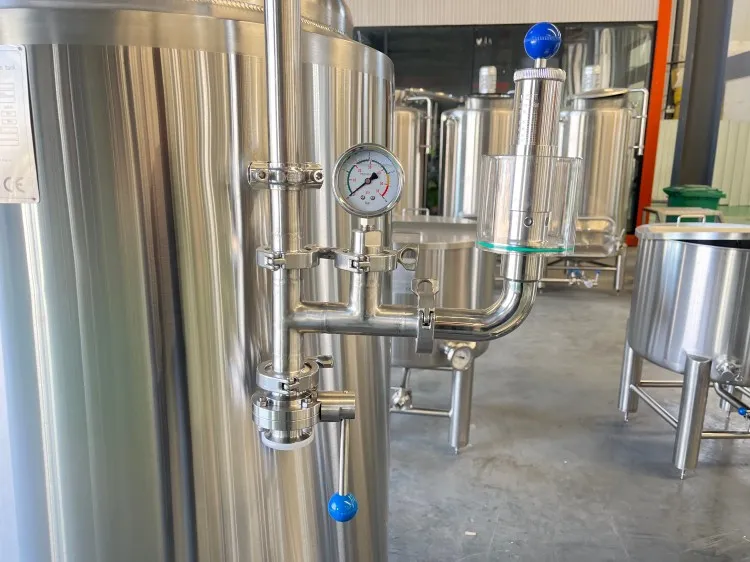
A smart brewing system may include:
- Electric heating or steam control
- Mash temperature programs
- Pump and valve control
- Fermentation temperature tracking
- Glycol cooling control
- Cleaning cycle support
- Recipe memory
- Alarm and data records
For a larger project, brewery equipment may also include grain handling, brewhouse automation, cellar automation, CIP cleaning, and packaging links. The best plan depends on your building, output goal, budget, and labor model.
Can Home Brew and Commercial Brewing Both Benefit from Automated Beer Brewing?
Yes, but the purpose is different. Home brew users often want ease of use. They may use an all-in-one unit, beer kits, or a small brewing kit to make beer at home. This helps home brewers enjoy the process without too many separate pieces of equipment.
Commercial brewing has a different goal. It needs strength, cleaning performance, stainless vessels, safe piping, stable controls, and long service life. A commercial buyer is not only making a favorite beer. They are building a brewing business.
Automated beer brewing can support both groups, but system design must match the real need. A home unit may be small and simple. An automated commercial brewhouse needs sanitary design, accurate controls, reliable installation support, and after-sales service.
How Does Temperature Control Help Create High-Quality Beer?
Temperature control affects flavor from mash to fermentation. During mash, it helps the brewer manage sugar conversion. During fermentation, it helps yeast work in the right range. If the tank gets too warm or too cold, flavor may drift.
The American Homebrewers Association explains that fermentation temperature plays a major role in ale and lager character, and it can affect style accuracy. This is why both homebrewing and professional production need stable cooling and clear monitoring.
For high-quality beer, a good system should hold tank temperature, display data clearly, and respond quickly. In larger projects, glycol cooling is often used to support several tanks at once. This creates a more stable brewing environment.
What Are the Benefits of Automated Brewing for Craft Beer Producers?
The benefits of automated brewing are easy to see when production gets busy. The brewer can save time, improve repeatability, reduce manual steps, and train staff faster. More important, the beer can stay more consistent.
For craft brewing, this matters because customers return for a known taste. They may love a pale ale for its aroma, or a stout for its body. If each brew changes too much, trust becomes harder to build.
Automation in brewing can also help with records. A control panel can store temperature curves, timing, alarms, and recipe steps. This helps owners review problems and improve the next brew. Better data leads to better decisions.
How Should Buyers Compare Types of Automated Equipment?
There are many types of automated equipment. Some systems only control temperature. Some include pumps and valves. Some are fully automated from water filling to cleaning. A buyer should not choose only by the number of buttons on the screen.
Use this guide:
| Equipment Type | Best Use | Key Benefit |
|---|---|---|
| All-in-one brewing | Small tests and home use | Simple start |
| Electric brewing system | Small commercial or pilot production | Clean heat and easy control |
| Semi-automatic brewhouse | Brewpubs and small breweries | Good balance of cost and control |
| Fully automated system | Larger commercial projects | Less labor and strong repeatability |
| Cellar automation | Fermentation and tank control | Better scheduling and stability |
When comparing systems, ask: Does this equipment designed layout fit my space? Can it expand? Can the supplier support installation? Can my team run it easily?
What Should You Check When Choosing the Right Automated Brewing System?
Choosing the right automated brewing system starts with capacity. How much do you need to brew per day, per week, and per year? Do you sell in a taproom, bottles, cans, kegs, or all channels? Your answer affects vessel size, tank number, cooling power, and layout.
Next, check the system structure. A professional beer brewing equipment plan should include the brewhouse, fermentation tanks, brite tanks, piping, pumps, controls, cleaning, cooling, and packaging interface. These parts must work together.
Before purchase, review this checklist:
- Target output and batch size
- Beer style range and recipe needs
- Heating method: steam, electric, or direct fire
- Tank quantity and future expansion
- Automation level and control logic
- Sanitary welding and material quality
- Local power and water conditions
- Installation, training, and service support
A good supplier should ask questions before quoting. Fast quotes can look attractive, but careful planning saves money later.
How Can a Turnkey Supplier Simplify Your Brewing Journey?
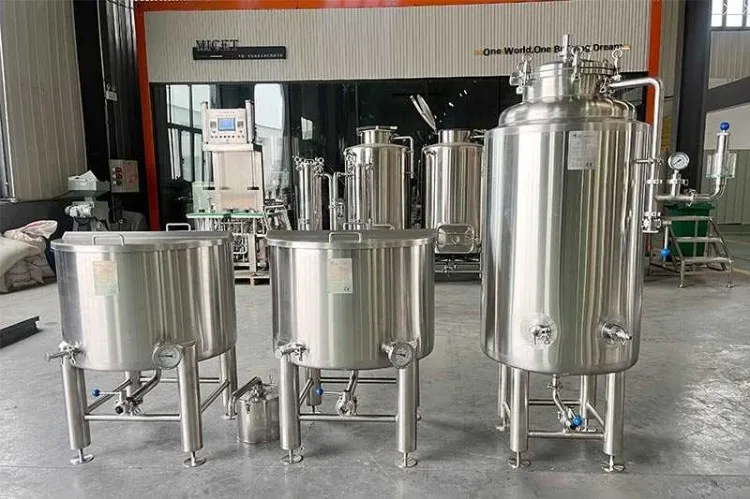
A turnkey supplier can simplify the project by linking design, manufacturing, delivery, installation, training, and after-sales support. This is useful for breweries, beverage startups, investors, and engineering contractors who want lower project risk.
As a professional brewery and beverage equipment manufacturing plant, we provide customized stainless steel brewing systems, fermentation tanks, brewhouse systems, and turnkey brewery solutions for global B2B customers. We help buyers plan capacity, layout, utilities, cleaning, cooling, and future expansion.
For example, a taproom may start with a compact brewhouse and several fermenters. Later, it may add brite tanks, a keg line, or a beer dispenser system. If the first layout allows this growth, the owner avoids costly rebuilding.
How Can Automation Help Create Unique Beer and Fresh Beer More Often?
A common fear is that automation makes beer less creative. In real production, it often does the opposite. When repeated steps become stable, the brewer has more time to test a unique beer, new hop blend, or special yeast profile.
Automation can also help with small trial runs. A pilot brewing system can test new beer recipes before full production. If the recipe works, the team can scale it with better data.
Fresh beer depends on planning. If the brewery can brew, ferment, cool, and package on a clear schedule, stock moves faster. This helps taprooms and distributors serve beer lovers at the right time.
How Does an Automated Beer Brewing System Support Other Beverages?
Many customers now make more than one product. They may start with beer making, then add kombucha, cider, wine, cold brew coffee, or other fermented drinks. The core need is similar: clean tanks, stable temperature, smooth transfer, and safe operation.
An automated beer brewing system can be part of a wider beverage plan if the system is designed with flexibility. Tank ports, cooling capacity, cleaning method, and piping layout should allow future changes.
This is why custom engineering matters. A standard system may not fit every product. Customized brewing solutions help B2B buyers protect quality, improve output, and support sustainable growth.
Case Study: From Manual Brewing to Automated Brewery Production
One growing brewpub came to us with a common problem. Their manual system made good beer, but output was slow. Staff spent too much time moving liquid, checking temperature, and cleaning. The owner wanted better control without losing the craft feel.
We helped plan a compact automated brewery layout with a controlled brewhouse, jacketed fermenters, glycol cooling, sanitary piping, and a clear cleaning workflow. The goal was not to remove the brewer. The goal was to remove repeated stress.
After the upgrade, the team could brew more often, train staff faster, and plan seasonal releases with less risk. The owner said the biggest change was not only output. It was peace of mind.
FAQs About Automated Brewing Systems
What is an automated brewing system?
An automated brewing system uses controls, sensors, pumps, valves, and software to manage brewing steps. It can help with heating, mash timing, transfer, cooling, fermentation control, cleaning, and data records.
Is automated brewing only for large breweries?
No. Small breweries, brewpubs, pilot labs, and even home brew users can use automation. The key is choosing the right system size and control level for your brewing needs.
Does automation reduce the role of the brewer?
No. The brewer still creates the recipe, chooses ingredients, sets the process, and checks quality. Automation helps repeat the plan with fewer manual errors.
Can I use automation for different beer styles?
Yes. A well-planned system can support different recipes, mash steps, hop schedules, yeast choices, and fermentation programs. This helps you make a wide range of beer styles.
What is the difference between semi-automatic and fully automated beer brewing?
A semi-automatic system controls some steps but still needs more operator input. Fully automated beer brewing controls more steps through programs, valves, pumps, and sensors.
How do I know which system is right for my brewery?
Start with your output target, building size, labor plan, product range, packaging model, and budget. Then work with a supplier that understands both engineering and real brewing operation.
Key Takeaways
- Automation helps a brew become more stable, repeatable, and easier to manage.
- An automated brewing system supports better mash control, transfer, cooling, fermentation, and cleaning.
- Home brew users and commercial breweries can both benefit, but they need different system designs.
- Temperature control is one of the most important tools for flavor stability.
- The best brewery system should match capacity, layout, utilities, labor, packaging, and future growth.
- A turnkey equipment supplier can reduce project risk through design, manufacturing, installation support, and after-sales service.
- Custom stainless steel systems help breweries, brewpubs, beverage startups, and investors build a stronger long-term production plan.
What Is a CIP System? Clean-in-Place Applications for Brewery, Beverage, Food and Pharmaceutical Equipment
Dirty tanks, hidden pipe residues, and unstable hygiene routines can ruin a batch before anyone tastes it. For breweries, wineries, kombucha plants, distilleries, and beverage factories, the risk is real: contamination, downtime, product loss, and unhappy customers. A well-designed cip system solves this problem before it grows.
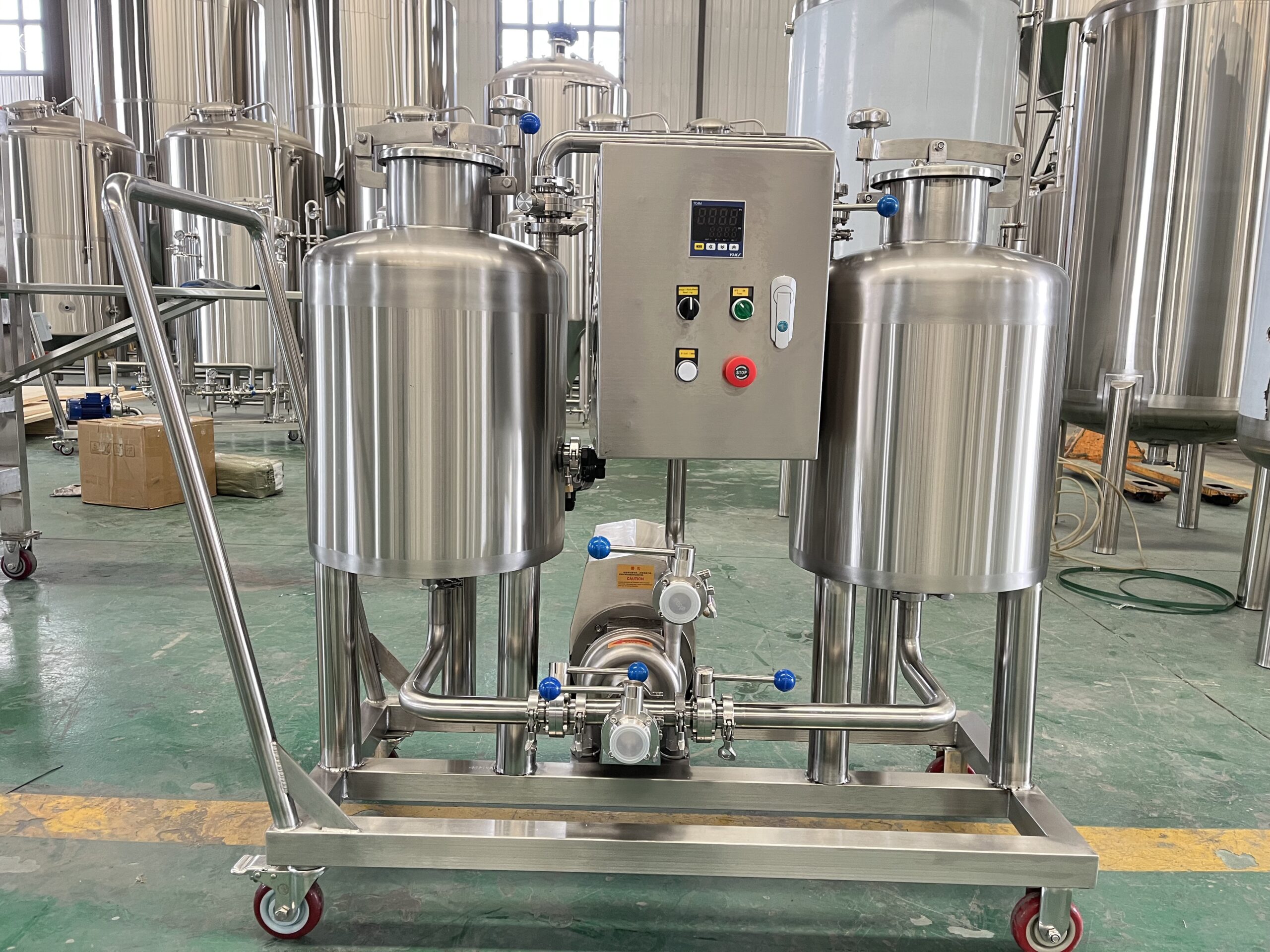
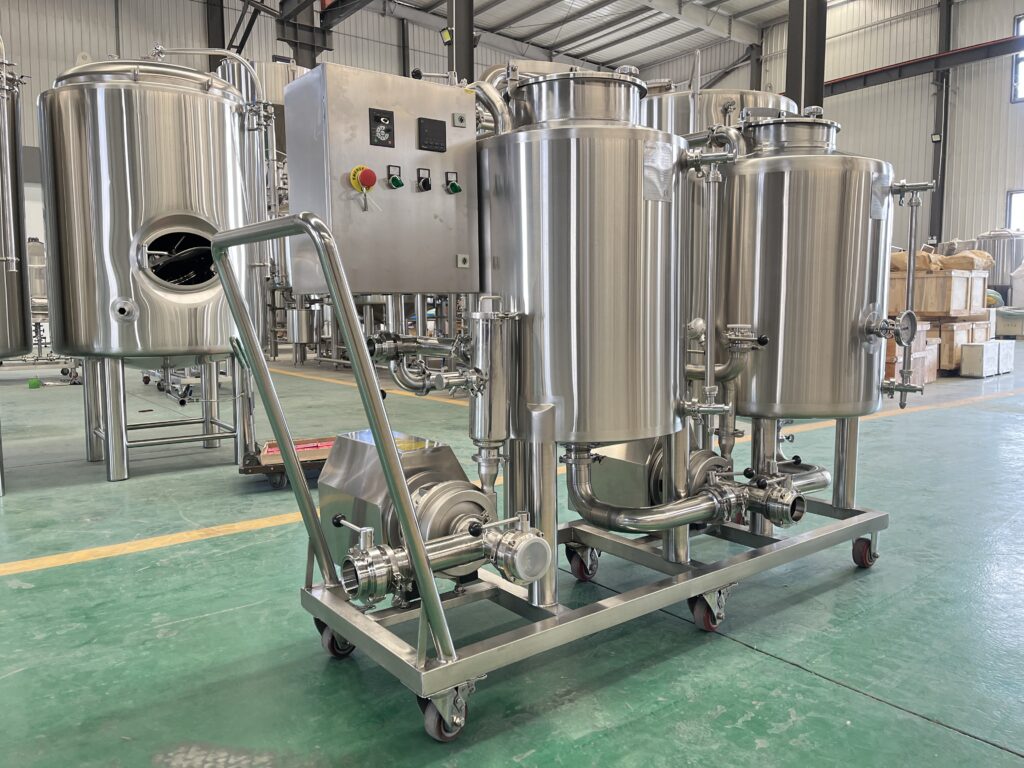
A cip system is a clean-in-place cleaning system that washes the inside of tanks, pipes, pumps, valves, heat exchangers, and other process equipment without taking everything apart. It uses controlled rinse water, cleaning solution, flow, temperature, and time to clean and sanitize sanitary process lines safely and consistently.
Executive Summary
- CIP stands for clean-in-place, a method of cleaning closed systems without full disassembly.
- A reliable cip system helps breweries and beverage factories reduce manual cleaning, labor time, chemical waste, and batch contamination risk.
- The typical cip cycle includes pre-rinse, caustic wash, intermediate rinse, acid wash if needed, final rinse, and sanitizing.
- Good system design depends on tank size, pipe route, pump capacity, spray device, flow rate, temperature, and automation level.
- A cip skid can be portable, semi-automatic, or fully automated, depending on production scale and hygiene risk.
- Before buying, B2B buyers should check cleaning validation needs, utility supply, expansion plans, local standards, and after-sales support.
Article Outline
- What is a CIP system and why does clean-in-place matter?
- How does the CIP process work step by step?
- What equipment is used in CIP?
- What are the main types of CIP systems?
- How should you design CIP for tanks, pipes, and process equipment?
- What CIP chemicals are used in brewery and beverage plants?
- What are the benefits of CIP systems for B2B producers?
- How do CIP skid systems compare with manual cleaning?
- Clean-in-place buying guide: how to choose the right CIP?
- Where are CIP applications used: brewery, winery, kombucha, distillery, food, and pharmaceutical?
- What should buyers know about compliance, validation, and documentation?
- FAQs and final summary.
What Is a CIP System and Why Does Clean-in-Place Matter?
A cip system is a controlled clean-in-place system used to clean the internal surfaces of sanitary equipment without opening every tank, removing every fitting, or manually scrubbing every pipe. In simple words, it lets you clean equipment from the inside by circulating water and cleaning solution through a closed loop.
In brewery cip, the system usually connects to brewhouses, fermenters, bright beer tanks, yeast tanks, filters, heat exchangers, and process piping. In food and beverage production, the same idea applies to juice tanks, kombucha fermenters, syrup tanks, dairy vessels, and beverage filling lines. In pharmaceutical manufacturing, the hygiene expectation is even stricter because residues and cross-contamination can affect safety and compliance.
From our experience as a professional brewery, distillery, winery, kombucha, and beverage equipment manufacturer, the most common mistake is treating CIP as “just a washing pump.” It is not. A well-designed cip system is part of your production quality strategy. It protects product flavor, improves food safety, and helps operators run a repeatable cleaning process every day.
How Does the CIP Process Work Step by Step?
A standard cip process follows a logical order. First, the system performs a rinse to remove loose soil, yeast, sugar, proteins, hop residues, fruit pulp, or product left inside the pipe and tank. This first rinse matters because it reduces the chemical load before the main wash begins.
Next, the cleaning solution circulates through the process system. In many brewery and beverage plants, an alkaline solution removes organic residues such as protein, fat, sugar, and biofilm. Then another rinse removes chemical residues. If mineral scale or beerstone is present, an acid cleaning solution may follow. Finally, the system completes a final rinse or sanitizing step before the line returns to production.
A typical cip routine may look like this:
| CIP Stage | Main Purpose | Buyer Notes |
|---|---|---|
| Pre-rinse | Remove loose residue | Saves chemicals and improves cleaning efficiency |
| Alkaline wash | Remove organic soil | Common in brewery and beverage cleaning |
| Intermediate rinse | Remove chemical residue | Check water clarity, pH, or conductivity |
| Acid wash | Remove mineral scale | Useful for beerstone, water scale, and wine minerals |
| Final rinse | Remove remaining chemical | Must match site hygiene rules |
| Sanitize | Reduce microbial risk | Often done before production starts |
A strong cip cycle is not only about chemicals. It depends on time, temperature, concentration, and mechanical force. If one factor is weak, the whole cleaning cycle may fail.
What Equipment Is Used in CIP?
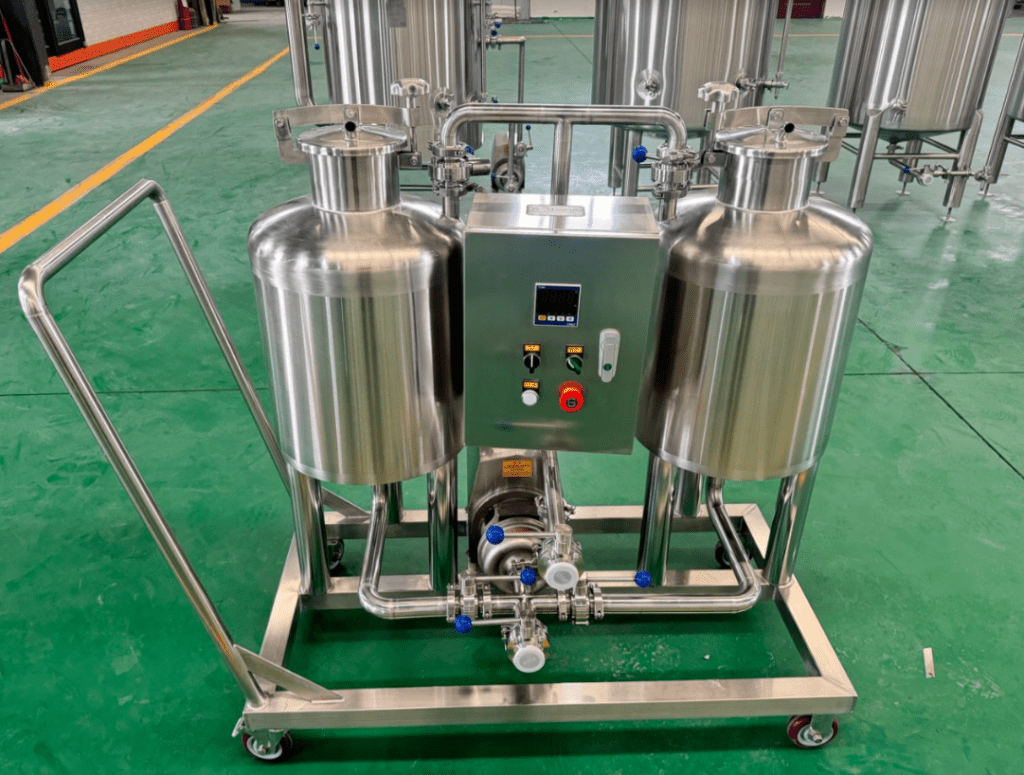
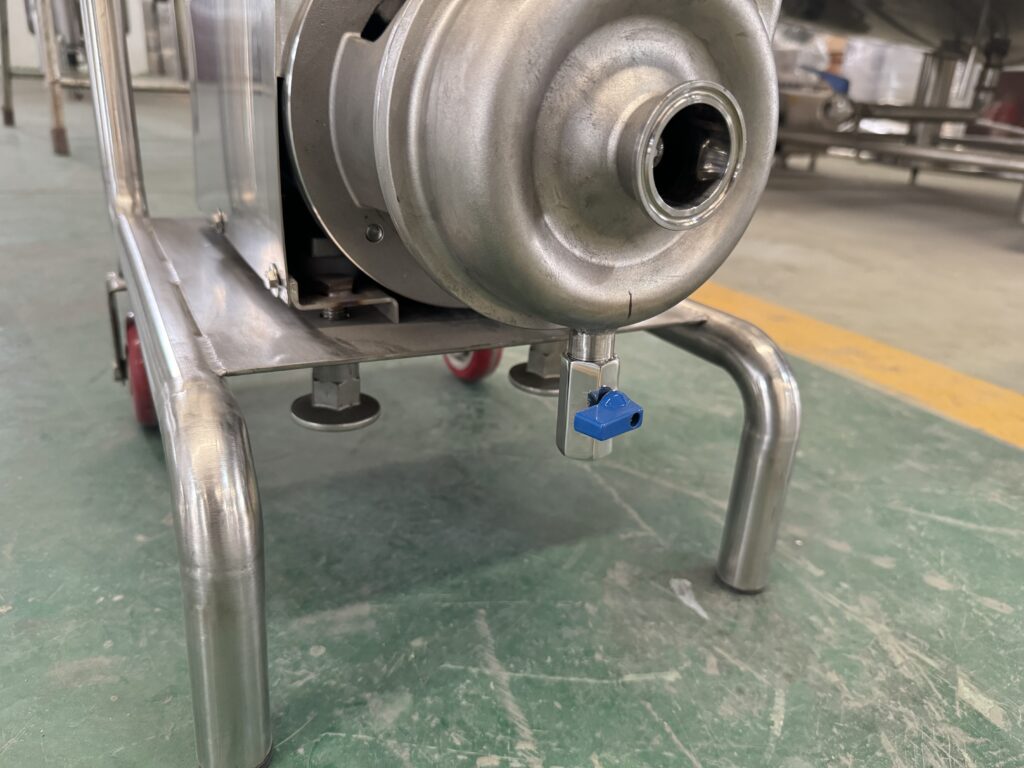
The main cip equipment usually includes a cip tank, pump, valves, pipe connections, heating device, return line, spray ball or rotary spray head, temperature sensor, conductivity meter, and control system. A simple portable cip skid may use one tank and one pump. A larger automated cip system may include several tanks for water recovery, caustic solution, acid solution, and final rinse water.
The pump is especially important. It must create enough flow and pressure to push the cleaning solution through the pipe and deliver enough impact at the spray device. If the pump is too small, the cleaning method may look correct on paper but fail in real production. If it is too large, it can waste energy, create foaming, or stress fittings.
Pipe route also matters. Long pipe runs, dead legs, low points, and poorly drained sections can trap residues. A good manufacturer should design cip around real equipment layout, not only around tank volume. That is why we often provide CAD or 3D layout support before recommending a cip system for a brewery, kombucha plant, winery, or beverage factory.
What Are the Main Types of CIP Systems?
There are several types of cip systems, and the right choice depends on production scale, product risk, budget, and automation needs.
| Type of CIP | Best For | Advantages | Limitations |
|---|---|---|---|
| Portable CIP | Startup breweries, small tanks, pilot plants | Flexible, lower cost, easy to move | More operator handling |
| Single-tank CIP | Small to medium production | Simple, compact, cost-effective | Less chemical recovery |
| Multi-tank CIP | Commercial breweries and beverage plants | Better reuse of water and chemicals | Higher investment |
| Centralized CIP | Large process plants | Can serve many lines | Needs careful system design |
| Automated CIP | High-volume or strict hygiene plants | Repeatable, traceable, lower labor | Requires stronger controls |
The types of cip also depend on whether the plant wants fixed piping or flexible hose connections. Portable cip can be useful for small breweries or used brewing system upgrades. Centralized cip skid systems work better when production grows and many tanks need scheduled cleaning.
In my professional view, many cip projects fail because the buyer chooses the cheapest skid instead of the right cip for the process. A small brewpub may not need full automation. A commercial brewery with many fermenters may lose money every week if operators depend too much on manual cleaning.
How Should You Design CIP for Tanks, Pipes, and Process Equipment?
Good system design starts with the equipment that needs cleaning. A fermenter, brewhouse, flash pasteurizer, heat exchanger, and filling pipe do not all clean the same way. Each process equipment group needs the right flow, pressure, temperature, and cleaning time.
When we design cip for global projects, we normally review:
- Tank volume and internal shape
- Spray ball or rotary spray head coverage
- Pipe diameter and pipe length
- Pump flow and return flow
- Heating method
- Drainage slope
- Valve arrangement
- Automation level
- Chemical recovery plan
- Operator safety
The goal is simple: the cip system must contact all product-contact surfaces. It must also drain fully after cleaning. Poor drainage creates water pockets, chemical carryover, and microbial risk. Hygienic design principles from groups such as EHEDG and 3-A Sanitary Standards also stress that equipment should be easy to clean and should avoid hidden areas where soil can stay.
For a startup project, we often recommend designing the cip skid design together with the brewhouse and cellar layout. Installing a cip system after production starts can work, but it is usually harder, more expensive, and less elegant.
What CIP Chemicals Are Used in Brewery and Beverage Plants?
CIP chemicals vary by product, soil type, water hardness, and local rules. In brewery, kombucha, cider, juice, and winery applications, common cleaning agents include alkaline cleaners, acid cleaners, sanitizers, and sometimes special descaling or oxygen-based products.
The alkaline cleaning solution usually handles organic residues. It helps remove yeast, proteins, sugar films, and product soil. Acid cleaning solution targets mineral scale, beerstone, water deposits, and some color residues. Sanitizers are used after cleaning when the plant needs to clean and sanitize the surface before production.
However, stronger chemical is not always better. Chemical choice must match stainless steel grade, gasket material, temperature, contact time, and operator safety. For example, a cleaning solution that works in one process may not be suitable for another process piping material or seal type. This is why professional suppliers should not only sell tanks and pumps; they should also guide the buyer on safe cleaning programs.
What Are the Benefits of CIP Systems for B2B Producers?
The benefits of cip systems are practical and measurable. A cip system reduces labor, supports repeatable cleaning, protects product quality, and shortens changeover time. For breweries, it helps protect beer flavor. For kombucha producers, it helps control yeast and bacteria balance. For wineries and cider plants, it helps reduce residue and mineral buildup.
CIP systems help operators avoid risky shortcuts. When a production team cleans manually, the result depends heavily on operator skill, time pressure, and visibility. In closed systems, you cannot always see the inside of a pipe or tank outlet. CIP systems reduce this uncertainty by using controlled flow, time, temperature, and concentration.
In B2B project planning, a robust cip system can also improve investor confidence. If you are building a new brewery, distillery, winery, or beverage factory, your hygiene plan is part of your operating risk. Reliable cip solutions can reduce batch loss, protect brand reputation, and make daily production more stable.
How Do CIP Skid Systems Compare With Manual Cleaning?
Manual cleaning still has a place. Some removable parts, gaskets, small fittings, and external surfaces need hand cleaning or clean-out-of-place work. But manual cleaning alone is not ideal for tanks, long pipe lines, heat exchangers, or closed systems.
A cip skid automates the flow of cleaning solution through internal surfaces. It makes the cleaning process easier to repeat. It can also improve worker safety because operators spend less time opening tanks or handling hot chemical solution directly.
| Factor | Manual Cleaning | CIP Skid Systems |
|---|---|---|
| Labor demand | High | Lower |
| Repeatability | Operator-dependent | More consistent |
| Closed pipe cleaning | Difficult | Strong advantage |
| Chemical control | Less precise | Easier to monitor |
| Cleaning records | Manual logs | Can be automated |
| Best use | Small parts and visible surfaces | Tanks, pipe, valves, heat exchangers |
A good plant uses both methods wisely. CIP handles internal sanitary process routes. Manual cleaning handles parts that cannot be cleaned properly in place. Many cip operations still require inspection, record keeping, and operator judgment.
Clean-in-Place Buying Guide: How to Choose the Right CIP?
This clean-in-place buying guide is written for professional buyers who need a practical decision path. The best cip system is not always the largest or most automated. It is the system that fits your production size, cleaning risk, future expansion, and operator skill level.
Use this checklist before purchase:
| Buying Question | Why It Matters |
|---|---|
| What products will the line process? | Beer, kombucha, wine, spirits, juice, and syrup leave different residues |
| How many tanks need cleaning each day? | Determines skid size and automation level |
| What is the pipe diameter and longest pipe run? | Affects cip flow and pump selection |
| Will chemicals be reused? | Impacts tank quantity and operating cost |
| Is cleaning validation required? | Important for pharmaceutical and regulated food processing |
| What utilities are available? | Steam, electricity, hot water, compressed air, and drainage all matter |
| Will the plant expand later? | A scalable cip system saves future replacement cost |
| Who provides installation guidance? | Poor installation can weaken effective cleaning |
For small startup breweries, a portable cip may be enough. For established breweries, beverage co-packers, and high-volume kombucha producers, automated cip systems or centralized cip skid systems may be more practical.
As a factory-direct equipment manufacturer and used brewing system supplier, we often evaluate both new and used equipment layouts. Used tanks can perform well, but the buyer must confirm spray coverage, weld condition, valve condition, pipe drainage, and CIP compatibility before installation.
Where Are CIP Applications Used?
CIP applications cover many industries. In the food and beverage industry, CIP is used for breweries, kombucha plants, wineries, cider lines, juice plants, dairy processing, sauce production, and beverage co-packing. In pharmaceutical systems, CIP supports cleaning validation and contamination control.
For brewery equipment, CIP systems are critical because beer residues can hide in tanks, heat exchangers, valves, and pipe turns. Breweries rely heavily on cip to protect flavor stability and reduce contamination risk. Distilleries use cip for mash tanks, fermentation tanks, transfer lines, and sometimes spirit-related process equipment. Wineries and cider producers use CIP to manage organic residues, mineral deposits, and seasonal production loads.
In pharmaceutical manufacturing, cip systems must support stricter documentation and validated cleaning procedures. In beverage projects, cip systems to maintain hygiene may not need the same level of validation, but they still need reliable process control.
What Should Buyers Know About Compliance, Validation, and Documentation?
CIP is not only equipment. It is also a program. Your team needs written steps, chemical concentration targets, rinse standards, inspection points, and records. In many regions, food safety rules follow a preventive approach. The FDA Food Safety Modernization Act is a good example because it focuses on preventing problems instead of only reacting after they happen.
For food processing and beverage plants, documentation may include cip programs, cleaning logs, chemical records, temperature records, conductivity checks, and operator sign-off. For pharmaceutical plants, validation is stricter. ISPE resources highlight lifecycle thinking for cleaning validation, including development, maintenance, and control of cleaning procedures.
The recommendation is clear: do not copy another factory’s CIP recipe without checking your own conditions. Water hardness, product soil, tank design, pipe length, pump flow, and chemical supplier recommendations all affect results. Effective cip requires testing, adjustment, and periodic review.
Practical Case Example: Startup Brewery Expanding from Manual Cleaning to CIP
A startup craft brewery may begin with a small brewhouse and a few fermenters. At first, operators can manage cleaning with hoses, spray devices, and manual checks. But once production grows, the same team may need to clean more tanks in less time. That is when manual cleaning becomes a bottleneck.
In this case, a portable cip skid can be a smart first upgrade. It can clean fermenters, bright tanks, and short transfer pipe runs without major rebuilding. The brewery can later move toward a larger multi-tank cip system when tank numbers increase.
The trade-off is simple. Portable CIP costs less and gives flexibility. A centralized automated cip costs more but improves efficiency and repeatability. Neither is “best” for every buyer. The right decision depends on batch frequency, tank count, hygiene risk, and growth plan.
Common Mistakes When Installing a CIP System
The first mistake is undersizing the pump. A weak pump may circulate cleaning solution but fail to create enough mechanical action. The second mistake is poor pipe routing. If the pipe does not drain well, cleaning residues and water can remain in the line.
The third mistake is ignoring return flow. CIP is a loop. If supply is strong but return is weak, the system may flood, foam, or lose temperature control. The fourth mistake is relying only on automation. Automated cleaning is useful, but operators still need training, inspection routines, and maintenance discipline.
A well-designed cip system should be simple to operate, easy to inspect, and matched to real production. It should not make daily work more confusing.
FAQs About CIP Systems
What does CIP stand for?
CIP stands for clean-in-place. It means cleaning internal surfaces of tanks, pipes, pumps, valves, and process equipment without taking the whole system apart.
Is CIP cleaning the same as sanitizing?
No. CIP cleaning removes soil, residues, organic matter, and mineral deposits. Sanitizing reduces microbial risk after cleaning. You usually need proper cleaning before sanitizing can work well.
Can I use CIP for all brewery equipment?
You can use cip for many tanks, pipe lines, heat exchangers, and closed systems. But some parts still need manual cleaning or disassembly. Gaskets, small fittings, and blocked areas may need separate inspection.
What is a typical CIP cycle for a brewery?
A typical cip cycle may include pre-rinse, caustic wash, rinse, acid wash when needed, final rinse, and sanitizing. The actual cycle depends on product residue, equipment design, chemical supplier guidance, and plant rules.
How do I know if I need portable CIP or automated CIP?
Choose portable cip if your plant is small, flexible, or budget-sensitive. Choose automated cip if you need repeatable cleaning, more records, higher throughput, or less operator handling.
Can a used brewing system work with a new CIP system?
Yes, but it must be checked carefully. Used tanks and pipe routes need inspection for spray coverage, weld quality, drainage, valve condition, dead legs, and material compatibility.
Key Takeaways
- A cip system cleans tanks, pipe, pumps, valves, and process equipment without full disassembly.
- Clean-in-place improves hygiene, saves labor, and supports stable production.
- A good cleaning cycle depends on flow, temperature, time, chemical concentration, and proper rinse steps.
- The right cip depends on tank size, pipe route, production volume, automation needs, and hygiene risk.
- Portable cip is useful for startups; automated cip systems are better for larger and more regulated operations.
- CIP systems must be designed with sanitary process needs, operator safety, and future expansion in mind.
- Manual cleaning still matters for removable parts and inspection points.
- For breweries, wineries, kombucha producers, distilleries, and beverage factories, CIP is a production quality investment, not just an accessory.
If you are planning a new brewery, beverage plant, winery, distillery, kombucha line, or used brewing system upgrade, the best next step is to review your tank list, pipe layout, cleaning targets, and daily production schedule with an experienced equipment manufacturer. A practical CIP evaluation can help you avoid overspending, under-designing, or building a system that is hard to operate later.
如何为酿酒厂选择酿造设备:从家庭酿酒到商业啤酒酿造
Many new beverage projects fail because the equipment plan is unclear. The tank is too small. The layout is hard to clean. The cooling is weak. The result is wasted time, unstable flavor, and higher cost. The solution is to choose the right system before you brew.
Brewing equipment is the full set of tools used to turn grain, water, hop, and yeast into finished beer. For small homebrew users, this may start with a simple brewing kit. For a craft brewery or commercial brewery, it should include stainless steel brewhouses, fermenter tanks, cooling, CIP cleaning, and packaging equipment sized around real production goals.
Article Outline
- What brewing equipment do you need to brew beer?
- How does the brewing process work from mash to fermentation?
- Which kettle, mash tun, and HLT setup fits your batch size?
- Why do wort cooling and chiller options matter?
- What fermenter design helps you maintain fermentation temperatures?
- How should cleaning and sanitizing be planned?
- Bottle, keg, or can: which packaging route is right?
- What brewery supplies and fittings should not be ignored?
- Homebrew vs commercial beer brewing equipment: what changes?
- How can a manufacturer help you build high-quality beer brewing equipment?

What Brewing Equipment Do You Need to Brew Beer?
To brew beer well, you need more than one tank. You need a clear system. At the basic level, the setup includes a kettle, a mash tun, a fermenter, hoses, valves, a thermometer, a hydrometer, and safe transfer tools. These parts help you heat water, extract sugar from grain, boil wort, cool it, ferment it, and move the beer without contamination.
For beer at home, beginner kits can be enough. A home brew setup may include brew pots, a small fermenting bucket, an airlock, and bottle caps. This is a good way to learn beer making before investing in larger tanks. But once you plan to sell beer, equipment must be stronger, easier to clean, and more stable.
As a brewery equipment manufacturer, we usually start with one question: how much beer do you want to produce per day, week, and month? The answer decides the tank size, heating method, cooling capacity, floor layout, and future expansion plan. A good selection of beer brewing equipment should fit your real business model, not just your current budget.
How Does the Brewing Process Work from Mash to Fermentation?
The brewing process starts with water and grain. Hot water mixes with crushed malt in the mash stage. This step changes starch into sugar. The sweet liquid is called wort. After the mash, the wort moves to boiling. During boiling, the brewer adds hop to build bitterness, aroma, and balance.
After boiling wort, the hot wort must cool quickly. Yeast cannot work well in liquid that is too hot. Once cooled, the wort moves into the fermenter. Yeast then begins fermentation and changes sugar into alcohol and flavor. This is where beer becomes beer.
A simple process chart looks like this:
| Step | Main Purpose | Key Equipment |
|---|---|---|
| Milling | Crush malt for sugar extraction | Malt mill |
| Mashing | Convert starch into sugar | Mash tun |
| Boiling | Sterilize wort and add hop | Brew kettle |
| Cooling | Bring wort to yeast temperature | Plate chiller or immersion chiller |
| Fermenting | Create alcohol and flavor | Fermenter |
| Conditioning | Improve clarity and taste | Brite tanks |
| Packaging | Prepare for sale | Bottle, kegging, or canning line |
Which Kettle, Mash Tun, and HLT Setup Fits Your Batch Size?
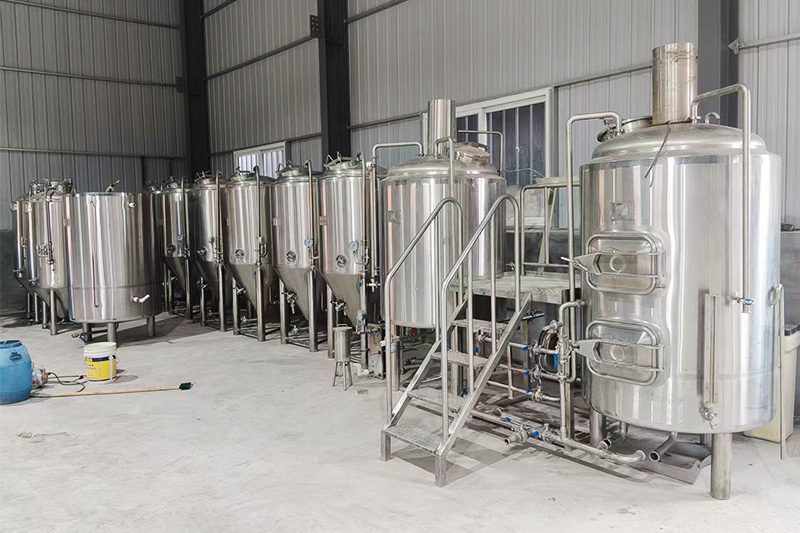
The kettle is one of the most important parts of any brew setup. In small systems, one vessel may do several jobs. In larger brewhouses, the mash tun, lauter tun, kettle, and whirlpool may be separate. This improves speed, control, and repeatability.
The HLT, or hot liquor tank, stores hot brewing water. It supports mashing and sparge water preparation. For a busy taproom or production brewery, an HLT can save time because hot water is always ready for the next batch. For all-grain production, this is especially useful.
Here is a simple guide:
| Project Type | Suggested Setup | Best For |
|---|---|---|
| Small trial project | All-in-one system or BIAB | Recipe testing and training |
| Brewpub | 2-vessel or 3-vessel brewhouse | Fresh local beer and flexible menus |
| Growing craft brewery | 3-vessel or 4-vessel brewhouse | Higher output and better process control |
| Industrial production | Custom brewhouses with automation | Stable quality and repeated large batches |
BIAB means “brew in a bag.” It is simple and affordable. But for a serious brewery, stainless steel tanks, pumps, proper recirculation, and sanitary pipelines provide better control.
Why Do Wort Cooling and Chiller Options Matter?
Cooling is not a small detail. It affects beer quality, production speed, and yeast health. After boiling, the wort must move from high temperature to fermentation temperature quickly and safely. If cooling is too slow, the risk of unwanted flavor and contamination increases.
Small brewers may use an immersion chiller. Larger systems often use a plate chiller because it cools faster and saves space. The right choice depends on batch size, water temperature, glycol capacity, and production schedule.
For commercial projects, we also check the cooling load of fermentation tanks. A tank may look correct on paper, but if the glycol system is too weak, the brewer cannot maintain fermentation temperatures. That creates unstable flavor from batch to batch. In our factory work, we treat cooling as part of the whole brewing systems design, not as an accessory.
What Fermenter Design Helps You Maintain Fermentation Temperatures?
The fermenter is where yeast does its job. For beer, stainless steel conical fermenters are common because they support yeast collection, cleaning, pressure control, and efficient draining. A good tank should use food-grade stainless steel, smooth welding, proper insulation, and a cooling jacket.
Fermentation control is not only about temperature. It also includes pressure, oxygen control, sanitary fittings, and easy cleaning. The tank should have a sample valve, pressure relief valve, CIP spray ball, racking arm, and clear bottom outlet. A poor fitting can cause leaks, cleaning trouble, or product loss.
For a commercial brewery, we often recommend planning extra tank space before sales grow. One brewhouse can feed many fermentation tanks. If tanks are too few, the brew schedule becomes blocked. That is why a smart capacity plan can lower long-term cost.
How Should Cleaning and Sanitizing Be Planned?
Clean equipment makes better beer. It also protects your brand. Before and after every production cycle, tanks, hoses, valves, beer line parts, and transfer tools must be cleaned and sanitized. This is not optional. It is part of professional brewing.
Cleaning and sanitizing are different. Cleaning removes soil, sugar, protein, and visible residue. Sanitizing reduces microbes on already clean surfaces. For larger systems, a CIP system, also called clean in place, lets operators wash tanks and pipelines without taking everything apart.
A practical sanitation checklist includes:
- Rinse tanks after use before residue dries.
- Use correct cleaning chemicals for stainless steel.
- Sanitize all product-contact surfaces before filling.
- Check gaskets, hose ends, valves, and clamps.
- Keep cleaning logs for quality control.
- Train staff to follow the same process every time.
Good sanitation supports longer equipment life, safer beer, and fewer surprises.
Bottle, Keg, or Can: Which Packaging Route Is Right?
Packaging depends on your sales channel. If you sell in a taproom, kegging may be the best starting point. If you sell through stores, bottle or can packaging may be needed. Some breweries also use growlers for local takeaway sales.
Each route needs different equipment and supplies. Bottle filling requires rinsing, filling, capping, labeling, and packing. Keg filling needs washers, fillers, keg couplers, and pressure control. A draft system may also need beer towers, clean beer lines, and regular line service.
Here is a simple comparison:
| Packaging Method | Advantages | Key Equipment |
|---|---|---|
| Keg | Fast for taproom and draft sales | Keg washer, filler, coupler |
| Bottle | Good shelf display and gift sales | Bottle rinser, filler, capper |
| Can | Popular for retail and delivery | Can filler, seamer, labeler |
| Growlers | Good for local customers | Counter-pressure filler |
Packaging equipment should match your beer style, oxygen control needs, and labor plan. A small filling machine may be fine at first. But if orders grow fast, packaging becomes the bottleneck.
What Brewery Supplies and Fittings Should Not Be Ignored?
Many people focus only on tanks. But small parts can decide whether the system runs smoothly. Brewery supplies include hoses, clamps, valves, pumps, gaskets, seals, filters, cleaning tools, and testing instruments. These small items help the brewer work safely and repeatably.
A refractometer helps check sugar during brewing. A hydrometer can help measure alcohol content during fermentation. Proper hose length, sanitary clamps, and tri-clamp fittings make transfer easier. Even a simple rack for hoses and tools can improve hygiene and save time during daily work.
For professional projects, we recommend preparing a spare parts list before shipment. This may include gaskets, valves, seals, sensors, and pump parts. It is a small investment, but it can prevent downtime when production is active.
Homebrew vs Commercial Beer Brewing Equipment: What Changes?
Homebrewing is about learning, testing, and enjoying the craft. Home brewing equipment can be simple, flexible, and low-cost. You can make beer in a kitchen, garage, or small workshop. If one batch fails, the loss is small.
Commercial beer brewing equipment is different. It must support stable output, safety, cleaning, worker efficiency, and local business rules. A commercial system needs stronger tanks, sanitary design, better cooling, pressure control, electric or steam heating, and a clear layout.
The main difference is risk. A hobby brewer can adjust by feel. A business needs repeatable process control. That is why a serious project should plan production volume, tank turnover, utility supply, drainage, ventilation, glycol cooling, and packaging from the beginning.
How Can a Manufacturer Help You Build High-Quality Beer Brewing Equipment?
A good manufacturer does more than sell tanks. We help customers design a complete production path. That includes capacity planning, stainless steel tank selection, CAD layout, utility matching, installation guidance, commissioning support, and after-sales service.
For a beverage startup, we may suggest a smaller system with room to expand. For an engineering contractor, we may provide detailed drawings and project coordination. For a winery, distillery, kombucha producer, or cold brew coffee brand, we adjust tank structure and process design based on the product.
Our goal is simple: help you reduce project risk. The equipment should be easy to install, easy to clean, and easy to operate. When the system fits the real workflow, your team can focus on quality, sales, and customer experience.

Case Study: From Small Recipe Testing to a Scalable Brewery Plan
A common customer comes to us with a simple request: “We want to start small, but we may expand later.” This is a smart question. Instead of buying the largest system at once, many businesses begin with a pilot brewhouse and several fermentation tanks.
For example, a brewpub may start with a 300L to 500L system for menu testing and local sales. If demand grows, the customer can add more fermenters, brite tanks, a bigger glycol unit, and better packaging equipment. This staged plan protects cash flow and keeps the system flexible.
In our experience, the best projects are not always the biggest. They are the best matched. The tank volume, floor space, labor plan, and sales target must work together.
Key Buying Checklist for Beer-Making Equipment
Before you buy, ask direct questions. Do not only compare price. Compare design, material, service, and long-term use.
| Question | Why It Matters |
|---|---|
| What is my target monthly output? | Decides brewhouse and tank size |
| How many beer styles will I produce? | Affects tank quantity and schedule |
| Do I need steam, electric, or gas heating? | Affects installation and energy cost |
| Is the system easy to clean? | Reduces contamination risk |
| Can the system expand later? | Protects future investment |
| Does the supplier provide layout support? | Reduces project mistakes |
| Are spare parts available? | Lowers downtime risk |
The best equipment plan is practical. It should match your current stage and your next stage.
FAQs
What is the most important equipment for a new brewery?
The most important equipment includes the brewhouse, fermenters, cooling system, CIP cleaning system, pumps, hoses, and packaging route. If your budget is limited, prioritize sanitary stainless steel tanks, reliable temperature control, and a layout that your team can clean easily.
Can I start with a homebrew setup and grow into a brewery?
Yes, many brewers begin with homebrew experiments. But once you sell beer, you need safer, stronger, and more repeatable equipment. A professional system helps you control quality, reduce labor, and meet production goals.
What size brewhouse should I buy?
It depends on your sales plan, beer styles, fermentation time, and working days per week. A small taproom may use a 300L to 1000L system. A larger production brewery may need several thousand liters per brew. Tank quantity matters as much as brewhouse size.
Why is stainless steel used for beer production?
Stainless steel is strong, clean, and suitable for food and beverage production. It resists corrosion, supports smooth polishing, and works well with CIP cleaning. For breweries, this means safer production and longer equipment life.
Do I need automation for my first brewery?
Not always. A small brewery can start with semi-automatic controls. But automation helps improve repeatability, reduce labor, and protect product quality. Many customers begin with basic controls and upgrade later.
How do I choose a reliable supplier?
Choose a supplier that understands brewing, not only metal fabrication. Ask for tank drawings, material details, welding quality, layout support, testing process, installation guidance, and after-sales service. A reliable supplier should help you solve the whole project, not only ship equipment.
Final Takeaways
- The right equipment plan starts with production goals, not tank price.
- Good beer needs stable mashing, boiling, cooling, fermentation, and sanitation.
- A brewery should plan tanks, utilities, cleaning, and packaging together.
- Small parts like hoses, valves, fittings, and testing tools matter.
- Homebrew equipment is useful for learning, but commercial production needs stronger systems.
- A professional manufacturer can help reduce risk with layout design, customization, testing, installation guidance, and long-term support.
A well-planned system helps you brew with confidence today and expand with less risk tomorrow.
酿酒设备公司:2026 年如何甄选工厂
Vetting a brewing equipment company means separating three business models (factory-direct manufacturer, broker, reseller), verifying certifications by actual certificate number rather than logo, and testing the factory’s engineering depth in person before you sign. Everything else follows from those three checks.
The Three Types of Companies Selling You Brewing Equipment
Search results for “brewing equipment companies” surface hundreds of English-language sites that all sound identical: turnkey solutions, ISO-certified, decades of experience, 1000+ installations worldwide. Under those homepages sit three very different business models, and the money you spend behaves differently depending on which one you actually bought from.
Factory-direct manufacturer. Owns the fabrication facility. Employs its own welders, control-panel engineers, and QC staff. The sales team and the shop floor sit on the same site or within one company entity. Price includes fabrication margin only. Post-sale issues get resolved by the people who built the equipment.
Broker or trading company. Owns no fabrication. Sources from a network of partner factories, marks up 15–30%, and rebrands. Frequently indistinguishable from a manufacturer on the public site, because the website was built to look identical. Post-sale issues route through the broker back to whichever partner factory built your specific unit, and response speed depends on how important your order was to that factory.
Local reseller. A distributor in your region who imports containers from one or more Chinese manufacturers or brokers, then resells with local support attached. Prices include broker markup plus reseller margin plus in-country logistics. The advantage is local hands and local paperwork. The disadvantage is two extra layers between you and the shop floor.
None of the three is automatically wrong. A local reseller with real technicians solves problems a factory-direct manufacturer in Shandong cannot solve on a Tuesday afternoon in São Paulo. A broker with genuine sourcing depth can hit configurations no single factory offers. But you cannot make that judgment until you know which one you are talking to — and most brokers will not volunteer the distinction.
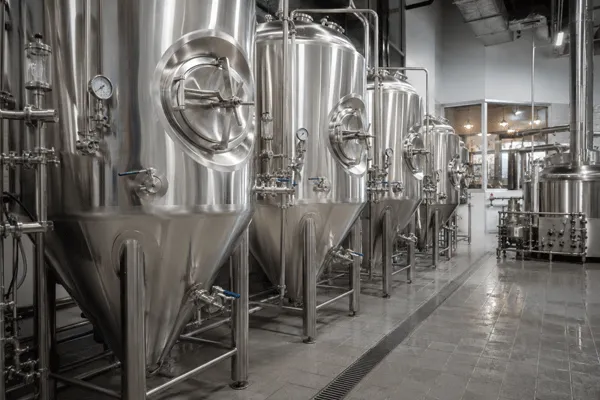
Comparison at a glance
| Dimension | Factory-Direct Manufacturer | Broker / Trading Company | Local Reseller |
| Owns fabrication | Yes | No | No |
| Price markup layers | 0 | 1–2 | 2–3 |
| Certificate numbers on file | Usually verifiable | Depends on partner factory | Depends on chain of custody |
| Deep customization | Wide range | Limited to partner factory’s standards | Very limited |
| Real factory tour possible | Yes, at own facility | No, or arranged theater tour | No |
| Refurb / used inventory access | Case-by-case | Rare | Rare |
| Lead-time control | Direct | One extra decision layer | Two extra layers |
| After-sales response | Direct engineering | Broker → factory → engineer | Reseller → broker → factory |
| Cheapest for standard configs | Not always | Sometimes | Rarely |
| Best for regulated markets | Yes, if certs are traceable | Risky | Depends |
The compressed version: cheaper up-front is not always cheaper over five years, and shorter response chains matter far more than the buyer thinks until something breaks.
Certifications: What to Ask For, and What “CE Compliant” Isn’t
The single most abused phrase in this industry is “CE certified.” CE is a self-declaration mechanism under EU directives, not a certificate issued by a single body. When a supplier’s site says “CE certified” with no directive, no standard, and no verification body listed, that phrase is doing zero work.
A defensible certification claim for brewing equipment names three things: the directive, the standard, and either the verifying body plus a certificate number, or the manufacturer’s own Declaration of Conformity with a technical file reference. For brewing equipment specifically, expect to see:
- Pressure Equipment Directive 2014/68/EU (PED)— required for any pressurized vessel (fermenters, bright tanks, kettle with pressure rating), with standard EN 1626:2008 referenced for cryogenic valves and related components.
- Machinery Directive 2006/42/EC— required for the mechanical assembly and safety of the equipment, with standards including EN ISO 12100:2010 (safety of machinery — general principles) and EN 60204-1:2018 (electrical equipment of machines).
- EMC Directive 2014/30/EU— required for the electrical control system’s electromagnetic compatibility, with standards EN IEC 61000-6-2:2019 and EN IEC 61000-6-4:2019.
- For packaging lines specifically, add EN 415-3:2021and EN 415-10:2014 for filling and packaging machinery safety.
A working example of what real disclosure looks like — this is a set actually issued to a China-based brewing equipment manufacturer:
| Document Type | Certificate Number | Issuing Body | Validity |
| PED Verification | 3N231110.SICS093 | Ente Certificazione Macchine Srl | 2023-11-10 to 2028-11-09 |
| Machinery + EMC Attestation | M.2025.206.C131636 | UDEM (Turkey) | Valid to 2030-12-15 |
| CE PED Report | UAC231101SIC01PED | UAC Quality Technology Service Limited | Dated 2023-10-20 |
| Voluntary Verification of Conformity | ICR/VC/HM2507146 | ICR Co., Ltd. | 2025-07-16 to 2030-07-15 |
| CE MD Test Report | XDH40255041120802FAR | BST Testing (Shenzhen) Co., Ltd. | 2025-11-25 to 2025-12-08 |
You do not need the supplier to have exactly this list. You need any list at all, with numbers you can look up on the issuing body’s site. A supplier who cannot produce a certificate number when you ask has told you the certificate does not meaningfully exist.
Ask ISO 9001 separately. ISO 9001 is a quality management system certification, not a product certification, and many brewing equipment companies conflate the two. If the supplier says “ISO 9001,” ask which body issued it, when, and for which specific facility. A group ISO 9001 issued at head office does not cover fabrication done at a partner factory 800 km away.
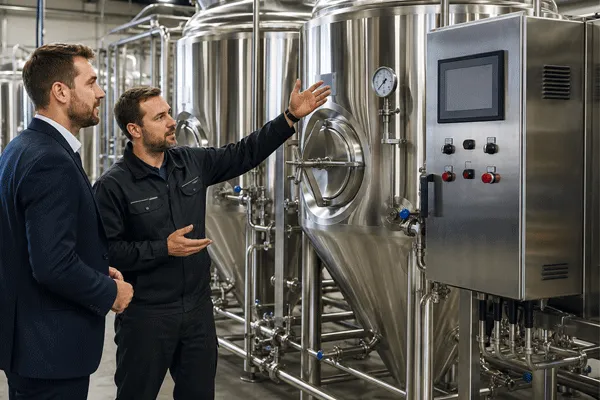
The Factory Tour Checklist
If you are placing an order above USD 200,000, you visit the factory. If your travel budget cannot cover that, send a third-party inspection service (SGS, Bureau Veritas, TÜV) to do it for you. This is not optional at that dollar figure.
What to look at, in order:
- The address matches the entity on the pro forma invoice.Sounds obvious. It is the single most common misalignment. If the sales entity is registered in Hong Kong or Shenzhen but the factory is in a completely different province with a different owner, you have a broker relationship you were not told about.
- Raw material storage and traceability.Ask to see the stainless steel storage area. Coils and sheets should carry mill certificates (EN 10204 3.1 or better) that document the material grade and heat number. SUS304 and SUS316L look identical to the eye; the mill cert is the only way to verify. A factory that cannot produce mill certs on demand cannot guarantee what your vessels are actually made of.
- Welding station: TIG or MIG, and are welders qualified.For food-contact brewing vessels, TIG welding on interior seams is standard practice. Watch a weld being made if possible. Ask about welder qualification records — reputable factories maintain welder-performance-qualification files tied to specific procedures. This is dry paperwork that separates real fabrication shops from assembly operations that source shells from elsewhere.
- Passivation and surface finish process.Interior surface finish on fermentation vessels should be #4 sanitary polish or better (Ra ≤ 0.8μm typical for craft brewing, tighter for pharma-grade). Ask how they measure and document polish quality. A factory that cannot show you a profilometer reading is polishing by eye, which is fine for aesthetics but not for CIP effectiveness.
- Pressure testing area.Every pressure vessel should be hydrostatically tested at 1.5× the design pressure per PED requirements. Look for the test rig. Ask to see test records for vessels currently in production. If the test rig looks unused or the records look freshly printed, be skeptical.
- Control panel assembly area.PLC panels wired on-site vs bought pre-built from a subcontractor is a real distinction. Ask which PLC brand (Siemens, Allen-Bradley, and Schneider are the three you want to see; unbranded Chinese PLCs run fine but have thinner overseas support). Ask whether the HMI programming is done in-house or outsourced. Outsourced programming means a third party has to fix it when it breaks.
- Shipping and packing area.How they crate finished equipment tells you how long it will survive ocean freight. Look for foam corners, stretch wrap on stainless surfaces, and separately crated fittings and small parts. Loose parts thrown in with the main vessel means damage claims when the container arrives.
Refurbishment Capability as a Vetting Signal
Most brewing equipment companies sell new equipment only. A smaller subset also handles refurbished and used equipment as a distinct product line. This is worth paying attention to for two reasons: it signals the factory has the fabrication capability to rework existing vessels rather than only assemble new components, and it opens a lower-CAPEX path for buyers whose budget does not clear a new-line quote.
For reference, a used brewery equipment package that a manufacturer with refurb capability can typically offer looks like this:
| Component | Configuration |
| Brewhouse size range | 2–10 BBL compact |
| Vessel package | Mash tun + kettle + HLT |
| Auxiliary included | Pumps, heat exchanger, control panel |
| Typical remediation before resale | Passivation refresh, seal replacement, PLC reprogramming, PED re-verification |
Asking whether a supplier offers refurbished configurations is a fast diagnostic. Brokers rarely can, because they do not own the reconditioning workshop. Local resellers almost never can. Factory-direct manufacturers vary: those with mechanical fabrication depth can, those who effectively assemble from bought-in shells cannot. This is not a moral distinction, but it changes what happens when your existing tanks need re-jacketing five years from now.
Pricing note. Used brewery equipment configurations are not published pricing on most manufacturer sites — refurb scope, source unit condition, and remediation depth vary too much for a rate card. Expect any quote to require a project-specific inquiry. For reference, new microbrewery equipment (small commercial systems) sits roughly at USD 30,000–80,000, and small commercial breweries (10 BBL and up) at USD 50,000–80,000; refurbished configurations typically fall meaningfully below these ranges but require case-by-case scoping.
After-Sales Structure: What Actually Matters at Year 3
The sales conversation talks about warranty length. The service conversation, which you will have three years later, is about response time and parts availability. These are different metrics, and warranty length correlates with neither.
Real questions to ask about after-sales:
- Where is the nearest service technician who can be dispatched to your site, and what is the standard travel window for a critical failure?
- Are common wear parts (gaskets, seals, sight glasses, sensor probes, PLC I/O modules) held in stock in your region, or shipped from origin factory on demand?
- Is remote HMI access supported for diagnostics, and if yes, on what protocol (VNC, VPN into the local network, cloud-based platform)?
- What is the escalation path if a first-line service response fails to solve the issue?
- Are technical manuals bilingual, and are they specific to your delivered configuration or generic to the product line?
A supplier that can answer these questions specifically — with names, cities, part numbers, response-time commitments in hours — has real service infrastructure. A supplier that answers in generic reassurances has a sales team.
Compared with the standard broker-sourced approach, where after-sales runs through a chain of custody with unclear ownership, direct-to-factory service has one fewer handoff. That does not automatically make it faster; it makes it more diagnosable when it slows down. Traceability of a problem is worth as much as speed of response.
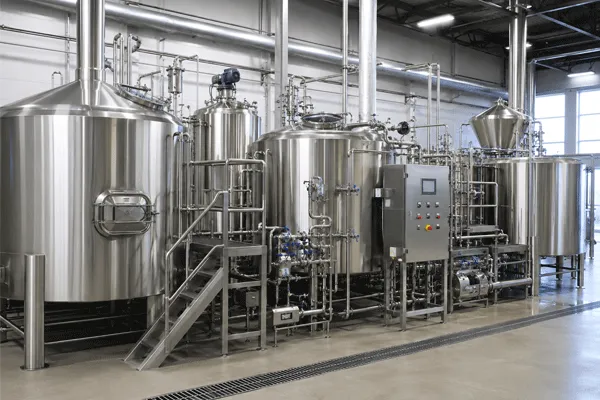
Red Flags That Should End the Conversation
A short list of things that, in isolation, may be defensible, but combined mean you are looking at a company that will disappear if the project goes wrong:
- Website with no physical address, only a WhatsApp number and an @gmail or @yahoo sales email.
- “CE certified” claim with no directive, no standard, no certificate number, and no willingness to provide one when asked.
- Factory tour offered by video only, with the sales rep controlling the camera and refusing to show specific stations.
- Reference customers listed on the site but no customer contact provided on request (real breweries generally take a reference call if the supplier asked in advance).
- Aggressive discounting from the first quote — the first quote should be defensible; a 30% drop on the second email means the first number was fictional.
- Payment terms that require 100% before shipment with no letter of credit option or no inspection clause.
- Refusal to name the specific factory for fabrication when you ask, or answers that shift between visits (“normally we make it here, but this order will be at our other facility”).
None of these is fatal alone. Two of them stacked is a warning. Three is your answer.
FAQ
Q: How many brewing equipment companies should I shortlist and RFQ?
A: For orders above USD 200,000, three to five is a reasonable balance. Fewer than three and you have no basis for price and configuration comparison. More than five and evaluation time outpaces the marginal information you get from another quote.
Q: What documentation should a supplier provide with the pro forma invoice?
A: Detailed spec sheet (materials, dimensions, capacities), P&ID or equipment layout drawing, list of included and excluded scope, certification list with numbers, warranty terms with specific coverage boundaries, and delivery schedule with milestone dates. Vague pro forma invoices become vague final invoices.
Q: Can I trust a supplier who won’t share other customers’ contact information?
A: Not fully. Suppliers should protect customer privacy, but a supplier who cannot arrange any reference call, on any project, in any market, is signaling that either the references do not exist or the reference customers are not confident recommenders. Ask for two references in your region or industry. Follow up if they materialize.
Q: What is the realistic lead time for a 30 BBL brewery from order to arrival at my facility?
A: For a China-based factory-direct manufacturer, typical production lead time is 60–90 days for standard configurations, plus 30–45 days ocean freight to major North American, European, or South American ports, plus customs clearance. Total 100–140 days is realistic; anything under 60 days total is a red flag.
Q: Should I require a factory inspection before shipment?
A: Yes, either in person or via a third-party inspection service. This is standard practice for orders above USD 100,000 and non-negotiable above USD 300,000. Inspection catches material, weld, and dimension deviations before the container ships, which is when they are cheapest to fix.
Q: What questions best distinguish a real manufacturer from a rebranded broker?
A: Ask for photos of the fabrication facility with today’s date on a whiteboard. Ask for the welder qualification records for one specific project you can look up later. Ask for the ISO 9001 certificate PDF, not the logo — the PDF names the scope and the certified site. Any of these will feel routine to a real factory and awkward to a broker.
如何利用合适的酿造设备酿造更优质的啤酒:从家庭酿造到啤酒厂系统
Brewing great beer is about much more than choosing quality malt, hops, yeast, and water. Even the best recipe can produce disappointing results if the brewing equipment cannot maintain stable temperatures, proper sanitation, or consistent fermentation conditions. Whether you are a home brewer experimenting with new recipes or an entrepreneur planning to open a craft brewery, the equipment you choose plays a critical role in beer quality, production efficiency, and long-term business success.
To brew better beer, you need the right system for heating, mashing, boiling, cooling, fermenting, cleaning, and packaging. A good setup includes a kettle, mash tun, fermenter, pump, chiller, controls, and cleanable beer tanks. For business buyers, smart brewery design also reduces labor, quality risk, and future expansion cost.
Article Outline
- Why does the right brewing equipment matter before you brew?
- What is the basic brewing process for brewing beer?
- How do the kettle, mash tun, and HLT work together?
- Which fermenter and fermentation controls protect flavor?
- What role do the pump, hose, fitting, and chiller play?
- Bottle, keg, or brite tanks: which packaging path fits your market?
- Home brew vs. commercial brewery: which brewing systems should you choose?
- How do CIP, sanitize routines, and clean-in-place systems reduce risk?
- What should a brewer check before buying high-quality beer brewing equipment?
- How can turnkey brewery design support long-term growth?
Why Does the Right Brewing Equipment Matter Before You Brew?
Every good brew starts before the first grain touches water. It starts with planning. The size of the kettle, the shape of the fermenter, the way liquid moves, and the cooling method all affect taste, safety, labor, and repeatability. This is true for a small home brew setup and even more important for a growing brewery.
As a brewery and beverage equipment manufacturing plant, we often see one common problem: buyers choose tanks only by volume. That is not enough. A smart system should match the recipe, building space, power supply, steam or electric heating, cleaning method, and future sales plan.
Here is a simple way to think about it:
| Business Goal | Equipment Focus | Why It Matters |
|---|---|---|
| Test recipes | Small all-in-one or pilot unit | Low risk, easy learning |
| Open a taproom | Compact brewhouse and serving tanks | Saves space and labor |
| Sell packaged product | Larger tanks and stable cooling | Supports volume and quality |
| Build a regional brand | Expandable brewhouses and automation | Reduces upgrade cost |
Good equipment does not replace skill. It supports it. It gives the brewer control.
What Is the Basic Brewing Process for Brewing Beer?
The brewing process is a chain. Each step depends on the last. First, the mill cracks the malt into grist. Then hot water mixes with grain in the mash stage. The brewer uses the mash to draw sugars from the grain. After that, the sweet liquid, called wort, moves to the boil.
During the boil, the brew kettle gives strong heat. The team adds hop ingredients for bitterness, flavor, and aroma. After boiling wort is finished, the hot wort must cool quickly. A plate chiller or immersion chiller helps bring it to the right temperature before yeast is added.
Then the liquid moves into a fermenter. Yeast turns sugar into alcohol and flavor. After the beer matures, it may go to a brite tank, keg, or bottle line. Simple steps. Big impact.
How Do the Kettle, Brew Kettle, Mash Tun, and HLT Work Together?
In all-grain production, the kettle, mash tun, and HLT form the heart of the brewhouse. The hot liquor tank stores hot water. This water supports mashing, cleaning, and sparging. Sparge water rinses remaining sugars from the grain bed, helping the brewer improve yield.
The mash tun must hold temperature well and allow smooth drainage. Poor drainage slows production. Uneven heat can affect sugar extraction. A strong brew kettle then handles the boil. It should support steady heating, safe steam release, and easy cleaning.
For small beer making, a propane burner and simple vessel may work. For commercial work, better control is needed. A brewhouse with a controller, temperature display, safe valves, and recirculation makes each batch more repeatable.
Which Fermenter and Fermentation Controls Protect Flavor?
The fermenter is where the recipe becomes a real product. Many professional beer tanks use a conical bottom because it helps collect yeast and sediment. A carboy may work for homebrewing, but commercial production needs stronger pressure ratings, cooling jackets, sanitary ports, and safe access.
Fermentation temperature has a direct effect on flavor. Too warm, and the result may taste sharp or solvent-like. Too cold, and the yeast may slow down. Glycol cooling helps keep the tank steady, especially when the room temperature changes.
A clean stainless steel tank, stable cooling, and careful monitoring help protect aroma, clarity, and shelf life. This is where equipment quality becomes business value. You do not just make liquid. You protect your brand.
What Role Do Pump, Hose, Fitting, and Chiller Play?
Liquid transfer sounds simple, but it is a hidden risk point. A pump moves liquid from vessel to vessel. A food-grade hose connects the system. A sanitary fitting keeps the line tight and clean. If these parts are poorly matched, the process can become slow, unsafe, or hard to clean.
The chiller also matters. Hot liquid should cool fast before it enters the fermenter. Fast cooling helps improve process control and saves time between steps. A plate chiller is common in many production systems because it cools efficiently and fits compact layouts.
A good transfer setup should be easy to operate and easy to inspect. We recommend buyers review every connection point before confirming a configuration. Small parts can create big delays.
Bottle, Keg, or Brite Tanks: Which Packaging Path Fits Your Market?
Packaging depends on the sales model. A taproom may focus on serving tanks and keg output. A retail brand may need bottle filling, capping, bottle caps, labeling, and carton packing. A brewpub may use a small brite tank for quick serving and a few kegs for events.
Keg washers save labor when draft sales are important. A proper coupler, rack, and cleaning plan also help keep draft quality stable. For larger production, brite tanks help clarify, carbonate, and prepare product before filling.
Here is a quick guide:
| Packaging Choice | Best For | Main Equipment |
|---|---|---|
| Keg | Taprooms, bars, events | Kegs, keg washers, couplers |
| Bottle | Retail, gifts, export | Filler, capper, bottle caps |
| Brite tank serving | Brewpubs, tasting rooms | Brite tanks, cooling, taps |
| Mixed packaging | Growing brands | Flexible filling and storage |
The right packaging path saves money. More importantly, it helps your customer enjoy the product as you planned.
Home Brew vs. Commercial Brewery: Which Brewing Systems Should You Choose?
Home brewing equipment is usually built for learning and small batches. A beginner may use a small kettle, thermometer, hydrometer, auto-siphon, and simple fermenting bucket. Some people prefer BIAB because it is simple and uses fewer vessels. An all-in-one electric system can also help new makers control heat more easily.
Commercial brewery systems need a different level of strength. They must handle repeated use, cleaning chemicals, hot liquid, pressure, and daily production. A small craft beer taproom may start with a 3 bbl or 5 bbl system. A regional commercial brewery may need larger brewhouses and more tanks.
The choice should not be based only on today’s budget. Ask: Will I expand in 12 to 24 months? Will I sell draft, package, or both? Do I need space for cold brew coffee, kombucha, cider, or other beverages later? Smart planning keeps you from rebuilding too soon.
How Do CIP, Sanitize Routines, and Clean-In-Place Systems Reduce Risk?
Cleaning is not the exciting part of the job. But it is one of the most important. A CIP system, also called clean in place, helps clean tank interiors and pipes without taking everything apart. This saves labor and supports safer daily work.
Cleaning and sanitizing are different. Cleaning removes soil. Sanitizing reduces unwanted microbes to safer levels. You should sanitize parts before they touch cooled liquid, especially after the boil when heat no longer protects the product.
For B2B buyers, cleanable design is essential. Look for smooth welds, sanitary valves, proper spray balls, safe tank access, and clear drainage. Good brewing equipment designed for real production should be easy to clean every day, not only look good on delivery day.
What Should a Brewer Check Before Buying High-Quality Beer Brewing Equipment?
Before buying high-quality beer brewing equipment, a brewer should check more than the price. Start with production goals. How many batches per day? What tank size? What power source? What ceiling height? What water quality? What local installation limits?
Next, review the details. Ask for drawings, material information, welding quality, cooling method, control options, valve brands, and after-sales support. A good supplier should help you understand the full system, not just sell individual tanks.
Use this buyer checklist:
- Confirm brewhouse size and daily output.
- Match fermenter quantity with sales plan.
- Check glycol cooling capacity.
- Review floor layout and drainage.
- Confirm packaging needs: keg, bottle, or both.
- Ask about spare parts and installation support.
- Choose equipment that can expand.
The best system is not always the biggest. It is the one that fits your business plan.
How Can Turnkey Brewery Design Support Long-Term Growth?
A turnkey project means one supplier helps coordinate the full system. This can include brewhouse design, fermenters, brite tanks, cooling, control panels, piping, platforms, cleaning systems, layout planning, installation guidance, and training. For investors and engineering contractors, this reduces project risk.
In our work with global B2B customers, we often begin with capacity planning. For example, a beverage startup may want beer first, then kombucha or cider later. We may suggest extra utility space, flexible tank ports, and a cooling system that can support future tanks.
A simple case study: a taproom planned only for direct serving. After market research, the owner added limited bottle sales. Because the layout allowed space for a filler and cold storage, the upgrade was smooth. That is the value of planning ahead.
Good brewery design is not only about equipment. It is about workflow. Where does raw material enter? Where does finished product leave? Where do staff clean? Where does water drain? A clean layout saves steps every day.
What About Special Beverage Projects Beyond Beer?
Many buyers now produce more than one drink. Kombucha, cider, wine, distillery wash, and cold brew coffee all need sanitary equipment, temperature control, and smart layout. The core idea is the same: protect flavor and keep the process stable.
Still, each beverage has its own needs. Kombucha may need acid-resistant surfaces and careful oxygen control. Cider and wine may need gentle transfer. Cold brew coffee may need filtration and low-temperature storage. Beer at home teaches the basics, but commercial beverage production needs deeper planning.
This is why custom manufacturing matters. A standard tank may not fit every recipe, every building, or every market. A custom system can support your product, your team, and your future growth.
FAQs About Brewing Equipment, Home Brew, and Brewery Systems
What equipment do I need to start a small brew project?
For a small setup, you need a kettle, fermenter, thermometer, hydrometer, transfer tool, cleaner, sanitizer, and basic beer making supplies. Some people also add a chiller, pump, and better controls as they grow.
Is a mash tun required for all recipes?
A mash tun is important for all-grain brewing. Extract recipes may not need one. For commercial production, a dedicated mash vessel gives better control and supports repeatable output.
Should I choose keg or bottle packaging first?
Choose based on your sales channel. A taproom may start with keg service. A retail brand may need bottle filling and capping. Many growing producers use both.
Why is glycol cooling important?
Glycol cooling helps hold tank temperature steady. This supports stable fermentation, better flavor control, and safer production planning.
What is the difference between a home brew system and a commercial system?
A home system is for learning and small batches. A commercial system is stronger, easier to clean, and designed for repeated production, staff operation, and long-term business use.
How do I choose the right supplier?
Choose a supplier that understands capacity planning, tank design, piping, cooling, installation, and after-sales service. A good partner should help reduce risk, not only provide equipment.
Key Takeaways
- Good brewing equipment helps control flavor, labor, cleaning, and output.
- The kettle, mash tun, fermenter, chiller, and transfer parts must work as one system.
- Packaging choices should match your sales model: keg, bottle, brite tank, or mixed output.
- Clean design, CIP planning, and sanitize routines protect product quality.
- Home brew setups are useful for learning, but commercial projects need stronger systems.
- Turnkey brewery planning reduces risk for craft breweries, brewpubs, beverage startups, investors, and contractors.
- Custom design helps your system grow with your business.
酿酒设备出售:如何选择全新和二手酿酒设备以建立可靠的酿造流程
Buying the wrong equipment can slow your brewery before the first brew. Poor layout, weak cooling, hidden wear, and hard-to-clean tanks can raise costs fast. The better path is to compare new and used brewery equipment with a clear production plan.
Brewery equipment for sale includes new, used, and refurbished systems for making beer, kombucha, cider, wine, and other beverages. A smart buyer should check the brewhouse, tank condition, stainless steel quality, heating method, chiller capacity, fermentation control, packaging needs, and after-sales support before making a decision.
Article Outline
- What brewery equipment does a complete brewery need?
- Why are used brewery equipment and pre-owned systems popular?
- How should a buyer inspect a brewhouse system before purchase?
- What stainless steel tank details affect beer quality?
- Which heating and cooling systems should you compare?
- What fermentation and cellar equipment should be included?
- How do filtration, brite tanks, and packaging equipment support sales?
- What hidden costs appear when buying used equipment?
- New and used brewery equipment: which option fits your project?
- How can a manufacturer help craft breweries reduce project risk?
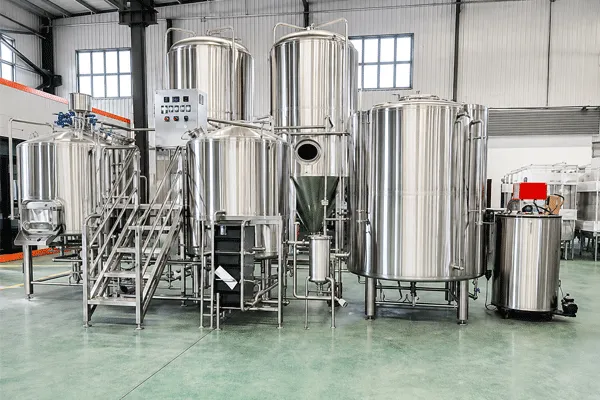
What Brewery Equipment Does a Complete Brewery Need?
A complete brewery needs more than one tank. It needs a working production flow. At the center is the brewhouse. This is where the mash, boil, hot liquor, and wort transfer happen. A basic brewhouse may include a mash tun, brew kettle, hot liquor tank, cold liquor tank, pump, pipe, valves, and a heat exchanger.
After the wort leaves the brewhouse equipment, it moves to the cellar. This area usually includes a fermenter, brite tanks, glycol cooling systems, and cleaning tools. The cellar is where fermentation, conditioning, carbonation, and storage take place. If the cellar is too small, the whole brewery can become blocked, even if the brewhouse is powerful.
A complete craft beer brewing project may also need filtration, keg washing, bottle filling, canning lines, a 4-head filler, labeling, and other packaging equipment. For beverage producers making kombucha, cider, cold brew coffee, or distilling-related products, the same idea applies: the equipment must match the real process.
Why Are Used Brewery Equipment and Pre-Owned Systems Popular?
Used brewery equipment is popular because it can reduce the starting cost for a new brewery. Many craft breweries, brewpubs, and microbrewery owners want to launch faster without paying full price for every new machine. A pre-owned tank or brewhouse can be useful when it is inspected, cleaned, tested, and matched to the project.
There is another reason. In recent years, some markets have seen more brewery closures and equipment resales. This creates more listings for buyers who search for brewery equipment for sale. Some buyers compare suppliers such as EquipNet, GEA-related process equipment sources, Craftmaster Stainless-style tanks, or a brewhouse equipment group before deciding what to buy.
But low price is not the same as good value. “Unbeatable prices” may look attractive, but hidden repairs can cost more later. A smart buyer asks for photos, test records, pressure checks, jacket checks, pump condition, control cabinet details, and spare accessory lists before payment.
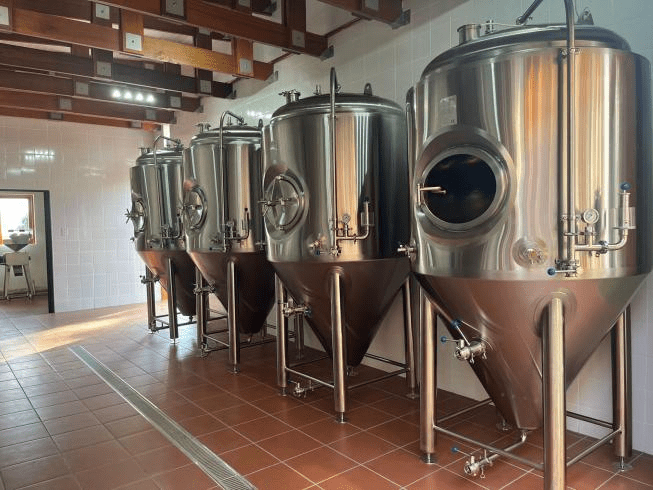
How Should a Buyer Inspect a Brewhouse System Before Purchase?
A brewhouse system should be inspected from the inside out. First, check the stainless steel surface. It should be smooth, clean, and free from deep scratches, heavy dents, rust, or bad welding. Then check the kettle, mash tun, manway, false bottom, spray ball, valves, and heating jacket.
Next, check function. Can the pump run well? Can the heater reach the required temperature? Can the heat exchanger cool wort fast enough? Are the sensors, control panel, and semi-automated settings still reliable? These details decide whether the equipment can brew stable beer after installation.
For used equipment, always ask the seller about the original use. Was it used in a craft brewing plant, an industrial brewery, a winery equipment line, or another beverage process? A tank used for one product may need special cleaning before another product. The more you know, the safer your decision becomes.
What Stainless Steel Tank Details Affect Beer Quality?
High-quality stainless steel is important because it touches the beer. Good stainless steel helps protect taste, sanitation, and tank life. For brewery equipment, buyers usually care about material grade, inner polishing, weld quality, jacket design, insulation, and pressure rating.
A tank should be easy to clean. Smooth inner surfaces reduce places where residue can hide. Poor welds can trap sugar, yeast, and microbes. In beer brewing, these small problems can damage aroma, flavor, and shelf stability. The equipment may look fine from the outside but still cause trouble inside.
When we manufacture or refurbish brewery systems, we pay close attention to product-contact areas. We check the manway, outlet, racking arm, spray ball, and cooling jacket. For B2B buyers, this is not only a quality point. It is a business point. Cleaner tanks mean fewer failed batches and less downtime.
Which Heating and Cooling Systems Should You Compare?
Heating is used during mash and boil. Common options include electric heating, steam heating, gas heating, and direct fire in some smaller setups. Each option has a different cost, installation need, and control level. Electric heating is simple for smaller systems. Steam is often better for larger brewhouses and commercial brewing projects.
Cooling is just as important. After the boil, hot wort must cool quickly before yeast is added. A heat exchanger, chiller, glycol tank, and cooling pipe design all affect production speed. If the cooling system is too weak, fermentation temperature may rise, and beer quality may suffer.
Here is a simple comparison:
| System Area | Common Options | Key Buying Point |
|---|---|---|
| Heating | Electric, steam, gas | Match local energy supply and batch size |
| Wort cooling | Plate heat exchanger | Check cooling speed and water/glycol demand |
| Tank cooling | Glycol jacket | Make sure every fermenter can hold temperature |
| Hot water | HLT and hot liquor system | Supports faster repeat brewing |
| Cold water | Cold liquor tank | Useful for stable wort cooling |
The best setup is not always the most expensive. It is the one that fits your site, recipe, and schedule.
What Fermentation and Cellar Equipment Should Be Included?
Fermentation is where beer develops alcohol, aroma, and body. A good fermenter should have a sanitary design, cooling jacket, insulation, sample valve, pressure relief valve, CIP spray ball, and bottom outlet. These details help the brewer control the process and clean the tank safely.
The cellar may also include brite tanks for beer conditioning and serving preparation. A brite tank helps clarify beer, hold carbonation, and prepare it for keg, bottle, or can packaging. In a taproom, the cellar design can affect how quickly you serve beer and how often you can brew.
For a 10bbl or 20bbl brewery, tank planning is critical. One brewhouse can feed several fermenters. If the brewery has too few tanks, the brewer may have to stop brewing while waiting for fermentation to finish. That is why tank quantity often matters more than people expect.
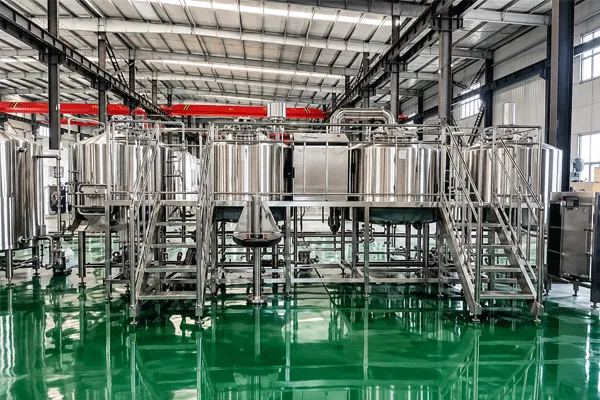
How Do Filtration, Brite Tanks, and Packaging Equipment Support Sales?
Filtration helps improve clarity and product stability when the beer style requires it. Not every craft beer must be filtered, but many commercial breweries use a filter to create a clean and consistent look. A good filtration choice depends on beer style, batch size, and shelf-life goals.
Packaging turns production into sales. If you sell draft beer, you need keg cleaning and filling. If you sell retail products, you may need bottle filling, can seaming, labeling, and packing. Canning lines are popular because cans are light, easy to ship, and common in modern craft beer retail.
Packaging also affects cash flow. A brewery with slow filling equipment may make enough beer but fail to ship orders on time. For growing craft breweries, we often suggest planning packaging early, even if the first stage starts with keg sales only.
What Hidden Costs Appear When Buying Used Equipment?
The listing price is only one part of the cost. Used equipment may need new gaskets, valves, sensors, pumps, control parts, or electrical work. It may also need deep cleaning, passivation, pressure testing, jacket testing, and safe export packing.
Transport can also be expensive. Large brewhouses and horizontal tanks need proper loading, wooden packing, lifting plans, and container space. A buyer should check whether the seller can provide photos, dimensions, weight, layout drawings, and packing support before shipment.
Here is a practical cost checklist:
| Cost Item | Why It Matters |
|---|---|
| Inspection | Confirms real condition before purchase |
| Refurbishment | Replaces worn parts and improves safety |
| Cleaning | Removes old residue and process risk |
| Testing | Checks pressure, cooling, and function |
| Packing | Protects equipment during transport |
| Installation | Reduces startup mistakes |
| Spare parts | Helps prevent downtime |
Buying used can be smart. Buying blind is risky.
New and Used Brewery Equipment: Which Option Fits Your Project?
New and used equipment serve different needs. New equipment is best when you need exact capacity, custom layout, full automation, special tank design, or strict project documentation. It allows you to design the system around your building, beer styles, and expansion plan.
Used equipment is useful when budget and delivery time matter most. It works well for buyers who can accept available sizes and configurations. New and used systems can also be combined. For example, a buyer may choose a refurbished brewhouse and new fermenters, or used tanks with a new glycol system.
A hybrid plan is often the best balance. It can lower the first investment while keeping key process areas safe and reliable. As a manufacturer, we often help customers compare both routes, then build a system that fits the real business stage.
How Can a Manufacturer Help Craft Breweries Reduce Project Risk?
A professional manufacturer does not only sell equipment. We help the buyer design a complete working system. This includes capacity planning, layout design, tank matching, utility planning, clean-in-place design, cooling capacity, and installation guidance.
We manufacture stainless steel brewing equipment and also support inspected, cleaned, and tested used equipment solutions. For global B2B customers, we can provide CAD layout, system matching, export packing, documentation, remote support, and long-term spare parts service.
Our goal is simple: help your brewery start smoothly and grow with less risk. Whether you need a complete brewery, a single fermenter, process equipment, or a full brewhouse system, the right partner can save time, reduce mistakes, and protect product quality.
Case Study: A Microbrewery Chooses a Hybrid Equipment Plan
A startup microbrewery wanted to control its first investment but still build a professional production line. The buyer first looked at several used equipment offers. Some looked cheap, but the tank sizes did not match the building, and the cooling capacity was unclear.
We helped the customer compare the available inventory and separate “good value” from “high repair risk.” In the end, the project used a refurbished brewhouse, new fermentation tanks, a new glycol chiller, and a simple packaging setup for keg and future can sales.
This plan reduced the first cost while keeping the most important production areas reliable. The customer could brew, ferment, cool, and serve beer with confidence. More important, the layout allowed future expansion.
Buyer Checklist Before You Purchase Brewery Equipment
Before you buy, use this checklist:
- Confirm your target output: daily, weekly, and monthly.
- Check whether you need 10bbl, 20bbl, or a custom batch size.
- Ask for tank photos, videos, and inspection reports.
- Check stainless steel quality and inner surface condition.
- Confirm heating method, cooling systems, and utility needs.
- Review pump, valve, sensor, and control cabinet condition.
- Ask whether the equipment has been cleaned and tested.
- Confirm packing, shipping, installation, and after-sales support.
- Compare complete brewhouses, tanks, cellar equipment, and packaging together.
- Choose a supplier that understands both craft brewing and commercial production.
FAQs
Is used brewery equipment a good choice for a startup brewery?
Yes, it can be a good choice when the equipment is inspected, cleaned, tested, and matched to your production plan. It can reduce startup cost, but the buyer must check condition, repair needs, and shipping details before purchase.
What is the difference between a brewhouse and cellar equipment?
The brewhouse handles mash, boil, and wort production. Cellar equipment handles fermentation, cooling, conditioning, and storage. A brewery needs both areas to work together.
Should I buy new equipment or pre-owned equipment?
Choose new equipment if you need exact design, automation, and long-term expansion. Choose pre-owned equipment if you want lower cost and faster sourcing. Many buyers use a hybrid plan with both new and used tanks.
What should I inspect before buying a used tank?
Check material, welds, inner surface, manway, valves, jacket, insulation, pressure rating, and cleaning condition. Ask for photos, videos, and test records when possible.
Can brewery equipment also support kombucha, cider, or winery projects?
Yes, with the right design. Kombucha, cider, cold brew coffee, and winery projects may need different tank shapes, cleaning methods, temperature settings, and process flow. Customization is important.
Why work with a manufacturer instead of only a reseller?
A manufacturer can help with layout, tank matching, process design, refurbishment, spare parts, and technical support. A reseller may only provide a listing. For a serious brewery project, engineering support can reduce risk.
Final Takeaways
- Brewery equipment should be selected around production goals, not only price.
- Used brewery equipment can reduce cost, but inspection and testing are essential.
- A complete brewery needs brewhouse, cellar, cooling, cleaning, and packaging planning.
- Stainless steel tank quality directly affects cleaning, safety, and beer consistency.
- New and used equipment can be combined to balance budget and reliability.
- A professional manufacturer can help buyers reduce risk through layout design, customization, refurbishment, testing, and long-term support.
The best equipment choice is the one that helps your brewery brew better, sell faster, and grow with confidence.
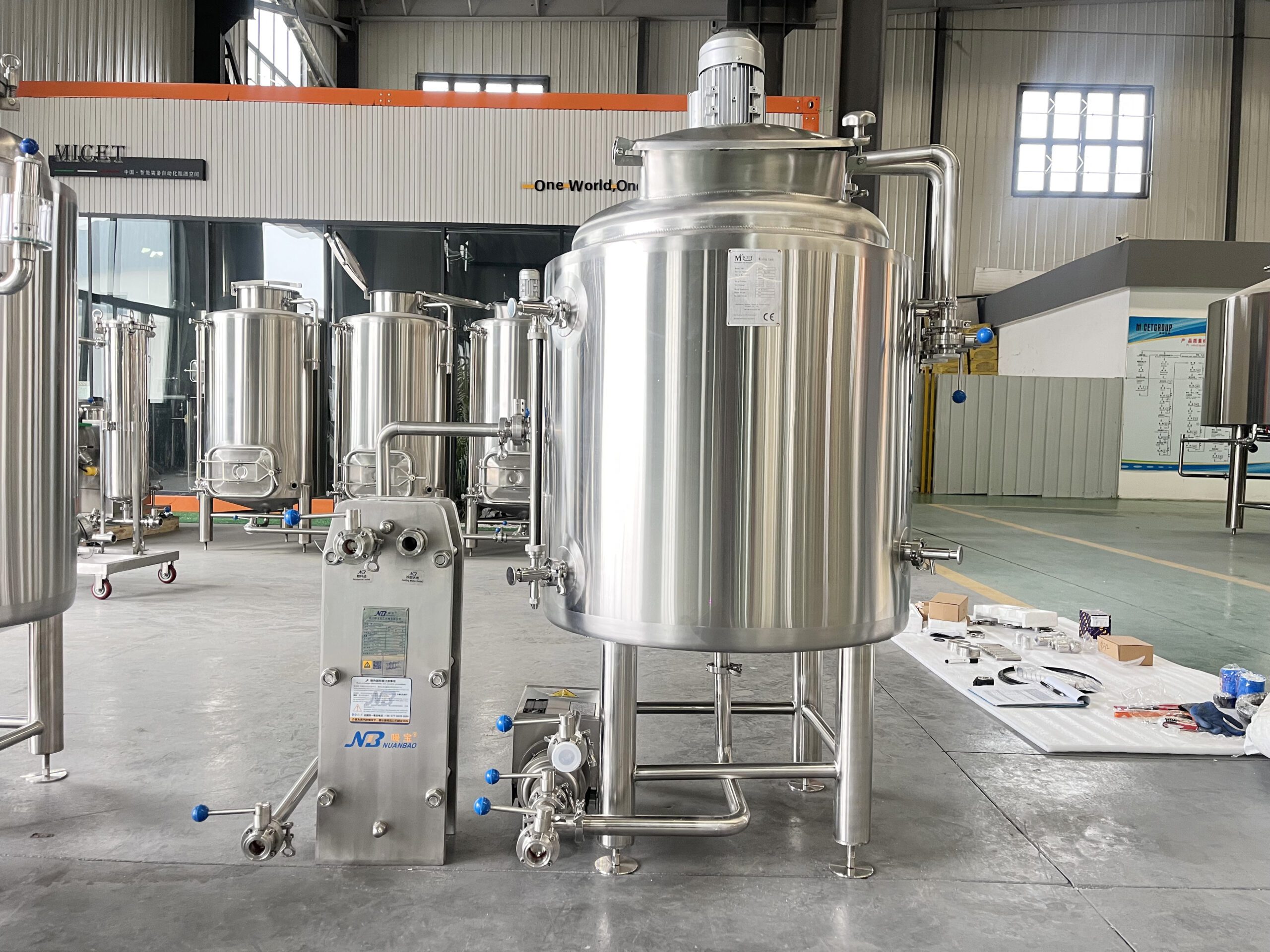
Used 200L Kombucha Brewing Equipment for Sale
The demand for kombucha continues to grow worldwide as consumers seek healthier and more natural beverages. For startups, small beverage brands, kombucha cafés, and pilot production facilities, investing in a complete brewing system can be expensive. A used 200L kombucha brewing equipment offers an economical alternative while maintaining reliable performance and production efficiency.
Why Choose a Used 200L Kombucha Brewing System?
Purchasing a used 200L kombucha brewing system significantly lowers equipment investment while allowing producers to begin production quickly. Compared with new equipment, used systems provide excellent value, especially for businesses that are expanding their product lines or entering the kombucha market for the first time.
Manufactured from high-quality food-grade stainless steel, the equipment is corrosion-resistant, easy to clean, and designed to meet food and beverage production standards. With proper maintenance, the system can continue operating efficiently for many years.
Main Equipment Configuration
A complete used 200L kombucha brewing equipment package typically includes:
| Equipment | Description |
|---|---|
| 200L Brewing Tank | For tea brewing and ingredient mixing |
| 200L Fermentation Tank | Suitable for primary kombucha fermentation |
| Cooling System | Maintains stable fermentation temperature |
| CIP Cleaning System | Easy and efficient equipment sanitation |
| Pumps & Pipelines | Food-grade stainless steel connections |
| Control Cabinet | Convenient operation and process control |
The final equipment configuration can be adjusted according to the actual inventory.
Key Features of the Used 200L Kombucha Equipment
Food-Grade Stainless Steel Construction
All tanks are manufactured from high-quality SUS304 stainless steel, ensuring excellent durability, hygiene, and resistance to acidic kombucha fermentation.
Compact Design
The 200L capacity is ideal for small commercial production, recipe development, pilot brewing, beverage laboratories, and startup kombucha businesses.
Lower Investment Cost
Choosing used kombucha equipment can save 30%–60% compared with purchasing new equipment, helping businesses allocate more budget to marketing, branding, or product development.
Easy Operation
The equipment features a simple operating process with convenient cleaning and maintenance, making it suitable even for new kombucha producers.
Fast Delivery
Unlike new customized equipment, used brewing systems are generally available for immediate shipment, allowing customers to shorten project lead times.
Ideal Applications
The used 200L kombucha brewing system is suitable for:
- Kombucha startups
- Craft beverage manufacturers
- Health drink producers
- Coffee shops and cafés
- Restaurants and brewpubs
- Beverage R&D laboratories
- Pilot production facilities
Whether producing original kombucha or experimenting with fruit-flavored and functional beverages, this system provides stable fermentation performance and flexible production capacity.
Quality Inspection Before Delivery
Every used kombucha brewing equipment undergoes a comprehensive inspection before shipment, including tank condition, welding quality, valves, pipelines, and accessories. Necessary cleaning and maintenance are completed to ensure the equipment arrives ready for installation and production.
Customers can also request photos, videos, or online inspections before purchase for greater confidence.
Why Buy Used Brewing Equipment from Micet Group?
With years of experience in manufacturing and supplying brewing equipment, Micet Group offers professionally refurbished used kombucha brewing equipment for customers worldwide. Our experienced engineering team provides equipment evaluation, technical support, installation guidance, and after-sales service to ensure every customer receives reliable equipment at competitive prices.
Whether you are launching a new kombucha brand or expanding existing production, a used 200L kombucha brewing equipment is an affordable and practical solution that combines performance, quality, and value.
Contact us today to learn more about available inventory, pricing, and shipping options. Our team is ready to help you find the right used kombucha brewing system for your production needs.
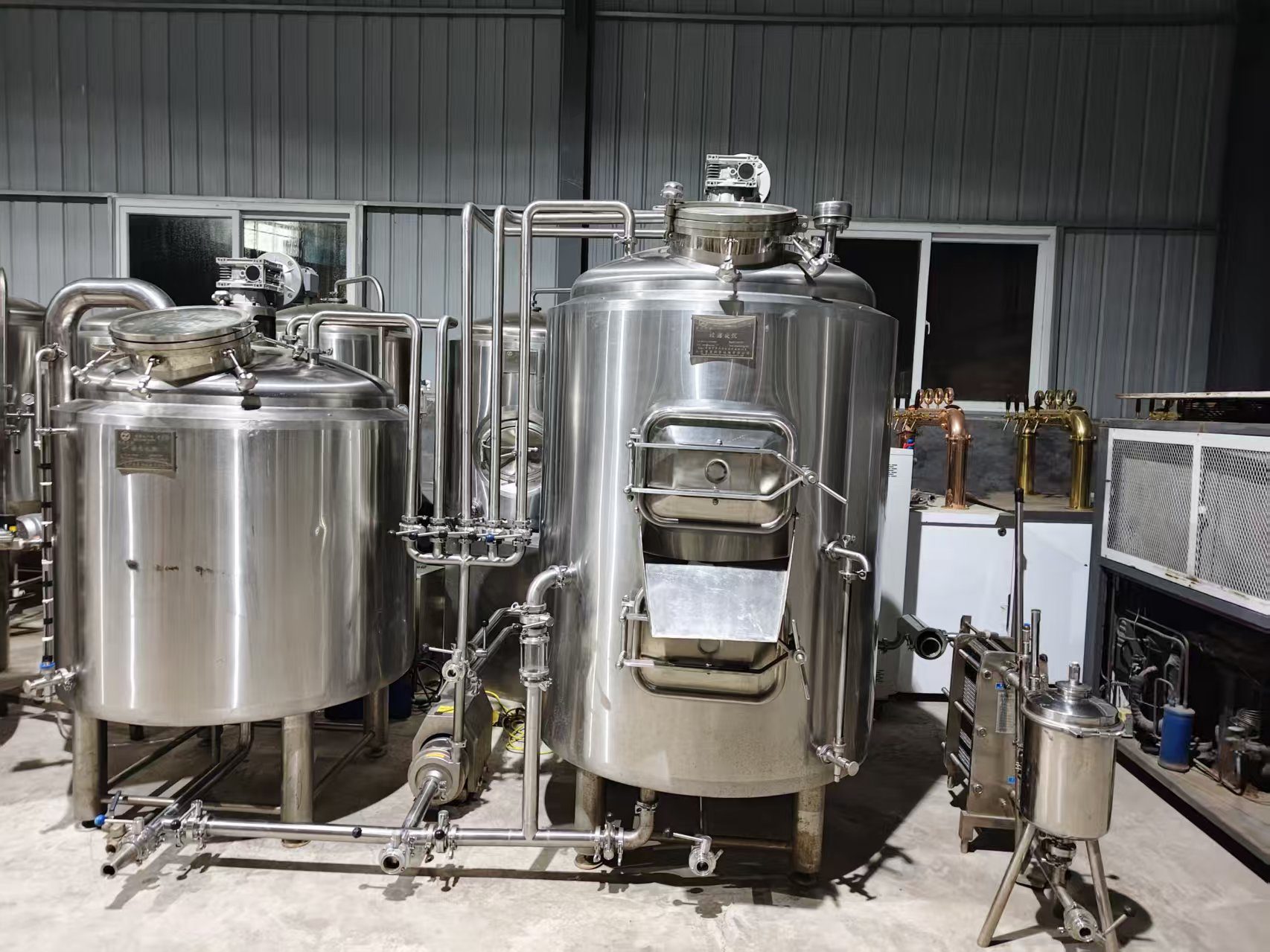
Used 500L Brewery Equipment for Sale
For craft breweries, brewpubs, restaurants, and startup brewing projects, this used 500L beer brewing equipment offers an economical and reliable brewing solution. Compared with purchasing new equipment, this used brewery system can significantly reduce startup investment while maintaining stable brewing performance and production efficiency.
The complete system has been professionally maintained and inspected, making it ready for immediate commercial brewing operations.
Complete Used 500L Brewing System Configuration
| Equipment Name | Specification |
|---|---|
| Mash Tun | 500L |
| Lauter/Whirlpool Vessel | 500L |
| Fermentation Tank | 500L × 12 Units |
| Glycol Water Tank | 1500L |
| Glycol Chiller | 5 HP Digital Brazed Plate Chiller |
| Electric Boiler | 50kg/h |
| CIP Cleaning Cart | 50L Dual-Tank Stainless Steel Type |
| Malt Mill | Included |
| Electrical Control Cabinet | Complete Control System |
| Brewing Accessories | Pumps, Valves, Piping & Fittings |
High Production Capacity for Growing Breweries
This used 500L brewing system is designed for small and medium-sized commercial breweries. The brewhouse provides efficient wort production while the twelve 500L fermentation tanks offer excellent fermentation capacity.
Equipped with multiple fermenters, the brewery can produce several beer styles simultaneously, improving production flexibility and maximizing equipment utilization. This configuration is ideal for breweries seeking to expand their product range while maintaining consistent quality.
Reliable Electric Heating Brewing System
The brewery is equipped with a 50kg electric boiler, providing a stable and efficient heat source throughout the brewing process.
Compared with traditional steam heating systems, electric heating offers several advantages:
- Lower installation costs
- Easy operation and maintenance
- Precise temperature control
- Energy-efficient performance
Accurate temperature control during mashing and boiling helps brewers achieve consistent brewing results and improve overall production efficiency.
Efficient Cooling and Fermentation Control
The system includes a 1500L glycol water tank and a 5HP digital glycol chiller, ensuring reliable cooling performance during fermentation.
Stable temperature management is essential for producing high-quality craft beer. The cooling system helps maintain ideal fermentation conditions, supports yeast performance, and ensures consistent beer quality from batch to batch.
Stainless Steel Fermentation Tanks
The package includes 12 units of 500L stainless steel fermentation tanks, providing ample capacity for commercial brewing operations.
Each fermentation tank is manufactured from food-grade stainless steel and designed for:
- Excellent corrosion resistance
- Easy cleaning and sanitation
- Long service life
- Stable fermentation performance
The large number of fermenters allows breweries to increase production without requiring additional tank investments.
Easy Cleaning and Low Maintenance
A 50L dual-tank CIP cleaning cart is included with the system, allowing efficient cleaning of fermentation tanks, pipelines, and brewing vessels.
Proper cleaning is essential for maintaining product quality and brewery hygiene standards. The mobile CIP system reduces labor requirements and simplifies daily brewery operations.
Ideal for Craft Brewery Startups and Expansion Projects
This used 500L brewery equipment is suitable for:
- Craft Breweries
- Brewpubs
- Restaurants
- Taprooms
- Hotel Breweries
- Pilot Brewing Facilities
- Startup Beer Brands
- Brewery Expansion Projects
For breweries looking to balance investment cost and production capability, this second-hand brewing system provides excellent value and reliable operation.
Why Choose This Used 500L Brewery Equipment?
Purchasing used brewery equipment allows brewers to significantly reduce capital investment while obtaining professional brewing capabilities. All major equipment has been designed for commercial brewing applications and can be quickly integrated into existing or new brewery projects.
If you are searching for a used 500L brewery system, used beer brewing equipment for sale, or a complete craft brewery solution, this package offers an excellent combination of affordability, performance, and production flexibility.
Frequently Asked Questions
Everything you need to know before placing your custom brewery equipment order
Is used brewery equipment reliable?
Yes. All used equipment from Micet is professionally inspected, refurbished, and pressure-tested to ensure safe, stable, and long-term operation. You receive manufacturer-verified quality at a lower cost.
How do you refurbish used fermenters?
We perform full internal/external cleaning, valve replacement, CIP verification, weld inspection, glycol jacket testing, and surface repolishing. Any worn components are repaired or replaced to restore brewery-ready condition.
Do you offer pressure testing for tanks?
Yes. Every used fermentation or brite tank is hydro-tested and pressure-tested according to ASME/CE standards to ensure safety and reliability before shipping.
What’s included in a used brewhouse system?
A typical refurbished brewhouse includes a mash tun, kettle/whirlpool, HLT, pumps, heat exchanger, platform, and control panel—fully tested and ready for turnkey installation.
Can you ship used tanks overseas?
Absolutely. Micet ships worldwide with export-grade packaging, shipping frames, and container loading. We support DDP, CIF, and door-to-brewery delivery options.
What cost can I expect for used equipment?
Pricing depends on tank size, condition, refurbishment level, and included accessories. Used fermenters typically save 25–45% compared to new equipment. Micet provides transparent quotes based on your capacity needs.
Get Pricing & Availability Today
Micet used equipment is in high demand and updates weekly.
Let us know your production scale and needed equipment—we will reply with stock availability and a quote within 12 hours.