










Nancy Shang | Founder & CEO, MICET Brewing | Published: July 3, 2026
Brewery equipment manufacturers fall into four supply models: OEM factories, factories with in-house refurbishment lines, US-based brokers, and B2B aggregator platforms. Pricing spreads across roughly 40% for identical specs, and lead times run from 1 week to 140+ days. Which model fits depends on your compliance, budget, and timeline priorities.

What “Brewery Equipment Manufacturer” Actually Means
The phrase covers everyone from a 200-employee stainless-steel fabrication group with in-house welders and CE PED verification, to a two-person office that sources from partner factories and reships in a rebranded crate. Both call themselves “manufacturers” on their homepage. Both surface in the same Google results for “brewery equipment manufacturers.”
For a procurement team, the distinction that matters is whether the entity you are contracting with owns the fabrication capacity, the engineering team, and the compliance documentation for the specific vessels being delivered — or whether it acts as a marketing and logistics wrapper around someone else’s production.
Nothing in that distinction is automatically negative. The wrapper model exists because it solves real buyer problems: single point of contact, English-language sales, in-region service, escrow protection on smaller orders. But confusing a wrapper with a fabricator changes what your contract actually guarantees, and changes who is on the phone when a vessel arrives with a bad weld.
The rest of this guide separates the four supply models buyers actually encounter, with the pricing and lead-time observations to make the comparison work.
The Four Supply Models You’ll Encounter
1. OEM Factory (Direct Manufacturer)
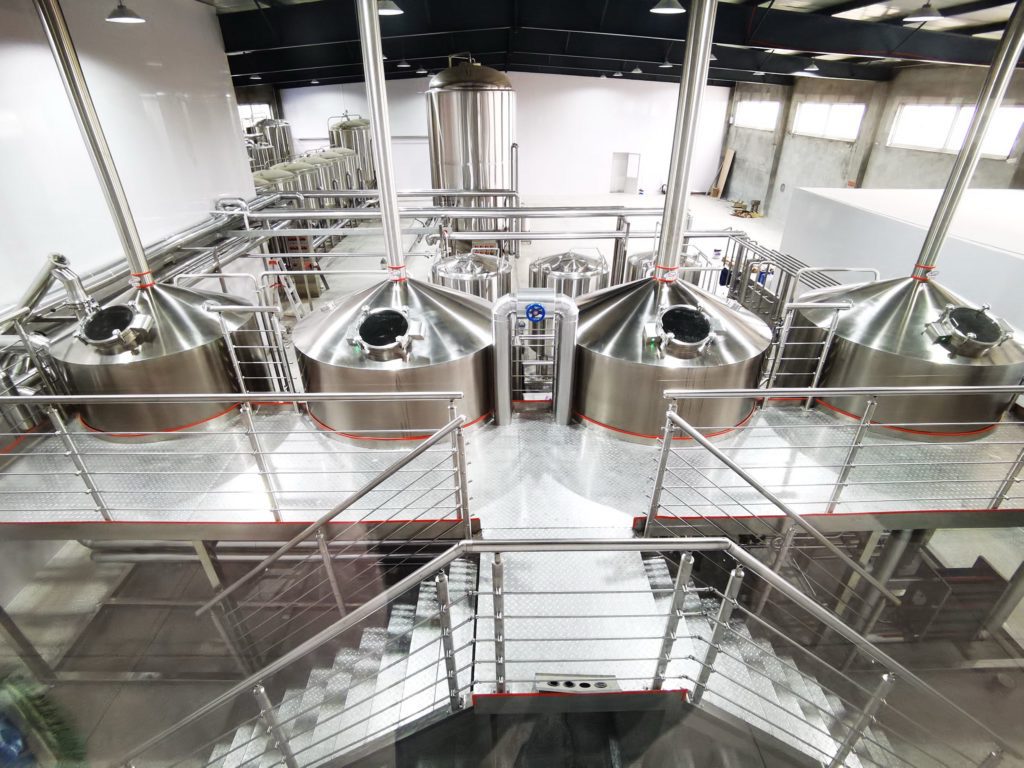
A stainless-steel fabrication facility that designs, welds, tests, and ships brewing equipment under its own brand, from its own address. The sales team, engineering team, and production floor sit within the same legal entity.
Most volume in this category clusters in Shandong, Jiangsu, and Zhejiang provinces in China. Secondary clusters exist in Germany, Italy, Slovakia, and the US Midwest, at higher price points but shorter freight windows for their respective home markets.
Where it is strongest:
- Custom configurations outside catalog norms (12 BBL, 40 BBL, non-standard geometries, hybrid vessel designs)
- Direct control over material sourcing and mill certificate traceability
- Certification paperwork tied to the specific unit shipped, not a generic product family
- Lower price for the same spec because there is no reseller markup layer
Where it is weakest:
- English-language technical support depth varies factory to factory
- 12+ hour time-zone gap on urgent issues (Asia to EU/Americas)
- No physical inventory — every order is build-to-suit
- Post-sale service depends on the factory’s overseas dispatch network, which is uneven across the industry
Typical price band: USD 30,000–80,000 for microbrewery packages (2–15 BBL); USD 50,000–80,000 for small commercial systems (10–30 BBL); larger commercial systems (30–100 BBL) climb into higher six figures with automation scope. Refurbished configurations, where the factory offers them, sit meaningfully lower.
Typical lead time: 60–90 days fabrication + 30–45 days ocean freight from Asian ports. Total 100–140 days landed.
2. Factory with In-House Refurbishment Line
A subcategory of OEM factory that also operates a distinct workflow for used and refurbished equipment. Structural components (frames, shells, tanks) get inspected and reworked. Wear parts (seals, PLC modules, sight glasses, sensor probes) get replaced. Documentation gets refreshed against current directives before the unit ships.
Not every OEM factory has this capability. It requires mechanical fabrication depth: welders qualified for repair procedures, on-site passivation infrastructure, PLC engineers who can reprogram older control panels, and a QC process for source-unit intake. Assembly-focused shops that source shells from subcontractors cannot do this at scale.
Where it is strongest:
- Lower CAPEX path for buyers with tight budgets but real production-grade requirements
- Hybrid configurations: new fermenters paired with a refurbished brewhouse, or the reverse
- Direct engineering visibility into what was reconditioned and against which standard
- Extension of useful life for equipment that would otherwise scrap
Where it is weakest:
- No two units are identical; each refurb has its own service history
- Availability follows source-unit supply, not the factory’s production calendar
- Lead times cannot always match new-build if a matching source unit takes weeks to find
Typical price band: Refurbished configurations typically run 30–50% below equivalent new-build. Actual figures depend on refurb scope, source-unit condition, and certification refresh cost. Not published pricing — requires project-specific scoping.
Typical lead time: 45–75 days refurbishment + freight, once a source unit matching your spec is confirmed available. Source-unit sourcing itself may add 30–60 days.
3. US-Based Equipment Broker
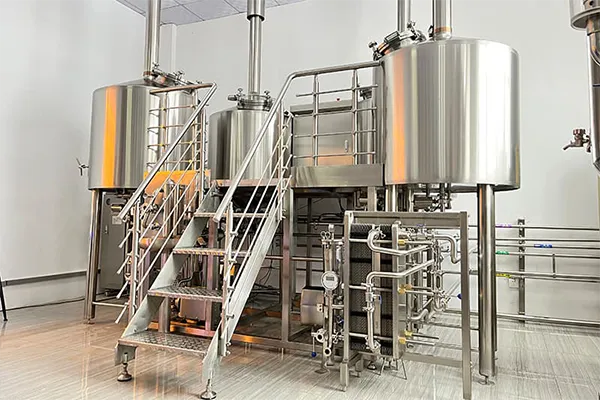
A trading operation, typically US or EU based, that maintains a rotating inventory of used and decommissioned brewery equipment. Sources from brewery closures, upgrades, and receivership sales. Sells as-is, or occasionally with light shop reconditioning done in a partner facility.
Common presences in this space in the US market include auction platforms and specialty resellers focused on stainless-steel process equipment. Their homepages read like manufacturer sites. Their business model is closer to a specialty resale dealership: they buy inventory, hold it, and mark it up on resale.
Where it is strongest:
- Immediate physical availability — you can inspect the exact unit before wire transfer
- Domestic freight only (no ocean logistics, no customs)
- Fast time-to-production if the specific unit fits your spec
- Established provenance on unique or hard-to-find pieces
Where it is weakest:
- Configuration flexibility is zero — you buy exactly what they have on the floor
- Wear-part replacement and remediation typically fall on the buyer’s account
- Original certifications may not transfer cleanly to your regulatory environment if the unit was sourced from a different market
- Prices reflect scarcity of the specific unit, not fabrication cost
Typical price band: Wide spread. Auction-pull prices for small used brewhouses commonly run USD 40,000–120,000 depending on condition, age, and completeness. Fully reconditioned lines with new controls approach new-build pricing at the top end.
Typical lead time: 1–4 weeks from purchase to on-site, assuming domestic freight and no additional reconditioning delay.
4. B2B Aggregator Platform
Online marketplaces that list thousands of “manufacturers” simultaneously — Made-in-China, Alibaba, IndiaMART, TradeIndia, and similar. Listed vendors range from actual fabrication factories to trading offices to individual sales agents. The platform provides discovery, messaging, and (on some platforms) escrow, but does not verify vendor legitimacy at the product level.
Where it is strongest:
- Fastest way to survey the field and generate quote comparisons across dozens of vendors
- Price benchmarking for identical spec, useful during early-stage budgeting
- Low barrier for first contact
- Escrow protection on smaller orders (varies by platform)
Where it is weakest:
- Distinguishing real factories from resellers on-platform is genuinely difficult
- Certification claims, factory addresses, and photos in listings frequently require independent verification
- Post-sale service depends entirely on which vendor you selected, with no platform-level fallback
- Photos of “our factory” and “our equipment” are frequently generic stock imagery, not documentation of the actual delivered unit
Typical price band: Widest of the four models. Quotes for the same nominal 10 BBL brewhouse spec can range from USD 15,000 to USD 90,000. Extreme low prices generally signal one of three things: scam, thin material below claimed thickness, or missing components that get quoted separately after order confirmation.
Typical lead time: No platform-level commitment. Depends entirely on which vendor is selected. From 30 days (small standard configs) to 180+ days (large custom, when the “manufacturer” turns out to be a middleman waiting on someone else’s schedule).
Side-by-Side Comparison
| Dimension | OEM Factory | Factory + Refurb Line | US Broker | Aggregator Platform |
| Owns fabrication | Yes | Yes | No | Varies by vendor |
| Owns physical inventory | No (build-to-order) | Partial | Yes | Rarely |
| Configuration flexibility | High | High (new+refurb hybrid) | None | Vendor-dependent |
| Certification paperwork | Direct, unit-specific | Direct, unit-specific | Legacy, may not transfer | Vendor-dependent |
| Custom engineering | Yes | Yes | No | Varies |
| Realistic time to production | 100–140 days landed | 60–100 days landed | 1–4 weeks | Highly variable |
| Best price for same new spec | Yes | Yes | No | Sometimes (with risk) |
| Best price if used works | Sometimes | Yes | Yes (auction pulls) | Highly variable |
| After-sales visibility | Direct engineering | Direct engineering | Broker’s service network | Nonexistent to poor |
| Language/documentation quality | Factory-dependent | Factory-dependent | English-native | Vendor-dependent |
| Risk of misrepresentation | Low to medium | Low to medium | Nízká | High |
Two rows deserve extra attention.
The certification paperwork row matters differently by destination market. For EU-bound orders, PED (Pressure Vybavení Directive 2014/68/EU) verification tied to the specific vessel matters legally, not just commercially. A broker selling a US-market unit into an EU brewery may not be able to provide the paperwork you need for compliance. An OEM factory or factory-with-refurb-line can produce fresh documentation against current directives.
The best price if used works row rewards buyers open to used or refurbished, which is not the same buyer as one insisting on new-build. Refurbished from a factory-with-refurb-line typically produces the lowest total delivered cost, because you get factory-grade reconditioning at used pricing. Broker auction pulls compete on unit-specific opportunity — sometimes cheaper, sometimes not, depending on inventory that week.
Pricing Bands: What Each Model Actually Costs
The list price on a supplier’s homepage is not what you pay. What you pay reflects the model. For a 10 BBL brewhouse configured to a mid-range specification (single-vessel HERMS or 2-vessel steam-heated), reasonable market ranges look like this:
| Model | Price Range for 10 BBL Brewhouse |
| OEM Factory (China, new) | USD 35,000–65,000 |
| Factory + Refurb Line (refurbished) | USD 22,000–42,000 |
| US Broker (as-is used) | USD 30,000–95,000 |
| Aggregator Platform (varies wildly) | USD 15,000–70,000 |
Two things to notice in that table.
First, aggregator platforms can quote below OEM factory pricing not because they discovered a cheaper source, but because the quote frequently excludes items the OEM factory quote includes. Ask what is inside the price. Pumps? Heat exchanger? Control panel? Freight to port? Documentation package? Certification refresh? Every excluded line item is a claim in disguise.
Second, US broker pricing has a wide spread because unit condition varies. A refurbished-to-current-spec unit approaches new-build pricing. An as-is auction pull that needs USD 15,000 of remediation costs less on the invoice and more in total delivered.
For the specific product line covered in the next section — Used Brewery Equipment configurations at 2–10 BBL compact package — market-observed refurbished pricing generally lands within the Factory + Refurb Line band, with variation driven by source-unit condition and certification refresh scope.
Lead Times, Realistically
Lead-time claims on supplier sites are best-case, assuming clear specs, prompt payment, and zero revision cycles. What actually happens in practice runs longer.
| Model | Fabrication or Prep | Freight | Total Realistic |
| OEM Factory (China) | 60–90 days | 30–45 days ocean | 100–140 days |
| OEM Factory (Europe/US) | 90–180 days | 5–15 days regional | 100–200 days |
| Factory + Refurb Line | 45–75 days | 30–45 days ocean | 80–120 days |
| US Broker | 3–10 days prep | 5–15 days domestic | 1–4 weeks |
| Aggregator Platform | Undefined | Origin-dependent | 30 to 180+ days |
The freight leg is often underestimated. Ocean freight from Chinese ports to US West Coast runs 25–35 days; to US East Coast, 35–45 days; to Northern Europe, 30–40 days; to South American west coast, 40–55 days. Add 10–15 days for port congestion, customs clearance, and inland delivery to your facility.
Two operational implications for a procurement schedule.
If your production start date is fixed, work backward from the on-site delivery date, not from the ship date. Miscalculating that offset by two weeks is a common source of overshoot.
If your bank requires letter-of-credit financing, add another 15–30 days for L/C issuance, amendments, and document presentation. This does not affect physical lead time but does affect when you can actually place the order.
The Used Brewery Equipment Angle
Two of the four supply models (factory-with-refurb line, US broker) traffic in used equipment as a core or secondary business. Available used inventory typically presents in one of two package shapes.
The most commonly available refurbished configuration:
| Komponenta | Configuration |
| Brewhouse capacity | 2, 3, 5, 7, 10 BBL |
| Vessel package | Mash tun + kettle + HLT |
| Čerpadla | Included |
| Heat exchanger | Included |
| Control panel | Included, typically reprogrammed |
Refurbishment scope on packages like this generally includes passivation refresh on interior surfaces, seal and gasket replacement across all connection points, control panel reprogramming or replacement PLC, hydrostatic re-testing on pressurized vessels at 1.5× design pressure, and updated certification against current directives (PED 2014/68/EU for pressure vessels; Machinery Directive 2006/42/EC and EMC Directive 2014/30/EU for the control assembly, referenced against standards including EN 1626:2008 and EN ISO 12100:2010).
A US broker selling the same nominal 5 BBL brewhouse “as-is” delivers the vessels and possibly the pumps, with no assumption of remediation done. The delta between “as-is” and “reconditioned” pricing is real and reflects real work.
If your evaluation lands between an aggregator-platform-sourced new unit and a factory-with-refurb-line refurbished unit at similar prices, the refurbished unit typically comes with more documentation and clearer accountability, because the refurb factory has attached its name to the reconditioning. This is not an absolute rule; some aggregator vendors are legitimate. But it is the base-rate observation across the market.
Which Model Fits Which Buyer
The decision is rarely which model is best in the abstract. It is which model best matches your specific project’s constraint stack.
Choose OEM factory when:
- You need a custom configuration outside catalog norms
- Your target market requires unit-specific certification documentation
- Your timeline allows 100+ days landed
- Price sensitivity is real but not extreme
Factory with refurb line makes sense if:
- Budget is tight but production requirements are commercial-grade
- You are open to hybrid new-and-used configurations
- You want direct engineering accountability on the refurbished portion
- Your timeline can absorb source-unit availability delay
US broker fits when:
- Timeline is short (1–4 weeks to production)
- An available unit already matches your spec (no configuration flexibility needed)
- You have in-house capability to handle any post-purchase remediation
- Certification transfer to your market is not a compliance blocker
Aggregator platforms belong in the mix only when:
- You are early-stage benchmarking prices for a spec you have not finalized
- Order size is small enough that platform escrow provides meaningful protection
- You have internal or third-party capability to verify supplier legitimacy independently
- The purchase is not production-critical at commercial scale
When each model is the wrong answer
OEM factory is the wrong answer when your production start date is under 90 days away and no other constraint gives.
Factory with refurb line is the wrong answer when you need multiple identical units at scale — refurb source availability rarely delivers matched sets.
US broker is the wrong answer when your spec is genuinely custom, or when your market’s regulatory environment requires paperwork the original manufacturer would need to issue.
Aggregator platform is the wrong answer when the cost of a bad delivery — production delay, missing components, uncertified pressure vessel — exceeds the price advantage of the low quote.
Compared with the common alternative of running all purchasing through a single preferred supplier relationship, a mix-and-match approach across models often produces the lowest total delivered cost. OEM factory for the brewhouse, US broker for a used bright tank when one becomes available, factory with refurb line for the fermenters. This costs more procurement effort. It rewards that effort in ways a single-supplier arrangement structurally cannot.
FAQ
Q: Are US-based brewery equipment brokers actually cheaper than importing from China?
A: Sometimes yes, sometimes no. Auction-pull used units can undercut new-build China imports significantly. Reconditioned broker inventory generally does not, because the shop reconditioning cost narrows the gap and no ocean-freight-side advantage exists on a domestic delivery. Compare landed cost with remediation included, not headline invoice price.
Q: Can B2B aggregator platform vendors provide genuine CE certification?
A: Some can, most cannot verifiably. Ask any aggregator vendor for the specific directive (PED 2014/68/EU or Machinery Directive 2006/42/EC), the specific standard (EN 1626:2008 for cryogenic valves, EN ISO 12100:2010 for machinery safety), and either a verification body name plus certificate number, or a Declaration of Conformity referencing a technical file. Vagueness on any of these means the certification claim is decorative rather than legal.
Q: What is the actual price difference between new and refurbished equivalent brewery equipment?
A: Typically 30–50% below equivalent new-build, though the range widens with equipment age, refurb scope, and certification refresh cost. A lightly used unit reconditioned to current standards may only be 20% below new-build; a heavily refurbished older unit may be 60% below.
Q: If a supplier appears on an aggregator platform and also has their own homepage, which do I contact through?
A: Direct through their homepage, using an email on the site’s own domain. Aggregator platforms take a per-inquiry fee from vendors, which the vendor sometimes passes back into your quote. Direct contact also eliminates ambiguity about which entity you are contracting with, and gives you a cleaner audit trail.
Q: How do I verify that a factory-with-refurb-line supplier has the fabrication capability they claim?
A: Ask specifically about welder qualification records covering repair procedures (not just new-build fabrication), on-site passivation infrastructure (framed as “what is your interior polish process for refurbished vessels”), and PLC engineering capacity (which brands they can reprogram, not just install new). Real capability answers specifically. Claimed capability that does not exist answers in generalities.
Q: For a first commercial brewery build with fixed opening date, which supply model is safest?
A: OEM factory or factory-with-refurb line, with third-party inspection before shipment, planned to complete no later than 120 days before your opening date. The trade-off is longer calendar time. The upside is unit-specific certification, engineering accountability, and configuration flexibility for the launch spec. A US broker fills the same role only if the exact unit you need is on their floor when you look.