










Many new beverage projects fail because the equipment plan is unclear. The tank is too small. The layout is hard to clean. The cooling is weak. The result is wasted time, unstable flavor, and higher cost. The solution is to choose the right system before you brew.
Brewing equipment is the full set of tools used to turn grain, water, hop, and yeast into finished beer. For small homebrew users, this may start with a simple brewing kit. For a craft brewery or commercial brewery, it should include stainless steel brewhouses, fermenter tanks, cooling, CIP cleaning, and packaging equipment sized around real production goals.
Osnova článku
- What brewing equipment do you need to brew beer?
- How does the brewing process work from mash to fermentation?
- Which kettle, mash tun, and HLT setup fits your batch size?
- Why do wort cooling and chiller options matter?
- What fermenter design helps you maintain fermentation temperatures?
- How should cleaning and sanitizing be planned?
- Bottle, keg, or can: which packaging route is right?
- What brewery supplies and fittings should not be ignored?
- Homebrew vs commercial beer brewing equipment: what changes?
- How can a manufacturer help you build high-quality beer brewing equipment?

What Brewing Equipment Do You Need to Brew Beer?
To brew beer well, you need more than one tank. You need a clear system. At the basic level, the setup includes a kettle, a mash tun, a fermenter, hoses, valves, a thermometer, a hydrometer, and safe transfer tools. These parts help you heat water, extract sugar from grain, boil wort, cool it, ferment it, and move the beer without contamination.
For beer at home, beginner kits can be enough. A home brew setup may include brew pots, a small fermenting bucket, an airlock, and bottle caps. This is a good way to learn beer making before investing in larger tanks. But once you plan to sell beer, equipment must be stronger, easier to clean, and more stable.
As a vybavení pivovaru manufacturer, we usually start with one question: how much beer do you want to produce per day, week, and month? The answer decides the tank size, heating method, cooling capacity, floor layout, and future expansion plan. A good selection of beer brewing equipment should fit your real business model, not just your current budget.
How Does the Brewing Process Work from Mash to Fermentation?
The brewing process starts with water and grain. Hot water mixes with crushed malt in the mash stage. This step changes starch into sugar. The sweet liquid is called wort. After the mash, the wort moves to boiling. During boiling, the brewer adds hop to build bitterness, aroma, and balance.
After boiling wort, the hot wort must cool quickly. Yeast cannot work well in liquid that is too hot. Once cooled, the wort moves into the fermenter. Yeast then begins fermentation and changes sugar into alcohol and flavor. This is where beer becomes beer.
A simple process chart looks like this:
| Step | Main Purpose | Key Equipment |
|---|---|---|
| Frézování | Crush malt for sugar extraction | Malt mill |
| Mashing | Convert starch into sugar | Mash tun |
| Boiling | Sterilize wort and add hop | Brew kettle |
| Chlazení | Bring wort to yeast temperature | Plate chiller or immersion chiller |
| Fermenting | Create alcohol and flavor | Fermenter |
| Conditioning | Improve clarity and taste | Brite tanks |
| Balení | Prepare for sale | Bottle, kegging, or canning line |
Which Kettle, Mash Tun, and HLT Setup Fits Your Batch Size?
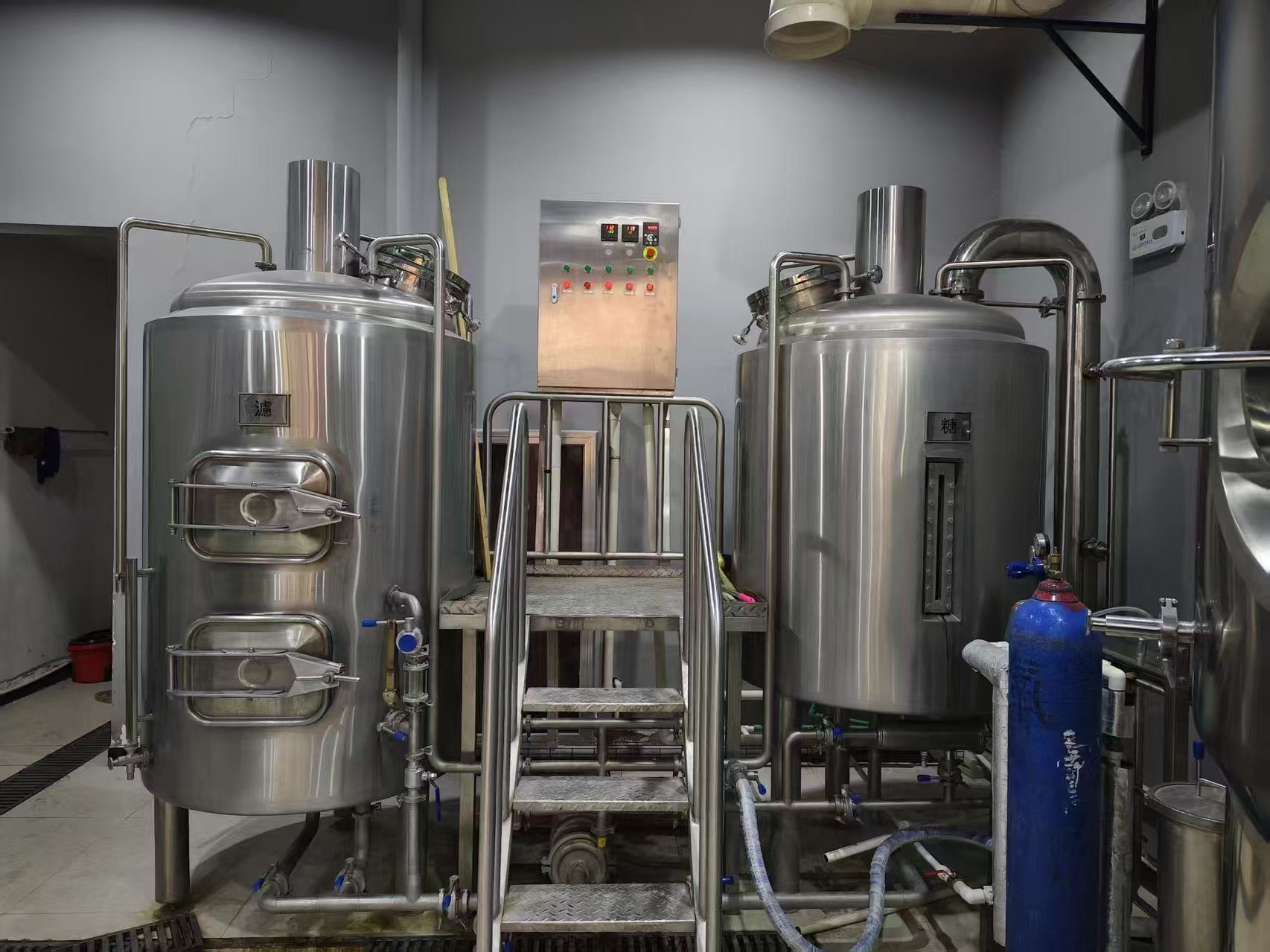
The kettle is one of the most important parts of any brew setup. In small systems, one vessel may do several jobs. In larger brewhouses, the mash tun, lauter tun, kettle, and whirlpool may be separate. This improves speed, control, and repeatability.
The HLT, or hot liquor tank, stores hot brewing water. It supports mashing and sparge water preparation. For a busy taproom or production brewery, an HLT can save time because hot water is always ready for the next batch. For all-grain production, this is especially useful.
Here is a simple guide:
| Project Type | Suggested Setup | Best For |
|---|---|---|
| Small trial project | All-in-one system or BIAB | Recipe testing and training |
| Brewpub | 2-vessel or 3-vessel brewhouse | Fresh local beer and flexible menus |
| Growing craft brewery | 3-vessel or 4-vessel brewhouse | Higher output and better process control |
| Industrial production | Custom brewhouses with automation | Stable quality and repeated large batches |
BIAB means “brew in a bag.” It is simple and affordable. But for a serious brewery, stainless steel tanks, pumps, proper recirculation, and sanitary pipelines provide better control.
Why Do Wort Cooling and Chiller Options Matter?
Cooling is not a small detail. It affects beer quality, production speed, and yeast health. After boiling, the wort must move from high temperature to fermentation temperature quickly and safely. If cooling is too slow, the risk of unwanted flavor and contamination increases.
Small brewers may use an immersion chiller. Larger systems often use a plate chiller because it cools faster and saves space. The right choice depends on batch size, water temperature, glycol capacity, and production schedule.
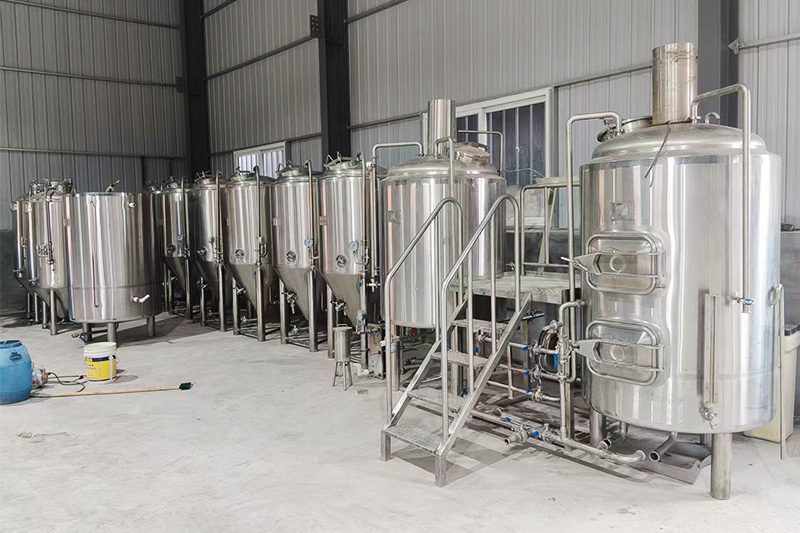
For commercial projects, we also check the cooling load of fermentation tanks. A tank may look correct on paper, but if the glycol system is too weak, the brewer cannot maintain fermentation temperatures. That creates unstable flavor from batch to batch. In our factory work, we treat cooling as part of the whole brewing systems design, not as an accessory.
What Fermenter Design Helps You Maintain Fermentation Temperatures?
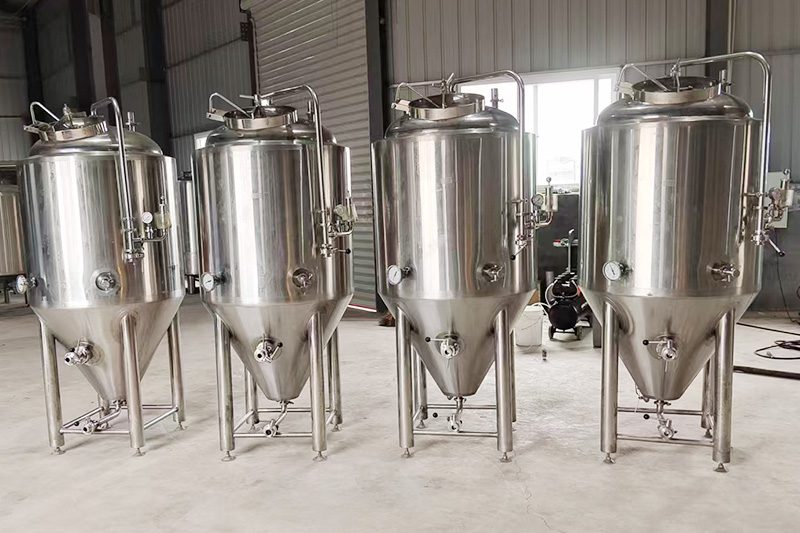
The fermenter is where yeast does its job. For beer, stainless steel conical fermenters are common because they support yeast collection, cleaning, pressure control, and efficient draining. A good tank should use food-grade stainless steel, smooth welding, proper insulation, and a cooling jacket.
Fermentation control is not only about temperature. It also includes pressure, oxygen control, sanitary fittings, and easy cleaning. The tank should have a sample valve, pressure relief valve, CIP spray ball, racking arm, and clear bottom outlet. A poor fitting can cause leaks, cleaning trouble, or product loss.
For a commercial brewery, we often recommend planning extra tank space before sales grow. One brewhouse can feed many fermentation tanks. If tanks are too few, the brew schedule becomes blocked. That is why a smart capacity plan can lower long-term cost.
How Should Cleaning and Sanitizing Be Planned?
Clean equipment makes better beer. It also protects your brand. Before and after every production cycle, tanks, hoses, valves, beer line parts, and transfer tools must be cleaned and sanitized. This is not optional. It is part of professional brewing.
Cleaning and sanitizing are different. Cleaning removes soil, sugar, protein, and visible residue. Sanitizing reduces microbes on already clean surfaces. For larger systems, a CIP system, also called clean in place, lets operators wash tanks and pipelines without taking everything apart.
A practical sanitation checklist includes:
- Rinse tanks after use before residue dries.
- Use correct cleaning chemicals for stainless steel.
- Sanitize all product-contact surfaces before filling.
- Check gaskets, hose ends, valves, and clamps.
- Keep cleaning logs for quality control.
- Train staff to follow the same process every time.
Good sanitation supports longer equipment life, safer beer, and fewer surprises.
Bottle, Keg, or Can: Which Packaging Route Is Right?
Packaging depends on your sales channel. If you sell in a taproom, kegging may be the best starting point. If you sell through stores, bottle or can packaging may be needed. Some breweries also use growlers for local takeaway sales.
Each route needs different equipment and supplies. Bottle filling requires rinsing, filling, capping, labeling, and packing. Keg filling needs washers, fillers, keg couplers, and pressure control. A draft system may also need beer towers, clean beer lines, and regular line service.
Here is a simple comparison:
| Packaging Method | Advantages | Key Equipment |
|---|---|---|
| Keg | Fast for taproom and draft sales | Keg washer, filler, coupler |
| Bottle | Good shelf display and gift sales | Bottle rinser, filler, capper |
| Can | Popular for retail and delivery | Can filler, seamer, labeler |
| Growlers | Good for local customers | Counter-pressure filler |
Packaging equipment should match your beer style, oxygen control needs, and labor plan. A small filling machine may be fine at first. But if orders grow fast, packaging becomes the bottleneck.
What Brewery Supplies and Fittings Should Not Be Ignored?
Many people focus only on tanks. But small parts can decide whether the system runs smoothly. Brewery supplies include hoses, clamps, valves, pumps, gaskets, seals, filters, cleaning tools, and testing instruments. These small items help the brewer work safely and repeatably.
A refractometer helps check sugar during brewing. A hydrometer can help measure alcohol content during fermentation. Proper hose length, sanitary clamps, and tri-clamp fittings make transfer easier. Even a simple rack for hoses and tools can improve hygiene and save time during daily work.
For professional projects, we recommend preparing a spare parts list before shipment. This may include gaskets, valves, seals, sensors, and pump parts. It is a small investment, but it can prevent downtime when production is active.
Homebrew vs Commercial Beer Brewing Equipment: What Changes?
Homebrewing is about learning, testing, and enjoying the craft. Home brewing equipment can be simple, flexible, and low-cost. You can make beer in a kitchen, garage, or small workshop. If one batch fails, the loss is small.
Commercial beer brewing equipment is different. It must support stable output, safety, cleaning, worker efficiency, and local business rules. A commercial system needs stronger tanks, sanitary design, better cooling, pressure control, electric or steam heating, and a clear layout.
The main difference is risk. A hobby brewer can adjust by feel. A business needs repeatable process control. That is why a serious project should plan production volume, tank turnover, utility supply, drainage, ventilation, glycol cooling, and packaging from the beginning.
How Can a Manufacturer Help You Build High-Quality Beer Brewing Equipment?
A good manufacturer does more than sell tanks. We help customers design a complete production path. That includes capacity planning, stainless steel tank selection, CAD layout, utility matching, installation guidance, commissioning support, and after-sales service.
For a beverage startup, we may suggest a smaller system with room to expand. For an engineering contractor, we may provide detailed drawings and project coordination. For a winery, distillery, kombucha producer, or cold brew coffee brand, we adjust tank structure and process design based on the product.
Our goal is simple: help you reduce project risk. The equipment should be easy to install, easy to clean, and easy to operate. When the system fits the real workflow, your team can focus on quality, sales, and customer experience.

Case Study: From Small Recipe Testing to a Scalable Brewery Plan
A common customer comes to us with a simple request: “We want to start small, but we may expand later.” This is a smart question. Instead of buying the largest system at once, many businesses begin with a pilot brewhouse and several fermentation tanks.
For example, a brewpub may start with a 300L to 500L system for menu testing and local sales. If demand grows, the customer can add more fermenters, brite tanks, a bigger glycol unit, and better packaging equipment. This staged plan protects cash flow and keeps the system flexible.
In our experience, the best projects are not always the biggest. They are the best matched. The tank volume, floor space, labor plan, and sales target must work together.
Key Buying Checklist for Beer-Making Equipment
Before you buy, ask direct questions. Do not only compare price. Compare design, material, service, and long-term use.
| Otázka | Proč na tom záleží |
|---|---|
| What is my target monthly output? | Decides brewhouse and tank size |
| How many beer styles will I produce? | Affects tank quantity and schedule |
| Do I need steam, electric, or gas heating? | Affects installation and energy cost |
| Is the system easy to clean? | Reduces contamination risk |
| Can the system expand later? | Protects future investment |
| Does the supplier provide layout support? | Reduces project mistakes |
| Are spare parts available? | Lowers downtime risk |
The best equipment plan is practical. It should match your current stage and your next stage.
Nejčastější dotazy
What is the most important equipment for a new brewery?
The most important equipment includes the brewhouse, fermenters, cooling system, CIP cleaning system, pumps, hoses, and packaging route. If your budget is limited, prioritize sanitary stainless steel tanks, reliable temperature control, and a layout that your team can clean easily.
Can I start with a homebrew setup and grow into a brewery?
Yes, many brewers begin with homebrew experiments. But once you sell beer, you need safer, stronger, and more repeatable equipment. A professional system helps you control quality, reduce labor, and meet production goals.
What size brewhouse should I buy?
It depends on your sales plan, beer styles, fermentation time, and working days per week. A small taproom may use a 300L to 1000L system. A larger production brewery may need several thousand liters per brew. Tank quantity matters as much as brewhouse size.
Why is stainless steel used for beer production?
Stainless steel is strong, clean, and suitable for food and beverage production. It resists corrosion, supports smooth polishing, and works well with CIP cleaning. For breweries, this means safer production and longer equipment life.
Do I need automation for my first brewery?
Not always. A small brewery can start with semi-automatic controls. But automation helps improve repeatability, reduce labor, and protect product quality. Many customers begin with basic controls and upgrade later.
How do I choose a reliable supplier?
Choose a supplier that understands brewing, not only metal fabrication. Ask for tank drawings, material details, welding quality, layout support, testing process, installation guidance, and after-sales service. A reliable supplier should help you solve the whole project, not only ship equipment.
Final Takeaways
- The right equipment plan starts with production goals, not tank price.
- Good beer needs stable mashing, boiling, cooling, fermentation, and sanitation.
- A brewery should plan tanks, utilities, cleaning, and packaging together.
- Small parts like hoses, valves, fittings, and testing tools matter.
- Homebrew equipment is useful for learning, but commercial production needs stronger systems.
- A professional manufacturer can help reduce risk with layout design, customization, testing, installation guidance, and long-term support.
A well-planned system helps you brew with confidence today and expand with less risk tomorrow.