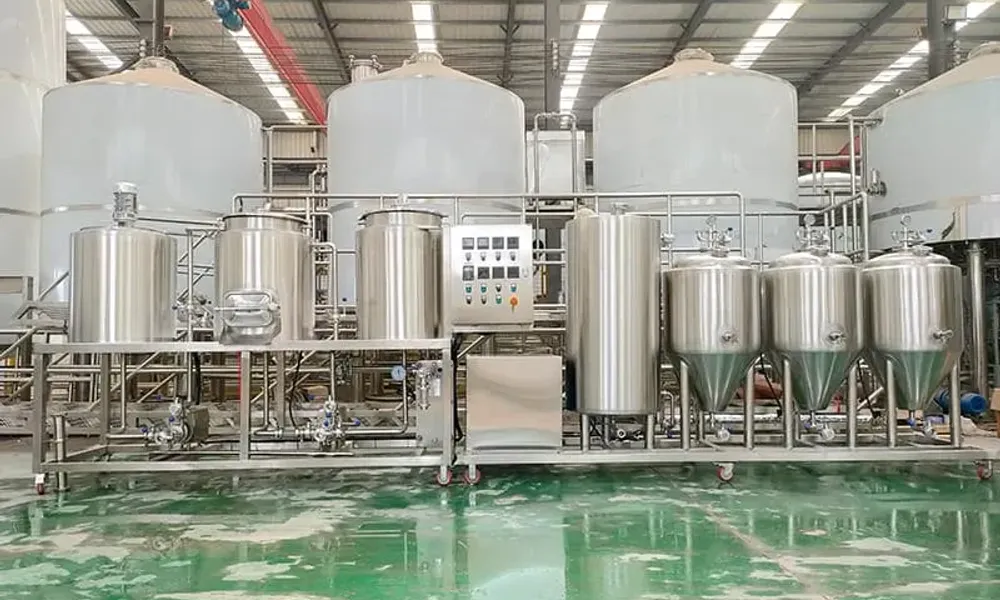
Uvařit skvělé pivo neznamená jen smíchat slad, chmel, kvasinky a vodu. Drobné chyby během rmutování, vaření, chlazení, kvašení nebo stáčení mohou změnit chuť, čirost, obsah alkoholu i konzistenci. Dobře navržený proces vaření pomáhá sládkům kontrolovat každou fázi a vyrábět stabilní, opakovaně stejně kvalitní pivo.
Proces vaření piva obvykle zahrnuje šrotování sladu, rmutování, scezování, vaření sladiny s chmelem, chlazení, kvašení, zrání a stáčení. Během vaření enzymy přeměňují škrob na zkvasitelné cukry, chmel dodává hořkost a aroma a kvasinky přeměňují cukr na alkohol a oxid uhličitý. Přesný postup se liší podle pivního stylu, velikosti pivovaru a použitého vybavení.
U domácího sládka mohou tyto kroky probíhat v několika malých nádobách. V komerčním pivovaru platí stejné principy, systém však musí zohledňovat také efektivitu výroby, hygienické provedení, chlazení, čištění, kapacitu kvašení a konzistenci jednotlivých várek.
Jako výrobce nerezových pivovarských a nápojových systémů nahlížíme na celý pracovní postup komplexně – od rmutovací kádě a varny až po fermentační nádoby, glykolové chlazení, CIP stanici, přetlačné tanky a napojení na stáčecí linku. Kvalitní vybavení sice nenahradí sládkovský um, ale pomáhá zajistit větší stabilitu a snazší opakovatelnost procesu.
Jaké jsou hlavní kroky procesu vaření piva?
Proces vaření piva lze rozdělit do řady navazujících fází. V každé fázi se suroviny specifickým způsobem proměňují.
Typický komerční postup vypadá takto:
Slad → Šrotování → Rmutování → Scezování → Chmelovar → Víření → Chlazení → Kvašení → Zrání → Balení
Každý krok procesu vaření piva má svůj účel.
| Fáze vaření | Hlavní účel |
|---|---|
| Frézování | Rozrušte zrna sladu a odhalte škrob |
| Rmutování | Převeďte škrob na zkvasitelné cukry |
| Scezování | Oddělit sladinu od sladového mláta |
| Chmelovar | Sterilizace mladiny a extrakce chmelových látek |
| Víření | Odstranit pevné částice chmele a bílkovin |
| Chlazení | Přiveďte mladinu na teplotu vhodnou ke kvašení |
| Kvašení | Kvasnice přeměňují cukr na alkohol a CO₂ |
| Dokvašování | Zlepšení chuti a čirosti |
| Balení | Stáčení hotového piva do sudů, lahví nebo plechovek |
Proces vypadá na papíře jednoduše, ale v praxi každá fáze ovlivňuje tu následující.
Například špatné našrotování může snížit výtěžnost. Nedostatečné rmutování může zanechat příliš mnoho nepřevedeného škrobu. Nedostatečné chlazení může zpomalit aktivitu kvasinek. Špatná kontrola teploty kvašení může vytvořit nežádoucí chutě a vůně.
Proto profesionální sládci uvažují o celém systému, nikoli o jedné izolované nádrži.
Jak slad zahajuje proces vaření piva?
Slad je jednou z hlavních surovin používaných k výrobě piva.
Většina piv začíná u sladovaného ječmene, ačkoli podle konkrétního pivního stylu se mohou používat také pšenice, žito, oves, kukuřice, rýže a další obiloviny.
Než se z ječmene stane slad, prochází řízeným klíčením.
Zrno se nechá vyklíčit, čímž se aktivují přirozené enzymy uvnitř zrna. Proces sladování se poté zastaví sušením zrna.
To je důležité, protože tyto enzymy později během rmutování pomohou přeměnit škrob na cukr.
Různé druhy sladu také ovlivňují:
- Barva
- Tělo
- Sladkost
- Toustová chuť
- Karamelové tóny
- Pražený charakter
Světlé ale může používat převážně světlý základní slad s menším množstvím speciálních sladů.
Tmavé pivo může obsahovat více praženého sladu.
Pšeničné pivo může obsahovat vysoký podíl pšeničného sladu.
Ještě než tedy sládek zahájí samotný varný den, složení sypání již předurčuje charakter výsledného piva.
Co se děje během procesu rmutování?
Proces rmutování začíná ve chvíli, kdy se sešrotovaný slad smíchá s horkou vodou v nádobě zvané rmutovací káď.
Jde o jednu z nejdůležitějších fází procesu, protože jejím cílem je přeměnit obilný škrob na zkvasitelné cukry.
Rmut se udržuje při kontrolovaných teplotách, aby mohly přirozené sladové enzymy pracovat.
Různá rozmezí působení enzymů podporují tvorbu různých typů cukrů.
Jednoduše řečeno:
Sladový škrob + enzymy + ohřátá voda → zkvasitelné cukry
Teplota rmutování může ovlivnit výsledné pivo.
Nižší teplota rmutování často vytváří lépe prokvasitelnou mladinu a sušší výsledný produkt.
Vyšší teplota rmutování může zanechat více nezkvasitelných látek, což může zvýšit plnost a sladkost piva.
Právě proto sládek jednoduše nepřidá horkou vodu a nečeká.
Teplotní profil je důležitý.
V komerční varně by rmutovací káď měla zajišťovat:
- Even heating
- Good mixing
- Accurate temperature control
- Effective insulation
- Sanitary construction
- Easy cleaning
A poorly designed mash system may create hot spots, uneven conversion, or inconsistent extraction.
How Is Wort Separated From the Grain?
After mashing, the brewer needs to separate the liquid from the spent grain.
The sweet liquid is called wort.
The wort contains dissolved sugars, proteins, minerals, and flavor compounds extracted from the grain.
The separation stage is often called lautering.
In some brewhouses, mashing and lautering happen in separate vessels. In others, the functions may be combined.
During lautering, the grain bed acts like a filter.
The brewer collects the wort and may rinse the grain with hot water to recover additional sugar.
This rinsing step is often called sparging.
The goal is to recover enough extract without bringing too many unwanted husk compounds into the beer.
The quality of lautering depends on:
- Grain crush
- Grain bed depth
- Water flow
- Rake design
- False bottom design
- Sparge method
- Wort collection rate
For a commercial brewery, a well-designed lauter tun can shorten brew time and improve extraction efficiency.
That matters because time saved on each batch of beer can increase total brewhouse capacity.
Why Is Wort Boiled and When Are Hops Added?
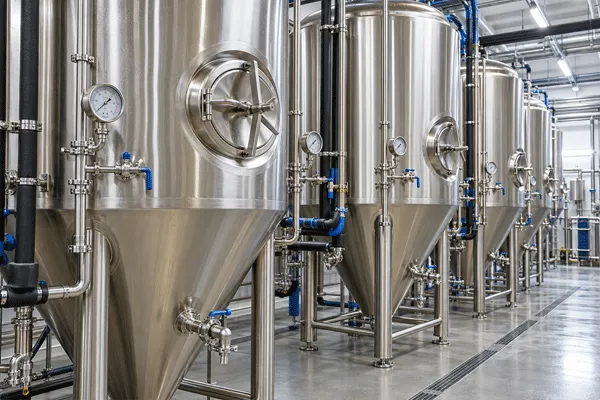
After lautering, the wort enters the kettle for the boiling process.
Boiling performs several important jobs.
It helps:
- Sterilize the wort
- Stop enzyme activity
- Concentrate the wort
- Remove some unwanted volatile compounds
- Coagulate proteins
- Extract bitterness from hops
- Develop beer flavor
This is also where the hop becomes a major ingredient.
Hops contain compounds that contribute bitterness, aroma, and flavor.
The timing of hop additions changes their effect.
If hops are added early in the boil, more bitterness is usually extracted.
If hops are added later, more aroma may remain.
A simplified hop schedule might look like this:
| Hop Addition | Typical Effect |
|---|---|
| Early boil | More bitterness |
| Mid boil | Flavor contribution |
| Late boil | More aroma |
| Víření | Strong aroma, less bitterness |
| After fermentation | Dry-hop aroma |
The exact schedule depends on beer style.
An IPA may use a large amount of late hops.
A traditional lager may use a more restrained hop profile.
A pale ale may balance moderate bitterness with citrus, floral, or resinous aroma.
Hop choice affects both aroma and flavor, so the brewer must match hop variety and timing to the target beer.
What Happens After Boiling?
After boiling, the wort usually enters a whirlpool.
The purpose is to separate hop particles and coagulated proteins from the cleaner wort.
The liquid is circulated so solids collect in the center of the vessel.
After clarification, the wort must be cooled quickly.
This matters for both quality and microbiological control.
The hot wort typically passes through a heat exchanger where it is cooled to the required fermentation temperature.
For many ales, the target temperature is higher than for lagers.
A lager yeast generally works at lower temperatures than many ale strains.
Cooling speed matters because the brewer wants to move from hot wort to fermentation temperature efficiently.
Slow cooling may increase contamination risk and can affect beer flavor.
In a commercial brewery, the heat exchanger, cold-water tank, glycol system, pumps, and piping all work together.
The brewhouse should not be viewed as separate from the cold side.
How Does Fermentation Make Beer?
After cooling, the wort is transferred to a fermentation vessel or fermentation tank.
Then yeast is added.
This stage is known as fermentation.
Yeast consumes fermentable sugar and converts it mainly into alcohol and carbon dioxide.
The basic reaction can be simplified as:
Sugar → Alcohol + Carbon Dioxide + Flavor Compounds
But fermentation is more than alcohol production.
Yeast also creates esters, higher alcohols, sulfur compounds, acids, and other substances that affect beer character.
The type of yeast used has a major effect on the finished beer.
Ale Yeast
Ale yeast generally works at warmer temperatures and can produce fruity or complex flavors.
Lager Yeast
Lager yeast works at cooler temperatures and usually produces a cleaner flavor profile.
The primary fermentation stage may take several days or longer, depending on:
- Beer style
- Yeast strain
- Original gravity
- Fermentation temperature
- Tank geometry
- Oxygenation
- Pitching rate
Some strong or specialty beer styles take much longer.
The brewer should not simply wait for a fixed number of days.
They monitor gravity, temperature, pressure, yeast activity, and flavor.
Why Does Fermentation Temperature Matter So Much?
Fermentation temperature has a major impact on beer quality.
If temperature rises too much, yeast may produce unwanted by-products.
If the temperature is too low, fermentation may slow or stop.
Stable temperature control also helps improve consistency between batches.
In a commercial brewery, fermentation tanks are usually equipped with cooling jackets connected to a glycol system.
This allows the brewer to control different tanks independently.
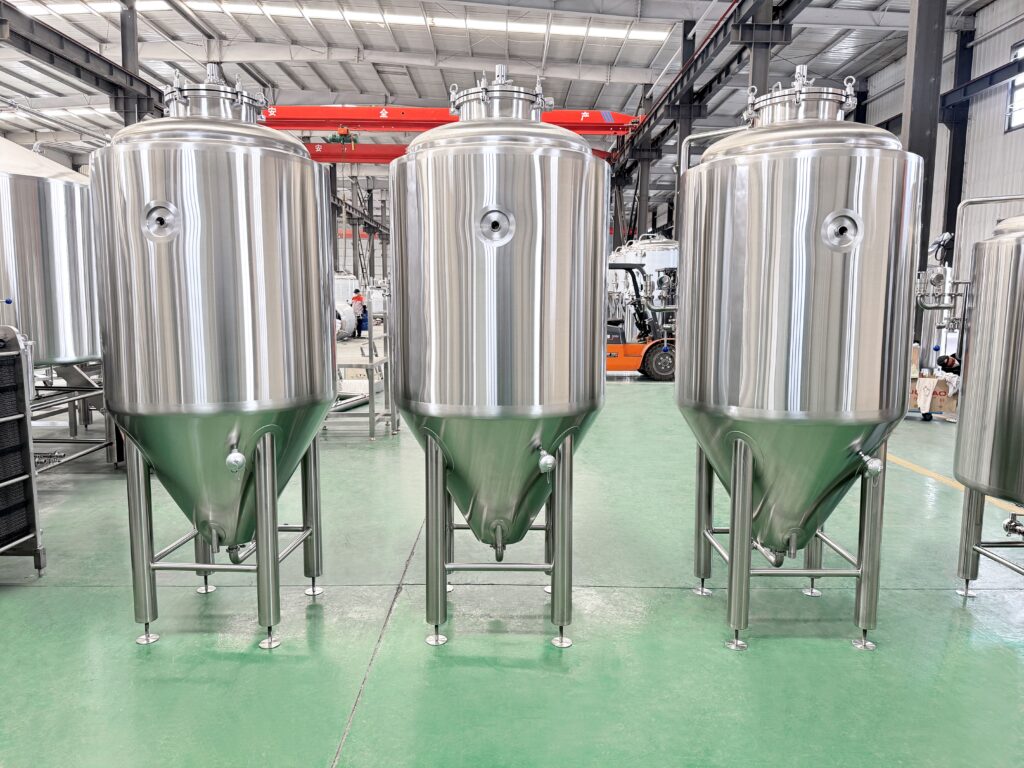
A typical fermentation tank may include:
- Cooling jackets
- Temperature probe
- Pressure gauge
- Vzorkovací ventil
- CIP spray device
- Yeast discharge outlet
- Pressure relief valve
- Sanitární armatury
When fermentation is complete, the beer may be chilled.
This helps yeast and suspended solids settle.
The cold stage also prepares the beer for conditioning, clarification, transfer, or packaging.
A well-designed fermentation system is especially important for breweries producing many batches at the same time.
The brewhouse may make the wort, but the fermentation cellar often determines actual production capacity.
What Happens During Beer Conditioning?
After active fermentation, the beer often enters a conditioning or maturation stage.
This is a period when the beer develops a cleaner and more stable flavor.
During conditioning:
- Yeast may continue to clean up flavor compounds
- Solids settle
- Beer becomes clearer
- Carbonation may develop
- Harsh flavors may soften
For some beers, conditioning is short.
For others, it may take weeks.
A traditional lager often requires longer cold conditioning than many ales.
The process varies by product.
Some breweries condition beer in the same cylindroconical fermentation tank.
Others transfer beer into a bright beer tank.
The best choice depends on:
- Tank availability
- Production schedule
- Beer style
- Packaging method
- Desired clarity
- Carbonation method
For a growing brewery, tank scheduling becomes a major part of production planning.
One slow-conditioning beer can occupy a tank for much longer than a fast ale.
That affects how many batches the brewery can make each month.
How Does the Beer Style Change the Brewing Process?
The same basic process can produce very different beers.
The beer style determines how the brewer adjusts malt, hops, yeast, water, temperature, and time.
For example:
Pale Ale
A pale ale may use pale malt, moderate hop bitterness, ale yeast, and relatively warm fermentation.
Lager
A lager may use similar base ingredients but different yeast, cooler fermentation, and longer conditioning.
American Wheat Beer
An American wheat beer often includes a large amount of wheat and may use a clean ale yeast.
IPA
An IPA usually uses more hops, especially for late aroma additions or dry hopping.
Many craft breweries also add ingredients such as:
- Fruit
- Coffee
- Cocoa
- Spices
- Honey
- Herbs
- Lactose
Some ingredients are added during the boil.
Others may be added after fermentation.
That is why the process varies even though the basic steps remain similar.
Kvalitní brewing equipment should give the brewer enough flexibility to handle different recipes without making the system overly complicated.
What Equipment Is Needed to Brew Beer Commercially?
A commercial brewery needs more than a kettle and fermenter.
A complete brewing equipment system may include:
Hot Side
- Mlýnek na slad
- Rmutovací káď
- Scezovací kád
- Varná pánev
- Víření
- Zásobník horké vody
- Čerpadla
- Heat exchanger
Cold Side
- Fermentation tanks
- Bright beer tanks
- Glykolový chladič
- Cold liquor tank
- Systém CIP
- Process piping
Packaging Side
- Keg washer/filler
- Bottling line
- Canning line
- Labeling equipment
A small brewpub may use a compact 2-vessel brewhouse.
A larger commercial brewery may use a 3-vessel or 4-vessel brewhouse to improve throughput.
This is where capacity planning becomes important.
For example, a brewery may own a 2,000 L brewhouse, but if it only has two 2,000 L fermenters, production will quickly become limited.
A simplified relationship is:
Brewhouse Capacity + Brewing Frequency + Fermentation Time = Required Fermentation Capacity
As a brewery equipment manufacturer, we usually recommend planning the hot side and cold side together.
That reduces the chance of buying a strong brewhouse that spends too much time waiting for an empty tank.
What Does a Real Commercial Brew Day Look Like?
A typical brew day starts before the mash begins.
The brewer prepares the water, checks the grain, confirms the recipe, cleans equipment, and makes sure tanks and utilities are available.
A simplified 1,000 L brewing schedule might look like this:
| Stage | Approximate Activity |
|---|---|
| Frézování | Crush malt |
| Rmutování | Mix malt with heated water |
| Scezování | Separate wort |
| Chmelovar | Boil wort and add hops |
| Víření | Odstranit pevné částice |
| Chlazení | Cool wort |
| Přeprava | Send wort to fermenter |
| Yeast Pitching | Add yeast |
| Čištění | CIP brewhouse |
The exact timing depends on equipment layout and automation.
A highly efficient brewhouse can overlap some steps.
For example, one vessel may be cleaned while another batch is being prepared.
This is one reason larger breweries use multiple vessels.
More vessels can increase brewhouse throughput—but only if the fermentation cellar, cooling capacity, and staff can keep up.
How Long Does the Brewing Process Take?
The actual process of brewing takes longer than one brew day.
The hot-side production may take several hours, but fermentation and conditioning can take days or weeks.
A simple timeline might look like this:
Brew Day
   ↓
Mashing / Lautering / Boiling
   ↓
Cooling
   ↓
Fermentation
   ↓
Conditioning
   ↓
Packaging
For many ales, the entire process can take roughly a few weeks.
Some lagers may take longer.
High-gravity beers, barrel-aged beers, sour beers, and certain specialty beers may require months.
So when planning production, the question is not only:
“How much can the brewhouse brew?”
Lepší otázka zní:
“How much finished beer can the full brewery produce each month?”
That includes fermentation tank occupancy, conditioning, cleaning, packaging, and downtime.
Why Sanitary Equipment Matters in Craft Brewing
Beer contains sugar, nutrients, yeast, and water.
That means microorganisms can grow if the equipment is not properly cleaned.
Sanitary design is therefore critical.
Commercial stainless steel brewing systems should reduce areas where liquid can remain trapped.
Important details include:
- Hladké vnitřní povrchy
- Sanitary welds
- Proper drainage
- CIP coverage
- Easy-to-clean valves
- Sanitární armatury
- Correct pipe slopes
Good cleaning helps reduce contamination and protects batch consistency.
This is especially important after fermentation because oxygen and microbial contamination can quickly damage finished beer.
For this reason, professional breweries treat CIP as part of the brewing process, not as an optional extra.
Frequently Asked Questions About Brewing Beer
What are the main steps of the beer brewing process?
The main steps are milling, mashing, lautering, boiling, hop addition, whirlpool separation, wort cooling, fermentation, conditioning, and packaging. Each stage affects flavor, alcohol content, clarity, and consistency.
How does yeast make beer alcoholic?
Yeast consumes fermentable sugar in the wort and produces ethanol, carbon dioxide, and flavor compounds. The amount of sugar available and the yeast strain influence final alcohol content.
Why are hops used in beer?
A hop provides bitterness, flavor, and aroma. Early hop additions usually contribute more bitterness, while late-boil, whirlpool, and dry-hop additions are often used for stronger aroma.
What is wort?
Wort is the sweet liquid produced after malt is mashed and the grain solids are separated. It contains sugar that yeast later converts during fermentation.
What is the difference between ale and lager?
The biggest difference is usually the yeast and fermentation conditions. Ale yeast generally works warmer, while lager yeast typically works at lower temperatures. Lager also often requires longer conditioning.
How long does beer fermentation take?
Fermentation takes different amounts of time depending on beer style, yeast, temperature, gravity, and process. Many ales complete active fermentation within several days, while lagers and stronger beers often require longer fermentation and conditioning.
Final Thoughts: Brewing Beer Is a Complete Process, Not One Step
The beer making process is a chain.
Every stage affects the next.
Malt provides starch.
The mash converts starch into sugar.
The brewer separates the sweet wort.
Boiling prepares the wort and extracts hop compounds.
The wort is chilled.
Yeast begins fermentation.
Then the beer is conditioned, clarified, carbonated, and packaged.
That sounds simple.
But the quality of the final product depends on controlling dozens of small details across the entire process.
For a commercial brewery, this is also why equipment selection should begin with the complete production plan.
A brewhouse should match the fermentation cellar.
The fermentation cellar should match the cooling system.
The cooling system should match the actual tank load.
The packaging line should match finished beer output.
And the complete layout should allow the team to work safely and efficiently.
As a manufacturer of customized stainless steel brewery and beverage systems, we focus on this whole-system approach. The goal is not simply to provide tanks. It is to help build a production flow that supports stable beer quality, efficient brewing, easier cleaning, reliable expansion, and long-term operation.
If you are planning a new brewery or expanding an existing project, useful information includes:
- Target beer styles
- Brewhouse batch size
- Number of brews per day or week
- Annual output target
- Doba fermentace
- Required number of fermenters
- Available building dimensions
- Heating method
- Cooling conditions
- Packaging method
- Automation level
- Future expansion plan
With those details, the brewing system can be designed around how you actually plan to produce beer.
Klíčové body k zapamatování
- Beer brewing usually includes milling, mashing, lautering, boiling, cooling, fermentation, conditioning, and packaging.
- Malt provides the starch and enzymes needed for the brewing process.
- During mashing, enzymes convert starch into fermentable sugar.
- Wort is the sweet liquid separated from the grain.
- Hops add bitterness, flavor, and aroma.
- Yeast converts sugar into alcohol and carbon dioxide.
- Fermentation temperature strongly affects beer flavor and consistency.
- Ale and lager use different yeast behavior and fermentation conditions.
- The fermentation cellar often determines real brewery capacity.
- Conditioning improves clarity, stability, and flavor.
- Sanitary stainless steel equipment and CIP reduce contamination risk.
- A commercial brewery should plan brewhouse, fermentation, cooling, storage, and packaging as one system.
- The best brewing system is not simply the largest one—it is the one that matches your production goals and beer styles.