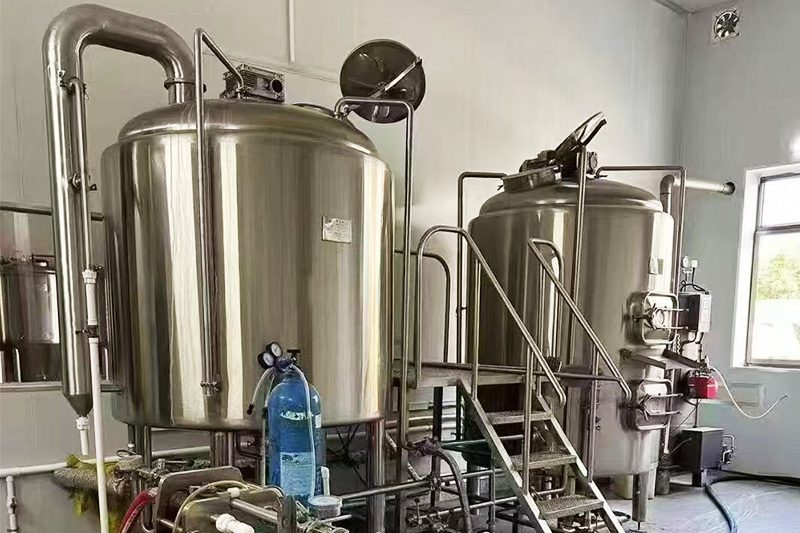
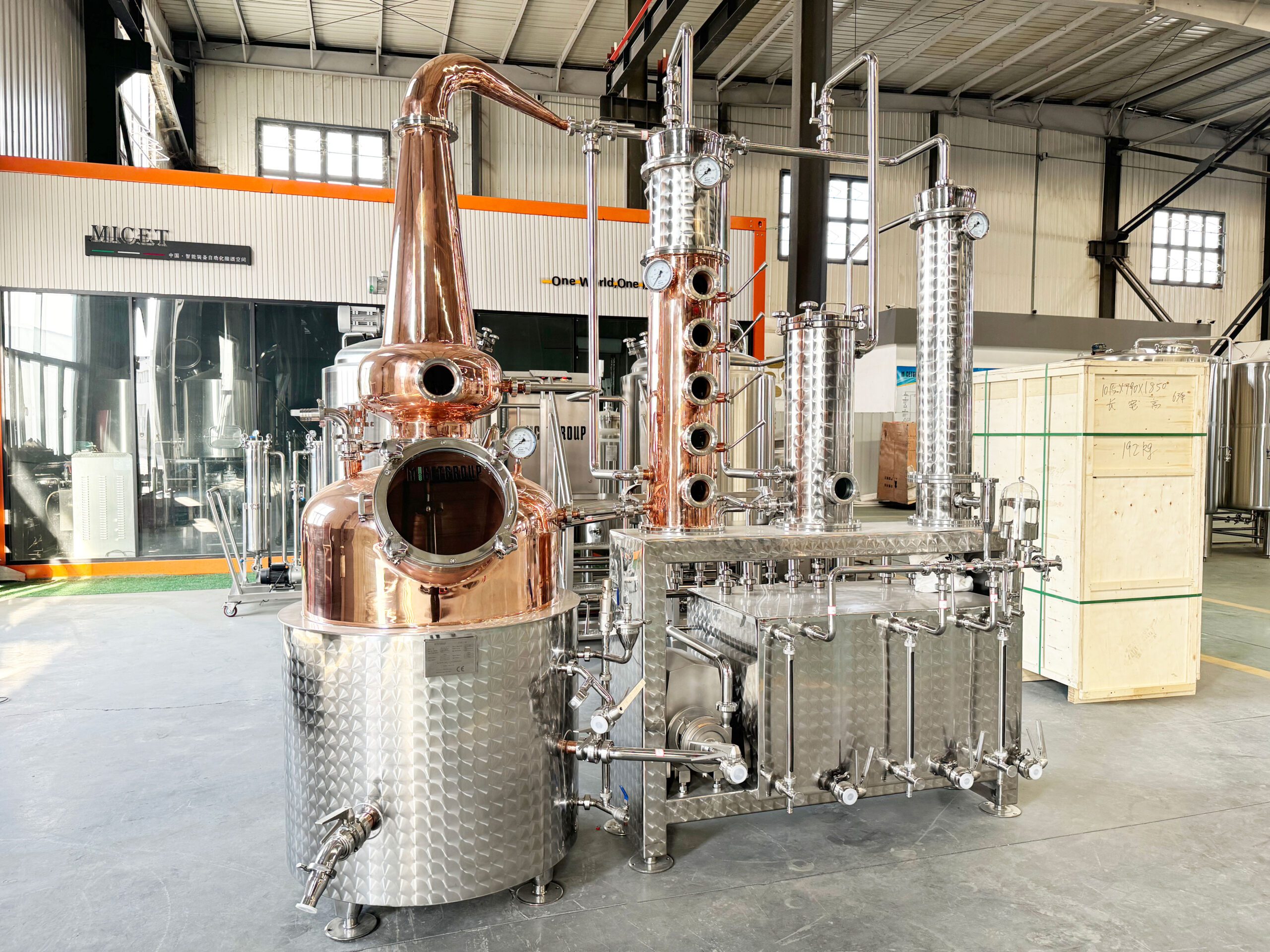
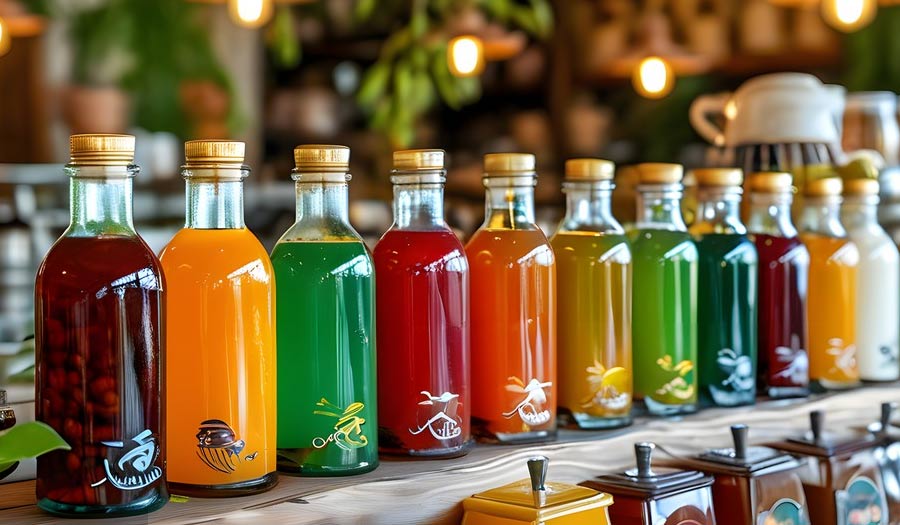
A fermentation vessel is the container where wort or must turns into beer, cider, or wine. The format you pick — open, closed, conical, wooden, plastic, or glass — sets your batch scale, your temperature control options, and whether a used tank is even a sensible purchase.
What Actually Separates One Vessel Type From Another
Every fermenter does the same basic job: hold liquid, keep out contamination, let yeast work. What changes is geometry, material, and whether the vessel can hold pressure. A flat-bottomed open fermenter and a cylindroconical unitank both “ferment beer,” but they belong to different production models entirely. One is built for top-cropping ale yeast and short cellar time; the other is built for a brewery running multiple beer styles through the same tank, week after week, with a racking arm and a pressure relief valve doing work the open vessel was never designed for.
That distinction matters more than most buying guides admit, because it’s also what determines whether a secondhand tank is a good idea. A used cylindroconical with a glycol jacket and a clean pressure test report is a straightforward retrofit. A used open fermenter is mostly just steel — there’s less to fail, but also less to verify.
The 6 Formats, Side by Side
| タイプ | Typical batch scale | 材料 | Pressure/carbonation capable | CIP-friendly | Refurb-sourcing fit |
| Open fermenter | 5–30 BBL | ステンレスまたはライニング鋼 | No | Manual clean only | Weak candidate — hard to verify wear, no jacket to inspect |
| Closed (flat-bottom) tank | 5–60 BBL | SUS304 stainless | 限定的、低圧のみ対応 | 対応可(スプレーボール使用) | ジャケットと溶接部に問題がなければ有望な候補 |
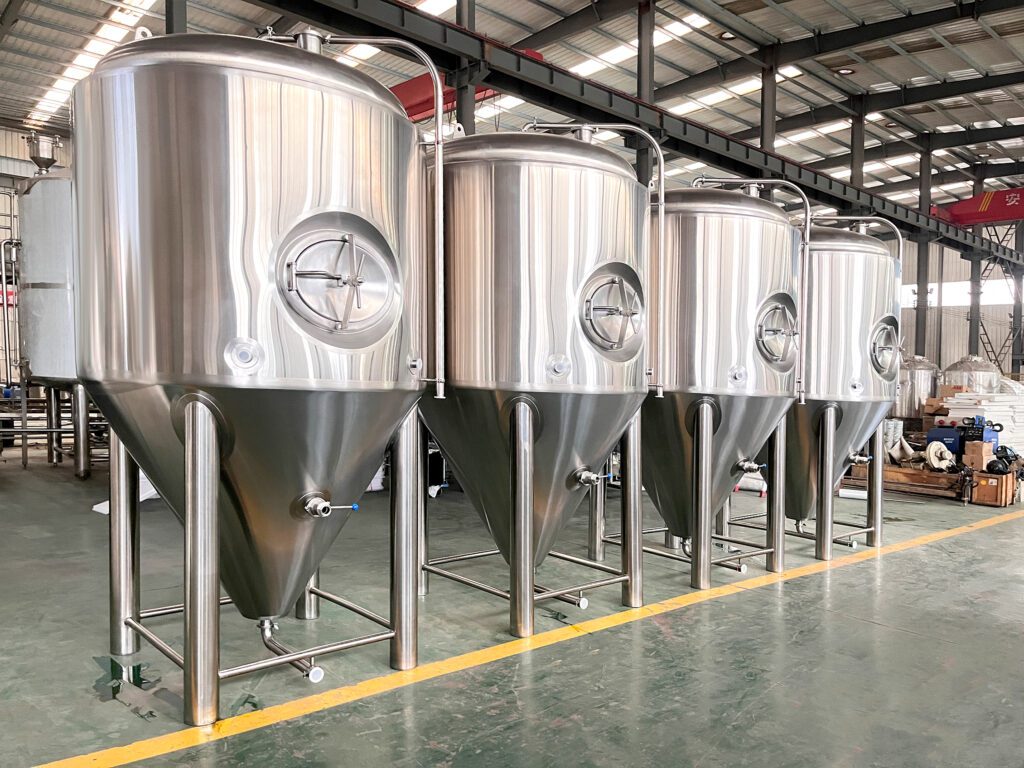
| Cylindroconical unitank | 3–120+ BBL | SUS304/316L stainless | Yes, full pressure fermentation and carbonation | Yes | 最適な候補 — メーカー間での設計標準化が最も進んでいる |
| 木製フーダー | 10–50+ BBL | オークまたはその他の広葉樹 | No | No — requires manual scrubbing/steaming | Poor candidate — wood condition and prior contents are hard to audit secondhand |
| Plastic conical | 0.5–7 BBL | Food-grade HDPE/PET | No | Manual | Case-by-case — scratches and micro-porosity are a real risk in used plastic |
| Glass carboy/demijohn | 50ガロン未満 | Glass | No | Manual | Fine used, but batch scale is nano/homebrew only |
A few things stand out once the formats sit next to each other instead of in separate paragraphs. First, pressure capability is really a one-column split: only the cylindroconical unitank and, to a limited degree, a closed flat-bottom tank can hold CO2 for in-tank carbonation. Second, refurb-sourcing viability tracks almost exactly with how much of the vessel’s condition you can actually inspect from the outside — a jacketed stainless tank tells you a lot through its weld seams and pressure test tag; a foeder or a scratched plastic conical tells you much less.
Where Refurb-Sourcing Actually Makes Sense
This is the question most vessel-type roundups skip, and it’s worth answering directly instead of vaguely: not every format is worth buying used, even at a discount.
- Cylindroconical stainless tanksare the strongest used-market candidates. The geometry is standardized enough across manufacturers that a 10 BBL used unitank from one shop is dimensionally close to one from another, which makes swapping into an existing cellar layout realistic.
- 密閉型平底タンクグリコールジャケットの耐圧試験が最近行われており、内部に孔食(ピッティング)が見られない場合は、妥当な次善の選択肢となります。
- Open fermentersは中古で安く購入できますが、構造がシンプルな分、書類上の記録(履歴)が少ない傾向にあります。そのため、状態の評価は書類よりも現物の目視点検に大きく依存することになります。
- 木製フーダーは、以前の使用歴(および醸造されていたビールのスタイル)が完全に把握できていない限り、中古での調達を避けるようお勧めするタイプです。木材は過去に発酵させた成分を保持するため、特定のフーダーをベースに構築されたサワープログラムには強みとなりますが、それ以外の醸造にとってはリスクとなります。
- Plastic conicals and glass carboysare usually bought new because they’re inexpensive enough that the labor of inspecting a used one for scratches and micro-cracks isn’t worth the savings.
よくある誤解:「ユニタンク」と「発酵タンク」は同義ではない
購入者との商談でよくある誤解が、「ユニタンク」を単に「発酵タンク」の言い換えとして捉えてしまうことです。しかし両者は異なります。ユニタンクとは、 handle both fermentation 本来であれば別のブライトタンクに移送する必要がある熟成・カーボネーション工程の両方に対応できるように設計された円錐型容器のことです。すべてのユニタンクは発酵容器ですが、すべての発酵容器がユニタンクであるわけではありません。開放型発酵槽やフーダーは耐圧構造になっていないため、ユニタンクとして機能することは決してありません。もし中古機器の出品情報に「ユニタンク」と記載されていても、圧力リリーフバルブやカーボネーションストーンが備わっていない場合は、設置後ではなく購入前に確認しておくべき重要なポイントです。
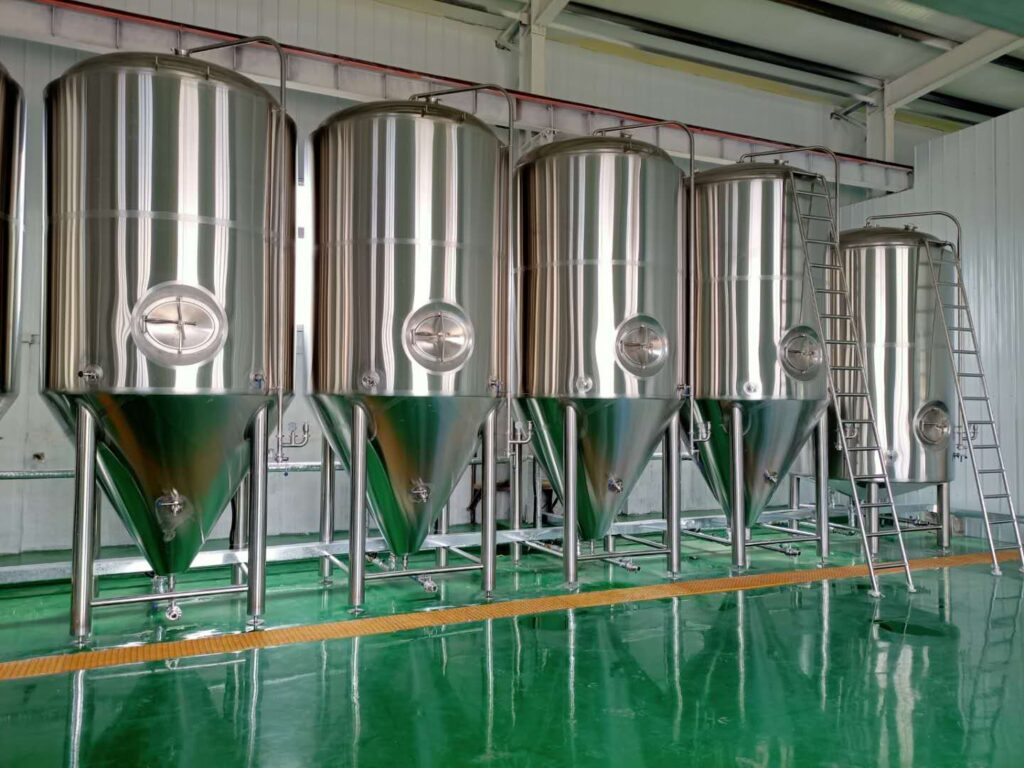
購入前に確認すべき発酵タンクの仕様
仕様はブランドによって、また同一メーカーの製品ライン内であっても大きく異なるため、個別の仕様書はあくまで参考情報であり、業界共通の標準規格ではない点にご留意ください。中型ステンレス発酵タンクのラインナップに見られる仕様例を挙げると、バッチサイズは一般的に3〜5 BBLから10、20、40 BBLまで揃っており、メートル法表記では全容量2,000L、4,000L、6,000L(クラウゼン用のヘッドスペースを確保した有効容量としては約1,800L、3,600L、5,400L)などが展開されています。構造は通常SUS304ステンレス製で、グリコールジャケットとポリウレタン断熱材を備え、設計圧力は約0.2 MPa、耐圧試験は約0.3 MPaで実施されます。
Two numbers to always ask for on a used tank quote: the design pressure rating and the last pressure test date. Both should be on the mill certificate or test report that came with the original build — if a seller can’t produce either, budget for a new pressure test before the tank goes into service.
Price Ranges by Scale
Pricing depends heavily on batch size, jacket configuration, and whether the tank is sold standalone or as part of a full system. For a rough anchor: a full microbrewery equipment package (醸造設備+発酵設備) tends to run in the 30,000–80,000 USD range, and a minimum-scale commercial system starting around 10 BBL runs roughly 50,000–80,000 USD. Standalone 発酵タンク outside a packaged system aren’t publicly listed at fixed prices by most manufacturers — expect to request a quote once you’ve settled on capacity, jacket type, and pressure rating.
見落とせないメリットとデメリット
No format wins on every axis. Cylindroconical unitanks give you pressure fermentation and single-vessel conditioning, but they cost more per liter of capacity than an open tank and need a trained operator who understands racking arm use and CIP cycles. Open fermenters are cheap and simple to maintain, but they can’t carbonate in-tank and expose the batch to more oxygen risk during transfer. Wooden foeders add flavor complexity that stainless can’t replicate, but they’re the hardest format to keep spotless between uses and the least forgiving of temperature swings. Plastic and glass are the lowest-cost entry point, but neither scales past homebrew or nano volumes without becoming impractical to sanitize consistently.
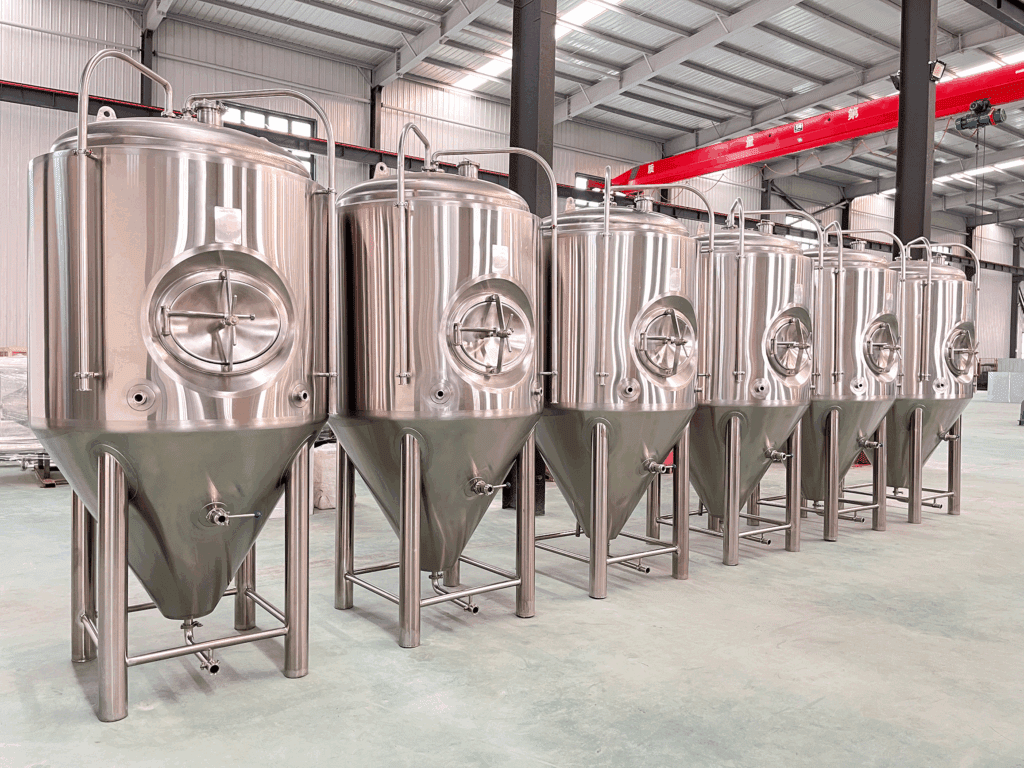
Where Certification Fits In
For pressure-rated formats — closed tanks and unitanks in particular — a third-party pressure equipment verification matters more than a marketing claim. As one reference point, Ente Certificazione Macchine Srl has issued PED verification (certificate 3N231110.SICS093) for brewing pressure vessels under the EU’s 2014/68/EU Pressure Equipment Directive, tested to EN 1626:2008. That’s the kind of documentation worth asking for on any pressure-capable tank, new or used — not because every seller needs it, but because it tells you the vessel was tested against a defined standard rather than just described as “rated.”
FAQ
Q: 開放型発酵タンクを後から耐圧タンクに改造することはできますか?
A: Not economically. Pressure capability depends on the vessel’s structural design and welds from the start — retrofitting a flat-topped open tank to hold CO2 pressure isn’t a standard modification most fabricators will sign off on.
Q: Is a used cylindroconical tank actually cheaper once you account for reconditioning?
A: It depends on the condition of the jacket and the interior surface. A tank with an intact glycol jacket and no interior pitting can be a genuine discount; one that needs a new jacket or re-polishing can close most of the price gap versus new.
Q: Do wooden foeders need any format-specific insurance or storage conditions?
A: 木材の乾燥やひび割れを防ぐため、安定した室内容積湿度が必要です。これはステンレス製タンクにはない要件であり、購入価格だけでなくセラーのレイアウト設計時にも考慮する価値があります。
Q: What batch scale is the cutoff where glass and plastic stop making sense?
A: Once a brewery is producing on a consistent commercial schedule rather than pilot batches, most operators move to stainless — glass and plastic conicals become a bottleneck on cleaning turnaround well before they become a quality problem.