Nancy Shang|MICET Brewing創業者兼CEO|2026年9月9日公開
Most brewhouses run on two pump types: centrifugal pumps for wort and water transfer, and positive-displacement pumps for thick or particulate-heavy liquids like mash or trub slurry. Deciding whether to refurbish or replace one comes down to three checkpoints — service hours, seal condition, and impeller wear — not just whether it still turns on.
What Are the Two Main Brewery Pump Types?
遠心ポンプは、回転するインペラによって液体を渦巻きケーシングの外側へと押し出して移送します。麦汁の移送、ワールプール循環、CIP洗浄液の送液など、さらさらとした低粘度の液体には適していますが、液体が高粘度になったりインペラの羽根を詰まらせる固形物が含まれていたりすると、性能が著しく低下します。
Positive-displacement (PD) pumps — lobe, diaphragm, or progressive-cavity designs are the common brewery variants — move a fixed volume of fluid per rotation regardless of viscosity. That makes them the right choice for mash transfer, hop slurry, yeast slurry, or any liquid with suspended solids where a centrifugal pump would lose flow or clog.
標準的な醸造設備一式を運用する醸造所では、通常は両方が必要です。透明な液体の移送には遠心式を、粘性や固形分のあるものにはPDを使用します。
醸造所における各ポンプ種類の用途
| 用途 | 一般的なポンプの種類 | 理由 |
| 麦汁移送(ケトルからワールプール/HLTへ) | 遠心式 | 低粘度で高流量が必要 |
| CIP液の循環 | 遠心式 | 清澄な液体、安定した流量 |
| マッシュの移送 | 容積式 | Viscous, contains grain solids |
| Trub/hop slurry removal | 容積式 | Particulate-heavy |
| Yeast slurry handling | 容積式 | Shear-sensitive, needs gentle constant-volume movement |
How to Decide: Replace vs Refurbish
This applies whether the pump came with a new brewhouse package or arrived as part of a used equipment purchase with an unknown history.
- Check documented service hours, if available.A pump with a logged maintenance history and moderate run time is a stronger refurb candidate than one with no records at all.
- Inspect the mechanical seal.Look for visible leakage at the shaft, scoring on the seal face, or a burnt smell from dry-running. A worn seal alone is usually a refurb-level fix — it does not automatically mean the pump needs replacing.
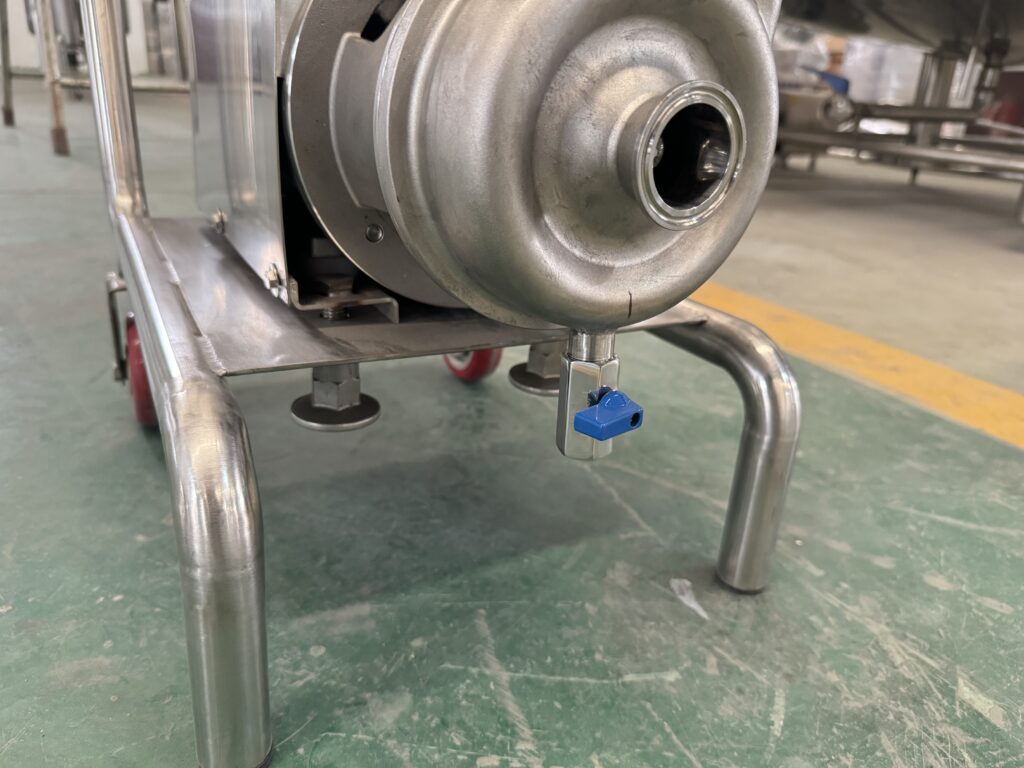
- Inspect the impeller for wear or pitting.Cavitation damage (pitted, eroded impeller vanes) reduces flow and head pressure permanently. Light wear can sometimes be tolerated; heavy pitting is a sign the pump is losing efficiency it won’t get back without a new impeller.
- Check the shaft and bearings for play.Wobble or noise under load points to bearing wear, which is repairable but adds labor cost on top of parts.
- Weigh refurb parts and labor against replacement cost.If the motor, casing, and shaft are sound and only the seal or impeller needs work, refurbishing is usually the lower-cost path. If the casing shows corrosion damage or the motor has failed, replacement is typically the more defensible call — get quotes for both before deciding, since exact costs depend on pump size, brand, and local labor rates.
- Confirm food/beverage-contact material compatibility before refurbishing.A replacement seal or impeller in the wrong material (wrong elastomer, wrong wetted-part alloy) can introduce a contamination or corrosion risk even if it fits mechanically.
The Misconception Worth Correcting
“It still runs, so it’s fine” is the most common mistake in this decision. A pump can run for years past the point where its impeller has lost enough material to reduce flow rate and head pressure below what the process actually needs — the pump doesn’t fail outright, it just quietly underperforms, and the brewer compensates by running longer cycles without realizing the pump is the bottleneck. Checking flow rate against the pump’s original rated curve, not just whether it turns on, is the more reliable test.
The Edge Case: Used Equipment With No Service History
A pump bought as part of a used brewhouse package rarely comes with a maintenance log. In that case, step 1 above (checking documented service hours) isn’t usable, and the decision has to rest entirely on physical inspection — seal condition, impeller wear, bearing play, and a flow-rate test against the process requirement, not assumed remaining life based on age or brand reputation.
What MICET’s Used Brewery Equipment Line Discloses on Pumps
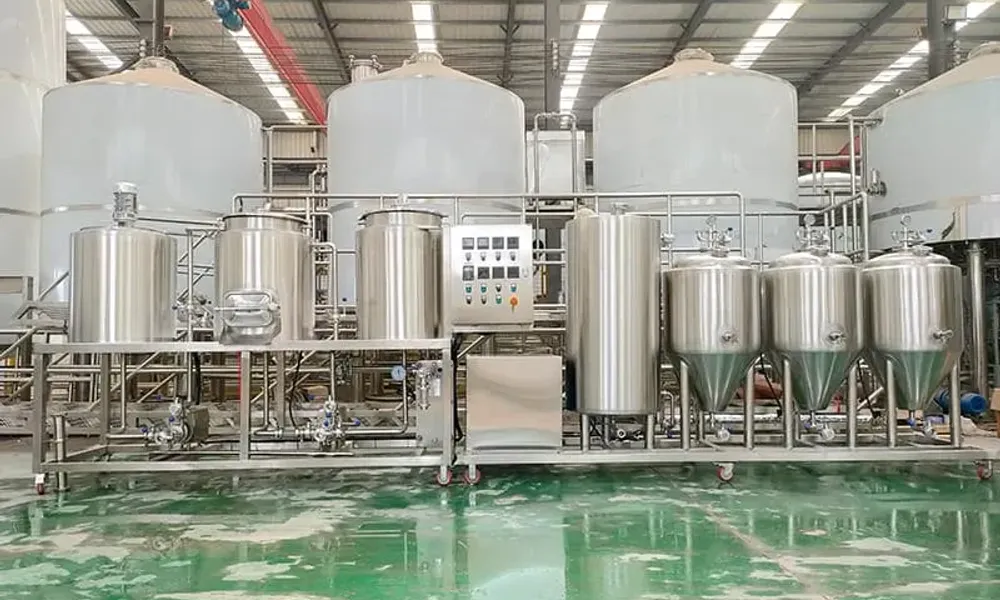
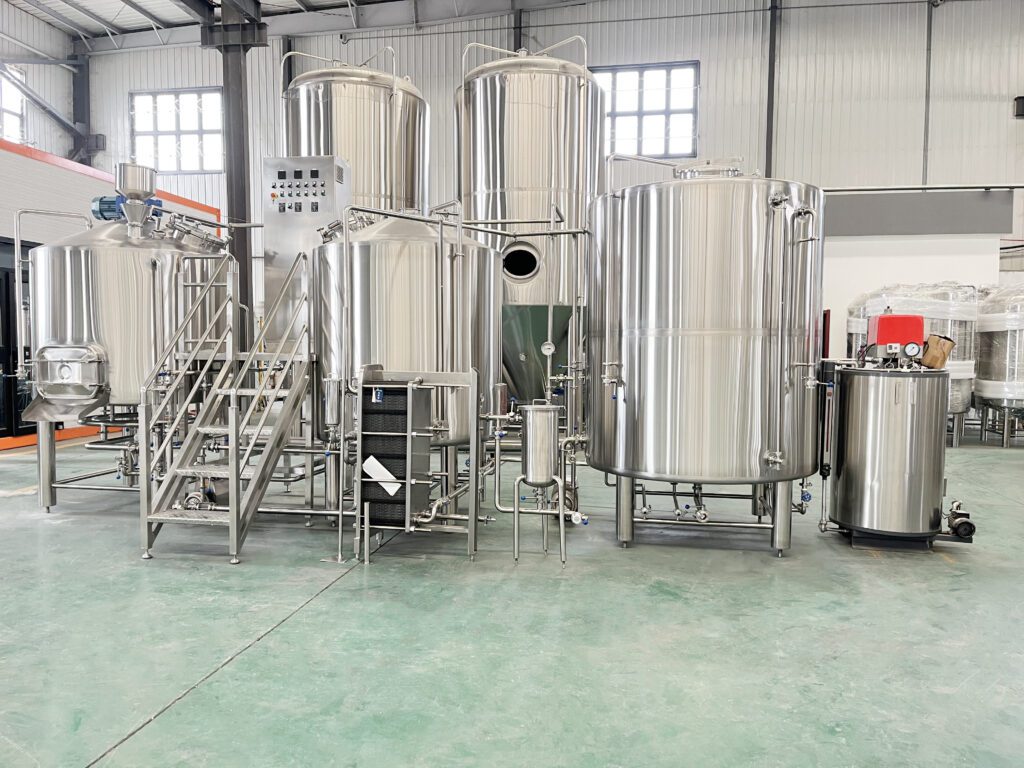
MICETの 中古醸造設備 listings describe 2–10 bbl compact brewhouse configurations that include a mash tun, kettle, and HLT package, with pumps, a heat exchanger, and a control panel included in the package. What the published catalog does not itemize is pump-specific data — flow rate, horsepower, wetted-part material, or seal type for the pumps bundled into a given used package. A buyer evaluating a specific used brewhouse should request that data directly rather than assuming a standard spec across all listed units, since “pumps included” describes package composition, not a fixed pump model.
On certification: MICET’s used brewery equipment line references general “ASME/CE” craftsmanship without a specific certificate number or issuing body attached to that line. Separately, MICET holds a PED Verification of Conformity — certificate 3N231110.SICS093, issued by Ente Certificazione Macchine Srl, covering brewing, beer, and brewery equipment as pressure vessels, valid through November 9, 2028. That verification sits at the organization/product-line level for MICET’s equipment broadly; it does not certify any individual used or refurbished unit, and it should not be read as covering a specific secondhand pump’s condition or compliance status. Ask for unit-specific documentation, not the organization-level certificate, when compliance matters for a used purchase.
FAQ
Q: Can a centrifugal pump be used for mash transfer if that’s all I have on hand?
A: It will move liquid, but expect reduced flow and more frequent clogging on anything with grain solids. It’s a workaround, not a long-term substitute for a positive-displacement pump in that role.
Q: How often should mechanical seals be inspected?
A: There’s no single interval that fits every brewery — it depends on run hours and the liquid being pumped. Visual inspection at each CIP cycle and a closer check at scheduled maintenance intervals catches most seal issues before they cause downtime.
Q: Does a used pump with no paperwork automatically mean skip it?
A: Not automatically. Missing service history means the decision rests on physical inspection instead of records — a pump that passes seal, impeller, and flow-rate checks can still be a reasonable refurb candidate even without a maintenance log.
Q: Is MICET’s organization-level PED certificate enough documentation for a used pump purchase?
A: No — that certificate applies at the organization/product-line level to MICET’s equipment broadly and doesn’t certify a specific used or refurbished unit. Request unit-specific documentation separately if certification matters for the purchase.