










Nancy Shang | Founder and CEO, MICET | Published September 18, 2026
rewhouse layout — 2-vessel, 3-vessel, or 4-vessel — decides more than brew day speed: it sets your floor footprint, batch cycle time, and how easily you can add capacity later. MICET’s published used brewhouse package covers a 3-vessel configuration from 2–10 BBL. Here’s how vessel count actually changes cost and expansion.
Vessel Count at a Glance
| 2-Vessel | 3-Vessel | 4-Vessel | |
| Typical role | Mash/lauter combined + kettle/whirlpool combined | Separate mash tun, kettle, and HLT (or separate lauter) | Separate mash tun, lauter tun, kettle, and whirlpool |
| Common capacity range | Nano to small pilot systems | Nano through mid-size craft (MICET’s used package: 2–10 BBL) | Mid-size craft through larger production |
| Floor footprint | Smallest — fewer tanks, fewer connections | Moderate | Largest — one more vessel plus associated piping |
| Batch cycle time signal | Slower per batch, since one vessel does double duty (mash/lauter, then cleaned for kettle/whirlpool) | Faster than 2-vessel, since mash and boil steps don’t compete for the same tank | Fastest cycle time of the three, since whirlpool separation frees the kettle sooner |
| Best fit for | Startups minimizing capex and footprint over throughput | Craft breweries balancing footprint against production speed | Breweries running hop-heavy recipes or targeting higher batch frequency |
2-Vessel Systems: The Nano and Pilot Default
A 2-vessel brewhouse combines mash and lauter functions in one tank and boil/whirlpool functions in a second. It’s the layout most nano and pilot operations start with, because it needs the least floor space and the fewest connections to plumb and maintain.
The tradeoff shows up on brew day, not on the price tag. Since the same vessel handles two sequential steps, that tank has to be cleaned and reset between mash-out and boil, which stretches total brew day length compared to a layout where those functions run in parallel-capable, dedicated vessels. For a brewer running one or two batches a week, that added cycle time rarely matters. For a brewery pushing toward daily batches, it becomes the bottleneck.
3-Vessel Systems: Where MICET’s Standard Used Brewhouse Package Lands
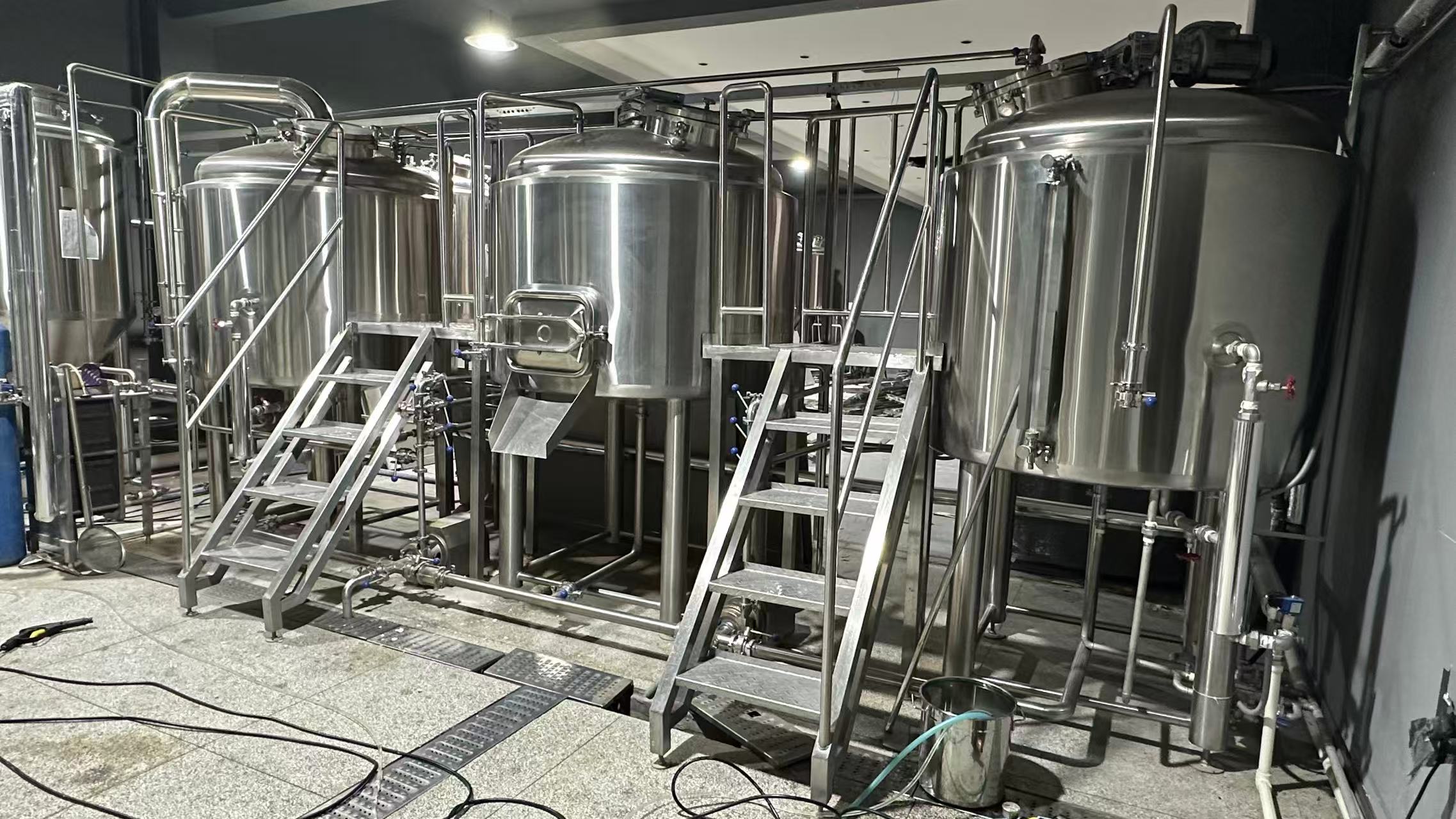
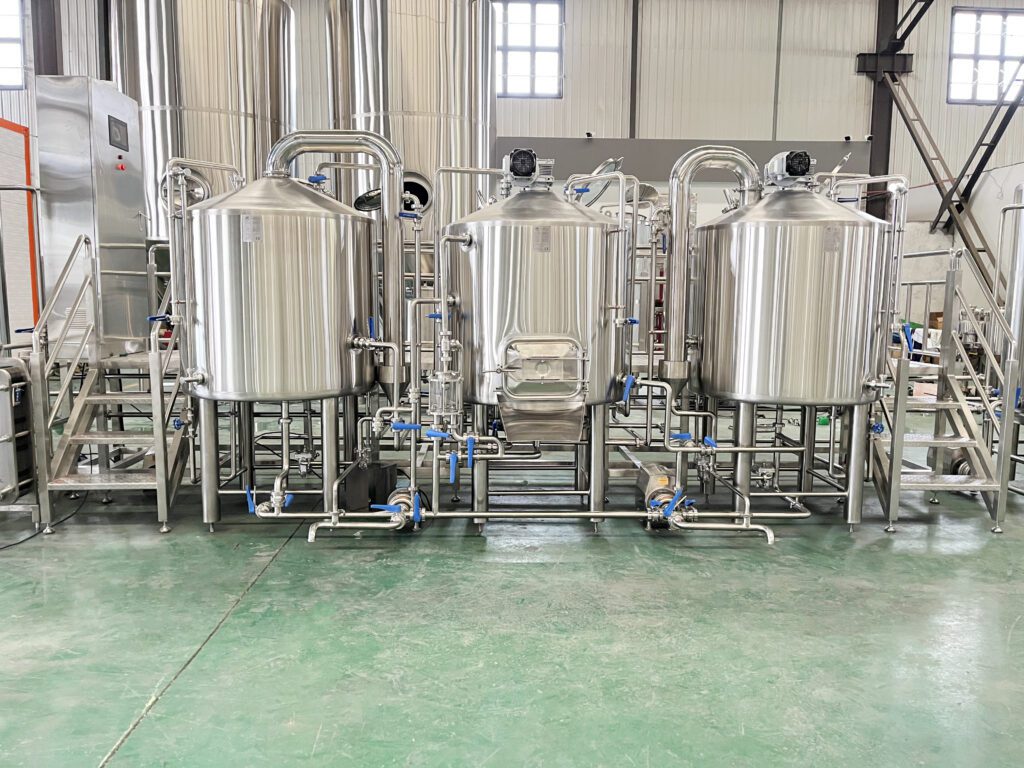
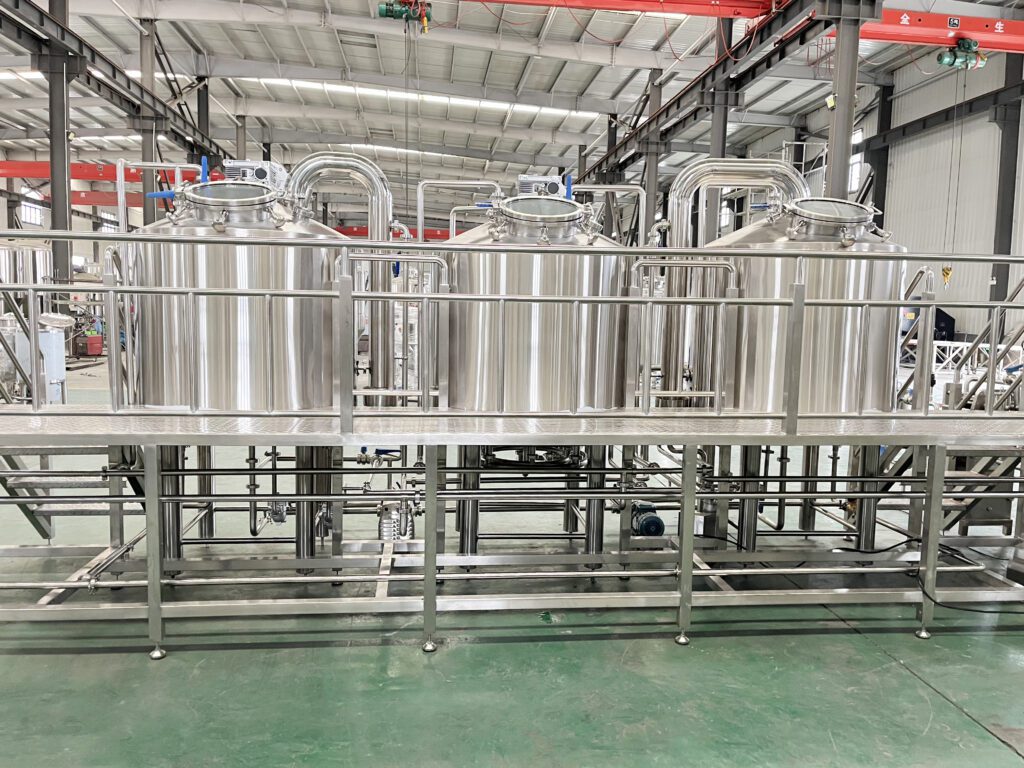
MICET’s published used brewery equipment line is a 2–10 BBL compact brewhouse configuration built around a mash tun, kettle, and hot liquor tank (HLT) as a set — a 3-vessel arrangement — with pumps, a heat exchanger, and a control panel included in the package.
Splitting mash and kettle functions into separate vessels means mash-out on one tank doesn’t hold up the boil on another; the HLT keeps hot water staged and ready rather than competing for space with the mash process. That’s the main reason 3-vessel layouts dominate the craft segment between nano and mid-size production — the footprint increase over a 2-vessel system is real, but modest compared to the cycle-time gain.
What MICET’s current used inventory listing doesn’t itemize is a separate lauter tun as a fourth vessel option within this package — the published configuration is fixed at mash tun, kettle, and HLT. A brewery wanting a dedicated lauter tun on top of this base package should confirm whether that’s available as an add-on or requires a different configuration entirely.
4-Vessel Systems: When a Separate Whirlpool Earns Its Footprint
A 4-vessel layout adds a dedicated whirlpool to the mash tun, lauter tun, and kettle. The whirlpool’s job is separating hop and protein trub from the wort after the boil, and running it as its own vessel means the kettle empties and resets faster than it would if whirlpooling happened inside the kettle itself.
That speed advantage matters most for hop-heavy styles — IPAs and other recipes with large late-addition hop charges generate more trub, and a combined kettle/whirlpool vessel takes longer to settle and clear between batches. For a brewery running a hop-forward lineup at higher batch frequency, the extra vessel and floor space typically pay for themselves in throughput. For a brewery with a lighter, less hop-intensive recipe book, the fourth vessel adds cost and footprint without a matching return.
Footprint and Ceiling Height: The Constraint Vessel Count Doesn’t Solve Alone
Vessel count answers the “how many tanks” question, but two brewhouses with the same vessel count can still need very different rooms. Ceiling height matters as much as floor space, since kettles and whirlpools need clearance above them for venting and access, and a gravity-fed layout (where wort moves downward between vessels via height difference rather than pumps alone) needs more vertical clearance than a fully pumped system running on one level.
A brewery converting a retail storefront or existing warehouse bay often has a fixed ceiling height before vessel count ever enters the conversation. In that scenario, the ceiling constraint can rule out a gravity-fed 3- or 4-vessel layout regardless of how much floor space is available, pushing the decision toward a pumped configuration instead.
Capex Signals vs. Published Price Bands: What MICET’s Numbers Actually Cover
| Tier | Published Price Range | What It Includes |
| Microbrewery equipment | 30,000–80,000 USD | System-level bundle; vessel count not broken out separately |
| Commercial brewery equipment (10 BBL minimum) | 50,000–80,000 USD | System-level bundle; vessel count not broken out separately |
| Fermentation, packaging, and other add-on equipment | Not published | Quote required |
Both published ranges are bundle-level figures, not per-vessel breakdowns. That means the price difference between a 2-vessel and a 3-vessel system at the same capacity isn’t separated out in MICET’s available pricing material — a brewery comparing layouts on cost needs to request quotes for each specific configuration rather than assuming a fixed dollar-per-vessel increment applies across the published range.
The Misconception: More Vessels Isn’t Automatically More Capacity
A common assumption is that adding vessels increases batch size. It doesn’t — vessel count changes cycle time and workflow, not the volume of a single batch. A 4-vessel 10 BBL system still produces 10 BBL per batch, the same as a 2-vessel 10 BBL system. What changes is how many batches that brewhouse can realistically run in a week, since separating functions into dedicated vessels reduces the downtime between batches.
Breweries chasing higher output sometimes add vessels expecting bigger batches and end up with the same batch size run more frequently instead. That’s not a bad outcome if throughput was the actual goal, but it’s worth naming the difference before committing capex to a layout change.
Expansion Path: Retrofitting vs. Starting With Headroom
A brewery starting on a 2-vessel system can generally retrofit toward a 3-vessel layout later by adding a dedicated kettle or HLT, provided the original room has space and utility connections for it. Going from 3-vessel to 4-vessel by adding a whirlpool is usually a smaller retrofit, since it typically fits into existing piping runs more easily than a full mash/lauter split does.
The harder retrofit is capacity, not vessel count — swapping a 5 BBL mash tun for a 10 BBL one usually means replumbing connections sized for the smaller vessel, not just dropping in a bigger tank. Breweries planning to double capacity within a few years often find it cheaper to start with larger vessels running under-filled than to retrofit capacity later, even though the upfront footprint and price are higher.
Certification Note
MICET holds a PED Verification (certificate 3N231110.SICS093, issued by Ente Certificazione Macchine Srl, valid through November 9, 2028) covering brewing equipment, beer equipment, brewery equipment, and pressure vessels under the EU’s Pressure Equipment Directive 2014/68/EU, tested to EN 1626:2008. That verification sits at the organization and product-line level. On the used brewhouse product page specifically, certification is referenced only generically as “ASME/CE” craftsmanship, without a registration number or issuing body — buyers who need documentation for their own jurisdiction should request the specific unit’s paperwork before purchase rather than relying on the general reference.
Before You Commit to a Layout: 4 Questions to Answer
- What’s your target batch frequency, not just batch size — weekly, daily, or somewhere between?
- What does your recipe lineup actually demand — is trub load from hop-heavy styles significant enough to justify a dedicated whirlpool?
- What’s your ceiling height and floor footprint, confirmed with actual measurements rather than an assumed “standard” room?
- What’s your 3-year capacity plan — is it cheaper to size vessels for future volume now, or to plan a defined retrofit path later?
FAQ
Q: Does adding a vessel to a brewhouse increase batch size?
A: No. Vessel count affects cycle time and workflow speed, not the volume of a single batch. A 10 BBL system produces 10 BBL per batch whether it’s a 2-vessel or 4-vessel layout — more vessels mean the brewhouse can typically run more batches per week, not bigger ones.
Q: What vessel configuration does MICET’s used brewhouse package include?
A: The published 2–10 BBL used brewery equipment package is a 3-vessel configuration — mash tun, kettle, and hot liquor tank — with pumps, a heat exchanger, and a control panel included.
Q: Is a 4-vessel system worth the extra footprint?
A: It depends on the recipe lineup and target batch frequency. Hop-heavy styles with significant trub load and breweries targeting higher batch frequency tend to see the clearest return on a dedicated whirlpool. A lighter, less hop-intensive lineup often doesn’t need it.
Q: Does MICET’s certification cover pressure vessel compliance for used brewhouse equipment?
A: MICET’s PED Verification (3N231110.SICS093) covers brewing and pressure vessel equipment at the organization and product-line level. The used brewhouse product page itself references certification only generically as “ASME/CE” without a specific registration number, so individual-unit documentation should be confirmed directly before purchase.