










Nancy Shang | Founder & CEO, MICET Brewing | Published September 4, 2026
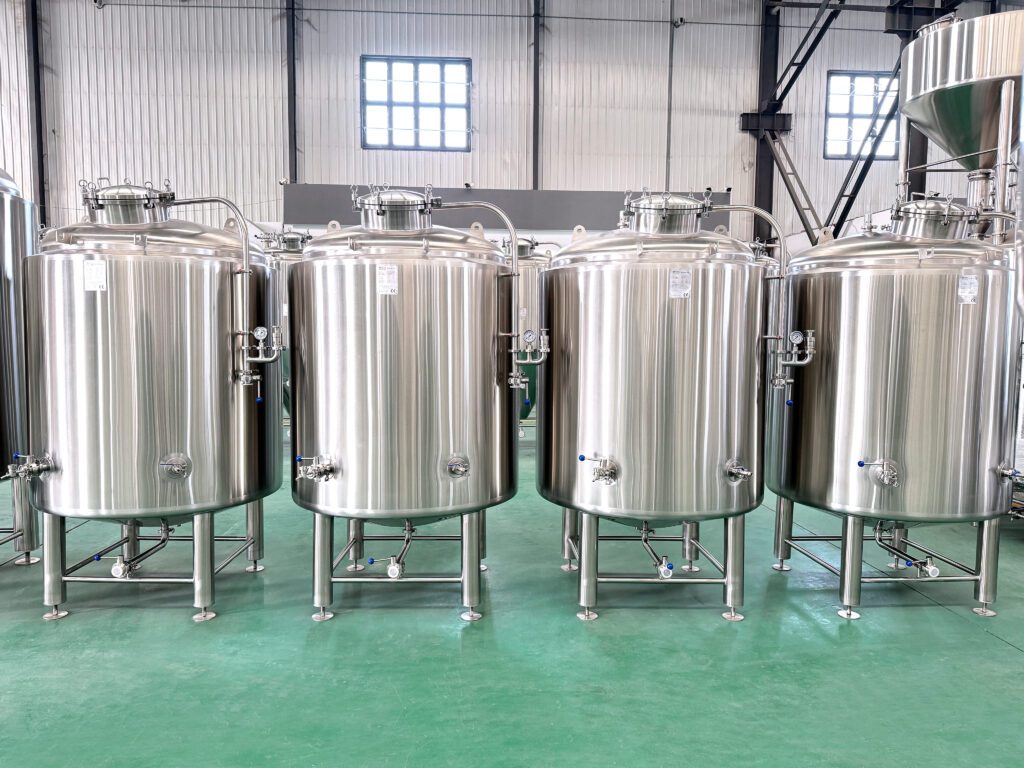
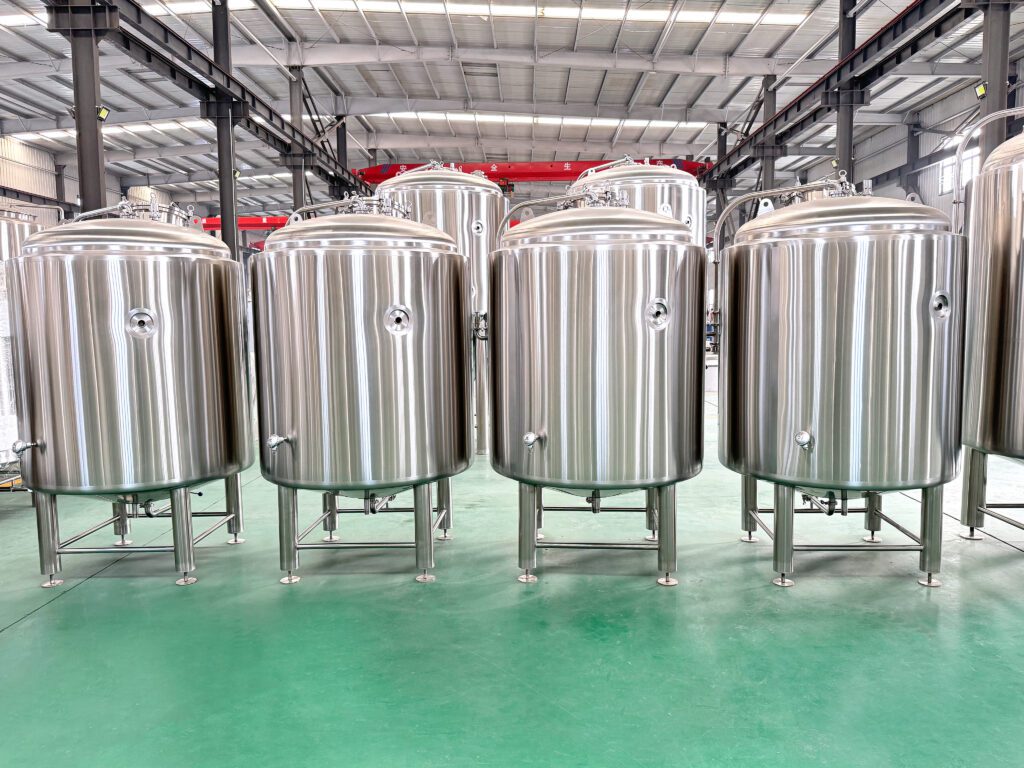
A brite tank is the vessel beer moves into after fermentation and before packaging — it holds the finished beer at cold temperature, carbonates it, and lets any remaining sediment settle out so what goes into the keg or can is clear. It is not a fermenter, and sizing it like one is a common and costly mistake.
What a Brite Tank Does
Three jobs happen inside a brite tank, and none of them is fermentation. The beer is already fermented by the time it transfers in; this vessel’s role is finishing.
Clarification. Yeast and protein haze that survived fermentation settle to the cone at the bottom while the beer sits cold and undisturbed. A conical bottom with a racking arm above the trub layer lets you draw off clear beer without disturbing what’s settled.
Carbonation. CO2 is either force-carbonated through a stone or diffuser, or the beer arrives pre-carbonated from a spunding valve on the fermenter and simply holds its carbonation here. Either way, the brite tank is where the final CO2 volume gets locked in before packaging.
Cold, pressurized storage. The tank holds finished beer at serving temperature and under enough pressure to keep CO2 in solution, so it’s ready to package on your schedule rather than the fermenter’s schedule.
That last point is the real reason brite tanks exist: they decouple packaging day from fermentation day. Without one, you’re either packaging directly out of the fermenter — tying that vessel up and risking oxygen pickup — or racing to bottle the moment fermentation finishes.
Where It Sits in the Line
The sequence is straightforward: mash and boil in the brewhouse, ferment and condition in the fermenter, transfer to the brite tank for clarification and carbonation, then package. The brite tank is the last stop before the beer leaves the building.
This placement is also why brite tanks get skipped by very small or very budget-constrained setups. A 2-vessel homebrew-to-commercial transition operation can package straight from the fermenter cone and accept some batch-to-batch inconsistency in carbonation and clarity. Once you’re running a packaging schedule that doesn’t match your fermentation schedule, though, a brite tank stops being optional.
Sizing a Brite Tank Against Fermenter Capacity
The sizing question isn’t “how big is my brewhouse” — it’s “how much fermented beer needs somewhere to sit while I catch up on packaging.” Three factors decide the number:
- Match at minimum one brite tank to your largest single fermenter batch.If your biggest fermenter runs 20 BBL, your brite tank needs to hold that full batch, not a fraction of it — splitting one fermenter’s output across two smaller brite tanks doubles your carbonation and cleaning work for no benefit.
- Add capacity if packaging runs less frequently than fermentation cycles complete.Brewing weekly but packaging biweekly means beer needs to sit in a brite tank for up to two fermentation cycles’ worth of volume before it clears out.
- Account for blending, if you do it.Some breweries blend two fermenter batches in the brite tank for consistency. If that’s part of your process, the brite tank needs headroom above a single batch’s volume to hold both.
A brewery running one 20 BBL fermenter on a weekly cycle with weekly packaging can generally run a single 20 BBL brite tank. Add a second fermenter, stagger the schedule, or slow down packaging frequency, and a second brite tank — or a larger single one — becomes necessary to avoid a bottleneck at the exact point where beer is closest to being sold.
Materials and Construction
MICET’s resource library does not currently carry a dedicated brite tank product listing with its own catalog entry, so the specific dimensions, materials, and pressure ratings for a brite tank as a standalone product line are not something we can state here from documented specs. What we can say is that the base stainless tank construction used across MICET’s other pressure-rated tank equipment — SUS304 stainless shell, glycol jacket, polyurethane insulation, 0.2 MPa design pressure with a 0.3 MPa pressure test — reflects the same construction standard a brite tank would need, since a brite tank is a pressure vessel by function (it holds carbonated beer under pressure) in the same way a fermentation tank is. If you’re sourcing a brite tank specifically, confirm the exact spec sheet for that unit rather than assuming it matches another product line’s published numbers.
MICET’s PED verification certificate (3N231110.SICS093, issued by Ente Certificazione Macchine Srl against EN 1626:2008, valid through November 2028) covers pressure vessel equipment broadly across the brewing equipment category, which is the kind of third-party documentation worth asking for on any pressurized tank, brite or otherwise.
What to Check When Buying a Used Brite Tank
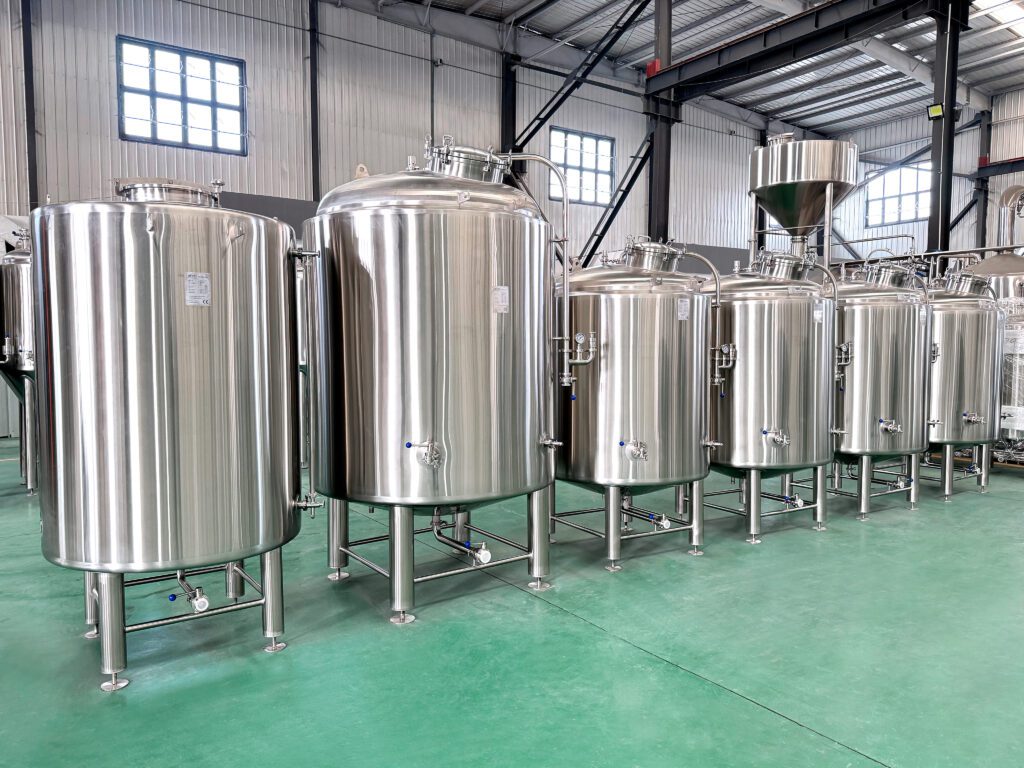
A used brite tank that’s been sitting disconnected for months needs more scrutiny than a fermenter in the same condition, mainly because pressure integrity and interior cleanliness both matter more here — this is the last vessel before packaging, and any contamination or leak shows up directly in the finished product.
- Check the racking arm and its seal.This is the part that moves the most and wears fastest. A stiff or leaking racking arm means beer transfers unevenly or picks up trub you were trying to avoid.
- Pressure-test before you buy, not after.Ask the seller for a current pressure test result, or arrange to test it yourself. A tank that held pressure fine two years ago isn’t the same as one that holds pressure today.
- Inspect the interior finish for pitting or scratching.Rough interior surfaces harbor bacteria and are difficult to fully clean, even with a proper CIP cycle.
- Confirm the glycol jacket has no leaks.A slow glycol leak into the product-contact side is a food-safety problem, not just an inconvenience — pressure-test the jacket separately from the vessel body.
- Check all gaskets and tri-clamp fittings for wear.These are consumable parts and should be budgeted as a near-term replacement regardless of what the seller reports.
- Verify the CO2 stone or carbonation diffuser is intact and unclogged.A degraded stone produces inconsistent carbonation even when everything else about the tank checks out.
- Ask for documentation, not just a verbal condition report.A pressure test certificate, prior maintenance log, or manufacturer spec sheet is worth more than a seller’s description of “good condition.”
A Common Misconception
The most persistent mix-up we hear from new brewery owners is treating brite tank volume and fermenter volume as interchangeable numbers — buying a 20 BBL fermenter and a 20 BBL brite tank and assuming that’s balanced capacity. It can be, but only if packaging keeps pace with fermentation. A brite tank that’s still full of last week’s batch when this week’s batch is ready to transfer creates the exact bottleneck the tank was supposed to prevent. Size the brite tank to your packaging cadence, not just your fermenter’s nameplate volume.
Weighing the Trade-offs
A brite tank buys you scheduling flexibility and more consistent carbonation than packaging straight from a fermenter cone. The trade-off is real: it’s another vessel to buy, plumb, clean, and maintain, and for a very small operation packaging on a tight, predictable schedule, that added cost and cleaning cycle may not pay for itself. Compared with skipping a dedicated brite tank entirely and packaging from the fermenter, the brite tank route costs more upfront but removes the pressure of packaging within a narrow window after fermentation finishes.
FAQ
Q: What’s the difference between a fermenter and a brite tank?
A: A fermenter is where yeast converts sugar to alcohol and CO2. A brite tank is where already-fermented beer clarifies, carbonates, and waits at cold temperature until it’s ready to package. Beer moves from fermenter to brite tank, not the other way around.
Q: Do I need a brite tank for a small nano brewery?
A: Not necessarily. Very small operations can package directly from a fermenter cone, accepting more variability in clarity and carbonation. A brite tank becomes worth the added cost once your packaging schedule stops matching your fermentation schedule.
Q: How big should my brite tank be relative to my fermenter?
A: At minimum, large enough to hold your biggest single fermenter batch. If packaging runs less often than fermentation completes, or if you blend batches, size up further so beer isn’t waiting on tank space to clear out.
Q: What should I inspect before buying a used brite tank?
A: Prioritize the racking arm seal, a current pressure test, interior surface condition, glycol jacket integrity, gasket wear, and the carbonation stone. Ask for documentation rather than relying on a verbal condition report.
Q: Does MICET publish a dedicated spec sheet for brite tanks?
A: Not as a separate catalog line at this time. Brite tanks share the same base stainless construction standard as MICET’s other pressure-rated tank equipment (SUS304, 0.2 MPa design pressure, glycol jacket, polyurethane insulation) — confirm exact specs directly for a brite-tank-specific quote.