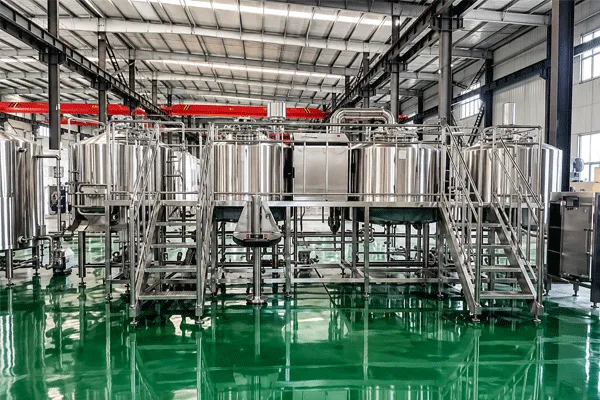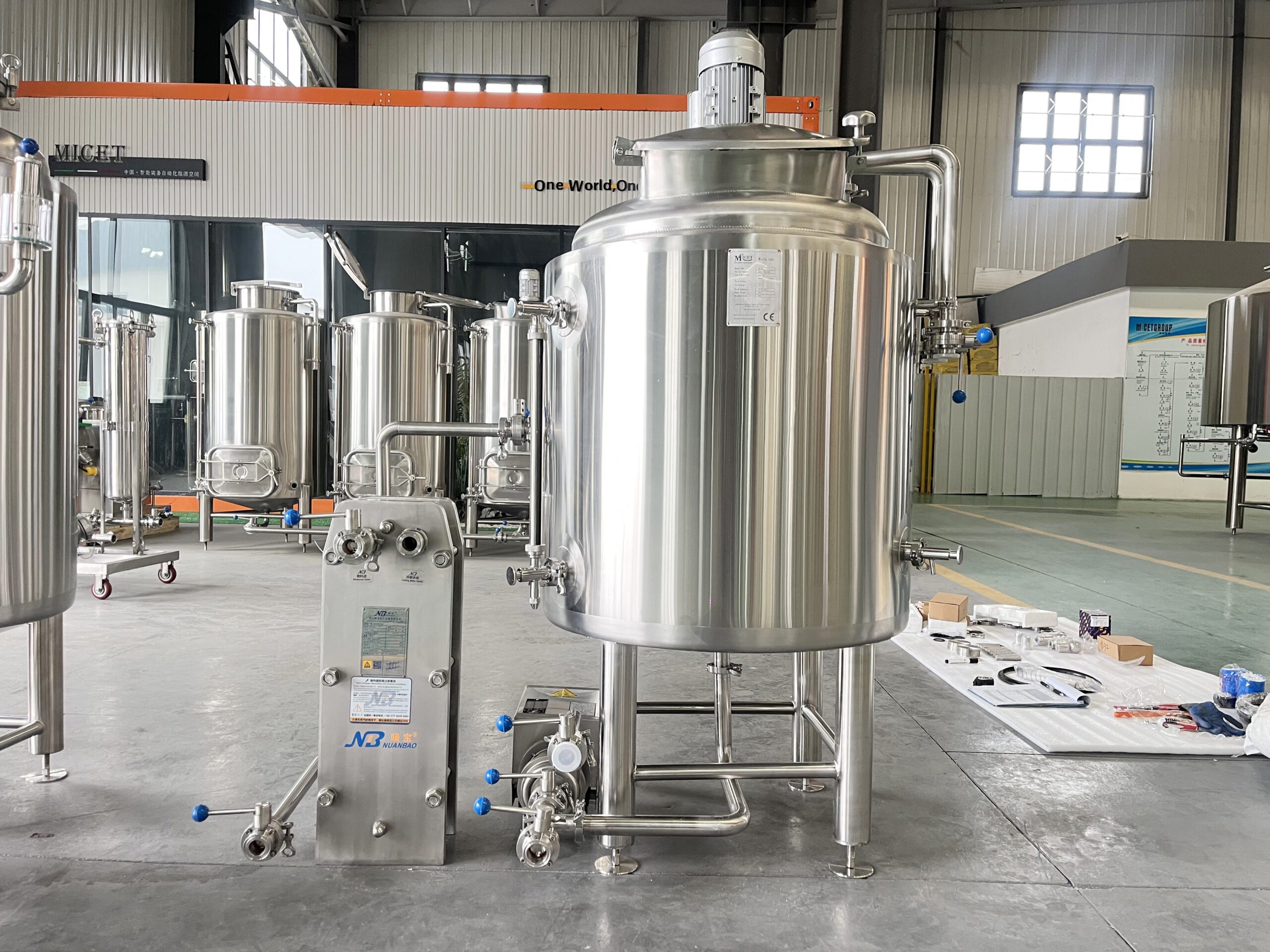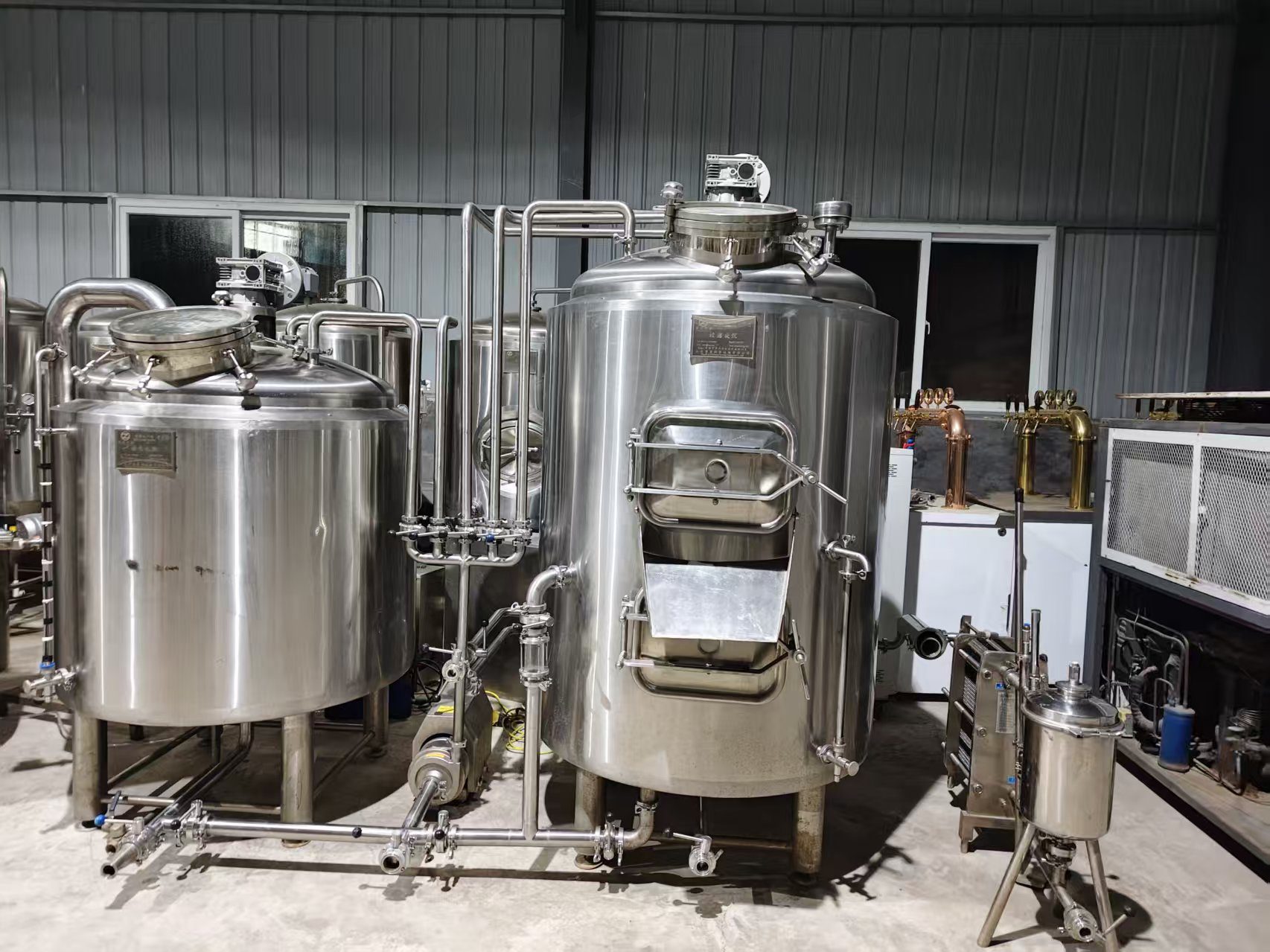


A brewery can have excellent tanks, utilities, and trained operators yet still make expensive mistakes when adding spirit production. A still is only one part of the project. If fermentation, heating, cooling, storage, safety, and layout are not planned together, the new distillery can quickly become the bottleneck.
Breweries adding commercial distilling need more than a still. A practical system normally connects raw-material preparation, mash or wort production, fermentation, a pot or column still, condenser, spirit receivers, heating, cooling, CIP, storage, controls, and packaging. Some existing brewery equipment can be shared, but the distillation process requires dedicated equipment and site planning.
記事概要
- What Distilling Equipment Does a Brewery Need to Add Spirit Production?
- Which Brewery Equipment Can Be Shared With a Distillery?
- Pot Still, Column Still, or Hybrid Still: Which Is Better?
- How Do Fermentation and Yeast Affect Distilling Equipment Selection?
- Copper or Stainless Steel: Which Material Should a Commercial Still Use?
- How Should the Boiler, Heating, and Condenser Be Sized?
- What Tanks, Pumps, Pipes, and Still Parts Are Needed Around the Still?
- How Should a Brewery Plan Cooling, CIP, and Utility Integration?
- What Changes When Producing Whiskey, Vodka, Gin, Rum, or Brandy?
- How Should a Brewery Plan Capacity Before Buying 蒸留設備?
- Frequently Asked Questions
1. What Distilling Equipment Does a Brewery Need to Add Spirit Production?
For a brewery moving into commercial distilling, the biggest planning mistake is treating the still as a stand-alone machine.
A complete spirit production system begins before distillation and continues long after vapor leaves the still. Depending on the product, the process can include grain handling, mashing, fermentation, distillation, condensation, spirit collection, storage, maturation, filtration, and packaging.
A typical brewery-to-distillery system may include:
| プロセスステージ | Typical Equipment | 主な目的 |
|---|---|---|
| Raw material preparation | Mill, grain handling | Prepare grain or other feedstock |
| Mashing / cooking | Mash vessel or cooker | Prepare fermentable liquid |
| 発酵 | Fermenter | Convert sugar into alcohol |
| 蒸留 | Pot still, column still, or hybrid still | Separate alcohol and flavor compounds |
| Vapor cooling | コンデンサー | Convert vapor back into liquid |
| Spirit collection | Receiver tanks | Collect separated spirit fractions |
| Utilities | Boiler, cooling system, pumps | Supply heat and cooling |
| クリーニング | CIPシステム | Clean tanks, piping, and suitable process equipment |
| Storage | Stainless tanks or appropriate maturation vessels | Hold spirit before further processing |
| Finishing | Filter, blending tank | 最終製品の準備 |
| パッケージング | Bottle filling equipment | Fill finished product |
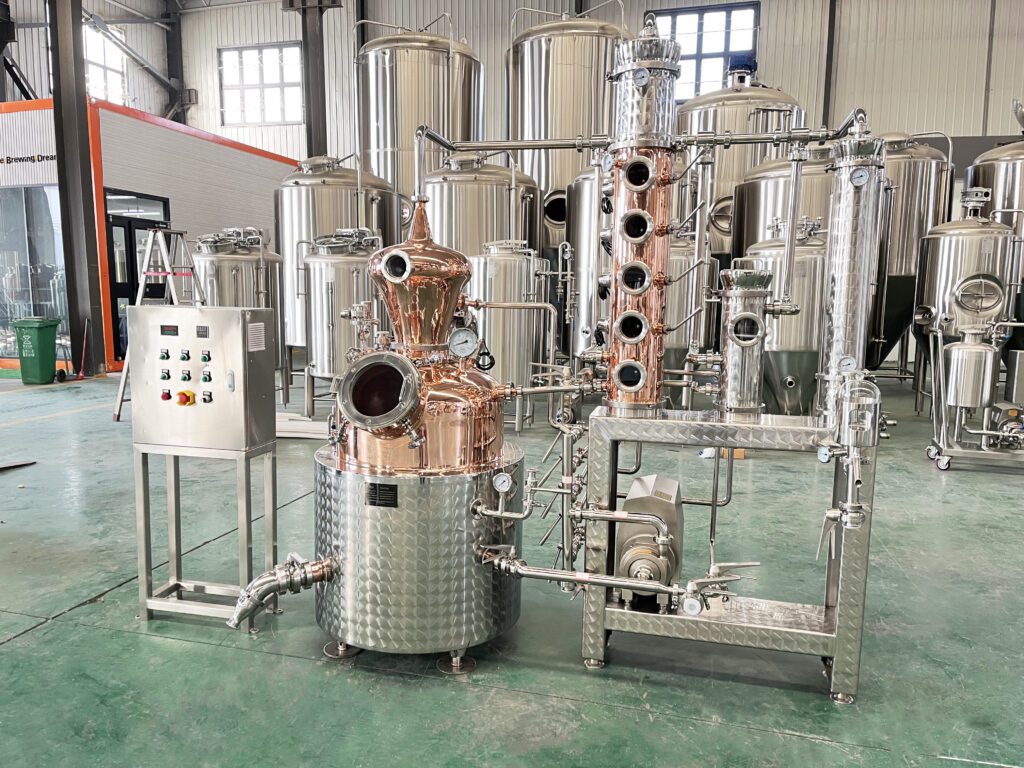
MICET’s current distillery product range is structured around pot still, column still, and hybrid still configurations, with utility and layout planning for steam, cooling, water, power, controls, and cleaning.
That system approach matters for breweries because you may already own several pieces of useful equipment. The goal is not to buy everything twice. The goal is to determine which assets can safely support both processes and where dedicated distillation equipment is required.
2. Which Brewery Equipment Can Be Shared With a Distillery?
Brewing and distilling overlap most strongly before distillation.
Both processes may require raw-material handling, controlled heating, fermentation vessels, pumps, cooling, water treatment, CIP, and stainless steel piping. This creates opportunities for a brewery to expand into spirit production without building an entirely separate processing plant.
For example, grain-based spirit production may use equipment concepts already familiar to a brewer:
- Grain mill
- Mash vessel
- Hot water system
- Fermentation tanks
- Transfer pumps
- Glycol or process cooling
- CIPシステム
- Control panels
- Water treatment
- Selected stainless steel pipelines
However, shared equipment must still match the new process.
A beer fermenter may physically hold a distiller’s mash, but its working volume, cooling configuration, pressure capability, drain geometry, yeast handling, and cleaning process must suit the new product. Likewise, an existing brewery pump may not be the right choice for a thicker mash containing more suspended solids.
Equipment That Usually Remains Dedicated
The actual distillation section normally requires purpose-built equipment:
- Still or distillation vessel
- Column or reflux section where required
- コンデンサー
- スピリットレシーバー
- Dedicated vapor path
- Appropriate heating system
- Spirit-safe transfer and storage system
- Distillation-specific controls and monitoring
A commercial distillery is therefore best treated as an integrated extension of the brewery, not simply another tank connected to the cellar.
3. Pot Still, Column Still, or Hybrid Still: Which Is Better?
There is no universal best still. The right choice depends mainly on the spirit style, desired flavor profile, required purity, production volume, and operating model.
Pot Still
A pot still is commonly associated with flavor-forward batch production. It is widely used for products such as whiskey, rum, and brandy, where the producer wants to retain more character from the fermented base.
Its advantages include:
- Flexible batch operation
- Strong connection to traditional spirit styles
- Good flavor retention
- Relatively straightforward process concept
The trade-off is lower separation efficiency compared with a more intensive column or reflux system.
Column Still
A column provides greater separation by creating repeated vapor-liquid contact inside the column.
It is useful when a producer wants:
- Higher purity
- Cleaner spirit character
- Greater separation efficiency
- Larger or more continuous production
A column still may therefore fit vodka or neutral-base production better than a simple pot still.
Hybrid Still
A hybrid system combines pot-style batch flexibility with a configurable column. For a brewery planning several spirit products, this can provide more flexibility than purchasing a dedicated still for every SKU.
| Still Type | Common Fit | 主要な強み |
|---|---|---|
| ポットスチル | Whiskey, rum, brandy | Flavor character |
| カラムスチル | Vodka, neutral spirit | Higher separation and purity |
| ハイブリッドスチル | Multi-product craft distillery | Flexible configuration |
MICET’s current product page follows the same three-way structure: pot still, column still, and hybrid still systems.
The important point is simple: choose the spirit first, then choose the still.
Do not begin with a catalog size.
4. How Do Fermentation and Yeast Affect Distilling Equipment Selection?
Distillation cannot fix a poor fermentation process.
Before a fermented liquid enters the still, yeast has already converted part of the available sugar into alcohol and carbon dioxide. Fermentation conditions affect alcohol yield, aroma compounds, acidity, and the material the distiller must process.
For a brewery adding spirits, this means fermentation capacity must be planned together with still capacity.
Imagine a distillery with a large still but only enough fermenter volume for one small batch at a time. The still may spend much of the week empty.
The reverse can also happen. Several large fermentation vessels can finish at the same time, but one undersized still cannot process them quickly enough. Fermented product then waits for distillation and occupies valuable tank capacity.
A better design starts with a production cycle:
Mash preparation → Fermentation → Distillation → Collection → Storage
Then calculate how many batches each stage can handle.
Fermentation Tank Questions to Confirm
Before specifying the distilling system, confirm:
- Working volume per fermentation batch
- Number of fermenters
- Typical fermentation time
- Yeast type
- Solids content
- Target alcohol level before distillation
- Cooling requirement
- Cleaning time between batches
- Whether different spirit recipes share vessels
If you already operate a brewery, some stainless steel fermentation vessels may be reusable for selected projects. But that decision should be made from the process specification rather than simply from tank availability.
5. Copper or Stainless Steel: Which Material Should a Commercial Still Use?
Many buyers assume a professional spirit still must be entirely copper.
That is not always necessary.
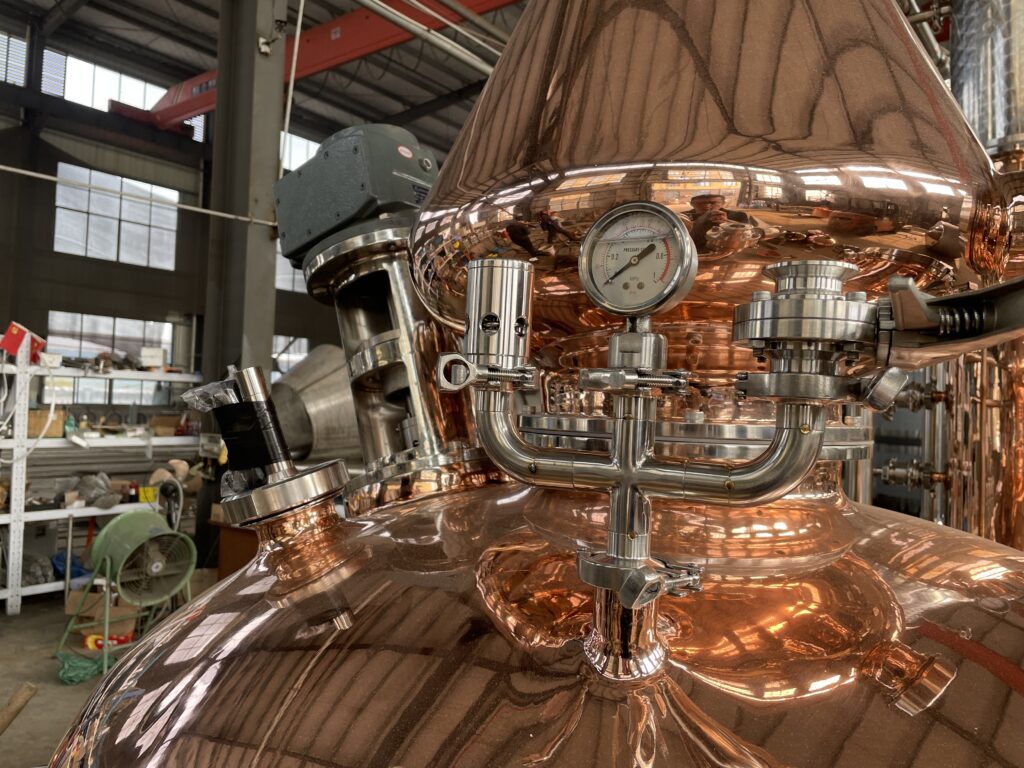
Copper is valuable in many spirit applications because contact with copper can influence sulfur-related compounds and therefore the aroma profile of the finished spirit. This is one reason copper remains strongly associated with whiskey and traditional pot still design.
Stainless steel offers a different set of advantages:
- Resistance to corrosion
- Strong structural performance
- Smooth sanitary surfaces
- Easier routine cleaning
- Good durability
- Practical fabrication for tanks, frames, and piping
For this reason, modern commercial systems often combine stainless steel and copper rather than choosing only one material.
A system might use:
- Stainless steel boiler or vessel
- Copper dome
- Copper column sections
- Copper contact plates
- Stainless structural frame
- Stainless process piping in suitable sections
This approach allows the equipment manufacturer to place copper where process contact is useful while using stainless steel where hygiene, durability, and maintenance are priorities.
MICET’s existing still-selection content also distinguishes copper-contact benefits from the structural and sanitary advantages of stainless steel.
For B2B buyers, material selection should therefore consider process performance, cleaning, maintenance, product style, and lifecycle cost, not appearance alone.
6. How Should the Boiler, Heating, and Condenser Be Sized?
A still needs heat to create vapor and cooling to condense it again.
That sounds simple. In practice, these utilities often determine whether the system reaches its planned output.
Heating
Commercial systems may use steam, electric heating elements, or other engineered heat sources depending on the vessel design and local installation requirements.
The heating system must match:
- Still volume
- Heat-up time target
- Product properties
- Utility availability
- Control strategy
- Site safety requirements
An oversized boiler can waste investment. An undersized boiler can stretch every production cycle.
コンデンサー
The condenser performs the opposite job. It removes heat from vapor so the vapor can condense into liquid spirit.
Its capacity must match the vapor load.
If the condenser cannot remove enough heat, the operator cannot simply run the still harder without affecting process stability.
That is why a quotation for distilling equipment should not list only the still volume. Buyers should also ask for:
- Heating requirement
- Steam demand if applicable
- Cooling water requirement
- Condenser design
- Utility connection size
- Expected batch cycle
- Control method
MICET’s 3000L UK turnkey distillery case illustrates this whole-system approach: the installation combines a 3000L wort brewing unit, hot water tanks, fermentation tanks, distiller, cooling system, controls, CIP, and boiler rather than treating the distiller as an isolated purchase.
7. What Tanks, Pumps, Pipes, and Still Parts Are Needed Around the Still?
A still does not operate in isolation.
Product has to enter the system, vapor must move safely through the vapor path, condensed liquid must be collected, and finished spirit must be transferred to another vessel.
Depending on the project, supporting equipment can include:
- Feed or transfer pump
- Fermentation vessels
- Still boiler
- コラム
- コンデンサー
- スピリットレシーバー
- Collection tanks
- Storage or blending tanks
- Filter
- Sanitary or process pipe
- Clamp connections
- Gasket sets
- バルブ
- Temperature sensors
- Control panel
Small consumer equipment listings may also use terms such as parrot, hydrometer, moonshine still, still parts, or gallon still. These terms are common in retail search behavior, but they should not define the design of a commercial distillery.
For a professional project, each connection needs to be evaluated as part of the process.
A gasket is not just a gasket. It needs the correct material and operating conditions.
A pipe is not just a pipe. Its diameter affects flow and cleanability.
A valve is not just a valve. Its position affects operation, drainage, and maintenance.
This detail separates an engineered distillery from a collection of parts purchased separately.
8. How Should a Brewery Plan Cooling, CIP, and Utility Integration?
This is one area where existing breweries may have a major advantage.
A brewery already has experience managing utilities such as:
- Hot water
- Steam
- グリコール
- Cooling water
- Electricity
- Compressed air
- Drainage
- 政府間措置
- Water treatment
However, available utility capacity is not the same as adequate spare capacity.
Before connecting new distilling equipment to existing systems, calculate the added load.
冷却
The distillery may need cooling for:
- 発酵
- 凝縮
- Product storage
- Selected process steps
The condenser can create a significant cooling demand during operation.
政府間措置
CIP can reduce manual cleaning for compatible tanks and pipelines. A brewery may already have a CIP station, but the new equipment can increase:
- Cleaning solution volume
- Pump demand
- Heating requirement
- Drainage load
- Cleaning cycle time
Control Systems
A brewery with an existing PLC or control platform may be able to integrate some new temperature, valve, and utility functions.
But automation should serve the process, not complicate it.
A compact craft operation may need simple control. A larger project may benefit from more integrated monitoring and automated sequences.
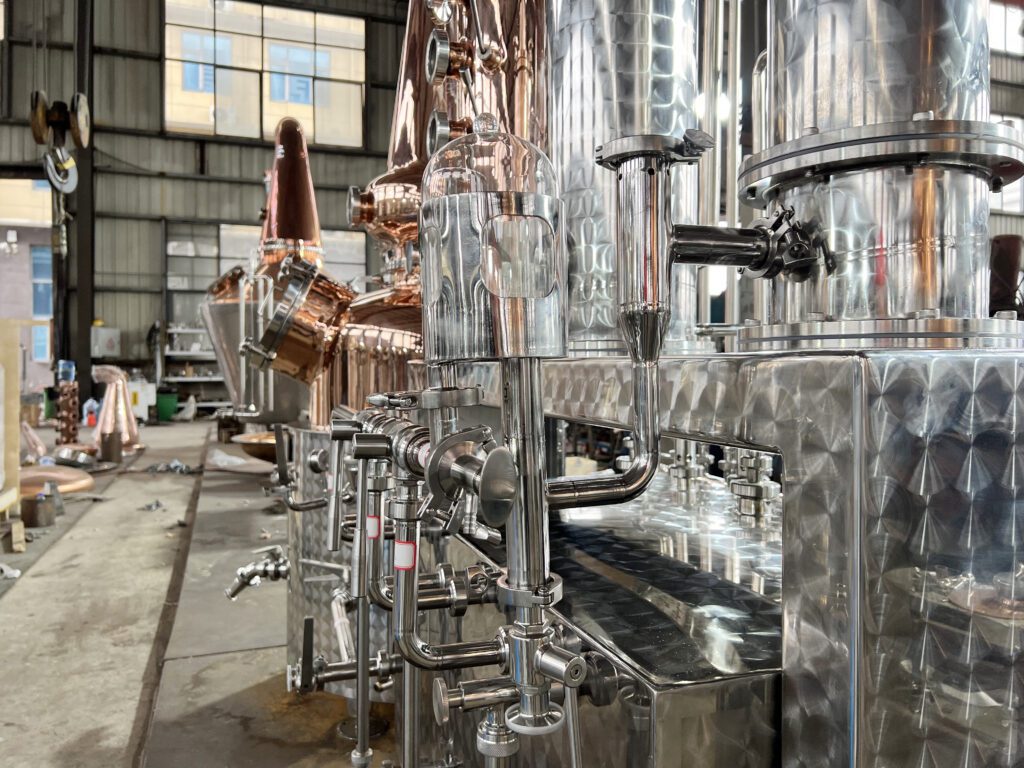
MICET’s auxiliary equipment range already includes CIP systems, pumps, steam/hot-water systems, cooling, electrical control panels, and related process utilities, which makes these systems relevant when a brewery expands into distillation.
9. What Changes When Producing Whiskey, Vodka, Gin, Rum, or Brandy?
Different spirits can start with very different raw materials and target very different final profiles.
That changes the equipment configuration.
ウィスキー
Producing whiskey typically requires grain preparation, mash production, fermentation, flavor-retaining distillation, and later maturation.
A pot still or suitable hybrid configuration is often attractive when preserving grain character matters.
ウオッカ
Vodka generally requires a cleaner, higher-purity spirit base. A column or reflux arrangement may therefore be more appropriate than a simple pot-only configuration.
ジン
Gin production may begin with a neutral spirit and then add botanical character. Depending on the process, the system may include a botanical basket or other aroma-contact section.
ラム
Rum production may start from molasses or another sugarcane-derived feedstock. Many producers value a fuller flavor profile, so pot or hybrid configurations are common project options.
ブランデー
Brandy begins with fermented fruit-based material or wine. Equipment selection should preserve the desired fruit character while providing repeatable distillation.
| Spirit | Typical Equipment Priority |
|---|---|
| ウィスキー | Flavor retention, pot/hybrid still, fermentation and maturation planning |
| ウオッカ | Higher purity, stronger rectification or reflux |
| ジン | Neutral base plus botanical processing capability |
| ラム | Flexible flavor-driven distillation |
| ブランデー | Gentle fruit/wine spirit processing |
There is no universal “best still.”
The same is true of a moonshine still. The phrase has high consumer search visibility, but it is too broad to define professional equipment. A legal commercial spirit plant should specify its actual product, process, capacity, and compliance requirements instead of buying something simply because it is marketed as a moonshine still.
10. How Should a Brewery Plan Capacity Before Buying Distillery Equipment?
Start with the finished product target and work backward.
A buyer should provide more than “I need a 500-gallon still” or “I want a 1,000L system.”
Useful planning information includes:
| Project Input | なぜ重要なのか |
|---|---|
| Target spirit | Determines still type and processing route |
| Fermentation batch size | Sets upstream capacity |
| Planned still charge | Determines vessel sizing |
| Batches per week | Defines throughput |
| Fermentation time | Determines fermenter count |
| Distillation cycle | Determines still utilization |
| Heating source | Affects boiler and utility design |
| Cooling availability | Affects condenser performance |
| Storage plan | Determines receiver and holding capacity |
| Packaging format | Influences downstream equipment |
| Factory layout | Controls pipe runs and access |
| Future expansion | Reduces early redesign |
A Real Project Reference
MICET currently publishes a 3000L turnkey distillery project in the UK. The disclosed system includes:
- 3000L wort brewing unit
- Hot water tanks
- Fermentation tanks
- Distiller
- Cooling system
- Control system
- CIP cleaning system
- Boiler
This project is useful because it shows how commercial distilling needs to be treated as a production line rather than a single still purchase.
For a brewery expanding into spirits, that same engineering principle applies even when part of the existing brewing plant can be reused.
What We Recommend Before Quotation
At MICET, we ask commercial buyers to define:
- Spirit types
- Desired batch volume
- Expected annual output
- Existing brewery equipment
- Equipment that may be shared
- Available utilities
- Building dimensions
- Preferred heating method
- Automation requirements
- Packaging and expansion plans
From there, we can develop a custom solution rather than forcing the project into a standard catalog package.
As a professional brewery, distillery, and beverage equipment manufacturer, MICET provides stainless steel process tanks, fermentation systems, pot stills, column and hybrid systems, utility integration, CAD and 3D layout planning, installation guidance, and turnkey engineering support.
If your brewery is planning to add whiskey, gin, vodka, rum, brandy, or another legal commercial spirit line, the most valuable first step is not choosing a still.
It is mapping the complete process around the equipment you already own.
Frequently Asked Questions
Can brewery equipment be used for distilling?
Some upstream brewery equipment may be usable in a distillery, including selected grain-handling equipment, mash vessels, fermentation tanks, pumps, water systems, cooling equipment, and CIP. The exact compatibility depends on the spirit process, equipment design, capacity, materials, controls, and local requirements.
What distilling equipment does a commercial brewery need?
A brewery adding spirit production may need a dedicated still, column where applicable, condenser, spirit receiver, heating system, cooling system, storage tanks, controls, pumps, pipework, and related safety systems. Fermentation and some utility equipment may already exist at the brewery.
Is a pot still or reflux still better?
A pot still is generally better when flavor retention is a priority, such as many whiskey, rum, and brandy projects. A reflux or column system provides stronger separation and can be more suitable for higher-purity or neutral spirit production.
Should a commercial still be copper or stainless steel?
Both materials have advantages. Copper contact can influence sulfur-related compounds and spirit aroma, while stainless steel offers strength, corrosion resistance, sanitation, and easier maintenance. Many professional stills combine stainless steel and copper.
Can I use a moonshine still for a commercial distillery?
The phrase moonshine still is broad and often refers to consumer equipment. A commercial distillery should use equipment engineered for its licensed production capacity, heating system, cooling demand, product type, installation environment, cleaning process, and applicable regulations.
What should I tell an equipment manufacturer before requesting a quote?
Provide your target spirit, batch size, expected annual output, existing brewery equipment, heating source, cooling capacity, building dimensions, packaging format, automation level, and future expansion plan. Better project data produces a more accurate equipment configuration.
Key Points to Remember
- A commercial distillery needs more than a still.
- Breweries may be able to reuse fermentation, mashing, cooling, CIP, water, and selected transfer equipment.
- Distillation itself requires dedicated process equipment designed around vapor, condensation, collection, and spirit handling.
- Choose between pot, column, and hybrid stills based on the product and desired spirit character.
- Copper and stainless steel can work together in a professional still design.
- Heating capacity and condenser capacity must be matched to the still.
- Fermenter capacity and distillation throughput should be calculated together.
- Existing brewery utilities must be checked for spare capacity before adding distillation equipment.
- Whiskey, vodka, gin, rum, and brandy require different process priorities.
- Commercial buyers should plan the entire production line before selecting individual equipment.
- A custom brewery-to-distillery layout can reduce duplicated equipment and make future expansion easier.
- Always confirm local licensing and safety requirements before producing beverage alcohol.