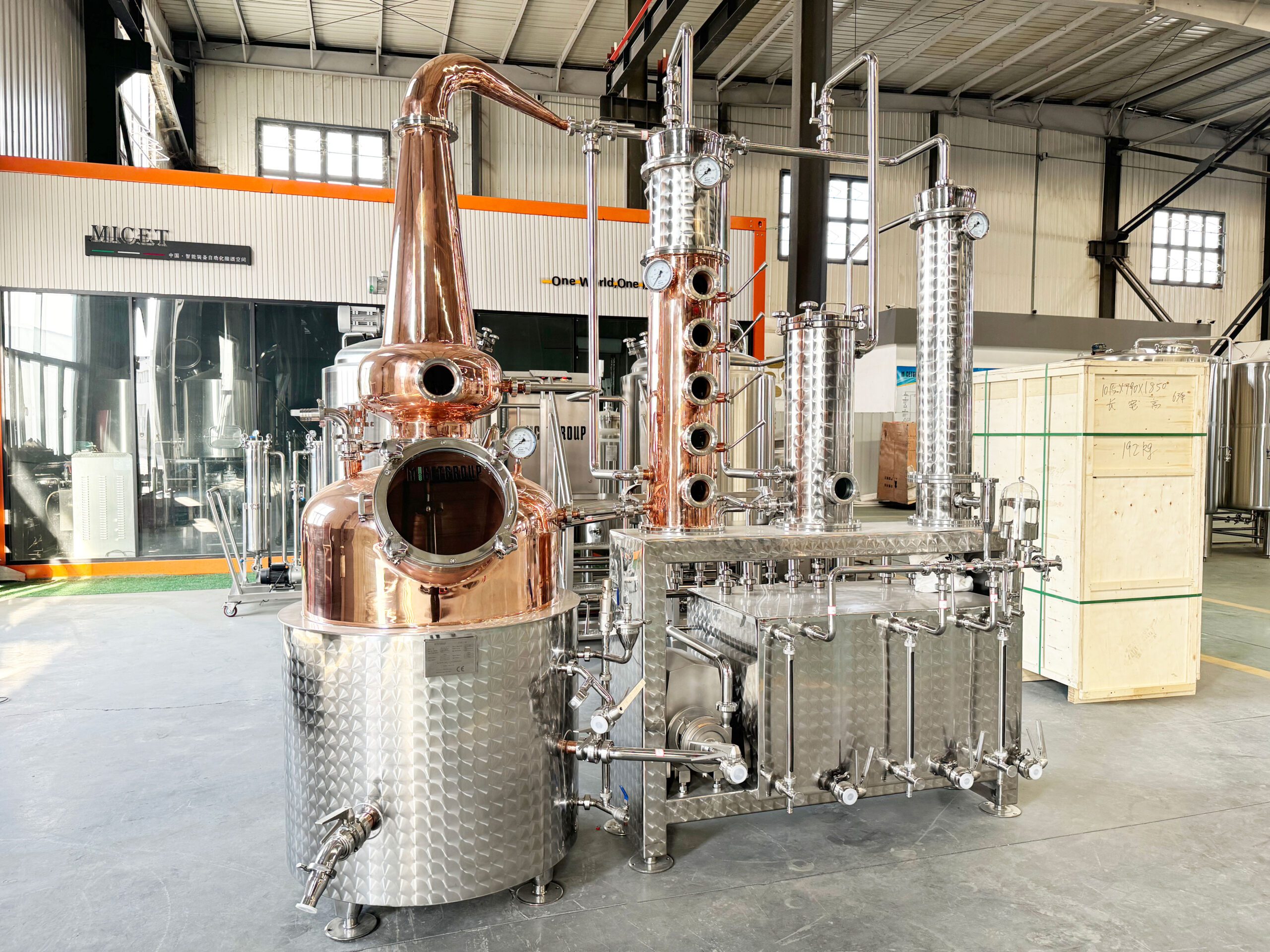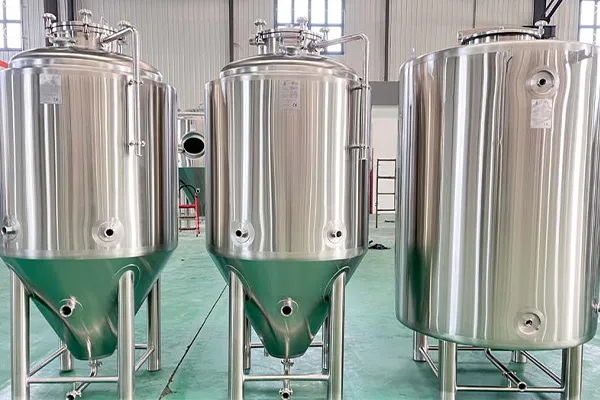











A growing microbrewery often needs to produce several beer styles with different recipes, ingredients, and fermentation conditions. If its equipment cannot adapt, production becomes slower, cleaning takes longer, and product quality may vary. The solution is a flexible brewing system designed around multiple recipes and future growth.
Commercial microbrewery equipment is a coordinated set of brewing vessels, fermentation tanks, cooling systems, transfer equipment, and packaging machines designed for professional beer production. A flexible system allows breweries to produce different beer styles, manage separate fermentation conditions, simplify product changeovers, and maintain consistent quality as production grows.
Makale Anahatları
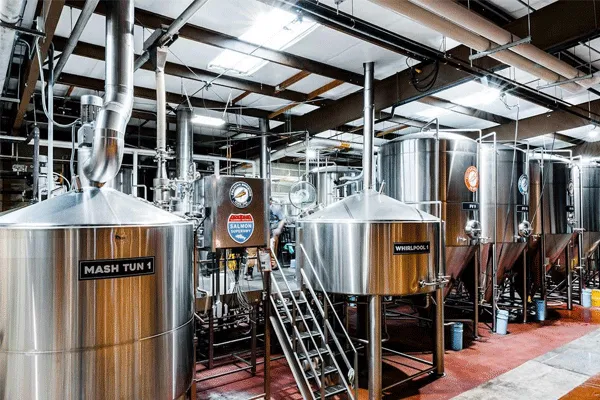
- What Makes Commercial Microbrewery Equipment Flexible?
- How Do Different Beer Styles Affect Brewhouse and Kettle Requirements?
- Which Brewing System Supports Different Grain Brewing Recipes?
- How Should Fermenters and Conical Tanks Be Assigned to Different Beers?
- Why Are Stainless Steel Tanks Important for Multi-Style Production?
- How Do Pumps, Fittings, and Transfer Systems Support Product Separation?
- How Should Wort Chillers and Glycol Systems Support Different Fermentation Profiles?
- What Grain Handling and Mill Equipment Does a Flexible Brewery Need?
- How Do Brite Tanks, Kegs, and Packaging Systems Support Different Products?
- How Do You Choose a Commercial Brewing Equipment Manufacturer?
1. What Makes Commercial Microbrewery Equipment Flexible?
A modern microbrewery does not always produce one beer with one fixed recipe. Many craft breweries make pale ales, IPAs, lagers, stouts, wheat beers, and seasonal products. Each recipe may require different malt combinations, hop additions, yeast strains, fermentation temperatures, and conditioning periods.
This creates a challenge for equipment selection. A system designed only for one standard recipe may not provide enough flexibility when the brewery introduces new products. For example, a brewer making a traditional lager may need longer cold conditioning, while an IPA producer may need additional dry-hopping equipment and careful oxygen management.
Flexible commercial microbrewery equipment should support three important goals:
- Recipe flexibility: Allow different malt bills, hop schedules, and brewing temperatures.
- Production flexibility: Support different batch sizes and fermentation schedules.
- Operational flexibility: Make cleaning, product transfers, and equipment maintenance easier.
A well-planned system does not require a separate production line for every beer style. Instead, it uses suitable shared equipment, dedicated vessels where necessary, and adaptable connections.
For a growing brewery, this approach can reduce unnecessary investment while making it easier to develop new craft beer products.
2. How Do Different Beer Styles Affect Brewhouse and Kettle Requirements?
Different beer styles place different demands on the hot side of a brewery. The brewhouse must handle the ingredients and brewing conditions required by the recipes.
For example, an IPA may use substantial hop additions, while a wheat beer requires a different grain bill and may need careful attention during lautering. A stout may use roasted malts that affect the grist composition and wort characteristics. These differences should be considered when selecting the mash tun, kettle, and supporting equipment.
| Beer Style | Main Brewing Considerations | Equipment Planning |
|---|---|---|
| IPA | High hop additions and aroma preservation | Hop addition access and suitable whirlpool |
| Lager | Stable wort production and repeatability | Reliable heating and cooling |
| Stout | Different roasted malt composition | Suitable mash and lautering design |
| Wheat Beer | High wheat content in the grist | Effective mash mixing and lautering |
| Pale Ale | Balanced malt and hop profile | Flexible recipe control |
| Seasonal Beer | Changing ingredients and recipes | Adaptable vessels and cleaning |
Why Does Kettle Configuration Matter?
Commercial brew kettles must provide enough working volume, heating capacity, and effective boiling performance. Their design also influences evaporation, hop utilization, and the ability to manage different recipes.
For breweries producing several styles, the kettle should support repeatable heating and efficient wort movement. The brewer should also consider manway access, cleaning coverage, heating method, and connections for pumps and transfer lines.
The right brewhouse makes it easier to develop recipes without changing the entire production system. This is particularly important for craft breweries that frequently introduce limited releases and seasonal beers.
3. Which Brewing System Supports Different Grain Brewing Recipes?
Grain selection is a key part of beer production. Different recipes may use pale malt, wheat, roasted barley, oats, rye, and specialty grains. These ingredients influence mash behavior, wort composition, and the final beer.
A flexible grain brewing system should support different grist compositions without creating unnecessary production difficulties.
The main equipment includes:
- Mill: Crushes malt to the required particle size.
- Mash tuns: Mix milled grain with controlled-temperature water.
- Lautering equipment: Separates sweet wort from spent grain.
- Kettle: Boils wort and supports hop additions.
- Whirlpool: Helps separate hop material and other solids.
For recipes with higher wheat or oat content, mash viscosity and filtration behavior deserve particular attention. The brewhouse should provide suitable mixing and lautering performance for the planned grain bill.
Should You Choose a Multi-Vessel Brewhouse?
Different brewhouse configurations offer different advantages.
| Configuration | Main Characteristics | Uygun Uygulamalar |
|---|---|---|
| 2-vessel | Compact arrangement with combined functions | Small commercial breweries |
| 3-vessel | Separate mash, lautering, and kettle functions | Growing craft breweries |
| 4-vessel | More independent process operations | Higher production requirements |
The correct configuration depends on recipe variety, batch schedule, available floor space, and investment budget.
For example, a brewery producing a 1 bbl pilot batch for recipe testing may need a different setup from a commercial brewery producing 5 bbl or 15 bbl batches. These are illustrative planning sizes, not fixed equipment requirements.
A professional manufacturer should consider how the brewer actually works rather than simply recommending more vessels.
4. How Should Fermenters and Conical Tanks Be Assigned to Different Beers?
Fermentation is one of the most important stages in beer production. Different yeast strains and beer styles require different fermentation conditions.
A lager and an ale may use similar raw materials, but their fermentation temperatures, yeast behavior, and conditioning times can differ significantly. If all production is forced into an inflexible tank schedule, the brewery may struggle to maintain a steady production plan.
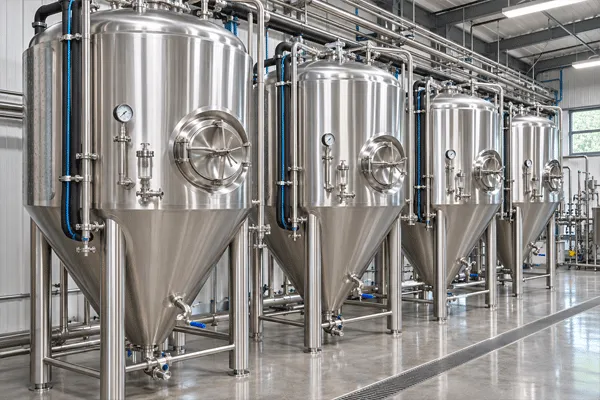
A commercial fermenter should support suitable temperature management, safe pressure operation, sanitary transfer, and effective cleaning. A conical fermenter is particularly useful because its cone-shaped bottom helps collect yeast and sediment.
Dedicated Tanks or Shared Fermentors?
There are two common approaches to multi-style production.
Dedicated fermentation tanks
Some breweries assign specific tanks to certain beer families. This can simplify production planning and reduce the risk of flavor carryover or unwanted cross-contact.
Shared fermentation tanks
Other breweries use shared vessels for different recipes. This approach can save investment and floor space, but it requires reliable cleaning, suitable process scheduling, and proper verification before each new batch.
The decision depends on production volume, beer styles, fermentation time, and the brewery’s sanitation procedures.
Example of a Flexible Cellar Arrangement
| Tank Group | Main Production Role |
|---|---|
| Fermenter Group A | Ale and pale ale |
| Fermenter Group B | Lager and longer-conditioning beers |
| Fermenter Group C | IPA and dry-hopped products |
| Brite Tanks | Final conditioning and packaging preparation |
This is an illustrative arrangement. Actual tank assignments should follow the recipe, cleaning requirements, and production schedule.
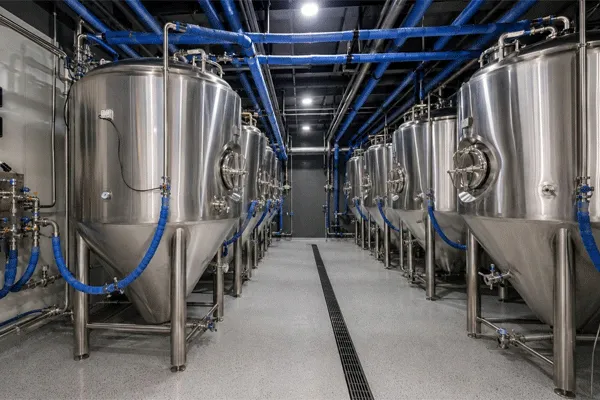
MICET provides customized fermentation tanks and cellar equipment to help breweries build practical production configurations.
5. Why Are Stainless Steel Tanks Important for Multi-Style Production?
Stainless steel is widely used in professional beer production because it provides durability, corrosion resistance, and suitable hygienic surfaces.
When a brewery makes different products, the tank design becomes even more important. Different beer styles can leave different residues, including hop particles, yeast, proteins, and grain-related deposits.
High-quality stainless steel tanks should provide:
- Suitable product-contact material.
- Smooth internal surfaces.
- Proper sanitary welding.
- Effective drainage.
- Suitable manways and outlets.
- Compatible valves and fittings.
- Appropriate cleaning access.
SUS304 is widely used in many brewery applications. SUS316L may be considered for more demanding chemical or corrosion conditions. The material should be selected according to the product, cleaning chemicals, and operating environment.
Why Does Tank Design Matter Beyond Material Grade?
A stainless steel vessel is only as useful as its overall design. Poorly positioned outlets, inaccessible connections, and areas that retain liquid can make cleaning difficult.
For a brewery producing several styles, tank design should support easy inspection, cleaning, and product transfer.
A good tank configuration also helps operators switch between different recipes with less unnecessary work.
6. How Do Pumps, Fittings, and Transfer Systems Support Product Separation?
Transfer equipment is often overlooked when planning a new brewery. However, pumps, hoses, fittings, and valves connect the entire production process.
During beer production, liquid moves from the brewhouse to the heat exchanger, then to the fermentation cellar, and eventually to conditioning or packaging equipment.
A suitable pump should match the required flow rate, liquid characteristics, and transfer conditions. It should also support sanitary operation and be compatible with the cleaning process.
What Should Buyers Check?
| Bileşen | Important Consideration |
|---|---|
| Transfer Pump | Flow rate and product compatibility |
| Sanitary Fitting | Hygienic connection and easy maintenance |
| Hose | Material compatibility and cleaning |
| Valve | Suitable flow control and drainage |
| Pipeline | Correct diameter and efficient routing |
| Coupler | Compatibility with connected equipment |
For breweries producing hop-heavy beers, transfer arrangements should also consider hop particles and other solids. Incorrect pump selection or poorly designed connections can create blockages and unnecessary product loss.
Separate transfer routes may be useful for selected products, especially when recipes contain strong flavors or special ingredients.
Good equipment integration helps reduce cross-contact risks and makes daily operation easier.
7. How Should Wort Chillers and Glycol Systems Support Different Fermentation Profiles?
Temperature management is essential for consistent beer quality. Different yeast strains and beer styles require different fermentation conditions, so the cooling system must support the complete cellar rather than only one tank.
A wort chiller cools hot wort before yeast is added. A glycol system then helps maintain the required temperature in jacketed fermentation tanks.
If cooling capacity is too low, the brewer may struggle to control fermentation when several tanks operate at the same time.
Main Cooling Equipment
| Ekipman | Function |
|---|---|
| Wort Chiller | Cools wort before fermentation |
| Glikol Soğutucu | Supplies cooling for tank jackets |
| Glycol Buffer Tank | Stores cooling medium |
| Circulation Pump | Moves glycol through the system |
| Temperature Controller | Manages cooling according to tank requirements |
Why Should Cooling Be Planned for Peak Demand?
Imagine a brewery operating several fermenters simultaneously. One tank may require active fermentation cooling, another may need cold conditioning, and a new batch may be entering the cellar.
The cooling system must handle these combined demands.
A suitable design should consider:
- Total tank volume.
- Number of tanks operating simultaneously.
- Fermentation temperature requirements.
- Cold-conditioning requirements.
- Ambient temperature.
- Future tank additions.
For commercial brewing, cooling should be engineered together with fermantasyon tankları and production scheduling. A reliable system helps the brewer maintain precise temperature conditions across different beer styles.
8. What Grain Handling and Mill Equipment Does a Flexible Brewery Need?
Grain handling is the first physical production stage in a traditional brewery. Poor grain preparation can affect mash performance and create problems later in the brewing process.
A commercial grain handling system may include a malt mill, grain hopper, screw conveyor, weighing equipment, and a hydrator.
The mill should produce a suitable crush for the selected malt and brewhouse design. Too much fine material may affect lautering, while an unsuitable crush can reduce extraction efficiency.
What Should a Grain Handling System Include?
| Ekipman | Amaç |
|---|---|
| Malt Değirmeni | Crushes grain |
| Grain Hopper | Holds malt before processing |
| Screw Conveyor | Transfers grain |
| Grain Hydrator | Mixes grain with water during feeding |
| Dust Collection | Helps manage airborne grain dust |
| Weighing System | Supports recipe accuracy |
For a brewery producing several recipes, clear grain storage and accurate ingredient measurement are important. Different malt bills should be easy to identify and prepare.
The grain handling area should also have suitable ventilation, operator access, and cleaning arrangements.
Planning these details early can make the entire production area more organized and efficient.
9. How Do Brite Tanks, Kegs, and Packaging Systems Support Different Products?
Once fermentation and conditioning are complete, beer must move into a suitable packaging or serving system.
Different breweries have different sales channels. A brewpub may mainly sell draft beer, while a regional craft brewery may need cans, bottles, and kegs for distribution.
The packaging configuration should match the product portfolio and business model.
Which Packaging Equipment Should You Consider?
| Ekipman | Main Application |
|---|---|
| Brite Tanks | Beer conditioning, carbonation, and holding |
| Keg Washer | Cleaning reusable kegs |
| Keg Filler | Filling draft beer into kegs |
| Bottle Filler | Filling bottled beer |
| Can Filling Line | Packaging beer in cans |
| Capping or Seaming Machine | Closing containers |
Brite tanks provide a useful buffer between fermentation and packaging. They can help prepare finished beer for filling while allowing fermenters to return to production.
A beer keg system is especially useful for breweries supplying bars, restaurants, and taprooms. The correct coupler, filling equipment, cleaning equipment, and transfer connections should be selected together.
For breweries selling several beer styles, packaging records and clear product identification also help reduce mistakes during product changes.
The goal is to create a packaging arrangement that supports the actual sales channels without adding unnecessary equipment.
10. How Do You Choose a Commercial Brewing Equipment Manufacturer?
Choosing a manufacturer is not simply about comparing tank prices. The right partner should understand the relationship between recipes, vessels, utilities, cleaning, and daily brewery operations.
An experienced manufacturer can help convert a production plan into a complete equipment configuration.
Before placing an order, buyers should review:
- Manufacturing experience and production capability.
- Customization options for brewhouse and cellar equipment.
- Stainless steel grades and fabrication quality.
- Tank specifications and cooling design.
- Pumps, fittings, and pipeline integration.
- CIP and sanitation arrangements.
- Electrical and automation requirements.
- Factory testing and quality inspection.
- Installation and commissioning support.
- Spare parts and long-term technical service.
Why Work with a Manufacturer Offering Integrated Brewing Solutions?
MICET is a professional brewery and beverage equipment manufacturing plant providing customized stainless steel brewing systems, fermentation tanks, brewhouse systems, and turnkey brewery solutions for global B2B customers.
We understand that different breweries have different recipes, production targets, and operating conditions. Our engineering approach focuses on matching equipment to the complete brewing process.
Our support can include:
- Custom-built brewing vessels.
- Flexible brewhouse configurations.
- Stainless steel fermentors and brite tanks.
- Grain handling and transfer equipment.
- Cooling and CIP systems.
- Brewery design and layout planning.
- Electrical control and automation.
- Installation guidance and after-sales support.
For customers who want to manage initial investment, we can also discuss suitable new, used, and hybrid equipment configurations.
Whether you are establishing a new microbrewery, upgrading an existing facility, or expanding your craft beer portfolio, the right equipment should support today’s production while leaving room for tomorrow’s growth.
Contact MICET to discuss your commercial microbrewery equipment project. Share your target batch size, beer styles, production schedule, and available floor space. Our team can help develop a customized brewing system that matches your business goals.
Frequently Asked Questions
What equipment is essential for a commercial microbrewery?
A commercial microbrewery generally requires a brewhouse, malt mill, fermentation tanks, cooling equipment, pumps, sanitary pipelines, CIP equipment, and packaging machinery. The final configuration depends on production volume, beer styles, and sales channels.
Can one brewing system produce different beer styles?
Yes. A flexible brewing system can produce multiple beer styles by adjusting recipes, grain bills, hop additions, fermentation conditions, and cleaning procedures. Some products may require dedicated tanks or additional accessories.
What is the difference between a conical fermenter and a standard fermentation tank?
A conical fermenter has a cone-shaped bottom that helps collect yeast and sediment. This design supports yeast removal, product transfer, and cleaning. A standard tank may have a different bottom design and operating purpose.
How many fermenters does a commercial microbrewery need?
The number depends on brewhouse capacity, brewing frequency, fermentation time, conditioning requirements, and product variety. Breweries making both ales and longer-conditioning lagers may need more cellar capacity than breweries producing only fast-turnover beers.
Why is a glycol cooling system important for commercial brewing?
A glycol system supplies cooling to fermentation tank jackets and other connected equipment. It helps maintain suitable fermentation and conditioning temperatures, especially when multiple tanks operate simultaneously.
Can commercial microbrewery equipment be customized?
Yes. Manufacturers can customize vessel capacity, brewhouse configuration, tank connections, heating methods, cooling systems, control panels, and auxiliary equipment according to project requirements.
Key Points to Remember
- Flexible commercial microbrewery equipment supports multiple beer styles and recipes.
- Brewhouse and kettle configurations should match grain bills and brewing requirements.
- Fermentation tanks should support different yeast strains and temperature profiles.
- Stainless steel tank quality, sanitary fittings, and cleaning access affect long-term performance.
- Pumps and transfer systems should support safe, efficient product movement.
- Wort cooling and glycol capacity must match the full cellar’s operating requirements.
- Grain mills and handling systems should support accurate recipe preparation.
- Brite tanks, kegs, and packaging equipment should match the brewery’s sales channels.
- Automation and modular design can make future expansion easier.
- An experienced manufacturer can help integrate the complete production system rather than simply supplying individual machines.