Brewing great beer is not just about mixing grain, hops, yeast, and water. Small mistakes during mashing, boiling, cooling, fermentation, or packaging can change flavor, clarity, alcohol level, and consistency. A well-designed brewing process helps brewers control every stage and produce stable, repeatable beer.
Bira üretim süreci genellikle maltın öğütülmesi, mayşeleme, süzme, şıranın şerbetçiotuyla kaynatılması, soğutma, fermantasyon, olgunlaştırma ve ambalajlama aşamalarını içerir. Üretim sırasında enzimler nişastayı fermente edilebilir şekere dönüştürür, şerbetçiotu acılık ve aroma katar, maya ise şekeri alkol ve karbondioksite dönüştürür. Sürecin ayrıntıları bira türüne, bira fabrikasının büyüklüğüne ve kullanılan ekipmana göre değişir.
Ev tipi bira üreticisi için bu adımlar birkaç küçük kapta gerçekleşebilir. Ticari bir bira fabrikasında aynı ilkeler geçerlidir, ancak sistemin üretim verimliliği, hijyenik tasarım, soğutma, temizlik, fermantasyon kapasitesi ve parti tutarlılığını da karşılaması gerekir.
Paslanmaz çelik bira üretim ve içecek sistemleri üreticisi olarak, mayşeleme tankı ve bira üretim tesisinden fermantasyon tankına, glikol soğutmaya, CIP'ye, parlak bira tanklarına ve ambalaj bağlantısına kadar tüm iş akışını değerlendiriyoruz. İyi ekipman, bira üretim becerisinin yerini tutmaz; ancak sürecin daha istikrarlı ve tekrarlanabilir olmasına yardımcı olur.
Bira Yapım Sürecinin Temel Aşamaları Nelerdir?
Bira üretim süreci, birbirine bağlı bir dizi aşamaya ayrılabilir. Her aşama, ham maddeleri belirli bir şekilde değiştirir.
Tipik bir ticari akış şu şekildedir:
Malt → Öğütme → Mayşeleme → Süzme → Kaynatma → Girdap → Soğutma → Fermantasyon → Olgunlaştırma → Paketleme
Bira üretim sürecindeki her adımın bir amacı vardır.
| Bira Üretim Aşaması | Temel Amaç |
|---|---|
| Frezeleme | Malt tanelerini kırın ve nişastayı açığa çıkarın |
| Mayşeleme | Nişastayı fermente edilebilir şekere dönüştürme |
| Süzme | Tatlı şırayı tahıldan ayırın |
| Kaynatma | Şırayı sterilize etmek ve şerbetçiotu bileşiklerini çıkarmak |
| Girdap | Şerbetçiotu ve protein katılarını uzaklaştırın |
| Soğutma | Şırayı fermantasyon sıcaklığına getirin |
| Fermantasyon | Maya, şekeri alkole ve CO₂'ye dönüştürür |
| Olgunlaştırma | Improve flavor and clarity |
| Ambalajlama | Bitmiş birayı fıçıya, şişeye veya kutuya aktarın |
Süreç kâğıt üzerinde basit görünür, ancak uygulamada her aşama bir sonrakini etkiler.
Örneğin, kötü öğütme ekstraksiyonu azaltabilir. Kötü mayşeleme, dönüştürülmemiş nişastanın fazla kalmasına yol açabilir. Kötü soğutma maya aktivitesini geciktirebilir. Fermantasyon sıcaklığının kötü kontrolü istenmeyen tatlar ve aromalar oluşturabilir.
Bu nedenle profesyonel bira üreticileri, yalıtılmış tek bir tank yerine tüm sistemi düşünür.
Bira Üretim Süreci Maltla Nasıl Başlar?
Malt, bira yapımında kullanılan ana malzemelerden biridir.
Çoğu bira maltlanmış arpayla başlar; ancak bira stiline bağlı olarak buğday, çavdar, yulaf, mısır, pirinç ve diğer tahıllar da kullanılabilir.
Before barley becomes malt, it goes through controlled germination.
Tahılın çimlenmesine izin verilir; bu, tanenin içindeki doğal enzimleri etkinleştirir. Ardından tahıl kurutularak maltlama işlemi durdurulur.
Bu önemlidir; çünkü söz konusu enzimler daha sonra mayşeleme sırasında nişastanın şekere dönüştürülmesine yardımcı olacaktır.
Farklı maltlar şunları da etkiler:
- Renk
- Gövde
- Tatlılık
- Kavrulmuş tat
- Karamel notaları
- Kavrulmuş karakter
Açık renkli bir ale, çoğunlukla açık renkli baz malt ile daha az miktarda özel malt kullanabilir.
Koyu bir bira, daha fazla kavrulmuş malt kullanabilir.
Bir buğday birası yüksek oranda buğday maltı içerebilir.
Dolayısıyla bira üreticisi asıl üretim gününe başlamadan önce, malt karışımı nihai biranın yönünü zaten belirler.
Mayşeleme Sürecinde Ne Olur?
Mayşeleme işlemi, kırılmış maltın mayşe kazanı adı verilen bir kapta sıcak suyla karıştırılmasıyla başlar.
Bu, sürecin en önemli bölümlerinden biridir; çünkü amaç, tahıl nişastasını fermente edilebilir şekere dönüştürmektir.
Mayşe, doğal malt enzimlerinin çalışabilmesi için kontrollü sıcaklıklarda tutulur.
Farklı enzimlerin etkin olduğu aralıklar, farklı türde şekerlerin oluşumunu destekler.
Basitçe ifade etmek gerekirse:
Malt Nişastası + Enzimler + Isıtılmış Su → Fermente Edilebilir Şekerler
Mayşe sıcaklığı nihai birayı etkileyebilir.
Daha düşük bir mayşeleme sıcaklığı genellikle daha kolay fermente edilebilen bir şıra ve daha sek bir nihai ürün sağlar.
Daha yüksek bir mayşeleme sıcaklığı, daha fazla fermente edilemeyen madde bırakabilir; bu da gövdeyi ve tatlılığı artırabilir.
Bu nedenle bira üreticisi yalnızca sıcak su ekleyip beklemez.
The temperature profile matters.
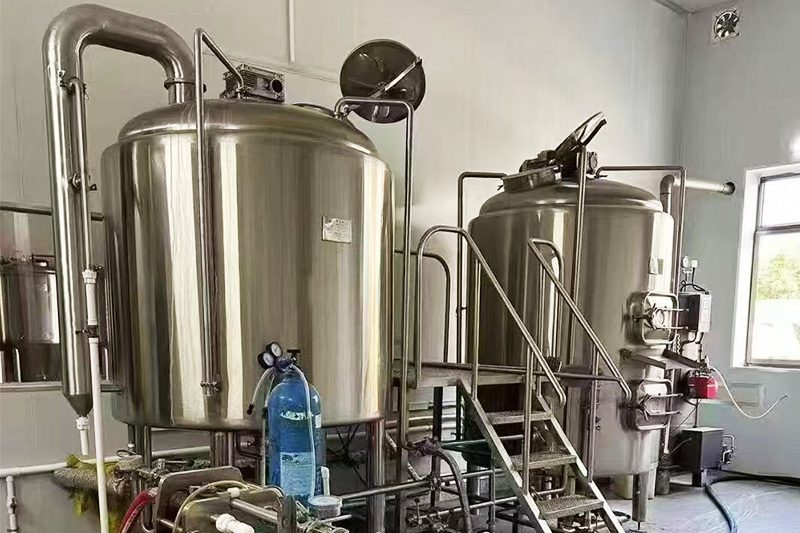
Ticari bir bira üretim tesisinde mayşeleme tankı şunları sağlamalıdır:
- Eşit ısıtma
- İyi karıştırma
- Hassas sıcaklık kontrolü
- Etkili yalıtım
- Hijyenik yapı
- Kolay temizlik
A poorly designed mash system may create hot spots, uneven conversion, or inconsistent extraction.
Şıra Tahıldan Nasıl Ayrılır?
Mayşelemeden sonra bira üreticisinin sıvıyı harcanmış tahıldan ayırması gerekir.
Tatlı sıvıya şıra denir.
Şıra, tahıldan elde edilen çözünmüş şekerler, proteinler, mineraller ve aroma bileşikleri içerir.
Ayırma aşamasına genellikle şıralama adı verilir.
Bazı bira üretim tesislerinde mayşeleme ve süzme ayrı kazanlarda yapılır. Bazılarında ise bu işlemler birleştirilebilir.
Şıralama sırasında tahıl yatağı filtre görevi görür.
Bira üreticisi şırayı toplar ve ilave şeker elde etmek için tahılı sıcak suyla durulayabilir.
Bu durulama adımına genellikle serpme denir.
Amaç, biraya kabuktan çok fazla istenmeyen bileşik geçmesine yol açmadan yeterli miktarda ekstrakt elde etmektir.
Süzmenin kalitesi şunlara bağlıdır:
- Tahıl kırma
- Tahıl yatağı derinliği
- Su akışı
- Rake design
- Yalancı taban tasarımı
- Yıkama yöntemi
- Wort collection rate
Ticari bir bira fabrikası için, iyi tasarlanmış bir süzme kazanı demleme süresini kısaltabilir ve ekstraksiyon verimliliğini artırabilir.
That matters because time saved on each batch of beer can increase total brewhouse capacity.
Şıra Neden Kaynatılır ve Şerbetçiotu Ne Zaman Eklenir?
Süzmenin ardından şıra, kaynatma işlemi için kazana girer.
Boiling performs several important jobs.
Şunlara yardımcı olur:
- Şırayı sterilize etmek
- Enzim aktivitesini durdurun
- Şırayı yoğunlaştırmak
- İstenmeyen bazı uçucu bileşikleri uzaklaştırmak
- Proteinleri pıhtılaştırmak
- Şerbetçiotundan acılık elde etmek
- Bira lezzetini geliştirmek
Burası aynı zamanda şerbetçiotunun temel bir bileşen hâline geldiği aşamadır.
Şerbetçiotu; acılık, aroma ve lezzet katan bileşikler içerir.
Şerbetçiotu ekleme zamanlaması etkilerini değiştirir.
Şerbetçiotu kaynatmanın erken aşamalarında eklenirse genellikle daha fazla acılık elde edilir.
Şerbetçiotu daha sonra eklenirse daha fazla aroma kalabilir.
Basitleştirilmiş bir şerbetçiotu takvimi şu şekilde olabilir:
| Şerbetçiotu İlavesi | Tipik Etki |
|---|---|
| Kaynatma başı | Daha fazla acılık |
| Kaynatma ortası | Lezzet katkısı |
| Kaynatma sonu | Daha fazla aroma |
| Girdap | Güçlü aroma, daha az acılık |
| Fermantasyon sonrası | Dry-hop aroması |
Tam planlama, bira stiline bağlıdır.
Bir IPA'da yüksek miktarda geç eklenen şerbetçiotu kullanılabilir.
Geleneksel bir lager, daha ölçülü bir şerbetçiotu profili kullanabilir.
Bir pale ale, orta düzeydeki acılığı narenciye, çiçeksi veya reçinemsi aroma ile dengeleyebilir.
Şerbetçiotu seçimi hem aromayı hem de lezzeti etkiler; bu nedenle bira üreticisi şerbetçiotu çeşidini ve zamanlamasını hedeflenen birayla eşleştirmelidir.
Kaynatmadan Sonra Ne Olur?
Kaynatmadan sonra şıra genellikle bir whirlpool'a girer.
Amaç, şerbetçiotu parçacıklarını ve pıhtılaşmış proteinleri daha berrak şıradan ayırmaktır.
Katı maddelerin kabın merkezinde toplanması için sıvı sirküle edilir.
After clarification, the wort must be cooled quickly.
This matters for both quality and microbiological control.
The hot wort typically passes through a heat exchanger where it is cooled to the required fermentation temperature.
For many ales, the target temperature is higher than for lagers.
A lager yeast generally works at lower temperatures than many ale strains.
Cooling speed matters because the brewer wants to move from hot wort to fermentation temperature efficiently.
Slow cooling may increase contamination risk and can affect beer flavor.
In a commercial brewery, the heat exchanger, cold-water tank, glycol system, pumps, and piping all work together.
The brewhouse should not be viewed as separate from the cold side.
How Does Fermentation Make Beer?
After cooling, the wort is transferred to a fermentation vessel or fermentation tank.
Then yeast is added.
This stage is known as fermentation.
Yeast consumes fermentable sugar and converts it mainly into alcohol and carbon dioxide.
The basic reaction can be simplified as:
Sugar → Alcohol + Carbon Dioxide + Flavor Compounds
But fermentation is more than alcohol production.
Yeast also creates esters, higher alcohols, sulfur compounds, acids, and other substances that affect beer character.
The type of yeast used has a major effect on the finished beer.
Ale Yeast
Ale yeast generally works at warmer temperatures and can produce fruity or complex flavors.
Lager Yeast
Lager yeast works at cooler temperatures and usually produces a cleaner flavor profile.
The primary fermentation stage may take several days or longer, depending on:
- Beer style
- Yeast strain
- Original gravity
- Fermentation temperature
- Tank geometry
- Oxygenation
- Pitching rate
Some strong or specialty beer styles take much longer.
The brewer should not simply wait for a fixed number of days.
They monitor gravity, temperature, pressure, yeast activity, and flavor.
Why Does Fermentation Temperature Matter So Much?
Fermentation temperature has a major impact on beer quality.
If temperature rises too much, yeast may produce unwanted by-products.
If the temperature is too low, fermentation may slow or stop.
Stable temperature control also helps improve consistency between batches.
In a commercial brewery, fermentation tanks are usually equipped with cooling jackets connected to a glycol system.
This allows the brewer to control different tanks independently.
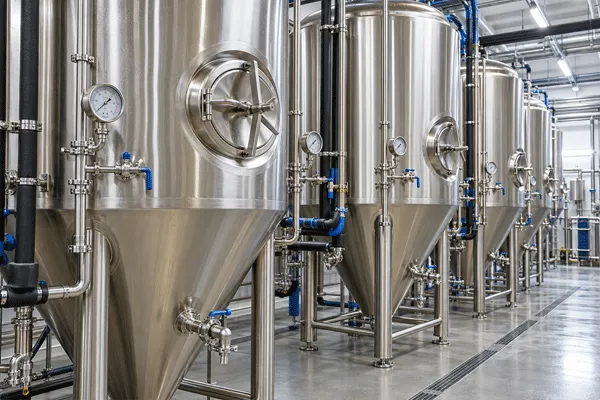
A typical fermentation tank may include:
- Cooling jackets
- Temperature probe
- Pressure gauge
- Sample valve
- CIP püskürtme tertibatı
- Yeast discharge outlet
- Pressure relief valve
- Sanitary fittings
When fermentation is complete, the beer may be chilled.
This helps yeast and suspended solids settle.
The cold stage also prepares the beer for conditioning, clarification, transfer, or packaging.
A well-designed fermentation system is especially important for breweries producing many batches at the same time.
The brewhouse may make the wort, but the fermentation cellar often determines actual production capacity.
What Happens During Beer Conditioning?
After active fermentation, the beer often enters a conditioning or maturation stage.
This is a period when the beer develops a cleaner and more stable flavor.
During conditioning:
- Yeast may continue to clean up flavor compounds
- Solids settle
- Beer becomes clearer
- Carbonation may develop
- Harsh flavors may soften
For some beers, conditioning is short.
For others, it may take weeks.
A traditional lager often requires longer cold conditioning than many ales.
The process varies by product.
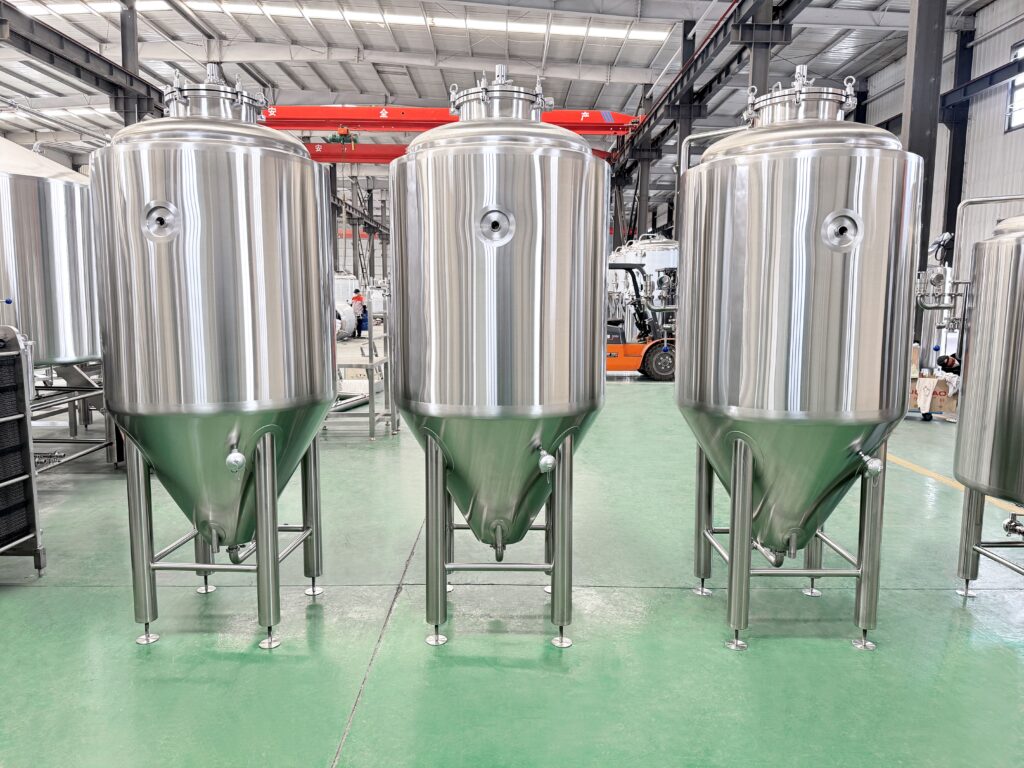
Some breweries condition beer in the same cylindroconical fermentation tank.
Others transfer beer into a bright beer tank.
The best choice depends on:
- Tank availability
- Production schedule
- Beer style
- Packaging method
- Desired clarity
- Carbonation method
For a growing brewery, tank scheduling becomes a major part of production planning.
One slow-conditioning beer can occupy a tank for much longer than a fast ale.
That affects how many batches the brewery can make each month.
How Does the Beer Style Change the Brewing Process?
The same basic process can produce very different beers.
The beer style determines how the brewer adjusts malt, hops, yeast, water, temperature, and time.
For example:
Pale Ale
A pale ale may use pale malt, moderate hop bitterness, ale yeast, and relatively warm fermentation.
Lager
A lager may use similar base ingredients but different yeast, cooler fermentation, and longer conditioning.
American Wheat Beer
An American wheat beer often includes a large amount of wheat and may use a clean ale yeast.
IPA
An IPA usually uses more hops, especially for late aroma additions or dry hopping.
Many craft breweries also add ingredients such as:
- Fruit
- Coffee
- Cocoa
- Spices
- Honey
- Herbs
- Lactose
Some ingredients are added during the boil.
Others may be added after fermentation.
That is why the process varies even though the basic steps remain similar.
Good bira üretim ekipmanları should give the brewer enough flexibility to handle different recipes without making the system overly complicated.
What Equipment Is Needed to Brew Beer Commercially?
A commercial brewery needs more than a kettle and fermenter.
A complete brewing equipment system may include:
Hot Side
- Malt değirmeni
- Mash tun
- Lauter tun
- Brew kettle
- Girdap
- Sıcak su tankı (HLT)
- Pompa
- Isı eşanjörü
Cold Side
- Fermentation tanks
- Bright beer tanks
- Glycol chiller
- Cold liquor tank
- CIP sistemi
- Process piping
Packaging Side
- Keg washer/filler
- Bottling line
- Canning line
- Labeling equipment
A small brewpub may use a compact 2-vessel brewhouse.
A larger commercial brewery may use a 3-vessel or 4-vessel brewhouse to improve throughput.
This is where capacity planning becomes important.
For example, a brewery may own a 2,000 L brewhouse, but if it only has two 2,000 L fermenters, production will quickly become limited.
A simplified relationship is:
Brewhouse Capacity + Brewing Frequency + Fermentation Time = Required Fermentation Capacity
As a brewery equipment manufacturer, we usually recommend planning the hot side and cold side together.
That reduces the chance of buying a strong brewhouse that spends too much time waiting for an empty tank.
What Does a Real Commercial Brew Day Look Like?
A typical brew day starts before the mash begins.
The brewer prepares the water, checks the grain, confirms the recipe, cleans equipment, and makes sure tanks and utilities are available.
A simplified 1,000 L brewing schedule might look like this:
| Stage | Approximate Activity |
|---|---|
| Frezeleme | Crush malt |
| Mayşeleme | Mix malt with heated water |
| Süzme | Separate wort |
| Kaynatma | Boil wort and add hops |
| Girdap | Remove solids |
| Soğutma | Cool wort |
| Transfer | Send wort to fermenter |
| Yeast Pitching | Add yeast |
| Temizlik | CIP brewhouse |
The exact timing depends on equipment layout and automation.
A highly efficient brewhouse can overlap some steps.
For example, one vessel may be cleaned while another batch is being prepared.
This is one reason larger breweries use multiple vessels.
More vessels can increase brewhouse throughput—but only if the fermentation cellar, cooling capacity, and staff can keep up.
How Long Does the Brewing Process Take?
The actual process of brewing takes longer than one brew day.
The hot-side production may take several hours, but fermentation and conditioning can take days or weeks.
A simple timeline might look like this:
Brew Day
   ↓
Mashing / Lautering / Boiling
   ↓
Cooling
   ↓
Fermentation
   ↓
Conditioning
   ↓
Packaging
For many ales, the entire process can take roughly a few weeks.
Some lagers may take longer.
High-gravity beers, barrel-aged beers, sour beers, and certain specialty beers may require months.
So when planning production, the question is not only:
“How much can the brewhouse brew?”
A better question is:
“How much finished beer can the full brewery produce each month?”
That includes fermentation tank occupancy, conditioning, cleaning, packaging, and downtime.
Why Sanitary Equipment Matters in Craft Brewing
Beer contains sugar, nutrients, yeast, and water.
That means microorganisms can grow if the equipment is not properly cleaned.
Sanitary design is therefore critical.
Commercial stainless steel brewing systems should reduce areas where liquid can remain trapped.
Important details include:
- Düzgün iç yüzeyler
- Sanitary welds
- Proper drainage
- CIP coverage
- Easy-to-clean valves
- Sanitary fittings
- Correct pipe slopes
Good cleaning helps reduce contamination and protects batch consistency.
This is especially important after fermentation because oxygen and microbial contamination can quickly damage finished beer.
For this reason, professional breweries treat CIP as part of the brewing process, not as an optional extra.
Frequently Asked Questions About Brewing Beer
What are the main steps of the beer brewing process?
The main steps are milling, mashing, lautering, boiling, hop addition, whirlpool separation, wort cooling, fermentation, conditioning, and packaging. Each stage affects flavor, alcohol content, clarity, and consistency.
How does yeast make beer alcoholic?
Yeast consumes fermentable sugar in the wort and produces ethanol, carbon dioxide, and flavor compounds. The amount of sugar available and the yeast strain influence final alcohol content.
Why are hops used in beer?
A hop provides bitterness, flavor, and aroma. Early hop additions usually contribute more bitterness, while late-boil, whirlpool, and dry-hop additions are often used for stronger aroma.
What is wort?
Wort is the sweet liquid produced after malt is mashed and the grain solids are separated. It contains sugar that yeast later converts during fermentation.
What is the difference between ale and lager?
The biggest difference is usually the yeast and fermentation conditions. Ale yeast generally works warmer, while lager yeast typically works at lower temperatures. Lager also often requires longer conditioning.
How long does beer fermentation take?
Fermentation takes different amounts of time depending on beer style, yeast, temperature, gravity, and process. Many ales complete active fermentation within several days, while lagers and stronger beers often require longer fermentation and conditioning.
Final Thoughts: Brewing Beer Is a Complete Process, Not One Step
The beer making process is a chain.
Every stage affects the next.
Malt provides starch.
The mash converts starch into sugar.
The brewer separates the sweet wort.
Boiling prepares the wort and extracts hop compounds.
The wort is chilled.
Yeast begins fermentation.
Then the beer is conditioned, clarified, carbonated, and packaged.
That sounds simple.
But the quality of the final product depends on controlling dozens of small details across the entire process.
For a commercial brewery, this is also why equipment selection should begin with the complete production plan.
A brewhouse should match the fermentation cellar.
The fermentation cellar should match the cooling system.
The cooling system should match the actual tank load.
The packaging line should match finished beer output.
And the complete layout should allow the team to work safely and efficiently.
As a manufacturer of customized stainless steel brewery and beverage systems, we focus on this whole-system approach. The goal is not simply to provide tanks. It is to help build a production flow that supports stable beer quality, efficient brewing, easier cleaning, reliable expansion, and long-term operation.
If you are planning a new brewery or expanding an existing project, useful information includes:
- Target beer styles
- Bira fabrikası parti büyüklüğü
- Number of brews per day or week
- Annual output target
- Fermantasyon süresi
- Required number of fermenters
- Available building dimensions
- Heating method
- Cooling conditions
- Packaging method
- Automation level
- Gelecekteki genişleme planı
With those details, the brewing system can be designed around how you actually plan to produce beer.
Key Things to Remember
- Beer brewing usually includes milling, mashing, lautering, boiling, cooling, fermentation, conditioning, and packaging.
- Malt provides the starch and enzymes needed for the brewing process.
- During mashing, enzymes convert starch into fermentable sugar.
- Wort is the sweet liquid separated from the grain.
- Hops add bitterness, flavor, and aroma.
- Yeast converts sugar into alcohol and carbon dioxide.
- Fermentation temperature strongly affects beer flavor and consistency.
- Ale and lager use different yeast behavior and fermentation conditions.
- The fermentation cellar often determines real brewery capacity.
- Conditioning improves clarity, stability, and flavor.
- Sanitary stainless steel equipment and CIP reduce contamination risk.
- A commercial brewery should plan brewhouse, fermentation, cooling, storage, and packaging as one system.
- The best brewing system is not simply the largest one—it is the one that matches your production goals and beer styles.