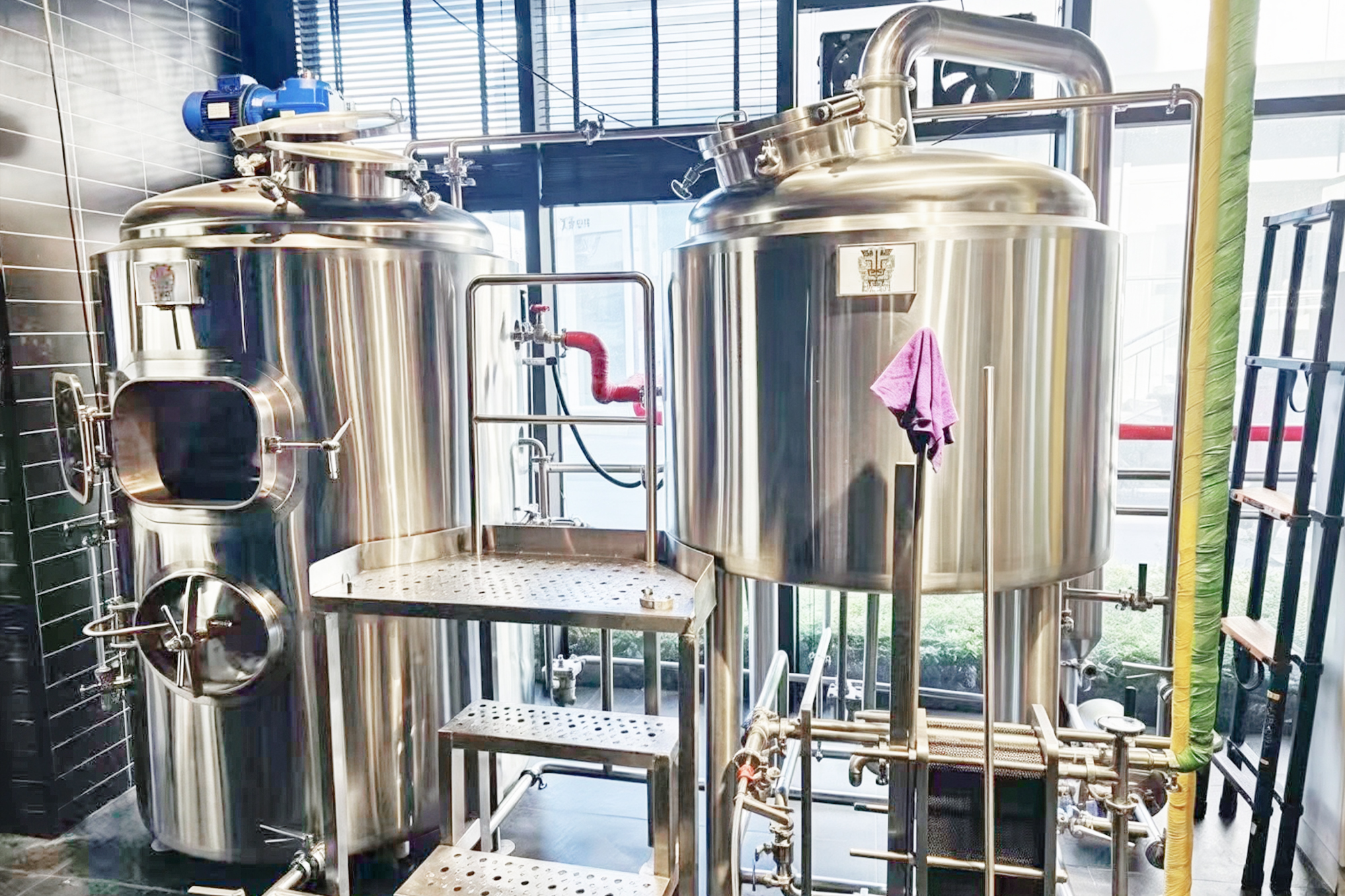
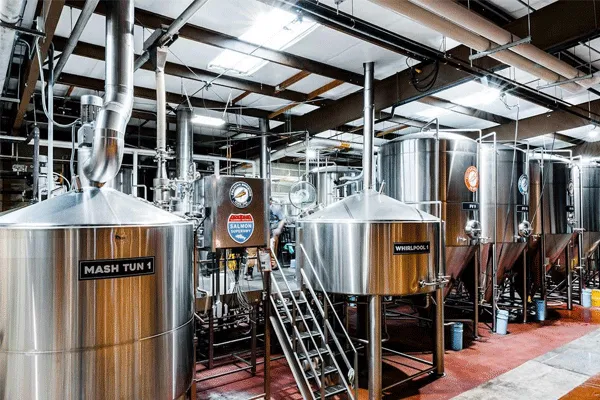
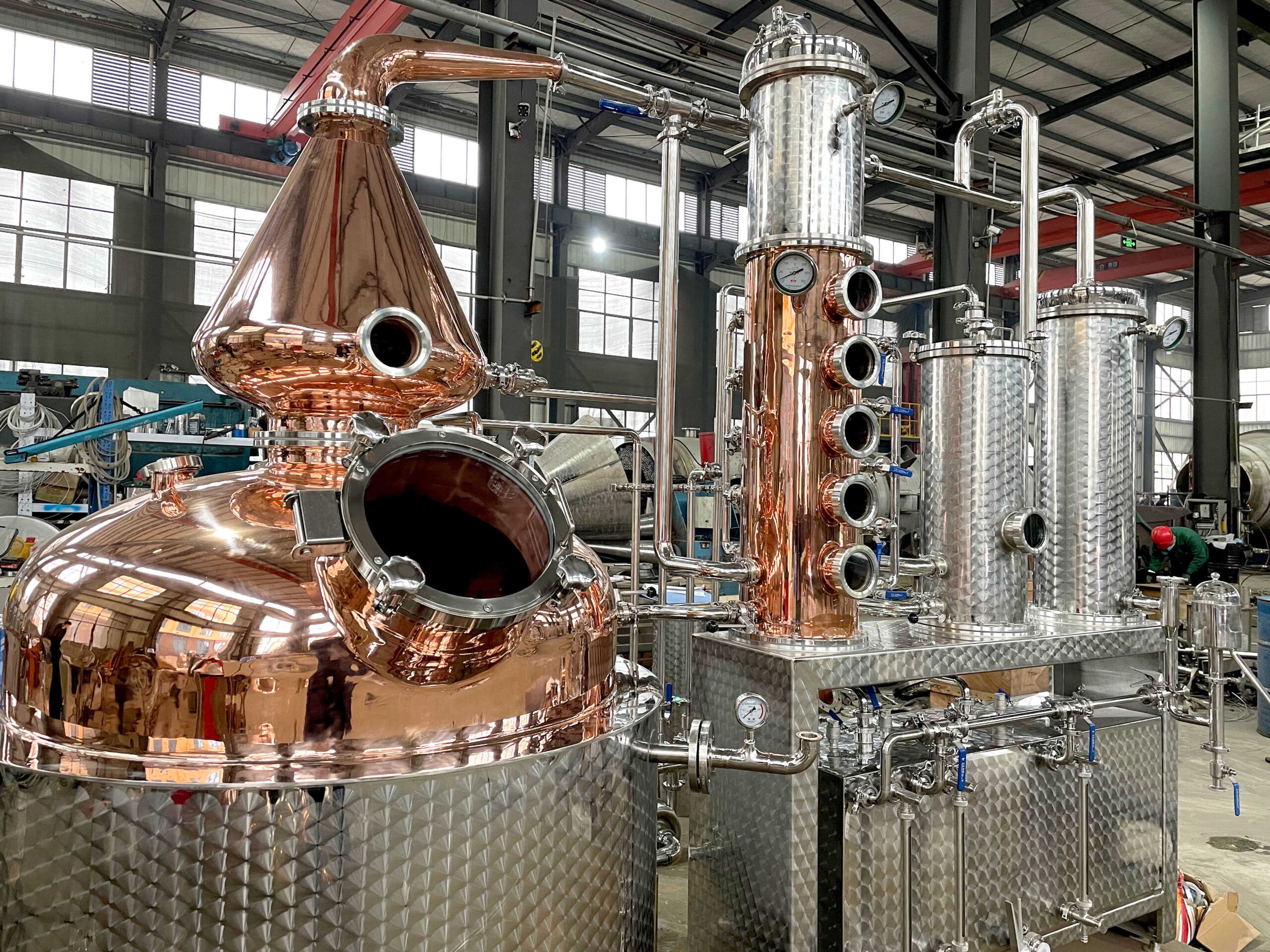
飲料生産ラインに最新のタンクや充填機が揃っていたとしても、生産量の低迷、レシピのばらつき、コストのかかる生産遅延に直面することがあります。多くの場合、問題は機械の不足ではなく、設備のミスマッチにあります。
業務用 飲料設備 should be selected according to the beverage recipe, target daily output, batch size, processing requirements, and packaging speed. A properly planned production line connects water treatment, mixing, processing, storage, and filling into one coordinated system, helping manufacturers maintain consistent quality and control operating costs.
1. 業務用飲料設備に求められる要件とは?
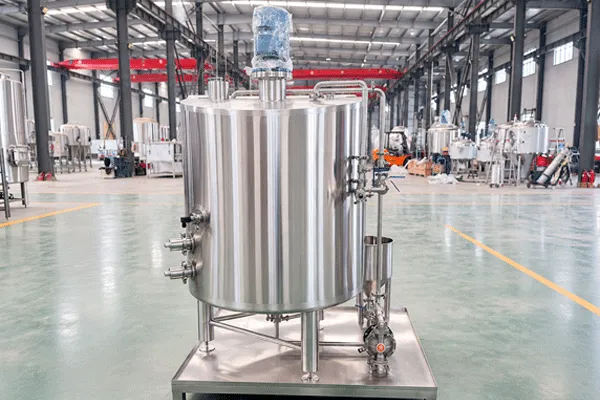
Commercial beverage equipment is more than a collection of machines. It is a connected production system designed to prepare, process, store, and package liquid products. For a beverage manufacturer, every stage must work with the next one. If one machine cannot keep up, the entire production line may slow down.
飲料製品によって必要な加工方法は異なります。果汁飲料メーカーであれば、原料調製、ブレンド、ろ過、充填が必要になる場合があります。炭酸飲料メーカーなら、正確なCO₂混合と温度管理が求められます。お茶飲料や機能性飲料では、精密な原料投入、精密な加熱管理、あるいは追加のろ過工程が必要になることがあります。
The right system should support three important goals:
- 安定した製品品質:再現性のある原料比率、混合条件、加工パラメータを維持する。
- 安定した生産能力:タンク、ポンプ、処理ユニット、充填機の処理能力を調和させる。
- 柔軟な製造体制:工場で異なる飲料処方の製品を製造したり、需要の増加に応じて生産能力を拡張したりできるようにします。
B2Bのバイヤーにとっての目的は、単に機器を多く購入することではありません。実際の製造プロセスに真に合致した生産システムを構築することです。
2. なぜタンク容量ではなく最終製品の生産量から考えるべきなのか?
One of the most common mistakes when purchasing beverage equipment is selecting a tank based only on its nominal capacity. A 1,000L mixing tank does not automatically mean a factory can package 1,000L of finished beverage every hour or produce a fixed amount every day.
購入担当者は、まず期待される完成品の生産量を算出する必要があります。生産シフト数、稼働時間、計画バッチ数、洗浄時間、製品切り替え、包装要件を考慮してください。これらの要素によって、各工程で実際に必要となる処理能力が決まります。
For example, a beverage startup planning to produce 3,000L per day may initially consider three 1,000L batches. However, this is only a theoretical starting point. Actual production also depends on mixing time, ingredient preparation, processing, transfer, cleaning, and filling.
It is useful to distinguish between three capacity measurements:
| 容量タイプ | 意味 | なぜ重要なのか |
|---|---|---|
| タンク容量 | タンクの全容量または公称容量 | 機器の物理的サイズを規定 |
| 有効容量(ワーキングボリューム) | Usable volume for one production batch | 実用的なバッチ計画を決定 |
| Daily finished output | Packaged beverage volume per day | 実際の生産能力を反映 |
適切に計画された生産ラインは、日常的な操業中断や将来の需要に対応できる十分な余裕を備えている必要があります。システム全体を確認せずに単に一回り大きいタンクを選んでしまうと、実際の生産能力が向上しないまま投資額だけが増えることになりかねません。
3. How Do You Calculate Batch Size and Daily Beverage Output?
Batch planning connects the production target with the working volume of each tank. Before selecting equipment, manufacturers should estimate how much product they need to prepare in one batch and how many batches the plant can complete within its available working hours.
基本となる計算式は以下のとおりです。
必要投入量 = 目標完成数量 ÷ 想定歩留まり
続いて:
必要バッチ数 = 必要原料仕込量 ÷ 有効バッチ容量
歩留まりは、実際の配合と製造実績に基づいて設定する必要があります。配管内の残留液、ろ過ロス、サンプリング、移送ロス、その他通常のプロセス変動を考慮に入れる必要があります。
生産計画の試算例
Suppose a beverage startup plans to package 3,000L of finished product per day and considers a system with a 1,000L effective mixing volume.
| 計画項目 | 参考数値 |
|---|---|
| Daily finished product target | 3,000L |
| 有効バッチ容量 | 1,000L |
| 理論上の必要バッチ数 | 3バッチ |
| 生産シフト | 1シフト |
| 実際のバッチ必要量 | プロセスの歩留まりおよび稼働時間により変動 |
Three batches provide a starting calculation, not a guaranteed daily output. The factory must also confirm whether water treatment, mixing, downstream processing, cleaning, and packaging can support the planned schedule.
現実的な生産計画には、以下を含める必要があります。
- 日次および月次の予想販売量。
- タンクの有効作業容量。
- バッチあたりの混合および処理時間。
- 製品の移送および保持時間。
- 製品の移送・保持時間と洗浄および製品切り替え時間。
- 充填および包装能力。
- 将来の増産余力。
この情報により、機器メーカーは適切な構成を提案するためのより明確な根拠を得ることができます。
4. 各工程段階をどのようにバランスさせるべきか?
飲料生産ラインが効率的に稼働するのは、連携する各プロセスの能力が適切に調和している場合に限られます。大型の調製タンクを導入しても、下流の処理工程が遅ければその遅れを補うことはできません。同様に、上流の調製システムが十分な製品を供給できなければ、高速充填機を連続稼働させることは不可能です。
一般的な生産ワークフローには、以下のモジュールが含まれる場合があります。
| プロセスステージ | Main Function | 重要な選定要素 |
|---|---|---|
| 水処理 | 工程用水の調製 | 水源と必要な水質 |
| 原料調合 | 液体および添加物の調製 | レシピおよび原材料の特性 |
| 混合および調合 | 原材料を均一に混合 | 有効容量と撹拌 |
| 炭酸 | CO₂の添加と制御 | 必要な炭酸レベルと処理速度 |
| 滅菌または殺菌 | 必要な微生物制御プロセスの実施 | 製品および保存要件 |
| バッファ貯留 | 充填前に処理済み飲料を一時保管 | 充填スケジュールと保管条件 |
| 充填・包装 | 瓶、PETボトル、缶への充填 | 容器タイプと時間あたりの生産量 |
すべての飲料にすべてのモジュールが必要なわけではありません。例えば、非炭酸のお茶系飲料にはCO₂ミキシングマシンは不要ですが、発泡飲料には適切な炭酸注入工程が必要です。同様に、必要な熱処理やろ過の方法も、処方や製品安全計画によって異なります。
最も重要なエンジニアリング原則はラインバランスです。実際の生産能力は、最も処理速度の遅い持続工程によって制限されます。機器を選定する際は、個々の機械仕様を単独で比較するのではなく、処理速度、バッチ時間、移送能力、洗浄要件を総合的に比較してください。
5. Which Beverage Characteristics Change Equipment Selection?
The beverage itself determines much of the equipment configuration. Two products may have the same batch volume but very different processing requirements.
For example, flavored water usually behaves differently from a thick fruit drink containing pulp. A carbonated product needs different handling from a non-carbonated tea beverage. These differences affect tank design, agitator selection, pumps, filters, temperature control, and filling methods.
Before choosing equipment, consider the following product characteristics:
Viscosity and solids content
Thin liquids can often move through standard sanitary pipelines and pumps. Thicker beverages or products containing fruit particles may require different pump structures, larger transfer passages, or suitable filtration arrangements.
Acidity and formulation
Fruit juice, herbal beverages, and functional drinks can have different chemical properties. Buyers should provide their formulation information so the manufacturer can recommend suitable product-contact materials and cleaning methods.
Carbonation requirements
Carbonated drinks require controlled CO₂ addition. The carbonation system must match the required processing volume, temperature conditions, and production schedule.
Temperature sensitivity
Some ingredients are sensitive to heating. If a beverage requires pasteurization or sterilization, the treatment method should be selected according to the formulation and required shelf life.
Foaming and oxygen sensitivity
Certain liquids create more foam during mixing and transfer. Some products also require careful oxygen management. These factors influence agitation, pumping, transfer speed, and filling configuration.
Providing the beverage recipe and process requirements early helps prevent equipment mismatches during manufacturing and commissioning.
6. How Do You Select Stainless Steel Tanks and Product-Contact Components?
Stainless steel tanks are widely used in commercial beverage production because they offer a durable, cleanable structure suitable for food-contact processing. However, buyers should not select materials based on appearance alone.
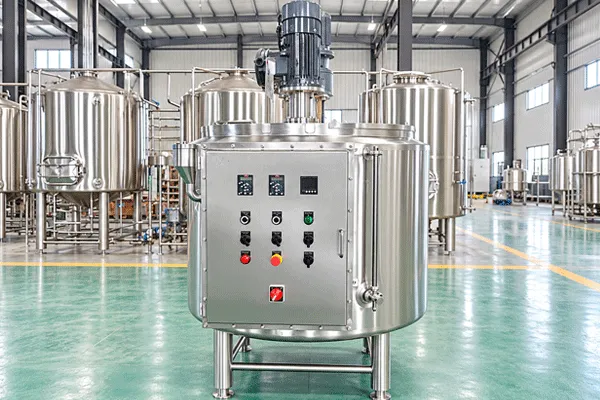
MICET offers SUS304 and SUS316L options according to the beverage type and operating conditions. SUS304 is commonly used for many standard beverage applications, while SUS316L may be more suitable for certain corrosive formulations or more demanding cleaning environments.
When reviewing a mixing tank or storage vessel, pay attention to these details:
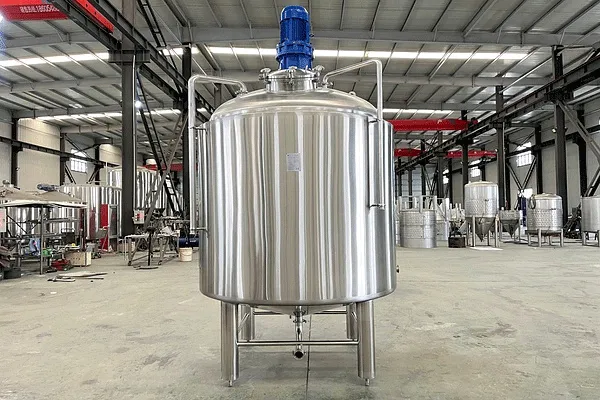
- Internal surface finish: Smooth product-contact surfaces support effective cleaning and reduce areas where residue can accumulate.
- Welding quality: Consistent sanitary welding helps maintain vessel integrity and cleanability.
- Agitator configuration: The agitator should suit the liquid’s viscosity, solids content, and mixing requirements.
- Manways and fittings: Access points, valves, and connections should support operation, inspection, and maintenance.
- Drainage design: Tank outlets and internal geometry should allow effective product discharge and cleaning.
- Insulation and jackets: Depending on the process, insulation or heating and cooling jackets may be required.
Pumps, filters, valves, pipelines, and other equipment parts should also be compatible with the beverage and its cleaning chemicals. Selecting the entire product-contact system together is more reliable than purchasing components independently without checking their compatibility.
7. Why Are Water Quality, Cleaning, and CIP Important?
Water is a major ingredient in many beverages. Its quality can influence flavor, consistency, and the performance of downstream equipment. A water treatment system should therefore be designed according to the incoming water analysis and the finished product’s requirements.
Depending on the water source, a configuration may include sediment filtration, activated carbon filtration, water softening, precision filtration, and reverse osmosis. Not every plant needs every treatment stage. The final arrangement should be based on water quality rather than an unnecessarily complex equipment list.
Cleaning is equally important. Residual ingredients, sugars, flavor compounds, and product deposits can affect the next batch if the equipment is not cleaned correctly.
A Clean-in-Place (CIP) system can circulate suitable cleaning solutions through tanks and connected pipelines without requiring operators to dismantle every component. When planning CIP, buyers should confirm:
- Which tanks and pipelines need CIP coverage.
- Whether spray devices can reach the required internal surfaces.
- Chemical compatibility of product-contact materials and seals.
- Required cleaning temperature and circulation conditions.
- Drainage and cleaning-solution recovery arrangements.
- Whether separate product lines need different cleaning procedures.
CIP cleaning should not automatically be treated as sterilization. The required cleaning and microbial control steps must be determined by the beverage process and food safety requirements.
8. How Do You Match Filling Equipment to Production Capacity?
Filling is often one of the most important stages in the production line because it determines how quickly prepared beverages can become finished products ready for storage and distribution.
The correct filling system depends on the packaging format, beverage characteristics, target output, and level of automation. A plant producing bottled juice may need bottle rinsing, filling, capping, labeling, and conveying. A carbonated beverage producer needs a filling method suitable for handling carbonation and controlling product loss.
Consider the following before selecting filling equipment:
| Selection Factor | Questions to Confirm |
|---|---|
| Packaging format | Glass bottle, PET bottle, can, or other container? |
| Container size | What volume and dimensions will be used? |
| Filling speed | How many containers must be filled per hour? |
| Product properties | Is the liquid carbonated, foaming, viscous, or sensitive to oxygen? |
| 自動化 | Manual, semi-automatic, or automatic operation? |
| Changeover | How often will the line switch between products or container sizes? |
A simple planning formula is:
Required filling rate = Daily packaged volume ÷ Available filling hours
For example, if a plant needs to package 3,000L during five available filling hours, the average required filling rate is 600L per hour. The selected machine must also account for container size, operating interruptions, changeovers, and actual filling efficiency.
The upstream production system must supply product at a rate that supports the filling schedule. Otherwise, the filling machine may spend too much time waiting for product.
9. How Do Factory Layout, Utilities, and Automation Affect Production?
Equipment selection should always be connected to the factory layout. A technically suitable machine can still create operational problems if operators cannot access it easily, pipelines are too long, or maintenance space is insufficient.
A practical layout should follow the production sequence. Water treatment, ingredient preparation, mixing, processing, buffer storage, and filling should be arranged to support a clear material flow. Raw materials, finished products, cleaning chemicals, and waste streams should also have suitable handling routes.
Before finalizing the layout, confirm the following utilities:
- Water supply and drainage.
- Electricity and control cabinet requirements.
- Compressed air, if required by valves or other equipment.
- CO₂ supply for carbonated products.
- Steam or hot water for heating and cleaning, where applicable.
- Chilled water or cooling equipment, where required.
- Floor loading, equipment access, and installation clearance.
Automation can further improve production consistency. A PLC-based control system may coordinate pumps, agitators, temperature sensors, dosing operations, and process sequences. The exact automation scope should reflect the number of recipes, operating procedures, and available operators.
For a growing beverage factory, modular equipment and planned connection points can also make future expansion easier. The goal is to avoid rebuilding the entire production area when output increases.
10. What Should Buyers Prepare Before Requesting a Beverage Equipment Quote?
A detailed inquiry helps an equipment manufacturer recommend a suitable configuration instead of offering a standard package that may not match the actual project.
Before requesting a quotation, prepare the following information:
| Information | Details to Provide |
|---|---|
| Beverage type | Juice, tea drink, flavored water, carbonated drink, or functional beverage |
| Production target | Daily, weekly, and monthly output |
| バッチサイズ | Desired working volume per batch |
| Product formulation | Viscosity, ingredients, solids, acidity, and carbonation |
| Processing requirements | Mixing, filtration, heating, cooling, sterilization, or pasteurization |
| パッケージング | Bottle, PET bottle, can, or bulk transfer |
| Factory conditions | Available floor area, utilities, drainage, and installation location |
| Automation level | Manual, semi-automatic, or PLC-controlled |
| Expansion plan | Expected production increase or additional beverage varieties |
MICET’s published configurations provide useful reference points for project discussions. For example, the 500L beverage equipment includes a 500L effective-volume mixing tank, while the 1000L beverage equipment and 2000L beverage equipment offer larger configurations with corresponding process equipment.
These examples are starting points, not universal recommendations. The final equipment list should be developed around your product, output target, processing requirements, and plant conditions.
As a professional beverage equipment manufacturer, MICET supports customized stainless steel tanks, integrated processing systems, CAD and 3D layout planning, equipment matching, and installation guidance. We work with beverage startups, established manufacturers, and engineering contractors to develop practical production solutions.
If you are planning a new beverage plant or upgrading an existing production line, share your beverage type, target output, packaging format, and factory layout with our engineering team. We can help you evaluate the required configuration and prepare a project-specific proposal.
Frequently Asked Questions
What is included in commercial beverage equipment?
The configuration depends on the product and production process. A system may include water treatment, mixing tanks, storage tanks, pumps, filtration, carbonation, sterilization or pasteurization equipment, CIP, and filling machines. Not every beverage requires all these modules.
How do I choose between 500L, 1000L, and 2000L beverage equipment?
Start with your required daily output, working volume per batch, available production hours, and expected growth. Then check whether the processing and filling equipment can support the planned schedule. Tank capacity alone is not enough to determine daily production.
Can one beverage production line manufacture different drinks?
Yes, a suitably designed system can support multiple formulations. However, product viscosity, ingredient characteristics, processing temperatures, carbonation requirements, and cleaning procedures must be considered. Some product changes may require additional modules or dedicated pipelines.
Do all beverage production systems need CO₂ carbonation equipment?
No. CO₂ mixing is required for carbonated products such as sparkling drinks, but it is not necessary for every juice, tea, or flavored water application. The carbonation module should be included only when the recipe and product specifications require it.
Which stainless steel grade is suitable for beverage production?
SUS304 is suitable for many standard beverage applications. SUS316L may be preferred for certain corrosive products or more demanding operating conditions. The final selection should consider beverage chemistry, cleaning agents, temperature, and the required service life.
Key Points to Remember
- Select beverage equipment according to the actual production process, not just nominal tank volume.
- Calculate working batch size and daily finished output before choosing equipment.
- Match water treatment, mixing, processing, transfer, and filling capacities.
- Consider viscosity, acidity, solids, carbonation, and temperature sensitivity.
- Select stainless steel grades and sanitary components according to product requirements.
- Plan CIP, water quality, utilities, factory layout, and automation from the beginning.
- Match packaging speed with upstream production capacity to avoid bottlenecks.
- Work with an experienced equipment manufacturer to develop a customized and expandable production system.