Nancy Shang | MICET 창립자 겸 CEO | 발행일: 2026년 8월 28일
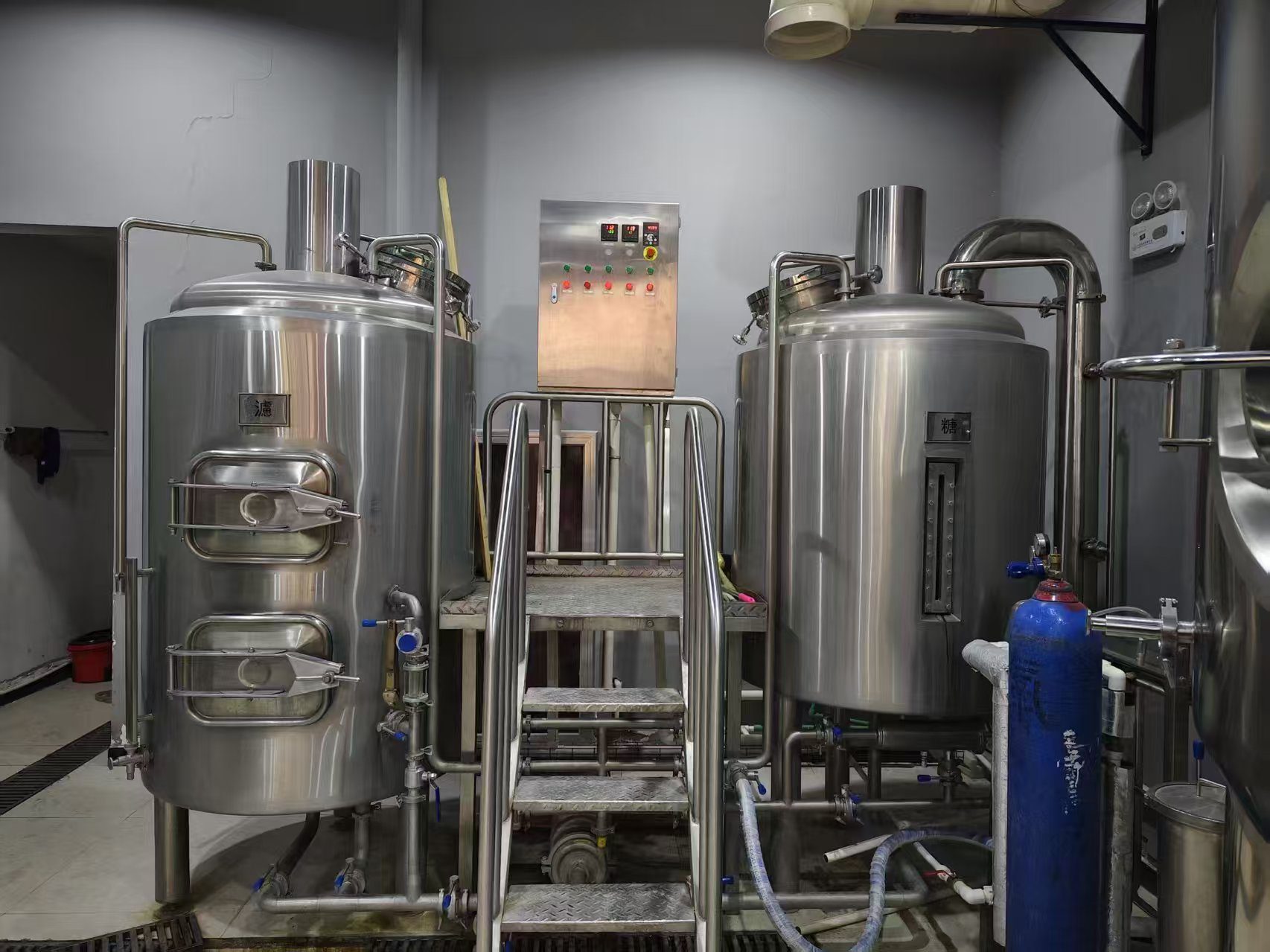
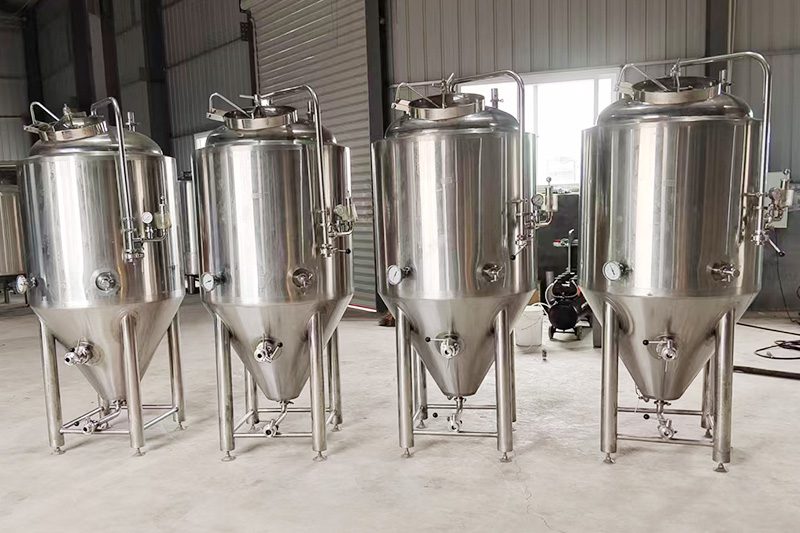
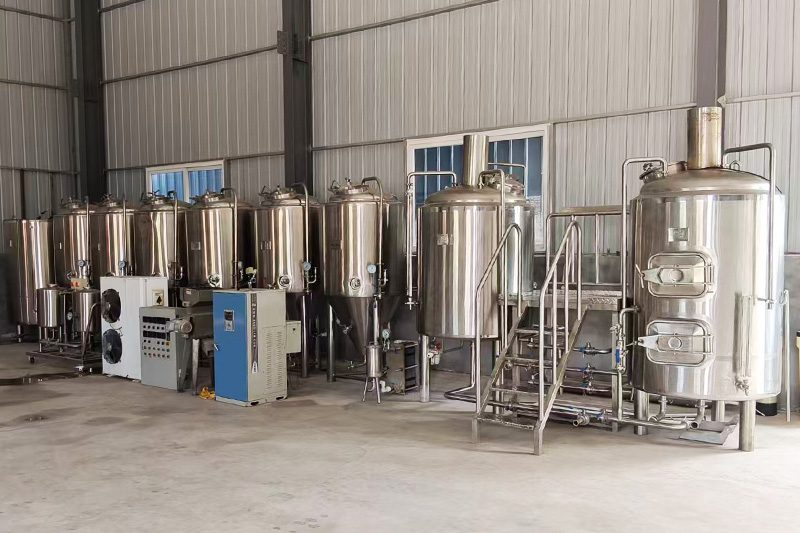
마이크로 와이너리 장비에는 연간 약 500~2,000리터 생산 규모에 맞춘 발효 탱크, 머스트 및 와인 펌프, 압착기, 저장 용기 등이 포함됩니다. 이 규모에서는 단순한 용량뿐만 아니라 품종 분리와 캡 관리(cap management)가 용기 선택을 좌우하므로, 탱크의 총용량보다는 유형과 수량이 더 중요합니다.
500L~2000L 용량이 병, 상자, 포도 양으로 의미하는 바
탱크 견적서의 용량 수치만으로는 사업 계획에 곧바로 적용하기 어려우므로, 실제 산출 단위로 환산하는 것부터 시작해야 합니다.
| 용량 | 750ml 병 | 12병입 상자 | 예상 포도 투입량 |
| 500L | ~666 | ~55 | 약 0.75~0.85톤 |
| 1,000 L | ~1,333 | ~111 | 약 1.5~1.7톤 |
| 1,500L | ~2,000 | ~166 | 약 2.2~2.5톤 |
| 2,000 L | ~2,666 | ~222 | 약 3.0~3.4톤 |
포도 투입량 수치는 대략적인 계획용 수치입니다. 톤당 실제 수율은 품종, 착즙 방식 및 압착 강도에 따라 크게 달라지므로, 와인메이커의 자체 수치를 우선으로 적용해야 합니다.
Two things follow from this table. First, a 2,000 L operation is producing roughly 220 cases, which is a cellar-door and local-restaurant business rather than a distribution one. Second, and more consequentially for equipment: if you make three varieties, a single 2,000 L tank is useless to you. You need three smaller vessels, or one vessel and three vintages’ worth of patience.
탱크 용량보다 중요한 탱크 수량
The most common specification error at micro scale is buying total capacity as a single large vessel because the price per litre looks better.
Consider a 2,000 L annual target across two reds and one white. A single 2,000 L tank forces you to ferment sequentially, which is impossible when both reds ripen in the same three-week window. Four 500 L vessels handle the same volume with variety separation, staggered picking, and the option to run a small experimental lot.
어느 쪽이든 실질적인 트레이드오프가 존재합니다. 용기 수가 많아지면 동일한 용량 대비 세척해야 할 표면적이 늘어나고, 온도 제어 지점이 많아지며, 바닥 면적을 더 많이 차지하고, 총비용도 높아집니다. 반면 용기 수가 적으면 비용이 낮아지고 세척이 간단해지지만 품종, 수확 시기, 시험 양조에 대한 유연성이 전혀 사라집니다. 500~2,000L 규모에서는 대체로 유연성이 우선시되는데, 마이크로 와이너리의 상업적 경쟁력은 일반적으로 생산량이 아니라 차별성에 있기 때문입니다.
실무적인 원칙은 가장 큰 용기의 용량을 연간 총생산량이 아니라 단일 품종 기준 최대 수확량에 맞추는 것입니다.
탱크 유형 및 각각 해결하는 문제
| 탱크 유형 | 가장 적합한 용도 | 주요 특징 | 주요 한계점 |
| 가변 용량(플로팅 리드) | Small lots, partial fills, storage between rackings | 뚜껑이 와인 표면까지 내려와 헤드스페이스(상부 빈 공간)를 제거함 | 밀폐 씰 유지관리 필요, 압력 미지원 |
| Closed jacketed cylindrical | White fermentation, cold settling, temperature-controlled ageing | Glycol jacket allows precise temperature holds | Cap management difficult if used for reds |
| Open-top fermenter | Red fermentation with cap management | Access for punch-down or pump-over | Oxygen exposure; needs cover or inert gas discipline |
| Storage / holding tank | Post-fermentation ageing and blending | Simple construction, no jacket needed | No temperature control |
Red and white workflows diverge sharply at micro scale. Whites want closed, jacketed, temperature-controlled vessels with the ability to cold-settle juice before fermentation. Reds ferment on skins and need physical access to the cap, which favours open-top vessels or wide-manway designs.
A winery making both from one tank set is compromising on one of them. Deciding which compromise you can live with is a winemaking decision that should precede the equipment quote, not follow it.
Construction specification: what is published
MICET’s wine fermentation tank line has published construction parameters, though the size examples cited sit above the range this article covers:
| 매개변수 | Published value |
| 쉘 재질 | SUS304 / SUS316L stainless steel |
| Inner shell thickness | ~3.0 mm |
| Outer shell thickness | 2.0 mm |
| 절연 | Polyurethane, 80–100 mm |
| Size examples published | 5,000 L and 10,000 L |
| Certificate numbers | Not disclosed for this product line |
| Jacket zone count | Not published |
| Manway type and dimensions | Not published |
| Lid type (fixed / variable capacity) | Not published |
| Valve and fitting specification | Not published |
| Leg height and floor clearance | Not published |
Two points of honesty here. The published size examples for the wine fermentation tank line are 5,000 L and 10,000 L — both above the 500–2,000 L range. Tanks at micro scale are within manufacturing capability, but no specific 500–2,000 L wine tank specification is published on the site, so dimensions, lid type, and fittings for that range have to be confirmed at quotation rather than read off a page.
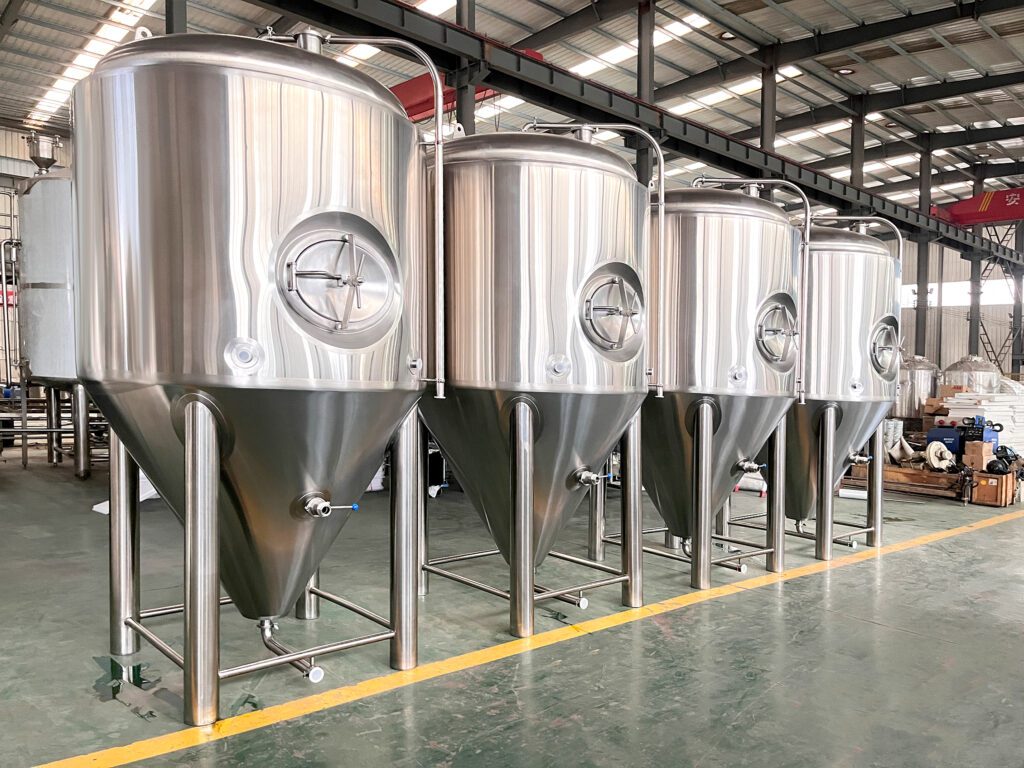
The material and construction figures above are the transferable part. SUS316L versus SUS304 is a genuine decision rather than a marketing upgrade: 316L’s molybdenum content gives better resistance to chloride attack, which matters if your wash water is high in chlorides or you produce wines with aggressive acid profiles. 304 is adequate for many operations and costs less. Ask which grade your quote is based on, because the two are visually identical.
The 80–100 mm polyurethane insulation figure is worth attention at micro scale for a reason that is easy to miss: small tanks have a high surface-area-to-volume ratio, so they gain and lose heat faster than large ones. Insulation matters proportionally more on a 1,000 L vessel than on a 10,000 L one, not less.
Pumps and transfer at micro scale
Pump selection at this size is dominated by gentleness rather than throughput. Must with skins, whole berries, and lees all handle differently from clear wine, and a pump that shears fruit or oxidises wine during racking will undo careful fermentation work.
The questions to put to a supplier: can it handle must with skins or only clear liquid, is it self-priming, can it run in reverse, and how is it cleaned. Detailed pump specifications are not published for MICET’s winery line, so flow rate, inlet size, and motor rating need to be requested for the specific unit.
At 500–2,000 L, gravity flow is a genuine alternative worth designing for. A mezzanine or tank stand that lets you rack by gravity rather than pump reduces both equipment cost and oxygen pickup. It costs floor-to-ceiling height, which is why it has to be decided during site layout rather than added later.
Compared with the compact all-in-one fermentation units commonly marketed to home and hobby winemakers stepping up, commercial micro winery equipment is modular by design — separate vessels, separate transfer equipment, separate temperature control. That modularity is what lets you add a tank next vintage instead of replacing the system.
Where refurbished tanks fit a first-year budget
Refurbished stainless can genuinely reduce first-year capital cost. It fits best where the vessel does simple work: storage and holding tanks, blending vessels, and non-jacketed capacity that does not need precise temperature control.
Refurbished fits less well where the vessel does complicated work. A jacketed fermentation tank with temperature control has more to go wrong — jacket integrity, glycol circuit condition, probe accuracy, valve seat wear. The cost of a failed jacket weld discovered mid-vintage is not measured in the price difference.
Honest scope note: MICET’s published used equipment listings cover brewing equipment — compact brewhouse configurations from 2 to 10 BBL, and 중고 발효 탱크 listed at 3–5 BBL, 10 BBL, 20 BBL, 40 BBL, plus metric sizes of 2T, 4T, and 6T (2,000 L, 4,000 L, and 6,000 L total capacity; 1,800 L, 3,600 L, and 5,400 L working capacity), in SUS304 with glycol jacket and polyurethane insulation, at 0.2 MPa design and 0.3 MPa test pressure.
Those are beer fermentation vessels. The 2T unit at 2,000 L total and 1,800 L working capacity lands within this article’s range on volume, but beer and wine fermenters differ in cone angle, manway placement, cap-management access, and fitting configuration. A beer fermenter can serve as wine storage or as a closed white-fermentation vessel in many cases; it is a poor open-top red fermenter. There is no separately listed refurbished wine tank inventory on the site, so availability for a wine-specific used vessel is a question for quotation.
If you are evaluating a refurbished tank from any source, inspect for: pitting on the interior shell, weld condition at the cone-to-cylinder transition, jacket pressure integrity, valve and fitting condition, and whether the interior finish has been repolished or merely cleaned. Ask what was replaced during refurbishment and what was left as-is.
Certification: check the scope wording, not the logo
This is where winery buyers should read more carefully than brewery buyers, because certificate scope language does not always name wine equipment.
MICET holds a PED Verification, certificate 3N231110.SICS093, issued by Ente Certificazione Macchine Srl under Directive 2014/68/EU with verification to EN 1626:2008, issued November 10, 2023 and valid to November 9, 2028. Its scope wording names brewing equipment, beer equipment, brewery equipment, and pressure vessels.
A second document, the voluntary Verification of Conformity ICR/VC/HM2507146, issued by ICR Co., Ltd., covers brewery equipment, brewing equipment, fermentation equipment, and pressure vessels under PED 2014/68/EU with reference to EN 1626:2008 and EN 10204:2004, issued July 16, 2025 and valid to July 15, 2030. The broader “fermentation equipment” and “pressure vessel” wording is the more relevant of the two for a winery buyer.
Both are organization-level verifications held by the manufacturer. No certificate numbers are disclosed for the wine fermentation tank line specifically, and none are disclosed for the used product lines. If a particular vessel needs documented status for your installation, establish it for that vessel in writing.
One technical point that saves unnecessary worry: many wine fermentation tanks at 500–2,000 L are atmospheric or variable-capacity vessels operating at ambient pressure, which places them outside pressure equipment directive scope entirely. Pressure equipment documentation becomes relevant when a vessel is pressure-rated. Confirm which category your tanks fall into before assuming you need a certificate, or assuming you do not.
Budget: what is published and what is not
No price range is published for winery equipment. The disclosed ranges — microbrewery equipment at 30,000–80,000 USD and commercial brewery equipment from 10 BBL at 50,000–80,000 USD — apply to brewing systems and should not be read across to winery projects. Wine equipment pricing requires a quotation.
I would rather state that than publish an inferred figure. Tank count, stainless grade, jacketing, lid type, and freight vary enough between two micro wineries at the same nominal capacity that a headline range would mislead more than it helps.
What moves a micro winery quote most: number of vessels (usually the largest factor), whether tanks are jacketed, SUS304 versus SUS316L, variable-capacity lids versus fixed, and freight terms. Ask explicitly whether the quote includes a glycol chiller, tank stands, valves and fittings, and installation — these are frequently excluded and frequently assumed.
The misstep: buying tanks before deciding the temperature strategy
마이크로 와이너리 장비 관련 실수의 대부분은 온도 제어를 가장 먼저 내려야 할 설계 결정 사항이 아닌 단순한 부속품으로 취급하는 데서 비롯됩니다.
이 규모에서는 세 가지 방식을 고려할 수 있으며, 이에 따라 구매해야 할 탱크가 달라집니다. 글리콜 칠러를 갖춘 재킷형 탱크는 각 용기별로 정밀한 제어가 가능하지만 비용이 가장 많이 듭니다. 항온실 방식은 모든 용기에 걸쳐 적절한 제어가 가능하고 비교적 저렴한 비재킷형 탱크를 구매할 수 있지만, 모든 용기가 동일한 온도로 유지됩니다. 열용량을 갖춘 단열 양조실을 활용하는 수동형 제어 방식은 장비 비용이 가장 적게 들지만 빈티지별 편차가 가장 큽니다.
재킷형 탱크를 선택하고 나서 글리콜 칠러가 견적에 포함되지 않았다는 사실을 알게 되는 것은 흔히 발생하는 값비싼 실수입니다. 비용 절감을 위해 비재킷형 탱크를 샀다가 수확기 기온이 높을 때 양조실이 발효 온도를 유지하지 못해 화이트 와인의 아로마 특성을 잃게 되는 경우도 마찬가지입니다.
먼저 전략을 결정하고, 칠러가 필요한 전략이라면 칠러 가격을 산출한 뒤 탱크 사양을 결정하세요. 그 반대가 되어서는 안 됩니다.
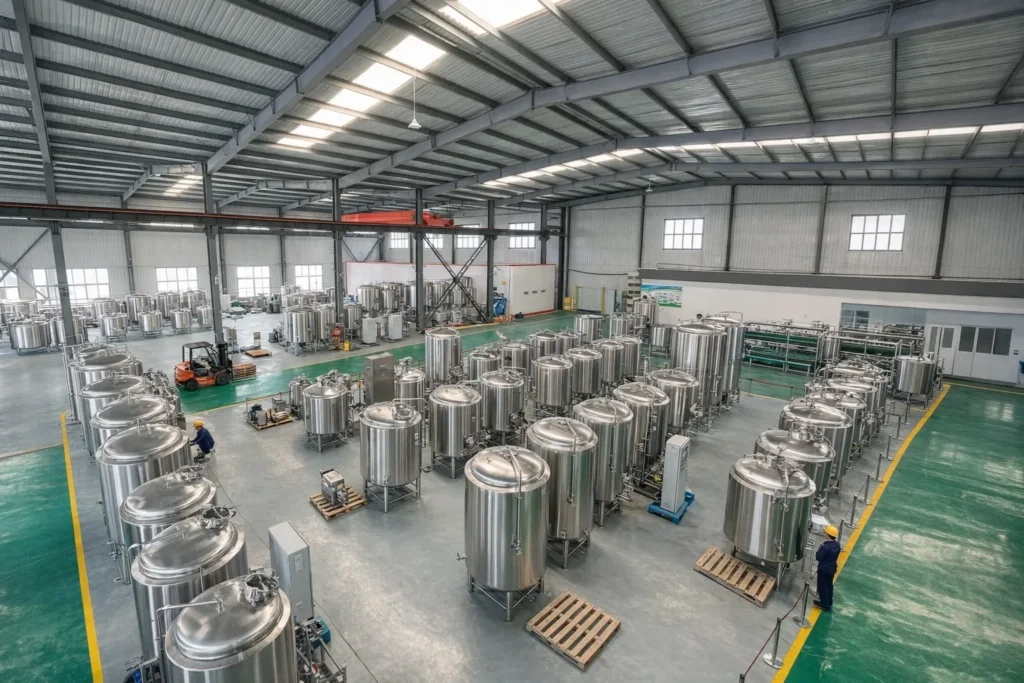
A specification sequence for a micro winery build
- 연간 리터 목표뿐만 아니라 품종 계획과 로트 구조를 확정하세요. 개별 로트의 수에 따라 필요한 탱크 수가 결정됩니다.
- 가장 큰 용기의 크기를 단일 품종의 최대 수확량에 맞추고, 나머지 용량은 더 작은 용기들로 채우세요.
- Choose your temperature control strategy— jacketed plus chiller, controlled room, or passive — and price it as part of the tank decision.
- 탱크 목록을 기능별로 분류하세요: 발효용 탱크, 보관 및 블렌딩용 탱크, 그리고 레드 와인 전용 오픈 탑 탱크 등입니다.
- 수질 분석 결과와 와인 스타일에 따라 스테인리스 스틸 등급을 결정하고, 견적서에 포함된 각 탱크에 어떤 등급이 사용되는지 확인하세요.
- 견적 대상 탱크의 미공개 세부 사양(직경, 다리를 포함한 높이, 맨웨이 종류 및 규격, 덮개 유형, 밸브 규격, 재킷 구역 수)을 요청하세요.
- Measure the delivery route and cellar— doorway clearance, ceiling height, floor drainage, and whether gravity racking is feasible.
- 리퍼브 용기의 경우 점검 및 개보수 기록과 함께 어떤 부품이 교체되었는지 명시된 문서를 요청하세요.
- 칠러, 스탠드, 피팅, 운송 조건, 설치 등의 제외 항목을 서면으로 확인하십시오.
Step 1 is the one that determines whether the rest of the list produces a workable cellar or an expensive set of tanks that do not match your fruit.
다음 단계
If you are specifying this vintage, the immediate action is writing your lot structure down — variety by variety, expected tonnage, expected pick window — and taking that document to a supplier rather than a total litre figure. A quote built from a lot structure will look different from one built from “2,000 litres,” and it will be the one that works in October.
The subject this article has not covered is pressing and destemming, which sits upstream of everything here and has its own scale thresholds. Press capacity determines how fast you can process a pick, and a mismatch between press throughput and tank availability creates a bottleneck on the one day of the year you cannot afford one.
FAQ
Q: How much wine does a 2,000 L micro winery produce?
A: Roughly 2,666 bottles at 750 ml, or about 222 twelve-bottle cases, before accounting for losses during racking and filtration. Fruit intake is typically in the region of 3.0–3.4 tonnes, though yield per tonne varies considerably by variety and press regime.
Q: 맥주 발효 탱크를 와인용으로 사용할 수 있나요?
A: Sometimes. A closed jacketed beer fermenter can work for white fermentation or wine storage, and MICET’s used listings include a 2T unit at 2,000 L total and 1,800 L working capacity. Beer fermenters make poor open-top red fermenters, as cone angle, manway placement, and cap-management access differ. No wine-specific refurbished inventory is separately listed.
Q: 와인 탱크에는 SUS304와 SUS316L 중 무엇이 적합한가요?
A: MICET의 와인 발효 탱크 라인에는 두 등급 모두 제공됩니다. 316L은 염화물 부식에 대한 저항성이 더 뛰어나므로 염화물 함량이 높은 세척수를 사용하거나 산도가 강한 와인을 다룰 때 중요합니다. 304는 비용이 저렴하며 다수의 작업 환경에 적합합니다. 두 재질은 외관상 동일하므로 견적서가 어떤 등급을 기준으로 작성되었는지 꼭 확인하시기 바랍니다.
Q: What does micro winery equipment cost?
A: No price range is published for winery equipment; it requires a quotation. The published microbrewery and commercial brewery ranges apply to brewing systems and should not be read across. Vessel count, jacketing, stainless grade, and lid type are the largest cost drivers.