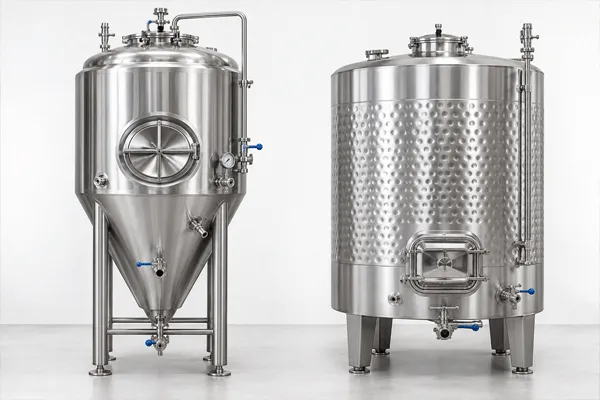
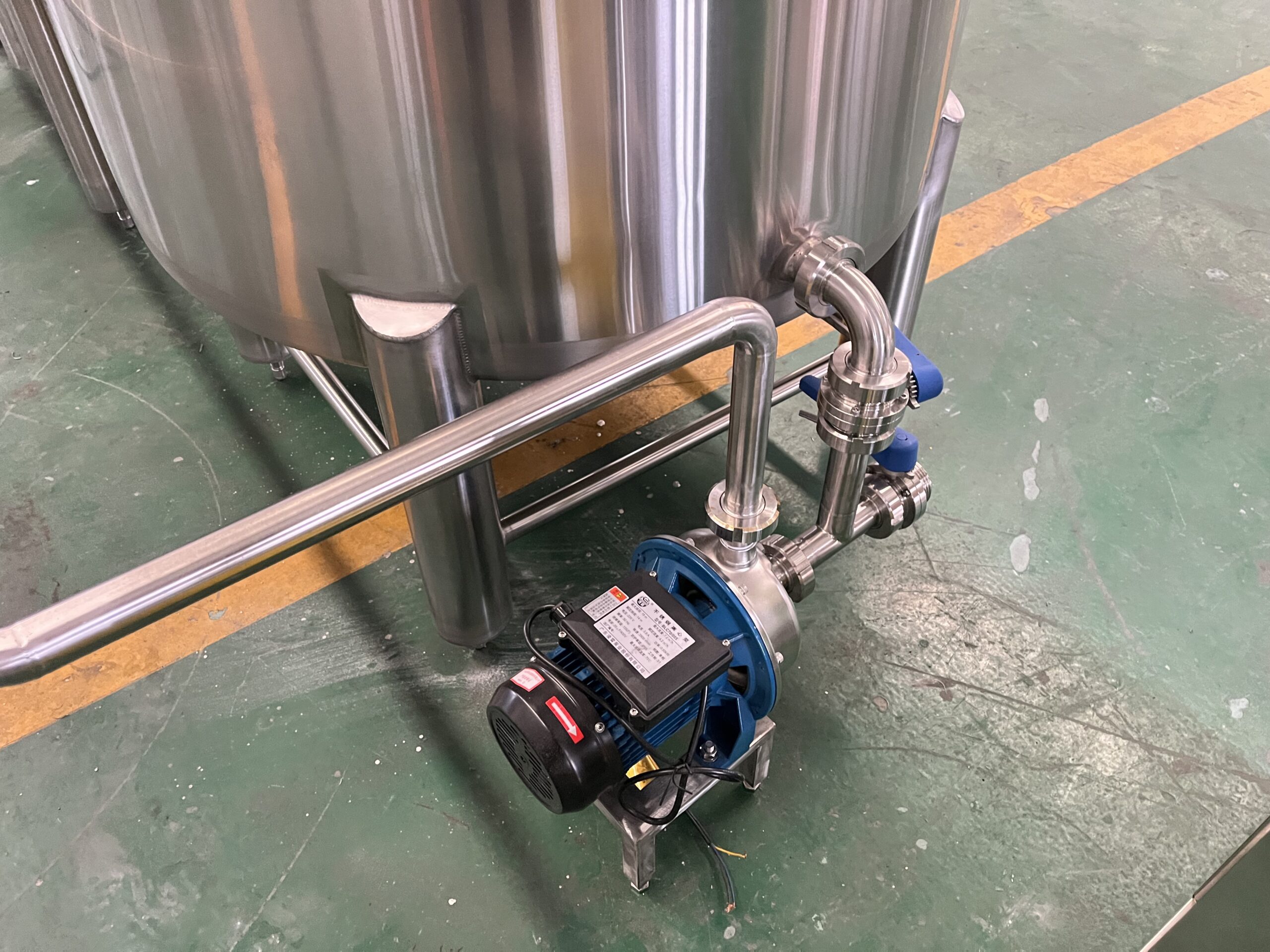
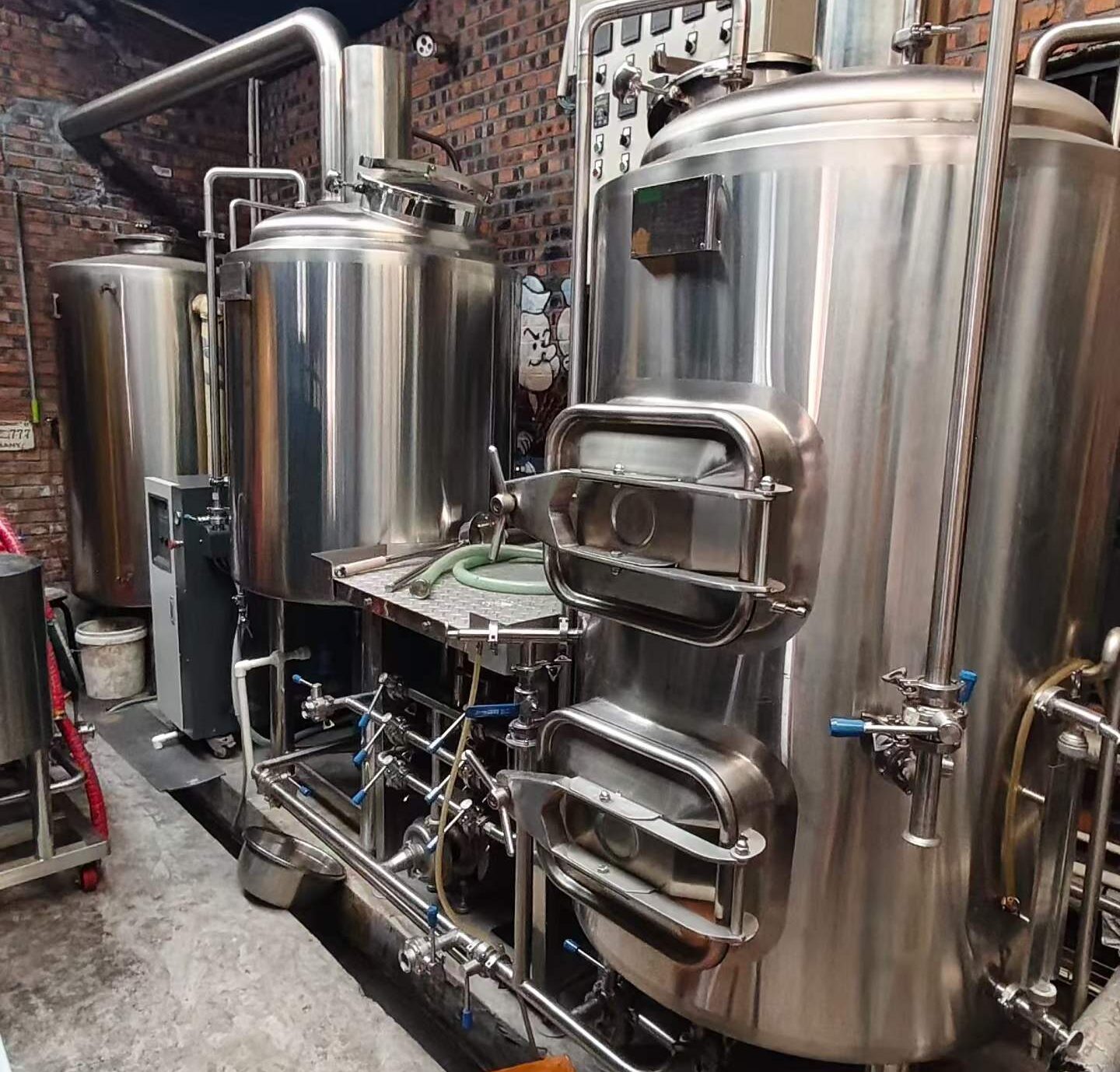
훌륭한 맥주를 만드는 일은 곡물, 홉, 효모, 물을 섞는 것만이 아닙니다. 당화, 끓이기, 냉각, 발효 또는 포장 중에 작은 실수만 생겨도 풍미, 맑기, 알코올 도수와 일관성이 달라질 수 있습니다. 잘 설계된 양조 공정은 양조자가 각 단계를 제어하고 안정적이고 균일한 맥주를 생산하는 데 도움이 됩니다.
맥주 양조 과정은 보통 맥아 분쇄, 당화, 맥즙 여과, 홉을 넣은 맥즙 끓이기, 냉각, 발효, 숙성, 포장으로 이루어집니다. 양조 중 효소는 전분을 발효 가능한 당으로 전환하고, 홉은 쓴맛과 향을 더하며, 효모는 당을 알코올과 이산화탄소로 전환합니다. 구체적인 과정은 맥주 스타일, 양조장 규모, 사용하는 설비에 따라 달라집니다.
홈브루어의 경우 이러한 단계가 몇 개의 작은 용기에서 진행될 수 있습니다. 상업용 양조장에서도 동일한 원리가 적용되지만, 시스템이 생산 효율성, 위생적인 설계, 냉각, 세척, 발효 용량, 배치 간 일관성까지 충족해야 합니다.
스테인리스 스틸 양조 및 음료 시스템 제조업체로서, 당사는 매시 툰과 브루하우스부터 발효조, 글리콜 냉각, CIP, 브라이트 비어 탱크, 패키징 연결부에 이르는 전체 워크플로를 종합적으로 고려합니다. 훌륭한 장비가 양조 기술을 완전히 대체할 수는 없지만, 공정을 더욱 안정적이고 재현하기 쉽게 만들어 줍니다.
맥주 양조 공정의 주요 단계는 무엇인가요?
맥주 양조 공정은 일련의 연결된 단계로 나눌 수 있습니다. 각 단계마다 원료가 특정한 방식으로 변형됩니다.
일반적인 상업 양조 공정은 다음과 같습니다.
맥아 → 분쇄 → 당화 → 여과 → 끓이기 → 와류 분리 → 냉각 → 발효 → 숙성 → 포장
맥주 양조 공정의 각 단계에는 저마다 목적이 있습니다.
| 양조 단계 | 주요 용도 |
|---|---|
| 분쇄 | 맥아 알갱이를 분쇄해 전분을 노출 |
| 매싱 | 전분을 발효성 당으로 전환 |
| Lautering | 곡물에서 당분이 함유된 맥즙 분리 |
| Boiling | 맥즙 살균 및 홉 성분 추출 |
| Whirlpool | 홉 및 단백질 고형분 제거 |
| 냉각 | 맥즙을 발효 온도까지 냉각 |
| 발효 | 효모가 당을 알코올과 CO₂로 전환 |
| Conditioning | 풍미와 맑기 개선 |
| 포장 | 완성된 맥주를 케그, 병 또는 캔에 담기 |
이 과정은 글로 보면 단순해 보이지만, 실제로는 각 단계가 다음 단계에 영향을 미칩니다.
예를 들어 분쇄가 잘못되면 추출 효율이 떨어질 수 있습니다. 당화가 제대로 이루어지지 않으면 전환되지 않은 전분이 너무 많이 남을 수 있습니다. 냉각이 잘못되면 효모의 활동이 지연될 수 있습니다. 발효 온도를 제대로 제어하지 못하면 원치 않는 맛과 향이 생길 수 있습니다.
그렇기 때문에 전문 양조사는 개별 탱크 하나가 아니라 전체 시스템을 고려합니다.
맥아는 어떻게 양조 과정을 시작하는가?
맥아는 맥주를 만드는 데 사용되는 주요 원료 중 하나입니다.
대부분의 맥주는 보리 맥아로 시작하지만, 맥주 스타일에 따라 밀, 호밀, 귀리, 옥수수, 쌀 등 다른 곡물을 사용할 수도 있습니다.
보리는 맥아가 되기 전에 발아 조건을 조절하는 과정을 거칩니다.
곡물을 발아시키면 알갱이 내부의 천연 효소가 활성화됩니다. 그런 다음 곡물을 건조해 제맥 과정을 중단합니다.
이 과정이 중요한 이유는 이 효소들이 나중에 당화 과정에서 전분을 당으로 전환하는 데 도움을 주기 때문입니다.
맥아의 종류에 따라 다음 요소도 달라집니다.
- 색상
- 바디감
- 단맛
- 토스트 풍미
- 캐러멜 풍미
- 로스팅 풍미
페일 에일은 대부분 페일 베이스 맥아를 사용하며 적은 양의 특수 맥아를 조합할 수 있습니다.
흑맥주에는 볶은 맥아(로스팅 몰트)가 더 많이 사용될 수 있습니다.
밀맥주에는 밀맥아가 높은 비율로 들어갈 수 있습니다.
따라서 실제 양조를 시작하기 전부터 곡물 배합이 완성될 맥주의 방향을 결정합니다.
당화 과정에서는 어떤 일이 일어날까요?
당화 과정은 매시 툰이라고 하는 용기에서 분쇄한 맥아와 뜨거운 물을 섞는 것으로 시작됩니다.
곡물의 전분을 발효 가능한 당으로 전환하는 것이 목표이므로, 이는 공정에서 가장 중요한 부분 중 하나입니다.
맥아의 천연 효소가 작용할 수 있도록 매시를 정밀하게 제어된 온도로 유지합니다.
효소의 활성 온도대에 따라 생성되는 당의 종류가 달라집니다.
간단히 말하면 다음과 같습니다.
맥아 전분 + 효소 + 가열된 물 → 발효 가능한 당
당화 온도는 완성된 맥주에 영향을 미칠 수 있습니다.
당화 온도가 낮으면 발효되기 쉬운 맥즙이 만들어져 완성된 맥주가 더 드라이해지는 경우가 많습니다.
당화 온도가 높으면 발효되지 않는 성분이 더 많이 남아 바디감과 단맛이 강해질 수 있습니다.
이 때문에 양조사는 단순히 뜨거운 물을 넣고 기다리기만 하지는 않습니다.
온도 변화 과정이 중요합니다.
상업용 브루하우스의 매시 툰은 다음 요건을 갖추어야 합니다:
- Even heating
- 원활한 혼합
- Accurate temperature control
- 효과적인 단열
- 위생적인 구조
- Easy cleaning
설계가 미흡한 당화 시스템은 국부적인 과열, 불균일한 당화 또는 들쭉날쭉한 추출을 초래할 수 있습니다.
곡물에서 맥즙은 어떻게 분리하나요?
매싱 후 양조사는 곡물박(찌꺼기)에서 액체를 분리해야 합니다.
이 달콤한 액체를 맥즙이라고 합니다.
맥즙에는 곡물에서 추출된 당, 단백질, 미네랄, 풍미 성분이 녹아 있습니다.
이 분리 단계를 흔히 라우터링(lautering)이라고 부릅니다.
일부 양조장에서는 당화와 라우터링(여과)이 별도의 탱크에서 진행되지만, 두 기능이 하나로 통합된 설비도 있습니다.
라우터링 과정에서는 곡물층이 필터 역할을 합니다.
양조사는 맥즙을 모으고, 추가로 당을 추출하기 위해 곡물을 뜨거운 물로 헹구기도 합니다.
이 헹굼 단계를 흔히 스파징(sparging)이라고 부릅니다.
목표는 원치 않는 곡물 껍질 성분이 맥주에 너무 많이 들어가지 않도록 하면서 충분한 양의 추출물을 얻는 것입니다.
라우터링의 품질은 다음 요소에 따라 달라집니다:
- 곡물 분쇄도
- 곡물층의 깊이
- 물의 흐름
- 레이크(교반 날개) 설계
- 여과판 설계
- 스파징 방식
- 맥즙 수집 속도
상업용 양조장에서는 잘 설계된 여과조가 양조 시간을 단축하고 추출 효율을 높일 수 있습니다.
배치마다 절약한 시간이 양조 설비의 전체 생산 능력을 높일 수 있기 때문에 중요합니다.
맥즙을 끓이는 이유는 무엇이며 홉은 언제 넣을까요?
여과가 끝나면 맥즙을 끓이기 위해 끓임 솥으로 옮깁니다.
끓이기는 여러 가지 중요한 역할을 합니다.
다음과 같은 역할을 합니다.
- 맥즙 살균
- 효소 활성 중단
- 맥즙 농축
- Remove some unwanted volatile compounds
- Coagulate proteins
- Extract bitterness from hops
- Develop beer flavor
This is also where the hop becomes a major ingredient.
Hops contain compounds that contribute bitterness, aroma, and flavor.
The timing of hop additions changes their effect.
If hops are added early in the boil, more bitterness is usually extracted.
If hops are added later, more aroma may remain.
A simplified hop schedule might look like this:
| Hop Addition | Typical Effect |
|---|---|
| Early boil | More bitterness |
| Mid boil | Flavor contribution |
| Late boil | More aroma |
| Whirlpool | Strong aroma, less bitterness |
| After fermentation | Dry-hop aroma |
The exact schedule depends on beer style.
An IPA may use a large amount of late hops.
A traditional lager may use a more restrained hop profile.
A pale ale may balance moderate bitterness with citrus, floral, or resinous aroma.
Hop choice affects both aroma and flavor, so the brewer must match hop variety and timing to the target beer.
What Happens After Boiling?
After boiling, the wort usually enters a whirlpool.
The purpose is to separate hop particles and coagulated proteins from the cleaner wort.
The liquid is circulated so solids collect in the center of the vessel.
After clarification, the wort must be cooled quickly.
This matters for both quality and microbiological control.
The hot wort typically passes through a heat exchanger where it is cooled to the required fermentation temperature.
For many ales, the target temperature is higher than for lagers.
A lager yeast generally works at lower temperatures than many ale strains.
Cooling speed matters because the brewer wants to move from hot wort to fermentation temperature efficiently.
Slow cooling may increase contamination risk and can affect beer flavor.
In a commercial brewery, the heat exchanger, cold-water tank, glycol system, pumps, and piping all work together.
The brewhouse should not be viewed as separate from the cold side.
How Does Fermentation Make Beer?
After cooling, the wort is transferred to a fermentation vessel or fermentation tank.
Then yeast is added.
This stage is known as fermentation.
Yeast consumes fermentable sugar and converts it mainly into alcohol and carbon dioxide.
The basic reaction can be simplified as:
Sugar → Alcohol + Carbon Dioxide + Flavor Compounds
But fermentation is more than alcohol production.
Yeast also creates esters, higher alcohols, sulfur compounds, acids, and other substances that affect beer character.
The type of yeast used has a major effect on the finished beer.
Ale Yeast
Ale yeast generally works at warmer temperatures and can produce fruity or complex flavors.
Lager Yeast
Lager yeast works at cooler temperatures and usually produces a cleaner flavor profile.
The primary fermentation stage may take several days or longer, depending on:
- Beer style
- Yeast strain
- Original gravity
- Fermentation temperature
- Tank geometry
- Oxygenation
- Pitching rate
Some strong or specialty beer styles take much longer.
The brewer should not simply wait for a fixed number of days.
They monitor gravity, temperature, pressure, yeast activity, and flavor.
Why Does Fermentation Temperature Matter So Much?
Fermentation temperature has a major impact on beer quality.
If temperature rises too much, yeast may produce unwanted by-products.
If the temperature is too low, fermentation may slow or stop.
Stable temperature control also helps improve consistency between batches.
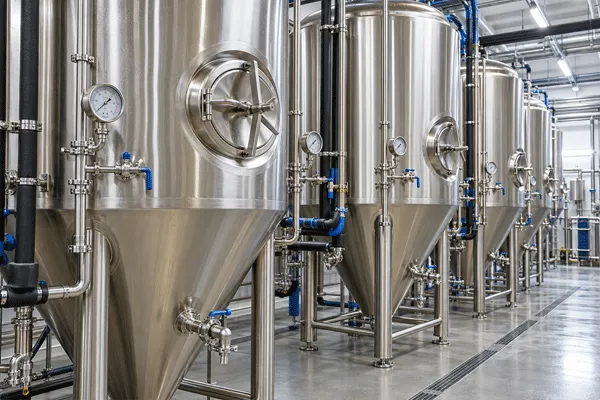
In a commercial brewery, fermentation tanks are usually equipped with cooling jackets connected to a glycol system.
This allows the brewer to control different tanks independently.
A typical fermentation tank may include:
- Cooling jackets
- Temperature probe
- Pressure gauge
- 샘플 밸브
- CIP spray device
- Yeast discharge outlet
- Pressure relief valve
- Sanitary fittings
When fermentation is complete, the beer may be chilled.
This helps yeast and suspended solids settle.
The cold stage also prepares the beer for conditioning, clarification, transfer, or packaging.
A well-designed fermentation system is especially important for breweries producing many batches at the same time.
The brewhouse may make the wort, but the fermentation cellar often determines actual production capacity.
What Happens During Beer Conditioning?
After active fermentation, the beer often enters a conditioning or maturation stage.
This is a period when the beer develops a cleaner and more stable flavor.
During conditioning:
- Yeast may continue to clean up flavor compounds
- Solids settle
- Beer becomes clearer
- Carbonation may develop
- Harsh flavors may soften
For some beers, conditioning is short.
For others, it may take weeks.
A traditional lager often requires longer cold conditioning than many ales.
The process varies by product.
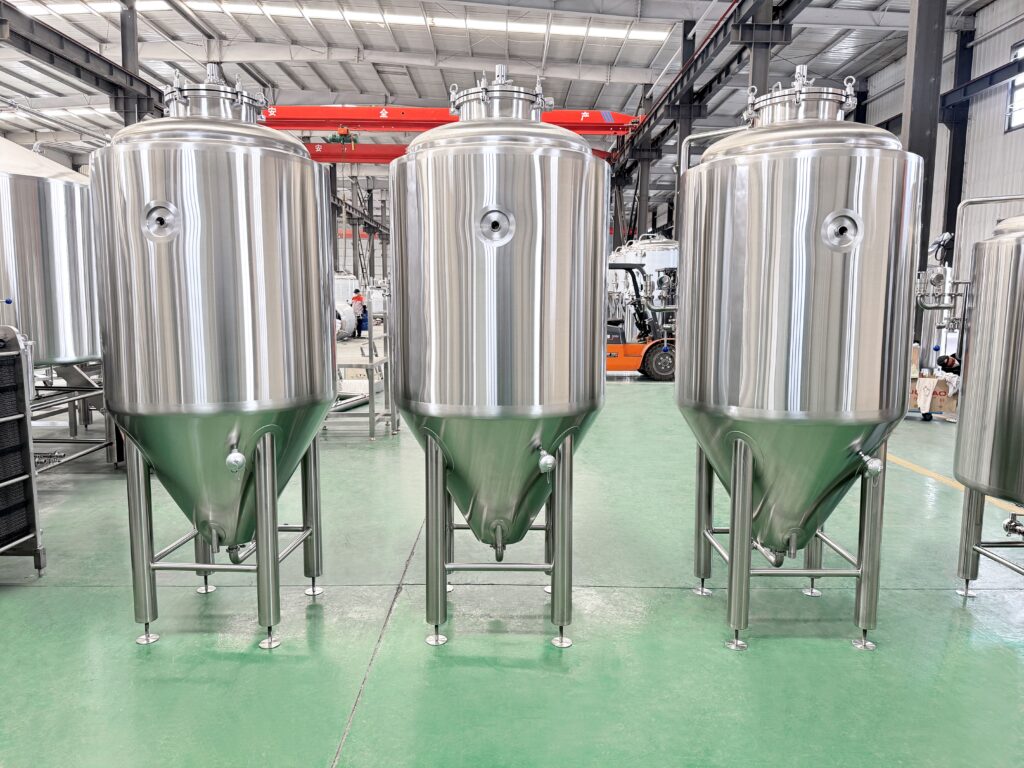
Some breweries condition beer in the same cylindroconical fermentation tank.
Others transfer beer into a bright beer tank.
The best choice depends on:
- Tank availability
- Production schedule
- Beer style
- Packaging method
- Desired clarity
- Carbonation method
For a growing brewery, tank scheduling becomes a major part of production planning.
One slow-conditioning beer can occupy a tank for much longer than a fast ale.
That affects how many batches the brewery can make each month.
How Does the Beer Style Change the Brewing Process?
The same basic process can produce very different beers.
The beer style determines how the brewer adjusts malt, hops, yeast, water, temperature, and time.
For example:
Pale Ale
A pale ale may use pale malt, moderate hop bitterness, ale yeast, and relatively warm fermentation.
Lager
A lager may use similar base ingredients but different yeast, cooler fermentation, and longer conditioning.
American Wheat Beer
An American wheat beer often includes a large amount of wheat and may use a clean ale yeast.
IPA
An IPA usually uses more hops, especially for late aroma additions or dry hopping.
Many craft breweries also add ingredients such as:
- Fruit
- Coffee
- Cocoa
- Spices
- Honey
- Herbs
- Lactose
Some ingredients are added during the boil.
Others may be added after fermentation.
That is why the process varies even though the basic steps remain similar.
좋은 brewing equipment should give the brewer enough flexibility to handle different recipes without making the system overly complicated.
What Equipment Is Needed to Brew Beer Commercially?
A commercial brewery needs more than a kettle and fermenter.
A complete brewing equipment system may include:
Hot Side
- Malt mill
- Mash tun
- Lauter tun
- Brew kettle
- Whirlpool
- Hot liquor tank
- 펌프
- Heat exchanger
Cold Side
- Fermentation tanks
- 브라이트 비어 탱크
- Glycol chiller
- Cold liquor tank
- CIP 시스템
- Process piping
Packaging Side
- Keg washer/filler
- Bottling line
- Canning line
- Labeling equipment
A small brewpub may use a compact 2-vessel brewhouse.
A larger commercial brewery may use a 3-vessel or 4-vessel brewhouse to improve throughput.
This is where capacity planning becomes important.
For example, a brewery may own a 2,000 L brewhouse, but if it only has two 2,000 L fermenters, production will quickly become limited.
A simplified relationship is:
Brewhouse Capacity + Brewing Frequency + Fermentation Time = Required Fermentation Capacity
As a brewery equipment manufacturer, we usually recommend planning the hot side and cold side together.
That reduces the chance of buying a strong brewhouse that spends too much time waiting for an empty tank.
What Does a Real Commercial Brew Day Look Like?
A typical brew day starts before the mash begins.
The brewer prepares the water, checks the grain, confirms the recipe, cleans equipment, and makes sure tanks and utilities are available.
A simplified 1,000 L brewing schedule might look like this:
| Stage | Approximate Activity |
|---|---|
| 분쇄 | Crush malt |
| 매싱 | Mix malt with heated water |
| Lautering | Separate wort |
| Boiling | Boil wort and add hops |
| Whirlpool | Remove solids |
| 냉각 | Cool wort |
| Transfer | Send wort to fermenter |
| Yeast Pitching | Add yeast |
| 청소 | CIP brewhouse |
The exact timing depends on equipment layout and automation.
A highly efficient brewhouse can overlap some steps.
For example, one vessel may be cleaned while another batch is being prepared.
This is one reason larger breweries use multiple vessels.
More vessels can increase brewhouse throughput—but only if the fermentation cellar, cooling capacity, and staff can keep up.
How Long Does the Brewing Process Take?
The actual process of brewing takes longer than one brew day.
The hot-side production may take several hours, but fermentation and conditioning can take days or weeks.
A simple timeline might look like this:
Brew Day
   ↓
Mashing / Lautering / Boiling
   ↓
Cooling
   ↓
Fermentation
   ↓
Conditioning
   ↓
Packaging
For many ales, the entire process can take roughly a few weeks.
Some lagers may take longer.
High-gravity beers, barrel-aged beers, sour beers, and certain specialty beers may require months.
So when planning production, the question is not only:
“How much can the brewhouse brew?”
A better question is:
“How much finished beer can the full brewery produce each month?”
That includes fermentation tank occupancy, conditioning, cleaning, packaging, and downtime.
Why Sanitary Equipment Matters in Craft Brewing
Beer contains sugar, nutrients, yeast, and water.
That means microorganisms can grow if the equipment is not properly cleaned.
Sanitary design is therefore critical.
Commercial stainless steel brewing systems should reduce areas where liquid can remain trapped.
Important details include:
- 매끄러운 내부 표면
- Sanitary welds
- 적절한 배수
- CIP 세정 범위
- 세척하기 쉬운 밸브
- Sanitary fittings
- 올바른 배관 경사
제대로 세척하면 오염을 줄이고 배치 간 일관성을 유지하는 데 도움이 됩니다.
발효 후에는 산소와 미생물 오염으로 완성된 맥주의 품질이 빠르게 저하될 수 있으므로 특히 중요합니다.
이 때문에 전문 양조장에서는 CIP를 선택 사항이 아닌 양조 공정의 일부로 여깁니다.
맥주 양조에 관해 자주 묻는 질문
맥주 양조 공정의 주요 단계는 무엇인가요?
주요 단계는 분쇄, 당화, 여과, 끓이기, 홉 첨가, 월풀 분리, 맥즙 냉각, 발효, 숙성, 포장입니다. 각 단계는 풍미, 알코올 도수, 투명도, 일관성에 영향을 미칩니다.
효모는 어떻게 맥주에 알코올을 생성하나요?
효모는 맥즙에 있는 발효 가능한 당을 소비하고 에탄올, 이산화탄소, 풍미 성분을 생성합니다. 이용 가능한 당의 양과 효모 균주가 최종 알코올 도수에 영향을 미칩니다.
맥주에 홉을 사용하는 이유는 무엇인가요?
홉은 쓴맛과 풍미, 향을 더해 줍니다. 초기에 넣는 홉은 주로 쓴맛을 더하고, 끓이기 후반이나 와류 분리 단계에서 넣거나 드라이 호핑에 사용하는 홉은 대개 더 강한 향을 내는 데 쓰입니다.
맥즙이란 무엇인가요?
맥즙은 맥아를 매싱한 뒤 곡물 고형물을 분리하여 얻는 단 액체입니다. 맥즙에는 나중에 발효 과정에서 효모가 전환하는 당이 들어 있습니다.
에일과 라거의 차이는 무엇인가요?
가장 큰 차이는 대개 효모와 발효 조건에 있습니다. 에일 효모는 일반적으로 더 높은 온도에서 활동하는 반면, 라거 효모는 대체로 낮은 온도에서 활동합니다. 또한 라거는 숙성에도 더 오랜 시간이 걸리는 경우가 많습니다.
맥주 발효에는 얼마나 걸리나요?
발효에 걸리는 시간은 맥주 스타일, 효모, 온도, 비중, 공정에 따라 다릅니다. 많은 에일은 수일 안에 활발한 발효가 끝나지만, 라거와 도수가 높은 맥주는 발효와 숙성에 더 오랜 시간이 걸리는 경우가 많습니다.
마무리: 맥주 양조는 하나의 단계가 아닌 전체 공정입니다
맥주 제조 과정은 각 단계가 이어지는 연쇄 과정입니다.
각 단계는 다음 단계에 영향을 미칩니다.
맥아는 전분을 공급합니다.
매싱 과정에서 전분이 당으로 전환됩니다.
양조자는 당분이 함유된 맥즙을 분리합니다.
끓이기는 맥즙을 준비하고 홉의 성분을 추출하는 과정입니다.
맥즙을 냉각합니다.
효모가 발효를 시작합니다.
그런 다음 맥주를 숙성하고, 맑게 한 뒤, 탄산을 주입하고 포장합니다.
That sounds simple.
But the quality of the final product depends on controlling dozens of small details across the entire process.
For a commercial brewery, this is also why equipment selection should begin with the complete production plan.
A brewhouse should match the fermentation cellar.
The fermentation cellar should match the cooling system.
The cooling system should match the actual tank load.
The packaging line should match finished beer output.
And the complete layout should allow the team to work safely and efficiently.
As a manufacturer of customized stainless steel brewery and beverage systems, we focus on this whole-system approach. The goal is not simply to provide tanks. It is to help build a production flow that supports stable beer quality, efficient brewing, easier cleaning, reliable expansion, and long-term operation.
If you are planning a new brewery or expanding an existing project, useful information includes:
- Target beer styles
- Brewhouse batch size
- Number of brews per day or week
- Annual output target
- 발효 시간
- Required number of fermenters
- Available building dimensions
- 가열 방법
- Cooling conditions
- Packaging method
- Automation level
- Future expansion plan
With those details, the brewing system can be designed around how you actually plan to produce beer.
Key Things to Remember
- Beer brewing usually includes milling, mashing, lautering, boiling, cooling, fermentation, conditioning, and packaging.
- Malt provides the starch and enzymes needed for the brewing process.
- During mashing, enzymes convert starch into fermentable sugar.
- Wort is the sweet liquid separated from the grain.
- Hops add bitterness, flavor, and aroma.
- Yeast converts sugar into alcohol and carbon dioxide.
- Fermentation temperature strongly affects beer flavor and consistency.
- Ale and lager use different yeast behavior and fermentation conditions.
- The fermentation cellar often determines real brewery capacity.
- Conditioning improves clarity, stability, and flavor.
- Sanitary stainless steel equipment and CIP reduce contamination risk.
- A commercial brewery should plan brewhouse, fermentation, cooling, storage, and packaging as one system.
- The best brewing system is not simply the largest one—it is the one that matches your production goals and beer styles.