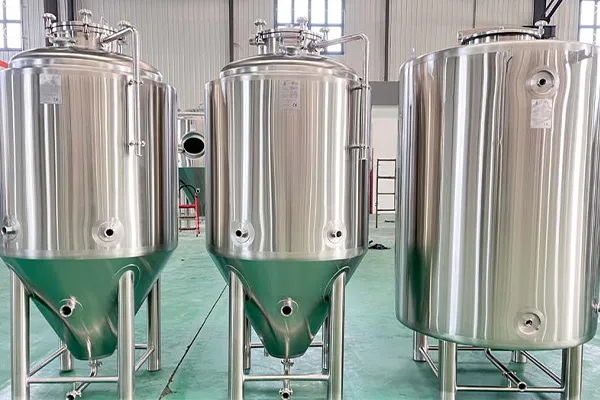
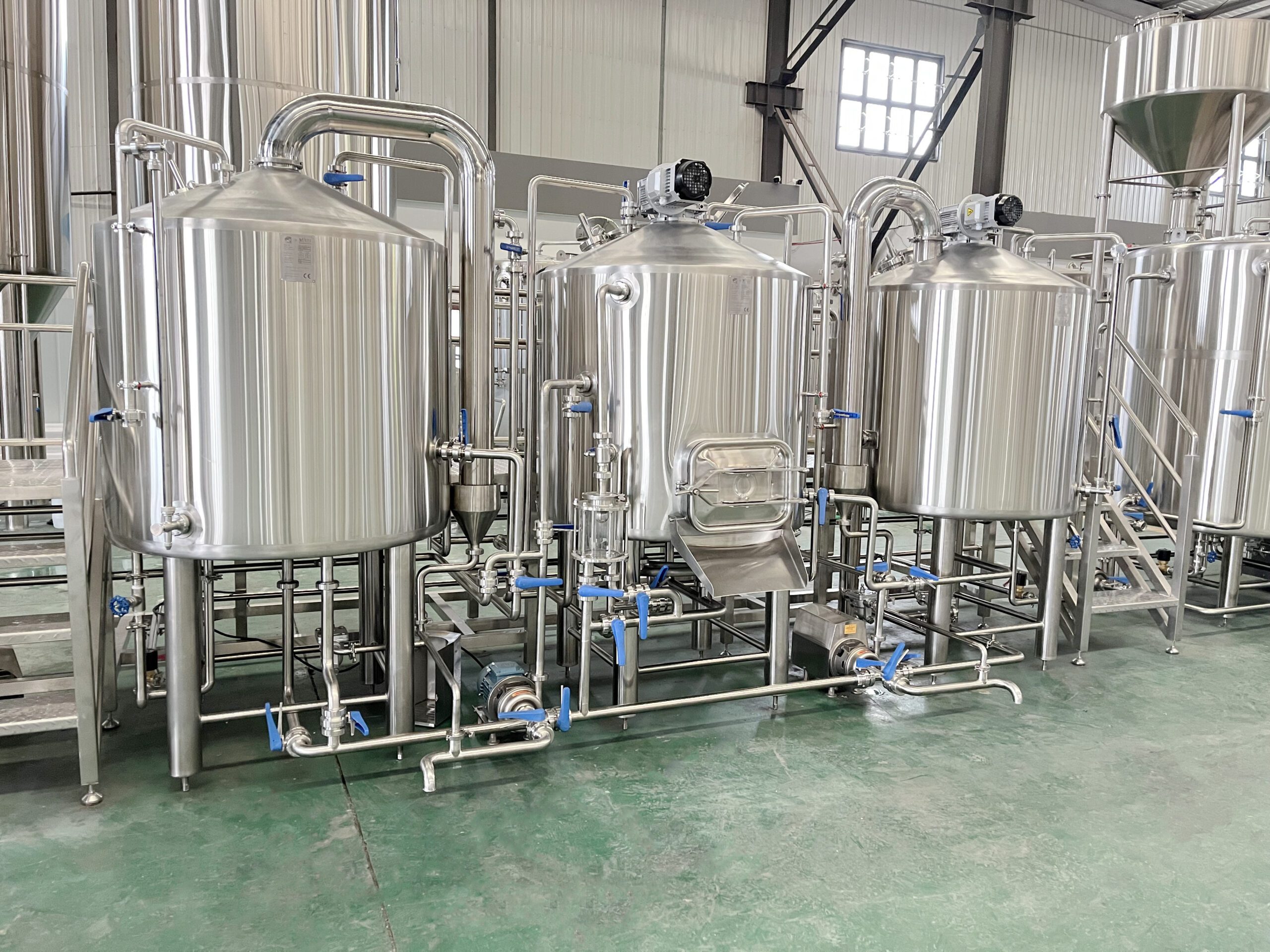
발효 용기는 맥즙이나 과즙이 맥주, 사이다 또는 와인으로 발효되는 용기입니다. 개방형, 밀폐형, 원추형, 목재, 플라스틱, 유리 중 어떤 형식을 선택하느냐에 따라 배치 규모와 온도 조절 방식이 달라지며, 중고 탱크를 구입하는 것이 합리적인지도 결정됩니다.
용기 유형을 실질적으로 구분하는 요소
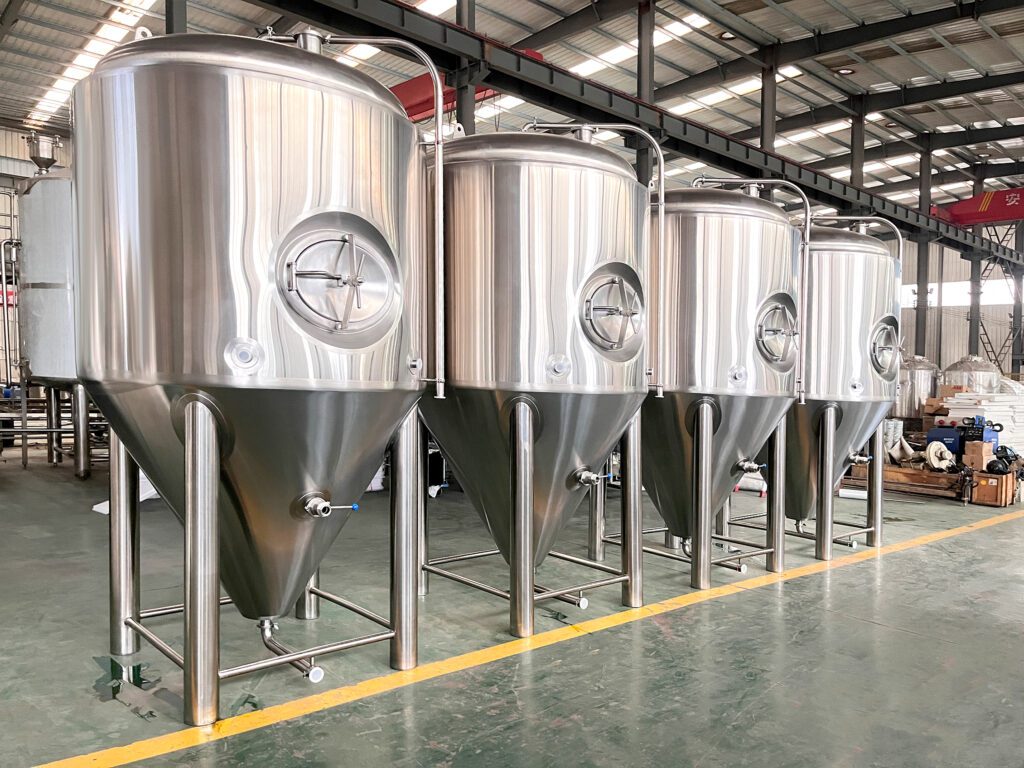
모든 발효조는 같은 기본적인 역할을 합니다. 액체를 담고, 오염을 차단하며, 효모가 활동할 수 있게 하는 것입니다. 달라지는 것은 형태와 재질, 그리고 용기가 압력을 견딜 수 있는지 여부입니다. 바닥이 평평한 개방형 발효조와 원통원추형 유니탱크는 모두 ‘맥주를 발효’하지만, 생산 방식은 완전히 다릅니다. 전자는 에일 효모를 상면에서 수확하고 숙성조 체류 시간을 짧게 가져가도록 설계되었습니다. 후자는 양조장이 같은 탱크에서 여러 종류의 맥주를 매주 생산할 수 있도록 설계되었으며, 이송 암과 압력 방출 밸브가 개방형 용기로는 애초에 할 수 없었던 역할을 수행합니다.
이러한 차이는 대부분의 구매 가이드에서 인정하는 것보다 더 중요합니다. 중고 탱크를 구입하는 것이 좋은 선택인지도 이에 따라 결정되기 때문입니다. 글리콜 재킷이 있고 압력 시험 결과가 양호한 중고 원통원추형 탱크는 기존 설비에 비교적 쉽게 추가할 수 있습니다. 중고 개방형 발효조는 대부분 단순한 강철 구조물이라 고장 날 부분은 적지만 확인할 수 있는 부분도 적습니다.
6가지 형식 한눈에 비교
| 형식 | 일반적인 배치 규모 | 재료 | 가압 및 탄산화 가능 | 제자리 세정(CIP)에 적합 | 중고 설비 조달 적합성 |
| 개방형 발효조 | 5~30 BBL | 스테인리스강 또는 내부 라이닝 처리된 강철 | 아니요 | 수동 세척만 가능 | 적합성이 낮음 — 마모 상태를 확인하기 어렵고 점검할 재킷이 없음 |
| 밀폐형(평저형) 탱크 | 5–60 BBL | SUS304 스테인리스강 | 제한적, 저압만 가능 | 예, 스프레이 볼 포함 | 재킷과 용접부에 이상이 없다면 적합한 선택 |
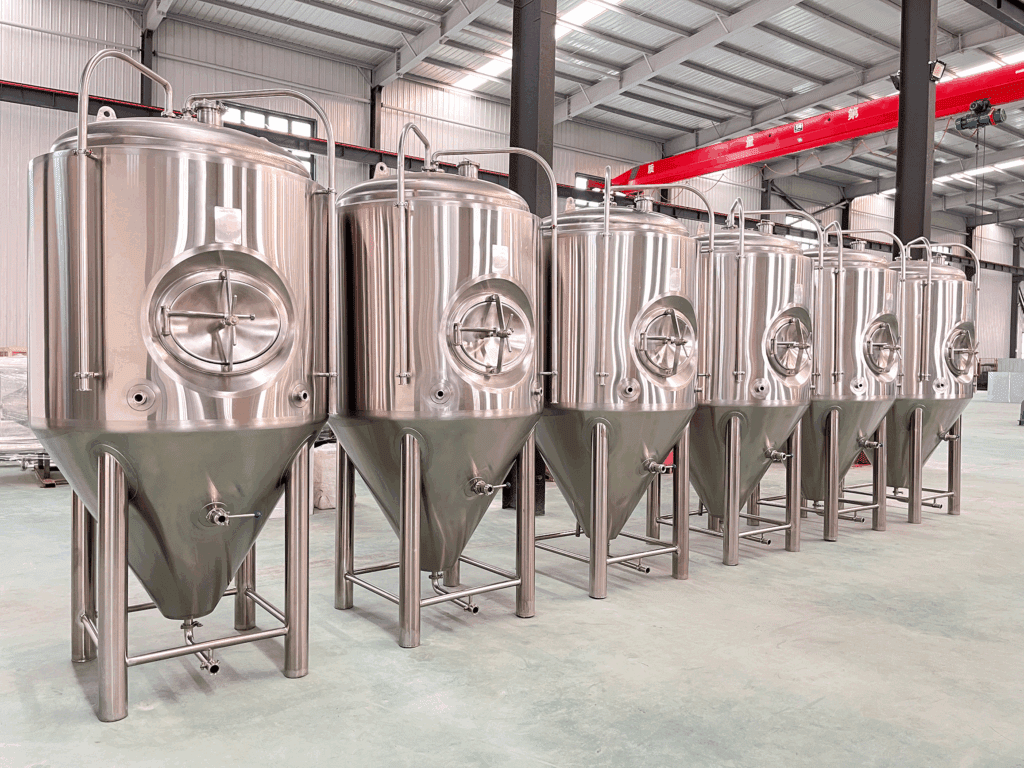
| 원통원추형 유니탱크 | 3~120 BBL 이상 | SUS304/316L 스테인리스강 | 예, 완전한 가압 발효 및 탄산화 가능 | 예 | 가장 적합한 후보 — 브랜드 간 설계가 가장 표준화되어 있음 |
| 목재 푸더 | 10~50 BBL 이상 | 오크 또는 기타 활엽수 목재 | 아니요 | 아니요 — 수작업으로 문질러 닦거나 증기로 세척해야 함 | 적합하지 않은 후보 — 중고품은 목재 상태와 이전 내용물을 확인하기 어려움 |
| Plastic conical | 0.5–7 BBL | Food-grade HDPE/PET | 아니요 | Manual | Case-by-case — scratches and micro-porosity are a real risk in used plastic |
| Glass carboy/demijohn | Under 50 gallons | Glass | 아니요 | Manual | Fine used, but batch scale is nano/homebrew only |
A few things stand out once the formats sit next to each other instead of in separate paragraphs. First, pressure capability is really a one-column split: only the cylindroconical unitank and, to a limited degree, a closed flat-bottom tank can hold CO2 for in-tank carbonation. Second, refurb-sourcing viability tracks almost exactly with how much of the vessel’s condition you can actually inspect from the outside — a jacketed stainless tank tells you a lot through its weld seams and pressure test tag; a foeder or a scratched plastic conical tells you much less.
Where Refurb-Sourcing Actually Makes Sense
This is the question most vessel-type roundups skip, and it’s worth answering directly instead of vaguely: not every format is worth buying used, even at a discount.
- Cylindroconical stainless tanksare the strongest used-market candidates. The geometry is standardized enough across manufacturers that a 10 BBL used unitank from one shop is dimensionally close to one from another, which makes swapping into an existing cellar layout realistic.
- Closed flat-bottom tanksare a reasonable second choice, provided the glycol jacket has been pressure-tested recently and the interior shows no pitting.
- Open fermenterscan be bought used cheaply, but because they’re simpler, there’s also less documentation trail — condition assessment leans heavily on a physical inspection rather than paperwork.
- Wooden foedersare the format we’d steer buyers away from sourcing secondhand unless the prior use (and prior beer style) is fully known. Wood holds onto whatever fermented in it before, which is a feature for a sour program built around a specific foeder and a liability for anyone else.
- Plastic conicals and glass carboysare usually bought new because they’re inexpensive enough that the labor of inspecting a used one for scratches and micro-cracks isn’t worth the savings.
Common Misconception: “Unitank” and “Fermenter” Aren’t Interchangeable
A recurring mix-up in buyer conversations is treating “unitank” as just another word for “fermenter.” It isn’t. A unitank is a cylindroconical vessel engineered to handle both fermentation and the conditioning/carbonation stage that would otherwise require moving the batch to a separate brite tank. Every unitank is a fermenter; not every fermenter is a unitank. An open fermenter or a foeder can never function as a unitank, because neither is built to hold pressure. If a used-equipment listing says “unitank” but the tank has no pressure relief valve or carb stone, that’s worth flagging before purchase, not after installation.
Fermentation Tank Specs Worth Checking Before You Buy
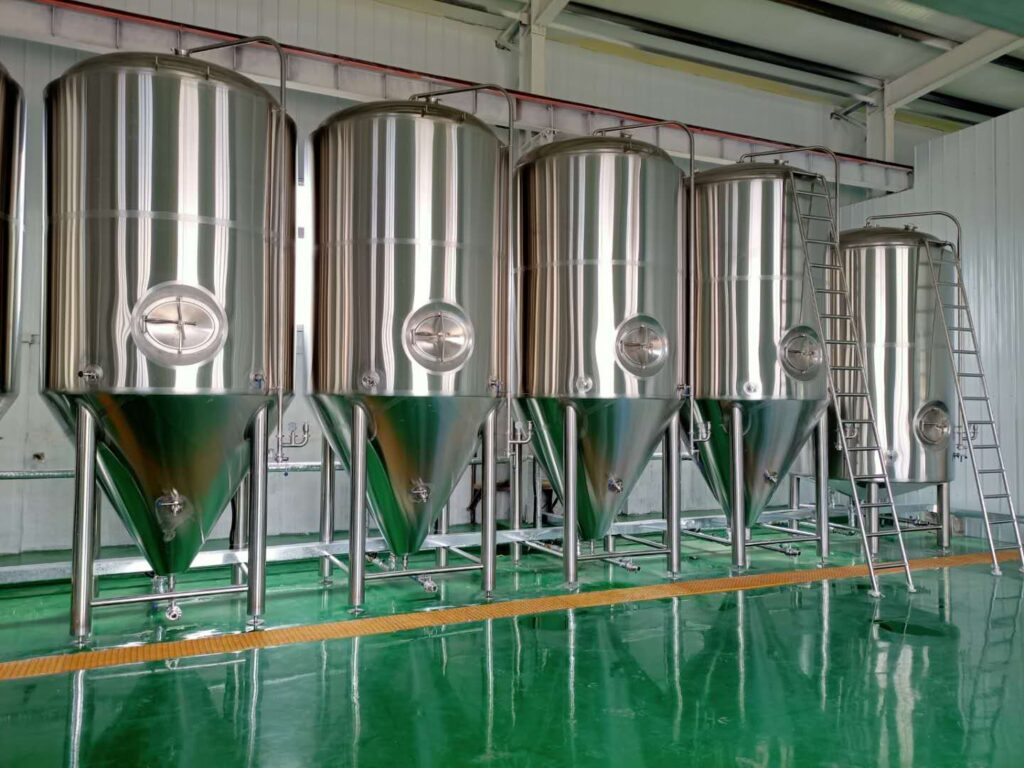
Specs vary meaningfully across brands and even across a single manufacturer’s product line, so treat any single spec sheet as a reference point, not a universal standard. As an example of the range you’ll see in a mid-size stainless fermenter line: batch sizes commonly run from 3–5 BBL up through 10, 20, and 40 BBL formats, alongside metric sizing such as 2,000L, 4,000L, and 6,000L total volume (roughly 1,800L, 3,600L, and 5,400L working capacity to leave headspace for krausen). Construction is typically SUS304 stainless with a glycol jacket and polyurethane insulation, rated for a design pressure around 0.2 MPa and tested to roughly 0.3 MPa.
Two numbers to always ask for on a used tank quote: the design pressure rating and the last pressure test date. Both should be on the mill certificate or test report that came with the original build — if a seller can’t produce either, budget for a new pressure test before the tank goes into service.
Price Ranges by Scale
Pricing depends heavily on batch size, jacket configuration, and whether the tank is sold standalone or as part of a full system. For a rough anchor: a full microbrewery equipment package (brewhouse plus fermentation) tends to run in the 30,000–80,000 USD range, and a minimum-scale commercial system starting around 10 BBL runs roughly 50,000–80,000 USD. Standalone 발효 탱크 outside a packaged system aren’t publicly listed at fixed prices by most manufacturers — expect to request a quote once you’ve settled on capacity, jacket type, and pressure rating.
Pros and Cons You Shouldn’t Skip
No format wins on every axis. Cylindroconical unitanks give you pressure fermentation and single-vessel conditioning, but they cost more per liter of capacity than an open tank and need a trained operator who understands racking arm use and CIP cycles. Open fermenters are cheap and simple to maintain, but they can’t carbonate in-tank and expose the batch to more oxygen risk during transfer. Wooden foeders add flavor complexity that stainless can’t replicate, but they’re the hardest format to keep spotless between uses and the least forgiving of temperature swings. Plastic and glass are the lowest-cost entry point, but neither scales past homebrew or nano volumes without becoming impractical to sanitize consistently.
Where Certification Fits In
For pressure-rated formats — closed tanks and unitanks in particular — a third-party pressure equipment verification matters more than a marketing claim. As one reference point, Ente Certificazione Macchine Srl has issued PED verification (certificate 3N231110.SICS093) for brewing pressure vessels under the EU’s 2014/68/EU Pressure Equipment Directive, tested to EN 1626:2008. That’s the kind of documentation worth asking for on any pressure-capable tank, new or used — not because every seller needs it, but because it tells you the vessel was tested against a defined standard rather than just described as “rated.”
FAQ
Q: Can an open fermenter be converted into a pressure-capable tank later?
A: Not economically. Pressure capability depends on the vessel’s structural design and welds from the start — retrofitting a flat-topped open tank to hold CO2 pressure isn’t a standard modification most fabricators will sign off on.
Q: Is a used cylindroconical tank actually cheaper once you account for reconditioning?
A: It depends on the condition of the jacket and the interior surface. A tank with an intact glycol jacket and no interior pitting can be a genuine discount; one that needs a new jacket or re-polishing can close most of the price gap versus new.
Q: Do wooden foeders need any format-specific insurance or storage conditions?
A: They need stable ambient humidity to prevent the wood from drying and cracking, which is a different requirement than stainless tanks face — this is worth factoring into cellar layout, not just purchase price.
Q: What batch scale is the cutoff where glass and plastic stop making sense?
A: Once a brewery is producing on a consistent commercial schedule rather than pilot batches, most operators move to stainless — glass and plastic conicals become a bottleneck on cleaning turnaround well before they become a quality problem.