Buying wine and beer making supplies from different vendors can lead to incompatible equipment, unnecessary costs, and production delays. A successful beverage business needs more than individual machines. It needs a coordinated production system designed around product quality, capacity, sanitation, and future growth.
Commercial wine and beer production requires properly matched brewing systems, fermentation tanks, processing equipment, cooling systems, cleaning solutions, transfer equipment, and packaging lines. Choosing an experienced equipment manufacturer helps beverage producers integrate these systems, control production costs, maintain consistent quality, and expand capacity as demand grows.
기사 개요
- What Do Wine and Beer Making Supplies Mean for Commercial Producers?
- Can One Facility Produce Both Wine and Beer?
- Which Beer-Making Equipment Should You Source First?
- What Does a Winery Need Beyond a Fermentation Tank?
- Which Fermentation Vessels and Materials Fit Each Product?
- Can Homebrew Kits, Plastic Carboys, and Small-Batch Equipment Scale Up?
- Which Equipment Can Wine and Beer Production Lines Share?
- How Should Cleaning, Sanitary Design, and CIP Be Planned?
- How Do Bottling, Packaging, and Storage Affect Equipment Sourcing?
- How Do You Choose the Right Commercial Equipment Supplier?
1. What Do Wine and Beer Making Supplies Mean for Commercial Producers?
'와인 및 맥주 제조 용품'이라는 표현은 구매자에 따라 전혀 다른 의미를 가질 수 있습니다. 초보자에게는 홈브루잉 키트, 병, 원료, 플라스틱 용기 및 소형 발효 도구를 의미할 수 있습니다. 반면 상업용 생산자에게는 일관된 품질로 음료를 제조하는 데 필요한 모든 기계류와 지원 시스템 전체를 의미합니다.
Commercial buyers should look beyond individual products. A brewery needs equipment for grain processing, mashing, boiling, cooling, fermentation, and packaging. A winery may require grape processing, pressing, fermentation, storage, filtration, and bottling systems.
The difference is important when selecting a supplier. A retail brew supply shop may sell homebrew ingredients and small accessories, while an industrial equipment manufacturer provides engineered systems designed for continuous business operations.
| Buyer Type | Typical Requirements | Main Priority |
|---|---|---|
| 홈브루어 | Small kits, bottles, carboys | Convenience |
| Craft brewery | Brewhouse, fermenters, cooling | Consistent beer quality |
| Commercial winery | Grape processing, wine tanks, pumps | 생산 용량 |
| Beverage startup | 가공 및 발효 시스템 | Investment control |
| Large beverage producer | Integrated production lines | Efficiency and scalability |
For B2B buyers, the most important question is not simply where to buy making supplies. It is whether the supplier can provide equipment that works together as one production system.
At MICET, we focus on customized stainless steel brewing systems, fermentation tanks, and turnkey beverage solutions for global commercial customers.
2. Can One Facility Produce Both Wine and Beer?
Yes. A properly planned beverage facility can produce both wine and beer. This approach is attractive to investors who want to diversify their product range, use existing infrastructure, and serve different customer markets.
하지만 와인과 맥주는 생산 공정이 서로 다릅니다. 맥주 생산은 맥아 준비, 당화, 맥즙 분리, 끓임, 발효 순으로 진행됩니다. 반면 와인 생산은 일반적으로 포도나 과일의 취급, 파쇄, 압착, 발효로 시작됩니다.
A combined facility should therefore use separate product-specific processing equipment where necessary, while planning shared infrastructure carefully.
Potential shared infrastructure includes:
- Water treatment and supply systems
- Certain utility connections
- Building drainage and wastewater systems
- Glycol cooling infrastructure, when properly sized
- Selected packaging equipment, when compatible
- Laboratory and quality-control facilities
Not every piece of equipment should be shared. Fermentation tanks, product-contact hoses, transfer pumps, and processing vessels must be evaluated for material compatibility, cleaning requirements, and contamination risks.
For example, a brewery and winery may use the same general cooling plant, but each vessel needs suitable temperature-control connections and independent process management.
The goal is to create a flexible facility without compromising product quality.
3. Which Beer-Making Equipment Should You Source First?
Beer production depends on a coordinated sequence of equipment. Buying a brewhouse without planning fermentation capacity or cooling can create problems before production even begins.
A commercial beer production system normally includes the following stages:
| Production Stage | 주요 장비 | 기능 |
|---|---|---|
| Malt preparation | Malt mill | 맥아 분쇄 |
| 매싱 | Mash tun | 전분을 발효성 당으로 전환 |
| Lautering | Lauter tun | 곡물에서 맥즙을 분리 |
| Boiling | Brew kettle | Boils wort and supports hop addition |
| 냉각 | Plate heat exchanger | Cools wort before fermentation |
| 발효 | 스테인리스 발효조 | Produces beer through yeast activity |
| Conditioning | 브라이트 탱크 | Clarifies and carbonates beer |
| 포장 | Filling equipment | Packages finished beer |
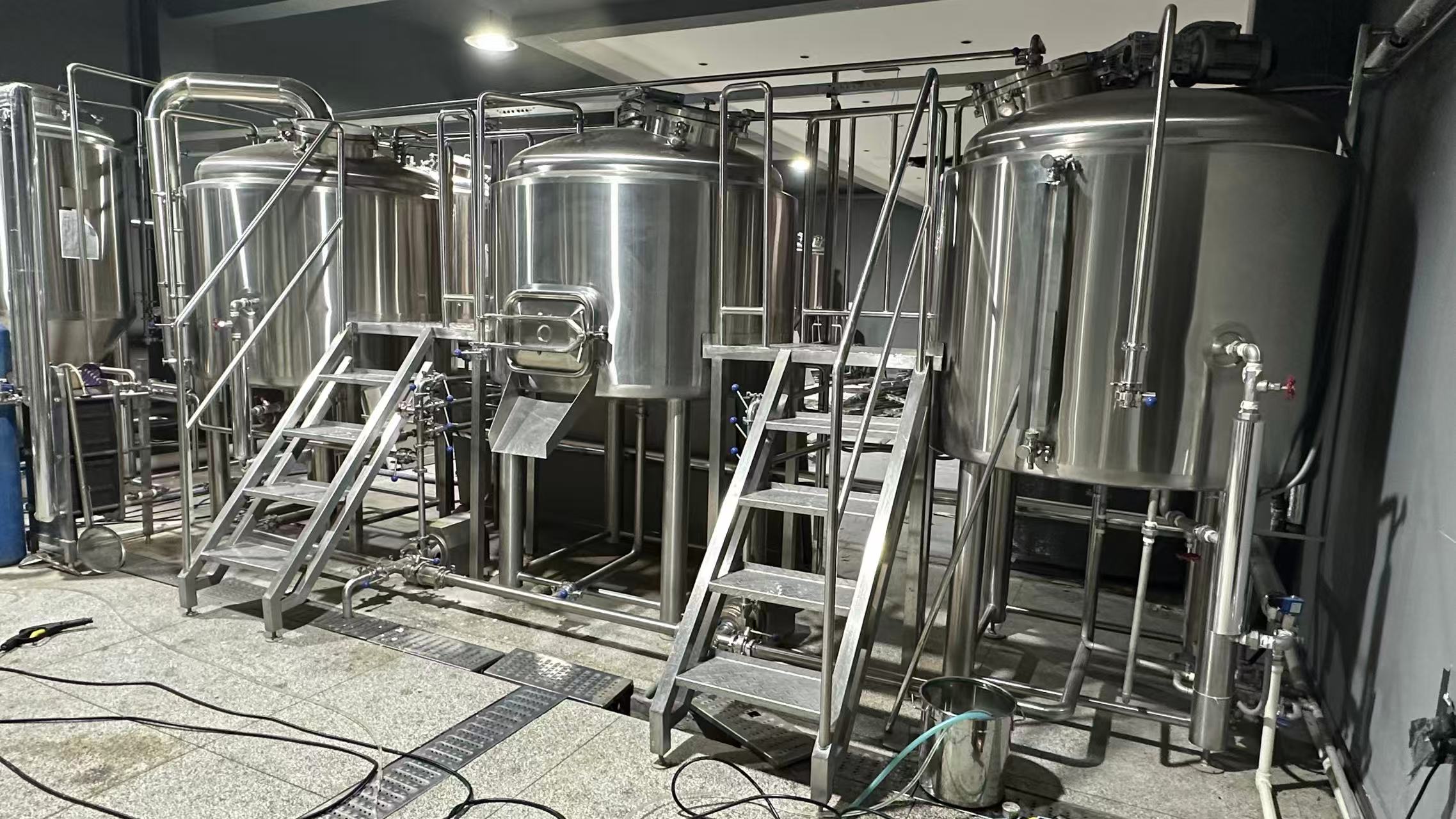
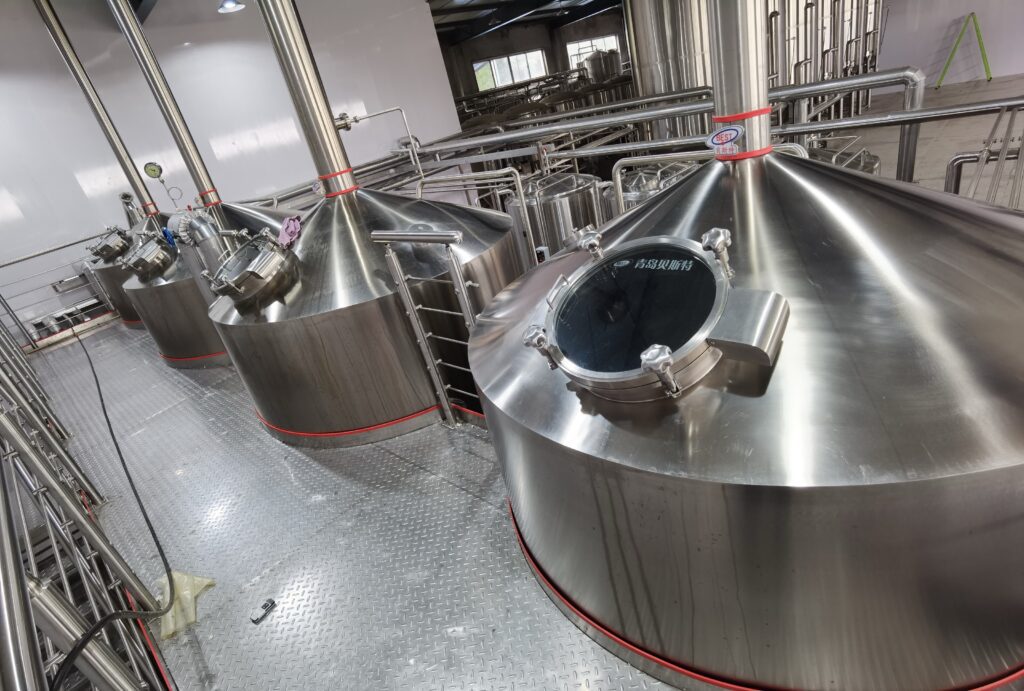
The brewhouse configuration depends on production targets. A small craft brewery may use a two-vessel system, while a larger operation may benefit from three- or four-vessel arrangements.
The fermentation cellar is equally important. Brewers should calculate tank requirements according to weekly brewing frequency, fermentation time, conditioning time, and cleaning schedules.
A brewery that plans to brew several times per week needs enough fermentation capacity to support overlapping batches.
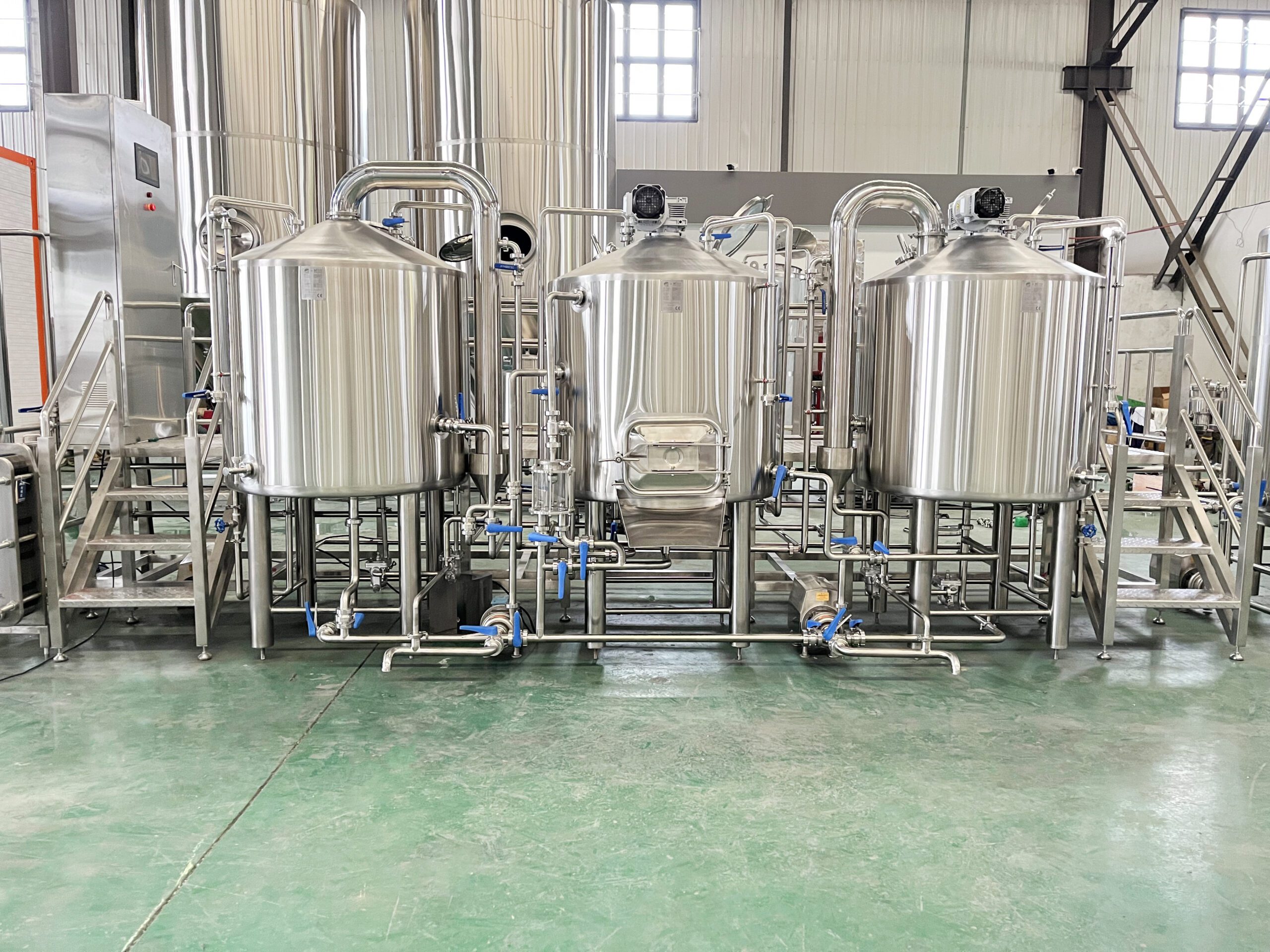
MICET provides customized brewing systems and commercial configurations, including compact 500L brewery solutions. See our 500L Brewery Equipment 당화조/자비조 설비, 발효조, 글리콜 냉각, CIP 및 충진 장비를 갖춘 통합 시스템 구성의 예시를 확인해 보세요.
4. What Does a Winery Need Beyond a Fermentation Tank?
A winery needs more than storage and fermentation tanks. The complete production process starts with raw material handling and continues through processing, fermentation, clarification, storage, and packaging.
For grape wine, the equipment must handle the seasonal arrival of fruit. This creates a special challenge: the processing line needs enough capacity to handle large amounts of grapes during a relatively short harvest period.
A suitable production plan should consider the relationship between grape intake, crushing speed, pressing capacity, available fermentation volume, and cellar space.
과실주 생산자의 경우 사과, 베리류, 체리 및 기타 과일 등 다양한 원료에 맞는 장비가 필요할 수도 있습니다.
와이너리 생산 공정에 맞춘 장비 구성
| Process | Equipment Considerations |
|---|---|
| Grape receiving | Receiving bins and sorting equipment |
| Crushing | Crusher and destemmer |
| Pressing | Suitable wine press |
| 발효 | Stainless steel wine tanks |
| 온도 제어 | Glycol chiller and cooling jackets |
| Transfer | Food-grade pumps and sanitary hoses |
| Clarification | Filtration equipment |
| 스토리지 | Wine storage tanks |
| 포장 | Bottle filling and closing equipment |
올바른 구성은 와인 스타일과 생산량에 따라 달라집니다. 예를 들어 레드 와인 생산에는 포도 껍질과 부유물을 관리하기 위한 특수 접근부와 배치가 필요할 수 있습니다. 반면 화이트 와인 생산은 즙 관리와 정밀한 온도 조절에 더 중점을 둡니다.
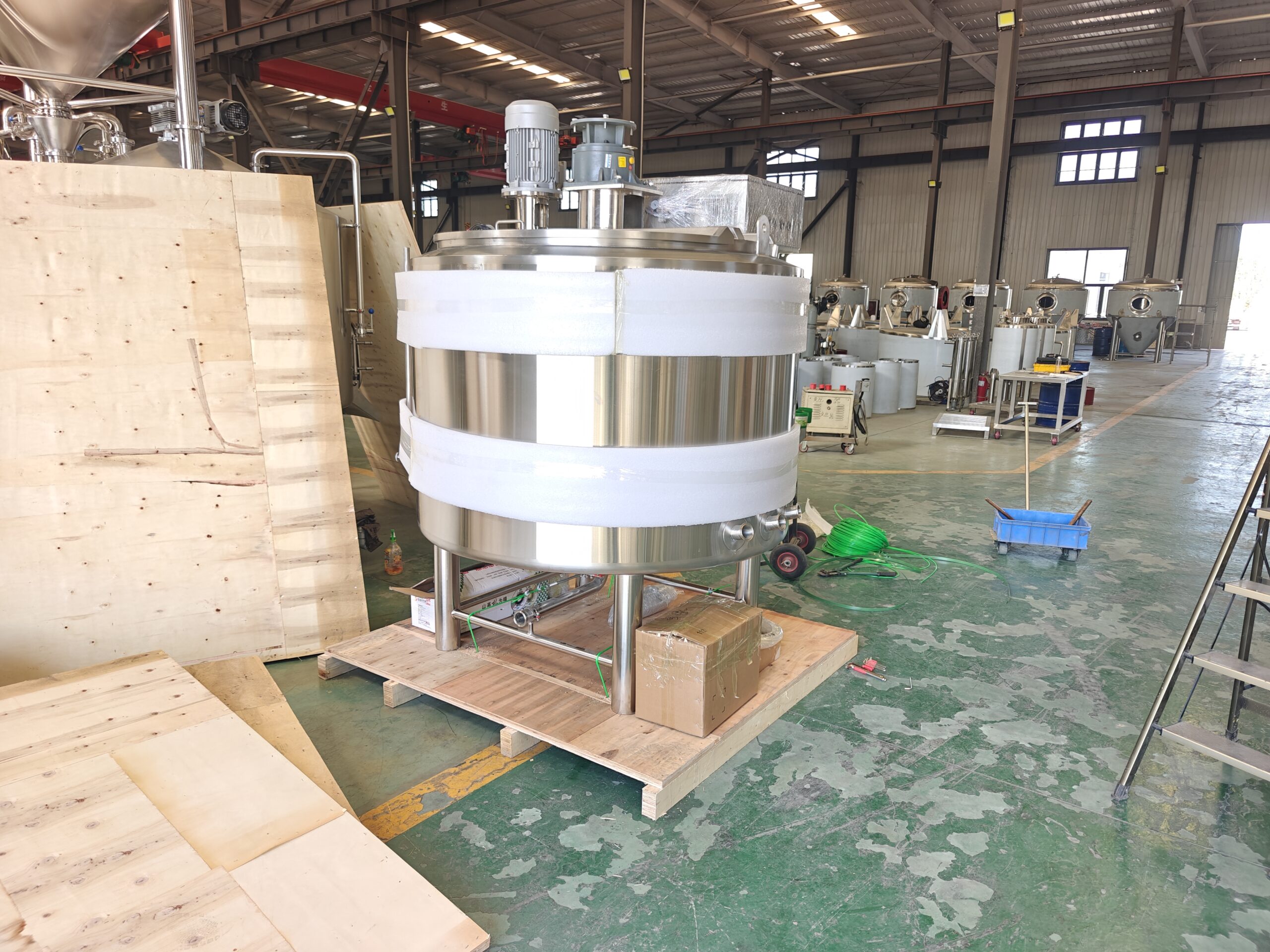
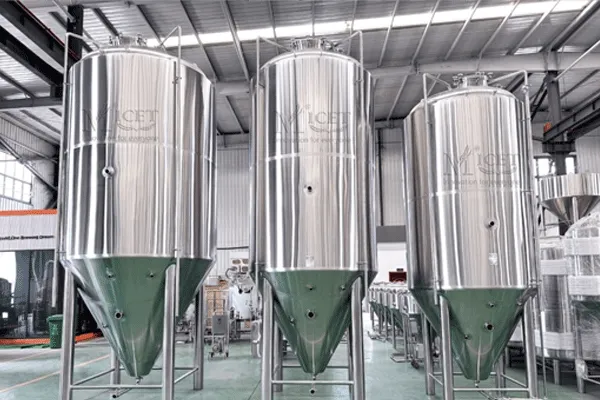
MICET은 포도주, 과실주, 사이다(사이더) 생산을 위한 와이너리 발효 장비를 제공하며, 공식 탱크 용량은 500L부터 20,000L까지 다양합니다. 장비 구성에는 냉각 재킷, 위생 피팅, 맞춤형 연결부가 포함될 수 있습니다.
Explore our 와이너리 발효 장비 range.
5. Which Fermentation Vessels and Materials Fit Each Product?
발효 장비는 맥주 양조장과 와이너리 모두에게 가장 중요한 투자 중 하나입니다.
The vessel must match the beverage, working volume, fermentation conditions, cleaning process, and production schedule.
For home wine making, beginners may use plastic buckets or a glass carboy. These containers are practical for small batches but are not designed to support the requirements of a commercial winery.
Commercial producers generally prefer stainless steel tanks because they offer durability, sanitary surfaces, and options for temperature control.
Comparing Common Fermentation Containers
| Vessel Type | 일반적인 용도 | 상업적 적합성 |
|---|---|---|
| Plastic bucket | Home fermentation | Limited |
| Glass carboy | 소규모 와인 배치 | Limited |
| Plastic fermenter | Homebrew and testing | Limited |
| Stainless steel tank | Commercial wine production | High |
| 재킷형 콘 탱크 | 상업용 맥주 발효 | High |
| Variable-capacity wine tank | Wine fermentation and storage | High |
Material selection also matters.
SUS304 stainless steel is widely used in food and beverage equipment because of its corrosion resistance and hygienic properties. SUS316L may be suitable for applications requiring additional resistance to certain corrosive conditions.
When choosing a tank, consider:
- Stainless steel grade
- Internal surface finish
- Tank wall thickness
- Working and total capacity
- Cooling jacket configuration
- Manway position
- Valve and outlet arrangement
- Cleaning system
- Pressure requirements
A tank should never be selected by volume alone. Its internal design must match the product and process.
6. 홈브루잉 키트, 플라스틱 카보이, 소규모 장비도 규모를 확장할 수 있을까?
Homebrew equipment is useful for testing recipes and learning production techniques. A beginner can start making wine or beer with a relatively simple kit containing a fermentation container, airlock, siphon, measuring tools, and bottles.
와인 제조 키트에는 농축 주스나 기타 원료가 포함되어 있을 수도 있습니다. 홈브루어는 이러한 제품을 활용하여 완전한 포도 가공 라인에 투자하지 않고도 집에서 와인을 만들 수 있습니다.
However, scaling up changes the requirements.
A small carboy may hold only a limited quantity of product. A commercial producer needs larger vessels, reliable temperature control, sanitary transfer equipment, and a repeatable cleaning process.
The same principle applies to beer. A home brew kit may be suitable for recipe development, but a commercial brewery requires a brewhouse, fermentation cellar, cooling system, pumps, and packaging equipment.
Homebrew vs Commercial Production
| Factor | Homebrew | Commercial Production |
|---|---|---|
| Batch size | Small | Hundreds or thousands of liters |
| 발효 | Buckets or carboys | Stainless steel tanks |
| 온도 제어 | Room or small chamber | Integrated cooling |
| 청소 | Manual | Manual or CIP |
| Transfer | Siphon and small hoses | Sanitary pumps and pipelines |
| 포장 | Manual bottling | Commercial filling lines |
| Production planning | Flexible | Scheduled and documented |
Home wine making supplies and retail beer supplies serve a different market from industrial equipment.
A beverage startup should not simply multiply a homebrew recipe and buy larger containers. It should redesign the process around production volume, operating costs, sanitation, and future expansion.
7. Which Equipment Can Wine and Beer Production Lines Share?
A combined wine and beer facility can reduce investment costs by sharing selected supporting systems.
However, equipment compatibility must be confirmed before sharing any process component.
For example, a central water treatment system can supply both production lines if its capacity and water quality meet both processes.
A glycol chiller may also serve multiple jacketed tanks if the cooling load, temperature requirements, distribution design, and control system are correctly calculated.
Some packaging equipment may be adaptable to different beverage products. However, product viscosity, carbonation, filling temperature, bottle dimensions, and cleaning requirements must be considered.
Shared vs Dedicated Equipment
| 장비 | Sharing Potential | Important Consideration |
|---|---|---|
| Water treatment | High | Water quality and capacity |
| Glycol chiller | Possible | Combined cooling load |
| CIP station | Possible | Validated cleaning sequences |
| 펌프 | Conditional | Product compatibility and sanitation |
| Transfer hoses | Generally dedicated | Cross-contamination risk |
| Fermentation tanks | Conditional | Design and process compatibility |
| Packaging line | Conditional | Filling and changeover requirements |
| Storage tanks | Conditional | Product and material compatibility |
For example, a brewery fermenter may not be suitable for every red wine fermentation process because the required access, solids handling, and cap-management design can differ.
Similarly, a wine tank should not automatically be used for pressure fermentation or beer carbonation without checking its pressure rating and fittings.
The best solution is to identify which systems can be shared and which should remain dedicated.
This is where an experienced equipment manufacturer can help reduce unnecessary investment without creating process risks.
8. How Should Cleaning, Sanitary Design, and CIP Be Planned?
Cleaning is a key part of commercial beverage production.
Residue from yeast, sugar, proteins, fruit solids, and other ingredients can remain inside tanks, pipes, valves, and pumps. If operators do not remove it correctly, the next batch may suffer from contamination or unwanted flavors.
A professional production facility should plan cleaning systems alongside the main equipment.
A typical CIP arrangement may include:
- Cleaning solution tanks
- Hot-water supply
- CIP circulation pump
- Supply and return pipelines
- Spray balls or rotary spray devices
- Valves and control components
- Drainage and wastewater connections
The CIP system should be designed around the number of tanks, pipe length, vessel geometry, and cleaning requirements.
Not every vessel requires the same cleaning sequence. Wine tanks and beer fermenters may have different residues and operating conditions.
The cleaning chemicals, temperature, flow, contact time, and final rinse should follow a suitable validated procedure. The Penn State Extension guide to cleaning and sanitizing winery equipment provides additional technical guidance.
Good sanitary design starts before the equipment is manufactured.
Smooth product-contact surfaces, suitable welds, properly selected valves, accessible fittings, and effective drainage all contribute to easier cleaning.
MICET considers these details when configuring stainless steel beverage systems for commercial customers.

9. How Do Bottling, Packaging, and Storage Affect Equipment Sourcing?
Packaging should be included in the initial project plan rather than treated as an afterthought.
A brewery may sell draft beer through kegs, while another business may focus on cans or bottles. A winery usually needs a bottle-oriented packaging process, although other packaging formats may suit certain products.
Each option changes the required equipment and production layout.
Common Packaging Options
| 제품 | Packaging Format | 장비 |
|---|---|---|
| Craft beer | Keg | Keg washer and filler |
| Craft beer | Can | Can filling and seaming line |
| Craft beer | Bottle | Bottle filler and capper |
| Wine | Glass bottle | Wine bottle filler and corker |
| Fruit wine | Bottle or other suitable package | Product-compatible filling system |
| Functional beverages | Bottle or can | Beverage filling and sealing equipment |
Packaging capacity must match upstream production.
Imagine a brewery that can produce more beer than its filling line can package. Finished beer will accumulate in storage tanks, which may affect production scheduling.
The same problem can occur in a winery if fermentation and storage capacity exceed the available bottling capacity.
Storage requirements also vary. Finished wine may need different conditions from beer awaiting distribution.
For this reason, tank quantity, storage volume, packaging speed, and product delivery schedules should be considered together.
MICET also supplies beverage and packaging equipment for integrated production planning. See our 음료 장비 solutions.
10. How Do You Choose the Right Commercial Equipment Supplier?
Choosing a supplier is one of the most important decisions in a beverage project.
A supplier should understand more than the individual machine. It should understand how the equipment works within the complete production process.
A reliable manufacturer should be able to explain its technical specifications, material choices, manufacturing process, customization options, and after-sales support.
What Should You Ask Before Placing an Order?
1. Does the supplier manufacture the equipment?
Understand whether you are dealing with a direct manufacturer, distributor, or trading company.
2. Can the equipment be customized?
Tank dimensions, cooling jackets, manways, valves, and connections may need to match your facility.
3. Are technical drawings available?
Request equipment drawings and layout plans before confirming the order.
4. Can the supplier integrate different systems?
The brewhouse, fermenters, cooling equipment, CIP system, and packaging line should be planned together.
5. What quality checks are performed?
Ask about material verification, weld inspection, pressure testing where applicable, surface finish, and equipment testing.
6. What happens after delivery?
Installation guidance, commissioning support, operating instructions, spare parts, and technical communication are important for overseas buyers.
Why Consider MICET for Your Beverage Production Project?
MICET is a professional brewery and beverage equipment manufacturing plant providing customized stainless steel brewing systems, fermentation tanks, brewhouse systems, and turnkey beverage solutions.
Our equipment solutions serve:
- Craft breweries and microbreweries
- Brewpubs and taprooms
- Commercial beer producers
- Wineries and cideries
- Beverage startups
- Kombucha producers
- Distilleries
- Project investors and engineering contractors
We focus on matching equipment specifications to the customer’s production goals.
Our project support can include equipment configuration, CAD and 3D layout planning, manufacturing, quality inspection, export packing, installation guidance, and after-sales technical support.
We also offer new and selected refurbished equipment options, allowing suitable projects to consider different investment structures.
Rather than simply selling individual machines, our goal is to help customers build practical production systems that support stable operation and future expansion.
Planning a new brewery, winery, or combined beverage facility?
Contact MICET with your product type, expected capacity, facility dimensions, and project budget. Our engineering team can help evaluate the equipment configuration and develop a solution that matches your production requirements.
Frequently Asked Questions
What equipment is needed to make both wine and beer commercially?
A combined facility generally needs a beer brewhouse, wine processing equipment, fermentation tanks, cooling systems, pumps, cleaning equipment, storage vessels, and suitable packaging machinery. Some utilities may be shared, while product-specific equipment should remain separate.
Can one manufacturer supply both wine and beer making equipment?
Yes. Some professional beverage equipment manufacturers provide both brewery systems and winery equipment. Buyers should check whether the supplier has the technical capability to design each process rather than simply offering general-purpose tanks.
What is the difference between homebrew supplies and commercial brewing equipment?
Homebrew supplies are designed for small batches and manual operation. Commercial brewing equipment is designed for larger production volumes, sanitary operation, repeatable processing, integrated cooling, and efficient cleaning.
Is stainless steel better than plastic for commercial fermentation?
Stainless steel is generally preferred for commercial production because it is durable, hygienic, easy to maintain, and suitable for integration with cooling and CIP systems. Plastic containers may still be useful for small-scale testing and certain applications.
Can brewery equipment also be used for wine production?
Some tanks and supporting systems may be suitable for both applications, but compatibility depends on the vessel design, material, fittings, pressure rating, and cleaning requirements. Open-top red wine fermentation, for example, may require different tank access and solids-handling arrangements from beer fermentation.
How do I calculate the equipment capacity needed for a new beverage factory?
Start with your expected annual output, batch size, production frequency, fermentation duration, storage time, and packaging schedule. Then calculate the required working volume and number of vessels. Also consider cleaning time, seasonal demand, and future expansion.
주요 내용
- Wine and beer production require different process-specific equipment, even when operated in one facility.
- Commercial equipment planning should focus on complete production systems rather than individual making supplies.
- A brewery needs a coordinated brewhouse, fermentation cellar, cooling, cleaning, and packaging arrangement.
- A winery needs equipment matched to grape or fruit handling, pressing, fermentation, storage, and bottling.
- Stainless steel tanks are generally more suitable than homebrew plastic containers for commercial production.
- Some utilities and supporting systems can be shared when properly engineered.
- Product-contact equipment must meet appropriate sanitation and compatibility requirements.
- Packaging capacity should match fermentation and storage capacity.
- A qualified manufacturer should provide technical drawings, customization, quality inspection, and after-sales support.
- Planning for future expansion can reduce unnecessary equipment replacement and project costs.
The right commercial beverage equipment is not simply a collection of machines. It is a coordinated investment in production quality, operating efficiency, and long-term business growth.