표면적인 가격만 보고 공급업체를 선택하면 펌프가 누락되거나 냉각 용량이 부족해지거나 설치 책임이 불분명해질 수 있습니다. 견적마다 포함 범위가 다르면 비교는 어림짐작에 불과해집니다. 체계적인 RFQ를 제공하면 모든 공급업체에 동일한 기준을 부여하여 계약 체결 전에 기술적 공백을 분명하게 파악할 수 있습니다.
수제 맥주 장비 공급업체를 비교하려면 생산 목표량, 브루하우스 사양, 탱크 요구 사양, 유틸리티, 패키징 요구사항, 인도 범위를 포함한 동일한 견적 요청서(RFQ)를 각 업체에 발송하십시오. 그런 다음 단순한 표기 가격뿐만 아니라 유효 용량, 재질, 포함된 장비, 제외 항목, 테스트, 설치, 보증, 총 프로젝트 비용을 비교해야 합니다.
기사 개요
- 수제 맥주 장비 공급업체마다 견적이 다른 이유는 무엇일까요?
- 양조 장비 RFQ에는 어떤 정보를 포함해야 할까요?
- 브루하우스, 매시 턴, 케틀 사양은 어떻게 비교할까요?
- 어떤 스테인리스 스틸 및 제작 표준을 요청해야 할까요?
- 발효조, 브라이트 탱크, 냉각 및 CIP 사양은 어떻게 명시해야 할까요?
- 어떤 보조 장비와 필수 연결 설비가 포함되어야 하는가?
- 자동화, 제어 시스템 및 테스트는 어떻게 비교해야 할까요?
- 병, 케그, 캔 및 드래프트 패키징 요건 중 중요한 것은 무엇일까요?
- 장비 가격, 납기 및 보증 조건은 어떻게 비교해야 하는가?
- 양조 설비 계약을 체결하기 전에 무엇을 확인해야 할까요?
1. 수제 맥주 장비 공급업체마다 견적이 다른 이유는 무엇인가?
여러 수제 맥주 양조 설비 공급업체에 문의할 때, 구매자는 가격 차이가 매우 큰 견적을 받는 경우가 많습니다. 어떤 공급업체는 완전한 양조 시스템을 제안하는 반면, 다른 공급업체는 주요 스테인리스 스틸 탱크만 포함하기도 합니다. 하지만 두 곳 모두 자신의 제안을 '완전한 양조장 패키지'라고 설명할 수 있습니다.
이는 심각한 문제를 야기합니다. 더 낮은 견적가가 반드시 더 적은 프로젝트 비용을 의미하는 것은 아닙니다. 누락된 펌프, 냉각 장비, 전기 배선, 세척 시스템, 설치 서비스 등을 별도로 구매해야 할 수도 있습니다.
첫 번째 단계는 모든 공급업체가 동일한 기술 요구 사양을 기준으로 견적을 제시해야 함을 이해하는 것입니다.
예를 들어 1,000L 유효 용량의 브루하우스가 필요한 양조장이라면 공급업체가 견적을 낼 때 다음 중 무엇을 기준으로 하는지 명확히 해야 합니다:
- 1,000L 공칭 탱크 용량인지 유효 작업 용량인지의 여부
- 완전한 브루하우스인지 개별 탱크인지의 여부
- 발효 탱크 및 브라이트 탱크
- 글리콜 냉각 및 온도 제어 장치
- CIP 세척 장비
- 펌프, 밸브, 배관 및 피팅
- 포장 및 충진 설비
- 설치 및 시운전 지원
소매용 홈브루 키트나 BIAB 양조 구성은 전문 상업용 양조 시스템과는 용도가 다릅니다. 소규모 맥주 키트는 레시피 개발에는 유용하지만, 산업용 설비 견적을 평가할 때 기준으로 삼아서는 안 됩니다.
목표는 단순히 제품 가격을 비교하는 것이 아니라 완전한 기술 솔루션을 비교하는 것입니다.
2. 양조 장비 견적 요청서(RFQ)에는 어떤 정보를 포함해야 하는가?
잘 작성된 견적 요청서(RFQ)는 제조업체가 견적을 준비하기 전에 프로젝트를 정확히 파악하는 데 큰 도움이 됩니다. 정보가 부족하면 아무리 경험이 많은 공급업체라도 용량, 유틸리티, 설비 구성을 임의로 추정할 수밖에 없습니다.
공급업체에 문의하기 전에 간단한 프로젝트 개요를 준비하세요.
| 견적 요청서(RFQ) 정보 | 제공해야 할 세부 정보 |
|---|---|
| 프로젝트 유형 | 신규 양조장, 브루펍, 증설 또는 교체 |
| 음료 | 수제 맥주 및 양조 예정 맥주 스타일 |
| 배치 용량 | 300L, 500L, 1000L, 2000L 또는 BBL |
| 연간 생산량 | 예상 연간 생산량 |
| 양조 빈도 | 하루당 배치 수 및 주당 양조 일수 |
| 발효 | 필요한 탱크 수량 및 유효 용량 |
| 포장 | 병, 캔, 케그 또는 드래프트 |
| 자동화 | 수동, 반자동 또는 자동 |
| 건물 | 평면도, 층고 및 가용 공간 |
| 유틸리티 | 전압, 주파수, 용수, 가열 및 냉각 |
| 예산 | 예상 투자 범위 |
| 일정 | 목표 제작 및 설치 일정 |
향후 생산 계획도 함께 설명해야 합니다. 스타트업의 경우 초기에는 콤팩트한 양조 시스템이 필요할 수 있지만, 향후 몇 년 이내에 추가 발효조나 포장 용량이 필요할지 여부를 고려해야 합니다.
MICET에서는 단순히 용량 수치 하나만으로 장비를 추천하기보다, 이러한 세부 사항을 활용하여 프로젝트 전체를 면밀히 파악합니다. 당사의 맞춤형 스테인리스 스틸 양조 시스템, 발효 탱크 및 턴키 솔루션은 고객의 생산 목표와 시설 환경에 맞추어 구성할 수 있습니다.
간단한 RFQ 요청 템플릿
각 공급업체에 다음과 같은 정보를 보낼 수 있습니다:
- 프로젝트 위치 및 회사 소개
- 목표 배치 크기 및 연간 맥주 생산량
- 선호하는 브루하우스 구성
- 발효 탱크 수량 및 용량
- 요구되는 스테인리스 스틸 등급
- 가열 및 냉각 선호 방식
- 포장 형태
- 자동화 요구사항
- 건물 도면 및 유틸리티 정보
- 요청 납품 일정
이를 통해 모든 공급업체에 공통된 기준점을 제공하고 불필요한 커뮤니케이션을 줄일 수 있습니다.
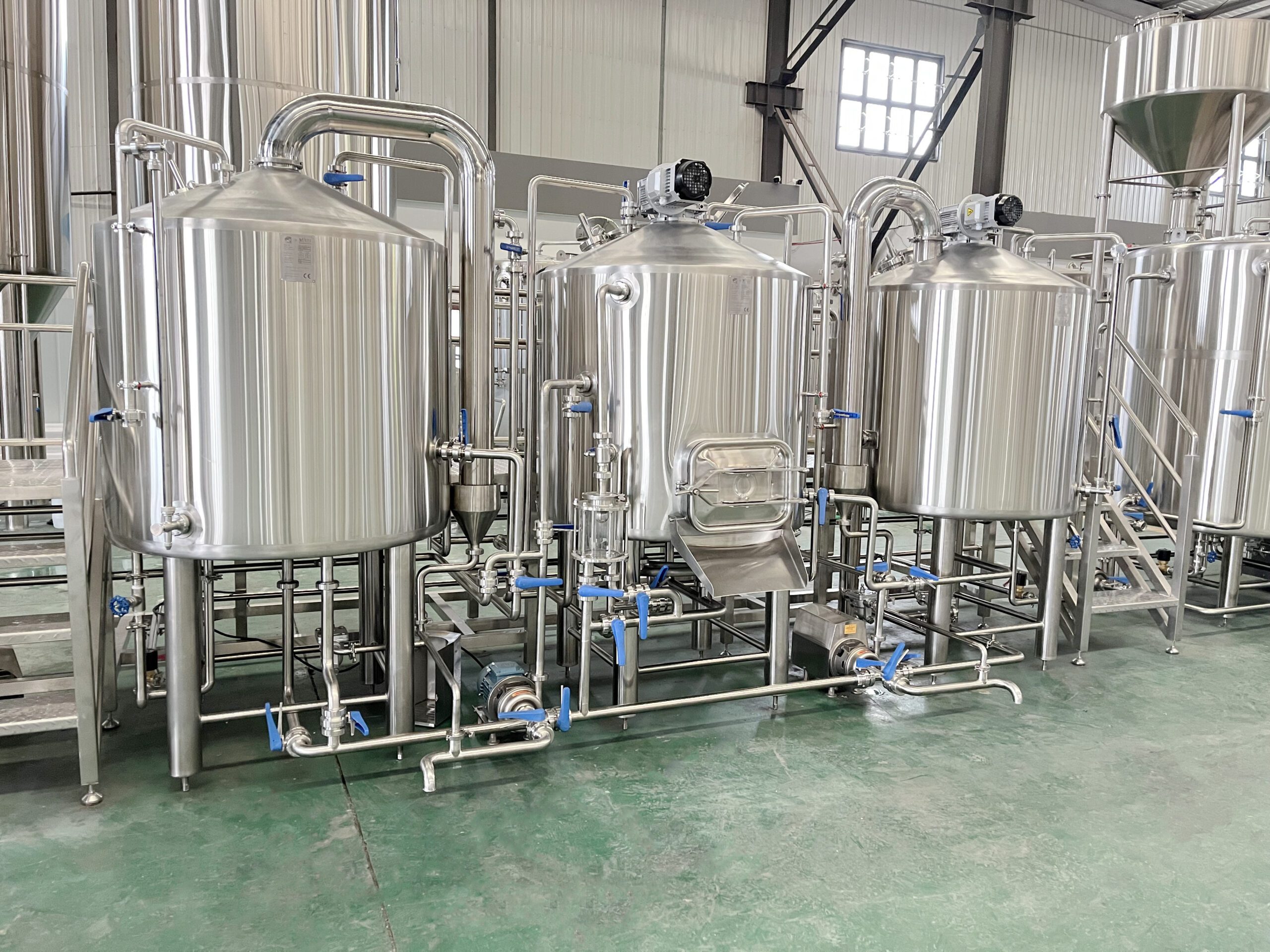
3. 브루하우스, 매시 턴, 케틀 사양은 어떻게 비교할까요?
브루하우스는 양조장의 핵심입니다. 브루하우스의 설계는 생산 속도, 맥즙 품질, 에너지 소비량, 그리고 작업자가 완료할 수 있는 배치 수에 영향을 미칩니다.
그러나 한 공급업체의 1,000L 브루하우스가 다른 공급업체의 1,000L 시스템과 동일한 실제 생산량을 낸다고 볼 수는 없습니다.
공급업체에 유효 용량, 총 탱크 용량, 예상 맥즙 생산량 및 운영 가정을 명확히 구분하여 명시하도록 요청하십시오.
주요 양조 베슬 비교
| 장비 | 주요 사양 |
|---|---|
| Mash tun | 유효 용량, 가열 방식, 교반기, 단열 |
| Lauter tun | 가저판, 레이킹 시스템, 배수구 |
| Brew kettle | 유효 용량, 가열 용량, 증기 배출구 |
| Whirlpool | 접선 방향 인입구, 분리 설계, 배수구 |
| Hot liquor tank | 용량, 가열 방식, 단열, 온도 제어 |
| Heat exchanger | 냉각 용량, 플레이트 면적, 연결부 |
베슬의 수 또한 양조 워크플로에 영향을 미칩니다.
A two-vessel system combines selected functions to reduce the footprint and initial equipment investment. A three-vessel system separates more process stages, which may improve scheduling flexibility. A four-vessel arrangement may be suitable for more complex recipes or higher production demands.
어느 구성이 무조건 더 낫다고 할 수는 없습니다. 올바른 선택은 생산 빈도, 가용 공간, 레시피 요구 사항 및 작업자의 업무량에 따라 달라집니다.
유용한 참고를 위해 MICET의 다음 제품들을 비교해 보십시오. 300L Three-Vessel Craft Beer Brewing System 그리고 1000L Three-Vessel Craft Beer Brewing Equipment.
제안서를 비교할 때는 공급업체에 당화, 여과, 자비 및 맥즙 이송 단계가 어떻게 연계되어 작동하는지 설명을 요청하십시오. 우수한 기술 제안서라면 단순히 탱크 명칭만 나열하는 데 그치지 않고 전체 양조 공정을 보여주어야 합니다.
4. 어떤 스테인리스 스틸 및 제작 표준을 요구해야 하는가?
스테인리스 스틸의 품질은 전문 양조 장비의 장기적인 성능을 결정짓는 주요 요인입니다.
그러나 탱크가 식품 등급의 스테인리스 스틸로 제작되었다는 설명만으로는 충분하지 않습니다. 구매자는 명확한 소재 및 제작 사양을 요구해야 합니다.
주요 자재 및 제작 세부 정보
| 사양 | What to Confirm |
|---|---|
| Material grade | SUS304 or SUS316L, according to application |
| Inner shell thickness | Actual thickness in millimeters |
| Outer shell | Material and thickness |
| Surface finish | Internal polishing requirements |
| Welding | Welding process and inspection requirements |
| 절연 | Type and thickness |
| Cooling jacket | Structure, coverage, and design conditions |
| Pressure rating | Design, working, and test pressure where applicable |
| Fittings | Sanitary connection types and dimensions |
The internal surface deserves particular attention. Poor welds, rough areas, and difficult-to-clean connections may allow product residue to remain inside the vessel.
For breweries, sanitary design should support effective cleaning and inspection. The EHEDG Hygienic Design Principles provide a useful reference for buyers reviewing food-processing equipment design.
Pressure-rated vessels require additional attention. Ask the supplier which design code and local requirements apply to the project, and request documentation for the specific equipment rather than relying on a general company certificate.
The ASME Boiler and Pressure Vessel Code is one important reference for projects where ASME pressure-vessel construction is required.
Do not compare tanks based on appearance alone. Compare documented materials, construction, pressure requirements, and cleaning design.
5. How Should You Specify Fermenters, Brite Tanks, Cooling, and CIP?
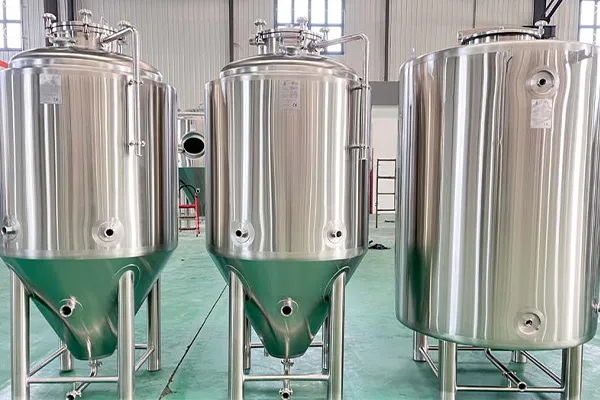
The fermentation cellar can become a major production bottleneck if its capacity does not match the brewhouse.
For this reason, suppliers should quote the fermentation system according to your actual production schedule.
Do not simply request four fermenters without explaining their intended working volume or how often you plan to brew.
For each fermenter, specify:
- Working and total capacity
- Tank dimensions
- Stainless steel grade
- Internal and external shell thickness
- Cooling jacket arrangement
- Insulation requirements
- Temperature sensors
- Manway and sampling valves
- CIP spray ball
- Pressure rating, where required
- Bottom outlet and yeast discharge arrangement
Brite tanks should be specified separately. Their requirements may include carbonation stones, pressure controls, cooling jackets, sampling connections, and packaging outlets.
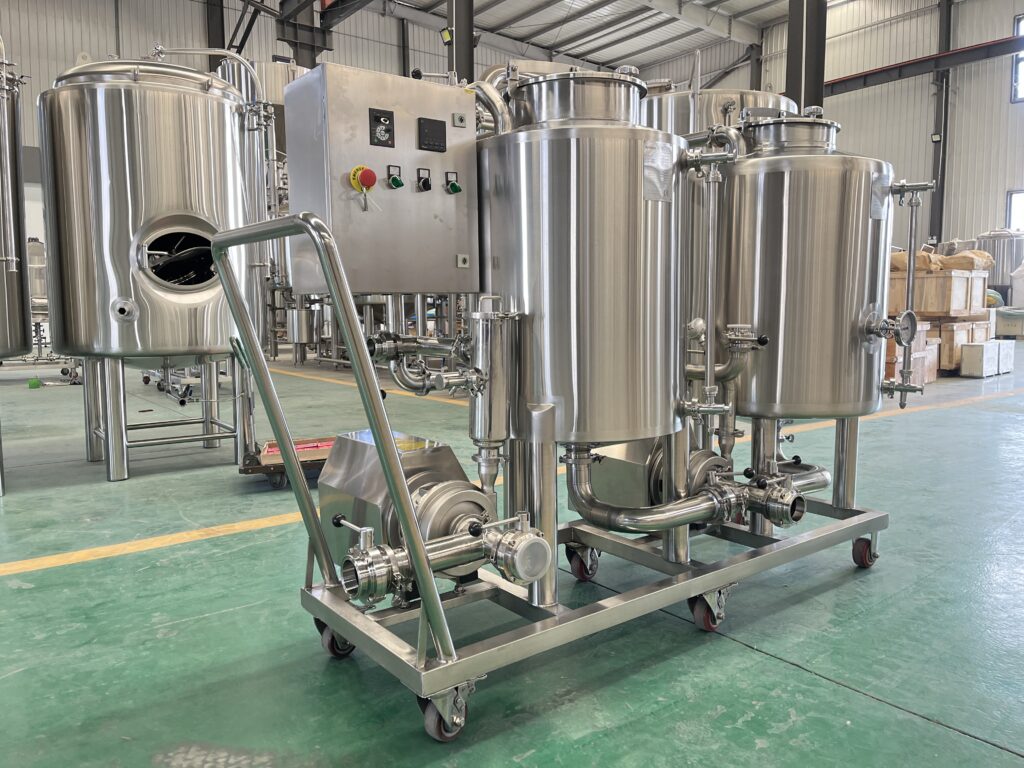
Cooling and CIP must be quoted as connected systems
A fermenter with a glycol jacket cannot provide effective cooling without a correctly sized chiller, glycol circulation pump, and distribution system.
Ask each supplier to explain the cooling load assumptions and how the chiller supports simultaneous fermentation, cooling, and other operations.
The CIP system also needs to match the number and size of vessels. Request details about cleaning tanks, pumps, circulation flow, pipelines, spray devices, and control arrangements.
MICET provides commercial fermentation tanks, bright beer tanks, cooling systems, and cleaning solutions as part of customized brewery projects. Buyers can explore our Fermentation Tank Equipment range when preparing their RFQ.
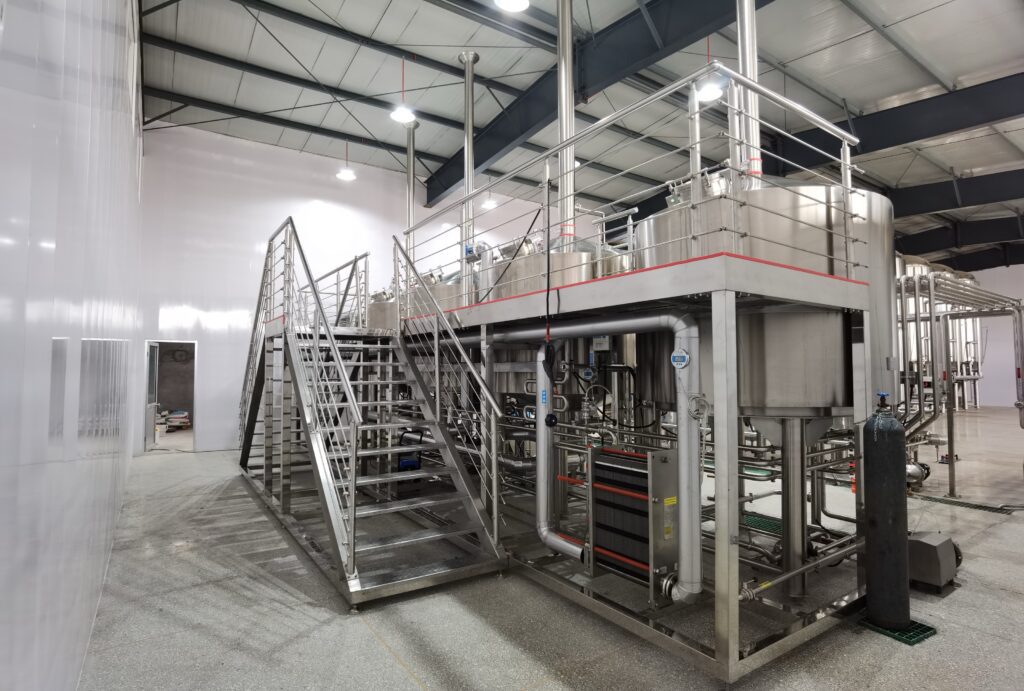
6. What Auxiliary Equipment and Essential Connections Should Be Included?
A brewery needs more than a brewhouse and fermenters. Supporting equipment connects the production stages and helps operators move ingredients, wort, beer, water, and cleaning solutions.
When comparing suppliers, pay close attention to auxiliary equipment because it is often excluded from basic quotations.
| 장비 | Procurement Details |
|---|---|
| Malt mill | Capacity, motor power, roller configuration |
| 펌프 | Flow rate, motor power, material |
| Plate heat exchanger | Heat exchange area and cooling performance |
| Glycol chiller | Cooling capacity and operating conditions |
| Glycol tank | Working volume and insulation |
| CIP skid | Tank quantity, pump capacity, controls |
| Water treatment | Required treatment capacity |
| Steam boiler | Heating capacity and local utility compatibility |
| Air compressor | Pressure and air demand |
| CO2 system | Supply and connection requirements |
| Piping | Material, diameter, and installation scope |
| Valves and fittings | Type, size, quantity, and connection standard |
Small components matter too. Tubing, gaskets, clamps, valve handles, sensors, and spare parts should be included in the equipment schedule.
For example, a quotation may include the main pumps but exclude the sanitary fittings needed to connect them to the tanks. Another supplier may include complete piping and connection accessories.
The difference affects both cost and installation time.
Ask for a complete Bill of Materials (BOM) showing the quantity, specification, and supply responsibility for each item. If the project includes a mobile service cart, access platform, or maintenance equipment, list those separately as well.
This makes it easier to identify missing items before production begins.
7. How Do You Compare Automation, Control Systems, and Testing?
Automation affects how operators control the brewing process. It can improve repeatability, reduce manual work, and make production easier to monitor.
However, more automation does not always mean better equipment.
A small craft brewery may work well with a manual or semi-automatic system. A larger production facility may benefit from PLC control, HMI operation, variable-frequency drives, and automatic process sequences.
When comparing suppliers, ask them to provide:
- Control panel specifications
- PLC and HMI configuration
- Temperature and pressure sensors
- Pump and motor control
- Valve operation method
- Alarm and safety functions
- Manual override options
- Electrical diagrams
- Operating instructions
- Automation testing scope
What should be tested before shipment?
A Factory Acceptance Test (FAT) helps buyers check agreed equipment functions before shipment.
The test plan should match the equipment and contract. It may cover:
- Equipment quantity and appearance.
- Material and specification verification.
- Welding and surface inspection.
- Motor and pump operation.
- Sensor and controller response.
- Valve and connection checks.
- Control panel operation.
- Pressure or leak testing where applicable.
- Documentation and packing inspection.
Do not simply write “FAT included” in the purchase contract. Define what will be tested, what records will be supplied, and which party must approve the results.
For automated brewing systems, request a demonstration of the agreed operating sequence. The brewer should be able to understand how the system handles each stage and what happens when an alarm occurs.
8. Which Bottle, Keg, Can, and Draft Packaging Requirements Matter?
Packaging is another area where equipment quotations can differ significantly.
A brewery selling mainly through its taproom may prioritize kegs and draft service. A brewery supplying retailers may need bottle or can filling equipment.
Before requesting a quotation, decide which packaging formats you will use during the first stage of operation.
| Packaging Format | 주요 장비 | Key Requirements |
|---|---|---|
| Bottle | Rinser, bottle filler, capper | Filling accuracy and oxygen control |
| Can | Can filler and seamer | Filling performance and sealing |
| Keg | Keg washer and filler | Cleaning and filling sequence |
| 드래프트(생맥주) | Keg system and dispensing equipment | Pressure, temperature, and line design |
| Growlers | Suitable filling equipment | Filling hygiene and handling |
If your business plans to sell beer in bottles, specify the bottle size, filling speed, filling method, and bottle closure type. Also confirm whether bottle caps, cappers, rinsing equipment, labeling, and packaging accessories are included.
For keg and draft operations, check couplers, filling connections, cleaning equipment, and gas requirements.
MICET supplies 맥주 포장 장비 for bottle, can, and keg applications. Share your brewhouse capacity and packaging plans so the filling equipment can be matched to the production system.
9. How Should You Compare Equipment Prices, Delivery, and Warranty?
Once technical proposals are received, the next step is commercial comparison.
The most common mistake is selecting the lowest price without checking the full scope.
A better approach is to create a quotation comparison sheet.
Supplier quotation comparison template
| Evaluation Item | Supplier A | Supplier B | Supplier C |
|---|---|---|---|
| Brewhouse configuration | |||
| 작업 용량 | |||
| Fermentation tanks | |||
| Stainless steel grade | |||
| 냉각 시스템 | |||
| CIP 시스템 | |||
| Pumps and fittings | |||
| Control system | |||
| Packaging equipment | |||
| Technical drawings | |||
| FAT and inspection | |||
| Installation support | |||
| Warranty | |||
| Spare parts | |||
| Manufacturing lead time | |||
| Shipping terms | |||
| Total quoted price |
Use three labels when comparing every item:
- Included: Clearly included in the supplier’s quotation.
- Excluded: Must be purchased separately.
- Clarification required: The quotation does not provide enough information.
Consider the total project cost
The equipment purchase price is only one part of the investment.
Other costs may include:
- International transportation
- Customs duties and import taxes
- Insurance
- Unloading and lifting
- Site preparation
- Electrical and plumbing work
- Installation and commissioning
- 운영자 교육
- Spare parts and maintenance
Shipping terms should be written clearly. Confirm the named delivery location, the applicable Incoterms edition, and who is responsible for freight, insurance, customs clearance, unloading, and final delivery.
Warranty terms also deserve attention. Ask what components are covered, when the warranty starts, how replacement parts are supplied, and who pays for transportation or technical service.
A well-prepared quotation comparison makes hidden costs visible before the purchase order is signed.
10. What Should You Confirm Before Signing the Brewery Equipment Contract?
Once the technical and commercial comparison is complete, the final step is to convert the approved proposal into a clear purchase contract.
Do not rely only on emails or general product descriptions. Important specifications should appear in the contract or its approved technical attachments.
Documents to confirm before manufacturing
| Document | 목적 |
|---|---|
| Technical specification | Confirms materials, capacity, and equipment features |
| General arrangement drawing | Shows equipment dimensions and positions |
| P&ID | Explains process piping, valves, and instruments |
| Electrical diagram | Defines power and control connections |
| Equipment list | Confirms quantity and configuration |
| Utility schedule | Defines water, electricity, heating, and cooling needs |
| Quality inspection plan | Defines inspection and testing |
| Delivery schedule | Establishes manufacturing and shipping milestones |
| Warranty document | Defines coverage and responsibilities |
| Operation manual | Supports safe operation and maintenance |
The contract should also clarify the responsibility of the buyer and supplier.
For example, the equipment manufacturer may supply the vessels, control panels, and specified piping, while the buyer arranges local electrical connections, building work, drainage, and lifting services.
These boundaries should be agreed before production.
What happens after the equipment arrives?
장비가 목적지에 도착했다고 해서 프로젝트가 끝나는 것은 아닙니다.
A proper handover may involve:
- Equipment installation
- Utility connection checks
- Pipeline inspection
- 전기 시운전
- Control system testing
- 세척 검증
- 운영자 교육
- 최종 문서 작업
- Spare-parts handover
A Site Acceptance Test (SAT) can be used to verify agreed functions after installation. Its scope should be defined before shipment so the buyer and supplier understand the acceptance criteria.
MICET가 귀하의 양조장 프로젝트를 어떻게 지원할 수 있을까요?
MICET는 글로벌 B2B 고객을 대상으로 맞춤형 스테인리스 스틸 양조 시스템, 발효 탱크, 양조장(브루하우스) 시스템 및 턴키 양조장 솔루션을 제공하는 전문 양조 및 음료 장비 제조 공장입니다.
Our engineering approach focuses on matching equipment to the real production process.
당사는 다음과 같은 방법으로 프로젝트 계획을 지원할 수 있습니다.
- Customized brewhouse and fermentation configurations
- 장비 제조 및 제작
- CAD 및 3D 양조장 배치 계획
- 공정 및 장비 통합
- 냉각 및 CIP 시스템 계획
- Technical documentation
- Export packing and shipping coordination
- 설치 지도 및 시운전 지원
- 장기적인 기술 및 애프터서비스(A/S)
We serve craft breweries, brewpubs, taprooms, microbreweries, commercial breweries, beverage startups, and engineering contractors.
We also offer new, used, and selected refurbished equipment options for projects with different investment requirements.
Rather than recommending the most expensive package, we focus on the configuration that matches your production target, building conditions, and future expansion plans.
If you are comparing craft beer equipment suppliers for a new brewery or expansion project, send MICET your RFQ, building layout, target capacity, and preferred equipment configuration. Our engineering team can review your requirements and prepare a project-specific proposal.
Frequently Asked Questions
How many craft beer equipment suppliers should I contact?
Contacting three to five qualified suppliers is a practical starting point for many projects. More important than the number is ensuring that every supplier receives the same technical brief, equipment list, and commercial requirements.
What information should I send when requesting a brewery equipment quotation?
Provide your target batch size, annual production, brewhouse configuration, fermentation capacity, packaging method, building dimensions, utility information, automation preference, and delivery schedule. A site drawing is also useful for accurate layout planning.
Should I choose the cheapest brewery equipment supplier?
Not necessarily. Compare the technical scope, material quality, included accessories, cooling, CIP, installation, shipping, warranty, and spare-parts support. A lower initial price may lead to higher total costs if important equipment or services are excluded.
Does a brewery equipment quotation include fermentation tanks?
Not always. Some suppliers quote only the brewhouse, while others provide a complete system. Always confirm the quantity, working capacity, cooling arrangement, pressure rating, fittings, and cleaning provisions for each tank.
What is a Factory Acceptance Test for brewing equipment?
A Factory Acceptance Test is an agreed inspection and testing process completed before equipment shipment. Depending on the contract, it may include visual inspection, specification checks, motor operation, control testing, and pressure or leak tests where applicable.
Can a brewery equipment manufacturer customize a complete brewing system?
Yes. A professional manufacturer can configure the brewhouse, fermenters, bright tanks, cooling, CIP, controls, and packaging connections according to production requirements and site conditions. Customization should be documented in approved technical drawings and specifications.
주요 내용
- Contacting multiple craft beer equipment suppliers is only useful when they receive the same RFQ.
- A detailed project brief helps manufacturers prepare more accurate proposals.
- Compare actual working capacity instead of relying only on nominal tank volume.
- Check stainless steel grade, shell thickness, welding, surface finish, and pressure specifications.
- Include fermenters, brite tanks, cooling, CIP, pumps, and auxiliary equipment in the scope comparison.
- Confirm automation functions, electrical diagrams, and testing requirements.
- Packaging equipment should match your sales channels and expected output.
- Compare total project costs, not just the equipment purchase price.
- Confirm shipping terms, exclusions, warranty, and after-sales responsibilities in writing.
- Approve technical drawings and equipment specifications before manufacturing.
- Plan installation, commissioning, and operator training before shipment.
- Work with a manufacturer that understands both equipment fabrication and the complete brewery production process.
The best craft beer equipment supplier is not simply the one offering the lowest quotation. It is the one that can turn your production requirements into a clearly specified, technically matched, and commercially deliverable brewery system.