Building a brewery without a clear equipment plan can cause expensive delays, undersized fermentation capacity, poor utility matching, and difficult production flow. These problems become harder to fix after installation. The best approach is to plan the complete brewery setup before construction starts.
To build a brewery, you should prepare the brewhouse, fermentation tanks, glycol chiller, hot and cold liquor tanks, pumps, CIP system, packaging equipment, keg or bottle handling equipment, utilities, drainage, piping, and control systems in advance. The exact equipment depends on your batch size, beer style, production target, building layout, and packaging method.
소규모 마이크로브루어리의 경우 장비 목록이 비교적 단순할 수 있습니다. 하지만 상업용 양조장은 브루하우스, 발효조, 냉각, 유틸리티, 패키징 및 건물 인프라가 모두 유기적으로 맞물려 작동해야 하므로 프로젝트가 훨씬 더 복잡해집니다.
As a professional manufacturer of stainless steel brewery and beverage systems, 흔히 한 가지 실수가 반복되는 것을 봅니다. 신규 양조장 창업자가 브루하우스에만 먼저 집중하고 발효, 냉각, CIP, 패키징 및 유틸리티 계획은 뒤로 미루는 것입니다. 이는 본격적인 첫 생산 달이 시작되기도 전에 병목 현상을 초래할 수 있습니다.
What Are the Essential Pieces of Brewery Equipment?
The essential equipment for a brewery can be divided into several systems rather than one long shopping list.
A basic commercial brewery usually needs:
| System | 주요 장비 |
|---|---|
| Malt handling | Mill, grist hopper |
| Brewhouse | 당화조, 여과조, 끓임조, 월풀조 |
| Hot/cold water | Hot liquor tank, cold liquor tank |
| 발효 | 발효조, 효모 관리 설비 |
| 냉각 | Glycol chiller, heat exchanger |
| 청소 | CIP 카트 또는 CIP 스테이션 |
| Transfer | Pumps, hoses, piping, valves |
| 스토리지 | Bright beer tanks, buffer tanks |
| 포장 | Kegging, bottling, or canning line |
| 유틸리티 | 보일러, 공기 압축기, 전기 시스템 |
| Waste/drainage | Floor drains, wastewater handling |
The exact 양조장 장비 list depends on how much beer you plan to produce and how the beer is sold.
탭룸 중심의 양조장은 케그 패키징 및 직접 판매에 크게 의존할 수 있습니다. 반면 지역 유통형 양조장은 캔 포장 라인, 패키징 컨베이어, 더 넓은 완제품 맥주 저장 공간, 그리고 더 큰 용량의 유틸리티 설비가 필요할 수 있습니다.
핵심은 간단합니다.
모든 양조장은 유기적으로 연결된 하나의 생산 시스템입니다.
양조장을 시작하려면 어떤 브루하우스 장비가 필요할까요?
브루하우스는 양조장의 핫사이드(가열 공정) 중심 설비입니다.
This is where malt, water, and hops are turned into wort.
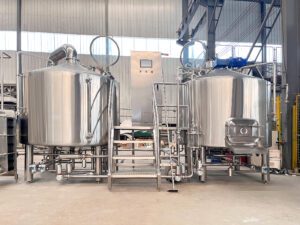
A typical brewhouse may include:
- Mash tun
- Lauter tun
- Brew kettle
- Whirlpool
- Hot liquor tank
- 워트 그랜트
- 펌프
- Heat exchanger
- Control panel
In a compact microbrewery, some of these functions may be combined.
For example:
- Mash/Lauter Tun
- 끓임조/월풀조
This creates a 2-vessel brewing system.
더 큰 규모의 양조장에서는 생산량을 늘리고 배치 간 대기 시간을 줄이기 위해 3-베셀 또는 4-베셀 구성을 사용할 수 있습니다.
The right choice depends on:
- Batch size
- 일일 양조 횟수
- Labor
- Building space
- Production target
- Beer style
- 향후 확장
A 1,000 L brewhouse that runs once per day has very different requirements from a 5,000 L commercial system designed for several brews each day.
양조 과정에서 당화조가 중요한 이유는 무엇인가요?
The mash tun is where crushed malt is mixed with hot brewing water.
During the mash, enzymes convert grain starch into sugar that yeast can later ferment.
당화 온도는 맥아즙의 발효도, 바디감 및 최종 맥주 특성에 영향을 미치기 때문에 이 탱크에는 안정적인 온도 제어가 필요합니다.
A good mash system should provide:
- Even heating
- Effective mixing
- Accurate temperature control
- Good insulation
- Easy cleaning
- 위생 배수 시설
For all-grain brewing, the mash tun is essential.
Homebrewers may use simpler equipment, but a commercial brewery needs repeatability.
한 배치가 다음 배치와 다르게 당화되면, 양조사는 추출물 수율, 알코올 도수, 풍미 및 전반적인 맥주 품질의 변화를 겪게 될 수 있습니다.
That is why professional brewing equipment should help the brewer repeat the same process every brew day.
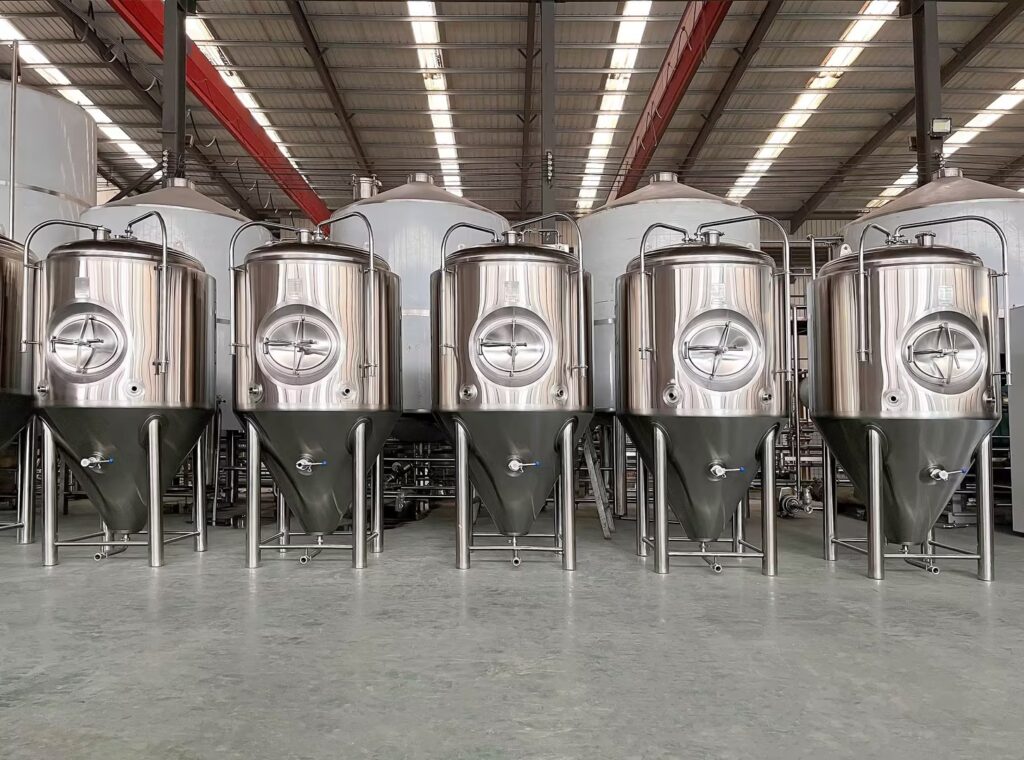
양조장에는 발효조를 몇 개나 준비해야 할까요?
This is one of the most important questions when building a brewery.
많은 신규 양조장 창업자가 발효 용량을 과소평가합니다.
The brewhouse may produce wort in a few hours, but a fermenter can remain occupied for many days or weeks.
A simple planning example:
| 항목 | 예시 |
|---|---|
| Brewhouse batch | 1,000 L |
| Brews per week | 3 |
| Average tank occupancy | 14 days |
| Simultaneous batches | 약 6개 |
| Starting fermenter need | About 6+ positions |
This is only a planning example.
실제 필요한 수치는 다음에 따라 달라집니다:
- Beer style
- 발효 시간
- Conditioning time
- Double-batching
- 세척 시간
- Seasonal demand
- Tank turnaround
- Bright tank strategy
If you brew lager, tank occupancy may be longer.
If you brew fast-turning ale, turnover can be faster.
The fermentation temperature also matters because stable cooling is necessary for consistent yeast performance.
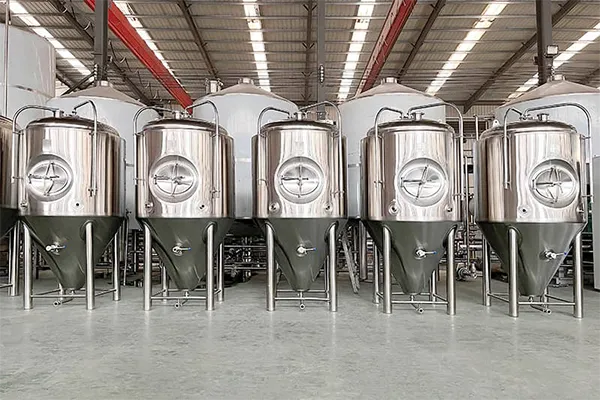
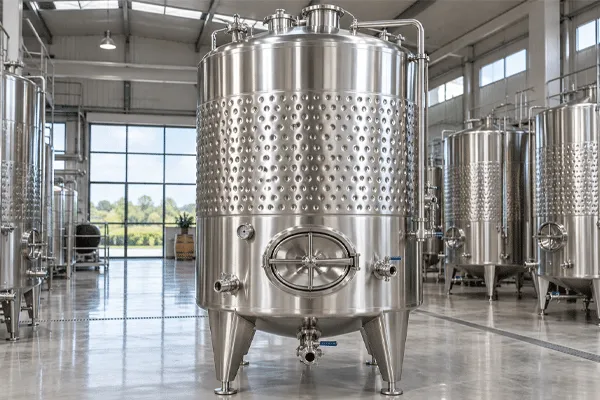
A commercial fermenter normally includes:
- Cooling jackets
- Temperature sensor
- Pressure gauge
- CIP spray device
- 샘플링 밸브
- Yeast outlet
- Pressure relief
- Sanitary fittings
Fermentation capacity often determines the real production limit of the entire brewery.
What Cooling Equipment Does a Brewery Need?
A brewery must both heat and cool.
Many people plan the boiler carefully but underestimate cooling.
The main cooling equipment may include:
- Plate heat exchanger
- Glycol chiller
- Glycol tank
- Cold liquor tank
- Cooling pumps
- Insulated glycol piping
The wort must be cooled quickly after boiling.
Later, the fermenters need controlled cooling during fermentation.
Then beer may need additional chilling for cold conditioning, clarification, carbonation, or transfer.
That means the chiller should be sized according to the combined cooling load.
A chiller that works for two fermenters may become too small after the brewery adds six more.
This is why future expansion should be considered before the utility system is purchased.
What Heating System and Utilities Are Needed?
A brewery needs reliable utilities before the equipment can work.
Depending on the brewhouse design, the main heat source may be:
- Steam
- 전기 난방
- Direct fire
- Thermal fluid in some systems
Steam is common in larger commercial breweries because it can heat multiple vessels efficiently.
However, the building also needs adequate:
- Electrical power
- Water supply
- Gas supply if required
- Compressed air
- 환기
- 배수
- Wastewater capacity
These are not secondary details.
A large brewing system can be delayed even after installation if the electrical supply, steam capacity, water pressure, or floor drains are not ready.
For this reason, the brewery equipment supplier, builder, utility contractor, and engineering team should coordinate early.
What CIP and Cleaning Equipment Is Essential?
Cleaning is not optional.
A brewery handles sugar, yeast, protein, hops, and finished beer. All of these can leave residue.
A commercial brewery needs a reliable CIP system.
CIP stands for Clean-in-Place.
A typical CIP setup may include:
- Caustic tank
- Acid tank
- Hot-water tank
- Pump
- Return line
- Spray devices
- 온도 제어
Smaller craft breweries may use a mobile CIP cart.
Larger facilities may use a centralized automatic CIP station.
The goal is to clean tanks, pipes, and vessels without manually entering them.
Good CIP design helps:
- Reduce contamination
- Improve consistency
- Save labor
- Reduce downtime
- Extend equipment life
You should also make sure the piping and valves are designed so the cleaning liquid reaches all product-contact areas.
Good sanitary design is just as important as the cleaning chemicals themselves.
What Packaging Equipment Should Be Prepared?
The final stage of the brewing process is packaging.
Before you open a brewery, decide how the beer will be sold.
Common options include:
- Keg
- Bottle
- Can
- Direct serving from bright tank
Kegging
Kegging is common for brewpubs, taprooms, bars, and draft distribution.
Equipment may include:
- Keg washer
- Keg filler
- Keg couplers
- CO₂ system
Bottling
A bottling setup can include:
- Bottle rinser
- Filler
- Capper
- Bottle caps
- Labeler
- Conveyor
A small homebrew-style system may use a bottling bucket, but a commercial brewery needs more sanitary and efficient equipment.
Canning
A canning line may include:
- Can rinser
- Filler
- Seamer
- Labeler or printed cans
- Date coder
- Conveyor
Packaging equipment should be matched to production volume.
If the brewhouse and fermentation cellar can produce 20,000 liters per week but the packaging line can only handle 5,000 liters efficiently, packaging becomes the bottleneck.
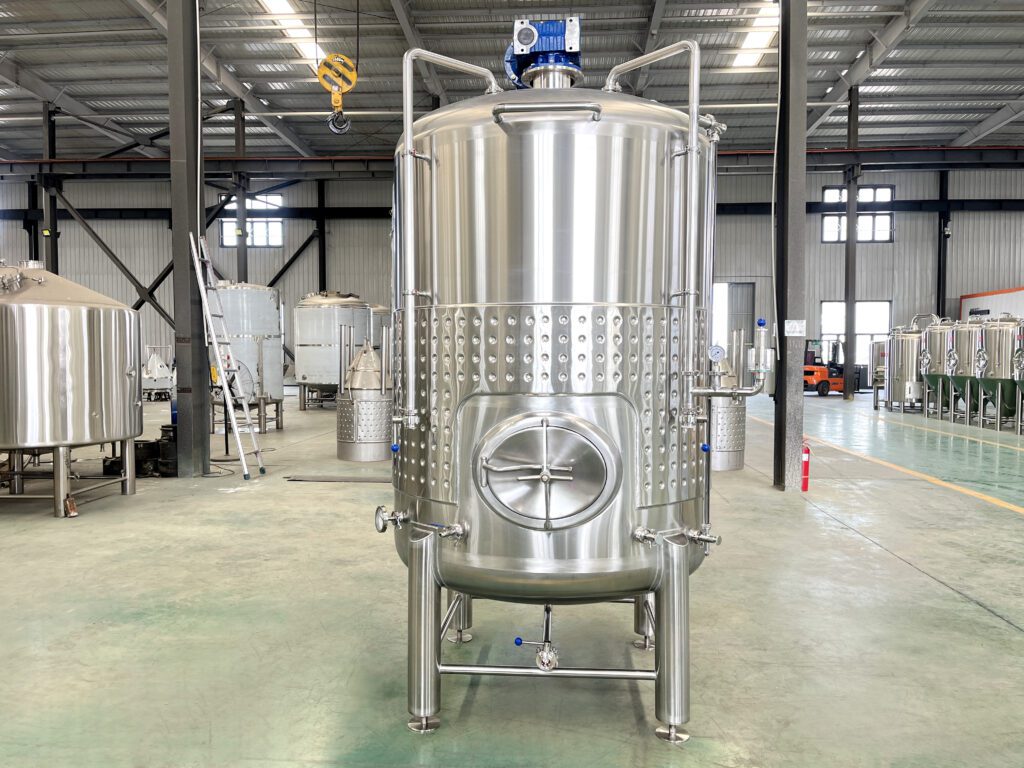
Should You Prepare Bright Beer Tanks?
A bright beer tank is not always mandatory, but it can improve production flow.
Bright tanks are commonly used for:
- Conditioning
- 탄산
- Clarification
- Finished beer holding
- Feeding packaging equipment
Some craft breweries use unitanks and package directly from the fermenter.
That can reduce equipment cost.
However, dedicated bright tanks can free fermenters sooner and help the brewery handle more batches.
Whether you need them depends on:
- Beer style
- Packaging method
- Tank schedule
- Cellar space
- Monthly output
- Required clarity
A busy commercial brewery often benefits from separate bright beer capacity.
A small taproom may choose a simpler setup.
What Factors Should You Consider Before Equipment Selection?
There are several important factors to consider before ordering brewery equipment.
1. Target Production
How much finished beer do you plan to sell each month?
2. Batch Size
Will you brew 500 L, 1,000 L, 2,000 L, or more per batch?
3. Brews Per Day
A brewery running one batch per day needs a different brewhouse than one running three.
4. Beer Styles
Different products may require different fermentation and conditioning times.
5. Packaging
Will the beer be sold mainly in keg, bottle, can, or directly in the taproom?
6. Building Dimensions
Measure:
- Floor area
- Ceiling height
- Door width
- Column spacing
- Drain positions
- Utility rooms
7. Utilities
Confirm:
- Electricity
- Steam
- Water
- Gas
- Glycol
- Compressed air
- 배수
8. Future Expansion
Leave space for:
- More fermenters
- Bright tanks
- Packaging upgrades
- Larger chiller
- Additional glycol lines
The right equipment should support today’s production without making future growth difficult.
How Should You Plan the Brewery Layout?
A good brewery setup should support a logical material flow.
A simplified flow can look like:
Malt Storage → Milling → Brewhouse → Wort Cooling → Fermentation → Conditioning → Packaging → Finished Product Storage
Try to avoid unnecessary product movement.
Shorter sanitary piping can reduce:
- Product loss
- 세척 시간
- Installation cost
- Pressure drop
Floor drainage also matters.
Wet production areas should have enough slope and drain capacity.
The brewer should be able to clean the floor, vessels, and hoses without water collecting in low spots.
The layout should also leave enough space around each piece of equipment for:
- 작동
- Maintenance
- Valve access
- Pump removal
- 청소
- Future replacement
Equipment that technically fits inside a room may still be difficult to operate if service access is ignored.
How Much Does It Cost to Start a Brewery?
The cost to start a brewery varies widely.
A small brewpub may use a compact brewhouse and a limited number of tanks.
A larger regional brewery may require:
- Large brewhouse
- Many fermenters
- Bright tanks
- Boiler
- Chiller
- CIP station
- Canning line
- Keg line
- Air compressor
- Water treatment
- Laboratory
- Warehouse
- Cold room
The equipment itself is only one part of the investment.
Other costs may include:
- Building renovation
- 배수
- Electrical work
- Steam piping
- Glycol piping
- Installation
- Shipping
- Taxes
- Licensing
- 포장
- Raw material
- Working capital
A good business plan should separate equipment cost from total project cost.
This helps new brewery owners avoid spending too much on visible production equipment while forgetting infrastructure.
What Is Different About Microbrewery Equipment?
A microbrewery usually needs many of the same core systems as a larger brewery.
The difference is scale.
Typical 소규모 양조장(마이크로브루어리) 장비 may include:
- 500–2,000 L brewhouse
- Several fermenters
- Small bright tanks
- Glycol chiller
- 이동식 CIP 카트
- Keg washer/filler
- 소형 캔 또는 병 주입 라인
소규모 양조장에서는 초기 투자 비용을 줄이기 위해 용기(탱크) 기능을 통합해 사용하기도 합니다.
For example:
- Mash/Lauter combined
- Kettle/Whirlpool combined
- Fermentation + conditioning in unitank
This saves space.
하지만 장비를 지나치게 통합하면 생산 속도가 느려질 수 있습니다.
마이크로브루어리로 시작해 점차 확장할 계획이라면, 발효조와 포장 설비를 추가할 여유 공간을 남겨두는 레이아웃을 선택하는 것이 좋습니다.
Is Homebrew Equipment Suitable for a Commercial Brewery?
Usually not.
홈브루잉 장비는 레시피 개발과 기본기를 익히는 데 유용합니다.
홈브루잉(자가 양조) 설비에는 일반적으로 다음 품목이 포함될 수 있습니다.
- Small kettle
- Plastic or glass fermenter
- 병입용 버킷
- 소형 칠러
- 수동 타전기
취미용으로는 충분합니다.
But commercial equipment needs:
- Sanitary stainless construction
- Pressure rating
- Reliable cooling
- 재현 가능한 제어
- CIP 호환성
- 더 빠른 생산 속도
- More robust valves and pumps
The step from homebrewing to commercial production is not simply “buy a bigger kettle.”
The whole production environment changes.
Commercial equipment is designed for repeated use, cleaning, higher batch frequency, and safer operation.
A Practical Brewery Equipment Checklist
Before ordering equipment, use a checklist.
Brewhouse
- Malt mill
- Grist hopper
- Mash tun
- Lauter tun
- 케틀
- Whirlpool
- Hot liquor tank
- 펌프
- Heat exchanger
셀러
- Fermenters
- 브라이트 비어 탱크
- Yeast collection
- Glycol system
청소
- CIP 시스템
- Chemical storage
- Washdown hoses
유틸리티
- Boiler
- Chiller
- Air compressor
- Water treatment
- Electrical distribution
포장
- Keg washer/filler
- Bottle filler or canning line
- Labeler
- Date coder
Infrastructure
- Floor drains
- 환기
- Cold room
- Warehouse
- Laboratory area
이 목록을 참고하면 시공이 완료되기 전에 어떤 장비가 누락되었는지 파악하는 데 도움이 됩니다.
양조장 구축에 대해 자주 묻는 질문
양조장을 시작하려면 어떤 장비가 필요한가요?
일반적으로 브루하우스, 발효조, 냉각 시스템, 펌프, 열교환기, CIP, 유틸리티, 배관 및 포장 설비가 필요합니다. 구체적인 목록은 생산 규모, 맥주 스타일 및 판매 방식에 따라 달라집니다.
처음에는 발효조를 몇 개나 구매해야 하나요?
The number depends on brewhouse size, brewing frequency, and fermentation time. A brewery brewing several batches each week usually needs multiple fermenters so the brewhouse does not wait for empty tanks.
브라이트 탱크가 꼭 필요한가요?
Not always. A brewery using unitanks may package directly from 발효 탱크. 브라이트 탱크는 탄산화, 숙성, 청징 및 다음 배치를 위해 발효조를 비워두는 데 유용합니다.
글리콜 칠러가 반드시 필요한가요?
For most commercial breweries, yes. It provides controlled cooling for fermentation tanks and can also support cold conditioning.
소규모 양조 설비로 시작해서 나중에 확장할 수 있나요?
네, 가능합니다. 많은 수제 맥주 양조장이 소규모 시스템으로 시작하여 추후 발효조, 브라이트 탱크, 또는 포장 설비를 추가합니다. 건물 및 유틸리티 설계 시 확장이 가능하도록 고려해야 합니다.
What should I prepare before contacting a brewery equipment supplier?
목표 배치 크기, 연간 생산량, 맥주 스타일, 일일 양조 횟수, 건물 규모, 포장 방식, 유틸리티 정보, 향후 확장 계획을 미리 준비하세요. 이러한 세부 정보를 갖추면 장비 선정을 훨씬 더 정확하게 진행할 수 있습니다.
마치며: 개별 기계를 구매하기 전에 양조장 전체 계획부터 준비하세요
When planning to start a brewery, the most common mistake is focusing only on the brewhouse.
The brewhouse is important, but it is only one part of the entire brewery.
A successful brewery needs:
Brewhouse → Fermentation → Cooling → Conditioning → Cleaning → Packaging → Storage
All of these systems must be balanced.
양조 설비(브루하우스) 규모가 발효·숙성실(셀러)에 비해 너무 크면 생산 속도가 저하됩니다.
발효조가 너무 적으면 양조 설비가 대기해야 합니다.
냉각기 용량이 너무 작으면 발효 온도를 제대로 제어하기 어렵습니다.
포장 라인이 너무 느리면 완성된 맥주가 탱크에 쌓이게 됩니다.
If the drains and utilities are not ready, installation becomes more expensive.
As a manufacturer of customized stainless steel brewery and beverage systems, we recommend starting every project with capacity planning and layout design before final equipment selection.
For a new project, prepare these details first:
- 목표 배치 크기
- 연간 맥주 생산량
- 일일 양조 횟수
- Beer styles
- 발효 시간
- Building layout
- Ceiling height
- Available utilities
- 가열 방법
- 포장 형태
- Automation level
- Budget range
- Expansion target
With this information, the brewery equipment can be designed around your real production needs instead of forcing your business to adapt to the equipment later.
Key Things to Remember
- A brewery needs more than a brewhouse.
- Essential equipment includes brewhouse vessels, fermenters, cooling, CIP, pumps, utilities, and packaging.
- Fermentation capacity often limits real brewery output.
- The chiller should be sized for current and future tank loads.
- Kegging, bottling, and canning require different packaging equipment.
- The building must support drainage, electricity, steam, water, ventilation, and equipment access.
- A business plan should include infrastructure and installation costs, not only equipment price.
- 마이크로브루어리 장비는 공간을 절약하기 위해 일부 탱크 기능을 통합할 수 있습니다.
- Commercial stainless steel equipment is designed for repeatable production and sanitary cleaning.
- Layout planning should happen before equipment installation.
- Future expansion should be considered from the beginning.
- The right brewery setup balances brewhouse, fermentation, cooling, packaging, and storage capacity.