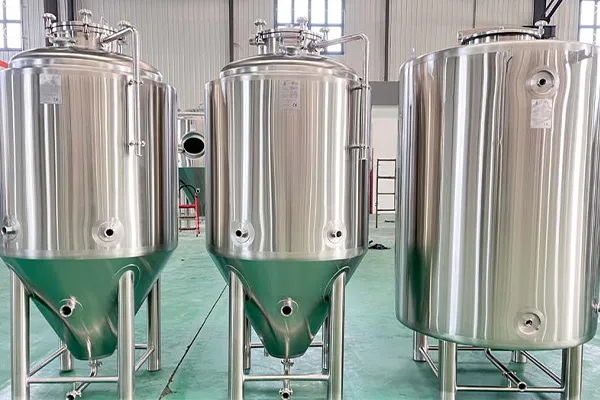
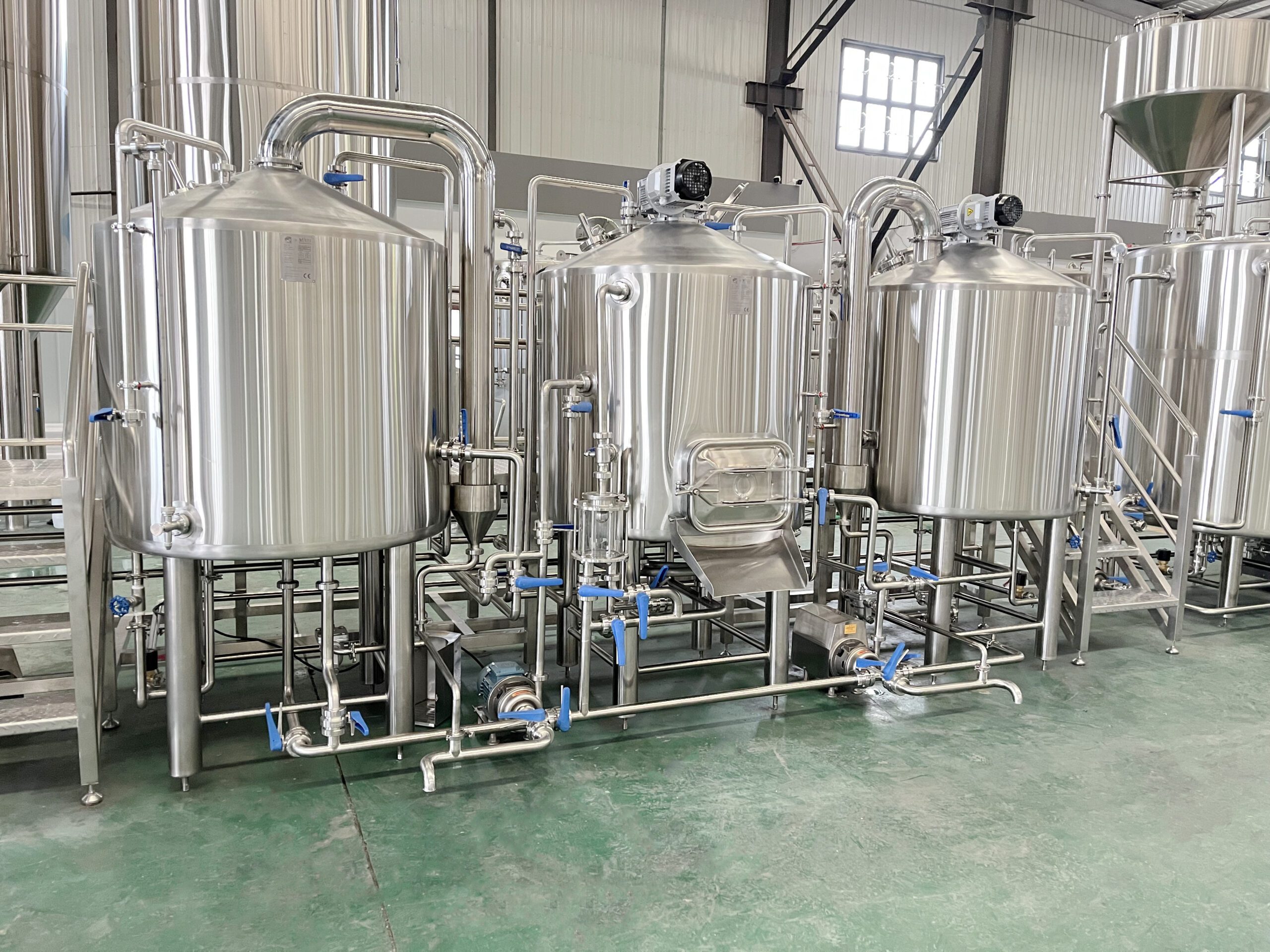
Adding fermentation capacity is a common challenge for growing breweries. However, buying another tank does not always solve the problem. If its cooling system, pipe connections, or working volume do not match your existing equipment, installation can become expensive and production may suffer.
통합 used stainless steel fermentation tank into an existing brewery requires more than checking its price and capacity. Buyers should match the tank’s working volume, cooling jacket, glycol connections, CIP system, sanitary fittings, control sensors, and physical dimensions with the current cellar. A hybrid new-and-used solution can help expand production while controlling investment.
기사 개요
- Why Do Breweries Add 중고 발효 탱크?
- How Do You Match Tank Capacity with Existing Brewing Equipment?
- 중고 탱크를 기존 글리콜 냉각 시스템과 함께 사용할 수 있나요?
- How Do Tank Jackets and Insulation Affect Temperature Control?
- How Can You Connect a Used Fermenter to an Existing CIP System?
- 탱크 연결부, 밸브 및 배관을 개조해야 하나요?
- How Do You Plan Cellar Space and Tank Installation?
- 중고 탱크를 추가할 때 제어 장치와 부속품도 업그레이드해야 하나요?
- Is a Hybrid New and Used Fermentation System a Better Investment?
- Frequently Asked Questions
1. Why Do Breweries Add Used Fermentation Tanks?
A brewery may have enough brewhouse capacity but still struggle to meet customer demand. The problem is often limited fermentation space rather than insufficient brewing output.
For example, a brewery operating a 2,000L brewhouse may produce enough wort each week, but its existing fermenters may remain occupied for several days during fermentation, maturation, and cleaning. Adding another tank can create room for overlapping batches and improve production scheduling.
Common reasons for adding used fermentation equipment include:
- 양조장을 교체하지 않고 발효 용량 늘리기
- 시즌 맥주 생산 지원
- Adding space for new beer styles
- Increasing output for local distribution
- 노후되었거나 손상된 탱크 교체
- Expanding kombucha, cider, or other beverage production
중고 스테인리스 스틸 탱크는 저장고 용량을 늘리는 비용 효율적인 방법이 될 수 있습니다. 그러나 해당 탱크는 생산 시스템의 다른 부분과 호환되어야 합니다.
Which Businesses Can Benefit?
| 사업 유형 | Potential Application |
|---|---|
| 수제 맥주 양조장 | 추가 발효 용량 |
| 소규모 양조장 | Production expansion |
| 브루펍 | More frequent small-batch production |
| Commercial breweries | Additional fermentation and conditioning space |
| Kombucha producers | 발효 및 음료 가공 |
| 사이다 제조업체 | 추가 사이더 발효 용량 |
| Beverage startups | Lower-cost production expansion |
중요한 점은 온라인 목록에서 매력적으로 보이는 탱크가 아니라, 실제 생산 문제를 해결해 주는 탱크를 구매하는 것입니다.
2. How Do You Match Tank Capacity with Existing Brewing Equipment?
Tank capacity should be based on the actual output of your brewhouse and the time each batch occupies a fermenter.
A tank that is too small may require splitting one batch into multiple vessels. A tank that is too large may leave valuable cellar space unused.
먼저 세 가지 수치를 파악하세요:
- 배치당 브루하우스 유효 용량.
- 발효 및 숙성 시간.
- 주당 계획된 배치 수.
예를 들어 배치당 1,000L를 생산하는 양조장이라면 유효 용량이 1,000L인 발효조를 고려할 수 있습니다. 하지만 전체 탱크 용량에는 발효를 위한 충분한 헤드스페이스도 확보되어야 합니다.
일반적인 중고 발효조 용량
MICET에서 공개한 중고 발효 탱크 라인업에는 다양한 생산 요건에 맞춘 여러 규격이 포함되어 있습니다.
| 탱크 용량 | 일반적인 용도 |
|---|---|
| 300L | 파일럿 브루잉 및 소규모 음료 배치 |
| 500L | 나노 브루어리 및 브루펍 |
| 1,000L | 소규모 상업 양조장 |
| 2,000L | 성장 중인 수제 맥주 양조장 |
| 2,500L | 마이크로브루어리 생산 |
| 5,000L | 대규모 생산 시설 |
| 10T–20T | 대용량 음료 생산 |
이는 공개된 용량 옵션일 뿐이며 현재 재고 유무를 보장하지는 않습니다. 실제 작동 용량과 구성은 탱크별로 확인해야 합니다.
총 용량 대 유효 용량
탱크 구매 시 이러한 차이를 반드시 고려해야 합니다.
- 총 용량: 탱크 내부의 전체 부피.
- 작동 용량(Working capacity): 정상 생산 시 권장되는 액체 용량입니다.
- 헤드스페이스: 발효 활동 및 공정 운영에 필요한 여유 공간.
예를 들어 MICET에서 공개한 2T, 4T, 6T 구성 사양은 다음과 같습니다.
| 모델 | 총 용량 | 유효 용량 |
|---|---|---|
| 2T | 2,000L | 1,800L |
| 4T | 4,000L | 3,600L |
| 6T | 6,000L | 5,400L |
10%의 차이는 이러한 특정 구성을 계획할 때 중요한 여유 용량입니다.
해외 구매자의 경우 용량 정보를 리터(L), 헥토리터(hL), 갤런(gallon) 또는 배럴(bbl) 단위로 제공받을 수 있습니다. 기존 브루하우스와 탱크를 비교하기 전에 항상 수치를 하나의 단위로 통일하여 환산하십시오.
예를 들어 2,000L 용기는 20hL에 해당합니다. 광고된 용량이 같다고 해서 두 탱크의 사용 가능한 용량까지 동일하다고 생각해서는 안 됩니다.
3. 중고 탱크를 기존 글리콜 냉각 시스템과 함께 사용할 수 있을까요?
냉각 호환성은 중고 발효기를 추가할 때 가장 중요한 엔지니어링 검토 사항 중 하나입니다.
대부분의 전문 양조용 발효조는 글리콜 순환 시스템에 연결된 냉각 재킷을 사용합니다. 글리콜은 발효 중에 발생하는 열을 제거하고 필요한 공정 온도를 유지하도록 돕습니다.
그러나 모든 탱크가 동일한 재킷 설계를 사용하는 것은 아닙니다.
차이점으로는 다음과 같은 항목이 있을 수 있습니다.
- 재킷 표면적
- 냉각 구역 수
- 재킷 위치
- 입구 및 출구 직경
- 필요한 글리콜 유량
- 작동 온도
- Pressure requirements
냉각 표면적이 더 큰 탱크는 재킷이 더 작은 기존 용기와 다른 유량 구성이 필요할 수 있습니다.
냉각 시스템의 용량이 부족하면 어떤 일이 발생할까요?
기존 칠러가 추가 열부하를 처리할 수 없는 경우, 양조장에서는 냉각 지연, 불안정한 발효 온도 또는 저온 침전 성능 저하가 발생할 수 있습니다.
이는 생산 일정과 맥주 품질의 일관성에 영향을 줄 수 있습니다.
새 탱크를 연결하기 전에 동시에 작동할 수 있는 모든 용기의 총 냉각 수요를 계산하십시오.
엔지니어링 검토 시 다음 사항을 고려해야 합니다:
- 기존 냉각기의 냉동 용량.
- 활성 발효의 총 부피.
- 예상 발효 열부하.
- 필요한 냉각 온도.
- 글리콜 펌프의 유량 및 압력.
- 배관 길이 및 압력 손실.
- 동시에 작동하는 냉각 구역의 수.
당사 엔지니어링 팀은 기존 칠러가 적합한지 또는 추가 냉각 장비가 필요한지 평가할 수 있습니다.
관련 냉각 및 유틸리티 장비는 다음을 참조하세요 MICET 보조 양조 장비.
4. 탱크 재킷과 단열재는 온도 제어에 어떤 영향을 미치나요?
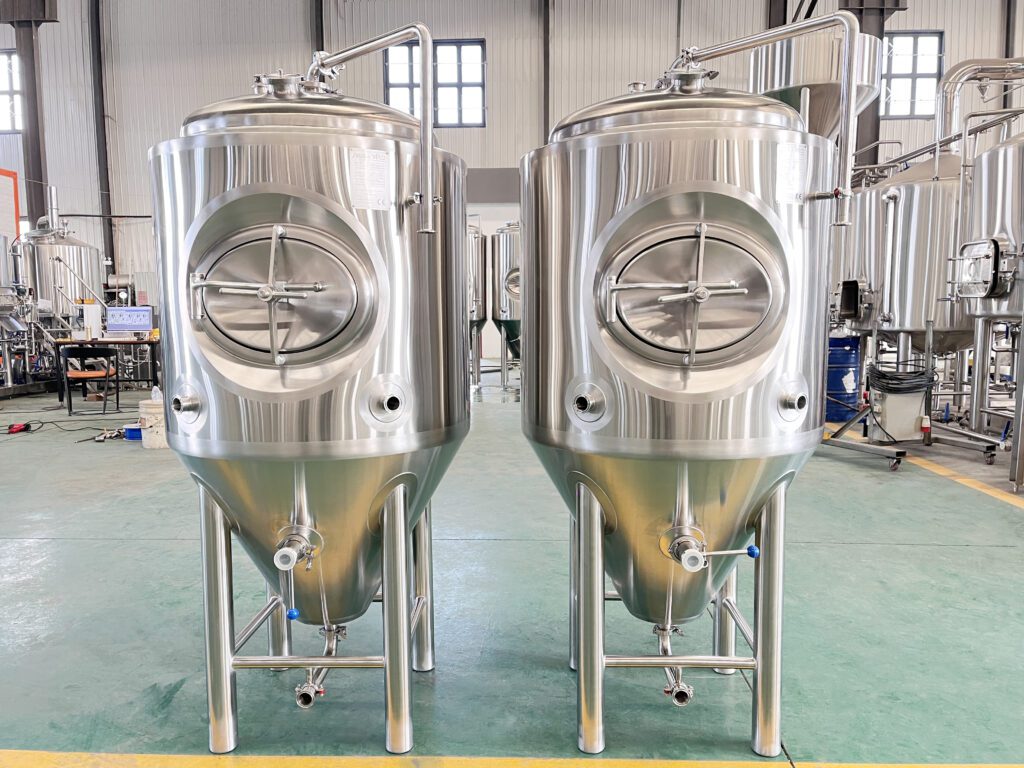
냉각 재킷은 단순한 외부 요소가 아닙니다. 그 설계는 탱크가 발효 온도를 얼마나 효과적으로 제어할 수 있는지에 영향을 미칩니다.
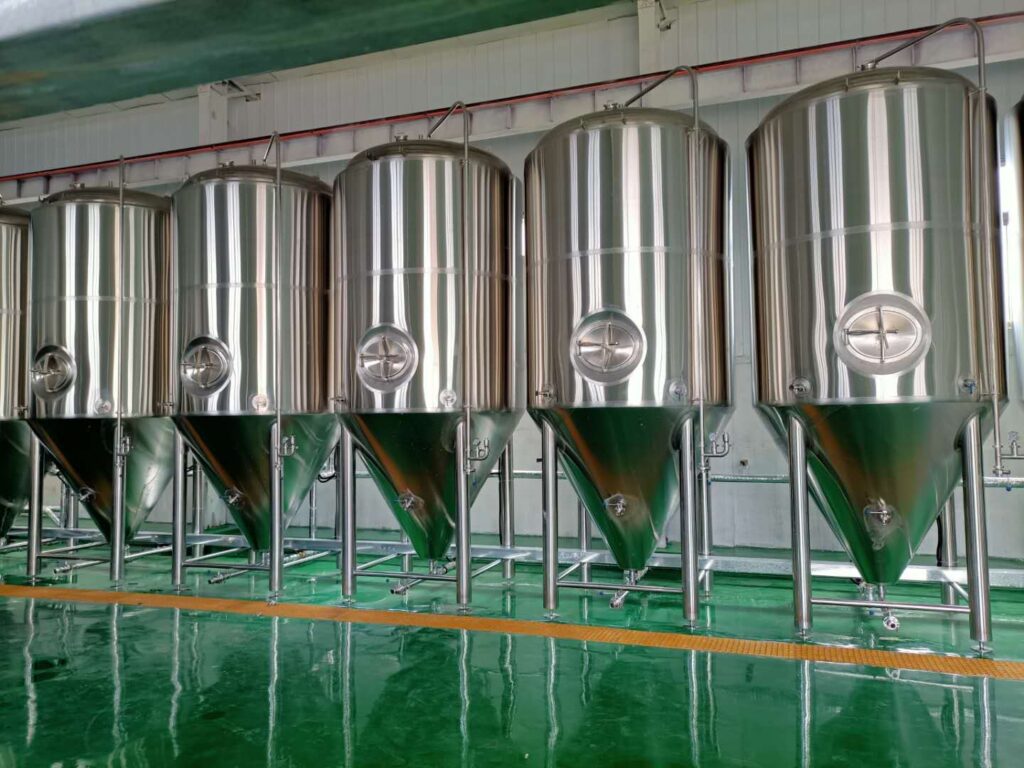
일부 탱크는 원통형 본체 주위에 딤플 재킷을 사용합니다. 다른 탱크는 원통부와 콘부 모두를 덮는 냉각 구역을 갖추고 있습니다.
올바른 설계는 탱크 형상, 작업 용량, 공정 온도 및 냉각 요구 사항에 따라 달라집니다.
다양한 재킷 구성 비교
| 설계 특징 | Main Function | 통합 고려 사항 |
|---|---|---|
| 원통형 재킷 | 주 탱크 본체의 열을 제거합니다 | Check cooling area |
| Cone jacket | Helps control temperature near the yeast collection area | Check separate connections |
| Multi-zone jacket | Allows different cooling sections to operate independently | Requires suitable controls |
| Full insulation | Reduces external heat exchange | Check insulation thickness and condition |
Insulation is also important.
Polyurethane insulation is commonly used in professional brewery tanks. It helps reduce heat transfer between the liquid and surrounding environment, supporting more stable thermal regulation.
The external stainless steel or clad outer shell protects the insulation and gives the tank a finished appearance.
Can You Mix Different Tank Designs?
Yes, but the cooling arrangement must be engineered.
For example, an existing cellar may contain four tanks with single-zone jackets. Adding a used tank with two independent cooling zones may require a different manifold and control arrangement.
The objective is to ensure that each tank receives sufficient cooling without affecting the operation of other vessels.
Do not connect additional jacketed tanks simply because the pipe diameter looks compatible. Hydraulic flow, cooling load, and control logic must also be considered.
5. How Can You Connect a Used Fermenter to an Existing CIP System?
Cleaning is essential for breweries and beverage manufacturers.
A used fermentation tank must connect properly to the existing Clean-in-Place (CIP) system. Otherwise, cleaning may become difficult, inconsistent, or dependent on manual work.
Most professional fermenters use spray balls or rotary spray devices to distribute cleaning solutions across the internal surfaces.
When integrating another tank, review the following:
- CIP inlet position
- Spray ball type and coverage
- CIP return connection
- Required cleaning flow
- Pump capacity
- Pipe diameter
- Drainage arrangement
- Cleaning chemical compatibility
Why Is CIP Compatibility Important?
A spray ball needs sufficient flow and pressure to clean the tank effectively.
If the new vessel has a different internal diameter or height, the existing cleaning setup may not provide suitable coverage.
The CIP pump must also handle the additional flow demand if multiple tanks are cleaned at the same time.
For larger production facilities, a fixed CIP station may be more suitable. Smaller breweries may prefer a portable CIP cart, depending on the cleaning schedule.
Our approach is to review the tank’s internal cleaning design and match it with the existing CIP equipment.
Where necessary, we can add new spray devices, return connections, valves, or dedicated cleaning lines.
6. Do Tank Connections, Valves, and Pipework Need Modification?
A tank may have the correct capacity and cooling system but still be difficult to install because its connections do not match the existing brewery.
Different manufacturers may use different fitting standards, connection sizes, and outlet positions.
Common connection types include:
- Tri-clamp
- DIN
- SMS
- Threaded connections
- Sanitary flange connections
Before purchasing a tank, prepare a connection schedule.
| Connection | What to Confirm |
|---|---|
| Product inlet | Diameter and position |
| 맥주 배출구 | Size, direction, and height |
| CIP inlet | Spray device and connection type |
| CIP return | Diameter and drainage route |
| Glycol inlet | Connection size and location |
| Glycol outlet | Flow direction and connection |
| 샘플 밸브 | Sanitary connection |
| Temperature port | Sensor type and position |
| Pressure outlet | Design requirements and safety devices |
When Should a Tank Be Modified?
Some modifications are relatively simple, such as replacing a valve or changing a sanitary connector.
Other changes require more engineering work.
For example, adding a new outlet to an insulated vessel may involve cutting through the outer shell, insulation, and internal structure. The modification must preserve the tank’s structural integrity and hygienic design.
The same principle applies to pressure equipment. A modification must not compromise the original pressure design or safety protection.
A process vessel should also not be confused with a general storage tank or mixing tanks. A fermenter requires suitable sanitary surfaces, process connections, and operating conditions.
알루미늄 탱크나 상압 저장 용기가 내압 등급 스테인리스 스틸 발효조를 대체할 수 있다고 생각하지 마십시오.
7. 셀러 공간과 탱크 설치는 어떻게 계획해야 하나요?
물리적 호환성은 공정 호환성만큼이나 중요합니다.
탱크의 용량과 기술 사양이 적합하더라도 건물 출입구를 통과하지 못하거나 여유 공간 부족으로 효율적인 가동이 어려울 수 있습니다.
구매를 확정하기 전에 셀러 배치도를 준비하세요.
검토해야 할 주요 치수
탱크 직경: 사용 가능한 바닥 면적과 인접 탱크 사이의 거리를 확인하십시오.
전체 높이: 탱크 다리, 상부 피팅, 맨웨이, CIP 장비를 모두 포함해야 합니다.
유지보수 여유 공간: 작업자가 밸브, 센서, 맨웨이 및 유지보수 지점에 원활히 접근할 수 있어야 합니다.
배출구 위치: 맥주 배출구와 콘 배출부는 계획된 배관 및 배수 시스템과 일치해야 합니다.
운반 접근성: 출입문, 적재 구역, 인양 장비, 하역 지점에서 설치 위치까지의 이동 경로를 확인하십시오.
수직형 탱크는 바닥 면적을 절약할 수 있지만 천장 여유 공간이 더 많이 필요할 수 있습니다. 측면 맨웨이가 있는 탱크의 경우 작업 및 접근을 위한 추가 여유 공간도 필요할 수 있습니다.
바닥 하중은 어떻게 고려해야 하나요?
대형 스테인리스강 용기는 내용물이 채워지면 무게가 매우 무거워집니다.
설치 팀은 탱크, 내용액, 다리 및 지지 구조물의 총 무게를 계산해야 합니다.
설치 전에 바닥 하중, 배수, 기초 상태 및 장비 반입 동선을 반드시 검토해야 합니다.
이는 2,000L~6,000L 규모의 대형 탱크를 설치하거나 여러 탱크를 추가하여 기존 저장실을 확장할 때 특히 중요합니다.
적절한 배치는 작업자가 탱크 사이를 안전하게 이동할 수 있도록 하면서 효율적인 제품 이송 및 세척 동선을 유지할 수 있어야 합니다.
8. 중고 탱크 추가 시 제어 장치와 액세서리를 업그레이드해야 할까요?
중고 탱크라고 해서 항상 제어 시스템 전체를 교체할 필요는 없습니다.
그러나 구형 온도 센서, 밸브 및 제어 장치는 현재 사용 중인 PLC 또는 모니터링 시스템과 호환되지 않을 수 있습니다.
실용적인 해결책은 탱크 본체는 그대로 재사용하면서 특정 부품만 선별하여 업그레이드하는 것입니다.
권장 업그레이드 옵션
| 구성 요소 | 업그레이드 가능 항목 |
|---|---|
| Temperature sensor | PT100 센서 및 호환 트랜스미터 |
| 온도 컨트롤러 | PID 또는 PLC 연동 |
| 압력 보호 | 적합한 PRV 및 압력계 |
| 샘플링 | 위생 샘플링 밸브 |
| Product transfer | New sanitary outlet valve |
| CIP | Spray ball and return connection |
| Monitoring | Temperature display and alarms |
| 자동화 | PLC communication and control integration |
An agitator may be required for certain beverage processing applications, but it should not be added to a conventional beer fermenter without reviewing the product and process requirements.
For kombucha, cider, and other liquid products, tank configuration may differ from a standard beer fermentor.
A filter, mixing system, or additional process connection may also be needed in a wider beverage production line.
The goal is to keep the existing process stable while improving the new equipment where necessary.
9. Is a Hybrid New and Used Fermentation System a Better Investment?
Many breweries assume they must choose between an entirely new system and completely used equipment.
In practice, a hybrid solution can provide a better balance.
The main stainless steel tank may be reused, while important supporting equipment is upgraded with new components.
Example of a Hybrid Brewery Cellar
| 장비 | Recommended Approach |
|---|---|
| Main fermentation tank | Used and refurbished |
| Tank shell and cone | Reuse after engineering evaluation |
| Glycol chiller | New or existing after capacity review |
| Glycol manifolds | New where required |
| CIP station | Existing or upgraded |
| Valves and gaskets | Replace where necessary |
| PLC controls | New or integrated |
| Temperature sensors | New where required |
| Sanitary pipework | Adapted to the new layout |
This approach can reduce investment in large vessels while keeping critical control and cleaning functions up to date.
How MICET Supports Hybrid Projects
MICET is a professional brewery and beverage equipment manufacturer providing customized stainless steel brewing systems, fermentation tanks, brewhouse systems, and turnkey brewery solutions for global B2B customers.
Our used equipment program covers more than simply sourcing second-hand tanks.
We review the customer’s existing equipment, production requirements, utilities, and installation space before recommending a configuration.
Our support can include:
- Used and refurbished fermentation tanks
- New stainless steel process equipment
- Glycol chillers and cooling systems
- CIP stations and cleaning equipment
- Pumps and sanitary pipework
- Valve and accessory upgrades
- PLC and temperature control integration
- Cellar layout planning
- 설치 지도 및 시운전 지원
We also provide customized solutions for craft breweries, brewpubs, microbreweries, kombucha producers, cideries, wineries, and other beverage manufacturers.
You can learn more about our Used Fermentation Tank Solutions 그리고 Used Equipment Program.

A Practical Project Planning Example
Imagine a brewery with an existing 2,000L brewhouse that needs additional fermentation capacity.
Instead of replacing the entire brewery, the project team could:
- Review the existing fermentation schedule.
- Calculate the additional working volume required.
- Select a suitable used fermenter.
- Evaluate the existing glycol cooling capacity.
- Check CIP flow and return connections.
- Modify sanitary pipework where necessary.
- Integrate temperature sensors and controls.
- Complete commissioning before production.
The final configuration depends on the actual facility. This is why we recommend engineering the complete connection plan before shipping the tank.
If you are looking for used stainless steel fermentation tanks for sale, our team can help compare available capacities and determine whether an individual tank or a hybrid cellar package better fits your project.
10. Frequently Asked Questions
Can I connect a used fermentation tank to a new glycol chiller?
Yes. A used tank can work with a new glycol chiller if the cooling jacket, flow requirements, operating temperature, and control arrangement are compatible. The cooling system should be sized for the combined load of all connected tanks.
Can I use different sizes of fermentation tanks in one brewery?
Yes. Many breweries use a combination of tank capacities to support different batch sizes and beer styles. The cooling system, CIP setup, transfer pumps, and production schedule must be designed to accommodate the different vessels.
What stainless steel is suitable for used fermentation tanks?
SUS304 is widely used for brewery fermentation equipment, while SS316 may be selected for applications requiring different corrosion resistance characteristics. Confirm the actual material grade of each vessel rather than assuming all used tanks have the same specification.
Can a used fermenter be modified to fit an existing brewery?
Yes. Depending on its design, a tank may be modified with new valves, nozzles, outlets, CIP connections, sensors, or support structures. Structural and pressure-related changes require appropriate engineering evaluation.
Is it better to buy used tanks or new fermentation equipment?
Used tanks can reduce initial investment, especially when expanding an existing brewery. New equipment may be preferable when a project requires specific dimensions, advanced automation, or a completely customized configuration. A hybrid solution can combine both approaches.
What information should I provide when requesting a used fermentation tank quotation?
Provide your required working capacity, brewhouse size, existing glycol system, CIP configuration, tank installation dimensions, beverage type, operating pressure, and destination country. Photos or a drawing of your existing cellar can also help engineers evaluate compatibility.
주요 내용
- Adding a used fermenter can increase brewery output without replacing the complete production line.
- Tank working capacity should match the existing brewhouse and fermentation schedule.
- Glycol cooling capacity must be reviewed before adding jacketed tanks.
- Different jacket zones may require changes to cooling manifolds and controls.
- CIP flow, spray coverage, and return connections must match the new vessel.
- Pipework, valves, sanitary fittings, and outlet positions may require modification.
- Cellar dimensions, floor loading, drainage, and installation access should be confirmed.
- New sensors, valves, and PLC controls can improve compatibility with older equipment.
- A hybrid new-and-used solution can balance investment, hygiene, and process reliability.
- An experienced brewery equipment manufacturer can help coordinate tank selection, engineering, installation, and future expansion.
The best used fermentation tank is not simply the one with the lowest purchase price. It is the one that fits your production schedule, connects smoothly to your existing equipment, and supports reliable operation over the long term.