Nancy Shang | Oprichter en CEO | Gepubliceerd augustus 2026
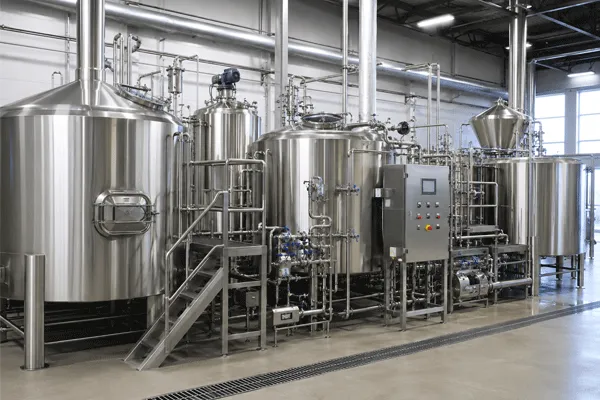
Opschalen van nano- of microcapaciteit naar een grotere commerciële omvang met gebruikte apparatuur omvat meer dan alleen het aanpassen van tankgroottes. Deze checklist doorloopt capaciteitsberekeningen, vloerindeling, upgrades van nutsvoorzieningen en documentatiecontroles die nodig zijn voordat u tekent voor gereviseerde apparatuur.
Stap 1: Bepaal uw huidige fase en doelproductie
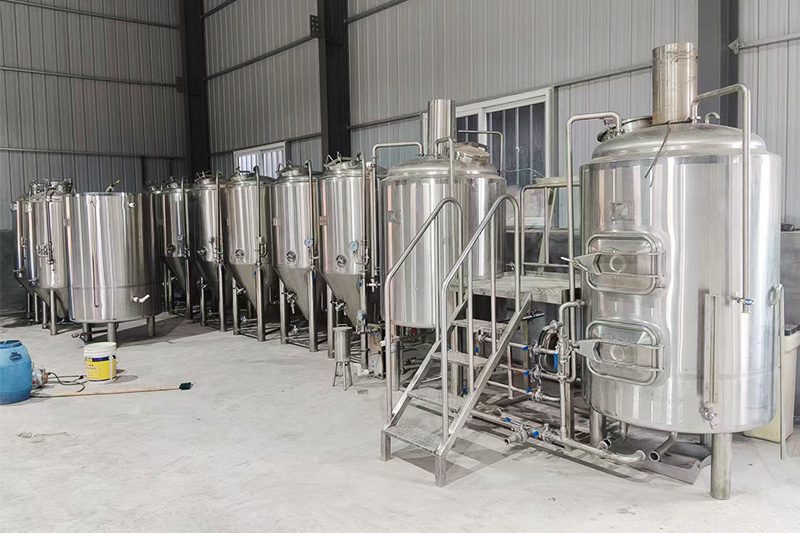
Nanobrouwerijen draaien doorgaans batches van minder dan 3 BBL, microbrouwerijen werken in het bereik van 3-15 BBL, en productie op regionale schaal begint over het algemeen boven de 30 BBL per batch met meerdere vrouwdagen per week. Noteer voordat u gebruikte apparatuur beoordeelt uw huidige batchgrootte, brouwersfrequentie en jaarlijkse barrelage — doe vervolgens hetzelfde voor uw doel. Dit is geen formaliteit; het bepaalt of u een vervanging van de brouwzaal nodig heeft, extra vergistingscapaciteit naast uw bestaande brouwzaal, of beide.
Step 2: Run the Capacity Math
| Metric | Current (example) | Target (example) |
| Partijgrootte | 5 BBL | 15 BBL |
| Brew days/week | 3 | 4 |
| Annual barrelage | ~780 BBL | ~3,120 BBL |
| Fermenter count needed | 4-5 | 10-12 |
A jump from 5 BBL to 15 BBL isn’t a simple 3x multiplier on every line item. Fermenter count typically needs to grow faster than brewhouse capacity, since fermentation and conditioning take days while a brew day takes hours — a bottleneck at the tank stage is more common than one at the brewhouse.
Step 3: Audit Floor Plan Before You Buy Anything
Larger vessels mean taller ceiling clearance, wider door and loading dock access, and floor load ratings that a nano or micro space often wasn’t built for. Measure your actual ceiling height at the installation point, not just the room height — HVAC ductwork, sprinkler lines, and lighting fixtures often eat into usable clearance. A 15 BBL fermenter with a cone can run over 10 feet tall; confirm this against your space before a used unit arrives on a truck you can’t get through the door.
Step 4: Check Utility Capacity, Not Just Availability
Having water, drainage, and electrical service in a building doesn’t mean it’s sized for a bigger brewhouse. Three things to verify directly with a licensed electrician or facilities engineer:
- Electrical service capacity— a commercial-scale control panel draws more amperage than a nano-scale setup, and undersized service is one of the more expensive retrofits to discover late.
- Glycol or steam capacity— larger fermentation volumes need proportionally more cooling capacity, not a linear increase but often a step-change requiring a bigger chiller or boiler.
- Drainage rate— CIP cycles and larger batch volumes increase wastewater discharge, and some municipalities have separate permitting thresholds tied to production volume.
Step 5: Confirm What Used Equipment Actually Includes at Your Target Scale
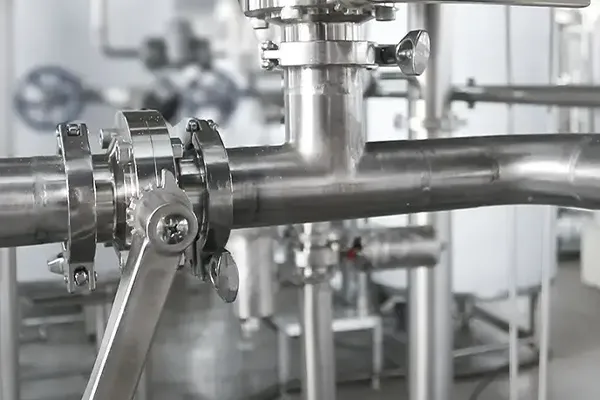
This is where scale-up plans using used equipment run into a documentation gap worth addressing directly. MICET’s published used brewery equipment listings cover 2-10 BBL compact configurations — mash tun, kettle, HLT, pumps, heat exchanger, and control panel bundled as a package. That range supports a nano-to-micro transition well. It does not, based on published specifications, extend into 30-100 BBL regional-scale used brewhouse packages.
If your scale-up target sits in that larger commercial range, the honest path is a direct quote request rather than assuming a used package exists off a general listing. Fermentation capacity is a separate story: used fermentation tanks are available up to 40 BBL and in 2-6 tonne configurations, which can support a fermentation-side scale-up even where brewhouse capacity stays at micro scale.
Step 6: Check the Documentation Trail Before You Commit
Used equipment sold through secondary channels typically doesn’t carry per-unit certificate numbers. For reference, on the new-equipment side, MICET’s pressure vessel line carries a Verification of Conformity (certificate ICR/VC/HM2507146) issued by ICR Co., Ltd. under PED 2014/68/EU, valid through July 2030. That document sits at the company and product-line level — it doesn’t transfer automatically to a specific used unit changing hands between owners, and a procurement manager working under compliance requirements should ask sellers directly whether any documentation travels with the sale rather than assuming continuity.
Step 7: Sequence Installation Around Existing Production
A scale-up rarely happens in a vacant building. Map out how much brewhouse downtime the swap requires, and whether fermentation and packaging can continue running on existing equipment while the new (or newly-used) brewhouse installs. Sellers offering on-site installation support reduce this risk; equipment purchased without installation assistance shifts that sequencing risk entirely onto your team.
Step 8: Budget the Full Retrofit, Not Just the Equipment Price
Used equipment at commercial scale often costs less upfront than new, but electrical service upgrades, glycol system expansion, and floor reinforcement can close that gap quickly. Build a contingency line into the budget for utility retrofit work before comparing a used-equipment quote against a new commercial system quote — comparing equipment price alone, without factoring installation and utility costs, tends to undercount the true cost of a used commercial-scale purchase.
A Common Misstep: Buying the Brewhouse Before Confirming Fermentation Capacity
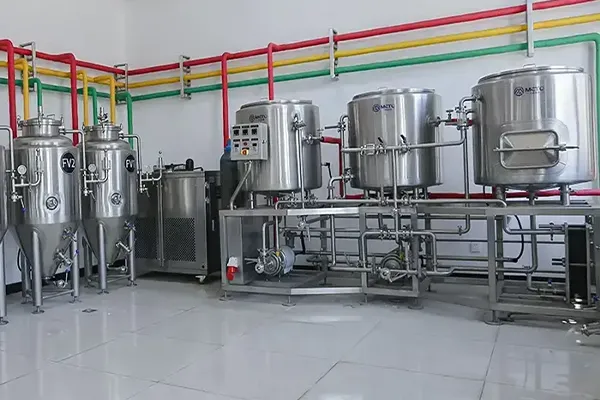
The most common scale-up mistake isn’t underestimating the brewhouse — it’s assuming existing fermenters will keep pace with a bigger brewhouse. A 15 BBL brewhouse producing three batches a week needs enough fermenter volume to hold roughly three weeks of production in various stages of fermentation and conditioning, not just enough tanks to hold one batch. Run the fermenter math from Step 2 before finalizing any brewhouse purchase.
FAQ
Q: Can used equipment support a jump straight from nano to regional scale?
A: Based on published specifications, MICET’s used brewhouse packages top out at 10 BBL, so a direct nano-to-regional jump using that catalog isn’t documented. A two-stage approach — micro scale on used equipment, then a separate commercial-scale sourcing conversation — is the more realistic path with currently available listings.
Q: How much electrical capacity does a commercial-scale control panel typically need beyond a micro-scale one?
A: This varies by manufacturer and configuration, so get a nameplate reading from the specific used panel and have a licensed electrician confirm it against your building’s service before assuming compatibility.
Q: Do used fermentation tanks and a used brewhouse from different sources need to match capacity exactly?
A: Not exactly, but a significant mismatch creates a bottleneck at whichever stage has less capacity. Used fermentation tanks are available up to 40 BBL or in 2-6 tonne sizes, which can be sized to exceed brewhouse output and absorb some of that risk.
Q: What’s the biggest hidden cost in a used commercial-scale scale-up?
A: Utility retrofit — particularly electrical service and glycol cooling capacity — tends to be underestimated relative to the equipment purchase price itself. Budget for it as a separate line item, not a rounding error.