










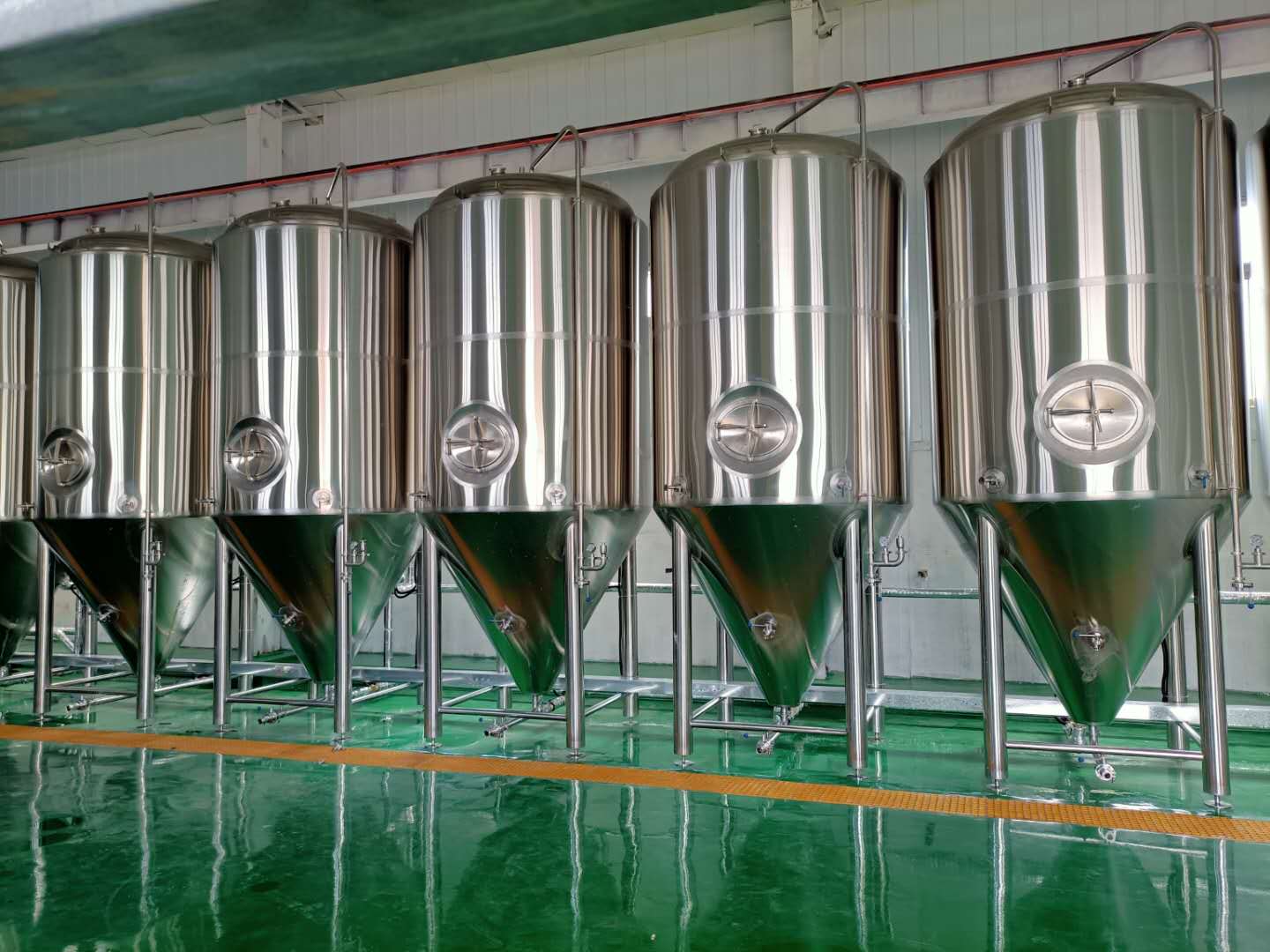
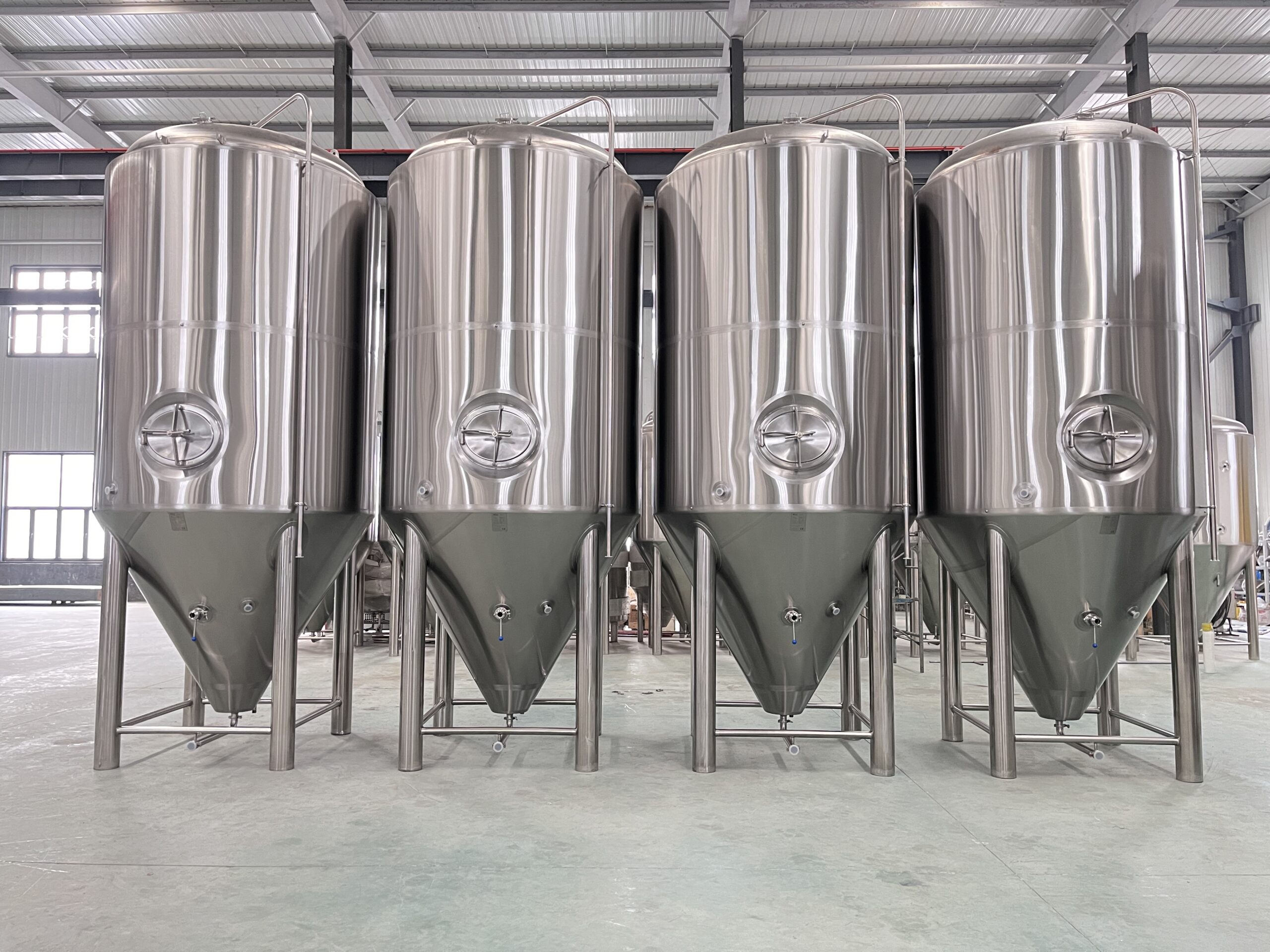
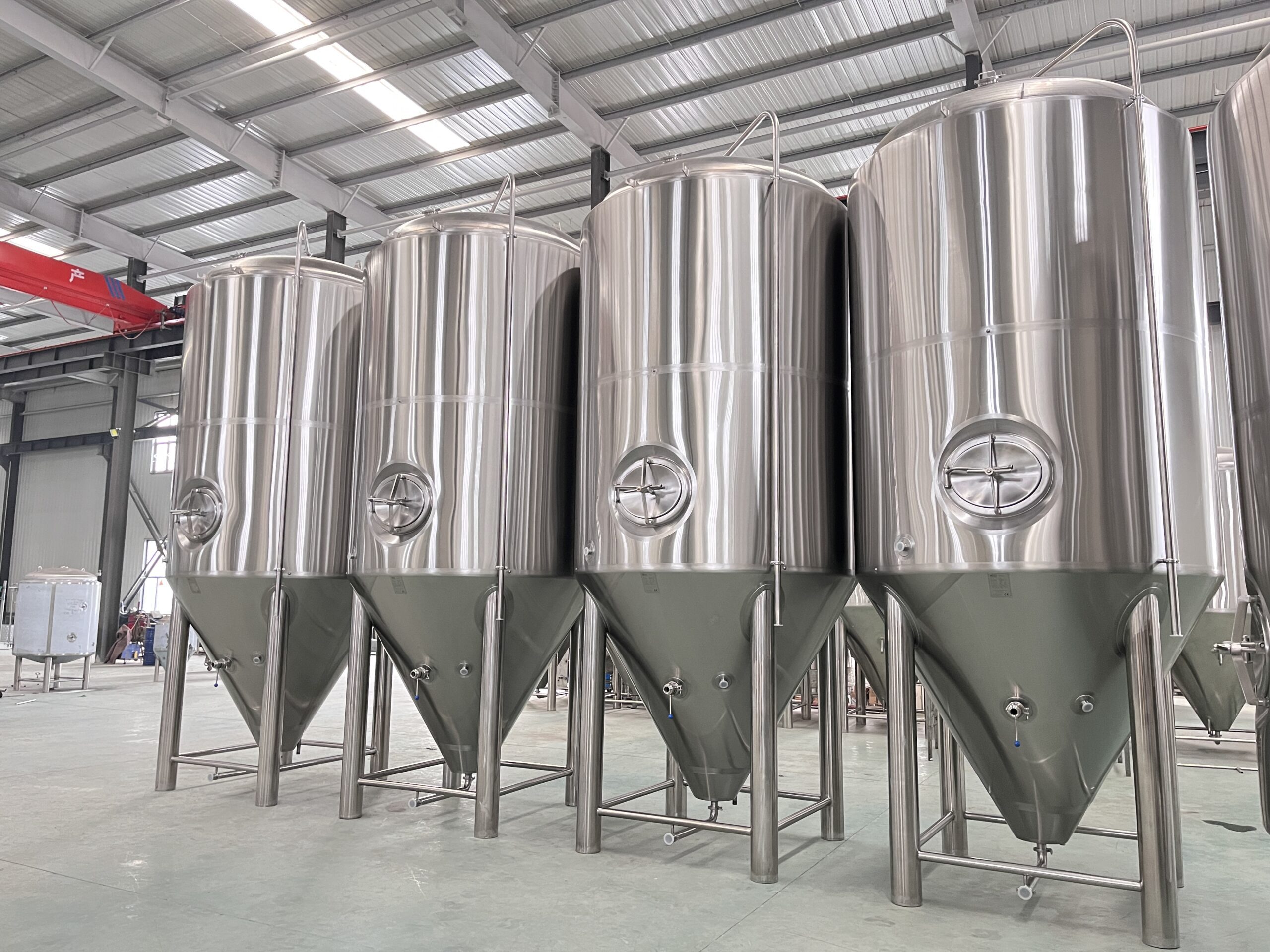
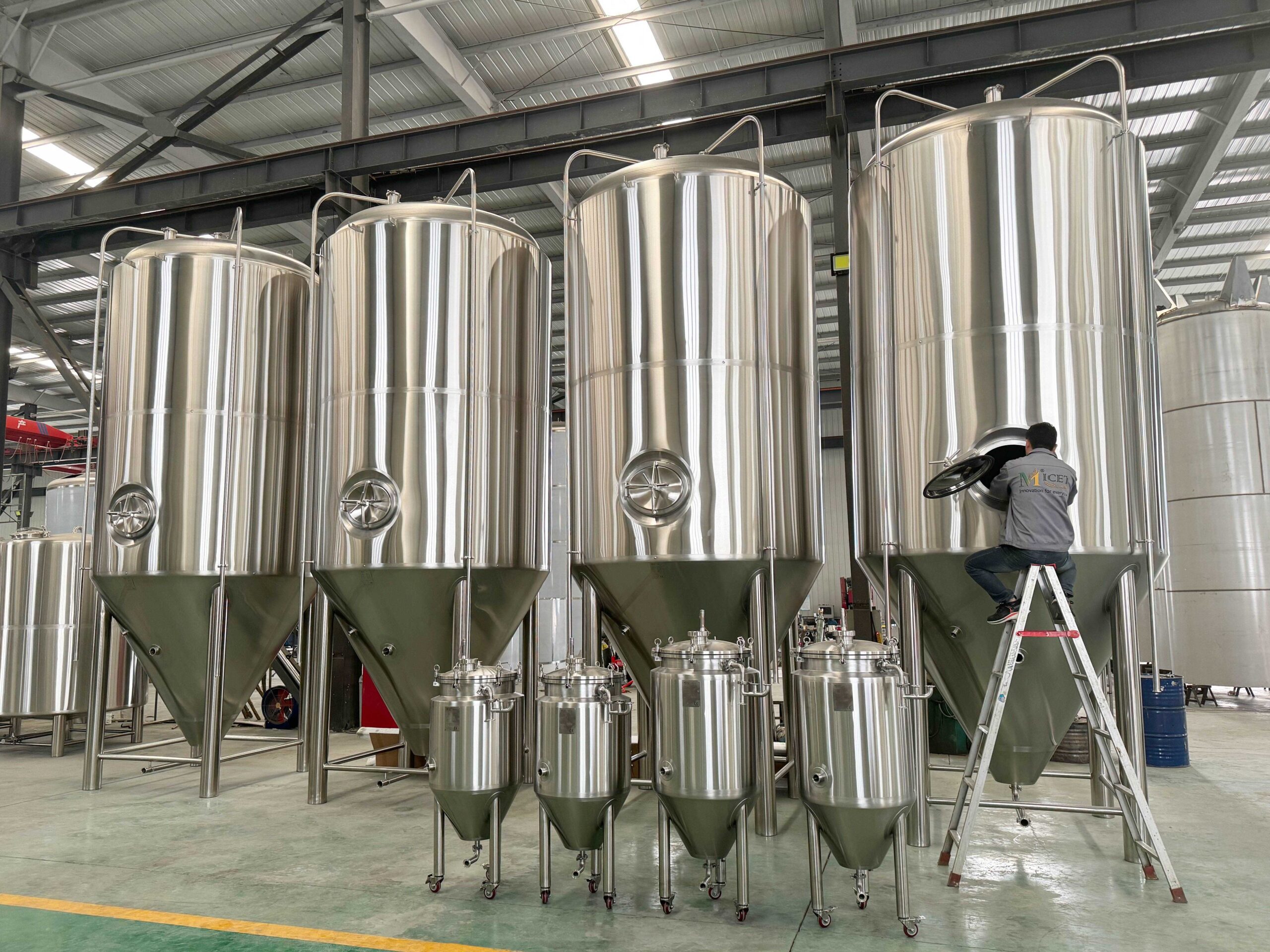
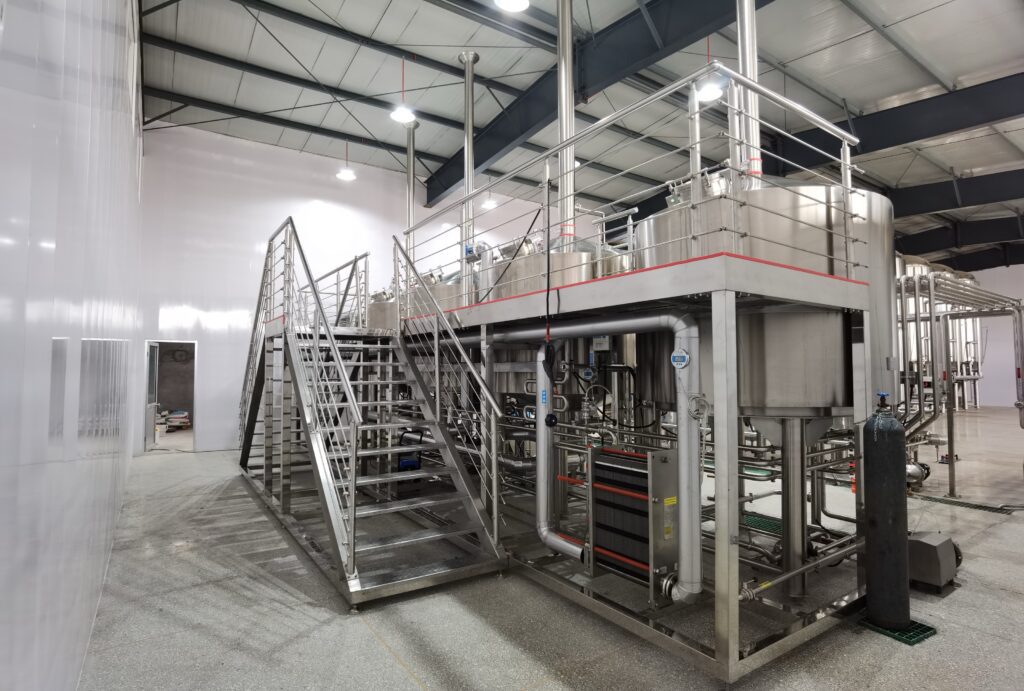
Our Fermentation Cellar Projects & On-Site Photos show used fermentation tanks installed in real breweries and beverage plants, so you can see actual layouts, tank rows and piping, and imagine how similar setups can work in your own project.

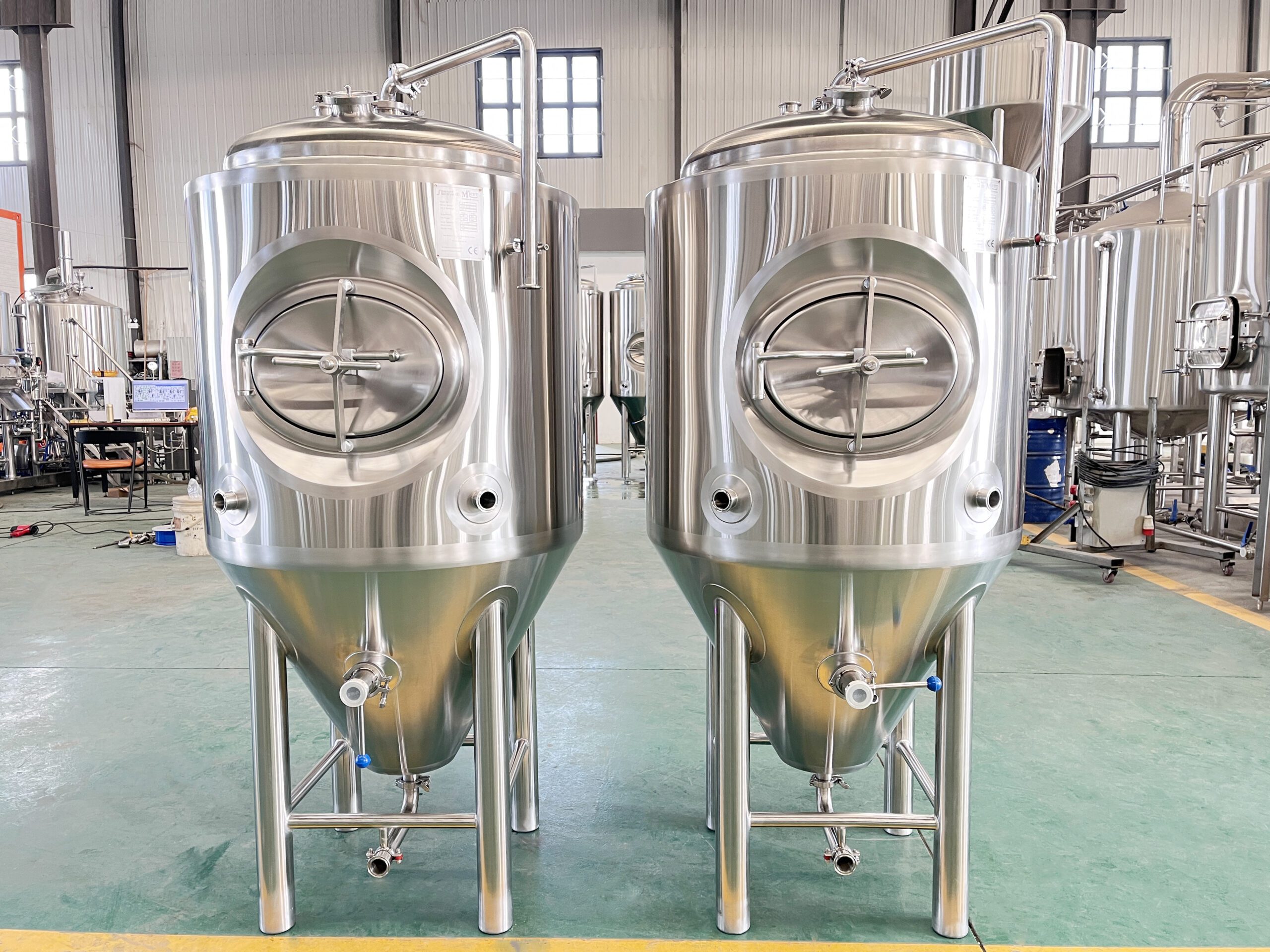
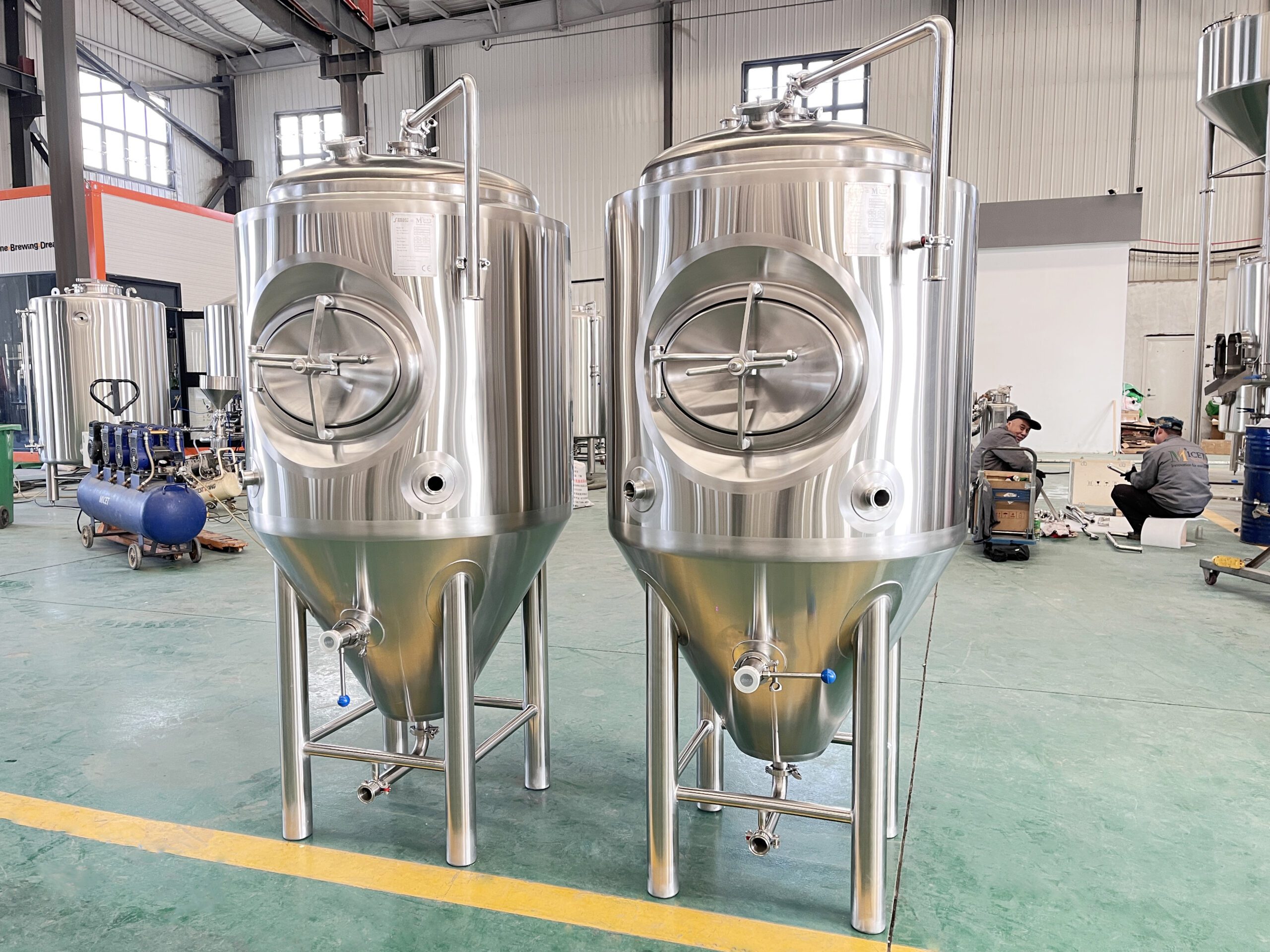
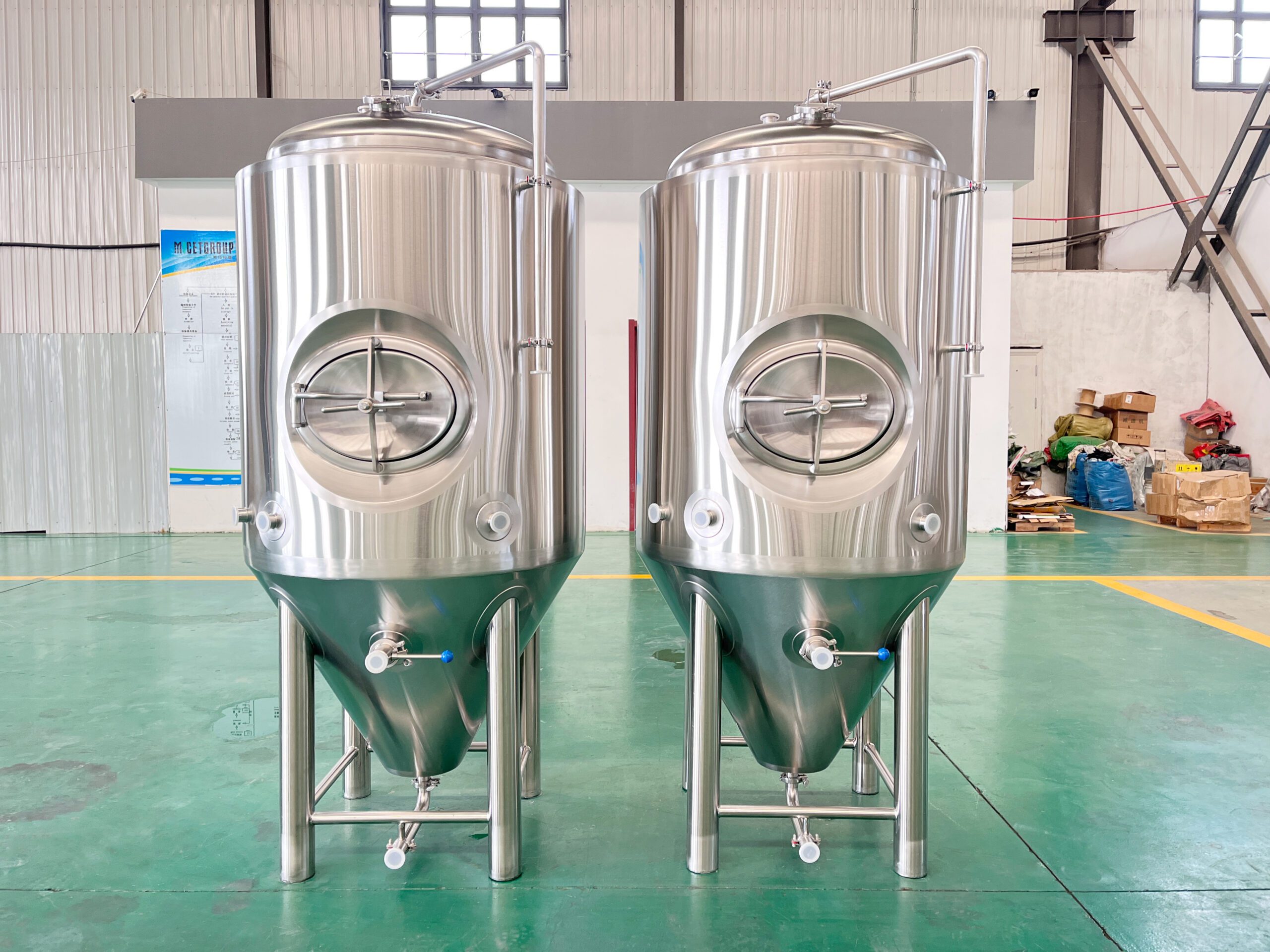
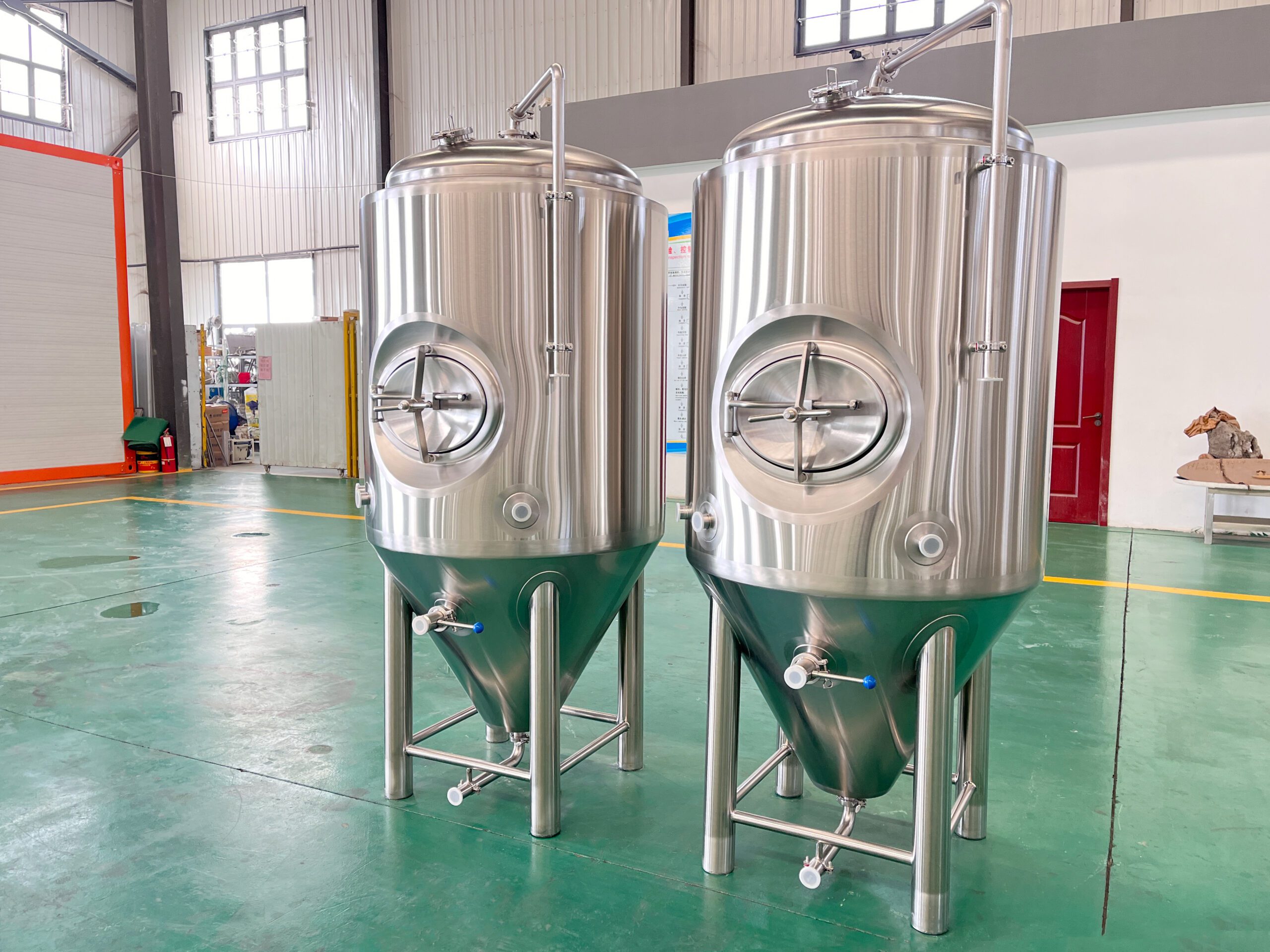
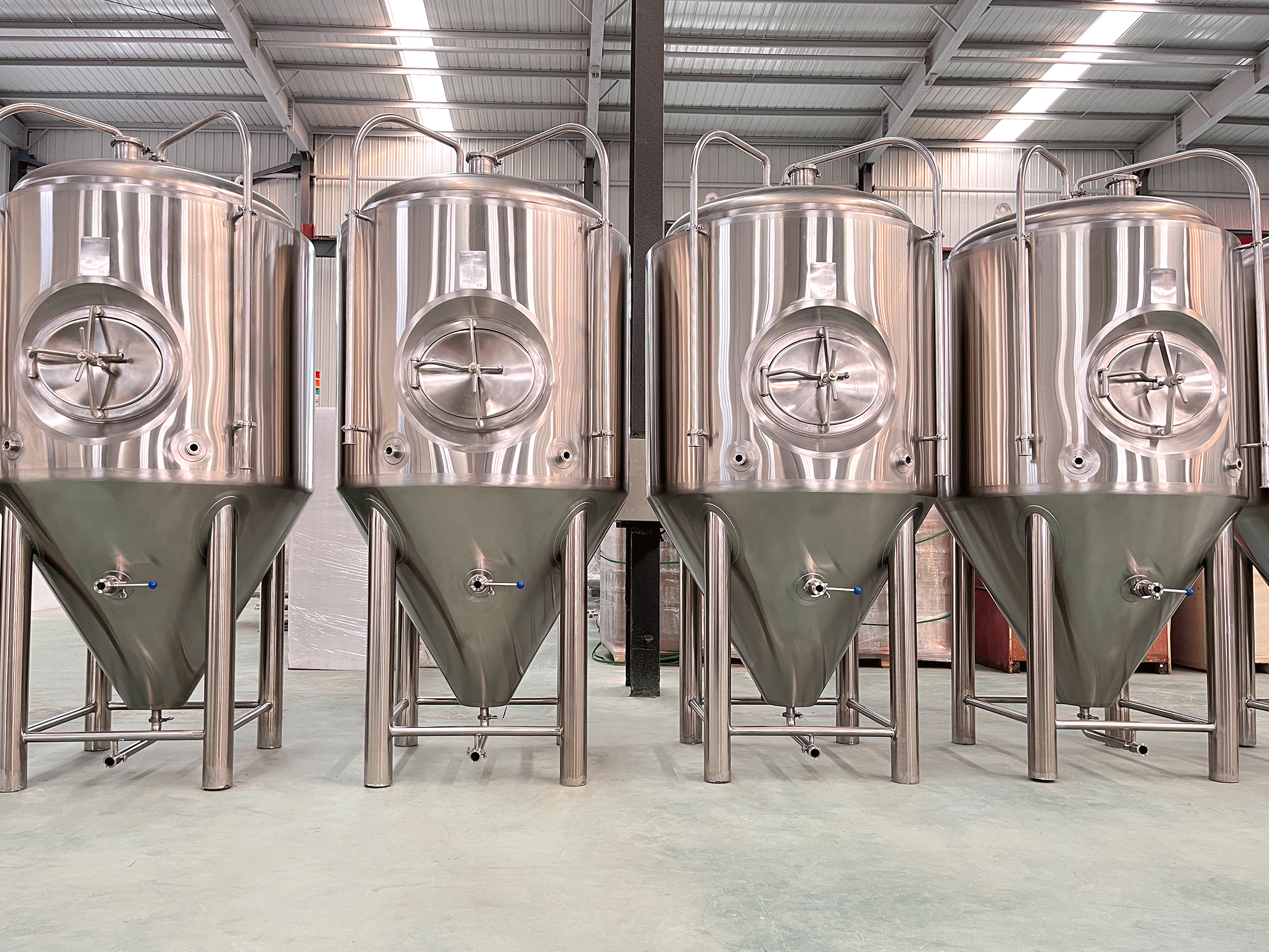
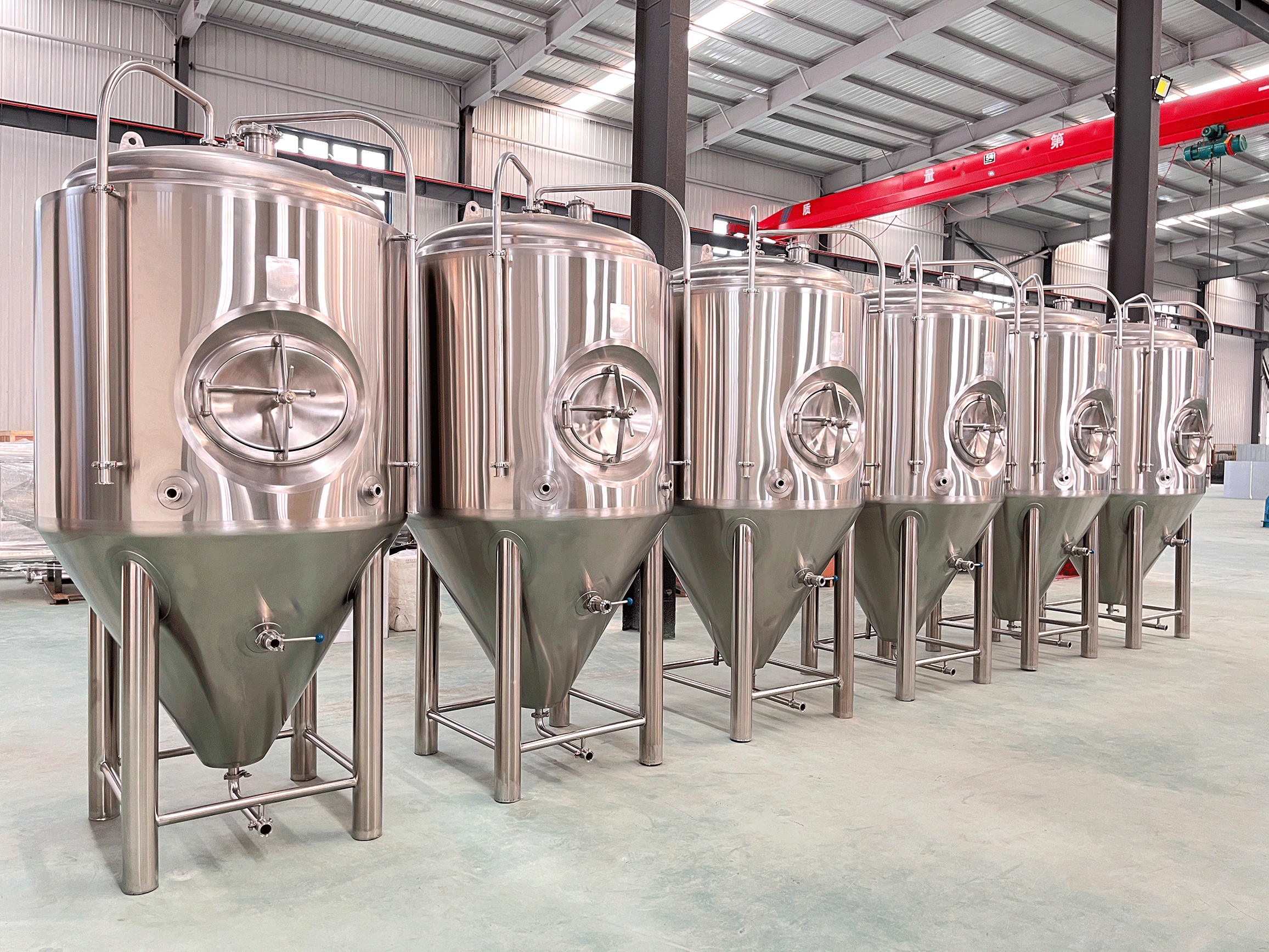
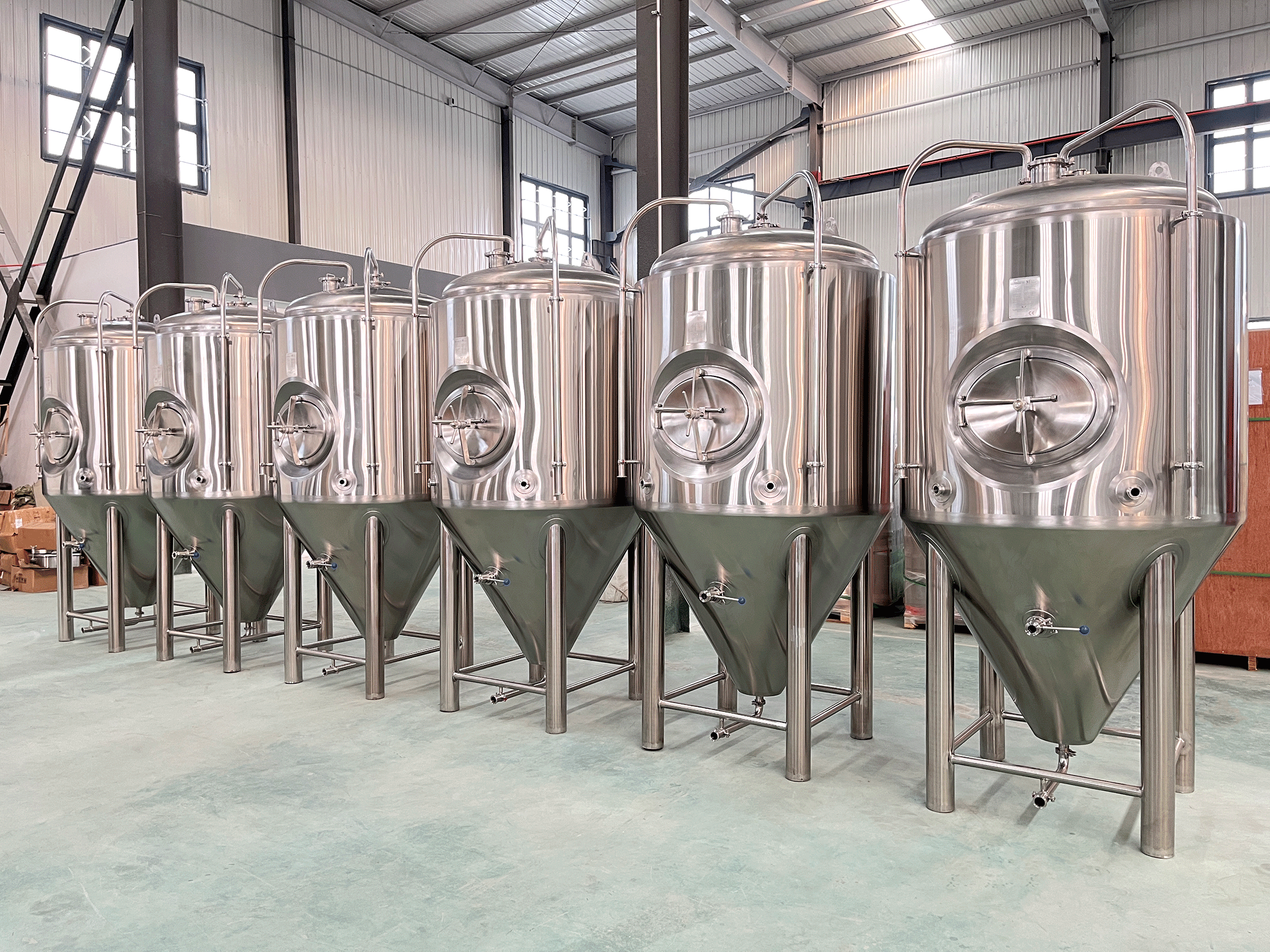
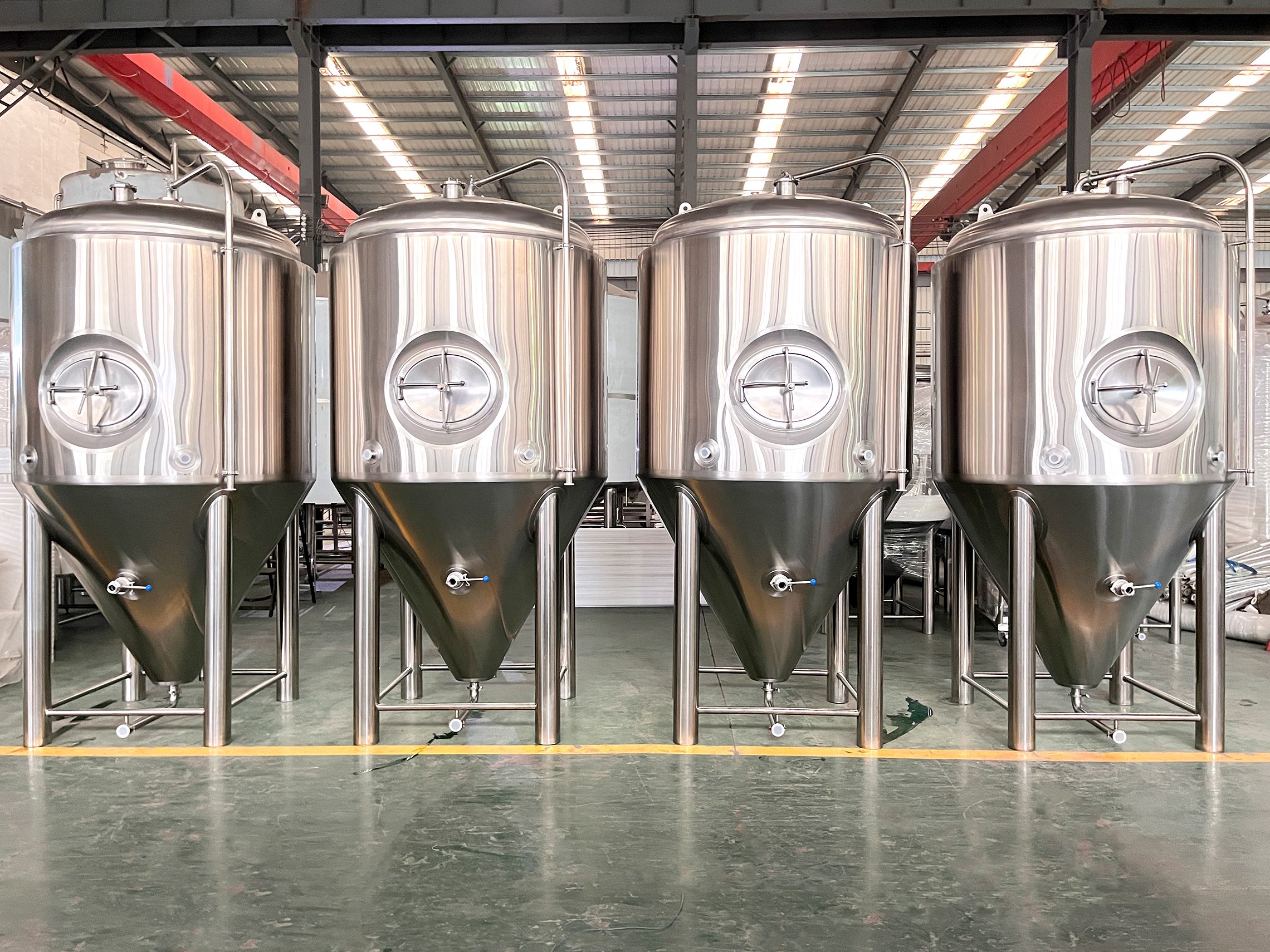
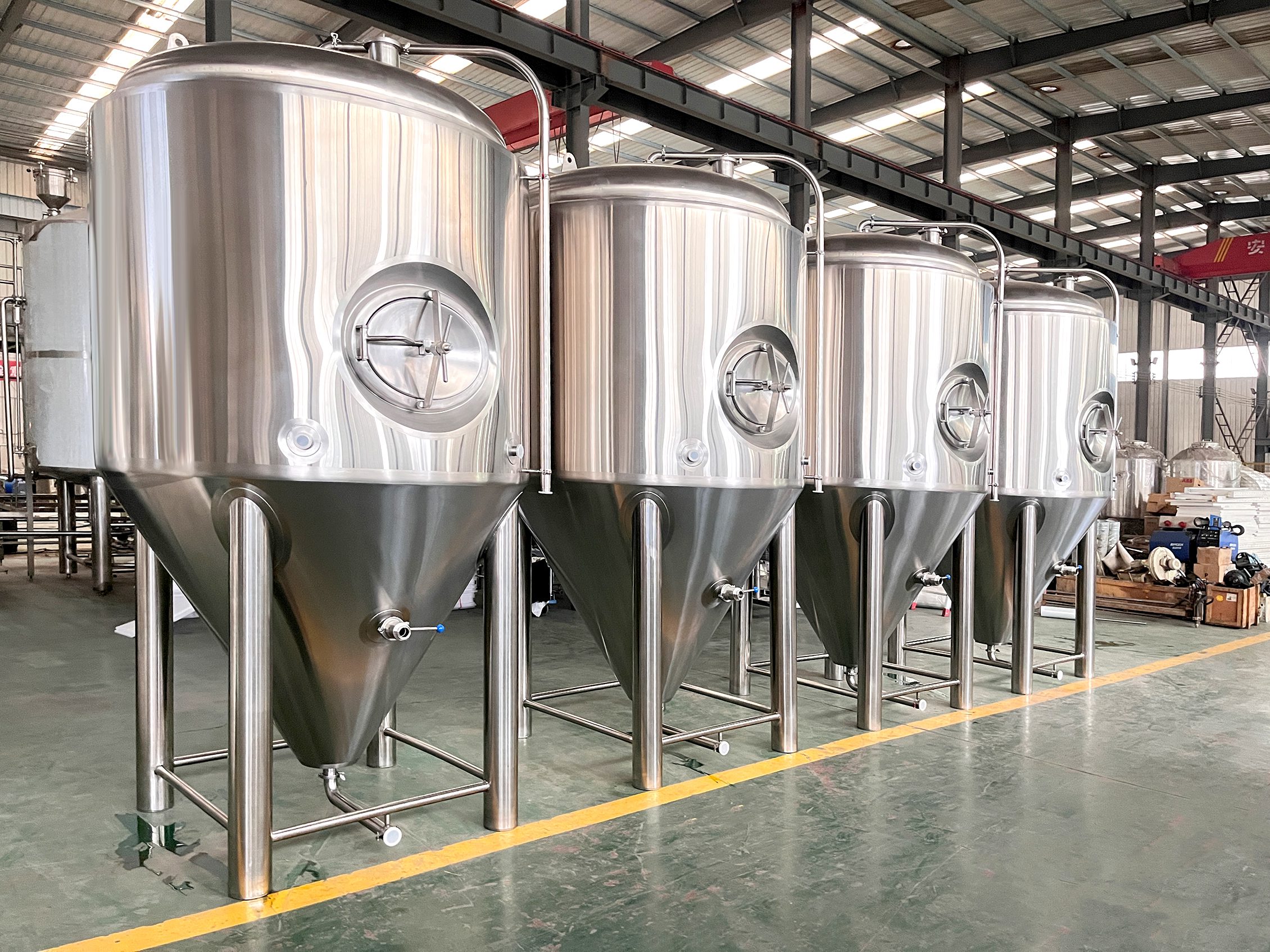
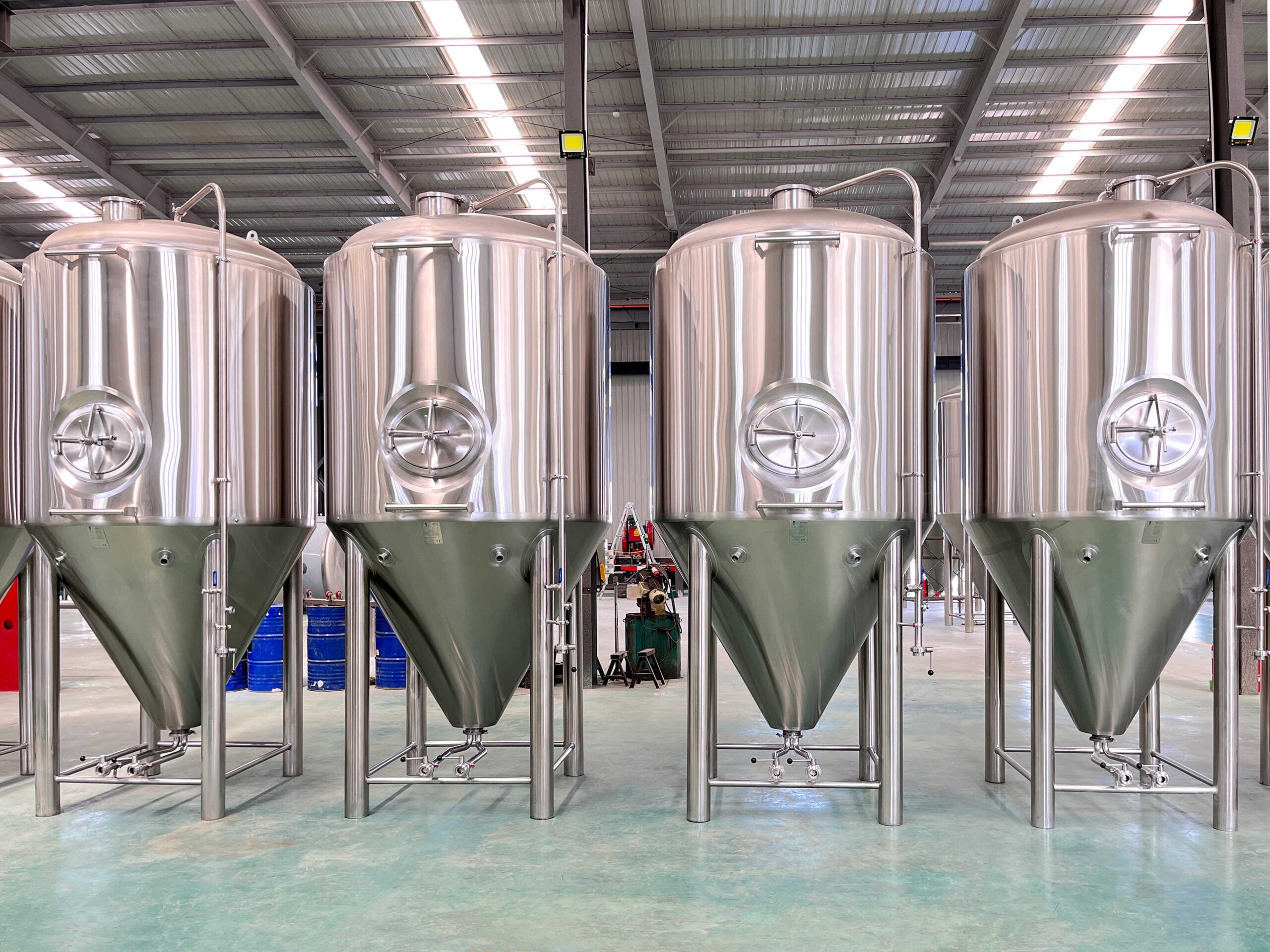
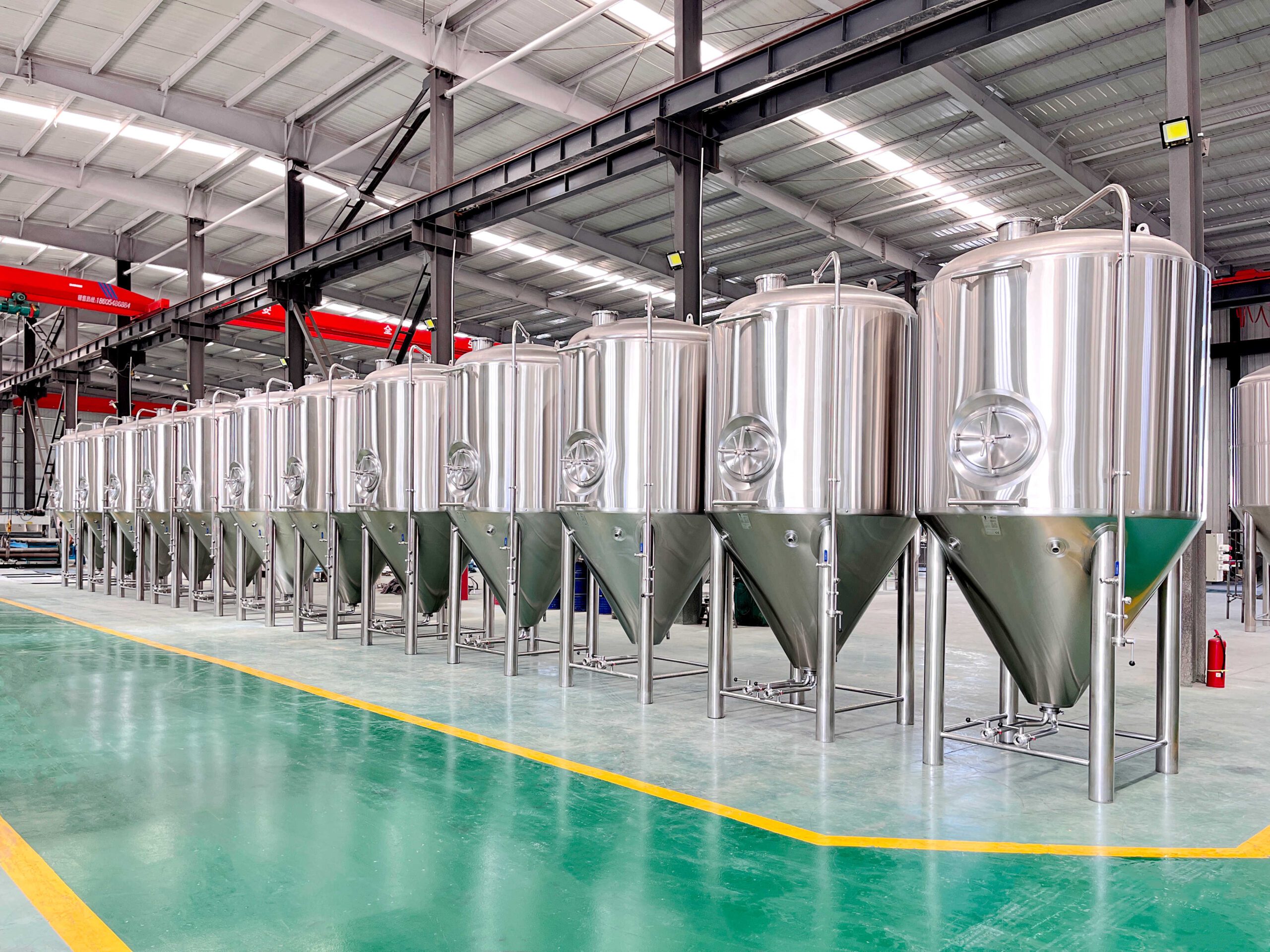
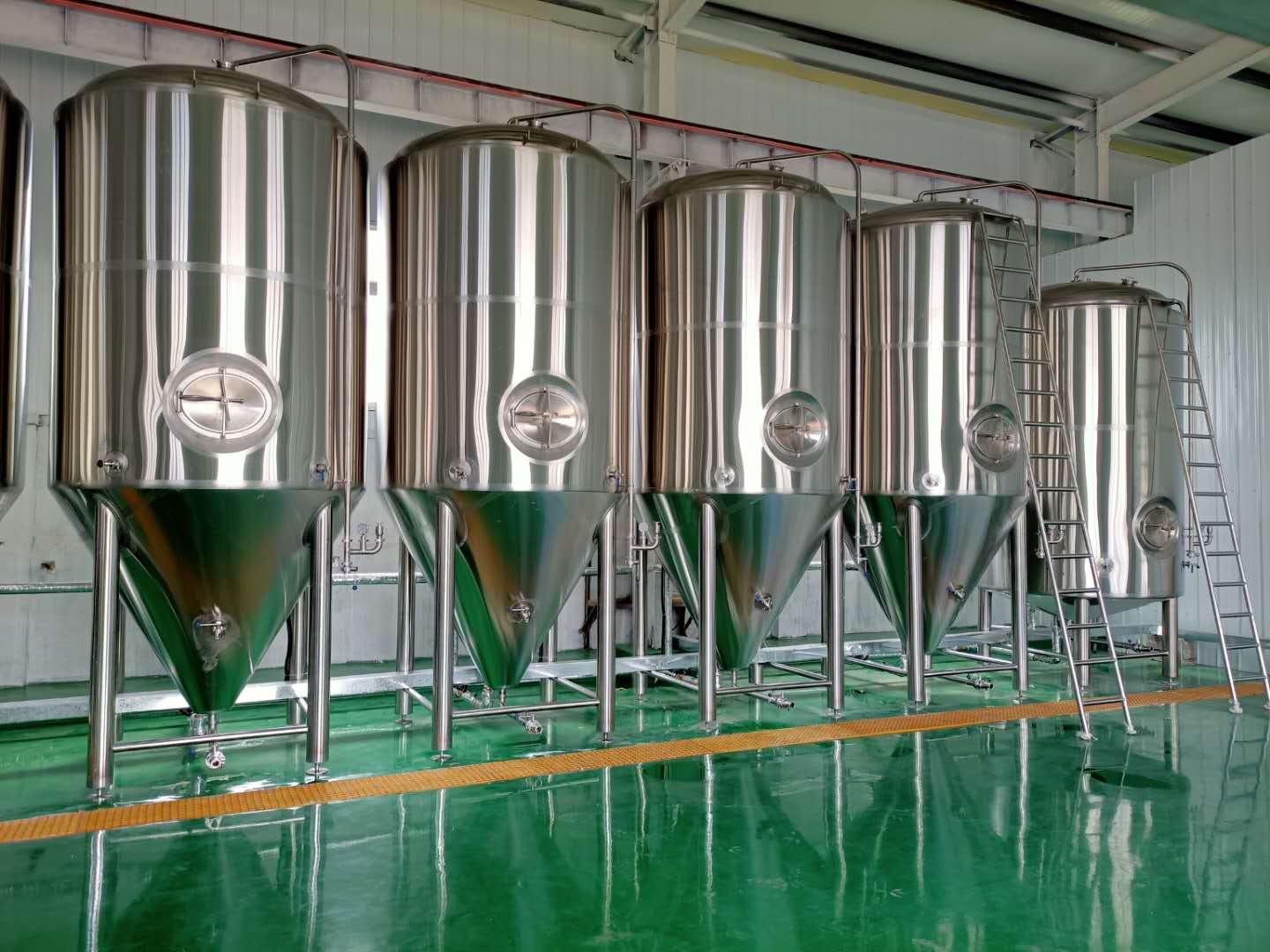
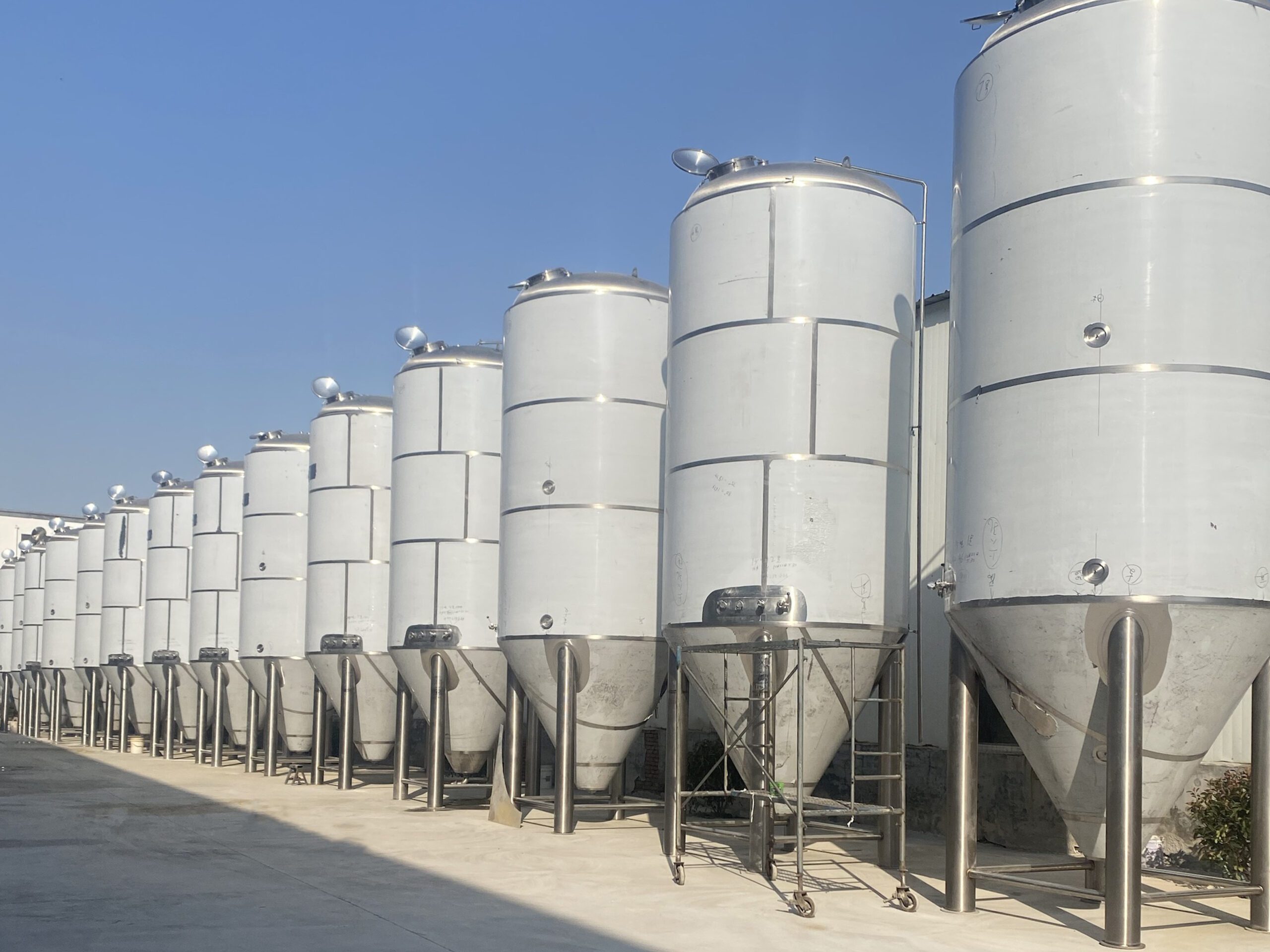
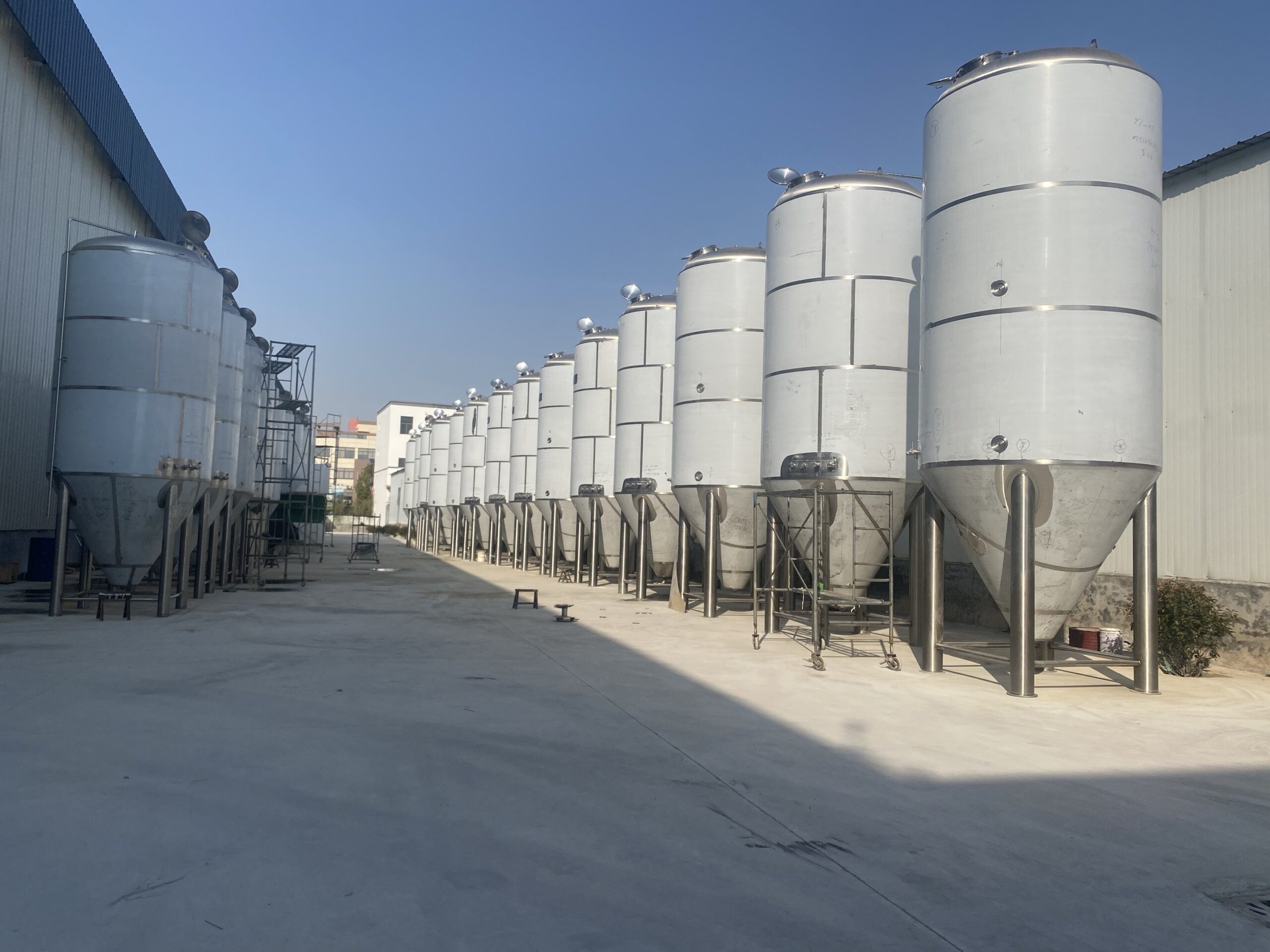
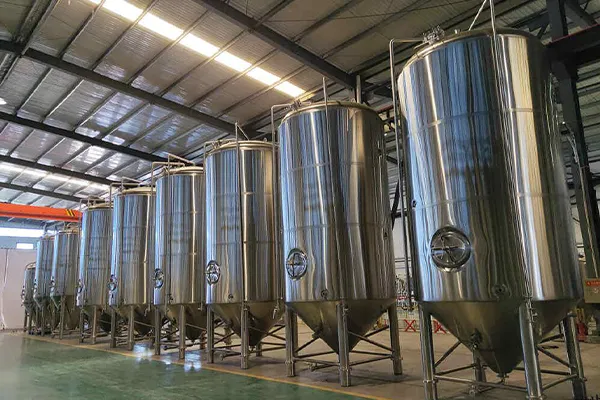
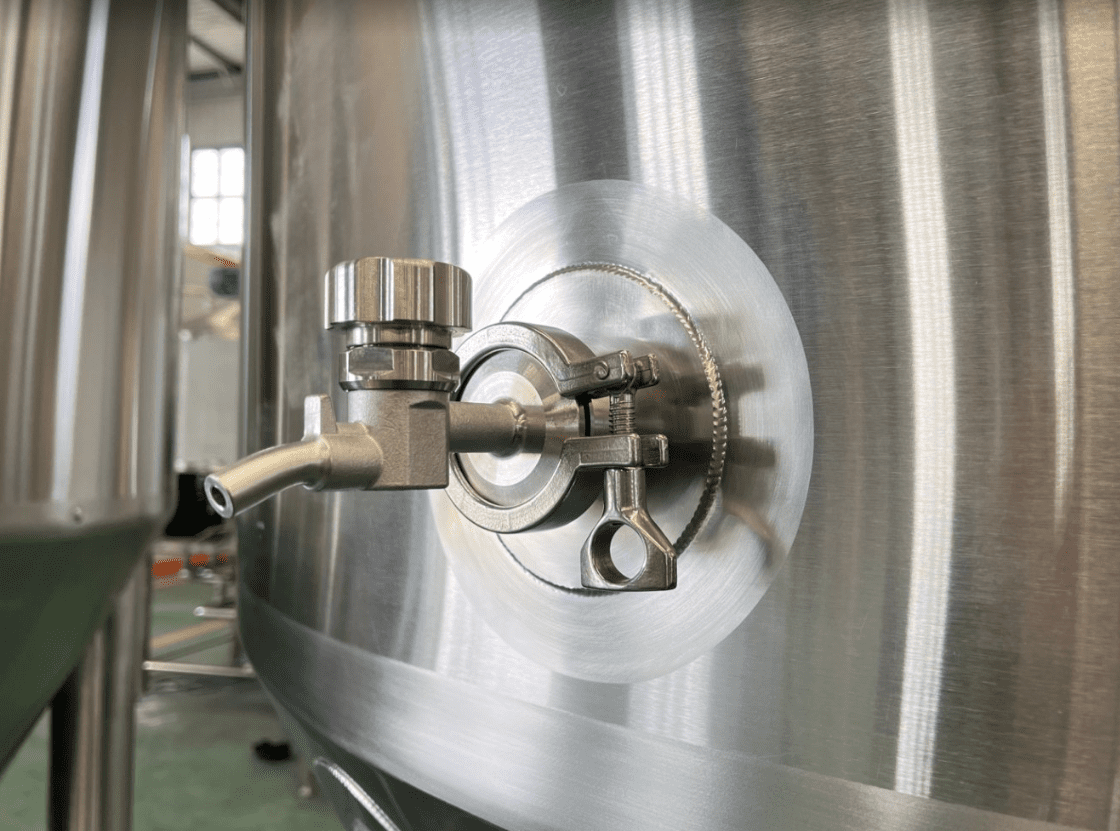
Used 500L two-body three-vessel brewery equipment is a high-quality complete brewing solution for craft breweries, brewpubs, restaurants, and small commercial beer production projects. This system combines a 500L brewhouse, eight fermentation tanks, automatic spent-grain discharge, PLC touchscreen control, and CIP cleaning equipment.
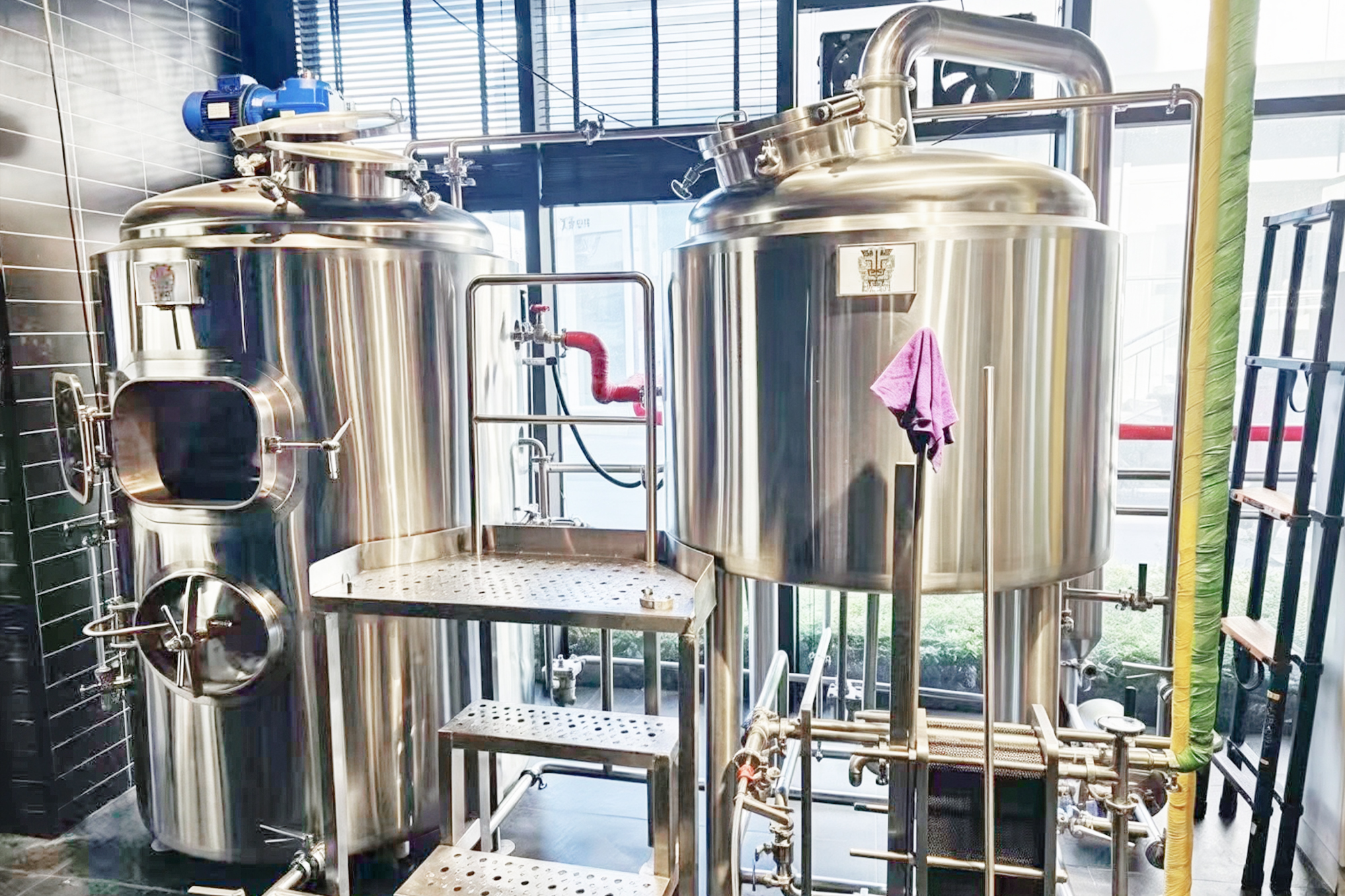
This used 500L two-body three-vessel brewery equipment package is also a complete used 500L brewing system with dual-side steam heating for stable and even heating. The lauter tun is equipped with a temperature-raising function, while the automatic discharge design helps improve brewhouse handling efficiency. The agitator supports forward rotation during mixing and reverse rotation during spent-grain discharge.
Compared with purchasing a new brewery system, this used 500L equipment package can help reduce the initial investment while retaining a professional configuration. The actual equipment condition, included accessories, and refurbishment scope should be confirmed before purchase.
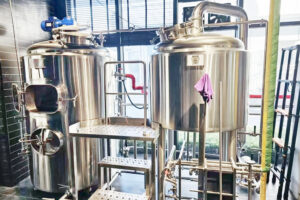
De 500L brewhouse includes a mash/kettle tun, lauter tun, and whirlpool tank. This layout supports mashing, wort separation, boiling, and whirlpool clarification while maintaining an efficient production workflow.
The dual-side steam heating design helps provide more even heat distribution and stable process control during brewing. Steam heating is also suitable for commercial breweries that require reliable and repeatable heating performance.
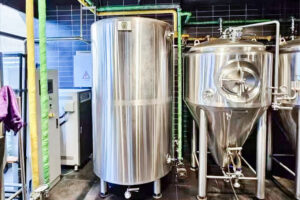
The lauter tun includes a temperature-raising function to support process adjustment during lautering. This feature can help brewers manage wort filtration and improve operational flexibility for different recipes.
The system also includes automatic spent-grain discharge. The agitator rotates forward during mixing and reverses during discharge, helping move the spent grain out of the lauter tun more efficiently and reducing manual handling.
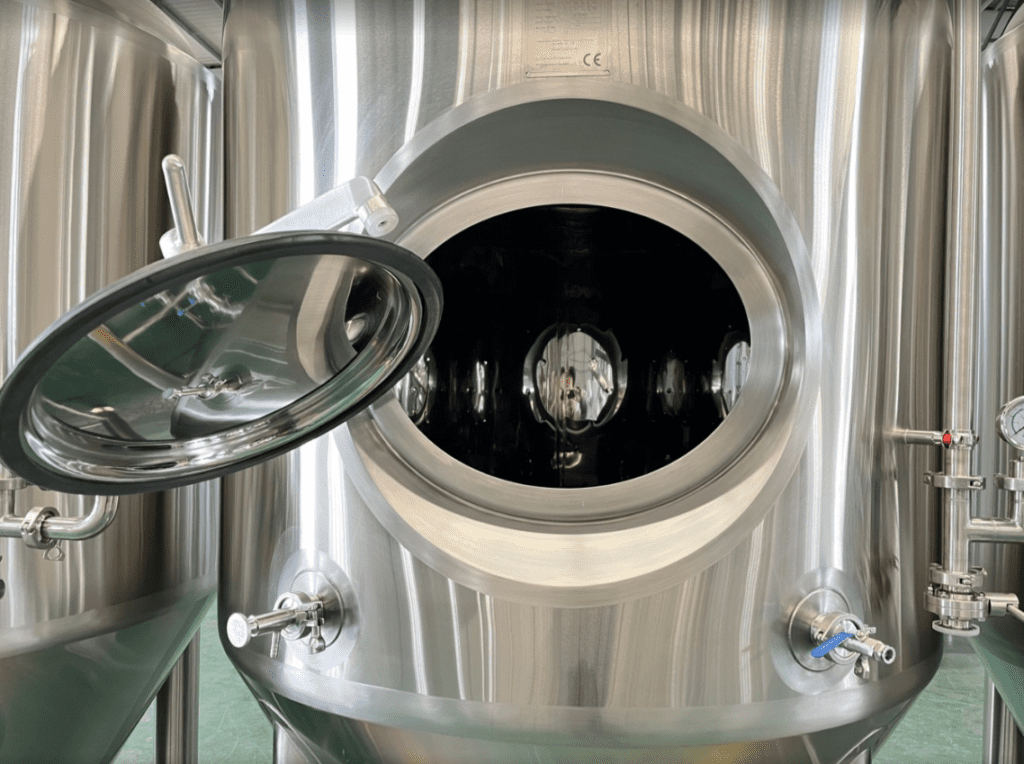
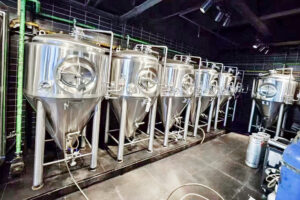
The complete system includes eight 500L side-manway conical fermenters. Eight separate fermentation tanks provide a total nominal capacity of 4000L and allow the brewery to arrange different batches, recipes, and fermentation schedules independently.
The side-manway design provides convenient access for inspection, maintenance, and cleaning. The fermenters can be checked for stainless steel material, cooling jacket condition, pressure rating, valves, fittings, gauges, and CIP connections before purchase.
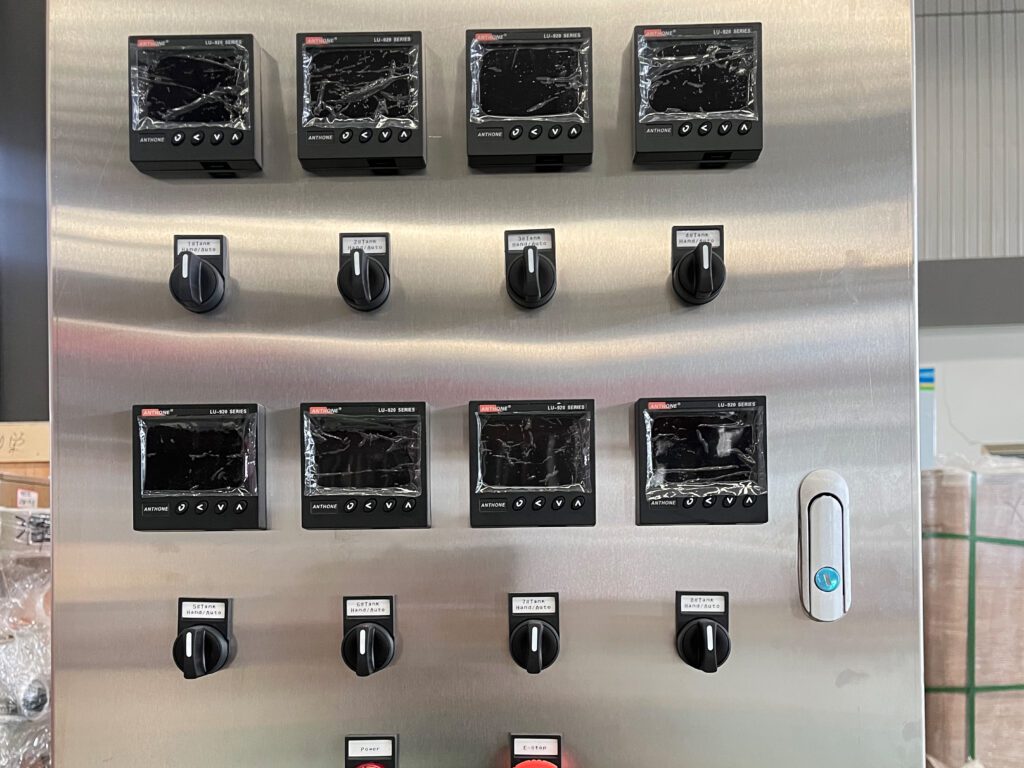
The PLC touchscreen control system provides centralized operation and monitoring of the brewhouse and related equipment. Depending on the actual configuration, the system may control heating, agitator rotation, automatic grain discharge, pumps, temperature settings, and other process functions.
A PLC-based interface can simplify operation and improve process repeatability. Buyers should confirm the PLC brand, touchscreen language, control points, electrical specifications, and compatibility with local power standards.
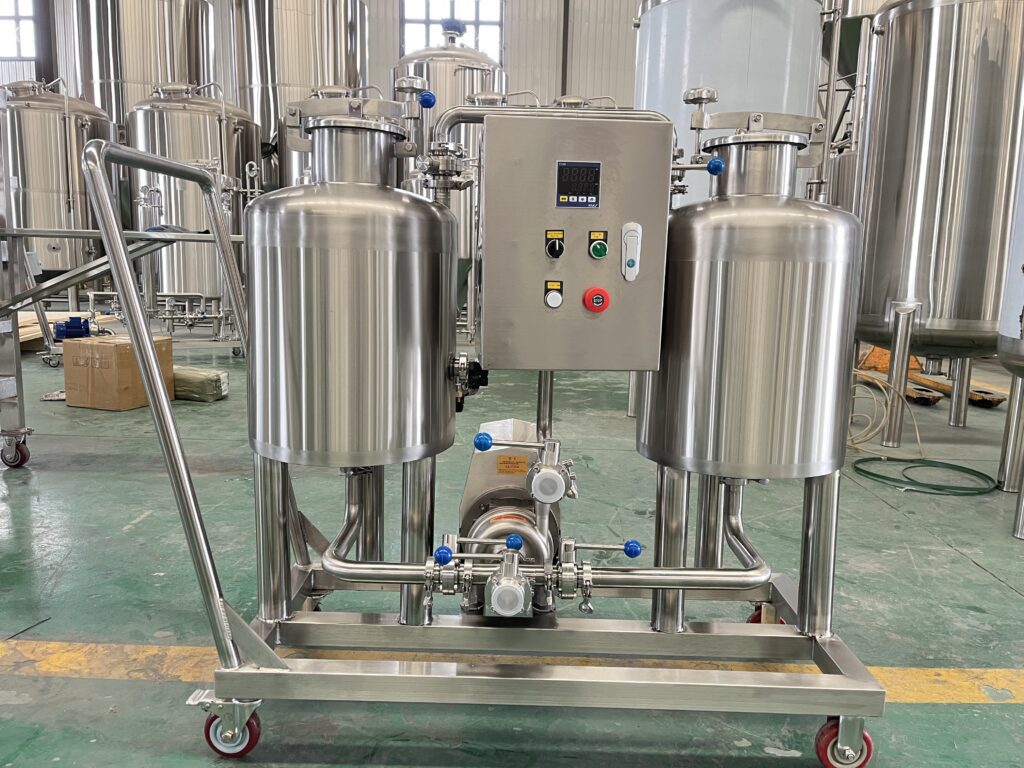
The CIP cleaning system supports routine cleaning and sanitation of the brewhouse, fermentation tanks, pumps, and sanitary pipelines. Effective CIP cleaning helps reduce contamination risks and maintain stable beer quality during commercial production.
With eight 500L fermenters and a professional PLC-controlled brewhouse, this system is suitable for breweries that need multiple fermentation batches and efficient daily operation. It can be considered for:
The actual output depends on the number of brews per day, fermentation cycle, tank quantity, recipe, and operating efficiency.
Before purchasing, buyers should request current photos, videos, detailed specifications, and available maintenance records. Important inspection points include:
Used equipment may require deep cleaning, passivation, gasket replacement, pressure testing, jacket leak testing, or electrical function testing before commissioning.
It can be suitable for brewpubs, microbreweries, restaurants, and small commercial brewing projects. Eight 500L fermenters provide a nominal total fermentation capacity of 4000L. Final suitability depends on the equipment condition, production schedule, and local utilities.
The system features dual-side steam heating, a lauter tun with a temperature-raising function, automatic spent-grain discharge, forward/reverse agitator operation, a PLC touchscreen control system, and a CIP cleaning system.
The agitator rotates forward during mixing and reverses during spent-grain discharge. This configuration supports both brewing operation and automatic discharge from the lauter tun.
Check the stainless steel material, internal surface, side-manway seal, cooling jacket, pressure rating, valves, gauges, CIP connection, and the condition of all eight 500L tanks.
Used equipment may reduce the purchase cost and offer faster availability. New equipment provides more options for customized dimensions, updated controls, and exact system matching.
International shipping can be arranged according to the equipment dimensions, packing requirements, destination regulations, and delivery terms.
If you are planning to start or expand a craft brewery, this used 500L two-body three-vessel brewery system can provide a cost-effective starting point for commercial beer production. Its dual-side steam heating, temperature-raising lauter tun, automatic spent-grain discharge, eight side-manway fermenters, PLC touchscreen control, and CIP system make it suitable for efficient and organized brewery operation.
Contact MICET to request current equipment photos, detailed specifications, equipment condition, pricing, and shipping information. Our team can help evaluate whether the system matches your brewery layout, production process, and future expansion plan.
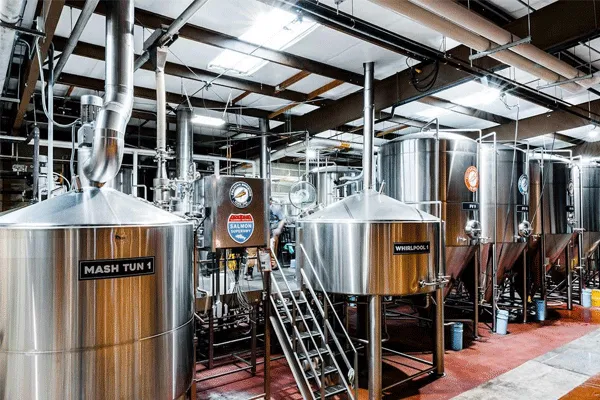
A growing microbrewery often needs to produce several beer styles with different recipes, ingredients, and fermentation conditions. If its equipment cannot adapt, production becomes slower, cleaning takes longer, and product quality may vary. The solution is a flexible brewing system designed around multiple recipes and future growth.
Commercial microbrewery equipment is a coordinated set of brewing vessels, fermentation tanks, cooling systems, transfer equipment, and packaging machines designed for professional beer production. A flexible system allows breweries to produce different beer styles, manage separate fermentation conditions, simplify product changeovers, and maintain consistent quality as production grows.
A modern microbrewery does not always produce one beer with one fixed recipe. Many craft breweries make pale ales, IPAs, lagers, stouts, wheat beers, and seasonal products. Each recipe may require different malt combinations, hop additions, yeast strains, fermentation temperatures, and conditioning periods.
This creates a challenge for equipment selection. A system designed only for one standard recipe may not provide enough flexibility when the brewery introduces new products. For example, a brewer making a traditional lager may need longer cold conditioning, while an IPA producer may need additional dry-hopping equipment and careful oxygen management.
Flexible commercial microbrewery equipment should support three important goals:
A well-planned system does not require a separate production line for every beer style. Instead, it uses suitable shared equipment, dedicated vessels where necessary, and adaptable connections.
For a growing brewery, this approach can reduce unnecessary investment while making it easier to develop new craft beer products.
Different beer styles place different demands on the hot side of a brewery. The brewhouse must handle the ingredients and brewing conditions required by the recipes.
For example, an IPA may use substantial hop additions, while a wheat beer requires a different grain bill and may need careful attention during lautering. A stout may use roasted malts that affect the grist composition and wort characteristics. These differences should be considered when selecting the mash tun, kettle, and supporting equipment.
| Beer Style | Main Brewing Considerations | Equipment Planning |
|---|---|---|
| IPA | High hop additions and aroma preservation | Hop addition access and suitable whirlpool |
| Lager | Stable wort production and repeatability | Reliable heating and cooling |
| Stout | Different roasted malt composition | Suitable mash and lautering design |
| Wheat Beer | High wheat content in the grist | Effective mash mixing and lautering |
| Pale Ale | Balanced malt and hop profile | Flexible recipe control |
| Seasonal Beer | Changing ingredients and recipes | Adaptable vessels and cleaning |
Commercial brew kettles must provide enough working volume, heating capacity, and effective boiling performance. Their design also influences evaporation, hop utilization, and the ability to manage different recipes.
For breweries producing several styles, the kettle should support repeatable heating and efficient wort movement. The brewer should also consider manway access, cleaning coverage, heating method, and connections for pumps and transfer lines.
The right brewhouse makes it easier to develop recipes without changing the entire production system. This is particularly important for craft breweries that frequently introduce limited releases and seasonal beers.
Grain selection is a key part of beer production. Different recipes may use pale malt, wheat, roasted barley, oats, rye, and specialty grains. These ingredients influence mash behavior, wort composition, and the final beer.
A flexible grain brewing system should support different grist compositions without creating unnecessary production difficulties.
The main equipment includes:
For recipes with higher wheat or oat content, mash viscosity and filtration behavior deserve particular attention. The brewhouse should provide suitable mixing and lautering performance for the planned grain bill.
Different brewhouse configurations offer different advantages.
| Configuration | Main Characteristics | Geschikte Toepassingen |
|---|---|---|
| 2-vessel | Compact arrangement with combined functions | Small commercial breweries |
| 3-vessel | Separate mash, lautering, and kettle functions | Growing craft breweries |
| 4-vessel | More independent process operations | Higher production requirements |
The correct configuration depends on recipe variety, batch schedule, available floor space, and investment budget.
For example, a brewery producing a 1 bbl pilot batch for recipe testing may need a different setup from a commercial brewery producing 5 bbl or 15 bbl batches. These are illustrative planning sizes, not fixed equipment requirements.
A professional manufacturer should consider how the brewer actually works rather than simply recommending more vessels.
Fermentation is one of the most important stages in beer production. Different yeast strains and beer styles require different fermentation conditions.
A lager and an ale may use similar raw materials, but their fermentation temperatures, yeast behavior, and conditioning times can differ significantly. If all production is forced into an inflexible tank schedule, the brewery may struggle to maintain a steady production plan.
A commercial fermenter should support suitable temperature management, safe pressure operation, sanitary transfer, and effective cleaning. A conical fermenter is particularly useful because its cone-shaped bottom helps collect yeast and sediment.
There are two common approaches to multi-style production.
Dedicated fermentation tanks
Some breweries assign specific tanks to certain beer families. This can simplify production planning and reduce the risk of flavor carryover or unwanted cross-contact.
Shared fermentation tanks
Other breweries use shared vessels for different recipes. This approach can save investment and floor space, but it requires reliable cleaning, suitable process scheduling, and proper verification before each new batch.
The decision depends on production volume, beer styles, fermentation time, and the brewery’s sanitation procedures.
| Tank Group | Main Production Role |
|---|---|
| Fermenter Group A | Ale and pale ale |
| Fermenter Group B | Lager and longer-conditioning beers |
| Fermenter Group C | IPA and dry-hopped products |
| Brite Tanks | Final conditioning and packaging preparation |
This is an illustrative arrangement. Actual tank assignments should follow the recipe, cleaning requirements, and production schedule.
MICET provides customized fermentation tanks and cellar equipment to help breweries build practical production configurations.
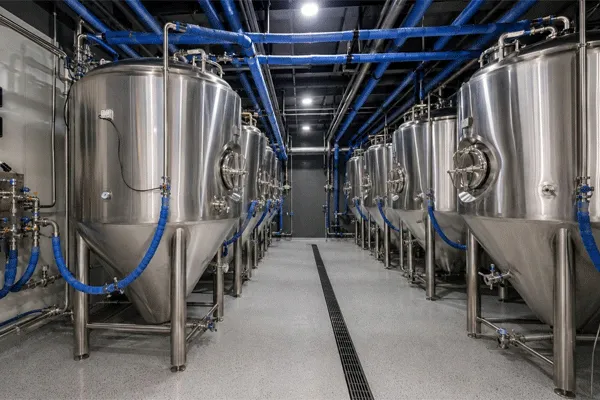
Stainless steel is widely used in professional beer production because it provides durability, corrosion resistance, and suitable hygienic surfaces.
When a brewery makes different products, the tank design becomes even more important. Different beer styles can leave different residues, including hop particles, yeast, proteins, and grain-related deposits.
High-quality stainless steel tanks should provide:
SUS304 is widely used in many brewery applications. SUS316L may be considered for more demanding chemical or corrosion conditions. The material should be selected according to the product, cleaning chemicals, and operating environment.
A stainless steel vessel is only as useful as its overall design. Poorly positioned outlets, inaccessible connections, and areas that retain liquid can make cleaning difficult.
For a brewery producing several styles, tank design should support easy inspection, cleaning, and product transfer.
A good tank configuration also helps operators switch between different recipes with less unnecessary work.
Transfer equipment is often overlooked when planning a new brewery. However, pumps, hoses, fittings, and valves connect the entire production process.
During beer production, liquid moves from the brewhouse to the heat exchanger, then to the fermentation cellar, and eventually to conditioning or packaging equipment.
A suitable pump should match the required flow rate, liquid characteristics, and transfer conditions. It should also support sanitary operation and be compatible with the cleaning process.
| Component | Important Consideration |
|---|---|
| Transfer Pump | Flow rate and product compatibility |
| Sanitary Fitting | Hygienic connection and easy maintenance |
| Hose | Material compatibility and cleaning |
| Valve | Suitable flow control and drainage |
| Pipeline | Correct diameter and efficient routing |
| Coupler | Compatibility with connected equipment |
For breweries producing hop-heavy beers, transfer arrangements should also consider hop particles and other solids. Incorrect pump selection or poorly designed connections can create blockages and unnecessary product loss.
Separate transfer routes may be useful for selected products, especially when recipes contain strong flavors or special ingredients.
Good equipment integration helps reduce cross-contact risks and makes daily operation easier.
Temperature management is essential for consistent beer quality. Different yeast strains and beer styles require different fermentation conditions, so the cooling system must support the complete cellar rather than only one tank.
A wort chiller cools hot wort before yeast is added. A glycol system then helps maintain the required temperature in jacketed fermentation tanks.
If cooling capacity is too low, the brewer may struggle to control fermentation when several tanks operate at the same time.
| Uitrusting | Function |
|---|---|
| Wort Chiller | Cools wort before fermentation |
| Glycol koelmachine | Supplies cooling for tank jackets |
| Glycol Buffer Tank | Stores cooling medium |
| Circulation Pump | Moves glycol through the system |
| Temperature Controller | Manages cooling according to tank requirements |
Imagine a brewery operating several fermenters simultaneously. One tank may require active fermentation cooling, another may need cold conditioning, and a new batch may be entering the cellar.
The cooling system must handle these combined demands.
A suitable design should consider:
For commercial brewing, cooling should be engineered together with fermentatietanks and production scheduling. A reliable system helps the brewer maintain precise temperature conditions across different beer styles.
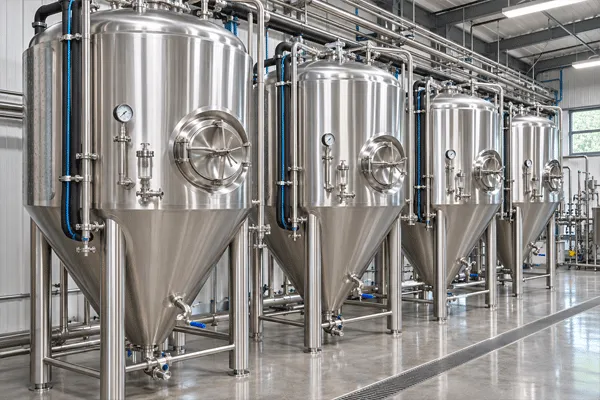
Grain handling is the first physical production stage in a traditional brewery. Poor grain preparation can affect mash performance and create problems later in the brewing process.
A commercial grain handling system may include a malt mill, grain hopper, screw conveyor, weighing equipment, and a hydrator.
The mill should produce a suitable crush for the selected malt and brewhouse design. Too much fine material may affect lautering, while an unsuitable crush can reduce extraction efficiency.
| Uitrusting | Doel |
|---|---|
| Moutmolen | Crushes grain |
| Grain Hopper | Holds malt before processing |
| Screw Conveyor | Transfers grain |
| Grain Hydrator | Mixes grain with water during feeding |
| Dust Collection | Helps manage airborne grain dust |
| Weighing System | Supports recipe accuracy |
For a brewery producing several recipes, clear grain storage and accurate ingredient measurement are important. Different malt bills should be easy to identify and prepare.
The grain handling area should also have suitable ventilation, operator access, and cleaning arrangements.
Planning these details early can make the entire production area more organized and efficient.
Once fermentation and conditioning are complete, beer must move into a suitable packaging or serving system.
Different breweries have different sales channels. A brewpub may mainly sell draft beer, while a regional craft brewery may need cans, bottles, and kegs for distribution.
The packaging configuration should match the product portfolio and business model.
| Uitrusting | Main Application |
|---|---|
| Brite Tanks | Beer conditioning, carbonation, and holding |
| Keg Washer | Cleaning reusable kegs |
| Keg Filler | Filling draft beer into kegs |
| Bottle Filler | Filling bottled beer |
| Can Filling Line | Packaging beer in cans |
| Capping or Seaming Machine | Closing containers |
Brite tanks provide a useful buffer between fermentation and packaging. They can help prepare finished beer for filling while allowing fermenters to return to production.
A beer keg system is especially useful for breweries supplying bars, restaurants, and taprooms. The correct coupler, filling equipment, cleaning equipment, and transfer connections should be selected together.
For breweries selling several beer styles, packaging records and clear product identification also help reduce mistakes during product changes.
The goal is to create a packaging arrangement that supports the actual sales channels without adding unnecessary equipment.
Choosing a manufacturer is not simply about comparing tank prices. The right partner should understand the relationship between recipes, vessels, utilities, cleaning, and daily brewery operations.
An experienced manufacturer can help convert a production plan into a complete equipment configuration.
Before placing an order, buyers should review:
MICET is a professional brewery and beverage equipment manufacturing plant providing customized stainless steel brewing systems, fermentation tanks, brewhouse systems, and turnkey brewery solutions for global B2B customers.
We understand that different breweries have different recipes, production targets, and operating conditions. Our engineering approach focuses on matching equipment to the complete brewing process.
Our support can include:
For customers who want to manage initial investment, we can also discuss suitable new, used, and hybrid equipment configurations.
Whether you are establishing a new microbrewery, upgrading an existing facility, or expanding your craft beer portfolio, the right equipment should support today’s production while leaving room for tomorrow’s growth.
Contact MICET to discuss your commercial microbrewery equipment project. Share your target batch size, beer styles, production schedule, and available floor space. Our team can help develop a customized brewing system that matches your business goals.
A commercial microbrewery generally requires a brewhouse, malt mill, fermentation tanks, cooling equipment, pumps, sanitary pipelines, CIP equipment, and packaging machinery. The final configuration depends on production volume, beer styles, and sales channels.
Yes. A flexible brewing system can produce multiple beer styles by adjusting recipes, grain bills, hop additions, fermentation conditions, and cleaning procedures. Some products may require dedicated tanks or additional accessories.
A conical fermenter has a cone-shaped bottom that helps collect yeast and sediment. This design supports yeast removal, product transfer, and cleaning. A standard tank may have a different bottom design and operating purpose.
The number depends on brewhouse capacity, brewing frequency, fermentation time, conditioning requirements, and product variety. Breweries making both ales and longer-conditioning lagers may need more cellar capacity than breweries producing only fast-turnover beers.
A glycol system supplies cooling to fermentation tank jackets and other connected equipment. It helps maintain suitable fermentation and conditioning temperatures, especially when multiple tanks operate simultaneously.
Yes. Manufacturers can customize vessel capacity, brewhouse configuration, tank connections, heating methods, cooling systems, control panels, and auxiliary equipment according to project requirements.
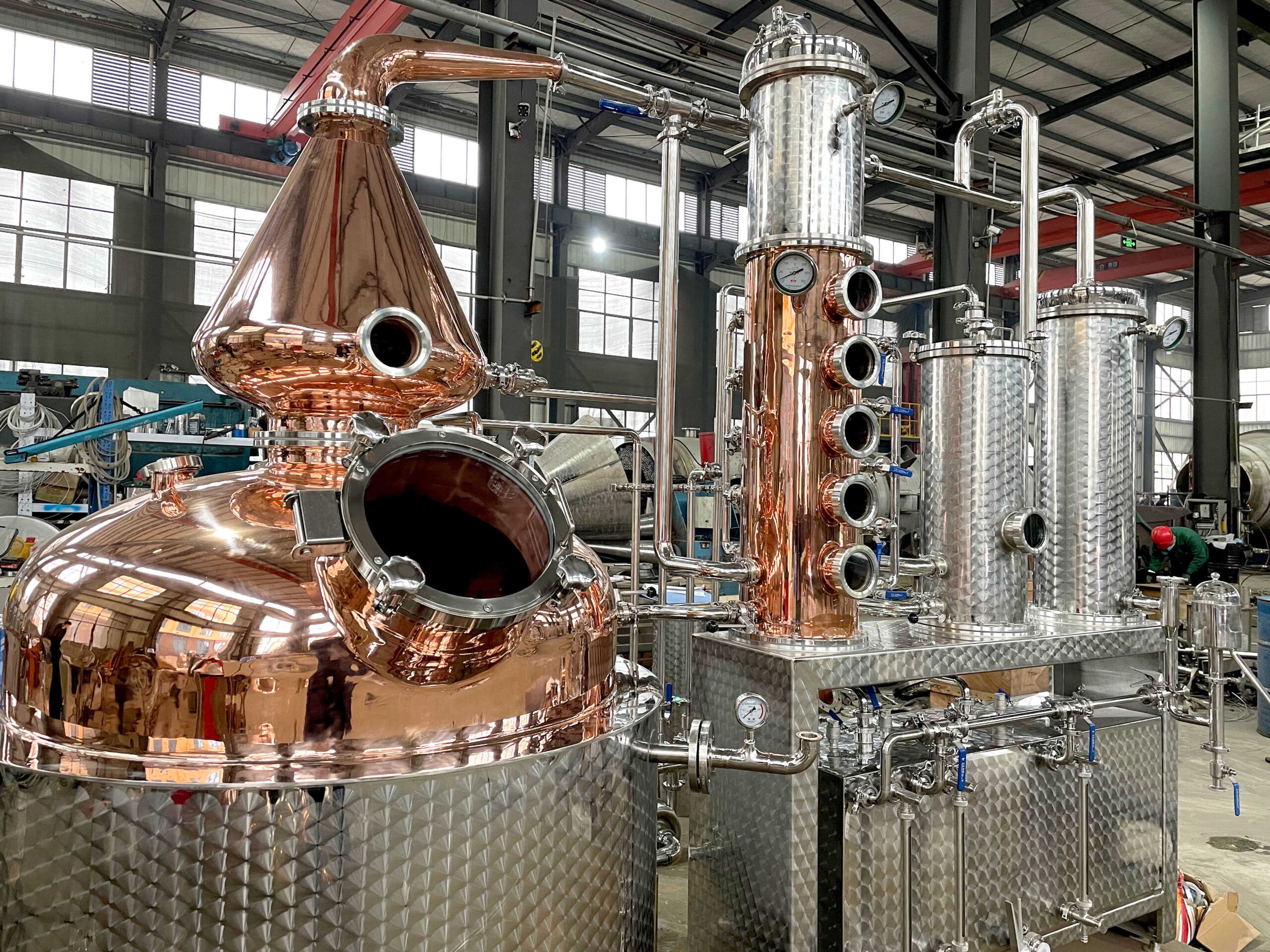
Starting an alcohol production business involves more than purchasing a still. Poor equipment selection, unsuitable production capacity, and inefficient process connections can increase operating costs and delay production. Working with experienced distillery plant manufacturers helps you build a system that matches your products, factory space, and long-term business goals.
An alcohol distillation plant is an integrated production facility that uses fermentation, heating, vapor separation, condensation, and storage equipment to produce beverage spirits such as whisky, vodka, gin, rum, and brandy. A suitable plant combines pot stills, column stills, condensers, fermentation tanks, storage vessels, cooling systems, and process controls according to production capacity and product requirements.
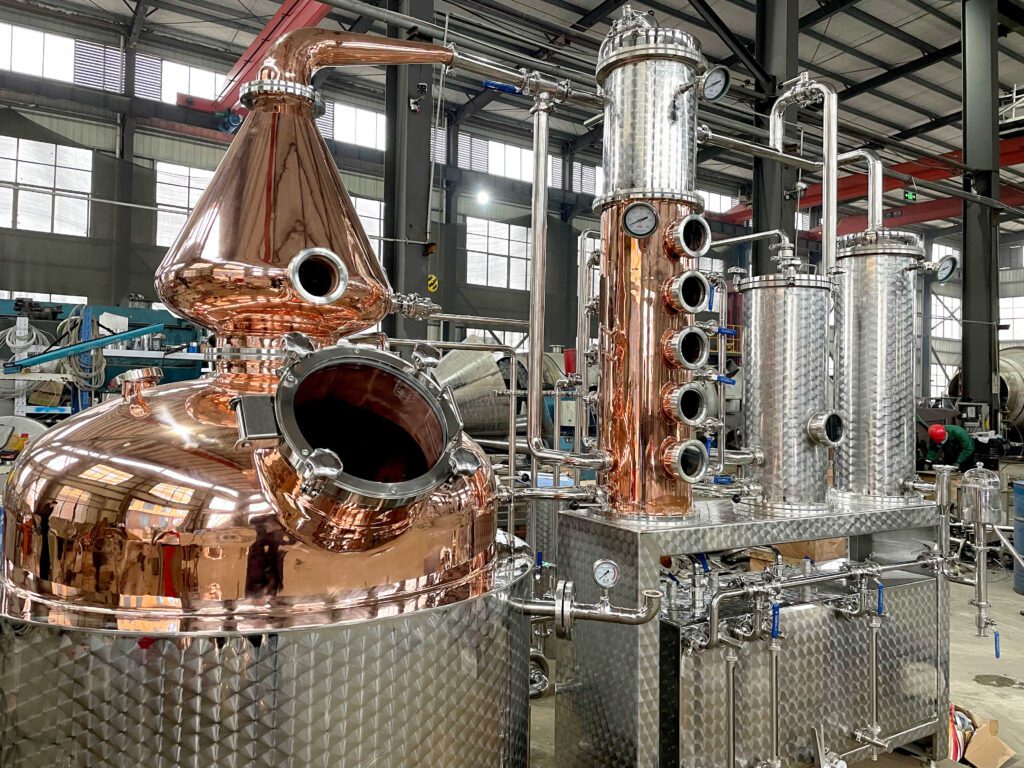
An alcohol distillation plant is a facility designed to produce concentrated alcoholic spirits from fermented raw materials. It combines several production stages, including raw material preparation, fermentation, distillation, condensation, purification, storage, and packaging.
The main purpose of distillation is to separate alcohol and other volatile components from a fermented liquid. The process uses differences in volatility and boiling behavior to achieve the required alcohol concentration and product characteristics. A distiller can adjust the equipment configuration according to the type of spirit being produced.
A typical beverage distillery plant includes:
| Uitrusting | Main Function |
|---|---|
| Raw material preparation system | Prepares grain, fruit, or other feedstock |
| Mash cooker | Supports preparation of grain-based materials |
| Fermentation tanks | Convert fermentable sugars into alcohol |
| Pot nog steeds | Supports traditional batch distillation |
| Distillation column | Supports controlled separation and rectification |
| Condenser | Converts alcohol vapor into liquid |
| Spirit collection tank | Collects distilled liquid |
| Storage and blending tanks | Hold and prepare finished spirits |
| CIP-systeem | Supports equipment cleaning |
| Control panel | Monitors and controls production parameters |
The process begins with raw material preparation and fermentation. After fermentation, the liquid moves to the distillation unit, where controlled heating creates vapor. The condenser then cools the vapor into liquid spirit.
For commercial producers, every stage must work together. A well-designed distillation system improves process stability, product consistency, and production efficiency.
Raw materials play an important role in determining the design of a distillery. Different materials require different preparation methods, fermentation conditions, and equipment configurations.
Common feedstock options include:
The preparation system should match the selected raw materials. For example, a grain-based distillery may need grain handling, milling, mashing, and wort or mash preparation equipment. A rum production line may require equipment suitable for handling molasses and sugar-based fermentation materials.
Fermentation determines how much alcohol-containing liquid is available for the next production stage. If fermentation tanks cannot supply enough liquid, the distillation equipment may remain idle.
A commercial distillery should consider:
A professional manufacturer should calculate the relationship between fermentation capacity and still capacity rather than selecting each machine separately.
For example, a whisky producer may require several fermentation tanks to maintain a regular supply of fermented wash. A vodka producer targeting high-purity neutral alcohol may need a different fermentation and rectification arrangement.
MICET provides customized fermentation tanks and distillery equipment for different beverage production requirements.
Different distillation plants use different equipment depending on production scale, spirit type, and operating method. The three main still configurations are pot stills, column stills, and hybrid stills.
Best suited for traditional batch spirit production.
Pot stills are widely used for whisky, rum, brandy, and other flavor-focused spirits. They allow distillers to manage individual batches and adjust production conditions according to the recipe.
A typical pot still system includes:
Copper components are commonly selected for traditional spirit production because copper interacts with certain sulfur compounds during distillation.
Best suited for controlled separation and higher throughput.
A column still uses multiple separation stages to control vapor and liquid contact. The number and arrangement of plates or sections influence the separation performance.
Column systems are commonly used for vodka and neutral spirit production. They can also be configured for other applications that require specific separation characteristics.
Best suited for producers making several spirit styles.
A hybrid still combines features of pot still and column still designs. It gives producers more flexibility when developing multiple products.
| Still Type | Main Advantage | Typical Applications |
|---|---|---|
| Pot Still | Traditional flavor development | Whisky, rum, brandy |
| Column Still | Controlled separation and throughput | Vodka, neutral spirits |
| Hybrid Still | Flexible production | Multi-product distilleries |
MICET manufactures and customizes these three core configurations according to spirit style, batch size, and automation requirements.
Choosing a distillation system starts with the final product. A whisky distillery has different equipment requirements from a vodka or gin production facility.
For example, whisky producers often focus on flavor development and copper contact. Vodka producers usually require more extensive separation and purification. Gin producers may need botanical infusion equipment to develop their desired aroma.
The following table provides a general reference:
| Spirit Type | Recommended Equipment | Main Design Consideration |
|---|---|---|
| Whisky | Pot still or hybrid still | Flavor development |
| Wodka | Kolom nog steeds | Neutral spirit and purity targets |
| Gin | Pot still with gin basket | Botanical extraction |
| Rum | Pot still or column still | Fermented molasses or sugar-based wash |
| Brandy | Pot nog steeds | Fruit character and aroma |
| Neutral spirit | Column distillation system | Separation and product specifications |
Some producers require extra neutral alcohol (ENA) or other high-purity neutral spirits.
These applications require suitable column configuration, reflux management, product monitoring, and downstream purification where specified. The equipment should be engineered around the required product specification rather than a general claim of high purity.
For vodka manufacturers, MICET offers customized distillation solutions, including a 20-layer copper distillation column and PLC-based process control options.
A professional distiller should discuss the target alcohol strength, throughput, product characteristics, and applicable local requirements before finalizing the system.
Production capacity is one of the most important decisions when planning a new alcohol plant.
A system that is too small may limit business growth. An oversized distillery plant can increase initial investment, utility costs, and unused equipment capacity.
Before selecting a production plant, calculate:
MICET provides distillery equipment configurations across several capacities.
| Equipment Capacity | Typical Project Positioning |
|---|---|
| 200L | Pilot production and small distilleries |
| 300L | Small-scale craft spirit production |
| 500L | Growing craft distilleries |
| 800L | Expanded small commercial production |
| 1,000L | Commercial craft distilleries |
| 1,500L | Growing commercial operations |
| 2,000L | Medium-scale production |
| 3,000L | Larger commercial projects |
| 5,000L | Higher-capacity production facilities |
These capacities represent available equipment configurations, not guaranteed finished alcohol output. Actual production depends on working volume, raw materials, fermentation performance, distillation cycles, and product specifications.
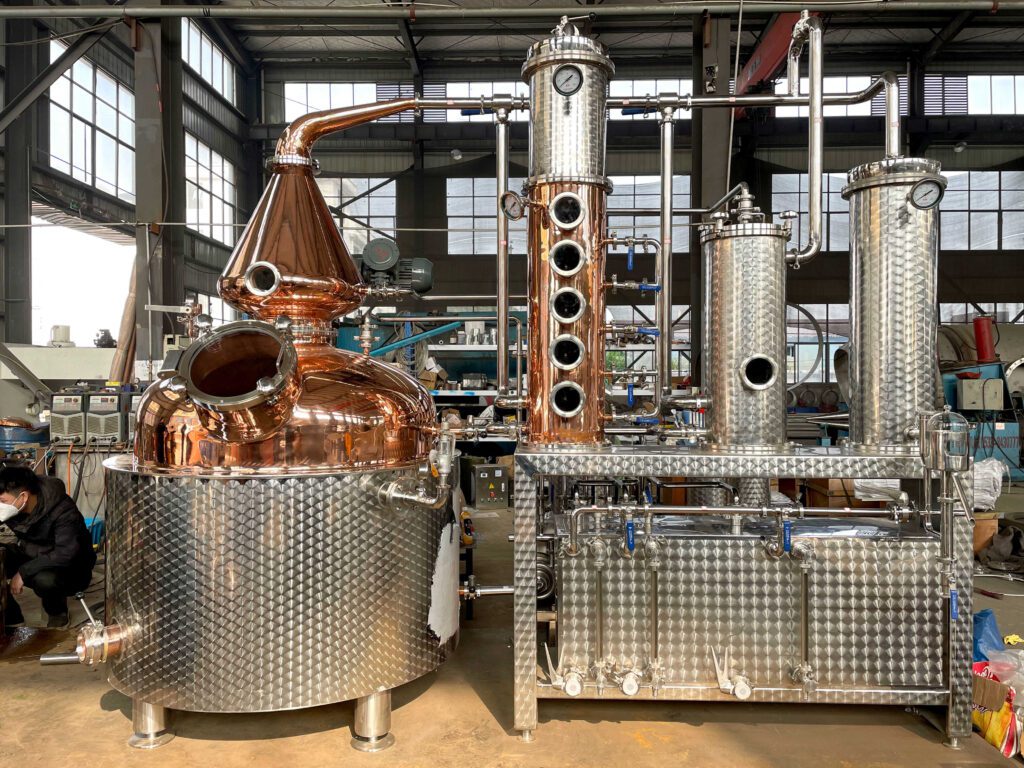
A new distillery may start with a relatively small production target. However, successful products can create demand for higher output.
A scalable layout should leave room for:
This approach helps businesses expand without rebuilding the entire facility.
Heating and cooling systems have a direct effect on distillation performance.
The heating system provides the energy required to bring fermented liquid to the operating temperature. Steam heating, electric heating, and other suitable heating arrangements can be selected according to project requirements.
A condenser then cools the vapor and converts it into liquid. Its capacity must match the expected vapor load and operating conditions.
| Utility | Doel | Planning Consideration |
|---|---|---|
| Steam or electric heating | Supplies process heat | Heating capacity and energy source |
| Cooling water | Supports condensation | Water flow and temperature |
| Glycol system | Supports process cooling | Cooling load and temperature |
| Heat exchangers | Transfer heat between process streams | Thermal duty and flow |
| Water supply | Supports production and cleaning | Water quality and availability |
| Compressed air | Operates pneumatic equipment | Pressure and consumption |
Heat exchangers can transfer heat from one process stream to another. For example, recovered heat may support preheating of incoming process liquid when the system is designed for this purpose.
This can reduce the amount of additional heating energy required.
However, the actual benefit depends on temperature differences, flow rates, operating schedules, and equipment design.
An industrial distillation plant should consider heating and cooling as one integrated system rather than treating them as separate accessories.
For international projects, utility design should also account for local electricity supply, steam availability, water conditions, and installation requirements.
Material selection affects sanitation, durability, maintenance, and product quality.
Stainless steel is widely used in fermentation tanks, storage tanks, process piping, and other product-contact equipment. Copper is also important in traditional spirit production.
A well-designed system may combine the two materials according to the intended application.
| Materiaal | Advantages | Common Applications |
|---|---|---|
| Stainless Steel | Corrosion resistance, hygienic surface, easy cleaning | Tanks, pipes, storage vessels |
| Copper | Traditional distillation material and interaction with sulfur compounds | Still heads, columns, vapor-contact components |
The selected grade, thickness, surface finish, welding quality, and cleaning design should be documented in the technical specification.
Alcohol vapor is flammable. Therefore, safety engineering must be part of the original plant design.
Important considerations include:
Equipment manufacturers should coordinate their design with local engineering and compliance professionals. Equipment supply alone does not replace local permits or site approvals.
Modern distilleries need stable process control to maintain consistent product quality.
Manual operation may be suitable for some small batch systems. However, growing facilities often benefit from PLC automation and digital monitoring.
A process control system can monitor:
Automation can help reduce operator workload and improve production repeatability.
| Functie | Basic Control | Advanced PLC Control |
|---|---|---|
| Temperature monitoring | Manual or digital display | Integrated sensors |
| Heating control | Operator adjustment | Automatic control |
| Valve operation | Manual | Automatic or pneumatic |
| Process monitoring | Local instruments | Central control panel |
| Alarm functions | Limited | Configurable alarms |
| Production records | Manual | Optional digital records |
Not every distillery needs a fully automated production line.
A small craft distiller may prefer a simple control panel with essential temperature and safety functions. A larger commercial facility may benefit from integrated controls across fermentation, heating, cooling, and distillation.
MICET can configure control options according to the actual process, equipment arrangement, and operator requirements.
A turnkey distillery project should cover more than the main still.
It should connect raw material preparation, fermentation, distillation, storage, cleaning, and packaging into one practical production layout.
A typical project may include:
| Production Section | Main Equipment |
|---|---|
| Raw Material Handling | Grain handling, milling, transfer equipment |
| Mash Preparation | Mash tun, mash cooker, heating system |
| Gisting | Stainless steel fermentation tanks |
| Primary Distillation | Pot still or hybrid still |
| Rectification | Column still and related components |
| Condensatie | Condenser and cooling system |
| Storage | Spirit storage tanks |
| Blending | Blending tanks and transfer pumps |
| Schoonmaken | CIP-systeem |
| Verpakking | Bottle filling and packaging equipment |
| Automatisering | PLC, sensors, valves, and control panels |
A complete project also requires layout planning, utility connections, transportation, installation guidance, testing, and operator training.
Working with one experienced manufacturer can simplify coordination between different equipment groups.
As a professional brewery, distillery, and beverage equipment manufacturing plant, MICET provides customized stainless steel brewing systems, fermentation tanks, brewhouse systems, and distillery solutions for global B2B customers.
Our project support focuses on:
We can also evaluate hybrid new-and-used equipment packages where suitable, helping customers manage initial investment while maintaining important safety and process requirements.
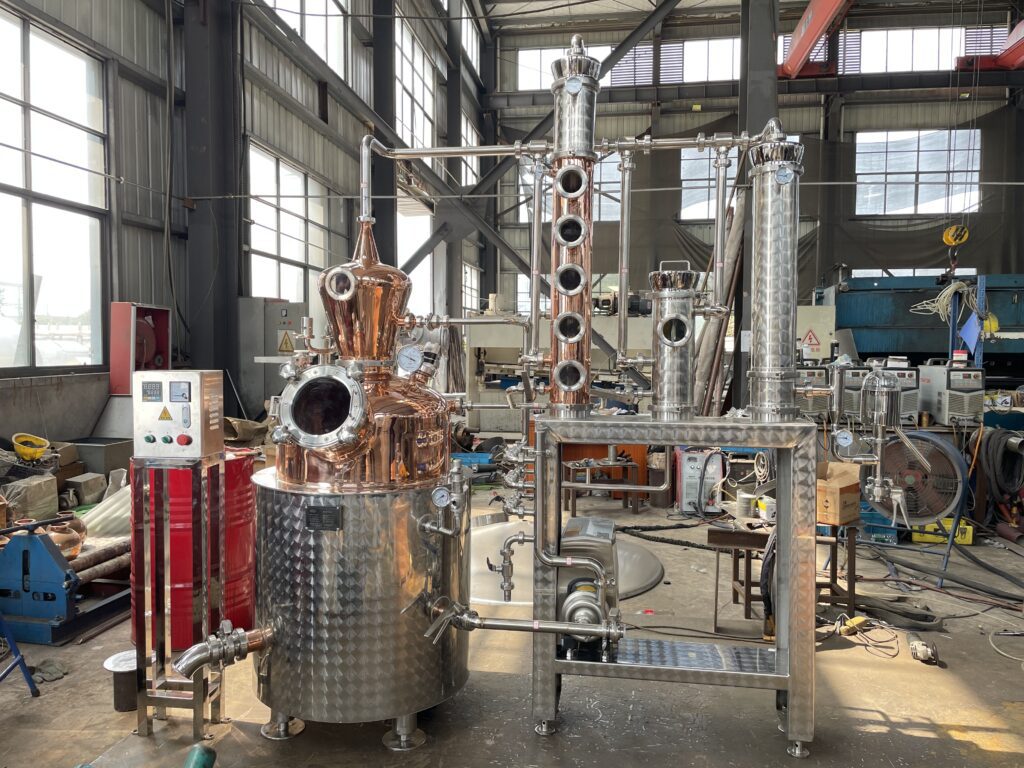
Choosing between alcohol distillation plant manufacturers should involve more than comparing the best price.
A suitable manufacturer needs to understand your intended spirits, production capacity, site conditions, equipment configuration, and long-term operating goals.
Use the following checklist when evaluating a potential supplier:
| Evaluation Factor | What Buyers Should Confirm |
|---|---|
| Manufacturing capability | Factory production and fabrication experience |
| Process knowledge | Experience with the intended spirit type |
| Customization | Capacity, still type, and layout options |
| Materials | Stainless steel and copper specifications |
| Process integration | Fermentation, distillation, storage, and cooling |
| Safety | Pressure protection and electrical requirements |
| Automatisering | PLC, temperature, and process monitoring |
| Quality control | Inspection and testing documentation |
| Export experience | Packing, shipping, and technical documents |
| After-sales service | Installation guidance and spare parts |
To help the manufacturer prepare a suitable proposal, provide:
MICET is a manufacturer and exporter of customized brewery, distillery, and beverage equipment. Our team can help develop a suitable plant configuration based on your production goals, available space, and investment plan.
Whether you are establishing a small craft distillery or expanding a commercial alcohol production facility, the right engineering partner can help reduce project risk and support stable operation.
Contact MICET to discuss your alcohol distillation plant project. Share your target capacity, spirit type, and factory layout to receive a customized equipment proposal.
A typical plant requires raw material preparation equipment, fermentation tanks, pot or column stills, condensers, storage tanks, pumps, piping, cooling systems, and control panels. Additional equipment depends on the spirit type and production capacity.
A pot still is mainly used for batch distillation and traditional flavor-focused spirits. A column still provides multiple separation stages and is often selected for neutral spirits and higher-throughput production. Hybrid systems combine features of both designs.
There is no universal capacity. A small craft distillery may begin with a 200L–500L system, while growing commercial producers may consider 1,000L–5,000L configurations. The correct choice depends on production targets, fermentation time, and operating schedules.
Yes, a suitably designed distillery can produce several spirit types. However, different products may require different still configurations, botanical baskets, fermentation arrangements, and cleaning procedures. The system should be designed around the planned product range.
A distillation column provides repeated vapor-liquid contact to support separation of alcohol and other volatile components. Its configuration, number of plates or sections, reflux arrangement, and operating conditions influence separation performance.
Many professional manufacturers provide complete project services, including equipment design, manufacturing, layout planning, utility coordination, installation guidance, commissioning support, and technical service. The exact project scope should be confirmed in the quotation.
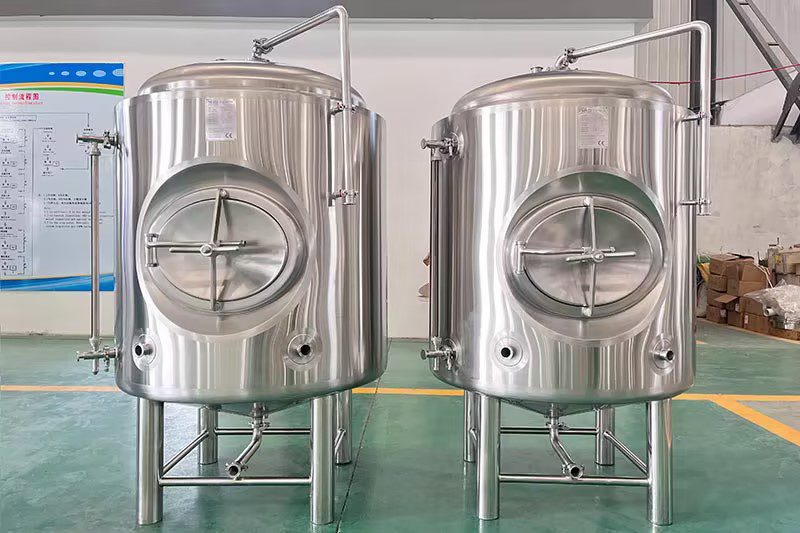
Adding fermentation capacity is a common challenge for growing breweries. However, buying another tank does not always solve the problem. If its cooling system, pipe connections, or working volume do not match your existing equipment, installation can become expensive and production may suffer.
Integrating a used stainless steel fermentation tank into an existing brewery requires more than checking its price and capacity. Buyers should match the tank’s working volume, cooling jacket, glycol connections, CIP system, sanitary fittings, control sensors, and physical dimensions with the current cellar. A hybrid new-and-used solution can help expand production while controlling investment.
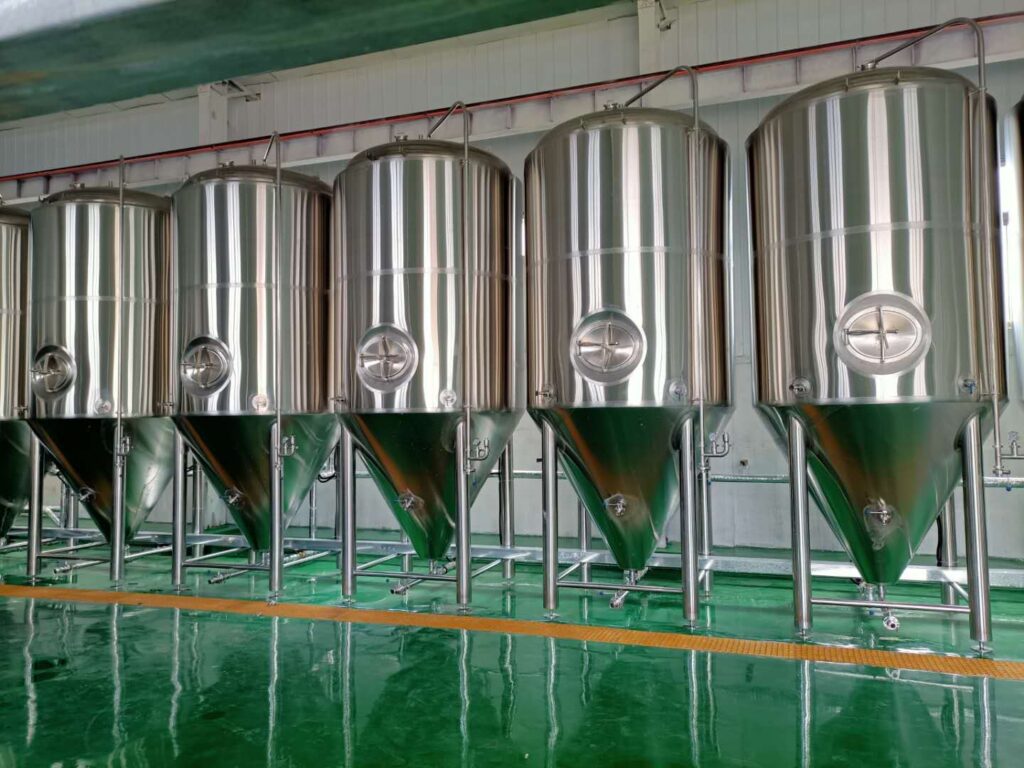
A brewery may have enough brewhouse capacity but still struggle to meet customer demand. The problem is often limited fermentation space rather than insufficient brewing output.
For example, a brewery operating a 2,000L brewhouse may produce enough wort each week, but its existing fermenters may remain occupied for several days during fermentation, maturation, and cleaning. Adding another tank can create room for overlapping batches and improve production scheduling.
Common reasons for adding used fermentation equipment include:
A used stainless steel tank can offer a cost-effective way to increase cellar capacity. However, the tank must work with the rest of the production system.
| Business Type | Potential Application |
|---|---|
| Craft breweries | Additional fermentation capacity |
| Microbreweries | Production expansion |
| Brewpubs | More frequent small-batch production |
| Commercial breweries | Additional fermentation and conditioning space |
| Kombucha producers | Fermentation and beverage processing |
| Cider producers | Additional cider fermentation capacity |
| Beverage startups | Lower-cost production expansion |
The important point is to purchase a tank that solves a real production problem, not simply one that appears attractive in an online listing.
Tank capacity should be based on the actual output of your brewhouse and the time each batch occupies a fermenter.
A tank that is too small may require splitting one batch into multiple vessels. A tank that is too large may leave valuable cellar space unused.
Start by identifying three figures:
For example, a brewery producing 1,000L per batch may consider a 1,000L working-volume fermenter. However, the total tank capacity must also allow sufficient headspace for fermentation.
MICET’s published used fermentation tank range includes several sizes for different production requirements.
| Tank Capacity | Typical Application |
|---|---|
| 300L | Pilot brewing and small beverage batches |
| 500L | Nano breweries and brewpubs |
| 1,000L | Small commercial breweries |
| 2,000L | Growing craft breweries |
| 2,500L | Microbrewery production |
| 5,000L | Larger production facilities |
| 10T–20T | Higher-volume beverage production |
These are published capacity options, not a guarantee of current stock availability. Actual working volume and configuration should be confirmed for each tank.
This difference is important when buying a tank.
For example, MICET’s published 2T, 4T, and 6T configurations show:
| Model | Total Capacity | Working Capacity |
|---|---|---|
| 2T | 2,000L | 1,800L |
| 4T | 4,000L | 3,600L |
| 6T | 6,000L | 5,400L |
The 10% difference is an important planning allowance for these specific configurations.
International buyers may receive capacity information in liters, hL, gallon, or bbl. Always convert the figures into one unit before comparing a tank with your existing brewhouse.
A 2,000L vessel, for example, represents 20 hL. Do not assume that two tanks with the same advertised capacity have identical usable volumes.
Cooling compatibility is one of the most important engineering questions when adding a used fermenter.
Most professional brewery fermenters use a cooling jacket connected to a glycol circulation system. The glycol removes heat generated during fermentation and helps maintain the required process temperature.
However, not every tank uses the same jacket design.
Differences may include:
A tank with a larger cooling surface may require a different flow arrangement from an older vessel with a smaller jacket.
If the existing chiller cannot handle the additional thermal load, the brewery may experience slow cooling, unstable fermentation temperatures, or poor cold-crashing performance.
This can affect production schedules and beer consistency.
Before connecting a new tank, calculate the combined cooling demand of all vessels that may operate at the same time.
The engineering review should consider:
Our engineering team can evaluate whether the existing chiller is suitable or whether additional cooling equipment is required.
For related cooling and utility equipment, see MICET Auxiliary Brewing Equipment.
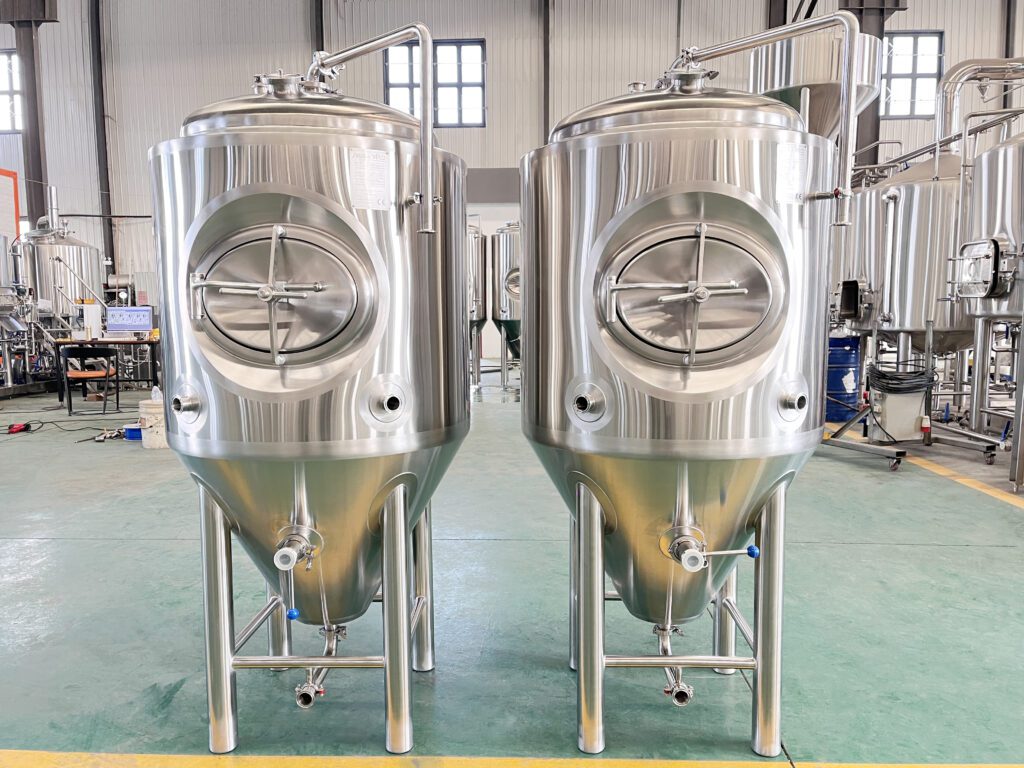
A cooling jacket is not simply an external feature. Its design influences how effectively a tank can control fermentation temperature.
Some tanks use dimple jackets around the cylindrical body. Others have cooling sections covering both the cylinder and cone.
The correct design depends on tank geometry, working volume, process temperature, and cooling requirements.
| Design Feature | Main Function | Integration Consideration |
|---|---|---|
| Cylinder jacket | Removes heat from the main tank body | Check cooling area |
| Cone jacket | Helps control temperature near the yeast collection area | Check separate connections |
| Multi-zone jacket | Allows different cooling sections to operate independently | Requires suitable controls |
| Full insulation | Reduces external heat exchange | Check insulation thickness and condition |
Insulation is also important.
Polyurethane insulation is commonly used in professional brewery tanks. It helps reduce heat transfer between the liquid and surrounding environment, supporting more stable thermal regulation.
The external stainless steel or clad outer shell protects the insulation and gives the tank a finished appearance.
Yes, but the cooling arrangement must be engineered.
For example, an existing cellar may contain four tanks with single-zone jackets. Adding a used tank with two independent cooling zones may require a different manifold and control arrangement.
The objective is to ensure that each tank receives sufficient cooling without affecting the operation of other vessels.
Do not connect additional jacketed tanks simply because the pipe diameter looks compatible. Hydraulic flow, cooling load, and control logic must also be considered.
Cleaning is essential for breweries and beverage manufacturers.
A used fermentation tank must connect properly to the existing Clean-in-Place (CIP) system. Otherwise, cleaning may become difficult, inconsistent, or dependent on manual work.
Most professional fermenters use spray balls or rotary spray devices to distribute cleaning solutions across the internal surfaces.
When integrating another tank, review the following:
A spray ball needs sufficient flow and pressure to clean the tank effectively.
If the new vessel has a different internal diameter or height, the existing cleaning setup may not provide suitable coverage.
The CIP pump must also handle the additional flow demand if multiple tanks are cleaned at the same time.
For larger production facilities, a fixed CIP station may be more suitable. Smaller breweries may prefer a portable CIP cart, depending on the cleaning schedule.
Our approach is to review the tank’s internal cleaning design and match it with the existing CIP equipment.
Where necessary, we can add new spray devices, return connections, valves, or dedicated cleaning lines.
A tank may have the correct capacity and cooling system but still be difficult to install because its connections do not match the existing brewery.
Different manufacturers may use different fitting standards, connection sizes, and outlet positions.
Common connection types include:
Before purchasing a tank, prepare a connection schedule.
| Connection | What to Confirm |
|---|---|
| Product inlet | Diameter and position |
| Beer outlet | Size, direction, and height |
| CIP inlet | Spray device and connection type |
| CIP return | Diameter and drainage route |
| Glycol inlet | Connection size and location |
| Glycol outlet | Flow direction and connection |
| Sample valve | Sanitary connection |
| Temperature port | Sensor type and position |
| Pressure outlet | Design requirements and safety devices |
Some modifications are relatively simple, such as replacing a valve or changing a sanitary connector.
Other changes require more engineering work.
For example, adding a new outlet to an insulated vessel may involve cutting through the outer shell, insulation, and internal structure. The modification must preserve the tank’s structural integrity and hygienic design.
The same principle applies to pressure equipment. A modification must not compromise the original pressure design or safety protection.
A process vessel should also not be confused with a general storage tank or mixing tanks. A fermenter requires suitable sanitary surfaces, process connections, and operating conditions.
Do not assume that an aluminum tank or an atmospheric storage vessel can replace a pressure-rated stainless steel fermenter.
Physical compatibility is just as important as process compatibility.
A tank can have the right volume and technical specifications but still fail to fit through the building entrance or operate efficiently in the available space.
Before confirming a purchase, prepare a cellar layout.
Tank diameter: Check the available floor area and the distance between neighboring tanks.
Overall height: Include tank legs, top fittings, manways, and CIP equipment.
Service clearance: Operators need access to valves, sensors, manways, and maintenance points.
Outlet position: The beer outlet and cone discharge should align with the intended pipework and drainage system.
Transportation access: Check doors, loading areas, lifting equipment, and the route from the unloading point to the installation position.
A vertical tank may save floor space but require more ceiling clearance. A tank with a side manway may also need additional access space.
Large stainless steel vessels become very heavy when filled.
The installation team should calculate the combined weight of the tank, liquid, legs, and supporting structure.
Floor loading, drainage, foundation conditions, and equipment access must be reviewed before installation.
This is particularly important when installing a larger 2,000L–6,000L tank or expanding an existing cellar with several vessels.
A suitable layout should allow operators to move safely between tanks while maintaining efficient product transfer and cleaning routes.
A used tank does not always need a complete control system replacement.
However, older temperature sensors, valves, and control devices may not work with your current PLC or monitoring system.
A practical solution is to reuse the main tank body while upgrading selected components.
| Component | Possible Upgrade |
|---|---|
| Temperature sensor | PT100 sensor and compatible transmitter |
| Temperature controller | PID or PLC integration |
| Pressure protection | Suitable PRV and pressure gauge |
| Sampling | Sanitary sampling valve |
| Product transfer | New sanitary outlet valve |
| CIP | Spray ball and return connection |
| Bewaking | Temperature display and alarms |
| Automatisering | PLC communication and control integration |
An agitator may be required for certain beverage processing applications, but it should not be added to a conventional beer fermenter without reviewing the product and process requirements.
For kombucha, cider, and other liquid products, tank configuration may differ from a standard beer fermentor.
A filter, mixing system, or additional process connection may also be needed in a wider beverage production line.
The goal is to keep the existing process stable while improving the new equipment where necessary.
Many breweries assume they must choose between an entirely new system and completely used equipment.
In practice, a hybrid solution can provide a better balance.
The main stainless steel tank may be reused, while important supporting equipment is upgraded with new components.
| Uitrusting | Aanbevolen aanpak |
|---|---|
| Main fermentation tank | Used and refurbished |
| Tank shell and cone | Reuse after engineering evaluation |
| Glycol chiller | New or existing after capacity review |
| Glycol manifolds | New where required |
| CIP station | Existing or upgraded |
| Valves and gaskets | Replace where necessary |
| PLC controls | New or integrated |
| Temperature sensors | New where required |
| Sanitary pipework | Adapted to the new layout |
This approach can reduce investment in large vessels while keeping critical control and cleaning functions up to date.
MICET is a professional brewery and beverage equipment manufacturer providing customized stainless steel brewing systems, fermentation tanks, brewhouse systems, and turnkey brewery solutions for global B2B customers.
Our used equipment program covers more than simply sourcing second-hand tanks.
We review the customer’s existing equipment, production requirements, utilities, and installation space before recommending a configuration.
Our support can include:
We also provide customized solutions for craft breweries, brewpubs, microbreweries, kombucha producers, cideries, wineries, and other beverage manufacturers.
You can learn more about our Used Fermentation Tank Solutions and Used Equipment Program.

Imagine a brewery with an existing 2,000L brewhouse that needs additional fermentation capacity.
Instead of replacing the entire brewery, the project team could:
The final configuration depends on the actual facility. This is why we recommend engineering the complete connection plan before shipping the tank.
If you are looking for used stainless steel fermentation tanks for sale, our team can help compare available capacities and determine whether an individual tank or a hybrid cellar package better fits your project.
Yes. A used tank can work with a new glycol chiller if the cooling jacket, flow requirements, operating temperature, and control arrangement are compatible. The cooling system should be sized for the combined load of all connected tanks.
Yes. Many breweries use a combination of tank capacities to support different batch sizes and beer styles. The cooling system, CIP setup, transfer pumps, and production schedule must be designed to accommodate the different vessels.
SUS304 is widely used for brewery fermentation equipment, while SS316 may be selected for applications requiring different corrosion resistance characteristics. Confirm the actual material grade of each vessel rather than assuming all used tanks have the same specification.
Yes. Depending on its design, a tank may be modified with new valves, nozzles, outlets, CIP connections, sensors, or support structures. Structural and pressure-related changes require appropriate engineering evaluation.
Used tanks can reduce initial investment, especially when expanding an existing brewery. New equipment may be preferable when a project requires specific dimensions, advanced automation, or a completely customized configuration. A hybrid solution can combine both approaches.
Provide your required working capacity, brewhouse size, existing glycol system, CIP configuration, tank installation dimensions, beverage type, operating pressure, and destination country. Photos or a drawing of your existing cellar can also help engineers evaluate compatibility.
The best used fermentation tank is not simply the one with the lowest purchase price. It is the one that fits your production schedule, connects smoothly to your existing equipment, and supports reliable operation over the long term.

Starting a small brewery does not always require a large investment in brand-new equipment. However, choosing an undersized or incomplete system can limit production and increase future costs. A well-matched refurbished brewing system offers a practical way to enter the craft beer market with professional equipment.
Used nano brewery equipment for sale is available in different capacities, configurations, and levels of refurbishment. For small breweries, 100L, 300L, and 500L systems offer different advantages. The right choice depends on expected beer output, fermentation capacity, available space, utilities, packaging needs, and future expansion plans.
A nano brewery is a small-scale beer production facility designed for limited batches, local sales, recipe development, or taproom operations. Compared with a large commercial brewery, it requires less floor space and a smaller initial equipment investment.
The term does not have one universal capacity definition. For MICET’s current used equipment range, nano brewery systems cover approximately 100L to 500L. These systems are designed for pilot plants, bars, restaurants, brewpubs, and small craft breweries.
A typical nano brewing system includes:
The exact configuration depends on the brewing process and production target.
A small brewery may start with a compact 100L setup for recipe testing and limited sales. A busy brewpub may need 300L or 500L equipment to support regular production.
The important point is that a nano brewery still needs professional process equipment. A home brewing kit is not a substitute for a commercial brewing system designed for repeated operation.
Used nano brewery equipment can suit businesses that want to enter the beer market without immediately investing in a large production facility.
It is especially useful for entrepreneurs who plan to test customer demand before expanding. A compact brewing system can also help established restaurants and bars develop their own beer brands.
| Business Type | Suitable Capacity to Evaluate | Hoofddoel |
|---|---|---|
| Pilot brewery | 100L | Recipe development and testing |
| Restaurant brewery | 100L–300L | Fresh beer for customers |
| Small brewpub | 300L | Regular taproom production |
| Craft beer startup | 300L–500L | Local commercial distribution |
| Small craft brewery | 500L | Increased production capacity |
| Brewery training center | 100L–300L | Brewing education and process testing |
These are planning suggestions, not fixed industry rules. Actual requirements depend on sales demand, brewing frequency, and fermentation time.
Used equipment is also attractive when a business is expanding or replacing an existing system. Some second-hand assets enter the market through brewery closures, facility upgrades, or changes in production strategy.
However, buying individual used tanks from unrelated sellers can create compatibility problems. A complete, matched system is often easier to integrate than several unrelated machines.
MICET offers factory-refurbished brewing packages based on its established equipment designs, with options for technical customization and project support.
Capacity is one of the most important factors when choosing a nano brewing system.
A larger brewhouse does not automatically mean better business performance. If production demand is low, oversized equipment can increase utility costs and leave expensive assets underused.
A smaller system may be more suitable for a new business that wants to test recipes and build a local customer base.
| Specificatie | 100L System | 300L System | 500L System |
|---|---|---|---|
| Working brew volume | 100L | 300L | 500L |
| Approx. US BBL equivalent | 0.85 | 2.56 | 4.26 |
| Typical application | Pilot brewing | Brewpub | Small craft brewery |
| Fermenters in published package | 3 × 100L | 2 × 300L working volume | 2 × 500L |
| Glycol tank | 200L | 800L | 1000L |
| Heating | Electric | Electric | Electric |
| Verpakking | Project dependent | Semi-auto bottle filler | Semi-auto bottle filler |
BBL conversions use the US beer barrel (approximately 117.35L). Actual working output and finished packaged volume depend on the brewing process and production losses.
A 100L system is useful for pilot brewing, recipe testing, small restaurants, and businesses with limited production requirements.
It has a compact footprint and can support several different beer recipes without requiring a large cellar.
MICET’s published used 100L configuration includes three 100L fermentation tanks, a 100L brewhouse arrangement, a 100L hot liquor tank, a 200L glycol tank, and an approximately 2HP chiller.
This package is suitable for buyers who want a compact professional setup rather than a collection of unrelated small machines.
Explore the Used 100L Mini Brewery Equipment configuration.
A 300L system offers more production volume while remaining suitable for smaller facilities.
It can be a practical choice for a brewpub or startup that has moved beyond occasional pilot batches and needs a more regular brewing schedule.
MICET’s published 300L package includes a brewhouse, two fermenters with approximately 300L effective working volume each, an 800L glycol tank, cooling equipment, CIP, and semi-automatic bottle filling.
See the Used 300L Brewery Equipment specifications.
A 500L system is worth considering when the business expects higher weekly output or needs more beer for local distribution.
MICET’s published 500L configuration includes a 500L brewhouse arrangement, two 500L fermenters, a 1000L glycol tank, a cooling system, CIP, and bottle-filling equipment.
It provides more production capacity than a 100L or 300L system, but buyers should also plan for greater utility demand, floor space, and packaging requirements.
Explore the Gebruikt 500L brouwerijmateriaal page for the published configuration.
When searching for used brewery equipment for sale, buyers often find individual vessels, pumps, and accessories listed separately.
The problem is that these components may not work together without additional engineering.
A complete brewhouse should be treated as a connected production system.
Mash tun: Mixes crushed malt with hot water and supports the conversion of starch into fermentable sugars.
Lauter tun: Separates the liquid wort from spent grain.
Brew kettle: Boils the wort and supports hop additions.
Whirlpool: Helps separate hop particles and other solids before cooling.
Hot liquor tank: Stores heated brewing water for mashing and lautering.
Heat exchanger: Cools hot wort before it enters the fermenter.
Some compact systems combine functions in one vessel to reduce the equipment footprint. Other systems use separate vessels for greater process flexibility.
When reviewing a used package, confirm the actual vessel arrangement instead of relying only on labels such as 2 vessel or 3 vessel.
Also check the included pumps, valves, pipes, gaskets and clamps, control panel, and connection standards.
A system may look complete in product photos but still require additional components before it can operate at your facility.
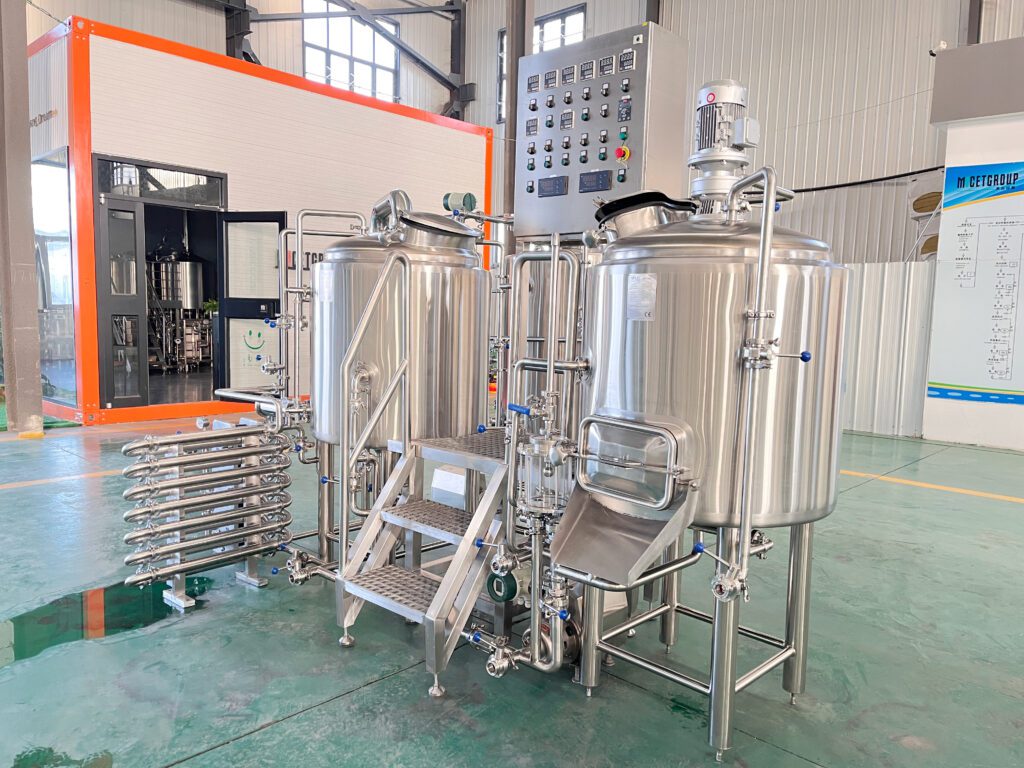
The brewhouse determines how much wort you can produce in one brewing cycle. Fermentation capacity determines how much beer your business can process over time.
These two capacities must work together.
For example, a 300L brewhouse with only one 300L fermenter may become a production bottleneck if the beer needs several weeks of fermentation and conditioning.
A brewery with several fermenters can manage overlapping batches and different beer styles.
Consider these factors:
A useful planning method is to estimate how many batches will be occupying fermenters at the same time.
For example, if you brew two batches each week and each batch occupies a fermenter for two weeks, you need enough cellar capacity to accommodate overlapping production, plus a practical operating buffer.
Do not simply match the fermenter volume to the brewhouse nameplate. Check working capacity, total capacity, and headspace.
Professional stainless steel fermenters provide a durable and hygienic environment for beer production.
Important features include:
A good fermenter should be easy to clean and suitable for the intended operating pressure.
For small breweries, properly matched fermenters can improve production scheduling and reduce unnecessary transfers.
A nano brewery may use a two-vessel or three-vessel brewing arrangement.
The choice depends on production requirements, available space, investment budget, and brewing workflow.
A 2 vessel system may combine mashing and boiling functions to reduce equipment costs. A 3 vessel system can separate more brewing stages and provide additional process flexibility.
Neither configuration is automatically superior.
Electric heating is common in compact brewing systems because it can be installed without a dedicated steam boiler.
It is especially useful for smaller facilities where steam infrastructure is not available.
However, the buyer must confirm the required electrical capacity before ordering.
For example, MICET’s published 300L electric mash/kettle configuration lists approximately 12kW of heating power, while the 500L configuration lists approximately 24kW.
These are equipment-specific examples, not universal requirements for every 300L or 500L brewery.
Before purchasing an electric brewhouse, confirm:
The same checks apply to pumps, motors, and cooling systems.
A system that works well in one country may require electrical adjustments before installation in another.
A brewing system cannot operate reliably with only the main vessels.
The supporting systems are just as important.
After boiling, wort needs to cool before entering the fermenter.
A plate heat exchanger uses cooling water and, where required, glycol or another suitable cooling medium to reduce wort temperature.
MICET’s published configurations provide useful examples:
| System | Published Heat Exchanger Area |
|---|---|
| 100L | Approximately 2m² |
| 300L | Approximately 4m² |
| 500L | Approximately 6m² |
The correct heat exchange capacity depends on wort flow, inlet temperature, target temperature, and cooling water conditions.
Fermentation creates heat. A chiller and glycol circulation system help maintain the required temperature inside jacketed fermenters.
The glycol tank, chiller, pumps, pipelines, and cooling jackets should be sized as one system.
MICET’s published nano packages use different glycol tank capacities according to the equipment configuration.
CIP means Clean-in-Place. It allows cleaning solutions to circulate through vessels and process pipelines without dismantling the entire system.
For a commercial brewery, CIP helps improve cleaning consistency and reduce manual work.
When evaluating used equipment, check whether the CIP tanks, pumps, spray balls, return lines, and control components are included.
A complete nano brewery should have a practical cleaning plan from the beginning.
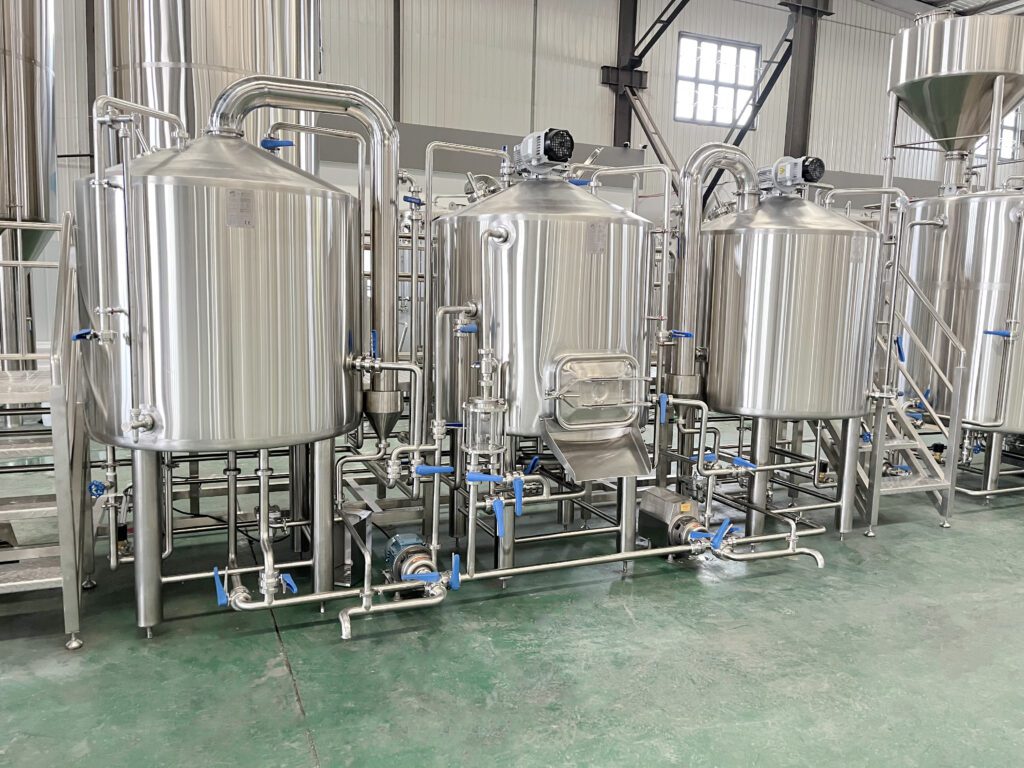
After fermentation and conditioning, beer needs to reach customers in a suitable package.
Your packaging choice depends on your business model.
A taproom may focus on kegs and draft service, while a retail-focused craft brewery may need a bottle or can line.
| Packaging Option | Suitable Equipment | Typical Application |
|---|---|---|
| Keg | Keg washer and filler | Bars and restaurants |
| Bottle | Bottle filler and capper | Retail and local distribution |
| Can | Can filling and seaming line | Retail and takeaway |
| Draft | Kegging and dispensing setup | Taprooms and brewpubs |
MICET’s published 300L and 500L packages include a semi-automatic 6-filling-head and 6-capping-head bottle machine, with a stated output of approximately 500 bottles per hour.
The actual output depends on the bottle format, operating conditions, and product handling.
A small brewery does not always need an automatic packaging line at the beginning. It may be more cost-effective to start with keg packaging and add a bottle or can line as sales grow.
A Cornelius-style keg or standard commercial beer keg may also be useful for selected small-batch or taproom applications, provided the filling and cleaning setup matches the intended container.
The key is to plan packaging capacity alongside fermentation capacity. There is little value in producing more beer than your packaging operation can handle.
Both new and used equipment can be suitable for a nano brewery project.
The right decision depends on budget, operating requirements, equipment condition, and the level of customization needed.
| Factor | Gebruikte apparatuur | New Equipment |
|---|---|---|
| Initial investment | Often lower | Usually higher |
| Manufacturing lead time | May be shorter | Requires manufacturing time |
| Customization | Depends on existing configuration | More flexible |
| Equipment condition | Requires inspection and refurbishment | New manufacturing condition |
| Spare parts | Must be confirmed | Easier to specify |
| Warranty | Depends on agreement | Manufacturer warranty |
| Installation | Requires planning | Can be designed for the site |
A hybrid approach can also work well.
For example, a brewery may purchase refurbished stainless steel vessels while upgrading selected valves, pumps, gaskets, electrical components, and process controls.
This can balance initial investment with long-term reliability.
Refurbishment should involve more than washing an old tank and repainting its exterior.
A professional process may include:
MICET’s Tweedehands Brouwerij Apparatuur program describes its inspection and refurbishment approach for different equipment capacities.
Buyers should request actual equipment photos, a component list, refurbishment scope, and relevant test records before confirming an order.
Choosing the right system starts with your production plan.
Before asking a manufacturer for a quotation, prepare a few basic details.
| Information | Example |
|---|---|
| Project type | Brewpub or small craft brewery |
| Target capacity | 100L, 300L, or 500L |
| Brewing frequency | Batches per week |
| Beer styles | Ale, lager, stout, IPA |
| Fermentation capacity | Number and volume of fermenters |
| Heating | Electric or steam |
| Koeling | Glycol chiller |
| Verpakking | Keg, bottle, or can |
| Installation location | Country and city |
| Available space | Building dimensions |
| Budget | Expected investment range |
This information helps the manufacturer recommend a suitable brewing configuration.
MICET is a professional brewery and beverage equipment manufacturer providing customized stainless steel brewing systems, fermentation tanks, brewhouse systems, and turnkey solutions for global B2B customers.
Our used equipment range includes compact systems designed for pilot breweries, brewpubs, restaurants, and small craft beer producers.
We focus on providing matched equipment packages rather than simply selling individual second-hand vessels.
Our project support can include:
We also provide new equipment options for customers who need a different configuration or want to expand their production capacity.
Whether you need a compact 100L pilot brewery, a 300L brewpub system, or a 500L craft brewery package, our engineering team can help match the equipment to your process, available space, and investment plan.
Looking for used nano brewery equipment for sale?
Contact MICET with your preferred capacity, brewing concept, facility layout, and budget. We can help you review suitable equipment configurations and prepare a project-specific proposal.
There is no single global capacity definition. MICET’s current used nano brewery equipment range focuses on systems from approximately 100L to 500L, suitable for pilot production, brewpubs, and small craft breweries.
Yes. A 300L system can be suitable for a brewpub that needs regular small-batch production. The final configuration should include enough fermentation capacity, cooling, cleaning, and packaging equipment to support the planned sales volume.
A complete package may include a brewhouse, malt mill, fermenters, heat exchanger, glycol tank, chiller, pumps, control panel, CIP system, and packaging equipment. Always confirm the actual included items in the quotation.
It can be reliable when the equipment has been properly inspected, refurbished, and tested. Buyers should review tank condition, welding, pressure ratings, electrical systems, pumps, valves, cleaning arrangements, and available documentation.
Yes. A brewery can expand by adding fermentation tanks, increasing brewhouse capacity, upgrading cooling, and improving packaging. However, future expansion should be considered during the initial layout and utility planning.
Yes. MICET provides used and refurbished brewery equipment as well as new customized brewing systems. The appropriate solution depends on the buyer’s production requirements, budget, facility, and desired equipment configuration.
A successful nano brewery is not defined by the size of its brewhouse alone. It depends on how well every part of the production system works together. Choosing the right used equipment package can help your business start with a manageable investment and build a clear path toward future growth.
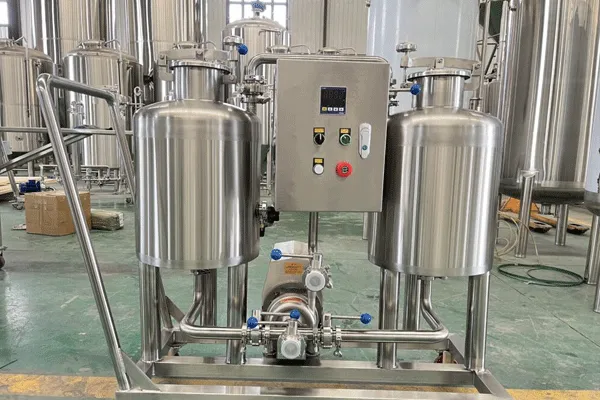
Choosing a supplier from headline prices alone can leave a brewery with missing pumps, undersized cooling, or unclear installation duties. When every quote uses a different scope, comparison becomes guesswork. A structured RFQ gives every supplier the same brief and makes technical gaps visible before you sign.
To compare craft beer equipment suppliers, send each one the same request for quotation (RFQ), including your production target, brewhouse specifications, tank requirements, utilities, packaging needs, and delivery scope. Then compare working capacity, materials, included equipment, exclusions, testing, installation, warranty, and total project cost—not just the headline price.
When contacting several craft beer equipment suppliers, buyers often receive quotations with very different prices. One supplier may offer a complete brewing system, while another only includes the main stainless steel vessels. Both may describe their offers as a complete brewery package.
This creates a serious problem. A lower quotation does not always represent a lower project cost. Missing pumps, cooling equipment, electrical connections, cleaning systems, and installation services may need to be purchased separately.
The first step is to understand that every supplier must quote against the same technical requirements.
For example, a brewery requiring a 1,000L working-volume brewhouse should clarify whether the supplier is quoting:
A retail homebrew kit or BIAB brewing setup serves a different purpose from a professional commercial brewing system. Small-scale beer kits are useful for recipe development, but they should not be used as the benchmark when evaluating industrial equipment quotations.
The goal is to compare complete technical solutions, not simply compare product prices.
A good RFQ helps manufacturers understand the project before they prepare a quotation. Without enough information, even an experienced supplier may make assumptions about capacity, utilities, and equipment configuration.
Before contacting suppliers, prepare a short project brief.
| RFQ Information | Details to Provide |
|---|---|
| Project type | New brewery, brewpub, expansion, or replacement |
| Beverage | Craft beer and intended beer styles |
| Batch capacity | 300L, 500L, 1000L, 2000L, or BBL |
| Annual output | Expected yearly production |
| Brewing frequency | Batches per day and brew days per week |
| Gisting | Required number and working volume of tanks |
| Verpakking | Bottle, can, keg, or draft |
| Automatisering | Manual, semi-automatic, or automatic |
| Building | Floor plan, ceiling height, and available space |
| Utilities | Voltage, frequency, water, heating, and cooling |
| Budget | Expected investment range |
| Schedule | Target manufacturing and installation dates |
You should also describe your future production plans. A startup may initially need a compact brewing system, but it should consider whether additional fermenters or packaging capacity will be needed within the next few years.
At MICET, we use these details to understand the complete project rather than recommend equipment based only on one capacity figure. Our customized stainless steel brewing systems, fermentation tanks, and turnkey solutions can be configured around the customer’s production goals and facility conditions.
You can send the following information to each supplier:
This gives every supplier a common starting point and reduces unnecessary communication.
The brewhouse is the core of a brewery. Its design influences production speed, wort quality, energy use, and the number of batches operators can complete.
However, a 1,000L brewhouse from one supplier may not deliver the same practical output as another supplier’s 1,000L system.
Ask suppliers to state the working volume, total vessel volume, expected wort output, and operating assumptions separately.
| Uitrusting | Important Specifications |
|---|---|
| Mash tun | Working volume, heating method, agitator, insulation |
| Lauter tun | False bottom, raking system, drainage |
| Brew kettle | Working volume, heating capacity, vapor outlet |
| Whirlpool | Tangential inlet, separation design, drainage |
| Hot liquor tank | Capacity, heating, insulation, temperature control |
| Heat exchanger | Cooling capacity, plate area, connections |
The number of vessels also affects the brewing workflow.
A two-vessel system combines selected functions to reduce the footprint and initial equipment investment. A three-vessel system separates more process stages, which may improve scheduling flexibility. A four-vessel arrangement may be suitable for more complex recipes or higher production demands.
Neither configuration is automatically better. The correct choice depends on production frequency, available space, recipe requirements, and operator workload.
For a useful reference, compare MICET’s 300L Three-Vessel Craft Beer Brewing System and 1000L Three-Vessel Craft Beer Brewing Equipment.
When comparing proposals, ask suppliers to explain how the mash, lautering, boiling, and wort transfer stages work together. A good technical proposal should show the complete brewing process rather than only list vessel names.
Stainless steel quality is a major factor in the long-term performance of professional brewing equipment.
However, simply stating that a tank is made from food-grade stainless steel is not enough. Buyers should request clear material and fabrication specifications.
| Specificatie | What to Confirm |
|---|---|
| Material grade | SUS304 or SUS316L, according to application |
| Inner shell thickness | Actual thickness in millimeters |
| Outer shell | Material and thickness |
| Surface finish | Internal polishing requirements |
| Welding | Welding process and inspection requirements |
| Isolatie | Type and thickness |
| Koelmantel | Structure, coverage, and design conditions |
| Pressure rating | Design, working, and test pressure where applicable |
| Fittings | Sanitary connection types and dimensions |
The internal surface deserves particular attention. Poor welds, rough areas, and difficult-to-clean connections may allow product residue to remain inside the vessel.
For breweries, sanitary design should support effective cleaning and inspection. The EHEDG Hygienic Design Principles provide a useful reference for buyers reviewing food-processing equipment design.
Pressure-rated vessels require additional attention. Ask the supplier which design code and local requirements apply to the project, and request documentation for the specific equipment rather than relying on a general company certificate.
The ASME Boiler and Pressure Vessel Code is one important reference for projects where ASME pressure-vessel construction is required.
Do not compare tanks based on appearance alone. Compare documented materials, construction, pressure requirements, and cleaning design.
The fermentation cellar can become a major production bottleneck if its capacity does not match the brewhouse.
For this reason, suppliers should quote the fermentation system according to your actual production schedule.
Do not simply request four fermenters without explaining their intended working volume or how often you plan to brew.
For each fermenter, specify:
Brite tanks should be specified separately. Their requirements may include carbonation stones, pressure controls, cooling jackets, sampling connections, and packaging outlets.
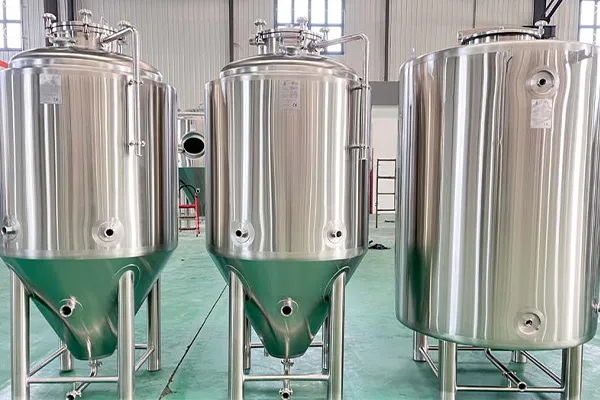
A fermenter with a glycol jacket cannot provide effective cooling without a correctly sized chiller, glycol circulation pump, and distribution system.
Ask each supplier to explain the cooling load assumptions and how the chiller supports simultaneous fermentation, cooling, and other operations.
The CIP system also needs to match the number and size of vessels. Request details about cleaning tanks, pumps, circulation flow, pipelines, spray devices, and control arrangements.
MICET provides commercial fermentation tanks, bright beer tanks, cooling systems, and cleaning solutions as part of customized brewery projects. Buyers can explore our Fermentation Tank Equipment range when preparing their RFQ.
A brewery needs more than a brewhouse and fermenters. Supporting equipment connects the production stages and helps operators move ingredients, wort, beer, water, and cleaning solutions.
When comparing suppliers, pay close attention to auxiliary equipment because it is often excluded from basic quotations.
| Uitrusting | Procurement Details |
|---|---|
| Malt mill | Capacity, motor power, roller configuration |
| Pompen | Flow rate, motor power, material |
| Plate heat exchanger | Heat exchange area and cooling performance |
| Glycol chiller | Cooling capacity and operating conditions |
| Glycol tank | Working volume and insulation |
| CIP skid | Tank quantity, pump capacity, controls |
| Water treatment | Required treatment capacity |
| Steam boiler | Heating capacity and local utility compatibility |
| Air compressor | Pressure and air demand |
| CO2 system | Supply and connection requirements |
| Piping | Material, diameter, and installation scope |
| Valves and fittings | Type, size, quantity, and connection standard |
Small components matter too. Tubing, gaskets, clamps, valve handles, sensors, and spare parts should be included in the equipment schedule.
For example, a quotation may include the main pumps but exclude the sanitary fittings needed to connect them to the tanks. Another supplier may include complete piping and connection accessories.
The difference affects both cost and installation time.
Ask for a complete Bill of Materials (BOM) showing the quantity, specification, and supply responsibility for each item. If the project includes a mobile service cart, access platform, or maintenance equipment, list those separately as well.
This makes it easier to identify missing items before production begins.
Automation affects how operators control the brewing process. It can improve repeatability, reduce manual work, and make production easier to monitor.
However, more automation does not always mean better equipment.
A small craft brewery may work well with a manual or semi-automatic system. A larger production facility may benefit from PLC control, HMI operation, variable-frequency drives, and automatic process sequences.
When comparing suppliers, ask them to provide:
A Factory Acceptance Test (FAT) helps buyers check agreed equipment functions before shipment.
The test plan should match the equipment and contract. It may cover:
Do not simply write “FAT included” in the purchase contract. Define what will be tested, what records will be supplied, and which party must approve the results.
For automated brewing systems, request a demonstration of the agreed operating sequence. The brewer should be able to understand how the system handles each stage and what happens when an alarm occurs.
Packaging is another area where equipment quotations can differ significantly.
A brewery selling mainly through its taproom may prioritize kegs and draft service. A brewery supplying retailers may need bottle or can filling equipment.
Before requesting a quotation, decide which packaging formats you will use during the first stage of operation.
| Verpakkingsformaat | Main Equipment | Key Requirements |
|---|---|---|
| Bottle | Rinser, bottle filler, capper | Filling accuracy and oxygen control |
| Can | Can filler and seamer | Filling performance and sealing |
| Keg | Keg washer and filler | Cleaning and filling sequence |
| Draft | Keg system and dispensing equipment | Pressure, temperature, and line design |
| Growlers | Suitable filling equipment | Filling hygiene and handling |
If your business plans to sell beer in bottles, specify the bottle size, filling speed, filling method, and bottle closure type. Also confirm whether bottle caps, cappers, rinsing equipment, labeling, and packaging accessories are included.
For keg and draft operations, check couplers, filling connections, cleaning equipment, and gas requirements.
MICET supplies Bierverpakkingsapparatuur for bottle, can, and keg applications. Share your brewhouse capacity and packaging plans so the filling equipment can be matched to the production system.
Once technical proposals are received, the next step is commercial comparison.
The most common mistake is selecting the lowest price without checking the full scope.
A better approach is to create a quotation comparison sheet.
| Evaluation Item | Supplier A | Supplier B | Supplier C |
|---|---|---|---|
| Brewhouse configuration | |||
| Werkcapaciteit | |||
| Fermentation tanks | |||
| Stainless steel grade | |||
| Cooling system | |||
| CIP-systeem | |||
| Pumps and fittings | |||
| Control system | |||
| Packaging equipment | |||
| Technical drawings | |||
| FAT and inspection | |||
| Installation support | |||
| Warranty | |||
| Spare parts | |||
| Manufacturing lead time | |||
| Shipping terms | |||
| Total quoted price |
Use three labels when comparing every item:
The equipment purchase price is only one part of the investment.
Other costs may include:
Shipping terms should be written clearly. Confirm the named delivery location, the applicable Incoterms edition, and who is responsible for freight, insurance, customs clearance, unloading, and final delivery.
Warranty terms also deserve attention. Ask what components are covered, when the warranty starts, how replacement parts are supplied, and who pays for transportation or technical service.
A well-prepared quotation comparison makes hidden costs visible before the purchase order is signed.
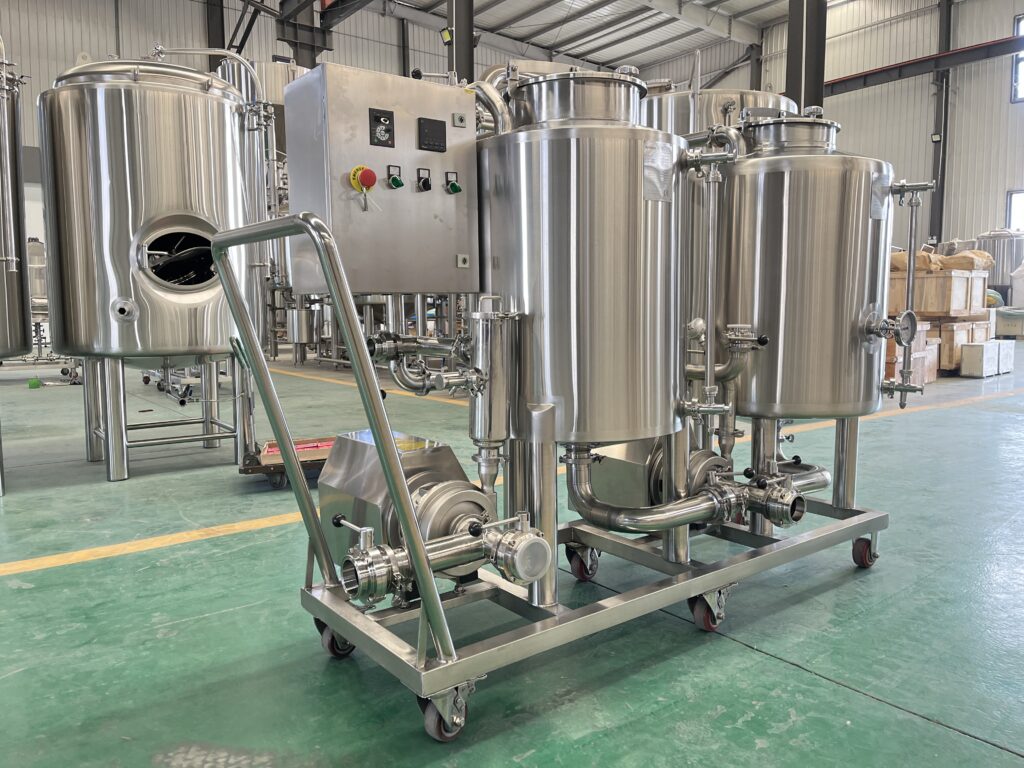
Once the technical and commercial comparison is complete, the final step is to convert the approved proposal into a clear purchase contract.
Do not rely only on emails or general product descriptions. Important specifications should appear in the contract or its approved technical attachments.
| Document | Doel |
|---|---|
| Technical specification | Confirms materials, capacity, and equipment features |
| General arrangement drawing | Shows equipment dimensions and positions |
| P&ID | Explains process piping, valves, and instruments |
| Electrical diagram | Defines power and control connections |
| Equipment list | Confirms quantity and configuration |
| Utility schedule | Defines water, electricity, heating, and cooling needs |
| Quality inspection plan | Defines inspection and testing |
| Delivery schedule | Establishes manufacturing and shipping milestones |
| Warranty document | Defines coverage and responsibilities |
| Operation manual | Supports safe operation and maintenance |
The contract should also clarify the responsibility of the buyer and supplier.
For example, the equipment manufacturer may supply the vessels, control panels, and specified piping, while the buyer arranges local electrical connections, building work, drainage, and lifting services.
These boundaries should be agreed before production.
The project does not end when the equipment reaches the destination.
A proper handover may involve:
A Site Acceptance Test (SAT) can be used to verify agreed functions after installation. Its scope should be defined before shipment so the buyer and supplier understand the acceptance criteria.
MICET is a professional brewery and beverage equipment manufacturing plant providing customized stainless steel brewing systems, fermentation tanks, brewhouse systems, and turnkey brewery solutions for global B2B customers.
Our engineering approach focuses on matching equipment to the real production process.
We can support project planning through:
We serve craft breweries, brewpubs, taprooms, microbreweries, commercial breweries, beverage startups, and engineering contractors.
We also offer new, used, and selected refurbished equipment options for projects with different investment requirements.
Rather than recommending the most expensive package, we focus on the configuration that matches your production target, building conditions, and future expansion plans.
If you are comparing craft beer equipment suppliers for a new brewery or expansion project, send MICET your RFQ, building layout, target capacity, and preferred equipment configuration. Our engineering team can review your requirements and prepare a project-specific proposal.
Contacting three to five qualified suppliers is a practical starting point for many projects. More important than the number is ensuring that every supplier receives the same technical brief, equipment list, and commercial requirements.
Provide your target batch size, annual production, brewhouse configuration, fermentation capacity, packaging method, building dimensions, utility information, automation preference, and delivery schedule. A site drawing is also useful for accurate layout planning.
Not necessarily. Compare the technical scope, material quality, included accessories, cooling, CIP, installation, shipping, warranty, and spare-parts support. A lower initial price may lead to higher total costs if important equipment or services are excluded.
Not always. Some suppliers quote only the brewhouse, while others provide a complete system. Always confirm the quantity, working capacity, cooling arrangement, pressure rating, fittings, and cleaning provisions for each tank.
A Factory Acceptance Test is an agreed inspection and testing process completed before equipment shipment. Depending on the contract, it may include visual inspection, specification checks, motor operation, control testing, and pressure or leak tests where applicable.
Yes. A professional manufacturer can configure the brewhouse, fermenters, bright tanks, cooling, CIP, controls, and packaging connections according to production requirements and site conditions. Customization should be documented in approved technical drawings and specifications.
The best craft beer equipment supplier is not simply the one offering the lowest quotation. It is the one that can turn your production requirements into a clearly specified, technically matched, and commercially deliverable brewery system.

Buying wine and beer making supplies from different vendors can lead to incompatible equipment, unnecessary costs, and production delays. A successful beverage business needs more than individual machines. It needs a coordinated production system designed around product quality, capacity, sanitation, and future growth.
Commercial wine and beer production requires properly matched brewing systems, fermentation tanks, processing equipment, cooling systems, cleaning solutions, transfer equipment, and packaging lines. Choosing an experienced equipment manufacturer helps beverage producers integrate these systems, control production costs, maintain consistent quality, and expand capacity as demand grows.
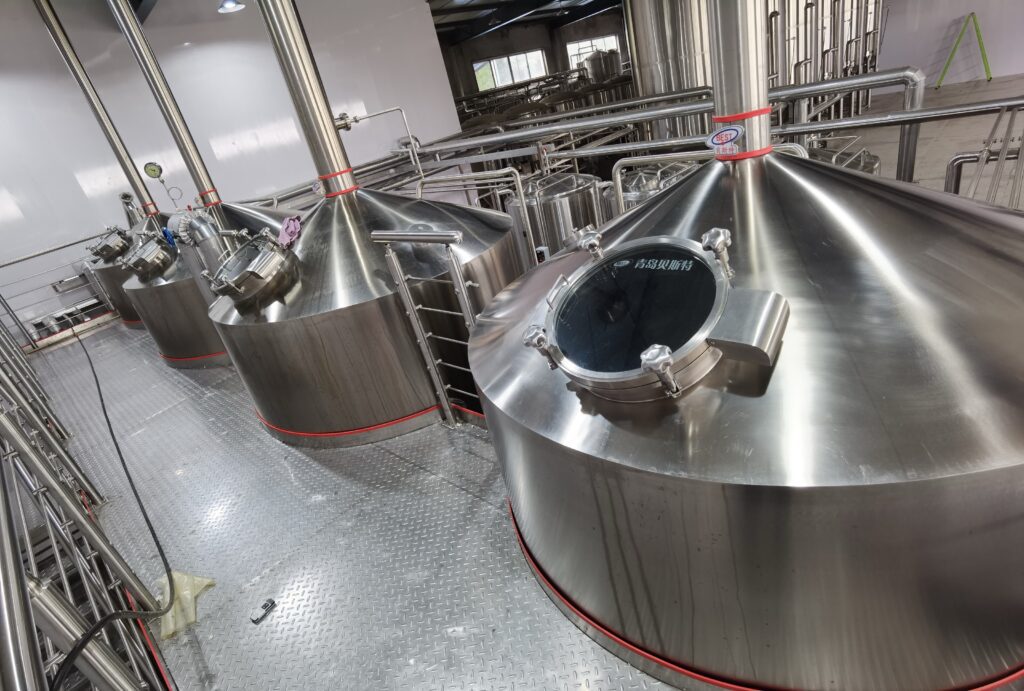
The phrase wine and beer making supplies can mean very different things depending on the buyer. For a beginner, it may refer to a homebrew kit, bottles, ingredients, plastic containers, and small fermentation tools. For a commercial producer, it means the complete range of machinery and supporting systems needed to manufacture beverages consistently.
Commercial buyers should look beyond individual products. A brewery needs equipment for grain processing, mashing, boiling, cooling, fermentation, and packaging. A winery may require grape processing, pressing, fermentation, storage, filtration, and bottling systems.
The difference is important when selecting a supplier. A retail brew supply shop may sell homebrew ingredients and small accessories, while an industrial equipment manufacturer provides engineered systems designed for continuous business operations.
| Buyer Type | Typical Requirements | Main Priority |
|---|---|---|
| Home brewer | Small kits, bottles, carboys | Convenience |
| Craft brewery | Brewhouse, fermenters, cooling | Consistent beer quality |
| Commercial winery | Grape processing, wine tanks, pumps | Productiecapaciteit |
| Beverage startup | Processing and fermentation systems | Investment control |
| Large beverage producer | Integrated production lines | Efficiency and scalability |
For B2B buyers, the most important question is not simply where to buy making supplies. It is whether the supplier can provide equipment that works together as one production system.
At MICET, we focus on customized stainless steel brewing systems, fermentation tanks, and turnkey beverage solutions for global commercial customers.
Yes. A properly planned beverage facility can produce both wine and beer. This approach is attractive to investors who want to diversify their product range, use existing infrastructure, and serve different customer markets.
However, wine and beer have different production processes. Beer production starts with malt preparation, mashing, wort separation, boiling, and fermentation. Wine production usually starts with grape or fruit handling, crushing, pressing, and fermentation.
A combined facility should therefore use separate product-specific processing equipment where necessary, while planning shared infrastructure carefully.
Potential shared infrastructure includes:
Not every piece of equipment should be shared. Fermentation tanks, product-contact hoses, transfer pumps, and processing vessels must be evaluated for material compatibility, cleaning requirements, and contamination risks.
For example, a brewery and winery may use the same general cooling plant, but each vessel needs suitable temperature-control connections and independent process management.
The goal is to create a flexible facility without compromising product quality.
Beer production depends on a coordinated sequence of equipment. Buying a brewhouse without planning fermentation capacity or cooling can create problems before production even begins.
A commercial beer production system normally includes the following stages:
| Productiefase | Main Equipment | Function |
|---|---|---|
| Malt preparation | Malt mill | Crushes malt |
| Mashing | Mash tun | Converts starch into fermentable sugars |
| Lautering | Lauter tun | Separates wort from grain |
| Boiling | Brew kettle | Boils wort and supports hop addition |
| Koeling | Plate heat exchanger | Cools wort before fermentation |
| Gisting | Stainless fermenters | Produces beer through yeast activity |
| Conditioning | Brite tanks | Clarifies and carbonates beer |
| Verpakking | Filling equipment | Packages finished beer |
The brewhouse configuration depends on production targets. A small craft brewery may use a two-vessel system, while a larger operation may benefit from three- or four-vessel arrangements.
The fermentation cellar is equally important. Brewers should calculate tank requirements according to weekly brewing frequency, fermentation time, conditioning time, and cleaning schedules.
A brewery that plans to brew several times per week needs enough fermentation capacity to support overlapping batches.
MICET provides customized brewing systems and commercial configurations, including compact 500L brewery solutions. See our 500L Brouwerij Materiaal for an example of an integrated setup with brewhouse vessels, fermenters, glycol cooling, CIP, and filling equipment.
A winery needs more than storage and fermentation tanks. The complete production process starts with raw material handling and continues through processing, fermentation, clarification, storage, and packaging.
For grape wine, the equipment must handle the seasonal arrival of fruit. This creates a special challenge: the processing line needs enough capacity to handle large amounts of grapes during a relatively short harvest period.
A suitable production plan should consider the relationship between grape intake, crushing speed, pressing capacity, available fermentation volume, and cellar space.
Fruit wine producers may also need equipment for different raw materials, including apples, berries, cherries, and other fruit.
| Process | Equipment Considerations |
|---|---|
| Grape receiving | Receiving bins and sorting equipment |
| Crushing | Crusher and destemmer |
| Pressing | Suitable wine press |
| Gisting | Stainless steel wine tanks |
| Temperatuurregeling | Glycol chiller and cooling jackets |
| Overdracht | Food-grade pumps and sanitary hoses |
| Clarification | Filtration equipment |
| Storage | Wine storage tanks |
| Verpakking | Bottle filling and closing equipment |
The correct configuration depends on the wine style and production volume. Red wine production, for example, may require special access and arrangements for managing grape skins and floating solids. White wine production often places greater emphasis on juice handling and temperature management.
MICET offers winery fermentation equipment for grape wine, fruit wine, and cider production, with published tank capacities ranging from 500L to 20,000L. The equipment configuration can include cooling jackets, sanitary fittings, and customized connections.
Explore our Fermentatieapparatuur voor wijnmakerijen range.
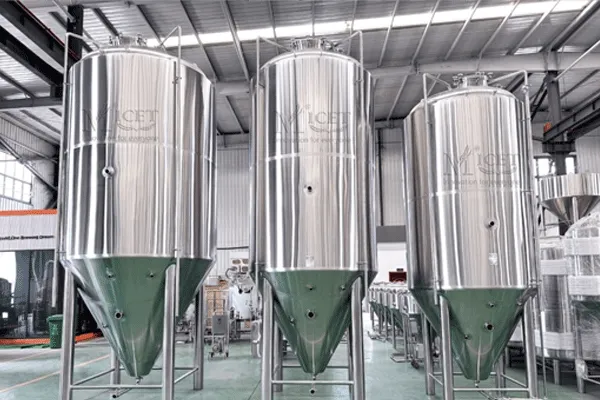
Fermentation equipment is one of the most important investments for both breweries and wineries.
The vessel must match the beverage, working volume, fermentation conditions, cleaning process, and production schedule.
For home wine making, beginners may use plastic buckets or a glass carboy. These containers are practical for small batches but are not designed to support the requirements of a commercial winery.
Commercial producers generally prefer stainless steel tanks because they offer durability, sanitary surfaces, and options for temperature control.
| Vessel Type | Typical Application | Commercial Suitability |
|---|---|---|
| Plastic bucket | Home fermentation | Limited |
| Glass carboy | Small wine batches | Limited |
| Plastic fermenter | Homebrew and testing | Limited |
| Stainless steel tank | Commercial wine production | High |
| Jacketed conical tank | Commercial beer fermentation | High |
| Variable-capacity wine tank | Wine fermentation and storage | High |
Material selection also matters.
SUS304 stainless steel is widely used in food and beverage equipment because of its corrosion resistance and hygienic properties. SUS316L may be suitable for applications requiring additional resistance to certain corrosive conditions.
When choosing a tank, consider:
A tank should never be selected by volume alone. Its internal design must match the product and process.
Homebrew equipment is useful for testing recipes and learning production techniques. A beginner can start making wine or beer with a relatively simple kit containing a fermentation container, airlock, siphon, measuring tools, and bottles.
Wine making kits may also include concentrated juice or other ingredients. A home brewer can use these products to make wine at home without investing in a full grape-processing line.
However, scaling up changes the requirements.
A small carboy may hold only a limited quantity of product. A commercial producer needs larger vessels, reliable temperature control, sanitary transfer equipment, and a repeatable cleaning process.
The same principle applies to beer. A home brew kit may be suitable for recipe development, but a commercial brewery requires a brewhouse, fermentation cellar, cooling system, pumps, and packaging equipment.
| Factor | Homebrew | Commercial Production |
|---|---|---|
| Partijgrootte | Small | Hundreds or thousands of liters |
| Gisting | Buckets or carboys | Stainless steel tanks |
| Temperatuurregeling | Room or small chamber | Integrated cooling |
| Schoonmaken | Manual | Manual or CIP |
| Overdracht | Siphon and small hoses | Sanitary pumps and pipelines |
| Verpakking | Manual bottling | Commercial filling lines |
| Production planning | Flexible | Scheduled and documented |
Home wine making supplies and retail beer supplies serve a different market from industrial equipment.
A beverage startup should not simply multiply a homebrew recipe and buy larger containers. It should redesign the process around production volume, operating costs, sanitation, and future expansion.
A combined wine and beer facility can reduce investment costs by sharing selected supporting systems.
However, equipment compatibility must be confirmed before sharing any process component.
For example, a central water treatment system can supply both production lines if its capacity and water quality meet both processes.
A glycol chiller may also serve multiple jacketed tanks if the cooling load, temperature requirements, distribution design, and control system are correctly calculated.
Some packaging equipment may be adaptable to different beverage products. However, product viscosity, carbonation, filling temperature, bottle dimensions, and cleaning requirements must be considered.
| Uitrusting | Sharing Potential | Important Consideration |
|---|---|---|
| Water treatment | High | Water quality and capacity |
| Glycol chiller | Possible | Combined cooling load |
| CIP station | Possible | Validated cleaning sequences |
| Pompen | Conditional | Product compatibility and sanitation |
| Transfer hoses | Generally dedicated | Cross-contamination risk |
| Fermentation tanks | Conditional | Design and process compatibility |
| Packaging line | Conditional | Filling and changeover requirements |
| Storage tanks | Conditional | Product and material compatibility |
For example, a brewery fermenter may not be suitable for every red wine fermentation process because the required access, solids handling, and cap-management design can differ.
Similarly, a wine tank should not automatically be used for pressure fermentation or beer carbonation without checking its pressure rating and fittings.
The best solution is to identify which systems can be shared and which should remain dedicated.
This is where an experienced equipment manufacturer can help reduce unnecessary investment without creating process risks.
Cleaning is a key part of commercial beverage production.
Residue from yeast, sugar, proteins, fruit solids, and other ingredients can remain inside tanks, pipes, valves, and pumps. If operators do not remove it correctly, the next batch may suffer from contamination or unwanted flavors.
A professional production facility should plan cleaning systems alongside the main equipment.
A typical CIP arrangement may include:
The CIP system should be designed around the number of tanks, pipe length, vessel geometry, and cleaning requirements.
Not every vessel requires the same cleaning sequence. Wine tanks and beer fermenters may have different residues and operating conditions.
The cleaning chemicals, temperature, flow, contact time, and final rinse should follow a suitable validated procedure. The Penn State Extension guide to cleaning and sanitizing winery equipment provides additional technical guidance.
Good sanitary design starts before the equipment is manufactured.
Smooth product-contact surfaces, suitable welds, properly selected valves, accessible fittings, and effective drainage all contribute to easier cleaning.
MICET considers these details when configuring stainless steel beverage systems for commercial customers.
Packaging should be included in the initial project plan rather than treated as an afterthought.
A brewery may sell draft beer through kegs, while another business may focus on cans or bottles. A winery usually needs a bottle-oriented packaging process, although other packaging formats may suit certain products.
Each option changes the required equipment and production layout.
| Product | Verpakkingsformaat | Uitrusting |
|---|---|---|
| Craft beer | Keg | Keg washer and filler |
| Craft beer | Can | Can filling and seaming line |
| Craft beer | Bottle | Bottle filler and capper |
| Wine | Glass bottle | Wine bottle filler and corker |
| Fruit wine | Bottle or other suitable package | Product-compatible filling system |
| Functional beverages | Bottle or can | Beverage filling and sealing equipment |
Packaging capacity must match upstream production.
Imagine a brewery that can produce more beer than its filling line can package. Finished beer will accumulate in storage tanks, which may affect production scheduling.
The same problem can occur in a winery if fermentation and storage capacity exceed the available bottling capacity.
Storage requirements also vary. Finished wine may need different conditions from beer awaiting distribution.
For this reason, tank quantity, storage volume, packaging speed, and product delivery schedules should be considered together.
MICET also supplies beverage and packaging equipment for integrated production planning. See our Drankapparatuur solutions.
Choosing a supplier is one of the most important decisions in a beverage project.
A supplier should understand more than the individual machine. It should understand how the equipment works within the complete production process.
A reliable manufacturer should be able to explain its technical specifications, material choices, manufacturing process, customization options, and after-sales support.
1. Does the supplier manufacture the equipment?
Understand whether you are dealing with a direct manufacturer, distributor, or trading company.
2. Can the equipment be customized?
Tank dimensions, cooling jackets, manways, valves, and connections may need to match your facility.
3. Are technical drawings available?
Request equipment drawings and layout plans before confirming the order.
4. Can the supplier integrate different systems?
The brewhouse, fermenters, cooling equipment, CIP system, and packaging line should be planned together.
5. What quality checks are performed?
Ask about material verification, weld inspection, pressure testing where applicable, surface finish, and equipment testing.
6. What happens after delivery?
Installation guidance, commissioning support, operating instructions, spare parts, and technical communication are important for overseas buyers.
MICET is a professional brewery and beverage equipment manufacturing plant providing customized stainless steel brewing systems, fermentation tanks, brewhouse systems, and turnkey beverage solutions.
Our equipment solutions serve:
We focus on matching equipment specifications to the customer’s production goals.
Our project support can include equipment configuration, CAD and 3D layout planning, manufacturing, quality inspection, export packing, installation guidance, and after-sales technical support.
We also offer new and selected refurbished equipment options, allowing suitable projects to consider different investment structures.
Rather than simply selling individual machines, our goal is to help customers build practical production systems that support stable operation and future expansion.
Planning a new brewery, winery, or combined beverage facility?
Contact MICET with your product type, expected capacity, facility dimensions, and project budget. Our engineering team can help evaluate the equipment configuration and develop a solution that matches your production requirements.
A combined facility generally needs a beer brewhouse, wine processing equipment, fermentation tanks, cooling systems, pumps, cleaning equipment, storage vessels, and suitable packaging machinery. Some utilities may be shared, while product-specific equipment should remain separate.
Yes. Some professional beverage equipment manufacturers provide both brewery systems and winery equipment. Buyers should check whether the supplier has the technical capability to design each process rather than simply offering general-purpose tanks.
Homebrew supplies are designed for small batches and manual operation. Commercial brewing equipment is designed for larger production volumes, sanitary operation, repeatable processing, integrated cooling, and efficient cleaning.
Stainless steel is generally preferred for commercial production because it is durable, hygienic, easy to maintain, and suitable for integration with cooling and CIP systems. Plastic containers may still be useful for small-scale testing and certain applications.
Some tanks and supporting systems may be suitable for both applications, but compatibility depends on the vessel design, material, fittings, pressure rating, and cleaning requirements. Open-top red wine fermentation, for example, may require different tank access and solids-handling arrangements from beer fermentation.
Start with your expected annual output, batch size, production frequency, fermentation duration, storage time, and packaging schedule. Then calculate the required working volume and number of vessels. Also consider cleaning time, seasonal demand, and future expansion.
The right commercial beverage equipment is not simply a collection of machines. It is a coordinated investment in production quality, operating efficiency, and long-term business growth.
A conical fermenter can make yeast collection easier, but choosing the wrong system may create leaks, cleaning problems, or limits on future production. FastFerment offers an accessible starting point for small batches. Understanding its design and limitations helps brewers decide when a commercial fermentation tank becomes the better investment.
The FastFerment conical fermenter is a food-grade plastic fermentation system designed mainly for homebrewing and small-batch beer, wine, and cider production. Its cone-shaped body, bottom valve, and removable collection ball help separate yeast and sediment. It is useful for learning conical fermentation, while commercial stainless steel fermenters offer greater capacity, integrated cooling, sanitary cleaning systems, and pressure-rated options.
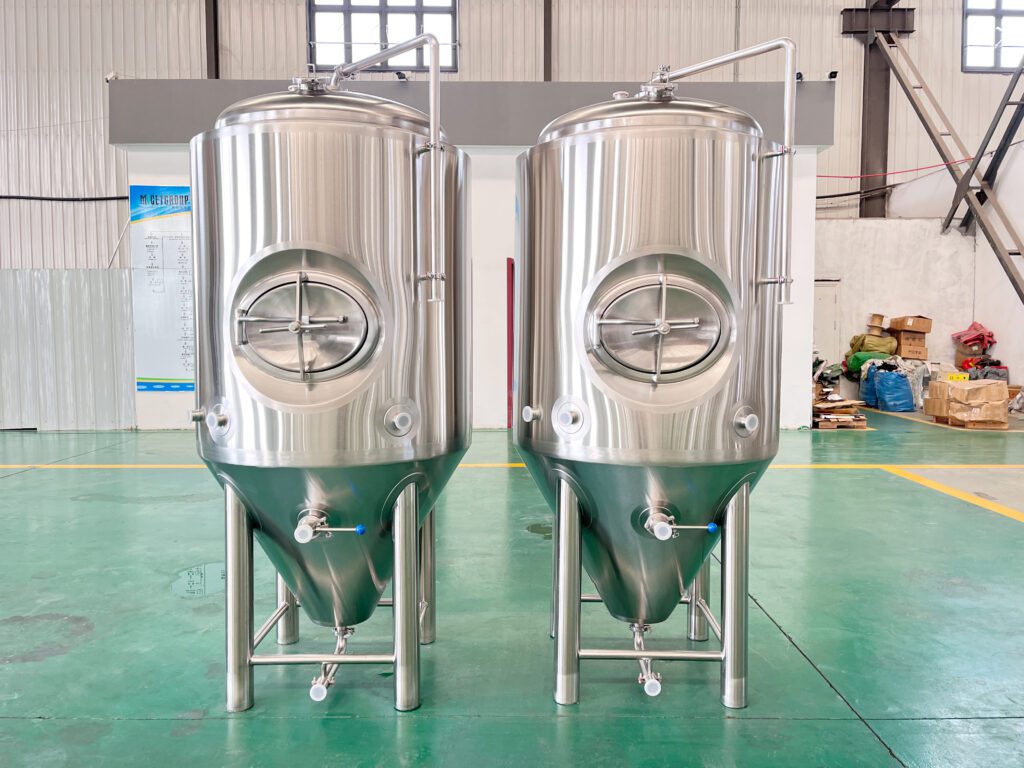
The FastFerment conical fermenter is a compact fermentation system made for homebrewers, small-batch winemakers, and hobby beverage producers. Unlike a conventional fermentation bucket or glass carboy, it has a cone-shaped bottom that directs yeast and sediment toward a removable collection chamber.
The familiar 7.9 US gallon model has a total capacity of approximately 30 liters. It is commonly used for batches of about 5 US gallons, leaving space for foam during active fermentation. The main vessel is made from food-grade HDPE plastic rather than stainless steel.
Its standard components include:
| Component | Main Function |
|---|---|
| Conical HDPE body | Holds the fermenting beverage |
| Bottom collection ball | Collects settled yeast and sediment |
| Union valve | Separates the main vessel from the collection chamber |
| Screw-top lid | Provides access for filling and cleaning |
| Airlock | Releases fermentation gas |
| Thermowell | Allows temperature measurement |
| Wall-mount brackets | Support the vessel |
| Hose and fittings | Support transfer to another container |
The cone is the most distinctive part of the design. As fermentation slows, yeast and other solids settle toward the bottom of the vessel.
This makes a FastFerment different from a flat-bottomed bucket, where sediment spreads across the floor of the container.
It also makes the product interesting to brewers who want to understand how larger conical fermentation systems work before investing in commercial equipment.
The 7.9-gallon model and its accessories are documented in FastFerment product specifications.
The collection ball is one of the reasons homebrewers choose this type of equipment.
During fermentation, yeast and trub settle toward the bottom of the cone. The bottom valve connects the main vessel to a small removable chamber where some of this material can collect.
When used according to the manufacturer’s instructions, the system allows the brewer to isolate the collection chamber after sediment has settled.
The concept is simple: separate settled material without transferring the entire batch to another vessel.
Yeast harvesting can be useful for brewers who want to study yeast behavior or manage repeated small batches.
A removable collection chamber may reduce unnecessary handling, but harvested yeast is not automatically suitable for reuse. Its condition depends on strain, fermentation history, sanitation, storage, and other factors.
For a small homebrew setup, the process can be convenient.
However, the collection chamber introduces extra connections that must remain clean and correctly sealed.
The brewer should inspect:
Do not unscrew the collection ball while the valve is open or while the assembly is under unsafe pressure.
A commercial stainless steel conical fermenter normally uses a sanitary bottom outlet for collecting or discharging yeast.
Instead of a small detachable collection ball, larger systems may transfer yeast to a dedicated collection vessel through suitable valves and piping.
This allows operators to manage larger volumes without relying on small threaded plastic fittings.
The underlying idea is similar, but the engineering requirements are very different.
A FastFerment can be an attractive step up from a standard fermentation bucket.
For home brew applications, it introduces several process features normally associated with professional conical vessels.
The cone concentrates settling yeast and sediment near the bottom.
This can make removing sediment easier than using a flat-bottomed bucket, although some solids may still remain inside the vessel.
Some beer recipes can complete fermentation and conditioning in one container.
That may reduce the need to move beer into another carboy solely for routine sediment separation.
Fewer transfers can also reduce handling time and potential exposure to oxygen.
The included thermowell provides a place to insert a suitable temperature probe.
This helps the brewer monitor liquid temperature rather than relying only on room temperature.
Monitoring, however, is not the same as active temperature control.
The system can be mounted to the wall using appropriate supports. A compatible floor stand may also be available.
This makes the design useful where the brewer has limited floor space.
Perhaps its greatest benefit is educational.
A brewer can learn how conical geometry affects yeast settling, how bottom valves work, and why sanitation becomes more important when a vessel has additional connections.
These are useful lessons before moving into professional beer production.
A plastic conical system has advantages, but it also has maintenance challenges.
A leaking valve, damaged thread, or poorly seated gasket can cause product loss. Because the FastFerment has several removable connections, users need to pay close attention during assembly and cleaning.
A leak may occur when a seal is damaged, a connection is assembled incorrectly, or a fitting is overtightened.
The correct response is to inspect the joint and follow the manufacturer’s assembly procedure.
Do not assume that additional tightening always fixes a leak. Excessive force may damage plastic threads.
Some beer recipes produce more trub or sediment than others.
A small outlet may become blocked by settled solids, especially when the batch contains a large amount of hop material or other particles.
This is one reason commercial fermenter outlet sizing is based partly on product characteristics and solids handling.
The collection ball, bottom valve, hose, and threaded fittings all require attention.
If residue remains in a connection, it can become a contamination risk for the next batch.
A small system may be cleaned manually, while larger commercial vessels often use integrated Clean-in-Place (CIP) equipment.
Food-grade plastic can be suitable for fermentation, but damaged surfaces are harder to inspect and clean.
Avoid abrasive cleaning tools and chemicals or temperatures that exceed the manufacturer’s instructions.
When a plastic vessel develops deep scratches, permanent odors, or damaged fittings, replacement may be more practical than continued use.
A simple maintenance checklist can prevent many problems:
| Item | What to Check |
|---|---|
| Main body | Cracks, scratches, discoloration |
| Collection ball | Seal condition and cleanliness |
| Bottom valve | Movement and leakage |
| Lid | Gasket condition |
| Airlock | Clear gas-release path |
| Thermowell | Secure fitting |
| Mounting system | Stable support and fasteners |
| Transfer hose | Cleanliness and wear |
These checks matter even for small homebrew batches.
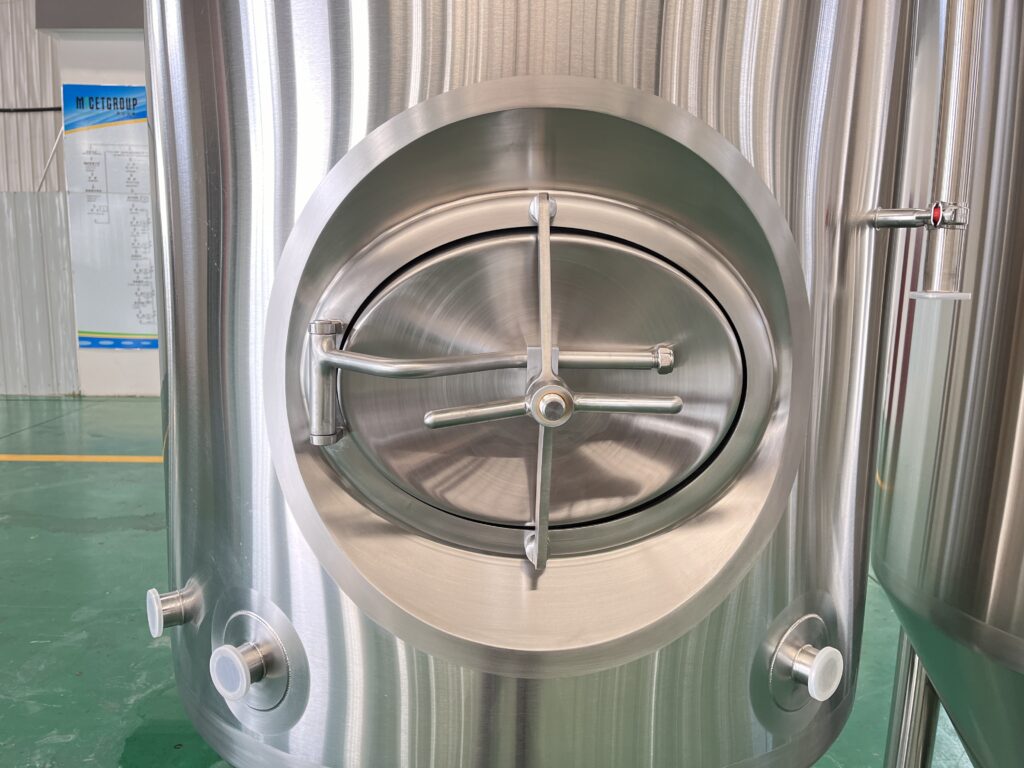
A major selling point of the FastFerment system is that a brewer may be able to complete primary fermentation and subsequent conditioning in the same vessel.
During primary fermentation, yeast converts fermentable sugars in the wort into alcohol and carbon dioxide.
After the most active stage, yeast and particles begin settling. The cone helps concentrate some of that material at the bottom.
Removing settled sediment may make additional transfers unnecessary for certain recipes.
However, this does not mean that every beer requires a separate secondary fermentation stage.
Many ales can remain in the primary vessel until they are ready for packaging. Other products may need extended conditioning, clarification, maturation, or transfer for specific process reasons.
The correct approach depends on the product, not on the fermenter manufacturer’s marketing claims.
Not entirely.
Even if beer remains inside the same vessel during fermentation and conditioning, it must eventually move into a keg, bottle, or another container.
The system may reduce the number of transfers, but it does not eliminate every transfer or every risk of oxidation.
A careful brewer should still use clean transfer equipment, suitable hoses, and good handling procedures.
For commercial breweries, minimizing oxygen exposure becomes even more important because larger production batches may spend longer in storage and distribution.
Yeast performance depends strongly on temperature.
If a batch becomes too warm, fermentation may produce unwanted flavors. If it becomes too cold, yeast activity may slow or stop before fermentation is complete.
The FastFerment thermowell helps a brewer monitor temperature, but the standard plastic vessel does not provide the integrated glycol cooling normally found on commercial jacketed fermentation tanks.
A homebrewer may therefore use a temperature-controlled fermentation chamber or another suitable external cooling arrangement.
Imagine a brewer measuring a fermentation temperature above the desired range.
The thermowell tells the brewer what is happening.
It does not remove the heat.
For small batches, an external fermentation chamber may provide enough cooling.
For a 500L or 1000L commercial system, cooling becomes an engineering requirement.
Commercial equipment commonly uses a temperature sensor, controller, cooling valve, glycol jacket, and chiller.
This makes it possible to manage the heat generated during fermentation more consistently.
The FastFerment airlock allows fermentation gas to escape while limiting outside air exchange.
However, opening connections or transferring beer can still introduce oxygen.
A plastic fermenter should not be treated as a pressure-rated vessel unless its manufacturer explicitly certifies that capability.
Never pressurize a standard FastFerment to perform forced carbonation or pressure transfers.
Commercial unitanks can support controlled-pressure operations only when the vessel and its safety equipment are designed and rated for those conditions.
The biggest difference is not simply plastic versus stainless steel.
It is the complete operating environment.
A FastFerment is designed mainly for small-batch fermentation. A commercial conical fermenter is designed for repeated production, larger working volumes, reliable cleaning, temperature management, and integration with other brewery systems.
| Functie | FastFerment 7.9 Gallon | Commercial Stainless Steel Conical Tank |
|---|---|---|
| Typical application | Homebrewing and small-batch testing | Microbrewery and commercial production |
| Materiaal | Food-grade HDPE plastic | Commonly SUS304 or SUS316L |
| Total capacity | Approximately 30L | Often hundreds to thousands of liters |
| Yeast collection | Removable collection ball | Sanitary cone outlet |
| Temperature measurement | Thermowell | Industrial temperature sensors |
| Active cooling | External system if required | Integrated glycol jacket options |
| Pressure operation | Not assumed pressure-rated | Available on suitably rated vessels |
| Schoonmaken | Mainly manual | Manual and/or CIP-ready |
| Product transfer | Hose and small fittings | Sanitary valves and process piping |
| Automatisering | Limited | Manual, semi-automatic, or PLC options |
| Packaging integration | Small batches | Kegs, cans, bottles, or brite tanks |
The choice depends on what the brewer needs to accomplish.
For someone experimenting with recipes at home, a commercial tank may be unnecessary.
For a brewery selling hundreds of liters every week, a small plastic vessel usually creates too much manual handling and too little process capacity.
A professional system can also offer features such as insulation, cooling jackets, sampling valves, a racking arm, and an engineered sanitary outlet.
MICET’s gebruikte 500L fermentatietank provides an example of a commercial configuration with a stainless steel conical body, cooling jackets, insulation, and CIP-ready internals.
These are differences in production capability, not just appearance.
There is no fixed batch count that tells every brewer when to upgrade.
The decision depends on production goals, equipment utilization, sales demand, and the amount of manual work involved.
A homebrewer producing one batch occasionally may be happy with a FastFerment for years.
A small business planning weekly production or wholesale distribution faces a different situation.
Consider a larger system when:
At this point, the business case extends beyond the purchase price of one fermenter.
You should consider the cost of labor, cleaning, cooling, maintenance, utilities, and production delays.
No.
Larger tanks need more investment and may require a glycol system, additional floor space, stronger utilities, and installation support.
However, a correctly sized commercial tank can reduce the number of separate batches needed to achieve a target volume.
For a growing producer, this can simplify scheduling and improve operating consistency.
The key is to match capacity with realistic demand.
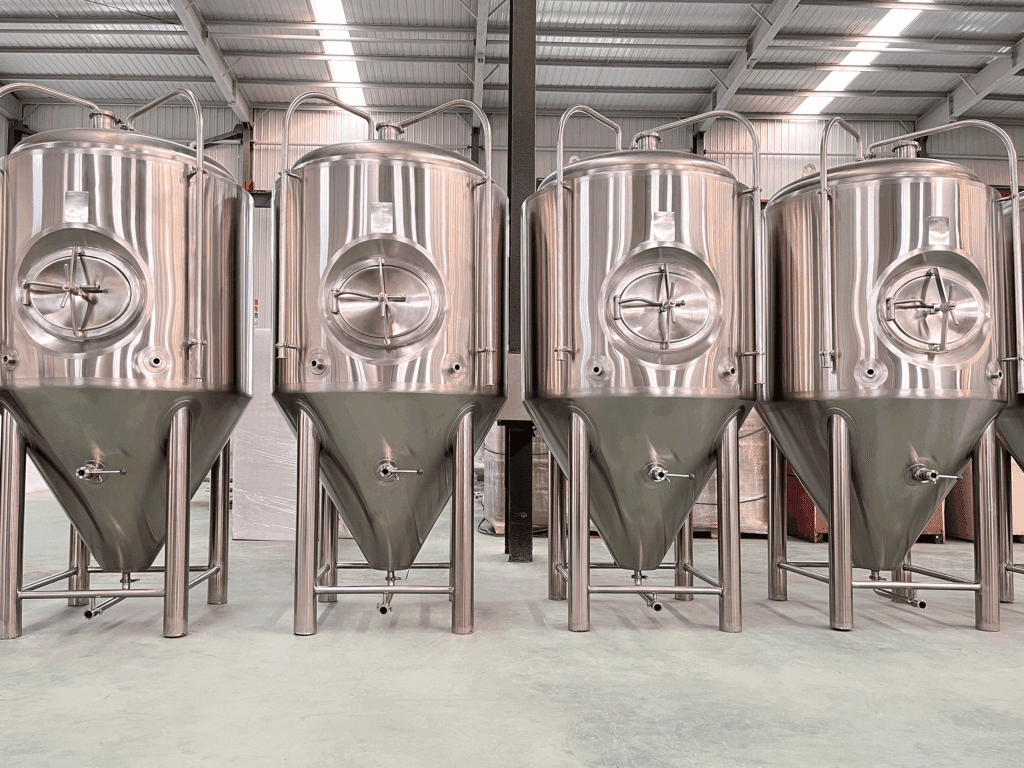
Moving from a homebrew conical to commercial fermentation is more than purchasing a bigger version of the same container.
The process becomes more complex as working volume increases.
A FastFerment 7.9-gallon model has a total capacity of approximately 30L, with a typical working batch around 5 US gallons or 19L.
For comparison, a commercial system may use 300L, 500L, or 1000L working-volume tanks.
| System | Illustrative Working Batch | Relative to a 19L Homebrew Batch |
|---|---|---|
| FastFerment 7.9G | 19L | 1 batch |
| Commercial pilot fermenter | 300L | About 16 batches |
| Commercial fermenter | 500L | About 26 batches |
| Commercial fermenter | 1000L | About 53 batches |
These are volume equivalents only. They do not represent actual weekly output because fermentation time, cleaning, transfer losses, and production scheduling must also be considered.
The comparison illustrates why equipment scale changes the operating model.
1. Temperature management
A small batch may be cooled in a fermentation chamber. A larger production system normally needs dedicated cooling equipment.
2. Cleaning
Manually washing one compact plastic vessel is very different from cleaning a 1000L stainless steel fermentation tank.
CIP design, drainage, chemical compatibility, and inspection access become important.
3. Yeast management
Larger yeast quantities require appropriate collection, handling, sanitation, and storage procedures.
4. Production scheduling
A commercial brewery may operate several fermenters simultaneously. One vessel may contain a lager while another produces an ale or cider.
5. Quality control
The brewer may need routine batch records, gravity measurements, temperature history, and consistent operating procedures.
6. Packaging
A homebrewer can fill a few bottles or a keg. A commercial producer needs a packaging plan that matches finished beer output.
Consider a small beverage startup currently testing recipes with 19L batches.
The team develops a beer that receives strong demand from local customers and decides to move toward a 500L production target.
At the testing stage, the main questions are recipe quality and customer response.
At the commercial stage, the questions change:
This is an illustrative scenario, not a published MICET customer project.
It shows why the next investment should be planned as a production system rather than simply replacing a small fermenter with a larger one.
If you are moving beyond homebrew production, begin with your actual production requirements.
At MICET, our engineering approach focuses on how the fermentation equipment will work with the brewhouse, cooling system, cleaning process, and packaging plan.
Before requesting a quotation, prepare the following information:
| Requirement | What to Specify |
|---|---|
| Product | Beer, cider, wine, kombucha, or another beverage |
| Batch capacity | Desired working volume |
| Production frequency | Batches per week |
| Fermentation schedule | Typical vessel occupancy |
| Temperatuur | Required fermentation and conditioning range |
| Materiaal | SUS304 or SUS316L where appropriate |
| Pressure | Atmospheric or pressure-rated operation |
| Yeast handling | Collection or discharge requirements |
| Schoonmaken | Manual cleaning or CIP |
| Verpakking | Keg, bottle, can, or bulk transfer |
| Utilities | Electricity, glycol, water, drainage |
| Lay-out | Floor space, ceiling height, access |
| Expansion | Expected future capacity |
Both may be worth considering.
A new tank offers opportunities to customize its dimensions, fittings, cooling arrangements, and controls around the project.
A refurbished tank may offer a lower initial investment, provided the buyer can verify its condition, cleaning suitability, cooling system, and pressure documentation where applicable.
MICET supplies customized brewing and fermentation systems as well as used or refurbished equipment for suitable projects.
For reference, our used 1000L fermentation tank page describes a stainless steel conical design with insulation, glycol cooling, sanitary fittings, and refurbishment-related information.
When moving from fast ferment homebrew systems to commercial production, buyers need more than a tank catalog.
The equipment must fit:
MICET supports stainless steel tank customization, brewhouse systems, CAD and 3D layout planning, integration of glycol cooling and other auxiliary equipment, installation guidance, and long-term technical support.
We help craft breweries, brewpubs, commercial beverage producers, cideries, and other B2B customers evaluate the complete production setup.
A small conical fermenter can be a useful place to learn.
When your production goals grow, the next step is choosing an integrated fermentation system designed around your process.
If you are planning to expand from small batches into commercial production, share your current batch size, target output, beverage type, and facility requirements with the MICET engineering team.
We can help you evaluate a suitable new or refurbished commercial fermentation configuration.
The FastFerment is a homebrewing fermentation system with a cone-shaped plastic body, bottom valve, and removable collection ball. The popular 7.9 US gallon version has approximately 30L total capacity and is commonly used for batches around 5 US gallons.
It is primarily designed for homebrewing and small-batch use. A commercial brewery generally needs larger capacity, more robust sanitation arrangements, active cooling, and equipment suited to its production and regulatory requirements.
It may eliminate the need for a separate secondary vessel in some brewing processes, but finished beer must still be transferred for packaging or serving. Good transfer practices remain important for reducing oxygen exposure.
Yes, the system is marketed for small-batch beer and wine production and may be suitable for cider making when used within its material and operating limits. The required cleaning, headspace, and fermentation procedures depend on the beverage.
Do not assume a standard plastic FastFerment is pressure-rated. It should not be used for pressure fermentation, forced carbonation, or pressure transfers unless the manufacturer explicitly approves that use and provides the required specifications.
A commercial stainless steel conical fermenter can provide larger working volume, integrated glycol cooling, more robust cleaning capability, sanitary yeast handling, and suitable pressure-rated options. These features support repeatable production and integration into a professional brewery.
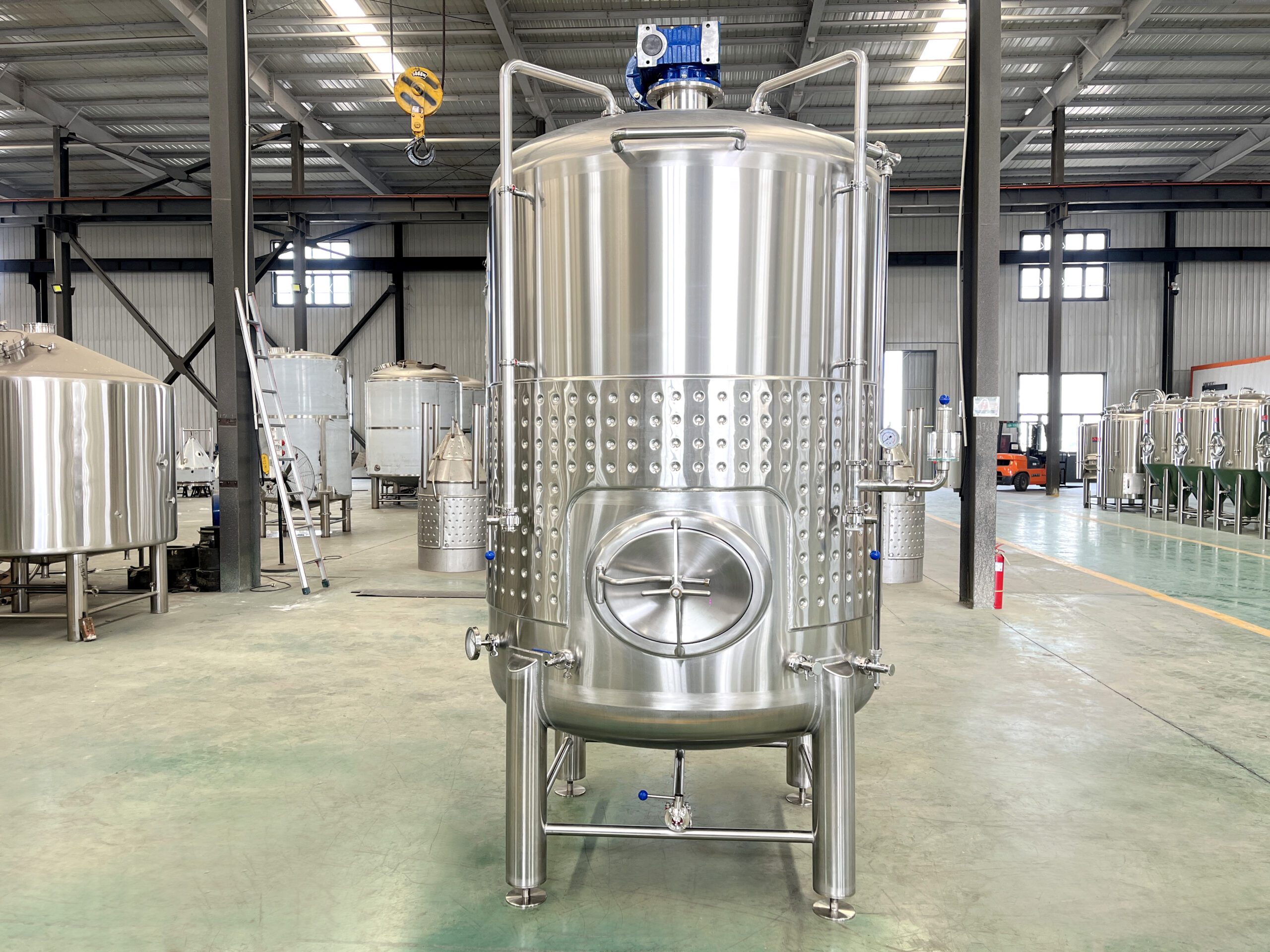
Choosing the wrong equipment supplier can leave a beverage plant with mismatched tanks, poor cleaning access, weak temperature control, or a filling line that cannot keep up. The real problem is often simple: restaurant equipment and beverage processing equipment serve completely different production needs.
The right food and beverage equipment manufacturer for a beverage factory should understand sanitary processing, stainless steel tanks, mixing, temperature control, CIP, water treatment, filling, utilities, layout, and automation. Restaurant equipment suppliers mainly serve kitchens and foodservice operations, while beverage processing manufacturers engineer complete production systems for repeatable industrial output.
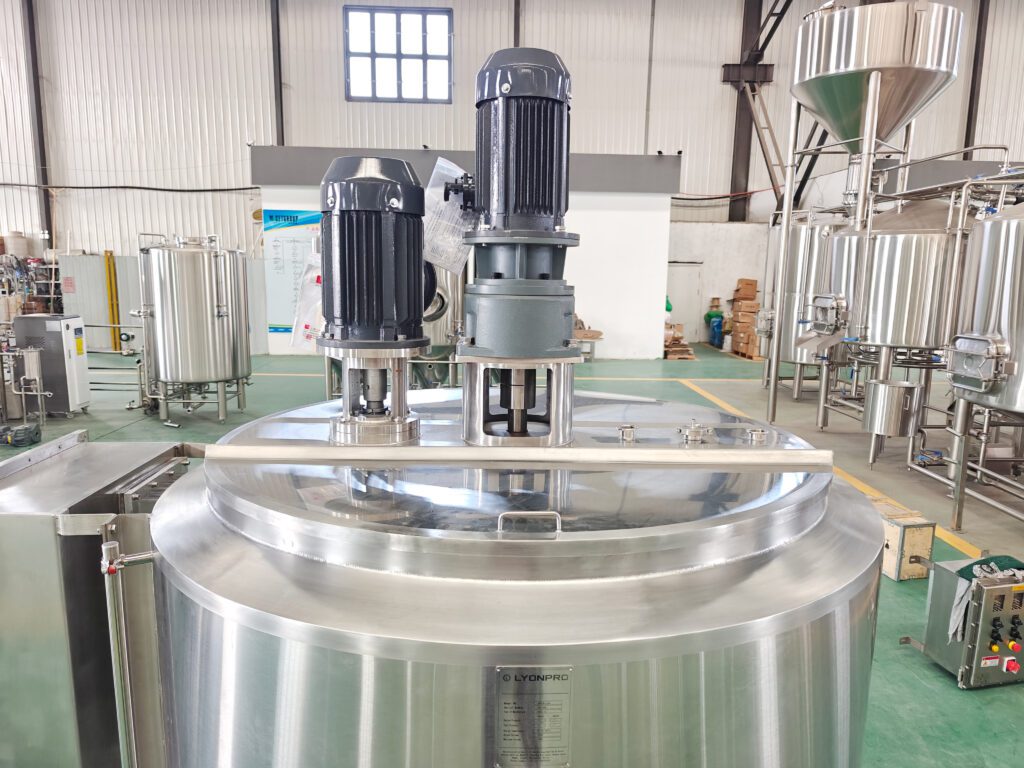
The phrase food and beverage equipment manufacturers covers several very different industries.
A commercial restaurant may need kitchen equipment such as an oven, fryer, grill, countertop refrigerator, food warmers, ice machine, cooker, and food preparation equipment. These machines prepare food or drinks close to the point of sale.
A beverage factory has a different job.
It must turn raw materials into repeatable batches, process those batches under controlled conditions, move liquid hygienically between stages, and package finished products at a planned production rate.
That usually requires beverage equipment such as:
The difference is important because a company that is excellent at supplying commercial kitchen equipment may have little experience engineering a sanitary beverage line.
| Equipment Category | Restaurant / Foodservice | Beverage Manufacturing |
|---|---|---|
| Main purpose | Prepare or serve food | Manufacture beverages in batches |
| Typical equipment | Oven, fryer, grill, warmer | Tanks, filters, pumps, fillers |
| Production scale | Meal/service based | Batch or continuous processing |
| Schoonmaken | Manual + routine kitchen sanitation | Sanitary design + CIP where applicable |
| Controls | Appliance-level | Process-level |
| Piping | Limited | Often extensive |
| Automatisering | Basic appliance control | Recipe, temperature, pump and valve control |
| Layout focus | Chef workflow | Product flow + utility flow + cleaning |
A commercial kitchen and a beverage factory may both belong to the food and beverage industry, but their equipment needs are not the same.
That is the first thing a B2B buyer should understand.
There is no universal list.
A carbonated beverage plant, juice line, tea plant, kombucha operation, cold brew coffee facility, brewery, and functional drink factory can share some equipment while requiring very different process steps.
A useful way to plan the project is to divide the factory into stages.
Water often forms a major part of the final beverage.
Depending on incoming water quality, the system may require:
The exact configuration should follow the raw-water analysis and product requirements.
Mixing tanks may handle:
Tank design should match viscosity, solids content, mixing speed, heating requirements, and batch size.
Depending on the product, processing may include:
A holding tank can separate upstream processing from downstream filling.
This is important because the production system does not always run at one perfectly constant speed.
The finished product may go into:
The production line should be designed as one system rather than a collection of unrelated machines.
MICET’s current beverage range is built around this integrated approach, combining processing tanks with water treatment, mixing, carbonation, sterilization, filling, and related systems.
A supplier may offer hundreds of machines.
That does not automatically make it the right supplier for a beverage production line.
For liquid food processing, equipment design must support cleanability, drainage, material compatibility, and contamination control.
The FDA’s Current Good Manufacturing Practice framework covers plant equipment, sanitary operations, facility sanitation, and production controls. FDA guidance also emphasizes that food-contact surfaces should be durable, corrosion-resistant, smooth, non-toxic, and easy to clean.
EHEDG makes the same basic point from an engineering perspective: poor hygienic design creates equipment that is difficult to clean and can increase contamination risk.
For buyers, this means checking details that do not always appear in a marketing brochure.
Look at:
A beautiful stainless steel tank can still have poor hygienic design.
Likewise, a state-of-the-art control screen cannot compensate for an outlet that leaves product sitting at the bottom of a vessel.
A commercial oven, fryer, refrigerated display, or warmer may also require good sanitation, but it normally does not form part of a closed liquid-processing circuit.
A beverage plant has additional concerns:
Tank → valve → pump → pipe → heat exchanger → tank → filler
Every connection becomes part of the process.
That is why industrial food processing equipment requires system-level thinking.
A good equipment manufacturer should ask questions before recommending machines.
If a supplier immediately sends the same standard quotation to every buyer, that is a warning sign.
For a beverage project, we normally want to understand:
Consider viscosity.
Thin flavored water can move through the system differently from fruit beverages containing solids.
Now consider temperature.
A cold-fill product may need a very different process from one requiring thermal treatment.
Then consider carbonation.
A carbonated beverage requires controlled CO2 handling, while a still beverage may not need a carbonation unit at all.
A professional manufacturer should therefore start from a process flow.
For example:
Water Treatment → Ingredient Preparation → Mixing → Filtration → Processing → Holding → Filling → Packaging
Once the process is defined, each machine can be sized around it.
That is much more reliable than buying individual machines and trying to connect them later.
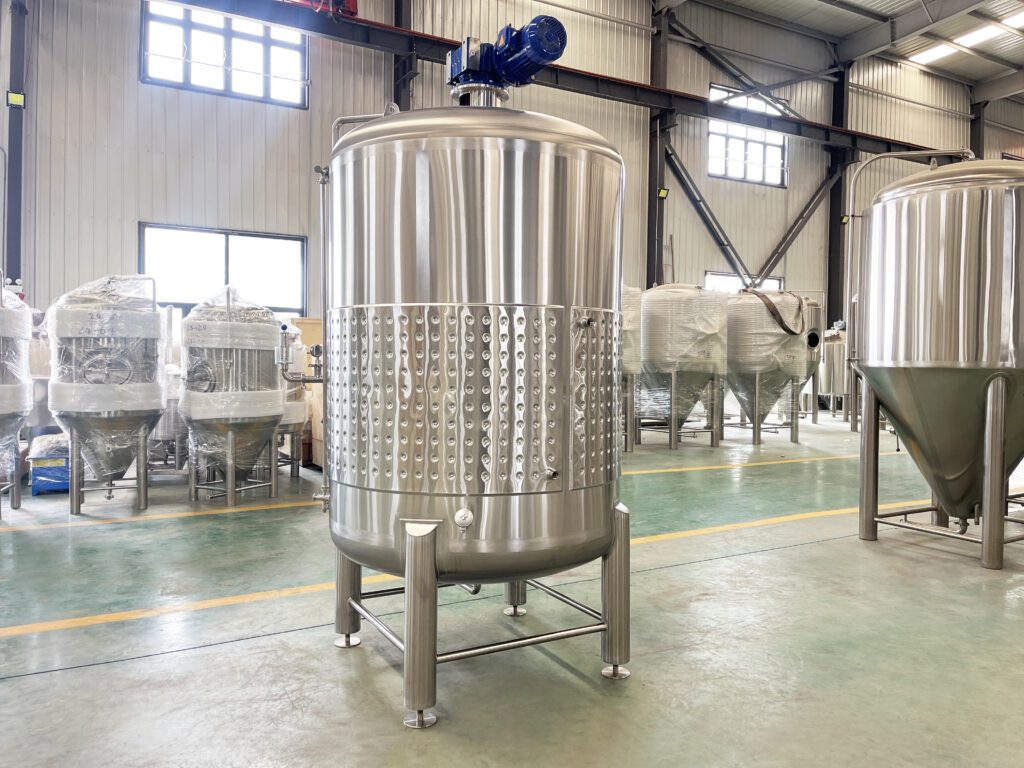
Stainless steel is widely used in beverage production because of its durability, corrosion resistance, and cleanable surface.
But “stainless steel” alone is not a complete specification.
Buyers should confirm:
SUS304 is widely used for many beverage applications.
SUS316L may be considered where the formulation, water chemistry, cleaning chemicals, or operating environment creates more demanding corrosion conditions.
Do not confuse nominal volume with working capacity.
A 2,000L vessel may not be intended to operate with exactly 2,000L of every product under every process condition.
Ask for:
Mixing equipment should match:
A high-speed mixer is not automatically better.
Poor weld finishing can make cleaning more difficult.
Ask the supplier how product-contact welds are fabricated, finished, inspected, and documented.
Review:
A good system should be designed around operation and maintenance, not just manufacturing convenience.
Very important.
Many beverage buyers focus first on the large processing tanks because they are visually impressive.
But utility systems often determine whether those tanks can operate efficiently.
A CIP system can circulate cleaning solutions through compatible processing tanks, pipelines, pumps, and other equipment without dismantling the entire line.
EHEDG notes that cleaning and disinfection programs must consider equipment design as well as the type of residue being removed.
A CIP system may include:
The correct setup depends on the process.
Cooling can serve:
A chiller should be selected from the actual heat load, not simply by tank volume.
Some systems need heating for:
Pump type and size affect:
Poor water quality can affect the finished beverage and may also create scaling or maintenance problems.
MICET’s current auxiliary range includes glycol chillers, CIP units, pumps, steam/hot-water systems, water treatment, control panels, filters, pasteurization equipment, and carbonation systems.
This is why the best equipment selection is often based on the whole utility network.
A beverage factory is only as fast as its bottleneck.
Suppose the processing area can prepare 2,000 liters per hour.
Now suppose the filling system can only package 800 liters per hour.
The processing line will eventually wait for packaging.
The opposite creates a different problem.
A high-speed filler cannot operate efficiently if upstream production cannot supply enough beverage.
The basic relationship is:
Processing Capacity ≈ Buffer Capacity ≈ Sustainable Filling Capacity
They do not need to be exactly equal every minute, but they must work together.
Assume a factory produces a 500ml drink.
If the filler runs at:
2,000 bottles/hour
then theoretical liquid demand is:
2,000 × 0.5L = 1,000L/hour
But real planning also needs to consider:
Therefore, equipment should not be selected using theoretical nameplate output alone.
A filling-line quotation should clearly state:
For export buyers, equipment documentation matters too. MICET’s available filling-equipment documentation covers bottle, keg, can, and automatic filling systems across multiple rated capacities.
Automation should make a beverage plant easier to operate.
It should not make a simple process unnecessarily complicated.
A control system may monitor or manage:
For a small startup, simple controls may be enough.
A larger beverage plant producing several recipes may benefit from more advanced automation solutions.
If operators manually set every valve and pump differently from shift to shift, process variation increases.
A properly designed control sequence can help standardize:
But good automation starts with good process engineering.
Adding more sensors does not fix a poor layout.
Likewise, an expensive controller cannot solve an undersized pump or badly routed pipe.
A manufacturer should define the process first and automate the right tasks second.
Not every supplier is a manufacturer.
That distinction becomes important in customized projects.
A restaurant supply company usually sells a broad range of ready-made equipment and supplies.
This may include:
That business model works well for many commercial foodservice buyers.
But beverage processing is different.
A distributor may source machines from several manufacturers.
This gives buyers more choice, but technical responsibility may be divided between multiple companies.
A manufacturer can usually control more of the design and fabrication process.
This becomes useful when you need to customize:
For a complete beverage plant, this is often the most useful model.
The supplier does not simply manufacture individual machines.
It helps make sure the machines work together.
| Supplier Type | Best Fit |
|---|---|
| Restaurant equipment dealer | Kitchen and foodservice operation |
| General distributor | Standard standalone machines |
| Equipment manufacturer | Custom machines and tanks |
| Process-system manufacturer | Integrated beverage line |
| Engineering integrator | Complex multi-machine factory projects |
MICET positions itself as a manufacturer rather than a reseller and currently provides CAD/3D process layouts, equipment customization, system integration, installation guidance, and long-term technical support.
The lowest quotation is not always the lowest-cost project.
A cheap machine that causes repeated downtime, product loss, difficult cleaning, or slow spare-parts support can become expensive very quickly.
Before selecting a food and beverage equipment supplier, ask these questions.
This is especially important for international projects where engineers cannot simply drive to the factory when something fails.
Strong aftermarket service should be discussed during procurement, not after the first breakdown.
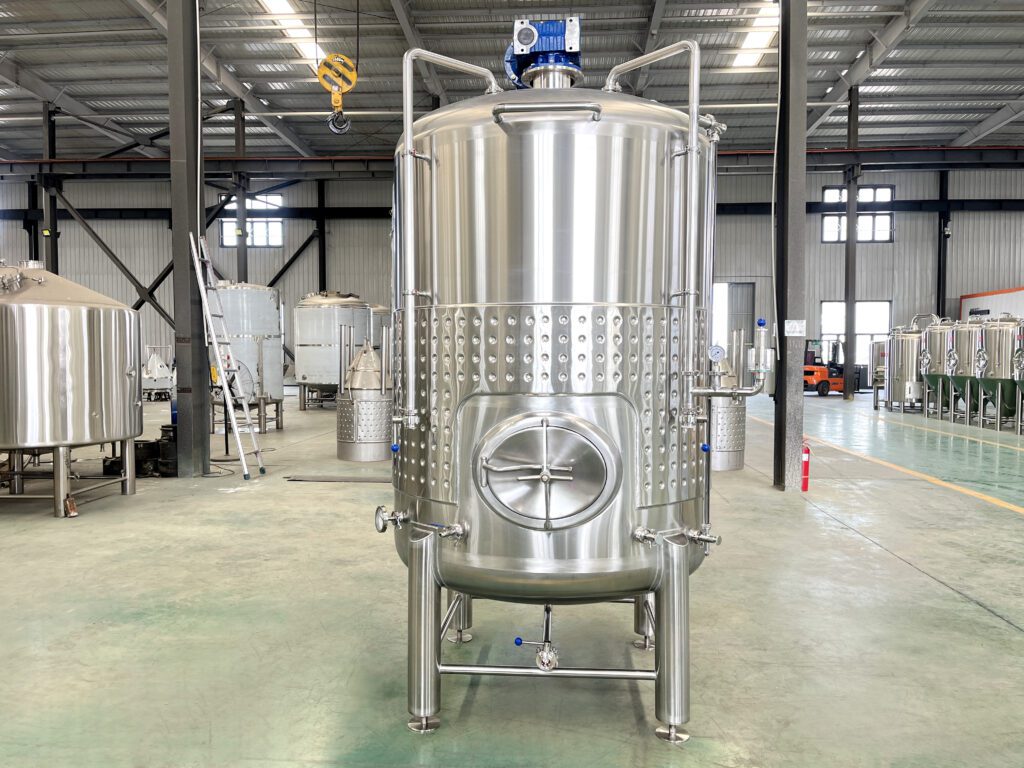
A beverage project should begin with the product and production target.
Not with a machine catalog.
MICET currently supports beverage systems for products including carbonated drinks, juice, tea, flavored water, and functional beverages. Published configurations combine stainless steel tanks with processing, water treatment, carbonation, sterilization, and filling systems.
Our engineering process can include:
Suppose a beverage startup wants a 2,000L batch system.
Instead of simply quoting one 2,000L tank, we would need to understand:
That information determines whether the project needs one tank, several tanks, a buffer tank, different agitators, larger utilities, or additional processing equipment.
MICET’s published 2000L drankapparatuur configuration uses the same integrated logic: water treatment, mixing, optional carbonation, sterilization, and filling are treated as parts of one beverage system rather than unrelated purchases.
A beverage startup may begin with one product.
Two years later, it may add:
A modular line can make expansion easier.
That may mean installing:
The goal is not to overbuild the factory on day one.
The goal is to avoid designing a plant that becomes impossible to expand.
If you are planning a beverage factory, send MICET your beverage type, daily output, batch size, packaging format, utility conditions, and factory layout. Our engineering team can help you develop an integrated equipment configuration instead of purchasing machines one by one.
Foodservice equipment is generally used to prepare, hold, refrigerate, cook, or serve food and drinks in restaurants, cafés, hotels, and similar operations. Beverage processing equipment is used to manufacture beverages at production scale through processes such as water treatment, mixing, filtration, fermentation, carbonation, pasteurization, storage, and filling.
Look for experience in sanitary stainless steel fabrication, process engineering, tank design, utilities, CIP, pumps, controls, filling integration, layout planning, testing, installation support, and after-sales service.
Stainless steel is widely used because it offers durability, corrosion resistance, and cleanable food-contact surfaces. The exact stainless grade should be selected according to the beverage, cleaning chemicals, water quality, and operating conditions.
You can, but multi-supplier projects require more coordination. Buyers must make sure tank capacities, pumps, pipe sizes, controls, utilities, and filling speeds are compatible. One integrated supplier can simplify engineering responsibility, though the best procurement model depends on the project.
Start with daily finished output, then work backward through filling hours, processing time, batch size, cleaning time, changeovers, and process losses. Do not select tanks only from nominal liters or filling machines only from maximum rated speed.
Often yes, but the design must consider recipe differences, viscosity, solids, carbonation, temperature, allergen or hygiene requirements, cleaning procedures, and container formats. Some products may require dedicated equipment or piping.
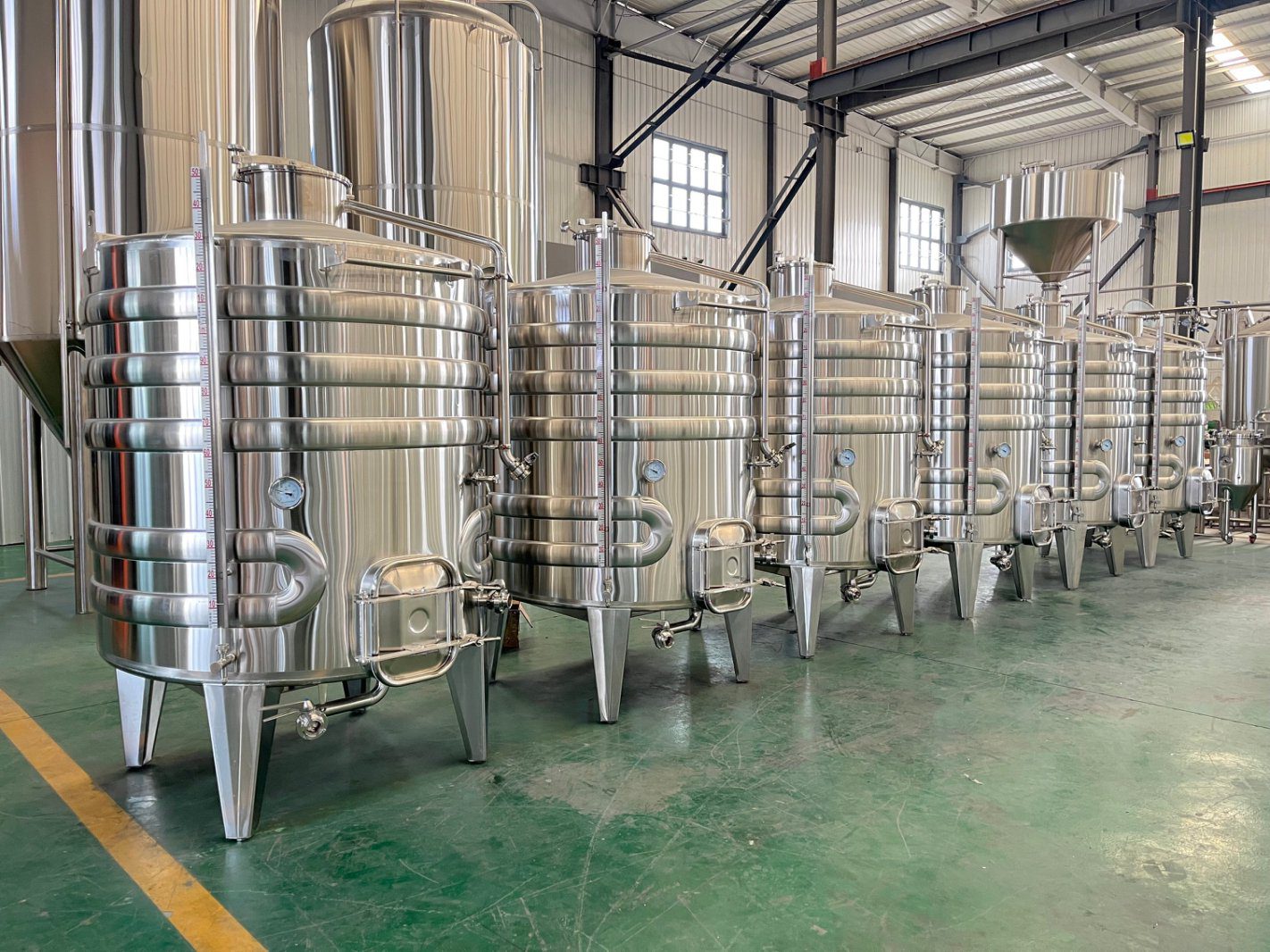
A winery can buy excellent stainless steel tanks and still lose control during harvest if the cooling system is too small. Several fermentations can peak at once, ambient temperature may be high, and an undersized chiller may struggle exactly when the cellar needs it most. Good cooling starts with load planning, not horsepower guessing.
To size a glycol chiller for wine fermentation tanks, calculate the heat that must be removed from product cooling, active fermentation, ambient heat gain, pumps and piping, then determine how many tanks may require cooling at the same time. Select the chiller from its rated capacity at your actual glycol temperature and outdoor conditions, with practical reserve for harvest peaks and future expansion.
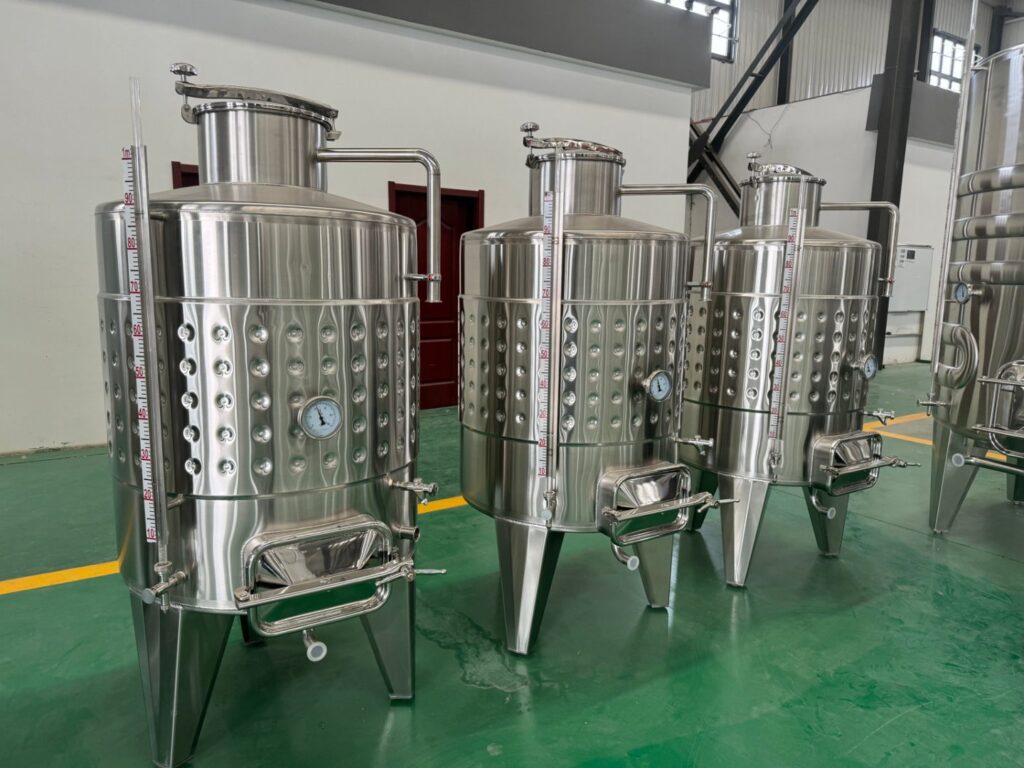
For most of the year, a winery cooling system may look oversized. Harvest changes everything.
Fruit can arrive quickly. Several tanks may be filled within a short period. Some tanks need initial product cooling, others are in active fermentation, and another group may already be undergoing cold stabilization or low-temperature storage.
This creates a peak cooling load that can be much higher than the average annual load.
Fermentation itself also generates heat. UC Davis explains that heat is released during fermentation and that poorly controlled temperature can affect microbial activity, aroma retention, extraction, and fermentation performance. Tank temperature may also vary within the vessel rather than remaining perfectly uniform.
That is why we do not recommend selecting a glycol chiller only by saying:
“I have six 10,000L tanks, so give me a chiller for 60,000L.”
Total installed tank volume is useful information, but it is not the cooling load.
A better design asks:
The answers determine the refrigeration system far more accurately than total tank capacity.
The cooling system must remove several types of heat.
This is the heat removed when grape juice, must, or wine must be cooled from one temperature to another.
For example, fruit may arrive warm from the vineyard, and the winery may want to cool the juice before or during fermentation.
This load can be large because thousands of liters of liquid must change temperature within a limited number of hours.
Yeast metabolism generates heat while sugar is converted during fermentation.
The load changes over time. Early fermentation may be relatively calm. At peak yeast activity, heat generation increases. Later, it falls again.
This means the chiller should be designed around the peak process condition, not only the average temperature over several days.
Heat also enters through:
Insulated stainless steel wine tanks reduce this heat gain, but they do not eliminate it.
Glycol pumps, wine pumps, and other mechanical equipment also add a smaller amount of heat to the system.
The same chiller may also serve:
The basic concept is:
Total Peak Cooling Load = Product Cooling + Fermentation Heat + Ambient Heat Gain + Auxiliary Loads + Simultaneous Process Loads
This is the number that matters.
A useful first calculation is the sensible cooling load required to lower the temperature of the liquid.
The basic heat equation is:
Q = m × Cp × ΔT
Where:
To convert this energy into refrigeration capacity, divide it by the time available:
Cooling Capacity = Q ÷ Cooling Time
Assume a winery has approximately 10,000L of juice entering a fermentation tank.
The product enters at approximately 25°C and should reach 15°C.
That means:
ΔT = 10°C
For preliminary calculations, juice or wine can be treated as roughly water-like before a detailed engineering correction is applied.
If we use approximately:
Then:
Q ≈ 10,000 × 4 × 10
Q ≈ 400,000 kJ
If this temperature reduction must happen within 10 hours:
400,000 ÷ 10 = 40,000 kJ/hour
That is roughly:
11 kW of average sensible cooling load
But this is not yet the required chiller capacity.
It does not include:
This is why choosing an “11 kW chiller” from this single calculation would be a mistake.
The equation only establishes one part of the thermal load.
Fermentation is not a steady thermal process.
As yeast becomes more active, the tank produces more heat. That heat must be removed if the winemaker wants to hold the wine at its target fermentation temperature.
UC Davis notes that vigorous fermentation can generate enough heat to raise temperature significantly, and that excessive temperature may increase volatile aroma loss or stress microorganisms.
For red wine, the problem can be even more complex.
The cap may develop a different temperature from the liquid lower in the tank. UC Davis reports that cap temperatures can sometimes be considerably warmer than the bulk liquid during active red fermentation.
This has several engineering implications.
A large tank with too little cooling-jacket surface may have plenty of chiller capacity available at the central refrigeration unit but still remove heat too slowly from the product.
The refrigeration system and the tank therefore have to be designed together.
Pump-over, punch-down, or other cap-management methods influence temperature distribution.
A temperature sensor placed in only one location cannot always describe what is happening everywhere inside a large red wine fermenter.
Opening a glycol valve fully every time the tank becomes slightly warm may create overshoot if control logic is poor.
Stable fermentation needs not just refrigeration capacity but also:
Cooling capacity is therefore a system property, not only a chiller specification.
Consider two wineries.
Both wineries have 60,000L total fermentation capacity.
Their peak cooling requirements may be very different.
This is the concept of simultaneous load.
| Item | Winery A | Winery B |
|---|---|---|
| Total tank volume | 60,000L | 60,000L |
| Number of tanks | 6 | 6 |
| Likely simultaneous active tanks | 2 | 6 |
| Harvest cooling demand | Lower | Much higher |
| Chiller requirement | Smaller | Larger |
A winery equipment supplier should therefore ask for the harvest schedule, not only the equipment list.
Create a simple timeline:
| Day | Tank 1 | Tank 2 | Tank 3 | Tank 4 |
|---|---|---|---|---|
| Monday | Fill/cool | — | — | — |
| Tuesday | Active ferment | Fill/cool | — | — |
| Wednesday | Active ferment | Active ferment | Fill/cool | — |
| Thursday | Ferment | Active ferment | Active ferment | Fill/cool |
| Friday | Ferment | Ferment | Active ferment | Active ferment |
This chart immediately shows why Thursday and Friday may matter more than the first day of harvest.
Design the refrigeration system around the realistic peak coincidence, not the annual average.
Red and white wines often operate under different fermentation strategies.
Penn State Extension notes that white wine fermentation is commonly carried out cooler than red wine fermentation, with cooler conditions helping preserve aroma and flavor in delicate wines.
That difference affects equipment design.
White wine production may require:
The refrigeration system may therefore run for longer periods.
Red fermentation often takes place warmer, but the process creates another challenge: the cap.
Heat can accumulate unevenly, and cap management affects temperature distribution.
Red wine tanks may therefore need:
These products may also benefit from lower-temperature fermentation when aroma retention is a priority.
The practical conclusion is important:
A chiller cannot be sized correctly without knowing what the winery plans to make.
Ten tanks of red wine and ten tanks of cool-fermented aromatic white wine do not create the same refrigeration profile.
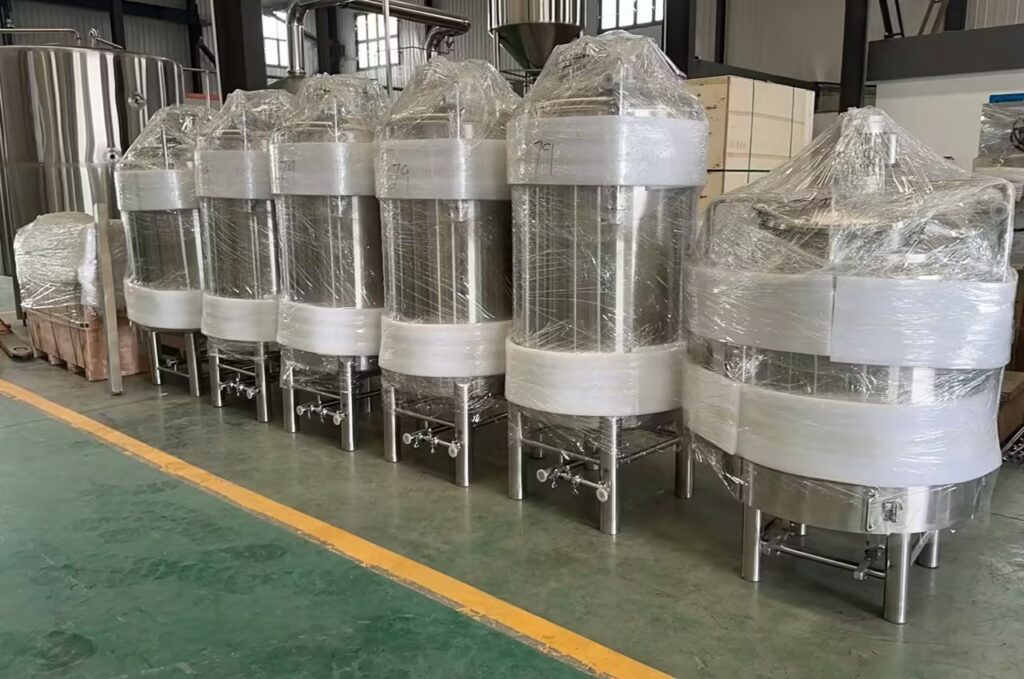
A common mistake is looking only at refrigeration horsepower or kilowatts.
The chiller may produce enough theoretical cooling but still perform poorly if glycol does not move through the system correctly.
A practical cooling loop includes:
Chiller → Buffer Tank → Circulation Pump → Main Supply Header → Tank Control Valve → Cooling Jacket → Return Header → Chiller
Each component affects performance.
Lower glycol temperature increases the temperature difference between coolant and wine, which can increase heat-transfer potential.
But colder is not always automatically better.
Very low glycol temperatures may:
UC Davis notes that the area closest to a cooling jacket can become significantly cooler than the bulk liquid if the system is poorly managed.
The design goal should therefore be controlled heat removal, not simply the coldest possible glycol.
The jacket needs enough flow to carry heat away.
Too little flow can cause:
Too much flow may require unnecessarily large pumps and piping.
The engineer should evaluate:
A 500L tank and a 15,000L tank should not automatically use the same jacket strategy.
Large tanks may benefit from independent cooling zones.
For example:
Independent valves allow the control system to use only the required cooling area.
MICET’s current winery fermentation equipment already uses dimpled glycol cooling jackets with temperature-control integration across its commercial wine tank range.
The chiller is only one component of the refrigeration system.
A correctly designed central system also needs adequate hydraulic capacity.
A glycol buffer tank stores chilled fluid and adds thermal mass to the cooling loop.
This can help:
Imagine three tank valves opening within a few minutes.
Without enough buffer volume and circulation capacity, supply temperature may rise rapidly before the chiller catches up.
The pump must provide enough flow at the required pressure.
It must overcome:
Simply installing a bigger pump is not always better.
Excessive flow wastes power and can create control problems.
Long pipe runs create both pressure loss and heat gain.
Good glycol piping should normally consider:
When we design a turnkey winery system, we therefore look at the tank room and utility layout together.
The chiller may sit outside the building, but its performance depends on everything between the refrigeration unit and the farthest fermentation tank.
Several mistakes appear repeatedly in winery projects.
“Six 5,000L tanks = 30,000L chiller.”
There is no direct conversion like this.
The system must be sized from thermal load and production schedule.
Cooling 10,000L by 10°C in 24 hours requires much less instantaneous capacity than doing the same job in 4 hours.
Always define the required cooling time.
One tank may be easy to control.
Five tanks reaching peak fermentation at once can create a completely different load.
A refrigeration unit may be advertised at a certain capacity under standard rating conditions.
Actual capacity can change when:
Ask for the manufacturer’s performance table at your actual design condition.
Enough refrigeration with insufficient circulation is still an underperforming cooling system.
A huge chiller cannot force heat through an undersized jacket quickly enough.
Adding four tanks later may require replacing:
Planning some spare capacity during the original build can be much cheaper than replacing the utility system later.
Future expansion should be discussed before the first glycol pipe is installed.
Suppose a winery starts with:
but plans to reach:
within three years.
It may not make financial sense to buy full eight-tank refrigeration capacity on day one.
But it may make sense to install:
This is a modular expansion strategy.
Advantages:
Disadvantages:
For example:
Stage 1: Chiller A
Stage 2: Add Chiller B
This can provide:
The correct solution depends on the scale of the winery and local operating conditions.
The same principle applies to tanks.
MICET currently offers winery fermentation tanks from small commercial sizes through 20,000L systems, so a utility design should consider whether today’s small cellar may later become a much larger production line.
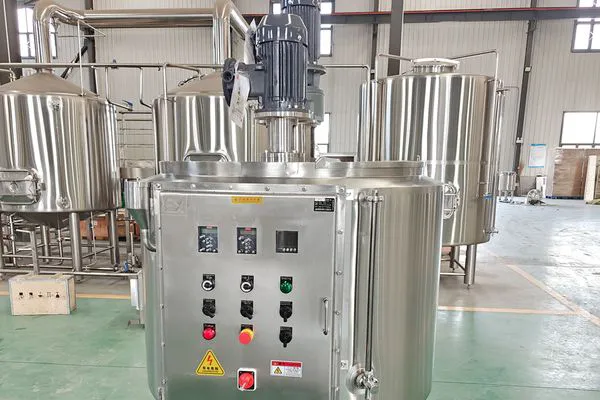
A useful chiller quotation needs more than tank quantity.
Before requesting a cooling-system proposal, prepare this information:
| Project Information | Why We Need It |
|---|---|
| Number of tanks | Defines potential simultaneous load |
| Working volume per tank | Determines product mass |
| Wine types | Influences fermentation temperature |
| Product inlet temperature | Determines initial cooling load |
| Target temperature | Defines required ΔT |
| Required cooling time | Determines kW demand |
| Fermentation schedule | Identifies peak load |
| Cold stabilization needs | Adds major refrigeration demand |
| Cellar ambient temperature | Affects tank heat gain |
| Outdoor design temperature | Affects air-cooled chiller performance |
| Tank insulation | Influences heat gain |
| Jacket configuration | Determines heat-transfer ability |
| Distance to chiller | Affects pump and pipe sizing |
| Future tank quantity | Helps plan expansion |
Consider a winery installing:
The wrong approach is:
“The winery has 60,000L, so size the chiller for 60,000L.”
Our preferred approach is:
This produces a system that reflects how the winery actually works.
As a professional brewery and beverage equipment manufacturer, MICET provides not only stainless steel wine fermentation tanks but also glycol chillers, buffer tanks, circulation pumps, cooling jackets, piping, controls, CIP systems, CAD/3D layout planning, installation guidance, and integrated winery equipment solutions.
If you are planning a new winery or adding fermentation tanks before the next harvest, send us your tank sizes, fermentation schedule, target temperatures, and cellar layout.
Our engineers can help match the tank system and refrigeration system as one project instead of treating them as separate purchases.
There is no reliable liters-to-chiller-size rule. Required refrigeration capacity depends on product volume, starting temperature, target temperature, cooling time, fermentation heat, ambient conditions, simultaneous tank load, cold stabilization, and other process loads.
Tank quantity is only one input. Two wineries with the same six tanks may need very different chiller capacities if one cools two tanks at a time and the other cools all six simultaneously.
White wines are often fermented at lower temperatures, so they may require more sustained cooling. Red fermentation may run warmer, but peak fermentation heat and hot cap zones can create demanding short-term cooling loads. The exact load depends on process conditions.
Possible causes include insufficient refrigeration capacity, low glycol flow, undersized piping, poor jacket coverage, incorrect control-valve operation, inadequate mixing, warm glycol supply, or a refrigeration unit operating outside its rated design conditions.
Not every system uses the same design, but a buffer tank can add thermal mass, stabilize glycol temperature, reduce rapid compressor cycling, and help handle changing tank demand.
Some spare capacity is useful, but extreme oversizing is not always efficient or economical. A better approach may be to design larger headers, provide spare connections, reserve electrical capacity, and use modular chillers that can be expanded later.

Dolor sit amet, consectetur adipisi cing elit, sed do eius mod tempor incididunt ut labore et dolore magna aliqua.
Dolor sit amet, consectetur adipisi cing elit, sed do eius mod tempor incididunt ut labore et dolore magna aliqua.

Dolor sit amet, consectetur adipisi cing elit, sed do eius mod tempor incididunt ut labore et dolore magna aliqua.

Dolor sit amet, consectetur adipisi cing elit, sed do eius mod tempor incididunt ut labore et dolore magna aliqua.

Dolor sit amet, consectetur adipisi cing elit, sed do eius mod tempor incididunt ut labore et dolore magna aliqua.

Dolor sit amet, consectetur adipisi cing elit, sed do eius mod tempor incididunt ut labore et dolore magna aliqua.