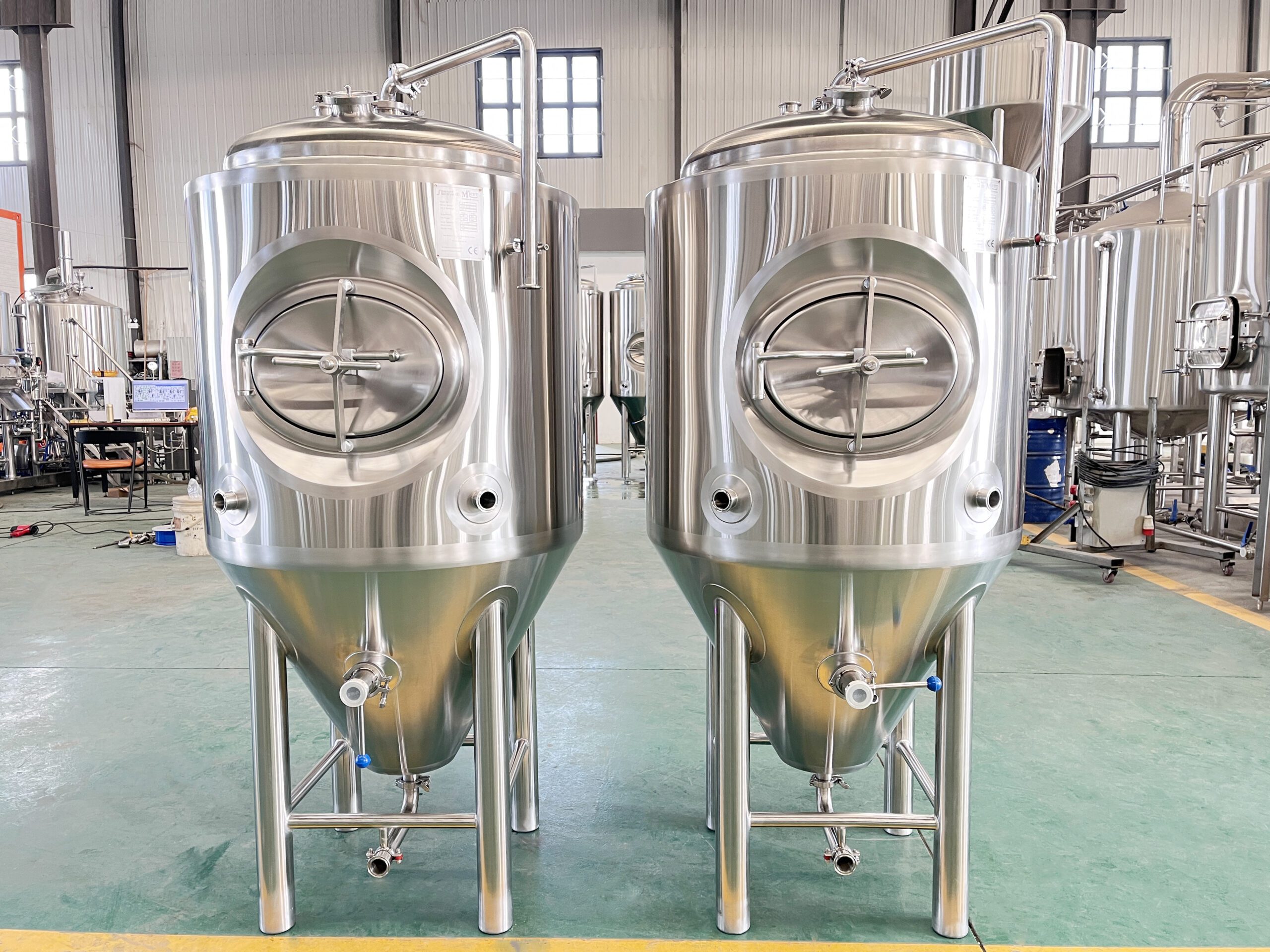
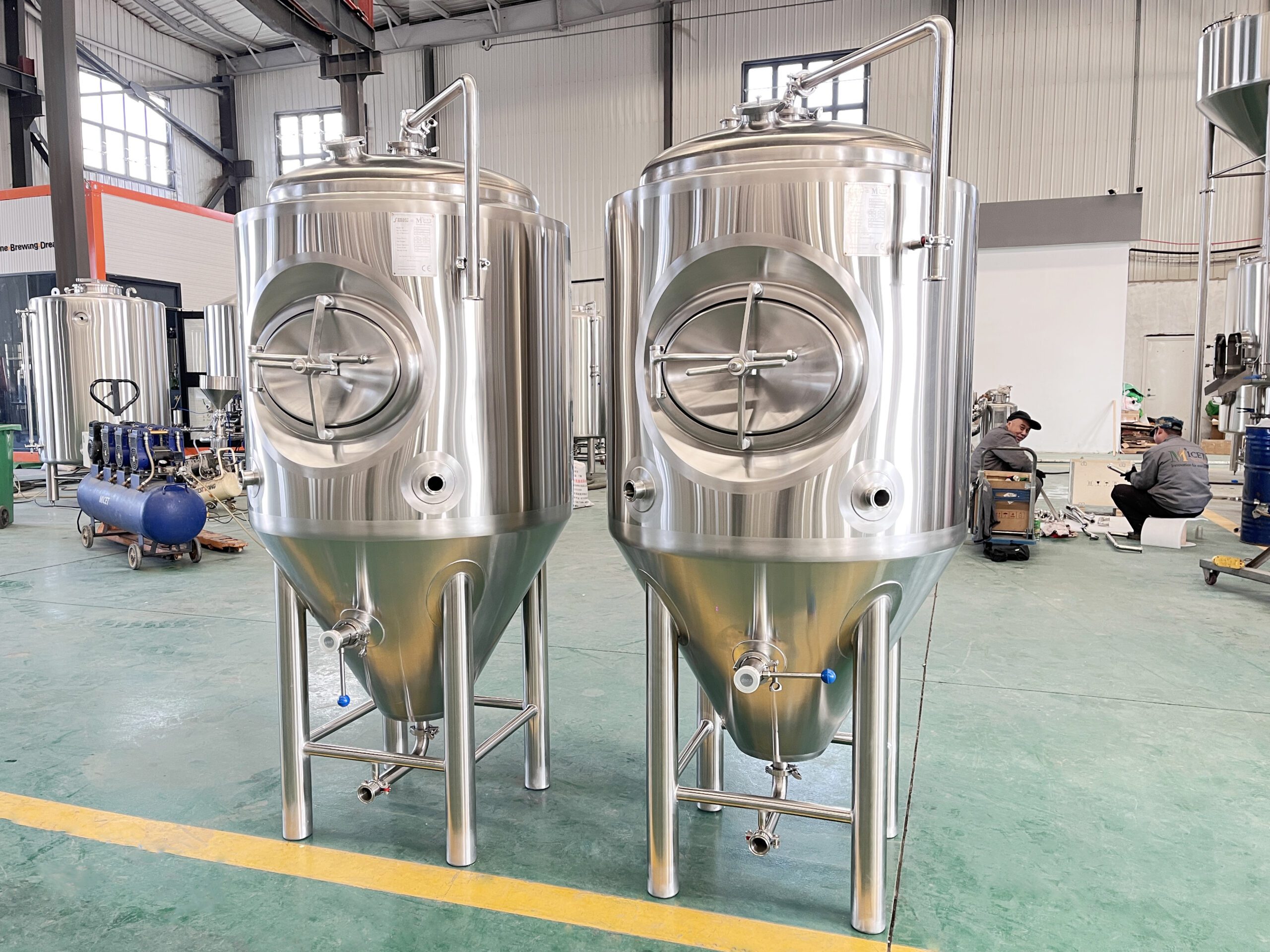
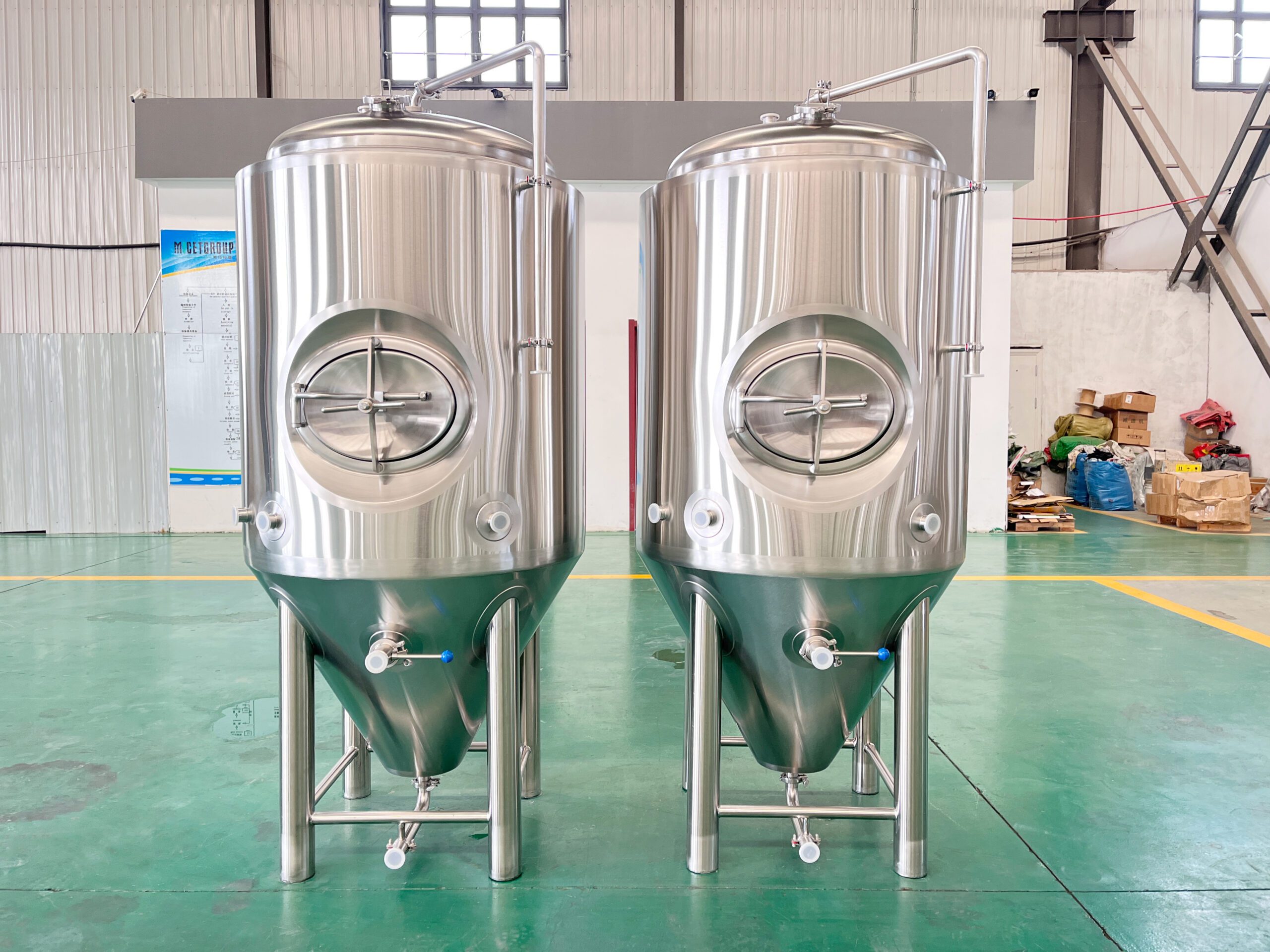
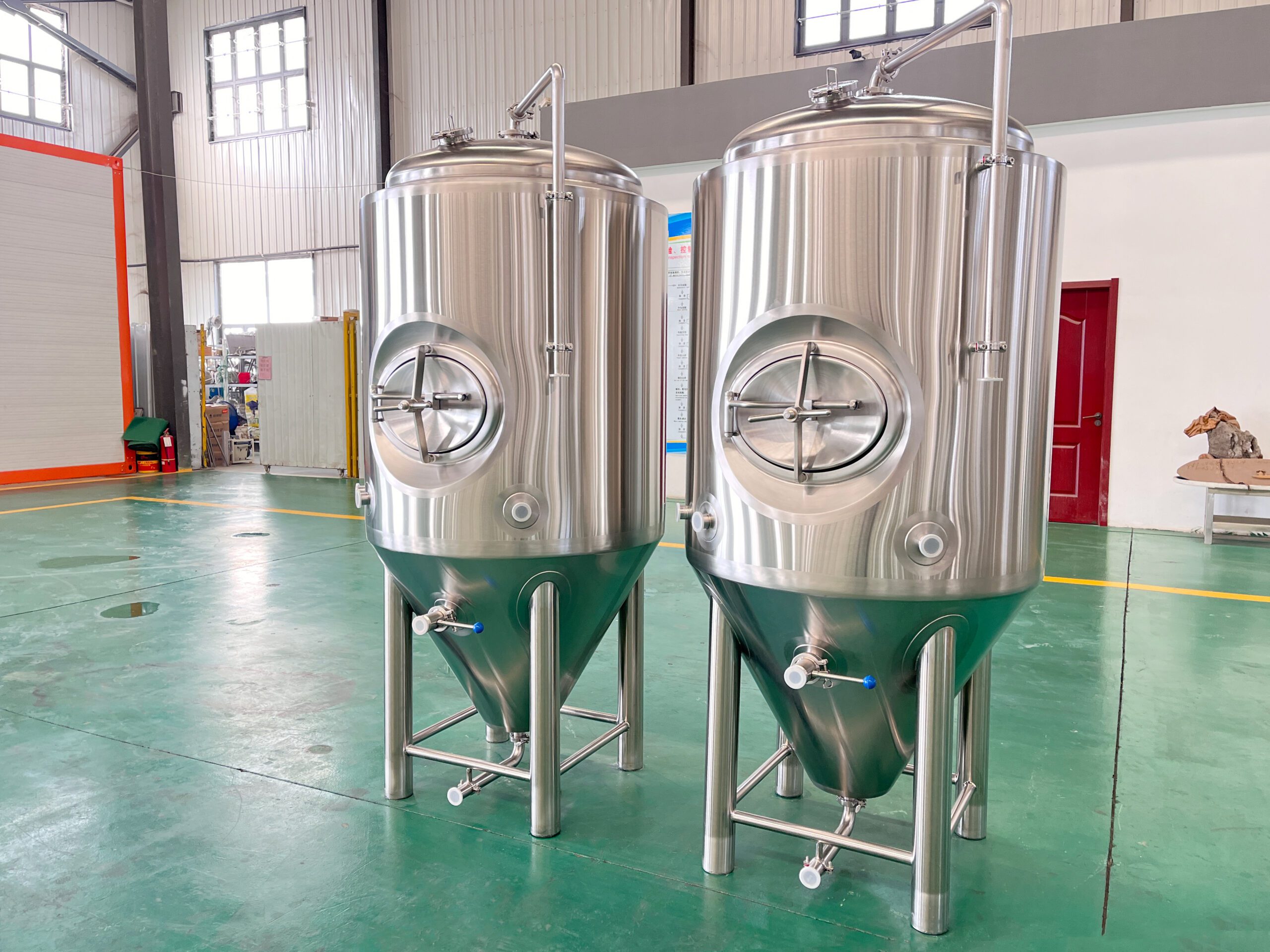
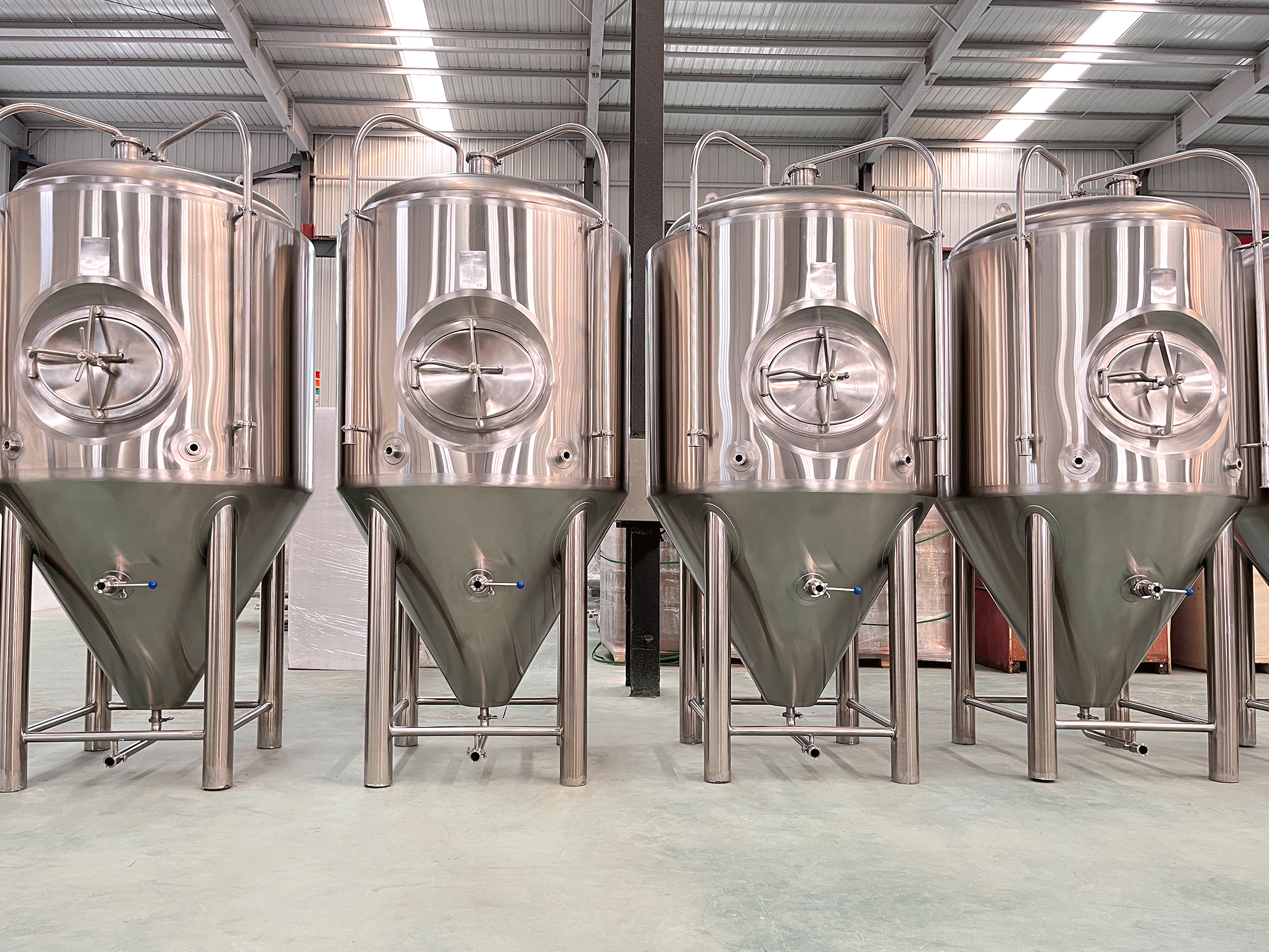
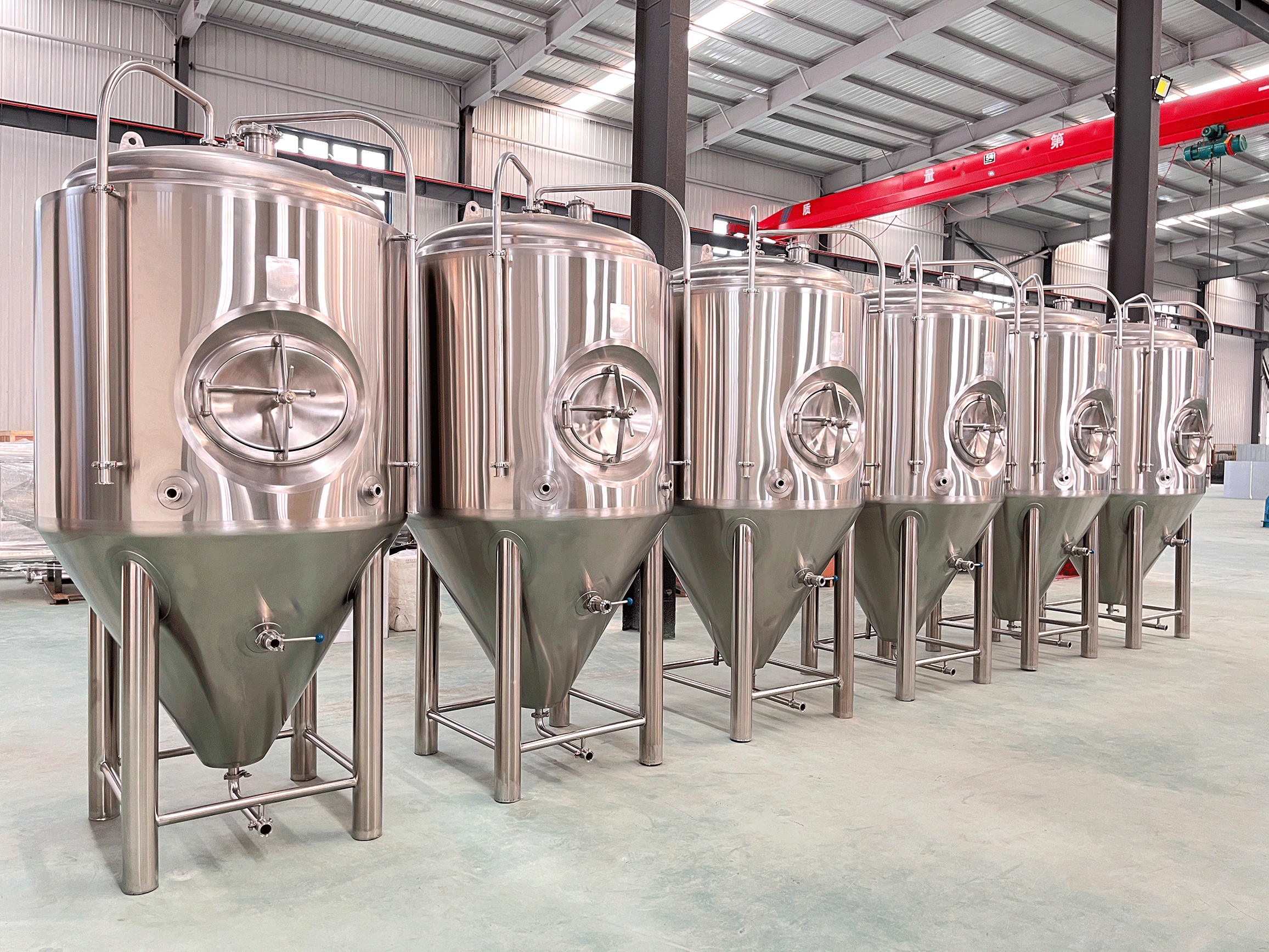
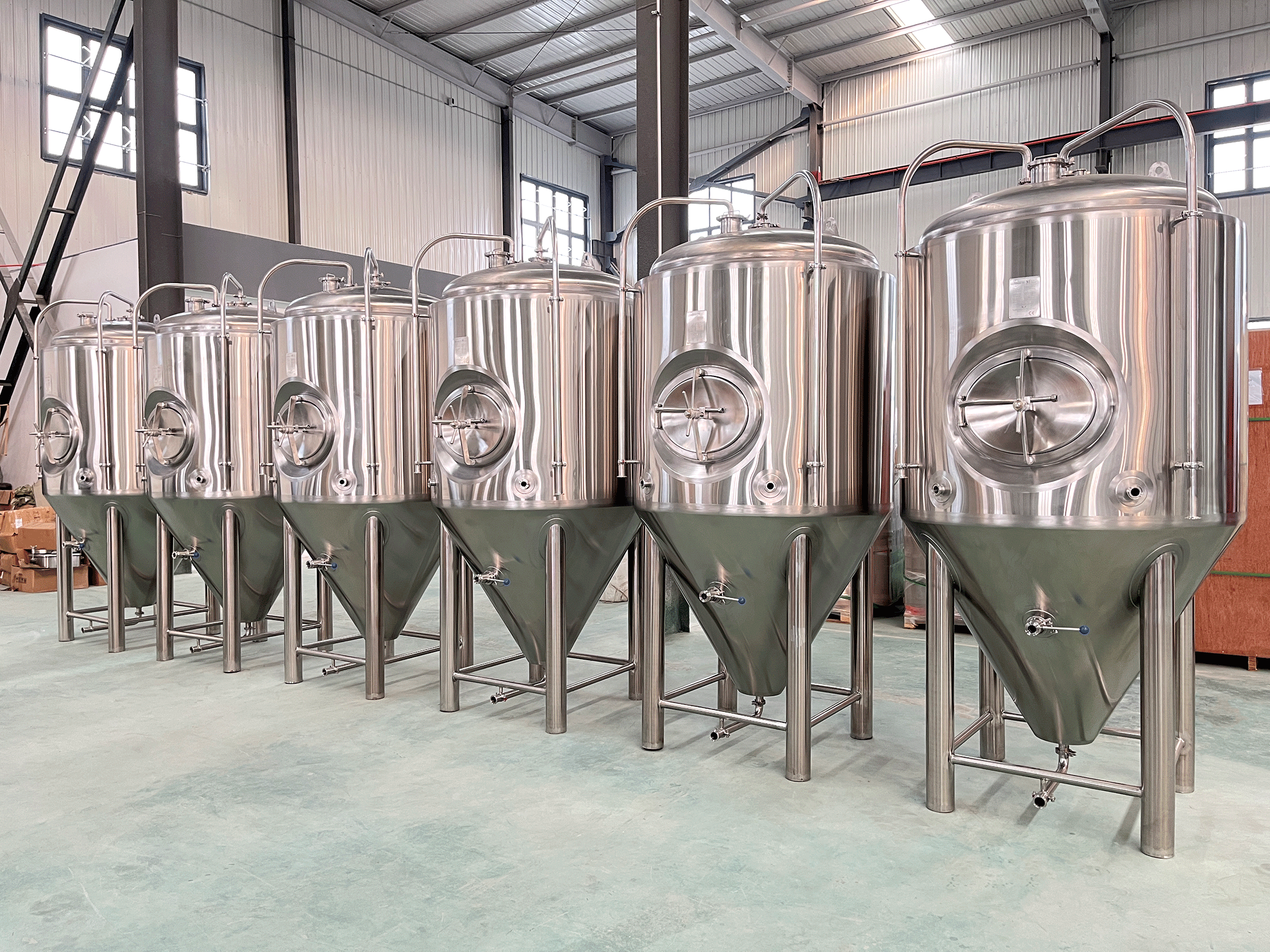
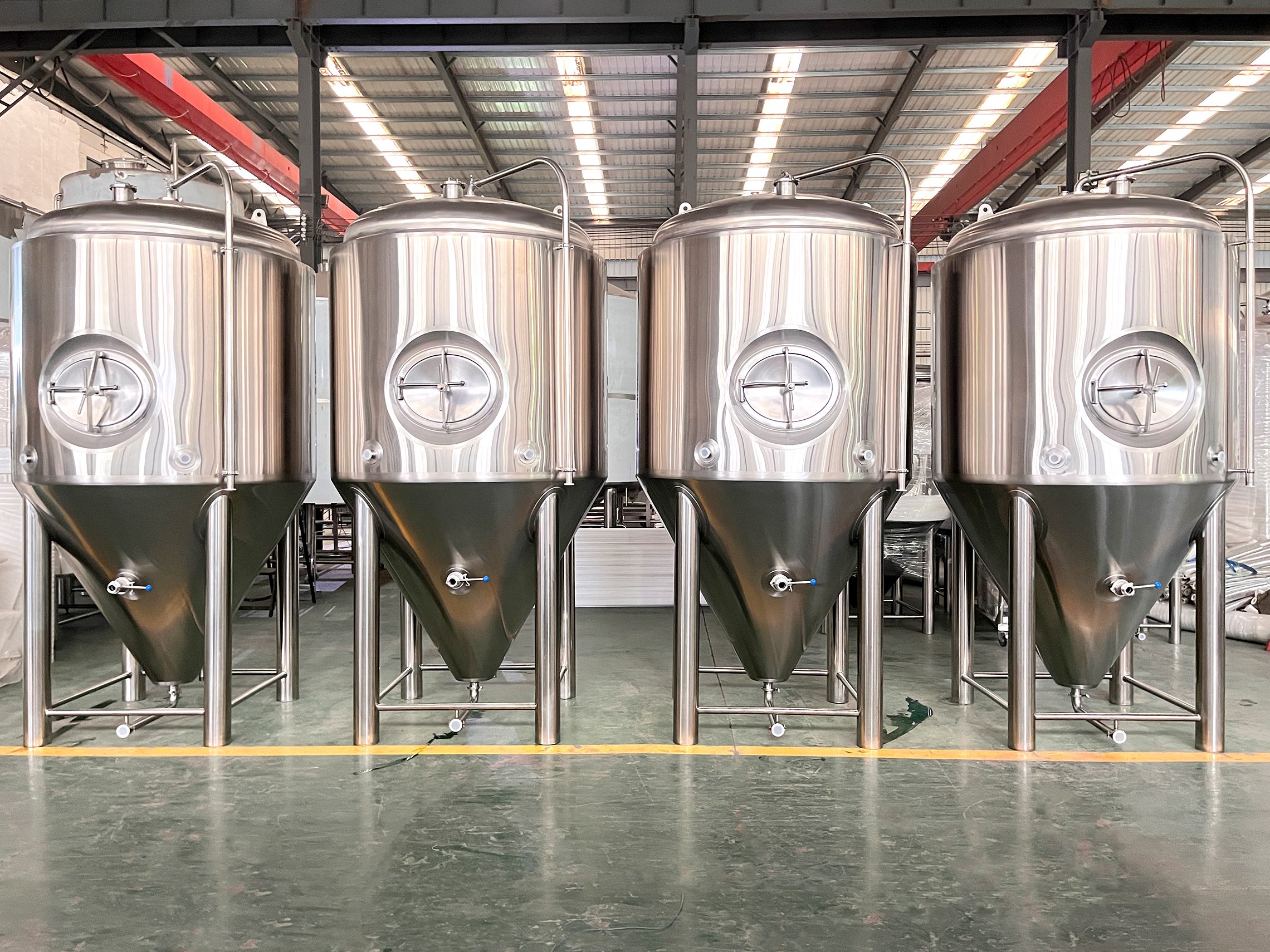
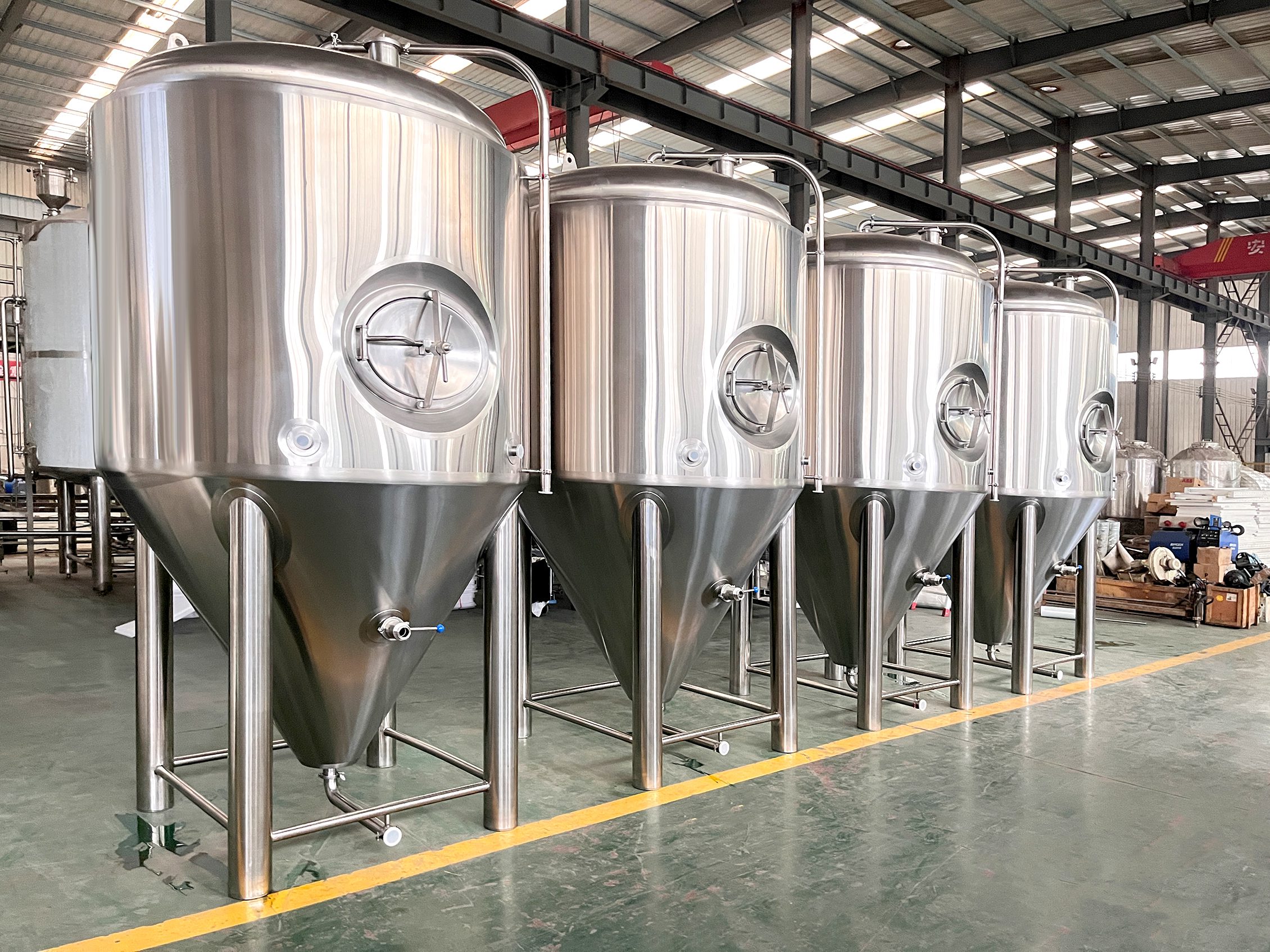
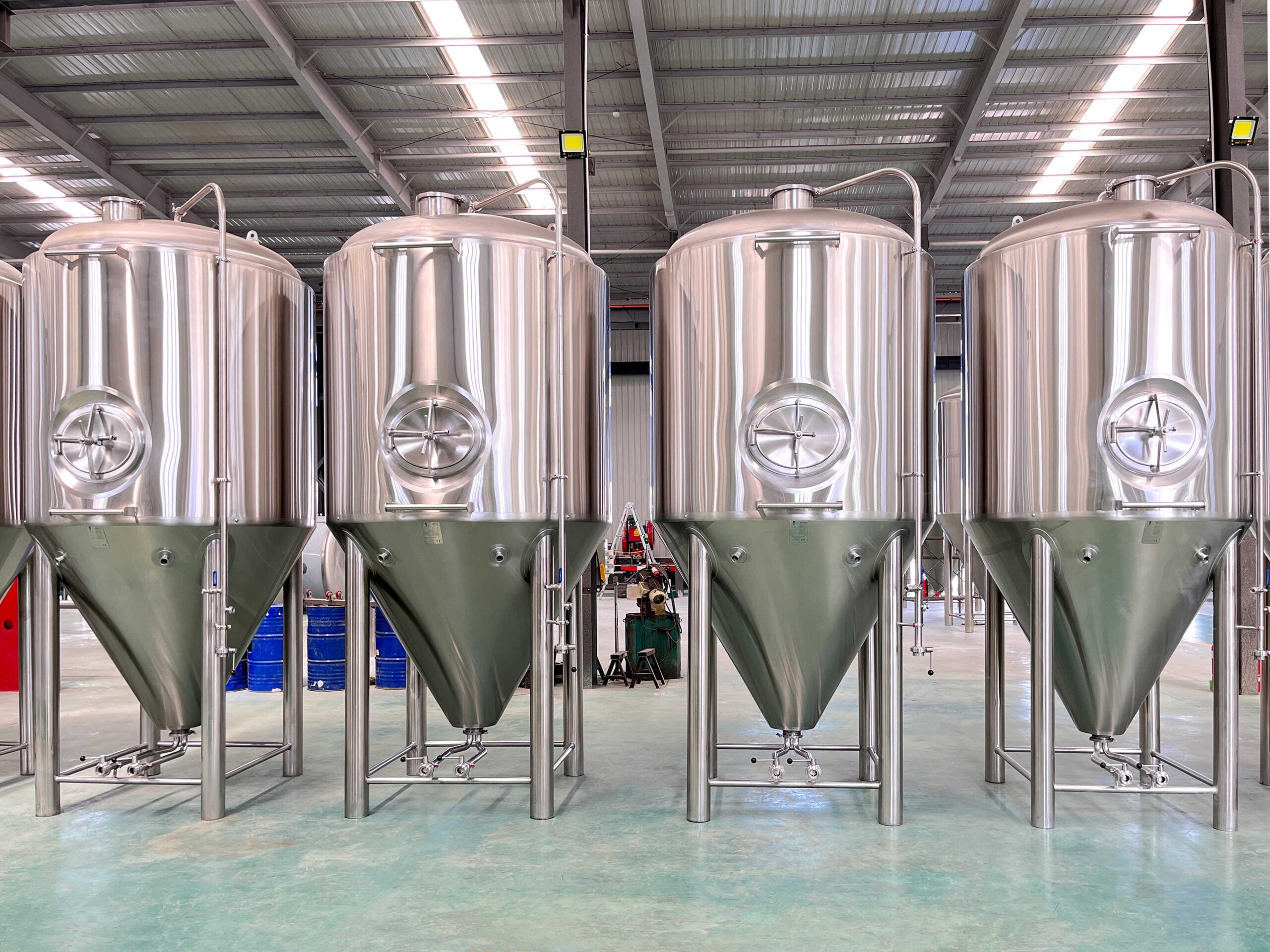
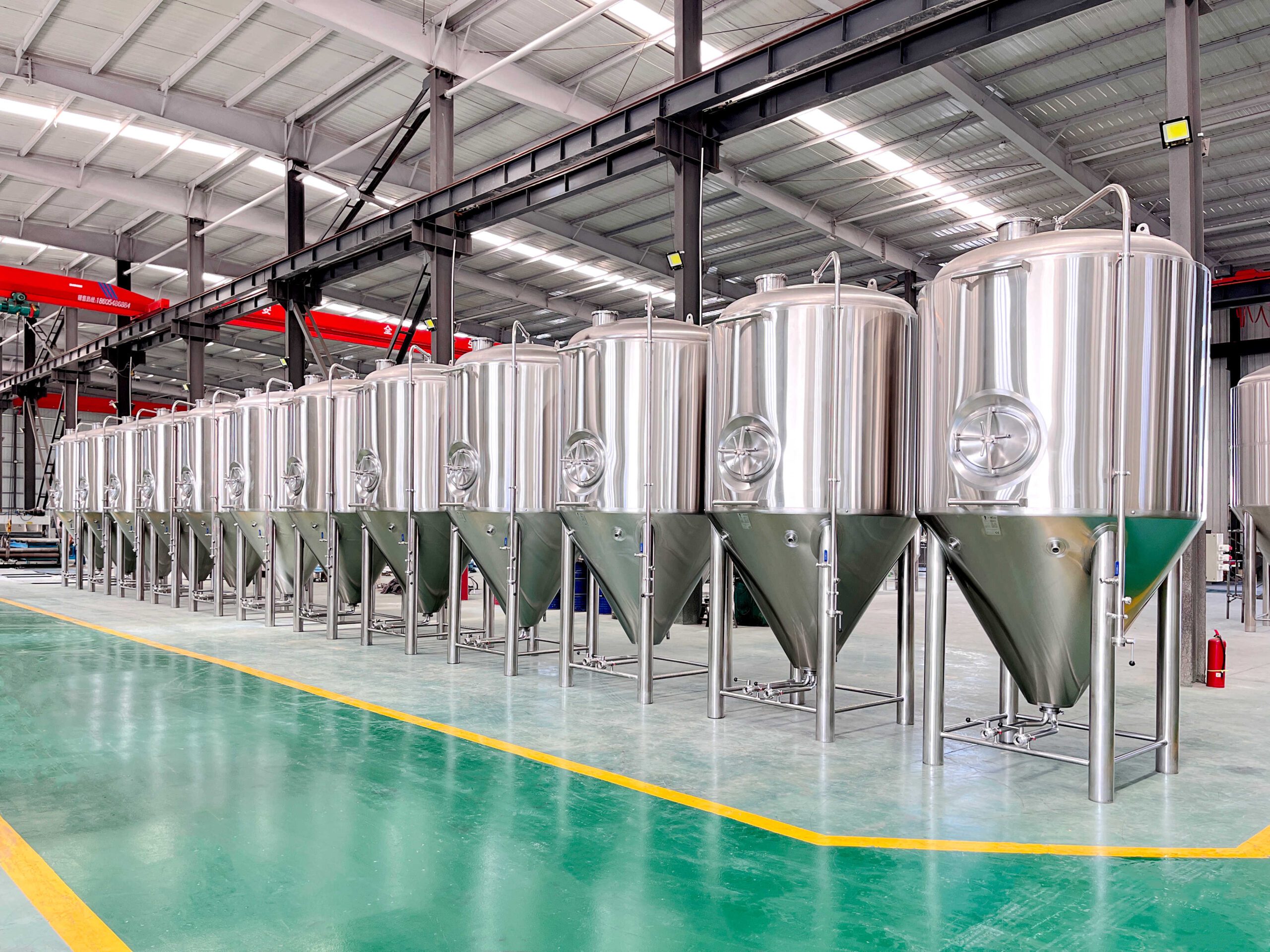
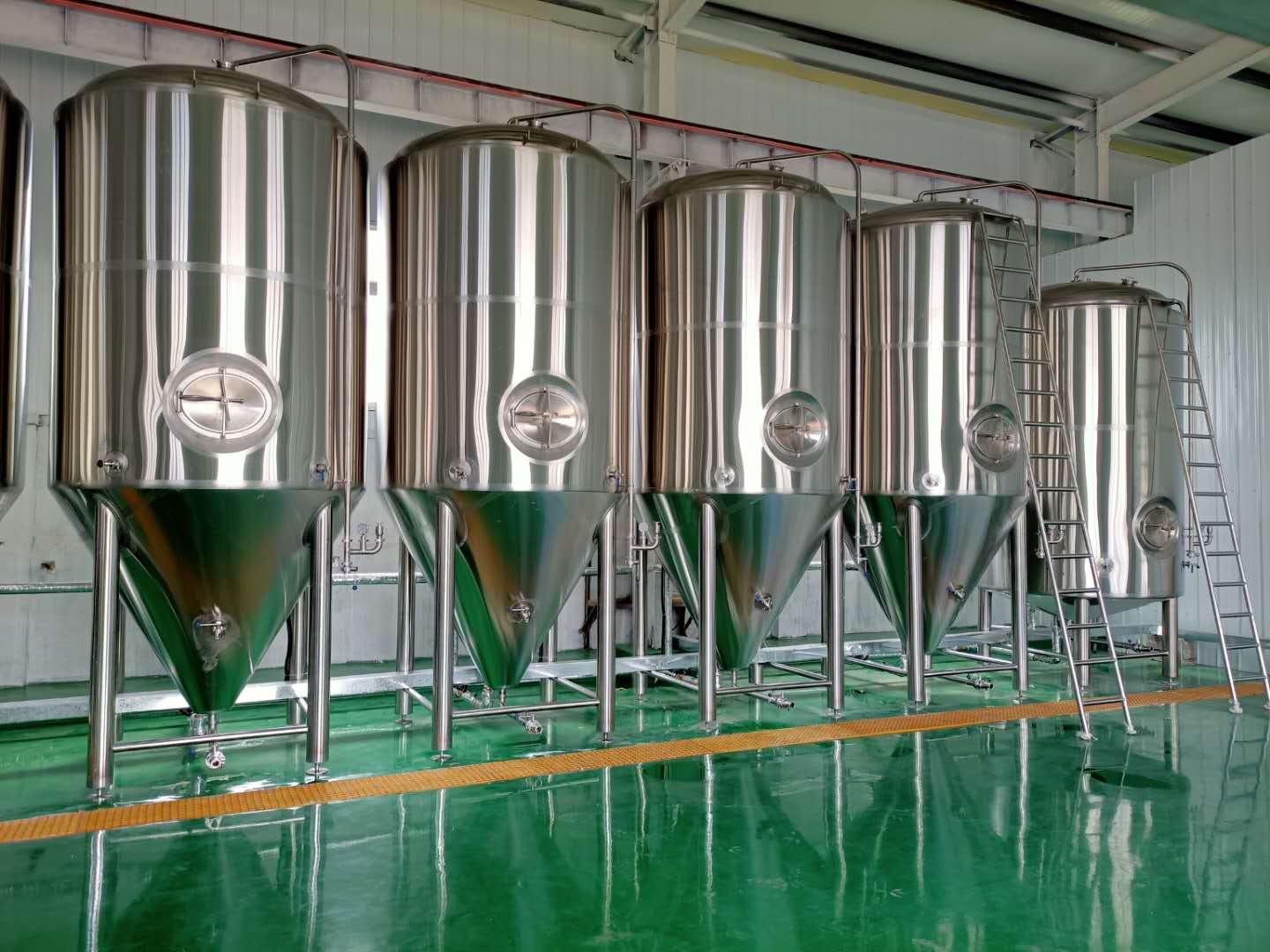
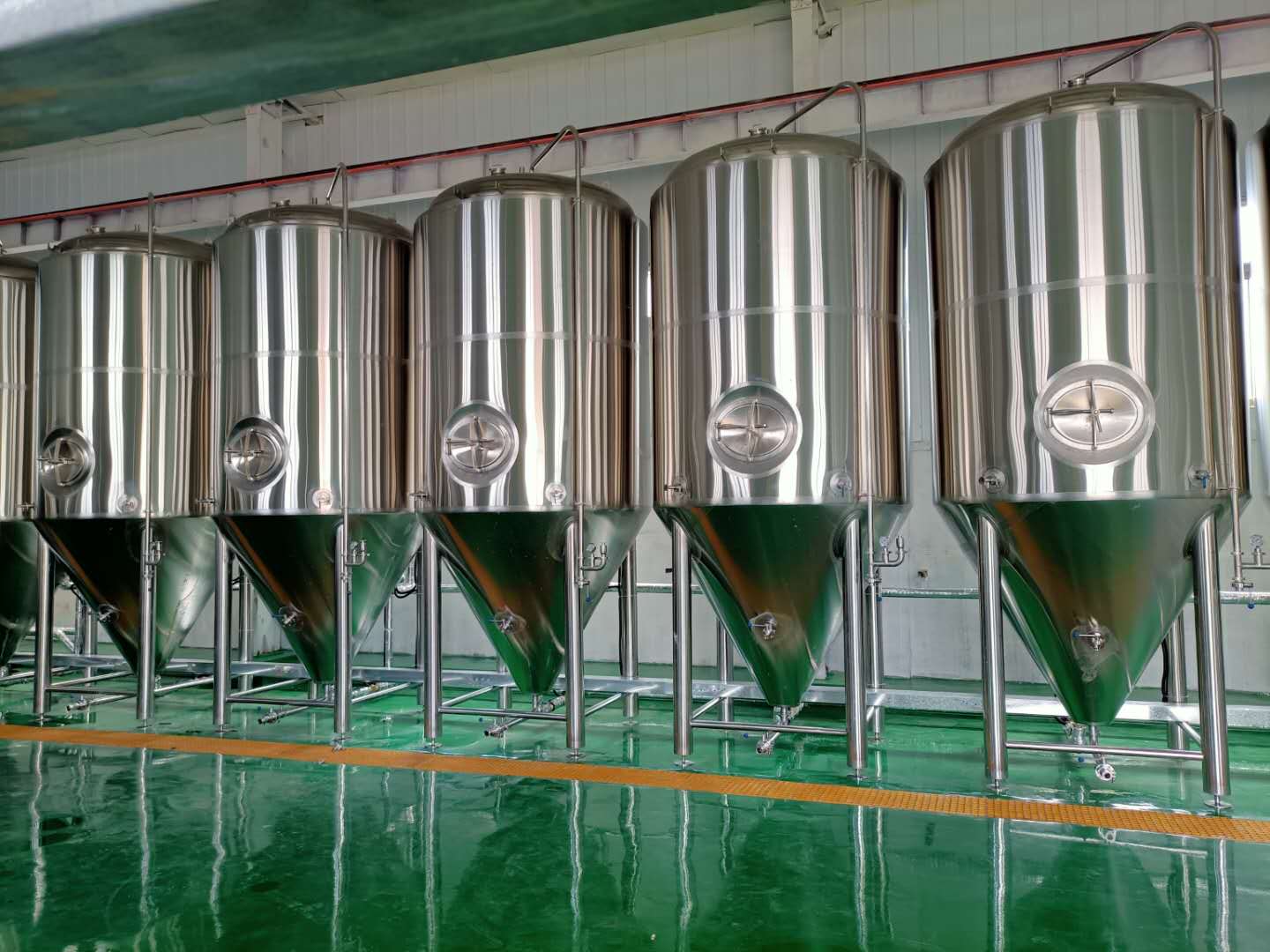
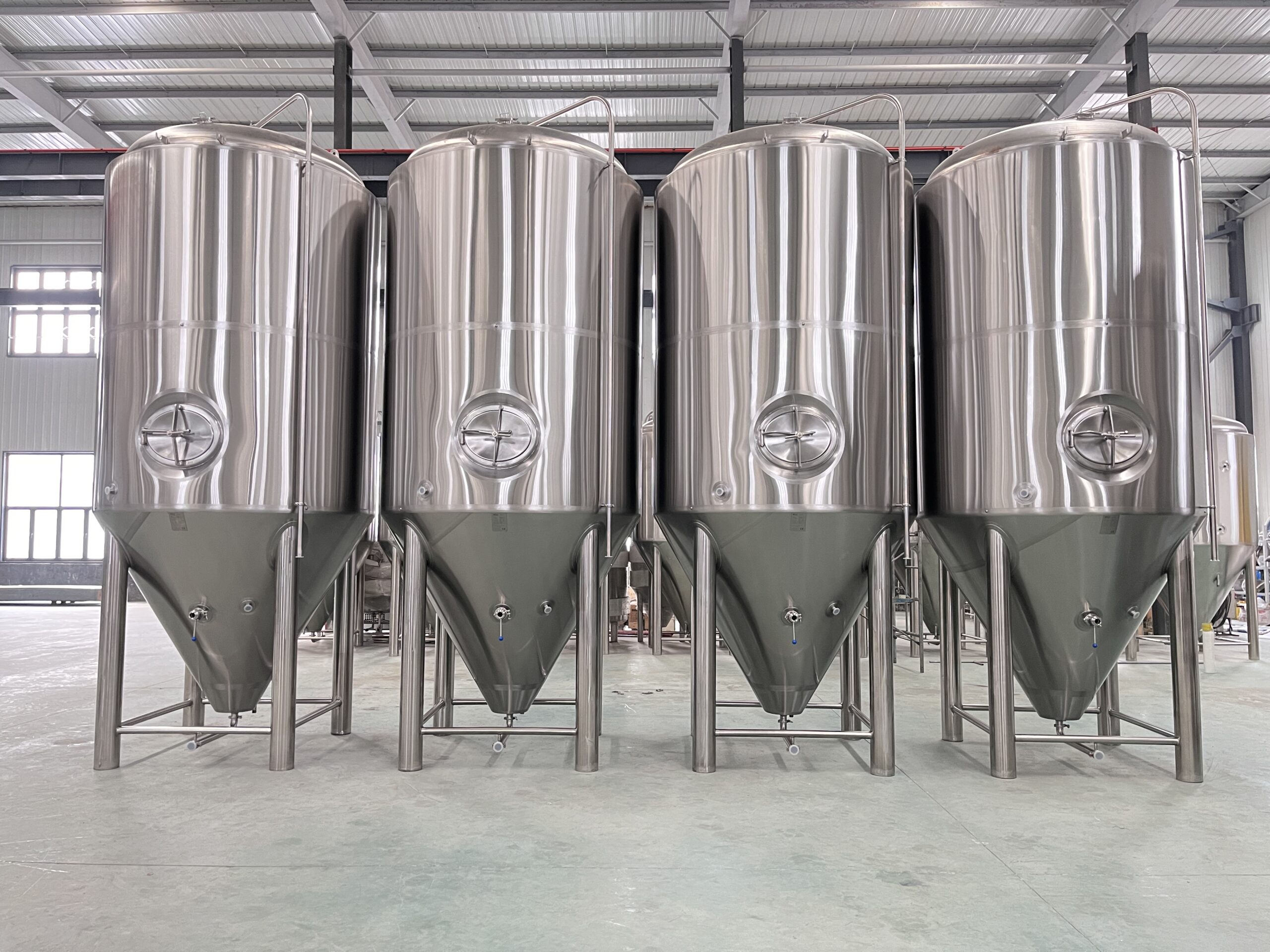
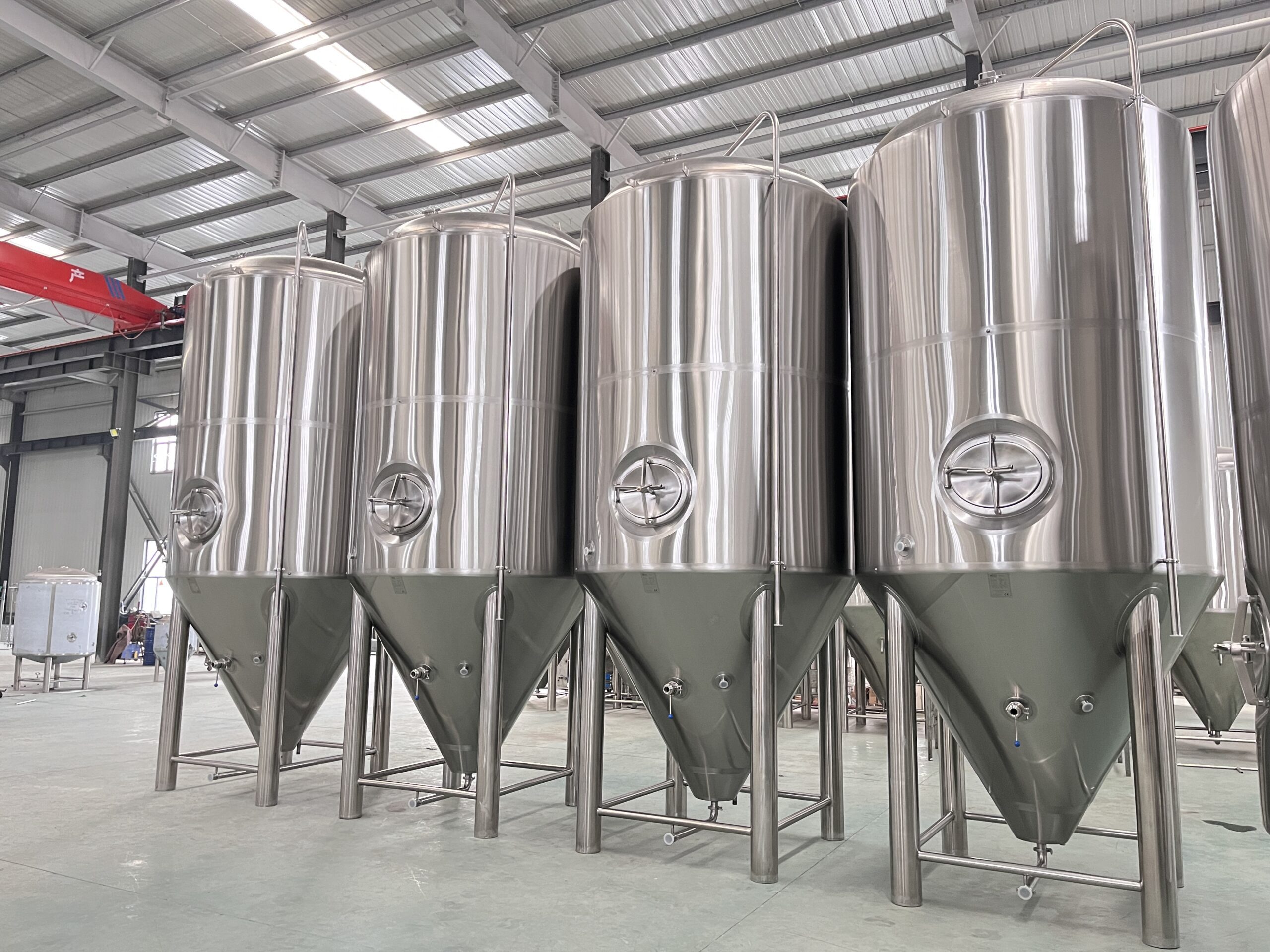
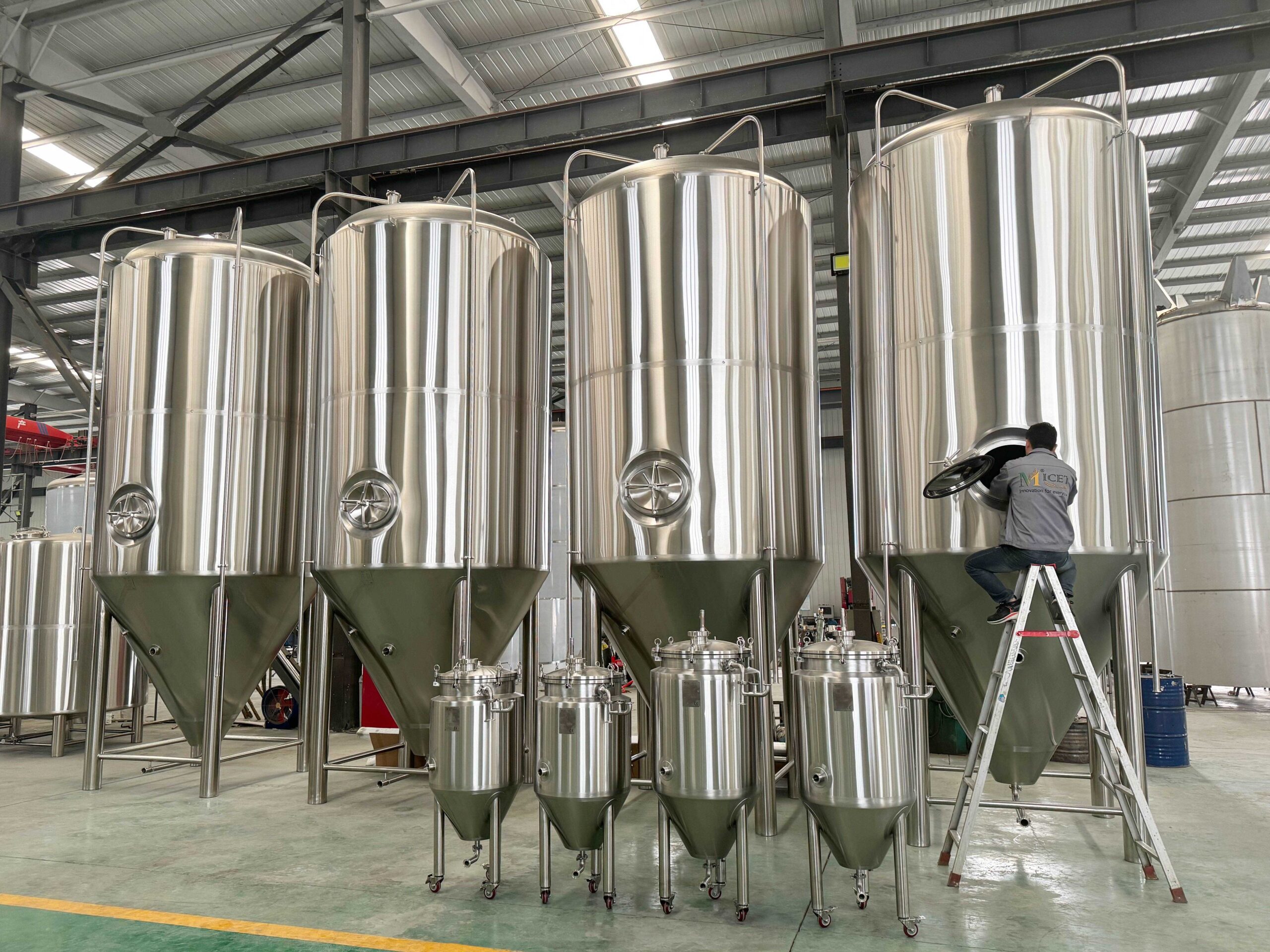
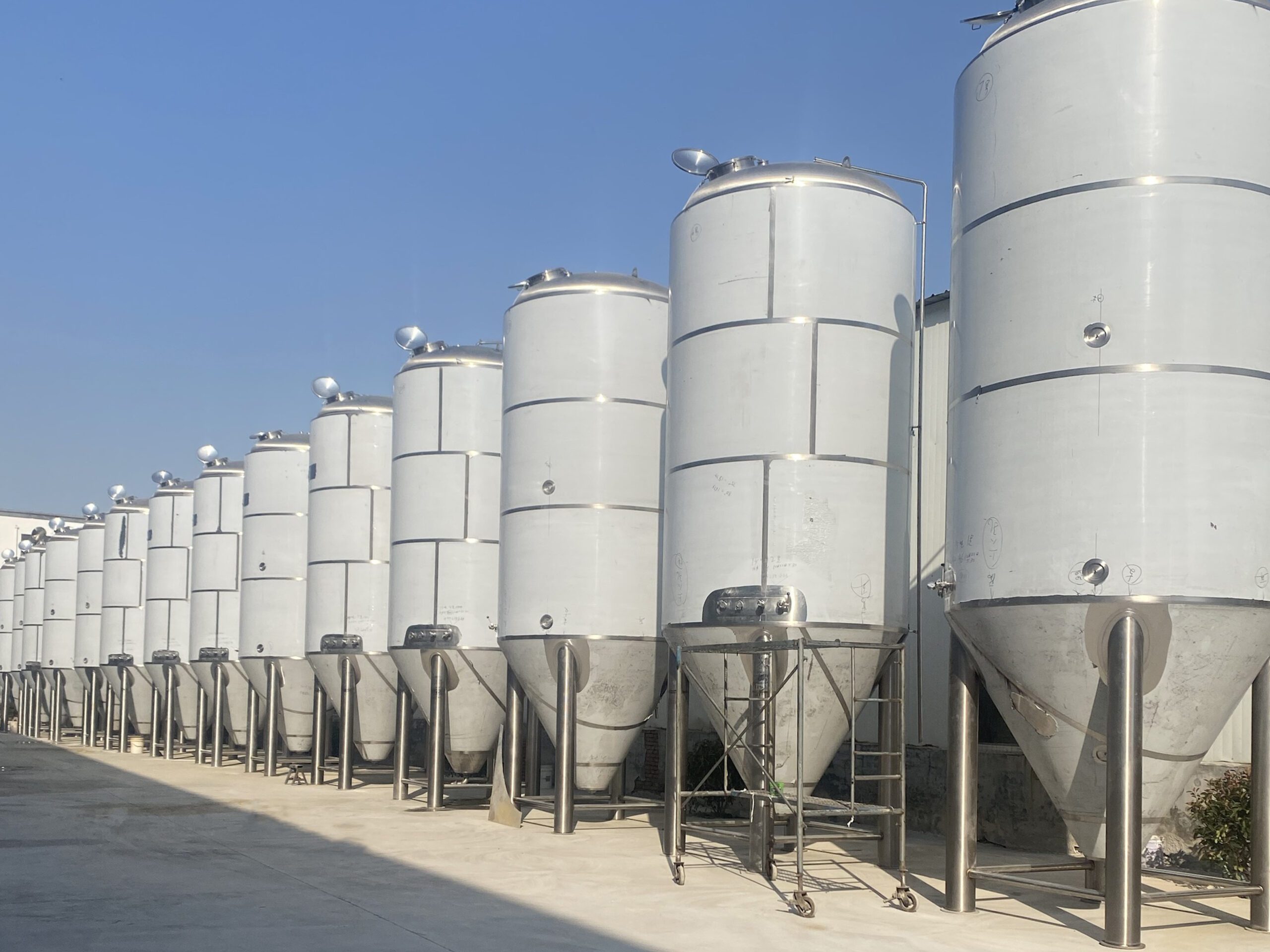
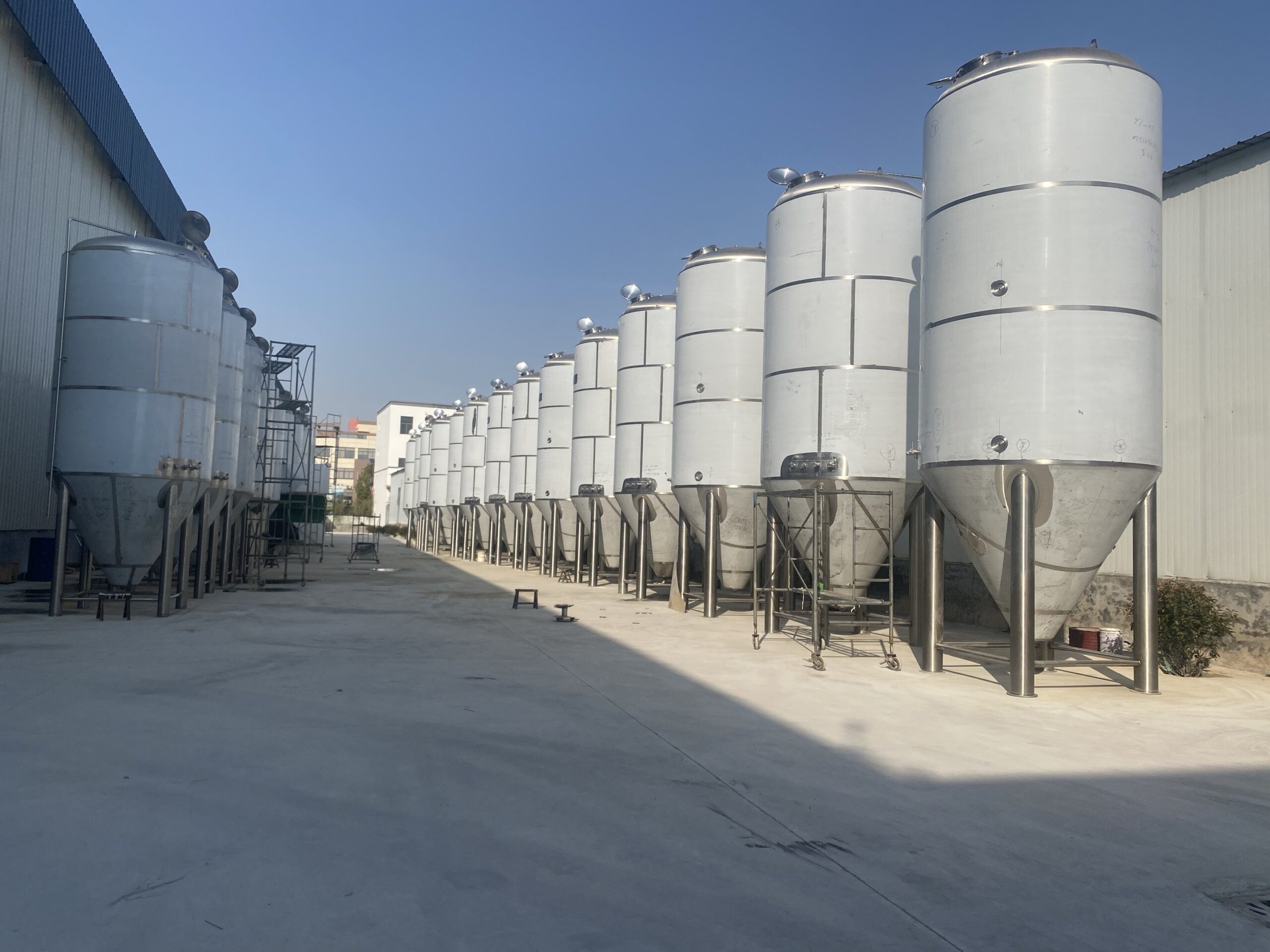
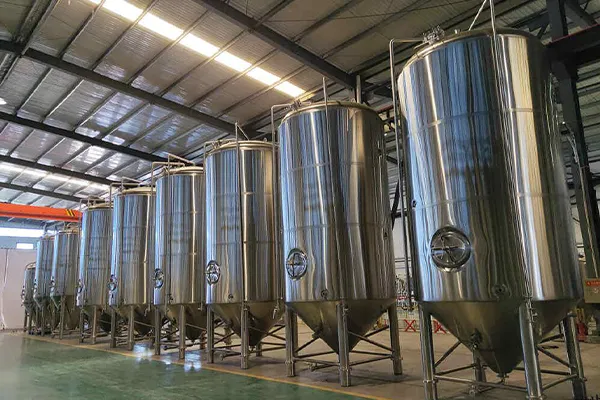
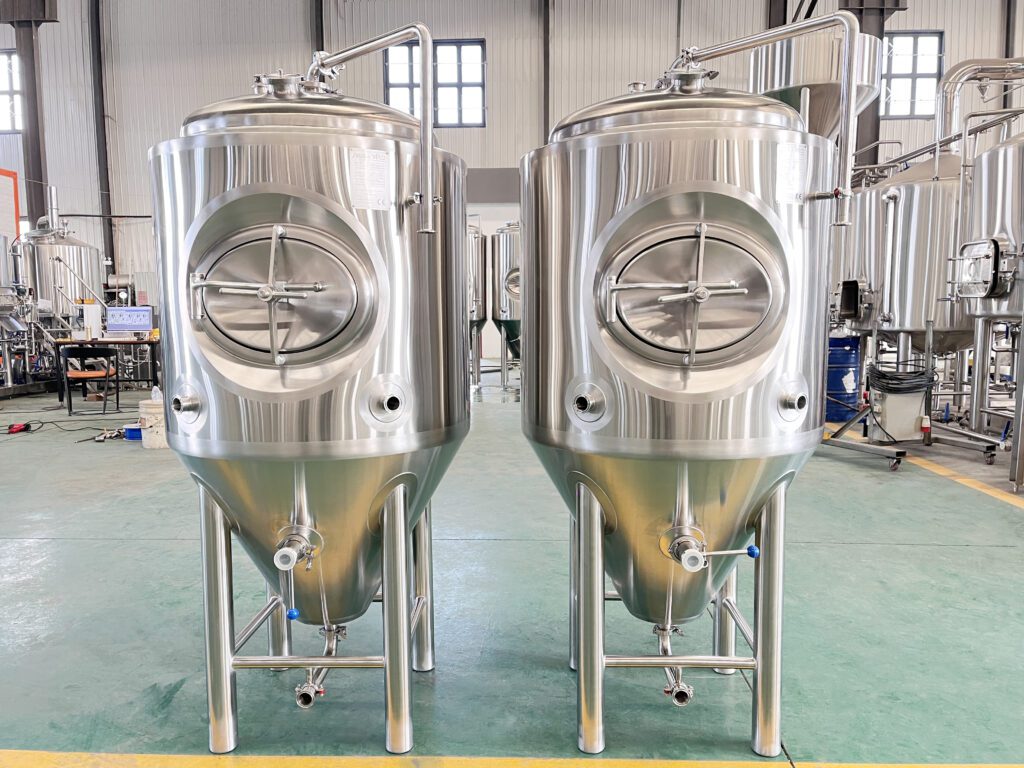
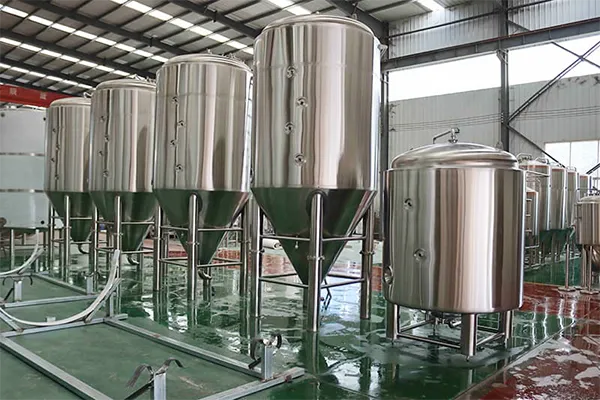
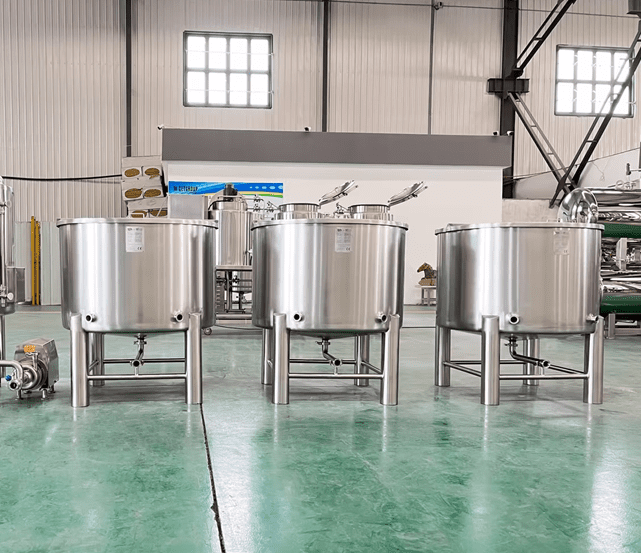
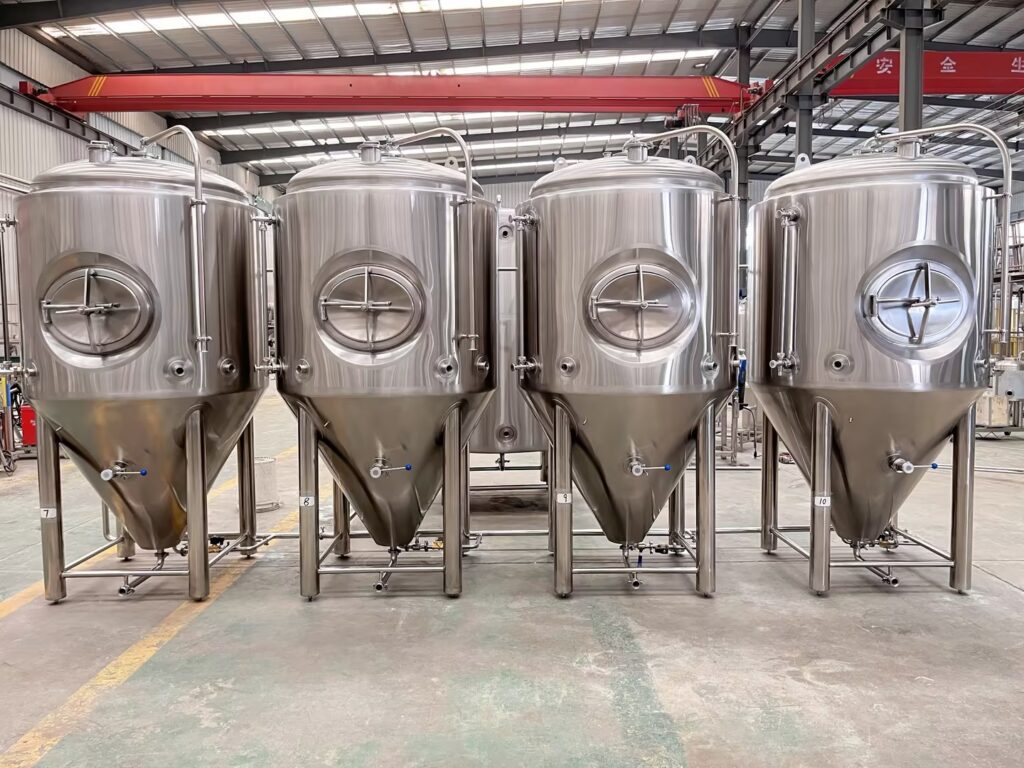
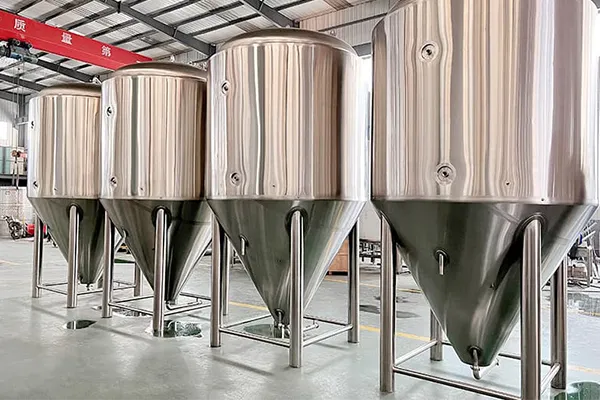
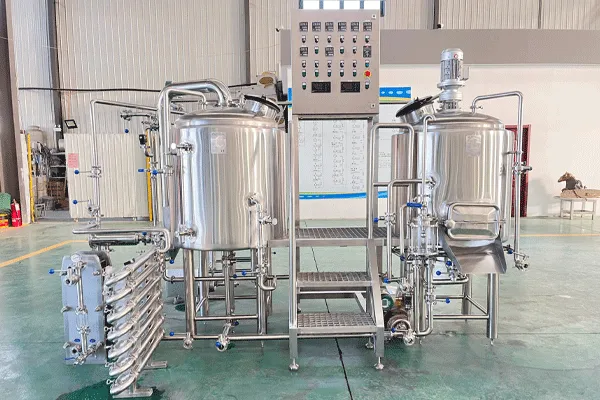
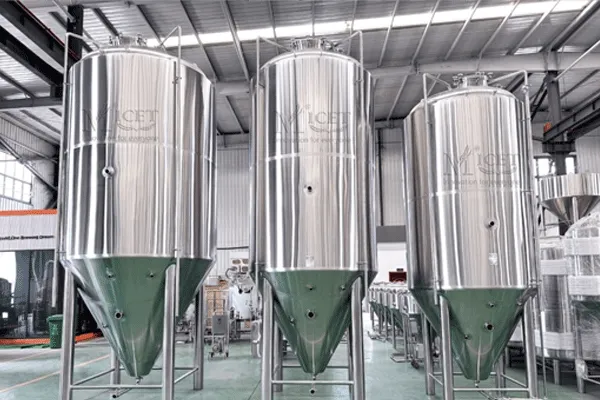
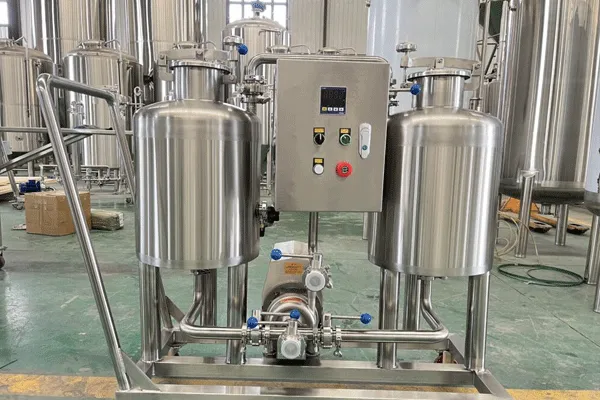
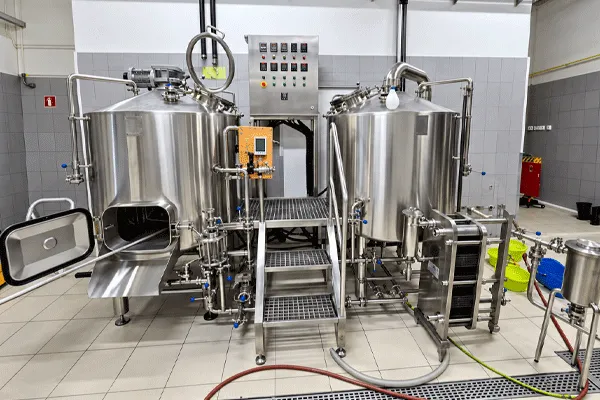
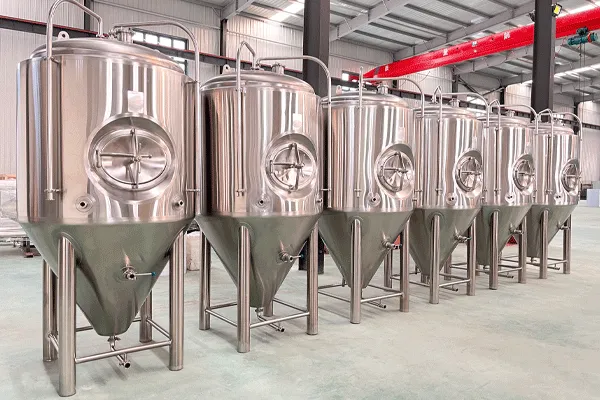
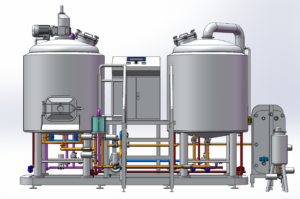
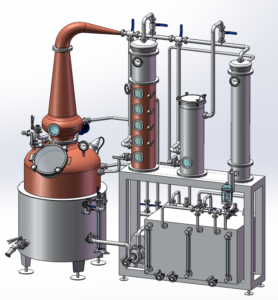
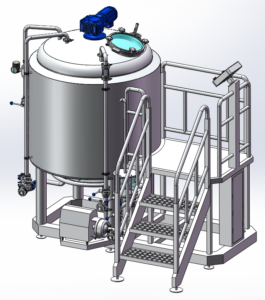
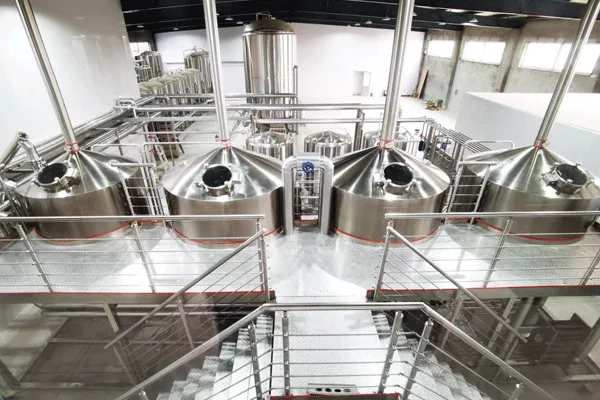
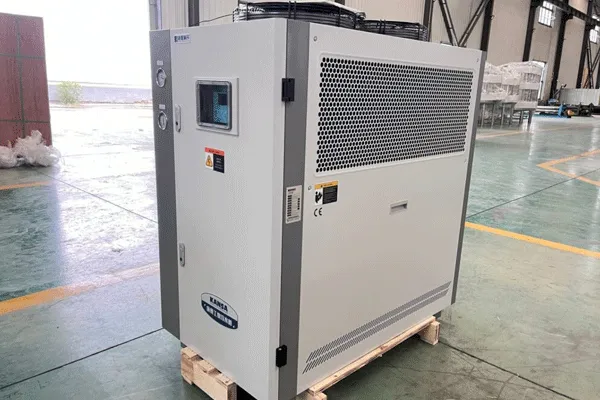
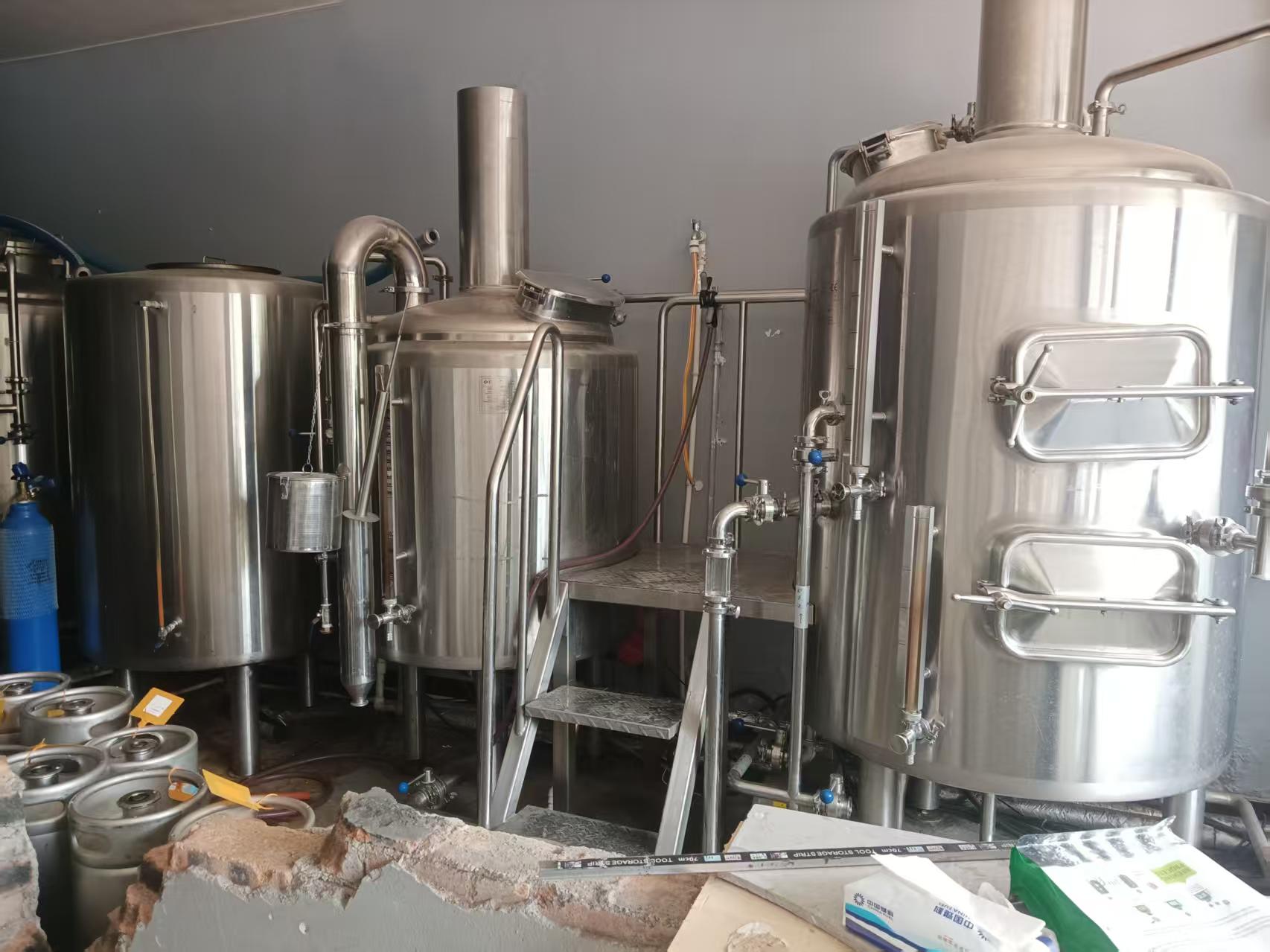
Scegli tra un'ampia gamma di capacità per adattarsi alle dimensioni del tuo impianto di produzione, al numero di referenze e al piano produttivo.
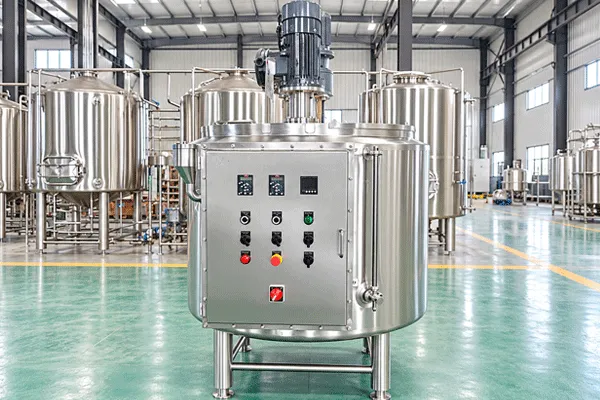
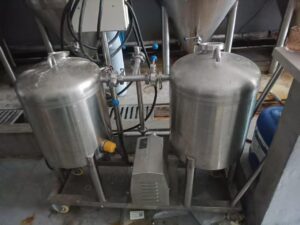
Fermentatore Usato da 300L
Fermentatore in acciaio inox compatto da 300L per birrificazione pilota, lotti di prova o piccole linee di kombucha / sidro, testato in pressione e pulito internamente prima della spedizione.
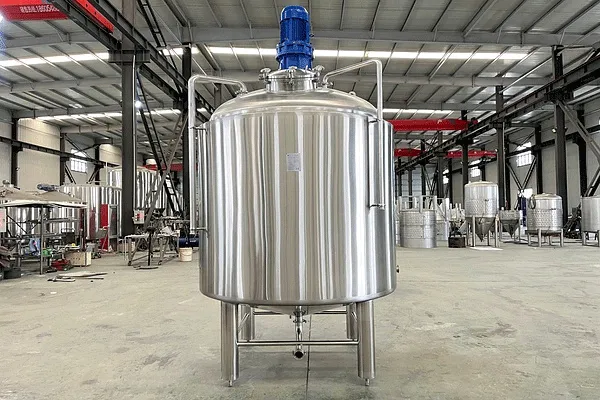
Fermentatore usato da 500L adatto a nano-birrifici e birrifici da ristorante, con struttura in acciaio inox e camicia di raffreddamento opzionale per una fermentazione controllata.
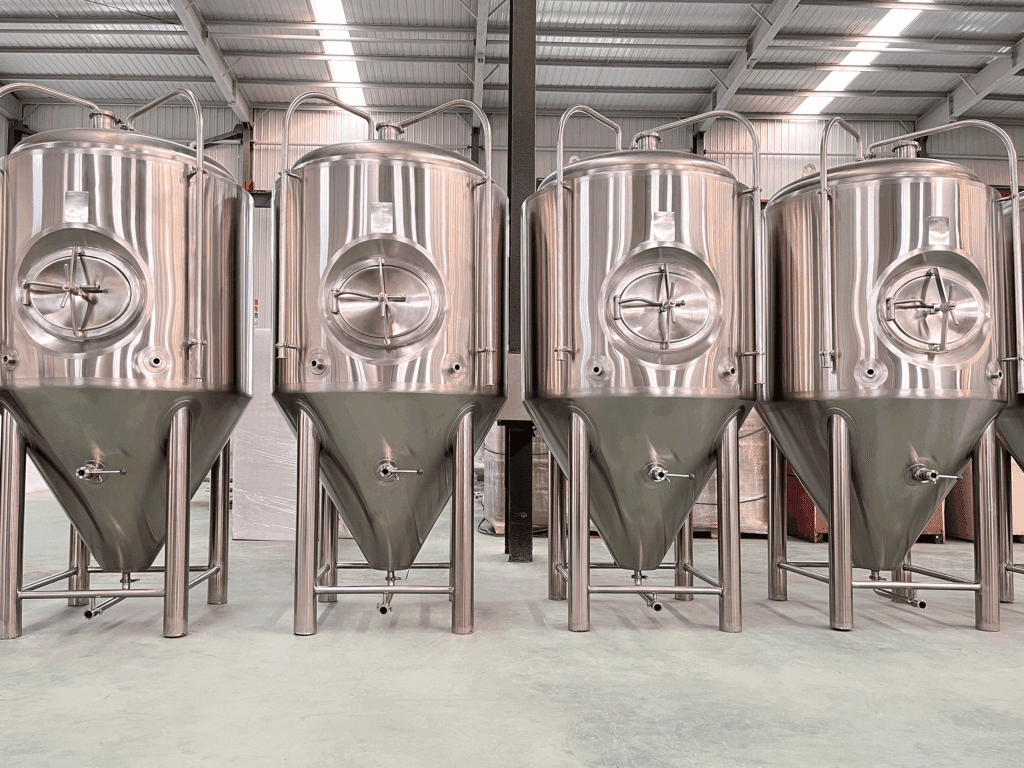
Fermentatore usato da 1000L per microbirrifici e produttori di kombucha, fornito con raccordi di base e saldature ispezionate, ideale per la piccola produzione commerciale.
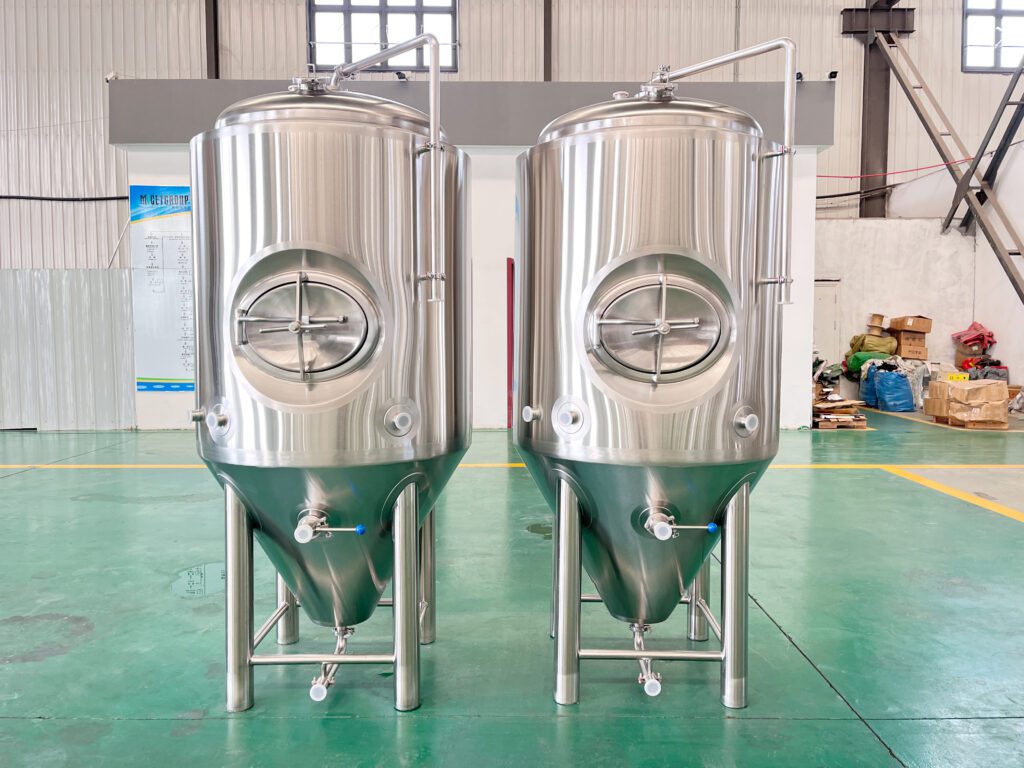
Fermentatore usato da 2000L per birrifici artigianali in crescita, con raffreddamento a camicia e opzioni di fondo conico o a piatto, testato in pressione e pronto per l'integrazione nella tua cantina.
Fermentatore usato da 2500L progettato per microbirrifici ad alta produzione, in grado di supportare più lotti a settimana e un controllo stabile della temperatura con camicie a glicole.
Fermentatore usato ad alta capacità da 5000L per birrifici regionali o siti di produzione centrale, adatto per birra, sidro o altre bevande, con pressione di esercizio testata e finitura interna igienica.
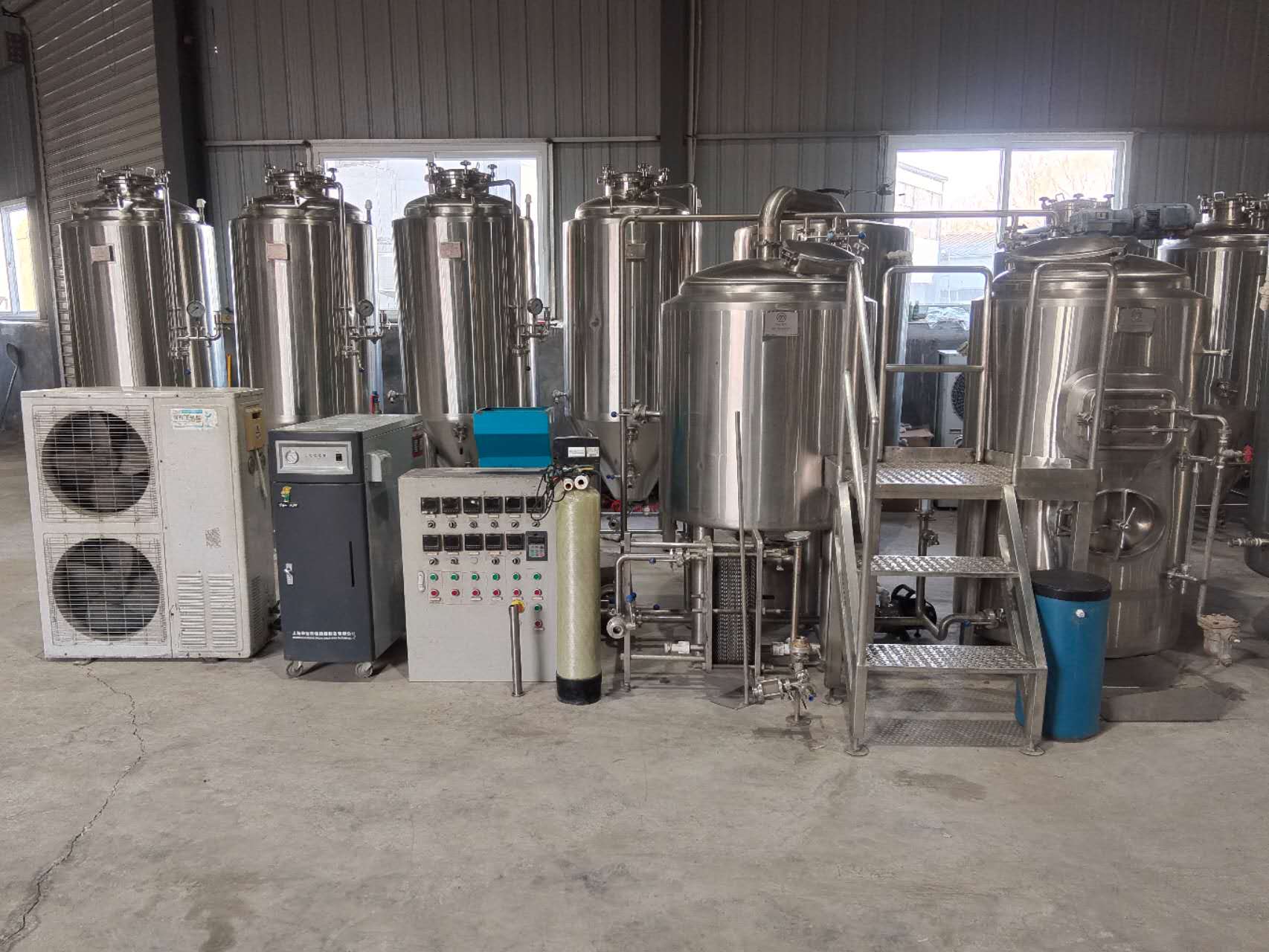
Questo pacchetto serbatoio di fermentazione 10T usato uses MICET’s standard fermentation tank design and combines large-volume used fermenters with refurbished bright beer tanks.
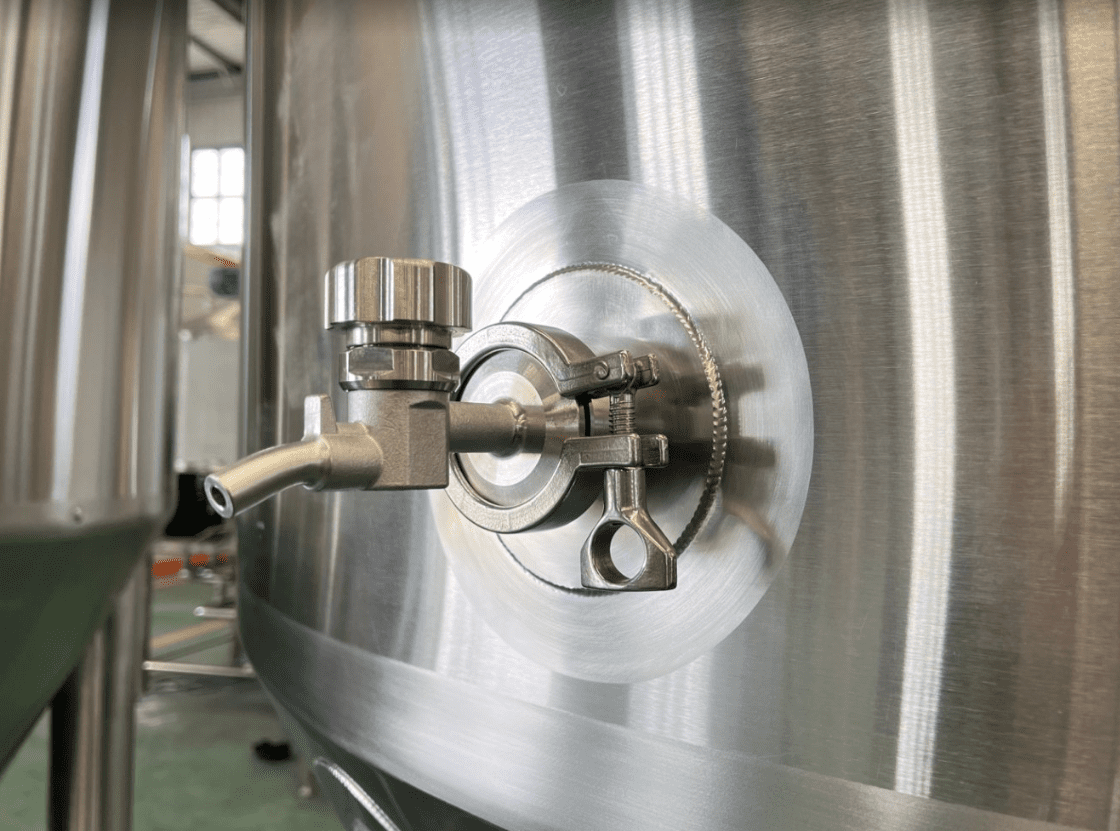
Prima che qualsiasi attrezzatura per birrifici usata ti venga offerta, passa attraverso un rigoroso processo di ricondizionamento e controllo qualità nella nostra fabbrica. Questo ti aiuta a evitare rischi nascosti, ridurre i problemi di installazione e rimettere il sistema in produzione il più rapidamente possibile
Inspection & Pressure Test
We inspect the shell, cone, legs, jackets and welds for corrosion or damage, then perform pressure and leak tests on tank and jackets to confirm safe working pressure.
Internal Cleaning & Acid Passivation
The tank interior is deep-cleaned and descaled, then acid-passivated to restore stainless-steel corrosion resistance and create a smooth, hygienic, CIP-friendly surface.
Valve & Fitting Check / Replacement
Manways, PRV, valves, gaskets, CIP spray balls and other fittings are checked; any worn or non-sanitary parts are repaired or replaced with food-grade components.
Final Inspection & Photo Report
We carry out a final visual check inside and outside the tank, then provide basic test records and photos, so you clearly see the real condition before packing and shipment.
Hybrid Fermentation Cellars – Used Tanks with New Cooling & CIP
In many cases, the best solution is used fermentation tanks or unitanks combinato con new glycol chillers, pump skids, manifolds and CIP systems. We refurbish the tank body, jackets and fittings, then engineer new cooling, valves and cleaning loops around them. This keeps your main cellar volume cost-effective, while hygiene, temperature control and maintenance are handled by reliable new equipment.
Parlateci del vostro progetto e i nostri ingegneri progetteranno una soluzione ibrida nuovo + usato su misura per voi.
MICET ha realizzato installazioni effettive in oltre 100 paesi—sistemi personalizzati per birrifici, kombucha, distillerie, cantine vinicole, serbatoi di fermentazione e serbatoi in acciaio inossidabile.
Scoprite come progettiamo, produciamo, installiamo e supportiamo progetti chiavi in mano dalla scala nano a quella commerciale.
Distilling Equipment for Breweries: How to Add a Commercial Still to Your Brewing Operation
A brewery can have excellent tanks, utilities, and trained operators yet still make expensive mistakes when adding spirit production. A still is only one part of the project. If fermentation, heating, cooling, storage, safety, and layout are not planned together, the new distillery can quickly become the bottleneck.
Breweries adding commercial distilling need more than a still. A practical system normally connects raw-material preparation, mash or wort production, fermentation, a pot or column still, condenser, spirit receivers, heating, cooling, CIP, storage, controls, and packaging. Some existing brewery equipment can be shared, but the distillation process requires dedicated equipment and site planning.
Distilling Equipment for Breweries: How to Add a Commercial Still to Your Brewing Operation
Schema dell'articolo
What Distilling Equipment Does a Brewery Need to Add Spirit Production?
Which Brewery Equipment Can Be Shared With a Distillery?
Pot Still, Column Still, or Hybrid Still: Which Is Better?
How Do Fermentation and Yeast Affect Distilling Equipment Selection?
Copper or Stainless Steel: Which Material Should a Commercial Still Use?
How Should the Boiler, Heating, and Condenser Be Sized?
What Tanks, Pumps, Pipes, and Still Parts Are Needed Around the Still?
How Should a Brewery Plan Cooling, CIP, and Utility Integration?
What Changes When Producing Whiskey, Vodka, Gin, Rum, or Brandy?
1. What Distilling Equipment Does a Brewery Need to Add Spirit Production?
For a brewery moving into commercial distilling, the biggest planning mistake is treating the still as a stand-alone machine.
A complete spirit production system begins before distillation and continues long after vapor leaves the still. Depending on the product, the process can include grain handling, mashing, fermentation, distillation, condensation, spirit collection, storage, maturation, filtration, and packaging.
A typical brewery-to-distillery system may include:
Fase del processo
Typical Equipment
Scopo Principale
Preparazione delle materie prime
Mill, grain handling
Prepare grain or other feedstock
Mashing / cooking
Mash vessel or cooker
Prepare fermentable liquid
Fermentazione
Fermentatore
Convertire lo zucchero in alcol
Distillazione
Pot still, column still, or hybrid still
Separate alcohol and flavor compounds
Vapor cooling
Condensatore
Convert vapor back into liquid
Spirit collection
Receiver tanks
Collect separated spirit fractions
Utenze
Boiler, cooling system, pumps
Supply heat and cooling
Pulizia
sistema CIP
Clean tanks, piping, and suitable process equipment
Immagazzinamento
Stainless tanks or appropriate maturation vessels
Hold spirit before further processing
Finishing
Filter, blending tank
Prepare final product
Imballaggio
Bottle filling equipment
Fill finished product
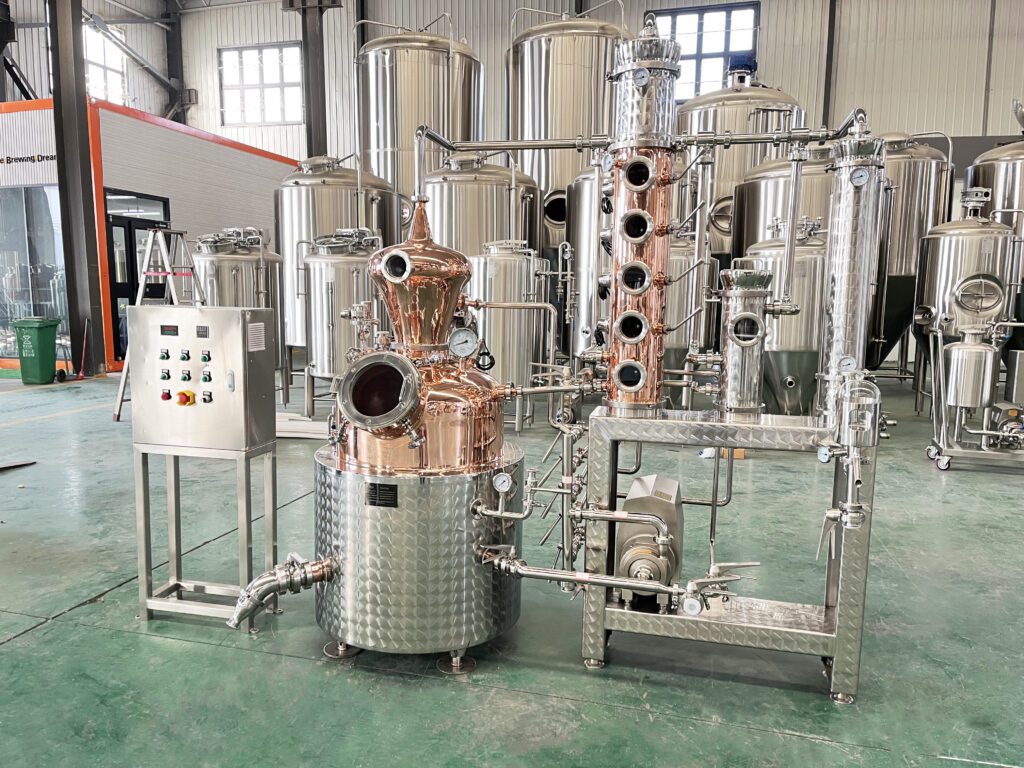
MICET’s current distillery product range is structured around pot still, column still, and hybrid still configurations, with utility and layout planning for steam, cooling, water, power, controls, and cleaning.
That system approach matters for breweries because you may already own several pieces of useful equipment. The goal is not to buy everything twice. The goal is to determine which assets can safely support both processes and where dedicated distillation equipment is required.
2. Which Brewery Equipment Can Be Shared With a Distillery?
Brewing and distilling overlap most strongly before distillation.
Both processes may require raw-material handling, controlled heating, fermentation vessels, pumps, cooling, water treatment, CIP, and stainless steel piping. This creates opportunities for a brewery to expand into spirit production without building an entirely separate processing plant.
For example, grain-based spirit production may use equipment concepts already familiar to a brewer:
Grain mill
Mash vessel
Hot water system
Fermentation tanks
Transfer pumps
Glycol or process cooling
sistema CIP
Control panels
Water treatment
Selected stainless steel pipelines
However, shared equipment must still match the new process.
A beer fermenter may physically hold a distiller’s mash, but its working volume, cooling configuration, pressure capability, drain geometry, yeast handling, and cleaning process must suit the new product. Likewise, an existing brewery pump may not be the right choice for a thicker mash containing more suspended solids.
Equipment That Usually Remains Dedicated
The actual distillation section normally requires purpose-built equipment:
Still or distillation vessel
Column or reflux section where required
Condensatore
Ricevitore dello spirito
Dedicated vapor path
Appropriate heating system
Spirit-safe transfer and storage system
Distillation-specific controls and monitoring
A commercial distillery is therefore best treated as an integrated extension of the brewery, not simply another tank connected to the cellar.
3. Pot Still, Column Still, or Hybrid Still: Which Is Better?
There is no universal best still. The right choice depends mainly on the spirit style, desired flavor profile, required purity, production volume, and operating model.
Pentola Ancora
A pot still is commonly associated with flavor-forward batch production. It is widely used for products such as whiskey, rum, and brandy, where the producer wants to retain more character from the fermented base.
Its advantages include:
Flexible batch operation
Strong connection to traditional spirit styles
Good flavor retention
Relatively straightforward process concept
The trade-off is lower separation efficiency compared with a more intensive column or reflux system.
Colonna Ancora
A column provides greater separation by creating repeated vapor-liquid contact inside the column.
It is useful when a producer wants:
Higher purity
Cleaner spirit character
Greater separation efficiency
Larger or more continuous production
A column still may therefore fit vodka or neutral-base production better than a simple pot still.
Hybrid Still
A hybrid system combines pot-style batch flexibility with a configurable column. For a brewery planning several spirit products, this can provide more flexibility than purchasing a dedicated still for every SKU.
Still Type
Common Fit
Punto di forza principale
Pentola ancora
Whiskey, rum, brandy
Flavor character
Colonna ancora
Vodka, neutral spirit
Higher separation and purity
Ancora ibrido
Multi-product craft distillery
Flexible configuration
MICET’s current product page follows the same three-way structure: pot still, column still, and hybrid still systems.
The important point is simple: choose the spirit first, then choose the still.
Do not begin with a catalog size.
4. How Do Fermentation and Yeast Affect Distilling Equipment Selection?
Distillation cannot fix a poor fermentation process.
Before a fermented liquid enters the still, yeast has already converted part of the available sugar into alcohol and carbon dioxide. Fermentation conditions affect alcohol yield, aroma compounds, acidity, and the material the distiller must process.
For a brewery adding spirits, this means fermentation capacity must be planned together with still capacity.
Imagine a distillery with a large still but only enough fermenter volume for one small batch at a time. The still may spend much of the week empty.
The reverse can also happen. Several large fermentation vessels can finish at the same time, but one undersized still cannot process them quickly enough. Fermented product then waits for distillation and occupies valuable tank capacity.
Then calculate how many batches each stage can handle.
Fermentation Tank Questions to Confirm
Before specifying the distilling system, confirm:
Working volume per fermentation batch
Number of fermenters
Typical fermentation time
Yeast type
Solids content
Target alcohol level before distillation
Cooling requirement
Cleaning time between batches
Whether different spirit recipes share vessels
If you already operate a brewery, some stainless steel fermentation vessels may be reusable for selected projects. But that decision should be made from the process specification rather than simply from tank availability.
Distilling Equipment for Breweries: How to Add a Commercial Still to Your Brewing Operation
5. Copper or Stainless Steel: Which Material Should a Commercial Still Use?
Many buyers assume a professional spirit still must be entirely copper.
That is not always necessary.
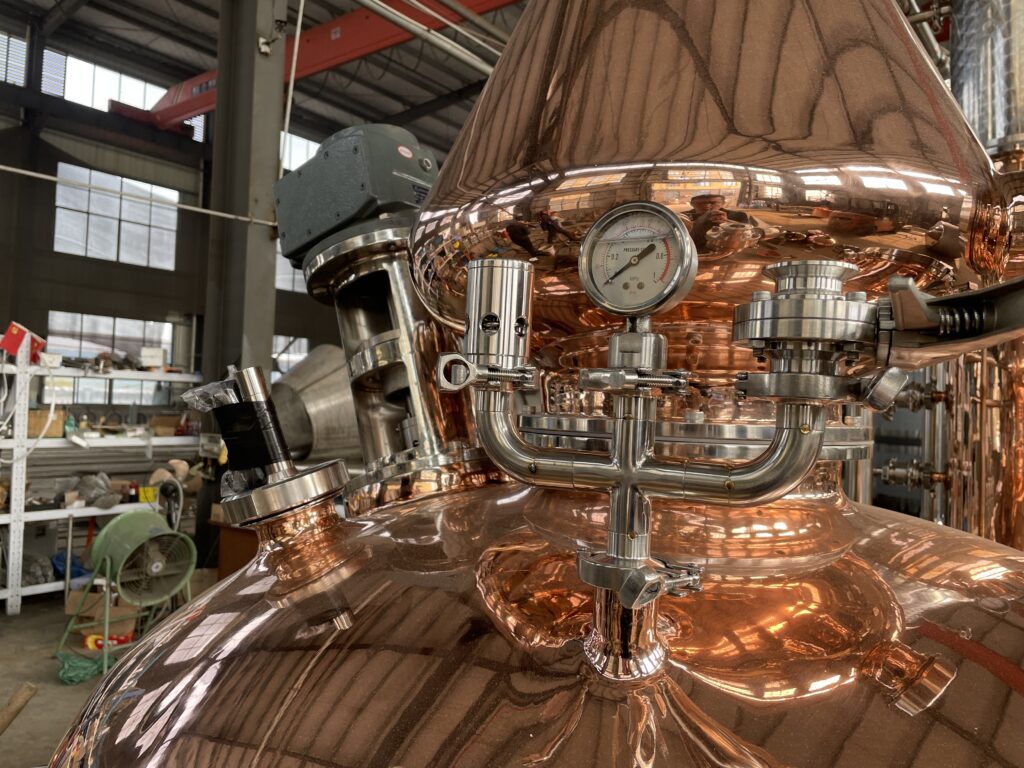
Copper is valuable in many spirit applications because contact with copper can influence sulfur-related compounds and therefore the aroma profile of the finished spirit. This is one reason copper remains strongly associated with whiskey and traditional pot still design.
Stainless steel offers a different set of advantages:
Resistance to corrosion
Strong structural performance
Smooth sanitary surfaces
Easier routine cleaning
Good durability
Practical fabrication for tanks, frames, and piping
For this reason, modern commercial systems often combine stainless steel and copper rather than choosing only one material.
A system might use:
Stainless steel boiler or vessel
Copper dome
Copper column sections
Copper contact plates
Stainless structural frame
Stainless process piping in suitable sections
This approach allows the equipment manufacturer to place copper where process contact is useful while using stainless steel where hygiene, durability, and maintenance are priorities.
MICET’s existing still-selection content also distinguishes copper-contact benefits from the structural and sanitary advantages of stainless steel.
For B2B buyers, material selection should therefore consider process performance, cleaning, maintenance, product style, and lifecycle cost, not appearance alone.
6. How Should the Boiler, Heating, and Condenser Be Sized?
A still needs heat to create vapor and cooling to condense it again.
That sounds simple. In practice, these utilities often determine whether the system reaches its planned output.
Riscaldamento
Commercial systems may use steam, electric heating elements, or other engineered heat sources depending on the vessel design and local installation requirements.
The heating system must match:
Still volume
Heat-up time target
Product properties
Utility availability
Control strategy
Site safety requirements
An oversized boiler can waste investment. An undersized boiler can stretch every production cycle.
Condensatore
The condenser performs the opposite job. It removes heat from vapor so the vapor can condense into liquid spirit.
Its capacity must match the vapor load.
If the condenser cannot remove enough heat, the operator cannot simply run the still harder without affecting process stability.
That is why a quotation for distilling equipment should not list only the still volume. Buyers should also ask for:
Heating requirement
Steam demand if applicable
Cooling water requirement
Condenser design
Utility connection size
Expected batch cycle
Control method
MICET’s 3000L UK turnkey distillery case illustrates this whole-system approach: the installation combines a 3000L wort brewing unit, hot water tanks, fermentation tanks, distiller, cooling system, controls, CIP, and boiler rather than treating the distiller as an isolated purchase.
7. What Tanks, Pumps, Pipes, and Still Parts Are Needed Around the Still?
A still does not operate in isolation.
Product has to enter the system, vapor must move safely through the vapor path, condensed liquid must be collected, and finished spirit must be transferred to another vessel.
Depending on the project, supporting equipment can include:
Feed or transfer pump
Fermentation vessels
Still boiler
Colonna
Condensatore
Ricevitore dello spirito
Collection tanks
Storage or blending tanks
Filter
Sanitary or process pipe
Clamp connections
Gasket sets
Valvole
Temperature sensors
Pannello di controllo
Small consumer equipment listings may also use terms such as parrot, hydrometer, moonshine still, still parts, or gallon still. These terms are common in retail search behavior, but they should not define the design of a commercial distillery.
For a professional project, each connection needs to be evaluated as part of the process.
A gasket is not just a gasket. It needs the correct material and operating conditions.
A pipe is not just a pipe. Its diameter affects flow and cleanability.
A valve is not just a valve. Its position affects operation, drainage, and maintenance.
This detail separates an engineered distillery from a collection of parts purchased separately.
8. How Should a Brewery Plan Cooling, CIP, and Utility Integration?
This is one area where existing breweries may have a major advantage.
A brewery already has experience managing utilities such as:
Acqua calda
Steam
Glicole
Cooling water
Electricity
Compressed air
Drenaggio
CIP
Water treatment
However, available utility capacity is not the same as adequate spare capacity.
Before connecting new distilling equipment to existing systems, calculate the added load.
Raffreddamento
The distillery may need cooling for:
Fermentazione
Condensazione
Product storage
Selected process steps
The condenser can create a significant cooling demand during operation.
CIP
CIP can reduce manual cleaning for compatible tanks and pipelines. A brewery may already have a CIP station, but the new equipment can increase:
Cleaning solution volume
Pump demand
Heating requirement
Drainage load
Cleaning cycle time
Control Systems
A brewery with an existing PLC or control platform may be able to integrate some new temperature, valve, and utility functions.
But automation should serve the process, not complicate it.
A compact craft operation may need simple control. A larger project may benefit from more integrated monitoring and automated sequences.
MICET’s auxiliary equipment range already includes CIP systems, pumps, steam/hot-water systems, cooling, electrical control panels, and related process utilities, which makes these systems relevant when a brewery expands into distillation.
Distilling Equipment for Breweries: How to Add a Commercial Still to Your Brewing Operation
9. What Changes When Producing Whiskey, Vodka, Gin, Rum, or Brandy?
Different spirits can start with very different raw materials and target very different final profiles.
That changes the equipment configuration.
Whisky
Producing whiskey typically requires grain preparation, mash production, fermentation, flavor-retaining distillation, and later maturation.
A pot still or suitable hybrid configuration is often attractive when preserving grain character matters.
Vodka
Vodka generally requires a cleaner, higher-purity spirit base. A column or reflux arrangement may therefore be more appropriate than a simple pot-only configuration.
Gin
Gin production may begin with a neutral spirit and then add botanical character. Depending on the process, the system may include a botanical basket or other aroma-contact section.
Rum
Rum production may start from molasses or another sugarcane-derived feedstock. Many producers value a fuller flavor profile, so pot or hybrid configurations are common project options.
Brandy
Brandy begins with fermented fruit-based material or wine. Equipment selection should preserve the desired fruit character while providing repeatable distillation.
Spirit
Typical Equipment Priority
Whisky
Flavor retention, pot/hybrid still, fermentation and maturation planning
Vodka
Higher purity, stronger rectification or reflux
Gin
Neutral base plus botanical processing capability
Rum
Flexible flavor-driven distillation
Brandy
Gentle fruit/wine spirit processing
There is no universal “best still.”
The same is true of a moonshine still. The phrase has high consumer search visibility, but it is too broad to define professional equipment. A legal commercial spirit plant should specify its actual product, process, capacity, and compliance requirements instead of buying something simply because it is marketed as a moonshine still.
10. How Should a Brewery Plan Capacity Before Buying Distillery Equipment?
Start with the finished product target and work backward.
A buyer should provide more than “I need a 500-gallon still” or “I want a 1,000L system.”
This project is useful because it shows how commercial distilling needs to be treated as a production line rather than a single still purchase.
For a brewery expanding into spirits, that same engineering principle applies even when part of the existing brewing plant can be reused.
What We Recommend Before Quotation
At MICET, we ask commercial buyers to define:
Spirit types
Desired batch volume
Expected annual output
Existing brewery equipment
Equipment that may be shared
Available utilities
Building dimensions
Preferred heating method
Automation requirements
Packaging and expansion plans
From there, we can develop a custom solution rather than forcing the project into a standard catalog package.
As a professional brewery, distillery, and beverage equipment manufacturer, MICET provides stainless steel process tanks, fermentation systems, pot stills, column and hybrid systems, utility integration, CAD and 3D layout planning, installation guidance, and turnkey engineering support.
If your brewery is planning to add whiskey, gin, vodka, rum, brandy, or another legal commercial spirit line, the most valuable first step is not choosing a still.
It is mapping the complete process around the equipment you already own.
Domande frequenti
Can brewery equipment be used for distilling?
Some upstream brewery equipment may be usable in a distillery, including selected grain-handling equipment, mash vessels, fermentation tanks, pumps, water systems, cooling equipment, and CIP. The exact compatibility depends on the spirit process, equipment design, capacity, materials, controls, and local requirements.
What distilling equipment does a commercial brewery need?
A brewery adding spirit production may need a dedicated still, column where applicable, condenser, spirit receiver, heating system, cooling system, storage tanks, controls, pumps, pipework, and related safety systems. Fermentation and some utility equipment may already exist at the brewery.
Is a pot still or reflux still better?
A pot still is generally better when flavor retention is a priority, such as many whiskey, rum, and brandy projects. A reflux or column system provides stronger separation and can be more suitable for higher-purity or neutral spirit production.
Should a commercial still be copper or stainless steel?
Both materials have advantages. Copper contact can influence sulfur-related compounds and spirit aroma, while stainless steel offers strength, corrosion resistance, sanitation, and easier maintenance. Many professional stills combine stainless steel and copper.
Can I use a moonshine still for a commercial distillery?
The phrase moonshine still is broad and often refers to consumer equipment. A commercial distillery should use equipment engineered for its licensed production capacity, heating system, cooling demand, product type, installation environment, cleaning process, and applicable regulations.
What should I tell an equipment manufacturer before requesting a quote?
Provide your target spirit, batch size, expected annual output, existing brewery equipment, heating source, cooling capacity, building dimensions, packaging format, automation level, and future expansion plan. Better project data produces a more accurate equipment configuration.
Key Points to Remember
A commercial distillery needs more than a still.
Breweries may be able to reuse fermentation, mashing, cooling, CIP, water, and selected transfer equipment.
Distillation itself requires dedicated process equipment designed around vapor, condensation, collection, and spirit handling.
Choose between pot, column, and hybrid stills based on the product and desired spirit character.
Copper and stainless steel can work together in a professional still design.
Heating capacity and condenser capacity must be matched to the still.
Fermenter capacity and distillation throughput should be calculated together.
Existing brewery utilities must be checked for spare capacity before adding distillation equipment.
Whiskey, vodka, gin, rum, and brandy require different process priorities.
Commercial buyers should plan the entire production line before selecting individual equipment.
A custom brewery-to-distillery layout can reduce duplicated equipment and make future expansion easier.
Always confirm local licensing and safety requirements before producing beverage alcohol.
Commercial Beverage Equipment: How to Match Production Capacity, Batch Size, and Filling Speed
A beverage production line can contain modern tanks and filling machines yet still struggle with low output, inconsistent recipes, or costly production delays. The problem is often poor equipment matching, not a lack of machinery.
Commercial attrezzature per bevande should be selected according to the beverage recipe, target daily output, batch size, processing requirements, and packaging speed. A properly planned production line connects water treatment, mixing, processing, storage, and filling into one coordinated system, helping manufacturers maintain consistent quality and control operating costs.
Commercial Beverage Equipment: How to Match Production Capacity, Batch Size, and Filling Speed
1. What Should Commercial Beverage Equipment Deliver?
Commercial beverage equipment is more than a collection of machines. It is a connected production system designed to prepare, process, store, and package liquid products. For a beverage manufacturer, every stage must work with the next one. If one machine cannot keep up, the entire production line may slow down.
Different beverage products require different processing methods. A juice manufacturer may need ingredient preparation, blending, filtration, and filling. A carbonated drink producer needs accurate CO₂ mixing and temperature control. Tea beverages and functional drinks may require precise ingredient dosing, controlled heating, or additional filtration.
The right system should support three important goals:
Stable production output: Match the capacity of tanks, pumps, processing units, and filling machines.
Flexible manufacturing: Allow the plant to produce different beverage formulations or increase capacity as demand grows.
For B2B buyers, the objective is not simply to purchase more equipment. It is to build a production system that fits the actual manufacturing process.
2. Why Should You Start with Finished Output Instead of Tank Volume?
One of the most common mistakes when purchasing beverage equipment is selecting a tank based only on its nominal capacity. A 1,000L mixing tank does not automatically mean a factory can package 1,000L of finished beverage every hour or produce a fixed amount every day.
Buyers should first calculate their expected finished output. Consider the number of production shifts, working hours, planned batches, cleaning periods, product changeovers, and packaging requirements. These factors determine the actual capacity needed at each stage.
For example, a beverage startup planning to produce 3,000L per day may initially consider three 1,000L batches. However, this is only a theoretical starting point. Actual production also depends on mixing time, ingredient preparation, processing, transfer, cleaning, and filling.
It is useful to distinguish between three capacity measurements:
Capacity Type
Meaning
Perché è importante
Tank capacity
Total or nominal vessel volume
Defines the equipment size
Working volume
Usable volume for one production batch
Determines practical batch planning
Daily finished output
Packaged beverage volume per day
Reflects actual production capability
A well-planned production line should leave enough room for normal operating interruptions and future demand. Choosing a slightly larger tank without checking the rest of the system may increase investment without improving actual output.
3. How Do You Calculate Batch Size and Daily Beverage Output?
Batch planning connects the production target with the working volume of each tank. Before selecting equipment, manufacturers should estimate how much product they need to prepare in one batch and how many batches the plant can complete within its available working hours.
Process yield should be based on the actual formulation and production experience. It should account for product retained in pipelines, filtration losses, sampling, transfer losses, and other normal process variations.
Illustrative production example
Suppose a beverage startup plans to package 3,000L of finished product per day and considers a system with a 1,000L effective mixing volume.
Planning Item
Illustrative Value
Daily finished product target
3,000L
Effective batch volume
1,000L
Theoretical batch requirement
3 batches
Production shifts
1 shift
Actual batch requirement
Subject to process yield and operating time
Three batches provide a starting calculation, not a guaranteed daily output. The factory must also confirm whether water treatment, mixing, downstream processing, cleaning, and packaging can support the planned schedule.
A practical production plan should include:
Expected daily and monthly sales volume.
Effective tank working volume.
Mixing and processing time per batch.
Product transfer and holding time.
Cleaning and product changeover time.
Filling and packaging capacity.
Allowance for future production growth.
This information gives an equipment manufacturer a much clearer basis for recommending a suitable configuration.
4. How Should You Balance Each Process Stage?
A beverage production line works efficiently only when the capacities of its connected stages are properly matched. A large mixing tank cannot compensate for a slow downstream processing unit. Likewise, a high-speed filling machine cannot operate continuously if the upstream preparation system cannot supply enough product.
A typical production workflow may include the following modules:
Fase del processo
Main Function
Important Selection Factor
Water treatment
Prepare process water
Water source and required water quality
Ingredient preparation
Prepare liquids and additives
Recipe and ingredient characteristics
Mixing and blending
Combine ingredients uniformly
Working volume and agitation
Carbonatazione
Add and control CO₂
Required carbonation and processing rate
Sterilization or pasteurization
Apply the required microbial control process
Product and preservation requirements
Buffer storage
Hold processed beverage before filling
Filling schedule and storage conditions
Filling and packaging
Fill bottles, PET bottles, or cans
Container type and hourly output
Not every beverage requires every module. A non-carbonated tea drink may not need a CO₂ mixing machine, while a sparkling beverage requires a suitable carbonation process. Similarly, the required heat treatment or filtration method depends on the formulation and product safety plan.
The most important engineering principle is line balance. The actual production rate is limited by the slowest sustained process stage. When selecting equipment, compare processing rates, batch times, transfer capacity, and cleaning requirements instead of comparing individual machine specifications in isolation.
Commercial Beverage Equipment: How to Match Production Capacity, Batch Size, and Filling Speed
5. Which Beverage Characteristics Change Equipment Selection?
The beverage itself determines much of the equipment configuration. Two products may have the same batch volume but very different processing requirements.
For example, flavored water usually behaves differently from a thick fruit drink containing pulp. A carbonated product needs different handling from a non-carbonated tea beverage. These differences affect tank design, agitator selection, pumps, filters, temperature control, and filling methods.
Before choosing equipment, consider the following product characteristics:
Viscosity and solids content
Thin liquids can often move through standard sanitary pipelines and pumps. Thicker beverages or products containing fruit particles may require different pump structures, larger transfer passages, or suitable filtration arrangements.
Acidity and formulation
Fruit juice, herbal beverages, and functional drinks can have different chemical properties. Buyers should provide their formulation information so the manufacturer can recommend suitable product-contact materials and cleaning methods.
Carbonation requirements
Carbonated drinks require controlled CO₂ addition. The carbonation system must match the required processing volume, temperature conditions, and production schedule.
Temperature sensitivity
Some ingredients are sensitive to heating. If a beverage requires pasteurization or sterilization, the treatment method should be selected according to the formulation and required shelf life.
Foaming and oxygen sensitivity
Certain liquids create more foam during mixing and transfer. Some products also require careful oxygen management. These factors influence agitation, pumping, transfer speed, and filling configuration.
Providing the beverage recipe and process requirements early helps prevent equipment mismatches during manufacturing and commissioning.
6. How Do You Select Stainless Steel Tanks and Product-Contact Components?
Stainless steel tanks are widely used in commercial beverage production because they offer a durable, cleanable structure suitable for food-contact processing. However, buyers should not select materials based on appearance alone.
MICET offers SUS304 and SUS316L options according to the beverage type and operating conditions. SUS304 is commonly used for many standard beverage applications, while SUS316L may be more suitable for certain corrosive formulations or more demanding cleaning environments.
When reviewing a mixing tank or storage vessel, pay attention to these details:
Internal surface finish: Smooth product-contact surfaces support effective cleaning and reduce areas where residue can accumulate.
Agitator configuration: The agitator should suit the liquid’s viscosity, solids content, and mixing requirements.
Manways and fittings: Access points, valves, and connections should support operation, inspection, and maintenance.
Drainage design: Tank outlets and internal geometry should allow effective product discharge and cleaning.
Insulation and jackets: Depending on the process, insulation or heating and cooling jackets may be required.
Pumps, filters, valves, pipelines, and other equipment parts should also be compatible with the beverage and its cleaning chemicals. Selecting the entire product-contact system together is more reliable than purchasing components independently without checking their compatibility.
7. Why Are Water Quality, Cleaning, and CIP Important?
Water is a major ingredient in many beverages. Its quality can influence flavor, consistency, and the performance of downstream equipment. A water treatment system should therefore be designed according to the incoming water analysis and the finished product’s requirements.
Depending on the water source, a configuration may include sediment filtration, activated carbon filtration, water softening, precision filtration, and reverse osmosis. Not every plant needs every treatment stage. The final arrangement should be based on water quality rather than an unnecessarily complex equipment list.
Cleaning is equally important. Residual ingredients, sugars, flavor compounds, and product deposits can affect the next batch if the equipment is not cleaned correctly.
A Clean-in-Place (CIP) system can circulate suitable cleaning solutions through tanks and connected pipelines without requiring operators to dismantle every component. When planning CIP, buyers should confirm:
Which tanks and pipelines need CIP coverage.
Whether spray devices can reach the required internal surfaces.
Chemical compatibility of product-contact materials and seals.
Required cleaning temperature and circulation conditions.
Drainage and cleaning-solution recovery arrangements.
Whether separate product lines need different cleaning procedures.
CIP cleaning should not automatically be treated as sterilization. The required cleaning and microbial control steps must be determined by the beverage process and food safety requirements.
Commercial Beverage Equipment: How to Match Production Capacity, Batch Size, and Filling Speed
8. How Do You Match Filling Equipment to Production Capacity?
Filling is often one of the most important stages in the production line because it determines how quickly prepared beverages can become finished products ready for storage and distribution.
The correct filling system depends on the packaging format, beverage characteristics, target output, and level of automation. A plant producing bottled juice may need bottle rinsing, filling, capping, labeling, and conveying. A carbonated beverage producer needs a filling method suitable for handling carbonation and controlling product loss.
Consider the following before selecting filling equipment:
Selection Factor
Questions to Confirm
Packaging format
Glass bottle, PET bottle, can, or other container?
Container size
What volume and dimensions will be used?
Filling speed
How many containers must be filled per hour?
Product properties
Is the liquid carbonated, foaming, viscous, or sensitive to oxygen?
Automazione
Manual, semi-automatic, or automatic operation?
Changeover
How often will the line switch between products or container sizes?
For example, if a plant needs to package 3,000L during five available filling hours, the average required filling rate is 600L per hour. The selected machine must also account for container size, operating interruptions, changeovers, and actual filling efficiency.
The upstream production system must supply product at a rate that supports the filling schedule. Otherwise, the filling machine may spend too much time waiting for product.
9. How Do Factory Layout, Utilities, and Automation Affect Production?
Equipment selection should always be connected to the factory layout. A technically suitable machine can still create operational problems if operators cannot access it easily, pipelines are too long, or maintenance space is insufficient.
A practical layout should follow the production sequence. Water treatment, ingredient preparation, mixing, processing, buffer storage, and filling should be arranged to support a clear material flow. Raw materials, finished products, cleaning chemicals, and waste streams should also have suitable handling routes.
Before finalizing the layout, confirm the following utilities:
Water supply and drainage.
Electricity and control cabinet requirements.
Compressed air, if required by valves or other equipment.
CO₂ supply for carbonated products.
Steam or hot water for heating and cleaning, where applicable.
Chilled water or cooling equipment, where required.
Floor loading, equipment access, and installation clearance.
Automation can further improve production consistency. A PLC-based control system may coordinate pumps, agitators, temperature sensors, dosing operations, and process sequences. The exact automation scope should reflect the number of recipes, operating procedures, and available operators.
For a growing beverage factory, modular equipment and planned connection points can also make future expansion easier. The goal is to avoid rebuilding the entire production area when output increases.
10. What Should Buyers Prepare Before Requesting a Beverage Equipment Quote?
A detailed inquiry helps an equipment manufacturer recommend a suitable configuration instead of offering a standard package that may not match the actual project.
Before requesting a quotation, prepare the following information:
Information
Details to Provide
Beverage type
Juice, tea drink, flavored water, carbonated drink, or functional beverage
Production target
Daily, weekly, and monthly output
Batch size
Desired working volume per batch
Product formulation
Viscosity, ingredients, solids, acidity, and carbonation
Processing requirements
Mixing, filtration, heating, cooling, sterilization, or pasteurization
Imballaggio
Bottle, PET bottle, can, or bulk transfer
Factory conditions
Available floor area, utilities, drainage, and installation location
Automation level
Manual, semi-automatic, or PLC-controlled
Piano di espansione
Expected production increase or additional beverage varieties
These examples are starting points, not universal recommendations. The final equipment list should be developed around your product, output target, processing requirements, and plant conditions.
As a professional beverage equipment manufacturer, MICET supports customized stainless steel tanks, integrated processing systems, CAD and 3D layout planning, equipment matching, and installation guidance. We work with beverage startups, established manufacturers, and engineering contractors to develop practical production solutions.
If you are planning a new beverage plant or upgrading an existing production line, share your beverage type, target output, packaging format, and factory layout with our engineering team. We can help you evaluate the required configuration and prepare a project-specific proposal.
Domande frequenti
What is included in commercial beverage equipment?
The configuration depends on the product and production process. A system may include water treatment, mixing tanks, storage tanks, pumps, filtration, carbonation, sterilization or pasteurization equipment, CIP, and filling machines. Not every beverage requires all these modules.
How do I choose between 500L, 1000L, and 2000L beverage equipment?
Start with your required daily output, working volume per batch, available production hours, and expected growth. Then check whether the processing and filling equipment can support the planned schedule. Tank capacity alone is not enough to determine daily production.
Can one beverage production line manufacture different drinks?
Yes, a suitably designed system can support multiple formulations. However, product viscosity, ingredient characteristics, processing temperatures, carbonation requirements, and cleaning procedures must be considered. Some product changes may require additional modules or dedicated pipelines.
Do all beverage production systems need CO₂ carbonation equipment?
No. CO₂ mixing is required for carbonated products such as sparkling drinks, but it is not necessary for every juice, tea, or flavored water application. The carbonation module should be included only when the recipe and product specifications require it.
Which stainless steel grade is suitable for beverage production?
SUS304 is suitable for many standard beverage applications. SUS316L may be preferred for certain corrosive products or more demanding operating conditions. The final selection should consider beverage chemistry, cleaning agents, temperature, and the required service life.
Key Points to Remember
Select beverage equipment according to the actual production process, not just nominal tank volume.
Calculate working batch size and daily finished output before choosing equipment.
Match water treatment, mixing, processing, transfer, and filling capacities.
Consider viscosity, acidity, solids, carbonation, and temperature sensitivity.
Select stainless steel grades and sanitary components according to product requirements.
Plan CIP, water quality, utilities, factory layout, and automation from the beginning.
Match packaging speed with upstream production capacity to avoid bottlenecks.
Work with an experienced equipment manufacturer to develop a customized and expandable production system.
Which Fermentation Vessel Is Best for Your Brew? Comparing Glass Jars, Crocks, Buckets, and Stainless Steel Tanks
Choosing the wrong fermentation vessel can lead to leaks, off-flavors, poor temperature control, or contamination. A container that works for a kitchen batch may not suit a growing brewery. The right choice depends on what you ferment, your batch size, and how much control your process requires.
The best fermentation vessel depends on the product and production scale. Glass jars work well for small batches, food-grade plastic buckets offer an affordable option, ceramic crocks suit vegetable fermentation, and stainless steel tanks are generally the best choice for commercial beer, wine, cider, and beverage production.
Used 500L Fermentation tank
Schema dell'articolo
What Does a Fermentation Vessel Do?
Which Vessel Is Best for Each Type of Fermentation?
Are Glass Jars and Glass Carboys Good for Fermentation?
Are Plastic Buckets Safe Fermentation Containers?
When Should You Choose a Crock or Open Fermentation Vessel?
How Do Lids, Airlocks, and Valves Affect Fermentation?
Why Are Temperature Control and Pressure Important?
How Do You Choose the Right Vessel Size and Price Range?
How Should Commercial Buyers Choose a Fermentation Tank?
1. What Does a Fermentation Vessel Do?
A fermentation vessel is a container that holds ingredients while microorganisms transform them into a new product. Depending on the process, yeast or bacteria consume sugars and produce acids, alcohol, carbon dioxide, and other compounds that affect flavor, aroma, texture, and quality.
For example, during beer and wine production, yeast converts fermentable sugars into alcohol and carbon dioxide. Vegetable fermentation works differently. Beneficial bacteria convert natural sugars into lactic acid, creating the sour flavor found in products such as sauerkraut and kimchi.
The vessel plays an important role in this process. It provides a suitable environment for microorganisms and protects the product from unwanted contamination. Its material, shape, size, sealing method, and temperature conditions can all affect the final result.
A good vessel should offer:
Food-safe construction: Product-contact materials must be suitable for the ingredients and cleaning chemicals.
Suitable oxygen conditions: Some processes need oxygen, while others require limited oxygen exposure.
Easy cleaning: Smooth surfaces and accessible connections help reduce residue and contamination risks.
Appropriate capacity: The container must provide enough working volume and space for foam or gas.
Process control: Temperature sensors, cooling jackets, and pressure controls may be necessary for commercial production.
Understanding fermentation vessels means looking beyond their appearance. The best container is the one that supports the biological process and the practical needs of the operator.
2. Which Vessel Is Best for Each Type of Fermentation?
There is no single container that works perfectly for every type of fermentation. The choice of fermentation vessel depends on the ingredients, microorganisms, production method, and expected output.
For example, a glass jar may be ideal for testing a vegetable fermentation recipe, but a commercial brewery needs a much stronger and more controllable system.
Here is a comparison of common types of fermentation vessels:
Vessel Type
Applicazioni Idonee
Main Advantages
Main Limitations
Glass jar
Small food fermentation, recipe testing
Transparent and easy to inspect
Breakable and limited capacity
Glass carboy
Home wine and beer fermentation
Non-reactive and suitable for small batches
Heavy and fragile
Plastic bucket
Small-scale brewing and food fermentation
Affordable and lightweight
Can scratch and retain odors
Ceramic crock
Sauerkraut, pickles, and fermented vegetables
Traditional design and good batch capacity
Heavy and difficult to inspect
Stainless steel tank
Commercial beer, wine, cider, and beverages
Durable, hygienic, and customizable
Higher initial investment
The type of fermentation also matters. Vegetable fermentation often requires fermentation weights to keep ingredients below the brine. Alcoholic fermentation needs room for foam and gas release. Commercial beverage production may require a closed vessel with temperature control and sanitary transfer connections.
Before purchasing a container, identify the actual process. A good choice for one product may be unsuitable for another.
3. Are Glass Jars and Glass Carboys Good for Fermentation?
Glass is one of the most popular materials for small-scale fermentation. It does not easily react with acidic ingredients, allows users to observe the product, and is relatively simple to clean when the container has a suitable opening.
A wide-mouth glass jar is useful for small batches of fermented vegetables, pickles, and other foods. Mason jars and quart jars are common choices for testing recipes. They also make it easier to check liquid levels, bubbles, and changes in the product.
Glass carboys are more commonly used for home wine and beer production. Their narrow necks help limit oxygen exposure during certain stages of fermentation. However, their shape can make filling, cleaning, and removing sediment more difficult.
Pros and cons of glass vessels:
Pros
Cons
Does not easily react with acidic products
Can break if dropped
Allows visual monitoring
Heavy, especially when full
Does not normally retain odors
Narrow openings can be difficult to clean
Suitable for small batches
Limited commercial scalability
Glass is a good option when visibility and small-scale testing are important. However, it is not usually the most practical choice for a brewery or beverage factory that needs frequent cleaning, large batch capacity, and integrated process control.
Used 1000L Fermentation tank
4. Are Plastic Buckets Safe Fermentation Containers?
Plastic buckets are affordable and convenient for beginners. They are widely used for small brewing projects because they are lightweight, easy to move, and available in different capacities.
However, not every plastic container is suitable for food fermentation. You should use food-grade plastic that is designed for contact with acidic or salty products. BPA-free plastic and suitable HDPE containers are common options, but buyers should also check the manufacturer’s material specifications.
Scratches are another concern. Deep scratches can trap residue and make cleaning more difficult. Some plastic containers may also retain odors from previous batches, which can affect later products.
Virginia Tech Extension recommends suitable food-grade HDPE containers and advises against plastics containing certain unwanted additives for vegetable fermentation. It also warns against using unsuitable containers that may allow chemicals to leach into food.
When selecting plastic buckets, check:
Food-contact certification and material identification.
Resistance to the product’s acidity and cleaning chemicals.
Surface condition and scratch resistance.
Lid compatibility and sealing design.
Maximum operating temperature.
Suitability for repeated cleaning and use.
Plastic buckets are useful for small fermentation projects, but commercial producers should consider long-term durability, hygiene, and process consistency before using them as their main production vessels.
5. When Should You Choose a Crock or Open Fermentation Vessel?
A fermentation crock is a traditional container, usually made from ceramic or stoneware. It is particularly suitable for fermented vegetables such as sauerkraut, kimchi, and pickles.
A good crock provides enough space for the ingredients and brine. Some models have a water-seal lid that helps limit unwanted oxygen exposure while allowing fermentation gases to escape. Others use a simple lid and fermentation weights.
A stoneware fermentation crock is especially useful for larger household batches. For example, the National Center for Home Food Preservation recommends approximately one gallon of container capacity for every five pounds of fresh vegetables. This means a five-gallon crock can accommodate about 25 pounds of cabbage or cucumbers under the appropriate preparation conditions.
An open crock can also be useful when the process requires easy access to the product. However, operators must pay attention to cleanliness, oxygen exposure, and contamination risks.
Before choosing one, check:
Whether the ceramic glaze is food-safe and lead-free.
Whether the crock has cracks or damaged surfaces.
Whether the lid provides the desired protection.
Whether suitable weights are included.
Whether the container is easy to wash and dry.
Crocks are excellent for traditional vegetable fermentation, but they are less suitable for commercial breweries that need controlled pressure, automated temperature management, and sanitary pipeline connections.
6. Why Are Stainless Steel Tanks Preferred for Commercial Fermentation?
For commercial production, stainless steel is one of the most practical materials for fermenting vessels. It offers strength, durability, corrosion resistance, and a smooth product-contact surface that supports regular cleaning.
Unlike glass jars and plastic buckets, industrial stainless steel tanks can be customized according to production capacity and process requirements. They can include conical bottoms, cooling jackets, insulation, manways, sampling valves, pressure relief devices, and CIP cleaning systems.
The two common material choices are SUS304 and SUS316L stainless steel.
Materiale
Main Characteristics
Typical Applications
SUS304
Good corrosion resistance and general food-processing suitability
Beer, cider, and many beverage applications
SUS316L
Enhanced resistance to certain corrosive environments
Selected wine, beverage, and demanding process applications
The final material should be selected according to the product chemistry, operating temperature, cleaning chemicals, and expected service conditions.
Important Features of a Commercial Fermenter
A professional fermentation tank can include:
Conical bottom: Helps collect yeast and sediment and supports product discharge.
Cooling jacket: Allows controlled cooling during fermentation.
Temperature sensor: Monitors internal product temperature.
Manway: Provides access for inspection and maintenance.
Sampling valve: Allows operators to collect samples without opening the tank.
CIP spray ball: Supports internal cleaning.
Pressure relief valve: Protects pressure-rated vessels within their design limits.
For commercial breweries, stainless steel tanks can also be designed for different fermentation methods, from atmospheric fermentation to controlled-pressure operation.
MICET manufactures customized stainless steel fermentation equipment for breweries, wineries, cideries, kombucha producers, and beverage manufacturers. Available configurations can be adapted to batch volume, product type, temperature requirements, and factory layout.
7. How Do Lids, Airlocks, and Valves Affect Fermentation?
The lid and gas-management system are important parts of the fermentation container. They help control the exchange of air and gas while protecting the product from dust, insects, and unwanted microorganisms.
For many traditional vegetable fermentation projects, an airlock allows carbon dioxide to escape while limiting oxygen entering the container. The vegetables should also remain below the brine surface. Illinois Extension recommends keeping fermented vegetables approximately 1–2 inches beneath the brine.
However, not every fermentation process should be airtight. First-stage kombucha fermentation, for example, requires oxygen exposure. A breathable cover is more suitable than a sealed lid. Beer and wine fermentation generally use closed systems with controlled gas release.
For commercial fermenting vessels, additional components may include:
Sanitary butterfly valves.
Pressure relief valves.
Sampling valves.
CO₂ inlet connections.
CIP return connections.
Product discharge outlets.
The right configuration depends on whether the process needs oxygen, controlled gas release, or pressure retention.
Never seal a non-pressure-rated container during active gas-producing fermentation. Carbon dioxide can build pressure and cause the lid or container to fail.
Used 300L Fermentation Tank
8. Why Are Temperature Control and Pressure Important?
Fermentation temperature affects microorganism activity, fermentation speed, and product quality. If the temperature becomes too high or too low, the process may develop unwanted flavors or become slower and less predictable.
A small glass jar may rely on room temperature, but a commercial fermenter often needs more accurate temperature control. This is especially important for breweries and wineries that process larger batches and need consistent results.
A jacketed fermentation tank uses a heating or cooling medium to manage product temperature. Glycol cooling systems are commonly used in commercial brewing because they can remove heat through the tank wall without direct contact with the product.
Pressure is another important consideration. Yeast produces carbon dioxide during alcoholic fermentation. If a tank is designed for pressure fermentation, it must have the correct pressure rating, fittings, monitoring instruments, and safety devices.
Feature
Scopo
Commercial Benefit
Cooling jacket
Removes fermentation heat
More stable temperature
Isolamento
Reduces heat transfer
Improved energy efficiency
PT100 sensor
Measures product temperature
Better process monitoring
Pressure gauge
Displays internal pressure
Improved operating control
Pressure relief valve
Protects against excess pressure
Safer operation
sistema CIP
Cleans internal surfaces
More consistent hygiene
Not all fermentation tanks are pressure-rated. Buyers should confirm the design pressure and working pressure before using a tank for pressure fermentation or carbonation.
9. How Do You Choose the Right Vessel Size and Price Range?
The correct vessel size depends on the amount of product you need to ferment, the fermentation time, and the number of batches you plan to produce.
For small fermentation projects, a few glass jars may be enough. A small brewery may need several fermenters to support different recipes and production schedules. A large commercial facility may require multiple tanks operating at the same time.
When calculating vessel size, consider:
Required working volume per batch.
Space needed for foam and gas.
Expected fermentation time.
Number of products or recipes.
Cleaning and transfer time.
Future production growth.
Do not confuse total tank capacity with working capacity. A vessel needs enough headspace for the process. Filling it completely may cause foam or product to enter the gas outlet during active fermentation.
What Affects Fermentation Vessel Price Ranges?
The cost of a vessel varies significantly according to material, capacity, construction, and accessories.
Cost Factor
How It Affects the Investment
Materiale
SUS304 and SUS316L have different costs
Capacità
Larger tanks require more material and structural support
Cooling jacket
Adds cooling connections and construction requirements
Pressure rating
Requires suitable structural design and safety components
Isolamento
Adds material and manufacturing costs
Automazione
Sensors and control systems increase the equipment scope
CIP configuration
Adds cleaning components and connections
Personalizzazione
Special dimensions and fittings affect manufacturing costs
For larger production facilities, the cheapest tank is not always the most economical choice. Maintenance, cleaning time, energy consumption, and product losses also affect the total cost of ownership.
10. How Should Commercial Buyers Choose a Fermentation Tank?
For a brewery, winery, or beverage factory, choosing the right fermentation vessel is an engineering decision rather than a simple material comparison.
A commercial buyer should start with the product and process. Beer, wine, cider, kombucha, and other fermented beverages may require different vessel structures, oxygen conditions, temperature ranges, and pressure capabilities.
A practical purchasing checklist includes:
Requirement
What to Confirm
Prodotto
Beer, wine, cider, kombucha, or another beverage
Batch size
Required working volume
Materiale
SUS304 or SUS316L
Tank structure
Conical, cylindrical, open-top, or other design
Temperature
Heating, cooling, or ambient operation
Pressure
Atmospheric or pressure-rated design
Pulizia
Manual cleaning or CIP
Accessori
Manway, valves, sampling ports, and sensors
Installazione
Available floor space and utility connections
Expansion
Future production and additional tank requirements
An Illustrative Commercial Selection Example
Consider a craft brewery moving from small experimental batches to a 1,000L commercial production target.
Instead of purchasing one large container without considering the entire process, the brewery should review the required working volume, fermentation schedule, yeast collection method, cooling capacity, and packaging plan.
A suitable configuration might include:
A 1,000L working-volume conical fermenter.
A glycol cooling jacket.
SUS304 stainless steel construction.
PT100 temperature monitoring.
A sanitary sampling valve and discharge outlet.
CIP cleaning connections.
A pressure relief system if the vessel is designed for pressure operation.
If the brewery also needs separate beer maturation or carbonation, a separate brite tank may be appropriate.
This is an illustrative engineering scenario, not a published customer installation. The actual vessel configuration must be confirmed against the brewery’s recipe, production schedule, and site conditions.
At MICET, we work with global B2B customers to design and manufacture customized brewing and fermentation systems. Our engineering support includes capacity planning, tank configuration, CAD and 3D layout design, equipment integration, installation guidance, and long-term technical support.
Whether you are starting a microbrewery, expanding a winery, or developing a commercial beverage facility, the right vessel should support both today’s production and future growth.
Contact MICET with your product type, target batch volume, and technical requirements to discuss a customized fermentation tank solution.
Frequently Asked Questions (FAQ)
Which vessel is best for fermentation?
It depends on the product and production scale. Glass jars are suitable for small batches, ceramic crocks work well for fermented vegetables, and food-grade plastic buckets are useful for basic home fermentation. Stainless steel tanks are generally preferred for commercial beverage production.
Can I use a plastic bucket for fermentation?
Yes. You can use a food-grade plastic bucket designed for food contact. Check its chemical resistance, temperature rating, and surface condition. Avoid scratched, damaged, or unidentified plastic containers.
Is stainless steel better than glass for fermentation?
For commercial production, stainless steel usually offers better durability, scalability, and integration with temperature control and CIP systems. Glass is useful for small batches because it is transparent and does not easily react with acidic ingredients.
Does every fermentation vessel need an airlock?
No. An airlock is useful for many closed fermentation processes because it allows gas to escape while limiting oxygen exposure. However, some processes, such as the first stage of kombucha fermentation, require oxygen and a breathable cover.
What size fermentation tank should I buy?
Choose the size according to your working batch volume, fermentation time, production schedule, and future expansion plans. Always leave enough headspace and consider whether multiple tanks would provide better production flexibility.
What stainless steel is suitable for fermentation tanks?
SUS304 is suitable for many standard beverage applications, while SUS316L may be preferred for products or cleaning environments with more demanding corrosion requirements. The final choice should be based on product chemistry and operating conditions.
Punti di forza
The best fermentation vessel depends on the product, process, and production scale.
Glass jars and carboys are useful for small batches and recipe testing.
Food-grade plastic buckets offer an affordable option but require careful material selection.
Ceramic crocks are particularly suitable for traditional vegetable fermentation.
Stainless steel tanks are generally the preferred option for commercial breweries and beverage manufacturers.
Temperature control, pressure rating, oxygen management, and cleaning design affect fermentation performance.
Always distinguish between total tank volume and effective working volume.
Choose SUS304 or SUS316L according to the product and operating environment.
Consider future production growth before purchasing equipment.
Work with an experienced manufacturer to ensure the vessel matches your process, layout, and long-term production goals.
Brite Tank Brewing: Fermenter vs. Brite Tank, Functions, and Sizing
Choosing between a fermenter and a brite tank can affect your brewery’s production speed, beer quality, and equipment investment. Using the wrong tank for a process may create delays, inconsistent carbonation, and unnecessary cleaning work. Understanding their different roles helps you build a more efficient brewing system.
A fermenter and a brite tank serve different purposes in commercial brewing. A fermenter is designed for primary fermentation, where yeast converts wort sugars into alcohol and carbon dioxide. A brite tank receives fermented beer for clarification, final carbonation, cold storage, and preparation for packaging. A unitank can perform both functions when its design includes the required features.
Brite Tank Brewing: Fermenter vs. Brite Tank, Functions, and Sizing
1. What Is the Difference Between a Fermenter and a Brite Tank?
The main difference is their position and function in the brewing process. A fermenter supports yeast activity and controls the conditions needed to turn wort into beer. A brite tank handles the finishing stages after fermentation, helping the brewer achieve the required clarity, carbonation, and storage conditions.
Both vessels are important parts of many commercial breweries, but they are not interchangeable by default.
Comparison
Fermentatore
Brite Tank
Main purpose
Primary fermentation
Final conditioning and storage
Product inside
Wort during fermentation, then young beer
Fermented and conditioned beer
Yeast activity
Main yeast activity takes place here
Usually no active primary fermentation
Carbonatazione
May retain natural CO2 or support pressure fermentation
Commonly used for final carbonation
Controllo della temperatura
Controls fermentation temperature
Maintains cold conditioning and storage temperature
Sediment management
Collects yeast and trub
Helps settle remaining particles
Typical structure
Often cylindrical-conical
Vertical or horizontal, depending on design
Main outlet
Yeast and beer discharge
Clear beer transfer to packaging
Production role
Converts wort into beer
Prepares beer for packaging or serving
A fermenter is the starting point for biological conversion. A brite tank is the finishing vessel before packaging. The two work together to help a brewery maintain consistent quality and organize its production schedule.
For equipment buyers, the important question is not simply which tank is better. It is whether the planned production process needs separate vessels or a combined unitank.
2. What Does a Fermenter Do During Brewing?
A fermenter is a specialized fermentation vessel that provides a controlled environment for yeast. After the brewhouse produces and cools the wort, the brewer transfers it into the tank and adds yeast. The yeast uses fermentable sugar and produces alcohol, carbon dioxide, and flavor compounds.
During this stage, temperature has a direct effect on yeast performance. Different beer styles and yeast strains require different fermentation conditions. A lager, for example, generally needs a different temperature schedule from many ale styles. Stable cooling helps the brewer control fermentation speed and reduce unwanted flavor changes.
A commercial beer fermenter normally includes several important components:
Cylindrical-conical body: The cone collects yeast and trub at the bottom of the tank.
Cooling jacket: A glycol jacket removes heat generated during fermentation.
Temperature sensor: Monitors product temperature for accurate control.
Pressure control: Supports safe operation when the vessel is designed for pressure.
Sampling valve: Allows the brewer to check gravity and fermentation progress.
CIP connections: Support internal cleaning without dismantling the tank.
The conical structure is especially useful because yeast can settle at the bottom and be removed through a valve. This makes yeast collection, beer transfer, and tank cleaning easier.
A well-designed fermenter is more than a stainless steel container. It is an important part of the brewery’s process control system.
3. What Does a Brite Tank Do After Fermentation?
A brite tank is used after primary fermentation. It receives beer from the fermenter and provides a controlled space for final clarification, carbonation, conditioning, and temporary storage.
After fermentation, beer may still contain suspended yeast, proteins, and other particles. Cold conditioning helps some of these materials settle, improving beer appearance. The brewer can then transfer clearer beer from the tank while avoiding unnecessary disturbance of the sediment.
The second important function is carbonation. A brite tank can use a carbonation stone or diffuser to introduce CO2 into the beer. The brewer adjusts pressure, temperature, and contatto time according to the desired carbonation level and beer style.
A typical brite tank may include:
CO2 inlet and carbonation stone
Pressure gauge and pressure relief valve
Temperature control connections
Beer inlet and outlet
Valvola di campionamento
CIP spray device
Suitable manway and sanitary fittings
The vessel also provides cold, pressurized storage before packaging. This means the brewery does not need to package every batch immediately after fermentation finishes.
For a commercial brewery, this separation is valuable. It allows fermentation and packaging to follow different schedules.
Brite Tank Brewing: Fermenter vs. Brite Tank, Functions, and Sizing
4. How Do Fermenters and Brite Tanks Work Together in the Brewing Process?
The two vessels normally operate in sequence. The brewhouse prepares the wort, the fermenter carries out primary fermentation, and the brite tank prepares the finished beer for packaging.
A simplified production workflow looks like this:
Brewhouse → Wort Cooling → Yeast Addition → Fermenter → Conditioning and Clarification → Brite Tank → Packaging
Each stage has a different purpose:
Production Stage
Attrezzatura
Main Operation
Wort preparation
Birreria
Mashing, lautering, boiling, and whirlpooling
Raffreddamento del mosto
Scambiatore di calore
Reduces wort temperature
Yeast addition
Fermentatore
Introduces yeast under controlled conditions
Primary fermentation
Fermentatore
Converts fermentable sugars into alcohol and CO2
Condizionamento
Fermenter or separate tank
Allows the beer to mature
Final clarification
Brite tank
Helps remove remaining suspended particles
Carbonatazione
Brite tank
Adjusts and maintains CO2 levels
Imballaggio
Filling machine
Fills kegs, cans, or bottles
Not every brewery follows exactly the same process. Some beers are conditioned entirely in the fermenter, while others move to a separate vessel for maturation or clarification. Filtration or centrifugation may also be used when the product specification requires it.
The important point is to design the tank arrangement around the actual brewing process, rather than assuming every brewery needs the same configuration.
5. Can a Unitank Replace Both a Fermenter and a Brite Tank?
Yes, a properly designed unitank can combine fermentation, conditioning, and carbonation in one vessel. However, not every tank described as a fermenter is automatically a unitank.
A unitank needs suitable pressure capabilities, temperature control, sanitary connections, and carbonation equipment. Its design must support both the fermentation stage and the required finishing operations.
Attrezzatura
Fermentazione
Condizionamento
Carbonatazione
Separate Transfer Required
Standard fermenter
Sì
Depending on process
Depending on configuration
Often
Dedicated brite tank
No primary fermentation
Sì
Sì
Receives beer from fermenter
Unitank
Sì
Sì
Yes, if suitably equipped
Non sempre
When Is a Unitank a Good Choice?
A unitank can be useful for small and medium-sized breweries with limited floor space. It may reduce the number of vessels, pipelines, and transfers needed for a production batch.
It can also help smaller teams manage operations with fewer tank connections. However, the vessel remains occupied during fermentation and subsequent conditioning. This may limit how quickly the brewery can begin another batch.
When Are Separate Tanks Better?
Separate fermenters and brite tanks offer greater production flexibility. While one batch finishes carbonation in a brite tank, the fermenter can be cleaned and prepared for the next brew.
This arrangement is often useful for breweries producing multiple beer styles or operating frequent packaging schedules.
Before choosing a unitank, confirm whether the design includes the carbonation stone, pressure rating, fittings, cooling system, and control functions needed for your process.
6. Which Tank Design and Construction Features Should Buyers Check?
Tank design affects hygiene, operation, maintenance, and long-term performance. Both fermenters and brite tanks should use suitable food-contact materials and sanitary construction.
SUS304 stainless steel is commonly used for commercial brewing tanks. SUS316L may be selected for applications requiring greater resistance to certain corrosive environments. The final material should match the product, cleaning chemicals, and operating conditions.
Important construction details include:
Internal surface finish: Smooth product-contact surfaces help reduce residue buildup and support effective cleaning.
Welding quality: Consistent welding and proper finishing are important for vessel strength and hygiene.
Cooling jackets: Glycol jackets help control fermentation and conditioning temperatures. Insulation can reduce unwanted heat transfer and cooling demand.
Pressure rating: A pressure-rated vessel must have a clearly defined design pressure, test pressure, and suitable safety devices.
Sanitary connections: Valves, fittings, and pipelines should support hygienic product transfer and cleaning.
CIP system: Spray devices and cleaning connections should be designed to reach the required internal surfaces.
For reference, MICET’s published fermentation tank specifications include SUS304 construction, glycol cooling jackets, polyurethane insulation, 0.2 MPa design pressure, and 0.3 MPa test pressure for the documented tank range. These values should not automatically be applied to every tank or brite tank configuration. Buyers should confirm the exact specification for the selected model.
7. How Do Temperature Control, Pressure, and Carbonation Affect Tank Selection?
Temperature and pressure are two of the most important factors in tank selection. During primary fermentation, yeast activity generates heat. If the temperature becomes too high or changes too quickly, fermentation performance and flavor may be affected.
A jacketed fermenter uses a cooling medium, commonly glycol, to remove this heat. Temperature sensors provide feedback to the control system, allowing operators to maintain the required fermentation conditions.
A brite tank has a different temperature requirement. It usually keeps finished beer cold during clarification, carbonation, and storage. Stable temperature helps maintain dissolved CO2 and supports consistent packaging.
Pressure requirements also differ according to the vessel’s function:
Parametro
Fermentatore
Brite Tank
Pressure source
CO2 produced by yeast
CO2 used for carbonation and storage
Main control purpose
Safe fermentation and optional pressure fermentation
Maintaining carbonation and product transfer
Cooling purpose
Controls yeast activity
Maintains finished beer temperature
Safety components
Pressure gauge and relief system where required
Pressure gauge and relief system
Key specification
Design pressure and working conditions
Design pressure and carbonation requirements
Do not select a tank based on pressure rating alone. The vessel, fittings, valves, carbonation system, and safety devices must work together within the approved operating limits.
8. How Do You Size a Brite Tank Against Fermenter Capacity?
A brite tank should be sized according to the amount of beer that needs to be held before packaging, not simply according to brewhouse capacity.
As a starting point, one brite tank should be able to receive at least the largest planned single fermenter batch. However, this may not be enough if packaging happens less often than fermentation or if the brewery blends multiple batches.
Consider three factors:
Largest transfer volume: The brite tank must accommodate the finished beer transferred from the fermenter, with suitable operating headspace.
Imballaggio frequency: If beer is brewed weekly but packaged every two weeks, additional holding capacity may be needed.
Blending requirements: If two fermentation batches are combined, the brite tank must have enough working capacity for the combined volume.
Illustrative Example
A brewery operates one 20 BBL fermenter and transfers one finished batch into a 20 BBL brite tank every week. If packaging also takes place weekly and the tank is emptied in time, one matching brite tank may be sufficient.
However, if the brewery adds a second fermenter and both batches finish close together, the brite tank may become a bottleneck. The brewery may need another brite tank or a larger holding capacity.
Planning Factor
Example Requirement
Fermenter batch volume
20 BBL
Weekly fermentation batches
1–2
Packaging frequency
Weekly or biweekly
Blending
Opzionale
Initial brite capacity
At least one full transfer batch
Expansion allowance
Based on future packaging demand
This is why tank sizing should be based on a production schedule. A simple one-to-one volume comparison is only a starting point, not a complete engineering calculation.
Brite Tank Brewing: Fermenter vs. Brite Tank, Functions, and Sizing
9. Does Every Brewery Need a Separate Brite Tank?
No. A very small brewery may package directly from a suitable fermenter or use a unitank that performs both functions. Whether a dedicated brite tank is worthwhile depends on production volume, packaging frequency, available space, and quality targets.
A separate brite tank becomes more valuable when:
Fermentation finishes more frequently than packaging.
The brewery needs stable carbonation across multiple batches.
Finished beer needs temporary cold storage.
Different beer styles require separate finishing schedules.
The brewery wants to free fermenters for new batches.
The production team needs more flexibility in packaging and distribution.
For a growing craft brewery, the main benefit is not simply clearer beer. It is better control over the production schedule.
However, a brite tank also adds investment, cleaning work, connections, and maintenance. A small brewery with a predictable packaging schedule may not need one immediately.
The right choice should be based on the brewery’s actual production plan, not on the assumption that more tanks always mean better performance.
10. How Can MICET Help You Select the Right Fermentation and Brite Tank System?
Every brewery has different production targets, beer styles, factory layouts, and expansion plans. A suitable tank configuration should reflect these conditions from the beginning.
As a professional brewery and beverage equipment manufacturer, MICET provides customized stainless steel brewing systems, serbatoi di fermentazione, and integrated brewery solutions for global B2B customers.
Our engineering approach considers:
Brewhouse capacity and brewing frequency.
Fermenter working volume and tank quantity.
Brite tank capacity and packaging schedule.
Cooling load and glycol system configuration.
Pressure requirements and safety components.
Tank connections, pipelines, and CIP arrangements.
Factory layout and future expansion space.
For example, a 1,000L brewery project may require more than one fermenter and a separate bright tank to support multiple batches and packaging schedules. The exact tank quantity depends on fermentation time, beer style, cleaning turnaround, and finished product storage requirements.
MICET’s documented 1,000L turnkey project includes 8 × 1,000L fermentation tanks, 2 × 2,000L fermentation tanks, 4 × 1,000L bright tanks, and 1 × 2,000L bright tank. This configuration demonstrates how tank capacity and quantity can be planned around the production workflow rather than selecting vessels independently.
We also support CAD and 3D layout planning, equipment manufacturing, system integration, installation guidance, commissioning support, and after-sales service.
Whether you are opening a new craft brewery, expanding a commercial brewery, or upgrading an existing cellar, our team can help you evaluate the right combination of fermenters and brite tanks.
Share your target production volume, beer styles, packaging frequency, and factory layout with MICET. Our engineering team can help you develop a practical tank configuration for your brewery project.
Frequently Asked Questions About Fermenters and Brite Tanks
Is a fermenter the same as a brite tank?
No. A fermenter is designed for primary fermentation, where yeast converts wort sugars into alcohol and CO2. A brite tank is used after fermentation for clarification, carbonation, cold storage, and preparation for packaging.
Can beer ferment inside a brite tank?
A standard brite tank is designed for finished beer, not primary fermentation. Although some specialized vessels can support different operations, the tank must be engineered and equipped for the intended process.
Can a unitank replace a separate brite tank?
Yes, if it has the required pressure rating, carbonation equipment, temperature control, and sanitary connections. A standard fermenter without these features should not automatically be treated as a unitank.
How big should a brite tank be compared with a fermenter?
At minimum, its working capacity should accommodate the largest planned transfer batch. Additional capacity may be necessary when packaging is less frequent than fermentation or when multiple batches are blended.
Does a brite tank need a cooling jacket?
Not every design is identical, but temperature control is important for many commercial breweries. A cooling jacket can help maintain the required beer temperature during conditioning and storage.
What should I check before buying a brite tank?
Check its material, internal finish, pressure rating, pressure test documentation, cooling jacket, valves, carbonation stone, CIP connections, and working capacity. For used equipment, inspect the vessel’s history and condition carefully.
Punti di forza
A fermenter and a brite tank have different roles in commercial brewing.
A fermenter supports primary fermentation and yeast activity.
A brite tank handles clarification, carbonation, cold storage, and packaging preparation.
A unitank can combine both functions when properly designed and equipped.
Stainless steel construction, sanitary fittings, and reliable cleaning systems are important for both vessels.
Fermenter capacity should account for working volume and fermentation headspace.
Brite tank sizing should consider packaging frequency, transfer volume, and blending requirements.
Separate vessels can improve scheduling flexibility and free fermenters for new batches.
Pressure ratings and safety devices must match the intended operating conditions.
An experienced equipment manufacturer can help match tank quantity, capacity, cooling, and layout to your brewery’s production goals.
Used 300L Brewery Equipment for Sale – Complete Craft Beer Brewing System
Overview of the Used 300L Brewery Equipment
Are you looking for reliable and cost-effective used brewery equipment for your craft beer business? This used 300L brewery equipment system is an excellent option for microbreweries, brewpubs, restaurants, pilot breweries, and small-scale commercial beer production facilities.
The complete system features a 300L two-vessel, three-vessel brewing configuration, four 300L fermentation tanks, a boiler, an ice water tank, a CIP cleaning system, an electrical control system, and a refrigeration unit. These components work together to support the main stages of beer production, from mashing and wort separation to fermentation, temperature control, and equipment cleaning.
Compared with purchasing a brand-new brewery system, choosing used 300L beer brewing equipment can help reduce initial investment costs while providing essential equipment for starting or expanding a craft brewery.
Equipment Configuration and Specifications
The used 300L brewery system includes the following main equipment:
Articolo
Specifiche
Tipo di apparecchiatura
Used 300L Brewery Equipment
Brewing Capacity
300L
Brewhouse Configuration
Two-Vessel, Three-Vessel System
Serbatoi di Fermentazione
300L Fermenters
Quantità di serbatoi di fermentazione
4 Units
Heating System
Boiler
Cooling Water System
Ice Water Tank
Sistema di Pulizia
Sistema di pulizia CIP
Sistema di controllo
Electrical Control System
Refrigeration System
Industrial Chiller
Note: Detailed specifications, equipment condition, heating method, and electrical requirements should be confirmed before purchase.
Main Features of the Used 300L Brewing System
Compact Brewhouse Design
The 300L brewhouse is designed for small-scale craft beer production. Its compact configuration helps optimize the use of available floor space, making it suitable for independent breweries, brewpubs, restaurants, and experimental brewing facilities.
The two-vessel, three-vessel arrangement provides a practical solution for managing different brewing operations. Depending on the specific vessel configuration, the system can support mashing, lautering, boiling, and whirlpool separation.
Four 300L Stainless Steel Fermenters
The system comes with four 300L fermentation tanks, providing dedicated vessels for beer fermentation and production scheduling.
Multiple fermenters allow brewers to manage different batches, experiment with recipes, and produce different beer styles. The final fermentation capacity and operating schedule depend on the recipe, fermentation time, and cleaning turnaround.
Before purchasing, buyers should confirm the tank material, working pressure, cooling jacket configuration, insulation, and fittings according to their brewing requirements.
Boiler Heating System
The included boiler provides a heating source for brewing operations. The appropriate heating capacity and configuration depend on the brewhouse design, required heating rate, and local energy supply.
Buyers should verify the boiler’s heating method, rated power, operating condition, and compatibility with the brewing vessels before installation.
Ice Water Tank and Refrigeration Unit
Temperature control is essential throughout the brewing process. The ice water tank and refrigeration unit provide a cooling source for wort chilling and fermentation temperature management, subject to the system’s piping and cooling configuration.
Reliable cooling helps brewers maintain suitable process temperatures and manage fermentation more consistently. The chiller capacity, cooling medium, and operating temperature should be checked to ensure they meet the actual production requirements.
CIP Cleaning and Electrical Control System
The included CIP cleaning system supports routine cleaning and sanitation of compatible tanks and pipelines. Proper cleaning procedures help reduce contamination risks and maintain consistent beer quality.
The electrical control system provides centralized operation of compatible equipment. Before commissioning, the buyer should confirm the control functions, electrical specifications, safety protections, and compatibility with local standards.
Applications of 300L Used Brewery Equipment
This used 300L beer brewing system can be considered for several applications:
Microbreweries: Suitable for small-scale commercial craft beer production.
Brewpubs and Restaurants: Supports in-house beer brewing for on-site service.
Start-Up Breweries: Helps reduce the initial investment in brewing equipment.
Pilot Brewing Projects: Useful for testing new recipes and production processes.
Craft Beer Research and Development: Supports small-batch brewing and product development.
The actual output depends on the brewing cycle, fermentation schedule, recipe, and operating efficiency.
Why Choose Used 300L Brewery Equipment?
Purchasing used brewery equipment can be a practical option for businesses seeking to control startup costs. A complete system with brewhouse vessels, fermentation tanks, heating, cooling, cleaning, and control equipment can simplify equipment sourcing and project planning.
Before placing an order, buyers should request current equipment photos, videos, detailed specifications, maintenance records where available, and confirmation of the working condition of all major components.
It is also important to verify the equipment dimensions, utility requirements, shipping arrangements, and installation requirements to ensure compatibility with the planned brewery facility.
Domande frequenti
Q1: What equipment is included in this used 300L brewery system?
The system includes a 300L two-vessel, three-vessel brewhouse configuration, four 300L fermentation tanks, a boiler, an ice water tank, a CIP cleaning system, an electrical control system, and a refrigeration unit.
Q2: Is this system suitable for a commercial microbrewery?
Yes. Its 300L brewing capacity makes it a potential option for small commercial breweries, brewpubs, restaurants, and craft beer businesses. Production capacity depends on the brewing schedule and fermentation cycle.
Q3: What should I check before buying used brewery equipment?
You should verify the equipment’s condition, stainless steel construction, tank specifications, heating and cooling performance, electrical system, included accessories, and compatibility with your facility.
Q4: Can the system be shipped internationally?
International shipping can be arranged subject to equipment dimensions, packing requirements, destination regulations, and shipping arrangements. Buyers should confirm the delivery terms and installation support before ordering.
Contact Us for Used 300L Brewery Equipment
If you are planning to establish a microbrewery or expand your existing craft beer production, this used 300L brewery equipment system offers a practical starting point for your project.
Contact MICET to request more information, current equipment photos, detailed specifications, and a quotation. Our team can help you evaluate the equipment configuration and determine whether it matches your brewing process, facility conditions, and production goals.
Stainless Steel Beer Brewing Equipment: How to Specify Tanks, Welds, CIP, and Fermenters for Commercial Brewing
A shiny tank can still hide poor welds, hard-to-clean corners, weak cooling, or the wrong fittings. Those problems become costly once production starts. The safer approach is to evaluate stainless steel beer brewing equipment by material, sanitary design, fabrication quality, cooling, cleanability, and real production needs.
Good stainless steel brewing equipment should use the right material grade, smooth product-contact surfaces, sanitary welds and fittings, effective drainage, reliable temperature control, and CIP-friendly construction. For commercial brewing, buyers should inspect these details together with tank capacity, pressure requirements, utilities, controls, and future expansion before approving a system.
Stainless Steel Beer Brewing Equipment: How to Specify Tanks, Welds, CIP, and Fermenters for Commercial Brewing
Schema dell'articolo
Why is stainless steel the standard choice for commercial brewing equipment?
Should your brewery choose 304 stainless steel or 316L?
How should buyers inspect welds and internal surface finish?
Which tri-clamp fittings, valves, hoses, and sanitary parts matter?
What should you check in a brew kettle and brewhouse?
How should stainless steel fermenters be designed?
Why do glycol chillers and precise temperature control matter?
How does CIP-friendly design improve brewery sanitation?
How should equipment change from 1 BBL to 15 BBL and beyond?
What should be included in your brewery equipment RFQ and FAT?
Frequently asked questions
Why Is Stainless Steel the Standard Choice for Commercial Brewing Equipment?
Modern breweries depend heavily on stainless steel because it combines strength, corrosion resistance, cleanability, and durability. The same material can be used across hot-side vessels, fermentation tanks, bright tanks, piping, pumps, and many other pieces of production equipment.
For a professional brewer, however, the material name is only the beginning.
A tank may look polished from the outside yet still have poor internal welds, difficult drainage, badly positioned fittings, or areas that are hard to sanitize. Those details can influence cleaning time, product loss, maintenance, and beer quality for years.
A commercial brewing line may contain:
Malt handling equipment
Mash tuns
Caldaia per la produzione
Lauter vessel
Whirlpool
Scambiatore di calore
Pompe
Process piping
Fermenter tanks
Bright beer tanks
Glycol system
CIP equipment
Control system
The goal is not to buy the most polished-looking tank. It is to build a brewing system in which every surface touching water, wort, beer, yeast, or cleaning solution supports reliable daily production.
That difference separates professional beer brewing equipment from a simple collection of tanks.
Should Your Brewery Choose 304 Stainless Steel or 316L?
For many brewery applications, 304 stainless steel is widely used because it provides good corrosion resistance, fabrication performance, and long service life.
The Brewers Association’s process-piping guidance notes that 304 SS tubing is commonly used in breweries. It also emphasizes sanitary fittings, qualified welding, inspection, and hygienic installation rather than treating material grade as the only quality factor.
MICET also uses SUS304 across many published brewery and beverage tank designs, while SUS316L can be specified for applications where the product chemistry, cleaning chemicals, water conditions, or corrosion environment justify it.
304 vs. 316L at a Glance
Factor
SUS304
SUS316L
General beer production
Common choice
Suitable
Standard brewery tanks
Widely used
Available
Corrosion resistance
Good
Higher in some aggressive conditions
Chloride resistance
Lower than 316L
Better
Fabrication cost
Lower
Higher
Typical use
Brewhouse, fermenters, BBTs, piping
More demanding chemical/process conditions
Do not automatically assume 316L makes every brew better.
Material selection should follow process conditions. The Brewers Association’s current CIP guidance also points out that water hardness, chlorides, cleaning chemistry, equipment material, surface finish, and plant environment all affect cleaning performance and corrosion risk.
For most buyers, the better question is:
What material should be used on each product-contact surface, and why?
That gives your supplier something measurable to design around.
How Should Buyers Inspect Welds and Internal Surface Finish?
This is one of the most important parts of a commercial equipment inspection.
A good weld should not create pits, cracks, rough edges, burn marks, or difficult-to-clean crevices on product-contact surfaces. Poor welding can turn a high-quality sheet of SS into a difficult sanitary surface.
The Brewers Association recommends that sanitary tubing welds be TIG welded and properly purged. It also recommends inspecting OEM piping and weld quality before final completion and shipment.
3-A sanitary guidance likewise stresses smooth product-contact surfaces free from imperfections such as pits, folds, and crevices.
What Should You Inspect?
Ask the manufacturer to show:
Internal weld seams
Circumferential welds
Nozzle welds
Manway welding
Cooling-jacket fabrication
Internal polishing
Drain areas
Tank bottom
Pipe welds
Pressure-test records
MICET’s published commercial tanks commonly use TIG-welded construction and polished sanitary internal surfaces. Some published systems specify internal finishes around Ra 0.4 μm, depending on equipment and project design.
But do not copy one number blindly into every RFQ.
Ask what finish is needed for your process and request a measurable specification.
Which Tri-Clamp Fittings, Valves, Hoses, and Sanitary Parts Matter?
Small components can create large operating problems.
A well-made tank connected with badly selected valves, long dead legs, poor hose routing, or difficult-to-clean fittings is no longer a well-designed sanitary system.
Commercial breweries commonly use tri-clamp connections because they allow hygienic equipment sections to be connected and serviced efficiently.
A typical system may include:
Butterfly valves
Sampling valves
Check valves
Pressure/vacuum relief devices
Tri-clamp elbows and tees
Sight glass
Sanitary pumps
Flexible hoses
Temperature sensors
Pressure gauges
The correct fitting size also matters.
An undersized transfer line can slow a brew day. An oversized line may increase cost and product hold-up without improving the process.
Look Beyond the Valve Brand
During procurement, buyers sometimes focus heavily on component brands.
Brand quality matters, but the full design matters more.
Ask:
Can the valve be cleaned in place?
Is it easy to replace locally?
Is its seal material suitable for the process?
Can operators reach it?
Does the piping drain?
Are there unnecessary dead legs?
The best sanitary component cannot fix a poorly designed process line.
Stainless Steel Beer Brewing Equipment: How to Specify Tanks, Welds, CIP, and Fermenters for Commercial Brewing
What Should You Check in a Brew Kettle and Brewhouse?
The hot side exposes equipment to heat, grain solids, water, cleaning chemicals, and repeated production cycles.
A commercial brew kettle therefore needs more than a strong shell.
Buyers should evaluate:
Capacità operativa
Total tank volume
Metodo di riscaldamento
Isolamento
Steam jacket or heating elements
Agitation
Outlet position
Internal finish
Cleaning coverage
Vent design
Temperature measurement
Pump capacity
The same approach applies to the mash vessel.
During all-grain brewing, the mash must achieve stable temperature conditions and good mixing. Grain handling, lautering, wort transfer, and the kettle should work as one process instead of separate machines.
A home brewer may use an 8 gal kettle, a propane burner, a simple wort chiller, or an immersion cooling coil. Those tools can be useful when learning to brew, but the design priorities change once you enter commercial production.
A professional brewhouse needs repeatability.
The brewer should be able to make the same recipe again tomorrow, next week, and next month without fighting the equipment.
How Should Stainless Steel Fermenters Be Designed?
The fermenter is where good hot-side work can either develop into good beer or run into trouble.
Commercial stainless steel fermenters often use a cylindrical body with a conical bottom. The geometry supports yeast collection, sediment removal, cleaning, and product transfer.
A commercial conical tank may include:
Cooling jackets
Isolamento
Temperature sensor
Valvola di campionamento
Pressure gauge
Valvola di sicurezza
CIP spray device
Porte d'ispezione
Racking arm
Carbonation stone where required
Adjustable legs
For example, a published MICET 4000L brewery fermenter uses SUS304 construction, polyurethane insulation, a 60° cone, and multiple glycol cooling zones to support stable fermentation.
Why Cone Design Matters
During the fermentation process, yeast and solids settle toward the bottom of the tank.
A proper cone allows the brewer to remove sediment and harvest or discharge yeast more easily while reducing unnecessary product disturbance.
This is one major difference between commercial conical fermenters and simple carboys or small hobby containers.
A Brew Bucket, for example, may make sense in a pilot or home brew environment. Products associated with brands such as SS Brewtech or Blichmann also appear frequently in small-scale and enthusiast brewing discussions.
Commercial buyers should not judge industrial tanks by the same criteria used to choose a hobby fermentation vessel.
One chiller may serve several tanks, but it must be sized for the actual load.
Consider:
Number of fermenters
Tank capacity
Fermentation heat
Cold crashing
Bright tanks
Ambient conditions
Future tank additions
A small brewery may start with several tanks and later double cellar capacity. If the original glycol system has no spare capacity, adding tanks may also require replacing the cooling system.
That is why we often plan utilities together with vessels.
A good controller and valve cannot compensate for an undersized chiller.
Likewise, a large chiller cannot solve poor jacket coverage.
The entire cooling loop has to work together.
How Does CIP-Friendly Design Improve Brewery Sanitation?
You cannot judge cleanability by looking at the outside of a tank.
A brewery must clean internal vessel surfaces, piping, pumps, valves, heat exchangers, and other product-contact areas repeatedly.
A CIP system helps circulate water and cleaning solutions through this equipment without dismantling every component.
The Brewers Association emphasizes four interacting cleaning variables—chemistry, mechanical action, temperature, and time—and also points out that equipment design and water quality can limit how well a cleaning program performs.
In other words:
You cannot clean away a bad equipment design.
CIP-Friendly Equipment Should Consider
Drainability
Spray coverage
Smooth product-contact surfaces
Valvole accessibili
Suitable pump flow
Cleanable fittings
Short sanitary pipe runs
Correct return paths
Minimal dead spaces
MICET’s commercial systems can be configured with CIP spray balls, sanitary fittings, pumps, valves, and dedicated cleaning units depending on plant scale.
Good sanitation starts during design and build, not after the first contaminated batch.
Some purchase specifications use broad terms such as food grade or even “USDA.” Those words alone are not enough to evaluate a tank. Ask suppliers to define measurable material, surface, welding, pressure, electrical, cleaning, and applicable sanitary requirements.
How Should Equipment Change From 1 BBL to 15 BBL and Beyond?
Scaling a brewery is not as simple as multiplying every dimension.
A 1BBL pilot system and a 15 BBL production system may perform similar process steps, but their engineering needs can be very different.
Design Factor
Smaller Pilot System
Larger Commercial System
Transfers
More manual
More pump-driven
Riscaldamento
Electric may be practical
Steam often considered
Raffreddamento
Lower load
Larger centralized glycol load
Controlli
Simple PID
More integrated controls
Tubazioni
Limitata
More permanent sanitary piping
CIP
Basic/mobile
Larger or dedicated CIP
Labor
Hands-on
Automation becomes more valuable
Tank handling
Few vessels
Cellar scheduling becomes critical
As capacity grows, pipe sizing, pump selection, heat exchange area, jacket coverage, utility demand, floor loading, tank access, and control logic become more important.
That is why copying a “successful” small system and simply making it larger can create problems.
An Illustrative 15 BBL Example
Imagine a brewery that plans to brew twice per day.
The real purchasing question is not only:
“Can the kettle hold 15 BBL?”
It is also:
Can the heat source reach boil on schedule?
Can the heat exchanger cool the wort fast enough?
Is there a fermenter ready?
Can glycol handle peak load?
Can the CIP unit turn tanks around quickly?
Can pumps transfer product without delaying the next brew?
Commercial brewing solutions should answer all of these questions together.
What Should Be Included in Your Brewery Equipment RFQ and FAT?
A professional RFQ should make comparison easier.
If one supplier quotes a bare tank while another quotes a complete system, the lower price tells you very little.
Include These Items in Your RFQ
Process
Target batch size
Brews per day
Beer styles
Fermentation schedule
Annual production target
Tank
Working volume
Volume totale
Material grade
Shell thickness
Cone geometry
Isolamento
Jacket configuration
Working pressure
Sanitary Design
Internal finish
Welding method
Drainability
CIP arrangement
Valve types
Tri-clamp sizes
Utenze
Electrical supply
Steam
Water
Glicole
Compressed air
CO₂
Controlli
Controllo della temperatura
Pump controls
Heating controls
PLC/PID preference
Alarm requirements
Do Not Skip FAT
A Factory Acceptance Test gives the buyer an opportunity to verify equipment before shipment.
The Brewers Association recommends inspecting OEM welds and piping before final completion and suggests including weld inspection in the equipment contract.
A practical FAT may check:
Inspection Item
What to Verify
Materiale
Matches approved specification
Welding
Smooth and complete
Finish
Matches required internal surface
Tank dimensions
Match approved drawings
Fittings
Correct quantity and location
Jackets
Pressure/leak testing
Tank
Pressure testing where applicable
Controlli
Basic functional test
Pompe
Rotation and operation
Documentation
Drawings, manuals, component list
This is where a manufacturer should prove that the delivered equipment matches the agreed design.
Stainless Steel Beer Brewing Equipment: How to Specify Tanks, Welds, CIP, and Fermenters for Commercial Brewing
Home Brewing Equipment vs Commercial Stainless Steel Brewing Equipment
The keyword brewing equipment covers a very wide market.
A hobby brewer may shop for a brewing kit, 8 gal kettle, brew bucket, small beer keg, spigot, rack, immersion chiller, or other brewing supplies.
That is a valid market. It is simply not the same market as a commercial brewery.
Brands such as SS Brewtech and Blichmann may appear when buyers research pilot or enthusiast-level equipment.
But a brewery investing in commercial stainless steel beer production should compare fabrication quality, sanitation, cooling performance, serviceability, engineering support, and plant integration—not just familiar retail product names.
Domande frequenti
Is 304 stainless steel suitable for beer brewing equipment?
Yes. SUS304 is widely used in commercial brewery tanks, piping, brewhouses, and fermenters because it offers good corrosion resistance and sanitary performance when properly fabricated and maintained.
More demanding product chemistry or cleaning conditions may justify SUS316L.
What internal finish should a brewery fermenter have?
The required finish depends on the process and sanitary specification.
Commercial buyers should request a measurable surface-finish requirement and verify that welds, fittings, and product-contact areas do not introduce pits, crevices, or hard-to-clean zones.
Are thicker stainless steel tanks always better?
No.
Tank design depends on diameter, height, pressure, head geometry, jacket construction, structural loads, and applicable design requirements.
A thicker sheet does not automatically mean a better fermenter.
What should I inspect before buying a stainless steel fermenter?
Check material, welds, internal finish, cone design, cooling jackets, insulation, temperature sensor, pressure protection, sanitary valves, CIP coverage, working pressure, and tank dimensions.
Also confirm whether it fits your building and cooling system.
Does every craft brewery need a fully automated brewing system?
No.
A small craft beer brewery may prefer semi-automatic controls, while a larger operation with frequent batches may benefit from more automation.
Choose automation based on labor, repeatability, output, recipe complexity, and maintenance resources.
Can one manufacturer design both tanks and the complete brewery system?
Yes.
A professional brewery equipment manufacturer can combine stainless steel fabrication, brewhouse vessels, fermenters, cooling, controls, CIP, piping, and installation planning into one project.
This often makes system integration easier because each component can be designed around the same process requirements.
Key Things to Remember
304 stainless steel is widely used in commercial brewery applications, while 316L may suit more demanding corrosion conditions.
Material grade alone does not determine equipment quality.
Inspect internal welds, polishing, fittings, drainability, and sanitary design.
TIG welding, proper fabrication, and weld inspection matter on product-contact surfaces.
A good fermenter needs effective cooling, sanitary fittings, and reliable temperature control.
Glycol capacity should be calculated around the complete cellar, not one tank.
CIP performance depends partly on equipment design.
Avoid vague terms such as “food grade” without measurable specifications.
Small home-brew hardware and commercial brewing equipment serve very different operating needs.
Scaling from 1 BBL to 15 BBL requires changes in utilities, pumps, cooling, controls, and workflow—not just larger tanks.
Include material, finish, welding, pressure, fittings, controls, and testing requirements in your RFQ.
Carry out a FAT before equipment ships whenever possible.
The best commercial system combines good stainless steel fabrication with process engineering, sanitation, cooling, and long-term serviceability.
For craft breweries, brewpubs, beverage producers, investors, and engineering contractors, buying stainless equipment should never be reduced to comparing tank prices.
We recommend starting with the product, production target, building, utilities, and operating plan. From there, the brewhouse, fermenter cellar, chiller, CIP, controls, and piping can be designed as one system.
That approach helps a brewery brew consistently today while keeping enough flexibility to grow tomorrow.
Brew Pub Equipment for Sale: How to Choose Commercial Brewery Equipment for a Successful Brewpub
Opening a brewpub is not just about buying tanks. The wrong attrezzature per birrificio can waste floor space, slow service, and lock cash into unused capacity. A better plan connects brewing, fermentation, cooling, storage, and the bar so each brew moves smoothly from grain to glass.
Brew pub equipment for sale should be selected around batch size, available space, daily beer demand, fermentation capacity, and how beer reaches the tap. A complete brewpub normally needs a brewhouse, fermenters, bright tanks or kegs, a glycol chiller, CIP equipment, controls, and a well-designed draft beer system.
Schema dell'articolo
What Makes Brew Pub Equipment Different From Standard Brewery Equipment?
What Brewing Equipment Does a Pub Brewery Actually Need?
How Should You Choose Brew House Size and Number of Vessels?
How Do Fermentation Tanks Affect Brewpub Capacity?
Should a Brewpub Serve From Bright Tanks or Kegs?
Why Are Glycol Cooling and Draft Beer Systems So Important?
How Much Brewery Automation Does a Brewpub Need?
How Should Stainless Steel Brewery Equipment Fit Into a Restaurant Layout?
Should You Buy New, Used, or Hybrid Brewing Equipment?
How Do You Plan a Turnkey Brewpub for Future Growth?
Domande frequenti
What Makes Brew Pub Equipment Different From Standard Brewery Equipment?
A brewpub combines two businesses in one building: a place that produces beer and a place that serves customers. That changes how we plan the brewing systems.
A production brewery may focus on packaging, warehouse space, pallet movement, and distribution. A pub brewery usually has a different priority. Beer often travels only a short distance from the production area to a beer tap, serving tank, or keg in the bar.
In the U.S. market-segment definition used by the Brewers Association, a brewpub is a restaurant-brewery that sells 25% or more of its beer on site and operates significant food service. The organization also notes that beer may be dispensed directly from storage tanks.
That direct relationship between production and service is important.
A good brewery for restaurants should answer several questions before equipment is ordered:
How many seats does the restaurant have?
How much beer will be sold on site?
How many beer styles will stay on tap?
Will beer go directly to serving tanks?
Will the brewery fill kegs?
Is canning or bottling planned later?
How many times per week will the brewer brew?
How much floor space can brewing use?
Will customers see the brewhouse?
For this reason, brewpub planning should begin with the whole customer journey, not just the brew house.
What Brewing Equipment Does a Pub Brewery Actually Need?
The main brewing equipment in a brewpub is similar to other commercial breweries, but the scale and layout are often more compact.
A typical configuration may include:
Production Area
Attrezzatura principale
Scopo
Grain handling
Malt mill and hopper
Prepare malt
Hot side
Mash tun, kettle, lauter and whirlpool
Produce wort
Raffreddamento del mosto
Scambiatore di calore a piastre
Cool wort before fermentation
Cellar
Fermenter tanks
Fermentation and maturation
Cold storage
Bright tanks or serving tanks
Hold finished beer
Raffreddamento
Glycol chiller
Maintain tank temperature
Pulizia
sistema CIP
Clean tanks and piping
Transfer
Pumps, valves and hoses
Move liquids
Servizio
Kegs, serving tanks and draft lines
Deliver beer to the bar
Controlli
Electrical/control panel
Run pumps, heating and cooling
The beer brewing equipment does not need to be unnecessarily complex. The right selection depends on the amount you need to brew, how often you brew, and how many beers you want available at one time.
The basic brewing process starts with the mash. Crushed malt and water enter a mash vessel, where enzymes help convert starch into fermentable sugars. The liquid then becomes wort, moves through lautering, enters the boil kettle, and reaches the whirlpool before cooling.
From there, wort enters a fermenter, where yeast begins fermentation.
Simple on paper. More difficult in a busy restaurant.
The real challenge is making every step fit the operating schedule.
How Should You Choose Brew House Size and Number of Vessels?
Many buyers begin with one question:
“Should I buy a 5 BBL, 10 BBL, or larger system?”
Batch volume matters, but it is only one part of the answer.
Suppose two restaurants both choose a 10 BBL brewhouse. One plans to brew twice per week. The other wants two brews per day. Their vessel needs, labor requirements, cooling loads, and fermentation capacity will be very different.
You should calculate:
Target beer sales ÷ realistic brewing days = required production per brew cycle
Then consider future growth.
Two-, Three-, and Four-Vessel Options
A compact system can combine several processes.
For example:
2-vessel
Mash/lauter
Kettle/whirlpool
A 3 vessel brewery can separate more functions. A common 3 vessel arrangement may use:
Tino di ammostamento
Lauter tun
Kettle/whirlpool
A 4 vessel system can separate mash, lautering, kettle, and whirlpool into individual process tanks.
More vessels can support faster turnaround, but they also increase cost, footprint, controls, piping, and cleaning work.
MICET’s existing brewery planning guidance similarly notes that two-vessel systems are compact, while three- and four-vessel layouts provide greater workflow capacity when more batches are needed.
For most brewpub projects, we therefore do not start with the number of vessels. We start with the production schedule.
How Do Fermentation Tanks Affect Brewpub Capacity?
The brewhouse gets attention because customers can see the tanks and watch the brewer work.
A brewhouse may complete a brew within one working day. A fermentation vessel stays occupied much longer. Beer may then need additional conditioning or maturation before service.
This creates a simple rule:
Hot-side capacity means little if there is nowhere to put the next batch.
Imagine a brewhouse that can produce several batches each week but only has a few fermenters. Once those tanks are full, the brewer must stop.
That is why we plan the cellar around:
Brew frequency
Batch size
Tempo di fermentazione
Number of beer styles
Seasonal demand
Tank cleaning time
Future growth
The fermentation unit should also work with the cooling system. A jacketed stainless steel tank needs enough glycol capacity to hold fermentation temperature and later cool beer when required.
Tank geometry, sanitary fittings, insulation, welding, drainability, and jacket design also matter.
Do not judge a quotation only by vessel volume or seal head thickness listed on a specification sheet. Check how the entire tank is designed for sanitary commercial use.
Should a Brewpub Serve Beer From Bright Tanks or Kegs?
This decision can change the whole floor plan.
Some brewpubs transfer beer from fermenters into bright tanks, where beer can condition, clarify, and reach the desired carbonation before service.
Others fill a keg and use conventional draft storage.
Some use both.
Bright Tank Service
Bright tanks can work well when:
Beer volume is predictable
The bar serves large quantities
Tank-to-tap distance is practical
Fewer transfers are preferred
Space is available for serving tanks
Keg Service
A keg-based system may provide more flexibility when:
The business rotates many beers
Cold-room space is available
Kegs need to move between locations
Distribution may be added
Beer volumes vary by style
A brewpub may also use a dedicated bright tank unit for core brands while keeping seasonal beers in kegs.
The right choice depends on your selection of beer, storage area, bar design, and sales pattern.
The Brewers Association’s draught beer resources emphasize that beer quality does not stop at the brewery. Draft system design, pressure, gas balance, sanitation, and line cleaning all affect what customers finally drink.
That means the bar should be engineered as part of the brewery.
Not added at the end.
Brew Pub Equipment for Sale: How to Choose Commercial Brewery Equipment for a Successful Brewpub
Why Are Glycol Cooling and Draft Beer Systems So Important?
Cooling is one of the easiest systems to underestimate.
A chiller may need to support:
Fermentation temperature
Cold crashing
Bright tanks
Serving tanks
Wort cooling support
Draft beer lines in some layouts
When several tanks demand cooling at the same time, the peak load may be much higher than the average load.
That is why a proper cooling unit should be sized around the full process, not only the brewhouse.
If a quotation specifies components such as Airtac electromagnetic valves, ask why that brand and model were selected, whether equivalent replacements are available locally, and how easily the valves can be serviced. Component availability can matter years after installation.
From Tank to Beer Tap
Temperature must also remain stable after the beer leaves the tank.
The Brewers Association notes that a glycol-chilled draft system is designed to maintain beer temperature between the cooler and the dispensing point.
For a restaurant with long beer lines, this becomes especially important.
Your draft beer system should therefore consider:
Beer line length
Walk-in cooler position
Serving tank location
Glycol trunk lines
CO₂ or mixed gas
Regulators
Couplers
Faucets
Line-cleaning access
You can make excellent beer in the back of the building and still serve poor beer at the bar if the draft system is wrong.
How Much Brewery Automation Does a Brewpub Need?
Not every small brewery needs the same level of automation as a large industrial plant.
A brewer working on a compact system may prefer direct control over pumps, temperatures, and transfers. A busier operation may want more automation so one operator can supervise several process steps.
Useful brewery automation may include:
Controllo della temperatura
Heating control
Pump start/stop
Variable-speed pumps
Raffreddamento del serbatoio
Timing
Agitation
Valve control
Alarm functions
Recipe step management
For example, a temperature controller can command a solenoid valve to open or close glycol flow to a tank.
A larger system may integrate more functions into a PLC and touchscreen interface.
However, automation should solve a business problem.
A restaurant that brews three times per week may not need the same control architecture as industrial brewery equipment running multiple shifts.
More automation can reduce repetitive labor. It can also add electrical complexity and service requirements.
We therefore ask:
What does the brewer need to control every day?
That question is more useful than simply asking for the most automated system.
How Should Stainless Steel Brewery Equipment Fit Into a Restaurant Layout?
A brewpub has one major constraint that many production breweries do not: customers and food service share the building.
That makes layout especially important.
The brewery may need to coexist with:
Kitchen operations
Dining areas
Bar service
Walk-in cold storage
Customer walkways
Fire exits
Loading access
Restrooms
Staff areas
Your stainless steel equipment must therefore fit more than a production process.
Wet production areas also need suitable drainage. Tanks need working space around valves, manways, pumps, and piping.
If vessels are close to customers, appearance may matter too. A polished brewhouse can become part of the restaurant experience while still functioning as serious production equipment.
But appearance should never replace practical engineering.
Check:
Ceiling height
Door dimensions
Floor loading
Drain position
Steam exhaust
Electrical service
Gas availability
Water supply
Chiller location
Noise
Maintenance access
A beautiful brewhouse that cannot be installed through the building entrance is not a good design.
Should You Buy New, Used, or Hybrid Brewing Equipment?
A search for brew pub equipment for sale will bring up new equipment, used systems, refurbished tanks, and complete packages.
Each option has a place.
Attrezzatura nuova
New equipment makes sense when:
The floor plan requires custom dimensions
Tank quantity is fixed by a new production plan
Controls must meet specific requirements
Appearance matters in customer-facing areas
Local electrical or certification requirements are important
Attrezzature usate
Used equipment may help reduce initial CAPEX when dimensions and specifications fit the project.
MICET currently offers refurbished brewery equipment in several capacity ranges and states that its refurbishment process includes inspection, cleaning, testing, and selected component replacement rather than simply selling random tanks “as-is.”
Hybrid System
For many brewpubs, the most interesting option is a hybrid approach.
For example:
Refurbished brewhouse
New control panel
New pumps
New sanitary valves
New glycol system
New draft system
New fermentation capacity added as required
This approach can balance budget and operational reliability.
The most important point is compatibility.
A low purchase price is not useful if the system does not fit the building, utilities, batch plan, or local requirements.
Do not choose equipment only because it comes from one of the world’s top brands or appears on a list of top brands. Check the actual specifications, condition, support, and suitability for your project.
How Do You Plan a Turnkey Brewpub for Future Growth?
A turnkey project should connect the process from raw material to the customer’s glass.
For us as a professional brewery equipment manufacturer, that means discussing more than tanks.
A complete project may involve:
Production target
Capacità della sala di cottura
Number of daily brews
Fermenter quantity
Bright tanks
Malt handling
Metodo di riscaldamento
Glycol cooling
Pulizia CIP
Utility requirements
Bar and keg strategy
Floor layout
Controlli
Installazione
Commissioning
Espansione futura
MICET currently positions its commercial offering around turnkey layout planning, equipment matching, electrical and piping planning, installation guidance, training, and long-term support.
An Illustrative Brewpub Planning Case
Consider a restaurant investor who wants to produce several core beers on site.
Instead of immediately ordering a fully equipped set, we would first ask:
What is weekly beer demand?
How many core beers are planned?
How many seasonal beers?
Will the team brew once or several times per week?
Will beer move into serving tanks or kegs?
Is future distribution planned?
If demand is moderate, a compact brewhouse with enough fermentation capacity may make more sense than a larger hot-side system with too few tanks.
If demand grows later, the building should allow additional fermenters.
That is sustainable expansion.
What About Distillery or Other Beverage Production?
Some investors also want a small distillery, cider operation, kombucha line, or other beverage production in the same project.
That should be planned carefully.
Different products can require different fermentation vessels, cleaning procedures, utilities, controls, and legal approvals. Do not assume one generic tank can automatically handle every application.
As a manufacturer of brewery and beverage brewing solutions, we recommend defining each process before selecting shared utilities or tanks.
Brew Pub Equipment for Sale: How to Choose Commercial Brewery Equipment for a Successful Brewpub
Home Brewing Equipment vs Commercial Brew Pub Equipment
Some buyers reach this topic after years of home brewing.
That experience is useful. You already understand mash, wort, fermentation, recipe development, and the basic rhythm of brewing beer.
But commercial scale changes the equipment requirements.
Home Brewing
Commercial Brewpub
Small kettle
Commercial brewhouse
Manual transfers
Sanitary pumps and piping
Small fermenter
Jacketed fermentation tanks
Refrigerator cooling
Glycol system
Basic cleaning
CIP procedures
Bottles/kegs
Integrated draft or packaging
Hobby schedule
Production schedule
Personal use
Commercial food-and-beverage operation
Beer making at home focuses mainly on whether the recipe works.
Commercial beer brewing also asks whether the process is repeatable, cleanable, efficient, serviceable, and profitable.
A brewpub may still use a small pilot setup for recipe development, but home brewing hardware should not be confused with commercial equipment designed for repeated production.
Domande frequenti
What equipment does a brewpub need to start brewing?
Most brewpubs need malt handling, a brewhouse, heat exchanger, fermentation tanks, glycol cooling, pumps, controls, cleaning equipment, bright tanks or kegs, and a draft beer system.
The exact configuration depends on production volume and how beer will be served.
What size brewhouse is best for a restaurant?
There is no universal best size.
Choose capacity based on weekly beer demand, expected batch frequency, number of fermentation tanks, available floor area, and future growth.
A smaller system that operates efficiently can be more useful than an oversized system that sits idle.
Is a 2-vessel or 3-vessel brewery better for a brewpub?
A two-vessel brewhouse often works well when space is limited and daily batch count is modest.
A three-vessel system can separate more processes and improve throughput when the brewer needs to complete multiple batches more quickly.
Do I need bright beer tanks in a brewpub?
Not always.
You can condition and serve beer using different arrangements, including fermenters, bright tanks, serving tanks, or kegs.
Bright tanks can be useful when you want dedicated conditioning, carbonation, storage, or direct tank-to-tap service.
Yes, provided the equipment condition, dimensions, sanitary design, capacity, pressure requirements, controls, and utilities fit your project.
Refurbished equipment should be inspected and tested before installation.
What should I send a brewery equipment manufacturer before requesting a quotation?
Provide:
Target batch size
Weekly or annual production
Number of beer styles
Building dimensions
Ceiling height
Door size
Utility information
Heating preference
Desired automation
Draft/keg plan
Destination country
Piano di espansione
This allows the supplier to propose a system rather than simply quote isolated tanks.
Key Things to Remember Before Buying Brew Pub Equipment
A brewpub is both a brewery and a restaurant, so production and customer service must work together.
Choose equipment according to beer demand, not simply the largest vessel you can afford.
The brewhouse is only one part of the system.
Fermentation capacity can limit output before the brewhouse does.
Decide early whether beer will move to bright tanks, serving tanks, or a keg.
Treat the beer tap and draft system as part of beer quality control.
Size the chiller around all cooling loads, not only one tank.
A compact restaurant may benefit from a 2- or 3 vessel brewery, while higher throughput can justify more vessel separation.
Use automation where it reduces labor or improves repeatability.
Plan stainless steel equipment around drains, utilities, access, kitchen space, and customer traffic.
New, refurbished, and hybrid systems can all work when specifications match the project.
Leave space and utility capacity for additional fermenters.
A successful brewpub project should connect brewing, cellar operations, cooling, cleaning, storage, and service into one practical system.
Before buying any equipment for breweries, develop the production plan first and let the equipment follow it.
A brewpub does not need the biggest system. It needs the right system.
When the brew house, fermentation tanks, cooling, controls, kegs, and bar work together, your brewer can focus on producing consistent beer while the restaurant focuses on serving it. For investors and operators planning a new brewpub, that integrated approach is often the difference between simply owning brewing equipment and running a practical commercial brewery.
MICET is pleased to announce its participation in BrauBeviale 2026, taking place in Nuremberg, Germany, from November 10 to 12, 2026.
As a supplier of brewing, distilling, and beverage equipment, MICET provides equipment solutions for customers worldwide, including used brewery equipment, fermentation tanks, distillation systems, and beverage processing equipment. Through this exhibition, we look forward to connecting with international customers, industry professionals, and business partners to explore new opportunities in the brewing and beverage industry.
At BrauBeviale 2026, MICET will highlight its 500L fully automatic two-vessel brewing system and 300L multifunctional distillation equipment, along with beverage equipment, coffee equipment, and stainless steel mixing tanks.
Featured Product: 500L Fully Automatic Brewing Equipment
The 500L fully automatic two-vessel brewing system is one of MICET’s key featured products. Designed to simplify brewing operations, the system combines automated process control with a user-friendly touchscreen interface.
Depending on the selected configuration, the equipment can help reduce repetitive manual operations, improve process consistency, and make daily brewing management more convenient. It is suitable for craft breweries and small-scale beer production projects.
MICET also offers used brewery equipment options for customers looking for cost-effective solutions for their brewing projects.
Articolo
Descrizione
Tipo di apparecchiatura
Fully Automatic Two-Vessel Brewhouse
Capacità
500L
Sistema di controllo
PLC and touchscreen interface
Operazione
Automatic, semi-automatic, and manual modes, depending on configuration
Key Features
Automated process control and convenient operation
Applicazioni
Craft breweries and small-scale beer production
Featured Product: 300L Multifunctional Distillation Equipment
MICET will also present a 300L multifunctional distillation system designed for distilling applications, including small-scale spirit production.
Equipment configuration can be discussed according to the customer’s intended product, production process, and project requirements. MICET welcomes customers planning to establish or expand a distillery to explore suitable equipment solutions with our team.
In addition to its featured automatic brewing system, MICET provides used brewery equipment options for customers who want to manage initial investment costs, expand existing production capacity, or start a craft brewing business.
Depending on availability, customers can inquire about used brewing systems, fermentation tanks, and related equipment. Equipment condition, specifications, and configuration can be confirmed according to individual requirements.
MICET also supplies beverage equipment, coffee-related equipment, and stainless steel mixing tanks for a variety of liquid processing and production applications.
Product Category
Main Applications
Attrezzatura per Birreria Usata
Craft beer production and brewery projects
Fermentatori Usati
Beer fermentation and related production processes
Distillation Equipment
Spirit production
Attrezzatura per Bevande
Beverage processing and production
Coffee Equipment
Coffee-related production and liquid processing
Stainless Steel Mixing Tanks
Liquid mixing, blending, and processing
Specific models, equipment condition, technical specifications, and availability can be confirmed with the MICET team.
Exhibition Information
Articolo
Details
Exhibition
BrauBeviale 2026
Date
November 10–12, 2026
Location
Nuremberg, Germany
Booth Number
11-331
Featured Products
500L Fully Automatic Brewing System and 300L Multifunctional Distillation Equipment
Additional Solutions
Used Brewery Equipment, Fermentation Tanks, Beverage Equipment, and Stainless Steel Mixing Tanks
Visit MICET at BrauBeviale 2026
MICET warmly welcomes brewery owners, distillers, beverage manufacturers, distributors, and industry professionals to visit us at Booth 11-331.
Whether you are looking for fully automatic brewing equipment, used brewery equipment, fermentation tanks, or beverage processing solutions, our team looks forward to discussing your project requirements and helping you explore suitable equipment options.
BrauBeviale 2026 provides a valuable opportunity to connect with industry partners, exchange ideas, and discover equipment solutions for different production needs and budgets.
Visit MICET at Booth 11-331 in Nuremberg, Germany, from November 10 to 12, 2026. We look forward to meeting you!
Beer Brewing System Design: How to Brew Consistently and Scale a Commercial Brewery
A good recipe can still fail when tanks, cooling, pumps, or fermentation capacity do not work together. That problem becomes more expensive as production grows. A well-planned beer brewing system connects every stage—from malt handling to packaging—so you can brew consistently, reduce delays, and expand with less risk.
A commercial brewing system combines brewhouse vessels, a fermenter cellar, cooling, controls, cleaning, utilities, and packaging into one production flow. The best design matches your target batch size, annual output, beer styles, available space, labor, and future expansion plan instead of simply buying the largest pieces of equipment.
Beer Brewing System Design: How to Brew Consistently and Scale a Commercial Brewery
Schema dell'articolo
What is a commercial brewing system?
How does wort move from mash to fermentation?
How should you select batch size and brewhouse configuration?
Why does fermentation capacity often limit production?
Which stainless steel tanks and utilities matter most?
How is commercial equipment different from home brewing systems?
How do pumps and automated brewing improve consistency?
How should cooling, CIP, and packaging be planned?
What does a balanced commercial system look like?
How can you choose the right system for long-term growth?
Frequently asked questions
What Is a Commercial Brewing System?
A commercial brewing system is more than a kettle connected to a tank. It is a group of coordinated pieces of equipment that turns raw ingredients into repeatable, packaged beer.
On the hot side, a typical setup may include:
Mulino per malto
Mash vessel
Lauter vessel
Kettle
Whirlpool
Hot liquor tank
Process pump
Scambiatore di calore
Piping and valve assemblies
On the cold side, production continues through fermentation vessels, conditioning tanks, glycol cooling, cleaning equipment, transfer piping, and kegging equipment or another packaging line.
As equipment manufacturers, we normally look at these areas as one complete system. A large brewhouse does not automatically create high production if the cold side cannot receive another batch.
That system-level view is becoming increasingly important. The Brewers Association reported that U.S. craft production declined about 4% in 2025, while 9,578 craft breweries remained in operation. In a mature market, efficient capital use and production planning matter just as much as simply adding capacity.
How Does a Brewing System Move Wort From Mash to Fermenter?
The hot-side brew starts when milled malt enters the mash vessel. Warm water activates enzymes that convert grain starches into fermentable sugars. In all-grain brewing, this conversion stage is one of the most important controls in the entire process.
After the mash, the liquid moves through the grain bed and becomes sweet wort. The system then sends the wort to the kettle, where the brewer boils it and adds hops according to the desired beer style.
A simplified flow looks like this:
Production Stage
Attrezzatura principale
Main Goal
Fresatura
Mulino per malto
Prepare crushed grain
Ammassamento
Tino di ammostamento
Convert starch to sugar
Lautering
Lauter tun
Separate wort from grain
Bollitura
Kettle
Sterilize wort and add hops
Whirlpool
Whirlpool tank
Remove solids
Raffreddamento
Scambiatore di calore
Lower wort temperature
Fermentazione
Conical tank
Let yeast create alcohol and flavor
Condizionamento
Fermentation or bright tank
Stabilize the beer
Imballaggio
Keg/can/bottle line
Prepare finished beer for sale
Rapid cooling is especially important after boiling. A small wort chiller may serve a home brewer, but commercial production normally uses a sanitary plate heat exchanger connected to properly sized cooling equipment.
Once cooled, the wort moves into a conical fermentation vessel. The yeast begins converting fermentable sugars into alcohol, carbon dioxide, and flavor compounds.
The chemistry is familiar to anyone learning to brew. What changes at commercial scale is the need to repeat the same process reliably hundreds of times.
How Should Batch Size Shape Your Brewhouse Design?
The first question should not be, “What is the best system?”
A better question is:
How much beer must this facility produce each week, month, and year?
Suppose your planned brewhouse produces 1,000 liters per brew. One batch per day creates a very different equipment requirement from three batches per day. The same brewhouse may therefore support several production levels depending on vessel configuration, labor, automation, and tank availability.
A Simple Capacity Relationship
Brewhouse volume × brews per day × brewing days = theoretical hot-side output
But theoretical output is not the same as actual annual sales volume.
You also need to consider:
Tempo di fermentazione
Tank occupancy
Cleaning time
Beer losses
Product mix
Seasonal demand
Packaging speed
Maintenance
Labor shifts
This is why system design should begin with a production model rather than a catalog.
For a smaller craft operation, a compact two-vessel setup may provide enough throughput. A growing production facility may benefit from a three-vessel or four-vessel configuration because separate vessels allow the next brew to begin sooner.
The goal is not to install more tanks than necessary. The goal is to prevent one slow stage from controlling the whole plant.
Why Does Fermentation Capacity Often Control Brewery Output?
Many buyers focus first on the brewhouse because that is where beer brewing begins. In real production planning, however, fermentation capacity can become the more important limit.
A brewhouse can complete several batches during a working day. A fermenter, by comparison, may remain occupied for days or weeks while yeast completes fermentation and the beer matures.
Consider this simple example:
Brewhouse: 2,000 L
Two brews per production day
Five brewing days per week
Average tank occupancy: 14 days
The hot side can potentially create 20,000 L of wort each week. If there are not enough tanks available, however, the brewer must stop even though the brewhouse itself has spare operating hours.
Capacity Balance Example
Area
Relative Capacity
Birreria
██████████
Fermentazione
██████
Raffreddamento
█████████
Imballaggio
███████
In this example, adding another kettle would not solve the production problem. More fermentation capacity would.
When we plan equipment for B2B projects, we therefore consider the number and size of fermentation tanks together with the intended brew schedule.
This approach also helps when different types of beer require different tank occupancy times. A fast-moving ale and a longer-conditioned lager should not automatically receive identical cellar assumptions.
Beer Brewing System Design: How to Brew Consistently and Scale a Commercial Brewery
Which Stainless Steel Equipment and Utilities Matter Most?
For professional production, stainless steel is widely used because it is durable, corrosion-resistant, sanitary, and relatively easy to clean when the equipment is designed correctly.
However, simply specifying stainless steel does not guarantee a good production plant.
Buyers should also evaluate:
Internal finish
Welding quality
Drainability
Jacket arrangement
Isolamento
Sanitary fittings
Access points
Pressure requirements
Instrument placement
Cleaning coverage
Piping layout
A well-designed tank should support both the recipe and daily operations.
Utilities are equally important. A beautiful brewhouse cannot brew efficiently if electrical capacity, steam, glycol, water, compressed air, or drainage is undersized.
Core Utility Planning
Utility
Typical Role
Acqua calda
Mash and cleaning
Steam or electric heat
Kettle and process heating
Glicole
Fermentation temperature control
Brewing water
Ingredient and process water
Compressed air
Pneumatic controls and packaging
CO₂
Carbonation and transfers
Electricity
Pumps, controls, chillers and machines
Drenaggio
Cleaning and wastewater removal
Some smaller facilities prefer electric brewing, especially when steam infrastructure is difficult to install. An electric kettle may simplify certain projects, but total power demand must still be calculated carefully.
The right heating method depends on production volume, building infrastructure, local utility costs, and the planned number of daily brews.
Home Brewing Kit vs Commercial di Produzione: What Changes at Scale?
Many people first encounter brewing through home brewing, an all-in-one brewing unit, or a small brewing kit.
Systems such as BrewZilla, an all-in-one brewing system, or other consumer products combine several functions into a compact appliance. Retail searches for a home brewing kit, homebrewing starter kits, or even phrases such as supplies – MoreBeer serve a very different buyer from an investor building a professional production site.
A home user may use a removable grain basket, compact electric kettle, and small conical tank to make beer at home. This type of all-in-one system can be useful for learning the basic steps.
For someone who wants to move to all-grain brewing, an all-grain system also provides more recipe control than basic extract brewing.
In extract brewing, the brewer may use malt extract or liquid malt extract instead of performing the complete mash conversion process. That can simplify making beer on a small scale.
Commercial production is different.
Home Brewing
Commercial Production
Small batch of beer
Repeated production batches
Manual transfers
Sanitary piping and pumps
Grain basket
Dedicated mash/lauter vessels
Small cooling device
Engineered heat exchanger and glycol
Manual cleaning
CIP-ready equipment
Basic controller
Integrated process control
Personal consumption
Saleable finished beer
Flexible schedule
Production schedule and labor planning
A commercial operator must think beyond whether the equipment can make good beer once. The system must make the same high-quality product repeatedly, safely, efficiently, and at a cost that supports the business.
The recipe still matters. Brewers may follow traditional practices, modern craft methods, or even ingredient restrictions influenced by the German beer purity law. But commercial equipment must support the intended recipe at production scale.
How Do Pumps and Automated Brewing Improve Repeatability?
A brewer can control a small brew manually. As volume and frequency increase, manual work becomes harder to repeat.
A properly selected pump moves water, wort, cleaning solution, and sometimes product between stages. Correct flow rate matters. Too little flow can slow the process; poor control can disturb the grain bed or create transfer problems.
Automation can also improve repeatability.
An automated brewing setup may control:
Vessel temperature
Pump operation
Heating stages
Agitation
Water addition
Transfer sequences
Timing
Alarms
That does not mean every project needs full automation.
A brewpub producing a limited number of batches may prefer a semi-automatic control panel because it gives the brewer direct control without unnecessary investment. A production operation running several brews per day may benefit from recipe-based controls and additional instrumentation.
The right automation level should therefore follow the business model.
From our manufacturing perspective, we normally discuss labor availability, planned daily output, recipe complexity, expansion, and operator experience before recommending a control architecture.
How Should Cooling, CIP, and Packaging Be Planned With the Brewhouse?
Hot-side capacity receives attention because customers can easily see the mash vessel and kettle. Supporting equipment receives less attention—but often decides whether the entire operation runs smoothly.
Raffreddamento
The heat exchanger must cool hot wort fast enough for the planned brew schedule. The glycol chiller must then maintain stable temperature control across fermentation and conditioning tanks.
An undersized cooling system can create a hidden production bottleneck.
Pulizia
Cleaning also needs to be part of the original plan. The Brewers Association treats sanitation, cellaring, brewhouse operations, and packaging as connected production disciplines because quality can be gained or lost throughout the process.
A commercial facility may use a dedicated CIP unit to circulate cleaning solutions through tanks and piping. Proper drainage and spray coverage can reduce manual work and support repeatable cleaning procedures.
Imballaggio
Finally, the packaging line should match actual output.
If a plant can brew 20,000 liters each week but can only package a small part of that volume during normal working hours, packaging becomes the bottleneck.
Depending on the sales model, production may include:
Kegging
Canning
Bottling
Bright tank storage
Carbonatazione
Labeling
Coding
Conveying
Planning these areas together makes transferring beer easier and reduces unnecessary handling.
Beer Brewing System Design: How to Brew Consistently and Scale a Commercial Brewery
What Does a Balanced Commercial Brewing Setup Look Like?
Consider an illustrative project rather than a real customer case.
A growing taproom wants to replace a pilot brewing setup with a larger production line. Demand supports roughly 2,000 L per brew, but the company also wants room for future distribution.
Buying only a larger brewhouse creates risk.
A more balanced planning process might look like this:
Step 1: Define Demand
Estimate weekly sales, seasonal peaks, packaged sales, and taproom demand.
Step 2: Set Brew Frequency
Determine whether the team expects one, two, or more brews per day.
Step 3: Model Fermentation
Calculate how many tanks are required based on average fermentation and conditioning time.
Match kegging, cans, or bottles to expected finished volume.
Step 6: Reserve Expansion Space
Leave room for additional tanks, utilities, and piping connections.
The result might not be the largest system the customer can afford today.
It should instead be the system that allows the team to brew efficiently today while adding fermentation or packaging capacity later without rebuilding the entire plant.
That is an important distinction.
The best beer brewing system is rarely the system with the biggest vessel. It is the one with the fewest expensive mismatches.
How Do You Choose the Best Brewing System for Long-Term Growth?
Start with the business plan rather than the equipment list.
Before requesting a quotation, prepare information about:
Target annual production
Preferred batch size
Number of brews per day
Main beer styles
Fermentation duration
Packaging format
Available floor space
Altezza dell'edificio
Utility conditions
Automation preference
Local standards
Expected expansion
This information allows an equipment manufacturer to develop a more useful proposal.
For example, two customers may both request a 1,000 L system. One plans to brew once a day for a taproom. The other plans three brews per day for wholesale distribution.
Their brewhouse size may look similar on paper, but the number of tanks, cooling load, automation, storage, CIP requirements, and packaging configuration can be completely different.
From Equipment Purchase to Engineering Project
This is why we approach commercial projects as more than equipment sales.
Our work can include:
Capacity planning
Tank configuration
Brewhouse engineering
Stainless steel fabrication
Layout planning
Utility coordination
Control integration
Packaging line matching
Installation guidance
Commissioning
Formazione degli operatori
Expansion planning
Long-term after-sales support
For a startup, these decisions reduce project risk.
For an existing producer, they can remove bottlenecks and increase output without automatically replacing every machine.
The objective is simple: create a production line where each part supports the next one.
Domande frequenti
What equipment is included in a commercial brewing system?
A commercial setup may include malt milling, mash and lautering vessels, a brew kettle, whirlpool, hot liquor tank, pumps, heat exchanger, serbatoi di fermentazione, bright tanks, glycol cooling, CIP equipment, controls, process piping, and attrezzature per il confezionamento.
The exact configuration depends on production volume and process requirements.
How many fermenters do I need for each brewhouse?
There is no fixed number. Fermenter quantity depends on batch volume, brews per day, brewing days per week, fermentation time, beer mix, and tank turnover.
A production model should be calculated before selecting the final tank quantity.
Is a two-vessel or four-vessel brewhouse better?
Neither is automatically better.
A two-vessel configuration can work well for lower daily throughput. Separating mash, lautering, boiling, and whirlpool functions into additional vessels can increase hot-side throughput when several brews are required each day.
Your production schedule should determine the configuration.
Can the same equipment produce different types of beer?
Yes. Many commercial systems can produce a wide range of recipes because mash profiles, hop additions, yeast strains, fermentation conditions, and conditioning schedules can be adjusted.
Some specialty products may require additional process equipment or dedicated tanks.
Can I start small and add more equipment later?
Yes, and this is often a smart approach.
A good layout can reserve space, piping connections, control capacity, and glycol capacity for future tanks. Planning expansion during the first project is normally easier than redesigning the facility later.
What information should I send an equipment manufacturer?
Send your target production capacity, brew frequency, preferred tank sizes, product range, building dimensions, utility information, packaging requirements, destination country, automation preference, and future expansion plan.
The more accurate the project information is, the more useful the equipment proposal can become.
Key Things to Remember
A commercial brewing system should be designed as one production flow, not as a collection of separate tanks.
Start with annual demand and required brew frequency before selecting vessel size.
Hot-side output alone does not determine real production capacity.
Fermentation capacity is often one of the first bottlenecks.
Cooling, utilities, CIP, controls, and packaging must match the brewhouse.
Stainless steel quality matters, but sanitary design and cleanability matter too.
A small home brewery or homebrewing system teaches the basic process, but commercial production requires a very different level of engineering.
More automation is not automatically better; choose controls that match labor and throughput.
Leave room for future tanks and utility expansion.
The best equipment configuration is the one that supports stable quality, practical labor, predictable production, and sustainable growth.
Before buying, model the entire path from crushed grain and mash to fresh beer in the final package.
For investors, brewers, contractors, and beverage producers planning a new project or an expansion, a detailed production discussion should come before the equipment quotation. Capacity, layout, utilities, fermentation, and packaging should be engineered together. That is how a commercial system becomes a practical long-term asset rather than simply another group of tanks.
This used 300L brewery equipment system is an excellent option for craft breweries, brewpubs, microbreweries, and entrepreneurs looking for a cost-effective brewing solution. The system features a two-vessel, three-tank brewhouse configuration, steam heating, and a PLC control system to support convenient brewing operations.
The complete setup includes six fermentation tanks, a 30 kg electric steam boiler, a double-tank CIP cleaning cart, an ice water tank, a 4 HP chiller, a roller malt mill, and other essential accessories.
For breweries looking to reduce their initial investment, purchasing used brewery equipment can be a practical alternative to buying a brand-new system. With its main brewing equipment and supporting components, this 300L system provides a foundation for small-batch commercial beer production.
Main Features of the 300L Brewing System
Two-Vessel, Three-Tank Brewhouse
The 300L brewhouse adopts a two-vessel, three-tank configuration designed for small-scale craft beer production. It supports essential brewing processes and provides flexibility for producing different beer styles according to the brewer’s recipes and production requirements.
The steam heating system provides indirect heating, helping distribute heat more evenly during the brewing process. It is suitable for breweries seeking consistent temperature management and a practical brewing configuration.
PLC Control System
The integrated PLC control system helps simplify brewing operations and manage the relevant process functions. Depending on the actual configuration, it can support process monitoring and control, improving operational convenience and brewing consistency.
This configuration is suitable for small breweries looking for a more organized and efficient brewing workflow. Specific automation functions should be confirmed according to the actual control cabinet and system configuration.
Six Fermentation Tanks
The system comes with six fermentation tanks equipped with dry-hopping ports, safety valves, and water-seal valves. These features support fermentation management and dry-hopping operations for suitable craft beer recipes.
With multiple fermentation tanks, brewers can arrange different batches and beer styles according to their production schedules. The individual tank capacities and working pressure should be confirmed before purchase.
Technical Specifications of Used 300L Brewery Equipment
Note: Specifications are based on the available equipment information. Please confirm individual fermenter capacities, dimensions, power requirements, and electrical specifications before purchase.
Screenshot
Complete Supporting Equipment for Brewing Operations
In addition to the main brewhouse and fermentation tanks, this used 300L brewery system includes essential auxiliary equipment for daily brewing operations.
The 30 kg electric steam boiler supplies steam for the brewhouse heating process. The ice water tank and 4 HP chiller provide cooling support for relevant brewing processes, subject to the actual cooling load and operating conditions.
The double-tank CIP cleaning cart helps simplify cleaning and sanitation procedures for compatible tanks and pipelines. The roller malt mill is used to process malt before mashing, preparing the raw materials for the brewing process.
With these components included in one package, buyers can reduce the time and effort required to source individual pieces of equipment from different suppliers.
Why Choose Used 300L Brewery Equipment?
Lower Initial Investment
Used brewery equipment can offer a more economical alternative to purchasing a new system. It is particularly suitable for startup breweries, small craft beer producers, and investors entering the brewing industry.
Compact Brewing Configuration
A 300L brewhouse is suitable for small-batch production, recipe development, brewpub operations, and local craft beer businesses. The six fermentation tanks provide flexibility for organizing production schedules.
Integrated Brewing and Cooling Equipment
The included steam boiler, chiller, ice water tank, CIP cleaning cart, and roller malt mill help create a more complete brewing solution, reducing the need for separate equipment sourcing.
Flexible Craft Beer Production
With appropriate recipes and process settings, the system can be used to produce various craft beer styles. Actual production capacity depends on the brewing schedule, fermentation cycle, and operating conditions.
What to Check Before Purchasing Used Brewery Equipment
Before purchasing used brewing equipment, buyers should carefully inspect the stainless steel tanks, internal surfaces, welds, valves, pipelines, electrical cabinet, PLC functions, and refrigeration system.
It is also important to verify the fermentation tanks’ working pressure ratings and confirm that the safety valves are suitable for the intended application. Worn seals and other components should be inspected and replaced when necessary.
For international buyers, shipping dimensions, packing arrangements, voltage, frequency, and local electrical requirements should also be confirmed before shipment.
Contact Us for Used 300L Brewery Equipment
This used 300L brewery equipment package features steam heating, PLC control, six fermentation tanks, and supporting equipment for brewing, cooling, and cleaning operations.
Whether you are establishing a new craft brewery, expanding a brewpub, or upgrading your existing production setup, this system is worth considering as a cost-effective brewing solution.
Contact MICET for equipment photos, detailed configuration information, current-condition details, and a quotation. Our team can help you evaluate the system according to your brewing requirements, installation space, and budget.
Progetti di cantine di fermentazione e foto in loco
Il nostro Progetti di cantine di fermentazione e foto in loco show used fermentation tanks installed in real breweries and beverage plants, so you can see actual layouts, tank rows and piping, and imagine how similar setups can work in your own project.
Key factors inhibiting wine fermentation: 1. Abnormal temperature: Temperatures exceeding 30℃ or falling below the optimal range (20-30℃ for primary fermentation, 10-20℃ for secondary fermentation) will inhibit yeast activity and may even cause fermentation to stop. 2. Oxygen imbalance: Insufficient oxygen supply will result in insufficient yeast numbers, while excessive oxygen supply may lead to over-proliferation or oxidation problems. 3. Excessive sulfur dioxide: Adding too much sulfur dioxide will directly poison the yeast, affecting its reproduction and metabolism. 4. Raw material problems: Mold, damage, rot, or pesticide residues in grapes will inhibit yeast growth. 5. Low pH: When pH < 3.0, yeast fermentation capacity decreases significantly, easily generating volatile acids or ceasing activity. 6. Accumulation of fermentation products: Excessively high alcohol concentration or substances such as fatty acids produced by yeast metabolism will inhibit the continued fermentation process.
La fermentazione si considera completata quando si raggiunge il livello di zucchero desiderato oppure si arriva a “secco” a 0° Brix. Un vino con lo 0,2% di zucchero residuo contiene due grammi di zucchero in un litro di vino. I vini secchi rientrano tipicamente nell'intervallo 0,2%-0,3%, i vini semi-secchi nell'intervallo 1,0%-5,0%, mentre i vini da dessert dolci sono normalmente tra il 5,0% e il 10%.
Il vino fatto in casa destinato al consumo personale non richiede una licenza. Quando si produce vino solo per uso personale, occorre prestare attenzione a controllare il contenuto di metanolo ed evitare contaminazioni da parte di altri microrganismi. Se destinato alla vendita, sono necessarie una Licenza per Attività Alimentare e una licenza commerciale.
Il miglior contenitore per la fermentazione del vino dipende dalla fase e dal risultato desiderato, ma l'acciaio inossidabile è la scelta più diffusa e pratica per la vinificazione moderna, specialmente in ambito commerciale. È resistente, facile da pulire, non rilascia sapori e consente un controllo preciso della temperatura. Per i vinificatori casalinghi, le damigiane di vetro e i secchi di plastica per uso alimentare sono buone alternative per la fermentazione primaria, con il vetro che è non reattivo e la plastica che è leggera.
Tell Us Your Fermentation Tank Requirements
Send us your capacity, quantity, pressure and application, and we’ll match suitable used tanks from our inventory.
Contatta Micet Brew
Ti contatteremo entro 1 giorno lavorativo, prestare attenzione all'email con il suffisso ‘@micetbrewing.com’.
*Rispettiamo la tua privacy. Tutte le informazioni fornite sono strettamente riservate.
I tuoi dettagli verranno utilizzati solo per rispondere alla tua richiesta. Non inviamo mai email non richieste o messaggi promozionali.