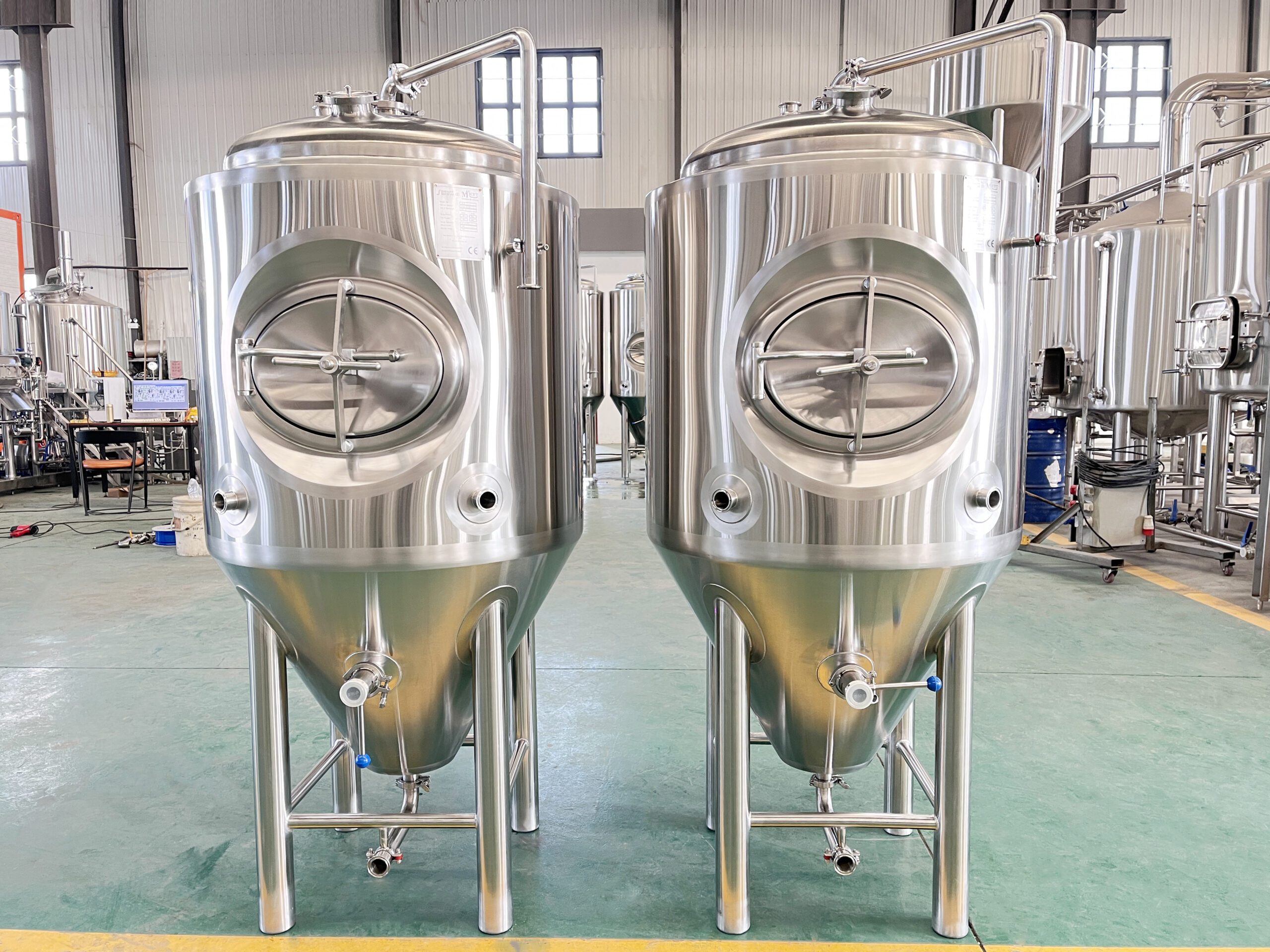
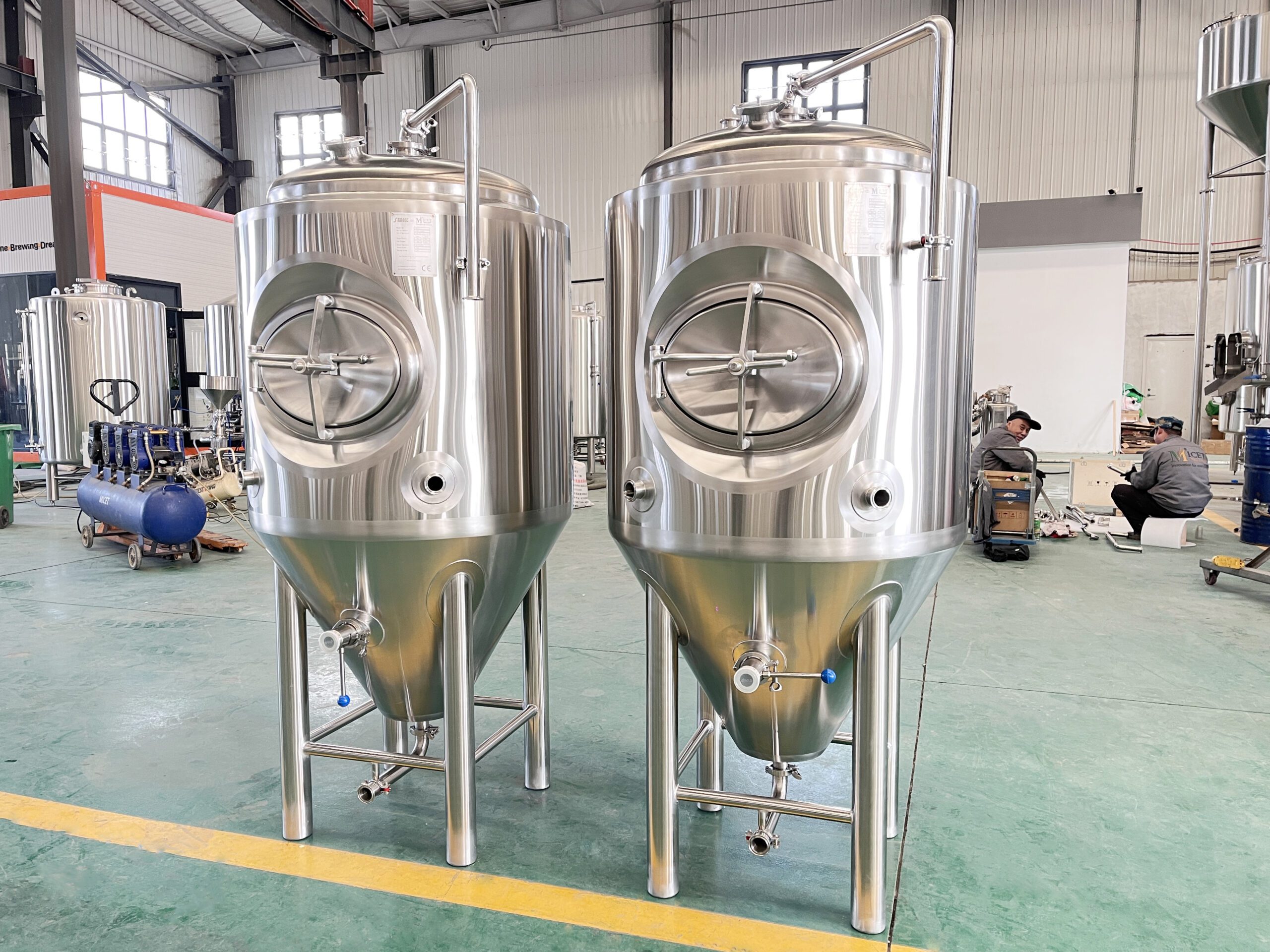
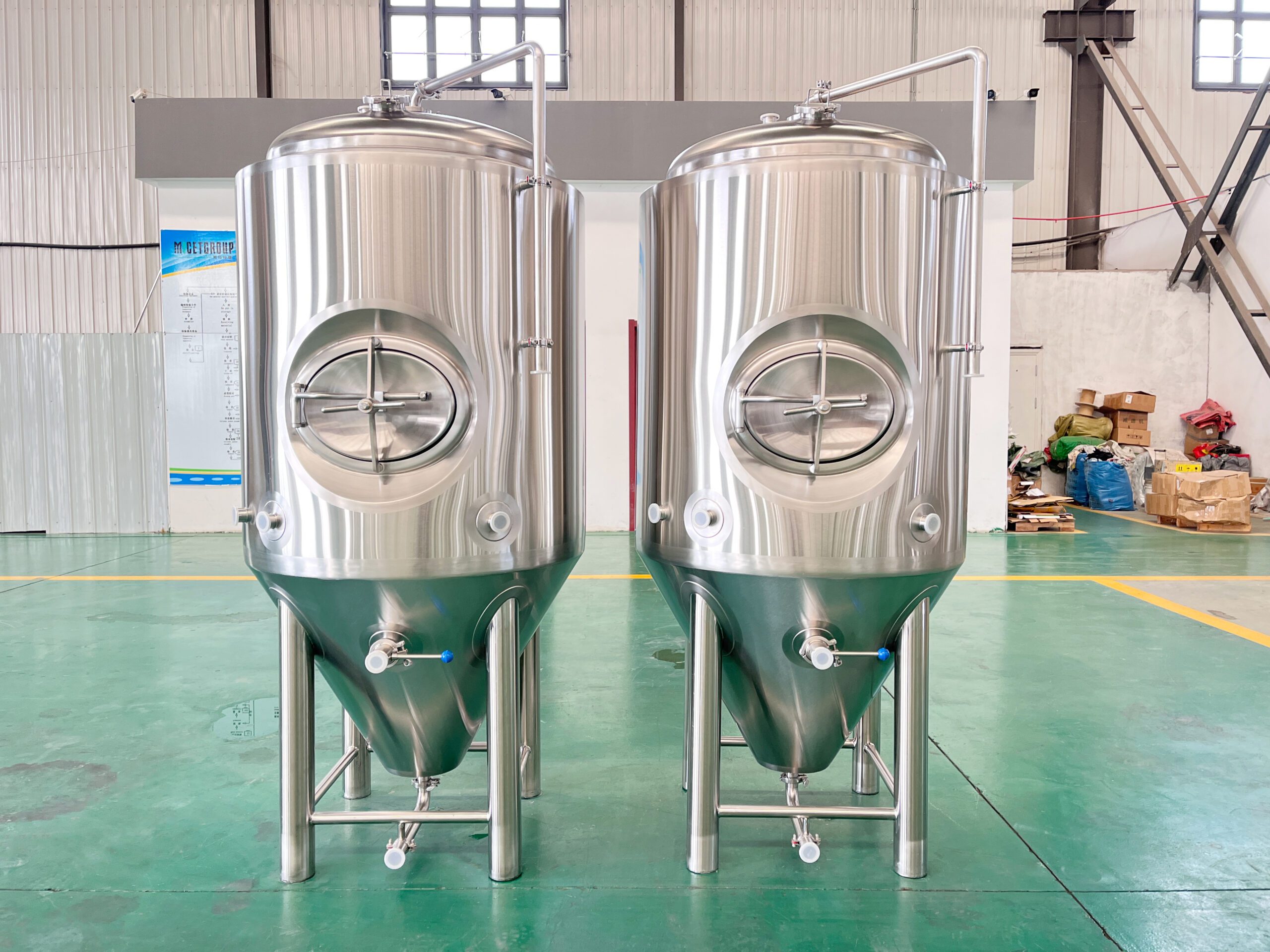
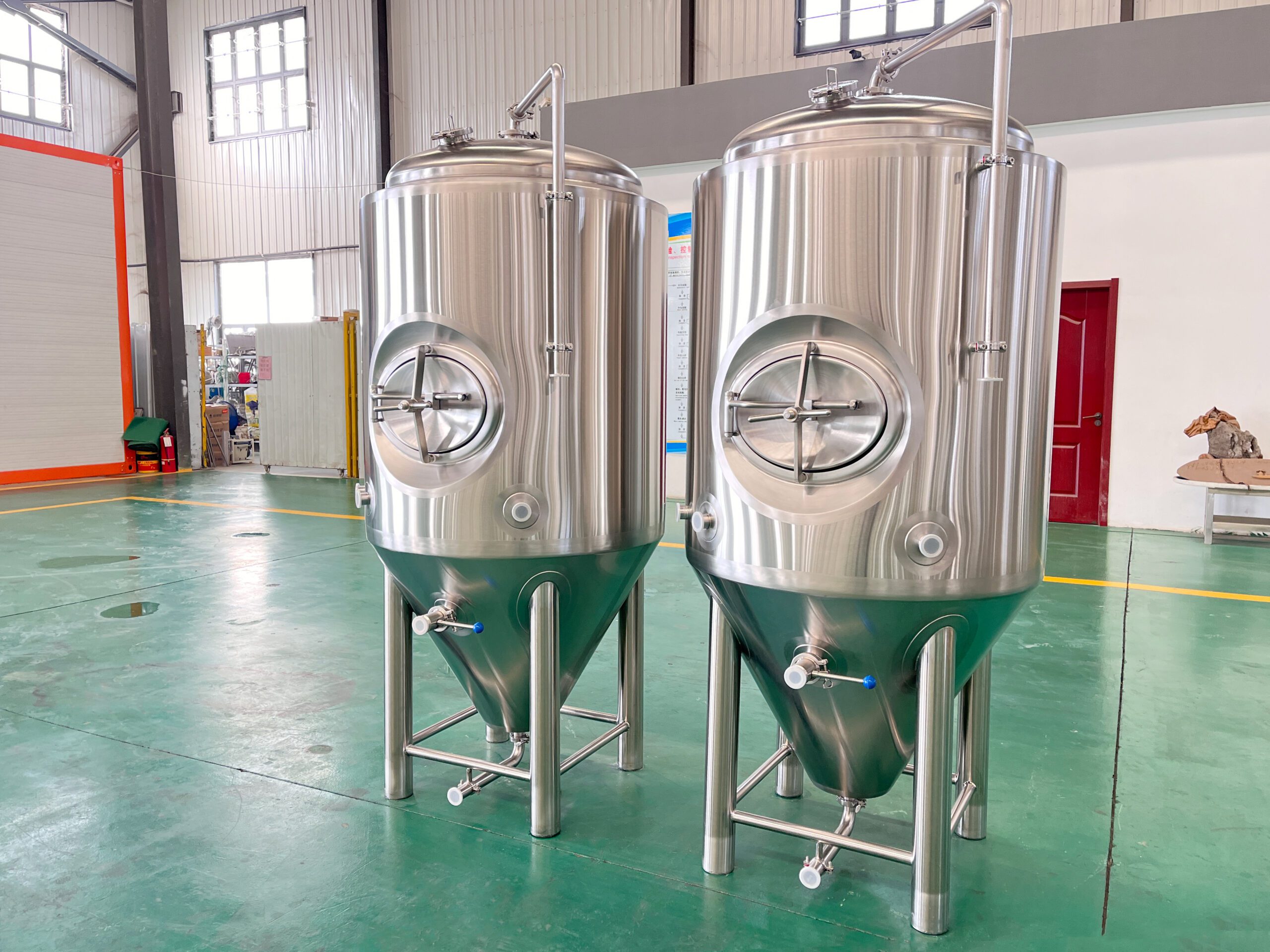
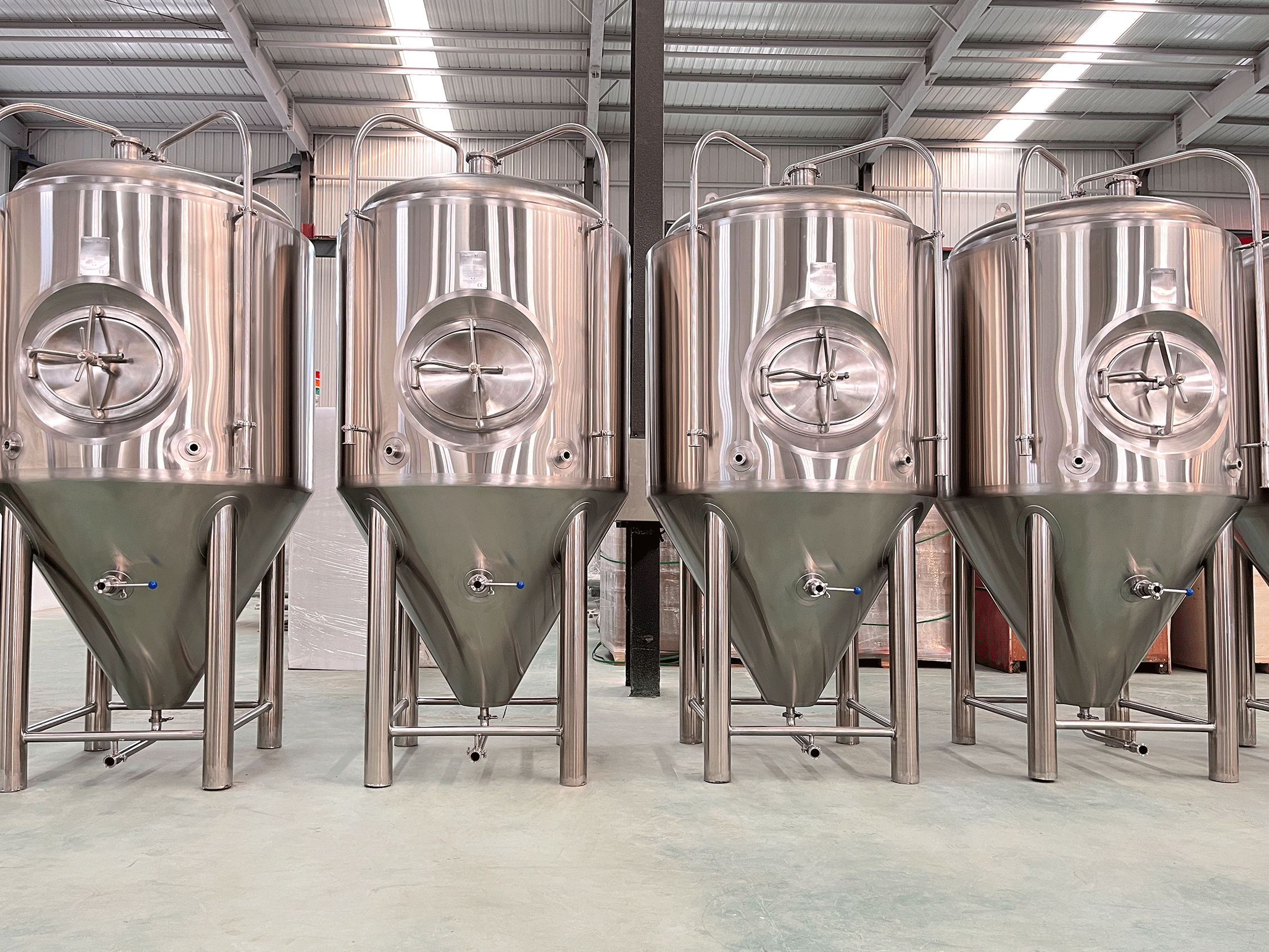
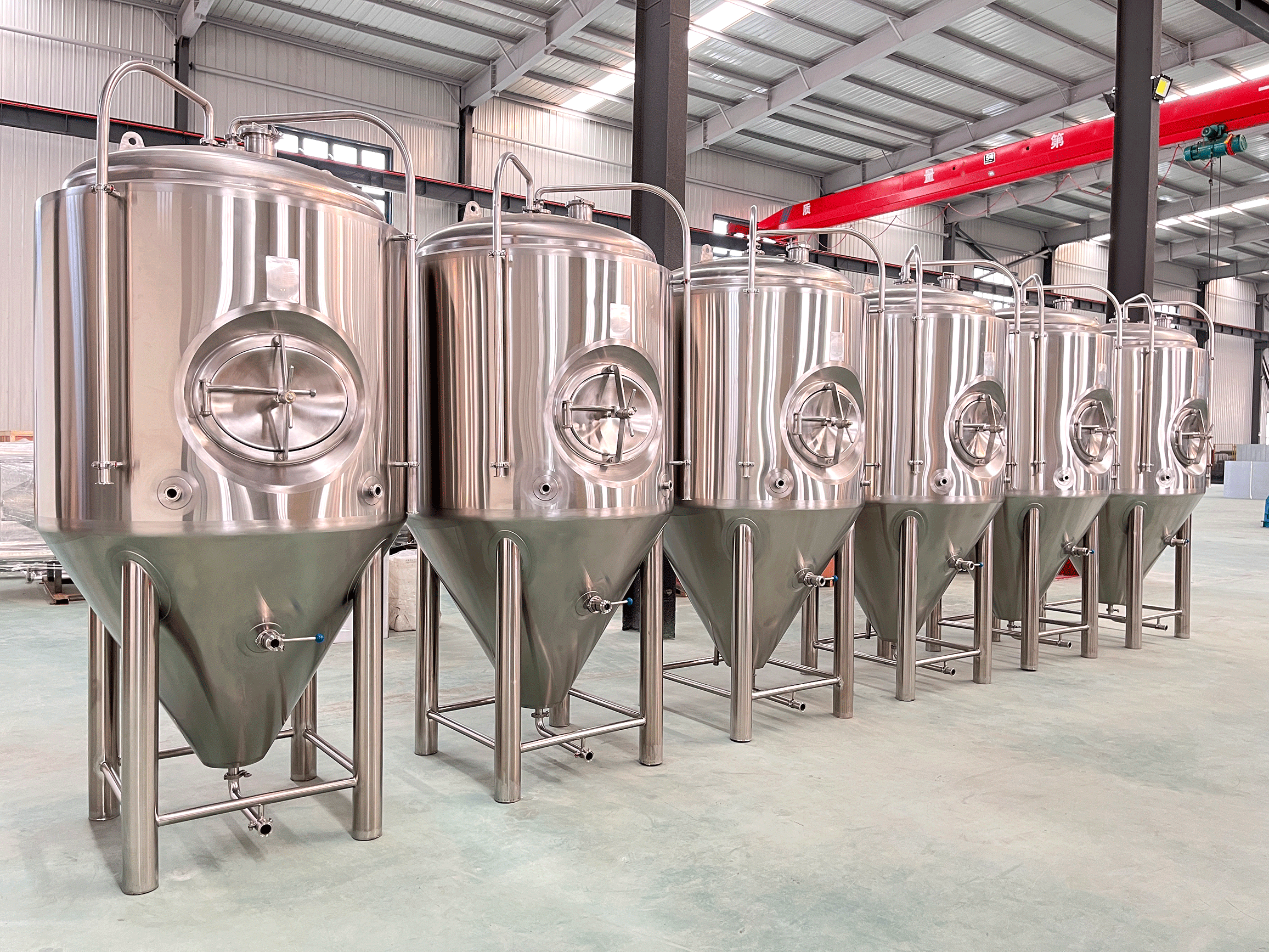
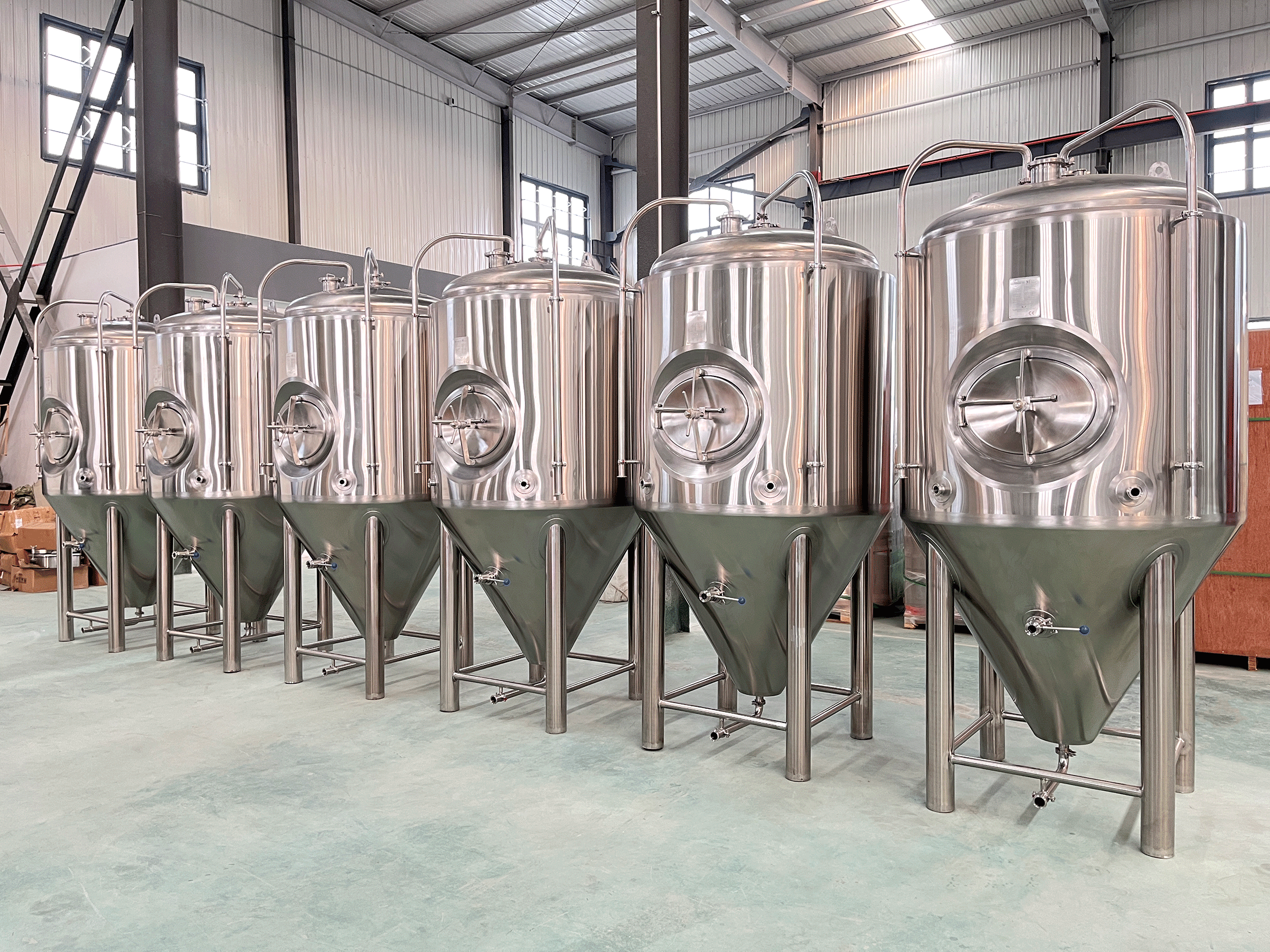
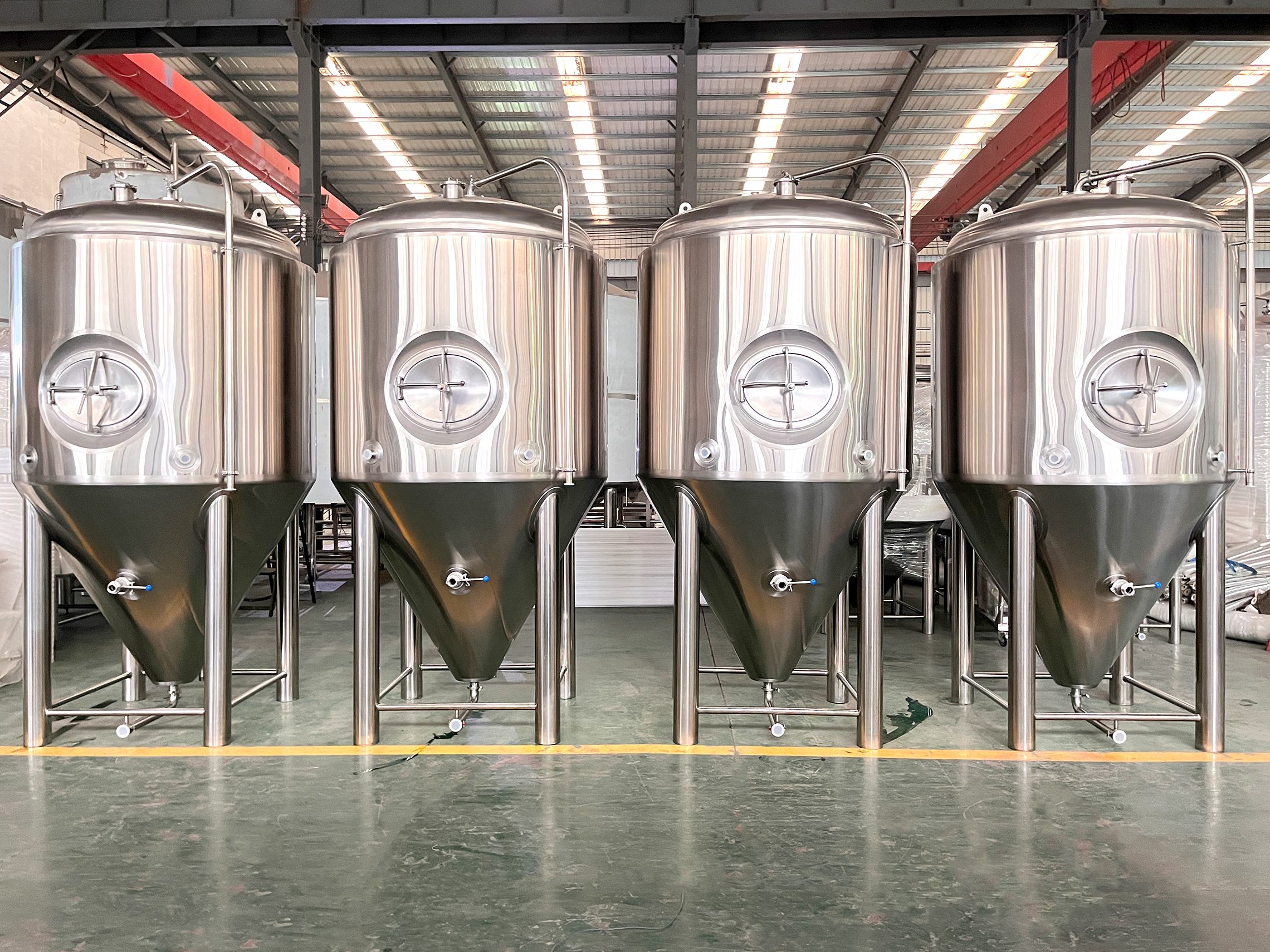
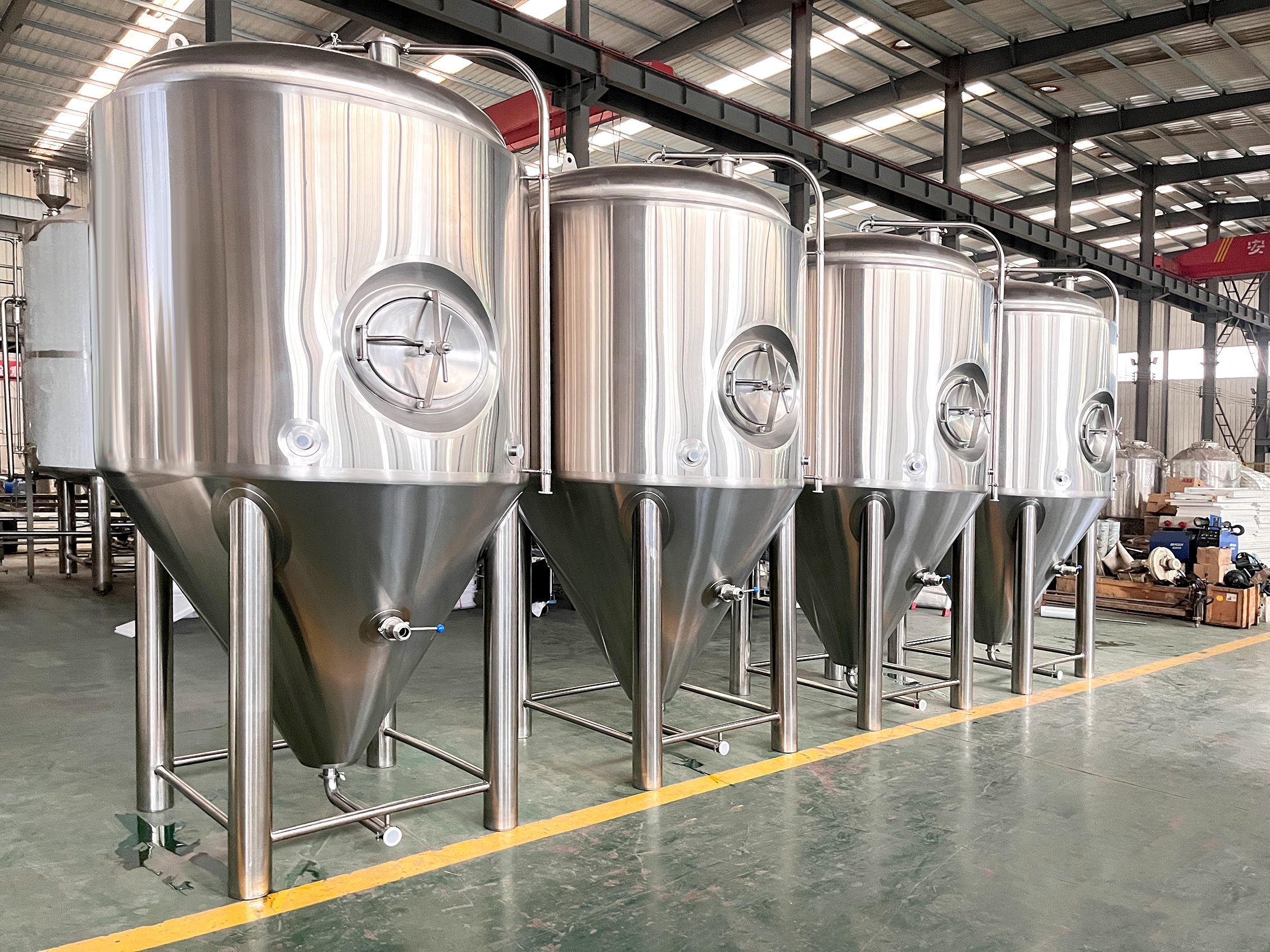
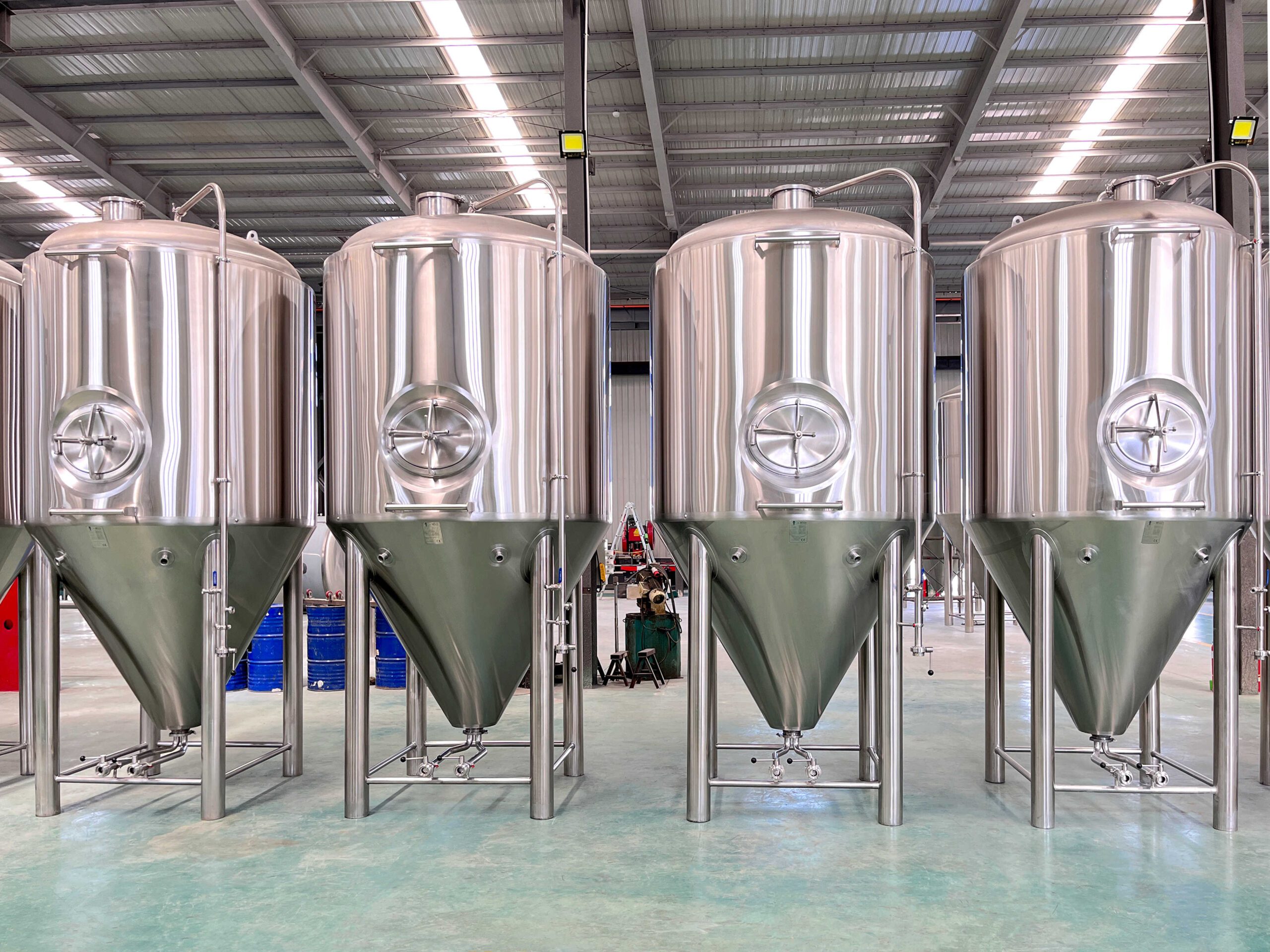
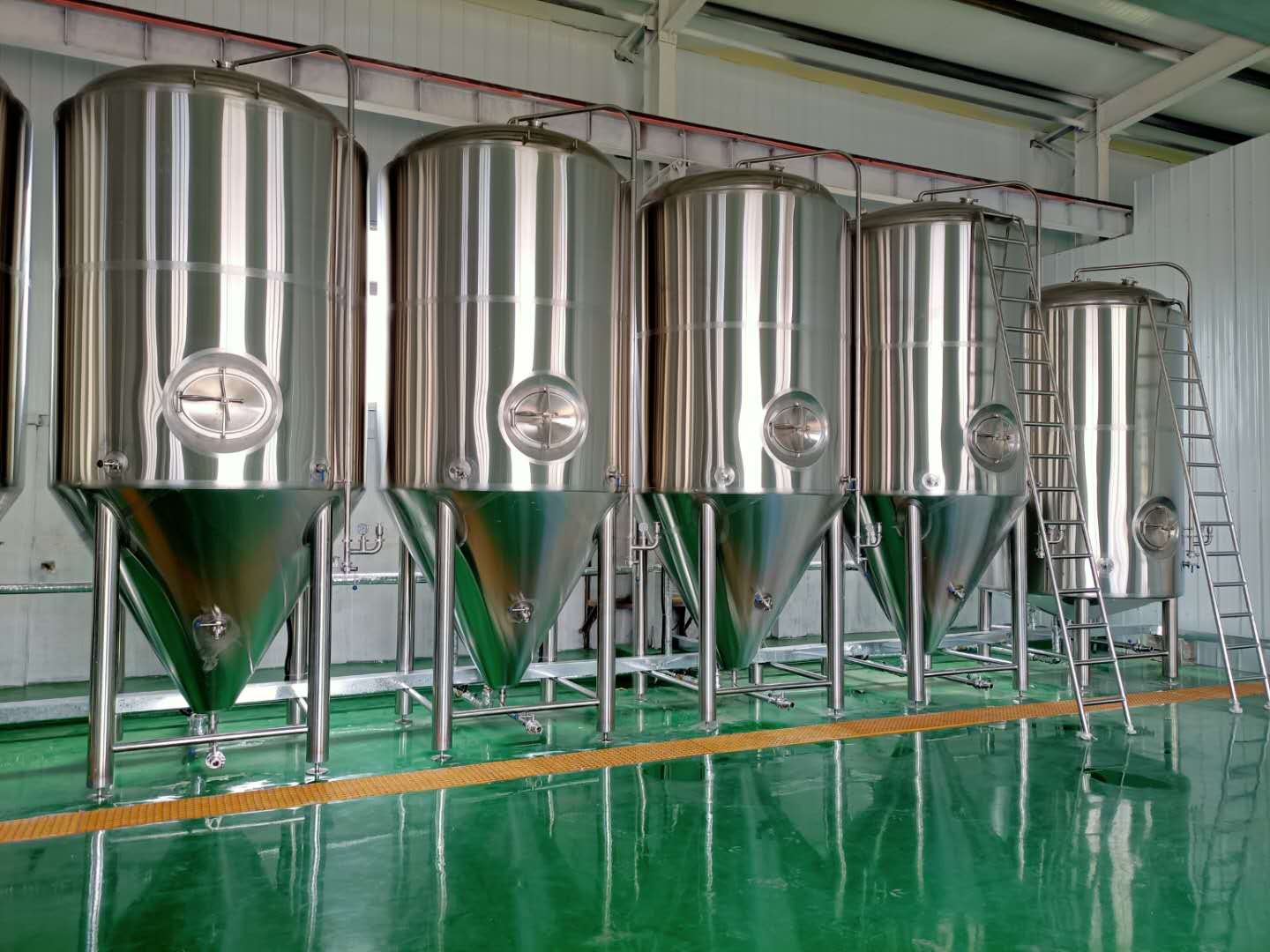
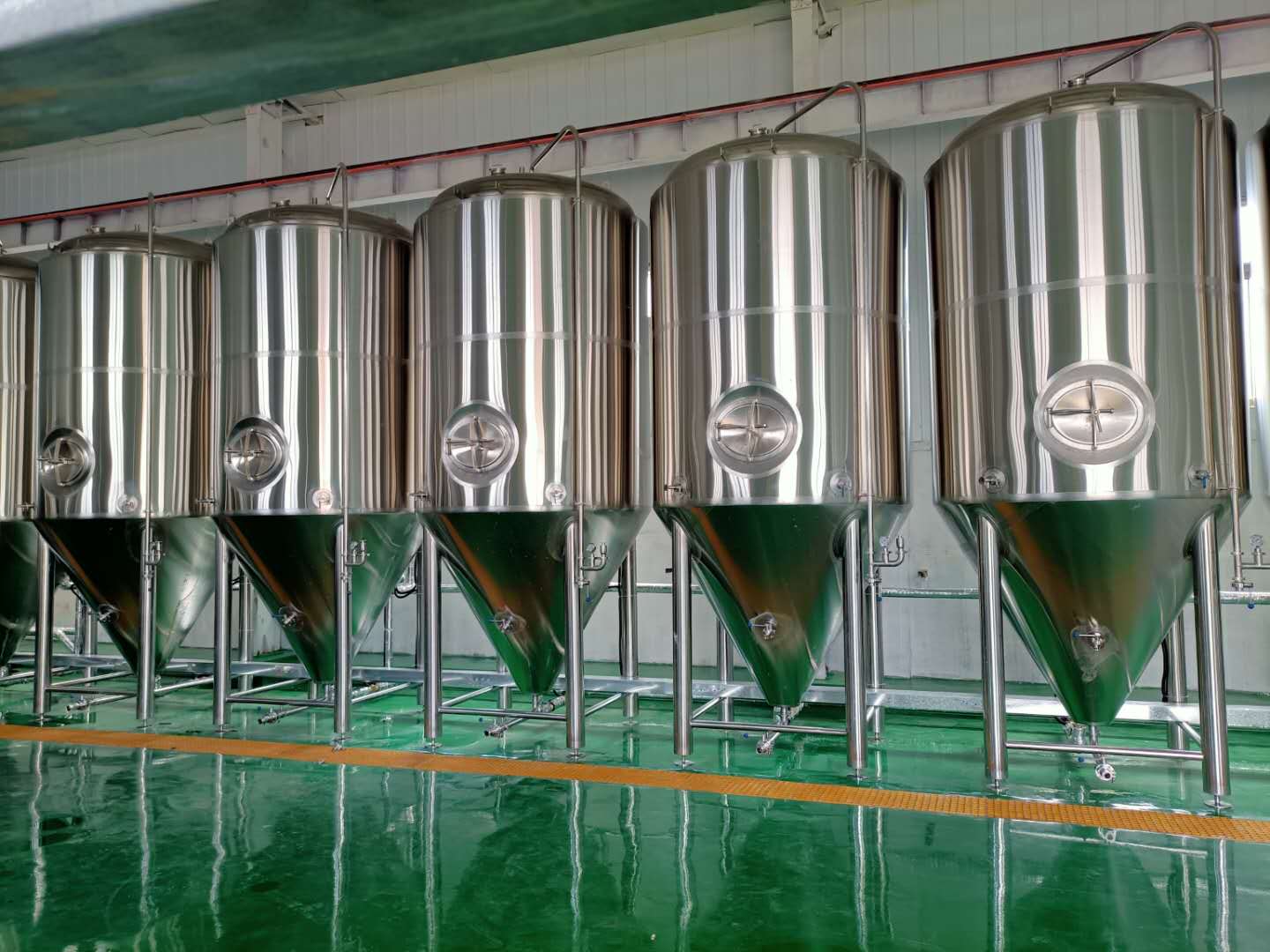
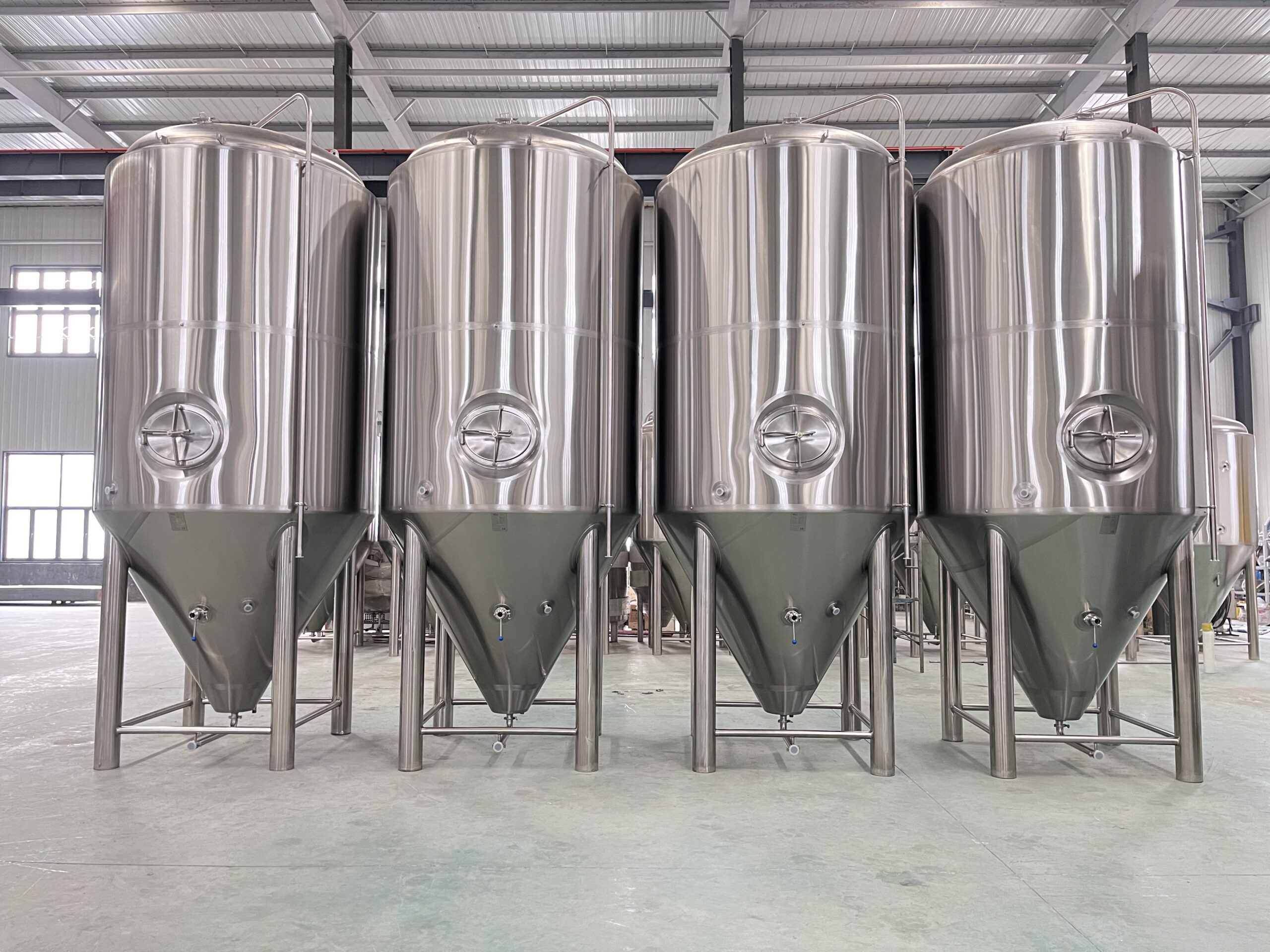
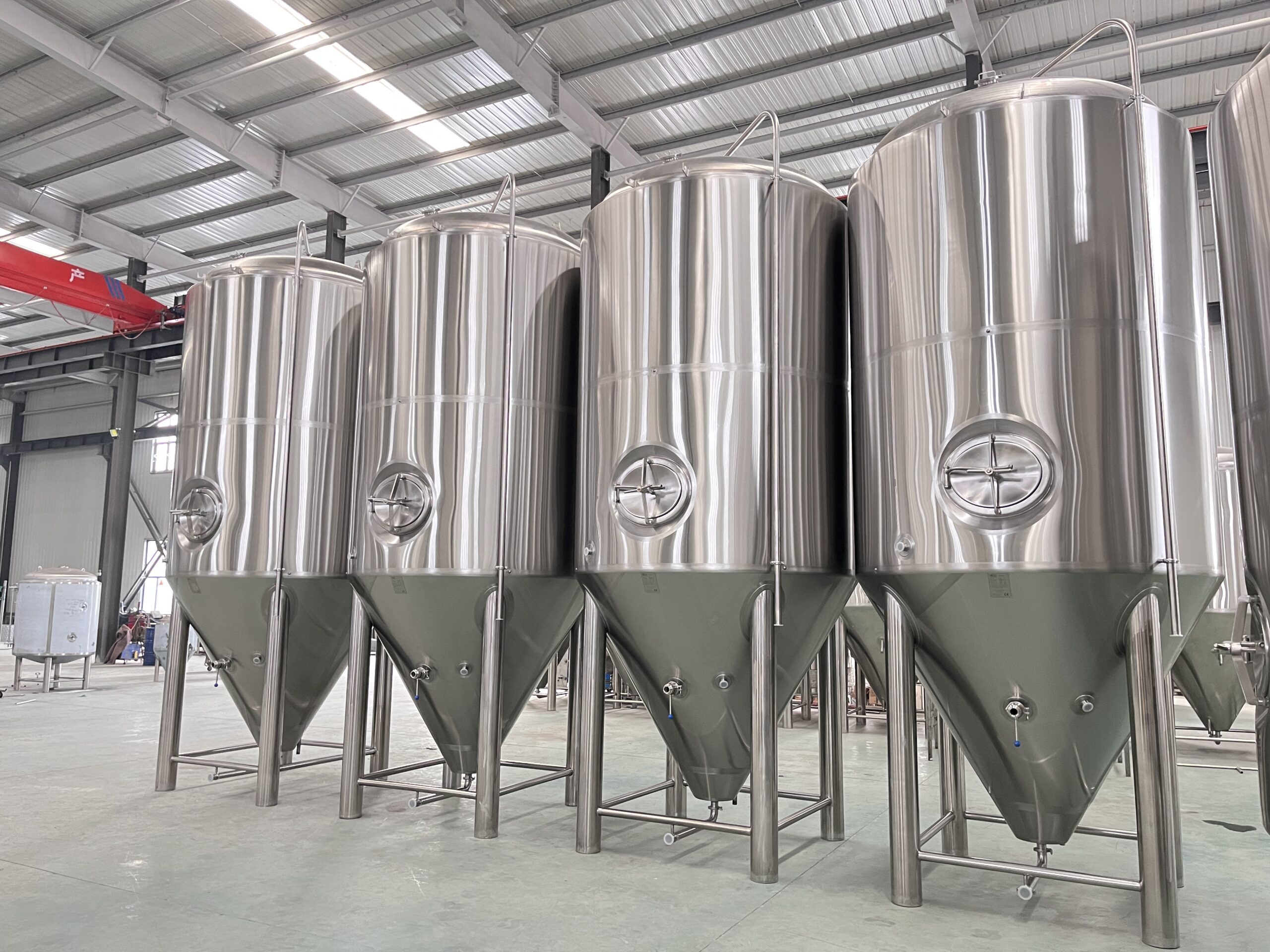
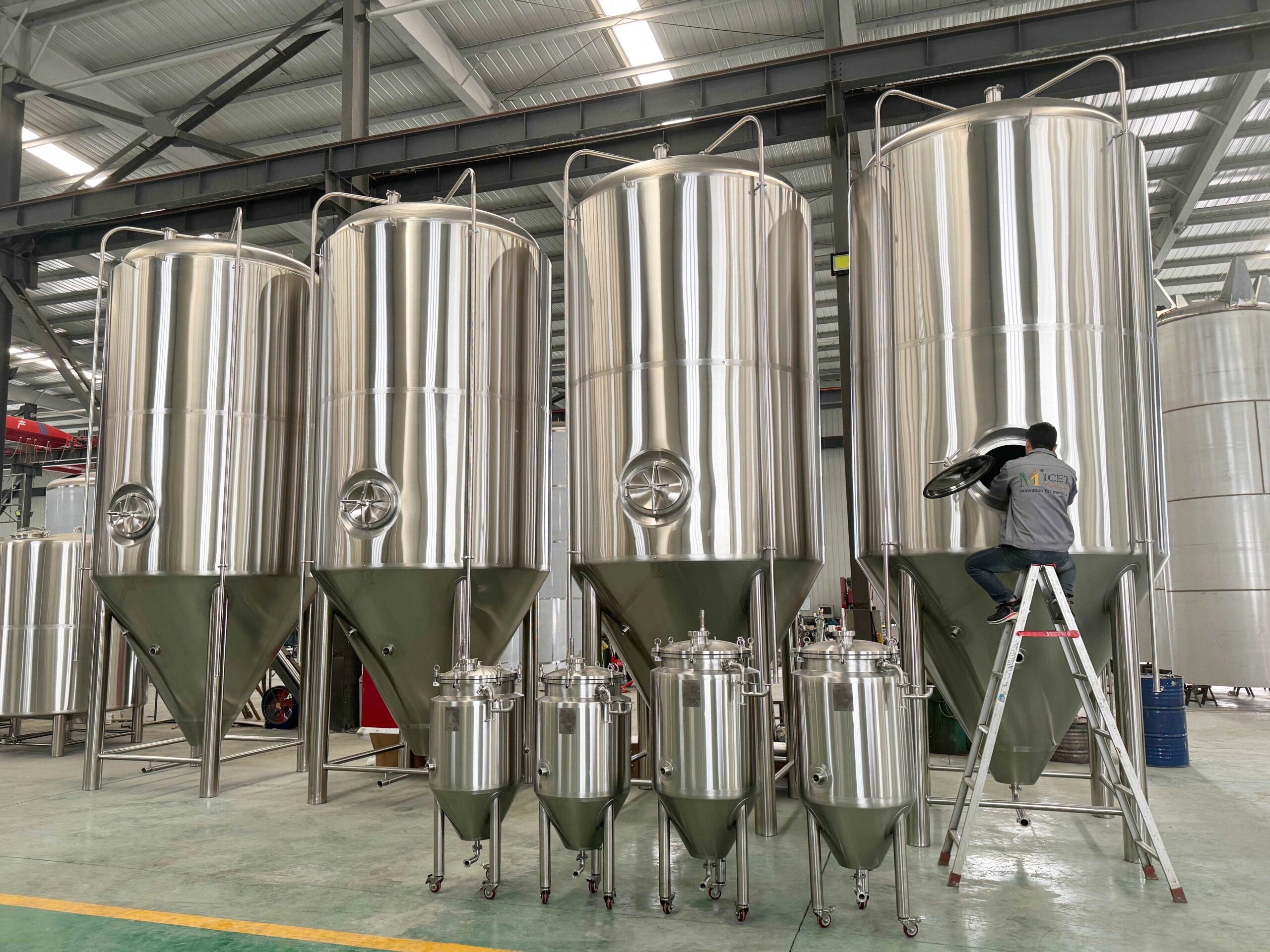
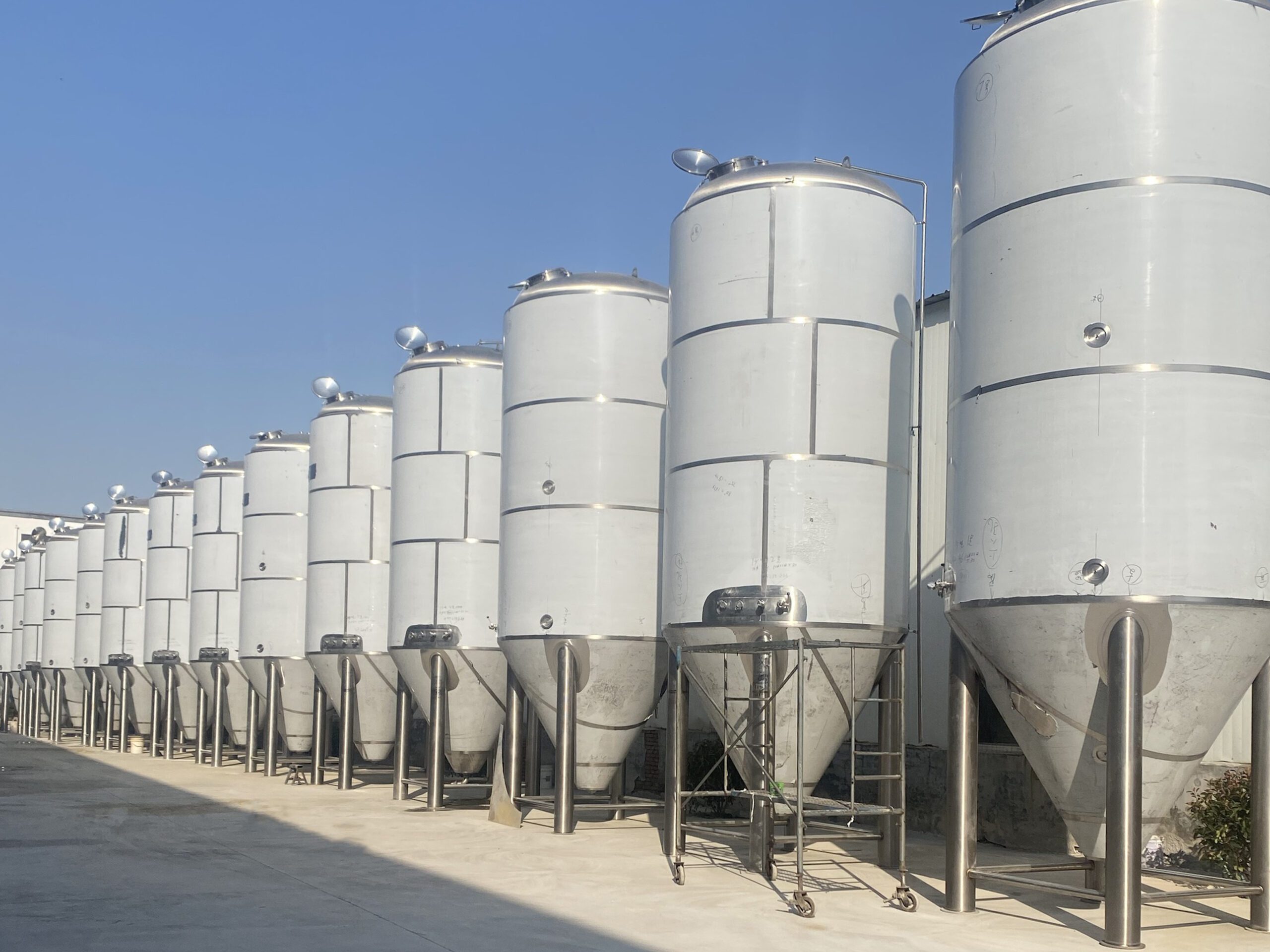
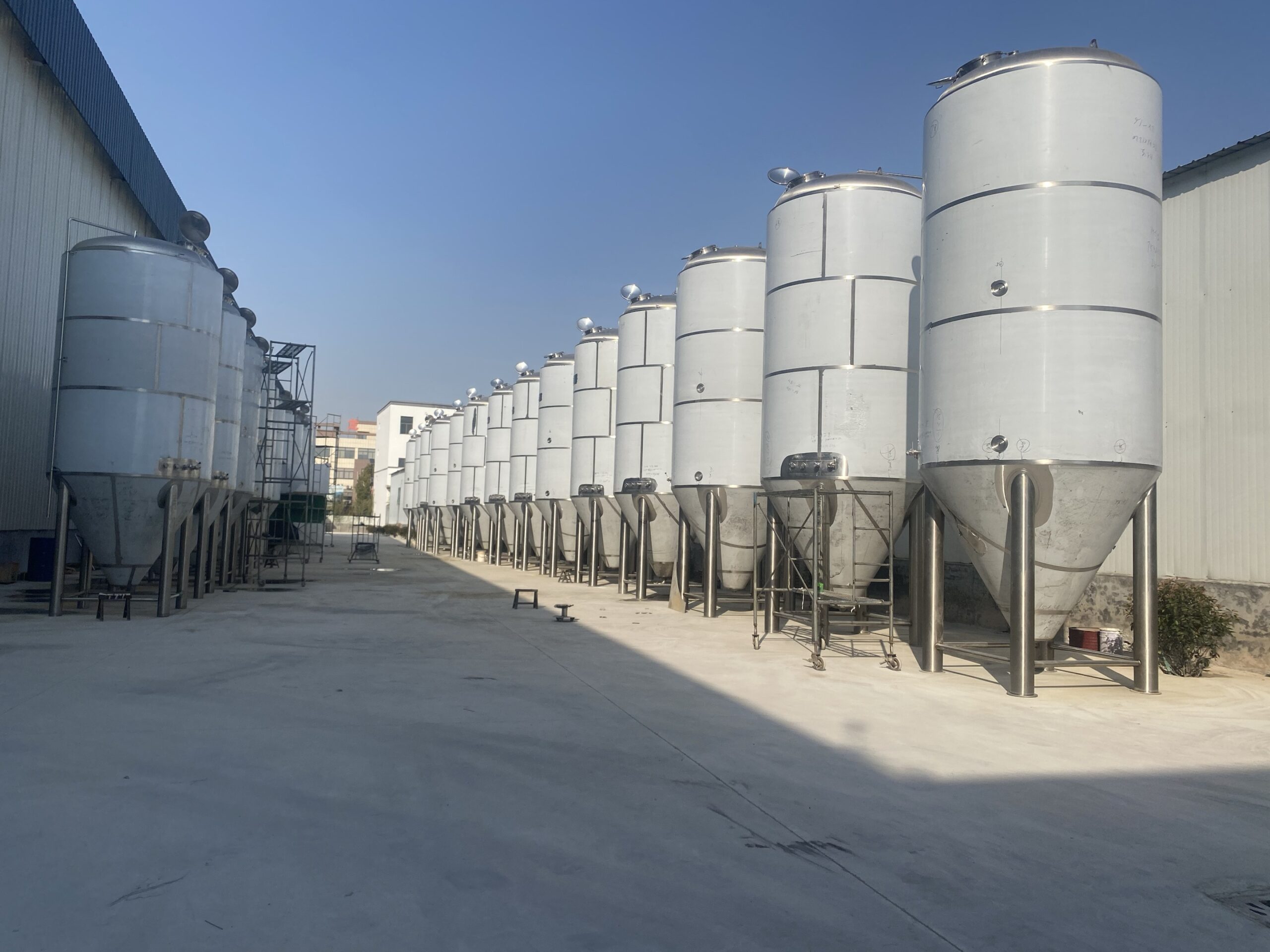
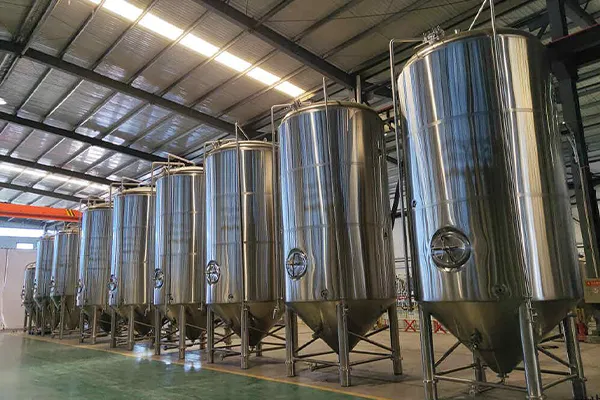
Продажа подержанных резервуаров для брожения - резервуары Unitank и BBT, проверенные на заводе
Сократите расходы с помощью бывших в употреблении бродильных емкостей, готовых для производства пива, комбучи, сидра, вина и напитков - их вместимость соответствует плану вашего погреба.
Опции, рассчитанные на давление - Проверенное состояние для безопасного газирования и подачи.
Готовые к гигиене - Имеются записи о внутренней очистке, пассивации и проверке.
Настройка под макет - При необходимости отрегулируйте форсунки, выходы и соединения.
Быстрая экспортная доставка - Надежная упаковка для транспортировки за границу.
Используемые резервуары для брожения по вместимости
Выбирайте из широкого спектра мощностей в соответствии с размером пивоварни, количеством SKU и планом производства.
300L используемый резервуар для брожения
Компактный бродильный резервуар из нержавеющей стали объемом 300 л для опытного пивоварения, тестовых партий или небольших линий по производству комбучи/сидра, проверенный под давлением и прошедший внутреннюю очистку перед отправкой.
Бак для брожения объемом 500 л подходит для нано-пивоварен и ресторанных пивоварен, с конструкцией из нержавеющей стали и дополнительной рубашкой охлаждения для контролируемого брожения.
Подержанный бродильный резервуар объемом 1000 л для микропивоварен и производителей комбучи, поставляется с основными фитингами и проверенными сварными швами, идеально подходит для небольшого коммерческого производства.
Б/у бродильный резервуар объемом 2000 л для растущих ремесленных пивоварен, с рубашкой охлаждения и конусным или тарельчатым дном, проверенный на давление и готовый к интеграции в ваш погреб.
Б/у бродильный резервуар объемом 2500 л, предназначенный для микропивоварен с высокой производительностью, поддерживающий несколько партий в неделю и стабильный контроль температуры с помощью гликолевых рубашек.
Бродильный резервуар большой вместимости 5000 л для региональных пивоваренных заводов или центральных производственных площадок, подходит для пива, сидра или других напитков, с проверенным давлением и гигиеничной внутренней отделкой.
Это используется 10T брожения танк пакет В стандартной конструкции бродильных емкостей MICET сочетаются отработанные ферментеры большого объема с восстановленными емкостями для светлого пива.
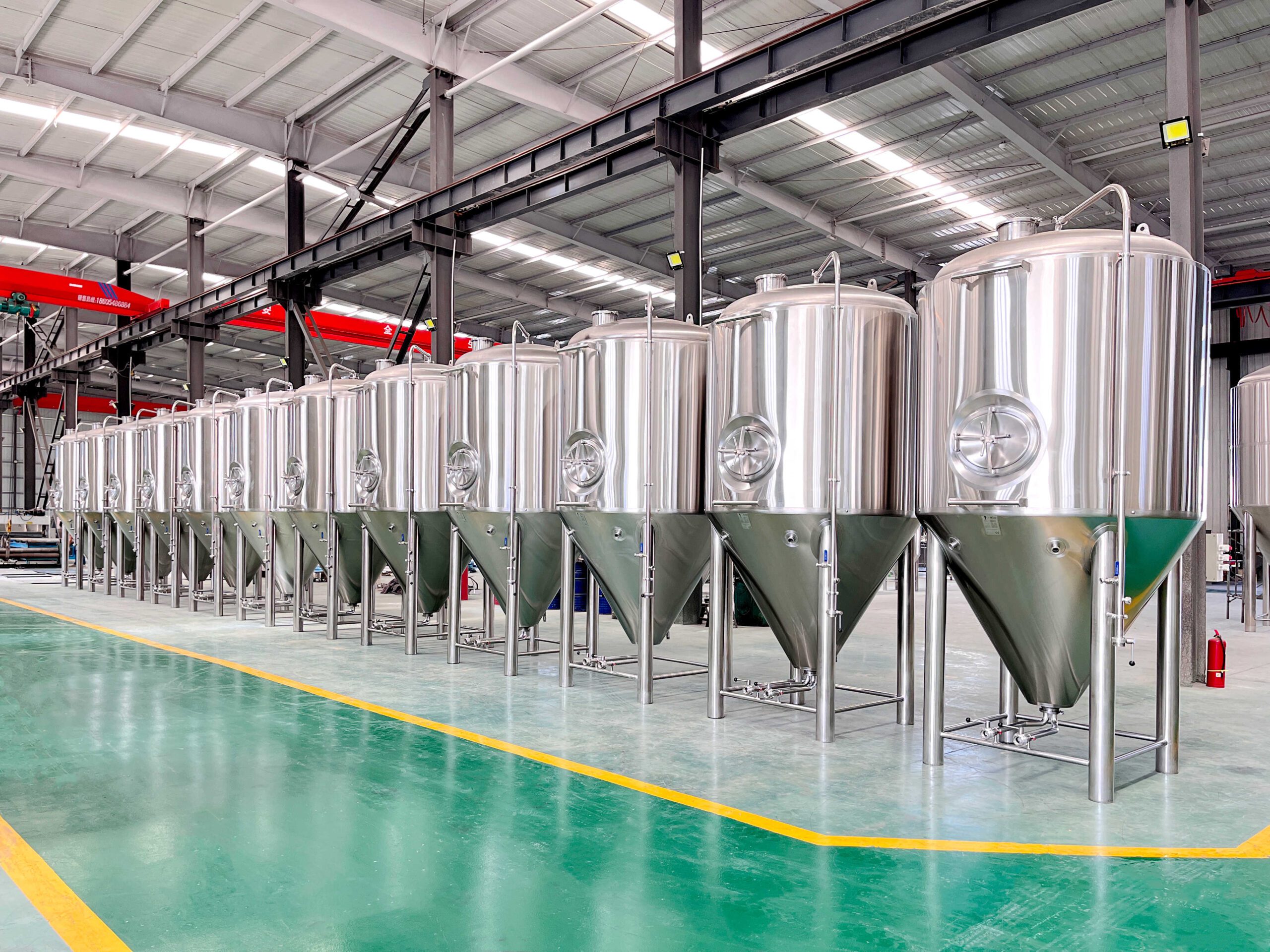
Пакет резервуаров для брожения 15T Используя два конических ферментера объемом 6500 л и двенадцать ферментеров объемом 3000 л. Все резервуары изготовлены из нержавеющей стали SUS304, изолированы, покрыты оболочкой и отремонтированы
Пакет резервуаров для брожения 20T Используя два конических ферментера объемом 6500 л и двенадцать ферментеров объемом 3000 л. Все резервуары изготовлены из нержавеющей стали SUS304, изолированы, покрыты оболочкой и отремонтированы
Как мы восстанавливаем бывшие в употреблении емкости для брожения
Перед тем как подержанное пивоваренное оборудование Предлагаемая вам система проходит строгий процесс восстановления и контроля качества на нашем заводе. Это поможет вам избежать скрытых рисков, уменьшить количество проблем с установкой и как можно быстрее вернуть систему в производство
Проверка и испытание давлением
Мы проверяем корпус, конус, ножки, рубашки и сварные швы на наличие коррозии или повреждений, затем проводим испытания на давление и герметичность резервуара и рубашек, чтобы подтвердить безопасное рабочее давление.
Внутренняя очистка и кислотная пассивация
Внутренняя поверхность резервуара подвергается глубокой очистке и удалению накипи, а затем кислотному пассивированию для восстановления коррозионной стойкости нержавеющей стали и создания гладкой, гигиеничной, удобной для безразборной мойки поверхности.
Проверка/замена клапанов и фитингов
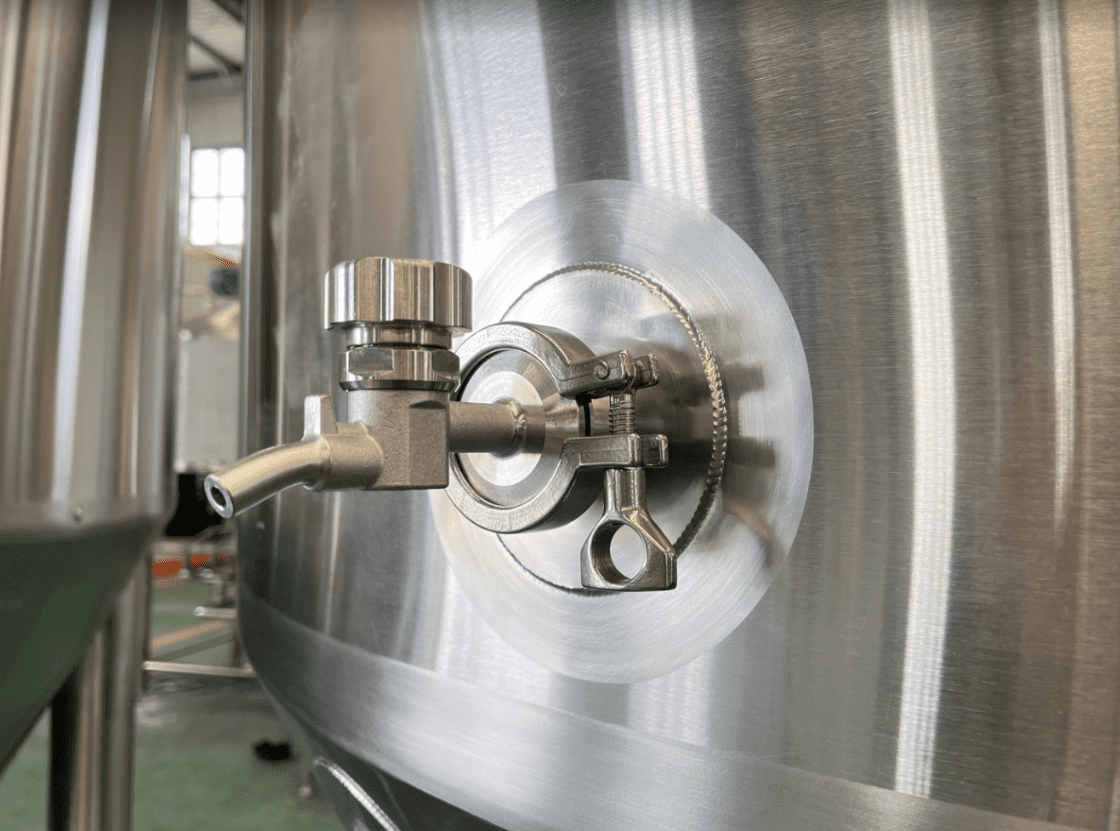
Проверяются люки, PRV, клапаны, прокладки, распылительные шары CIP и другие фитинги; все изношенные или не отвечающие санитарным нормам детали ремонтируются или заменяются на компоненты пищевого качества.
Заключительный осмотр и фотоотчет
Мы проводим окончательную визуальную проверку внутри и снаружи резервуара, затем предоставляем основные протоколы испытаний и фотографии, чтобы вы могли наглядно увидеть реальное состояние перед упаковкой и отправкой.
Гибридные ферментационные погреба - бывшие в употреблении резервуары с новым охлаждением и CIP
Во многих случаях лучшим решением будет бывшие в употреблении бродильные емкости или резервуары в сочетании с новые гликолевые охладители, насосные модули, коллекторы и системы CIP. Мы восстанавливаем корпус резервуара, рубашки и фитинги, а затем проектируем вокруг них новые контуры охлаждения, клапаны и очистки. Это позволяет сохранить экономичность основного объема погреба, а за гигиену, контроль температуры и обслуживание отвечает новое надежное оборудование.
Расскажите нам о своем проекте, и наши инженеры разработают для вас гибридное решение "новый + подержанный".
Мы можем модифицировать бывшие в употреблении бродильные емкости, чтобы они соответствовали существующей планировке погреба и технологическому процессу.
Технологические принадлежности
PRV, пробоотборные клапаны, камень для карбонизации, рукав для стеллажа, уровнемер, термоколпак
Контроль и мониторинг
Датчики температуры, базовые панели управления, возможности интеграции с ПЛК
CIP и очистка
Шарики для распыления CIP, обратный патрубок CIP, интеграция комплекта CIP
Механические модификации
Добавляйте/удаляйте насадки, меняйте опоры, регулируйте высоту выхода, добавляйте лестницы или платформы.
Случаи с клиентами
Компания MICET осуществила реальные инсталляции в более чем 100 странах мира, изготовив на заказ системы для пивоварен, комбуча, ликероводочных заводов, виноделен, резервуары для брожения и емкости из нержавеющей стали.
Узнайте, как мы разрабатываем, производим, устанавливаем и поддерживаем проекты "под ключ" от нано- до коммерческих масштабов.
Brewery System Design: Layout Choices That Change Cost
Nancy Shang | Founder and CEO, MICET | Published September 18, 2026
rewhouse layout — 2-vessel, 3-vessel, or 4-vessel — decides more than brew day speed: it sets your floor footprint, batch cycle time, and how easily you can add capacity later. MICET’s published used brewhouse package covers a 3-vessel configuration from 2–10 BBL. Here’s how vessel count actually changes cost and expansion.
Vessel Count at a Glance
2-Vessel
3-Vessel
4-Vessel
Typical role
Mash/lauter combined + kettle/whirlpool combined
Separate mash tun, kettle, and HLT (or separate lauter)
Separate mash tun, lauter tun, kettle, and whirlpool
Common capacity range
Nano to small pilot systems
Nano through mid-size craft (MICET’s used package: 2–10 BBL)
Mid-size craft through larger production
Floor footprint
Smallest — fewer tanks, fewer connections
Moderate
Largest — one more vessel plus associated piping
Batch cycle time signal
Slower per batch, since one vessel does double duty (mash/lauter, then cleaned for kettle/whirlpool)
Faster than 2-vessel, since mash and boil steps don’t compete for the same tank
Fastest cycle time of the three, since whirlpool separation frees the kettle sooner
Best fit for
Startups minimizing capex and footprint over throughput
Craft breweries balancing footprint against production speed
Breweries running hop-heavy recipes or targeting higher batch frequency
2-Vessel Systems: The Nano and Pilot Default
A 2-vessel brewhouse combines mash and lauter functions in one tank and boil/whirlpool functions in a second. It’s the layout most nano and pilot operations start with, because it needs the least floor space and the fewest connections to plumb and maintain.
The tradeoff shows up on brew day, not on the price tag. Since the same vessel handles two sequential steps, that tank has to be cleaned and reset between mash-out and boil, which stretches total brew day length compared to a layout where those functions run in parallel-capable, dedicated vessels. For a brewer running one or two batches a week, that added cycle time rarely matters. For a brewery pushing toward daily batches, it becomes the bottleneck.
3-Vessel Systems: Where MICET’s Standard Used Brewhouse Package Lands
MICET’s published подержанное пивоваренное оборудование line is a 2–10 BBL compact brewhouse configuration built around a mash tun, kettle, and hot liquor tank (HLT) as a set — a 3-vessel arrangement — with pumps, a heat exchanger, and a control panel included in the package.
Splitting mash and kettle functions into separate vessels means mash-out on one tank doesn’t hold up the boil on another; the HLT keeps hot water staged and ready rather than competing for space with the mash process. That’s the main reason 3-vessel layouts dominate the craft segment between nano and mid-size production — the footprint increase over a 2-vessel system is real, but modest compared to the cycle-time gain.
What MICET’s current used inventory listing doesn’t itemize is a separate lauter tun as a fourth vessel option within this package — the published configuration is fixed at mash tun, kettle, and HLT. A brewery wanting a dedicated lauter tun on top of this base package should confirm whether that’s available as an add-on or requires a different configuration entirely.
A 4-vessel layout adds a dedicated whirlpool to the mash tun, lauter tun, and kettle. The whirlpool’s job is separating hop and protein trub from the wort after the boil, and running it as its own vessel means the kettle empties and resets faster than it would if whirlpooling happened inside the kettle itself.
That speed advantage matters most for hop-heavy styles — IPAs and other recipes with large late-addition hop charges generate more trub, and a combined kettle/whirlpool vessel takes longer to settle and clear between batches. For a brewery running a hop-forward lineup at higher batch frequency, the extra vessel and floor space typically pay for themselves in throughput. For a brewery with a lighter, less hop-intensive recipe book, the fourth vessel adds cost and footprint without a matching return.
Footprint and Ceiling Height: The Constraint Vessel Count Doesn’t Solve Alone
Vessel count answers the “how many tanks” question, but two brewhouses with the same vessel count can still need very different rooms. Ceiling height matters as much as floor space, since kettles and whirlpools need clearance above them for venting and access, and a gravity-fed layout (where wort moves downward between vessels via height difference rather than pumps alone) needs more vertical clearance than a fully pumped system running on one level.
A brewery converting a retail storefront or existing warehouse bay often has a fixed ceiling height before vessel count ever enters the conversation. In that scenario, the ceiling constraint can rule out a gravity-fed 3- or 4-vessel layout regardless of how much floor space is available, pushing the decision toward a pumped configuration instead.
Capex Signals vs. Published Price Bands: What MICET’s Numbers Actually Cover
Tier
Published Price Range
What It Includes
Microbrewery equipment
30,000–80,000 USD
System-level bundle; vessel count not broken out separately
Commercial brewery equipment (10 BBL minimum)
50,000–80,000 USD
System-level bundle; vessel count not broken out separately
Fermentation, packaging, and other add-on equipment
Not published
Quote required
Both published ranges are bundle-level figures, not per-vessel breakdowns. That means the price difference between a 2-vessel and a 3-vessel system at the same capacity isn’t separated out in MICET’s available pricing material — a brewery comparing layouts on cost needs to request quotes for each specific configuration rather than assuming a fixed dollar-per-vessel increment applies across the published range.
The Misconception: More Vessels Isn’t Automatically More Capacity
A common assumption is that adding vessels increases batch size. It doesn’t — vessel count changes cycle time and workflow, not the volume of a single batch. A 4-vessel 10 BBL system still produces 10 BBL per batch, the same as a 2-vessel 10 BBL system. What changes is how many batches that brewhouse can realistically run in a week, since separating functions into dedicated vessels reduces the downtime between batches.
Breweries chasing higher output sometimes add vessels expecting bigger batches and end up with the same batch size run more frequently instead. That’s not a bad outcome if throughput was the actual goal, but it’s worth naming the difference before committing capex to a layout change.
Expansion Path: Retrofitting vs. Starting With Headroom
A brewery starting on a 2-vessel system can generally retrofit toward a 3-vessel layout later by adding a dedicated kettle or HLT, provided the original room has space and utility connections for it. Going from 3-vessel to 4-vessel by adding a whirlpool is usually a smaller retrofit, since it typically fits into existing piping runs more easily than a full mash/lauter split does.
The harder retrofit is capacity, not vessel count — swapping a 5 BBL mash tun for a 10 BBL one usually means replumbing connections sized for the smaller vessel, not just dropping in a bigger tank. Breweries planning to double capacity within a few years often find it cheaper to start with larger vessels running under-filled than to retrofit capacity later, even though the upfront footprint and price are higher.
Certification Note
MICET holds a PED Verification (certificate 3N231110.SICS093, issued by Ente Certificazione Macchine Srl, valid through November 9, 2028) covering brewing equipment, beer equipment, brewery equipment, and pressure vessels under the EU’s Pressure Equipment Directive 2014/68/EU, tested to EN 1626:2008. That verification sits at the organization and product-line level. On the used brewhouse product page specifically, certification is referenced only generically as “ASME/CE” craftsmanship, without a registration number or issuing body — buyers who need documentation for their own jurisdiction should request the specific unit’s paperwork before purchase rather than relying on the general reference.
Before You Commit to a Layout: 4 Questions to Answer
What’s your target batch frequency, not just batch size — weekly, daily, or somewhere between?
What does your recipe lineup actually demand — is trub load from hop-heavy styles significant enough to justify a dedicated whirlpool?
What’s your ceiling height and floor footprint, confirmed with actual measurements rather than an assumed “standard” room?
What’s your 3-year capacity plan — is it cheaper to size vessels for future volume now, or to plan a defined retrofit path later?
FAQ
Q: Does adding a vessel to a brewhouse increase batch size?
A: No. Vessel count affects cycle time and workflow speed, not the volume of a single batch. A 10 BBL system produces 10 BBL per batch whether it’s a 2-vessel or 4-vessel layout — more vessels mean the brewhouse can typically run more batches per week, not bigger ones.
Q: What vessel configuration does MICET’s used brewhouse package include?
A: The published 2–10 BBL used brewery equipment package is a 3-vessel configuration — mash tun, kettle, and hot liquor tank — with pumps, a heat exchanger, and a control panel included.
Q: Is a 4-vessel system worth the extra footprint?
A: It depends on the recipe lineup and target batch frequency. Hop-heavy styles with significant trub load and breweries targeting higher batch frequency tend to see the clearest return on a dedicated whirlpool. A lighter, less hop-intensive lineup often doesn’t need it.
Q: Does MICET’s certification cover pressure vessel compliance for used brewhouse equipment?
A: MICET’s PED Verification (3N231110.SICS093) covers brewing and pressure vessel equipment at the organization and product-line level. The used brewhouse product page itself references certification only generically as “ASME/CE” without a specific registration number, so individual-unit documentation should be confirmed directly before purchase.
Used 1000L Three-Vessel Craft Beer Brewing Equipment for Sale
A nearly new 1000L three-vessel craft beer brewing system, manufactured in 2025, is now available for sale. This complete used brewery equipment package features a three-vessel brewhouse, 11 fermentation tanks, a dedicated cooling system, water treatment equipment, and essential brewing accessories.
With a high level of automation and a comprehensive configuration, this system is suitable for craft breweries, brewpubs, restaurants, and commercial beer production projects looking for a complete 1000L brewing solution.
1000L Three-Vessel Brewhouse System
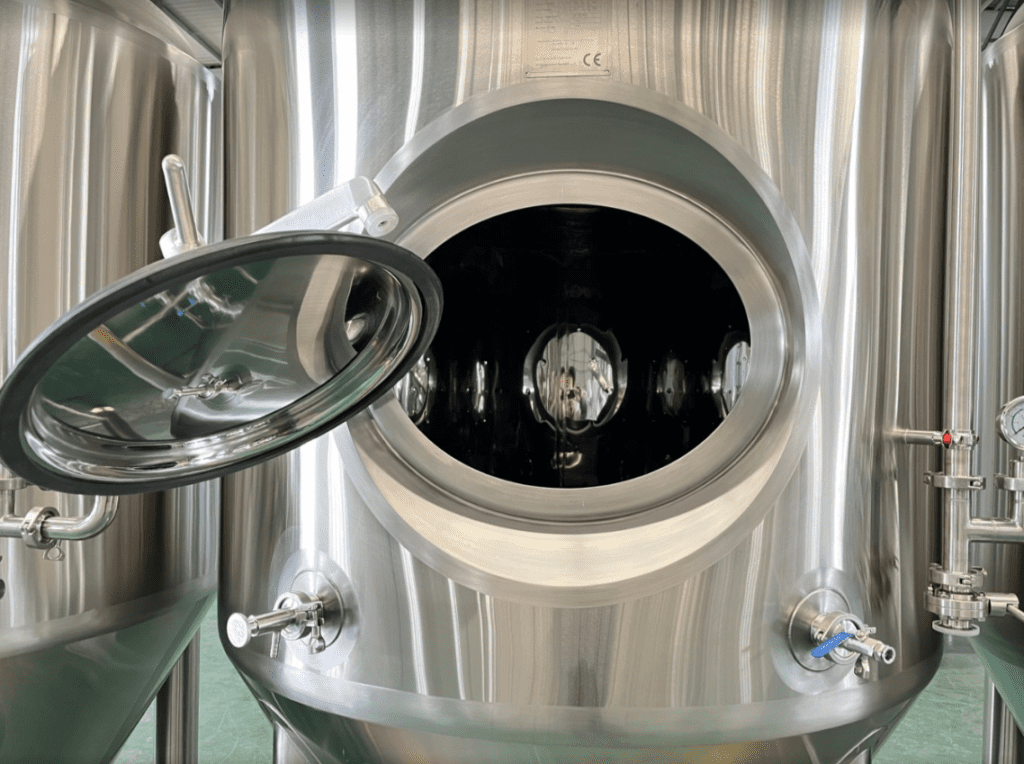
The brewhouse is designed with a three-vessel configuration and equipped with glass viewing manways on all three vessels, allowing operators to observe the brewing process more conveniently.
The mashing system features automatic step-temperature control, supporting programmed temperature increases during different mashing stages. This helps improve process consistency and operational convenience.
The lauter tun is equipped with an automatic raking and spent-grain discharge system, reducing manual handling during lautering. An 8 m² plate heat exchanger, hop filter, and yeast addition tank are also included to support the subsequent wort cooling and yeast pitching processes.
Brewhouse Configuration
Артикул
Технические характеристики
Тип оборудования
Used 1000L Three-Vessel Brewery System
Brewhouse Configuration
Three-Vessel System
Viewing Manways
Glass Viewing Manways on All Three Vessels
Mashing Control
Automatic Step Temperature Ramping
Lauter Tun
Raking System with Automatic Spent-Grain Discharge
Пластинчатый теплообменник
8 m²
Hop System
Фильтр для хмеля
Yeast System
Yeast Addition Tank
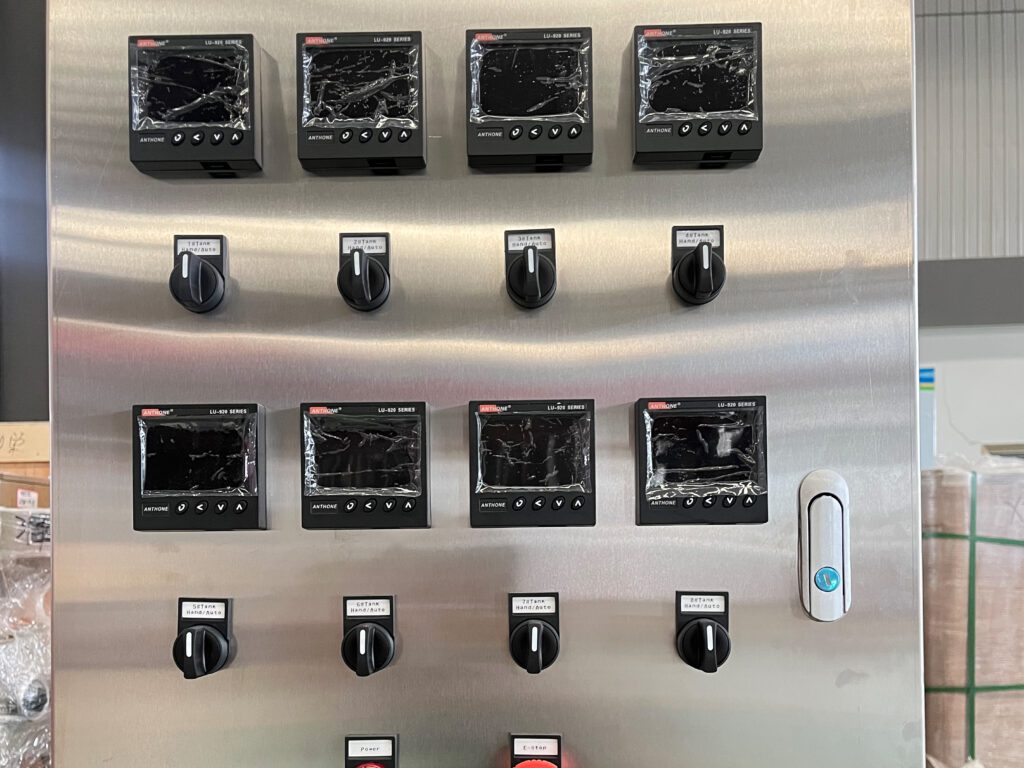
Шкаф управления
Floor-Standing Stainless Steel PLC Control Cabinet
Variable Frequency Drives
3 Units
11 × 1000L Stainless Steel Fermentation Tanks
The fermentation section includes 11 units of 1000L stainless steel fermentation tanks with top manways. This configuration provides sufficient fermentation capacity for multi-batch production and flexible scheduling of different beer varieties.
Each fermenter is equipped with a dry-hopping port and a water-seal valve, supporting dry-hopping operations and related craft brewing processes. The top manway design also facilitates inspection, cleaning, and routine maintenance.
Cooling and Water Treatment Systems
To support wort cooling and fermentation temperature management, the system includes a 2500L ice water tank and a 10 HP Maigebeit cooling unit. These components provide cooling support for the brewing and fermentation stages.
The package also includes a 1000L raw water tank, a 1000L purified water tank, and a 1T/h water treatment system. Together, these components provide a practical water storage and treatment solution for brewing operations.
Артикул
Технические характеристики
Ферментационные баки
1000L Top-Manway Fermenters
Fermenter Quantity
11 Units
Fermenter Accessories
Dry-Hopping Port and Water-Seal Valve
Ice Water Tank
2500L
Cooling Unit
10 HP Maigebeit
Резервуар для сырой воды
1000L
Purified Water Tank
1000L
Water Treatment Capacity
1T/h
Complete Auxiliary Equipment
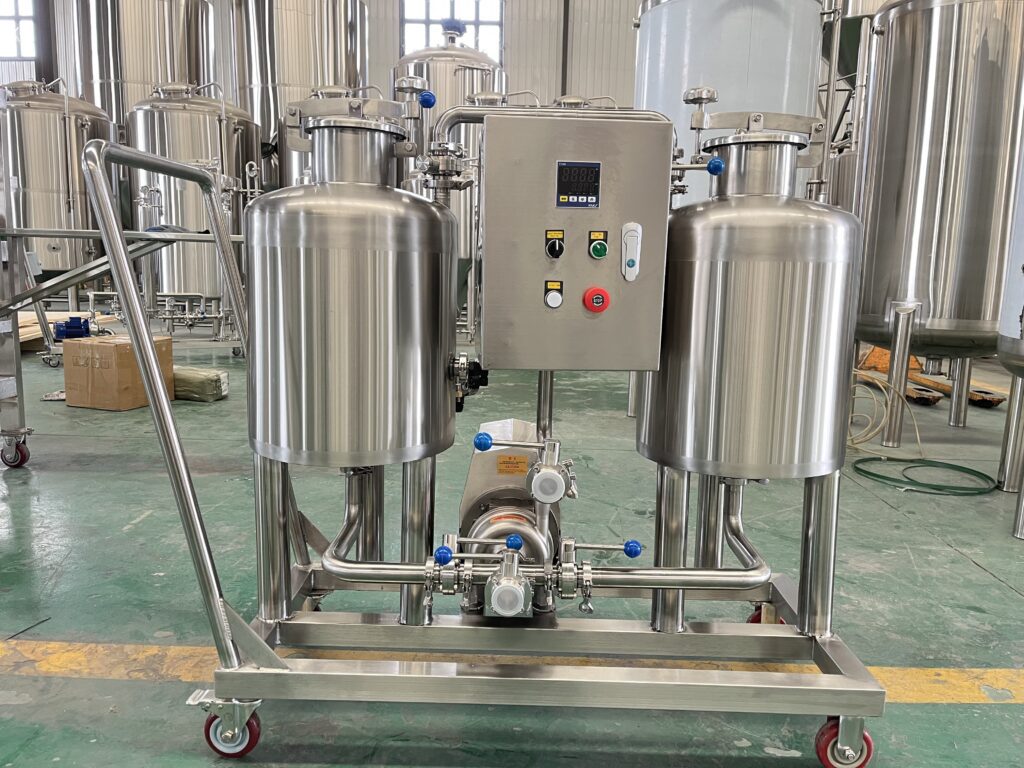
In addition to the main brewing, fermentation, and cooling systems, this used brewery package includes a stainless steel grain mill and a 100L dual-tank CIP cleaning cart. The complete configuration helps support raw material preparation, equipment cleaning, and routine brewery operations.
The stainless steel PLC control cabinet provides centralized control for the brewing system, while the three variable frequency drives support adjustable operating speeds for compatible equipment.
Suitable for Commercial Craft Brewing Projects
This 2025-manufactured nearly new 1000L three-vessel craft beer brewing system offers a comprehensive equipment configuration for breweries seeking to establish or expand commercial production capacity.
With its automatic step mashing control, automatic spent-grain discharge, multiple fermentation tanks, cooling system, and water treatment equipment, the package provides a practical foundation for a complete craft beer production line.
For customers looking for used brewery equipment with a relatively recent manufacturing date and extensive supporting equipment, this 1000L system is worth considering. Equipment condition, technical specifications, and availability can be confirmed according to the buyer’s requirements.
Wholesale Brewing Equipment: OEM Options for Distributors
Nancy Shang | Founder and CEO, MICET | Published September 17, 2026
Sourcing wholesale brewing equipment as a distributor means evaluating package contents, MOQ tiers, certification scope, and after-sales handoff — not just unit price. This guide walks through what MICET publishes on each of those points, where the gaps are, and what to ask before signing a regional agreement.
A brewery owner buying one 10 BBL system cares about brew day performance. A distributor buying wholesale brewing equipment cares about something different: whether the manufacturer can support ten of those systems shipped to ten different customers, each with their own installation timeline, warranty claim, and spare parts request.
That shift changes which questions matter. Unit specs still matter, but they sit alongside questions a single-unit buyer never asks — pricing tiers by volume, documentation the distributor can hand to their own customer, and who answers the phone when a compressor fails in month eight.
OEM vs. ODM: Two Different Deals, Not Interchangeable Terms
OEM (original equipment manufacturer) arrangements typically mean the distributor sources a manufacturer’s standard design and resells it, sometimes under their own brand name on the nameplate. ODM (original design manufacturer) arrangements go further — the manufacturer adjusts the design itself to a distributor’s specifications before production.
MICET’s published catalog describes standard configurations (used brewhouse packages, fermentation tanks, kombucha and distillery lines) rather than a formal OEM/ODM program with defined tiers. Distributors evaluating white-label or private-label options should treat this as an open question to raise directly rather than an assumed service — the resource material behind this article doesn’t confirm branding terms, minimum customization thresholds, or nameplate policy.
The 2–10 BBL Package: What’s Actually Included
For distributors reselling into the craft and nano-brewery segment, MICET’s used brewery equipment line covers 2–10 BBL compact brewhouse configurations. The published package includes:
Mash tun, kettle, and hot liquor tank (HLT) as a set
Насосы
Heat exchanger
Control panel
What isn’t itemized at this tier: fermentation tanks, packaging lines, and CIP systems are separate line items, not bundled into the base brewhouse package by default. A distributor quoting a “complete turnkey” system to their own customer needs to confirm which additional equipment gets added and priced separately, since the 2–10 BBL brewhouse figure alone won’t cover a full production setup.
MOQ Tiers: What’s Published and What You’ll Need to Ask For
Minimum order quantities for wholesale brewing supplies aren’t published in MICET’s available material. Distributors accustomed to seeing tiered MOQ pricing from other equipment categories should not assume the same structure applies here without confirming it directly — this is a genuine information gap in the source data behind this article, not an oversight in this guide.
What is documented is the scale of the operation behind the equipment: a 10,000+ m² certified production base and 22 years of combined technical engineering experience on the team. Neither figure substitutes for an MOQ number, but both are relevant context when a distributor is deciding whether a manufacturer can handle a multi-unit order on a compressed timeline.
Used 200L Kombucha Brewing Equipment (2)
Certification Distributors Need for Their Own Market
This is where distributors run into the most friction, because certification schemes are regional and a certificate covering one market doesn’t automatically satisfy another.
MICET holds a PED Verification (certificate 3N231110.SICS093, issued by Ente Certificazione Macchine Srl, valid through November 9, 2028) covering brewing equipment, beer equipment, brewery equipment, and pressure vessels under the EU’s Pressure Equipment Directive 2014/68/EU, tested to EN 1626:2008. That certification sits at the organization and product-line level — it doesn’t automatically apply to a specific used unit pulled from resale inventory, and a distributor reselling a used system should request that unit’s individual test documentation separately.
On the подержанное пивоваренное оборудование product page specifically, certification is referenced generically as “ASME/CE” craftsmanship, without a registration number or issuing body listed. That distinction matters for distributors targeting the US market: ASME (the American boiler and pressure vessel code) and the EU’s CE/PED scheme are not the same certification framework, and a CE-marked pressure vessel isn’t automatically ASME-compliant. Distributors selling into ASME-jurisdiction markets should confirm ASME-specific documentation exists for the actual units they’re ordering, not assume CE coverage extends there.
Pricing Structure by Tier
Package Tier
Published Range
Microbrewery equipment
30,000–80,000 USD
Commercial brewery equipment (10 BBL minimum)
50,000–80,000 USD
Fermentation, kombucha, distillery, wine, and packaging lines
Not published — quote required
For a distributor building a resale price list, only the two brewhouse tiers above have a published floor and ceiling. Everything outside the brewhouse category needs a direct quote before it can be priced for a customer, and that quote request should specify capacity and configuration rather than assuming the brewhouse ranges scale proportionally to other equipment types.
Where MICET Already Has Agents — and Where That Leaves Room
MICET operates service centers or agent offices in France, Australia, Canada, Argentina, and Chile, with confirmed sales agents or distributors already active in Canada, the USA, the UK, France, Georgia, Italy, South Africa, India, Argentina, and Chile. A distributor evaluating a new territory should check this list first — a region with an existing agent means a different conversation (possible sub-distribution or coordination) than a region with no coverage yet, which is a more straightforward greenfield discussion.
After-Sales Support: Who Handles the Warranty Call?
MICET advertises 24/7 after-sales service and more than 20 sales representatives across different countries. What isn’t specified in the available material is how warranty and service responsibility splits between MICET directly and a regional distributor once equipment is installed — whether the distributor becomes the first point of contact for their own customers, or whether service requests route back to MICET’s team regardless of territory. This is a contractual detail distributors need to settle before finalizing a regional agreement, not something to infer from the general after-sales claim alone.
The Compliance Gap Most Distributors Miss First
The most common mistake in wholesale brewing equipment sourcing isn’t a pricing error — it’s assuming a supplier’s published certification covers every export market a distributor plans to sell into. A manufacturer with solid EU documentation can still leave a distributor exposed in a market that requires ASME, UL, or a national equivalent that hasn’t been tested against. The fix isn’t complicated, but it does take an extra step most distributors skip under deadline pressure: confirm certification scope against each target country’s actual import and installation requirements before quoting a customer, not after the equipment ships.
Getting Set Up as a Regional Partner: 6 Steps
Identify whether your target territory already has a confirmed MICET agent or service center, using the coverage list above.
Request current pricing for the specific package tier and capacity range you plan to resell.
Ask directly about MOQ, OEM/ODM terms, and any private-label or nameplate options — none of these are published, so they need a direct answer before you build a resale price list.
Confirm certification scope for your target market specifically, including whether ASME or another regional equivalent is available or needs separate arranging.
Clarify the after-sales service split in writing — who handles first-line support, warranty claims, and spare parts requests once equipment reaches your customer.
Request documentation you can hand to your own customers: installation manuals, layout drawings, and individual-unit test records where applicable.
FAQ
Q: Does MICET offer white-label or private-label branding for distributors?
A: This isn’t confirmed in MICET’s published material. Distributors interested in nameplate or branding options should raise it directly rather than assume it’s a standard offering.
Q: What’s the minimum order quantity for wholesale brewing equipment?
A: MOQ figures aren’t published. Distributors should request tier-specific MOQ information directly when discussing a regional agreement.
Q: Is MICET’s CE/PED certification enough for the US market?
A: Not automatically. The published PED Verification (3N231110.SICS093) covers the EU’s Pressure Equipment Directive scheme. ASME, the US pressure vessel code, is a separate framework, and the used equipment line’s certification is referenced only generically as “ASME/CE” without a registration number — distributors targeting ASME-jurisdiction markets should confirm specific documentation before quoting customers there.
Q: Can MICET dispatch technicians to support installation in a new territory?
A: MICET advertises 24/7 after-sales service and a team of more than 20 sales representatives across different countries, but on-site technician dispatch terms for a specific territory aren’t detailed in the available material and should be confirmed directly for the region in question.
Nancy Shang | Founder and CEO, MICET | Published September 16, 2026
A cylindroconical fermenter’s performance hinges on four interlocking choices: cone angle, height-to-diameter ratio, jacket zoning, and racking arm height. Get the cone angle wrong and yeast won’t drop cleanly; skip jacket zoning and cooling lags during high-krausen fermentation. This guide breaks down each tradeoff and what MICET’s published fermenter specs actually cover.
Ферментер объемом 2000 л
What a Cylindroconical Fermenter Actually Is
A cylindroconical fermenter (CCF) is a vertical tank with a cylindrical fermentation chamber sitting on top of a cone-shaped base. The shape does two jobs at once: it holds beer during active fermentation, and its cone geometry lets yeast and trub settle to a single low point instead of spreading across a flat floor. That single point is where the harvest valve sits.
The tradeoff is baked into the shape itself. A tank optimized purely for yeast drop-out — a narrow, steep cone — costs more per liter of usable volume than a shallow-cone design built for storage efficiency. Every dimension decision downstream of the cone angle is a compromise between these two goals.
Cone Angle: The 60° Default and When It’s Wrong
Most commercial CCFs use a cone angle somewhere between 60° and 70° from horizontal. At that slope, sediment slides toward the harvest valve under gravity alone, without mechanical agitation. Go shallower than roughly 45° and material starts sticking to the cone walls instead of sliding — brewers end up rousing the tank or accepting yeast loss they didn’t plan for.
Steeper isn’t automatically better, though. A tighter cone concentrates trub and yeast into a smaller footprint, which shortens the harvest window and improves yeast viability for repitching. It also increases fabrication cost near the base, since more steel is needed to close a narrow angle without weak welds at the transition seam. For a homebrew-to-nano jump (under 1,000L), the extra cost per degree of cone steepness rarely pays for itself. For a production brewery repitching the same yeast strain across 10+ batches, it usually does.
Height-to-Diameter Ratio: The Tradeoff Nobody Explains Upfront
Height-to-diameter (H:D) ratio decides how much surface area the beer has relative to its volume, and that changes fermentation behavior more than most buyers expect going in.
A tall, narrow tank (H:D above roughly 3:1) builds more hydrostatic pressure at the bottom, which can suppress ester production in some yeast strains — useful for clean lager profiles, less useful when a brewer wants a fruity ale character. It also concentrates CO2 pressure unevenly through the fermenting wort, so temperature control has to work harder near the base than near the top.
A squatter tank (H:D closer to 1:1 or 1.5:1) fits under lower ceiling clearances and ferments with less pressure differential top to bottom, but takes up more floor footprint per liter of capacity. For a brewery converting an existing retail or warehouse space rather than building to spec, floor footprint often decides the ratio before fermentation chemistry does.
Where Does the Cooling Load Really Concentrate? Jacket Zoning
A single glycol jacket wrapped around the whole tank cools evenly in theory. In practice, fermentation generates most of its heat during high krausen — the first 24 to 48 hours — and that heat concentrates in the upper cylindrical section where yeast activity peaks, not the cone.
Multi-zone jacketing splits the cooling surface into separate glycol circuits, usually one for the upper cylinder and one for the cone, so the control system can pull heat aggressively from the active zone without overcooling the settled sediment below. Single-zone jackets are cheaper to fabricate and simpler to plumb, but they force a compromise: set the glycol temperature for the hot zone and the cone runs colder than necessary, or set it for average conditions and peak krausen runs warmer than the recipe calls for.
For most fermenters under 20 BBL running standard ale or lager schedules, single-zone jacketing is adequate. Multi-zone control earns its added plumbing complexity mainly on larger tanks or where a brewery is running temperature-sensitive strains across variable batch sizes.
100L fermenter
Racking Arm Placement Isn’t an Afterthought
The racking arm — the fitting used to draw finished beer off the tank without disturbing settled sediment — sits above the cone’s lowest point, not at it. Its exact height above the transition seam determines how much clear beer a brewer can pull before trub starts coming through, and how much product gets left behind or has to be filtered separately.
Set too low, and the arm draws sediment into the racked beer during the final draw. Set too high, and usable beer volume drops because more liquid sits below the arm than the cone geometry requires. On a well-specified CCF, racking arm height is matched to the cone angle and expected sediment volume for the batch size, not bolted on at a default position regardless of tank shape.
MICET Used Fermentation Tank Specs: What’s Published and What Isn’t
MICET’s используемый резервуар для брожения inventory is published with capacity, material, and thermal specifications. Cone angle, height-to-diameter ratio, jacket zone count, and racking arm height are not part of the published catalog and are not estimated here — buyers evaluating a specific unit should request the fabrication drawing before purchase.
On that last row: MICET holds a Verification of Conformity for fermentation equipment (ICR/VC/HM2507146, issued by ICR Co., Ltd., under the EU Pressure Equipment Directive 2014/68/EU, tested to EN 1626:2008 and EN 10204:2004, valid through July 15, 2030). That verification applies at the organization and product-line level. It doesn’t transfer automatically to a specific used or refurbished tank on the resale floor — a used unit’s individual documentation should be confirmed separately before it factors into a purchase decision.
Standalone pricing for fermentation tanks isn’t published either. MICET’s disclosed ranges cover microbrewery systems (30,000–80,000 USD) and complete commercial systems at 10 BBL minimum (50,000–80,000 USD) — both bundle brewhouse, fermentation, and ancillary equipment rather than pricing a fermenter alone. A standalone used fermenter quote depends on capacity, condition, and current inventory, so it has to come from a direct request rather than a published number.
The Misconception That Costs Buyers Money: Steeper Isn’t Always Better
The most common mistake in fermenter selection is treating cone angle as a single “better or worse” spectrum, with steeper always winning. It doesn’t work that way for used equipment specifically.
A steep-cone tank pulled from a lager-focused brewery was likely optimized for clean, slow-dropping strains repitched many times. Installed into an ale-heavy production schedule with faster, more flocculent yeast, that same steep cone can actually cause harvest-valve clogging, because the sediment compacts faster than the smaller outlet can clear it. The geometry that made a used tank ideal for its original owner doesn’t automatically transfer to a different fermentation profile. Buyers comparing used cylindroconical tanks need the original brewery’s yeast strain and batch cadence, not just the cone angle in isolation, to judge fit.
Used vs. New: What to Verify Before You Buy
Buying a used cylindroconical fermenter trades a lower price for the responsibility of verifying geometry and condition yourself, since resale listings rarely include the original fabrication drawing. A practical pre-purchase check looks like this:
Request the original fabrication drawing or general arrangement (GA) sheet, including cone angle and racking arm height.
Confirm the design and test pressure ratings against the tank’s current pressure gauge or a fresh hydrostatic test, not the nameplate alone — nameplates can outlive gasket and weld integrity.
Inspect the jacket for glycol leaks at weld seams, particularly near the cone-to-cylinder transition, where thermal cycling stresses the joint most.
Verify polyurethane insulation hasn’t degraded or trapped moisture, which shows up as cold spots or condensation on the outer shell during a cooling cycle.
Ask whether the seller can provide individual-unit test documentation, separate from any manufacturer-level certification that doesn’t cover the specific tank.
New fermenters cost more but come with a documented cone angle, H:D ratio, and jacket configuration matched to the buyer’s stated fermentation profile from the start. Used units cost less and can be sourced faster, but the geometry was set for someone else’s yeast strain and batch size — the buyer inherits that decision along with the tank.
FAQ
Q: Is there one “correct” cone angle for a craft brewery fermenter?
A: No single angle works for every strain and batch size. A steeper cone (closer to 70°) speeds sediment drop-out and suits strains repitched frequently; a shallower cone (closer to 60°) trades some of that speed for lower fabrication cost. The right angle depends on yeast flocculation behavior and how often the brewery repitches, not a universal standard.
Q: Does a taller height-to-diameter ratio always mean a “better” fermenter?
A: No. A taller ratio increases hydrostatic pressure and can suppress ester production, which helps clean lager profiles but works against brewers targeting a fruitier ale character. Ceiling clearance and floor footprint also factor into which ratio actually fits a given space.
Q: If MICET holds a pressure equipment certification, does that cover every used fermenter it sells?
A: The Verification of Conformity (ICR/VC/HM2507146) is an organization- and product-line-level document, not a per-unit certificate. A specific used tank’s individual documentation and test history should be confirmed separately before purchase.
Q: How much does a used cylindroconical fermenter cost?
A: MICET doesn’t publish standalone fermenter pricing; disclosed ranges cover bundled microbrewery (30,000–80,000 USD) and 10 BBL-minimum commercial systems (50,000–80,000 USD). Contact MICET directly for a quote on a specific used fermenter capacity and condition.
Variable Capacity Wine Tanks: What Small Wineries Need
Nancy Shang | Founder and CEO, MICET Brewing | Published September 11, 2026
A variable-capacity wine tank uses a floating lid that drops as wine volume falls, keeping headspace minimal without racking to a smaller vessel. A fixed tank holds one nominal volume with a set headspace instead. For wineries running several small lots at once, the real tradeoff is upfront cost against fewer transfers and lower oxidation exposure.
Variable Capacity Wine Tanks: What Small Wineries Need
What Is a Variable-Capacity Wine Tank?
The core mechanism is a lid — a disc, piston, or telescoping shell section — that rests directly on the surface of the wine and is sealed against the tank wall with a gasket. As wine is drawn off during racking, blending, or topping losses, the lid rides down with the liquid level instead of leaving a growing pocket of air above the wine.
Three formats show up across the market:
Floating disc lid: a flat plate on a center post or side guides, sealed with an O-ring or wiper gasket against the tank wall.
Telescoping shell: the tank itself is built from two or more nested cylindrical sections that collapse into each other as volume drops.
Inflatable bladder lid: a flexible membrane inflated to press against the wine surface, adjusted by adding or releasing gas.
All three exist to solve the same problem: oxygen exposure in a partially full tank. A fixed tank at half capacity has a headspace equal to half its volume; a variable-capacity tank at the same fill level has almost none.
Variable Capacity vs. Fixed-Volume Tanks: The Practical Difference
Typically 20–40% higher for equivalent nominal capacity (industry-general range; confirm current pricing with the manufacturer)
Cleaning complexity
Standard CIP pass
Added seal/gasket and lid-track cleaning
Sizing flexibility across vintages
Fixed nominal volume only
Usable across a volume range within one vessel
Compared with typical single-SKU retailer listings — where each product page shows one fixed nominal volume per model — the sizing question for a small winery is rarely “how big is the tank” and more often “how much of the vintage’s volume range does this one vessel actually need to cover.”
When Variable Capacity Actually Matters
The common assumption is that any winery bottling multiple small lots should default to variable-capacity tanks across the board. That’s not always the cheaper or more practical call.
Variable capacity earns its premium when a lot sits in the same vessel through several partial-volume stages — primary fermentation, then racking off lees, then topping during aging, then blending trials — without being moved to a smaller tank at each step. If a winery instead presses to barrel or moves to a bottling tank shortly after fermentation finishes, a fixed tank sized close to the batch volume does the same job for less money.
One limitation worth flagging before ordering: most floating-lid designs only adjust within a defined range of the tank’s total height, generally somewhere in the range of a fifth to a third of nominal volume, not the full 0–100% span. A tank rated for 5,000L variable capacity is not necessarily usable down to a few hundred liters — that detail lives in the manufacturer’s mechanical drawing, not the marketing copy, so it has to be confirmed per model rather than assumed.
Variable Capacity Wine Tanks: What Small Wineries Need
Sizing Tradeoffs for Wineries Producing Multiple Varietals
A winery running four or five small varietal lots at once is really solving an inventory problem, not just a tank-capacity problem. Two sizing approaches show up in practice:
One tank per lot, sized to the largest expected volume for that varietal— simple to manage, but tanks sit under-filled for most of the season if yields vary year to year.
Fewer, larger variable-capacity tanks shared across lots at different stages— reduces total vessel count, but requires more careful scheduling since two lots can’t occupy the same tank simultaneously.
The second approach is where variable capacity pays for itself fastest: a single tank can hold a 3,000L Cabernet lot through fermentation, drop with it through racking, then be cleaned and refilled with a 4,500L Chardonnay lot from the next block — all within one vessel’s adjustment range, rather than owning two separate fixed tanks sized for each lot’s peak volume.
MICET’s Documented Wine Tank Specifications — and Where the Catalog Falls Short of This Format
MICET’s published wine fermentation tank line lists two reference capacity points: 5,000L and 10,000L, built in SUS304 or SUS316L stainless steel, with an inner shell around 3.0mm and outer shell around 2.0mm, insulated with 80–100mm of polyurethane.
Documented Spec
Value
Reference capacities
5,000L / 10,000L (example sizes cited)
Shell material
SUS304 or SUS316L
Inner shell thickness
~3.0mm
Outer shell thickness
~2.0mm
Изоляция
80–100mm polyurethane
Certification (product-line level)
Not disclosed for wine tanks specifically
Here is the gap that matters for this topic: MICET’s public wine tank line does not itemize a floating-lid or telescoping variable-capacity configuration. The two capacity points on file are fixed-volume reference examples. If a floating-lid version is available, it would fall under custom engineering rather than a standard catalog SKU — and that has to be confirmed directly with MICET’s sales team before assuming it’s an off-the-shelf option. Wineries evaluating this format against MICET should ask for a mechanical drawing showing the lid’s adjustment range in liters, not just a maximum nominal capacity.
On certification: MICET holds a Verification of Conformity under the Pressure Equipment Directive (PED 2014/68/EU), certificate number ICR/VC/HM2507146, issued by ICR Co., Ltd., valid through July 15, 2030. That verification covers brewing, brewing-adjacent, and fermentation equipment as pressure vessels at an organization/product-line level — it is not itemized against wine tanks by name, and it does not by itself confirm certification status for a specific floating-lid or variable-capacity unit. Ask for the exact scope document if PED coverage for a wine tank purchase is a requirement.
Variable Capacity Wine Tanks: What Small Wineries Need
What to Ask Before You Buy
Request the lid’s actual adjustment range in liters, not just the tank’s maximum nominal capacity — a 5,000L tank might only float down to 3,500L.
Ask whether the gasket and seal material are wine-contact rated, since some floating-lid designs are adapted from beer or industrial tank lines.
Confirm whether the configuration is a standard catalog item or custom engineering, since lead time and pricing differ substantially between the two.
Get pricing in writing for the specific capacity and material grade, since neither format has a published price band for wine tanks in MICET’s public materials — commercial brewery и microbrewery equipment ranges are published, but wine tank pricing is quote-only.
Ask which certifications, if any, apply to the specific unit being quoted, rather than assuming an organization-level PED verification transfers automatically to that model..
FAQ
Q: Does a variable-capacity wine tank replace the need for a separate small-lot tank?
A: Sometimes. If the lid’s adjustment range covers the full volume swing a lot goes through — from fermentation peak down to final topped volume — one tank can do the work of two fixed vessels. If the swing exceeds the lid’s rated range, a second smaller tank is still needed.
Q: Is variable capacity worth it for a winery producing one or two varietals only?
A: Less often. The cost premium is easiest to justify when the same vessel cycles through multiple volume-reduction stages across several lots in a season. A single-varietal operation moving straight to barrel after fermentation gets less benefit from the format.
Q: Can an existing fixed tank be retrofitted with a floating lid?
A: This depends entirely on the tank’s shell diameter tolerance and whether a matching lid and seal system exists for that diameter — it is a case-by-case mechanical question for the manufacturer, not a standard aftermarket part.
Q: Are MICET’s wine tanks certified under a specific pressure equipment standard?
A: MICET holds an organization-level PED Verification of Conformity (ICR/VC/HM2507146, issued by ICR Co., Ltd., valid to July 2030) covering fermentation and pressure vessel equipment broadly. No wine-tank-specific certificate number is published, so confirm scope for the exact unit being quoted.
Used Stainless Steel Tanks for Sale: Beer, Wine, Beverage
Nancy Shang | Founder & CEO, MICET | Published September 10, 2026
Used equipment listings, asking prices, and available inventory change weekly. The verification steps below stay valid regardless of market conditions, but always confirm current availability and documentation directly with the seller before purchase.
Used Stainless Steel Tanks for Sale: Beer, Wine, Beverage
Why “Used” Means Different Things Across Beer, Wine, and Beverage
A tank that worked perfectly in a winery for a decade is not automatically ready for a brewery, and the reverse is just as often false. The three industries share a base material — 304 or 316 stainless steel — but the tank geometry, internal fittings, and thermal setup diverge in ways that matter once you’re the one signing the purchase order.
Beer fermenters are usually cylindroconical, with a 60-70 degree cone bottom for yeast harvesting and a glycol jacket wrapped around the cylinder for temperature control during active fermentation. Wine tanks more often run flat or dish-bottomed, since winemakers rack off sediment rather than harvest yeast, and many operate without any jacket at all — ambient cellar temperature does the work instead. General beverage process tanks (juice, kombucha, RTD cocktails) split the difference: some carry jackets for pasteurization or cold-crashing, others are simple holding vessels with no temperature control hardware.
Buy a used wine tank thinking it will drop into a beer fermentation line, and you’ll likely be retrofitting a jacket, adding a cone, or accepting a flat-bottom compromise that makes yeast management harder. This is the single most common cross-category mistake integrators and distributors run into when sourcing on price alone.
Rarely reused outside beer without re-certification
Variable Capacity Wine Tank
304/316, floating lid or fixed
Wine, cider
Adjustable headspace, minimal oxygen exposure
Adaptable to beverage holding with lid modification
Flat-Bottom Process Tank
304, jacket optional
Kombucha, juice, mixing
Simple geometry, wide manway
Most versatile across categories
Horizontal Storage Tank
304, insulated variants
Beverage staging, bulk holding
Space-efficient footprint
Works across all three if internals are food-grade
The flat-bottom process tank column explains why so many used-tank marketplaces are dominated by general mixing vessels rather than fermenters: they’re the easiest to repurpose, so sellers move them fastest and buyers across categories compete for the same inventory.
How to Verify a Used Tank Before You Buy
Photos and a seller’s word are not verification. Here’s the sequence that actually protects a purchase.
Request the mill certificate for the shell material. A mill cert confirms whether the tank is genuinely 304 or 316 stainless — visual inspection cannot tell the difference, and mislabeled 201-grade substitutes do circulate in secondary markets, particularly on tanks sourced through resellers rather than original fabricators.
Ask for the tank’s pressure history if it ever ran carbonated or pressurized product. Brite tanks and some fermenters operate under internal pressure, which is why new pressure vessels in this category typically carry documentation against a directive such as the EU’s 2014/68/EU Pressure Equipment Directive. If a used pressure-rated tank has no test or verification record at all, budget for a fresh inspection before it goes back into service.
Inspect welds and the interior surface for pitting, especially near the CIP spray ball and any sanitary fittings. Pitting corrodes food-grade finish integrity and creates harborage points for bacteria that ordinary cleaning cycles won’t reach.
Pressure- or vacuum-test the glycol jacket separately from the vessel itself, if the tank has one. Jacket leaks are common on tanks that sat idle for years, and a slow leak won’t show up until the tank is already running a batch.
Match every manway, tri-clamp, and fitting size against your existing piping before purchase, not after delivery. This is the edge case buyers underestimate most: a tank can be structurally perfect and still cost you weeks of custom fabrication because the outlet is 2-inch tri-clamp and your line runs 3-inch.
Confirm the tank’s prior contents, including anything non-beverage. Stainless steel resists many chemicals, but a tank that held solvents, dairy with high fat residue, or industrial process fluid needs documented cleaning and, in some jurisdictions, re-certification for food contact before it touches a beverage product. “It’s stainless, so it’s food-safe” is the misconception that causes the most expensive mistakes in this market — the metal being food-grade doesn’t mean the tank’s history is.What Certification Standards Tell You About a Used Tank’s Reliability
Used Stainless Steel Tanks for Sale: Beer, Wine, Beverage
New pressure-rated equipment in this category is typically sold against a documented compliance trail — for example, MICET’s own tanks carry PED Verification 3N231110.SICS093, issued by Ente Certificazione Macchine Srl and valid through November 2028, tested against EN 1626:2008. That document specifies the exact standard, the issuing body, and an expiration date, which is what separates third-party verification from a manufacturer’s own self-declaration.
When you’re evaluating a used tank, that same standard of documentation is the benchmark to ask for, even informally. A seller who can produce a dated inspection report from a named testing body is offering something categorically different from a seller who says “it passed everything when we used it.” If no such record exists, treat the tank as unverified and price your offer, or your post-purchase inspection budget, accordingly.
New vs. Used: What Actually Changes
Factor
New Tank
Used Tank
Upfront cost
Higher, fixed
Lower, negotiable
Certification documentation
Included from manufacturer
Depends entirely on seller records
Гарантия
Standard manufacturer warranty
Rarely, unless explicitly negotiated
Lead time
Weeks to months for fabrication
Often available immediately
Customization
Built to your spec (jacket, ports, capacity)
Fixed as-is, retrofits add cost
Total cost of ownership
Predictable
Variable, depends on inspection findings
The lead time column is where used tanks win outright for buyers facing a capacity crunch this quarter rather than next year. The certification column is where new tanks win outright for buyers who need audit-ready documentation for a commercial contract or a lender.
Pricing Reality for Buyers
Used tank pricing varies by seller, condition, and region enough that no reliable general figure exists, and any number quoted without a specific tank in front of you should be treated as a rough placeholder, not a quote. What can be stated with certainty is new-equipment pricing where it has been published: MICET’s microbrewery-scale systems run 30,000-80,000 USD, and commercial systems starting at the smallest 10bbl configuration run 50,000-80,000 USD. Everything outside those two published bands, new or used, requires a direct quotation against your specific specs.
If a used listing looks significantly below what a comparable new system would cost, that gap is worth investigating rather than celebrating. Ask what’s driving the discount: age, missing documentation, non-standard fittings, or genuine seller motivation to move inventory quickly. All four are legitimate reasons a used tank is cheap, but they carry very different risk profiles.
When New Makes More Sense Than Sourcing Used
For buyers evaluating a используемый резервуар для брожения specifically, the calculation usually comes down to how much documentation gap you’re willing to absorb. A used fermenter with no material certificate, no pressure history, and unknown prior contents isn’t necessarily a bad tank, but it is an unverified one, and verifying it after the fact (independent lab testing, re-inspection, potential jacket repair) can close much of the price gap that made it attractive in the first place.
MICET’s core business is building new brewing, fermentation, and process tanks to order rather than brokering used inventory, so our role here is sharing what our own certification and fabrication process looks like as a reference point for what “verified” should mean, not steering every reader toward a new purchase regardless of budget. For a buyer with a tight timeline and a tank in hand that checks out against the six-point list above, used remains a sound decision. For a buyer who needs bank-ready documentation, product traceability for export markets, or a jacket and cone configuration that doesn’t exist in the used market near them, a new build closes that gap without the inspection uncertainty.
Used Stainless Steel Tanks for Sale: Beer, Wine, Beverage
How This Compares to Typical Used-Equipment Listings
Most secondary-market listing platforms for stainless tanks provide a photo set, an asking price, and a brief condition description written by the seller rather than an independent inspector. That’s workable for buyers who plan to inspect in person before paying, but it puts the verification burden entirely on the buyer’s side of the transaction — there’s no standardized documentation requirement the way there is for new pressure equipment sold against a directive like PED. Treat any listing platform’s condition notes as a starting point for your own six-step check, not a substitute for it.
FAQ
Q: Can a used wine tank be converted into a beer fermenter?
A: Sometimes, but expect retrofit costs. A flat-bottom wine tank can hold beer, but without a cone bottom, yeast harvesting becomes manual and less efficient, and adding a glycol jacket after the fact is a fabrication job, not a bolt-on accessory.
Q: Is 304 stainless enough, or do I need 316 for beverage tanks?
A: 304 handles most beer, wine, and standard beverage production without issue. 316 adds molybdenum for better resistance to chloride and acidic environments, which matters more for certain wine styles, high-acid kombucha, or coastal locations with saline air exposure during storage.
Q: How do I check PED compliance on a used pressure vessel?
A: Ask the seller for the original test or verification report, including the issuing body’s name and the standard tested against (EN 1626:2008 is common for this category). No report means no verified compliance, regardless of what the seller states verbally.
Q: What’s a fair price for a used commercial fermentation tank?
A: There’s no reliable general figure — condition, documentation, capacity, and region all move the number too much. Use published new-equipment pricing as a ceiling reference and negotiate the used price down from there based on your inspection findings.
Q: Does MICET sell used tanks, or only new?
A: MICET fabricates new tanks built to customer specifications. This guide shares our verification and certification standards as a reference for evaluating used equipment, not as a used-inventory listing.
Q: What paperwork should come with a legitimate used tank sale?
A: At minimum, a material mill certificate. For any pressure-rated vessel, a pressure test or verification record with a named issuing body and date. For food-contact use, documentation of prior contents and cleaning history.
If your inspection turns up a documentation gap you can’t close, or a fitting mismatch that would cost more to retrofit than the tank saved you, a new build quoted against your exact capacity and jacket requirements is worth comparing before you commit to the used option.
Brewery Pumps: Types and When to Replace vs Refurbish
Nancy Shang | Founder and CEO, MICET Brewing | Published September 9, 2026
Most brewhouses run on two pump types: centrifugal pumps for wort and water transfer, and positive-displacement pumps for thick or particulate-heavy liquids like mash or trub slurry. Deciding whether to refurbish or replace one comes down to three checkpoints — service hours, seal condition, and impeller wear — not just whether it still turns on.
What Are the Two Main Brewery Pump Types?
Centrifugal pumps move liquid using a spinning impeller that flings fluid outward through a volute casing. They handle thin, low-viscosity liquids well — wort transfer, whirlpool recirculation, CIP fluid movement — but performance drops sharply if the liquid gets thick or contains solids that can clog the impeller vanes.
Positive-displacement (PD) pumps — lobe, diaphragm, or progressive-cavity designs are the common brewery variants — move a fixed volume of fluid per rotation regardless of viscosity. That makes them the right choice for mash transfer, hop slurry, yeast slurry, or any liquid with suspended solids where a centrifugal pump would lose flow or clog.
A brewery running a standard brewhouse package typically needs both: centrifugal for the clear-liquid transfers, PD for anything with body or particulates.
Where Each Pump Type Is Used in a Brewhouse
Task
Typical Pump Type
Why
Wort transfer (kettle to whirlpool/HLT)
Centrifugal
Low viscosity, high flow rate needed
CIP fluid circulation
Centrifugal
Clean liquid, consistent flow
Mash transfer
Positive-displacement
Viscous, contains grain solids
Trub/hop slurry removal
Positive-displacement
Particulate-heavy
Yeast slurry handling
Positive-displacement
Shear-sensitive, needs gentle constant-volume movement
How to Decide: Replace vs Refurbish
This applies whether the pump came with a new brewhouse package or arrived as part of a used equipment purchase with an unknown history.
Check documented service hours, if available.A pump with a logged maintenance history and moderate run time is a stronger refurb candidate than one with no records at all.
Inspect the mechanical seal.Look for visible leakage at the shaft, scoring on the seal face, or a burnt smell from dry-running. A worn seal alone is usually a refurb-level fix — it does not automatically mean the pump needs replacing.
Inspect the impeller for wear or pitting.Cavitation damage (pitted, eroded impeller vanes) reduces flow and head pressure permanently. Light wear can sometimes be tolerated; heavy pitting is a sign the pump is losing efficiency it won’t get back without a new impeller.
Check the shaft and bearings for play.Wobble or noise under load points to bearing wear, which is repairable but adds labor cost on top of parts.
Weigh refurb parts and labor against replacement cost.If the motor, casing, and shaft are sound and only the seal or impeller needs work, refurbishing is usually the lower-cost path. If the casing shows corrosion damage or the motor has failed, replacement is typically the more defensible call — get quotes for both before deciding, since exact costs depend on pump size, brand, and local labor rates.
Confirm food/beverage-contact material compatibility before refurbishing.A replacement seal or impeller in the wrong material (wrong elastomer, wrong wetted-part alloy) can introduce a contamination or corrosion risk even if it fits mechanically.
The Misconception Worth Correcting
“It still runs, so it’s fine” is the most common mistake in this decision. A pump can run for years past the point where its impeller has lost enough material to reduce flow rate and head pressure below what the process actually needs — the pump doesn’t fail outright, it just quietly underperforms, and the brewer compensates by running longer cycles without realizing the pump is the bottleneck. Checking flow rate against the pump’s original rated curve, not just whether it turns on, is the more reliable test.
The Edge Case: Used Equipment With No Service History
A pump bought as part of a used brewhouse package rarely comes with a maintenance log. In that case, step 1 above (checking documented service hours) isn’t usable, and the decision has to rest entirely on physical inspection — seal condition, impeller wear, bearing play, and a flow-rate test against the process requirement, not assumed remaining life based on age or brand reputation.
What MICET’s Used Brewery Equipment Line Discloses on Pumps
MICET’s подержанное пивоваренное оборудование listings describe 2–10 bbl compact brewhouse configurations that include a mash tun, kettle, and HLT package, with pumps, a heat exchanger, and a control panel included in the package. What the published catalog does not itemize is pump-specific data — flow rate, horsepower, wetted-part material, or seal type for the pumps bundled into a given used package. A buyer evaluating a specific used brewhouse should request that data directly rather than assuming a standard spec across all listed units, since “pumps included” describes package composition, not a fixed pump model.
On certification: MICET’s used brewery equipment line references general “ASME/CE” craftsmanship without a specific certificate number or issuing body attached to that line. Separately, MICET holds a PED Verification of Conformity — certificate 3N231110.SICS093, issued by Ente Certificazione Macchine Srl, covering brewing, beer, and brewery equipment as pressure vessels, valid through November 9, 2028. That verification sits at the organization/product-line level for MICET’s equipment broadly; it does not certify any individual used or refurbished unit, and it should not be read as covering a specific secondhand pump’s condition or compliance status. Ask for unit-specific documentation, not the organization-level certificate, when compliance matters for a used purchase.
FAQ
Q: Can a centrifugal pump be used for mash transfer if that’s all I have on hand?
A: It will move liquid, but expect reduced flow and more frequent clogging on anything with grain solids. It’s a workaround, not a long-term substitute for a positive-displacement pump in that role.
Q: How often should mechanical seals be inspected?
A: There’s no single interval that fits every brewery — it depends on run hours and the liquid being pumped. Visual inspection at each CIP cycle and a closer check at scheduled maintenance intervals catches most seal issues before they cause downtime.
Q: Does a used pump with no paperwork automatically mean skip it?
A: Not automatically. Missing service history means the decision rests on physical inspection instead of records — a pump that passes seal, impeller, and flow-rate checks can still be a reasonable refurb candidate even without a maintenance log.
Q: Is MICET’s organization-level PED certificate enough documentation for a used pump purchase?
A: No — that certificate applies at the organization/product-line level to MICET’s equipment broadly and doesn’t certify a specific used or refurbished unit. Request unit-specific documentation separately if certification matters for the purchase.
Used 300L 3 Vessel Craft Beer Brewing System for Sale
For breweries, brewpubs, restaurants, and startup craft beer projects looking for an affordable and reliable brewing solution, this used 300L three-vessel craft beer brewing system is an excellent choice. The equipment has been professionally maintained and is ready for immediate installation and production, helping brewers reduce investment costs while maintaining stable brewing performance.
Designed for small-scale commercial brewing, this complete system includes a 300L brewhouse, fermentation tanks, glycol cooling system, boiler, malt mill, CIP cleaning unit, and electrical control cabinet. It provides a complete brewing process from milling and mashing to fermentation and cleaning.
Main Equipment Configuration
Оборудование
Технические характеристики
Brewhouse
300L Three-Vessel Brewing System
Сусловарочный цех
300L
Лаутер и Вирпул Тун
300L
Емкость для брожения
300L Stainless Steel Conical Fermenters
Гликолевый резервуар для воды
800L
Chiller
5 HP Refrigeration Unit
Boiler
Steam Boiler
Мельница для солода
100 kg/h Capacity
CIP Cleaning Unit
Mobile CIP Cart
Electrical System
Complete Control Cabinet
System Features
Efficient 3 Vessel Brewhouse
The 300L brewhouse is designed to deliver stable wort production and consistent brewing performance. The mash tun and lauter/whirlpool vessel provide efficient mash conversion, wort separation, and whirlpooling functions, helping brewers achieve excellent beer quality.
Stainless Steel Fermentation Tanks
The system includes four 300L conical fermenters, allowing multiple beer styles to be fermented simultaneously. The fermenters are manufactured from food-grade stainless steel and designed for easy cleaning, yeast collection, and temperature control.
Reliable Cooling System
An 800L glycol water tank combined with a 5HP refrigeration unit ensures precise fermentation temperature control. Stable cooling performance is essential for producing high-quality craft beer and maintaining consistency between batches.
Complete Brewing Support Equipment
The package includes a 100kg/h malt mill for efficient grain crushing, a steam boiler for brewhouse heating, and a mobile CIP cleaning cart for convenient sanitation. The electrical control cabinet integrates the operation of key equipment, simplifying daily brewing management.
Ideal Applications
This used 300L brewery system is suitable for:
Craft breweries
Пивоварни
Restaurants with in-house beer production
Pilot brewing projects
Brewing training centers
Small commercial beer operations
Its compact footprint and complete configuration make it an ideal solution for brewers seeking a cost-effective production system without sacrificing quality.
Why Choose This Used Brewery System?
Purchasing a used brewery system can significantly reduce startup costs while shortening project lead times. This 300L brewing system offers a complete production solution with essential brewing, fermentation, cooling, and cleaning equipment included.
Whether you are launching a new craft brewery or expanding an existing operation, this used 300L three-vessel brewing system provides a practical and economical opportunity to begin production quickly and efficiently.
Contact us today for additional photos, technical details, pricing, and shipping information.
Nancy Shang | Founder & CEO, MICET Brewing | Published September 5, 2026
“Commercial brewing equipment” covers everything from a 2 BBL nano system to large-scale industrial installations well above 50 BBL, and treating it as one category is why so many capex conversations go sideways. This guide breaks the market into four working tiers, states what’s documented on pricing and refurb availability for each, and flags where a number simply isn’t public yet.
How the Industry Splits Brewery Scale
Nano, micro, regional, and industrial aren’t MICET-specific labels — they’re conventions used loosely across the craft brewing industry, and different suppliers draw the lines slightly differently. For this guide, we’re using batch size in barrels (BBL) as the dividing line, since that’s the unit most equipment quotes are built around:
Where MICET has documented product data or pricing that falls inside a given tier, it’s noted below. Where a tier falls outside what’s currently published, that’s flagged rather than filled in with an estimate.
Nano Scale: Under 3 BBL
This tier is built for taprooms, brewpubs testing recipes at low volume, or operators proving a concept before committing to a larger buildout. MICET’s documented used equipment line starts at 2 BBL, covering compact brewhouse configurations that bundle a mash tun, kettle, and hot liquor tank with pumps, a heat exchanger, and a control panel included as one package.
There’s no nano-specific price band published separately from the broader microbrewery range below — a 2 BBL package would sit at the low end of that band, but an exact figure at this specific size requires a direct quote. What is documented is that this size class exists as a standing product line, not a custom one-off build, which generally means shorter lead times than a size that has to be engineered from scratch.
Micro Scale: 3–15 BBL
This is the tier most craft brewery startups actually land in, and it’s also where MICET’s published pricing is most specific. A full microbrewery equipment package — brewhouse,fermenters, and support equipment bundled together — runs $30,000–$80,000 USD. Fermentation capacity at this scale is documented at 3–5 BBL and 10 BBL sizes, built in SUS304 stainless with a glycol jacket, polyurethane insulation, and a 0.2 MPa design pressure tested to 0.3 MPa.
The width of that price range (nearly 3x from low to high) comes down mostly to how much of the package is new-build versus what’s assembled from existing used inventory, and how much auxiliary equipment (filling, packaging, CIP) gets bundled in versus quoted separately. If a quote comes in near the bottom of that range, it’s worth asking specifically what’s included and what isn’t.
Regional Scale: 15–50 BBL
This tier is where a brewery has outgrown “startup” and is running consistent enough volume to justify commercial-grade automation. MICET’s documented commercial brewery pricing starts at a 10 BBL minimum system, priced $50,000–$80,000 USD, which sits at the lower edge of what we’re calling regional here. Fermentation tanks are documented up to 40 BBL and in the 2T–6T metric range (2,000–6,000 liters total capacity), built to the same SUS304 / glycol jacket / 0.2 MPa design pressure standard as the micro-scale tanks, just at larger volume.
Above the 10 BBL floor, there’s a real gap in what’s publicly priced: MICET doesn’t currently publish a capex band specific to, say, a 30 BBL or 40 BBL system as distinct from the 10 BBL minimum figure. Installed systems at this scale exist in our project history, but none of those records carries a published price in the documentation this guide draws from. If you’re planning at this scale, treat the $50,000–$80,000 figure as a floor, not a ceiling, and get a quote against your specific batch size.
Industrial Scale: 50 BBL and Above
At this tier, equipment moves from “commercial brewery” language into full production-line territory — automated fermentation cellars, larger bright tank batteries, and packaging lines built to run continuously. MICET’s project history includes installations at this scale, which indicates the manufacturing capacity exists to build at this size, though none of those records carries published pricing.
What isn’t documented is pricing. Neither a capex range nor a per-BBL cost figure for industrial-scale systems appears in the published price data available for this guide, and refurb/used-equipment availability at 50 BBL and above isn’t separately tracked from the smaller-scale used equipment line either. If your project is at this scale, a direct quote isn’t optional — there simply isn’t a public number to reference yet, and stating one here would be a guess dressed up as data.
Scale Tier Comparison
Tier
Batch Size
Documented Capex
Fermenter Sizes on File
Refurb/Used Availability
Nano
Under 3 BBL
Not separately published; falls within microbrewery band below
3–5 BBL and up
Documented as a standing 2–10 BBL used equipment line
Micro
3–15 BBL
$30,000–$80,000 USD (bundled package)
3–5 BBL, 10 BBL
Documented as a standing used equipment line
Regional
15–50 BBL
$50,000–$80,000 USD floor (10 BBL minimum); no published band above that floor
Up to 40 BBL, 2T–6T
Installed examples exist; no separate refurb pricing published
Industrial
50 BBL+
Not published — quote required
Installations above 50 BBL exist in project history
Not separately tracked; quote required
A Common Misconception
New brewery owners often use “commercial brewing equipment” as if it describes one price point and one equipment class. The table above shows why that framing breaks down: a 5 BBL micro system and a 50 BBL industrial system are both “commercial,” but they differ by 10x in batch size and sit in entirely different pricing conversations. When you’re getting quotes, specify your batch size in BBL up front — “commercial” alone tells a supplier almost nothing about what to price.
Where the Tier Boundaries Get Messy in Practice
Batch sizes that fall right at a boundary — an 18 BBL system, for instance, sitting between micro and regional — don’t cleanly belong to either published price band. In practice, equipment at these in-between sizes tends to get quoted individually rather than pulled from a standard package, since neither the $30,000–$80,000 microbrewery band nor the $50,000–$80,000 commercial floor was built with that exact batch size in mind. This is worth planning for if your target output lands between the tier lines above: budget for a custom quote rather than assuming a published range applies directly.
Используемый резервуар для брожения 5000 л
Weighing Scale Against Capital
Buying equipment sized for where you expect to be in three years, rather than where you are today, avoids a second capital outlay when you outgrow a nano or micro system. The trade-off is real, though: oversized equipment run at partial capacity means paying for cooling, cleaning, and floor space you’re not using yet, and a regional-scale brewhouse run at nano-scale output volumes doesn’t operate efficiently. Sizing to current output with a clear expansion plan, rather than sizing to a hoped-for future volume, is generally the more capital-efficient path unless growth is already contracted or highly predictable.
Compared with assuming one blanket “commercial equipment” price applies across this entire range, working from documented tier-specific figures — and being explicit about which tiers don’t have published numbers yet — gives a more accurate starting budget, even when that means telling you a quote is required rather than a number from this guide.
FAQ
Q: What’s the difference between micro and regional brewery equipment?
A: Micro scale covers roughly 3–15 BBL batches with a documented $30,000–$80,000 package price. Regional scale covers roughly 15–50 BBL, with only a 10 BBL-minimum floor price ($50,000–$80,000) currently published — larger regional systems require a direct quote.
Q: Is there a published price for industrial-scale (50 BBL+) brewing equipment?
A: No. MICET has documented installations at this scale, but capex figures for industrial systems aren’t part of the currently published pricing data. A direct quote is required.
Q: What size batch counts as “nano” brewing?
A: Generally under 3 BBL per batch. MICET’s documented used equipment line starts at 2 BBL, bundled as a compact brewhouse package.
Q: My target batch size falls between two tiers — how should I budget?
A: Treat the nearest lower published range as a floor rather than an exact figure, and request a quote specific to your batch size. Boundary sizes (like 18 BBL) typically get custom-quoted rather than pulled from a standard package.
Q: What certification should I ask about on pressure-rated brewing tanks at any scale?
A: MICET’s pressure vessel equipment is covered under PED verification certificate 3N231110.SICS093, issued by Ente Certificazione Macchine Srl against EN 1626:2008, valid through November 2028. Asking for a certificate number and issuing body, at any scale, is a reasonable baseline question.
Brite Tank Brewing: Function, Sizing, and Placement
Nancy Shang | Founder & CEO, MICET Brewing | Published September 4, 2026
A brite tank is the vessel beer moves into after fermentation and before packaging — it holds the finished beer at cold temperature, carbonates it, and lets any remaining sediment settle out so what goes into the keg or can is clear. It is not a fermenter, and sizing it like one is a common and costly mistake.
What a Brite Tank Does
Three jobs happen inside a brite tank, and none of them is fermentation. The beer is already fermented by the time it transfers in; this vessel’s role is finishing.
Clarification. Yeast and protein haze that survived fermentation settle to the cone at the bottom while the beer sits cold and undisturbed. A conical bottom with a racking arm above the trub layer lets you draw off clear beer without disturbing what’s settled.
Carbonation. CO2 is either force-carbonated through a stone or diffuser, or the beer arrives pre-carbonated from a spunding valve on the fermenter and simply holds its carbonation here. Either way, the brite tank is where the final CO2 volume gets locked in before packaging.
Cold, pressurized storage. The tank holds finished beer at serving temperature and under enough pressure to keep CO2 in solution, so it’s ready to package on your schedule rather than the fermenter’s schedule.
That last point is the real reason brite tanks exist: they decouple packaging day from fermentation day. Without one, you’re either packaging directly out of the fermenter — tying that vessel up and risking oxygen pickup — or racing to bottle the moment fermentation finishes.
Where It Sits in the Line
The sequence is straightforward: mash and boil in the brewhouse, ferment and condition in the fermenter, transfer to the brite tank for clarification and carbonation, then package. The brite tank is the last stop before the beer leaves the building.
This placement is also why brite tanks get skipped by very small or very budget-constrained setups. A 2-vessel homebrew-to-commercial transition operation can package straight from the fermenter cone and accept some batch-to-batch inconsistency in carbonation and clarity. Once you’re running a packaging schedule that doesn’t match your fermentation schedule, though, a brite tank stops being optional.
Sizing a Brite Tank Against Fermenter Capacity
The sizing question isn’t “how big is my brewhouse” — it’s “how much fermented beer needs somewhere to sit while I catch up on packaging.” Three factors decide the number:
Match at minimum one brite tank to your largest single fermenter batch.If your biggest fermenter runs 20 BBL, your brite tank needs to hold that full batch, not a fraction of it — splitting one fermenter’s output across two smaller brite tanks doubles your carbonation and cleaning work for no benefit.
Add capacity if packaging runs less frequently than fermentation cycles complete.Brewing weekly but packaging biweekly means beer needs to sit in a brite tank for up to two fermentation cycles’ worth of volume before it clears out.
Account for blending, if you do it.Some breweries blend two fermenter batches in the brite tank for consistency. If that’s part of your process, the brite tank needs headroom above a single batch’s volume to hold both.
A brewery running one 20 BBL fermenter on a weekly cycle with weekly packaging can generally run a single 20 BBL brite tank. Add a second fermenter, stagger the schedule, or slow down packaging frequency, and a second brite tank — or a larger single one — becomes necessary to avoid a bottleneck at the exact point where beer is closest to being sold.
Materials and Construction
MICET’s resource library does not currently carry a dedicated brite tank product listing with its own catalog entry, so the specific dimensions, materials, and pressure ratings for a brite tank as a standalone product line are not something we can state here from documented specs. What we can say is that the base stainless tank construction used across MICET’s other pressure-rated tank equipment — SUS304 stainless shell, glycol jacket, polyurethane insulation, 0.2 MPa design pressure with a 0.3 MPa pressure test — reflects the same construction standard a brite tank would need, since a brite tank is a pressure vessel by function (it holds carbonated beer under pressure) in the same way a fermentation tank is. If you’re sourcing a brite tank specifically, confirm the exact spec sheet for that unit rather than assuming it matches another product line’s published numbers.
MICET’s PED verification certificate (3N231110.SICS093, issued by Ente Certificazione Macchine Srl against EN 1626:2008, valid through November 2028) covers pressure vessel equipment broadly across the brewing equipment category, which is the kind of third-party documentation worth asking for on any pressurized tank, brite or otherwise.
A used brite tank that’s been sitting disconnected for months needs more scrutiny than a fermenter in the same condition, mainly because pressure integrity and interior cleanliness both matter more here — this is the last vessel before packaging, and any contamination or leak shows up directly in the finished product.
Check the racking arm and its seal.This is the part that moves the most and wears fastest. A stiff or leaking racking arm means beer transfers unevenly or picks up trub you were trying to avoid.
Pressure-test before you buy, not after.Ask the seller for a current pressure test result, or arrange to test it yourself. A tank that held pressure fine two years ago isn’t the same as one that holds pressure today.
Inspect the interior finish for pitting or scratching.Rough interior surfaces harbor bacteria and are difficult to fully clean, even with a proper CIP cycle.
Confirm the glycol jacket has no leaks.A slow glycol leak into the product-contact side is a food-safety problem, not just an inconvenience — pressure-test the jacket separately from the vessel body.
Check all gaskets and tri-clamp fittings for wear.These are consumable parts and should be budgeted as a near-term replacement regardless of what the seller reports.
Verify the CO2 stone or carbonation diffuser is intact and unclogged.A degraded stone produces inconsistent carbonation even when everything else about the tank checks out.
Ask for documentation, not just a verbal condition report.A pressure test certificate, prior maintenance log, or manufacturer spec sheet is worth more than a seller’s description of “good condition.”
A Common Misconception
The most persistent mix-up we hear from new brewery owners is treating brite tank volume and fermenter volume as interchangeable numbers — buying a 20 BBL fermenter and a 20 BBL brite tank and assuming that’s balanced capacity. It can be, but only if packaging keeps pace with fermentation. A brite tank that’s still full of last week’s batch when this week’s batch is ready to transfer creates the exact bottleneck the tank was supposed to prevent. Size the brite tank to your packaging cadence, not just your fermenter’s nameplate volume.
Weighing the Trade-offs
A brite tank buys you scheduling flexibility and more consistent carbonation than packaging straight from a fermenter cone. The trade-off is real: it’s another vessel to buy, plumb, clean, and maintain, and for a very small operation packaging on a tight, predictable schedule, that added cost and cleaning cycle may not pay for itself. Compared with skipping a dedicated brite tank entirely and packaging from the fermenter, the brite tank route costs more upfront but removes the pressure of packaging within a narrow window after fermentation finishes.
FAQ
Q: What’s the difference between a fermenter and a brite tank?
A: A fermenter is where yeast converts sugar to alcohol and CO2. A brite tank is where already-fermented beer clarifies, carbonates, and waits at cold temperature until it’s ready to package. Beer moves from fermenter to brite tank, not the other way around.
Q: Do I need a brite tank for a small nano brewery?
A: Not necessarily. Very small operations can package directly from a fermenter cone, accepting more variability in clarity and carbonation. A brite tank becomes worth the added cost once your packaging schedule stops matching your fermentation schedule.
Q: How big should my brite tank be relative to my fermenter?
A: At minimum, large enough to hold your biggest single fermenter batch. If packaging runs less often than fermentation completes, or if you blend batches, size up further so beer isn’t waiting on tank space to clear out.
Q: What should I inspect before buying a used brite tank?
A: Prioritize the racking arm seal, a current pressure test, interior surface condition, glycol jacket integrity, gasket wear, and the carbonation stone. Ask for documentation rather than relying on a verbal condition report.
Q: Does MICET publish a dedicated spec sheet for brite tanks?
A: Not as a separate catalog line at this time. Brite tanks share the same base stainless construction standard as MICET’s other pressure-rated tank equipment (SUS304, 0.2 MPa design pressure, glycol jacket, polyurethane insulation) — confirm exact specs directly for a brite-tank-specific quote.
Наш сайт Проекты и фотографии бродильного погреба На выставке представлены резервуары для брожения, установленные на реальных пивоварнях и заводах по производству напитков, так что вы можете увидеть реальную планировку, ряды резервуаров и трубопроводы, а также представить, как подобные установки могут работать в вашем собственном проекте.
Ключевые факторы, препятствующие брожению вина: 1. Ненормальная температура: Температура выше 30℃ или ниже оптимального диапазона (20-30℃ для первичного брожения, 10-20℃ для вторичного брожения) подавляет активность дрожжей и может даже привести к остановке брожения. 2. Кислородный дисбаланс: Недостаточное поступление кислорода приведет к недостаточной численности дрожжей, в то время как избыточное поступление кислорода может привести к чрезмерному размножению или проблемам с окислением. 3. Избыток диоксида серы: Добавление слишком большого количества диоксида серы напрямую отравляет дрожжи, влияя на их размножение и метаболизм. 4. Проблемы с сырьем: Плесень, повреждения, гниль или остатки пестицидов в винограде будут препятствовать росту дрожжей. 5. Низкий уровень pH: При pH < 3,0 способность дрожжей к брожению значительно снижается, они легко выделяют летучие кислоты или прекращают свою деятельность. 6. Накопление продуктов брожения: Чрезмерно высокая концентрация спирта или такие вещества, как жирные кислоты, образующиеся в процессе метаболизма дрожжей, будут препятствовать продолжению процесса брожения.

Брожение считается законченным, когда вы либо достигаете желаемого уровня сахара, либо переходите на “сухое” брожение при 0° Brix. Вино с остаточным сахаром 0,2% содержит два грамма сахара в литре вина. Сухие вина обычно находятся в диапазоне 0,2%-0,3%, несладкие - в диапазоне 1,0%-5,0%, а сладкие десертные - 5,0%-10%.
Домашнее вино, предназначенное для личного потребления, не требует лицензии. Если вино варится только для личного потребления, необходимо контролировать содержание метанола и избегать заражения другими микроорганизмами. Если вино предназначено для продажи, требуется лицензия на ведение бизнеса в пищевой промышленности и лицензия на ведение бизнеса.
Выбор лучшей емкости для брожения вина зависит от стадии и желаемого результата, но нержавеющая сталь - самый популярный и практичный выбор для современного виноделия, особенно в коммерческих условиях. Она долговечна, легко моется, не впитывает ароматы и позволяет точно контролировать температуру. Для домашних виноделов хорошими альтернативами для первичной ферментации являются стеклянные карбоны и ведра из безопасного для пищевых продуктов пластика, поскольку стекло не вступает в реакцию, а пластик имеет небольшой вес.
Расскажите нам о своих требованиях к резервуарам для брожения
Отправьте нам данные о емкости, количестве, давлении и области применения, и мы подберем подходящие бывшие в употреблении резервуары из наших запасов.
Связаться с Micet Brew
Мы свяжемся с вами в течение 1 рабочего дня, пожалуйста, обратите внимание на электронное письмо с суффиксом «@micetbrewing.com».
*Мы уважаем вашу конфиденциальность. Вся информация, поданная вами, строго конфиденциальна.
Ваши данные будут использованы только для ответа на ваш запрос. Мы никогда не отправляем непрошенные электронные письма или рекламные сообщения.