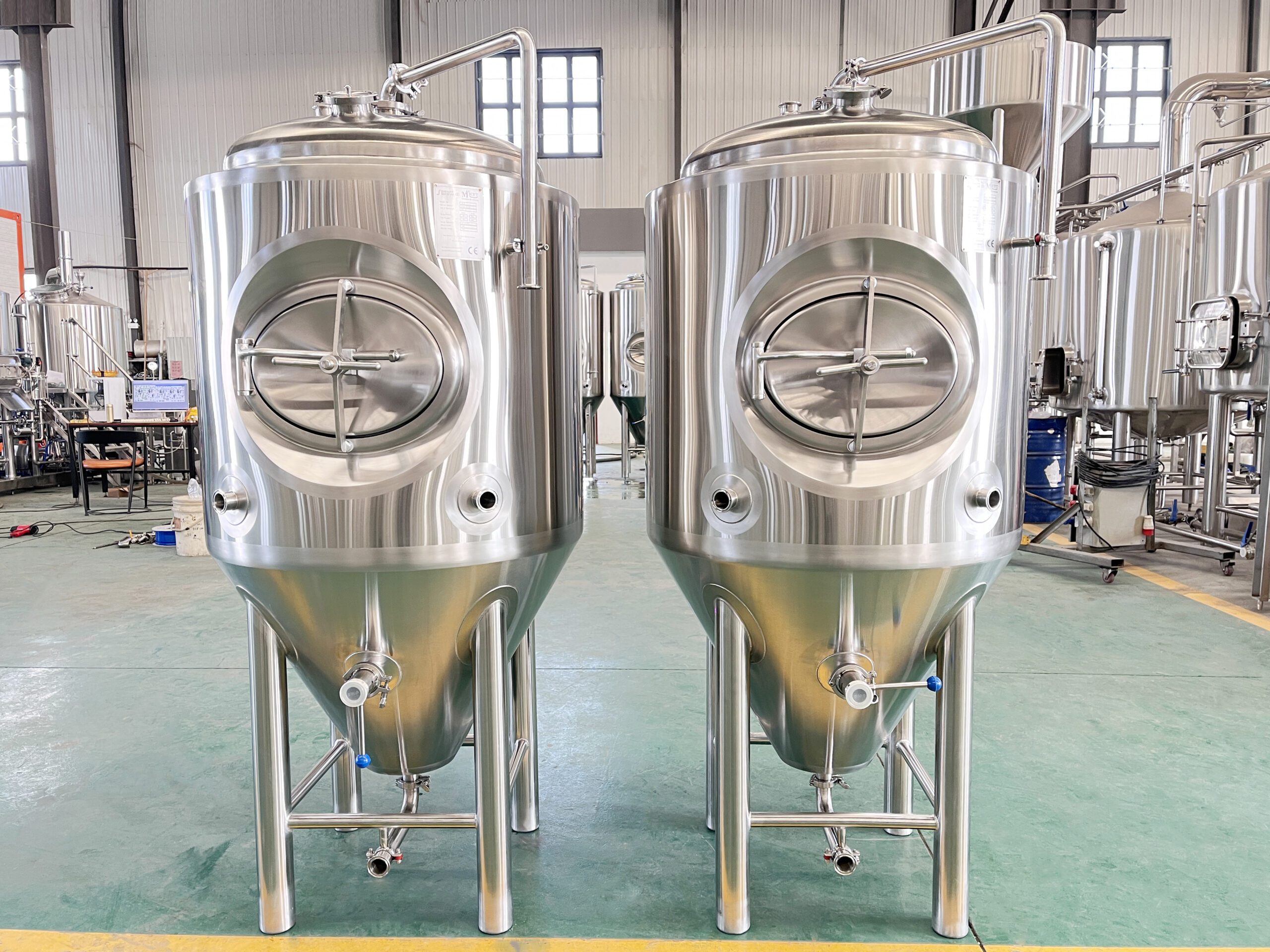
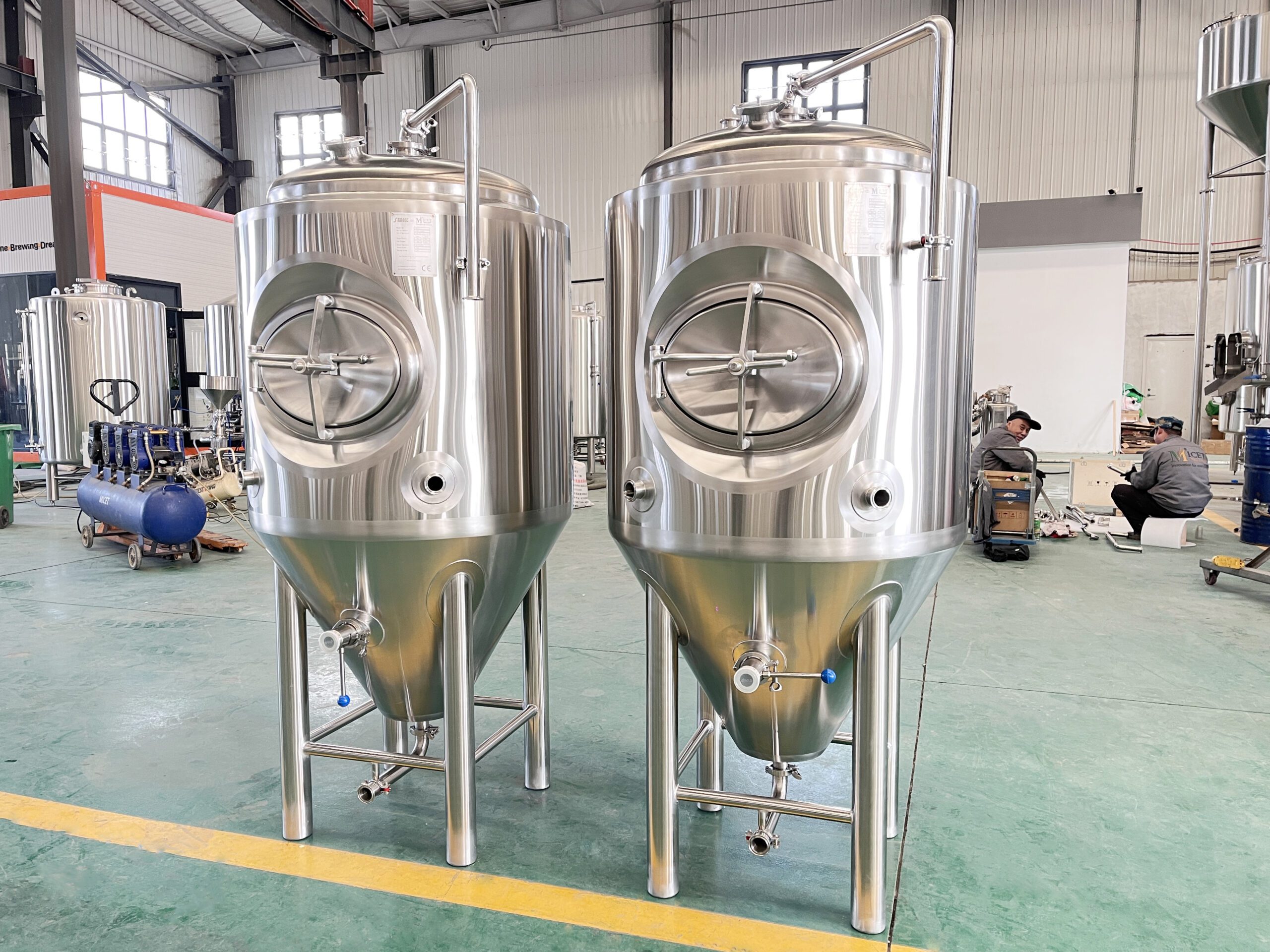
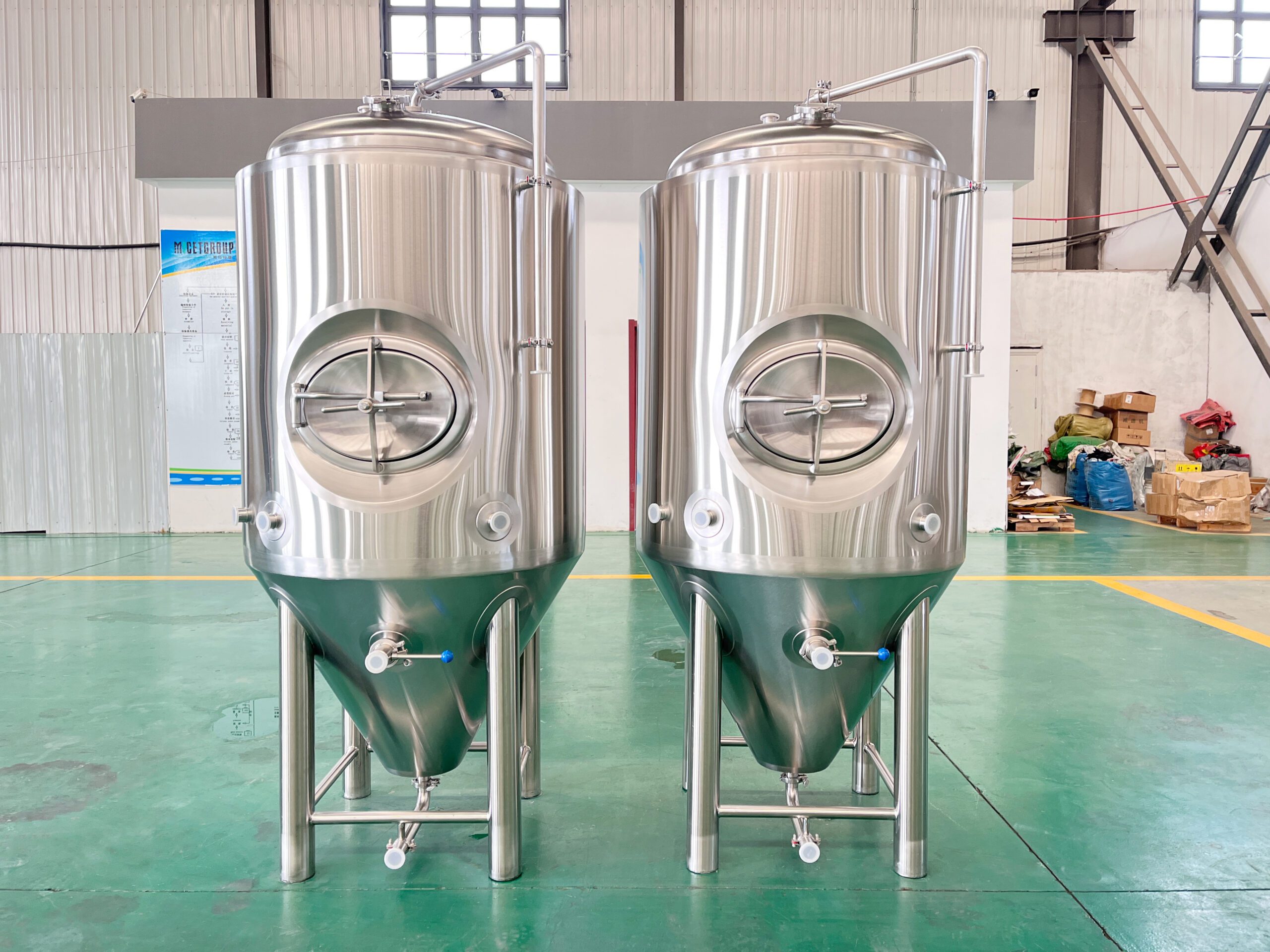
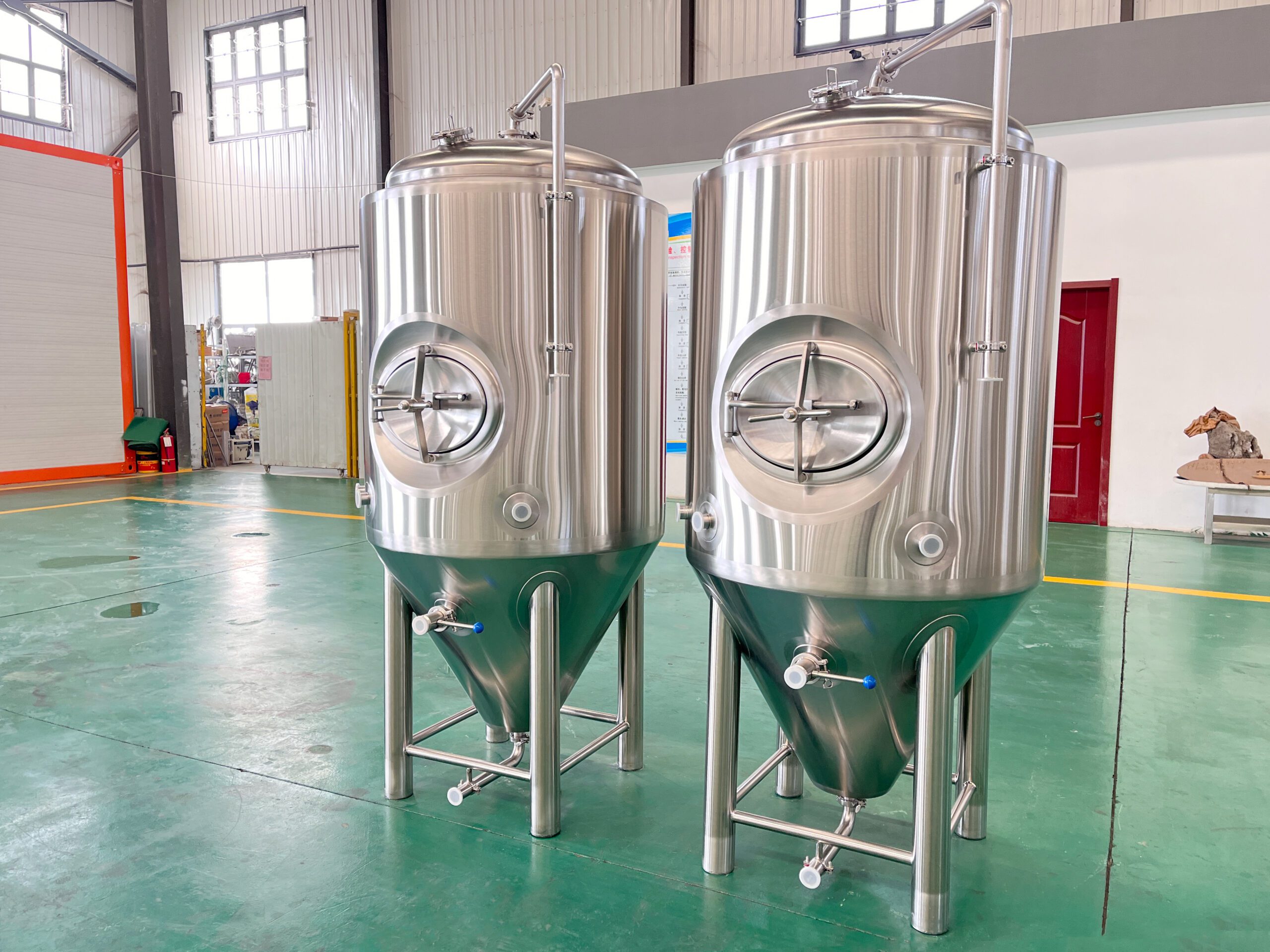
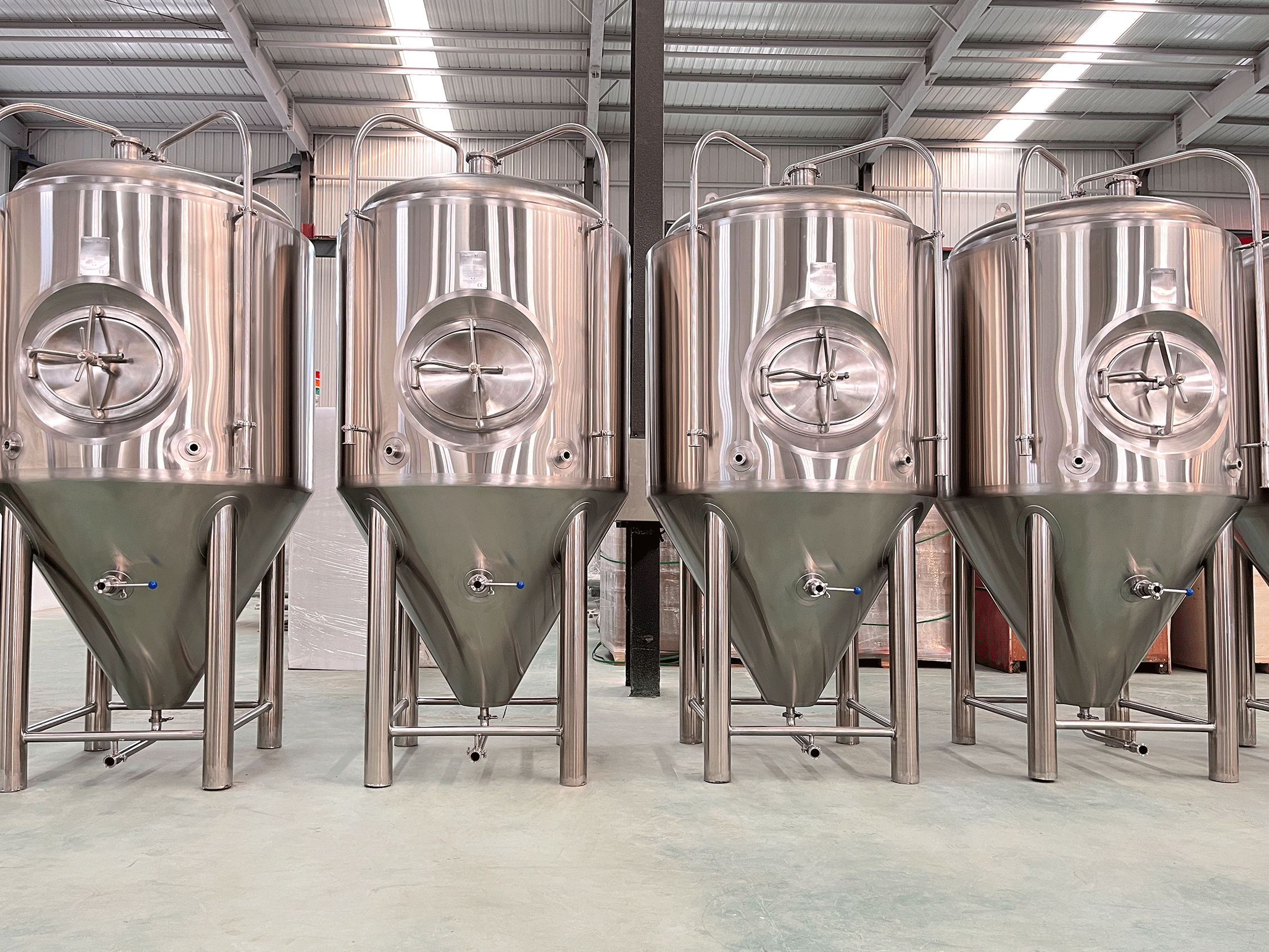
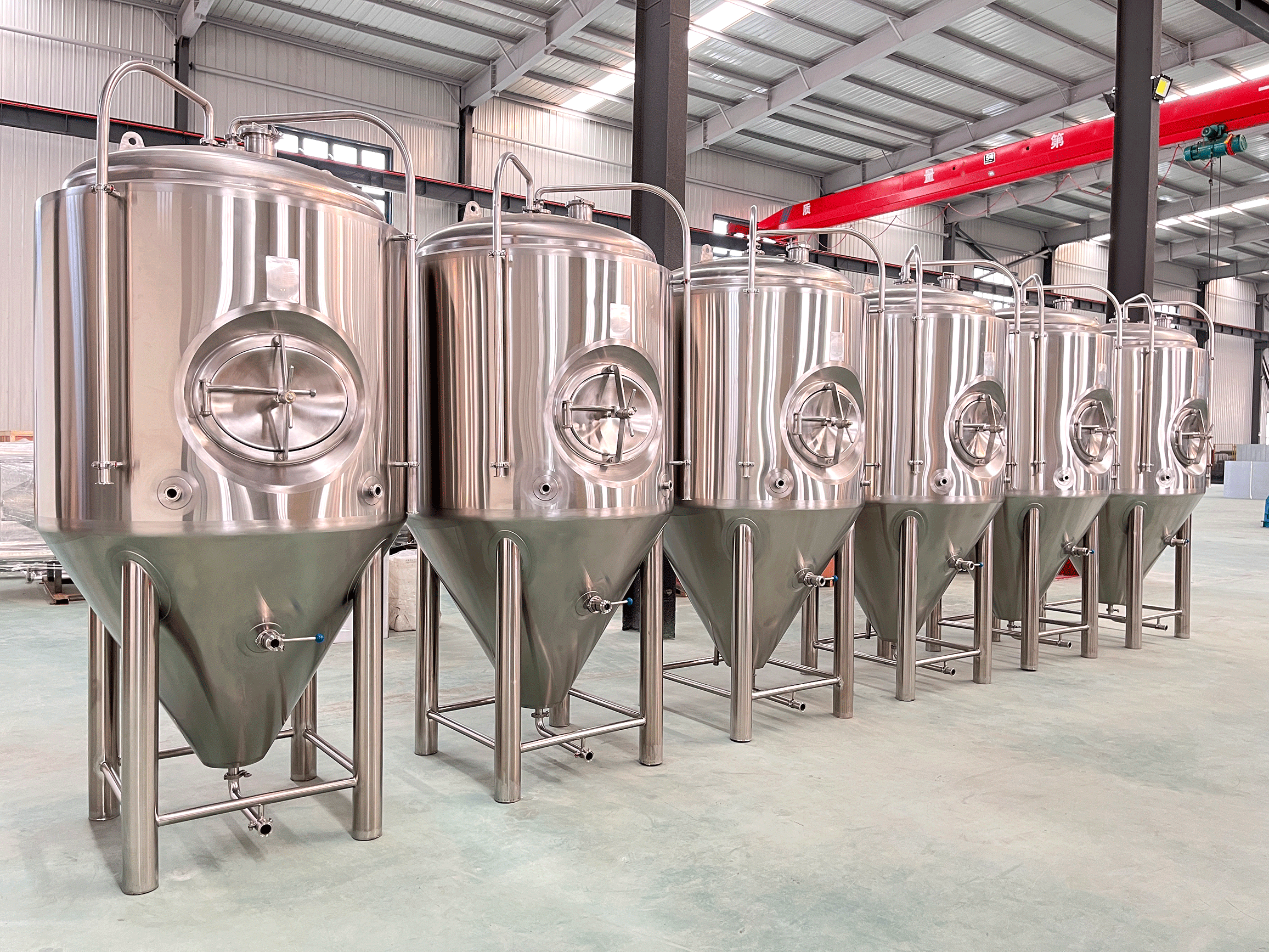
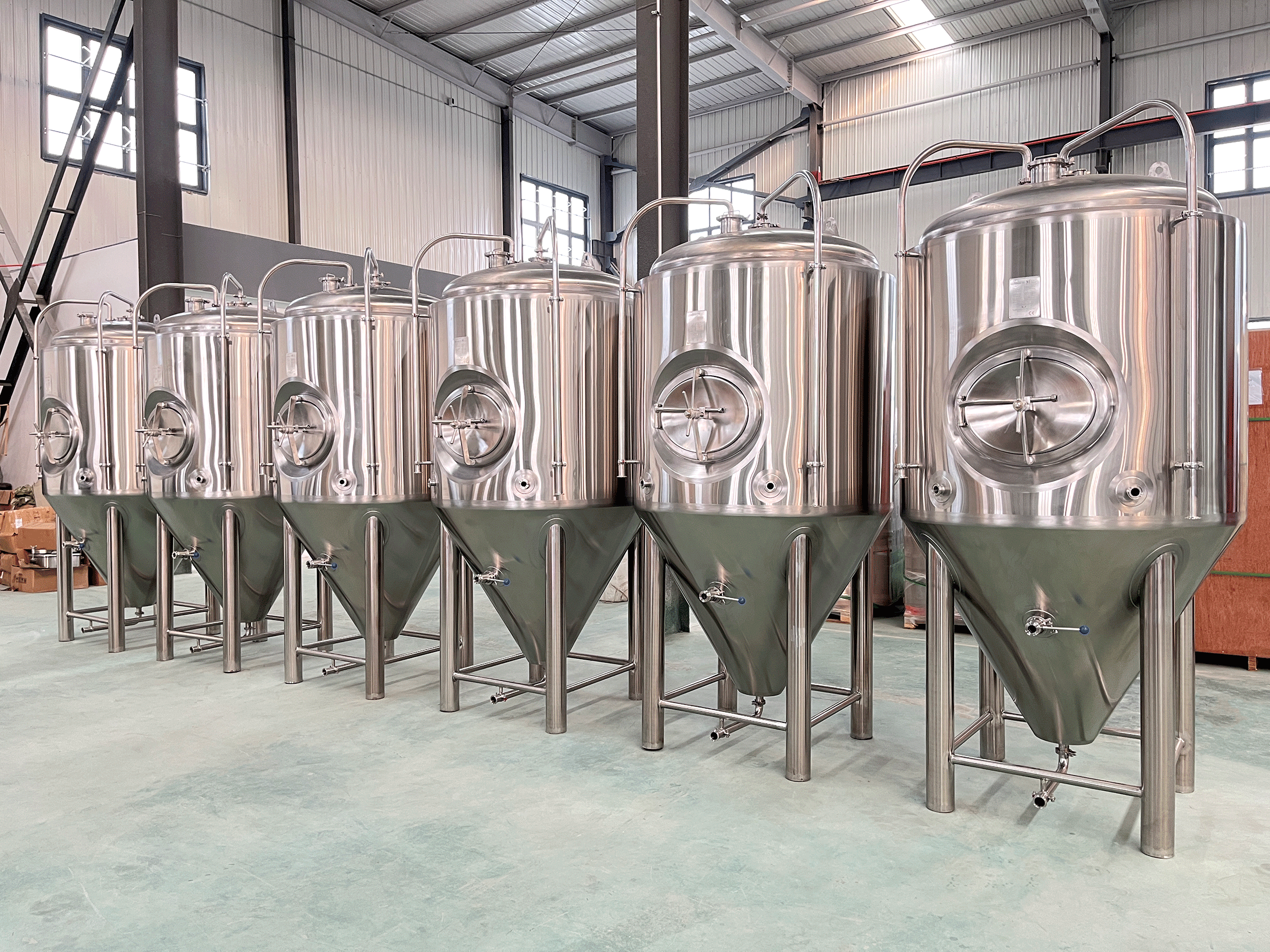
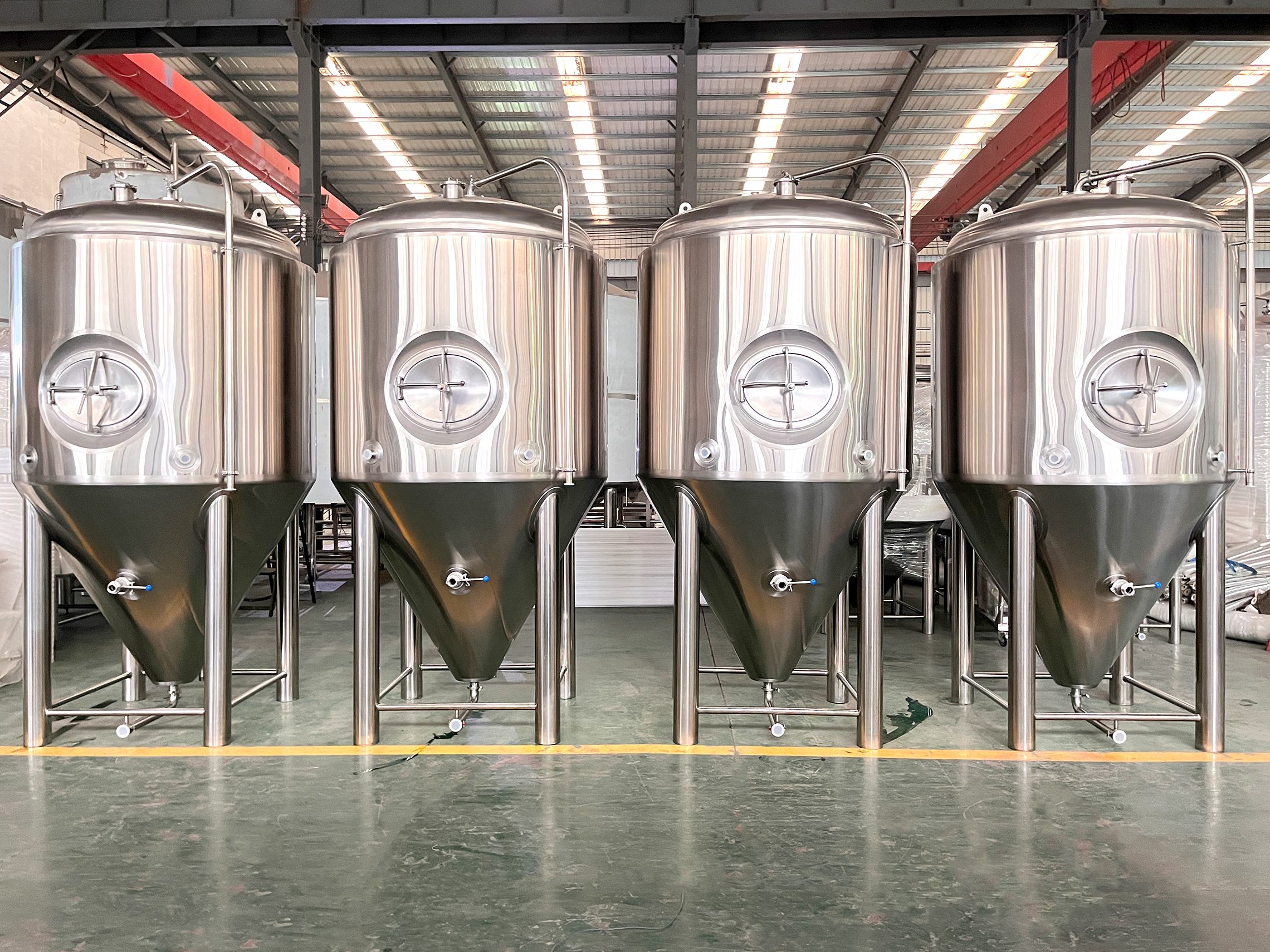
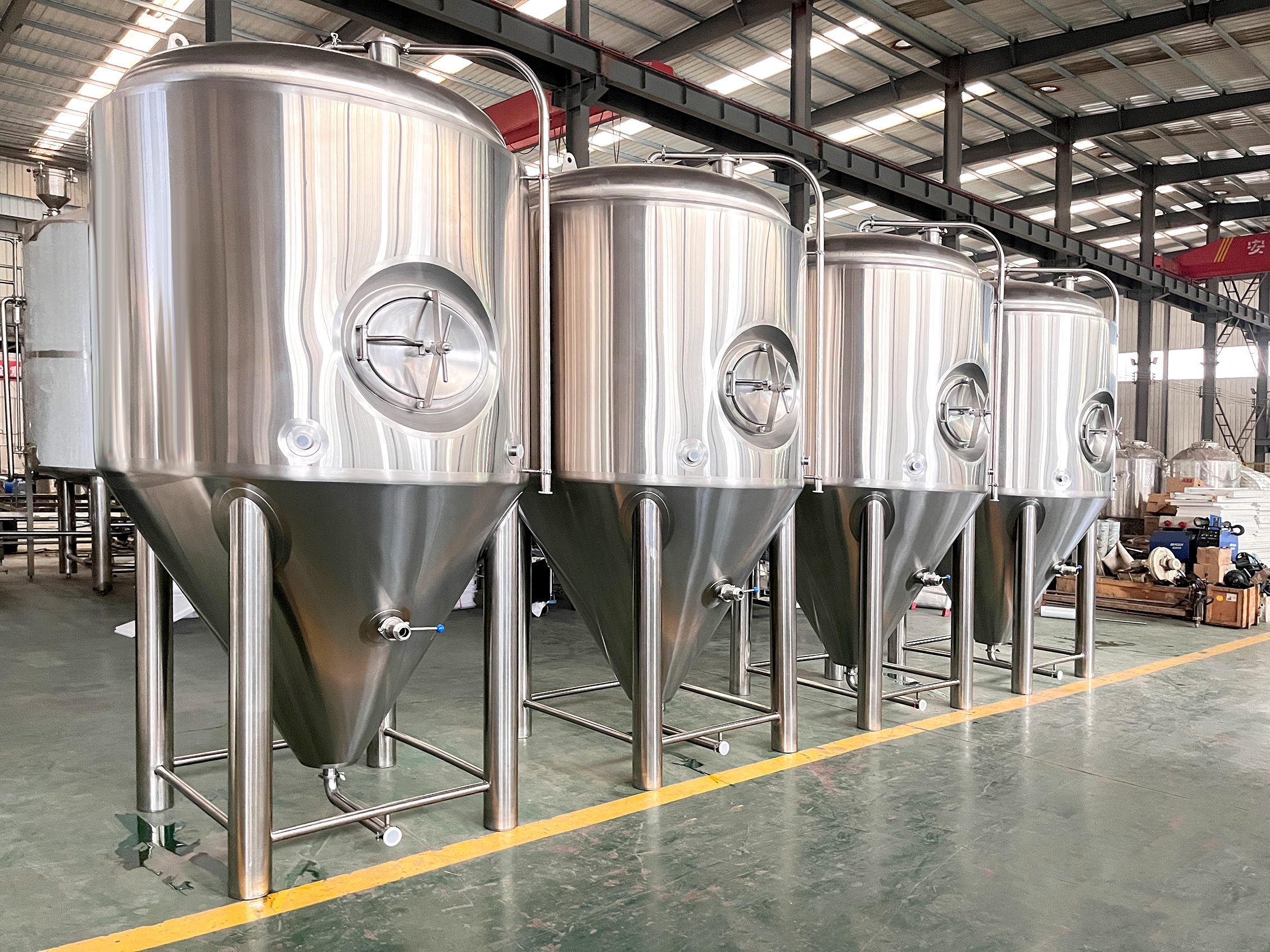
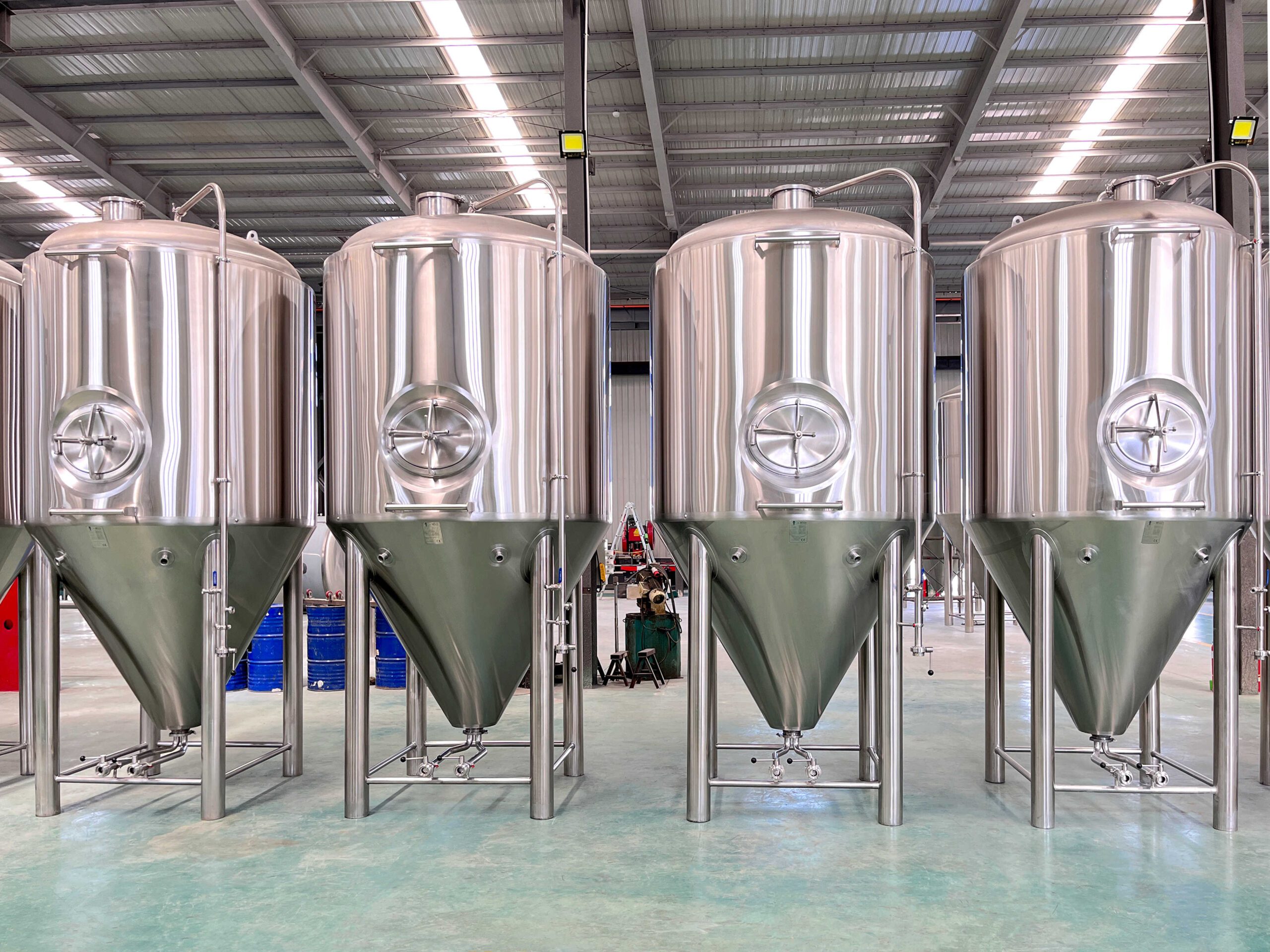
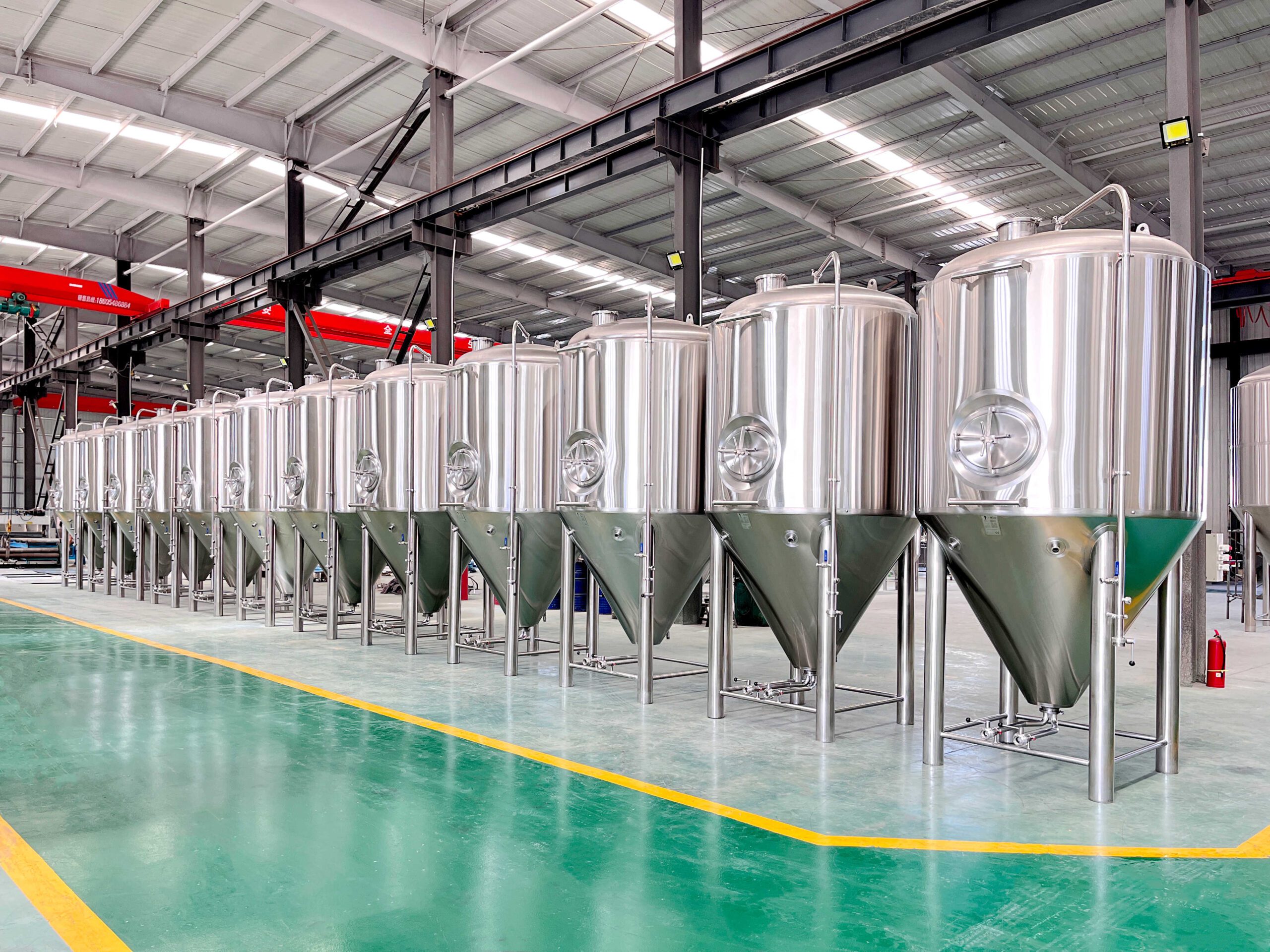
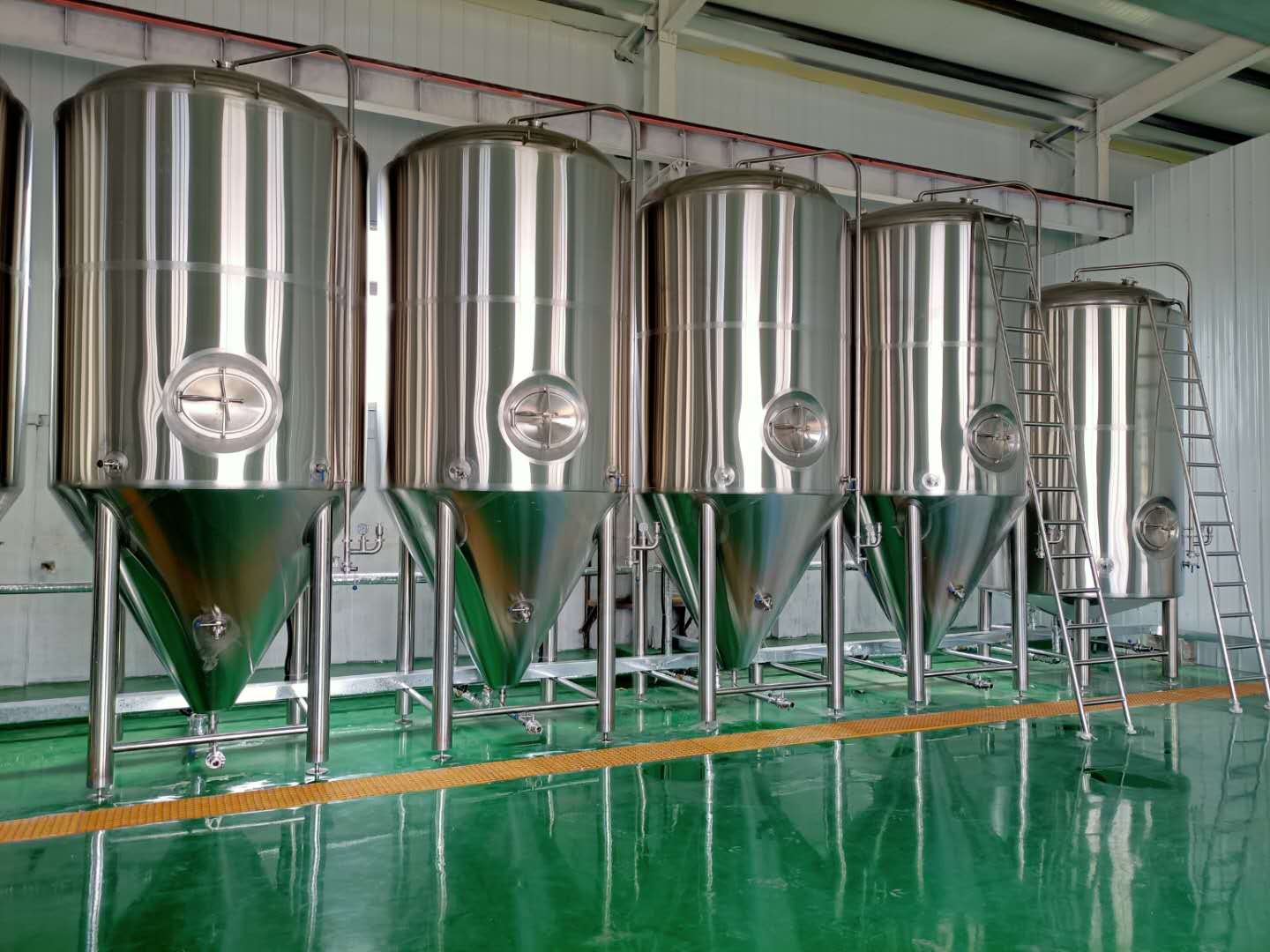
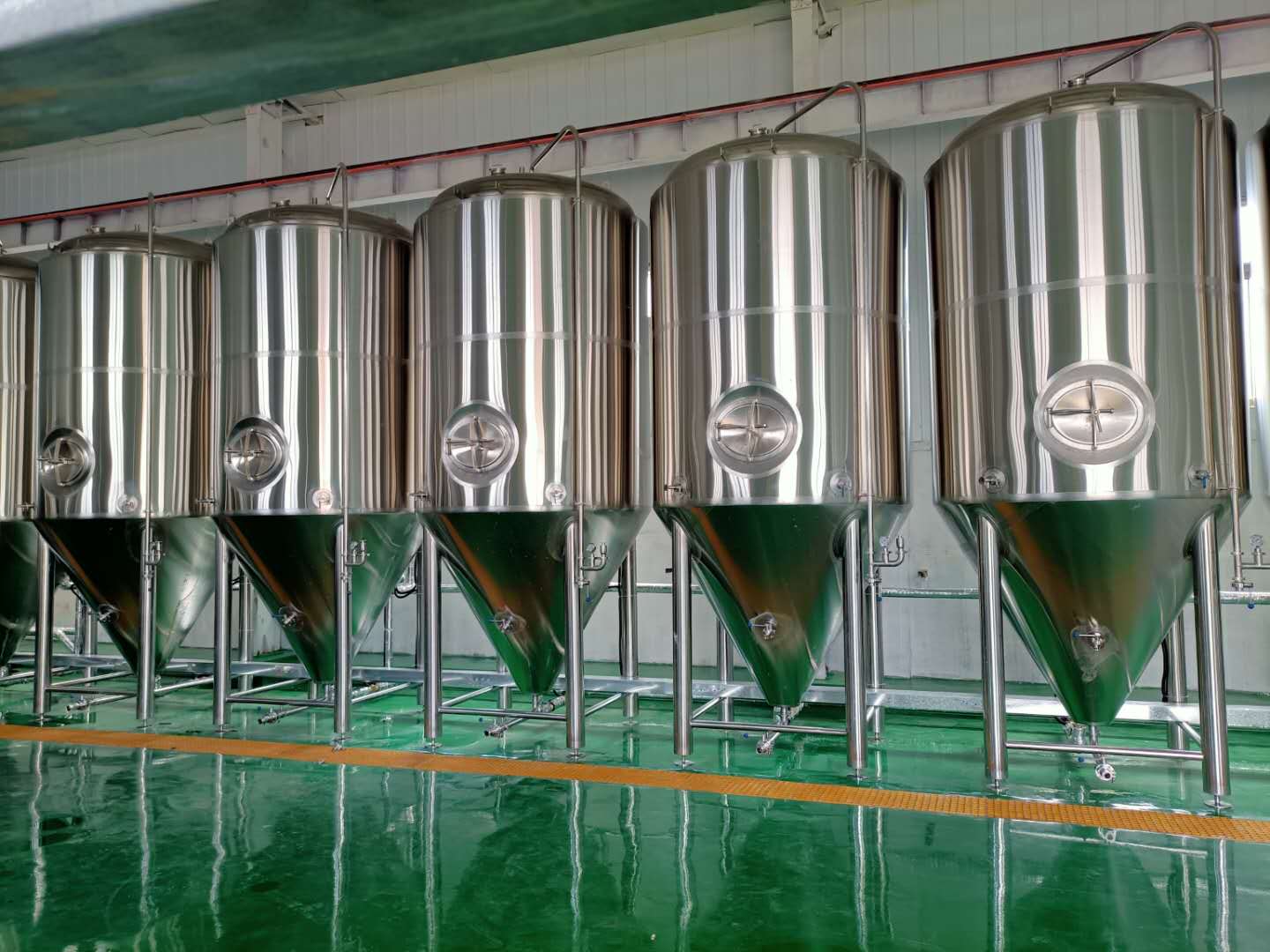
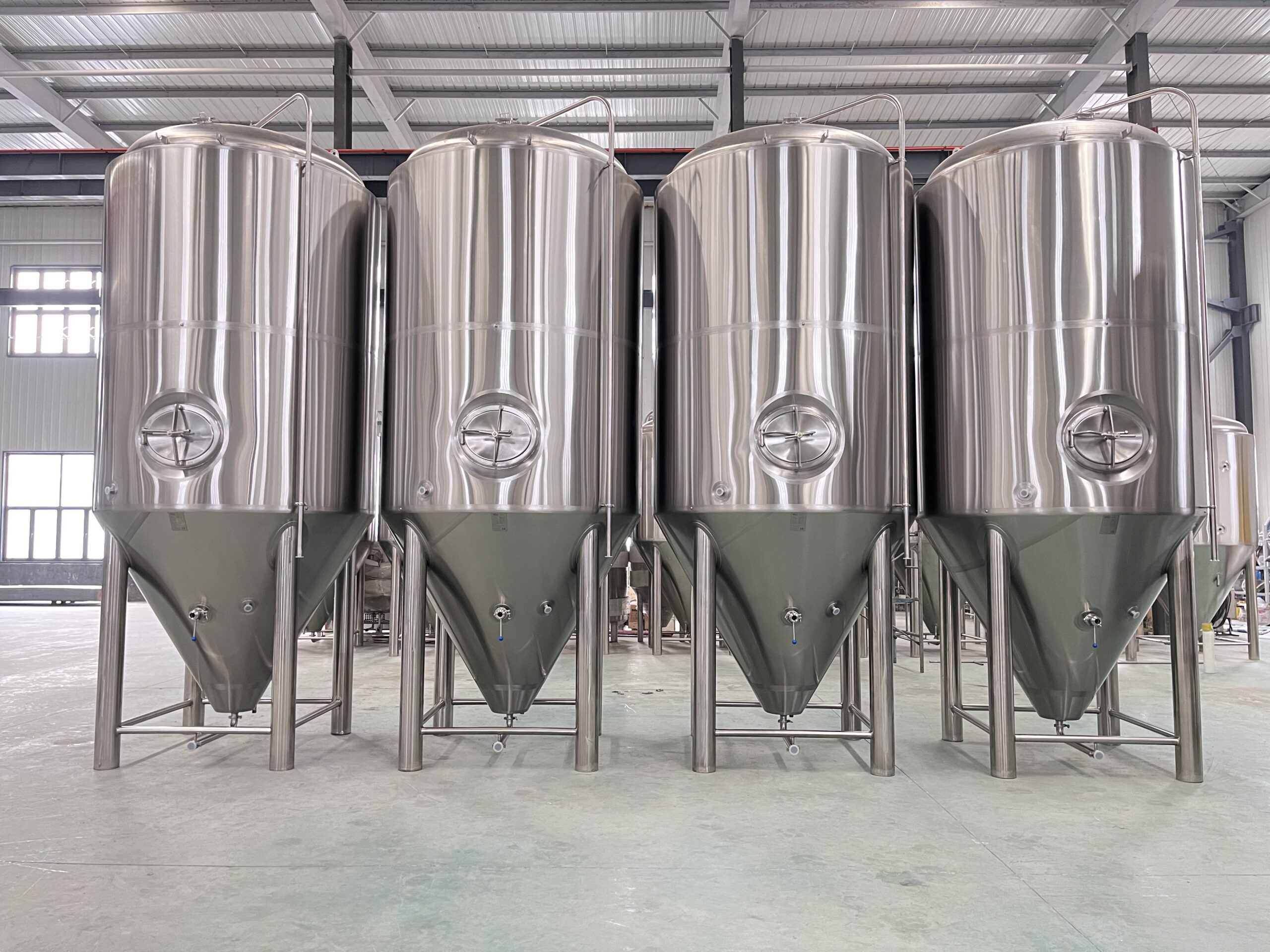
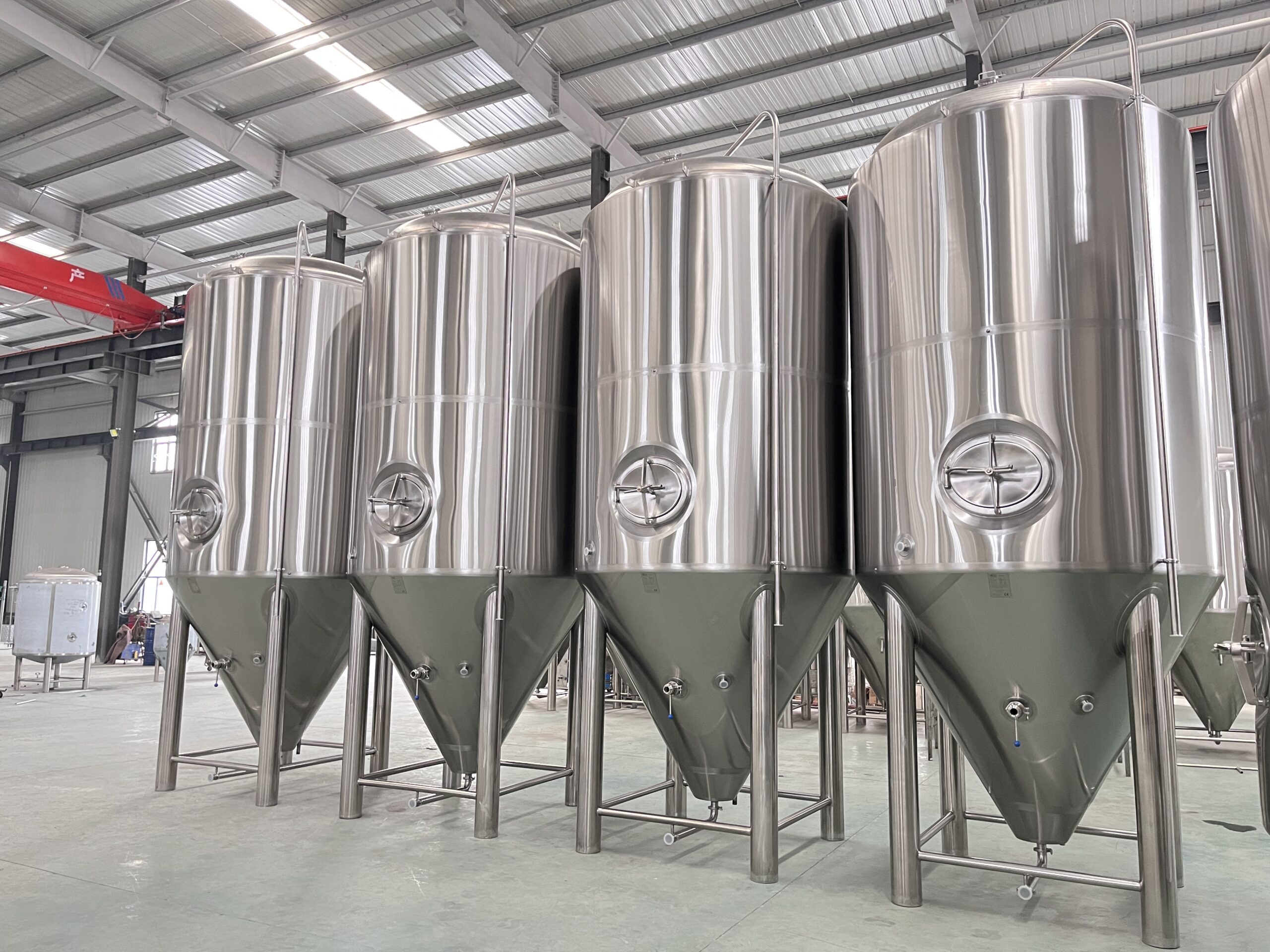
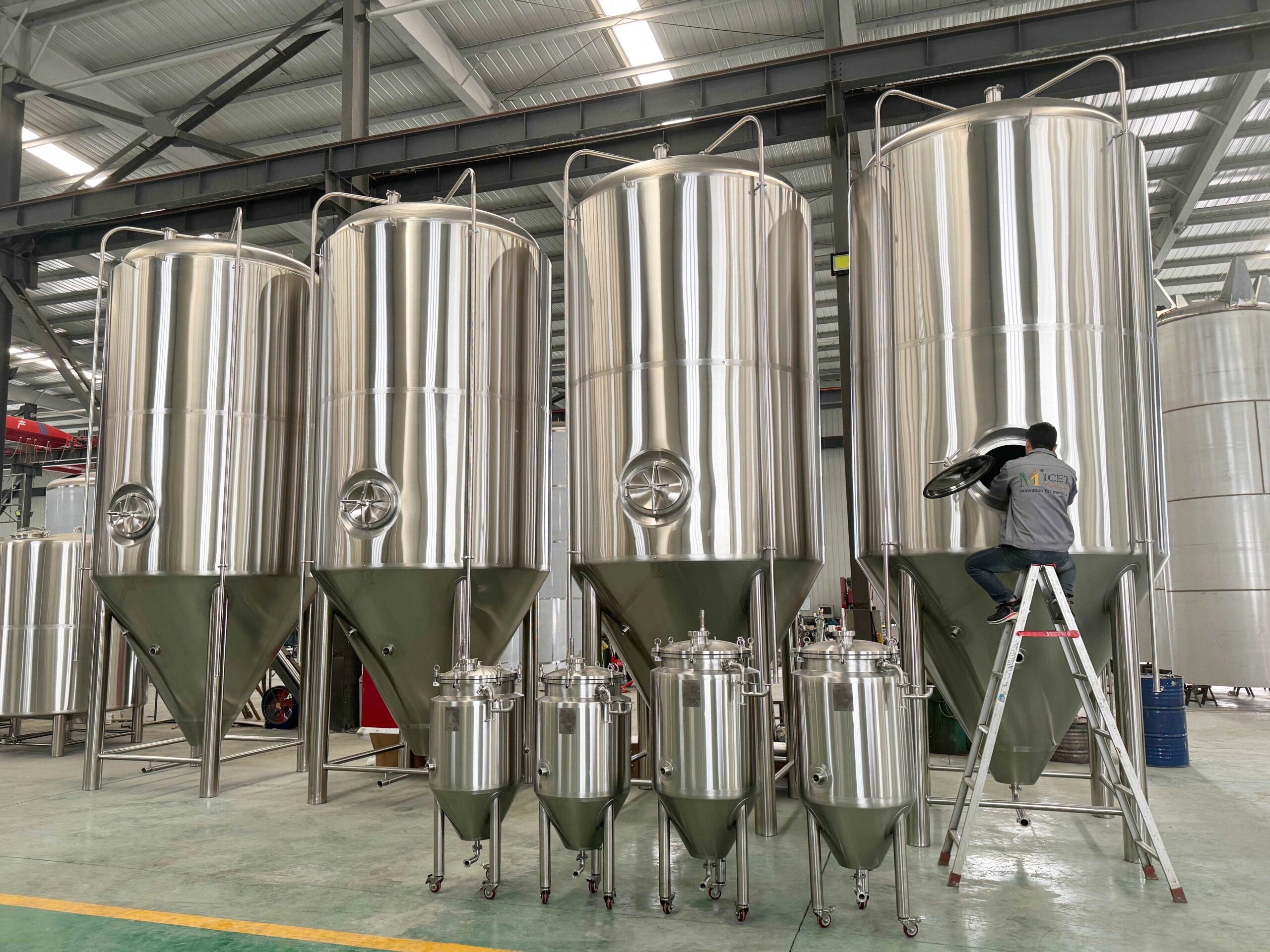
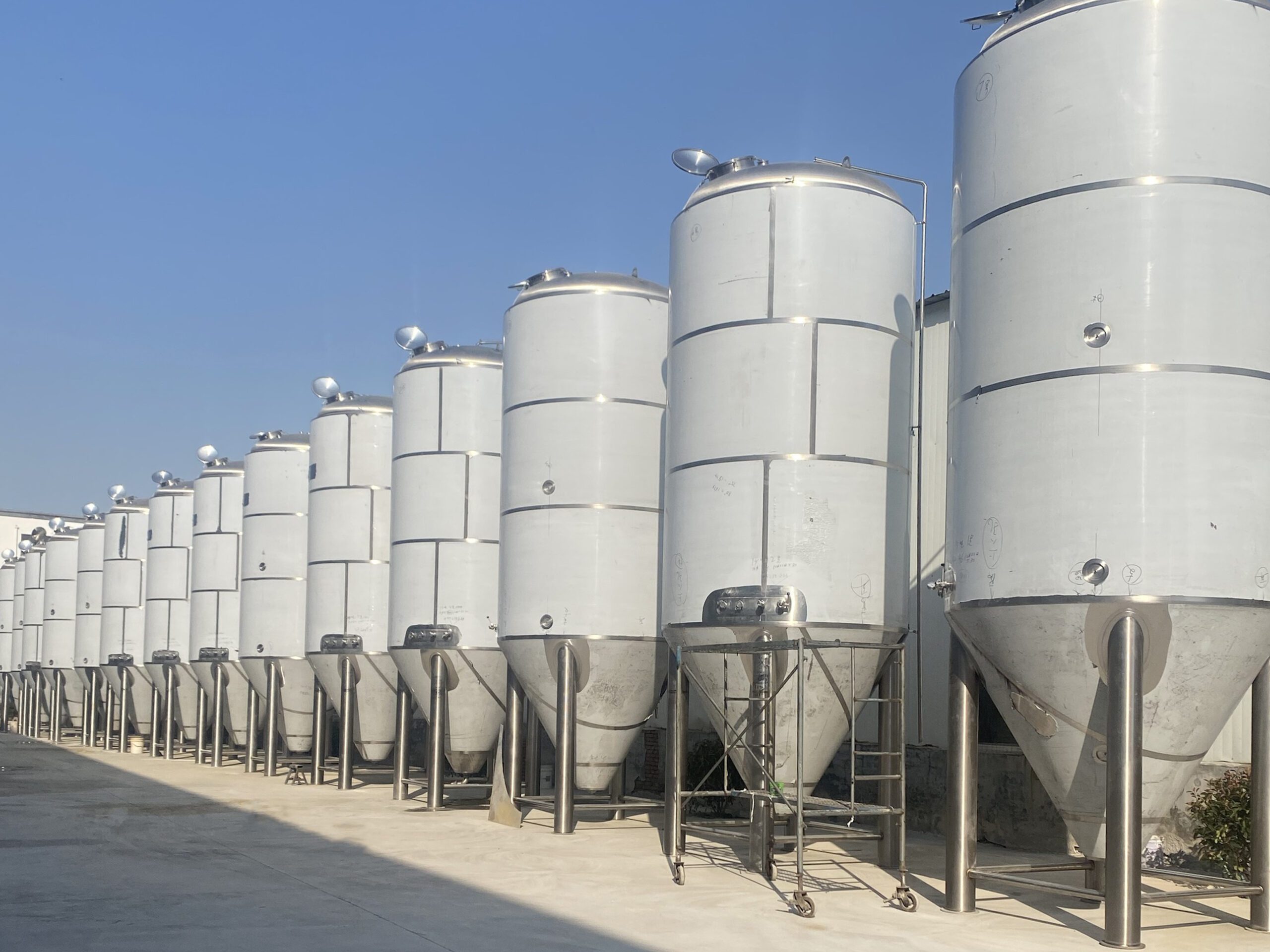
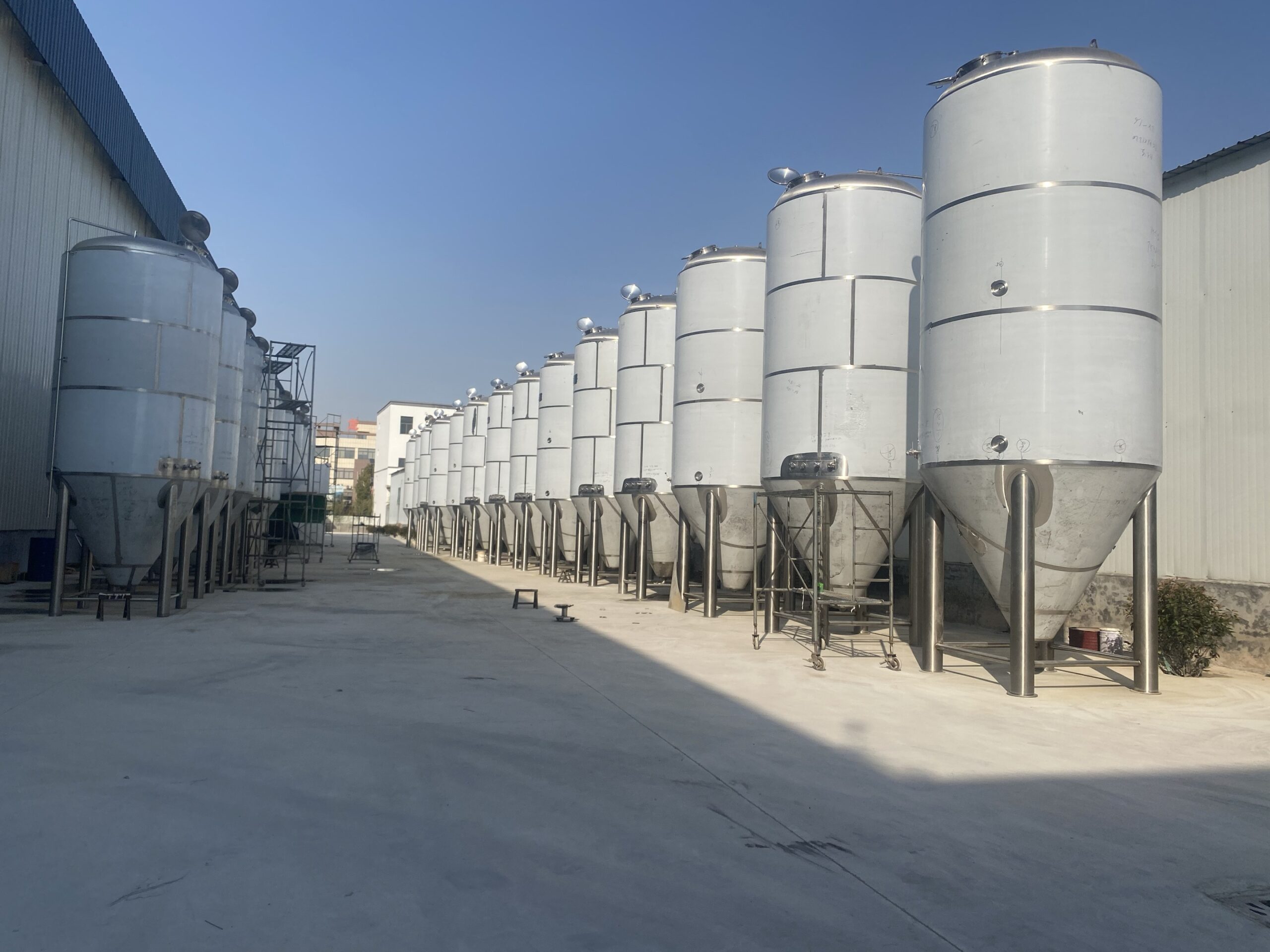
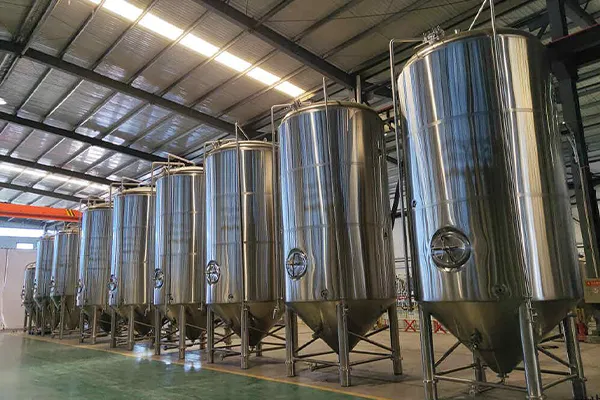
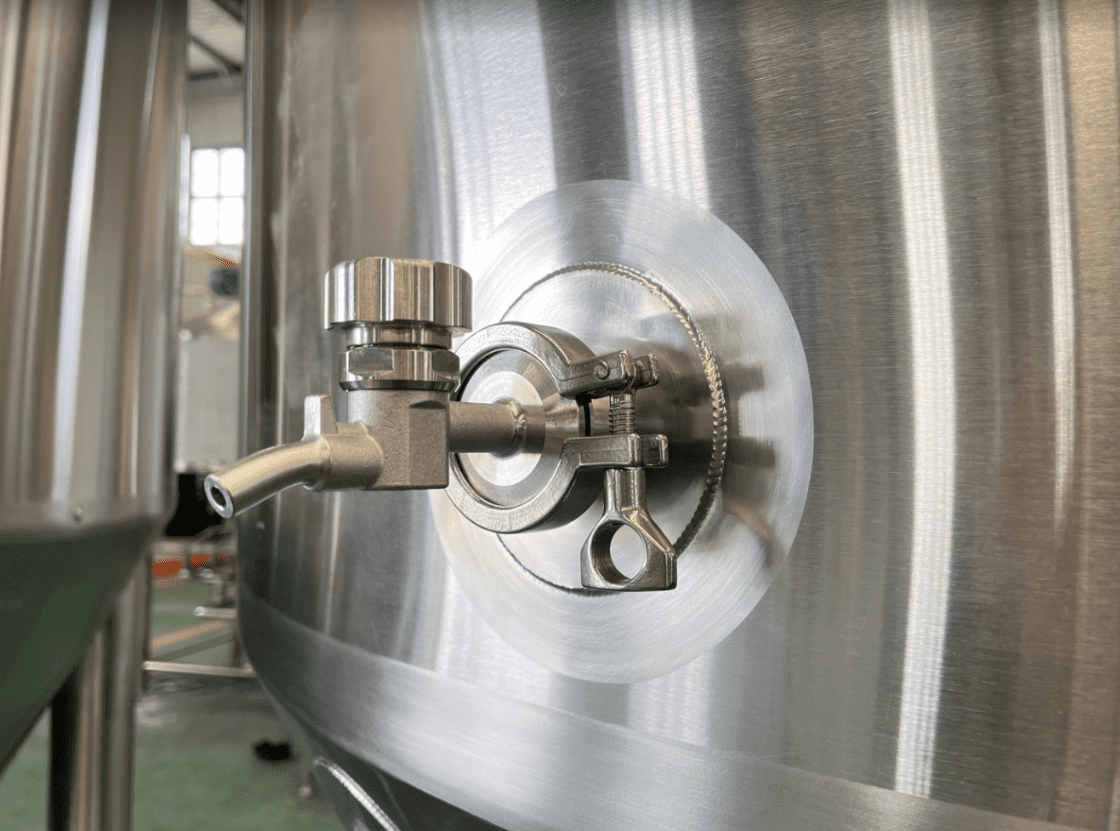
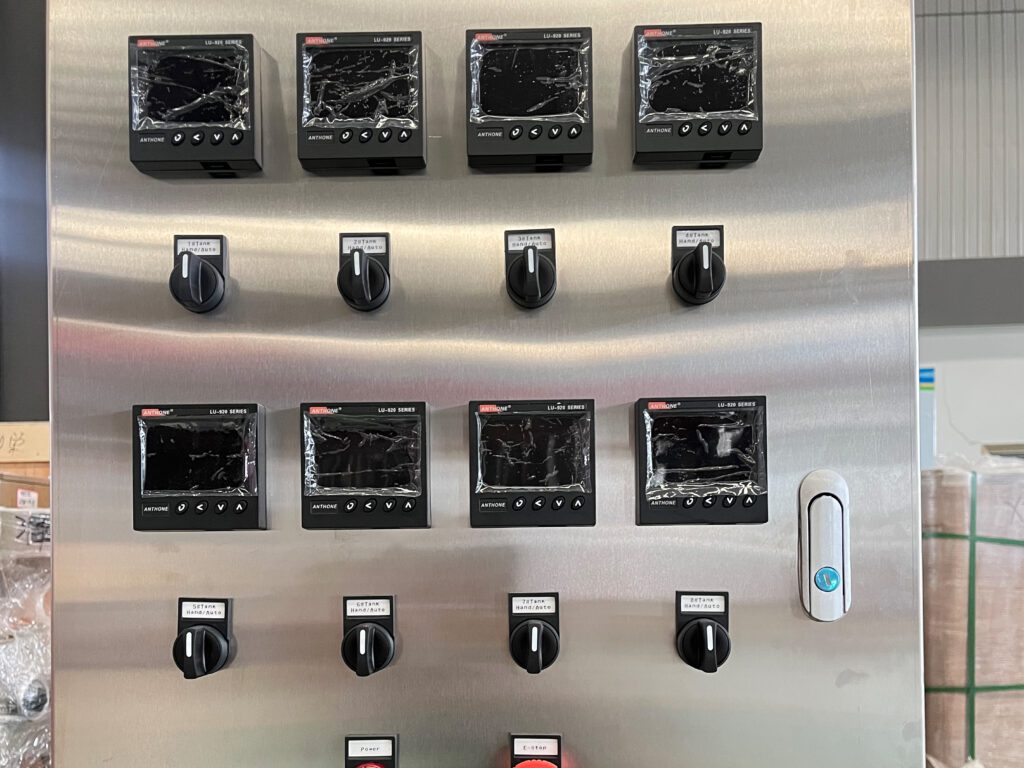
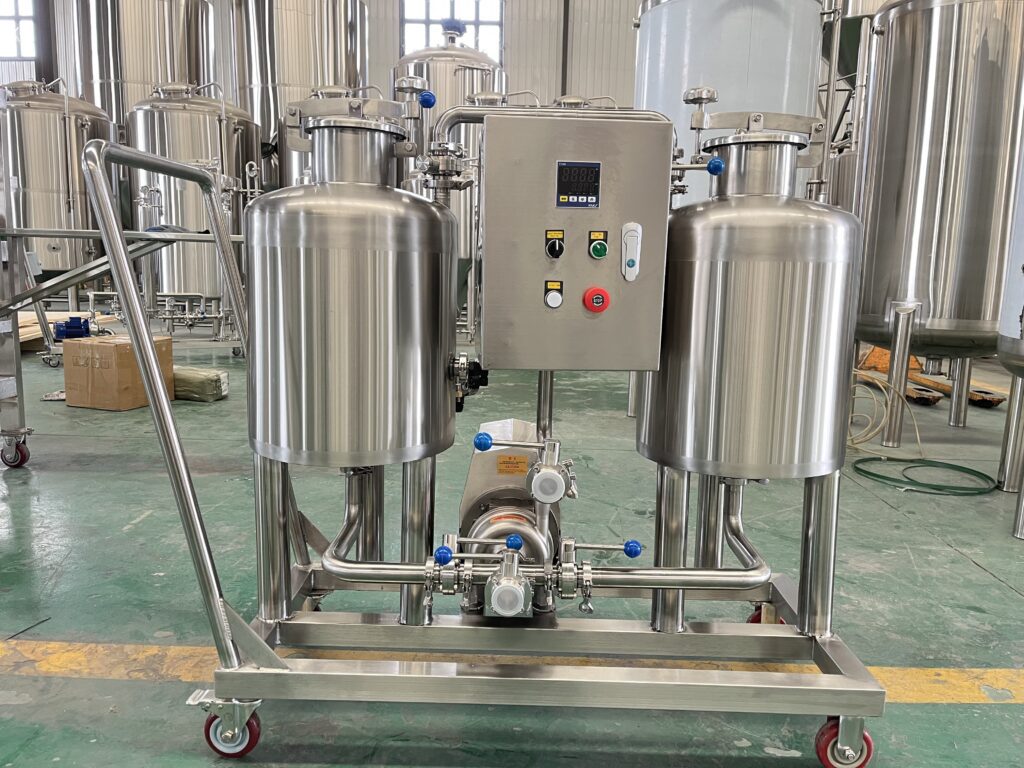
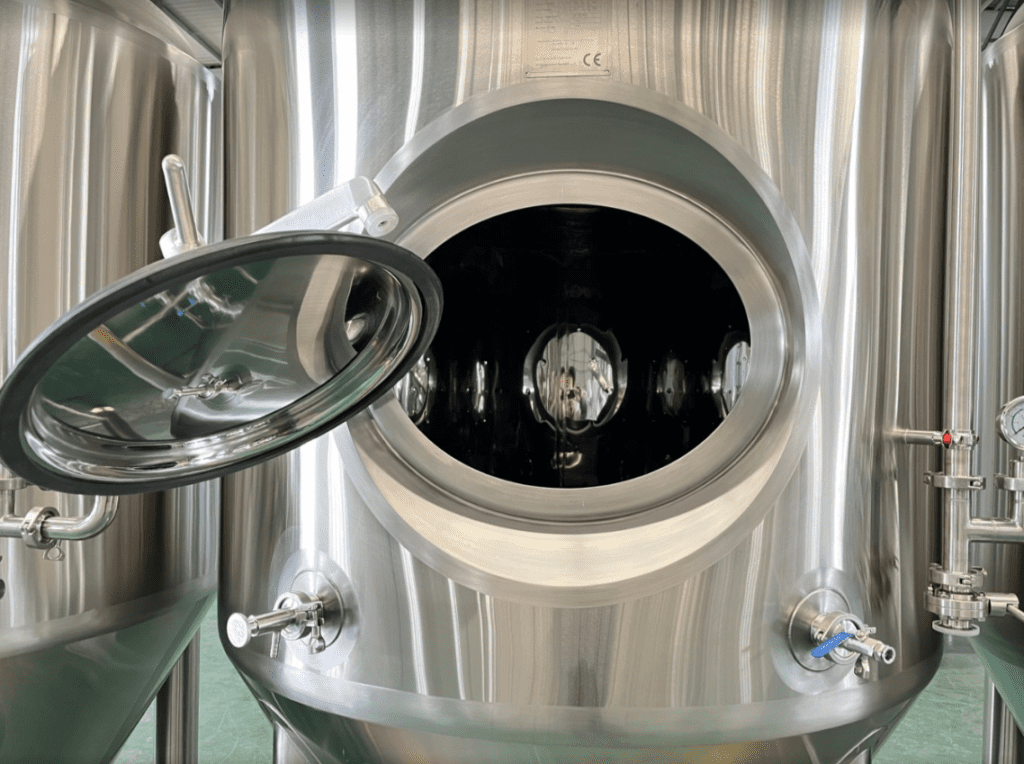
당사의 Fermentation Cellar Projects & On-Site Photos show used fermentation tanks installed in real breweries and beverage plants, so you can see actual layouts, tank rows and piping, and imagine how similar setups can work in your own project.
Cut costs with used fermentation tanks ready for beer, kombucha, cider, wine and beverage plants—capacity matched to your cellar plan.
Pressure-Rated Options – Verified condition for safe carbonation and serving.
Hygiene-Ready – Internal cleaning, passivation and inspection records available.
Fit-to-Layout Customization – Nozzles, outlets and connections adjusted if required.
Fast Export Delivery – Secure packing for overseas transport.
Choose from a wide range of capacities to match your brewhouse size, number of SKUs and production plan.
Compact 300L stainless steel fermentation tank for pilot brewing, test batches or small kombucha / cider lines, pressure-tested and internally cleaned before shipment.
500L used fermentation tank suitable for nano breweries and restaurant breweries, with stainless-steel construction and optional cooling jacket for controlled fermentation.
1000L pre-owned fermentation tank for microbreweries and kombucha producers, supplied with basic fittings and inspected welds, ideal for small commercial production.
2000L used fermentation tank for growing craft breweries, with jacketed cooling and cone or dish bottom options, pressure-tested and ready for integration into your cellar.
2500L second-hand fermentation tank designed for higher-output microbreweries, supporting multiple batches per week and stable temperature control with glycol jackets.
High-capacity 5000L used fermentation tank for regional breweries or central production sites, suitable for beer, cider or other beverages, with tested pressure rating and hygienic internal finish.
이 used 10T fermentation tank package uses MICET’s standard fermentation tank design and combines large-volume used fermenters with refurbished bright beer tanks.
15T fermentation tank package using two 6500L conical fermenters and twelve 3000L fermenters. All tanks are SUS304,insulated, jacketed and refurbished
20T fermentation tank package using two 6500L conical fermenters and twelve 3000L fermenters. All tanks are SUS304,insulated, jacketed and refurbished
SS304 / SS316
Internal surface roughness (e.g. Ra ≤ 0.6–0.8 μm when available)
Internal pickling & passivation
SS304 / SS316
Internal surface roughness (e.g. Ra ≤ 0.6–0.8 μm when available)
Internal pickling & passivation
Manway, CIP spray ball, sampling valve, thermowell, level indicator, inlet/outlet sizes
Tri-clamp / DIN / SMS connections
어떤 중고 양조장 장비 가 제공되면 공장에서 엄격한 리퍼비시 및 품질 관리 프로세스를 거칩니다. 이를 통해 숨겨진 위험을 방지하고 설치 문제를 줄이며 시스템을 최대한 빨리 생산에 투입할 수 있습니다.
In many cases, the best solution is used fermentation tanks or unitanks 와 결합 new glycol chillers, pump skids, manifolds and CIP systems. We refurbish the tank body, jackets and fittings, then engineer new cooling, valves and cleaning loops around them. This keeps your main cellar volume cost-effective, while hygiene, temperature control and maintenance are handled by reliable new equipment.
프로젝트에 대해 알려주시면 저희 엔지니어가 여러분만을 위한 하이브리드 신규 + 중고 솔루션을 설계해 드립니다.
기존 저장고 레이아웃과 공정 설계에 맞게 중고 발효 탱크를 수정할 수 있습니다.
PRV, 샘플링 밸브, 탄산석, 랙 암, 레벨 게이지, 써모웰
온도 센서, 기본 제어 패널, PLC 통합 옵션
CIP 스프레이 볼, CIP 리턴 연결, CIP 세트 통합
노즐 추가/제거, 다리 지지대 변경, 배출구 높이 조정, 사다리 또는 플랫폼 추가
MICET has performed actual installations in more than 100 countries—customized brewery, kombucha, distillery, winery systems, fermentation tanks, and stainless steel tanks.
Explore how we design, manufacture, install, and support turnkey projects from nano to commercial scale.

Nancy Shang | Founder and CEO, MICET | Published September 18, 2026
rewhouse layout — 2-vessel, 3-vessel, or 4-vessel — decides more than brew day speed: it sets your floor footprint, batch cycle time, and how easily you can add capacity later. MICET’s published used brewhouse package covers a 3-vessel configuration from 2–10 BBL. Here’s how vessel count actually changes cost and expansion.

| 2-Vessel | 3-Vessel | 4-Vessel | |
| Typical role | Mash/lauter combined + kettle/whirlpool combined | Separate mash tun, kettle, and HLT (or separate lauter) | Separate mash tun, lauter tun, kettle, and whirlpool |
| Common capacity range | Nano to small pilot systems | Nano through mid-size craft (MICET’s used package: 2–10 BBL) | Mid-size craft through larger production |
| Floor footprint | Smallest — fewer tanks, fewer connections | Moderate | Largest — one more vessel plus associated piping |
| Batch cycle time signal | Slower per batch, since one vessel does double duty (mash/lauter, then cleaned for kettle/whirlpool) | Faster than 2-vessel, since mash and boil steps don’t compete for the same tank | Fastest cycle time of the three, since whirlpool separation frees the kettle sooner |
| Best fit for | Startups minimizing capex and footprint over throughput | Craft breweries balancing footprint against production speed | Breweries running hop-heavy recipes or targeting higher batch frequency |
A 2-vessel brewhouse combines mash and lauter functions in one tank and boil/whirlpool functions in a second. It’s the layout most nano and pilot operations start with, because it needs the least floor space and the fewest connections to plumb and maintain.
The tradeoff shows up on brew day, not on the price tag. Since the same vessel handles two sequential steps, that tank has to be cleaned and reset between mash-out and boil, which stretches total brew day length compared to a layout where those functions run in parallel-capable, dedicated vessels. For a brewer running one or two batches a week, that added cycle time rarely matters. For a brewery pushing toward daily batches, it becomes the bottleneck.
MICET’s published 중고 양조장 장비 line is a 2–10 BBL compact brewhouse configuration built around a mash tun, kettle, and hot liquor tank (HLT) as a set — a 3-vessel arrangement — with pumps, a heat exchanger, and a control panel included in the package.
Splitting mash and kettle functions into separate vessels means mash-out on one tank doesn’t hold up the boil on another; the HLT keeps hot water staged and ready rather than competing for space with the mash process. That’s the main reason 3-vessel layouts dominate the craft segment between nano and mid-size production — the footprint increase over a 2-vessel system is real, but modest compared to the cycle-time gain.
What MICET’s current used inventory listing doesn’t itemize is a separate lauter tun as a fourth vessel option within this package — the published configuration is fixed at mash tun, kettle, and HLT. A brewery wanting a dedicated lauter tun on top of this base package should confirm whether that’s available as an add-on or requires a different configuration entirely.

A 4-vessel layout adds a dedicated whirlpool to the mash tun, lauter tun, and kettle. The whirlpool’s job is separating hop and protein trub from the wort after the boil, and running it as its own vessel means the kettle empties and resets faster than it would if whirlpooling happened inside the kettle itself.
That speed advantage matters most for hop-heavy styles — IPAs and other recipes with large late-addition hop charges generate more trub, and a combined kettle/whirlpool vessel takes longer to settle and clear between batches. For a brewery running a hop-forward lineup at higher batch frequency, the extra vessel and floor space typically pay for themselves in throughput. For a brewery with a lighter, less hop-intensive recipe book, the fourth vessel adds cost and footprint without a matching return.
Vessel count answers the “how many tanks” question, but two brewhouses with the same vessel count can still need very different rooms. Ceiling height matters as much as floor space, since kettles and whirlpools need clearance above them for venting and access, and a gravity-fed layout (where wort moves downward between vessels via height difference rather than pumps alone) needs more vertical clearance than a fully pumped system running on one level.
A brewery converting a retail storefront or existing warehouse bay often has a fixed ceiling height before vessel count ever enters the conversation. In that scenario, the ceiling constraint can rule out a gravity-fed 3- or 4-vessel layout regardless of how much floor space is available, pushing the decision toward a pumped configuration instead.
| Tier | Published Price Range | What It Includes |
| Microbrewery equipment | 30,000–80,000 USD | System-level bundle; vessel count not broken out separately |
| Commercial brewery equipment (10 BBL minimum) | 50,000–80,000 USD | System-level bundle; vessel count not broken out separately |
| Fermentation, packaging, and other add-on equipment | Not published | Quote required |
Both published ranges are bundle-level figures, not per-vessel breakdowns. That means the price difference between a 2-vessel and a 3-vessel system at the same capacity isn’t separated out in MICET’s available pricing material — a brewery comparing layouts on cost needs to request quotes for each specific configuration rather than assuming a fixed dollar-per-vessel increment applies across the published range.
A common assumption is that adding vessels increases batch size. It doesn’t — vessel count changes cycle time and workflow, not the volume of a single batch. A 4-vessel 10 BBL system still produces 10 BBL per batch, the same as a 2-vessel 10 BBL system. What changes is how many batches that brewhouse can realistically run in a week, since separating functions into dedicated vessels reduces the downtime between batches.
Breweries chasing higher output sometimes add vessels expecting bigger batches and end up with the same batch size run more frequently instead. That’s not a bad outcome if throughput was the actual goal, but it’s worth naming the difference before committing capex to a layout change.

A brewery starting on a 2-vessel system can generally retrofit toward a 3-vessel layout later by adding a dedicated kettle or HLT, provided the original room has space and utility connections for it. Going from 3-vessel to 4-vessel by adding a whirlpool is usually a smaller retrofit, since it typically fits into existing piping runs more easily than a full mash/lauter split does.
The harder retrofit is capacity, not vessel count — swapping a 5 BBL mash tun for a 10 BBL one usually means replumbing connections sized for the smaller vessel, not just dropping in a bigger tank. Breweries planning to double capacity within a few years often find it cheaper to start with larger vessels running under-filled than to retrofit capacity later, even though the upfront footprint and price are higher.
MICET holds a PED Verification (certificate 3N231110.SICS093, issued by Ente Certificazione Macchine Srl, valid through November 9, 2028) covering brewing equipment, beer equipment, brewery equipment, and pressure vessels under the EU’s Pressure Equipment Directive 2014/68/EU, tested to EN 1626:2008. That verification sits at the organization and product-line level. On the used brewhouse product page specifically, certification is referenced only generically as “ASME/CE” craftsmanship, without a registration number or issuing body — buyers who need documentation for their own jurisdiction should request the specific unit’s paperwork before purchase rather than relying on the general reference.
A: No. Vessel count affects cycle time and workflow speed, not the volume of a single batch. A 10 BBL system produces 10 BBL per batch whether it’s a 2-vessel or 4-vessel layout — more vessels mean the brewhouse can typically run more batches per week, not bigger ones.
A: The published 2–10 BBL used brewery equipment package is a 3-vessel configuration — mash tun, kettle, and hot liquor tank — with pumps, a heat exchanger, and a control panel included.
A: It depends on the recipe lineup and target batch frequency. Hop-heavy styles with significant trub load and breweries targeting higher batch frequency tend to see the clearest return on a dedicated whirlpool. A lighter, less hop-intensive lineup often doesn’t need it.
A: MICET’s PED Verification (3N231110.SICS093) covers brewing and pressure vessel equipment at the organization and product-line level. The used brewhouse product page itself references certification only generically as “ASME/CE” without a specific registration number, so individual-unit documentation should be confirmed directly before purchase.

A nearly new 1000L three-vessel craft beer brewing system, manufactured in 2025, is now available for sale. This complete used brewery equipment package features a three-vessel brewhouse, 11 fermentation tanks, a dedicated cooling system, water treatment equipment, and essential brewing accessories.
With a high level of automation and a comprehensive configuration, this system is suitable for craft breweries, brewpubs, restaurants, and commercial beer production projects looking for a complete 1000L brewing solution.

The brewhouse is designed with a three-vessel configuration and equipped with glass viewing manways on all three vessels, allowing operators to observe the brewing process more conveniently.
The mashing system features automatic step-temperature control, supporting programmed temperature increases during different mashing stages. This helps improve process consistency and operational convenience.
The lauter tun is equipped with an automatic raking and spent-grain discharge system, reducing manual handling during lautering. An 8 m² plate heat exchanger, hop filter, and yeast addition tank are also included to support the subsequent wort cooling and yeast pitching processes.
| 항목 | 사양 |
|---|---|
| 장비 유형 | Used 1000L Three-Vessel Brewery System |
| Brewhouse Configuration | Three-Vessel System |
| Viewing Manways | Glass Viewing Manways on All Three Vessels |
| Mashing Control | Automatic Step Temperature Ramping |
| Lauter Tun | Raking System with Automatic Spent-Grain Discharge |
| 판형 열교환기 | 8 m² |
| Hop System | 홉 필터 |
| Yeast System | Yeast Addition Tank |
| 제어 캐비닛 | Floor-Standing Stainless Steel PLC Control Cabinet |
| Variable Frequency Drives | 3 Units |

The fermentation section includes 11 units of 1000L stainless steel fermentation tanks with top manways. This configuration provides sufficient fermentation capacity for multi-batch production and flexible scheduling of different beer varieties.
Each fermenter is equipped with a dry-hopping port and a water-seal valve, supporting dry-hopping operations and related craft brewing processes. The top manway design also facilitates inspection, cleaning, and routine maintenance.
To support wort cooling and fermentation temperature management, the system includes a 2500L ice water tank and a 10 HP Maigebeit cooling unit. These components provide cooling support for the brewing and fermentation stages.
The package also includes a 1000L raw water tank, a 1000L purified water tank, and a 1T/h water treatment system. Together, these components provide a practical water storage and treatment solution for brewing operations.
|
항목 |
사양 |
|---|---|
|
발효 탱크 |
1000L Top-Manway Fermenters |
|
Fermenter Quantity |
11 Units |
|
Fermenter Accessories |
Dry-Hopping Port and Water-Seal Valve |
|
Ice Water Tank |
2500L |
|
Cooling Unit |
10 HP Maigebeit |
|
원수 탱크 |
1000L |
|
Purified Water Tank |
1000L |
|
Water Treatment Capacity |
1T/h |

In addition to the main brewing, fermentation, and cooling systems, this used brewery package includes a stainless steel grain mill and a 100L dual-tank CIP cleaning cart. The complete configuration helps support raw material preparation, equipment cleaning, and routine brewery operations.
The stainless steel PLC control cabinet provides centralized control for the brewing system, while the three variable frequency drives support adjustable operating speeds for compatible equipment.
This 2025-manufactured nearly new 1000L three-vessel craft beer brewing system offers a comprehensive equipment configuration for breweries seeking to establish or expand commercial production capacity.
With its automatic step mashing control, automatic spent-grain discharge, multiple fermentation tanks, cooling system, and water treatment equipment, the package provides a practical foundation for a complete craft beer production line.
For customers looking for used brewery equipment with a relatively recent manufacturing date and extensive supporting equipment, this 1000L system is worth considering. Equipment condition, technical specifications, and availability can be confirmed according to the buyer’s requirements.

Nancy Shang | Founder and CEO, MICET | Published September 17, 2026
Sourcing wholesale brewing equipment as a distributor means evaluating package contents, MOQ tiers, certification scope, and after-sales handoff — not just unit price. This guide walks through what MICET publishes on each of those points, where the gaps are, and what to ask before signing a regional agreement.

A brewery owner buying one 10 BBL system cares about brew day performance. A distributor buying wholesale brewing equipment cares about something different: whether the manufacturer can support ten of those systems shipped to ten different customers, each with their own installation timeline, warranty claim, and spare parts request.
That shift changes which questions matter. Unit specs still matter, but they sit alongside questions a single-unit buyer never asks — pricing tiers by volume, documentation the distributor can hand to their own customer, and who answers the phone when a compressor fails in month eight.
OEM (original equipment manufacturer) arrangements typically mean the distributor sources a manufacturer’s standard design and resells it, sometimes under their own brand name on the nameplate. ODM (original design manufacturer) arrangements go further — the manufacturer adjusts the design itself to a distributor’s specifications before production.
MICET’s published catalog describes standard configurations (used brewhouse packages, fermentation tanks, kombucha and distillery lines) rather than a formal OEM/ODM program with defined tiers. Distributors evaluating white-label or private-label options should treat this as an open question to raise directly rather than an assumed service — the resource material behind this article doesn’t confirm branding terms, minimum customization thresholds, or nameplate policy.
For distributors reselling into the craft and nano-brewery segment, MICET’s used brewery equipment line covers 2–10 BBL compact brewhouse configurations. The published package includes:
What isn’t itemized at this tier: fermentation tanks, packaging lines, and CIP systems are separate line items, not bundled into the base brewhouse package by default. A distributor quoting a “complete turnkey” system to their own customer needs to confirm which additional equipment gets added and priced separately, since the 2–10 BBL brewhouse figure alone won’t cover a full production setup.
Minimum order quantities for wholesale brewing supplies aren’t published in MICET’s available material. Distributors accustomed to seeing tiered MOQ pricing from other equipment categories should not assume the same structure applies here without confirming it directly — this is a genuine information gap in the source data behind this article, not an oversight in this guide.
What is documented is the scale of the operation behind the equipment: a 10,000+ m² certified production base and 22 years of combined technical engineering experience on the team. Neither figure substitutes for an MOQ number, but both are relevant context when a distributor is deciding whether a manufacturer can handle a multi-unit order on a compressed timeline.

This is where distributors run into the most friction, because certification schemes are regional and a certificate covering one market doesn’t automatically satisfy another.
MICET holds a PED Verification (certificate 3N231110.SICS093, issued by Ente Certificazione Macchine Srl, valid through November 9, 2028) covering brewing equipment, beer equipment, brewery equipment, and pressure vessels under the EU’s Pressure Equipment Directive 2014/68/EU, tested to EN 1626:2008. That certification sits at the organization and product-line level — it doesn’t automatically apply to a specific used unit pulled from resale inventory, and a distributor reselling a used system should request that unit’s individual test documentation separately.
On the 중고 양조장 장비 product page specifically, certification is referenced generically as “ASME/CE” craftsmanship, without a registration number or issuing body listed. That distinction matters for distributors targeting the US market: ASME (the American boiler and pressure vessel code) and the EU’s CE/PED scheme are not the same certification framework, and a CE-marked pressure vessel isn’t automatically ASME-compliant. Distributors selling into ASME-jurisdiction markets should confirm ASME-specific documentation exists for the actual units they’re ordering, not assume CE coverage extends there.
| Package Tier | Published Range |
| Microbrewery equipment | 30,000–80,000 USD |
| Commercial brewery equipment (10 BBL minimum) | 50,000–80,000 USD |
| Fermentation, kombucha, distillery, wine, and packaging lines | Not published — quote required |
For a distributor building a resale price list, only the two brewhouse tiers above have a published floor and ceiling. Everything outside the brewhouse category needs a direct quote before it can be priced for a customer, and that quote request should specify capacity and configuration rather than assuming the brewhouse ranges scale proportionally to other equipment types.
MICET operates service centers or agent offices in France, Australia, Canada, Argentina, and Chile, with confirmed sales agents or distributors already active in Canada, the USA, the UK, France, Georgia, Italy, South Africa, India, Argentina, and Chile. A distributor evaluating a new territory should check this list first — a region with an existing agent means a different conversation (possible sub-distribution or coordination) than a region with no coverage yet, which is a more straightforward greenfield discussion.
MICET advertises 24/7 after-sales service and more than 20 sales representatives across different countries. What isn’t specified in the available material is how warranty and service responsibility splits between MICET directly and a regional distributor once equipment is installed — whether the distributor becomes the first point of contact for their own customers, or whether service requests route back to MICET’s team regardless of territory. This is a contractual detail distributors need to settle before finalizing a regional agreement, not something to infer from the general after-sales claim alone.
The most common mistake in wholesale brewing equipment sourcing isn’t a pricing error — it’s assuming a supplier’s published certification covers every export market a distributor plans to sell into. A manufacturer with solid EU documentation can still leave a distributor exposed in a market that requires ASME, UL, or a national equivalent that hasn’t been tested against. The fix isn’t complicated, but it does take an extra step most distributors skip under deadline pressure: confirm certification scope against each target country’s actual import and installation requirements before quoting a customer, not after the equipment ships.

A: This isn’t confirmed in MICET’s published material. Distributors interested in nameplate or branding options should raise it directly rather than assume it’s a standard offering.
A: MOQ figures aren’t published. Distributors should request tier-specific MOQ information directly when discussing a regional agreement.
A: Not automatically. The published PED Verification (3N231110.SICS093) covers the EU’s Pressure Equipment Directive scheme. ASME, the US pressure vessel code, is a separate framework, and the used equipment line’s certification is referenced only generically as “ASME/CE” without a registration number — distributors targeting ASME-jurisdiction markets should confirm specific documentation before quoting customers there.
A: MICET advertises 24/7 after-sales service and a team of more than 20 sales representatives across different countries, but on-site technician dispatch terms for a specific territory aren’t detailed in the available material and should be confirmed directly for the region in question.

Nancy Shang | Founder and CEO, MICET | Published September 16, 2026
A cylindroconical fermenter’s performance hinges on four interlocking choices: cone angle, height-to-diameter ratio, jacket zoning, and racking arm height. Get the cone angle wrong and yeast won’t drop cleanly; skip jacket zoning and cooling lags during high-krausen fermentation. This guide breaks down each tradeoff and what MICET’s published fermenter specs actually cover.

A cylindroconical fermenter (CCF) is a vertical tank with a cylindrical fermentation chamber sitting on top of a cone-shaped base. The shape does two jobs at once: it holds beer during active fermentation, and its cone geometry lets yeast and trub settle to a single low point instead of spreading across a flat floor. That single point is where the harvest valve sits.
The tradeoff is baked into the shape itself. A tank optimized purely for yeast drop-out — a narrow, steep cone — costs more per liter of usable volume than a shallow-cone design built for storage efficiency. Every dimension decision downstream of the cone angle is a compromise between these two goals.
Most commercial CCFs use a cone angle somewhere between 60° and 70° from horizontal. At that slope, sediment slides toward the harvest valve under gravity alone, without mechanical agitation. Go shallower than roughly 45° and material starts sticking to the cone walls instead of sliding — brewers end up rousing the tank or accepting yeast loss they didn’t plan for.
Steeper isn’t automatically better, though. A tighter cone concentrates trub and yeast into a smaller footprint, which shortens the harvest window and improves yeast viability for repitching. It also increases fabrication cost near the base, since more steel is needed to close a narrow angle without weak welds at the transition seam. For a homebrew-to-nano jump (under 1,000L), the extra cost per degree of cone steepness rarely pays for itself. For a production brewery repitching the same yeast strain across 10+ batches, it usually does.
Height-to-diameter (H:D) ratio decides how much surface area the beer has relative to its volume, and that changes fermentation behavior more than most buyers expect going in.
A tall, narrow tank (H:D above roughly 3:1) builds more hydrostatic pressure at the bottom, which can suppress ester production in some yeast strains — useful for clean lager profiles, less useful when a brewer wants a fruity ale character. It also concentrates CO2 pressure unevenly through the fermenting wort, so temperature control has to work harder near the base than near the top.
A squatter tank (H:D closer to 1:1 or 1.5:1) fits under lower ceiling clearances and ferments with less pressure differential top to bottom, but takes up more floor footprint per liter of capacity. For a brewery converting an existing retail or warehouse space rather than building to spec, floor footprint often decides the ratio before fermentation chemistry does.
A single glycol jacket wrapped around the whole tank cools evenly in theory. In practice, fermentation generates most of its heat during high krausen — the first 24 to 48 hours — and that heat concentrates in the upper cylindrical section where yeast activity peaks, not the cone.
Multi-zone jacketing splits the cooling surface into separate glycol circuits, usually one for the upper cylinder and one for the cone, so the control system can pull heat aggressively from the active zone without overcooling the settled sediment below. Single-zone jackets are cheaper to fabricate and simpler to plumb, but they force a compromise: set the glycol temperature for the hot zone and the cone runs colder than necessary, or set it for average conditions and peak krausen runs warmer than the recipe calls for.
For most fermenters under 20 BBL running standard ale or lager schedules, single-zone jacketing is adequate. Multi-zone control earns its added plumbing complexity mainly on larger tanks or where a brewery is running temperature-sensitive strains across variable batch sizes.

The racking arm — the fitting used to draw finished beer off the tank without disturbing settled sediment — sits above the cone’s lowest point, not at it. Its exact height above the transition seam determines how much clear beer a brewer can pull before trub starts coming through, and how much product gets left behind or has to be filtered separately.
Set too low, and the arm draws sediment into the racked beer during the final draw. Set too high, and usable beer volume drops because more liquid sits below the arm than the cone geometry requires. On a well-specified CCF, racking arm height is matched to the cone angle and expected sediment volume for the batch size, not bolted on at a default position regardless of tank shape.
MICET’s used fermentation tank inventory is published with capacity, material, and thermal specifications. Cone angle, height-to-diameter ratio, jacket zone count, and racking arm height are not part of the published catalog and are not estimated here — buyers evaluating a specific unit should request the fabrication drawing before purchase.
| Spec | Published Value |
| Capacity range | 3–5 BBL, 10 BBL, 20 BBL, 40 BBL; also 2T / 4T / 6T (2,000L / 4,000L / 6,000L total; 1,800L / 3,600L / 5,400L working capacity) |
| Shell material | SUS304 스테인리스 스틸 |
| 냉각 | Glycol jacket |
| 절연 | Polyurethane |
| Design pressure | 0.2 MPa |
| Test pressure | 0.3 MPa |
| Cone angle | Not disclosed |
| Height-to-diameter ratio | Not disclosed |
| Jacket zone count | Not disclosed |
| Racking arm height | Not disclosed |
| Individual-unit certification | Not disclosed |
On that last row: MICET holds a Verification of Conformity for fermentation equipment (ICR/VC/HM2507146, issued by ICR Co., Ltd., under the EU Pressure Equipment Directive 2014/68/EU, tested to EN 1626:2008 and EN 10204:2004, valid through July 15, 2030). That verification applies at the organization and product-line level. It doesn’t transfer automatically to a specific used or refurbished tank on the resale floor — a used unit’s individual documentation should be confirmed separately before it factors into a purchase decision.
Standalone pricing for fermentation tanks isn’t published either. MICET’s disclosed ranges cover microbrewery systems (30,000–80,000 USD) and complete commercial systems at 10 BBL minimum (50,000–80,000 USD) — both bundle brewhouse, fermentation, and ancillary equipment rather than pricing a fermenter alone. A standalone used fermenter quote depends on capacity, condition, and current inventory, so it has to come from a direct request rather than a published number.
The most common mistake in fermenter selection is treating cone angle as a single “better or worse” spectrum, with steeper always winning. It doesn’t work that way for used equipment specifically.
A steep-cone tank pulled from a lager-focused brewery was likely optimized for clean, slow-dropping strains repitched many times. Installed into an ale-heavy production schedule with faster, more flocculent yeast, that same steep cone can actually cause harvest-valve clogging, because the sediment compacts faster than the smaller outlet can clear it. The geometry that made a used tank ideal for its original owner doesn’t automatically transfer to a different fermentation profile. Buyers comparing used cylindroconical tanks need the original brewery’s yeast strain and batch cadence, not just the cone angle in isolation, to judge fit.

Buying a used cylindroconical fermenter trades a lower price for the responsibility of verifying geometry and condition yourself, since resale listings rarely include the original fabrication drawing. A practical pre-purchase check looks like this:
New fermenters cost more but come with a documented cone angle, H:D ratio, and jacket configuration matched to the buyer’s stated fermentation profile from the start. Used units cost less and can be sourced faster, but the geometry was set for someone else’s yeast strain and batch size — the buyer inherits that decision along with the tank.
A: No single angle works for every strain and batch size. A steeper cone (closer to 70°) speeds sediment drop-out and suits strains repitched frequently; a shallower cone (closer to 60°) trades some of that speed for lower fabrication cost. The right angle depends on yeast flocculation behavior and how often the brewery repitches, not a universal standard.
A: No. A taller ratio increases hydrostatic pressure and can suppress ester production, which helps clean lager profiles but works against brewers targeting a fruitier ale character. Ceiling clearance and floor footprint also factor into which ratio actually fits a given space.
A: The Verification of Conformity (ICR/VC/HM2507146) is an organization- and product-line-level document, not a per-unit certificate. A specific used tank’s individual documentation and test history should be confirmed separately before purchase.
Q: How much does a used cylindroconical fermenter cost?
A: MICET doesn’t publish standalone fermenter pricing; disclosed ranges cover bundled microbrewery (30,000–80,000 USD) and 10 BBL-minimum commercial systems (50,000–80,000 USD). Contact MICET directly for a quote on a specific used fermenter capacity and condition.

Nancy Shang | Founder and CEO, MICET Brewing | Published September 11, 2026
A variable-capacity wine tank uses a floating lid that drops as wine volume falls, keeping headspace minimal without racking to a smaller vessel. A fixed tank holds one nominal volume with a set headspace instead. For wineries running several small lots at once, the real tradeoff is upfront cost against fewer transfers and lower oxidation exposure.

The core mechanism is a lid — a disc, piston, or telescoping shell section — that rests directly on the surface of the wine and is sealed against the tank wall with a gasket. As wine is drawn off during racking, blending, or topping losses, the lid rides down with the liquid level instead of leaving a growing pocket of air above the wine.
Three formats show up across the market:
All three exist to solve the same problem: oxygen exposure in a partially full tank. A fixed tank at half capacity has a headspace equal to half its volume; a variable-capacity tank at the same fill level has almost none.
| Factor | Fixed-Volume Tank | Variable-Capacity Tank |
| Headspace at partial fill | Grows as volume drops | Stays minimal by design |
| Typical use case | Full-batch fermentation, single-lot storage | Multi-racking cycles, blending, topping-sensitive aging |
| Upfront cost premium | Baseline | Typically 20–40% higher for equivalent nominal capacity (industry-general range; confirm current pricing with the manufacturer) |
| Cleaning complexity | Standard CIP pass | Added seal/gasket and lid-track cleaning |
| Sizing flexibility across vintages | Fixed nominal volume only | Usable across a volume range within one vessel |
Compared with typical single-SKU retailer listings — where each product page shows one fixed nominal volume per model — the sizing question for a small winery is rarely “how big is the tank” and more often “how much of the vintage’s volume range does this one vessel actually need to cover.”
The common assumption is that any winery bottling multiple small lots should default to variable-capacity tanks across the board. That’s not always the cheaper or more practical call.
Variable capacity earns its premium when a lot sits in the same vessel through several partial-volume stages — primary fermentation, then racking off lees, then topping during aging, then blending trials — without being moved to a smaller tank at each step. If a winery instead presses to barrel or moves to a bottling tank shortly after fermentation finishes, a fixed tank sized close to the batch volume does the same job for less money.
One limitation worth flagging before ordering: most floating-lid designs only adjust within a defined range of the tank’s total height, generally somewhere in the range of a fifth to a third of nominal volume, not the full 0–100% span. A tank rated for 5,000L variable capacity is not necessarily usable down to a few hundred liters — that detail lives in the manufacturer’s mechanical drawing, not the marketing copy, so it has to be confirmed per model rather than assumed.

A winery running four or five small varietal lots at once is really solving an inventory problem, not just a tank-capacity problem. Two sizing approaches show up in practice:
The second approach is where variable capacity pays for itself fastest: a single tank can hold a 3,000L Cabernet lot through fermentation, drop with it through racking, then be cleaned and refilled with a 4,500L Chardonnay lot from the next block — all within one vessel’s adjustment range, rather than owning two separate fixed tanks sized for each lot’s peak volume.
MICET’s published wine fermentation tank line lists two reference capacity points: 5,000L and 10,000L, built in SUS304 or SUS316L stainless steel, with an inner shell around 3.0mm and outer shell around 2.0mm, insulated with 80–100mm of polyurethane.
| Documented Spec | Value |
| Reference capacities | 5,000L / 10,000L (example sizes cited) |
| Shell material | SUS304 or SUS316L |
| Inner shell thickness | ~3.0mm |
| Outer shell thickness | ~2.0mm |
| 절연 | 80–100mm polyurethane |
| Certification (product-line level) | Not disclosed for wine tanks specifically |
Here is the gap that matters for this topic: MICET’s public wine tank line does not itemize a floating-lid or telescoping variable-capacity configuration. The two capacity points on file are fixed-volume reference examples. If a floating-lid version is available, it would fall under custom engineering rather than a standard catalog SKU — and that has to be confirmed directly with MICET’s sales team before assuming it’s an off-the-shelf option. Wineries evaluating this format against MICET should ask for a mechanical drawing showing the lid’s adjustment range in liters, not just a maximum nominal capacity.
On certification: MICET holds a Verification of Conformity under the Pressure Equipment Directive (PED 2014/68/EU), certificate number ICR/VC/HM2507146, issued by ICR Co., Ltd., valid through July 15, 2030. That verification covers brewing, brewing-adjacent, and fermentation equipment as pressure vessels at an organization/product-line level — it is not itemized against wine tanks by name, and it does not by itself confirm certification status for a specific floating-lid or variable-capacity unit. Ask for the exact scope document if PED coverage for a wine tank purchase is a requirement.

A: Sometimes. If the lid’s adjustment range covers the full volume swing a lot goes through — from fermentation peak down to final topped volume — one tank can do the work of two fixed vessels. If the swing exceeds the lid’s rated range, a second smaller tank is still needed.
A: Less often. The cost premium is easiest to justify when the same vessel cycles through multiple volume-reduction stages across several lots in a season. A single-varietal operation moving straight to barrel after fermentation gets less benefit from the format.
A: This depends entirely on the tank’s shell diameter tolerance and whether a matching lid and seal system exists for that diameter — it is a case-by-case mechanical question for the manufacturer, not a standard aftermarket part.
A: MICET holds an organization-level PED Verification of Conformity (ICR/VC/HM2507146, issued by ICR Co., Ltd., valid to July 2030) covering fermentation and pressure vessel equipment broadly. No wine-tank-specific certificate number is published, so confirm scope for the exact unit being quoted.

Nancy Shang | Founder & CEO, MICET | Published September 10, 2026
Used equipment listings, asking prices, and available inventory change weekly. The verification steps below stay valid regardless of market conditions, but always confirm current availability and documentation directly with the seller before purchase.

A tank that worked perfectly in a winery for a decade is not automatically ready for a brewery, and the reverse is just as often false. The three industries share a base material — 304 or 316 stainless steel — but the tank geometry, internal fittings, and thermal setup diverge in ways that matter once you’re the one signing the purchase order.
Beer fermenters are usually cylindroconical, with a 60-70 degree cone bottom for yeast harvesting and a glycol jacket wrapped around the cylinder for temperature control during active fermentation. Wine tanks more often run flat or dish-bottomed, since winemakers rack off sediment rather than harvest yeast, and many operate without any jacket at all — ambient cellar temperature does the work instead. General beverage process tanks (juice, kombucha, RTD cocktails) split the difference: some carry jackets for pasteurization or cold-crashing, others are simple holding vessels with no temperature control hardware.
Buy a used wine tank thinking it will drop into a beer fermentation line, and you’ll likely be retrofitting a jacket, adding a cone, or accepting a flat-bottom compromise that makes yeast management harder. This is the single most common cross-category mistake integrators and distributors run into when sourcing on price alone.
| 탱크 유형 | Typical Material | Primary Use | Key Fit-for-Purpose Feature | Cross-Category Reuse |
| Cylindroconical Fermenter | SUS304, glycol jacket | Beer, some kombucha | Cone bottom for yeast/trub drop | Poor fit for wine; possible for kombucha with cleaning |
| Bright/Brite Tank | 304/316, pressure-rated | Beer carbonation & storage | Pressure-reducing valve, CIP nozzle | Rarely reused outside beer without re-certification |
| Variable Capacity Wine Tank | 304/316, floating lid or fixed | Wine, cider | Adjustable headspace, minimal oxygen exposure | Adaptable to beverage holding with lid modification |
| Flat-Bottom Process Tank | 304, jacket optional | Kombucha, juice, mixing | Simple geometry, wide manway | Most versatile across categories |
| Horizontal Storage Tank | 304, insulated variants | Beverage staging, bulk holding | Space-efficient footprint | Works across all three if internals are food-grade |
The flat-bottom process tank column explains why so many used-tank marketplaces are dominated by general mixing vessels rather than fermenters: they’re the easiest to repurpose, so sellers move them fastest and buyers across categories compete for the same inventory.
Photos and a seller’s word are not verification. Here’s the sequence that actually protects a purchase.

New pressure-rated equipment in this category is typically sold against a documented compliance trail — for example, MICET’s own tanks carry PED Verification 3N231110.SICS093, issued by Ente Certificazione Macchine Srl and valid through November 2028, tested against EN 1626:2008. That document specifies the exact standard, the issuing body, and an expiration date, which is what separates third-party verification from a manufacturer’s own self-declaration.
When you’re evaluating a used tank, that same standard of documentation is the benchmark to ask for, even informally. A seller who can produce a dated inspection report from a named testing body is offering something categorically different from a seller who says “it passed everything when we used it.” If no such record exists, treat the tank as unverified and price your offer, or your post-purchase inspection budget, accordingly.
| Factor | New Tank | Used Tank |
| Upfront cost | Higher, fixed | Lower, negotiable |
| Certification documentation | Included from manufacturer | Depends entirely on seller records |
| Warranty | Standard manufacturer warranty | Rarely, unless explicitly negotiated |
| Lead time | Weeks to months for fabrication | Often available immediately |
| 사용자 지정 | Built to your spec (jacket, ports, capacity) | Fixed as-is, retrofits add cost |
| Total cost of ownership | Predictable | Variable, depends on inspection findings |
The lead time column is where used tanks win outright for buyers facing a capacity crunch this quarter rather than next year. The certification column is where new tanks win outright for buyers who need audit-ready documentation for a commercial contract or a lender.
Used tank pricing varies by seller, condition, and region enough that no reliable general figure exists, and any number quoted without a specific tank in front of you should be treated as a rough placeholder, not a quote. What can be stated with certainty is new-equipment pricing where it has been published: MICET’s microbrewery-scale systems run 30,000-80,000 USD, and commercial systems starting at the smallest 10bbl configuration run 50,000-80,000 USD. Everything outside those two published bands, new or used, requires a direct quotation against your specific specs.
If a used listing looks significantly below what a comparable new system would cost, that gap is worth investigating rather than celebrating. Ask what’s driving the discount: age, missing documentation, non-standard fittings, or genuine seller motivation to move inventory quickly. All four are legitimate reasons a used tank is cheap, but they carry very different risk profiles.
For buyers evaluating a used fermentation tank specifically, the calculation usually comes down to how much documentation gap you’re willing to absorb. A used fermenter with no material certificate, no pressure history, and unknown prior contents isn’t necessarily a bad tank, but it is an unverified one, and verifying it after the fact (independent lab testing, re-inspection, potential jacket repair) can close much of the price gap that made it attractive in the first place.
MICET’s core business is building new brewing, fermentation, and process tanks to order rather than brokering used inventory, so our role here is sharing what our own certification and fabrication process looks like as a reference point for what “verified” should mean, not steering every reader toward a new purchase regardless of budget. For a buyer with a tight timeline and a tank in hand that checks out against the six-point list above, used remains a sound decision. For a buyer who needs bank-ready documentation, product traceability for export markets, or a jacket and cone configuration that doesn’t exist in the used market near them, a new build closes that gap without the inspection uncertainty.

Most secondary-market listing platforms for stainless tanks provide a photo set, an asking price, and a brief condition description written by the seller rather than an independent inspector. That’s workable for buyers who plan to inspect in person before paying, but it puts the verification burden entirely on the buyer’s side of the transaction — there’s no standardized documentation requirement the way there is for new pressure equipment sold against a directive like PED. Treat any listing platform’s condition notes as a starting point for your own six-step check, not a substitute for it.
A: Sometimes, but expect retrofit costs. A flat-bottom wine tank can hold beer, but without a cone bottom, yeast harvesting becomes manual and less efficient, and adding a glycol jacket after the fact is a fabrication job, not a bolt-on accessory.
A: 304 handles most beer, wine, and standard beverage production without issue. 316 adds molybdenum for better resistance to chloride and acidic environments, which matters more for certain wine styles, high-acid kombucha, or coastal locations with saline air exposure during storage.
A: Ask the seller for the original test or verification report, including the issuing body’s name and the standard tested against (EN 1626:2008 is common for this category). No report means no verified compliance, regardless of what the seller states verbally.
A: There’s no reliable general figure — condition, documentation, capacity, and region all move the number too much. Use published new-equipment pricing as a ceiling reference and negotiate the used price down from there based on your inspection findings.
A: MICET fabricates new tanks built to customer specifications. This guide shares our verification and certification standards as a reference for evaluating used equipment, not as a used-inventory listing.
A: At minimum, a material mill certificate. For any pressure-rated vessel, a pressure test or verification record with a named issuing body and date. For food-contact use, documentation of prior contents and cleaning history.
If your inspection turns up a documentation gap you can’t close, or a fitting mismatch that would cost more to retrofit than the tank saved you, a new build quoted against your exact capacity and jacket requirements is worth comparing before you commit to the used option.

Nancy Shang | Founder and CEO, MICET Brewing | Published September 9, 2026
Most brewhouses run on two pump types: centrifugal pumps for wort and water transfer, and positive-displacement pumps for thick or particulate-heavy liquids like mash or trub slurry. Deciding whether to refurbish or replace one comes down to three checkpoints — service hours, seal condition, and impeller wear — not just whether it still turns on.

Centrifugal pumps move liquid using a spinning impeller that flings fluid outward through a volute casing. They handle thin, low-viscosity liquids well — wort transfer, whirlpool recirculation, CIP fluid movement — but performance drops sharply if the liquid gets thick or contains solids that can clog the impeller vanes.
Positive-displacement (PD) pumps — lobe, diaphragm, or progressive-cavity designs are the common brewery variants — move a fixed volume of fluid per rotation regardless of viscosity. That makes them the right choice for mash transfer, hop slurry, yeast slurry, or any liquid with suspended solids where a centrifugal pump would lose flow or clog.
A brewery running a standard brewhouse package typically needs both: centrifugal for the clear-liquid transfers, PD for anything with body or particulates.
| Task | Typical Pump Type | Why |
| Wort transfer (kettle to whirlpool/HLT) | Centrifugal | Low viscosity, high flow rate needed |
| CIP fluid circulation | Centrifugal | Clean liquid, consistent flow |
| Mash transfer | Positive-displacement | Viscous, contains grain solids |
| Trub/hop slurry removal | Positive-displacement | Particulate-heavy |
| Yeast slurry handling | Positive-displacement | Shear-sensitive, needs gentle constant-volume movement |
This applies whether the pump came with a new brewhouse package or arrived as part of a used equipment purchase with an unknown history.

“It still runs, so it’s fine” is the most common mistake in this decision. A pump can run for years past the point where its impeller has lost enough material to reduce flow rate and head pressure below what the process actually needs — the pump doesn’t fail outright, it just quietly underperforms, and the brewer compensates by running longer cycles without realizing the pump is the bottleneck. Checking flow rate against the pump’s original rated curve, not just whether it turns on, is the more reliable test.
A pump bought as part of a used brewhouse package rarely comes with a maintenance log. In that case, step 1 above (checking documented service hours) isn’t usable, and the decision has to rest entirely on physical inspection — seal condition, impeller wear, bearing play, and a flow-rate test against the process requirement, not assumed remaining life based on age or brand reputation.

MICET’s 중고 양조장 장비 listings describe 2–10 bbl compact brewhouse configurations that include a mash tun, kettle, and HLT package, with pumps, a heat exchanger, and a control panel included in the package. What the published catalog does not itemize is pump-specific data — flow rate, horsepower, wetted-part material, or seal type for the pumps bundled into a given used package. A buyer evaluating a specific used brewhouse should request that data directly rather than assuming a standard spec across all listed units, since “pumps included” describes package composition, not a fixed pump model.
On certification: MICET’s used brewery equipment line references general “ASME/CE” craftsmanship without a specific certificate number or issuing body attached to that line. Separately, MICET holds a PED Verification of Conformity — certificate 3N231110.SICS093, issued by Ente Certificazione Macchine Srl, covering brewing, beer, and brewery equipment as pressure vessels, valid through November 9, 2028. That verification sits at the organization/product-line level for MICET’s equipment broadly; it does not certify any individual used or refurbished unit, and it should not be read as covering a specific secondhand pump’s condition or compliance status. Ask for unit-specific documentation, not the organization-level certificate, when compliance matters for a used purchase.
A: It will move liquid, but expect reduced flow and more frequent clogging on anything with grain solids. It’s a workaround, not a long-term substitute for a positive-displacement pump in that role.
A: There’s no single interval that fits every brewery — it depends on run hours and the liquid being pumped. Visual inspection at each CIP cycle and a closer check at scheduled maintenance intervals catches most seal issues before they cause downtime.
A: Not automatically. Missing service history means the decision rests on physical inspection instead of records — a pump that passes seal, impeller, and flow-rate checks can still be a reasonable refurb candidate even without a maintenance log.
A: No — that certificate applies at the organization/product-line level to MICET’s equipment broadly and doesn’t certify a specific used or refurbished unit. Request unit-specific documentation separately if certification matters for the purchase.

For breweries, brewpubs, restaurants, and startup craft beer projects looking for an affordable and reliable brewing solution, this used 300L three-vessel craft beer brewing system is an excellent choice. The equipment has been professionally maintained and is ready for immediate installation and production, helping brewers reduce investment costs while maintaining stable brewing performance.
Designed for small-scale commercial brewing, this complete system includes a 300L brewhouse, fermentation tanks, glycol cooling system, boiler, malt mill, CIP cleaning unit, and electrical control cabinet. It provides a complete brewing process from milling and mashing to fermentation and cleaning.

| 장비 | 사양 |
|---|---|
| Brewhouse | 300L Three-Vessel Brewing System |
| 매시 툰 | 300L |
| 라우터 & 월풀 튠 | 300L |
| 발효 탱크 | 300L Stainless Steel Conical Fermenters |
| 글리콜 물 탱크 | 800L |
| Chiller | 5 HP Refrigeration Unit |
| Boiler | Steam Boiler |
| 몰트 밀 | 100 kg/h Capacity |
| CIP Cleaning Unit | Mobile CIP Cart |
| Electrical System | Complete Control Cabinet |
The 300L brewhouse is designed to deliver stable wort production and consistent brewing performance. The mash tun and lauter/whirlpool vessel provide efficient mash conversion, wort separation, and whirlpooling functions, helping brewers achieve excellent beer quality.
The system includes four 300L conical fermenters, allowing multiple beer styles to be fermented simultaneously. The fermenters are manufactured from food-grade stainless steel and designed for easy cleaning, yeast collection, and temperature control.
An 800L glycol water tank combined with a 5HP refrigeration unit ensures precise fermentation temperature control. Stable cooling performance is essential for producing high-quality craft beer and maintaining consistency between batches.

The package includes a 100kg/h malt mill for efficient grain crushing, a steam boiler for brewhouse heating, and a mobile CIP cleaning cart for convenient sanitation. The electrical control cabinet integrates the operation of key equipment, simplifying daily brewing management.
This used 300L brewery system is suitable for:
Its compact footprint and complete configuration make it an ideal solution for brewers seeking a cost-effective production system without sacrificing quality.
Purchasing a used brewery system can significantly reduce startup costs while shortening project lead times. This 300L brewing system offers a complete production solution with essential brewing, fermentation, cooling, and cleaning equipment included.
Whether you are launching a new craft brewery or expanding an existing operation, this used 300L three-vessel brewing system provides a practical and economical opportunity to begin production quickly and efficiently.
Contact us today for additional photos, technical details, pricing, and shipping information.

Nancy Shang | Founder & CEO, MICET Brewing | Published September 5, 2026
“Commercial brewing equipment” covers everything from a 2 BBL nano system to large-scale industrial installations well above 50 BBL, and treating it as one category is why so many capex conversations go sideways. This guide breaks the market into four working tiers, states what’s documented on pricing and refurb availability for each, and flags where a number simply isn’t public yet.

Nano, micro, regional, and industrial aren’t MICET-specific labels — they’re conventions used loosely across the craft brewing industry, and different suppliers draw the lines slightly differently. For this guide, we’re using batch size in barrels (BBL) as the dividing line, since that’s the unit most equipment quotes are built around:
Where MICET has documented product data or pricing that falls inside a given tier, it’s noted below. Where a tier falls outside what’s currently published, that’s flagged rather than filled in with an estimate.
This tier is built for taprooms, brewpubs testing recipes at low volume, or operators proving a concept before committing to a larger buildout. MICET’s documented used equipment line starts at 2 BBL, covering compact brewhouse configurations that bundle a mash tun, kettle, and hot liquor tank with pumps, a heat exchanger, and a control panel included as one package.
There’s no nano-specific price band published separately from the broader microbrewery range below — a 2 BBL package would sit at the low end of that band, but an exact figure at this specific size requires a direct quote. What is documented is that this size class exists as a standing product line, not a custom one-off build, which generally means shorter lead times than a size that has to be engineered from scratch.
This is the tier most craft brewery startups actually land in, and it’s also where MICET’s published pricing is most specific. A full microbrewery equipment package — brewhouse, fermenters, and support equipment bundled together — runs $30,000–$80,000 USD. Fermentation capacity at this scale is documented at 3–5 BBL and 10 BBL sizes, built in SUS304 stainless with a glycol jacket, polyurethane insulation, and a 0.2 MPa design pressure tested to 0.3 MPa.
The width of that price range (nearly 3x from low to high) comes down mostly to how much of the package is new-build versus what’s assembled from existing used inventory, and how much auxiliary equipment (filling, packaging, CIP) gets bundled in versus quoted separately. If a quote comes in near the bottom of that range, it’s worth asking specifically what’s included and what isn’t.
This tier is where a brewery has outgrown “startup” and is running consistent enough volume to justify commercial-grade automation. MICET’s documented commercial brewery pricing starts at a 10 BBL minimum system, priced $50,000–$80,000 USD, which sits at the lower edge of what we’re calling regional here. Fermentation tanks are documented up to 40 BBL and in the 2T–6T metric range (2,000–6,000 liters total capacity), built to the same SUS304 / glycol jacket / 0.2 MPa design pressure standard as the micro-scale tanks, just at larger volume.
Above the 10 BBL floor, there’s a real gap in what’s publicly priced: MICET doesn’t currently publish a capex band specific to, say, a 30 BBL or 40 BBL system as distinct from the 10 BBL minimum figure. Installed systems at this scale exist in our project history, but none of those records carries a published price in the documentation this guide draws from. If you’re planning at this scale, treat the $50,000–$80,000 figure as a floor, not a ceiling, and get a quote against your specific batch size.

At this tier, equipment moves from “commercial brewery” language into full production-line territory — automated fermentation cellars, larger bright tank batteries, and packaging lines built to run continuously. MICET’s project history includes installations at this scale, which indicates the manufacturing capacity exists to build at this size, though none of those records carries published pricing.
What isn’t documented is pricing. Neither a capex range nor a per-BBL cost figure for industrial-scale systems appears in the published price data available for this guide, and refurb/used-equipment availability at 50 BBL and above isn’t separately tracked from the smaller-scale used equipment line either. If your project is at this scale, a direct quote isn’t optional — there simply isn’t a public number to reference yet, and stating one here would be a guess dressed up as data.
| Tier | Batch Size | Documented Capex | Fermenter Sizes on File | Refurb/Used Availability |
| Nano | Under 3 BBL | Not separately published; falls within microbrewery band below | 3–5 BBL and up | Documented as a standing 2–10 BBL used equipment line |
| Micro | 3–15 BBL | $30,000–$80,000 USD (bundled package) | 3–5 BBL, 10 BBL | Documented as a standing used equipment line |
| Regional | 15–50 BBL | $50,000–$80,000 USD floor (10 BBL minimum); no published band above that floor | Up to 40 BBL, 2T–6T | Installed examples exist; no separate refurb pricing published |
| Industrial | 50 BBL+ | Not published — quote required | Installations above 50 BBL exist in project history | Not separately tracked; quote required |
New brewery owners often use “commercial brewing equipment” as if it describes one price point and one equipment class. The table above shows why that framing breaks down: a 5 BBL micro system and a 50 BBL industrial system are both “commercial,” but they differ by 10x in batch size and sit in entirely different pricing conversations. When you’re getting quotes, specify your batch size in BBL up front — “commercial” alone tells a supplier almost nothing about what to price.
Batch sizes that fall right at a boundary — an 18 BBL system, for instance, sitting between micro and regional — don’t cleanly belong to either published price band. In practice, equipment at these in-between sizes tends to get quoted individually rather than pulled from a standard package, since neither the $30,000–$80,000 microbrewery band nor the $50,000–$80,000 commercial floor was built with that exact batch size in mind. This is worth planning for if your target output lands between the tier lines above: budget for a custom quote rather than assuming a published range applies directly.

Buying equipment sized for where you expect to be in three years, rather than where you are today, avoids a second capital outlay when you outgrow a nano or micro system. The trade-off is real, though: oversized equipment run at partial capacity means paying for cooling, cleaning, and floor space you’re not using yet, and a regional-scale brewhouse run at nano-scale output volumes doesn’t operate efficiently. Sizing to current output with a clear expansion plan, rather than sizing to a hoped-for future volume, is generally the more capital-efficient path unless growth is already contracted or highly predictable.
Compared with assuming one blanket “commercial equipment” price applies across this entire range, working from documented tier-specific figures — and being explicit about which tiers don’t have published numbers yet — gives a more accurate starting budget, even when that means telling you a quote is required rather than a number from this guide.
A: Micro scale covers roughly 3–15 BBL batches with a documented $30,000–$80,000 package price. Regional scale covers roughly 15–50 BBL, with only a 10 BBL-minimum floor price ($50,000–$80,000) currently published — larger regional systems require a direct quote.
A: No. MICET has documented installations at this scale, but capex figures for industrial systems aren’t part of the currently published pricing data. A direct quote is required.
A: Generally under 3 BBL per batch. MICET’s documented used equipment line starts at 2 BBL, bundled as a compact brewhouse package.
A: Treat the nearest lower published range as a floor rather than an exact figure, and request a quote specific to your batch size. Boundary sizes (like 18 BBL) typically get custom-quoted rather than pulled from a standard package.
A: MICET’s pressure vessel equipment is covered under PED verification certificate 3N231110.SICS093, issued by Ente Certificazione Macchine Srl against EN 1626:2008, valid through November 2028. Asking for a certificate number and issuing body, at any scale, is a reasonable baseline question.

Nancy Shang | Founder & CEO, MICET Brewing | Published September 4, 2026
A brite tank is the vessel beer moves into after fermentation and before packaging — it holds the finished beer at cold temperature, carbonates it, and lets any remaining sediment settle out so what goes into the keg or can is clear. It is not a fermenter, and sizing it like one is a common and costly mistake.

Three jobs happen inside a brite tank, and none of them is fermentation. The beer is already fermented by the time it transfers in; this vessel’s role is finishing.
Clarification. Yeast and protein haze that survived fermentation settle to the cone at the bottom while the beer sits cold and undisturbed. A conical bottom with a racking arm above the trub layer lets you draw off clear beer without disturbing what’s settled.
Carbonation. CO2 is either force-carbonated through a stone or diffuser, or the beer arrives pre-carbonated from a spunding valve on the fermenter and simply holds its carbonation here. Either way, the brite tank is where the final CO2 volume gets locked in before packaging.
Cold, pressurized storage. The tank holds finished beer at serving temperature and under enough pressure to keep CO2 in solution, so it’s ready to package on your schedule rather than the fermenter’s schedule.
That last point is the real reason brite tanks exist: they decouple packaging day from fermentation day. Without one, you’re either packaging directly out of the fermenter — tying that vessel up and risking oxygen pickup — or racing to bottle the moment fermentation finishes.
The sequence is straightforward: mash and boil in the brewhouse, ferment and condition in the fermenter, transfer to the brite tank for clarification and carbonation, then package. The brite tank is the last stop before the beer leaves the building.
This placement is also why brite tanks get skipped by very small or very budget-constrained setups. A 2-vessel homebrew-to-commercial transition operation can package straight from the fermenter cone and accept some batch-to-batch inconsistency in carbonation and clarity. Once you’re running a packaging schedule that doesn’t match your fermentation schedule, though, a brite tank stops being optional.
The sizing question isn’t “how big is my brewhouse” — it’s “how much fermented beer needs somewhere to sit while I catch up on packaging.” Three factors decide the number:
A brewery running one 20 BBL fermenter on a weekly cycle with weekly packaging can generally run a single 20 BBL brite tank. Add a second fermenter, stagger the schedule, or slow down packaging frequency, and a second brite tank — or a larger single one — becomes necessary to avoid a bottleneck at the exact point where beer is closest to being sold.
MICET’s resource library does not currently carry a dedicated brite tank product listing with its own catalog entry, so the specific dimensions, materials, and pressure ratings for a brite tank as a standalone product line are not something we can state here from documented specs. What we can say is that the base stainless tank construction used across MICET’s other pressure-rated tank equipment — SUS304 stainless shell, glycol jacket, polyurethane insulation, 0.2 MPa design pressure with a 0.3 MPa pressure test — reflects the same construction standard a brite tank would need, since a brite tank is a pressure vessel by function (it holds carbonated beer under pressure) in the same way a fermentation tank is. If you’re sourcing a brite tank specifically, confirm the exact spec sheet for that unit rather than assuming it matches another product line’s published numbers.
MICET’s PED verification certificate (3N231110.SICS093, issued by Ente Certificazione Macchine Srl against EN 1626:2008, valid through November 2028) covers pressure vessel equipment broadly across the brewing equipment category, which is the kind of third-party documentation worth asking for on any pressurized tank, brite or otherwise.

A used brite tank that’s been sitting disconnected for months needs more scrutiny than a fermenter in the same condition, mainly because pressure integrity and interior cleanliness both matter more here — this is the last vessel before packaging, and any contamination or leak shows up directly in the finished product.
The most persistent mix-up we hear from new brewery owners is treating brite tank volume and fermenter volume as interchangeable numbers — buying a 20 BBL fermenter and a 20 BBL brite tank and assuming that’s balanced capacity. It can be, but only if packaging keeps pace with fermentation. A brite tank that’s still full of last week’s batch when this week’s batch is ready to transfer creates the exact bottleneck the tank was supposed to prevent. Size the brite tank to your packaging cadence, not just your fermenter’s nameplate volume.

A brite tank buys you scheduling flexibility and more consistent carbonation than packaging straight from a fermenter cone. The trade-off is real: it’s another vessel to buy, plumb, clean, and maintain, and for a very small operation packaging on a tight, predictable schedule, that added cost and cleaning cycle may not pay for itself. Compared with skipping a dedicated brite tank entirely and packaging from the fermenter, the brite tank route costs more upfront but removes the pressure of packaging within a narrow window after fermentation finishes.
A: A fermenter is where yeast converts sugar to alcohol and CO2. A brite tank is where already-fermented beer clarifies, carbonates, and waits at cold temperature until it’s ready to package. Beer moves from fermenter to brite tank, not the other way around.
A: Not necessarily. Very small operations can package directly from a fermenter cone, accepting more variability in clarity and carbonation. A brite tank becomes worth the added cost once your packaging schedule stops matching your fermentation schedule.
A: At minimum, large enough to hold your biggest single fermenter batch. If packaging runs less often than fermentation completes, or if you blend batches, size up further so beer isn’t waiting on tank space to clear out.
A: Prioritize the racking arm seal, a current pressure test, interior surface condition, glycol jacket integrity, gasket wear, and the carbonation stone. Ask for documentation rather than relying on a verbal condition report.
A: Not as a separate catalog line at this time. Brite tanks share the same base stainless construction standard as MICET’s other pressure-rated tank equipment (SUS304, 0.2 MPa design pressure, glycol jacket, polyurethane insulation) — confirm exact specs directly for a brite-tank-specific quote.
당사의 Fermentation Cellar Projects & On-Site Photos show used fermentation tanks installed in real breweries and beverage plants, so you can see actual layouts, tank rows and piping, and imagine how similar setups can work in your own project.
Dolor sit amet, consectetur adipisi cing elit, sed do eius mod tempor incididunt ut labore et dolore magna aliqua.
Everything you need to know before placing your custom brewery equipment order
Key factors inhibiting wine fermentation:
1. Abnormal temperature: Temperatures exceeding 30℃ or falling below the optimal range (20-30℃ for primary fermentation, 10-20℃ for secondary fermentation) will inhibit yeast activity and may even cause fermentation to stop.
2. Oxygen imbalance: Insufficient oxygen supply will result in insufficient yeast numbers, while excessive oxygen supply may lead to over-proliferation or oxidation problems.
3. Excessive sulfur dioxide: Adding too much sulfur dioxide will directly poison the yeast, affecting its reproduction and metabolism.
4. Raw material problems: Mold, damage, rot, or pesticide residues in grapes will inhibit yeast growth.
5. Low pH: When pH < 3.0, yeast fermentation capacity decreases significantly, easily generating volatile acids or ceasing activity.
6. Accumulation of fermentation products: Excessively high alcohol concentration or substances such as fatty acids produced by yeast metabolism will inhibit the continued fermentation process.

The fermentation is considered done when you either reach your desired sugar level or go “dry” at 0° Brix. A wine with 0.2% residual sugar contains two grams of sugar in a liter of wine. Dry wines are typically in the 0.2%-0.3% range, off-dry wines in the 1.0%-5.0% range, and sweet dessert wines are normally 5.0%-10%.
Homemade wine intended for personal consumption does not require a license. When brewing wine for personal enjoyment only, care should be taken to control methanol content and avoid contamination by other microorganisms.If intended for sale, a Food Business License and a business license are required.
The best container for fermenting wine depends on the stage and desired outcome, but stainless steel is the most popular and practical choice for modern winemaking, especially in commercial settings. It’s durable, easy to clean, doesn’t impart flavors, and allows for precise temperature control. For home winemakers, glass carboys and food-safe plastic buckets are good alternatives for primary fermentation, with glass being non-reactive and plastic being lightweight.
Send us your capacity, quantity, pressure and application, and we’ll match suitable used tanks from our inventory.
1 근무일 이내에 연락드리겠습니다. '@micetbrewing.com' 도메인을 가진 이메일을 주의해 주세요. “@micetbrewing.com”.
*귀하의 개인 정보를 존중합니다. 제출된 모든 정보는 엄격히 기밀입니다.
귀하의 정보는 문의에 대한 응답에만 사용됩니다. 우리는 결코 원치 않는 이메일이나 홍보 메시지를 보내지 않습니다.