

Throwing away too much alcohol cuts yield and profit. Keeping the wrong fraction can hurt flavor, consistency, and safety. The answer is not a fixed number of ounces or a universal percentage. A professional distiller makes controlled cuts based on the wash, still design, ABV, sensory results, and a validated production process.
There is no universal amount of alcohol that should be discarded during distillation. Commercial distillers separate the foreshots, heads, hearts and tails according to the raw material, fermentation, still design, spirit style, alcohol concentration, and quality targets. The heart fraction becomes the main product, while heads and tails may be separated, redistilled, recycled where appropriate, or handled according to the distillery’s operating procedures and local regulations.
For a professional distillery, asking “How much should I throw away?” is less useful than asking, “Where should I make the cuts?”
That difference matters.
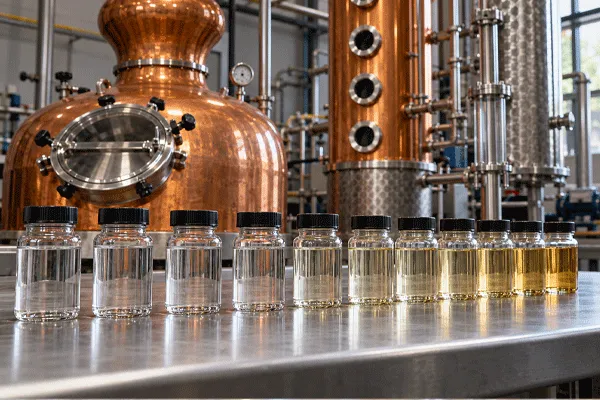
A fixed rule such as “discard X ounces from every 5 gallon run” ignores the amount of ethanol in the wash, the raw material, fermentation quality, pot still geometry, reflux, heating rate, and target spirit. The right approach is to understand how each fraction changes through the distillation run and then establish repeatable operating procedures.
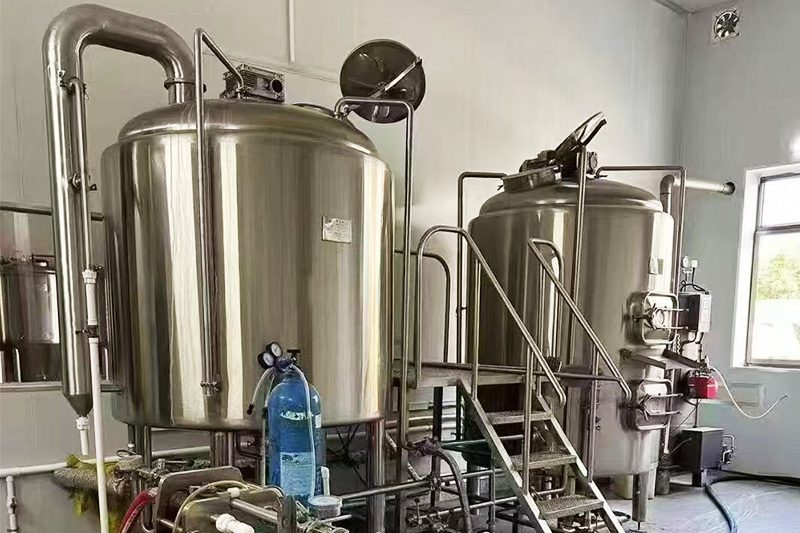
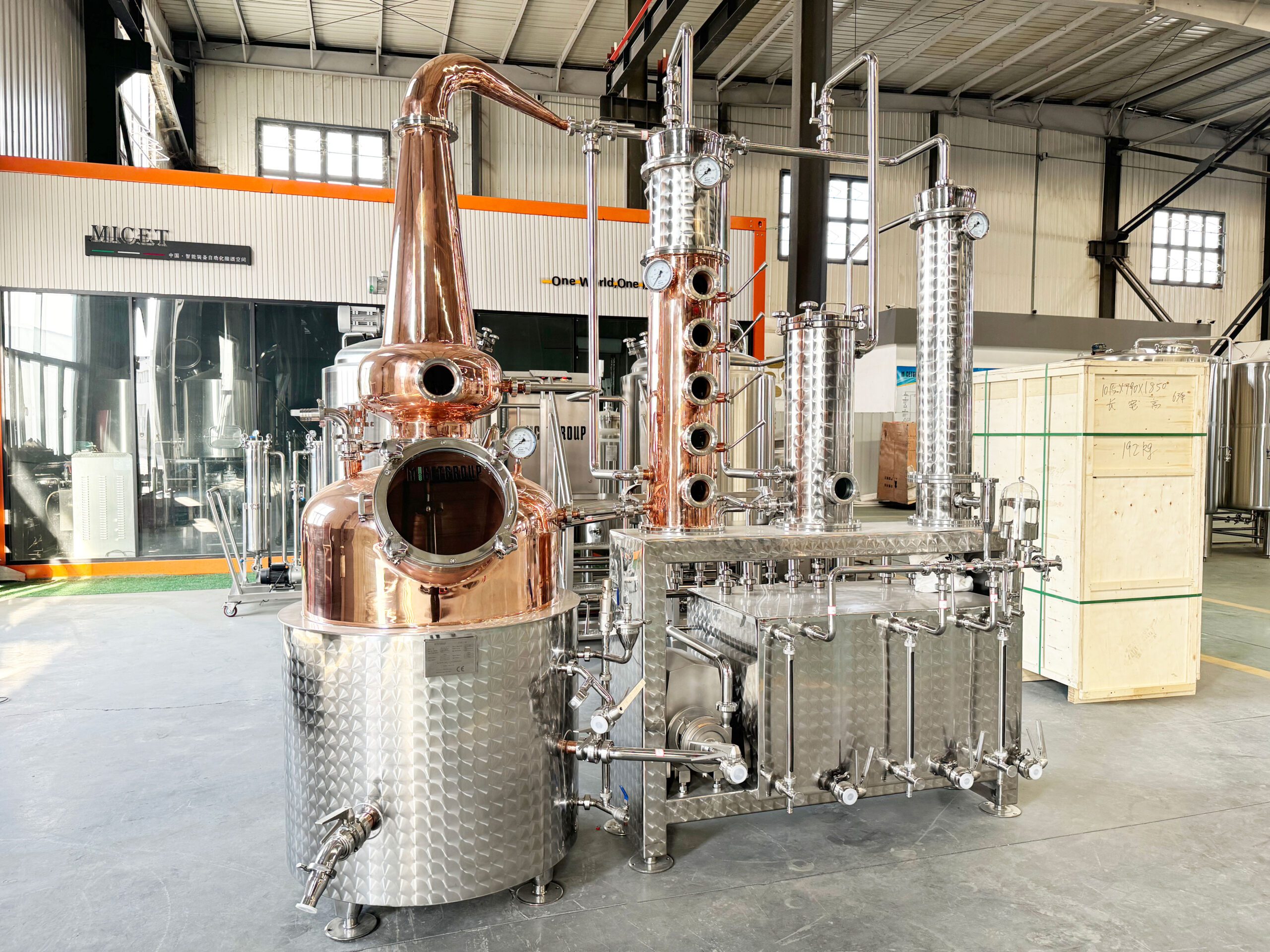
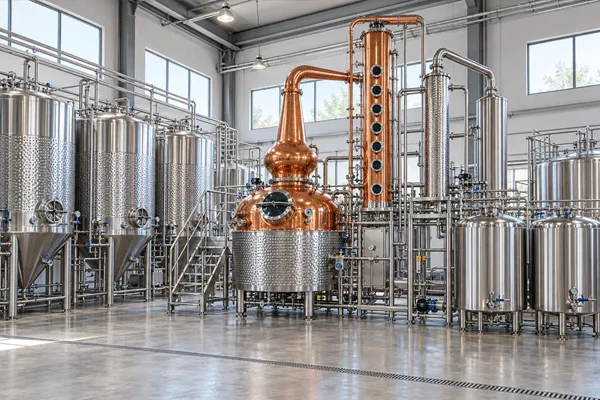
At Micet, our distillery systems are designed around complete spirit production rather than the still alone. Pot stills, hybrid stills, column systems, fermenters, condensers, spirit tanks, controls, CIP, cooling, and process piping can be matched to the required spirit and production capacity.
What Happens During the Distillation Process?
Before you can distill a spirit, you first need alcohol.
During fermentation, yeast converts fermentable sugars in the wash or mash into ethanol, carbon dioxide, and many smaller flavor compounds. When that fermented mash enters the still, it contains water, ethanol, acids, esters, higher alcohols, and other volatile compounds.
The distillation process separates those compounds according to their volatility and their interaction with the complete liquid mixture.
In simple terms:
Fermented Wash → Heat → Vapor → Condensation → Distillate
As the still heats, the composition of the vapor changes over time. The composition of the collected distillate also changes.
That is why a distillation run is normally divided into broad fractions:
| Fraction | General Position | Typical Role |
|---|---|---|
| Foreshots / early heads | Beginning | Separated from the main product |
| Heads | Early run | Strong volatile character; usually separated |
| Hearts | Middle | Main desirable spirit fraction |
| Tails | Late run | Heavier compounds; separated or managed separately |
The boundaries are not sharp lines.
Compounds overlap across the run, so experienced operators make cuts based on process data and sensory evaluation rather than assuming that one compound appears at one exact temperature.
What Are Foreshots and Why Are They Separated?
Foreshots are the first portion collected from a spirit run and are normally kept separate from the heart product.
Early distillate can contain a relatively high concentration of very volatile compounds. Depending on the fermented raw material and process, early fractions may contain substances such as acetaldehyde, ethyl acetate, acetone-like aromas, and other compounds that can give sharp solvent-like notes.
This is one reason commercial distillers do not immediately start collecting everything that comes out of the still into the finished-spirit tank.
The early fraction requires controlled handling.
However, it is important not to oversimplify this into the common internet claim that “all methanol comes out first.”
It does not.
Research on some fruit and grape distillates shows that methanol can be present across several parts of the run and, under some conditions, may even remain significant in later fractions. Raw material composition is especially important in fruit spirits because pectin can contribute to methanol formation.
Methanol is toxic, and unsafe or improperly produced alcoholic beverages can present serious health risks. CDC and UK public-health guidance both warn about methanol exposure and contaminated or improperly produced spirits.
For a commercial plant, this means foreshots should not be managed by an arbitrary home-distilling formula. Producers should follow validated process controls, applicable regulations, product testing, and trained distilling procedures.
How Much Foreshots Should a Distiller Discard?
There is no reliable universal answer.
The amount depends on:
- Wash volume
- Alcohol content
- Raw material
- Fermentation quality
- Spirit style
- Pot geometry
- Refluxniveau
- Opwarmsnelheid
- Whether it is a stripping or spirit run
- Distillation equipment
- Operating procedure
- Legal specifications
A 5 gallon run, for example, cannot be safely standardized by saying “throw away the first X ounces.” Two 5-gallon washes can contain different concentrations of ethanol and different volatile compounds.
A fruit mash and a grain wash are also chemically different.
So when people ask:
“How much should I throw away the first time liquid exits my still?”
our answer for commercial producers is: do not set your production procedure from a generic volume rule.
Instead, develop the cut points from controlled runs, instrumentation, laboratory analysis where required, product specifications, and experienced sensory assessment.
This gives you a repeatable system rather than a guess.
What Are Heads in Distillation?
After the earliest fraction, the distillate moves into what distillers broadly call the heads.
Heads contain a mix of ethanol and relatively volatile aroma compounds. Some may smell fruity or sweet. Others can smell like solvent, nail polish, glue, green apples, or sharp chemicals.
Acetaldehyde and some esters are often associated with early-run character.
The challenge is that heads typically do not suddenly stop at one point.
Instead, the aroma gradually changes.
This creates a transition into hearts.
Experienced distillers may monitor:
- Distillate aroma
- Taste where legally and safely appropriate
- ABV
- Product temperature
- Vapor temperature
- Flow rate
- Reflux behavior
- Batch history
This is why cuts is a skill, but in a commercial distillery it should not depend on skill alone.
A good production system combines the operator’s sensory judgment with repeatable process data.
Micet’s distillery equipment can be configured with temperature, pressure, and flow monitoring as well as process-control options for managing heads, hearts, and tails.
Why Are the Hearts the Sweet Spot?
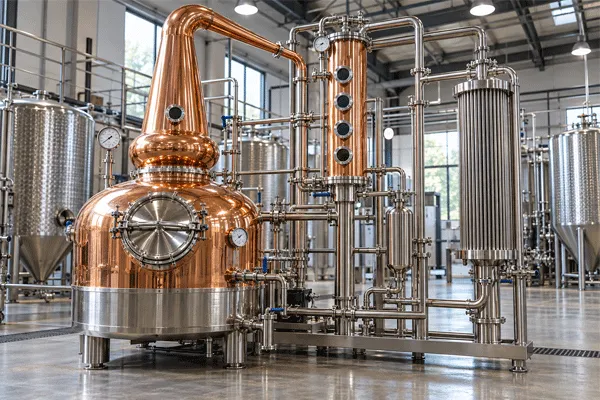
The hearts are the sweet spot of many batch spirit runs.
This is the fraction a distiller normally targets as the core of the final spirit.
The hearts contain a useful balance of ethanol and desirable flavor compounds while avoiding too much early-run harshness and excessive late-run heaviness.
For whisky, rum, brandy, fruit spirits, and similar products, the exact character of the heart can be part of the brand identity.
A wider heart cut may capture more flavor.
A narrower heart cut may create a cleaner spirit but reduce immediate yield.
There is no single correct answer because the desired taste and aroma varies by product.
For example:
- A flavor-forward whisky may retain more congeners.
- A clean vodka base may require greater rectification.
- A fruit spirit may aim to preserve delicate fruit aroma.
- Gin may use a different downstream botanical process.
- Brandy producers may manage cuts to retain characteristic grape or fruit notes.
This is where commercial distillation becomes both engineering and sensory work.
What Are Tails and Do You Throw Them Away?
Tails are the final part of the distillation run after the desirable heart fraction begins to fade.
As the run continues, ethanol concentration usually falls and heavier compounds become more noticeable.
Tails contain water, remaining ethanol, higher alcohols, fatty-acid-related compounds, and other congeners. Some can create oily, earthy, vegetal, wet-cardboard, or heavy aromas.
Higher alcohols are often grouped under the term fusel alcohols.
That does not mean the entire tail must automatically become waste.
Many commercial processes manage late fractions separately. Depending on the spirit, production method, regulations, and quality plan, portions of heads or tails may be recycled into a future distillation or processed separately rather than simply discarded.
Research on cider distillation, for example, describes systems in which selected separated fractions are recycled into later distillations.
This matters economically.
If a distiller treats every non-heart liter as waste, alcohol recovery may suffer. But if undesirable fractions are blended blindly back into the product, quality may suffer.
The goal is not:
“Throw away as little as possible.”
The goal is:
“Keep the right fraction in the finished spirit and manage the other fractions intelligently.”
What Is the Difference Between a Stripping Run and a Spirit Run?
Many traditional batch processes use more than one distillation.
A stripping run is generally the first faster distillation used to concentrate alcohol from the fermented wash.
The resulting intermediate product is often called low wines.
This material then goes through a second distillation, often called a spirit run.
The spirit run is where the distiller makes more careful fraction selections.
A simplified process looks like this:
Fermented Mash → Stripping Run → Low Wines → Spirit Run → Heads / Hearts / Tails
The purpose of the stripping run is mainly concentration and recovery.
The spirit run focuses more heavily on refinement and the final spirit profile.
This is especially relevant when using a pot still.
A column or hybrid system can behave differently because reflux and multiple separation stages can increase separation efficiency.
Micet currently offers pot still, column still, and hybrid still configurations for whisky, gin, vodka, rum, brandy, and other spirits, with systems ranging from small craft capacity to commercial production volumes.
Why Does Still Design Matter When Making Cuts?
Still design matters because it changes how vapor and liquid interact before the product reaches the condenser.
Consider two systems.
Traditional Pot Still
A pot still provides relatively limited rectification.
It tends to carry more raw-material and fermentation character into the distillate, which is why pot stills are widely associated with flavor-driven craft spirits.
Column Still
A column creates repeated vapor-liquid contact.
This gives the distiller more separation stages and can produce higher alcohol concentration and a cleaner spirit.
Hybrid Still
A hybrid combines elements of both.
A producer can retain pot-still character for one product while using additional plates or column sections when more separation is needed.
| Still Type | Typical Character | Cut Management |
|---|---|---|
| Pot nog steeds | Rich, flavor-forward | Strong operator influence |
| Kolom nog steeds | Cleaner, higher proof | More separation control |
| Hybride nog steeds | Flexible | Adjustable for multiple products |
Micet specifically positions these three configurations for different spirit styles, production capacities, and automation needs.
The condenser, column height, number of plates, copper contact area, reflux level, heating system, and still geometry can all influence what comes out of the still and how quickly the fractions transition.
Does Still Temperature Tell You Exactly When to Make the Cuts?
No.
Still temperature is useful process information, but it should not be treated as a magic cut switch.
You may see simple guides saying:
“Compound A boils at one temperature, so it comes out first. Compound B boils later.”
Real fermented wash is more complicated.
It contains water, ethanol, acids, esters, aldehydes, higher alcohols, and many other compounds interacting in a mixture.
The individual boiling point of a pure compound does not mean that compound exits the still only when the thermometer reaches that exact temperature.
Distillation depends on vapor-liquid equilibrium.
Compounds have different boiling points, but their behavior inside an ethanol-water mixture also depends on concentration and interaction with other substances.
So a professional distiller should use temperature as one measurement, not as the only criterion for making cuts.
Other useful signals include ABV, flow, aroma, process history, and analytical testing.
How Does Fermentation Affect Heads, Hearts and Tails?
Good distillation starts before the still.
It starts during fermentation.
Raw materials, fermentation temperature, nutrient levels, microbial health, contamination, pH, and yeast choice can all affect the compounds that later reach the still.
A clean and controlled fermentation creates a more predictable distillation run.
A stressed fermentation may produce more undesirable aroma compounds and make cut decisions harder.
That is why a distillery should size its fermentation tanks around:
- Mash volume
- Fermentation time
- Daily distillation capacity
- Spirit type
- Cooling requirement
- Production schedule
At Micet, the distillery line can integrate mash cookers, stainless-steel fermentation tanks, pot or hybrid stills, columns, condensers, spirit tanks, cooling equipment, pumps, CIP, piping, and controls as one production system.
This matters because the still cannot fix every upstream problem.
Better wash quality generally makes it easier to produce better distillate.
Is Methanol Only in the Foreshots?
No, and this is one of the most important misconceptions to correct.
You may often hear:
“Always discard the foreshots because that is where all the methanol is.”
The reality is more complex.
Methanol can occur naturally in fermented material, and its distribution during distillation depends heavily on raw material and process conditions.
Fruit-based fermentation deserves particular attention because fruit contains pectin. Research on apple and other fruit spirits shows that raw material and processing conditions can influence methanol concentration.
Studies of grape marc distillation have also reported methanol appearing throughout the distillation rather than existing only in one tiny early fraction.
So while early fractions are normally separated as part of producing quality spirits, simply discard the foreshots should not be presented as a complete methanol-control plan.
Commercial producers should use proper raw-material control, validated processing, legal specifications, qualified analysis where needed, and professional equipment.
Methanol exposure can cause serious poisoning, including visual damage and death.
How Much Alcohol Is Actually Lost During Making Perfect Cuts?
This is the business question behind the title.
The answer depends on what you call “lost.”
Imagine a distillation run produces several fractions:
Total Distillate
│
├── Early Fraction / Heads
│
├── Hearts → Finished Spirit
│
└── Tails
Only the hearts may go directly into the primary finished product.
But separated heads and tails do not necessarily represent 100% economic loss.
Depending on the production method, they may be:
- Held separately
- Reprocessed
- Added to another permitted distillation
- Used for a different non-finished-product stream
- Disposed of under the plant’s procedures
Therefore, making perfect cuts is really a balance between:
Yield + Flavor + Purity + Consistency + Compliance
If the cuts are too aggressive, the distiller loses useful ethanol.
If the cuts are too wide, the final spirit may gain harshness, heavy tail notes, or undesirable head character.
Experienced distillers develop cut specifications over repeated runs, then use equipment and process data to make the result more consistent.
How Can Commercial Distillers Make More Consistent Cuts?
For a professional distillery, consistency matters more than memorizing a fixed volume.
A practical production system should track relevant variables from batch to batch.
Record the Wash
Document:
- Partijgrootte
- Raw material
- Starting gravity where applicable
- Fermentation time
- Final alcohol content
- Fermentation temperature
Record the Distillation
Track:
- Heating profile
- Distillate flow
- Vapor/process temperature
- Pressure where relevant
- ABV over time
- Fraction volume
- Sensory observations
Keep Fractions Separate
Do not rush the transition.
Collecting smaller intermediate fractions around the expected cut points can make later evaluation easier.
Build a Repeatable SOP
Once the desired product profile is established, document it.
That turns the distiller’s experience into a repeatable manufacturing process.
For expanding craft distilleries, automated monitoring can further reduce operator variation. Micet distillery systems can incorporate temperature, pressure, flow monitoring and process-control options depending on the project.
Why the Right Distillation Equipment Matters
Good cuts require more than a skilled nose.
The equipment must provide stable, controllable operation.
A well-designed distillery system should offer:
- Controlled heat input
- Stable vapor flow
- Effective condensation
- Appropriate copper contact where required
- Repeatable reflux behavior
- Accurate temperature monitoring
- Safe pressure management
- Hygienic piping
- Reliable spirit collection
- Easy cleaning
Micet’s current distillery range includes systems from 200L for small distilleries and pilot production up to 1000L and 1500L commercial systems, with larger capacities also available on its distillery equipment platform.
For a new project, still capacity should not be selected alone.
We normally recommend matching:
Mash Capacity → Fermentation Capacity → Still Capacity → Condenser → Spirit Storage → CIP → Cooling → Packaging
If the fermenters are too small, the still waits.
If the condenser is undersized, the run slows.
If collection and storage tanks are poorly planned, production becomes inefficient.
A complete system protects both product quality and investment.
Frequently Asked Questions About Heads, Hearts and Tails
How much alcohol should be discarded when distilling?
There is no universal percentage or volume. The correct separation depends on raw material, wash ABV, still design, spirit type, run conditions, and production standards. Commercial distillers use validated cut points rather than a fixed “X ounces per gallon” rule.
Should you always discard foreshots?
The earliest fraction is normally kept separate from the heart product. How it is subsequently handled should follow the distillery’s operating procedures, applicable regulations, and safety requirements. It should not be added blindly to finished spirits.
Are foreshots pure methanol?
No. This is a common oversimplification. Early fractions contain various volatile compounds, and methanol can occur across multiple fractions depending on the raw material and process. Fruit distillation can require particular attention to methanol management.
What is the best part of a distillation run?
The heart fraction is normally the main desirable product in traditional batch spirit distillation. However, the exact sweet spot depends on the spirit style and the distiller’s desired flavor profile.
Can heads and tails be redistilled?
In some commercial production methods, selected heads and tails may be collected and recycled or redistilled. Whether this is appropriate depends on the spirit, process, product specification, and applicable regulations.
Does a reflux still make the same cuts as a pot still?
Not exactly. A reflux still or column system creates more vapor-liquid contact and typically provides greater separation than a basic pot still. The transition between fractions and target ABV can therefore behave differently.
Final Thoughts: How Much Alcohol Do You Really Throw Away?
Professional distillers should not think of a distillation run as:
Good alcohol vs. alcohol to throw away.
A better way to see it is:
different fractions with different purposes.
The earliest fraction is separated.
The heads are monitored.
The hearts form the core spirit.
The tail is separated as heavier compounds become more prominent.
Then each distillery decides how non-heart fractions should be managed according to its validated process, spirit style, regulations, quality targets, and economics.
The actual volume depends on the amount of ethanol present, fermentation, raw material, still design, heating rate, reflux, product style, and desired cut width.
For a commercial project, this is why we recommend designing the complete production line rather than selecting a still from capacity alone.
Micet is a brewery, distillery, winery, kombucha, and beverage equipment manufacturer that provides complete systems including mash equipment, fermenters, pot, column and hybrid stills, condensers, spirit tanks, CIP, cooling, process piping, controls, layout planning, and technical support. Its distillery equipment can be configured for whisky, gin, rum, vodka, brandy, and other craft spirits.
If you are planning a distillery, useful project information includes:
- Spirit type
- Raw material
- Mash or wash volume
- Fermentation capacity
- Target daily output
- Target ABV
- Pot, column, or hybrid preference
- Heating method
- Cooling-water conditions
- Building dimensions
- Automation requirements
- Spirit storage requirements
- Expansion plan
With this information, the production line can be sized around the real process instead of relying on generic distillation rules.
Key Things to Remember
- There is no universal amount of alcohol that every distiller should throw away.
- Distillation normally separates the run into foreshots/early heads, heads, hearts, and tails.
- The hearts are generally the primary finished-spirit fraction.
- Heads and tails do not always have to become total waste; some processes manage or recycle them separately.
- A fixed rule for a 5 gallon run should not be applied to a commercial distillery.
- Methanol is not simply confined to the first few drops of every distillation.
- Fruit mash can require special attention because fruit pectin can contribute to methanol formation.
- Pot still, column, and hybrid still designs behave differently.
- Temperature alone does not determine where to make the cuts.
- Fermentation quality directly affects distillation quality.
- Stable heating, reflux, condensation, monitoring, and collection make repeatable cuts easier.
- Commercial producers should use validated SOPs, testing where required, applicable regulations, and trained operators.
- A successful distillery should match fermentation, distillation, cooling, storage, CIP, piping, and controls as one complete system.