










Nancy Shang | Founder & CEO, MICET | Published September 10, 2026
Used equipment listings, asking prices, and available inventory change weekly. The verification steps below stay valid regardless of market conditions, but always confirm current availability and documentation directly with the seller before purchase.
Why “Used” Means Different Things Across Beer, Wine, and Beverage
A tank that worked perfectly in a winery for a decade is not automatically ready for a brewery, and the reverse is just as often false. The three industries share a base material — 304 or 316 stainless steel — but the tank geometry, internal fittings, and thermal setup diverge in ways that matter once you’re the one signing the purchase order.
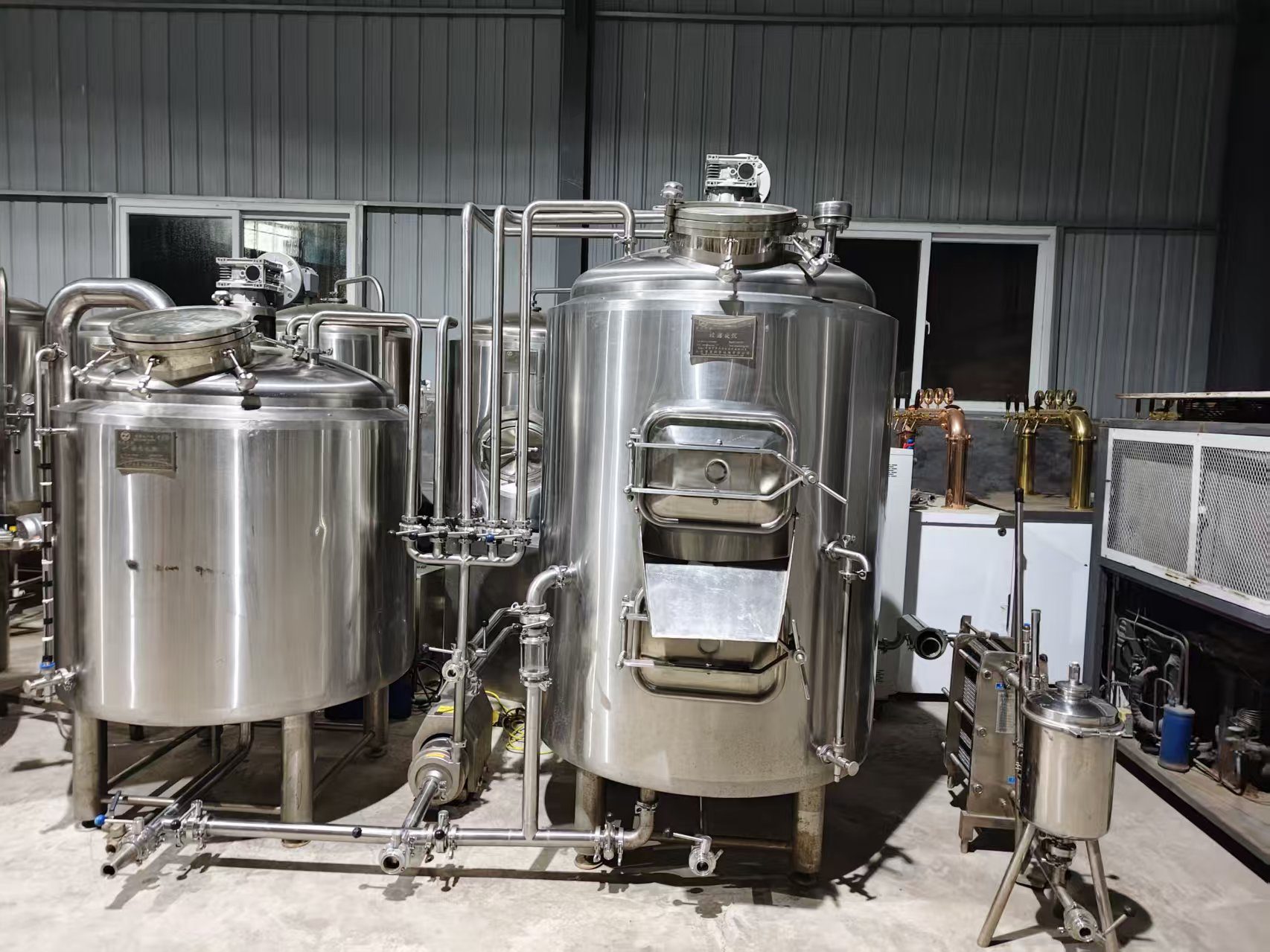
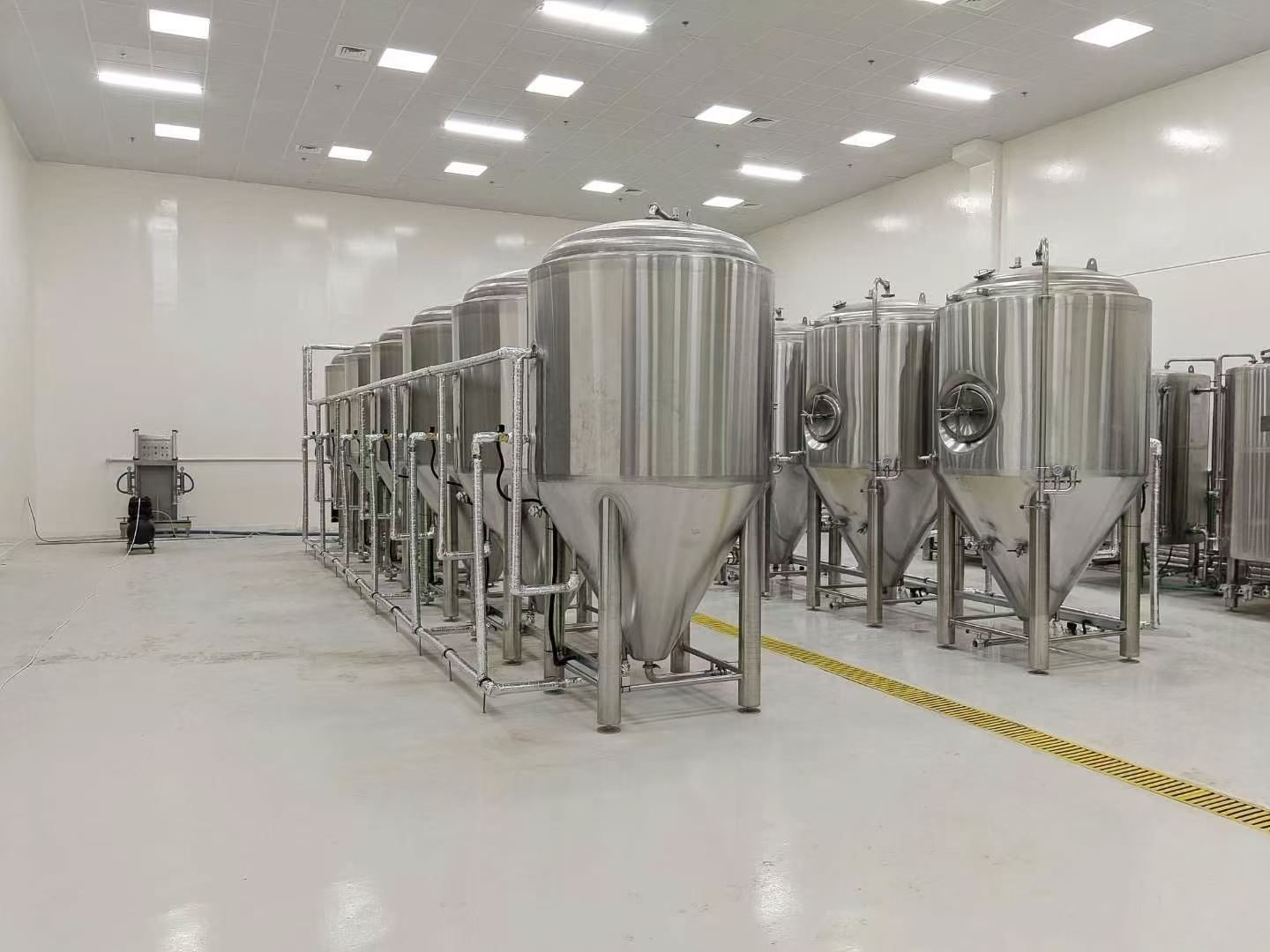
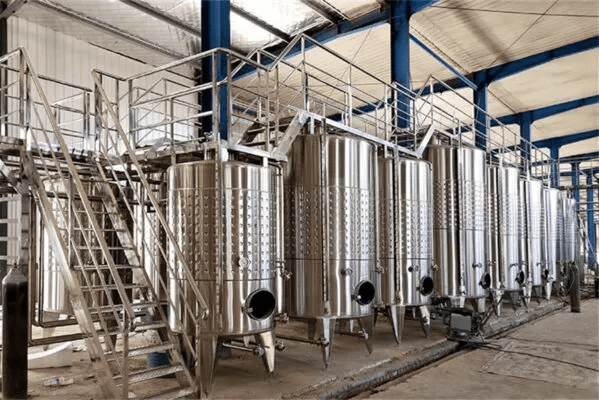
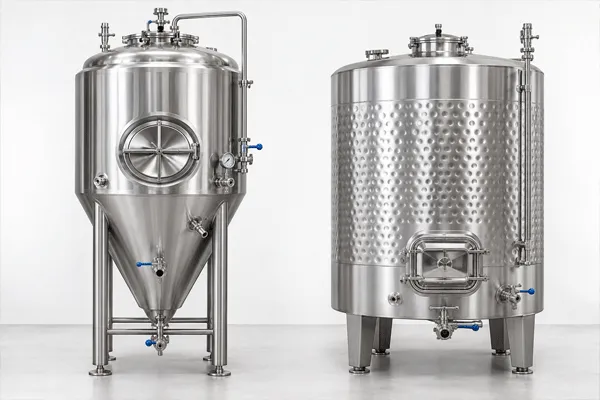
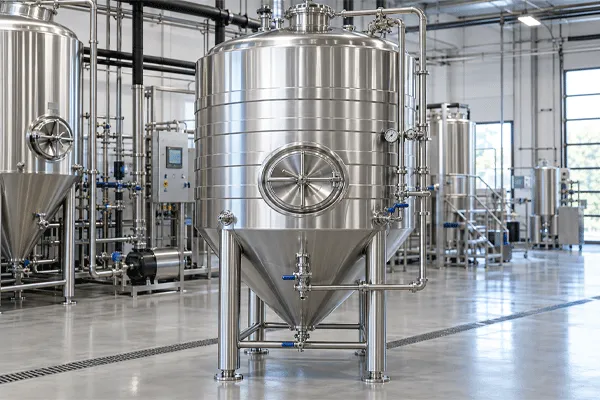
Beer fermenters are usually cylindroconical, with a 60-70 degree cone bottom for yeast harvesting and a glycol jacket wrapped around the cylinder for temperature control during active fermentation. Wine tanks more often run flat or dish-bottomed, since winemakers rack off sediment rather than harvest yeast, and many operate without any jacket at all — ambient cellar temperature does the work instead. General beverage process tanks (juice, kombucha, RTD cocktails) split the difference: some carry jackets for pasteurization or cold-crashing, others are simple holding vessels with no temperature control hardware.
Buy a used wine tank thinking it will drop into a beer fermentation line, and you’ll likely be retrofitting a jacket, adding a cone, or accepting a flat-bottom compromise that makes yeast management harder. This is the single most common cross-category mistake integrators and distributors run into when sourcing on price alone.
Tank Types and the Applications They Actually Fit
| Tanktype | Typical Material | Primary Use | Key Fit-for-Purpose Feature | Cross-Category Reuse |
| Cylindroconical Fermenter | SUS304, glycol jacket | Beer, some kombucha | Cone bottom for yeast/trub drop | Poor fit for wine; possible for kombucha with cleaning |
| Bright/Brite Tank | 304/316, pressure-rated | Beer carbonation & storage | Pressure-reducing valve, CIP nozzle | Rarely reused outside beer without re-certification |
| Variable Capacity Wine Tank | 304/316, floating lid or fixed | Wine, cider | Adjustable headspace, minimal oxygen exposure | Adaptable to beverage holding with lid modification |
| Flat-Bottom Process Tank | 304, jacket optional | Kombucha, juice, mixing | Simple geometry, wide manway | Most versatile across categories |
| Horizontal Storage Tank | 304, insulated variants | Beverage staging, bulk holding | Space-efficient footprint | Works across all three if internals are food-grade |
The flat-bottom process tank column explains why so many used-tank marketplaces are dominated by general mixing vessels rather than fermenters: they’re the easiest to repurpose, so sellers move them fastest and buyers across categories compete for the same inventory.
How to Verify a Used Tank Before You Buy
Photos and a seller’s word are not verification. Here’s the sequence that actually protects a purchase.
- Request the mill certificate for the shell material. A mill cert confirms whether the tank is genuinely 304 or 316 stainless — visual inspection cannot tell the difference, and mislabeled 201-grade substitutes do circulate in secondary markets, particularly on tanks sourced through resellers rather than original fabricators.
- Ask for the tank’s pressure history if it ever ran carbonated or pressurized product. Brite tanks and some fermenters operate under internal pressure, which is why new pressure vessels in this category typically carry documentation against a directive such as the EU’s 2014/68/EU Pressure Equipment Directive. If a used pressure-rated tank has no test or verification record at all, budget for a fresh inspection before it goes back into service.
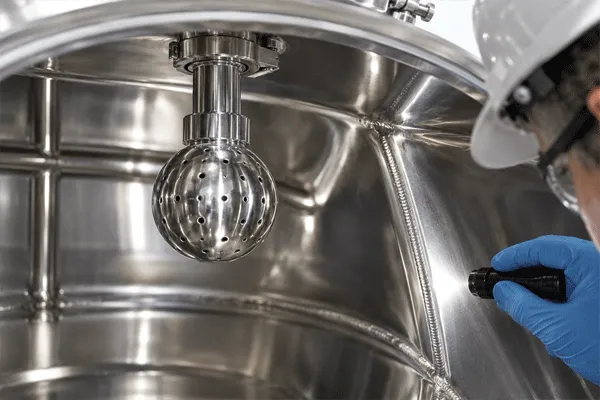
- Inspect welds and the interior surface for pitting, especially near the CIP spray ball and any sanitary fittings. Pitting corrodes food-grade finish integrity and creates harborage points for bacteria that ordinary cleaning cycles won’t reach.
- Pressure- or vacuum-test the glycol jacket separately from the vessel itself, if the tank has one. Jacket leaks are common on tanks that sat idle for years, and a slow leak won’t show up until the tank is already running a batch.
- Match every manway, tri-clamp, and fitting size against your existing piping before purchase, not after delivery. This is the edge case buyers underestimate most: a tank can be structurally perfect and still cost you weeks of custom fabrication because the outlet is 2-inch tri-clamp and your line runs 3-inch.
- Confirm the tank’s prior contents, including anything non-beverage. Stainless steel resists many chemicals, but a tank that held solvents, dairy with high fat residue, or industrial process fluid needs documented cleaning and, in some jurisdictions, re-certification for food contact before it touches a beverage product. “It’s stainless, so it’s food-safe” is the misconception that causes the most expensive mistakes in this market — the metal being food-grade doesn’t mean the tank’s history is.What Certification Standards Tell You About a Used Tank’s Reliability
New pressure-rated equipment in this category is typically sold against a documented compliance trail — for example, MICET’s own tanks carry PED Verification 3N231110.SICS093, issued by Ente Certificazione Macchine Srl and valid through November 2028, tested against EN 1626:2008. That document specifies the exact standard, the issuing body, and an expiration date, which is what separates third-party verification from a manufacturer’s own self-declaration.
When you’re evaluating a used tank, that same standard of documentation is the benchmark to ask for, even informally. A seller who can produce a dated inspection report from a named testing body is offering something categorically different from a seller who says “it passed everything when we used it.” If no such record exists, treat the tank as unverified and price your offer, or your post-purchase inspection budget, accordingly.
New vs. Used: What Actually Changes
| Factor | New Tank | Used Tank |
| Upfront cost | Higher, fixed | Lower, negotiable |
| Certification documentation | Included from manufacturer | Depends entirely on seller records |
| Warranty | Standard manufacturer warranty | Rarely, unless explicitly negotiated |
| Lead time | Weeks to months for fabrication | Often available immediately |
| Customization | Built to your spec (jacket, ports, capacity) | Fixed as-is, retrofits add cost |
| Total cost of ownership | Predictable | Variable, depends on inspection findings |
The lead time column is where used tanks win outright for buyers facing a capacity crunch this quarter rather than next year. The certification column is where new tanks win outright for buyers who need audit-ready documentation for a commercial contract or a lender.
Pricing Reality for Buyers
Used tank pricing varies by seller, condition, and region enough that no reliable general figure exists, and any number quoted without a specific tank in front of you should be treated as a rough placeholder, not a quote. What can be stated with certainty is new-equipment pricing where it has been published: MICET’s microbrewery-scale systems run 30,000-80,000 USD, and commercial systems starting at the smallest 10bbl configuration run 50,000-80,000 USD. Everything outside those two published bands, new or used, requires a direct quotation against your specific specs.
If a used listing looks significantly below what a comparable new system would cost, that gap is worth investigating rather than celebrating. Ask what’s driving the discount: age, missing documentation, non-standard fittings, or genuine seller motivation to move inventory quickly. All four are legitimate reasons a used tank is cheap, but they carry very different risk profiles.
When New Makes More Sense Than Sourcing Used
For buyers evaluating a used fermentation tank specifically, the calculation usually comes down to how much documentation gap you’re willing to absorb. A used fermenter with no material certificate, no pressure history, and unknown prior contents isn’t necessarily a bad tank, but it is an unverified one, and verifying it after the fact (independent lab testing, re-inspection, potential jacket repair) can close much of the price gap that made it attractive in the first place.
MICET’s core business is building new brewing, fermentation, and process tanks to order rather than brokering used inventory, so our role here is sharing what our own certification and fabrication process looks like as a reference point for what “verified” should mean, not steering every reader toward a new purchase regardless of budget. For a buyer with a tight timeline and a tank in hand that checks out against the six-point list above, used remains a sound decision. For a buyer who needs bank-ready documentation, product traceability for export markets, or a jacket and cone configuration that doesn’t exist in the used market near them, a new build closes that gap without the inspection uncertainty.
How This Compares to Typical Used-Equipment Listings
Most secondary-market listing platforms for stainless tanks provide a photo set, an asking price, and a brief condition description written by the seller rather than an independent inspector. That’s workable for buyers who plan to inspect in person before paying, but it puts the verification burden entirely on the buyer’s side of the transaction — there’s no standardized documentation requirement the way there is for new pressure equipment sold against a directive like PED. Treat any listing platform’s condition notes as a starting point for your own six-step check, not a substitute for it.
FAQ
Q: Can a used wine tank be converted into a beer fermenter?
A: Sometimes, but expect retrofit costs. A flat-bottom wine tank can hold beer, but without a cone bottom, yeast harvesting becomes manual and less efficient, and adding a glycol jacket after the fact is a fabrication job, not a bolt-on accessory.
Q: Is 304 stainless enough, or do I need 316 for beverage tanks?
A: 304 handles most beer, wine, and standard beverage production without issue. 316 adds molybdenum for better resistance to chloride and acidic environments, which matters more for certain wine styles, high-acid kombucha, or coastal locations with saline air exposure during storage.
Q: How do I check PED compliance on a used pressure vessel?
A: Ask the seller for the original test or verification report, including the issuing body’s name and the standard tested against (EN 1626:2008 is common for this category). No report means no verified compliance, regardless of what the seller states verbally.
Q: What’s a fair price for a used commercial fermentation tank?
A: There’s no reliable general figure — condition, documentation, capacity, and region all move the number too much. Use published new-equipment pricing as a ceiling reference and negotiate the used price down from there based on your inspection findings.
Q: Does MICET sell used tanks, or only new?
A: MICET fabricates new tanks built to customer specifications. This guide shares our verification and certification standards as a reference for evaluating used equipment, not as a used-inventory listing.
Q: What paperwork should come with a legitimate used tank sale?
A: At minimum, a material mill certificate. For any pressure-rated vessel, a pressure test or verification record with a named issuing body and date. For food-contact use, documentation of prior contents and cleaning history.
If your inspection turns up a documentation gap you can’t close, or a fitting mismatch that would cost more to retrofit than the tank saved you, a new build quoted against your exact capacity and jacket requirements is worth comparing before you commit to the used option.