

Building a brewery without a clear equipment plan can cause expensive delays, undersized fermentation capacity, poor utility matching, and difficult production flow. These problems become harder to fix after installation. The best approach is to plan the complete brewery setup before construction starts.
To build a brewery, you should prepare the brewhouse, fermentation tanks, glycol chiller, hot and cold liquor tanks, pumps, CIP system, packaging equipment, keg or bottle handling equipment, utilities, drainage, piping, and control systems in advance. The exact equipment depends on your batch size, beer style, production target, building layout, and packaging method.
For a small microbrewery, the equipment list may be simple. For a commercial brewery, the project becomes more complex because the brewhouse, fermenters, cooling, utilities, packaging, and building infrastructure must all work together.
As a professional manufacturer of stainless steel brewery and beverage systems, we often see one mistake repeated: new brewery owners focus on the brewhouse first and leave fermentation, cooling, CIP, packaging, and utility planning for later. That can create bottlenecks before the first full production month even begins.
What Are the Essential Pieces of Brewery Equipment?
The essential equipment for a brewery can be divided into several systems rather than one long shopping list.
A basic commercial brewery usually needs:
| System | Main Equipment |
|---|---|
| Malt handling | Mill, grist hopper |
| Brouwhuis | Mash tun, lauter tun, kettle, whirlpool |
| Hot/cold water | Hot liquor tank, cold liquor tank |
| Gisting | Fermenters, yeast handling |
| Koeling | Glycol chiller, heat exchanger |
| Schoonmaken | CIP cart or CIP station |
| Overdracht | Pumps, hoses, piping, valves |
| Storage | Bright beer tanks, buffer tanks |
| Verpakking | Kegging, bottling, or canning line |
| Utilities | Boiler, air compressor, electrical system |
| Waste/drainage | Floor drains, wastewater handling |
The exact brewery equipment list depends on how much beer you plan to produce and how the beer is sold.
A taproom brewery may rely heavily on kegging and direct service. A regional brewery may need a canning line, packaging conveyors, more finished-beer storage, and higher-capacity utilities.
The key point is simple:
Every brewery is a connected production system.
What Brewhouse Equipment Do You Need to Get Started?
The brewhouse is the hot-side center of the brewery.
This is where malt, water, and hops are turned into wort.
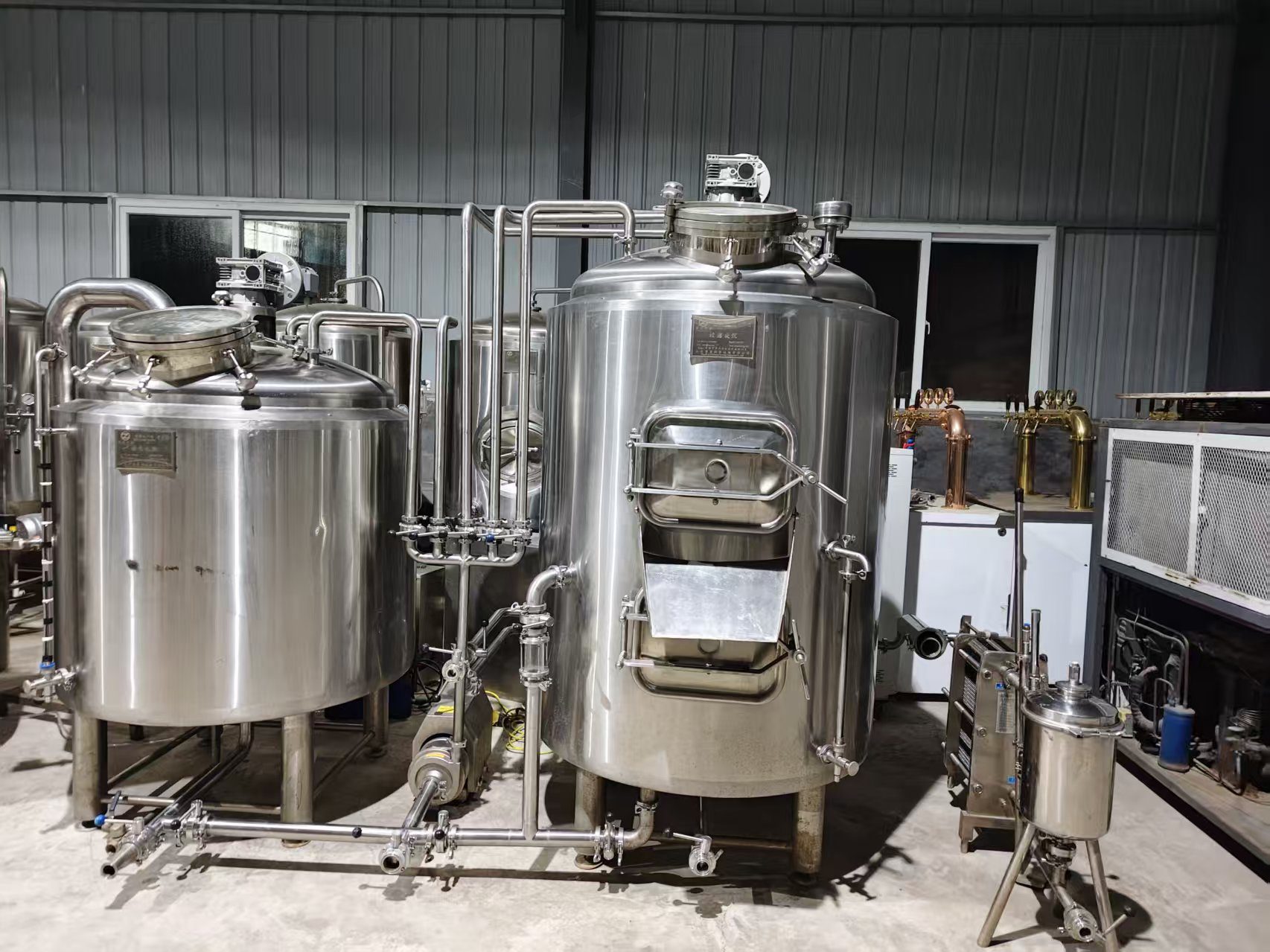
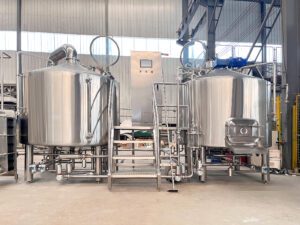
A typical brewhouse may include:
- Mash tun
- Lauter tun
- Brew kettle
- Whirlpool
- Hot liquor tank
- Wort grant
- Pompen
- Heat exchanger
- Control panel
In a compact microbrewery, some of these functions may be combined.
For example:
- Mash/Lauter Tun
- Kettle/Whirlpool
This creates a 2-vessel brewing system.
Larger breweries may use a 3-vessel or 4-vessel setup to improve throughput and reduce waiting time between batches.
The right choice depends on:
- Partijgrootte
- Brews per day
- Labor
- Building space
- Production target
- Beer style
- Future expansion
A 1,000 L brewhouse that runs once per day has very different requirements from a 5,000 L commercial system designed for several brews each day.
Why Is the Mash Tun Important in the Brewing Process?
The mash tun is where crushed malt is mixed with hot brewing water.
During the mash, enzymes convert grain starch into sugar that yeast can later ferment.
The vessel needs stable temperature control because mash temperature influences wort fermentability, body, and final beer character.
A good mash system should provide:
- Even heating
- Effective mixing
- Accurate temperature control
- Good insulation
- Easy cleaning
- Sanitary drainage
For all-grain brewing, the mash tun is essential.
Homebrewers may use simpler equipment, but a commercial brewery needs repeatability.
If one batch is mashed differently from the next, the brewer may see changes in extract, alcohol level, flavor, and overall beer quality.
That is why professional brewing equipment should help the brewer repeat the same process every brew day.
How Many Fermenters Should a Brewery Prepare?
This is one of the most important questions when building a brewery.
Many new brewery owners underestimate fermentation capacity.
The brewhouse may produce wort in a few hours, but a fermenter can remain occupied for many days or weeks.
A simple planning example:
| Item | Example |
|---|---|
| Brewhouse batch | 1,000 L |
| Brews per week | 3 |
| Average tank occupancy | 14 days |
| Simultaneous batches | About 6 |
| Starting fermenter need | About 6+ positions |
This is only a planning example.
The real number depends on:
- Beer style
- Fermentation time
- Conditioning time
- Double-batching
- Cleaning time
- Seasonal demand
- Tank turnaround
- Bright tank strategy
If you brew lager, tank occupancy may be longer.
If you brew fast-turning ale, turnover can be faster.
The fermentation temperature also matters because stable cooling is necessary for consistent yeast performance.
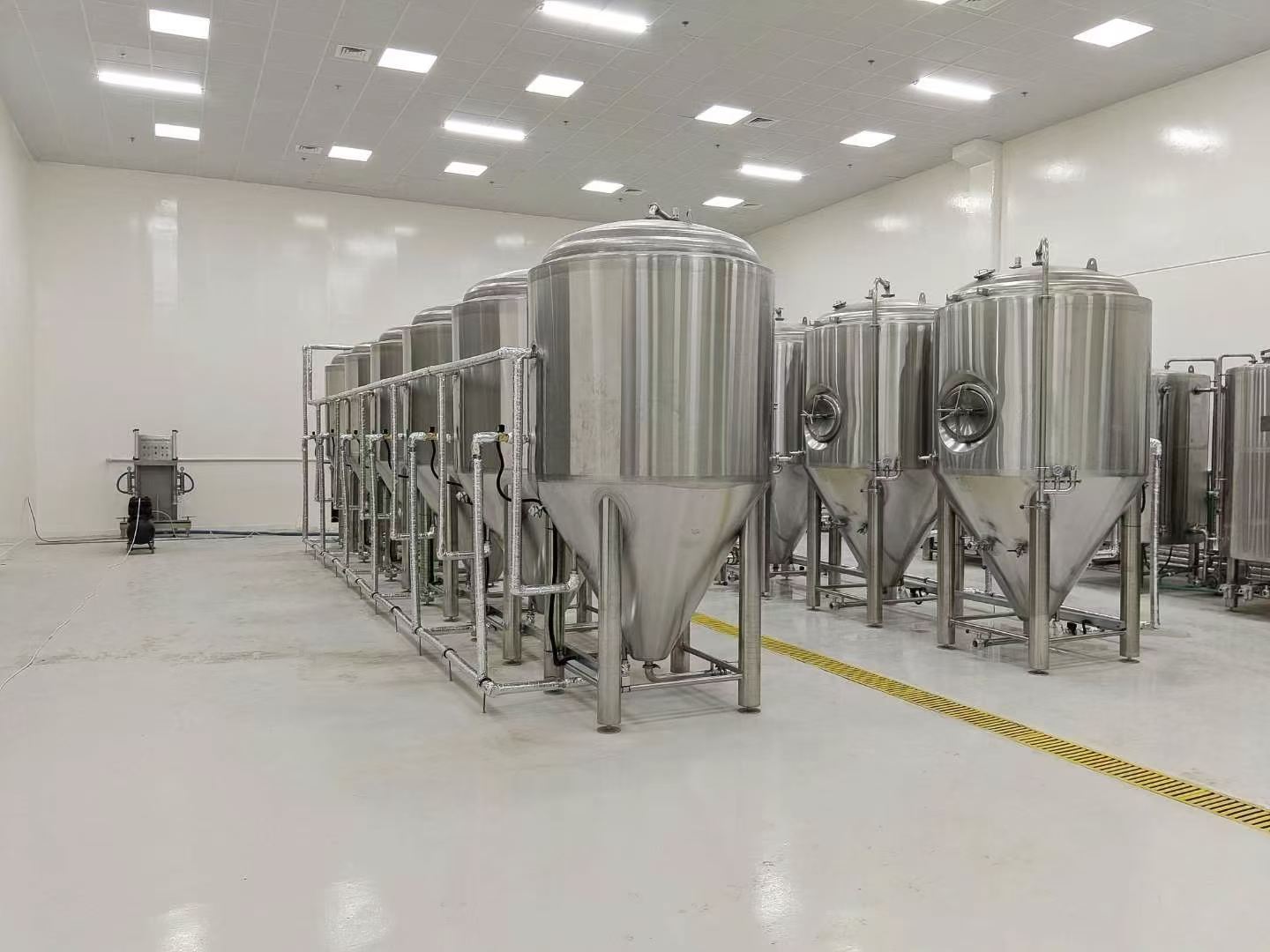
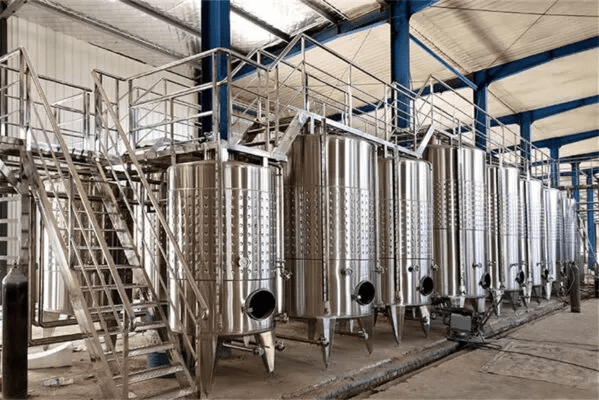
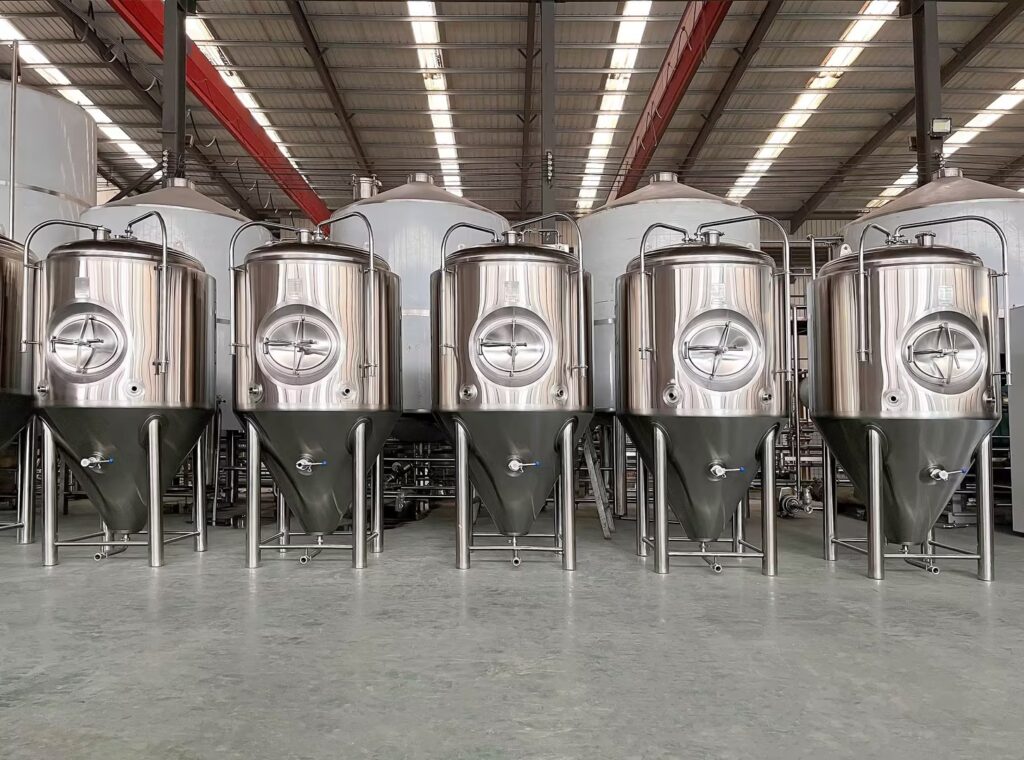
A commercial fermenter normally includes:
- Cooling jackets
- Temperature sensor
- Pressure gauge
- CIP spray device
- Bemonsteringsventiel
- Yeast outlet
- Pressure relief
- Sanitaire fittingen
Fermentation capacity often determines the real production limit of the entire brewery.
What Cooling Equipment Does a Brewery Need?
A brewery must both heat and cool.
Many people plan the boiler carefully but underestimate cooling.
The main cooling equipment may include:
- Plate heat exchanger
- Glycol chiller
- Glycol tank
- Cold liquor tank
- Cooling pumps
- Insulated glycol piping
The wort must be cooled quickly after boiling.
Later, the fermenters need controlled cooling during fermentation.
Then beer may need additional chilling for cold conditioning, clarification, carbonation, or transfer.
That means the chiller should be sized according to the combined cooling load.
A chiller that works for two fermenters may become too small after the brewery adds six more.
This is why future expansion should be considered before the utility system is purchased.
What Heating System and Utilities Are Needed?
A brewery needs reliable utilities before the equipment can work.
Depending on the brewhouse design, the main heat source may be:
- Steam
- Electric heating
- Direct fire
- Thermal fluid in some systems
Steam is common in larger commercial breweries because it can heat multiple vessels efficiently.
However, the building also needs adequate:
- Electrical power
- Water supply
- Gas supply if required
- Compressed air
- Ventilation
- Drainage
- Wastewater capacity
These are not secondary details.
A large brewing system can be delayed even after installation if the electrical supply, steam capacity, water pressure, or floor drains are not ready.
For this reason, the brewery equipment supplier, builder, utility contractor, and engineering team should coordinate early.
What CIP and Cleaning Equipment Is Essential?
Cleaning is not optional.
A brewery handles sugar, yeast, protein, hops, and finished beer. All of these can leave residue.
A commercial brewery needs a reliable CIP system.
CIP stands for Clean-in-Place.
A typical CIP setup may include:
- Caustic tank
- Acid tank
- Hot-water tank
- Pump
- Return line
- Spray devices
- Temperatuurregeling
Smaller craft breweries may use a mobile CIP cart.
Larger facilities may use a centralized automatic CIP station.
The goal is to clean tanks, pipes, and vessels without manually entering them.
Good CIP design helps:
- Reduce contamination
- Improve consistency
- Save labor
- Reduce downtime
- Extend equipment life
You should also make sure the piping and valves are designed so the cleaning liquid reaches all product-contact areas.
Good sanitary design is just as important as the cleaning chemicals themselves.
What Packaging Equipment Should Be Prepared?
The final stage of the brewing process is packaging.
Before you open a brewery, decide how the beer will be sold.
Common options include:
- Keg
- Bottle
- Can
- Direct serving from bright tank
Kegging
Kegging is common for brewpubs, taprooms, bars, and draft distribution.
Equipment may include:
- Keg washer
- Keg filler
- Keg couplers
- CO₂ system
Bottling
A bottling setup can include:
- Bottle rinser
- Filler
- Capper
- Bottle caps
- Labeler
- Conveyor
A small homebrew-style system may use a bottling bucket, but a commercial brewery needs more sanitary and efficient equipment.
Canning
A canning line may include:
- Can rinser
- Filler
- Seamer
- Labeler or printed cans
- Date coder
- Conveyor
Packaging equipment should be matched to production volume.
If the brewhouse and fermentation cellar can produce 20,000 liters per week but the packaging line can only handle 5,000 liters efficiently, packaging becomes the bottleneck.
Should You Prepare Bright Beer Tanks?
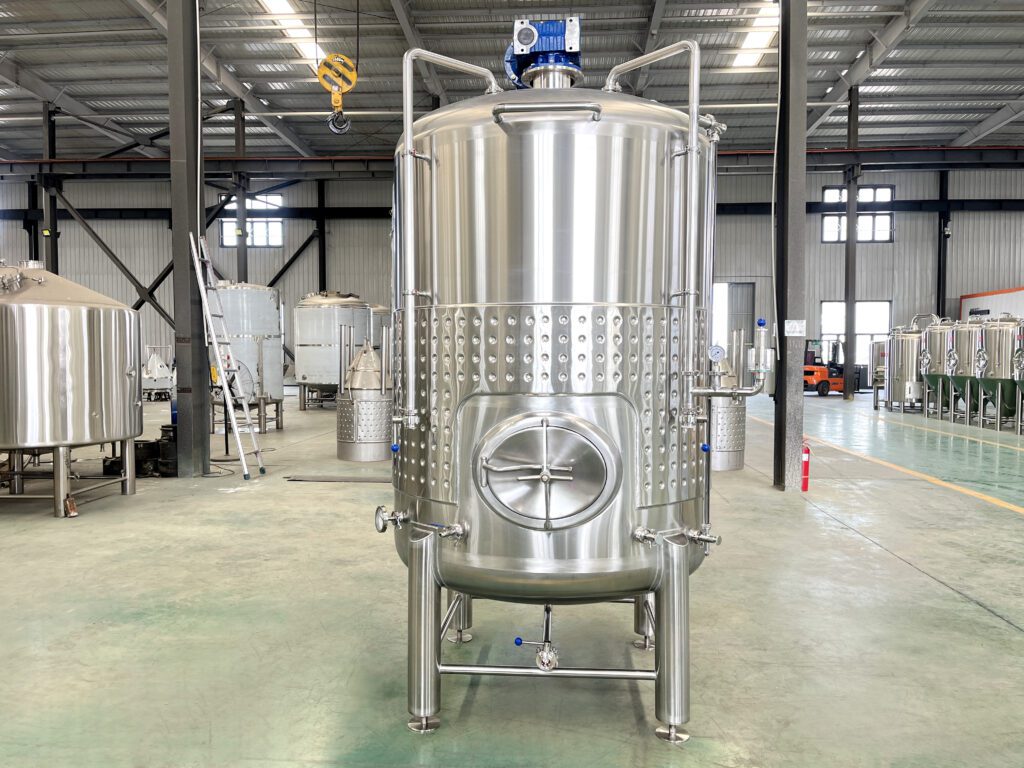
A bright beer tank is not always mandatory, but it can improve production flow.
Bright tanks are commonly used for:
- Conditioning
- Koolzuur
- Clarification
- Finished beer holding
- Feeding packaging equipment
Some craft breweries use unitanks and package directly from the fermenter.
That can reduce equipment cost.
However, dedicated bright tanks can free fermenters sooner and help the brewery handle more batches.
Whether you need them depends on:
- Beer style
- Packaging method
- Tank schedule
- Cellar space
- Monthly output
- Required clarity
A busy commercial brewery often benefits from separate bright beer capacity.
A small taproom may choose a simpler setup.
What Factors Should You Consider Before Equipment Selection?
There are several important factors to consider before ordering brewery equipment.
1. Target Production
How much finished beer do you plan to sell each month?
2. Batch Size
Will you brew 500 L, 1,000 L, 2,000 L, or more per batch?
3. Brews Per Day
A brewery running one batch per day needs a different brewhouse than one running three.
4. Beer Styles
Different products may require different fermentation and conditioning times.
5. Packaging
Will the beer be sold mainly in keg, bottle, can, or directly in the taproom?
6. Building Dimensions
Measure:
- Floor area
- Ceiling height
- Door width
- Column spacing
- Drain positions
- Utility rooms
7. Utilities
Confirm:
- Electricity
- Steam
- Water
- Gas
- Glycol
- Compressed air
- Drainage
8. Future Expansion
Leave space for:
- More fermenters
- Bright tanks
- Packaging upgrades
- Larger chiller
- Additional glycol lines
The right equipment should support today’s production without making future growth difficult.
How Should You Plan the Brewery Layout?
A good brewery setup should support a logical material flow.
A simplified flow can look like:
Malt Storage → Milling → Brewhouse → Wort Cooling → Fermentation → Conditioning → Packaging → Finished Product Storage
Try to avoid unnecessary product movement.
Shorter sanitary piping can reduce:
- Product loss
- Cleaning time
- Installation cost
- Pressure drop
Floor drainage also matters.
Wet production areas should have enough slope and drain capacity.
The brewer should be able to clean the floor, vessels, and hoses without water collecting in low spots.
The layout should also leave enough space around each piece of equipment for:
- Bediening
- Maintenance
- Valve access
- Pump removal
- Schoonmaken
- Future replacement
Equipment that technically fits inside a room may still be difficult to operate if service access is ignored.
How Much Does It Cost to Start a Brewery?
The cost to start a brewery varies widely.
A small brewpub may use a compact brewhouse and a limited number of tanks.
A larger regional brewery may require:
- Large brewhouse
- Many fermenters
- Bright tanks
- Boiler
- Chiller
- CIP station
- Canning line
- Keg line
- Air compressor
- Water treatment
- Laboratory
- Warehouse
- Cold room
The equipment itself is only one part of the investment.
Other costs may include:
- Building renovation
- Drainage
- Electrical work
- Steam piping
- Glycol piping
- Installation
- Shipping
- Taxes
- Licensing
- Verpakking
- Raw material
- Working capital
A good business plan should separate equipment cost from total project cost.
This helps new brewery owners avoid spending too much on visible production equipment while forgetting infrastructure.
What Is Different About Microbrewery Equipment?
A microbrewery usually needs many of the same core systems as a larger brewery.
The difference is scale.
Typical microbrewery equipment may include:
- 500–2,000 L brewhouse
- Several fermenters
- Small bright tanks
- Glycol chiller
- Mobile CIP cart
- Keg washer/filler
- Compact canning or bottling line
A small brewery can sometimes combine vessel functions to reduce the initial investment.
For example:
- Mash/Lauter combined
- Kettle/Whirlpool combined
- Fermentation + conditioning in unitank
This saves space.
But over-combining equipment can reduce production speed.
If your goal is to start a microbrewery and later expand, it is better to choose a layout that leaves room for more fermenters and packaging equipment.
Is Homebrew Equipment Suitable for a Commercial Brewery?
Usually not.
Homebrew equipment is useful for recipe development and learning the basics.
A home brewery or homebrewing setup may include:
- Small kettle
- Plastic or glass fermenter
- Bottling bucket
- Small chiller
- Hand capper
This is fine for hobby use.
But commercial equipment needs:
- Sanitary stainless construction
- Pressure rating
- Reliable cooling
- Repeatable controls
- CIP compatibility
- Higher production speed
- More robust valves and pumps
The step from homebrewing to commercial production is not simply “buy a bigger kettle.”
The whole production environment changes.
Commercial equipment is designed for repeated use, cleaning, higher batch frequency, and safer operation.
A Practical Brewery Equipment Checklist
Before ordering equipment, use a checklist.
Brouwhuis
- Malt mill
- Grist hopper
- Mash tun
- Lauter tun
- Kettle
- Whirlpool
- Hot liquor tank
- Pompen
- Heat exchanger
Cellar
- Fermenters
- Bright beer tanks
- Yeast collection
- Glycol system
Schoonmaken
- CIP-systeem
- Chemical storage
- Washdown hoses
Utilities
- Boiler
- Chiller
- Air compressor
- Water treatment
- Electrical distribution
Verpakking
- Keg washer/filler
- Bottle filler or canning line
- Labeler
- Date coder
Infrastructure
- Floor drains
- Ventilation
- Cold room
- Warehouse
- Laboratory area
This list helps you see what equipment is missing before construction is complete.
Frequently Asked Questions About Building a Brewery
What equipment do I need to start a brewery?
You normally need a brewhouse, fermenters, cooling system, pumps, heat exchanger, CIP, utilities, piping, and packaging equipment. The exact list depends on production size, beer style, and how the beer is sold.
How many fermenters should I buy first?
The number depends on brewhouse size, brewing frequency, and fermentation time. A brewery brewing several batches each week usually needs multiple fermenters so the brewhouse does not wait for empty tanks.
Do I need a bright beer tank?
Not always. A brewery using unitanks may package directly from fermentatietanks. Bright tanks are useful for carbonation, conditioning, clarification, and freeing fermenters for the next batch.
Is a glycol chiller essential?
For most commercial breweries, yes. It provides controlled cooling for fermentation tanks and can also support cold conditioning.
Can I start with a small brewhouse and expand later?
Yes. Many craft breweries begin with a smaller system and add fermenters, bright tanks, or packaging equipment later. The building and utility design should allow expansion.
What should I prepare before contacting a brewery equipment supplier?
Prepare your target batch size, annual output, beer styles, brews per day, building dimensions, packaging method, utility information, and future expansion plan. These details make equipment selection much more accurate.
Final Thoughts: Prepare the Entire Brewery Before Buying Individual Machines
When planning to start a brewery, the most common mistake is focusing only on the brewhouse.
The brewhouse is important, but it is only one part of the entire brewery.
A successful brewery needs:
Brewhouse → Fermentation → Cooling → Conditioning → Cleaning → Packaging → Storage
All of these systems must be balanced.
If the brewhouse is too large for the cellar, production slows.
If the fermenters are too few, the brewhouse waits.
If the chiller is too small, fermentation control suffers.
If the packaging line is too slow, finished beer builds up in tanks.
If the drains and utilities are not ready, installation becomes more expensive.
As a manufacturer of customized stainless steel brewery and beverage systems, we recommend starting every project with capacity planning and layout design before final equipment selection.
For a new project, prepare these details first:
- Target batch size
- Annual beer production
- Brews per day
- Beer styles
- Fermentation time
- Building layout
- Ceiling height
- Available utilities
- Heating method
- Packaging format
- Automation level
- Budget range
- Expansion target
With this information, the brewery equipment can be designed around your real production needs instead of forcing your business to adapt to the equipment later.
Key Things to Remember
- A brewery needs more than a brewhouse.
- Essential equipment includes brewhouse vessels, fermenters, cooling, CIP, pumps, utilities, and packaging.
- Fermentation capacity often limits real brewery output.
- The chiller should be sized for current and future tank loads.
- Kegging, bottling, and canning require different packaging equipment.
- The building must support drainage, electricity, steam, water, ventilation, and equipment access.
- A business plan should include infrastructure and installation costs, not only equipment price.
- Microbrewery equipment can combine some vessel functions to save space.
- Commercial stainless steel equipment is designed for repeatable production and sanitary cleaning.
- Layout planning should happen before equipment installation.
- Future expansion should be considered from the beginning.
- The right brewery setup balances brewhouse, fermentation, cooling, packaging, and storage capacity.