

Choosing the wrong fermentation vessel can lead to leaks, off-flavors, poor temperature control, or contamination. A container that works for a kitchen batch may not suit a growing brewery. The right choice depends on what you ferment, your batch size, and how much control your process requires.
The best fermentation vessel depends on the product and production scale. Glass jars work well for small batches, food-grade plastic buckets offer an affordable option, ceramic crocks suit vegetable fermentation, and резервуары из нержавеющей стали are generally the best choice for commercial beer, wine, cider, and beverage production.
Конспект статьи
- What Does a Fermentation Vessel Do?
- Which Vessel Is Best for Each Type of Fermentation?
- Are Glass Jars and Glass Carboys Good for Fermentation?
- Are Plastic Buckets Safe Fermentation Containers?
- When Should You Choose a Crock or Open Fermentation Vessel?
- Why Are Stainless Steel Tanks Preferred for Commercial Fermentation?
- How Do Lids, Airlocks, and Valves Affect Fermentation?
- Why Are Temperature Control and Pressure Important?
- How Do You Choose the Right Vessel Size and Price Range?
- How Should Commercial Buyers Choose a Fermentation Tank?
1. What Does a Fermentation Vessel Do?
A fermentation vessel is a container that holds ingredients while microorganisms transform them into a new product. Depending on the process, yeast or bacteria consume sugars and produce acids, alcohol, carbon dioxide, and other compounds that affect flavor, aroma, texture, and quality.
For example, during beer and wine production, yeast converts fermentable sugars into alcohol and carbon dioxide. Vegetable fermentation works differently. Beneficial bacteria convert natural sugars into lactic acid, creating the sour flavor found in products such as sauerkraut and kimchi.
The vessel plays an important role in this process. It provides a suitable environment for microorganisms and protects the product from unwanted contamination. Its material, shape, size, sealing method, and temperature conditions can all affect the final result.
A good vessel should offer:
- Food-safe construction: Product-contact materials must be suitable for the ingredients and cleaning chemicals.
- Suitable oxygen conditions: Some processes need oxygen, while others require limited oxygen exposure.
- Easy cleaning: Smooth surfaces and accessible connections help reduce residue and contamination risks.
- Appropriate capacity: The container must provide enough working volume and space for foam or gas.
- Process control: Temperature sensors, cooling jackets, and pressure controls may be necessary for commercial production.
Understanding fermentation vessels means looking beyond their appearance. The best container is the one that supports the biological process and the practical needs of the operator.
2. Which Vessel Is Best for Each Type of Fermentation?
There is no single container that works perfectly for every type of fermentation. The choice of fermentation vessel depends on the ingredients, microorganisms, production method, and expected output.
For example, a glass jar may be ideal for testing a vegetable fermentation recipe, but a commercial brewery needs a much stronger and more controllable system.
Here is a comparison of common types of fermentation vessels:
| Vessel Type | Подходящие применения | Main Advantages | Main Limitations |
|---|---|---|---|
| Стеклянная банка | Small food fermentation, recipe testing | Transparent and easy to inspect | Breakable and limited capacity |
| Glass carboy | Home wine and beer fermentation | Non-reactive and suitable for small batches | Heavy and fragile |
| Plastic bucket | Small-scale brewing and food fermentation | Affordable and lightweight | Can scratch and retain odors |
| Ceramic crock | Sauerkraut, pickles, and fermented vegetables | Traditional design and good batch capacity | Heavy and difficult to inspect |
| Stainless steel tank | Commercial beer, wine, cider, and beverages | Durable, hygienic, and customizable | Higher initial investment |
The type of fermentation also matters. Vegetable fermentation often requires fermentation weights to keep ingredients below the brine. Alcoholic fermentation needs room for foam and gas release. Commercial beverage production may require a closed vessel with temperature control and sanitary transfer connections.
Before purchasing a container, identify the actual process. A good choice for one product may be unsuitable for another.
3. Are Glass Jars and Glass Carboys Good for Fermentation?
Glass is one of the most popular materials for small-scale fermentation. It does not easily react with acidic ingredients, allows users to observe the product, and is relatively simple to clean when the container has a suitable opening.
A wide-mouth glass jar is useful for small batches of fermented vegetables, pickles, and other foods. Mason jars and quart jars are common choices for testing recipes. They also make it easier to check liquid levels, bubbles, and changes in the product.
Glass carboys are more commonly used for home wine and beer production. Their narrow necks help limit oxygen exposure during certain stages of fermentation. However, their shape can make filling, cleaning, and removing sediment more difficult.
Pros and cons of glass vessels:
| Pros | Cons |
|---|---|
| Does not easily react with acidic products | Can break if dropped |
| Allows visual monitoring | Heavy, especially when full |
| Does not normally retain odors | Narrow openings can be difficult to clean |
| Suitable for small batches | Limited commercial scalability |
Glass is a good option when visibility and small-scale testing are important. However, it is not usually the most practical choice for a brewery or beverage factory that needs frequent cleaning, large batch capacity, and integrated process control.
4. Are Plastic Buckets Safe Fermentation Containers?
Plastic buckets are affordable and convenient for beginners. They are widely used for small brewing projects because they are lightweight, easy to move, and available in different capacities.
However, not every plastic container is suitable for food fermentation. You should use food-grade plastic that is designed for contact with acidic or salty products. BPA-free plastic and suitable HDPE containers are common options, but buyers should also check the manufacturer’s material specifications.
Scratches are another concern. Deep scratches can trap residue and make cleaning more difficult. Some plastic containers may also retain odors from previous batches, which can affect later products.
Virginia Tech Extension recommends suitable food-grade HDPE containers and advises against plastics containing certain unwanted additives for vegetable fermentation. It also warns against using unsuitable containers that may allow chemicals to leach into food.
When selecting plastic buckets, check:
- Food-contact certification and material identification.
- Resistance to the product’s acidity and cleaning chemicals.
- Surface condition and scratch resistance.
- Lid compatibility and sealing design.
- Maximum operating temperature.
- Suitability for repeated cleaning and use.
Plastic buckets are useful for small fermentation projects, but commercial producers should consider long-term durability, hygiene, and process consistency before using them as their main production vessels.
5. When Should You Choose a Crock or Open Fermentation Vessel?
A fermentation crock is a traditional container, usually made from ceramic or stoneware. It is particularly suitable for fermented vegetables such as sauerkraut, kimchi, and pickles.
A good crock provides enough space for the ingredients and brine. Some models have a water-seal lid that helps limit unwanted oxygen exposure while allowing fermentation gases to escape. Others use a simple lid and fermentation weights.
A stoneware fermentation crock is especially useful for larger household batches. For example, the National Center for Home Food Preservation recommends approximately one gallon of container capacity for every five pounds of fresh vegetables. This means a five-gallon crock can accommodate about 25 pounds of cabbage or cucumbers under the appropriate preparation conditions.
An open crock can also be useful when the process requires easy access to the product. However, operators must pay attention to cleanliness, oxygen exposure, and contamination risks.
Before choosing one, check:
- Whether the ceramic glaze is food-safe and lead-free.
- Whether the crock has cracks or damaged surfaces.
- Whether the lid provides the desired protection.
- Whether suitable weights are included.
- Whether the container is easy to wash and dry.
Crocks are excellent for traditional vegetable fermentation, but they are less suitable for commercial breweries that need controlled pressure, automated temperature management, and sanitary pipeline connections.
6. Why Are Stainless Steel Tanks Preferred for Commercial Fermentation?
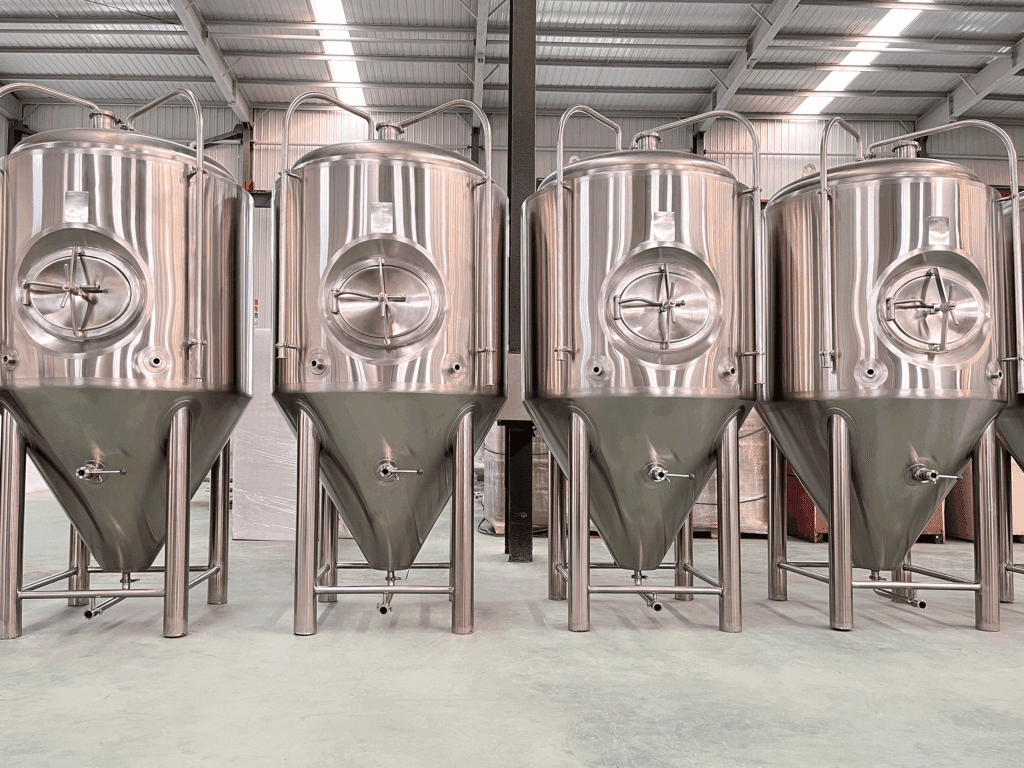
For commercial production, stainless steel is one of the most practical materials for fermenting vessels. It offers strength, durability, corrosion resistance, and a smooth product-contact surface that supports regular cleaning.
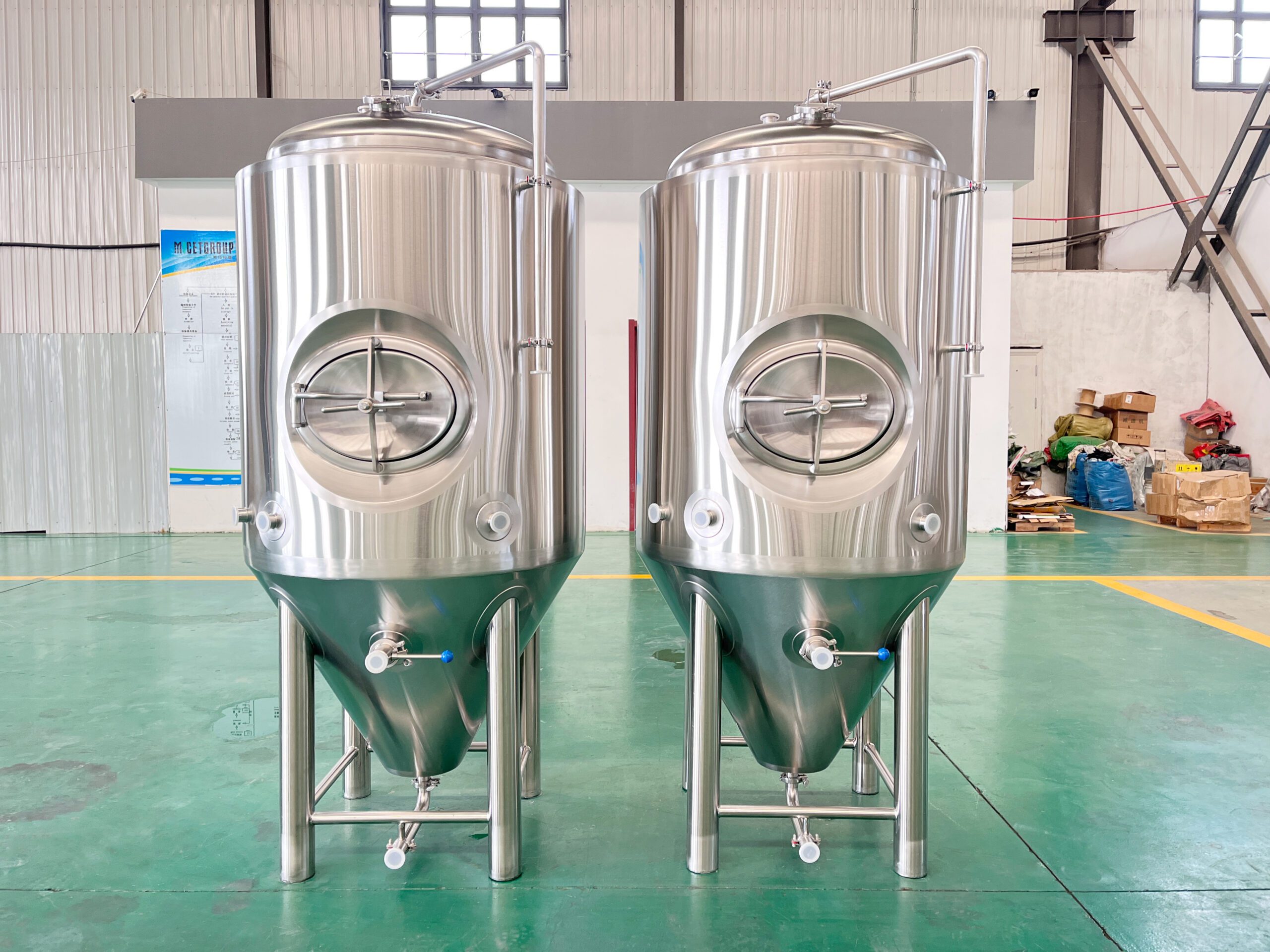
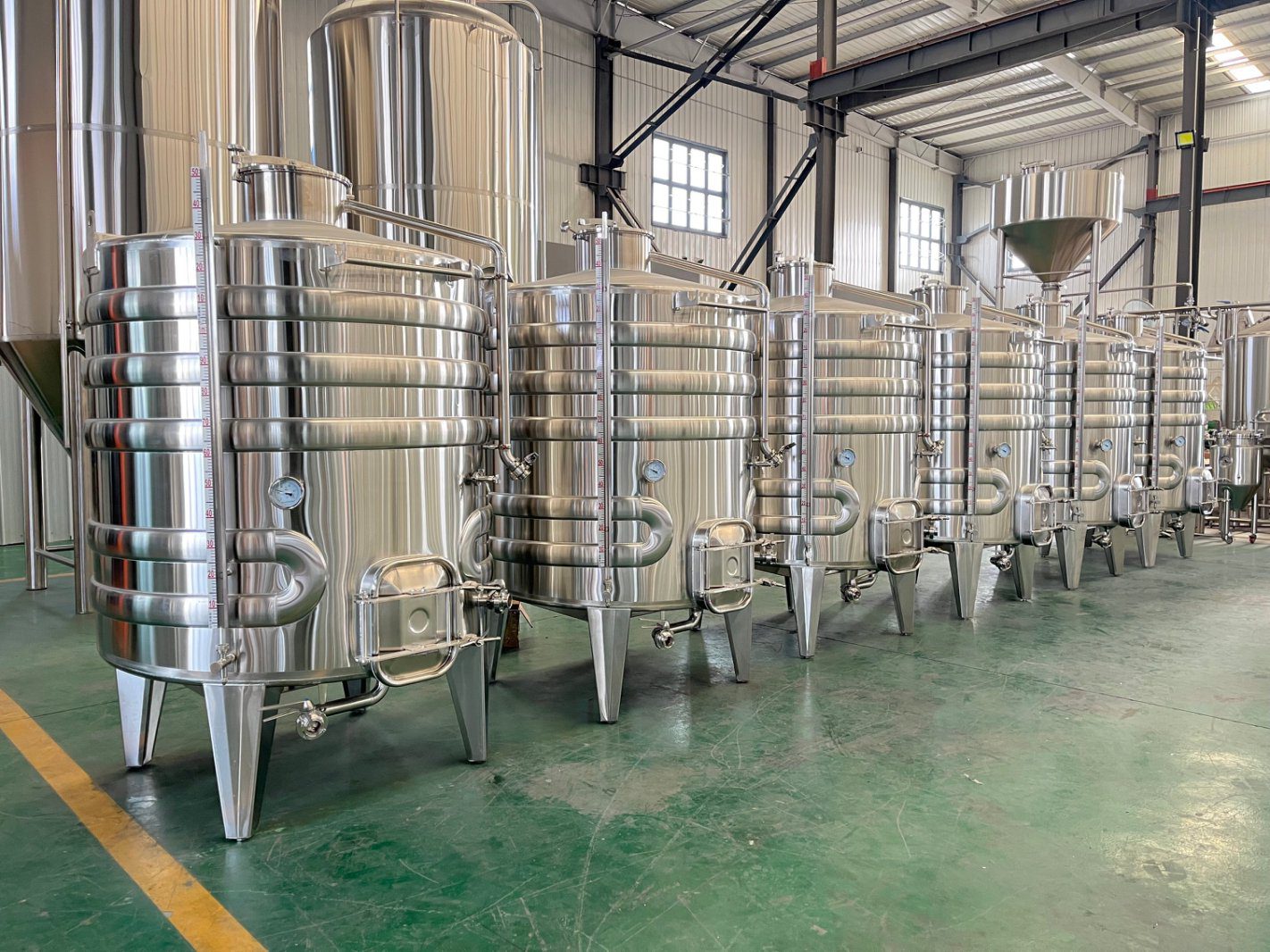
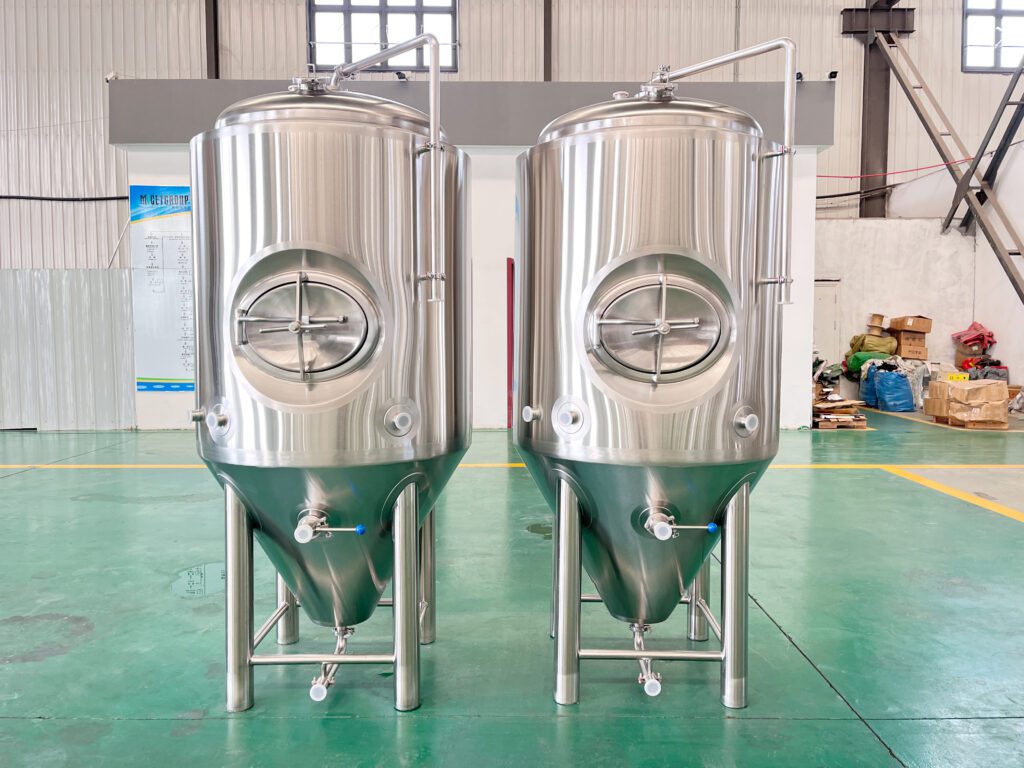
Unlike glass jars and plastic buckets, industrial stainless steel tanks can be customized according to production capacity and process requirements. They can include conical bottoms, cooling jackets, insulation, manways, sampling valves, pressure relief devices, and CIP cleaning systems.
The two common material choices are SUS304 and SUS316L stainless steel.
| Материал | Main Characteristics | Typical Applications |
|---|---|---|
| SUS304 | Good corrosion resistance and general food-processing suitability | Beer, cider, and many beverage applications |
| SUS316L | Enhanced resistance to certain corrosive environments | Selected wine, beverage, and demanding process applications |
The final material should be selected according to the product chemistry, operating temperature, cleaning chemicals, and expected service conditions.
Important Features of a Commercial Fermenter
A professional fermentation tank can include:
- Conical bottom: Helps collect yeast and sediment and supports product discharge.
- Cooling jacket: Allows controlled cooling during fermentation.
- Temperature sensor: Monitors internal product temperature.
- Manway: Provides access for inspection and maintenance.
- Sampling valve: Allows operators to collect samples without opening the tank.
- CIP spray ball: Supports internal cleaning.
- Pressure relief valve: Protects pressure-rated vessels within their design limits.
For commercial breweries, stainless steel tanks can also be designed for different fermentation methods, from atmospheric fermentation to controlled-pressure operation.
MICET manufactures customized stainless steel fermentation equipment for breweries, wineries, cideries, kombucha producers, and beverage manufacturers. Available configurations can be adapted to batch volume, product type, temperature requirements, and factory layout.
Explore our fermentation tank solutions for commercial production applications.
7. How Do Lids, Airlocks, and Valves Affect Fermentation?
The lid and gas-management system are important parts of the fermentation container. They help control the exchange of air and gas while protecting the product from dust, insects, and unwanted microorganisms.
For many traditional vegetable fermentation projects, an airlock allows carbon dioxide to escape while limiting oxygen entering the container. The vegetables should also remain below the brine surface. Illinois Extension recommends keeping fermented vegetables approximately 1–2 inches beneath the brine.
However, not every fermentation process should be airtight. First-stage kombucha fermentation, for example, requires oxygen exposure. A breathable cover is more suitable than a sealed lid. Beer and wine fermentation generally use closed systems with controlled gas release.
For commercial fermenting vessels, additional components may include:
- Sanitary butterfly valves.
- Pressure relief valves.
- Sampling valves.
- CO₂ inlet connections.
- CIP return connections.
- Product discharge outlets.
The right configuration depends on whether the process needs oxygen, controlled gas release, or pressure retention.
Never seal a non-pressure-rated container during active gas-producing fermentation. Carbon dioxide can build pressure and cause the lid or container to fail.
8. Why Are Temperature Control and Pressure Important?
Fermentation temperature affects microorganism activity, fermentation speed, and product quality. If the temperature becomes too high or too low, the process may develop unwanted flavors or become slower and less predictable.
A small glass jar may rely on room temperature, but a commercial fermenter often needs more accurate temperature control. This is especially important for breweries and wineries that process larger batches and need consistent results.
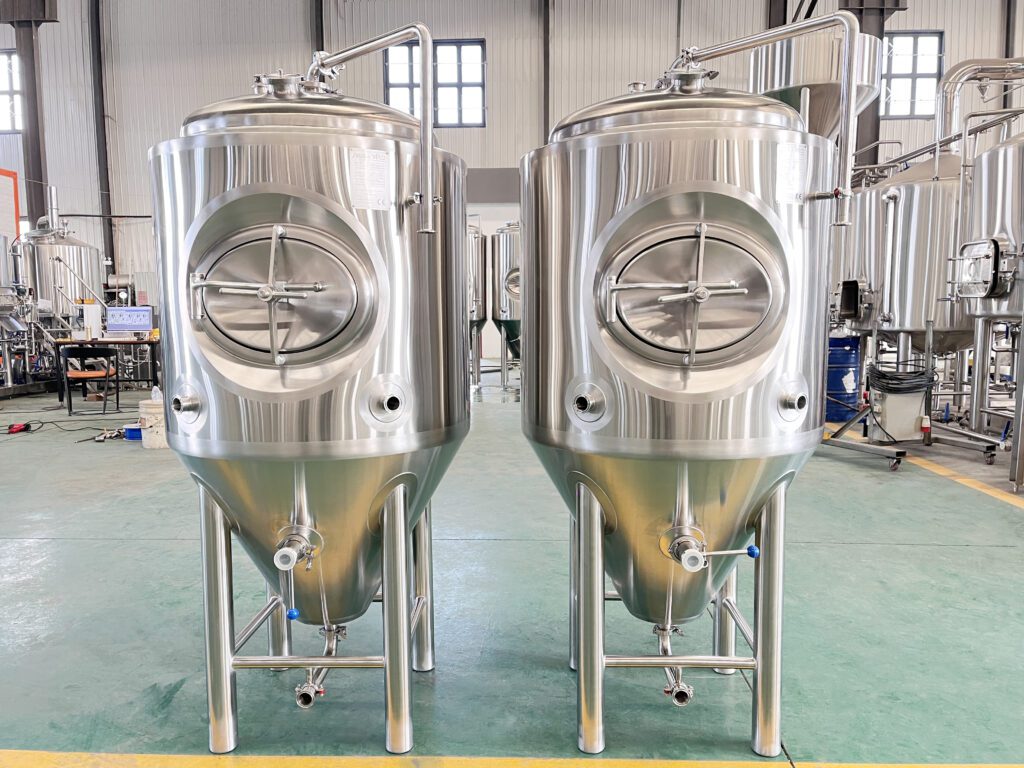
A jacketed fermentation tank uses a heating or cooling medium to manage product temperature. Glycol cooling systems are commonly used in commercial brewing because they can remove heat through the tank wall without direct contact with the product.
Pressure is another important consideration. Yeast produces carbon dioxide during alcoholic fermentation. If a tank is designed for pressure fermentation, it must have the correct pressure rating, fittings, monitoring instruments, and safety devices.
| Характеристика | Назначение | Commercial Benefit |
|---|---|---|
| Охлаждающая рубашка | Removes fermentation heat | More stable temperature |
| Изоляция | Reduces heat transfer | Improved energy efficiency |
| PT100 sensor | Measures product temperature | Better process monitoring |
| Pressure gauge | Displays internal pressure | Improved operating control |
| Pressure relief valve | Protects against excess pressure | Safer operation |
| Система CIP | Cleans internal surfaces | More consistent hygiene |
Not all fermentation tanks are pressure-rated. Buyers should confirm the design pressure and working pressure before using a tank for pressure fermentation or carbonation.
9. How Do You Choose the Right Vessel Size and Price Range?
The correct vessel size depends on the amount of product you need to ferment, the fermentation time, and the number of batches you plan to produce.
For small fermentation projects, a few glass jars may be enough. A small brewery may need several fermenters to support different recipes and production schedules. A large commercial facility may require multiple tanks operating at the same time.
When calculating vessel size, consider:
- Required working volume per batch.
- Space needed for foam and gas.
- Expected fermentation time.
- Number of products or recipes.
- Cleaning and transfer time.
- Future production growth.
Do not confuse total tank capacity with working capacity. A vessel needs enough headspace for the process. Filling it completely may cause foam or product to enter the gas outlet during active fermentation.
What Affects Fermentation Vessel Price Ranges?
The cost of a vessel varies significantly according to material, capacity, construction, and accessories.
| Cost Factor | How It Affects the Investment |
|---|---|
| Материал | SUS304 and SUS316L have different costs |
| Вместимость | Larger tanks require more material and structural support |
| Охлаждающая рубашка | Adds cooling connections and construction requirements |
| Pressure rating | Requires suitable structural design and safety components |
| Изоляция | Adds material and manufacturing costs |
| Автоматизация | Sensors and control systems increase the equipment scope |
| CIP configuration | Adds cleaning components and connections |
| Customization | Special dimensions and fittings affect manufacturing costs |
For larger production facilities, the cheapest tank is not always the most economical choice. Maintenance, cleaning time, energy consumption, and product losses also affect the total cost of ownership.
10. How Should Commercial Buyers Choose a Fermentation Tank?
For a brewery, winery, or beverage factory, choosing the right fermentation vessel is an engineering decision rather than a simple material comparison.
A commercial buyer should start with the product and process. Beer, wine, cider, kombucha, and other fermented beverages may require different vessel structures, oxygen conditions, temperature ranges, and pressure capabilities.
A practical purchasing checklist includes:
| Requirement | What to Confirm |
|---|---|
| Продукт | Beer, wine, cider, kombucha, or another beverage |
| Размер партии | Required working volume |
| Материал | SUS304 or SUS316L |
| Tank structure | Conical, cylindrical, open-top, or other design |
| Температура | Heating, cooling, or ambient operation |
| Pressure | Atmospheric or pressure-rated design |
| Очистка | Manual cleaning or CIP |
| Accessories | Manway, valves, sampling ports, and sensors |
| Installation | Available floor space and utility connections |
| Expansion | Future production and additional tank requirements |
An Illustrative Commercial Selection Example
Consider a craft brewery moving from small experimental batches to a 1,000L commercial production target.
Instead of purchasing one large container without considering the entire process, the brewery should review the required working volume, fermentation schedule, yeast collection method, cooling capacity, and packaging plan.
A suitable configuration might include:
- A 1,000L working-volume conical fermenter.
- A glycol cooling jacket.
- SUS304 stainless steel construction.
- PT100 temperature monitoring.
- A sanitary sampling valve and discharge outlet.
- CIP cleaning connections.
- A pressure relief system if the vessel is designed for pressure operation.
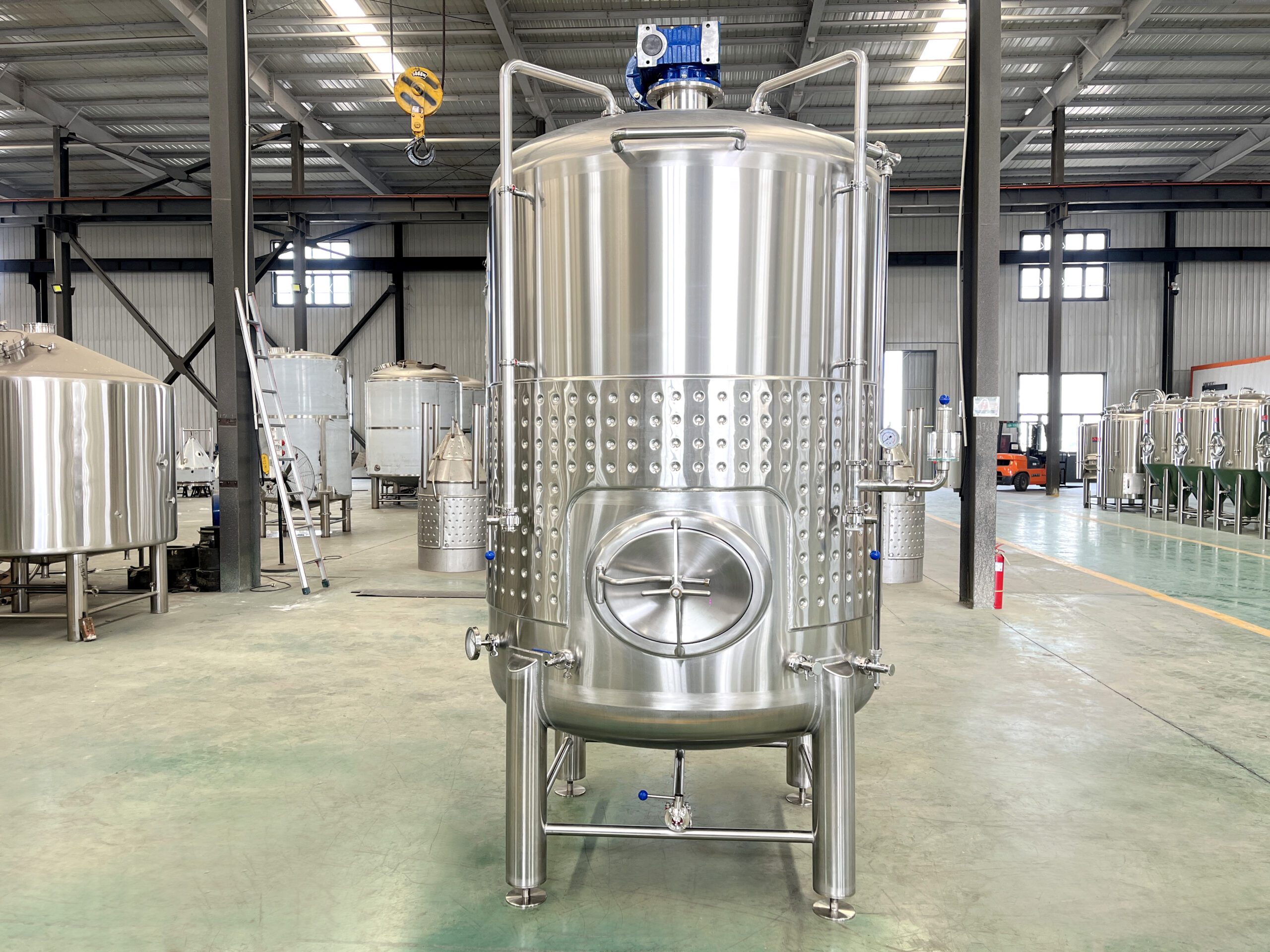
If the brewery also needs separate beer maturation or carbonation, a separate brite tank may be appropriate.
This is an illustrative engineering scenario, not a published customer installation. The actual vessel configuration must be confirmed against the brewery’s recipe, production schedule, and site conditions.
At MICET, we work with global B2B customers to design and manufacture customized brewing and fermentation systems. Our engineering support includes capacity planning, tank configuration, CAD and 3D layout design, equipment integration, installation guidance, and long-term technical support.
Whether you are starting a microbrewery, expanding a winery, or developing a commercial beverage facility, the right vessel should support both today’s production and future growth.
Contact MICET with your product type, target batch volume, and technical requirements to discuss a customized fermentation tank solution.
Frequently Asked Questions (FAQ)
Which vessel is best for fermentation?
It depends on the product and production scale. Glass jars are suitable for small batches, ceramic crocks work well for fermented vegetables, and food-grade plastic buckets are useful for basic home fermentation. Stainless steel tanks are generally preferred for commercial beverage production.
Can I use a plastic bucket for fermentation?
Yes. You can use a food-grade plastic bucket designed for food contact. Check its chemical resistance, temperature rating, and surface condition. Avoid scratched, damaged, or unidentified plastic containers.
Is stainless steel better than glass for fermentation?
For commercial production, stainless steel usually offers better durability, scalability, and integration with temperature control and CIP systems. Glass is useful for small batches because it is transparent and does not easily react with acidic ingredients.
Does every fermentation vessel need an airlock?
No. An airlock is useful for many closed fermentation processes because it allows gas to escape while limiting oxygen exposure. However, some processes, such as the first stage of kombucha fermentation, require oxygen and a breathable cover.
What size fermentation tank should I buy?
Choose the size according to your working batch volume, fermentation time, production schedule, and future expansion plans. Always leave enough headspace and consider whether multiple tanks would provide better production flexibility.
What stainless steel is suitable for fermentation tanks?
SUS304 is suitable for many standard beverage applications, while SUS316L may be preferred for products or cleaning environments with more demanding corrosion requirements. The final choice should be based on product chemistry and operating conditions.
Основные выводы
- The best fermentation vessel depends on the product, process, and production scale.
- Glass jars and carboys are useful for small batches and recipe testing.
- Food-grade plastic buckets offer an affordable option but require careful material selection.
- Ceramic crocks are particularly suitable for traditional vegetable fermentation.
- Stainless steel tanks are generally the preferred option for commercial breweries and beverage manufacturers.
- Temperature control, pressure rating, oxygen management, and cleaning design affect fermentation performance.
- Always distinguish between total tank volume and effective working volume.
- Choose SUS304 or SUS316L according to the product and operating environment.
- Consider future production growth before purchasing equipment.
- Work with an experienced manufacturer to ensure the vessel matches your process, layout, and long-term production goals.