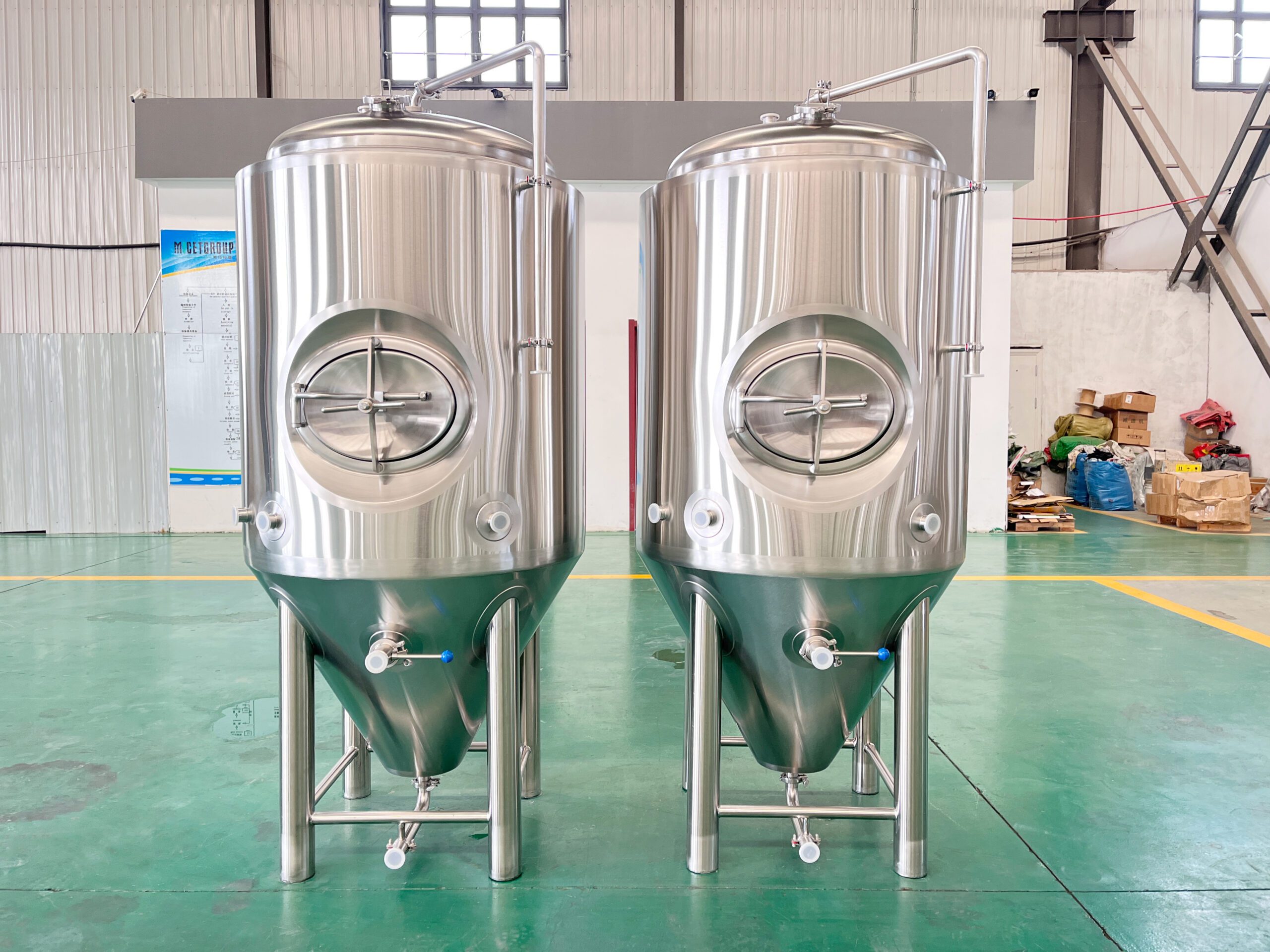


Choosing a supplier from headline prices alone can leave a brewery with missing pumps, undersized cooling, or unclear installation duties. When every quote uses a different scope, comparison becomes guesswork. A structured RFQ gives every supplier the same brief and makes technical gaps visible before you sign.
To compare craft beer equipment suppliers, send each one the same request for quotation (RFQ), including your production target, brewhouse specifications, tank requirements, utilities, packaging needs, and delivery scope. Then compare working capacity, materials, included equipment, exclusions, testing, installation, warranty, and total project cost—not just the headline price.
Конспект статьи
- Why Do Craft Beer Equipment Suppliers Provide Different Quotes?
- What Information Should You Include in a Brewery Equipment RFQ?
- How Do You Compare Brewhouse, Mash Tun, and Kettle Specifications?
- Which Stainless Steel and Fabrication Standards Should You Request?
- How Should You Specify Fermenters, Brite Tanks, Cooling, and CIP?
- What Auxiliary Equipment and Essential Connections Should Be Included?
- How Do You Compare Automation, Control Systems, and Testing?
- Which Bottle, Keg, Can, and Draft Packaging Requirements Matter?
- How Should You Compare Equipment Prices, Delivery, and Warranty?
- What Should You Confirm Before Signing the Brewery Equipment Contract?
1. Why Do Craft Beer Equipment Suppliers Provide Different Quotes?
When contacting several craft beer equipment suppliers, buyers often receive quotations with very different prices. One supplier may offer a complete brewing system, while another only includes the main stainless steel vessels. Both may describe their offers as a complete brewery package.
This creates a serious problem. A lower quotation does not always represent a lower project cost. Missing pumps, cooling equipment, electrical connections, cleaning systems, and installation services may need to be purchased separately.
The first step is to understand that every supplier must quote against the same technical requirements.
For example, a brewery requiring a 1,000L working-volume brewhouse should clarify whether the supplier is quoting:
- 1,000L nominal vessel capacity or working output
- A complete brewhouse or individual vessels
- Fermentation tanks and bright beer tanks
- Glycol cooling and temperature controls
- CIP cleaning equipment
- Pumps, valves, pipes, and fittings
- Packaging and filling equipment
- Installation and commissioning support
A retail homebrew kit or BIAB brewing setup serves a different purpose from a professional commercial brewing system. Small-scale beer kits are useful for recipe development, but they should not be used as the benchmark when evaluating industrial equipment quotations.
The goal is to compare complete technical solutions, not simply compare product prices.
2. What Information Should You Include in a Brewery Equipment RFQ?
A good RFQ helps manufacturers understand the project before they prepare a quotation. Without enough information, even an experienced supplier may make assumptions about capacity, utilities, and equipment configuration.
Before contacting suppliers, prepare a short project brief.
| RFQ Information | Details to Provide |
|---|---|
| Project type | New brewery, brewpub, expansion, or replacement |
| Beverage | Craft beer and intended beer styles |
| Batch capacity | 300L, 500L, 1000L, 2000L, or BBL |
| Annual output | Expected yearly production |
| Brewing frequency | Batches per day and brew days per week |
| Ферментация | Required number and working volume of tanks |
| Упаковка | Bottle, can, keg, or draft |
| Автоматизация | Manual, semi-automatic, or automatic |
| Building | Floor plan, ceiling height, and available space |
| Utilities | Voltage, frequency, water, heating, and cooling |
| Budget | Expected investment range |
| Schedule | Target manufacturing and installation dates |
You should also describe your future production plans. A startup may initially need a compact brewing system, but it should consider whether additional fermenters or packaging capacity will be needed within the next few years.
At MICET, we use these details to understand the complete project rather than recommend equipment based only on one capacity figure. Our customized stainless steel brewing systems, fermentation tanks, and turnkey solutions can be configured around the customer’s production goals and facility conditions.
A simple RFQ request template
You can send the following information to each supplier:
- Project location and company background
- Target batch size and annual beer output
- Preferred brewhouse configuration
- Fermentation tank quantity and capacity
- Required stainless steel grade
- Heating and cooling preferences
- Packaging format
- Automation requirements
- Building drawings and utility information
- Required delivery schedule
This gives every supplier a common starting point and reduces unnecessary communication.
3. How Do You Compare Brewhouse, Mash Tun, and Kettle Specifications?
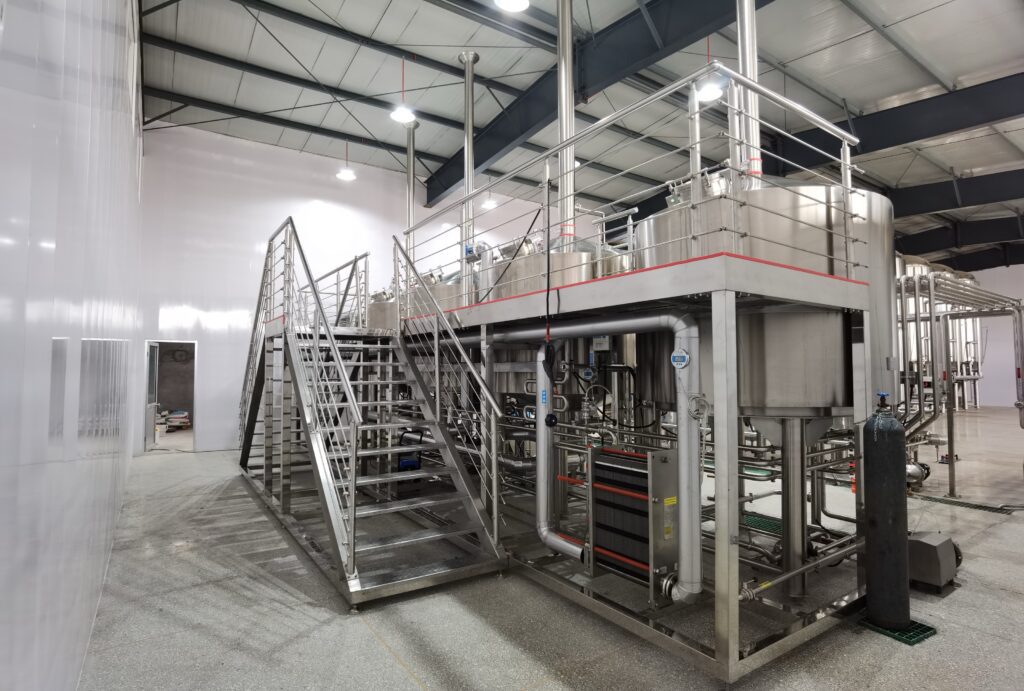
The brewhouse is the core of a brewery. Its design influences production speed, wort quality, energy use, and the number of batches operators can complete.
However, a 1,000L brewhouse from one supplier may not deliver the same practical output as another supplier’s 1,000L system.
Ask suppliers to state the working volume, total vessel volume, expected wort output, and operating assumptions separately.
Compare the main brewing vessels
| Оборудование | Important Specifications |
|---|---|
| Mash tun | Working volume, heating method, agitator, insulation |
| Lauter tun | False bottom, raking system, drainage |
| Brew kettle | Working volume, heating capacity, vapor outlet |
| Whirlpool | Tangential inlet, separation design, drainage |
| Hot liquor tank | Capacity, heating, insulation, temperature control |
| Heat exchanger | Cooling capacity, plate area, connections |
The number of vessels also affects the brewing workflow.
A two-vessel system combines selected functions to reduce the footprint and initial equipment investment. A three-vessel system separates more process stages, which may improve scheduling flexibility. A four-vessel arrangement may be suitable for more complex recipes or higher production demands.
Neither configuration is automatically better. The correct choice depends on production frequency, available space, recipe requirements, and operator workload.
For a useful reference, compare MICET’s 300L Three-Vessel Craft Beer Brewing System и 1000L Three-Vessel Craft Beer Brewing Equipment.
When comparing proposals, ask suppliers to explain how the mash, lautering, boiling, and wort transfer stages work together. A good technical proposal should show the complete brewing process rather than only list vessel names.
4. Which Stainless Steel and Fabrication Standards Should You Request?
Stainless steel quality is a major factor in the long-term performance of professional brewing equipment.
However, simply stating that a tank is made from food-grade stainless steel is not enough. Buyers should request clear material and fabrication specifications.
Important material and construction details
| Технические характеристики | What to Confirm |
|---|---|
| Material grade | SUS304 or SUS316L, according to application |
| Inner shell thickness | Actual thickness in millimeters |
| Outer shell | Material and thickness |
| Surface finish | Internal polishing requirements |
| Welding | Welding process and inspection requirements |
| Изоляция | Type and thickness |
| Охлаждающая рубашка | Structure, coverage, and design conditions |
| Pressure rating | Design, working, and test pressure where applicable |
| Fittings | Sanitary connection types and dimensions |
The internal surface deserves particular attention. Poor welds, rough areas, and difficult-to-clean connections may allow product residue to remain inside the vessel.
For breweries, sanitary design should support effective cleaning and inspection. The EHEDG Hygienic Design Principles provide a useful reference for buyers reviewing food-processing equipment design.
Pressure-rated vessels require additional attention. Ask the supplier which design code and local requirements apply to the project, and request documentation for the specific equipment rather than relying on a general company certificate.
The ASME Boiler and Pressure Vessel Code is one important reference for projects where ASME pressure-vessel construction is required.
Do not compare tanks based on appearance alone. Compare documented materials, construction, pressure requirements, and cleaning design.
5. How Should You Specify Fermenters, Brite Tanks, Cooling, and CIP?
The fermentation cellar can become a major production bottleneck if its capacity does not match the brewhouse.
For this reason, suppliers should quote the fermentation system according to your actual production schedule.
Do not simply request four fermenters without explaining their intended working volume or how often you plan to brew.
For each fermenter, specify:
- Working and total capacity
- Tank dimensions
- Stainless steel grade
- Internal and external shell thickness
- Cooling jacket arrangement
- Insulation requirements
- Temperature sensors
- Manway and sampling valves
- CIP spray ball
- Pressure rating, where required
- Bottom outlet and yeast discharge arrangement
Brite tanks should be specified separately. Their requirements may include carbonation stones, pressure controls, cooling jackets, sampling connections, and packaging outlets.
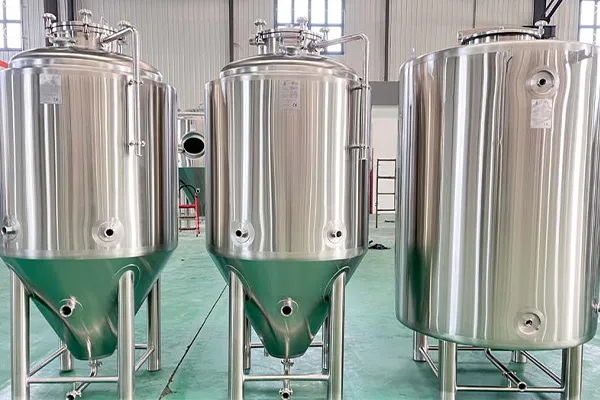
Cooling and CIP must be quoted as connected systems
A fermenter with a glycol jacket cannot provide effective cooling without a correctly sized chiller, glycol circulation pump, and distribution system.
Ask each supplier to explain the cooling load assumptions and how the chiller supports simultaneous fermentation, cooling, and other operations.
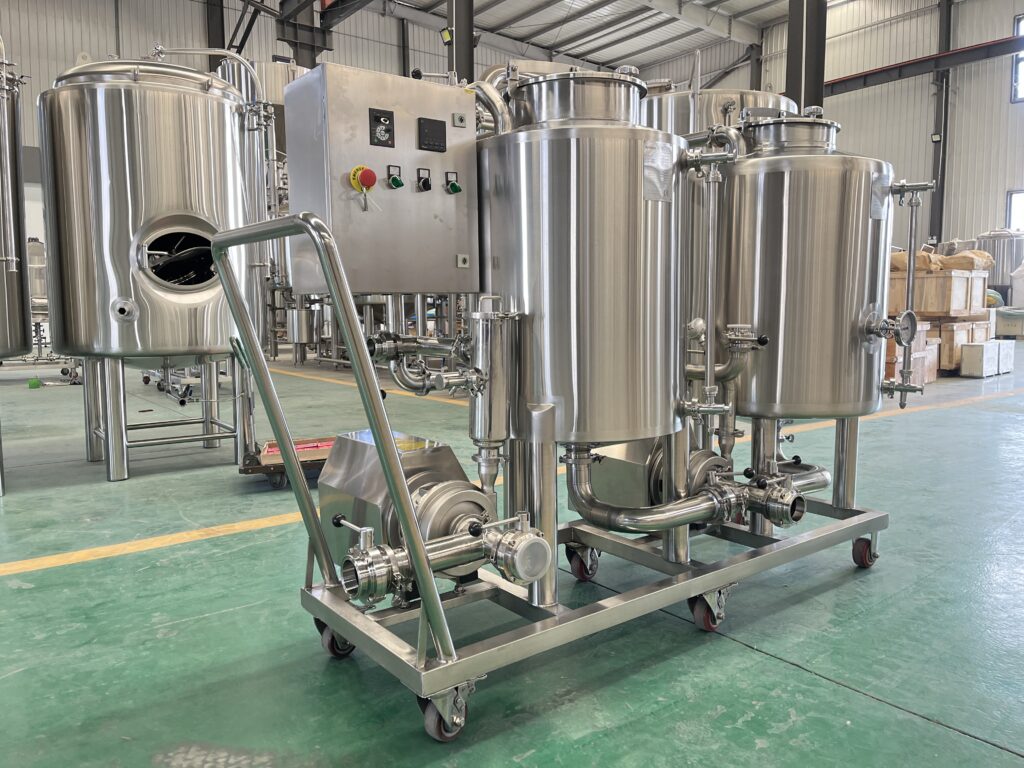
The CIP system also needs to match the number and size of vessels. Request details about cleaning tanks, pumps, circulation flow, pipelines, spray devices, and control arrangements.
MICET provides commercial fermentation tanks, bright beer tanks, cooling systems, and cleaning solutions as part of customized brewery projects. Buyers can explore our Fermentation Tank Equipment range when preparing their RFQ.
6. What Auxiliary Equipment and Essential Connections Should Be Included?
A brewery needs more than a brewhouse and fermenters. Supporting equipment connects the production stages and helps operators move ingredients, wort, beer, water, and cleaning solutions.
When comparing suppliers, pay close attention to auxiliary equipment because it is often excluded from basic quotations.
| Оборудование | Procurement Details |
|---|---|
| Malt mill | Capacity, motor power, roller configuration |
| Насосы | Flow rate, motor power, material |
| Plate heat exchanger | Heat exchange area and cooling performance |
| Glycol chiller | Cooling capacity and operating conditions |
| Glycol tank | Working volume and insulation |
| CIP skid | Tank quantity, pump capacity, controls |
| Water treatment | Required treatment capacity |
| Steam boiler | Heating capacity and local utility compatibility |
| Air compressor | Pressure and air demand |
| CO2 system | Supply and connection requirements |
| Piping | Material, diameter, and installation scope |
| Valves and fittings | Type, size, quantity, and connection standard |
Small components matter too. Tubing, gaskets, clamps, valve handles, sensors, and spare parts should be included in the equipment schedule.
For example, a quotation may include the main pumps but exclude the sanitary fittings needed to connect them to the tanks. Another supplier may include complete piping and connection accessories.
The difference affects both cost and installation time.
Ask for a complete Bill of Materials (BOM) showing the quantity, specification, and supply responsibility for each item. If the project includes a mobile service cart, access platform, or maintenance equipment, list those separately as well.
This makes it easier to identify missing items before production begins.
7. How Do You Compare Automation, Control Systems, and Testing?
Automation affects how operators control the brewing process. It can improve repeatability, reduce manual work, and make production easier to monitor.
However, more automation does not always mean better equipment.
A small craft brewery may work well with a manual or semi-automatic system. A larger production facility may benefit from PLC control, HMI operation, variable-frequency drives, and automatic process sequences.
When comparing suppliers, ask them to provide:
- Control panel specifications
- PLC and HMI configuration
- Temperature and pressure sensors
- Pump and motor control
- Valve operation method
- Alarm and safety functions
- Manual override options
- Electrical diagrams
- Operating instructions
- Automation testing scope
What should be tested before shipment?
A Factory Acceptance Test (FAT) helps buyers check agreed equipment functions before shipment.
The test plan should match the equipment and contract. It may cover:
- Equipment quantity and appearance.
- Material and specification verification.
- Welding and surface inspection.
- Motor and pump operation.
- Sensor and controller response.
- Valve and connection checks.
- Control panel operation.
- Pressure or leak testing where applicable.
- Documentation and packing inspection.
Do not simply write “FAT included” in the purchase contract. Define what will be tested, what records will be supplied, and which party must approve the results.
For automated brewing systems, request a demonstration of the agreed operating sequence. The brewer should be able to understand how the system handles each stage and what happens when an alarm occurs.
8. Which Bottle, Keg, Can, and Draft Packaging Requirements Matter?
Packaging is another area where equipment quotations can differ significantly.
A brewery selling mainly through its taproom may prioritize kegs and draft service. A brewery supplying retailers may need bottle or can filling equipment.
Before requesting a quotation, decide which packaging formats you will use during the first stage of operation.
| Формат упаковки | Main Equipment | Key Requirements |
|---|---|---|
| Bottle | Rinser, bottle filler, capper | Filling accuracy and oxygen control |
| Can | Can filler and seamer | Filling performance and sealing |
| Keg | Keg washer and filler | Cleaning and filling sequence |
| Draft | Keg system and dispensing equipment | Pressure, temperature, and line design |
| Growlers | Suitable filling equipment | Filling hygiene and handling |
If your business plans to sell beer in bottles, specify the bottle size, filling speed, filling method, and bottle closure type. Also confirm whether bottle caps, cappers, rinsing equipment, labeling, and packaging accessories are included.
For keg and draft operations, check couplers, filling connections, cleaning equipment, and gas requirements.
MICET supplies Оборудование для упаковки пива for bottle, can, and keg applications. Share your brewhouse capacity and packaging plans so the filling equipment can be matched to the production system.
9. How Should You Compare Equipment Prices, Delivery, and Warranty?
Once technical proposals are received, the next step is commercial comparison.
The most common mistake is selecting the lowest price without checking the full scope.
A better approach is to create a quotation comparison sheet.
Supplier quotation comparison template
| Evaluation Item | Supplier A | Supplier B | Supplier C |
|---|---|---|---|
| Brewhouse configuration | |||
| Рабочий объем | |||
| Fermentation tanks | |||
| Stainless steel grade | |||
| Cooling system | |||
| Система CIP | |||
| Pumps and fittings | |||
| Control system | |||
| Packaging equipment | |||
| Technical drawings | |||
| FAT and inspection | |||
| Installation support | |||
| Гарантия | |||
| Spare parts | |||
| Manufacturing lead time | |||
| Shipping terms | |||
| Total quoted price |
Use three labels when comparing every item:
- Included: Clearly included in the supplier’s quotation.
- Excluded: Must be purchased separately.
- Clarification required: The quotation does not provide enough information.
Consider the total project cost
The equipment purchase price is only one part of the investment.
Other costs may include:
- International transportation
- Customs duties and import taxes
- Insurance
- Unloading and lifting
- Site preparation
- Electrical and plumbing work
- Installation and commissioning
- Operator training
- Spare parts and maintenance
Shipping terms should be written clearly. Confirm the named delivery location, the applicable Incoterms edition, and who is responsible for freight, insurance, customs clearance, unloading, and final delivery.
Warranty terms also deserve attention. Ask what components are covered, when the warranty starts, how replacement parts are supplied, and who pays for transportation or technical service.
A well-prepared quotation comparison makes hidden costs visible before the purchase order is signed.
10. What Should You Confirm Before Signing the Brewery Equipment Contract?
Once the technical and commercial comparison is complete, the final step is to convert the approved proposal into a clear purchase contract.
Do not rely only on emails or general product descriptions. Important specifications should appear in the contract or its approved technical attachments.
Documents to confirm before manufacturing
| Document | Назначение |
|---|---|
| Technical specification | Confirms materials, capacity, and equipment features |
| General arrangement drawing | Shows equipment dimensions and positions |
| P&ID | Explains process piping, valves, and instruments |
| Electrical diagram | Defines power and control connections |
| Equipment list | Confirms quantity and configuration |
| Utility schedule | Defines water, electricity, heating, and cooling needs |
| Quality inspection plan | Defines inspection and testing |
| Delivery schedule | Establishes manufacturing and shipping milestones |
| Warranty document | Defines coverage and responsibilities |
| Operation manual | Supports safe operation and maintenance |
The contract should also clarify the responsibility of the buyer and supplier.
For example, the equipment manufacturer may supply the vessels, control panels, and specified piping, while the buyer arranges local electrical connections, building work, drainage, and lifting services.
These boundaries should be agreed before production.
What happens after the equipment arrives?
The project does not end when the equipment reaches the destination.
A proper handover may involve:
- Equipment installation
- Utility connection checks
- Pipeline inspection
- Electrical commissioning
- Control system testing
- Cleaning verification
- Operator training
- Final documentation
- Spare-parts handover
A Site Acceptance Test (SAT) can be used to verify agreed functions after installation. Its scope should be defined before shipment so the buyer and supplier understand the acceptance criteria.
How can MICET support your brewery project?
MICET is a professional brewery and beverage equipment manufacturing plant providing customized stainless steel brewing systems, fermentation tanks, brewhouse systems, and turnkey brewery solutions for global B2B customers.
Our engineering approach focuses on matching equipment to the real production process.
We can support project planning through:
- Customized brewhouse and fermentation configurations
- Equipment manufacturing and fabrication
- CAD and 3D brewery layout planning
- Process and equipment integration
- Cooling and CIP system planning
- Technical documentation
- Export packing and shipping coordination
- Installation guidance and commissioning support
- Long-term technical and after-sales service
We serve craft breweries, brewpubs, taprooms, microbreweries, commercial breweries, beverage startups, and engineering contractors.
We also offer new, used, and selected refurbished equipment options for projects with different investment requirements.
Rather than recommending the most expensive package, we focus on the configuration that matches your production target, building conditions, and future expansion plans.
If you are comparing craft beer equipment suppliers for a new brewery or expansion project, send MICET your RFQ, building layout, target capacity, and preferred equipment configuration. Our engineering team can review your requirements and prepare a project-specific proposal.
Frequently Asked Questions
How many craft beer equipment suppliers should I contact?
Contacting three to five qualified suppliers is a practical starting point for many projects. More important than the number is ensuring that every supplier receives the same technical brief, equipment list, and commercial requirements.
What information should I send when requesting a brewery equipment quotation?
Provide your target batch size, annual production, brewhouse configuration, fermentation capacity, packaging method, building dimensions, utility information, automation preference, and delivery schedule. A site drawing is also useful for accurate layout planning.
Should I choose the cheapest brewery equipment supplier?
Not necessarily. Compare the technical scope, material quality, included accessories, cooling, CIP, installation, shipping, warranty, and spare-parts support. A lower initial price may lead to higher total costs if important equipment or services are excluded.
Does a brewery equipment quotation include fermentation tanks?
Not always. Some suppliers quote only the brewhouse, while others provide a complete system. Always confirm the quantity, working capacity, cooling arrangement, pressure rating, fittings, and cleaning provisions for each tank.
What is a Factory Acceptance Test for brewing equipment?
A Factory Acceptance Test is an agreed inspection and testing process completed before equipment shipment. Depending on the contract, it may include visual inspection, specification checks, motor operation, control testing, and pressure or leak tests where applicable.
Can a brewery equipment manufacturer customize a complete brewing system?
Yes. A professional manufacturer can configure the brewhouse, fermenters, bright tanks, cooling, CIP, controls, and packaging connections according to production requirements and site conditions. Customization should be documented in approved technical drawings and specifications.
Основные выводы
- Contacting multiple craft beer equipment suppliers is only useful when they receive the same RFQ.
- A detailed project brief helps manufacturers prepare more accurate proposals.
- Compare actual working capacity instead of relying only on nominal tank volume.
- Check stainless steel grade, shell thickness, welding, surface finish, and pressure specifications.
- Include fermenters, brite tanks, cooling, CIP, pumps, and auxiliary equipment in the scope comparison.
- Confirm automation functions, electrical diagrams, and testing requirements.
- Packaging equipment should match your sales channels and expected output.
- Compare total project costs, not just the equipment purchase price.
- Confirm shipping terms, exclusions, warranty, and after-sales responsibilities in writing.
- Approve technical drawings and equipment specifications before manufacturing.
- Plan installation, commissioning, and operator training before shipment.
- Work with a manufacturer that understands both equipment fabrication and the complete brewery production process.
The best craft beer equipment supplier is not simply the one offering the lowest quotation. It is the one that can turn your production requirements into a clearly specified, technically matched, and commercially deliverable brewery system.