Starting an alcohol production business involves more than purchasing a still. Poor equipment selection, unsuitable production capacity, and inefficient process connections can increase operating costs and delay production. Working with experienced distillery plant manufacturers helps you build a system that matches your products, factory space, and long-term business goals.
알코올 증류 플랜트는 발효, 가열, 증기 분리, 응축 및 저장 장비를 사용하는 통합 생산 시설로, 위스키, 보드카, 진, 럼, 브랜디와 같은 주류를 생산합니다. 적합한 플랜트는 생산 용량과 제품 요구 사항에 따라 단식 증류기, 연속식 증류탑, 응축기, 발효 탱크, 저장 용기, 냉각 시스템 및 공정 제어 장치를 조합합니다.
기사 개요
- What Is an Alcohol Distillation Plant and How Does It Work?
- How Do Raw Materials and Fermentation Affect Distillery Plant Design?
- What Types of Distillation Equipment Do Modern Distilleries Need?
- 주종에 맞는 증류 시스템을 어떻게 선택해야 할까요?
- How Should You Plan Distillery Plant Capacity and Production Efficiency?
- 가열, 냉각 및 열교환기가 중요한 이유는 무엇인가요?
- What Materials and Safety Features Should a Distillery Plant Include?
- How Does Automation Improve Alcohol Production?
- 완전한 턴키 증류 플랜트에는 무엇이 포함되어야 할까요?
- How Do You Select the Right Alcohol Distillation Plant Manufacturer?
1. What Is an Alcohol Distillation Plant and How Does It Work?
An alcohol distillation plant is a facility designed to produce concentrated alcoholic spirits from fermented raw materials. It combines several production stages, including raw material preparation, fermentation, distillation, condensation, purification, storage, and packaging.
증류의 주된 목적은 발효액에서 알코올과 기타 휘발성 성분을 분리하는 것입니다. 이 공정은 휘발도와 비등 특성의 차이를 이용하여 필요한 알코올 농도와 제품 특성을 얻습니다. 증류업자는 생산하려는 증류주의 종류에 따라 설비 구성을 조정할 수 있습니다.
A typical beverage distillery plant includes:
| 장비 | Main Function |
|---|---|
| 원료 준비 시스템 | 곡물, 과일 또는 기타 원료를 준비합니다 |
| 매시 쿠커 | Supports preparation of grain-based materials |
| Fermentation tanks | 발효 가능한 당을 알코올로 전환 |
| 포트 스틸 | 전통적인 배치식 증류 지원 |
| Distillation column | 정밀한 분리 및 정류 지원 |
| 냉각기 | 알코올 증기를 액체로 변환 |
| Spirit collection tank | 증류액을 수집합니다 |
| 저장 및 블렌딩 탱크 | 완성된 증류주 보관 및 준비 |
| CIP 시스템 | 장비 세척 지원 |
| Control panel | Monitors and controls production parameters |
공정은 원료 준비 및 발효로 시작됩니다. 발효가 끝나면 액체는 증류 장치로 이동하며, 여기서 정밀하게 제어된 가열을 통해 증기가 발생합니다. 이후 응축기가 증기를 냉각하여 액체 상태의 증류주로 변환합니다.
For commercial producers, every stage must work together. A well-designed distillation system improves process stability, product consistency, and production efficiency.
2. 원료와 발효는 증류 플랜트 설계에 어떤 영향을 미칠까요?
Raw materials play an important role in determining the design of a distillery. Different materials require different preparation methods, fermentation conditions, and equipment configurations.
Common feedstock options include:
- 곡물: 보리, 밀, 옥수수 및 기타 곡류는 곡물 기반 증류주에 사용됩니다.
- Molasses: Commonly used in rum production.
- Fruit: Used for fruit brandy and other specialty spirits.
- 맥아: 위스키 및 몰트 스피릿 생산에 중요합니다.
- 당 기반 원료: 특정 발효 공정에 사용됩니다.
The preparation system should match the selected raw materials. For example, a grain-based distillery may need grain handling, milling, mashing, and wort or mash preparation equipment. A rum production line may require equipment suitable for handling molasses and sugar-based fermentation materials.
발효 용량이 왜 중요한가요?
Fermentation determines how much alcohol-containing liquid is available for the next production stage. If fermentation tanks cannot supply enough liquid, the distillation equipment may remain idle.
A commercial distillery should consider:
- Fermentation batch volume.
- 발효 사이클 시간
- Number of fermentation tanks.
- Raw material supply.
- 증류 전 필요한 알코올 농도.
- Distillation schedule.
A professional manufacturer should calculate the relationship between fermentation capacity and still capacity rather than selecting each machine separately.
For example, a whisky producer may require several fermentation tanks to maintain a regular supply of fermented wash. A vodka producer targeting high-purity neutral alcohol may need a different fermentation and rectification arrangement.
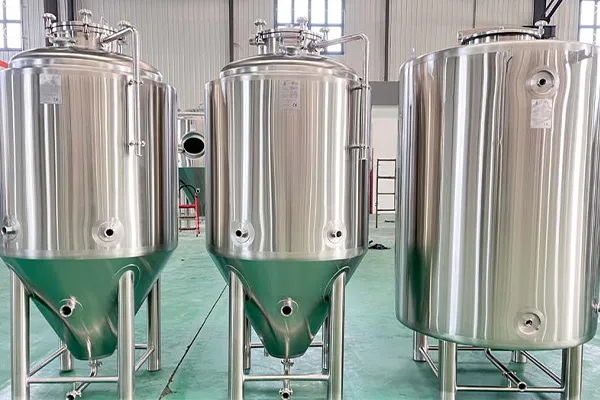
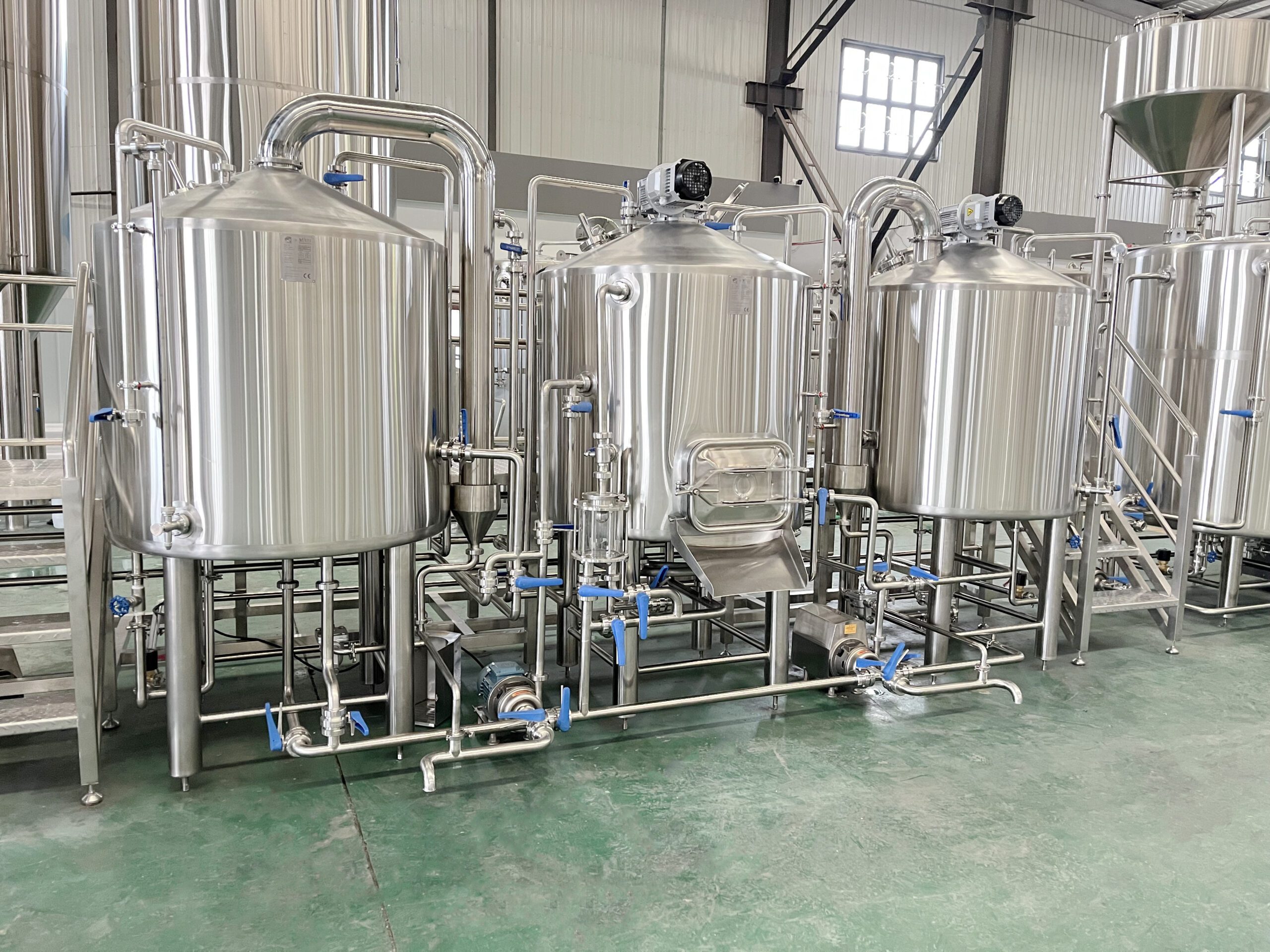
MICET provides customized fermentation tanks and distillery equipment for different beverage production requirements.
3. What Types of Distillation Equipment Do Modern Distilleries Need?
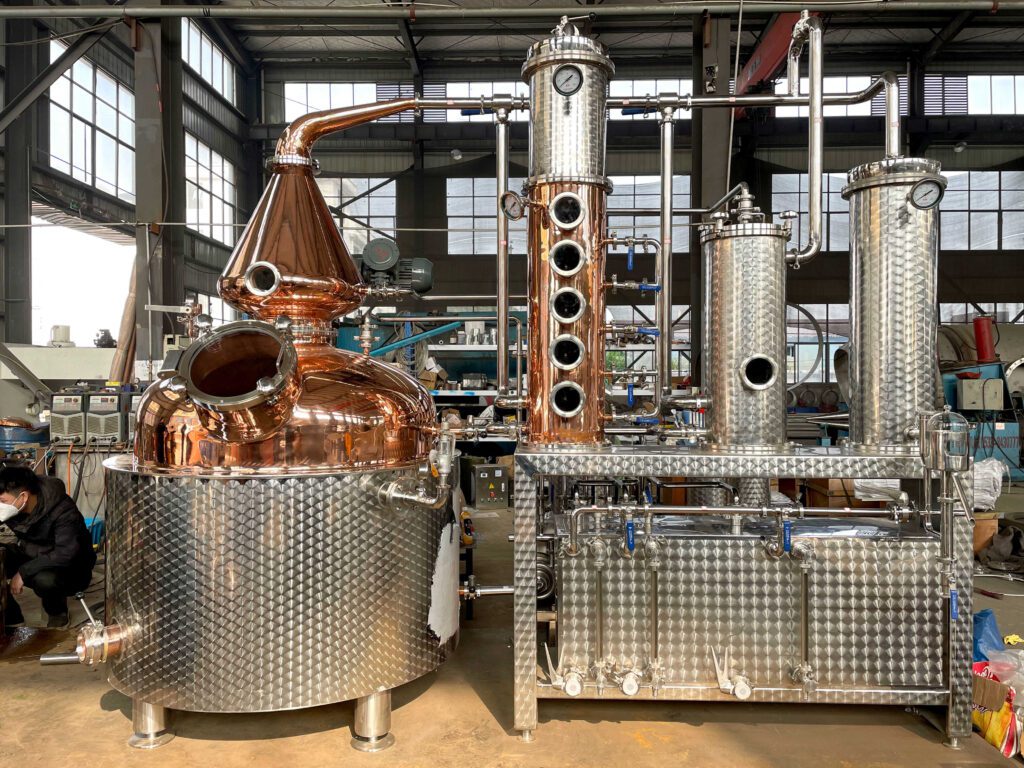
생산 규모, 주종 및 운전 방식에 따라 증류 플랜트마다 사용하는 장비가 다릅니다. 주요 증류기 구성은 단식 증류기, 연속식 증류탑 및 하이브리드 증류기입니다.
Pot Still Systems
Best suited for traditional batch spirit production.
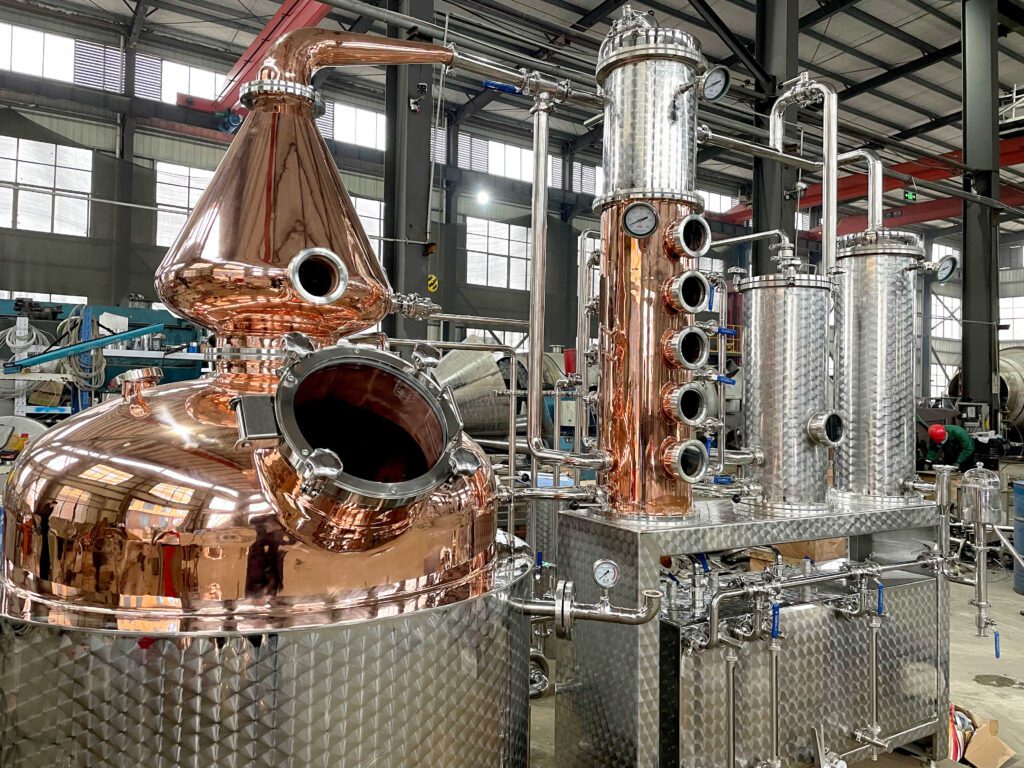
Pot stills are widely used for whisky, rum, brandy, and other flavor-focused spirits. They allow distillers to manage individual batches and adjust production conditions according to the recipe.
A typical pot still system includes:
- Distillation pot
- Heating system
- Still head or copper helmet
- 증기 파이프
- 냉각기
- Spirit collection equipment
Copper components are commonly selected for traditional spirit production because copper interacts with certain sulfur compounds during distillation.
Column Still Systems
Best suited for controlled separation and higher throughput.
A column still uses multiple separation stages to control vapor and liquid contact. The number and arrangement of plates or sections influence the separation performance.
Column systems are commonly used for vodka and neutral spirit production. They can also be configured for other applications that require specific separation characteristics.
Hybrid Still Systems
Best suited for producers making several spirit styles.
하이브리드 증류기는 단식 증류기(팟 스틸)와 연속식 증류기(컬럼 스틸)의 특성을 결합한 방식입니다. 이를 통해 여러 제품을 개발할 때 생산자에게 더 높은 유연성을 제공합니다.
| Still Type | Main Advantage | 일반적인 적용 분야 |
|---|---|---|
| 포트 스틸 | Traditional flavor development | 위스키, 럼, 브랜디 |
| 열 스틸 | Controlled separation and throughput | Vodka, neutral spirits |
| Hybrid Still | Flexible production | Multi-product distilleries |
MICET manufactures and customizes these three core configurations according to spirit style, batch size, and automation requirements.
4. How Do You Choose the Right Distillation System for Different Spirits?
증류 시스템 선택은 최종 제품에서 시작합니다. 위스키 증류소는 보드카 또는 진 생산 시설과 다른 장비 요구 사항을 갖습니다.
For example, whisky producers often focus on flavor development and copper contact. Vodka producers 일반적으로 더 정밀한 분리와 정제 과정이 필요합니다. 진 생산자의 경우 원하는 향을 구현하기 위해 보태니컬 침출 장비가 필요할 수 있습니다.
The following table provides a general reference:
| Spirit Type | Recommended Equipment | Main Design Consideration |
|---|---|---|
| 위스키 | Pot still or hybrid still | Flavor development |
| 보드카 | 열 스틸 | Neutral spirit and purity targets |
| 진 | 진 바스켓이 장착된 단식 증류기 | Botanical extraction |
| 럼 | 단식 증류기 또는 연속식 증류기 | Fermented molasses or sugar-based wash |
| 브랜디 | 포트 스틸 | Fruit character and aroma |
| 중성 주정 | Column distillation system | Separation and product specifications |
What About High-Purity Neutral Alcohol?
일부 생산자는 엑스트라 뉴트럴 알코올(ENA)이나 기타 고순도 중성 주정을 필요로 합니다.
These applications require suitable column configuration, reflux management, product monitoring, and downstream purification where specified. The equipment should be engineered around the required product specification rather than a general claim of high purity.
For vodka manufacturers, MICET offers customized distillation solutions, including a 20-layer copper distillation column and PLC-based process control options.
A professional distiller should discuss the target alcohol strength, throughput, product characteristics, and applicable local requirements before finalizing the system.
5. How Should You Plan Distillery Plant Capacity and Production Efficiency?
Production capacity is one of the most important decisions when planning a new alcohol plant.
A system that is too small may limit business growth. An oversized distillery plant can increase initial investment, utility costs, and unused equipment capacity.
Before selecting a production plant, calculate:
- 예상 연간 생산량
- Required output per batch.
- Number of operating days.
- 발효 사이클 시간
- Distillation cycle time.
- Storage requirements.
- Future expansion plans.
MICET Distillery Equipment Capacity Range
MICET provides distillery equipment configurations across several capacities.
| 장비 용량 | Typical Project Positioning |
|---|---|
| 200L | Pilot production and small distilleries |
| 300L | 소규모 크래프트 증류주 생산 |
| 500L | 성장 중인 크래프트 증류소 |
| 800L | 확장형 소규모 상업 생산 |
| 1,000L | 상업용 크래프트 증류소 |
| 1,500L | Growing commercial operations |
| 2,000L | 중규모 생산 |
| 3,000L | Larger commercial projects |
| 5,000L | Higher-capacity production facilities |
These capacities represent available equipment configurations, not guaranteed finished alcohol output. Actual production depends on working volume, raw materials, fermentation performance, distillation cycles, and product specifications.
Why Is Future Expansion Important?
A new distillery may start with a relatively small production target. However, successful products can create demand for higher output.
A scalable layout should leave room for:
- Additional fermentation tanks.
- Larger distillation columns.
- Extra storage tanks.
- New filtration equipment.
- Expanded cooling capacity.
- Additional packaging equipment.
This approach helps businesses expand without rebuilding the entire facility.
6. Why Are Heating, Cooling, and Heat Exchangers Important?
Heating and cooling systems have a direct effect on distillation performance.
The heating system provides the energy required to bring fermented liquid to the operating temperature. Steam heating, electric heating, and other suitable heating arrangements can be selected according to project requirements.
A condenser then cools the vapor and converts it into liquid. Its capacity must match the expected vapor load and operating conditions.
Main Utility Systems
| Utility | 목적 | Planning Consideration |
|---|---|---|
| Steam or electric heating | Supplies process heat | Heating capacity and energy source |
| Cooling water | Supports condensation | Water flow and temperature |
| Glycol system | Supports process cooling | Cooling load and temperature |
| Heat exchangers | Transfer heat between process streams | Thermal duty and flow |
| Water supply | Supports production and cleaning | Water quality and availability |
| Compressed air | Operates pneumatic equipment | Pressure and consumption |
How Can Heat Recovery Improve Energy Efficiency?
Heat exchangers can transfer heat from one process stream to another. For example, recovered heat may support preheating of incoming process liquid when the system is designed for this purpose.
This can reduce the amount of additional heating energy required.
However, the actual benefit depends on temperature differences, flow rates, operating schedules, and equipment design.
An industrial distillation plant should consider heating and cooling as one integrated system rather than treating them as separate accessories.
For international projects, utility design should also account for local electricity supply, steam availability, water conditions, and installation requirements.
7. What Materials and Safety Features Should a Distillery Plant Include?
Material selection affects sanitation, durability, maintenance, and product quality.
Stainless steel is widely used in fermentation tanks, storage tanks, process piping, and other product-contact equipment. Copper is also important in traditional spirit production.
A well-designed system may combine the two materials according to the intended application.
Stainless Steel vs. Copper
| 재료 | Advantages | Common Applications |
|---|---|---|
| Stainless Steel | Corrosion resistance, hygienic surface, easy cleaning | Tanks, pipes, storage vessels |
| 구리 | Traditional distillation material and interaction with sulfur compounds | Still heads, columns, vapor-contact components |
The selected grade, thickness, surface finish, welding quality, and cleaning design should be documented in the technical specification.
What Safety Features Should Plant Manufacturers Provide?
Alcohol vapor is flammable. Therefore, safety engineering must be part of the original plant design.
Important considerations include:
- Suitable ventilation.
- Electrical equipment appropriate for the classified area.
- Pressure protection.
- Temperature monitoring.
- Emergency shutdown arrangements.
- Proper grounding and bonding.
- Safe vapor handling.
- Suitable pipework and valves.
- Operator training and maintenance procedures.
Equipment manufacturers should coordinate their design with local engineering and compliance professionals. Equipment supply alone does not replace local permits or site approvals.
8. How Does Automation Improve Alcohol Production?
Modern distilleries need stable process control to maintain consistent product quality.
Manual operation may be suitable for some small batch systems. However, growing facilities often benefit from PLC automation and digital monitoring.
A process control system can monitor:
- Heating temperature.
- Pressure.
- Liquid levels.
- Flow rates.
- Cooling conditions.
- Pump operation.
- Valve status.
- Production alarms.
Automation can help reduce operator workload and improve production repeatability.
Basic vs. Advanced Automation
| Feature | Basic Control | Advanced PLC Control |
|---|---|---|
| Temperature monitoring | Manual or digital display | Integrated sensors |
| Heating control | Operator adjustment | Automatic control |
| Valve operation | Manual | Automatic or pneumatic |
| Process monitoring | Local instruments | Central control panel |
| Alarm functions | Limited | Configurable alarms |
| Production records | Manual | Optional digital records |
Not every distillery needs a fully automated production line.
A small craft distiller may prefer a simple control panel with essential temperature and safety functions. A larger commercial facility may benefit from integrated controls across fermentation, heating, cooling, and distillation.
MICET can configure control options according to the actual process, equipment arrangement, and operator requirements.
9. What Should a Complete Turnkey Distillery Plant Include?
A turnkey distillery project should cover more than the main still.
It should connect raw material preparation, fermentation, distillation, storage, cleaning, and packaging into one practical production layout.
A typical project may include:
| Production Section | 주요 장비 |
|---|---|
| Raw Material Handling | Grain handling, milling, transfer equipment |
| Mash Preparation | Mash tun, mash cooker, heating system |
| 발효 | Stainless steel fermentation tanks |
| Primary Distillation | Pot still or hybrid still |
| Rectification | Column still and related components |
| 응축 | Condenser and cooling system |
| 스토리지 | Spirit storage tanks |
| Blending | Blending tanks and transfer pumps |
| 청소 | CIP 시스템 |
| 포장 | Bottle filling and packaging equipment |
| 자동화 | PLC, sensors, valves, and control panels |
A complete project also requires layout planning, utility connections, transportation, installation guidance, testing, and operator training.
How Does a Manufacturer Support the Whole Project?
Working with one experienced manufacturer can simplify coordination between different equipment groups.
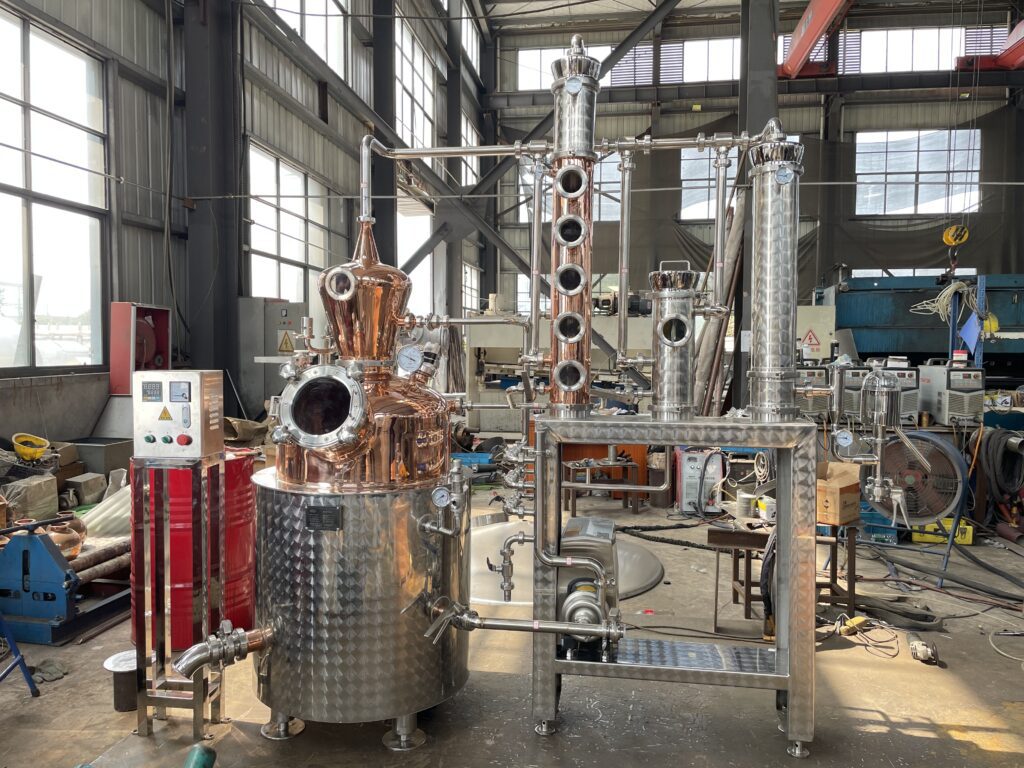
As a professional brewery, distillery, and beverage equipment manufacturing plant, MICET provides customized stainless steel brewing systems, fermentation tanks, brewhouse systems, and distillery solutions for global B2B customers.
Our project support focuses on:
- Customized equipment configuration.
- Production capacity planning.
- Equipment layout and integration.
- Stainless steel and copper fabrication.
- Process and utility coordination.
- Equipment inspection and testing.
- Installation and commissioning guidance.
- Long-term technical support.
We can also evaluate hybrid new-and-used equipment packages where suitable, helping customers manage initial investment while maintaining important safety and process requirements.
10. How Do You Select the Right Alcohol Distillation Plant Manufacturer?
Choosing between alcohol distillation plant manufacturers should involve more than comparing the best price.
A suitable manufacturer needs to understand your intended spirits, production capacity, site conditions, equipment configuration, and long-term operating goals.
Use the following checklist when evaluating a potential supplier:
| Evaluation Factor | What Buyers Should Confirm |
|---|---|
| Manufacturing capability | Factory production and fabrication experience |
| Process knowledge | Experience with the intended spirit type |
| 사용자 지정 | Capacity, still type, and layout options |
| 자료 | Stainless steel and copper specifications |
| Process integration | Fermentation, distillation, storage, and cooling |
| Safety | Pressure protection and electrical requirements |
| 자동화 | PLC, temperature, and process monitoring |
| Quality control | Inspection and testing documentation |
| Export experience | Packing, shipping, and technical documents |
| After-sales service | Installation guidance and spare parts |
What Information Should You Prepare Before Requesting a Quote?
To help the manufacturer prepare a suitable proposal, provide:
- Spirit type: whisky, gin, vodka, rum, brandy, or other products.
- Target production capacity: liters per batch or annual output.
- Preferred still type: pot, column, or hybrid.
- Raw materials and fermentation requirements.
- Available factory dimensions.
- Heating source and utility conditions.
- Automation requirements.
- Destination country and applicable standards.
- Project budget and expected delivery schedule.
MICET is a manufacturer and exporter of customized brewery, distillery, and beverage equipment. Our team can help develop a suitable plant configuration based on your production goals, available space, and investment plan.
Whether you are establishing a small craft distillery or expanding a commercial alcohol production facility, the right engineering partner can help reduce project risk and support stable operation.
Contact MICET to discuss your alcohol distillation plant project. Share your target capacity, spirit type, and factory layout to receive a customized equipment proposal.
Frequently Asked Questions
What equipment is required for an alcohol distillation plant?
A typical plant requires raw material preparation equipment, fermentation tanks, pot or column stills, condensers, storage tanks, pumps, piping, cooling systems, and control panels. Additional equipment depends on the spirit type and production capacity.
팟 스틸과 컬럼 스틸의 차이점은 무엇인가요?
A pot still is mainly used for batch distillation and traditional flavor-focused spirits. A column still provides multiple separation stages and is often selected for neutral spirits and higher-throughput production. Hybrid systems combine features of both designs.
How much capacity does a commercial distillery need?
There is no universal capacity. A small craft distillery may begin with a 200L–500L system, while growing commercial producers may consider 1,000L–5,000L configurations. The correct choice depends on production targets, fermentation time, and operating schedules.
Can one distillery produce whisky, gin, vodka, and rum?
Yes, a suitably designed distillery can produce several spirit types. However, different products may require different still configurations, botanical baskets, fermentation arrangements, and cleaning procedures. The system should be designed around the planned product range.
What is the role of a distillation column?
A distillation column provides repeated vapor-liquid contact to support separation of alcohol and other volatile components. Its configuration, number of plates or sections, reflux arrangement, and operating conditions influence separation performance.
Do distillery plant manufacturers provide turnkey solutions?
Many professional manufacturers provide complete project services, including equipment design, manufacturing, layout planning, utility coordination, installation guidance, commissioning support, and technical service. The exact project scope should be confirmed in the quotation.
Key Points to Remember
- An alcohol distillation plant requires coordinated equipment from raw material preparation to finished spirit storage.
- Pot stills, column stills, and hybrid stills serve different production requirements.
- Raw materials and fermentation capacity influence the complete plant configuration.
- Production capacity should match actual demand and future expansion plans.
- Heating, cooling, condensers, and heat exchangers affect energy efficiency.
- Stainless steel and copper have different roles in professional distillery equipment.
- Safety engineering and local compliance must be considered before installation.
- PLC automation can improve process monitoring and production consistency.
- A turnkey distillery solution simplifies equipment integration and project coordination.
- Choosing an experienced manufacturer supports reliable production and long-term business growth.