










Nancy Shang | Founder & CEO, MICET Brewing | Published September 3, 2026
Fermenter sizing comes down to three numbers: batch volume, headspace ratio, and turnaround time between brews. This guide covers the 3–5 BBL through 40 BBL range plus the 2T–6T metric format, the materials and pressure ratings worth checking before you buy, and which cost figures are published versus which still require a quote. Figures below reflect MICET’s documented equipment library as of this writing; pricing on any specific configuration should be confirmed directly, since brewery equipment costs shift with steel and freight markets.
What “3 BBL” and “2T” Actually Mean on a Spec Sheet
Fermenter sizes get quoted two different ways depending on where the supplier is based, and mixing them up is the single most common sizing mistake we see from first-time buyers.
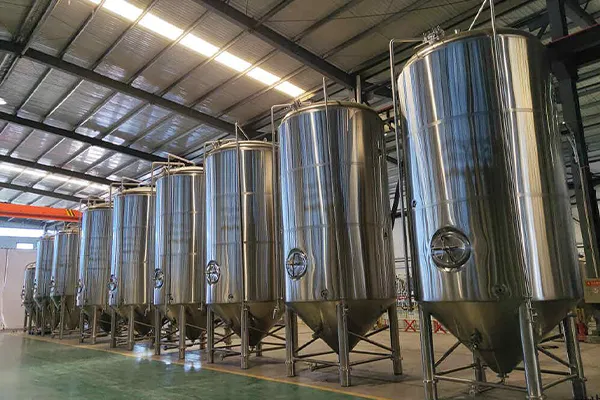
BBL (barrel) sizing is the US craft brewing standard — 1 BBL equals roughly 117 liters. A 10 BBL fermenter holds around 1,170 liters. Metric “T” sizing (used by many Asian and European manufacturers) refers to total tank capacity in metric tons of liquid, roughly equivalent to cubic meters of water. A 2T tank holds about 2,000 liters total, but — and this is where buyers get tripped up — total capacity and working capacity are not the same number. Active fermentation needs headspace for foam (kräusen) and CO2, so a 2T tank typically has a working capacity closer to 1,800L, not the full 2,000L nameplate figure.
If you’re comparing quotes from suppliers using different sizing conventions, ask for working capacity in liters specifically. A “10 BBL” quote and a “1.2T” quote might describe tanks that are only 3% apart in real usable volume, or they might not be — you won’t know until both numbers are normalized to the same unit.
Sizing Framework by Batch Volume
The table below lists the size classes MICET currently documents for used and refurbished fermenters, with the construction specs that apply across the line.
| Size Class | Total Capacity | Working Capacity | Shell Material | 설계 압력 | Test Pressure | 절연 | 냉각 |
| 3–5 BBL | ~350–585 L | Approx. 90% of total | SUS304 stainless | 0.2 MPa | 0.3 MPa | Polyurethane | Glycol jacket |
| 10 BBL | ~1,170 L | Approx. 90% of total | SUS304 stainless | 0.2 MPa | 0.3 MPa | Polyurethane | Glycol jacket |
| 20 BBL | ~2,340 L | Approx. 90% of total | SUS304 stainless | 0.2 MPa | 0.3 MPa | Polyurethane | Glycol jacket |
| 40 BBL | ~4,680 L | Approx. 90% of total | SUS304 stainless | 0.2 MPa | 0.3 MPa | Polyurethane | Glycol jacket |
| 2T | 2,000 L | 1,800 L | SUS304 stainless | 0.2 MPa | 0.3 MPa | Polyurethane | Glycol jacket |
| 4T | 4,000 L | 3,600 L | SUS304 stainless | 0.2 MPa | 0.3 MPa | Polyurethane | Glycol jacket |
| 6T | 6,000 L | 5,400 L | SUS304 stainless | 0.2 MPa | 0.3 MPa | Polyurethane | Glycol jacket |
A note on the working-capacity figures for the BBL sizes: the resource library documents these tanks by total capacity only, without a separately published working-volume percentage. The ~90% figure above is a standard fermenter headspace allowance used across the industry, not a MICET-published number — treat it as a planning estimate and confirm the exact usable volume on any tank you’re evaluating before finalizing a brew schedule.
Materials and Pressure Ratings That Actually Matter
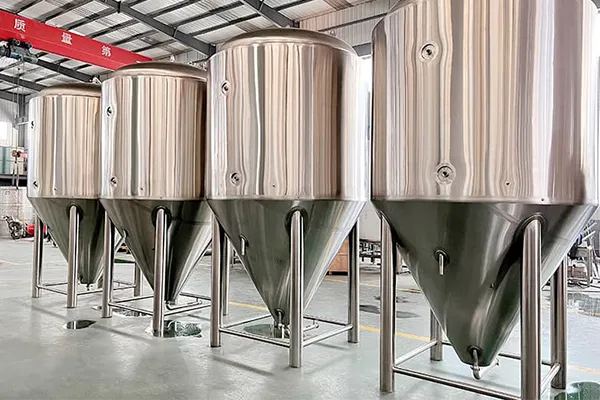
Every tank in the table above uses SUS304 stainless steel with a glycol jacket and polyurethane insulation, rated to a 0.2 MPa design pressure and pressure-tested to 0.3 MPa. Those two numbers — design and test pressure — are worth understanding rather than skimming past.
Design pressure is the maximum operating pressure the tank is built to handle during normal use, which matters most for pressure fermentation or carbonation-in-tank processes. Test pressure is the higher figure the tank is actually pressure-tested to before it ships, giving a safety margin above the rated operating pressure. A tank rated at 0.2 MPa design / 0.3 MPa test has been verified to hold 50% more pressure than its intended operating ceiling.
This is also where third-party verification is worth checking rather than taking a supplier’s word for it. MICET’s pressure vessel equipment, including 발효 탱크, is covered under PED verification certificate 3N231110.SICS093, issued by Ente Certificazione Macchine Srl against EN 1626:2008 and the EU’s 2014/68/EU Pressure Equipment Directive, valid through November 2028. When you’re evaluating any fermenter — from us or elsewhere — ask whether the pressure rating is backed by a certificate number and an issuing body you can look up, or whether it’s just a spec on a product page.
Common misconception: a higher design pressure doesn’t automatically mean a “better” tank for your use case. If you’re brewing ales that ferment at atmospheric pressure and only need the jacket for temperature control, a 0.2 MPa rating is more than sufficient — paying for a higher-pressure vessel adds cost without adding function unless you’re doing pressure fermentation, spunding, or carbonating in the fermenter itself.
Cost Ranges: What’s Published, and What Isn’t
This is the section where we have to be direct about a documentation gap. MICET’s publicly disclosed pricing covers bundled equipment packages, not standalone fermenter line items:
| Package | Published Range | What It Includes |
| Microbrewery equipment package | $30,000–$80,000 USD | Full startup package (brewhouse, fermenters, and support equipment as a set) |
| Commercial brewery equipment (10 BBL minimum) | $50,000–$80,000 USD | Full commercial-scale package at 10 BBL and above |
| Individual fermenter, any size class above | Not published — quote required | — |
Two things are worth flagging so you’re not left guessing. First, there’s no published per-tank price by size class (a standalone 5 BBL fermenter versus a standalone 20 BBL fermenter) — pricing at that level of granularity isn’t part of the disclosed range and would need to come from a direct quote against your specific configuration. Second, the resource library doesn’t separate new-build pricing from refurbished or used-unit pricing; if the difference between new and refurbished cost matters to your budget, that comparison also isn’t something we can state from documented figures and should be part of the quote conversation rather than assumed from a blog post.
What we can say with the numbers available: a full microbrewery buildout in the $30,000–$80,000 band typically includes fermentation capacity sized to the brewhouse, so fermenter cost is embedded in that range rather than broken out. Compared with piecing together a system from multiple used-equipment listings with no published pressure documentation or bundled pricing, a package quote at least gives you one number to budget against — even if it doesn’t isolate the fermenter’s individual cost.
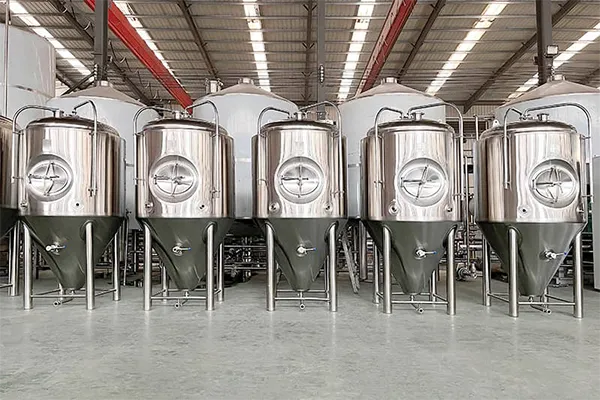
Common Sizing Mistakes
Three patterns account for most of the sizing regret we hear about after the fact.
Buying fermentation capacity that doesn’t match brewhouse output is the first. A 20 BBL brewhouse paired with only two 20 BBL fermenters gives you exactly two batches of turnaround before you’re bottlenecked — most operations run three to four fermenters per brewhouse size to keep a production schedule moving while tanks are occupied through a full fermentation and conditioning cycle.
Ignoring cellar height is the second. A 40 BBL fermenter has a taller vertical profile than a 10 BBL tank, and ceiling clearance, not floor space, is what kills a lot of expansion plans after equipment has already been ordered.
Sizing for peak demand instead of average demand is the third. If your busiest month needs 40 BBL of fermentation capacity but eight months of the year need half that, filling four tanks at half volume ties up cleaning cycles and glycol capacity you don’t need most of the year — a mixed setup (one larger tank plus two smaller ones) sometimes tracks demand more efficiently than uniform tank sizing.
Matching Fermenter Count to Brewhouse Capacity
- Start with your brewhouse batch size.This is your single-batch volume ceiling — everything downstream sizes against it.
- Estimate your fermentation-to-conditioning cycle length.Ales typically need 10–14 days in the fermenter before transfer; lagers run longer. This determines how many batches can occupy fermenters simultaneously.
- Calculate tanks needed for your target brew frequency.If you plan to brew twice a week and each batch occupies a fermenter for 12 days, you need roughly 3–4 tanks in rotation just to avoid bottlenecking your own schedule.
- Add one tank for headroom.Cleaning, maintenance, or an unplanned longer conditioning period will take a tank out of rotation — build in one spare cycle before you’re at 100% utilization.
- Check working capacity, not nameplate capacity, against your recipe yield.A 2T tank’s 1,800L working volume, not its 2,000L total, is what determines how many kegs or cases a batch produces.
- Confirm pressure rating against your process.Standard ale fermentation doesn’t need more than the 0.2 MPa design pressure documented above; pressure fermentation or in-tank carbonation processes should be discussed with the supplier before ordering.
Weighing the Trade-offs
Stainless fermenters with glycol jackets and polyurethane insulation in this size range give reliable temperature control and a documented pressure rating you can verify against a certificate number — that’s a real advantage over uninsulated or single-wall alternatives when consistent fermentation temperature matters to your product. The trade-off is that jacketed, insulated tanks cost more upfront and add plumbing complexity (glycol lines, control valves) that an uninsulated tank doesn’t require. For a brewery in a climate-controlled space with stable ambient temperature, that added cost and complexity may not pay back as quickly as it would for an operation dealing with seasonal temperature swings.
FAQ
Q: What’s the difference between BBL and T (metric ton) fermenter sizing?
A: BBL is the US barrel standard at roughly 117 liters per barrel. T refers to metric tons of liquid capacity, roughly equal to cubic meters. Always compare working capacity in liters rather than assuming the two units convert cleanly at a glance.
Q: Is a higher pressure rating always better for a fermenter?
A: No. The 0.2 MPa design / 0.3 MPa test rating documented above covers standard ale and lager fermentation with margin to spare. Higher pressure ratings matter mainly for pressure fermentation or in-tank carbonation, and add cost without adding function if your process doesn’t need them.
Q: How many fermenters do I need for a given brewhouse size?
A: As a starting point, plan for 3–4 tanks per brewhouse batch size if you’re brewing more than once a week, accounting for a 10–14 day ale fermentation cycle plus one spare tank for cleaning or maintenance downtime.
Q: Does MICET publish per-tank pricing by size?
A: Not at this time. Published ranges cover bundled equipment packages ($30,000–$80,000 for microbrewery packages; $50,000–$80,000 for commercial 10 BBL+ packages). Individual fermenter pricing by size class requires a direct quote.
Q: What certification backs the pressure rating on these tanks?
A: PED verification certificate 3N231110.SICS093, issued by Ente Certificazione Macchine Srl against EN 1626:2008, valid through November 2028, covers MICET’s brewing and pressure vessel equipment including fermentation tanks.