

Choosing the wrong equipment supplier can leave a beverage plant with mismatched tanks, poor cleaning access, weak temperature control, or a filling line that cannot keep up. The real problem is often simple: restaurant equipment and beverage processing equipment serve completely different production needs.
The right food and beverage equipment manufacturer for a beverage factory should understand sanitary processing, stainless steel tanks, mixing, temperature control, CIP, water treatment, filling, utilities, layout, and automation. Restaurant equipment suppliers mainly serve kitchens and foodservice operations, while beverage processing manufacturers engineer complete production systems for repeatable industrial output.
기사 개요
- What Is the Difference Between Beverage Processing Equipment and Restaurant Equipment?
- What Equipment Does a Beverage Production Plant Actually Need?
- Why Does Hygienic Design Matter More Than a Large Product Catalog?
- How Should a Manufacturer Match Equipment to Your Beverage Process?
- What Should You Check in Stainless Steel Tanks, Piping, and Food-Contact Parts?
- How Important Are CIP, Water Treatment, Refrigeration, and Utilities?
- How Should Filling and Packaging Capacity Match Processing Capacity?
- What Role Do Automation and Process Controls Play?
- Manufacturer, Supplier, or Equipment Company: Which Should You Choose?
- What Should Global B2B Buyers Ask Before Placing an Order?
- How Can MICET Support Beverage Processing Projects?
- Frequently Asked Questions
What Is the Difference Between Beverage Processing Equipment and Restaurant Equipment?
The phrase food and beverage equipment manufacturers covers several very different industries.
A commercial restaurant may need kitchen equipment such as an oven, fryer, grill, countertop refrigerator, food warmers, ice machine, cooker, and food preparation equipment. These machines prepare food or drinks close to the point of sale.
A beverage factory has a different job.
It must turn raw materials into repeatable batches, process those batches under controlled conditions, move liquid hygienically between stages, and package finished products at a planned production rate.
That usually requires beverage equipment such as:
- Water treatment systems
- Mixing and blending tanks
- Syrup or ingredient preparation tanks
- Fermentation vessels where applicable
- Heating or cooling systems
- Carbonation equipment
- 필터링
- Pasteurization or sterilization
- Holding tanks
- Sanitary pumps
- Process piping
- CIP 시스템
- Filling machines
- Labeling and packaging systems
- PLC or other process controls
The difference is important because a company that is excellent at supplying commercial kitchen equipment may have little experience engineering a sanitary beverage line.
| Equipment Category | Restaurant / Foodservice | Beverage Manufacturing |
|---|---|---|
| Main purpose | Prepare or serve food | Manufacture beverages in batches |
| Typical equipment | Oven, fryer, grill, warmer | Tanks, filters, pumps, fillers |
| Production scale | Meal/service based | Batch or continuous processing |
| 청소 | Manual + routine kitchen sanitation | Sanitary design + CIP where applicable |
| 컨트롤 | Appliance-level | Process-level |
| Piping | Limited | Often extensive |
| 자동화 | Basic appliance control | Recipe, temperature, pump and valve control |
| Layout focus | Chef workflow | Product flow + utility flow + cleaning |
A commercial kitchen and a beverage factory may both belong to the food and beverage industry, but their equipment needs are not the same.
That is the first thing a B2B buyer should understand.
What Equipment Does a Beverage Production Plant Actually Need?
There is no universal list.
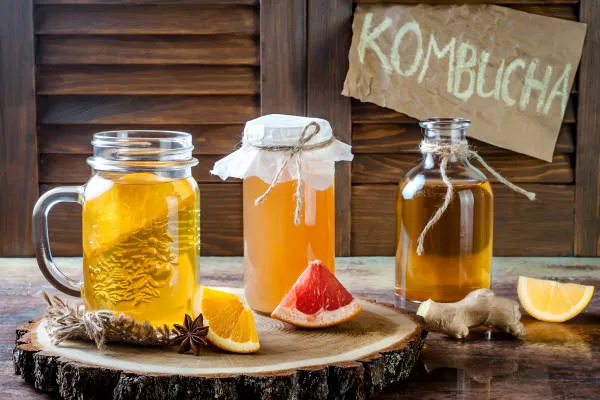
A carbonated beverage plant, juice line, tea plant, kombucha operation, cold brew coffee facility, brewery, and functional drink factory can share some equipment while requiring very different process steps.
A useful way to plan the project is to divide the factory into stages.
1. Water Preparation
Water often forms a major part of the final beverage.
Depending on incoming water quality, the system may require:
- Sediment filtration
- Activated carbon
- Softening
- RO treatment
- Precision filtration
- UV or another treatment stage where appropriate
The exact configuration should follow the raw-water analysis and product requirements.
2. Ingredient Preparation and Mixing
Mixing tanks may handle:
- Sugar solutions
- Juice concentrates
- Tea extracts
- Flavors
- Functional ingredients
- Coffee extracts
- Other liquid or soluble ingredients
Tank design should match viscosity, solids content, mixing speed, heating requirements, and batch size.
3. Processing
Depending on the product, processing may include:
- 필터링
- Heating
- 냉각
- 탄산
- Pasteurization
- 발효
- Clarification
4. Buffer and Storage
A holding tank can separate upstream processing from downstream filling.
This is important because the production system does not always run at one perfectly constant speed.
5. Filling and Packaging
The finished product may go into:
- 유리병
- PET bottles
- Cans
- Kegs
- Other containers
The production line should be designed as one system rather than a collection of unrelated machines.
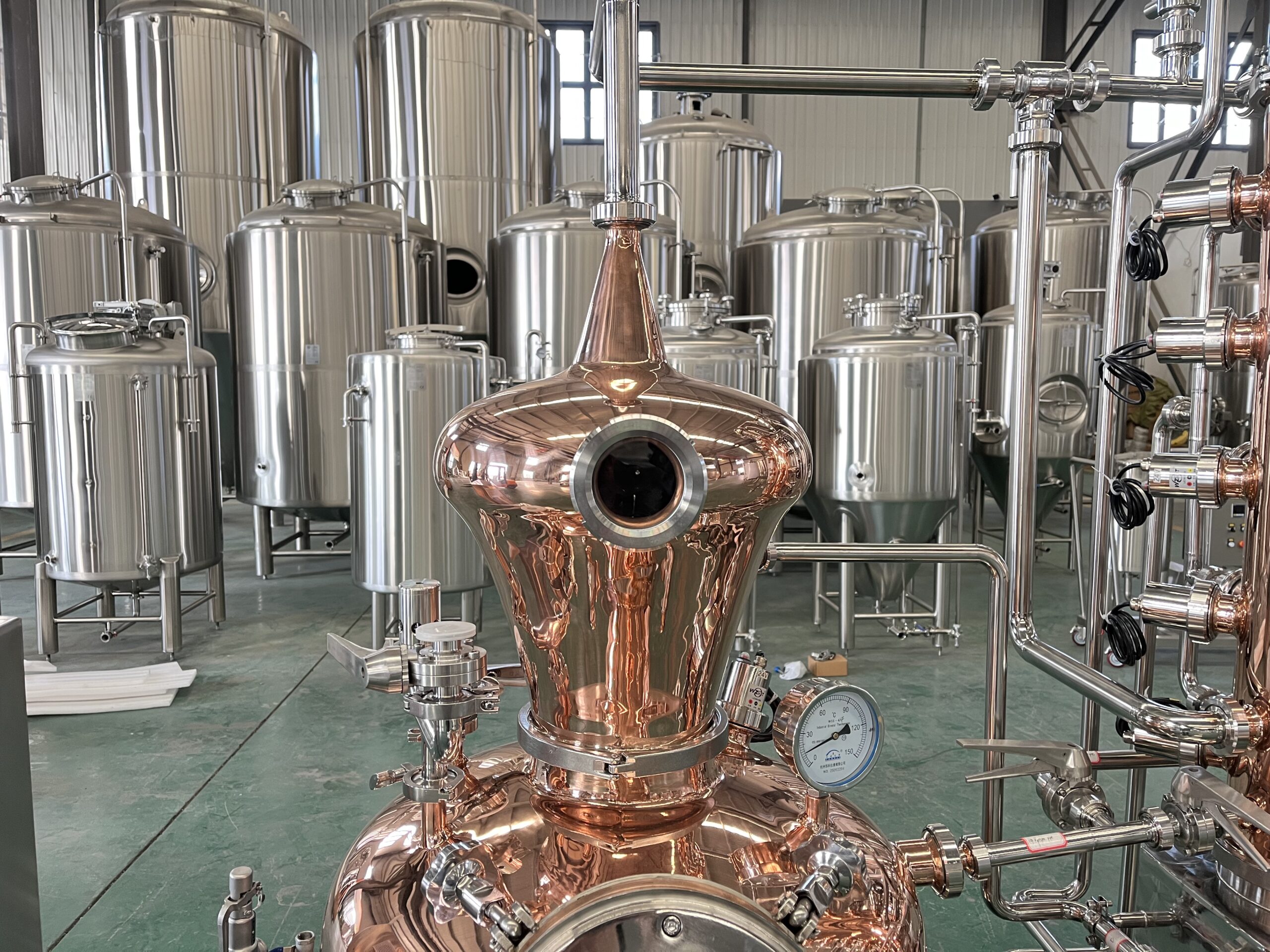
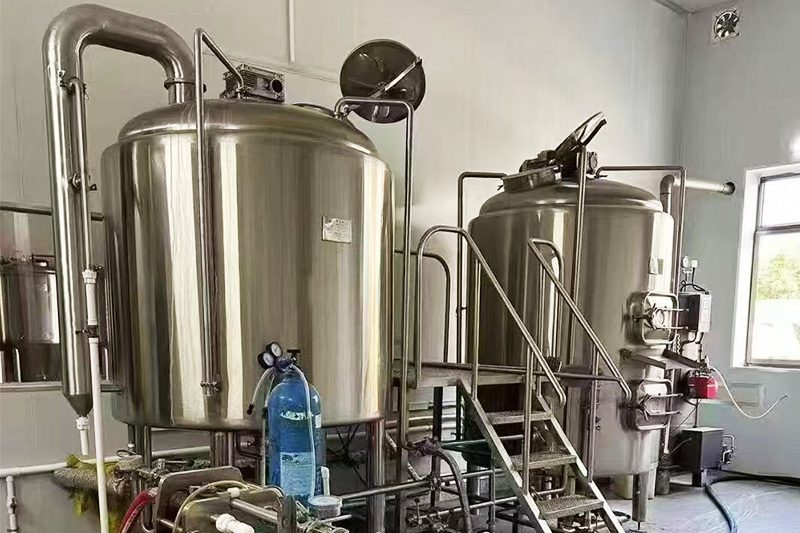
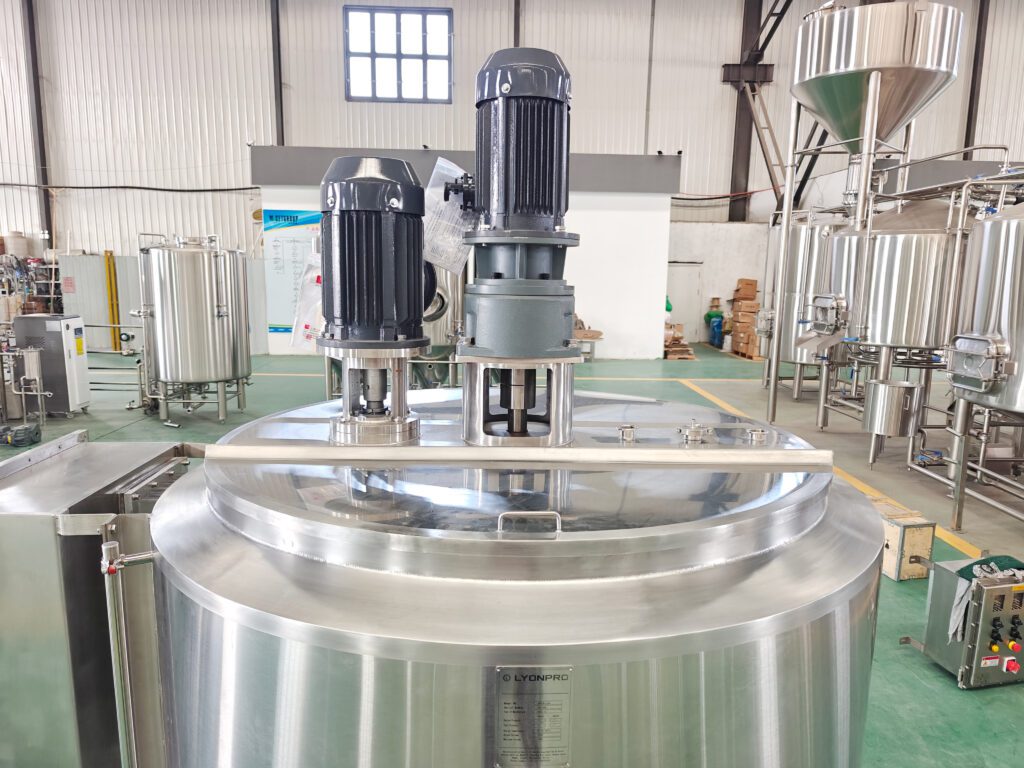
MICET’s current beverage range is built around this integrated approach, combining processing tanks with water treatment, mixing, carbonation, sterilization, filling, and related systems.
Why Does Hygienic Design Matter More Than a Large Product Catalog?
A supplier may offer hundreds of machines.
That does not automatically make it the right supplier for a beverage production line.
For liquid food processing, equipment design must support cleanability, drainage, material compatibility, and contamination control.
The FDA’s Current Good Manufacturing Practice framework covers plant equipment, sanitary operations, facility sanitation, and production controls. FDA guidance also emphasizes that food-contact surfaces should be durable, corrosion-resistant, smooth, non-toxic, and easy to clean.
EHEDG makes the same basic point from an engineering perspective: poor hygienic design creates equipment that is difficult to clean and can increase contamination risk.
For buyers, this means checking details that do not always appear in a marketing brochure.
Look at:
- Internal surface finish
- Weld quality
- Tank drainage
- Dead-leg control
- Valve placement
- Gasket material
- Pipe routing
- Spray-device coverage
- Pump selection
- Accessible maintenance points
- Product-contact material documentation
A beautiful stainless steel tank can still have poor hygienic design.
Likewise, a state-of-the-art control screen cannot compensate for an outlet that leaves product sitting at the bottom of a vessel.
Why This Is Different From Foodservice Equipment
A commercial oven, fryer, refrigerated display, or warmer may also require good sanitation, but it normally does not form part of a closed liquid-processing circuit.
A beverage plant has additional concerns:
Tank → valve → pump → pipe → heat exchanger → tank → filler
Every connection becomes part of the process.
That is why industrial food processing equipment requires system-level thinking.
How Should a Manufacturer Match Equipment to Your Beverage Process?
A good equipment manufacturer should ask questions before recommending machines.
If a supplier immediately sends the same standard quotation to every buyer, that is a warning sign.
For a beverage project, we normally want to understand:
- What beverage are you making?
- What is the recipe?
- What is the daily production target?
- What is the batch size?
- Does the product contain pulp or solids?
- Is it carbonated?
- Does it need heating?
- Does it need cooling?
- What packaging format will you use?
- What filling speed is required?
- How many products will share the line?
- How often will you change recipes?
- How will the equipment be cleaned?
- What utilities are available?
Consider viscosity.
Thin flavored water can move through the system differently from fruit beverages containing solids.
Now consider temperature.
A cold-fill product may need a very different process from one requiring thermal treatment.
Then consider carbonation.
A carbonated beverage requires controlled CO2 handling, while a still beverage may not need a carbonation unit at all.
A professional manufacturer should therefore start from a process flow.
For example:
Water Treatment → Ingredient Preparation → Mixing → Filtration → Processing → Holding → Filling → Packaging
Once the process is defined, each machine can be sized around it.
That is much more reliable than buying individual machines and trying to connect them later.
What Should You Check in Stainless Steel Tanks, Piping, and Food-Contact Parts?
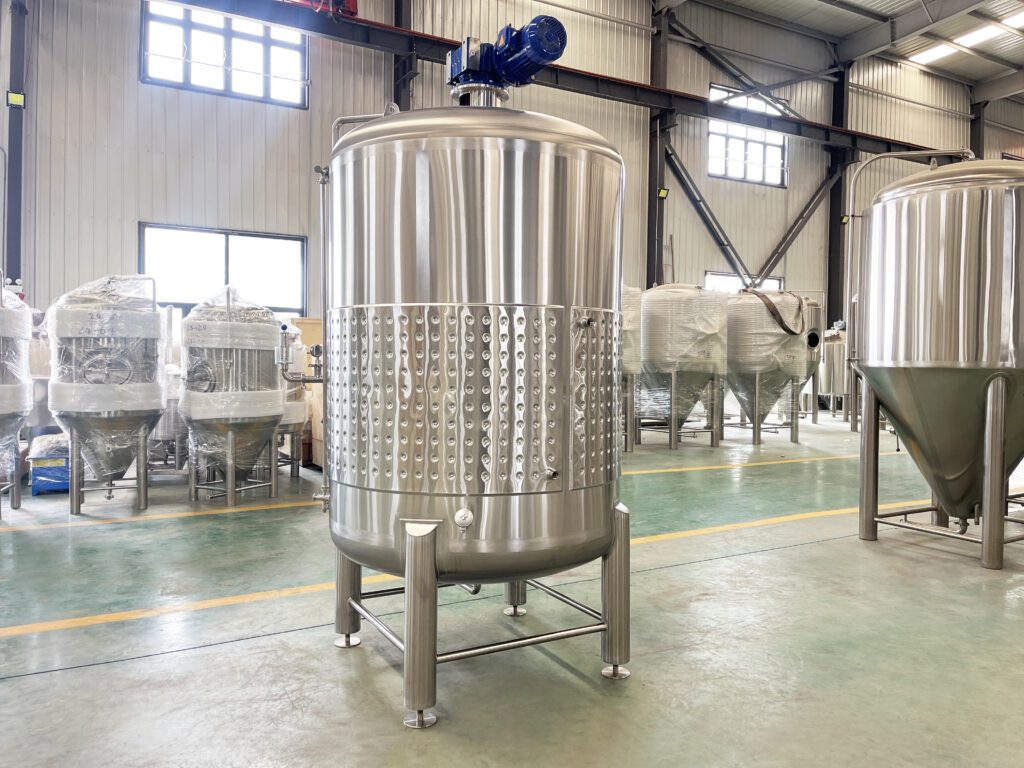
Stainless steel is widely used in beverage production because of its durability, corrosion resistance, and cleanable surface.
But “stainless steel” alone is not a complete specification.
Buyers should confirm:
Material Grade
SUS304 is widely used for many beverage applications.
SUS316L may be considered where the formulation, water chemistry, cleaning chemicals, or operating environment creates more demanding corrosion conditions.
Tank Working Volume
Do not confuse nominal volume with working capacity.
A 2,000L vessel may not be intended to operate with exactly 2,000L of every product under every process condition.
Ask for:
- Total volume
- Effective working volume
- Recommended filling level
- Headspace requirements
Agitator Design
Mixing equipment should match:
- Product viscosity
- Powder addition
- Solids content
- Desired mixing time
- Foaming tendency
A high-speed mixer is not automatically better.
Weld and Internal Finish
Poor weld finishing can make cleaning more difficult.
Ask the supplier how product-contact welds are fabricated, finished, inspected, and documented.
Valves and Fittings
Review:
- Sample valves
- Bottom outlets
- Sanitary butterfly valves
- Check valves
- Pressure controls where required
- Instrument ports
- CIP connections
A good system should be designed around operation and maintenance, not just manufacturing convenience.
How Important Are CIP, Water Treatment, Refrigeration, and Utilities?
Very important.
Many beverage buyers focus first on the large processing tanks because they are visually impressive.
But utility systems often determine whether those tanks can operate efficiently.
CIP
A CIP system can circulate cleaning solutions through compatible processing tanks, pipelines, pumps, and other equipment without dismantling the entire line.
EHEDG notes that cleaning and disinfection programs must consider equipment design as well as the type of residue being removed.
A CIP system may include:
- Cleaning tanks
- Heating
- 펌프
- Return loops
- Spray devices
- 컨트롤
The correct setup depends on the process.
Refrigeration
Cooling can serve:
- Fermentation tanks
- Mixing tanks
- Cold storage
- Heat exchangers
- Product holding
A chiller should be selected from the actual heat load, not simply by tank volume.
Steam and Hot Water
Some systems need heating for:
- Product processing
- 청소
- Hot-water preparation
- Pasteurization
펌프
Pump type and size affect:
- Flow
- Product shear
- Solids handling
- Transfer time
- CIP performance
물 처리
Poor water quality can affect the finished beverage and may also create scaling or maintenance problems.
MICET’s current auxiliary range includes glycol chillers, CIP units, pumps, steam/hot-water systems, water treatment, control panels, filters, pasteurization equipment, and carbonation systems.
This is why the best equipment selection is often based on the whole utility network.
How Should Filling and Packaging Capacity Match Processing Capacity?
A beverage factory is only as fast as its bottleneck.
Suppose the processing area can prepare 2,000 liters per hour.
Now suppose the filling system can only package 800 liters per hour.
The processing line will eventually wait for packaging.
The opposite creates a different problem.
A high-speed filler cannot operate efficiently if upstream production cannot supply enough beverage.
The basic relationship is:
Processing Capacity ≈ Buffer Capacity ≈ Sustainable Filling Capacity
They do not need to be exactly equal every minute, but they must work together.
Example
Assume a factory produces a 500ml drink.
If the filler runs at:
2,000 bottles/hour
then theoretical liquid demand is:
2,000 × 0.5L = 1,000L/hour
But real planning also needs to consider:
- Stops
- 청소
- Bottle changeover
- Label changeover
- Product changeover
- Operator breaks
- Maintenance
- Rejects
Therefore, equipment should not be selected using theoretical nameplate output alone.
A filling-line quotation should clearly state:
- Container type
- Container size
- Rated speed
- Product properties
- Filling method
- Cap type
- Changeover requirements
- Upstream buffer requirement
For export buyers, equipment documentation matters too. MICET’s available filling-equipment documentation covers bottle, keg, can, and automatic filling systems across multiple rated capacities.
What Role Do Automation and Process Controls Play?
Automation should make a beverage plant easier to operate.
It should not make a simple process unnecessarily complicated.
A control system may monitor or manage:
- Tank temperature
- Mixer speed
- Pump operation
- Valve status
- Filling sequence
- Water treatment
- 탄산
- Cleaning cycles
- Alarm conditions
For a small startup, simple controls may be enough.
A larger beverage plant producing several recipes may benefit from more advanced automation solutions.
Automation Can Improve Repeatability
If operators manually set every valve and pump differently from shift to shift, process variation increases.
A properly designed control sequence can help standardize:
- Mixing time
- Product temperature
- Transfer sequence
- Cleaning steps
- Tank selection
But good automation starts with good process engineering.
Adding more sensors does not fix a poor layout.
Likewise, an expensive controller cannot solve an undersized pump or badly routed pipe.
A manufacturer should define the process first and automate the right tasks second.
Manufacturer, Supplier, or Equipment Company: Which Should You Choose?
Not every supplier is a manufacturer.
That distinction becomes important in customized projects.
Restaurant Supply Company
A restaurant supply company usually sells a broad range of ready-made equipment and supplies.
This may include:
- Fryer
- Commercial ovens
- Ice machine
- Commercial coffee makers
- Refrigeration equipment
- Countertop appliances
- Food holding and warming equipment
That business model works well for many commercial foodservice buyers.
But beverage processing is different.
Equipment Distributor
A distributor may source machines from several manufacturers.
This gives buyers more choice, but technical responsibility may be divided between multiple companies.
Manufacturer
A manufacturer can usually control more of the design and fabrication process.
This becomes useful when you need to customize:
- Tank size
- Fittings
- Jacket configuration
- Mixer type
- Outlet position
- Platform height
- Piping
- 컨트롤
Engineering Manufacturer / System Integrator
For a complete beverage plant, this is often the most useful model.
The supplier does not simply manufacture individual machines.
It helps make sure the machines work together.
| Supplier Type | Best Fit |
|---|---|
| Restaurant equipment dealer | Kitchen and foodservice operation |
| General distributor | Standard standalone machines |
| Equipment manufacturer | Custom machines and tanks |
| Process-system manufacturer | Integrated beverage line |
| Engineering integrator | Complex multi-machine factory projects |
MICET positions itself as a manufacturer rather than a reseller and currently provides CAD/3D process layouts, equipment customization, system integration, installation guidance, and long-term technical support.
What Should Global B2B Buyers Ask Before Placing an Order?
The lowest quotation is not always the lowest-cost project.
A cheap machine that causes repeated downtime, product loss, difficult cleaning, or slow spare-parts support can become expensive very quickly.
Before selecting a food and beverage equipment supplier, ask these questions.
Process Questions
- Can you provide a complete process flow?
- Which machines are included?
- Which machines are optional?
- What capacity assumptions are being used?
- What is the working volume of each tank?
Engineering Questions
- Can you provide CAD or 3D layout drawings?
- How are pipes routed?
- What utilities are required?
- What floor load and ceiling height are needed?
- Where will operators perform maintenance?
Manufacturing Questions
- What stainless grade is used?
- What internal finish is specified?
- How are welds inspected?
- Which components are outsourced?
- What testing happens before shipment?
Commissioning Questions
- Is installation support included?
- Can the system be commissioned remotely?
- Are operating manuals supplied?
- Are spare parts identified before shipment?
Aftermarket Service Questions
- Who handles troubleshooting?
- What spare parts should be stocked?
- What is the expected response process?
- Are control-program backups provided?
- How is technical support handled after commissioning?
This is especially important for international projects where engineers cannot simply drive to the factory when something fails.
Strong aftermarket service should be discussed during procurement, not after the first breakdown.
How Can MICET Support Beverage Processing Projects?
A beverage project should begin with the product and production target.
Not with a machine catalog.
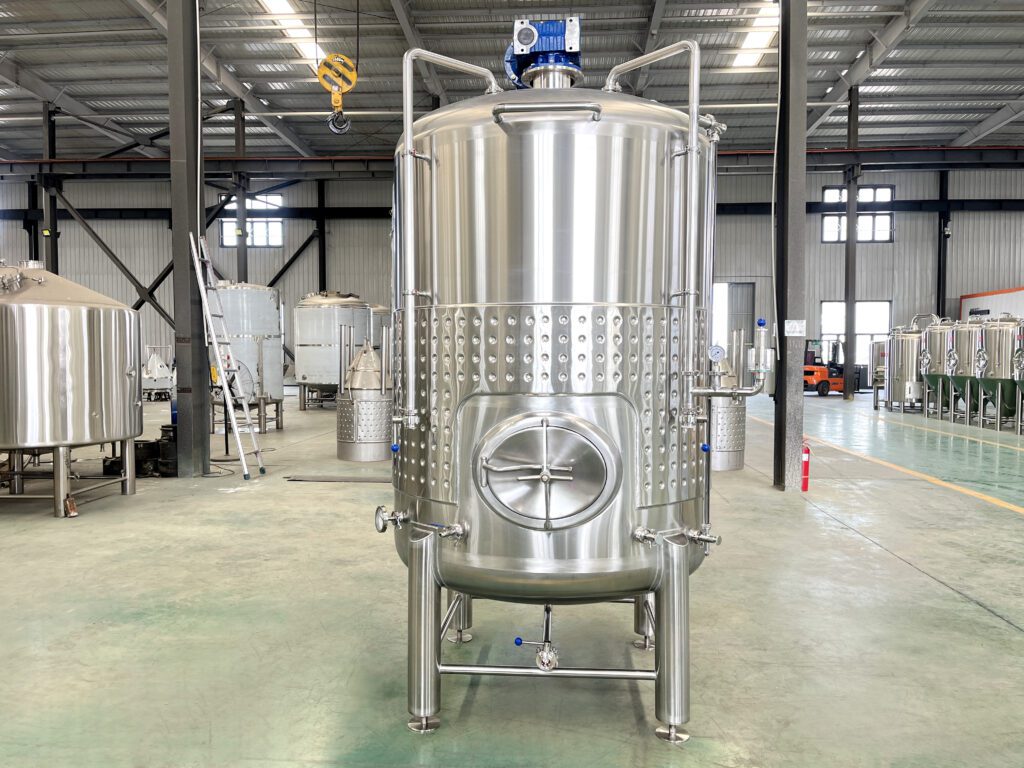
MICET currently supports beverage systems for products including carbonated drinks, juice, tea, flavored water, and functional beverages. Published configurations combine stainless steel tanks with processing, water treatment, carbonation, sterilization, and filling systems.
Our engineering process can include:
- Production-capacity planning
- Stainless steel tank customization
- Mixing-system selection
- Heating and cooling configuration
- Water treatment
- 필터링
- 탄산
- CIP
- Pumps and sanitary piping
- Filling and packaging
- Electrical controls
- CAD and 3D layout planning
- Export packing
- Installation guidance
- Remote commissioning support
- After-sales technical support
Example Project Planning Logic
Suppose a beverage startup wants a 2,000L batch system.
Instead of simply quoting one 2,000L tank, we would need to understand:
- What product is being manufactured?
- How many batches per day?
- Does it require heating?
- Does it require refrigeration?
- Does it require filtration?
- Is carbonation required?
- How long does each process step take?
- What packaging format will be used?
- What filling capacity is needed?
- Will another product use the same line?
- What expansion is expected in two or three years?
That information determines whether the project needs one tank, several tanks, a buffer tank, different agitators, larger utilities, or additional processing equipment.
MICET’s published 2000L 음료 장비 configuration uses the same integrated logic: water treatment, mixing, optional carbonation, sterilization, and filling are treated as parts of one beverage system rather than unrelated purchases.
Plan for Expansion Early
A beverage startup may begin with one product.
Two years later, it may add:
- Another bottle size
- A canning line
- Carbonated products
- A second mixing tank
- Higher output
- New formulations
A modular line can make expansion easier.
That may mean installing:
- Spare piping connections
- Additional electrical capacity
- Larger utility headers
- Extra floor space
- Expandable controls
The goal is not to overbuild the factory on day one.
The goal is to avoid designing a plant that becomes impossible to expand.
If you are planning a beverage factory, send MICET your beverage type, daily output, batch size, packaging format, utility conditions, and factory layout. Our engineering team can help you develop an integrated equipment configuration instead of purchasing machines one by one.
Frequently Asked Questions
What is the difference between foodservice equipment and beverage processing equipment?
Foodservice equipment is generally used to prepare, hold, refrigerate, cook, or serve food and drinks in restaurants, cafés, hotels, and similar operations. Beverage processing equipment is used to manufacture beverages at production scale through processes such as water treatment, mixing, filtration, fermentation, carbonation, pasteurization, storage, and filling.
What should I look for in a beverage equipment manufacturer?
Look for experience in sanitary stainless steel fabrication, process engineering, tank design, utilities, CIP, pumps, controls, filling integration, layout planning, testing, installation support, and after-sales service.
Is stainless steel necessary for commercial beverage equipment?
Stainless steel is widely used because it offers durability, corrosion resistance, and cleanable food-contact surfaces. The exact stainless grade should be selected according to the beverage, cleaning chemicals, water quality, and operating conditions.
Should I buy beverage processing machines from separate suppliers?
You can, but multi-supplier projects require more coordination. Buyers must make sure tank capacities, pumps, pipe sizes, controls, utilities, and filling speeds are compatible. One integrated supplier can simplify engineering responsibility, though the best procurement model depends on the project.
How do I calculate the correct beverage equipment capacity?
Start with daily finished output, then work backward through filling hours, processing time, batch size, cleaning time, changeovers, and process losses. Do not select tanks only from nominal liters or filling machines only from maximum rated speed.
Can one beverage line make several products?
Often yes, but the design must consider recipe differences, viscosity, solids, carbonation, temperature, allergen or hygiene requirements, cleaning procedures, and container formats. Some products may require dedicated equipment or piping.
Key Points to Remember
- Restaurant equipment and beverage processing equipment serve different purposes.
- Commercial kitchen equipment focuses on food preparation and service; beverage manufacturing equipment focuses on controlled production.
- Do not select a supplier simply because it offers a large range of products.
- Hygienic design, cleanability, drainage, weld quality, and sanitary piping are critical.
- Choose equipment according to the actual beverage recipe and process.
- Water treatment, CIP, refrigeration, steam, pumps, and controls are part of the production system.
- Processing capacity and filling capacity must be matched.
- Automation should improve repeatability rather than add unnecessary complexity.
- A direct manufacturer can offer more customization than a general restaurant supply distributor.
- For turnkey projects, engineering integration is often more important than individual machine specifications.
- Ask about installation, spare parts, commissioning, documentation, and aftermarket service before ordering.
- Plan future expansion into the original utility and factory layout.
- A complete B2B beverage project should be designed as one connected process, not a collection of separate machines.