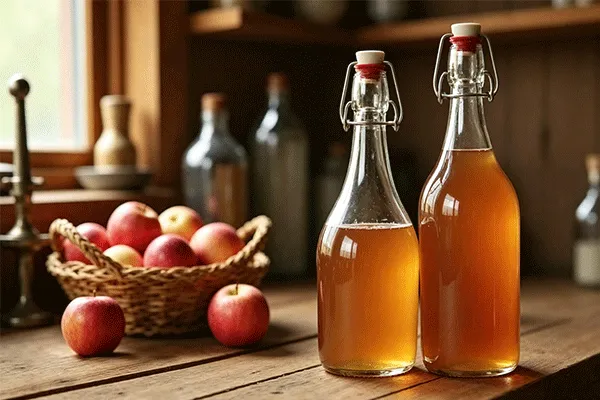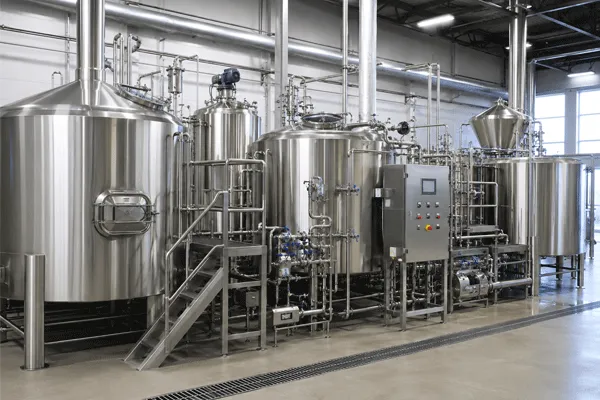











A fermentation vessel is the container where wort or must turns into beer, cider, or wine. The format you pick — open, closed, conical, wooden, plastic, or glass — sets your batch scale, your temperature control options, and whether a used tank is even a sensible purchase.

What Actually Separates One Vessel Type From Another
Every fermenter does the same basic job: hold liquid, keep out contamination, let yeast work. What changes is geometry, material, and whether the vessel can hold pressure. A flat-bottomed open fermenter and a cylindroconical unitank both “ferment beer,” but they belong to different production models entirely. One is built for top-cropping ale yeast and short cellar time; the other is built for a brewery running multiple beer styles through the same tank, week after week, with a racking arm and a pressure relief valve doing work the open vessel was never designed for.
That distinction matters more than most buying guides admit, because it’s also what determines whether a secondhand tank is a good idea. A used cylindroconical with a glycol jacket and a clean pressure test report is a straightforward retrofit. A used open fermenter is mostly just steel — there’s less to fail, but also less to verify.
The 6 Formats, Side by Side
| Format | Typical batch scale | 재료 | Pressure/carbonation capable | CIP-friendly | Refurb-sourcing fit |
| Open fermenter | 5–30 BBL | Stainless or lined steel | No | Manual clean only | Weak candidate — hard to verify wear, no jacket to inspect |
| Closed (flat-bottom) tank | 5–60 BBL | SUS304 stainless | Limited, low-pressure only | Yes, with spray ball | Good candidate if jacket and welds check out |
| Cylindroconical unitank | 3–120+ BBL | SUS304/316L stainless | Yes, full pressure fermentation and carbonation | Yes | Best candidate — most standardized design across brands |
| Wooden foeder | 10–50+ BBL | Oak or other hardwood | No | No — requires manual scrubbing/steaming | Poor candidate — wood condition and prior contents are hard to audit secondhand |
| Plastic conical | 0.5–7 BBL | Food-grade HDPE/PET | No | Manual | Case-by-case — scratches and micro-porosity are a real risk in used plastic |
| Glass carboy/demijohn | Under 50 gallons | Glass | No | Manual | Fine used, but batch scale is nano/homebrew only |
A few things stand out once the formats sit next to each other instead of in separate paragraphs. First, pressure capability is really a one-column split: only the cylindroconical unitank and, to a limited degree, a closed flat-bottom tank can hold CO2 for in-tank carbonation. Second, refurb-sourcing viability tracks almost exactly with how much of the vessel’s condition you can actually inspect from the outside — a jacketed stainless tank tells you a lot through its weld seams and pressure test tag; a foeder or a scratched plastic conical tells you much less.
Where Refurb-Sourcing Actually Makes Sense
This is the question most vessel-type roundups skip, and it’s worth answering directly instead of vaguely: not every format is worth buying used, even at a discount.
- Cylindroconical stainless tanksare the strongest used-market candidates. The geometry is standardized enough across manufacturers that a 10 BBL used unitank from one shop is dimensionally close to one from another, which makes swapping into an existing cellar layout realistic.
- Closed flat-bottom tanksare a reasonable second choice, provided the glycol jacket has been pressure-tested recently and the interior shows no pitting.
- Open fermenterscan be bought used cheaply, but because they’re simpler, there’s also less documentation trail — condition assessment leans heavily on a physical inspection rather than paperwork.
- Wooden foedersare the format we’d steer buyers away from sourcing secondhand unless the prior use (and prior beer style) is fully known. Wood holds onto whatever fermented in it before, which is a feature for a sour program built around a specific foeder and a liability for anyone else.
- Plastic conicals and glass carboysare usually bought new because they’re inexpensive enough that the labor of inspecting a used one for scratches and micro-cracks isn’t worth the savings.
Common Misconception: “Unitank” and “Fermenter” Aren’t Interchangeable
A recurring mix-up in buyer conversations is treating “unitank” as just another word for “fermenter.” It isn’t. A unitank is a cylindroconical vessel engineered to handle both fermentation and the conditioning/carbonation stage that would otherwise require moving the batch to a separate brite tank. Every unitank is a fermenter; not every fermenter is a unitank. An open fermenter or a foeder can never function as a unitank, because neither is built to hold pressure. If a used-equipment listing says “unitank” but the tank has no pressure relief valve or carb stone, that’s worth flagging before purchase, not after installation.

Fermentation Tank Specs Worth Checking Before You Buy
Specs vary meaningfully across brands and even across a single manufacturer’s product line, so treat any single spec sheet as a reference point, not a universal standard. As an example of the range you’ll see in a mid-size stainless fermenter line: batch sizes commonly run from 3–5 BBL up through 10, 20, and 40 BBL formats, alongside metric sizing such as 2,000L, 4,000L, and 6,000L total volume (roughly 1,800L, 3,600L, and 5,400L working capacity to leave headspace for krausen). Construction is typically SUS304 stainless with a glycol jacket and polyurethane insulation, rated for a design pressure around 0.2 MPa and tested to roughly 0.3 MPa.
Two numbers to always ask for on a used tank quote: the design pressure rating and the last pressure test date. Both should be on the mill certificate or test report that came with the original build — if a seller can’t produce either, budget for a new pressure test before the tank goes into service.
Price Ranges by Scale
Pricing depends heavily on batch size, jacket configuration, and whether the tank is sold standalone or as part of a full system. For a rough anchor: a full microbrewery equipment package (brewhouse plus fermentation) tends to run in the 30,000–80,000 USD range, and a minimum-scale commercial system starting around 10 BBL runs roughly 50,000–80,000 USD. Standalone 발효 탱크 outside a packaged system aren’t publicly listed at fixed prices by most manufacturers — expect to request a quote once you’ve settled on capacity, jacket type, and pressure rating.
Pros and Cons You Shouldn’t Skip
No format wins on every axis. Cylindroconical unitanks give you pressure fermentation and single-vessel conditioning, but they cost more per liter of capacity than an open tank and need a trained operator who understands racking arm use and CIP cycles. Open fermenters are cheap and simple to maintain, but they can’t carbonate in-tank and expose the batch to more oxygen risk during transfer. Wooden foeders add flavor complexity that stainless can’t replicate, but they’re the hardest format to keep spotless between uses and the least forgiving of temperature swings. Plastic and glass are the lowest-cost entry point, but neither scales past homebrew or nano volumes without becoming impractical to sanitize consistently.

Where Certification Fits In
For pressure-rated formats — closed tanks and unitanks in particular — a third-party pressure equipment verification matters more than a marketing claim. As one reference point, Ente Certificazione Macchine Srl has issued PED verification (certificate 3N231110.SICS093) for brewing pressure vessels under the EU’s 2014/68/EU Pressure Equipment Directive, tested to EN 1626:2008. That’s the kind of documentation worth asking for on any pressure-capable tank, new or used — not because every seller needs it, but because it tells you the vessel was tested against a defined standard rather than just described as “rated.”
FAQ
Q: Can an open fermenter be converted into a pressure-capable tank later?
A: Not economically. Pressure capability depends on the vessel’s structural design and welds from the start — retrofitting a flat-topped open tank to hold CO2 pressure isn’t a standard modification most fabricators will sign off on.
Q: Is a used cylindroconical tank actually cheaper once you account for reconditioning?
A: It depends on the condition of the jacket and the interior surface. A tank with an intact glycol jacket and no interior pitting can be a genuine discount; one that needs a new jacket or re-polishing can close most of the price gap versus new.
Q: Do wooden foeders need any format-specific insurance or storage conditions?
A: They need stable ambient humidity to prevent the wood from drying and cracking, which is a different requirement than stainless tanks face — this is worth factoring into cellar layout, not just purchase price.
Q: What batch scale is the cutoff where glass and plastic stop making sense?
A: Once a brewery is producing on a consistent commercial schedule rather than pilot batches, most operators move to stainless — glass and plastic conicals become a bottleneck on cleaning turnaround well before they become a quality problem.