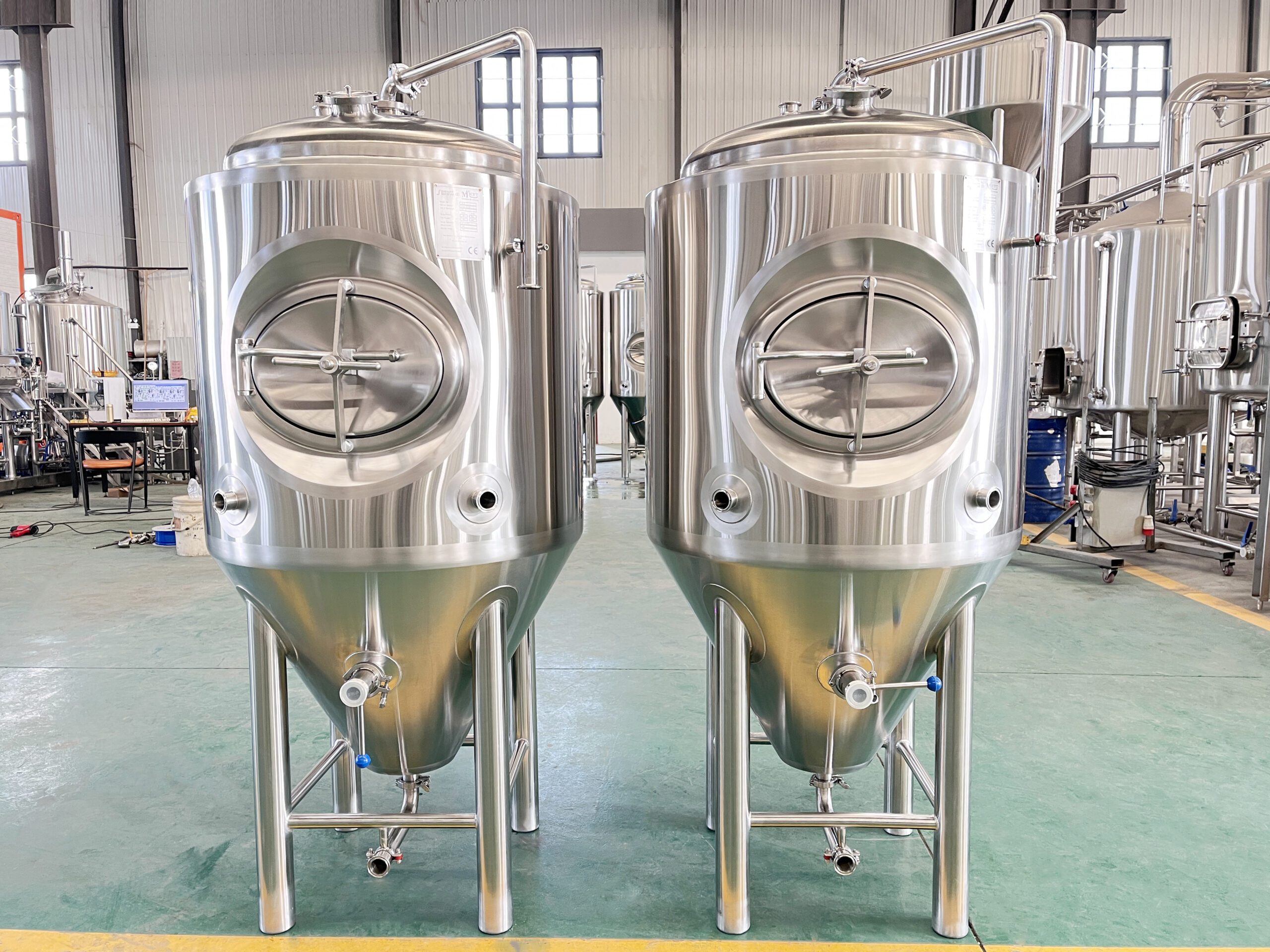
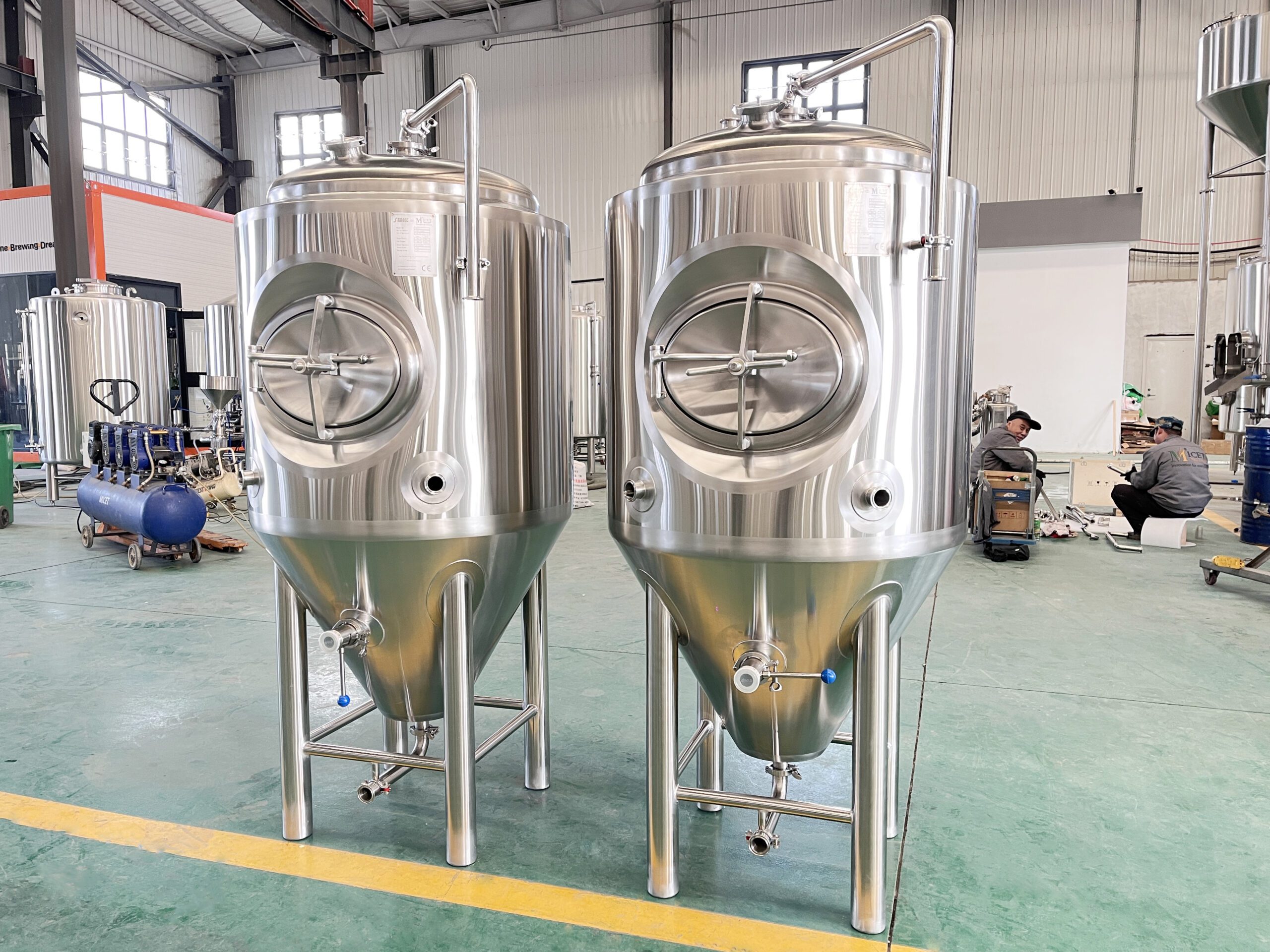
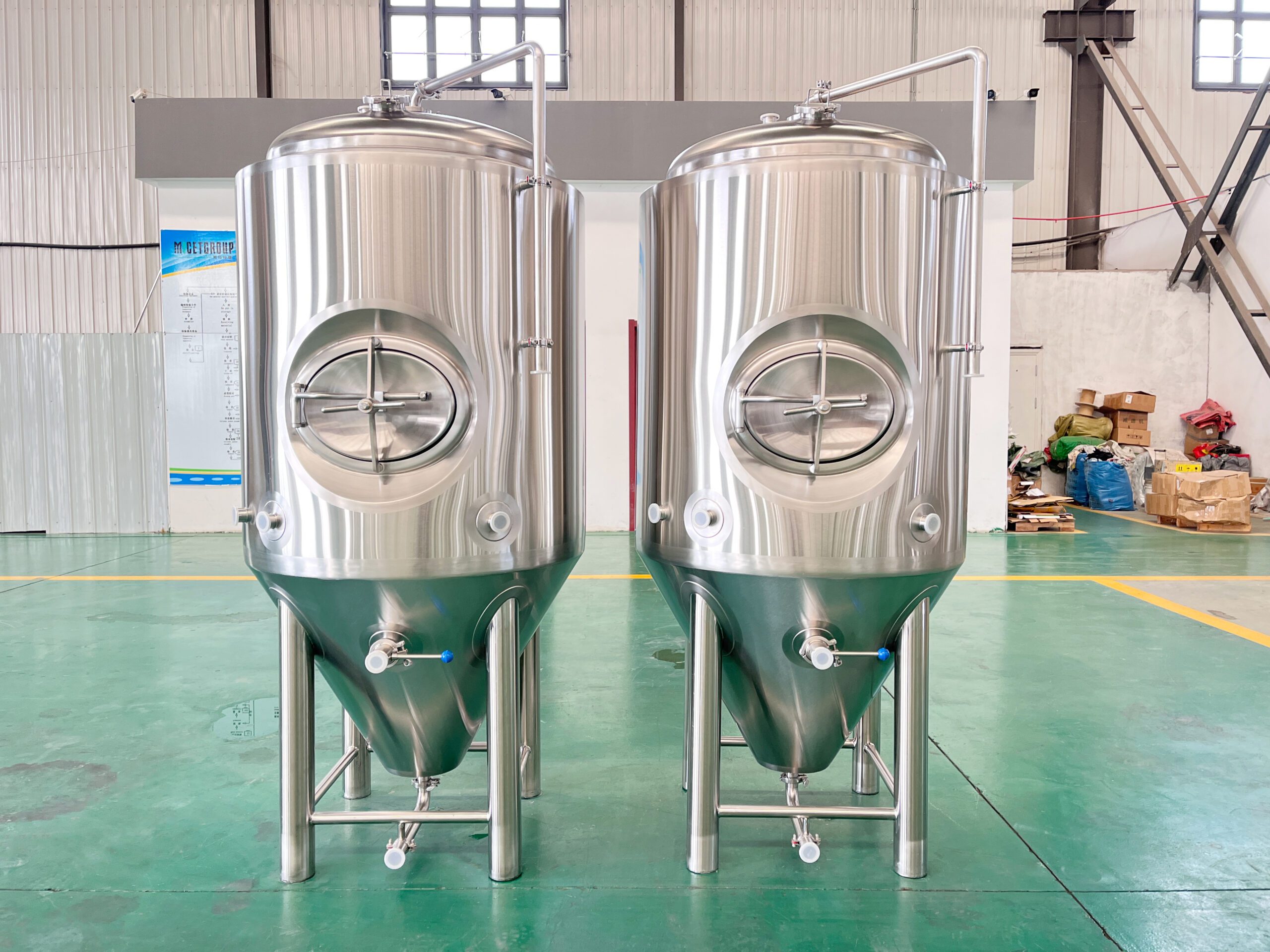
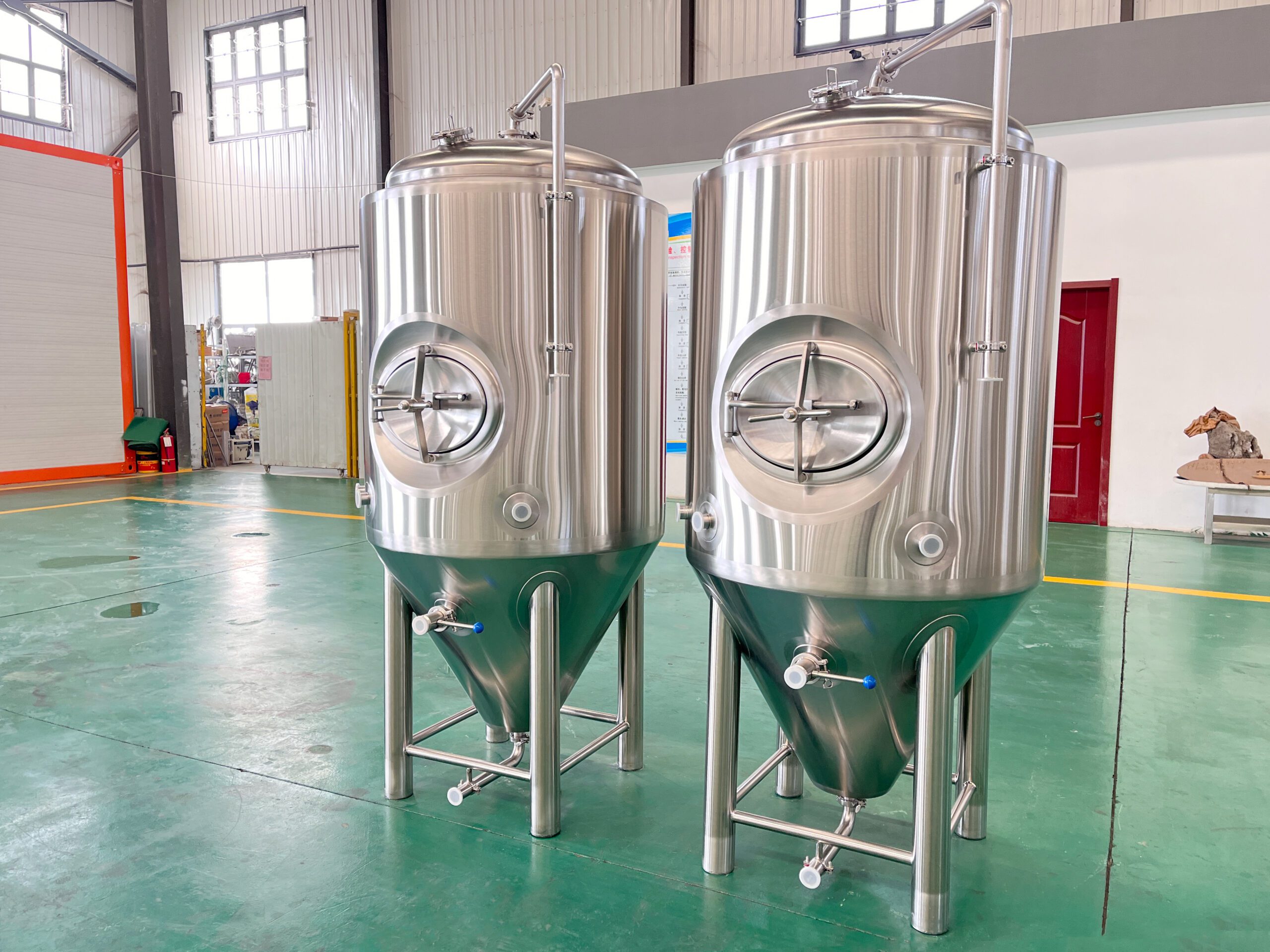
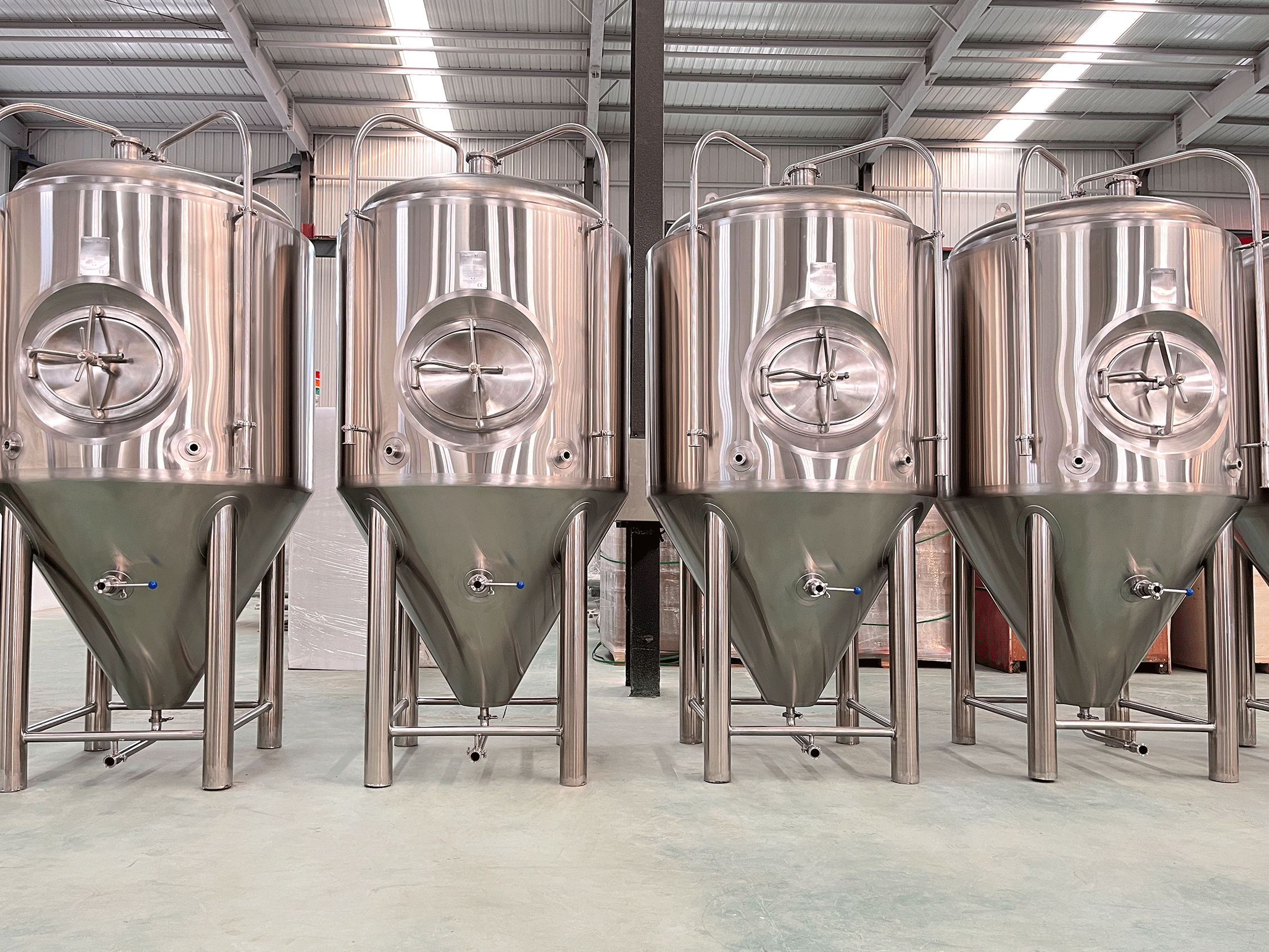
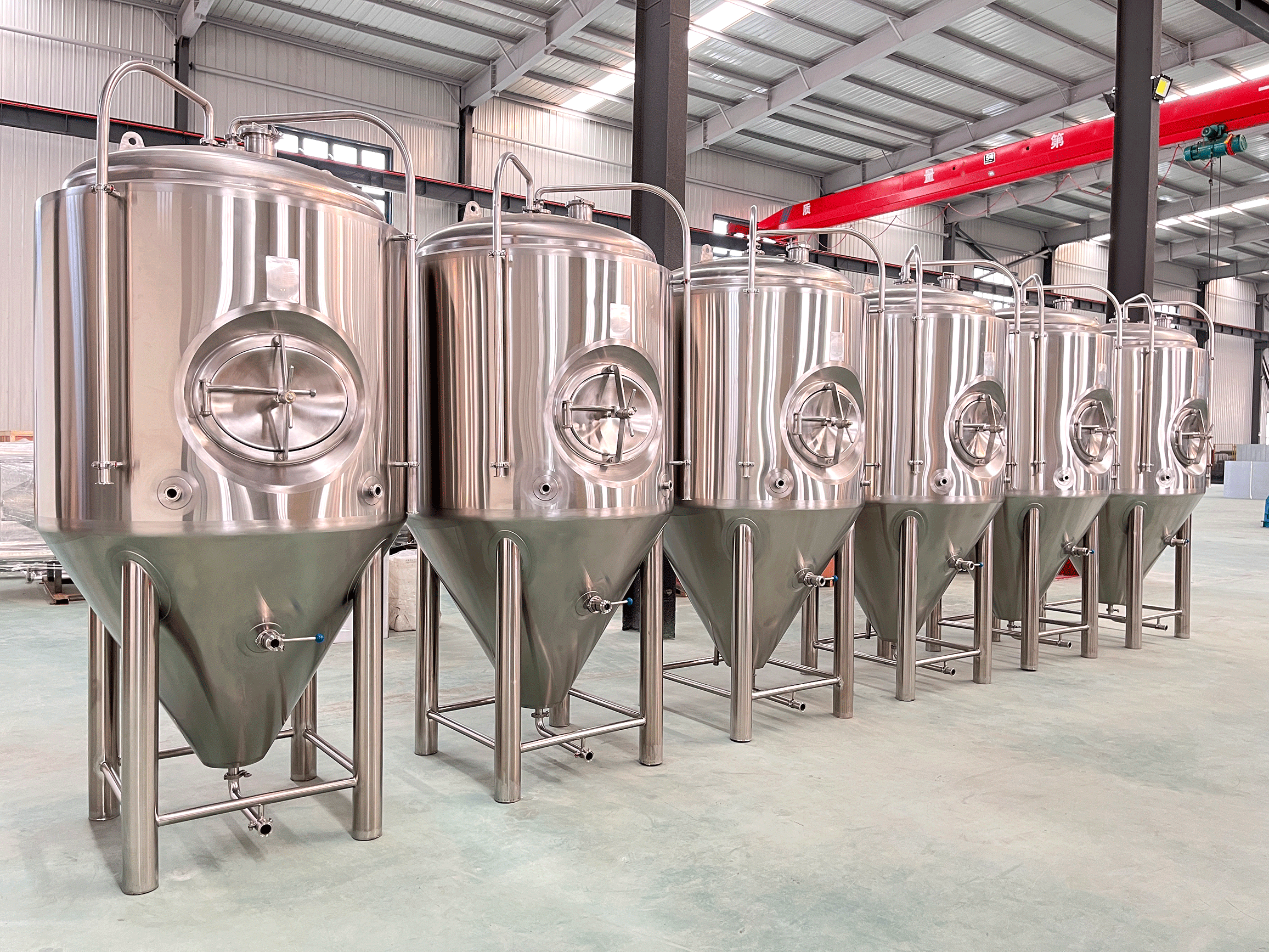
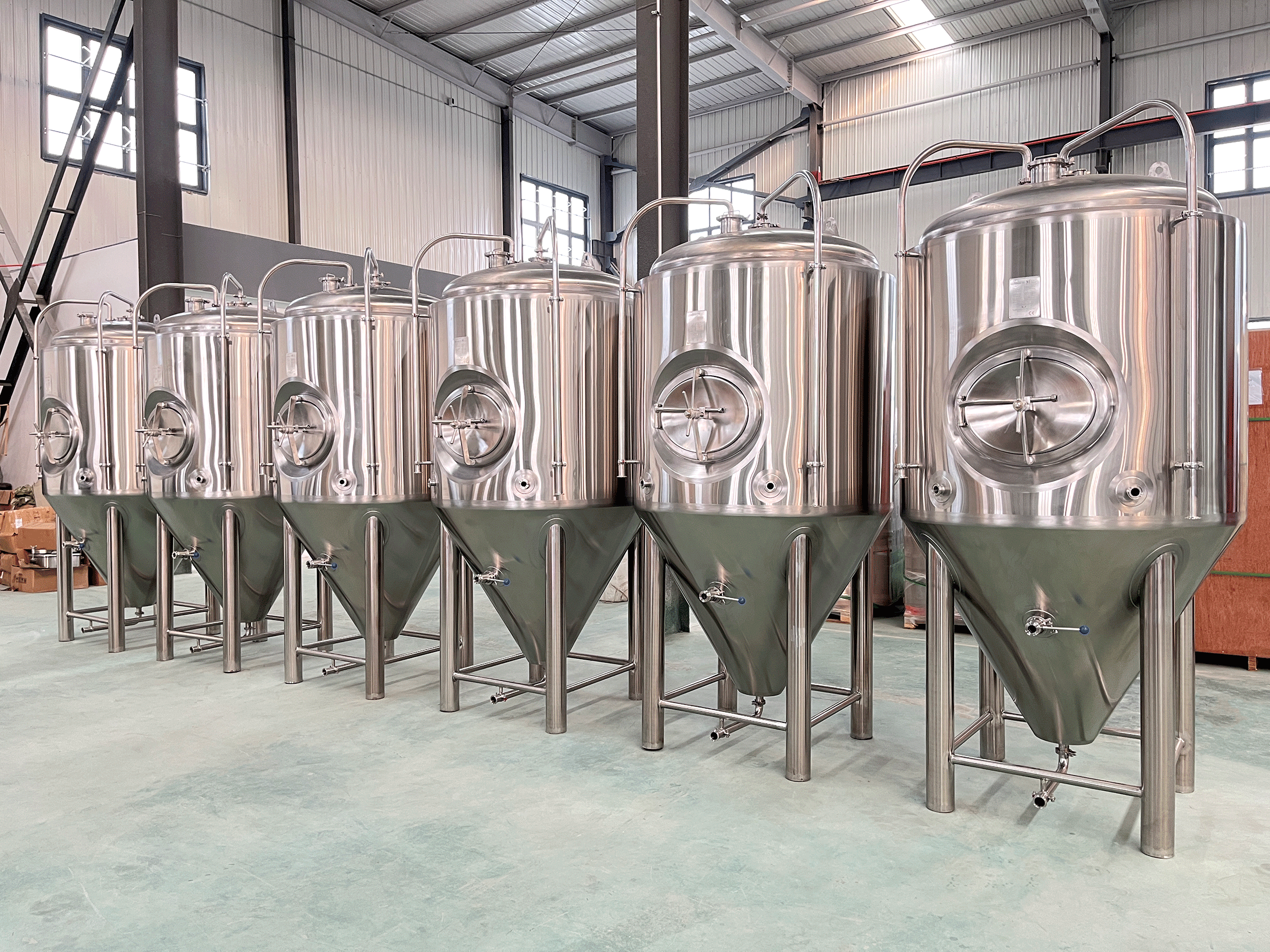
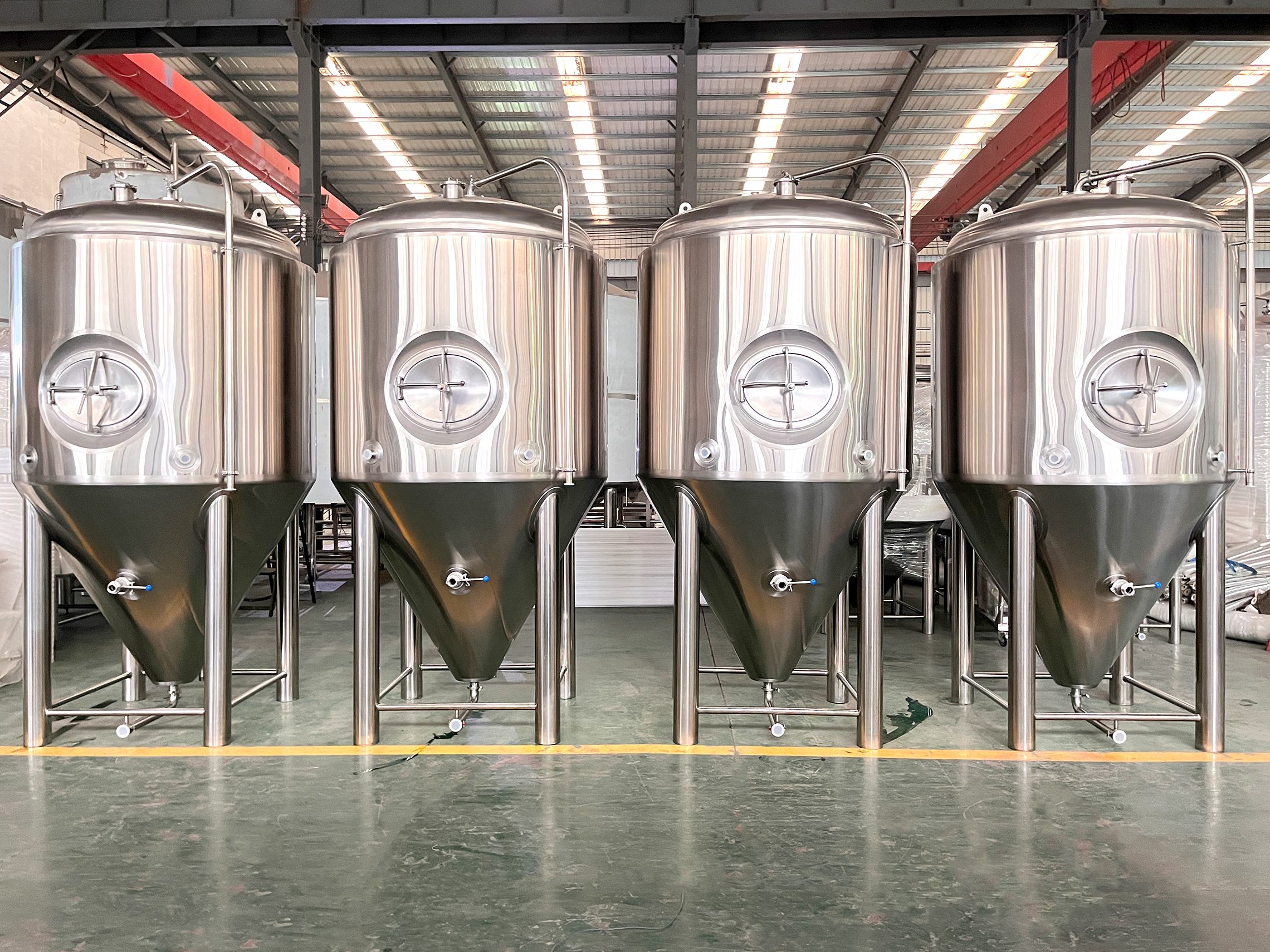
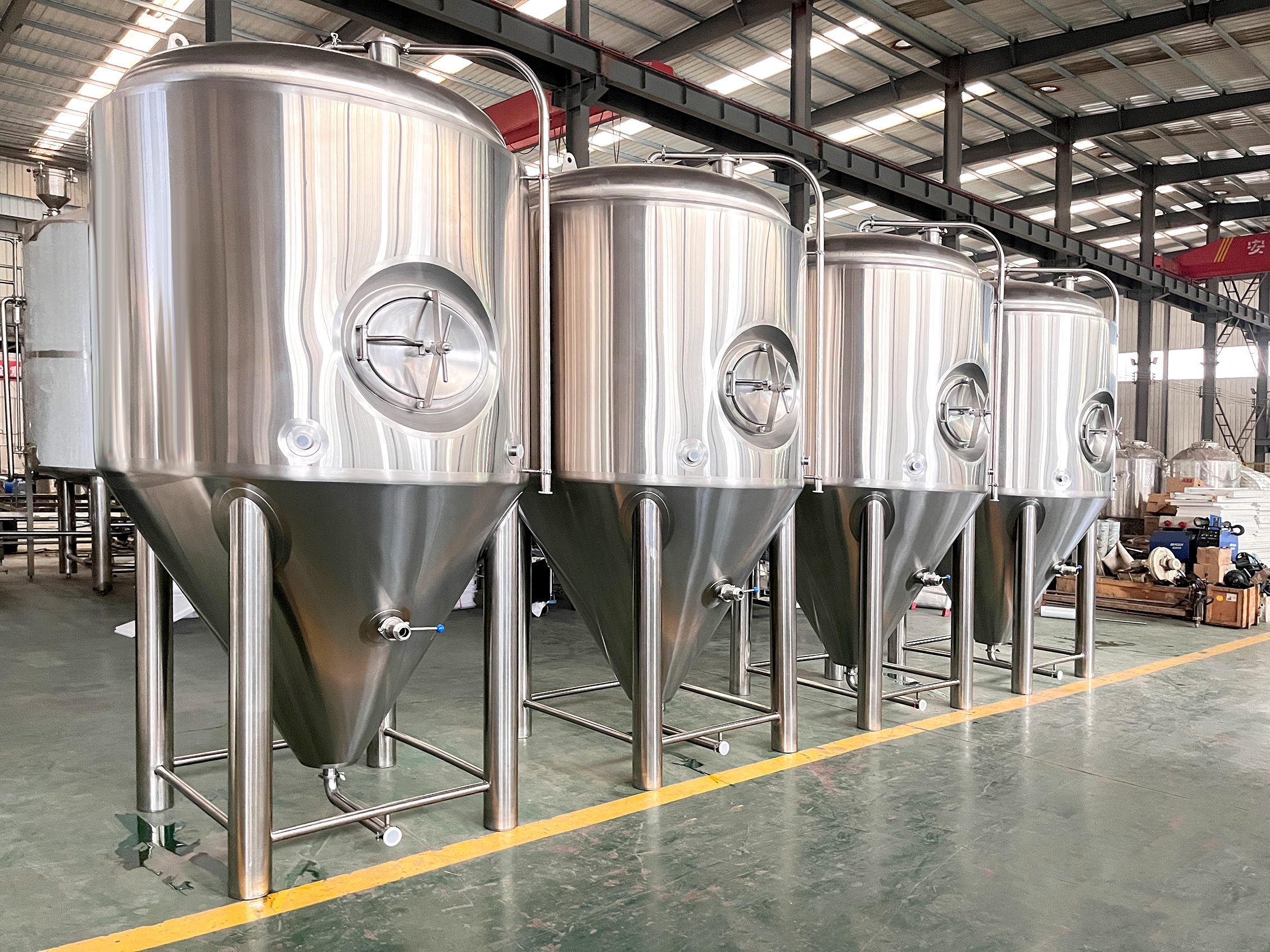
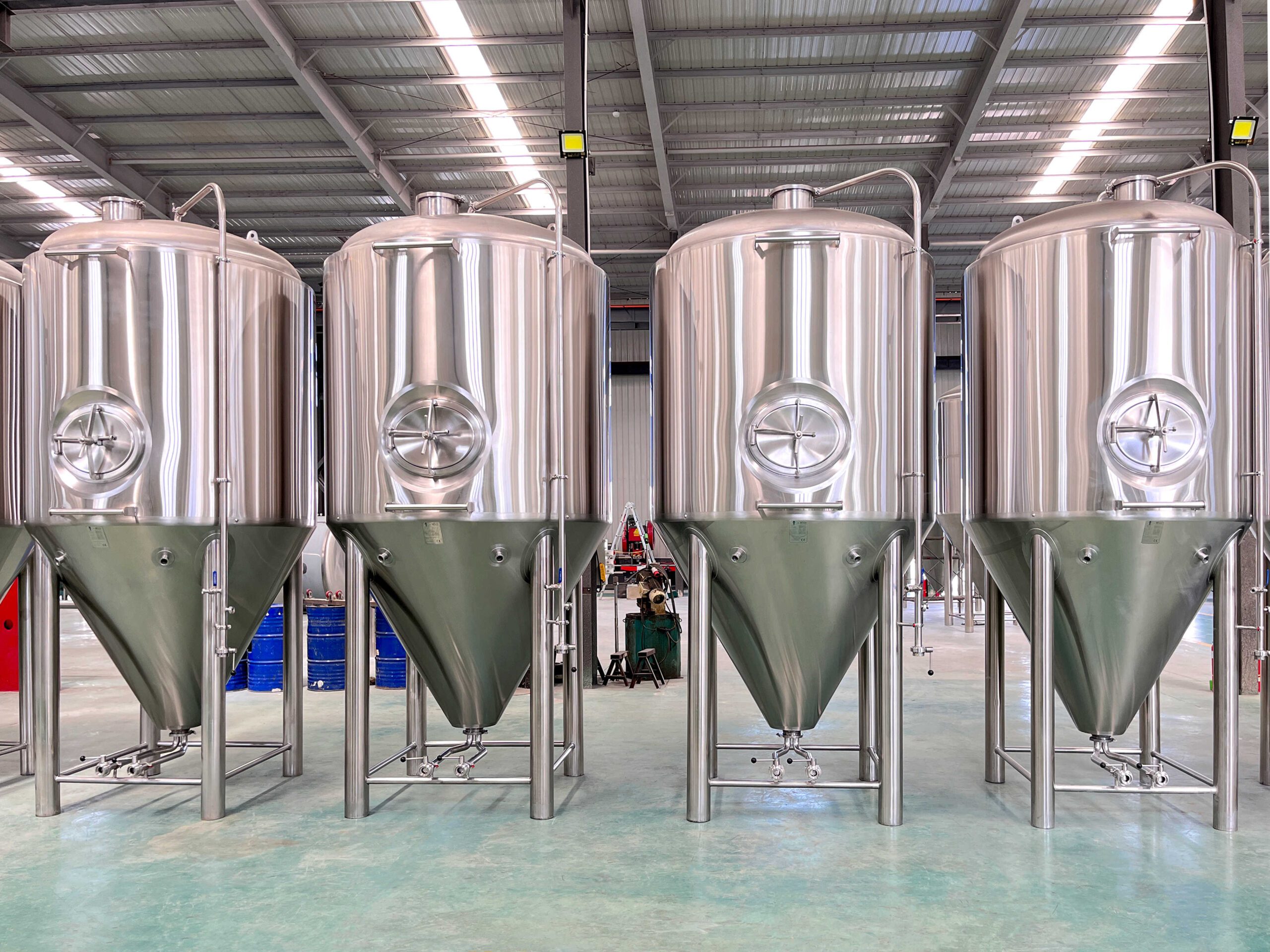
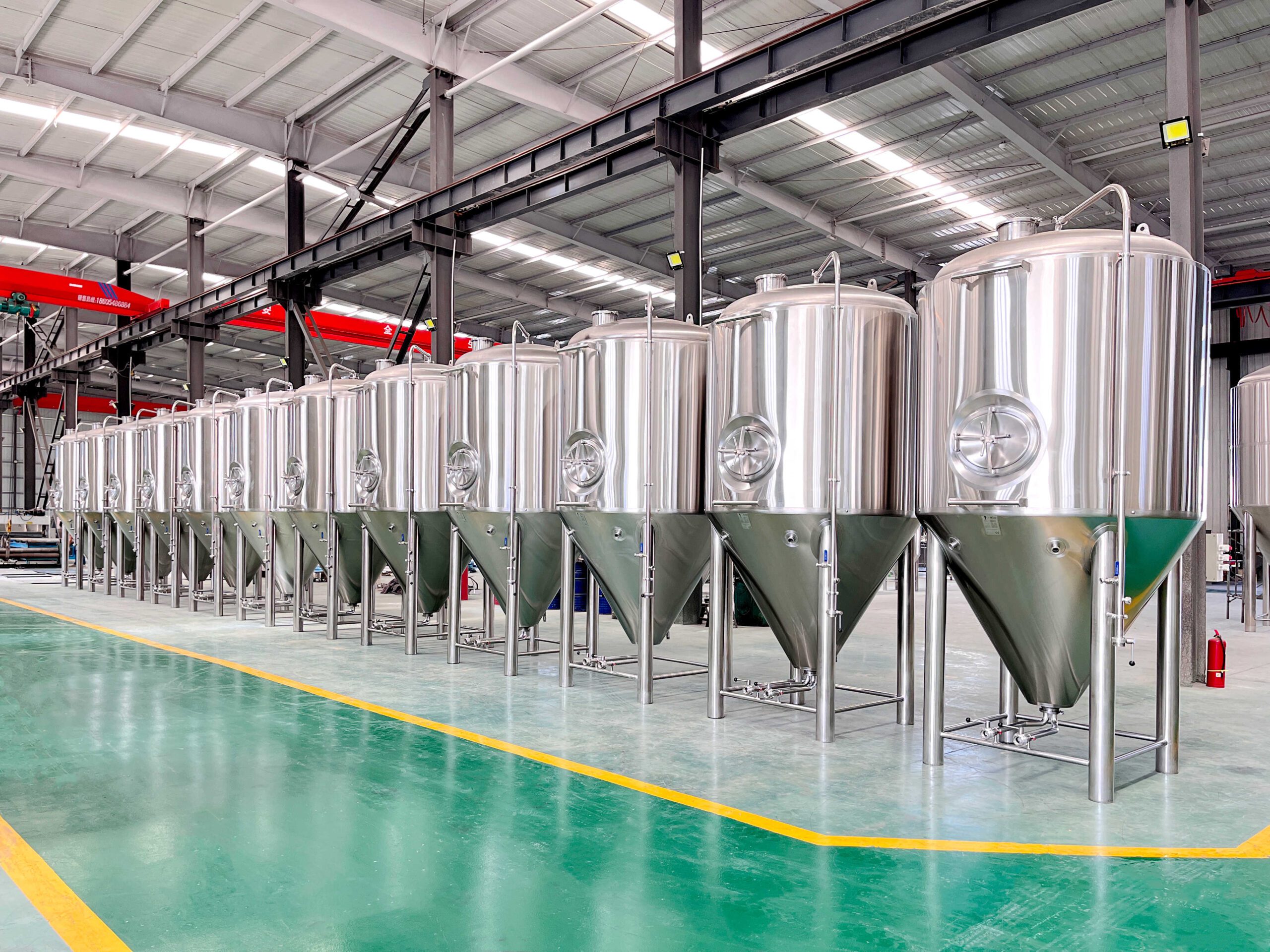
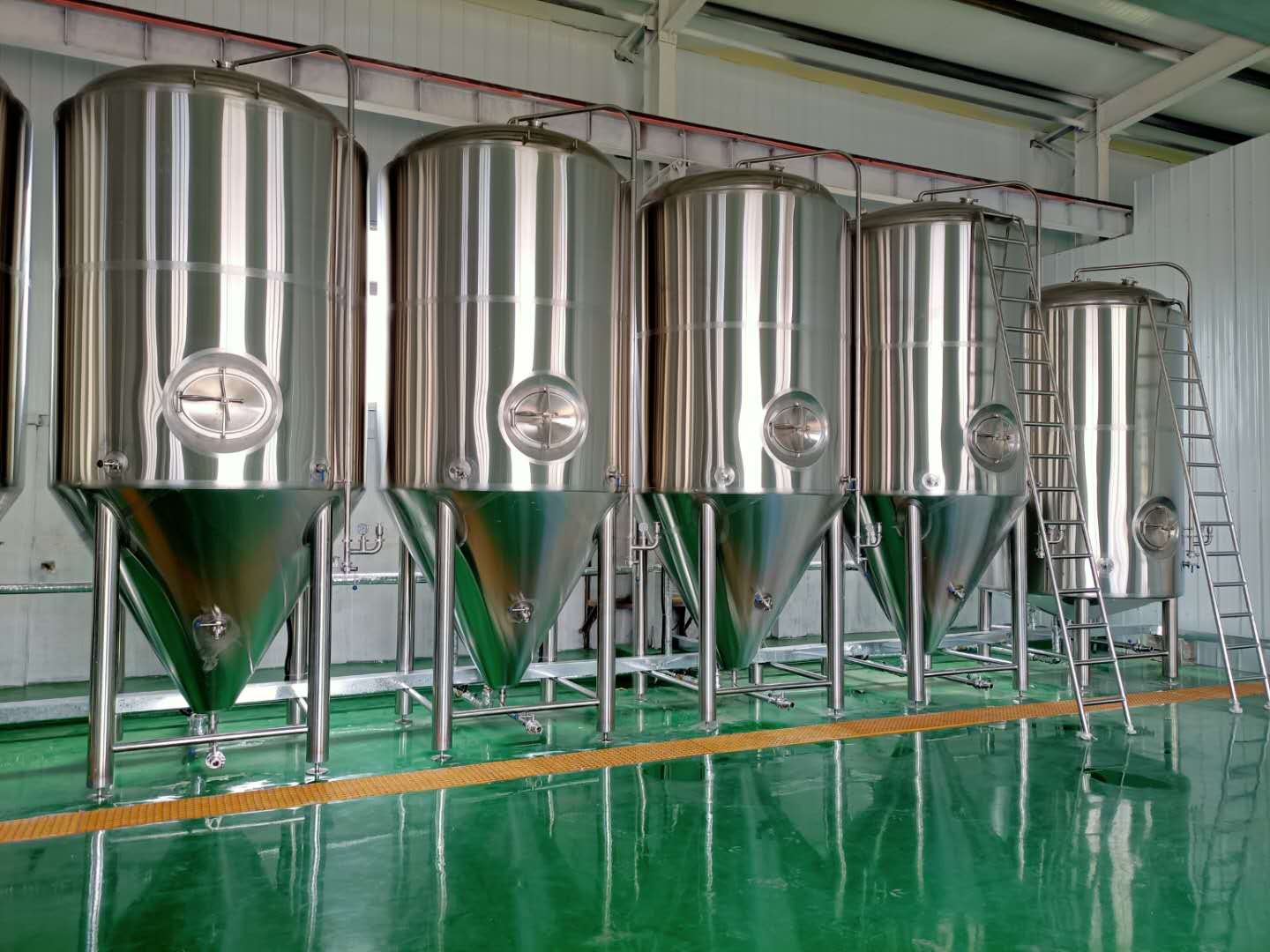
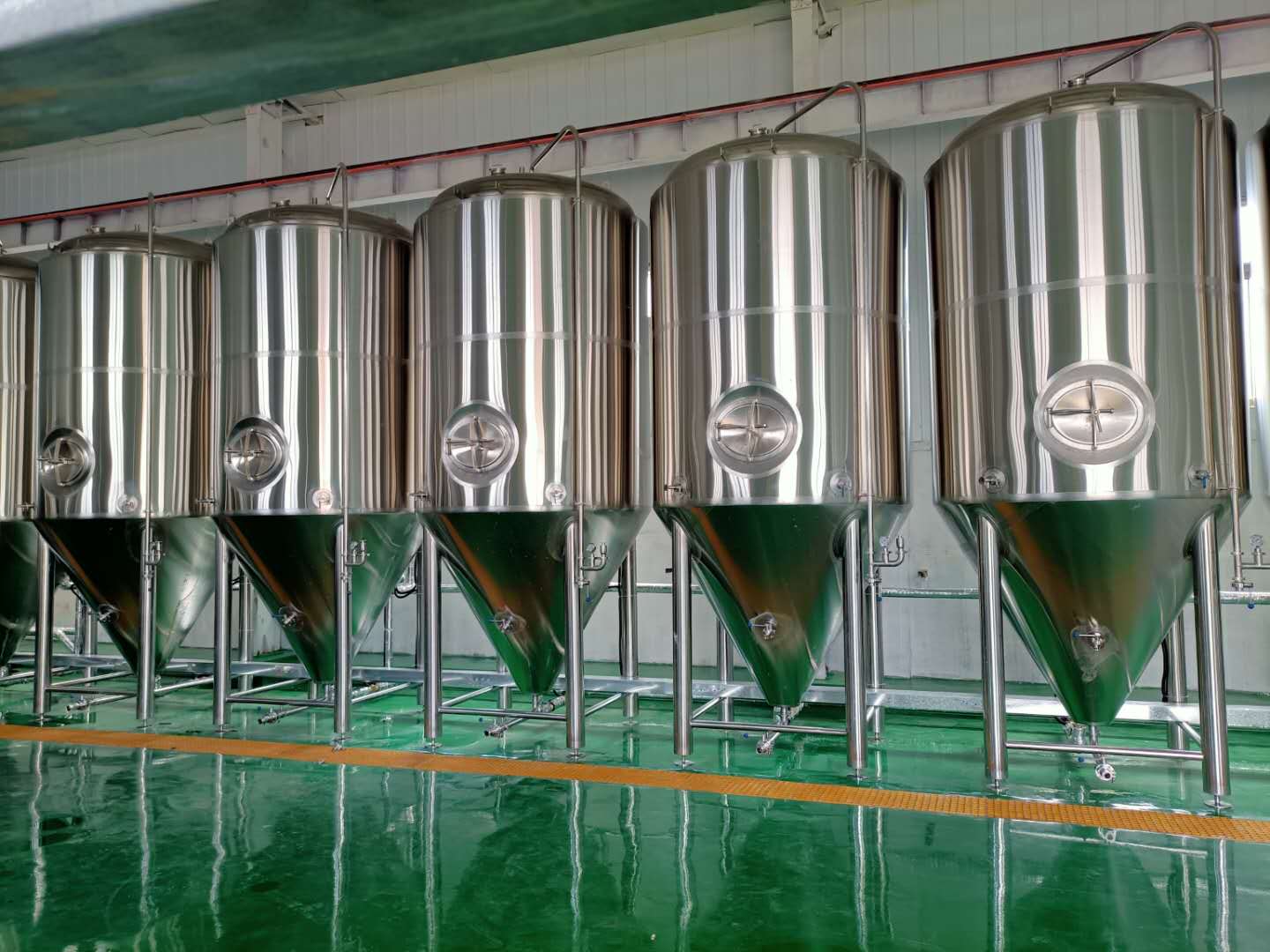
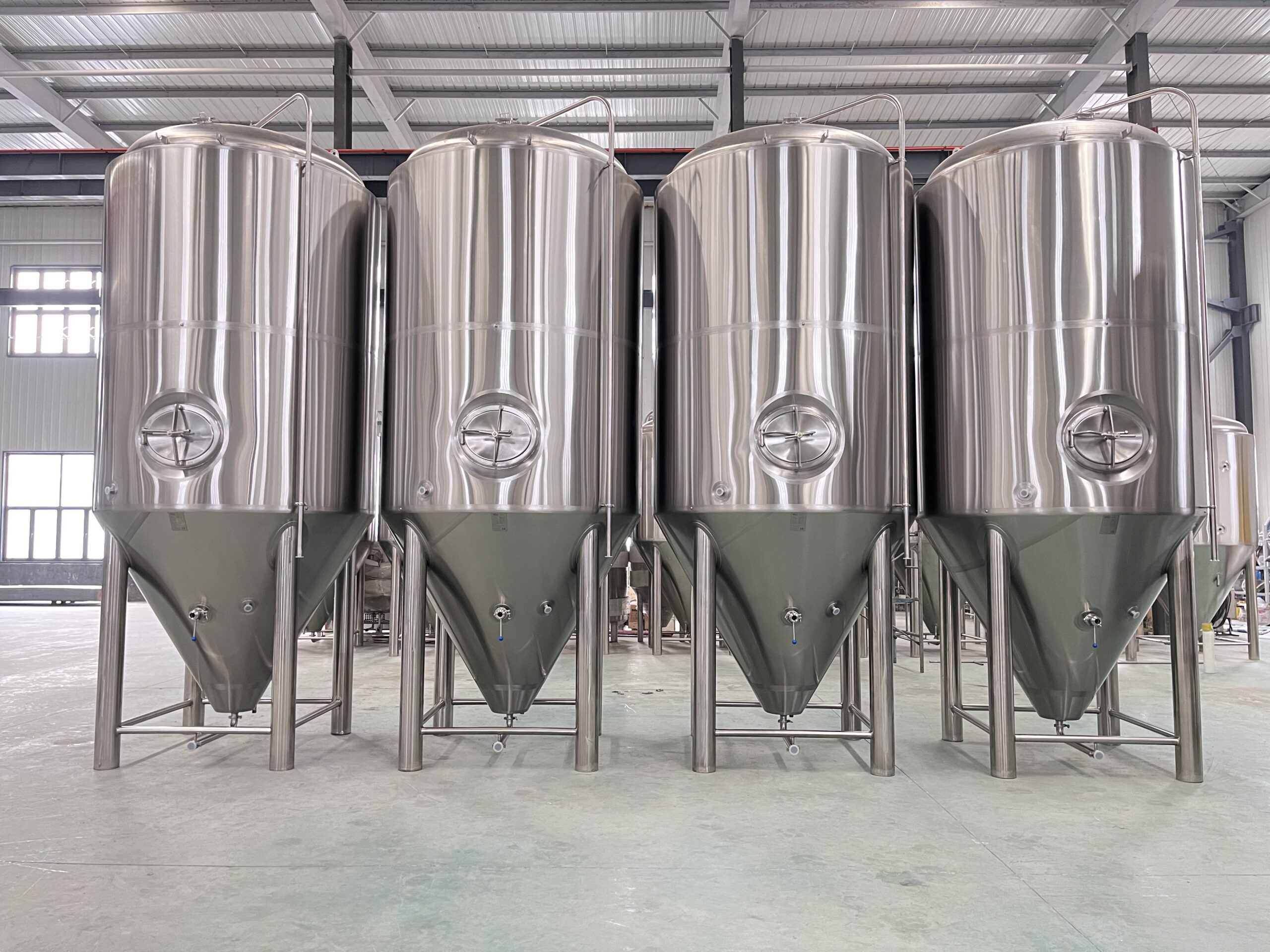
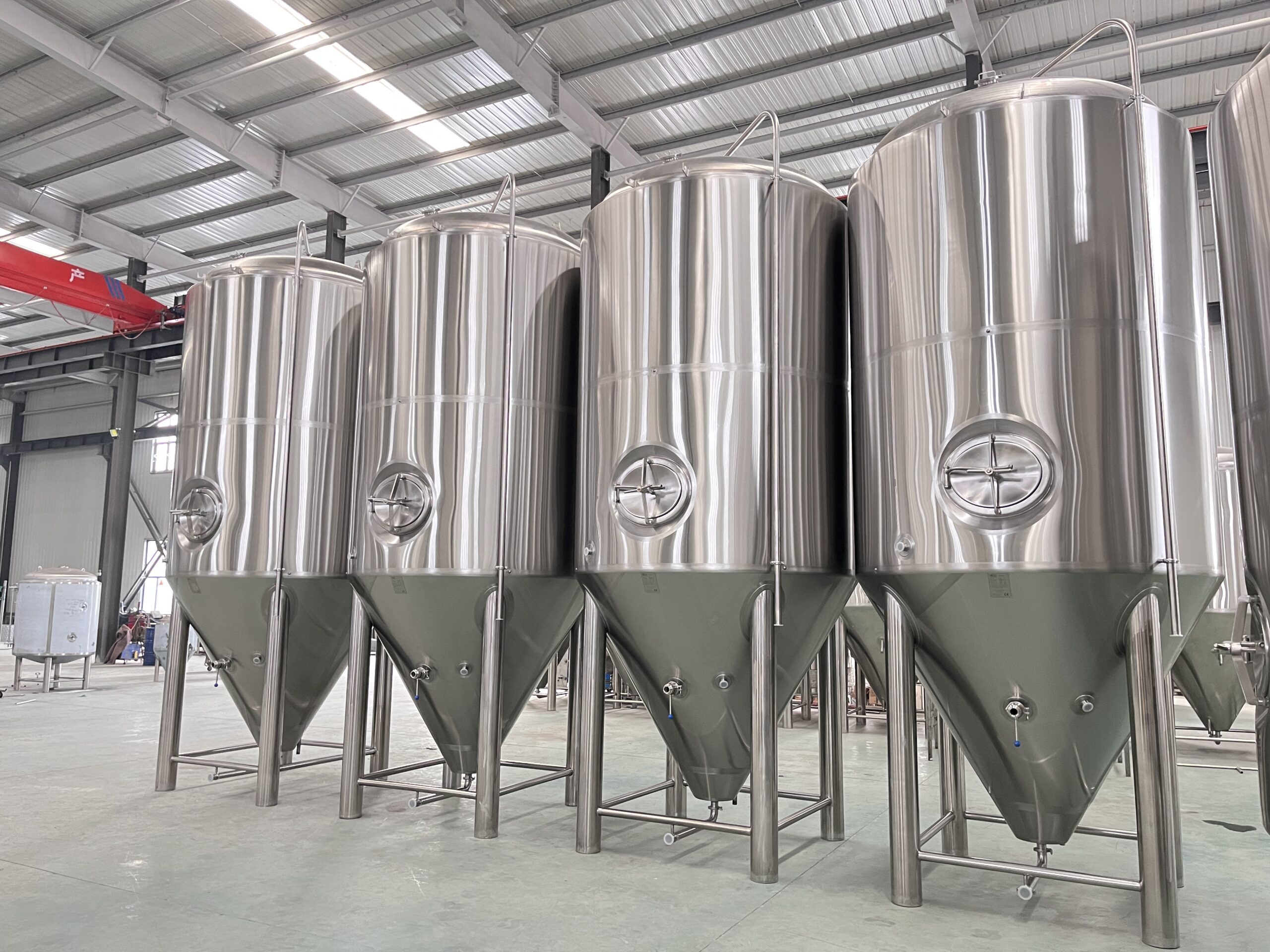
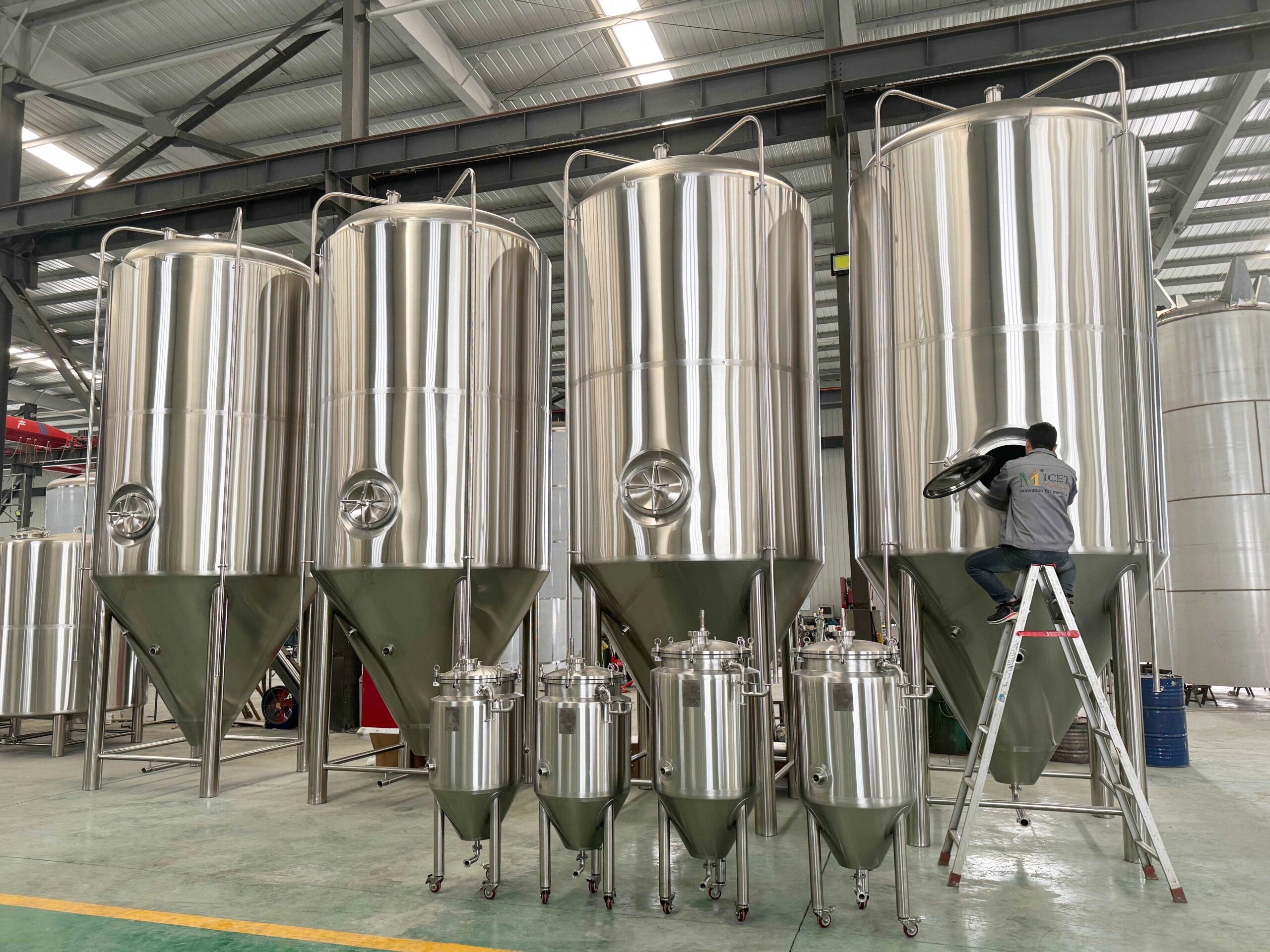
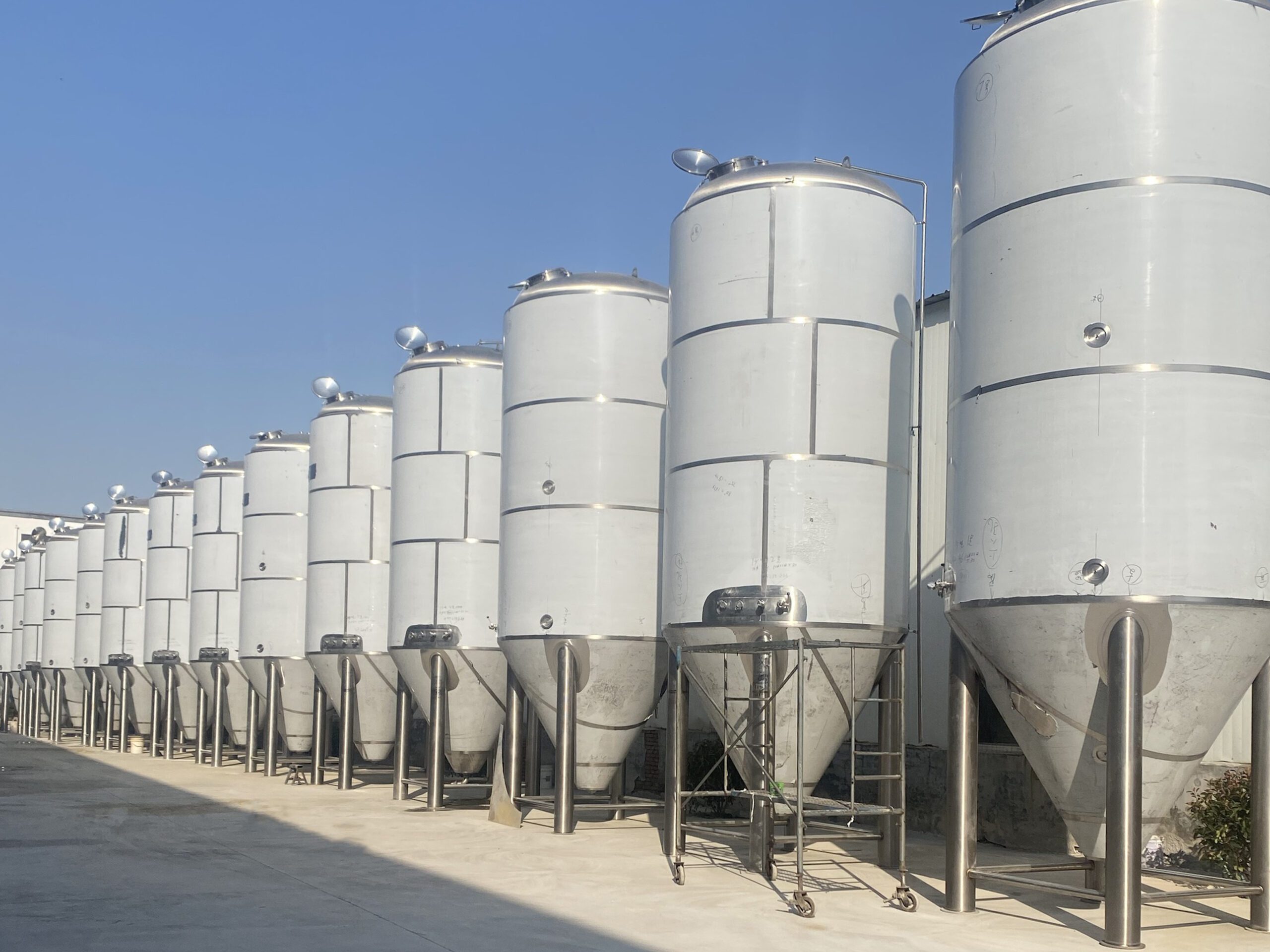
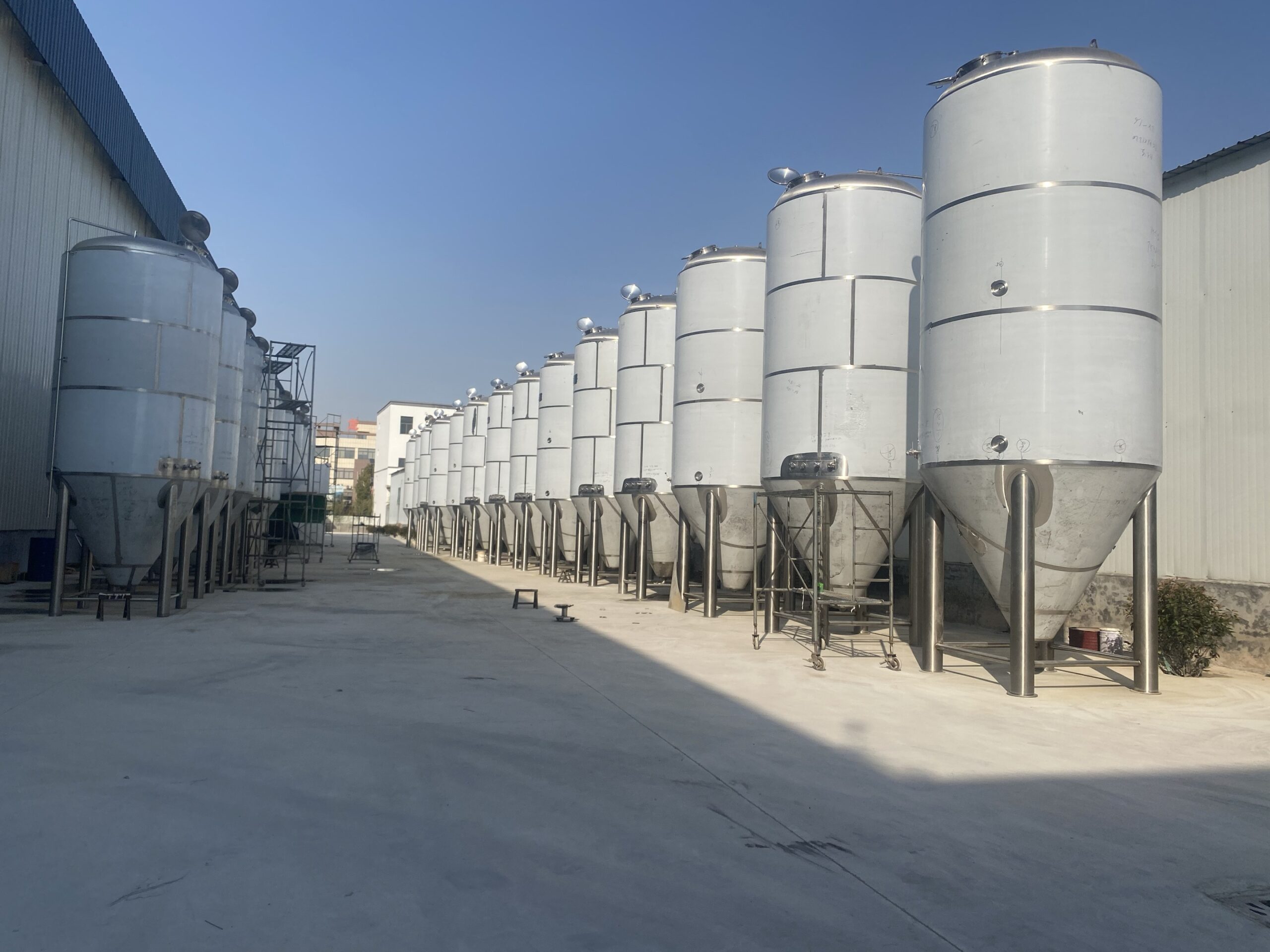
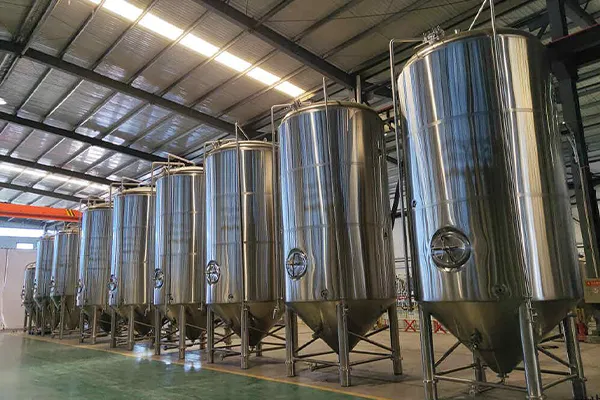
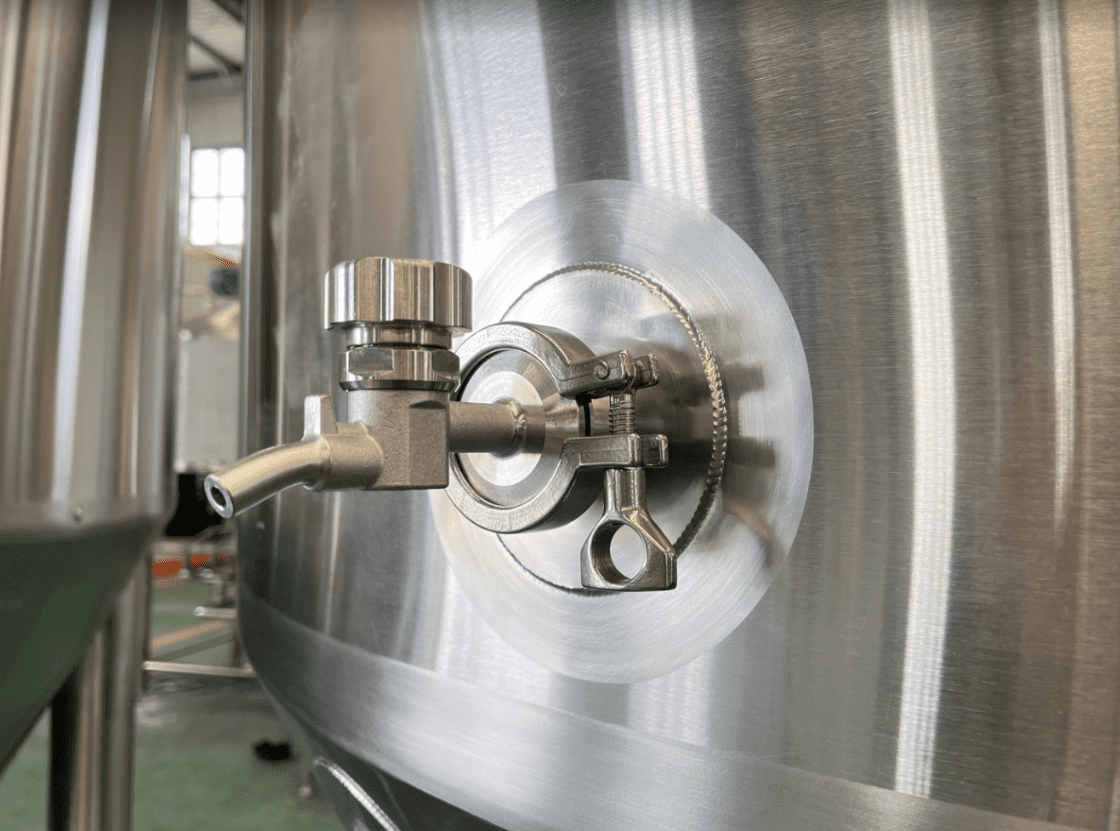
Naše Fermentation Cellar Projects & On-Site Photos show used fermentation tanks installed in real breweries and beverage plants, so you can see actual layouts, tank rows and piping, and imagine how similar setups can work in your own project.
Cut costs with used fermentation tanks ready for beer, kombucha, cider, wine and beverage plants—capacity matched to your cellar plan.
Pressure-Rated Options – Verified condition for safe carbonation and serving.
Hygiene-Ready – Internal cleaning, passivation and inspection records available.
Fit-to-Layout Customization – Nozzles, outlets and connections adjusted if required.
Fast Export Delivery – Secure packing for overseas transport.
Choose from a wide range of capacities to match your brewhouse size, number of SKUs and production plan.
Compact 300L stainless steel fermentation tank for pilot brewing, test batches or small kombucha / cider lines, pressure-tested and internally cleaned before shipment.
500L used fermentation tank suitable for nano breweries and restaurant breweries, with stainless-steel construction and optional cooling jacket for controlled fermentation.
1000L pre-owned fermentation tank for microbreweries and kombucha producers, supplied with basic fittings and inspected welds, ideal for small commercial production.
2000L used fermentation tank for growing craft breweries, with jacketed cooling and cone or dish bottom options, pressure-tested and ready for integration into your cellar.
2500L second-hand fermentation tank designed for higher-output microbreweries, supporting multiple batches per week and stable temperature control with glycol jackets.
High-capacity 5000L used fermentation tank for regional breweries or central production sites, suitable for beer, cider or other beverages, with tested pressure rating and hygienic internal finish.
Tento used 10T fermentation tank package uses MICET’s standard fermentation tank design and combines large-volume used fermenters with refurbished bright beer tanks.
15T fermentation tank package using two 6500L conical fermenters and twelve 3000L fermenters. All tanks are SUS304,insulated, jacketed and refurbished
20T fermentation tank package using two 6500L conical fermenters and twelve 3000L fermenters. All tanks are SUS304,insulated, jacketed and refurbished
SS304 / SS316
Internal surface roughness (e.g. Ra ≤ 0.6–0.8 μm when available)
Internal pickling & passivation
SS304 / SS316
Internal surface roughness (e.g. Ra ≤ 0.6–0.8 μm when available)
Internal pickling & passivation
Manway, CIP spray ball, sampling valve, thermowell, level indicator, inlet/outlet sizes
Tri-clamp / DIN / SMS connections
Před jakýmkoli použité pivovarské vybavení je vám nabízen, prochází v naší továrně přísnou renovací a kontrolou kvality. To vám pomůže vyhnout se skrytým rizikům, omezit problémy s instalací a co nejrychleji uvést systém zpět do výroby.
In many cases, the best solution is used fermentation tanks or unitanks v kombinaci s new glycol chillers, pump skids, manifolds and CIP systems. We refurbish the tank body, jackets and fittings, then engineer new cooling, valves and cleaning loops around them. This keeps your main cellar volume cost-effective, while hygiene, temperature control and maintenance are handled by reliable new equipment.
Řekněte nám o svém projektu a naši inženýři navrhnou hybridní řešení nové + použité přesně pro vás.
We can modify used fermentation tanks to fit your existing cellar layout and process design.
PRV, sampling valves, carbonation stone, racking arm, level gauge, thermowell
Temperature sensors, basic control panels, PLC integration options
CIP spray balls, CIP return connection, CIP set integration
Add/remove nozzles, change leg supports, adjust outlet height, add ladders or platforms
Společnost MICET provedla skutečné instalace ve více než 100 zemích - na zakázku pro pivovary, kombuchy, lihovary, vinařské systémy, fermentační nádrže a nádrže z nerezové oceli.
Zjistěte, jak navrhujeme, vyrábíme, instalujeme a podporujeme projekty na klíč od nano až po komerční měřítko.

As the global craft beer industry continues to grow, many breweries are looking for reliable and affordable equipment to expand production while controlling investment costs. A high-quality used fermentation tank can be an excellent choice, offering professional performance at a significantly lower price than new equipment.
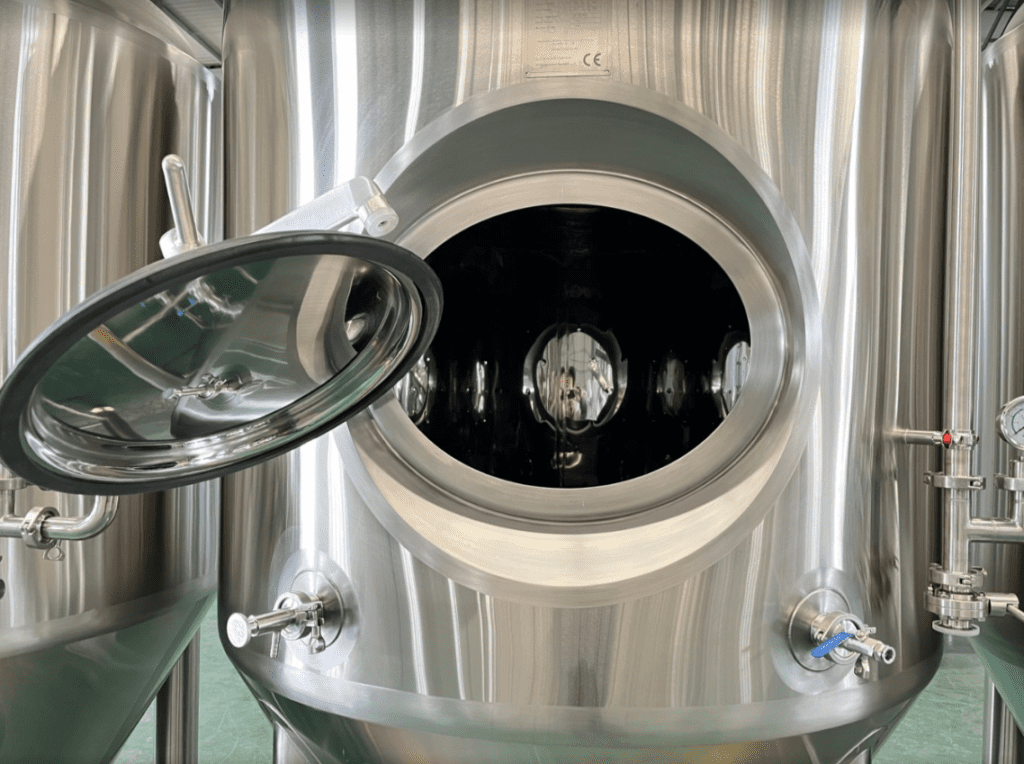
We currently have a well-maintained used 500L stainless steel fermentation tank available for sale. This tank has been professionally inspected, cleaned, and tested to ensure stable operation and excellent brewing performance. It is ideal for craft breweries, brewpubs, pilot brewing projects, beverage startups, and expanding production facilities.
The used 500L fermentation tank is one of the most popular sizes in the craft brewing industry. It provides the perfect balance between production flexibility and investment efficiency. Whether you are launching a new brewery or adding extra fermentation capacity, this tank can meet your requirements.
Manufactured from food-grade stainless steel, the tank is designed according to sanitary standards and is suitable for beer fermentation, cider production, kombucha fermentation, and other beverage applications.
Purchasing a used fermentation tank can reduce equipment investment by 30% to 60% compared with buying a new unit. This allows breweries to allocate more budget toward raw materials, packaging, marketing, or additional production equipment.
Unlike new equipment that may require several weeks or months of manufacturing time, used tanks are generally available for immediate shipment, helping breweries start production sooner and reduce waiting time.
This tank has already been used in a production environment and has demonstrated reliable operational performance. After professional inspection and refurbishment, it is ready for continued service.
Reusing brewing equipment contributes to environmental sustainability by extending equipment life cycles and reducing industrial waste.
Na stránkách used 500L fermentation tank is suitable for:
All used equipment offered by our company undergoes a comprehensive inspection process before sale. We carefully evaluate tank integrity, welding quality, cooling jacket condition, valves, fittings, and overall appearance.
The tank is thoroughly cleaned, pressure-tested, and prepared for shipment to ensure customers receive equipment that is ready for installation and operation.
Photos, videos, and detailed inspection reports can be provided upon request.
If you are looking for a reliable and affordable used 500L fermentation tank, this unit represents an excellent opportunity to expand your brewery at a competitive cost.
Contact us today for pricing, photos, videos, and shipping information. Our team will be happy to provide a customized quotation and help you select the right equipment for your brewing project.

Pro pivovary, pivovary, restaurace a začínající řemeslné pivovary, které chtějí rozšířit výrobu a zároveň kontrolovat investiční náklady, nabízí tento použitý systém 500L pro vaření piva vynikající rovnováhu výkonu, spolehlivosti a cenové dostupnosti. Kompletní pivovar byl profesionálně udržován a zůstává v dobrém provozním stavu, což z něj činí ideální řešení pro komerční výrobu piva.
|
Název zařízení |
Specifikace |
|
Mash Tun |
500L |
|
Lauter & Whirlpool Tun |
500L |
|
Fermentační nádrž |
500L |
|
Nádrž na glykolovou vodu |
1000L |
|
Glykolový chladič |
5 HP |
|
Elektrický parní kotel |
50 kg/h |
|
Sladovna |
150 kg/h |
|
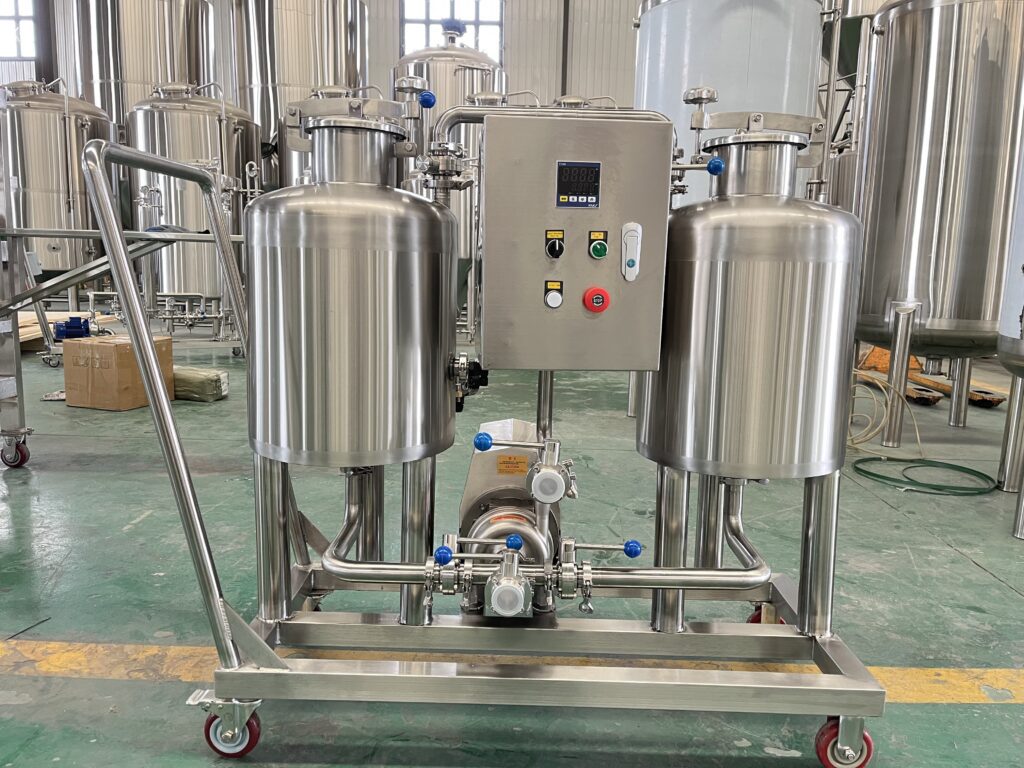
Čisticí vozík CIP |
Mobilní typ z nerezové oceli |
|
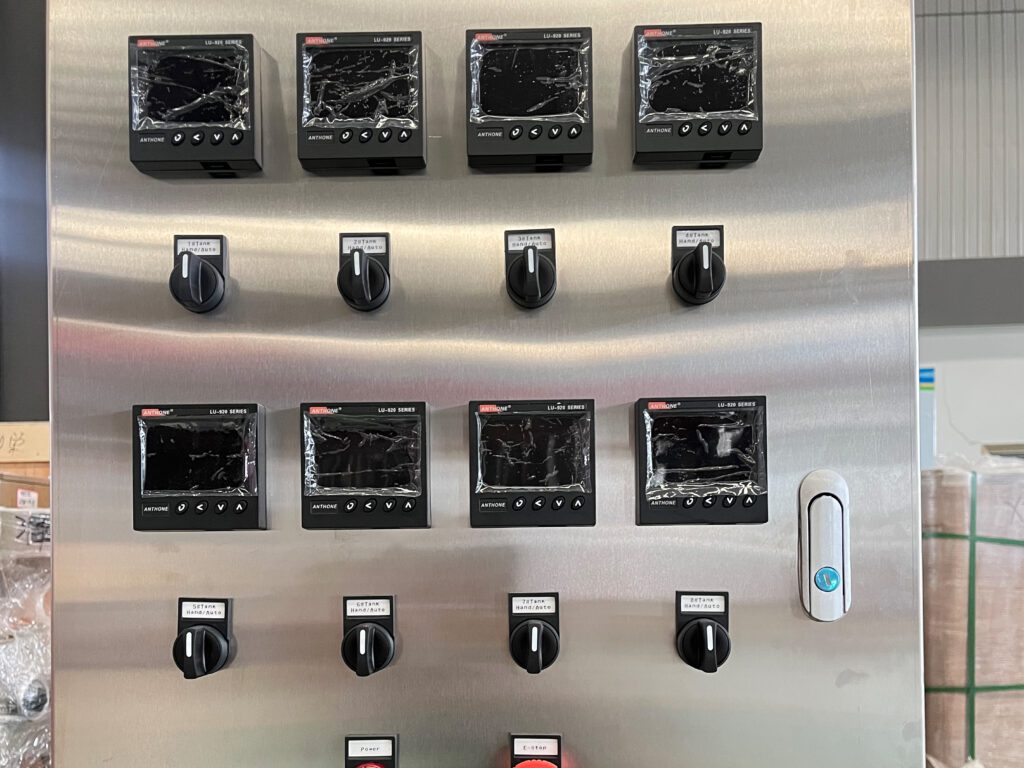
Elektrická rozvodná skříň |
Kompletní řídicí systém |
Systém je navržen jako varna se dvěma nádobami, což zajišťuje efektivní výrobu mladiny při minimalizaci nároků na podlahovou plochu.
Varna o objemu 500 litrů je vhodná pro výrobu široké škály pivních stylů, včetně IPA, Pale Ale, Lager, Stout, Wheat Beer a sezónních speciálních piv.
Se šesti 500L fermentační nádrže, mohou pivovarníci spravovat více receptur piva současně, což zlepšuje flexibilitu výroby a zvyšuje celkový výstav pivovaru. V závislosti na kvasných plánech a frekvenci vaření může systém vyrábět několik tisíc litrů piva měsíčně, takže je vhodný pro malé komerční pivovary a rostoucí řemeslné pivovary.
Součástí pivovaru je nádrž na glykolovou vodu o objemu 1000 l spojená s glykolovým chladičem o výkonu 5 HP, který zajišťuje stabilní chladicí výkon pro procesy fermentace a úpravy piva. Přesná regulace teploty pomáhá udržovat kvalitu a konzistenci piva po celou dobu výroby.
Dodávaný 50kg elektrický kotel dodává potřebnou páru a tepelnou energii pro rmutování a výrobu mladiny a zajišťuje tak efektivní vaření piva.
Speciální čisticí vozík CIP umožňuje pivovarům efektivně čistit nádrže a potrubí, snižuje nároky na pracovní sílu a zlepšuje hygienické standardy. Správné čištění je nezbytné pro udržení kvality piva a prodloužení životnosti zařízení.
Konstrukce z nerezové oceli nabízí vynikající odolnost proti korozi, trvanlivost a splnění požadavků na vaření v potravinářském průmyslu.
Tento použitý pivovarský systém 500L je vhodný pro:
Ať už zahajujete provoz nového pivovaru, nebo rozšiřujete stávající výrobní kapacitu, tento systém představuje cenově výhodnou alternativu k nákupu nového zařízení.
Ve srovnání s novým pivovarským zařízením nabízejí použité pivovarské systémy několik výhod:
Mnoho úspěšných řemeslných pivovarů zahajuje nebo rozšiřuje provoz pomocí kvalitního použitého pivovarnického zařízení, aby urychlilo růst podniku a zároveň zachovalo flexibilitu rozpočtu.
Pokud hledáte spolehlivý použitý systém pro vaření piva 500L, je tento kompletní pivovarský balíček připraven podpořit vaše výrobní potřeby. Kontaktujte nás ještě dnes a získejte podrobné fotografie, technické specifikace, zprávy o stavu zařízení, informace o cenách a řešení dopravy po celém světě.
Můžeme vám také poskytnout návrh uspořádání pivovaru, pokyny pro instalaci, podporu při uvádění do provozu a poprodejní technickou pomoc, abychom vám pomohli rychle a efektivně zahájit vaření piva.

Založení lihovaru bez správného vybavení může vést k plýtvání surovinami, snížení kvality lihoviny a vážným bezpečnostním rizikům. Destilace potřebuje víc než jen destilační přístroj. Kompletní lihovar potřebuje zařízení pro kvašení, ohřev, regulaci par, kondenzaci, skladování, čištění, testování a balení.
V lihovaru se obvykle používá zařízení na rmutování, rmutovací tun, fermentor, kotlíkový nebo sloupový destilační přístroj, kondenzátor, refluxní systém, přijímací nádrž, skladovací nádrže, filtrační zařízení, nářadí na ležení, zařízení na čištění CIP, čerpadla, ventily, potrubí a zařízení na stáčení. Komerční destilace vyžaduje také bezpečnostní kontroly, větrání, regulaci teploty, hygienický design a dodržování právních předpisů.

Vybavení lihovaru není jen palírna. Kompletní systém zahrnuje přípravu rmutu, kvašení, destilaci, kondenzaci, sběr lihu, skladování, filtraci, ležení, čištění a balení.
Destilace odděluje kapalné směsi podle chování par a poté páry kondenzuje zpět na kapalný destilát.
Ve Spojených státech může závod na výrobu destilátů vyrábět, stáčet do lahví, zpracovávat, rektifikovat nebo skladovat nápojové lihoviny, jako je vodka, whisky, gin, brandy, rum a likéry, ale je nutné schválení a dodržování předpisů.
Manipulace s parami etanolu a hořlavou kapalinou vyžaduje závažné technické kontroly, včetně kontroly úniku par a eliminace zdrojů vznícení.
Měděný kontakt se často používá při destilaci whisky, protože měděný povrch může pomoci snížit obsah sirných sloučenin při výrobě lihovin, i když účinek závisí na konstrukci destilačního kotle a ploše kontaktu.
Správné destilační zařízení závisí na typu lihu, velikosti šarže, způsobu ohřevu, hygienických požadavcích, místních předpisech a velikosti vašeho podniku.
Jaké vybavení se používá v každém lihovaru?
Co dělá destilační přístroj v procesu destilace?
Hrncový destilační kotel vs. destilační kolona: které destilační zařízení je to pravé?
Proč jsou důležité rmutovací nádoba, fermentační nádrž a fermentor?
Jak ovlivňují kvalitu destilátu kondenzátor, cesta par a reflux?
Jaké jsou potřebné skladovací nádrže, nástroje pro testování a filtrační zařízení?
Jaké čisticí zařízení podporuje hygienu v lihovaru?
Jaké vybavení je potřeba pro výrobu whisky, vodky, ginu, brandy a esenciálních olejů?
Jaké vybavení pro bezpečnost a dodržování předpisů by měly komerční lihovary zvážit?
Jak by si měli B2B kupující vybírat komerční lihovarnické vybavení?
K základnímu vybavení každého lihovaru patří nástroje pro manipulaci se surovinami, zařízení pro rmutování, fermentační nádrže, destilátor, kondenzátor, přijímací nádrž, skladovací nádrže, čerpadla, ventily, potrubí, čisticí zařízení, testovací nástroje a balicí zařízení. Přesný systém závisí na tom, zda lihovar vyrábí whisky, vodku, gin, brandy, rum, neutrální lihoviny nebo jiné destiláty.
Jednoduchý tok lihovaru vypadá takto:
| Fáze procesu | Hlavní použité vybavení |
|---|---|
| Příprava surovin | Mlýn na obilí, drtič ovoce, míchací nádrž na cukr, úpravna vody |
| Příprava kaše | Mash tun, vařič, míchadlo, topný systém |
| Kvašení | Fermentační nádoba, chladicí plášť, manipulace s kvasinkami, regulace teploty |
| Destilace | Hrncový destilační přístroj, kolonový destilační přístroj, topný systém, refluxní systém |
| Kondenzace | Kondenzátor, systém chladicí vody, výstup destilátu |
| Sbírka | Lihovar, lihové potrubí, hydrometr, kontrolní nástroje |
| Stárnutí nebo skladování | Nerezové skladovací nádrže, sudy, míchací nádrže |
| Filtrace | Dobrý filtrační systém, případně filtry s aktivním uhlím |
| Čištění | Čerpadlo CIP, rozprašovací koule, čisticí nádrže, sanitární potrubí |
| Balení | Ruční stáčecí linka, plnicí stroj, zátkovačka, uzávěr, etiketovačka |
U komerčních projektů nedoporučuji vybírat zařízení kus za kusem bez výrobního plánu. Destilace alkoholu zahrnuje teplo, ethanolovou páru, tlak, chlazení, čištění a regulaci. Zařízení by se mělo plánovat jako jeden systém.
Jako profesionální výrobce pivovarů, lihovarů, vinařství, kombuch a nápojového vybavení se obvykle ptáme: Jaký destilát chcete destilovat, jakou velikost várky potřebujete a jak bude výrobek balen nebo zrát? Tyto odpovědi utvářejí celý systém.
Destilační přístroj je základní destilační zařízení, které se používá k zahřívání zkvašené tekutiny a oddělování alkoholových par od směsi. Během destilace se při zahřívání kapaliny oddělují složky s různým chováním par. Páry procházejí destilačním systémem, vstupují do kondenzátoru, ochlazují se a vracejí se do kapalné formy jako destilát.
Při výrobě lihu se alkohol nevytváří sám o sobě. Alkohol vzniká kvašením, při kterém kvasinky přeměňují zkvasitelné cukry na etanol. Destilační přístroj pak koncentruje a odděluje alkohol a aromatické sloučeniny z vykvašeného výplachu, vína, rmutu nebo tekutiny podobné pivu.
Lihovar kontroluje několik faktorů během procesu destilace:
Malá změna v konstrukci destilačního přístroje může změnit chuť, výtěžnost a efektivitu práce. Vysoké hrdlo může způsobit větší reflux. Tradiční hrncový destilační přístroj může zachovat těžší chuť. Sloupový destilační přístroj může produkovat čistší a lehčí destilát. Správná volba závisí na stylu pálení.

K aromatické destilaci se běžně používá kotlíková destilace. Často se volí pro destilaci whisky, brandy, rumu a řemeslných destilátů, u nichž záleží na vůni a tělu. Tradiční hrncový destilační přístroj má obvykle hrnec, hlavu nebo helmu, lyneové rameno, kondenzátor a sběrný vývod.
Kolona stále používá desky nebo těsnění, které vytvářejí opakovaný kontakt páry s kapalinou uvnitř kolony. To pomáhá zvýšit separaci a může vést k výrobě lihu s vyšší odolností. Sloupcové destilační systémy se často používají pro výrobu vodky, lihu na bázi ginu, neutrálního lihu a pro operace, které vyžadují větší kontrolu čistoty a průkaznosti.
| Typ zařízení | Hlavní síla | Běžné použití |
|---|---|---|
| Stále ještě hrnec | Bohatší chuť, kontrola šarže, tradiční charakter | Whisky, brandy, rum, řemeslné lihoviny |
| Stále sloupec | Vyšší průkaznost, čistší separace, lepší kontrola refluxu | Vodka, ginový základ, neutrální alkohol |
| Stále hybridní | Kombinace funkcí hrnce a sloupu | Řemeslné lihovary s více produkty |
| Refluxní kolona | Lepší separace a čistší výstup | Vodka nebo vysoce odolné lihoviny |
| Botanický gin | Přidává možnost infuze par nebo tekutin | Gin a aromatické výrobky |
Kompromis je jednoduchý. Hrnec často dává větší charakter, ale může vyžadovat více času a více řezů. Kolona poskytuje větší kontrolu a vyšší průkaznost, ale může odstranit některé těžší chutě. Pro lihovar s více produkty může být praktický hybridní systém hrnce a kolony.
Než může lihovar destilovat, potřebuje zkvasitelný alkohol. U obilných lihovin tento proces často začíná mletím a rmutováním. V rmutovacím tunelu nebo vařiči se mísí obilí a voda při kontrolované teplotě a míchání. To pomáhá přeměnit škrob na zkvasitelné cukry v závislosti na surovinách a receptuře.
Po rmutování se tekutina přesune do kvasné nádoby. Přidají se kvasinky a začne kvašení. Fermentační nádoba musí umožňovat regulaci teploty, čištění, bezpečný přenos a správný pracovní objem. U ovocných destilátů nebo brandy může kvašení začít šťávou nebo drceným ovocem namísto obilného rmutu.
Komerční fermentor by měl být:
Pokud je kvašení nestabilní, destilace nemůže vše napravit. Špatné kvašení může způsobit nepříjemné chutě, nízký výtěžek alkoholu, mikrobiální problémy nebo nekonzistentní destilát. Dobrá pálenka začíná ještě před destilací.
Kondenzátor ochlazuje alkoholové páry a mění je zpět na kapalný destilát. Bez kvalitního kondenzátoru nemusí páry zcela zkondenzovat, sběr se stává nestabilním a zvyšuje se bezpečnostní riziko. Konstrukce kondenzátoru musí odpovídat velikosti destilačního kotle, topnému výkonu, přívodu chladicí vody a očekávanému průtoku par.
Důležitá je také cesta páry. Páry mohou procházet mědí, nerezovou ocelí, přilbou, labutím hrdlem, kolonou, deskami, těsněním nebo zpětným tokem. Více refluxu znamená, že část par zkondenzuje a vrátí se do destilační komory nebo kolony předtím, než se shromáždí. Tento opakovaný kontakt může způsobit, že lihovina je čistší a má vyšší obsah alkoholu.
Měď si zaslouží zvláštní pozornost. Výzkum sirných sloučenin ve whisky uvádí, že měděné povrchy destilačních přístrojů odstraňují sirné sloučeniny, ačkoli chemie je složitá a ne každá poloha mědi má stejný účinek.
U whisky, brandy a některých řemeslných destilátů může kontakt s mědí pomoci utvářet aroma. Pro vodku nebo gin lze v závislosti na požadovaném stylu lihoviny použít systémy z nerezové oceli s měděnými částmi. Nejlepší konstrukce není standardně “celá měděná” nebo “celá nerezová”. Měla by odpovídat kvalitě produktu a cílům výtěžnosti.
Po destilaci může být zapotřebí destilát dočasně uchovat, upravit zkušební dobu, smíchat, filtrovat, nechat zrát nebo stáčet do lahví. Skladovací nádrže se používají ke shromažďování lihu, míchání, ředění, odpočinku nebo skladování ve velkém. Obvykle jsou vyrobeny z nerezové oceli a vybaveny sanitárními ventily, ukazateli hladiny, odvzdušňovacími otvory, průduchy a čisticími přípojkami.
Zkušební nástroje pomáhají lihovarníkovi kontrolovat obsah alkoholu. K měření alkoholu se používá hydrometr nebo alkoholometr, obvykle s teplotní korekcí. Profesionální provozy mohou také využívat laboratorní zkoušky přesnosti, zejména pro účely zdanění, označování a dodržování předpisů.
Filtrace závisí na duchu. Vodka může používat filtry s aktivním uhlím, které zlepšují čistotu a hladkost. Gin může potřebovat odstranění rostlinných částic. Brandy a whisky mohou potřebovat méně filtrace, pokud je cílem zachování chuti. Dobrý filtrační systém by měl zlepšit kvalitu výrobku, aniž by se zbavil požadovaného charakteru.
| Vybavení | Účel |
|---|---|
| Přijímač Spirit | Sbírá destilát z kondenzátoru |
| Skladovací nádrž | Uchovává líh před mícháním nebo balením |
| Zkušební nádrž | Podporuje ředění a nastavení průkaznosti |
| Hydrometr / alkoholmetr | Kontroluje obsah alkoholu |
| Filtry s aktivním uhlím | Běžné pro leštění vodky |
| Kartušová nebo desková filtrace | Odstraňuje částice před stáčením do lahví |
| Směšovací nádrž | míchá dávky nebo upravuje chuť |
| Ruční stáčecí linka | Vhodné pro drobnou řemeslnou výrobu |

Hygiena v lihovaru ovlivňuje chuť, bezpečnost a efektivitu výroby. Čištění zařízení může zahrnovat Systémy CIP, postřikovací koule, čisticí čerpadla, nádrže na chemikálie, hadice, odtokové systémy a sanitární armatury. CIP znamená čištění na místě. Umožňuje čištění nádrží a potrubí bez úplné demontáže.
Čištění lihovaru se liší od pouhého oplachování. V zařízení se mohou hromadit zbytky výpalků, kvasnic, ovocné dužiny, cukerné usazeniny, rostlinné oleje a minerální vodní kámen. Pokud tyto zbytky zůstanou uvnitř systému, mohou ovlivnit další šarži.
Dobře navržené nastavení čištění by mělo podporovat:
Pro kupující B2B je to jeden z největších rozdílů mezi levným vybavením a profesionálními zařízeními. vybavení lihovaru. Čištění destilačních přístrojů nebo nádrží, které se obtížně čistí, se prodraží kvůli prostojům, práci a problémům s kvalitou.
Různé produkty potřebují různé destilační zařízení. Při destilaci whisky se často používá vaření rmutu, fermentační nádrže, hrnce nebo hybridní destilační kotle, kondenzátory, lihové nádoby, sudy a skladovací prostory. Brandy potřebuje zpracování ovoce, kvašení, destilaci a často i zrání.
Vodka nebo gin vyžadují jiný plán. Vodka obvykle potřebuje čistší a silnější destilát, proto může být důležitější destilace v koloně, kontrola refluxu, korigování a filtrace. Gin může vyžadovat botanické ochucení, které se může uskutečnit macerací, infuzí par nebo ginovým košem v závislosti na stylu palírny.
Esenciální oleje nejsou nápojový alkohol, ale některé principy vybavení se překrývají. Při destilaci esenciálních olejů se často používá destilace s vodní parou, koše z rostlinných materiálů, kondenzátory, separátory oleje a vody a nádoby z nerezové oceli. Konstrukce se zaměřuje na zachycení aroma, manipulaci s rostlinným materiálem a separaci.
| Produkt | Společné zaměření zařízení |
|---|---|
| Whiskey | Mash tun, fermentor, kotlík, kondenzátor, zrání v sudech |
| Vodka | Kolonový destilační přístroj, reflux, filtrace, zkušební nádrž |
| Gin | Neutrální lihový systém, botanický koš, kontrola příchutí |
| Brandy | Kvašení ovoce, kotlíkový destilační přístroj, skladovací nádrže |
| Rum | Manipulace s melasou, kvašení, kotlíková nebo kolonová destilace |
| Esenciální oleje | Parní generátor, rostlinný koš, kondenzátor, separátor |
Pro rostoucí řemeslný lihovar může být vhodný lihovarnický systém o objemu 1000 litrů, ale samotná velikost nestačí. Způsob ohřevu, kapacita kondenzátoru, konstrukce kolony, přístup k čištění a stavební inženýrské sítě musí odpovídat produktu.
Komerční destilace zahrnuje hořlavé kapaliny a etanolové páry. Pokyny OSHA vysvětlují, že technické kontroly hořlavých kapalin, jako je etanol, se zaměřují na prevenci nebo kontrolu uvolňování hořlavých par a na eliminaci zdrojů vznícení.
Lihovar by měl zvážit bezpečnostní vybavení a konstrukční prvky, jako jsou:
Důležité je také dodržování právních předpisů. Ve Spojených státech se pravidla TTB týkají provozu lihovarů, povolení, registrace, výroby, stáčení, zpracování, skladování a souvisejících témat. Závod na výrobu lihovin může vyrábět, stáčet do lahví, rektifikovat, zpracovávat nebo skladovat lihoviny, ale provozovatelé musí dodržovat příslušná pravidla.
Tento článek není právním poradenstvím. Každý komerční lihovar by si měl před nákupem nebo instalací zařízení ověřit místní zákony, pravidla pro udělování licencí na prodej alkoholu, požární předpisy, elektrické předpisy a požadavky na ochranu životního prostředí.
B2B kupující by měli vybírat komerční destilační zařízení podle procesu, nikoli podle katalogové fotografie. Začínající řemeslný lihovar, zavedený lihovar, řetězec restaurací, společnost zabývající se společným balením nápojů, distributor nebo investor projektu mohou potřebovat velmi odlišné vybavení, i když název výrobku zní podobně.
Praktický kontrolní seznam pro nákup:
| Otázka | Proč na tom záleží |
|---|---|
| Jakého ducha vytvoříte? | Whisky, vodka, gin, brandy, rum nebo esenciální oleje potřebují různé systémy. |
| Jakou velikost dávky potřebujete? | Definuje objem, velikost fermentoru a zatížení ohřevu. |
| Jaké suroviny použijete? | Obilí, ovoce, melasa nebo rostlinné látky ovlivňují rmut a čištění |
| Hrnec nebo sloupec? | Řídí chuť, průkaznost a styl výroby |
| Jaký způsob vytápění je k dispozici? | Pára, elektřina, plyn nebo termální olej ovlivňuje uspořádání a náklady |
| Potřebujete měděný kontakt? | Důležité pro některé styly lihovin a aromatické cíle |
| Jaký cíl prokazování je požadován? | Ovlivňuje reflux, konstrukci kolony a strategii sběru. |
| Jak budete systém čistit? | určuje CIP, přístup, ventily a prostoje |
| Jaký způsob balení je plánován? | Ruční stáčecí linka nebo automatické plnění ovlivňuje uspořádání |
| Jakou podporu potřebujete? | CAD/3D rozvržení, pokyny pro instalaci a technický servis snižují rizika |
Z našich profesionálních zkušeností vyplývá, že mnoho projektů lihovarů selhává ve fázi plánování, protože se kupující soustředí pouze na palírnu. Na destilačním přístroji záleží, ale stejně důležitý je i fermentor, kondenzátor, chladicí systém, plán čištění, skladovací nádrže a bezpečnostní konstrukce.
Ne každý lihovar potřebuje stejný systém. Malý řemeslný lihovar může potřebovat spíše flexibilitu než vysokou automatizaci. Výrobce vodky může potřebovat kolonový destilační přístroj a filtraci. Výrobce whisky může dát přednost tradičnímu charakteru kotlíkového destilačního zařízení. Výrobce brandy se může zaměřit na manipulaci s ovocem a šetrnou destilaci. Spoluskladovatel může potřebovat opakovatelné čištění, rychlou výměnu a dokumentaci šarží.
Mezi důležité kompromisy patří:
Nejlepší systém není ten nejdražší. Je to systém, který odpovídá vašemu výrobku, výrobní kapacitě, bezpečnostním požadavkům a dlouhodobému obchodnímu plánu.
Začínající lihovar chtěl systém o objemu 1000 litrů na whisky a gin. Kupující se nejprve ptal pouze na cenu destilátu. Po přezkoumání projektu jsme zjistili, že zařízení potřebuje také kapacitu pro kvašení, chlazení, manipulaci s botanickými látkami, korekturu, skladování, čištění a praktickou ruční stáčecí linku.
Konečný plán vybavení zahrnoval:
| Potřebujete | Řešení zařízení |
|---|---|
| Příprava whisky | Mash tun s regulací teploty a míchání |
| Kvašení | Fermentory z nerezové oceli dimenzované pro dávkový plán |
| Destilace whisky | Hrnec s měděným kontaktem a kondenzátorem |
| Flexibilita ginu | Botanický koš a řízená cesta páry |
| Chlazení | Systém chladicí vody kondenzátoru |
| Manipulace s duchy | Přijímací nádrž, zkušební nádrž, skladovací nádrže |
| Čištění | Připojení čerpadla CIP a sanitárního postřiku |
| Balení | Ruční stáčecí linka pro malé šarže |
| Rozložení | Plán CAD/3D pro pracovní postupy a přístup k nástrojům |
Tento projekt ukázal společné ponaučení: dobré vybavení lihovaru by mělo podporovat celý výrobní řetězec, nejen okamžik destilace.
Jaké vybavení se používá v lihovaru?
V lihovaru se používají zařízení na výrobu rmutu, fermentory, destilační kotle, kondenzátory, refluxní systémy, lihové nádoby, skladovací nádrže, čerpadla, ventily, potrubí, filtrační systémy, nástroje na kalení, čisticí zařízení a další. stáčecí zařízení.
Jaké je nejdůležitější vybavení lihovaru?
Nejviditelnějším zařízením je destilační přístroj, ale zásadní jsou také fermentor, kondenzátor, chladicí systém a čisticí systém. Špatné kvašení nebo špatná kondenzace mohou poškodit kvalitu, i když je destilační přístroj dobře vyroben.
Jaký je rozdíl mezi kotlíkovým a sloupovým destilačním přístrojem?
Hrncový destilační přístroj se obvykle používá pro destilaci šarží a aromatických lihovin, jako je whisky, rum a brandy. Sloupový destilační přístroj používá destičky nebo obaly pro silnější separaci a vyšší stupeň alkoholu, takže je vhodný pro výrobu vodky, základního ginu a neutrálního alkoholu.
Je pro destilační zařízení lepší nerezová ocel nebo měď?
Obojí může být užitečné. Nerezová ocel je odolná, hygienická a snadno se čistí. Měď může pomoci zvládnout sirné sloučeniny a je tradiční pro mnoho pálenic na whisky a brandy. Mnoho komerčních systémů kombinuje nerezovou ocel s měděnými kontaktními částmi.
Potřebuji pro lihovar rmutovací tunu?
Pokud výroba lihu začíná z obilí nebo jiných surovin na bázi škrobu, potřebujete rmutovací tunu. Pokud destilujete z vína, jablečného moštu, ovocného výplachu nebo zakoupeného neutrálního lihu, mohou být vaše potřeby na kašovací zařízení odlišné.
Jaké vybavení je potřeba pro výrobu vodky nebo ginu?
Vodka obvykle vyžaduje destilaci v koloně, kontrolu refluxu, ležení, filtraci a čisté skladování. Gin může potřebovat manipulaci s neutrálním lihem, botanické ochucovadlo, koš na gin nebo macerační nádrž, kondenzátor, skladování, filtraci a zařízení na stáčení.
Je domácí destilace alkoholu legální?
Zákony se v jednotlivých zemích a regionech liší. Ve Spojených státech je výroba nápojových destilátů regulována a komerční operace vyžadují řádné schválení a dodržování předpisů. Před zahájením destilace si vždy ověřte místní zákony týkající se alkoholu.
Vybavení lihovaru zahrnuje mnohem více než jen destilační přístroj.
Kompletní systém může zahrnovat rmutovací tunu, fermentor, destilační přístroj, kondenzátor, refluxní kolonu, přijímací nádrž, skladovací nádrže, filtraci, ležení, čištění CIP a stáčecí zařízení.
Kotlíkové pálenice se často používají pro výrobu aromatických lihovin, jako je whisky a brandy.
Sloupové destilační přístroje se často používají pro výrobu lihovin s vyšším obsahem alkoholu, jako je vodka nebo neutrální alkohol.
Kvalita kvašení výrazně ovlivňuje kvalitu destilátu a výtěžnost.
Pro bezpečnou regulaci výparů je rozhodující dimenzování kondenzátoru a přívod chladicí vody.
Kontakt s mědí může ovlivnit redukci sloučenin síry v některých destilačních systémech.
Nerezová ocel se hojně používá, protože je hygienická, odolná a snadno se čistí.
Komerční destilace vyžaduje důkladné bezpečnostní plánování, protože etanol a alkoholové páry jsou hořlavé.
Nejlepší plán vybavení lihovaru by měl odpovídat typu lihoviny, velikosti šarže, uspořádání budovy, způsobu vytápění, postupu čištění, zákonným požadavkům a budoucímu růstu.
V případě projektu lihovaru je nejbezpečnějším dalším krokem revize procesu: před výběrem velikosti lihovaru nebo kompletního uspořádání zařízení je třeba potvrdit typ lihu, kapacitu šarže, zdroj vytápění, technické vybavení budovy, plán čištění, způsob balení a místní požadavky na dodržování předpisů.

Bad kombucha equipment can lead to weak fermentation, mold risk, flat flavor, messy bottling, or unsafe pressure in bottles. Whether you brew kombucha at home or plan commercial production, the right tools help you control taste, safety, fizz, and repeatable quality.
To make kombucha, you need tea, cane sugar, water, a SCOBY, starter tea, a clean glass jar or stainless steel fermentation tank, breathable cover, rubber band, thermometer, pH test strips or meter, strainer, bottles for second fermentation, and cleaning tools. Commercial kombucha brewing also needs sanitary tanks, CIP cleaning, cooling, filtration, carbonation, filling, and quality control equipment.

Kombucha is a fermented tea made with sweetened tea and a SCOBY, a culture of bacteria and yeast that drives fermentation.
For safe homemade kombucha, pH control matters. Colorado State University notes kombucha should be below pH 4.2 but not below pH 2.5 for safe consumption.
A homebrew setup can start with a glass jar, coffee filter or tea towel, rubber band, starter tea, kombucha SCOBY, thermometer, test strips, and glass bottles.
Second fermentation creates carbonation, but pressure can build in bottles, so bottle choice and monitoring matter.
Commercial kombucha production requires stainless steel fermentation tanks, hygienic design, temperature control, pH/TA testing, safe packaging, and process records.
The best equipment depends on your goal: homemade kombucha, taproom-style batches, beverage co-packing, or scalable factory production.
What is kombucha brewing, and why does equipment matter?
What basic equipment do you need to make kombucha at home?
Why are SCOBY, starter tea, and sweetened tea essential?
What jar, cover, rubber band, and brewing vessel should you use?
What tools help control fermentation, temp, and pH?
What bottles are needed for second fermentation and carbonation?
How do you make kombucha with a simple 1-gallon recipe?
What equipment is needed for commercial kombucha brewing?
What are the trade-offs between DIY kombucha kits and professional systems?
How should beverage businesses choose kombucha equipment?
Kombucha brewing is the process of fermenting sweetened tea with a SCOBY. The word SCOBY means symbiotic culture of bacteria and yeast. During fermentation, yeast and bacteria work together to change sugar and tea into a tart, lightly fizzy fermented tea. Research describes kombucha as sugared tea fermented at ambient temperature with a cellulose pellicle made up of acetic acid bacteria and yeast.
Equipment matters because kombucha is alive. It needs air during the first fermentation, clean tools, the right room temperature, enough starter tea, and a safe vessel. Poor tools can slow the brew, invite fruit flies, increase contamination risk, or create inconsistent flavor. This is true whether you make kombucha at home in a wide-mouth jar or produce it in a commercial beverage facility.
From my experience as a brewery, distillery, winery, kombucha, and beverage equipment manufacturer, I usually tell buyers one thing first: kombucha equipment should support clean fermentation before it supports high output. A bigger tank is not useful if the process is hard to clean, hard to test, or hard to repeat.
To make kombucha at home, you need simple but clean tools. A beginner homebrew setup usually includes a glass jar, tea, organic cane sugar or cane sugar, starter liquid, a kombucha SCOBY, a breathable cover, rubber band, thermometer, pH test strips, strainer, and glass bottles for second fermentation.
A basic homemade kombucha equipment list looks like this:
| Vybavení | Why You Need It |
|---|---|
| Glass jar or brewing jar | Holds the sweet tea, starter, and SCOBY |
| SCOBY | Starts the fermentation process |
| Starter tea | Acidifies the brew and protects the batch |
| Tea bags or loose leaf tea | Provides nutrients and flavor |
| Cane sugar | Feeds yeast and bacteria |
| Coffee filter or tea towel | Covers the jar while allowing airflow |
| Rubber band | Secures the cover and keeps fruit flies out |
| Thermometer | Helps monitor room temperature |
| pH test strips or meter | Checks acidity and safety range |
| Strainer | Removes tea leaves or fruit pieces |
| Glass bottles | Used for second fermentation and fizz |
For beginners, this setup is enough to start brewing. A DIY kombucha kit may include many of these items, but you should still check the quality of the jar, bottles, and test strips. Cheap bottles may not handle pressure well during bottle conditioning.
The SCOBY is the heart of kombucha brewing. It often looks like a pale, rubbery layer called a pellicle. This pellicle forms on the surface as the culture ferments sweet tea. Studies of SCOBY cultures show that kombucha communities commonly include yeast and acetic acid bacteria, with common genera such as Brettanomyces and Komagataeibacter found in many samples.
Starter tea is just as important as the SCOBY. It lowers the pH of the new batch at the start. This makes the brew less friendly to unwanted microbes. Colorado State University explains that acidification helps kombucha reach a safe pH and reduce contamination risk.
Sweetened tea provides food. You can use black tea, green tea, or a blend of black and green tea. The yeast consumes sugar and produces compounds that bacteria convert into organic acids. Without enough sugar, the kombucha may become sluggish. Without enough starter, the batch may not acidify fast enough.
For kombucha at home, a wide-mouth glass jar is usually the easiest choice. Glass is easy to see through, easy to clean, and does not react with acidic kombucha. A 1 gallon jar is common for a small batch of kombucha. A half-gallon jar is also useful when testing a new kombucha recipe or different flavors.
You should cover the jar with a coffee filter, tea towel, or tightly woven breathable cloth. The cover should allow oxygen to enter but keep fruit flies, dust, and insects out. A rubber band keeps the cover tight around the jar. Do not seal the first fermentation with an airtight lid because the SCOBY needs oxygen.
For commercial production, food-grade stainless steel is normally preferred. It is stronger, more hygienic, easier to clean, and better for controlled production. A commercial kombucha tank may include a manway, sanitary valves, CIP spray ball, cooling jacket, sample valve, temperature probe, and optional spigot or racking outlet.
Kombucha fermentation depends on temperature, time, acidity, starter strength, and culture health. A simple thermometer helps you check room temperature. Kombucha usually ferments at room-temperature conditions, but very cold rooms can slow the process, while overly warm rooms can push faster acid production.
pH test strips or a pH meter help you monitor acidity. Colorado State University states that safe kombucha should be below pH 4.2 and not lower than pH 2.5. This is why test strips are not just “extra tools.” They help you know whether the brew is moving in the right direction.
For home use, test strips are usually enough. For professional beverage production, a pH meter, titratable acidity testing, alcohol testing, temperature logs, batch records, and sanitation checks become more important. Kombucha that rises above 0.5% ABV may be regulated as an alcoholic beverage in the United States, so commercial producers should test alcohol carefully.
After the first fermentation, many brewers move finished kombucha into bottles for second fermentation. This stage adds flavoring and carbonation. Fruit juice, herbs, ginger, berries, citrus, or other flavoring ingredients can create different flavors. The yeast consumes small amounts of sugar and produces carbon dioxide, which creates fizz.
Use strong glass bottles made for pressure, such as flip-top bottles designed for fermented drinks. Do not use weak decorative bottles. Pressure can build during second fermentation. If bottles are too weak, overfilled, or left too long at warm temperature, they may leak or break.
Second fermentation needs careful control. Use clean bottles, leave headspace, do not overdo sugar, and refrigerate when carbonation is ready. For commercial kombucha, carbonation can be controlled more safely with brite tanks, carbonation stones, pressure-rated vessels, and filling systems.
A simple 1 gallon kombucha recipe usually starts with brewed tea, sugar, starter tea, and a SCOBY. Exact ratios vary by recipe and culture strength, but the basic process is easy to understand.
A beginner process may look like this:
Colorado State University notes that kombucha is often fermented for 7–10 days, though timing can vary based on conditions and desired taste. A shorter brew may taste sweeter. A longer brew may taste more sour or vinegary. If the batch smells rotten, grows fuzzy mold, or looks unsafe, discard it.
Commercial kombucha brewing needs stronger, cleaner, and more controlled equipment than homemade kombucha. A beverage producer needs to repeat the same taste, acidity, carbonation, and package quality across every batch. This requires more than a glass jar.
A commercial kombucha line may include:
| Fáze procesu | Professional Equipment |
|---|---|
| Tea brewing | Hot water tank, tea extraction vessel, filter or strainer |
| Sugar mixing | Mixing tank, agitator, dosing system |
| Chlazení | Plate heat exchanger or jacketed cooling tank |
| Kvašení | Stainless steel fermentation tank with sanitary fittings |
| Culture handling | SCOBY handling tools, starter tank, sanitary transfer |
| Testování | pH meter, thermometer, alcohol testing, acidity testing |
| Flavoring | Mixing tank, fruit juice dosing, ingredient filtration |
| Carbonation | Brite tank, carbonation stone, CO₂ control |
| Filtrace | Strainer, membrane filter, or product-specific filtration |
| Balení | Bottle filler, canning line, keg filler, labeling machine |
| Čištění | CIP pump, CIP tank, spray balls, sanitary valves |
For a startup kombucha brand, not every item must be fully automatic on day one. But the equipment should be hygienic, scalable, and easy to clean. A poor layout can waste labor every day. A good layout supports smooth movement from tea brewing to fermentation, flavoring, carbonation, and filling.

A DIY kombucha kit is good for learning. It is affordable, small, and easy to use. You can test black tea, green tea, fruit juice, loose leaf tea, and different flavors without much investment. But a DIY kit does not offer strong process control or commercial capacity.
Professional kombucha systems cost more, but they provide better sanitation, repeatability, temperature control, and production planning. They also reduce manual handling. For beverage co-packers, kombucha producers, brewpub chains, and project investors, these benefits can reduce long-term risk.
| Option | Advantage | Limitation |
|---|---|---|
| DIY kombucha kit | Low cost, easy to start | Small volume, less control |
| Glass jar homebrew | Simple and visible | Not scalable |
| Small stainless tank | More durable, cleaner | Higher upfront cost |
| Jacketed fermenter | Better temp control | Needs utilities |
| Full commercial line | Scalable and efficient | Requires planning and capital |
The right choice depends on your goal. If you only want homemade kombucha, use simple tools. If you want a beverage business, plan for hygiene, testing, filling, cooling, and repeatable production.
B2B buyers should not choose kombucha equipment only by tank volume. Start with the business model. Will you sell fresh kombucha on tap, bottled kombucha, canned kombucha, flavored kombucha, hard kombucha, or co-packed products for other brands? Each model needs different equipment.
A practical buyer checklist:
| Otázka | Proč na tom záleží |
|---|---|
| What is the target batch size? | Defines tank volume and production plan |
| How many SKUs or flavors? | Affects flavoring tanks and scheduling |
| Do you need carbonation? | Requires pressure-rated equipment |
| Bottle, can, keg, or bulk pack? | Defines filling and packaging line |
| What is the target pH and acidity? | Defines testing and quality control |
| Do you need alcohol control? | Important for compliance and labeling |
| How will tanks be cleaned? | Determines CIP design |
| Is expansion planned? | Affects layout and utility sizing |
| What is the building layout? | Impacts workflow and installation |
| What technical support is needed? | Reduces startup and commissioning risk |
As a professional brewery, distillery, winery, kombucha, and beverage equipment manufacturer, we often review the buyer’s process before recommending tanks. For global projects, we may support factory-direct supply, CAD/3D layout planning, sanitary stainless steel equipment, installation guidance, and long-term technical service.
Not every kombucha project needs the same equipment. A home brewer does not need a stainless steel CIP system. A small taproom may not need a high-speed canning line. A large beverage co-packer should not rely on open jars or manual bottling.
Some trade-offs are important:
Professional advice should always match the real process, local rules, and market plan. Kombucha for a restaurant chain, kombucha for retail shelves, and kombucha for a small tasting room are different projects.
A startup beverage team came to us after making successful homemade kombucha in glass jars. Their flavor was good, but they had three problems: inconsistent acidity, slow bottling, and limited batch volume. They wanted to scale without losing the fresh fermented tea character.
We suggested a staged equipment plan:
| Problem | Equipment-Based Improvement |
|---|---|
| Inconsistent pH | Add pH meter, batch records, controlled starter ratio |
| Small batch size | Move from jars to stainless steel fermentation tanks |
| Slow bottling | Use semi-automatic bottle filling |
| Messy flavoring | Add small mixing tank for fruit juice and flavoring |
| Unclear layout | Create CAD/3D flow from tea brewing to packaging |
| Cleaning risk | Add sanitary valves and CIP-ready tank design |
The result was a more reliable kombucha brewing process. The team could still make your own kombucha-style product, but with better hygiene, clearer workflow, and stronger commercial control.

What equipment do I need to make kombucha at home?
You need a glass jar, SCOBY, starter tea, sweetened tea, breathable cover, rubber band, thermometer, pH test strips, strainer, and glass bottles for second fermentation.
Can I brew kombucha without a SCOBY?
You usually need a kombucha SCOBY or strong starter from a previous batch. Store-bought kombucha may work only if it is raw, unflavored, and contains live culture, but results can be slower or less reliable.
What kind of jar is best for kombucha?
A wide-mouth glass jar is best for home kombucha. It is easy to clean, easy to cover, and does not react with acidic fermented tea.
Do I need pH test strips for homemade kombucha?
They are strongly recommended. pH strips or a pH meter help you check whether the fermentation is becoming acidic enough and not becoming too acidic.
What bottles are best for second fermentation?
Use strong pressure-rated glass bottles, such as flip-top bottles designed for fermented drinks. Avoid weak bottles because carbonation can build pressure.
What equipment is needed for commercial kombucha brewing?
Commercial kombucha production may need stainless steel fermentation tanks, tea brewing tanks, mixing tanks, cooling, pH and alcohol testing, carbonation equipment, filtration, filling machines, CIP cleaning, and sanitary piping.
How long does kombucha fermentation take?
Many home batches ferment around 7–10 days, but time depends on temperature, starter strength, sugar, tea, SCOBY health, and preferred taste.
To make kombucha, you need tea, sugar, water, SCOBY, starter tea, a clean jar or tank, breathable cover, testing tools, and bottles.
The SCOBY and starter tea are essential for stable fermentation.
A glass jar works well for homemade kombucha, while stainless steel tanks are better for commercial brewing.
pH control is important because kombucha must become acidic enough to reduce contamination risk.
Second fermentation creates fizz, but bottle pressure must be managed carefully.
A DIY kombucha kit is good for learning, but commercial projects need hygienic, scalable equipment.
Beverage businesses should plan equipment around batch size, flavoring, carbonation, packaging, cleaning, and compliance.
Good kombucha equipment should make the process cleaner, safer, easier to repeat, and easier to scale.
For startup kombucha brands, brewpubs, beverage co-packers, wineries, distilleries, and project investors, a professional equipment review can help match the process, layout, and budget before purchasing.

As the global craft beer industry continues to expand, more breweries are seeking reliable and affordable brewing equipment to increase production capacity while controlling investment costs. A high-quality used brewery system offers an excellent opportunity to achieve professional brewing performance at a significantly lower cost than purchasing new equipment.
We currently have a well-maintained used 1000L beer brewing equipment available for sale. This brewing system has been professionally inspected and maintained to ensure stable operation and consistent brewing performance. It is an ideal solution for craft breweries, brewpubs, restaurants, startup brewing projects, and brewery expansion plans.
The 1000L brewery system is one of the most popular configurations for small and medium-sized craft breweries. It provides an ideal balance between production capacity, operational flexibility, and investment efficiency.
Manufactured from high-quality food-grade stainless steel, the system is designed to meet modern brewing requirements while ensuring durability, hygiene, and long service life. Whether you are launching a new brewery or upgrading your existing facility, this used brewing equipment can help you achieve your production goals with a lower investment.
| Položka | Specifikace |
|---|---|
| Brewhouse Capacity | 1000L |
| Brewhouse Type | 2-Vessel / 3-Vessel Brewhouse (Optional) |
| Fermentační nádrže | Multiple 1000L Stainless Steel Fermenters |
| Materiál | SUS304 Food-Grade Stainless Steel |
| Chladící systém | Glycol Water Tank & Chiller |
| Výměník tepla | Stainless Steel Plate Heat Exchanger |
| Řídicí systém | PLC Control or Manual Control |
| Čerpadla | Wort Pump & Glycol Pump |
| Systém CIP | CIP Cart with Cleaning Pump |
| Electrical Components | International Standard Electrical Components |
| Condition | Used, Tested and Ready for Operation |
Compared with purchasing new brewery equipment, a used 1000L brewing system can significantly reduce startup costs and capital investment. This allows breweries to allocate more resources to raw materials, packaging, marketing, and future expansion.
Used equipment is generally available for immediate shipment, eliminating the long manufacturing lead times often associated with new brewery systems. This helps breweries start production and generate revenue more quickly.
The equipment has been operated in a production environment and has demonstrated reliable performance. With proper maintenance and inspection, it continues to provide stable brewing results and efficient operation.
The 1000L capacity is suitable for producing a wide variety of beer styles, including:
Its versatile design makes it an excellent choice for breweries seeking flexibility in recipe development and production planning.
This second-hand brewery equipment has been professionally maintained and remains in good working condition. The tanks feature sanitary interior polishing, high-quality welding, and efficient temperature control performance to help ensure consistent beer quality.
Before shipment, the equipment can be inspected and tested to verify operational reliability. Photos, videos, and detailed equipment information are available upon request.
To meet different brewing requirements, the system can be customized according to customer needs, including:
Our experienced team can also provide technical consultation, shipping arrangements, and brewery planning support to help ensure a successful project.
If you are looking for a reliable and affordable used 1000L beer brewing equipment system, this unit represents an excellent opportunity to expand your brewing capacity while controlling costs.
Contact us today for pricing, photos, videos, and detailed specifications. Our team will be happy to provide a customized solution and help you find the right brewery equipment for your brewing project.

Starting a distillery without the right equipment can create delays, safety risks, poor spirit quality, and wasted investment. A beautiful still is not enough. You need a complete process plan, compliant design, reliable utilities, and a supplier who understands real production.
Distillery equipment includes the mash system, fermenter, pot still or column still, condenser, cooling equipment, spirit receiver, tanks, pumps, piping, controls, and cleaning support used to produce spirits such as whisky, gin, rum, vodka, and brandy. A turnkey distillery solution covers layout, equipment design, manufacturing, installation guidance, commissioning support, and long-term technical service.

Distillery equipment should be selected by spirit type, batch size, heating method, distillation style, utility conditions, compliance needs, and future expansion.
A pot still is commonly used for whisky, brandy, rum, and flavorful spirits, while column stills and continuous stills are often used when higher efficiency or lighter spirit style is needed.
In the United States, a commercial distilled spirits business must first qualify with TTB by applying for a permit to operate; this is a regulatory step, not an equipment choice.
U.S. regulations for distilled spirits plants are covered under 27 CFR Part 19, including permits, production, storage, processing, records, and tax-related operations.
ASME’s Boiler and Pressure Vessel Certification Program covers design, fabrication, assembly, and inspection rules for pressure equipment; buyers should review pressure vessels carefully when selecting tanks and heated systems.
A reliable supplier should support CAD/3D layout, custom distillation equipment, sanitary fabrication, installation guidance, training, spare parts, and after-sales service.
What Is Distillery Equipment?
What Equipment Is Needed for a Turnkey Distillery?
How Does a Still Work in a Distillation System?
Pot Still vs Column Still: Which Distilling Equipment Is Right?
What Spirits Can You Produce: Gin, Whisky, Rum, Vodka, and Brandy?
Why Do Materials Matter: Copper, Stainless Steel, or Both?
What Is Included in a Turnkey Distillery Solution?
How Do Capacity, Layout, and Utilities Affect Distillery Design?
What Safety, Compliance, and Pressure Vessel Details Matter?
How Should B2B Buyers Choose Distillation Equipment Manufacturers?
Distillery equipment is the full set of machines, tanks, vessels, piping, and controls used to produce distilled spirits. It may include a mash tun, fermenter, distillation kettle, pot still, distillation column, condenser, spirit receiver, storage tanks, pumps, heat exchangers, cooling equipment, control cabinet, and cleaning accessories.
In simple words, the equipment helps turn a fermented liquid into a spirit. First, raw materials are prepared and fermented. Then the fermented liquid is heated in the still. Alcohol and aroma compounds vaporize, move through the system, condense, and are collected. The exact design changes depending on whether the distiller wants whisky, gin, rum, vodka, brandy, or another spirit.
For B2B buyers, the key point is this: distilling equipment should not be purchased as isolated parts. A still, fermenter, cooling system, piping layout, and control system must work together. If one part is poorly matched, the whole production process becomes harder to control.
A turnkey distillery normally includes both production equipment and project support. The equipment side may include mashing, fermentation, distillation, cooling, receiving, storage, cleaning, and control systems. The project side may include layout planning, equipment manufacturing, installation guidance, commissioning support, operator training, and long-term service.
A typical turnkey distillery equipment list may include:
| System Area | Main Equipment | Účel |
|---|---|---|
| Raw material preparation | Milling or material handling equipment | Prepare grain, fruit, molasses, or other base materials |
| Mashing | Mash tun, hot water tank, agitator | Convert or mix fermentable materials |
| Kvašení | Fermentation tanks, cooling jacket, valves | Convert sugar into alcohol |
| Destilace | Pot still, column stills, condenser | Separate and concentrate alcohol and aroma compounds |
| Chlazení | Chiller, cooling water system, heat exchangers | Support condensation and temperature control |
| Receiving | Spirit receiver, safe collection tank | Collect distillate |
| Storage | Stainless storage tanks or spirit tanks | Hold product before blending or aging |
| Čištění | CIP pump, spray balls, cleaning tanks | Improve hygiene and maintenance |
| Kontrola | PLC/HMI or manual control panel | Monitor heating, pumps, and process points |
For a startup craft distillery, a compact system ranging from 150L to several hundred liters may be enough for trial production or local sales. For a larger project, equipment may range from 1000L to 3000L or more, depending on spirit type, production goals, building size, and budget.
A still is the core of a distillation system. It heats fermented liquid so alcohol and volatile compounds rise as vapor. The vapor then moves through a head, column, lyne arm, or condenser, depending on the design. After cooling, the vapor becomes liquid distillate.
A pot still is often valued for flavor retention. It is widely used in craft distilleries because it gives the distiller more character and batch control. A distillation column can provide more separation and higher purity, which is useful for spirits such as vodka or neutral spirit production.
The still must match the spirit style. A whisky producer may want copper contact and flavor complexity. A vodka producer may need stronger rectification. A gin producer may need botanical baskets or vapor infusion options. A rum producer may prefer equipment that supports molasses wash and flavor development.
A pot still is a batch distillation system. It is commonly used for whisky, brandy, rum, and craft spirits where aroma and body matter. It is simple in concept, but the shape, copper contact, heating method, and condenser design all affect final character.
A column still uses trays or packing to improve separation. It can create a lighter, cleaner spirit and can support higher efficiency. Continuous stills are suitable for some large-scale production needs where output and consistency are priorities.
| Položka | Pot Still | Column Still |
|---|---|---|
| Operation Style | Batch distillation | Batch or continuous distillation |
| Common Spirits | Whisky, rum, brandy, craft gin base | Vodka, neutral spirit, light rum, high-volume spirits |
| Flavor Profile | Richer, heavier, more character | Cleaner, lighter, more refined |
| Control Level | More hands-on | More technical control |
| Best For | Craft distilleries and premium spirits | Larger output and high-purity spirit |
| Equipment Cost | Can be lower for small systems | Usually higher for advanced systems |
| Flexibility | Good for small-batch products | Good for efficiency and repeatability |
A practical trade-off is clear. If you want a rich, craft-style spirit, a pot still may be better. If you need high-purity vodka or larger production efficiency, a column system may be better. Many distilleries combine both.

Different spirits need different process planning. The Distilled Spirits Council tracks spirit categories such as American whiskey, brandy and cognac, gin, rum, vodka, tequila/mezcal, Scotch, Irish whiskey, and other categories, which shows the wide commercial range of the distillation industry.
Gin production may use neutral spirit plus botanicals. The equipment may include a gin basket, vapor infusion path, or botanical maceration tank. Buyers planning gin should discuss botanical loading, cleaning access, aroma control, and recipe flexibility.
Whisky requires mashing, fermentation, distillation, and usually aging. A whisky system may include mash tuns, fermenters, copper pot stills, spirit receivers, and storage support. Rum may start from molasses or sugarcane-based material and often benefits from fermentation and distillation choices that keep flavor depth. Vodka usually needs cleaner separation and higher rectification. Brandy is commonly linked to fruit or wine distillation and may require gentle heating and aroma protection.
For buyers, the lesson is simple: do not buy “one standard still” before defining the spirit. The best distillery equipment depends on your product, market, and production needs.
Distilling equipment is commonly made from stainless steel and copper. Each material has a role. Stainless steel is strong, cleanable, durable, and widely used for tanks, piping, platforms, and processing equipment. Copper is often used in stills because it supports traditional appearance and can influence spirit character.
A copper pot still offers visual appeal and process value for many craft spirits. Buyers often choose copper pot stills for whisky, brandy, and premium craft products. A stainless system with copper sections can also be a practical option. It may reduce cost and maintenance while still allowing copper contact where needed.
| Materiál | Main Benefits | Běžné použití |
|---|---|---|
| Copper | Traditional appearance, flavor-related contact, premium look | Pot still, helmet, column sections, gin basket |
| Stainless steel | Durable, easier maintenance, strong hygiene performance | Fermenter, tank, piping, frame, storage tanks |
| Copper and stainless steel | Balanced cost, hygiene, and copper contact | Hybrid distilling systems |
The right choice depends on spirit style, budget, cleaning method, local water, maintenance ability, and brand image. A full copper still may look impressive, but it also needs proper care. A hybrid design can be easier for some operators.
A turnkey solution is more than equipment delivery. It should help the buyer move from concept to operation with fewer mistakes. A strong turnkey distillery solution includes technical review, layout planning, equipment matching, fabrication, packing, shipping support, installation guidance, commissioning advice, and long-term service.
A good supplier should help review:
As a professional brewery, distillery, winery, kombucha, and beverage equipment manufacturer, we support buyers with factory-direct supply, CAD/3D layout, turnkey engineering, installation guidance, and global technical service. We also support used brewing systems when buyers need cost-effective project options.
A real turnkey distillery solution should reduce project risk. It should not lock buyers into unnecessary equipment. It should help them choose what fits.
Capacity is not only about still volume. A 500L still may not produce efficiently if the fermenters, mash tun, cooling equipment, and receiving tanks are too small. A distillery is a system. The slowest part becomes the bottleneck.
Layout also matters. Operators need space to move, clean, load material, access valves, inspect the still, connect hoses, and maintain equipment. A poor layout can make daily work slower and less safe.
Utilities can decide whether a project runs smoothly. Heating may be electric, steam, direct fire, or an electrically heated bain-marie system. Cooling may require chilled water, city water, or a closed-loop system. The building must support drainage, ventilation, power, water, and safe workflow.
Distillery Planning Checklist
| Planning Point | Proč na tom záleží |
|---|---|
| Product type | Determines still design and process flow |
| Batch volume | Determines still, fermenter, and tank size |
| Fermentation time | Determines number of fermentation tanks |
| Heating method | Affects energy, control, and building requirements |
| Cooling system | Affects condensation and output stability |
| Building height | Determines still and column size limits |
| Floor load | Affects tank and platform placement |
| Drainage | Supports cleaning and safe operation |
| Ventilation | Supports safer working conditions |
| Expansion plan | Avoids early capacity limits |
For both craft distilleries and large-scale plants, layout planning should happen before final manufacturing. CAD and 3D layout support can prevent many costly changes.
Distilleries handle flammable alcohol vapor, heated vessels, pumps, electrical systems, and cleaning chemicals. Safety must be built into the project from the beginning. Equipment design alone does not replace local codes, permits, fire review, ventilation planning, or operator training.
In the United States, TTB requires businesses that engage in distilled spirits operations to qualify by applying for a permit to operate. U.S. distilled spirits plant rules also cover production, storage, processing, records, and other operational requirements under 27 CFR Part 19.
Pressure vessels also deserve attention. ASME states that its Boiler and Pressure Vessel Certification Program conforms to rules governing design, fabrication, assembly, and inspection of boiler and pressure vessel components during construction. Buyers should confirm when equipment must meet ASME, CE, PED, or other local requirements.
Key safety and compliance points include:
This section is not legal advice. Requirements change by country and region. Buyers should work with local authorities, licensed engineers, and compliance professionals before installation.
Choosing distillation equipment manufacturers is a major decision. Buyers may compare known industry names such as ABE Equipment or Vendome Copper with international manufacturers and custom distillation equipment suppliers. The best choice depends on budget, design needs, delivery time, technical support, and after-sales expectations.
A serious supplier should not only sell a still. They should understand fermentation, distillation, utilities, layout, shipping, installation, and maintenance. They should also explain trade-offs clearly.
Supplier Evaluation Table
| Evaluation Area | What to Ask |
|---|---|
| Zkušenosti | Have they supplied craft distilleries and large-scale projects? |
| Product Range | Do they offer pot still, column stills, fermenters, mash tuns, storage tanks, and cooling equipment? |
| Přizpůsobení | Can they meet your specific needs for gin, whisky, rum, vodka, or brandy? |
| Materials | Can they provide copper equipment, stainless steel tanks, or hybrid designs? |
| Engineering | Do they provide CAD/3D layout and process review? |
| Fabrication | Are welds, polishing, fittings, and pressure vessels properly controlled? |
| Controls | Can they support manual, semi-auto, or PLC control? |
| Service | Do they provide installation guidance and maintenance and repair services? |
| Export | Can they support packing, shipping, and documentation? |
| After-sales | Are spare parts and remote support available? |
For B2B buyers, the best distillery equipment is not simply the cheapest system. It is high-quality equipment designed for your product, building, and production plan.
One common mistake is buying by still volume only. A buyer may choose a 1000L still but forget that fermentation capacity, cooling water, and storage tanks must also match. This creates bottlenecks.
Another mistake is ignoring cleaning and maintenance. Distilling systems need access points, drainability, cleanable surfaces, safe valves, and service-friendly design. A beautiful copper still that is hard to clean can become a daily problem.
A third mistake is overlooking local compliance. Equipment may be well made, but installation still needs to satisfy local rules. Permit, fire, electrical, pressure, ventilation, and alcohol regulations should be reviewed early.
Good project planning saves money before the equipment is manufactured.
A turnkey distillery solution makes sense when the buyer wants coordinated support instead of managing every detail alone. It is especially helpful for startup distilleries, international projects, restaurant or hospitality groups, investors, and buyers entering distilling from brewing or beverage production.
Turnkey support is useful when:
However, turnkey may not be necessary for every buyer. An experienced distiller expanding a known system may only need one custom copper pot still, one fermenter, or one replacement tank. The right service level should match the buyer’s experience and project complexity.

What equipment is needed to start a distillery?
A distillery usually needs raw material preparation equipment, mash tun, fermenter, still, condenser, cooling system, spirit receiver, storage tanks, pumps, piping, controls, and cleaning support. The exact equipment depends on the spirit type and production scale.
Jaký je rozdíl mezi kotlíkovým a sloupovým destilačním přístrojem?
A pot still is usually used for batch distillation and is common for whisky, rum, brandy, and craft spirits. A column still provides more separation and efficiency, making it useful for vodka, neutral spirit, and larger production systems.
Can one distillation system make gin, whisky, rum, vodka, and brandy?
One system may support multiple spirits if designed with flexibility, but not every system is ideal for every spirit. Gin may need botanical features, vodka may need higher rectification, and whisky may need copper contact and suitable fermentation planning.
What is a turnkey distillery?
A turnkey distillery is a complete project solution that may include equipment design, manufacturing, layout planning, shipping support, installation guidance, commissioning support, and technical service. It helps buyers reduce coordination risk.
Is copper or stainless steel better for distillery equipment?
Both materials have value. Copper is often used in stills for traditional appearance and spirit character. Stainless steel is widely used for tanks, frames, piping, and storage because it is durable and cleanable. Many systems use both.
What size distillery equipment should I choose?
Choose size based on target spirit, batch volume, fermentation time, daily output, building space, utilities, budget, and future expansion. Common craft systems may range from 150L to 3000L, but the right size depends on your production plan.
Do I need permits before buying distilling equipment?
For commercial alcohol production, permits and local approvals are usually required. In the United States, TTB requires distilled spirits businesses to qualify by applying for a permit to operate. Always check local rules before installation.
Distillery equipment includes mashing, fermentation, distillation, cooling, receiving, storage, control, and cleaning systems.
A still must be selected based on spirit type, production process, flavor target, and capacity.
Pot stills are common for whisky, rum, brandy, and craft spirits.
Column stills and continuous stills are useful for higher purity or larger output.
Gin, vodka, rum, whisky, and brandy may require different equipment details.
Copper and stainless steel both have important roles in distilling equipment.
A turnkey distillery solution should include layout, equipment matching, manufacturing, shipping, installation guidance, and service.
Safety, local permits, fire review, pressure vessels, and ventilation should be considered early.
The best distillery equipment supplier should understand both production process and project execution.
Do not choose equipment only by price or still volume; choose based on complete production needs.

A poor kombucha setup can cause weak flavor, unstable fermentation, contamination risk, or slow production. For home brewers, that is frustrating. For a business, it costs money. The solution is to choose the right equipment for your batch size, hygiene needs, and growth plan.
Kombucha brewing equipment includes the tools and vessels used to brew sweet tea, ferment it with SCOBY culture, monitor pH and temperature, add flavoring, bottle or keg the beverage, and maintain clean production. Basic home kits may use glass jars and bottles, while commercial kombucha production usually requires stainless steel tanks, sanitary fittings, CIP cleaning, cooling, filtration, and packaging systems.

Kombucha brewing equipment ranges from a simple home kit with a jar, cloth lid, SCOBY, tea, sugar, pH strip, and bottles to professional-grade stainless steel tanks and packaging lines.
Kombucha is made by fermenting sweet tea with a SCOBY, a symbiotic culture of bacteria and yeast; Colorado State University explains that the culture acidifies the tea and helps minimize contamination.
Finished kombucha is commonly acidic. Colorado State University states that safe consumption requires pH below 4.2 but not lower than 2.5.
Kombucha Brewers International describes kombucha as a fermented tea beverage that typically has a pH range of 2.3 to 3.8 and naturally contains organic acids, trace alcohol, and some carbonation.
In the United States, TTB alcohol regulations do not apply only when kombucha is never at or above 0.5% ABV during production, bottling, or after bottling.
For B2B projects, the right system should match batch volume, fermentation cycle, hygiene design, cooling needs, packaging format, space, utilities, and future expansion.
What Is Kombucha Brewing Equipment?
What Equipment Do You Need to Brew Kombucha at Home?
What Is Included in a Basic Kombucha Brewing Kit?
What Equipment Is Needed for Commercial Kombucha Production?
Why Are Stainless Steel Kombucha Tanks Important for Scaling Up?
How Do You Control Fermentation, pH, and Temperature?
What Bottling, Kegging, and Packaging Equipment Do You Need?
How Do Cleaning, Sanitation, and CIP Affect Kombucha Quality?
Home Kit vs Commercial Kombucha Brewery System: What Is the Difference?
How Should B2B Buyers Choose the Right Kombucha Brewing Equipment Supplier?
Zařízení na vaření kombuchy refers to the tools, vessels, tanks, and accessories used to make kombucha from tea, sugar, water, and kombucha culture. At a basic level, it helps you brew sweet tea, cool it, add SCOBY and starter liquid, allow fermentation, check pH, add flavor, and package the finished beverage.
For home brewing, the setup can be very simple. A glass jar, cloth cover, rubber band, pH strip, thermometer, funnel, and bottle may be enough for a small batch. For commercial kombucha, the equipment becomes more serious. You may need a stainless steel tank, sanitary pump, filter, cooling system, CIP cleaning unit, flavoring tank, carbonation control, and filling line.
In my work with beverage equipment projects, I often tell buyers this: kombucha is simple in theory, but professional production is not casual. The process must protect the scoby, control the fermentation environment, and keep every product contact surface clean.
For a home brewer, the basic goal is to brew a safe, clean, and tasty batch in a small volume. Most people start with a 1 gallon glass jar, a breathable cloth lid, tea, sugar, starter liquid, a SCOBY, and bottles for secondary fermentation.
Colorado State University explains that SCOBY and liquid are added to a food-grade vessel of brewed, cooled, sugar-sweetened tea, then lightly covered and fermented at room temperature, often for 7–10 days but sometimes longer.
A simple home setup may include:
| Home Kombucha Tool | Účel |
|---|---|
| Glass jar | Main fermentation vessel |
| Cloth lid or coffee filter | Keeps dust and insects out while allowing airflow |
| Rubber band | Holds the cover in place |
| Čajová konvice | Used to brew tea |
| Thermometer | Helps check cooling and room temperature |
| pH strips or meter | Helps monitor acidity |
| Funnel | Helps transfer liquid into bottles |
| Swing top bottles | Used for carbonation and serving |
| Fine filter | Removes loose tea or fruit pieces |
| Labels | Helps track batch date and flavor |
For home use, glass jars are common because they are easy to clean and easy to inspect. Michigan State University Extension notes that because kombucha has low pH, it is recommended to make and store it in glass containers or food-grade containers to reduce chemical hazard risks from unsuitable materials.

A basic kombucha brewing kit usually includes the essential items needed to start brewing kombucha. It may include a jar, SCOBY, starter liquid, tea, sugar, cloth cover, rubber band, pH strips, and instructions. Some kits may also include bottles, flavoring ideas, a thermometer, or a small filter.
A good kit should make the process easy for beginners. It should help the brewer understand the basics: make sweet tea, cool it, add the culture, cover the jar, wait for fermentation, measure pH, taste carefully, and bottle only when the beverage is ready.
For small users, a kit is enough. For a brand or café, a kit is not enough. Once the goal is to produce kombucha for sale, the process needs stronger equipment, better records, and repeatable control. That is when buyers move from jars and bottles to tanks, pumps, valves, temperature control, and packaging systems.
Commercial kombucha production needs more than a bigger jar. It needs a controlled process. A professional setup may include tea brewing equipment, sugar mixing tanks, cooling equipment, fermentační nádrže, sanitary transfer pumps, filters, blending tanks, flavoring tanks, carbonation equipment, kegging or bottling lines, and cleaning systems.
A practical commercial kombucha production flow may look like this:
| Production Stage | Equipment Needed | Main Purpose |
|---|---|---|
| Tea brewing | Kettle or hot water system | Extract tea flavor |
| Sugar mixing | Mixing tank | Dissolve sugar evenly |
| Chlazení | Heat exchanger or cooling tank | Cool sweet tea before culture addition |
| Primary fermentation | Fermentation tank | Ferment tea with SCOBY and starter |
| pH monitoring | pH meter or strip | Measure acidity |
| Flavoring | Směšovací nádrž | Add fruit, juice, herbs, or botanicals |
| Filtrace | Filter or screen | Remove fruit particles or loose solids |
| Carbonation | Carbonation stone or pressure tank | Add or manage bubbles |
| Balení | Bottle filler, kegging system, canning line | Prepare final product |
| Čištění | CIP system | Clean tanks and pipelines |
Kombucha Brewers International describes kombucha as a fermented beverage made with tea leaves, water, natural sweetener, and SCOBY or pellicle; the organization also notes that pH and fermentation characteristics are part of the beverage identity.
As a professional brewery, kombucha, winery, distillery, and beverage equipment manufacturer, we usually start by asking buyers about capacity, product style, packaging format, and market rules. A 50-liter pilot system and a 5,000-liter commercial kombucha line require very different planning.
When a kombucha business grows, stainless steel equipment becomes important. A stainless steel kombucha tank is stronger, easier to clean, more durable, and better suited for professional production than many small containers.
A commercial fermenter can be designed with sanitary fittings, temperature control, sampling valves, spray balls, manways, and bottom outlets. These features help the brewer monitor, clean, and transfer product more efficiently.
For kombucha, material selection matters because the beverage is acidic. Food-grade stainless steel is commonly used in beverage plants because it supports hygienic design and long service life. However, buyers should confirm material grade, weld quality, internal polishing, fitting standards, and chemical compatibility before ordering.
| Feature | Proč na tom záleží |
|---|---|
| 304 stainless steel | Common beverage-grade material |
| Internal polishing | Helps reduce residue and cleaning difficulty |
| Sanitary fittings | Supports clean transfer and easy connection |
| Odběrný ventil | Allows testing without opening the tank |
| Spray ball | Supports CIP cleaning |
| Cooling jacket | Helps manage fermentation temperature |
| Uzávěr | Allows access for inspection and cleaning |
| Bottom outlet | Helps drain product and cleaning solution |
| Thermowell | Supports temperature monitoring |
For B2B buyers, the right equipment is not simply the largest tank. It is the tank that matches fermentation style, cleaning method, building height, floor load, batch size, utility supply, and packaging plan.
Kombucha fermentation is driven by bacteria and yeast in the culture. The yeast helps break down sugar, while bacteria help create beneficial acids. The result is a tart, lightly sweet, acidic beverage with complex flavor.
pH control is one of the most important safety and quality checks. Colorado State University states that safe consumption requires pH below 4.2 but not lower than 2.5. Pennsylvania’s kombucha brewing guidance also states that producers of unpasteurized bottled kombucha or other fermented beverages should aim for pH 4.2 or below and monitor pH as a preventive control.
Temperature also affects fermentation speed and flavor. If the environment is too cold, fermentation may be slow. If it is too warm, the brew may acidify too quickly or develop unwanted character. For commercial systems, temperature control can help create a more consistent and high-quality kombucha product.
| Control Point | What to Measure | Proč na tom záleží |
|---|---|---|
| pH | Acidity level | Helps manage safety and taste |
| Temperature | Fermentation environment | Affects fermentation speed |
| Time | Batch duration | Helps repeat flavor profile |
| Sugar level | Remaining sweetness | Affects taste and carbonation |
| Alcohol | ABV level | Important for regulatory compliance |
| Aroma and taste | Sensory quality | Confirms product target |
| Visual condition | Mold, contamination, SCOBY health | Helps catch problems early |
In the United States, alcohol level matters because kombucha at or above 0.5% ABV can fall under alcohol regulatory requirements; TTB explains that regulations do not apply only when kombucha is never at or above 0.5% ABV during production, bottling, or after bottling.
After fermentation, kombucha may be filtered, flavored, carbonated, and packaged. Small brewers often use swing top bottles. Larger operations may use bottle fillers, canning lines, kegging systems, or bag-in-box solutions.
Colorado State University notes that fruit juice or other flavorings may be added after fermentation, and the beverage can then be carbonated for a bubbly character. This is where packaging choices become important.
For small batches, bottles may work well. For cafés, restaurants, and taprooms, kegging can reduce packaging waste and support draft service. For retail brands, bottles or cans may be better for distribution.
| Packaging Format | Best Use | Key Consideration |
|---|---|---|
| Swing top bottles | Home and small craft batches | Pressure buildup must be managed |
| Glass bottles | Retail and premium products | Breakage and shipping weight |
| Aluminum cans | Retail and distribution | Requires suitable filling line |
| Kegs | Taproom, restaurant, café | Needs draft system and cold storage |
| PET bottles | Some regional markets | Must match pressure and food safety needs |
Kombucha packaging must manage carbonation and ongoing fermentation. If fermentation continues strongly after bottling, pressure can build. This is why pH, sugar, temperature, alcohol, carbonation, and cold storage all need professional control in commercial operations.
Cleaning is not optional. Kombucha is acidic, alive, and sensitive to unwanted contamination. Poor cleaning can damage flavor, shorten shelf life, and create safety issues.
For small-batch kombucha making, cleaning may involve washing jars, funnels, bottles, and cloth covers carefully. For commercial operations, cleaning usually requires CIP, sanitary piping, spray balls, pumps, and proper cleaning procedures.
A professional-grade system should reduce dead corners, rough welds, and hard-to-clean surfaces. This is why tank design, valve selection, hose quality, gasket material, and piping layout matter. A beautiful tank with poor sanitary design can still create problems.
| Cleaning Item | Proč na tom záleží |
|---|---|
| Spray ball coverage | Helps clean tank surfaces |
| Smooth welds | Reduces residue buildup |
| Sanitary valves | Improves cleanability |
| Drainability | Prevents standing liquid |
| Correct chemical use | Protects stainless steel |
| Separate tools | Reduces cross-contamination |
| Cleaning records | Supports quality control |
| Inspection access | Helps verify cleaning results |
As a beverage equipment manufacturer, we design systems with cleaning in mind. A good tank should not only hold product. It should also be easy to clean, inspect, and maintain.
A home kit is designed for learning and personal use. A commercial kombucha brewery system is designed for repeatable production, controlled quality, and business operation.
| Položka | Home Kombucha Kit | Commercial Kombucha System |
|---|---|---|
| Batch size | Often 1 gallon or small batches | Dozens to thousands of liters |
| Vessel | Glass jar or small container | Stainless steel tank or fermenter |
| Monitoring | pH strip, thermometer | pH meter, temperature control, records |
| Čištění | Manual cleaning | CIP and sanitary process |
| Transfer | Hand pouring or siphon | Sanitary pump and piping |
| Flavoring | Manual fruit or juice addition | Blending tank and measured dosing |
| Balení | Hand bottle filling | Bottle, can, or kegging line |
| Kontrola | Basic instructions | SOP, QC, batch records |
| Goal | Personal brewing kombucha | Commercial kombucha production |
The trade-off is clear. A kit is affordable and simple. A commercial system costs more but supports hygiene, efficiency, and scale. If you sell kombucha, equipment selection should support legal compliance, stable production, and repeatable product quality.
Kombucha starts with a few core ingredients: water, tea, sugar, starter liquid, and SCOBY. Some producers use black tea, green tea, or blends. Some use organic ingredients for brand positioning. For flavoring, brands may use fruit, herbs, spices, botanicals, or juice.
Accessories also matter. A small operation may need pH strips, a thermometer, a funnel, a filter, a spigot, labels, bottles, and cleaning tools. A commercial plant may need flow meters, pressure gauges, sanitary hoses, clamps, gaskets, sample valves, and spare parts.
Ingredient and Accessory Checklist
| Category | Examples |
|---|---|
| Core ingredient | Tea, sugar, starter, SCOBY |
| Monitoring accessory | pH strip, pH meter, thermometer, gauge |
| Transfer accessory | Hose, pump, filter, funnel |
| Packaging accessory | Bottle, cap, keg, label |
| Cleaning accessory | CIP spray ball, cleaning chemicals, brushes |
| Quality accessory | Sample valve, testing tools, batch records |
The best accessory is the one that reduces risk. In professional kombucha production, every small item should support cleanliness, repeatability, and operator safety.
For B2B buyers, the supplier should understand both beverage process and equipment manufacturing. Buying tanks from a general fabricator may look cheaper, but kombucha production has special needs: acidity, culture management, hygiene, flavoring, packaging, and possible alcohol control.
As a professional brewery, distillery, winery, kombucha, and beverage equipment manufacturer, we support global projects with factory-direct supply, turnkey engineering, CAD/3D layout support, installation guidance, and long-term technical service. We also supply used brewing systems when buyers need a cost-effective option.
When choosing a supplier, check:
For startup craft beverage brands, restaurant chains, kombucha producers, beverage co-packers, distributors, agents, and project investors, equipment should not be bought as isolated parts. It should be planned as a complete production flow.

One common mistake is starting with tank size before defining the process. A buyer may ask for a large tank, but the real issue may be cooling, packaging speed, or fermentation cycle. Capacity should be calculated from daily output, batch time, and market demand.
Another mistake is using beer equipment without checking kombucha requirements. Beer and kombucha share some stainless steel hardware, but kombucha has different acidity, culture, flavoring, and packaging concerns.
A third mistake is ignoring cleaning. If the tank, valves, or hoses are hard to clean, the operation becomes risky. Good production needs good cleaning.
A careful review before purchase can save months of trouble after installation.
Not every kombucha project needs a full stainless steel production line. A small test kitchen, product development room, or educational setup may only need jars, a small kettle, bottles, and a basic kit. If you are testing recipes, keep the system simple.
A large retail brand, however, should not rely on home-style equipment. Once product is sold widely, the operation needs stronger controls, better sanitation, batch records, stable packaging, and compliance planning.
The right answer depends on your stage:
| Business Stage | Recommended Approach |
|---|---|
| Home learning | Basic kombucha kit |
| Small café test | Small fermenter and manual bottling |
| Taproom or restaurant | Stainless tank and kegging |
| Local retail brand | Controlled fermentation and bottle/can filling |
| Regional commercial brand | Full kombucha production line |
| Co-packer | Flexible tanks, CIP, blending, filtration, packaging |
So, do not overbuy too early. But do not underbuild when the business depends on consistent output.
What equipment do I need to brew kombucha?
To brew kombucha at home, you need a glass jar, tea, sugar, SCOBY, starter liquid, cloth cover, pH strips, thermometer, funnel, and bottles. For commercial production, you may need stainless steel tanks, pumps, filters, cooling, CIP, flavoring tanks, and packaging equipment.
What is the best vessel for kombucha fermentation?
For home use, a clean food-grade glass jar is common. For commercial use, a stainless steel fermentation tank is usually better because it is durable, cleanable, and suitable for professional operation.
Can kombucha be brewed in stainless steel?
Yes, commercial kombucha is often produced in stainless steel equipment. Buyers should choose food-grade stainless steel, proper internal finishing, sanitary fittings, and a design suitable for acidic beverage production.
What size kombucha tank should I choose?
Tank size depends on batch volume, fermentation time, daily demand, packaging speed, and space. A small café may need a small fermenter, while a commercial kombucha brand may need multiple large tanks.
Do I need pH strips or a pH meter for kombucha?
Yes. pH monitoring is important for kombucha safety and quality. Home brewers may use pH strips, while commercial producers usually use a calibrated pH meter and batch records.
Is kegging kombucha better than bottling?
Kegging is useful for taprooms, cafés, restaurants, and draft service. Bottling or canning is better for retail distribution. The best choice depends on your sales channel and packaging plan.
What is the difference between a kombucha kit and commercial kombucha brewing equipment?
A kit is for small home batches and learning. Commercial equipment is designed for larger batches, sanitation, temperature control, transfer, flavoring, packaging, and consistent production.
Can kombucha equipment be customized?
Yes. Tanks, ports, valves, cooling jackets, platforms, control systems, and packaging lines can be customized based on capacity, process, layout, and market needs.
Kombucha brewing equipment can be simple for home use or highly professional for commercial production.
A basic kit usually includes a jar, SCOBY, starter, tea, sugar, cover, pH strip, and bottle.
Commercial kombucha production needs tanks, pumps, cooling, filtration, flavoring, CIP, and packaging systems.
pH and temperature monitoring are essential for quality control.
Stainless steel kombucha tanks are better suited for scalable production.
Bottling, canning, and kegging each fit different business models.
Cleaning and sanitary design directly affect product quality.
Do not choose equipment only by tank size or price.
The right equipment should match batch size, fermentation cycle, packaging format, utilities, floor space, and expansion plan.
A reliable beverage equipment manufacturer can help review your process, compare options, and design a practical system.

Buying the wrong used tank can turn a good deal into a costly mistake. Hidden damage, poor sanitation, wrong pressure rating, or missing fittings can delay production. The smart approach is to inspect the fermenter, confirm specifications, and match the equipment to your real process.
Used fermentation tanks for sale can be a cost-effective choice for breweries, wineries, kombucha producers, cider makers, and beverage projects when the tank is stainless steel, properly inspected, pressure-suitable, hygienic, and matched to batch size, cooling needs, fittings, shipping limits, and future scale-up plans.

Used fermentation tanks can reduce project cost and shorten lead time, but only if the vessel condition, fittings, cooling jacket, pressure rating, and cleaning history are checked carefully.
A stainless steel fermenter is usually preferred for professional beer and beverage production because it supports hygienic cleaning, durability, and long-term commercial use.
For any process above 15 psi, the Brewers Association Maintenance and Engineering Subcommittee recommends using an ASME-rated tank.
Sanitation must be treated seriously. Brewery sanitation involves more than basic CIP, and multiple items in the production environment can support or harm clean beer production.
Stainless steel can be damaged by unsuitable chemicals. The Brewers Association Draught Beer Quality Manual warns that hydrochloric acid corrodes stainless steel and should not be used for cleaning draught lines.
A reliable used tank supplier should help buyers review drawings, photos, specifications, accessories, loading, shipping, and installation needs before purchase.
What Are Used Fermentation Tanks?
Why Do Breweries Buy Used Fermenters?
What Types of Fermentation Tanks Are Available?
How Do You Inspect a Used Stainless Steel Tank?
What Size Fermenter Should You Choose?
What Pressure Rating and Safety Details Matter?
How Do Cleaning, Sanitation, and Passivation Affect Tank Value?
Used Fermenter vs New Fermenter: Which Is Better?
What Should Be Included in a Used Tank Purchase?
How Can B2B Buyers Find a Reliable Manufacturer or Supplier?
Used fermentation tanks are previously owned vessels designed for controlled fermentation. In a brewery, the tank is where yeast converts wort into beer. In other beverage projects, a fermenter may also be used for wine, cider, kombucha, or other fermented drinks. The key job is simple: hold product safely while supporting temperature control, hygiene, and process stability.
A professional fermentation tank is usually made from stainless steel. Many beer fermenters use a conical bottom because yeast and sediment can collect at the bottom and be removed through the outlet. This helps brewers manage yeast harvesting, clarification, and cleaning.
For B2B buyers, a used fermenter is not just second-hand equipment. It is a production asset. If the tank is well built and properly maintained, it can continue serving for many years. If it has hidden defects, it may create quality problems, repair costs, or installation delays.
Many startup brewery owners look for used equipment because the early budget is tight. A new brewhouse, glycol system, fermenters, bright tanks, packaging line, and installation work can become expensive quickly. Buying a used tank can help reduce initial investment and leave more budget for raw materials, taproom buildout, staff training, and marketing.
Established breweries may also buy used fermenters when they need quick capacity expansion. If beer demand grows faster than expected, waiting for new custom tanks may slow production. A good used fermenter can sometimes enter the project faster, especially when the tank is already available in inventory.
However, a low price is not the only goal. The best deal is the tank that fits your batch size, floor height, cooling system, process pressure, cleaning method, and beverage type. A tank that is cheap but wrong is not affordable. It is a delay waiting to happen.
There are several common types of tanks used in beverage production. The best selection depends on the product, process, and building layout.
| Typ nádrže | Běžné použití | Main Benefit |
|---|---|---|
| Conical fermenter | Beer, cider, kombucha | Easy yeast and sediment removal |
| Cylindrical fermenter | Wine, beverage storage, fermentation | Simple design and flexible use |
| Unitank | Beer fermentation and carbonation | Can ferment and condition in one tank |
| Bright beer tank | Beer conditioning and serving | Supports carbonation and clear beer |
| Storage tanks | Wine, water, beverage base, finished liquid | Flexible holding and buffering |
| Jacketed tank | Beer, kombucha, wine, beverage production | Temperature control |
| Insulated tank | Cold storage or controlled fermentation | Reduces temperature loss |
For beer production, a conical fermenter is often the most common choice. For kombucha, wine, cider, and juice projects, the tank design may be different. Some producers need top manways. Some need side manways. Some need cooling jackets. Some need sanitary spray balls, racking arms, carbonation stones, sampling valves, or CIP ports.
As a professional brewery, distillery, winery, kombucha, and beverage equipment manufacturer, we usually ask buyers about the product first. A tank for lager beer is not always the same as a tank for kombucha. A wine storage tank is not always the same as a pressure-rated beer fermenter.
Before buying any used tank, inspection is essential. Photos alone are not enough. A buyer should check the inside, outside, welds, fittings, legs, jacket, manway, valves, and pressure label if available.
Start with the internal surface. The inside should be smooth, clean, and free from deep scratches, dents, rust, heavy beerstone, pitting, or chemical damage. Light marks may be normal, but deep damage can affect cleaning and sanitation.
Then check the external body. Look at insulation panels, cooling jacket connections, dimple jacket condition, legs, footpads, lifting points, and support structure. A tank that looks fine from the front may have damage near the back, bottom, or jacket ports.
| Inspection Point | What to Check | Proč na tom záleží |
|---|---|---|
| Inner surface | Scratches, rust, pitting, residue | Affects hygiene and cleaning |
| Welds | Cracks, rough welds, repair marks | Affects strength and sanitation |
| Cooling jacket | Leaks, pressure test history, fittings | Affects temperature control |
| Uzávěr | Seal condition, hinge, pressure rating | Affects safety and operation |
| Valves and ports | Size, thread, clamp standard, missing parts | Affects installation cost |
| Legs and base | Bent legs, weld damage, leveling feet | Affects stability |
| Pressure label | Rating, certification, test record | Affects safe use |
| Tank size | Diameter, height, working volume | Affects layout and batch planning |
| Shipping condition | Loading method, packaging, container fit | Affects landed cost |
A used tank should be inspected with both production needs and shipping needs in mind. A large tank may be a good price but expensive to move. Always check total cost, not only the listed price.

Tank size should match your brewing system and production plan. If your brewhouse makes 10 barrels per batch, your fermenter should normally support that batch volume with enough headspace. If you plan double batching, you may need a larger vessel.
A common planning mistake is buying tanks only for today’s output. A startup brewery may begin small, but if sales grow, fermentation capacity can become the first bottleneck. On the other hand, buying tanks that are too large can waste floor space, cooling energy, and cash.
For beer, buyers often consider:
For kombucha, wine, cider, and other beverage projects, tank sizing depends on fermentation cycle, blending process, storage time, packaging speed, and product demand.
A good rule is to plan the cellar as a system. The fermenter, storage tanks, cooling unit, CIP station, piping, platform, and packaging equipment should work together.
Pressure is one of the most important details in a used fermenter purchase. Some tanks are atmospheric. Some are low-pressure. Some are designed for fermentation pressure, carbonation, or serving. Never assume that a tank can safely hold pressure just because it looks strong.
The Brewers Association Maintenance and Engineering Subcommittee recommends brewers use an ASME-rated tank for any process requiring pressure above 15 psi. This matters for unitanks, bright beer tanks, pressure fermentation, carbonation, and any process where the vessel may be pressurized.
ASME explains that its certification programs are connected to public safety and quality, and buyers can use ASME certificate holder resources to verify certified companies.
For used tanks, buyers should check:
Do not use a non-rated tank for pressure work. That is not a place to save money.
A fermentation tank must be cleanable. A shiny outside does not guarantee a hygienic inside. In beverage production, sanitation affects flavor, shelf life, and product safety.
The Brewers Association notes that sanitation in a brewery involves more than good CIP practices because many items can work for or against clean beer production. The Brewers Association Draught Beer Quality Manual also warns that some acid cleaners can harm stainless steel; for example, hydrochloric acid corrodes stainless steel and should not be used for cleaning draught lines.
Passivation is another important topic. Stainless steel depends on a protective passive layer. When a tank has been repaired, scratched, aggressively cleaned, or exposed to hard water or acidic products, it may need proper cleaning and passivation. The American Homebrewers Association provides practical guidance on cleaning and passivating stainless brewing equipment, including sanitizing or final rinsing after cleaning steps.
For used tanks, buyers should ask:
A used tank that was properly cleaned and maintained has higher value than a cheaper vessel with unknown history.
A used fermenter and a new fermenter each have advantages. The right choice depends on budget, timing, customization needs, and risk tolerance.
| Decision Point | Used Fermenter | New Fermenter |
|---|---|---|
| Cost | Usually lower upfront cost | Higher upfront cost |
| Lead time | Often faster if in stock | Longer if custom manufactured |
| Přizpůsobení | Limited to existing design | Fully customizable |
| Condition | Must be inspected carefully | New production condition |
| Záruka | May be limited | Usually clearer warranty terms |
| Fittings | Existing ports may not match your system | Can be designed to your process |
| Appearance | May show wear | New finish |
| Best for | Budget-sensitive expansion | Long-term custom projects |
Used tanks are attractive when the buyer needs an affordable and fast solution. New tanks are better when the buyer needs exact dimensions, specific ports, custom pressure rating, special jacket design, or brand-new appearance.
In our professional experience, many buyers use a mixed strategy. They may buy used fermentation tanks for quick capacity expansion and order new customized tanks for long-term growth. This can be a practical way to control cash flow while building production strength.
A used tank purchase should be clear. Before you pay a deposit or place a bid, confirm exactly what is included. A tank without valves, gaskets, fittings, or legs may cost more after replacement.
A good listing should include:
If a seller only says “fermentation tanks for sale” without clear specifications, be careful. A professional supplier should be able to provide a structured specification sheet.

When buyers search for tanks for sale, they often compare price first. That is understandable. But for professional beverage projects, the supplier’s ability matters just as much as the tank price.
A reliable used tank supplier should help you find the right match, not only push available inventory. They should understand beer production, beverage fermentation, sanitary fittings, container loading, international shipping, and installation planning.
As a professional brewery, distillery, winery, kombucha, and beverage equipment manufacturer, as well as a trusted used brewing system supplier, we support buyers with both standard and customized solutions. Our work covers brewery systems, fermentation tanks, conical beer fermenters, storage tanks, used brewing systems, turnkey engineering, CAD/3D layout support, installation guidance, and long-term global technical service.
For importers, distributors, brewery owners, brewpub chains, cider producers, wineries, kombucha brands, beverage co-packers, project investors, and agents, a good supplier should support:
A cheap listing with “unbeatable prices” may look exciting, but professional buyers should still ask for specifications, inspection details, and total landed cost.
Used tanks can be a smart purchase, but they are not perfect for every project. The biggest trade-off is flexibility. A used tank already has a fixed height, diameter, port position, jacket design, pressure rating, and appearance. You must adapt your layout and process to the tank.
Another trade-off is inspection effort. New equipment follows a fresh production process. Used equipment needs more checking. You may need extra cleaning, passivation, valve replacement, gasket replacement, or port modification.
A third trade-off is shipping. Sometimes a low-cost tank located far away becomes expensive after freight, loading, customs, and inland transport. This is especially true for large tanks that require special handling.
Used tanks work best when:
Used tanks may not be suitable when:
Imagine a craft brewery with a 10 bbl brewhouse. Demand for its IPA and lager grows faster than expected. The owner does not want to replace the whole brewing system. The main problem is cellar capacity.
In this case, used fermentation tanks may be the fastest way to increase output. The brewery can add two or three conical fermenters, connect them to the existing glycol system, and improve weekly production capacity.
But the buyer must check details. Do the tanks fit through the door? Are they too tall for the cellar? Do the jackets match the existing glycol chiller? Are the valves compatible? Can the floor support the weight? Does the pressure rating match the planned beer process?
A careful review can turn a used tank purchase into a successful expansion. A rushed purchase can create installation problems.
Are used fermentation tanks a good choice for a startup brewery?
Yes, used fermentation tanks can be a good choice for a startup brewery when the tank is properly inspected, reasonably priced, and suitable for the planned beer production. They can reduce upfront cost and help the project start faster.
What is the best material for a beer fermenter?
Stainless steel is the most common professional material for a beer fermenter because it is strong, cleanable, durable, and suitable for commercial brewing. Buyers should still confirm material grade, weld quality, and internal surface condition.
Can a used tank be used for kombucha or wine?
Yes, some used tanks can be used for kombucha or wine, but the buyer should check previous use, cleaning history, fittings, pressure needs, and material compatibility. Kombucha and acidic beverages may require extra attention to cleaning and stainless steel condition.
What is a conical fermenter?
A conical fermenter is a fermentation tank with a cone-shaped bottom. In beer production, the conical bottom helps collect yeast and sediment, making yeast removal, cleaning, and product handling easier.
Mám si koupit použitý fermentor nebo nový?
Buy a used fermenter if you need faster delivery and lower cost, and the tank specifications match your project. Choose a new fermenter if you need exact customization, special fittings, new appearance, or specific certification requirements.
What should I inspect before buying a used tank?
Inspect internal surface condition, welds, cooling jacket, pressure rating, manway, ports, valves, legs, previous use, cleaning history, and shipping dimensions. Also confirm whether fittings, gaskets, and accessories are included.
Can used tanks be shipped internationally?
Yes, used tanks can be shipped internationally, but the supplier must confirm dimensions, packaging, loading method, container fit, and export documentation. Shipping cost should be included in the total purchase evaluation.
Used fermentation tanks for sale can be a smart option for breweries and beverage producers that need cost-effective capacity.
A good used tank should be inspected for internal condition, weld quality, pressure rating, cooling jacket, ports, fittings, and shipping dimensions.
A stainless steel fermenter is usually preferred for commercial beer and beverage production.
A conical fermenter is especially common in beer brewing because it helps manage yeast and sediment.
Do not use a tank above its safe pressure rating.
Cleaning, sanitation, and passivation history affect tank value.
Used tanks are more affordable but less customizable than new tanks.
New tanks are better when exact dimensions, custom fittings, or specific certification is required.
A reliable supplier should help compare used and new options, review layout, confirm accessories, and support shipping.
The best purchase is not the cheapest tank. It is the tank that fits your process, building, budget, and growth plan.

Marže se rychle snižují, když pivovar koupí špatný systém. Nízká cena může skrývat chybějící díly, špatné svary, slabé ovládání nebo drahý restart. Chytřejší cesta je jednoduchá: přizpůsobte správné zařízení svému procesu, ověřte stav a nakupujte s plánem.
Použité pivovarské zařízení může být vynikající volbou, pokud je systém hygienický, tlakově vhodný, dostatečně kompletní pro váš proces a je podpořen realistickým plánem instalace a servisu. Často je to nejlepší pro varny, tanky, inženýrské sítě a některá balicí zařízení, ale ne vždy pro linky náročné na automatizaci nebo nádoby s neznámým tlakem.
Trh s použitým zbožím je aktivní, protože pivovarnický sektor v USA je stále velký a dynamický. Svaz pivovarníků uvádí, že v roce 2024 bylo v provozu 9 736 malých a nezávislých pivovarů, 335 jich bylo otevřeno a 399 zavřeno, což pomáhá vysvětlit, proč se použité zásoby stále pohybují na trhu.
V roce 2024 vyrobily řemeslné pivovary 23,1 milionu sudů a jejich podíl na americkém trhu s pivem podle objemu činil 13,31 %3T. Tato kombinace rozsahu a pomalejšího růstu má tendenci vytvářet větší aktivity v oblasti dalšího prodeje, konsolidace a modernizace.
Pokud bude procesní nádrž pracovat s tlakem vyšším než 15 psi, měli byste považovat kontrolu tlakových předpisů za neoddiskutovatelnou. Svaz pivovarníků i OSHA upozorňují na zvláštní bezpečnostní požadavky na tlakové nádoby v tomto rozsahu.
U piva, kombuchy, vína a dalších potravinářských tekutin je čistitelnost stejně důležitá jako pořizovací cena. Rámce FDA cGMP a FSMA kladou důraz na hygienický design, sanitární provoz a preventivní kontroly.
Často je nejvhodnější hybridní model: koupit použité základní nádoby a nástroje, poté koupit nové ovládací prvky, těsnění, některé ventily, senzory a vybrané obalové moduly.
Moje profesní pravidlo zní: nikdy nekupujte použité pivovarské vybavení protože je levný; kupte ho, protože je vhodný pro daný proces, s řízeným rizikem a jasnými kroky pro uvedení do provozu.
Proč se použité pivovarské vybavení na prodej těší větší pozornosti?
Kdy má použité pivovarské vybavení smysl a kdy je lepší nové?
Jaké vybavení byste měli koupit jako první?
Co byste měli zkontrolovat na varně, tanku, filtru, plničce a chladiči?
Jak porovnat cenu, celkové náklady a kvalitu nabídky prodejce?
Které normy jsou důležité pro nerezovou ocel, tlak a hygienu?
Jaká velikost systému se hodí pro začínajícího výrobce, regionálního výrobce nebo spoluskladovatele?
Kde by měl vážný zájemce hledat: na tržišti, v aukci, u přímého prodejce nebo u poskytovatele na klíč?
Mohou použité systémy fungovat pro kombuchu, víno, lihoviny, mošt a kávu za studena?
Jak snižujete riziko opětovného uvedení do provozu u globálních projektů?
Stručnou odpovědí je tlak trhu. V segmentu řemeslných výrobků v USA a USA poptávka nezmizela, ale její růst se zpomalil. To mění nákupní chování. Více majitelů nyní dává přednost expanzi s nižšími náklady, částečné modernizaci nebo hybridnímu řešení typu nové plus použité. Zároveň se na trh vrací více aktiv po uzavření pivovarů, změnách kapacit, fúzích a zpožděních projektů.
Setkávám se s tím pokaždé, když hodnotím použitou varnu nebo balicí linku. Nejsilnější kupující se nehoní za humbukem. Chtějí cenově dostupný způsob, jak začít, rozšířit nebo nahradit kapacitu, aniž by zmrazili peníze. Pro mnoho řemeslných pivovarů to znamená praktickou kombinaci: použitý varný kotel, použitý tank na horký líh, repasovaný fermentor a nové ovládací prvky nebo nový CIP smyk.
I proto se trh s použitým pivem už dávno netýká jen vaření piva. Seriózní výrobci nápojů nyní hledají prostředky, které se hodí pro kombuchu, cider, RTD, víno, lihoviny, kávu a širší výrobu řemeslných nápojů. Společnost Portland Kettle Works uvádí, že její divize použitých zařízení podporuje další prodej a opětovné uvedení do provozu v oblasti piva, kávy, lihovin, kombuchy, limonád, CBD a vína, často po expanzi, uzavření, akvizicích, převzetí a výlukách.

Podle mých zkušeností, použité vybavení má největší smysl, pokud je proces stabilní, geometrie je snadno kontrolovatelná a riziko chybějící hodnoty je nízké. To obvykle zahrnuje užitkové nádoby, mnoho sklepních nádrží, některé varny, mlýnské a šnekové systémy, glykolové ližiny a základní zařízení pro manipulaci se sudy. Může fungovat i pro vybraná zařízení pro vaření piva ve vyspělých procesních uspořádáních.
Nové zařízení je obvykle lepší, pokud je váš výrobek citlivý, řídicí logika složitá nebo máte přísné požadavky na balení. Použitý čtyřhlavý plnič může vypadat na prodejní nabídce atraktivně, ale pokud nejsou k dispozici náhradní díly, senzory jsou zastaralé nebo jsou cíle pro rozpuštěný kyslík přísné, celkové náklady mohou rychle překročit cenu nového modulu. Stejná opatrnost platí pro starší konzervárenské linky, některé tunelové pasterizátory a pokročilé sestavy pro inline filtraci nebo bleskovou pasterizaci.
Možnost Nejlepší pro hlavní výhodu Hlavní riziko
Používá se pouze v omezených rozpočtech, jednoduchý postup, osvědčené uspořádání Nejnižší počáteční cena Skryté náklady na opravy a integraci
Nové pouze Nové vlajkové závody, přísné KPI v oblasti balení Záruka, konzistence, dokumentace Vyšší kapitálové výdaje
Hybridní Většina seriózních projektů B2B Nejlepší rovnováha mezi náklady a kontrolou Vyžaduje dobrý inženýrský přezkum
Pro většinu projektů doporučuji hybridní cestu. Kupte si použitá těžká aktiva z nerezové oceli. Nakupte nové opotřebitelné díly, těsnění, některé ovládací prvky, kritické senzory a vybrané obalové komponenty. Tento přístup je obvykle efektivnější než nákup všeho nového nebo všeho použitého.
Když určuji priority použitého majetku, začínám s kusy, které jsou drahé na výrobu, ale jednoduché na kontrolu. Tento seznam často zahrnuje rmutovací tunu, lautrovací tunu, mladinový kotel, vířivku, nádrž na horký líh, nádrž na studený líh, sklepní nádrž a nekomplexní přečerpávací ližiny. Pokud jsou povrchy v pořádku a dokumentace je věrohodná, může tento majetek nabídnout velmi vysokou hodnotu.
A použitý fermentor může být také dobrou koupí, ale pouze pokud si ověříte stav pláště, kvalitu pláště, neporušenost izolace, armatury, šachty, nastavení PRV a vnitřní povrchovou úpravu. Totéž platí pro brite tanky, kvasné tanky a zařízení pro manipulaci s pivními sudy. Nízká nálepková cena neznamená nízké náklady na životní cyklus.
Balení je místo, kde jsem vybíravější. Každou použitou plničku, depaletizátor, oplachovačku, etiketovačku a linku na láhve nebo plechovky považuji nejprve za otázku kontroly a dílů, nikoli za otázku oceli. Pokud linka závisí na hardwaru PLC, který se přestal vyrábět, na vlastní logice servopohonů nebo na těžko dostupných výměnných dílech, může být nevhodná, i když vypadá čistě.
Nádoby a zařízení varny
Sklepní tanky a některé kompletní pivovary
Glykolové nebo užitkové chladicí balíčky
Základní podložky pod sudy a přečerpávací panely
Konstrukční ližiny, plošiny a stojany na potrubí
Některé stroje pro manipulaci se sypkými materiály a stroje, které nejsou citlivé
Vysokorychlostní balení
Pokročilé systémy řadových filtrů
Kritická automatizace a řízení receptur
Balíkové linky s vysokou výměnou
Vlastní podsestavy určené pouze pro OEM
Tuto část kupující příliš často přeskakují. Nikdy nehodnotím použité pivovarské vybavení pouze z fotografií. Chci výkresy, výrobní štítky, údaje o tlaku, fotografie svarů, fotografie vnitřního povrchu, požadavky na užitné vlastnosti, instalované možnosti a seznam dílů. Pokud je to možné, chci vidět historii provozu a důvod odstavení nebo uzavření.
U varny zkontrolujte stav falešného dna, funkci hrabic, pokud jsou přítomny, vyrovnání šachet, integritu parního nebo elektrického ohřevu, historii čerpadla, poškození plošiny a pokrytí CIP postřikem. U každé nádrže zkontrolujte promáčkliny pláště, zóny pláště, mokrá místa izolace, armatury PRV, ventily pro odběr vzorků, teploměrné jímky a vnitřní povrchovou úpravu. U použitého filtru je třeba provést revizi kompatibility médií, kontrolu krytu a jasnou historii sanitace. Plnička potřebuje výměnné díly, zálohu řídicí logiky, revizi kalibrace a suchou nebo mokrou zkoušku, pokud je k dispozici.
U chladicích jednotek se zaměřuji na počet hodin kompresoru, stav chladiva, stav ovládacího panelu, stav čerpadla, znečištění výměníku tepla a na to, zda jednotka odpovídá místním elektrickým normám. U exportovaných projektů záleží na přepravě, místním napětí a dodávkách náhradních dílů stejně jako na jmenovitých tunách.
Ověřte sériová čísla a jmenovité hodnoty tlaku
Potvrzení původního roku výroby a větších oprav
Kontrola svarů, šachet, trysek, plášťů a izolace
Kontrola ventilů, těsnění, ucpávek a všech kritických sedel ventilů.
Potvrzení cesty CIP, chemické kompatibility a odvodnitelnosti
Kontrola automatizačních souborů, záloh HMI a seznamu I/O
Potvrzení náhradních dílů, příruček a podpory při uvádění do provozu.
Zeptejte se, co je z prodeje vyloučeno
Klientům také říkám, aby se dívali dál než na ocel. Chybějící svorky, snímače, kabely, přívody pro vzorky, VFD nebo malý balíček čerpadla namontovaný na ližině mohou zpozdit spuštění mnohem více než viditelná promáčklina.
Skutečné rozhodnutí o koupi se nikdy netýká pouze ceníkové ceny. Jde o celkové pořizovací náklady, náklady na opětovné uvedení do provozu, místní shodu a rychlost uvedení do provozu. Žádám prodejce o podrobnou cenovou nabídku, která odděluje náklady na majetek, nakládku, přepravní bedny, vyřazení z provozu, přepravní rozměry, chybějící díly, stav čištění a zda jsou zahrnuty nějaké renovační práce.
To je důležité, protože mnoho nabídek slibuje bezkonkurenční ceny, ale matematika se změní, jakmile připočtete dopravu, daň, místní výrobu, modernizaci ovládacích prvků, instalaci potrubí na místě, elektrické práce a zpožděné uvedení do provozu. Levná použitá balicí linka se může prodražit, pokud musíte přestavět ochranné kryty, vyměnit pohony a přepsat logiku PLC.
Používám tento jednoduchý srovnávací model:
| Položka nákladů | Použitý majetek | Nový majetek | Co kupujícím chybí |
|---|---|---|---|
| Nákupní cena | Dolní | Vyšší | Chybějící součásti |
| Nákladní doprava a manipulace | Proměnná | Proměnná | Omezení nadměrné velikosti a přístupu |
| Renovace | Často střední/vysoká | Nízká | Výměna těsnění, čerpadla, ovládání |
| Doba spuštění | Může být rychlý nebo pomalý | Obvykle předvídatelné | Skryté riziko rozvrhu |
| Záruka | Omezené | Silnější | Důležitá je skutečná odezva služby |
Moje rada: požádejte o tři čísla, ne o jedno. Zeptejte se na cenu, náklady na restart a náklady na celý projekt. Tak zůstane profesionální rozhodnutí o nákupu a prodeji podložené.
Pro potravinářské provozy a provozy na výrobu nápojů není hygienický design volitelný. FDA uvádí, že cGMP zahrnuje návrh zařízení a vybavení, hygienické operace, sanitaci zařízení a kontrolu výroby/procesů. Pravidla preventivních kontrol FSMA také vyžadují, aby potravinářské provozy, na které se vztahuje, udržovaly plán bezpečnosti potravin založený na analýze rizik a kontrolách založených na rizicích.
Pro vysoce hygienické aplikace je ASME BPE důležitou referencí. Zahrnuje materiály, konstrukci, výrobu, kontrolu, zkoušení a certifikaci pro systémy zpracování tekutin s vyššími hygienickými požadavky. Neříkám každému pivovaru, aby stavěl podle farmaceutických norem, ale používám myšlenky BPE, když je produkt citlivý, riziko čistitelnosti je vysoké nebo systém může později sloužit kombuchě, nízkokyselým nápojům nebo speciálnímu kvašení.
Tlak je samostatná záležitost. Svaz pivovarníků upozorňuje, že v případě, kdy pracovní tlak přesahuje 15 psi, je relevantní pivovarská technologická nádrž s označením ASME, a OSHA varuje, že prasklé nebo poškozené tlakové nádoby mohou unikat nebo prasknout. Pokud bude sklepní tank, světlý tank nebo karbonizační nádoba pracovat nad touto hranicí, musí být kontrola tlakových předpisů provedena před nákupem, nikoliv až po něm.
Ještě jedna poznámka: hygiena není jen záležitostí nádob. Pravidla FDA pro hygienickou přepravu říkají, že vozidla a přepravní zařízení by měla být vhodná, dostatečně čistitelná a schopná udržet bezpečné podmínky, když je to vyžadováno. To je důležité, když přemisťujete použitá aktiva v mezinárodním měřítku nebo přesouváte předměty, které přicházejí do styku s výrobky, mezi závody.

Správná velikost závisí nejen na požadovaném výkonu. Záleží na počtu SKU, počtu sklepních dnů, formátu balení, modelu práce a na tom, zda budete vařit pro vlastní značku nebo pro smluvní zákazníky. Začínající podnikatel si může velmi dobře vystačit se skromnou varnou a dodatečnou fermentací. Regionální výrobce může potřebovat agresivnější poměr mezi sklepem a varnou a lepší tok obalů.
V reálných projektech se často setkávám s tím, že se kupující na začátku zaměřují na varnu a podceňují kvašení a balení. Pivovar o objemu 15 barelů s chytrým vyvážením sklepa může překonat špatně naplánovaný větší systém. Rovněž 20bbl zařízení může být špatnou odpovědí, pokud prodávající nezahrne dostatek glykolu, řídicí kapacity nebo prostorové logiky na várku.
Začínající řemeslný pivovar: nakupte dostatečnou kapacitu varny pro spuštění, pak ochraňte flexibilitu kvašení
Řetězec pivovarů nebo restaurací: menší varny, větší spolehlivost na teplé straně, vybroušená prezentace ve sklepě.
Komerční výrobce: návrh s ohledem na balení, provozuschopnost a obrat SKU
Společné balení: upřednostněte prostor pro přebalování, sanitaci, CIP a kontrolu kvality.
Výrobce lihovin, moštu, vína nebo kombuchy: ověřte kompatibilitu materiálů, chemii CIP, manipulaci s plynem a teplotní profil.
U smíšených portfolií dávám přednost modulárnímu přístupu. Použitá varna plus nové ovládání sklepa je často lepší řešení na klíč než jedna předimenzovaná použitá linka se slabou dokumentací.
Kupující mají nyní k dispozici více kanálů než kdykoli předtím. Majetek můžete najít prostřednictvím přímého prodejce, zprostředkovatele, aukce, obecného tržiště, specializované platformy na nápoje nebo poskytovatele inženýrských služeb, který nakupuje, renovuje a uvádí do provozu systémy. Na kanálu záleží, protože mění riziko.
Specializované kanály obvykle rozumí tomu, co pivovarníci skutečně potřebují. Společnost Portland Kettle Works uvádí, že její divize použitých zařízení a služba Used-Brewing-Equipment.com se zabývají oceňováním, stěhováním, renovací, převodem, prodejem a opětovným uvedením nápojového majetku do provozu. To je cenné, protože prodejce neuvádí pouze ocel, ale zpracovává i souvislosti procesů.
Důležité mohou být i obecné průmyslové platformy. EquipNet se popisuje jako hlavní online místo pro předprodej použitých výrobních a obalových prostředků a podporuje také prodej přebytečných prostředků prostřednictvím přímého prodeje a globálních aukčních kanálů. Díky tomu má význam, když pivovary nakupují od širšího zpracovatelského průmyslu, nejen od prodejců zaměřených na pivo.
Můžete také vidět nabídky špičkových značek nebo známých jmen, jako jsou GEA, Tiantai, Portland Kettle Works nebo soukromí integrátoři. Moje rada je jednoduchá: ke každé platformě přistupujte jako ke zdroji potenciálních zákazníků, nikoli jako k důkazu kvality. Výpis si získá vaši pozornost. Nákup si zaslouží technická recenze.
Ano, ale pouze v případě, že respektujete procesní rozdíly. Použitá varná nádoba se může hodit na kombuchu, víno, RTD nebo cold brew kávu, ale ne automaticky. Kyselost produktu, rozpuštěný plyn, chování kvasinek nebo SCOBY, teplotní profil, vystavení kyslíku a kompatibilita s čisticími chemikáliemi, to vše mění rizikový profil.
Zde je profesionální výrobce nebo projektový inženýr přínosem. Pracuji s klienty, kteří nejsou jen pivovary. Patří mezi ně lihovary, moštárny, vinařství, výrobci kávy, skupiny restaurací a globální výrobci nápojů. Správná odpověď často nezní: “Může tento použitý pivní tank fungovat?”, ale: “Jaká těsnění, ovládací prvky, potrubí, standardy úpravy, kroky CIP a inženýrské sítě se musí změnit, aby tento majetek fungoval bezpečně a se ziskem?”.”
Dobrou zprávou je, že mnohé systémy založené na nádobách jsou flexibilní. Stejný základ z nerezové oceli může někdy sloužit k výrobě piva, cideru nebo vína, kombucha, nebo jiné aplikace nápojového zařízení po řádné kontrole a úpravě. To platí zejména v případě, že nakupujete od výrobce přímo z výroby, který může doplnit chybějící ližiny, revidovat trysky, poskytnout CAD/3D rozvržení a podpořit pokyny pro instalaci.

V této oblasti mnoho obchodů vyhrává nebo selhává. Použitý systém se ve skutečnosti nekupuje až po zaplacení. Je zakoupen, když na vašem pracovišti funguje čistě, bezpečně a se ziskem. To znamená, že je třeba věnovat pozornost vyřazení z provozu, balení, přípravě na vývoz, přizpůsobení uspořádání, inženýrským sítím, ovládání a školení.
Doporučuji postupný plán uvedení do provozu:
Průzkum majetku a shromažďování dokumentů
Mechanická a hygienická revize
Seznam chybějících dílů
Kontrola kompatibility ovládacích prvků a nástrojů
Rozvržení a model potrubí
Obnovení rozsahu a logiky FAT/SAT
Pokyny pro instalaci a uvedení do provozu
Plán náhradních dílů a servisu
Kupujícím také radím, aby počítali se změnami zásob. Linka, která vypadá první den kompletní, nemusí být v den expedice kompletní, pokud dojde k výměně dílů, prodeji samostatných dílů nebo poškození při vyskladňování. Proto trvám na balicích seznamech s fotodokumentací a poznámkách o předání jednotlivých linek.
I sem patří bezpečnost. NIOSH upozorňuje, že expozice oxidu uhličitému může způsobit bolesti hlavy, závratě, dýchací potíže a horší stavy, zatímco Svaz pivovarníků nadále zdůrazňuje povědomí o nebezpečí CO2 při práci v pivovaru. Opětovné uvedení do provozu se netýká jen ventilů a čerpadel, ale i bezpečné manipulace s plynem, větrání a postupu při uvádění do provozu.
Ano, často. U nového pivovaru mohou použité systémy snížit investiční náklady a zkrátit dobu nákupu. Obvykle doporučuji hybridní konstrukci: použité nádoby a inženýrské sítě plus nové opotřebitelné díly, ovládací prvky a vybrané obalové prvky.
A použitý fermentor může být chytrým nákupem, pokud je ověřena hodnota tlaku, stav pláště, kvalita svarů a vnitřní povrchová úprava. Pokud váš proces pracuje s vyšším tlakem nebo je vaše dokumentace slabá, může být bezpečnější použít nový.
Někdy ano. . aukce může nabídnout hodnotu, ale často nabízí menší podporu procesů. Nákupy v aukci považuji za rizikovější než přímý prodej s podporou inženýrství, pokud není přístup k inspekci vynikající.
Někdy. Některé vybavení vinařství a vybavení pivovaru překrývají, zejména nádrže, čerpadla a užitkové ližiny. Nejprve je však třeba přezkoumat chemický složení procesu, teplotní profil, vystavení kyslíku a požadavky na hygienu.
Nehádejte. Ověřte si výrobní štítek, projektovou dokumentaci a místní předpisy. Svaz pivovarníků uvádí, že pivovarské procesní nádrže nad 15 psi obecně vyžadují revizi návrhu a výroby v souladu s ASME.
Použité pivovarské zařízení funguje nejlépe, pokud je ověřena jeho vhodnost pro proces, hygiena, tlaková odolnost a podpora náhradních dílů.
Nejdříve kupujte použitá těžká aktiva z nerezové oceli; u těžkých obalů pro automatizaci buďte opatrnější.
Každé aktivum ohodnoťte podle celkových pořizovacích nákladů, nikoli pouze podle prodejní ceny.
Pokud bude nádoba pracovat při tlaku vyšším než 15 psi, je nezbytné provést revizi tlakových předpisů.
Hybridní přístup je často nejlepší cestou pro začínající a rostoucí projekty.
Nejlepší dodavatel není jen prodejce oceli, ale také technický partner, který dokáže podpořit rozvržení, renovaci, instalaci a dlouhodobý servis.
Rozumným dalším krokem není “koupit hned”. Je to strukturovaná revize. Pokud porovnáváte nabídky, plánujete rozšíření závodu nebo vyhodnocujete nabídku. použité vybavení varny balíčku, je nejchytřejší nejprve sestavit technický přehled a poté si vyžádat podrobnou cenovou nabídku na základě skutečného procesu, nástrojů a plánu růstu.
Naše Fermentation Cellar Projects & On-Site Photos show used fermentation tanks installed in real breweries and beverage plants, so you can see actual layouts, tank rows and piping, and imagine how similar setups can work in your own project.
Dolor sit amet, consectetur adipisi cing elit, sed do eius mod tempor incididunt ut labore et dolore magna aliqua.
Vše, co potřebujete vědět před objednáním pivovarského vybavení na zakázku
A winery mainly includes the following equipment:
1. Raw material processing: crusher, washing machine, gelatinization pot (grain-based), crusher (fruit wine-based), press
2. Fermentation: fermentation tanks, floating roof tanks, brite tanks, fruit wine tanks
3. Separation and filtration: filter press, diatomaceous filter, press machine
4. Distillation (for distilled spirits): distillation column, condenser, alcohol meter
5. Aging and storage: storage tanks, oak barrels
6. Bottling and packaging: bottle washing machine, filling machine, capping machine, labeling machine, inkjet printer
7. Auxiliary equipment: water pump, refrigeration unit, sterilization equipment, temperature control equipment
1. Bar Location: In addition to market research, it’s recommended to collect relevant market data when selecting a location.
2. Energy Supply: This includes essential conditions for operating a bar, such as water, electricity, and natural gas.
3. Interior Design: A simple yet tasteful design style is popular with consumers; the bar should have its own unique style.
4. Wine Knowledge: Operators need to be familiar with wine origins, varieties, serving temperatures, and food pairings, such as serving red wine at 16-18℃ and white wine at 8-12℃.
5. Team Training: Service staff need to master wine opening and pouring etiquette (e.g., pouring to 2/3 full), wine recommendation techniques, and emergency handling (e.g., handling intoxicated customers).
6. Marketing Strategy: In the initial stage, attract customers through membership programs and themed tasting events. Long-term customer relationships need to be maintained, such as by regularly holding wine knowledge lectures.
On average, the cost to open a wine bar can range from $50,000 to $300,000 or more. Several factors significantly influence this budget: The location of your wine bar greatly affects the cost. Rent in a high-traffic urban area will be substantially higher compared to a more subdued location in a small town or suburb.
Starting a wine bar requires substantial financial planning. Initial costs can include rent, renovations, licensing fees, inventory, and marketing expenses. Depending on the location and scale of your wine bar, these costs could range from $50,000 to over $500,000.
Opening a wine bar requires four main categories of equipment: storage, serving, basic operations, and atmosphere creation. The core elements are temperature-controlled wine storage and professional serving tools, while also considering customer experience and operational efficiency. These mainly include:
1. Storage Equipment: Crucial for ensuring wine quality, such as grape pre-processing equipment, wine tanks, refrigeration systems, control cabinets, oak barrel aging storage, cleaning systems, and corresponding bottling and dispensing equipment.
2. Serving Equipment: Enhancing service professionalism, such as corkscrews, decanters, and wine thermometers.
3. Basic Operational Equipment: Bar counters, refrigerators, cleaning and disinfection tools, etc.
4. Atmosphere Equipment: Lighting, sound system, and soft furnishings to create a conducive tasting environment.
Key factors inhibiting wine fermentation:
1. Abnormal temperature: Temperatures exceeding 30℃ or falling below the optimal range (20-30℃ for primary fermentation, 10-20℃ for secondary fermentation) will inhibit yeast activity and may even cause fermentation to stop.
2. Oxygen imbalance: Insufficient oxygen supply will result in insufficient yeast numbers, while excessive oxygen supply may lead to over-proliferation or oxidation problems.
3. Excessive sulfur dioxide: Adding too much sulfur dioxide will directly poison the yeast, affecting its reproduction and metabolism.
4. Raw material problems: Mold, damage, rot, or pesticide residues in grapes will inhibit yeast growth.
5. Low pH: When pH < 3.0, yeast fermentation capacity decreases significantly, easily generating volatile acids or ceasing activity.
6. Accumulation of fermentation products: Excessively high alcohol concentration or substances such as fatty acids produced by yeast metabolism will inhibit the continued fermentation process.

The fermentation is considered done when you either reach your desired sugar level or go “dry” at 0° Brix. A wine with 0.2% residual sugar contains two grams of sugar in a liter of wine. Dry wines are typically in the 0.2%-0.3% range, off-dry wines in the 1.0%-5.0% range, and sweet dessert wines are normally 5.0%-10%.
Homemade wine intended for personal consumption does not require a license. When brewing wine for personal enjoyment only, care should be taken to control methanol content and avoid contamination by other microorganisms.If intended for sale, a Food Business License and a business license are required.
The best container for fermenting wine depends on the stage and desired outcome, but stainless steel is the most popular and practical choice for modern winemaking, especially in commercial settings. It’s durable, easy to clean, doesn’t impart flavors, and allows for precise temperature control. For home winemakers, glass carboys and food-safe plastic buckets are good alternatives for primary fermentation, with glass being non-reactive and plastic being lightweight.
Send us your capacity, quantity, pressure and application, and we’ll match suitable used tanks from our inventory.
Kontaktní informace vám poskytneme do 1 pracovního dne, prosím věnujte pozornost e-mailu s příponou "@micetbrewing.com."
*Respektujeme vaše soukromí. Veškeré informace jsou přísně důvěrné.
Vaše údaje budou využity pouze k odpovědi na váš dotaz. Nikdy neposíláme nevyžádané e-maily nebo propagační zprávy.