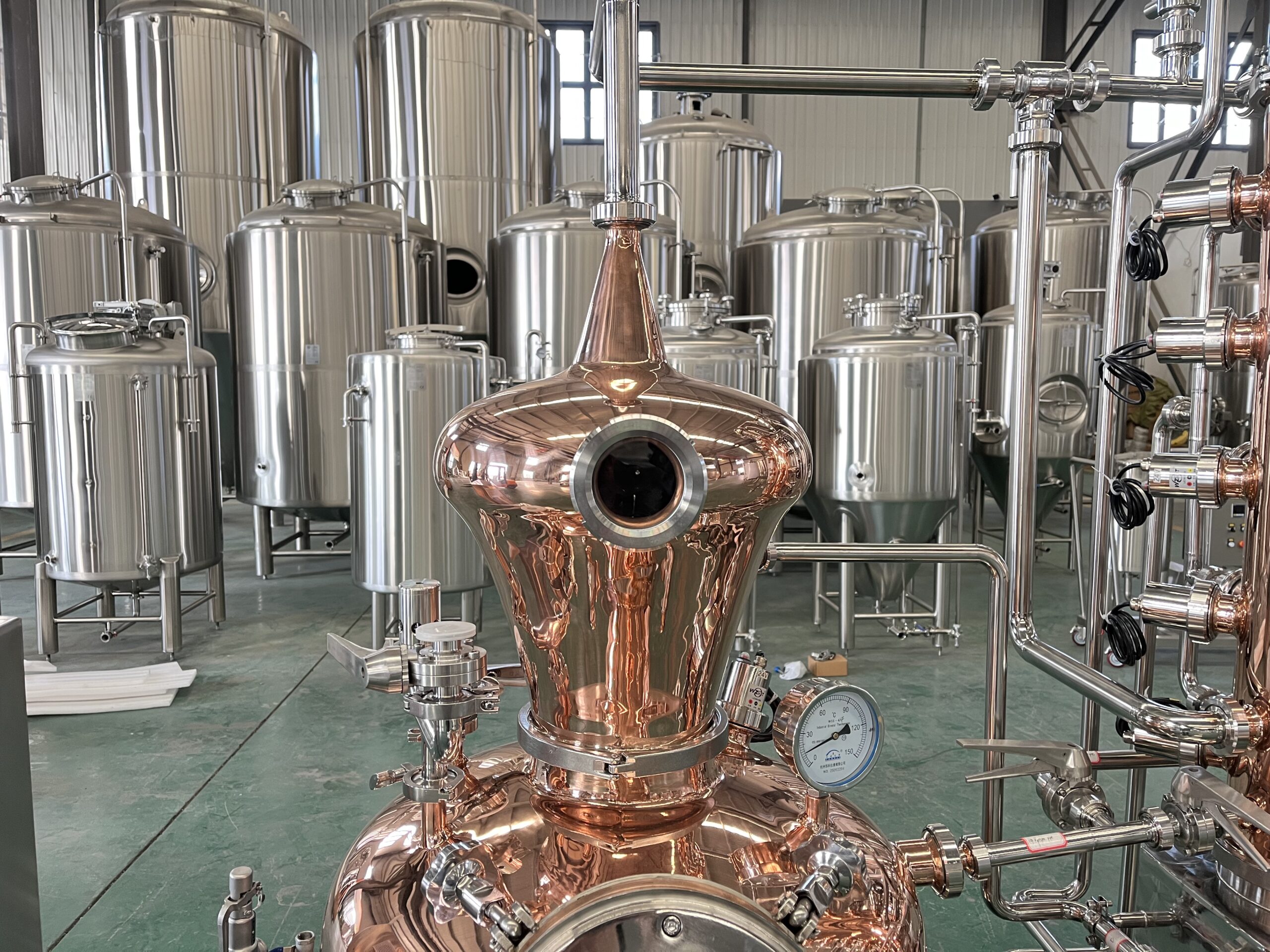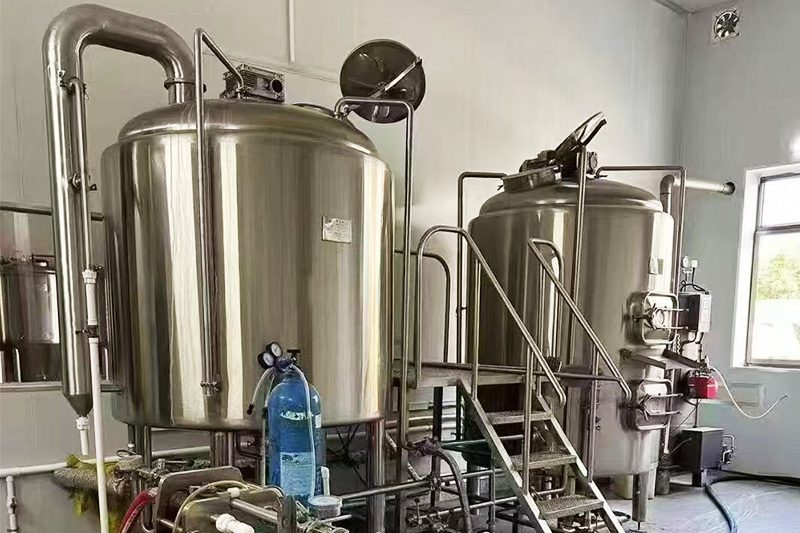


Choosing between a fermenter and a brite tank can affect your brewery’s production speed, beer quality, and equipment investment. Using the wrong tank for a process may create delays, inconsistent carbonation, and unnecessary cleaning work. Understanding their different roles helps you build a more efficient brewing system.
A fermenter and a brite tank serve different purposes in commercial brewing. A fermenter is designed for primary fermentation, where yeast converts wort sugars into alcohol and carbon dioxide. A brite tank receives fermented beer for clarification, final carbonation, cold storage, and preparation for packaging. A unitank can perform both functions when its design includes the required features.
1. What Is the Difference Between a Fermenter and a Brite Tank?
The main difference is their position and function in the brewing process. A fermenter supports yeast activity and controls the conditions needed to turn wort into beer. A brite tank handles the finishing stages after fermentation, helping the brewer achieve the required clarity, carbonation, and storage conditions.
Both vessels are important parts of many commercial breweries, but they are not interchangeable by default.
| Comparison | Gärbehälter | Brite Tank |
|---|---|---|
| Main purpose | Primary fermentation | Final conditioning and storage |
| Product inside | Wort during fermentation, then young beer | Fermented and conditioned beer |
| Yeast activity | Main yeast activity takes place here | Usually no active primary fermentation |
| Kohlensäure | May retain natural CO2 or support pressure fermentation | Commonly used for final carbonation |
| Temperaturkontrolle | Controls fermentation temperature | Maintains cold conditioning and storage temperature |
| Sediment management | Collects yeast and trub | Helps settle remaining particles |
| Typical structure | Often cylindrical-conical | Vertical or horizontal, depending on design |
| Main outlet | Yeast and beer discharge | Clear beer transfer to packaging |
| Production role | Converts wort into beer | Prepares beer for packaging or serving |
A fermenter is the starting point for biological conversion. A brite tank is the finishing vessel before packaging. The two work together to help a brewery maintain consistent quality and organize its production schedule.
For equipment buyers, the important question is not simply which tank is better. It is whether the planned production process needs separate vessels or a combined unitank.
2. What Does a Fermenter Do During Brewing?
A fermenter is a specialized fermentation vessel that provides a controlled environment for yeast. After the brewhouse produces and cools the wort, the brewer transfers it into the tank and adds yeast. The yeast uses fermentable sugar and produces alcohol, carbon dioxide, and flavor compounds.
During this stage, temperature has a direct effect on yeast performance. Different beer styles and yeast strains require different fermentation conditions. A lager, for example, generally needs a different temperature schedule from many ale styles. Stable cooling helps the brewer control fermentation speed and reduce unwanted flavor changes.
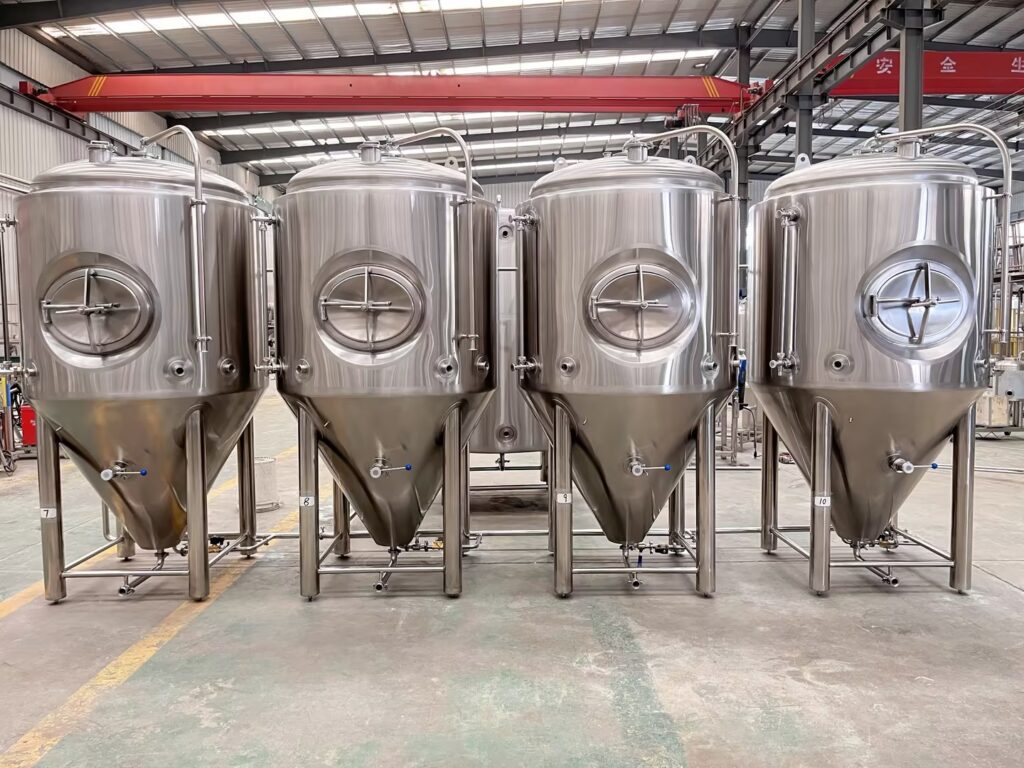
A commercial beer fermenter normally includes several important components:
- Cylindrical-conical body: The cone collects yeast and trub at the bottom of the tank.
- Cooling jacket: A glycol jacket removes heat generated during fermentation.
- Temperature sensor: Monitors product temperature for accurate control.
- Pressure control: Supports safe operation when the vessel is designed for pressure.
- Sampling valve: Allows the brewer to check gravity and fermentation progress.
- CIP connections: Support internal cleaning without dismantling the tank.
The conical structure is especially useful because yeast can settle at the bottom and be removed through a valve. This makes yeast collection, beer transfer, and tank cleaning easier.
A well-designed fermenter is more than a stainless steel container. It is an important part of the brewery’s process control system.
3. What Does a Brite Tank Do After Fermentation?
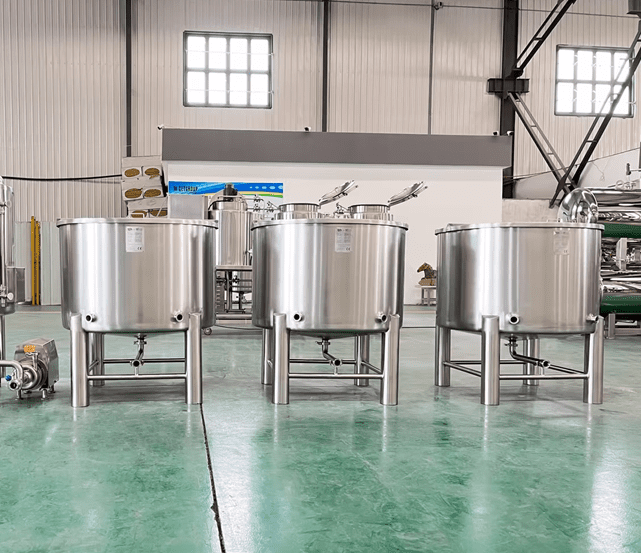
A brite tank is used after primary fermentation. It receives beer from the fermenter and provides a controlled space for final clarification, carbonation, conditioning, and temporary storage.
After fermentation, beer may still contain suspended yeast, proteins, and other particles. Cold conditioning helps some of these materials settle, improving beer appearance. The brewer can then transfer clearer beer from the tank while avoiding unnecessary disturbance of the sediment.
The second important function is carbonation. A brite tank can use a carbonation stone or diffuser to introduce CO2 into the beer. The brewer adjusts pressure, temperature, and Kontakt time according to the desired carbonation level and beer style.
A typical brite tank may include:
- CO2 inlet and carbonation stone
- Pressure gauge and pressure relief valve
- Temperature control connections
- Beer inlet and outlet
- Probenahmeventil
- CIP spray device
- Suitable manway and sanitary fittings
The vessel also provides cold, pressurized storage before packaging. This means the brewery does not need to package every batch immediately after fermentation finishes.
For a commercial brewery, this separation is valuable. It allows fermentation and packaging to follow different schedules.
4. How Do Fermenters and Brite Tanks Work Together in the Brewing Process?
The two vessels normally operate in sequence. The brewhouse prepares the wort, the fermenter carries out primary fermentation, and the brite tank prepares the finished beer for packaging.
A simplified production workflow looks like this:
Brewhouse → Wort Cooling → Yeast Addition → Fermenter → Conditioning and Clarification → Brite Tank → Packaging
Each stage has a different purpose:
| Production Stage | Ausrüstung | Main Operation |
|---|---|---|
| Wort preparation | Sudhaus | Mashing, lautering, boiling, and whirlpooling |
| Würzekühlung | Wärmetauscher | Reduces wort temperature |
| Yeast addition | Gärbehälter | Introduces yeast under controlled conditions |
| Primary fermentation | Gärbehälter | Converts fermentable sugars into alcohol and CO2 |
| Reifung | Fermenter or separate tank | Allows the beer to mature |
| Final clarification | Brite tank | Helps remove remaining suspended particles |
| Kohlensäure | Brite tank | Adjusts and maintains CO2 levels |
| Verpackung | Filling machine | Fills kegs, cans, or bottles |
Not every brewery follows exactly the same process. Some beers are conditioned entirely in the fermenter, while others move to a separate vessel for maturation or clarification. Filtration or centrifugation may also be used when the product specification requires it.
The important point is to design the tank arrangement around the actual brewing process, rather than assuming every brewery needs the same configuration.
5. Can a Unitank Replace Both a Fermenter and a Brite Tank?
Yes, a properly designed unitank can combine fermentation, conditioning, and carbonation in one vessel. However, not every tank described as a fermenter is automatically a unitank.
A unitank needs suitable pressure capabilities, temperature control, sanitary connections, and carbonation equipment. Its design must support both the fermentation stage and the required finishing operations.
| Ausrüstung | Gärung | Reifung | Kohlensäure | Separate Transfer Required |
|---|---|---|---|---|
| Standard fermenter | Ja | Depending on process | Depending on configuration | Often |
| Dedicated brite tank | No primary fermentation | Ja | Ja | Receives beer from fermenter |
| Unitank | Ja | Ja | Yes, if suitably equipped | Nicht immer |
When Is a Unitank a Good Choice?
A unitank can be useful for small and medium-sized breweries with limited floor space. It may reduce the number of vessels, pipelines, and transfers needed for a production batch.
It can also help smaller teams manage operations with fewer tank connections. However, the vessel remains occupied during fermentation and subsequent conditioning. This may limit how quickly the brewery can begin another batch.
When Are Separate Tanks Better?
Separate fermenters and brite tanks offer greater production flexibility. While one batch finishes carbonation in a brite tank, the fermenter can be cleaned and prepared for the next brew.
This arrangement is often useful for breweries producing multiple beer styles or operating frequent packaging schedules.
Before choosing a unitank, confirm whether the design includes the carbonation stone, pressure rating, fittings, cooling system, and control functions needed for your process.
6. Which Tank Design and Construction Features Should Buyers Check?
Tank design affects hygiene, operation, maintenance, and long-term performance. Both fermenters and brite tanks should use suitable food-contact materials and sanitary construction.
SUS304 stainless steel is commonly used for commercial brewing tanks. SUS316L may be selected for applications requiring greater resistance to certain corrosive environments. The final material should match the product, cleaning chemicals, and operating conditions.
Important construction details include:
Internal surface finish: Smooth product-contact surfaces help reduce residue buildup and support effective cleaning.
Welding quality: Consistent welding and proper finishing are important for vessel strength and hygiene.
Cooling jackets: Glycol jackets help control fermentation and conditioning temperatures. Insulation can reduce unwanted heat transfer and cooling demand.
Pressure rating: A pressure-rated vessel must have a clearly defined design pressure, test pressure, and suitable safety devices.
Sanitary connections: Valves, fittings, and pipelines should support hygienic product transfer and cleaning.
CIP system: Spray devices and cleaning connections should be designed to reach the required internal surfaces.
For reference, MICET’s published fermentation tank specifications include SUS304 construction, glycol cooling jackets, polyurethane insulation, 0.2 MPa design pressure, and 0.3 MPa test pressure for the documented tank range. These values should not automatically be applied to every tank or brite tank configuration. Buyers should confirm the exact specification for the selected model.
7. How Do Temperature Control, Pressure, and Carbonation Affect Tank Selection?
Temperature and pressure are two of the most important factors in tank selection. During primary fermentation, yeast activity generates heat. If the temperature becomes too high or changes too quickly, fermentation performance and flavor may be affected.
A jacketed fermenter uses a cooling medium, commonly glycol, to remove this heat. Temperature sensors provide feedback to the control system, allowing operators to maintain the required fermentation conditions.
A brite tank has a different temperature requirement. It usually keeps finished beer cold during clarification, carbonation, and storage. Stable temperature helps maintain dissolved CO2 and supports consistent packaging.
Pressure requirements also differ according to the vessel’s function:
| Parameter | Gärbehälter | Brite Tank |
|---|---|---|
| Pressure source | CO2 produced by yeast | CO2 used for carbonation and storage |
| Main control purpose | Safe fermentation and optional pressure fermentation | Maintaining carbonation and product transfer |
| Cooling purpose | Controls yeast activity | Maintains finished beer temperature |
| Safety components | Pressure gauge and relief system where required | Pressure gauge and relief system |
| Key specification | Design pressure and working conditions | Design pressure and carbonation requirements |
Do not select a tank based on pressure rating alone. The vessel, fittings, valves, carbonation system, and safety devices must work together within the approved operating limits.
8. How Do You Size a Brite Tank Against Fermenter Capacity?
A brite tank should be sized according to the amount of beer that needs to be held before packaging, not simply according to brewhouse capacity.
As a starting point, one brite tank should be able to receive at least the largest planned single fermenter batch. However, this may not be enough if packaging happens less often than fermentation or if the brewery blends multiple batches.
Consider three factors:
- Largest transfer volume: The brite tank must accommodate the finished beer transferred from the fermenter, with suitable operating headspace.
- Verpackung frequency: If beer is brewed weekly but packaged every two weeks, additional holding capacity may be needed.
- Blending requirements: If two fermentation batches are combined, the brite tank must have enough working capacity for the combined volume.
Illustrative Example
A brewery operates one 20 BBL fermenter and transfers one finished batch into a 20 BBL brite tank every week. If packaging also takes place weekly and the tank is emptied in time, one matching brite tank may be sufficient.
However, if the brewery adds a second fermenter and both batches finish close together, the brite tank may become a bottleneck. The brewery may need another brite tank or a larger holding capacity.
| Planning Factor | Example Requirement |
|---|---|
| Fermenter batch volume | 20 BBL |
| Weekly fermentation batches | 1–2 |
| Packaging frequency | Weekly or biweekly |
| Blending | Optional |
| Initial brite capacity | At least one full transfer batch |
| Expansion allowance | Based on future packaging demand |
This is why tank sizing should be based on a production schedule. A simple one-to-one volume comparison is only a starting point, not a complete engineering calculation.
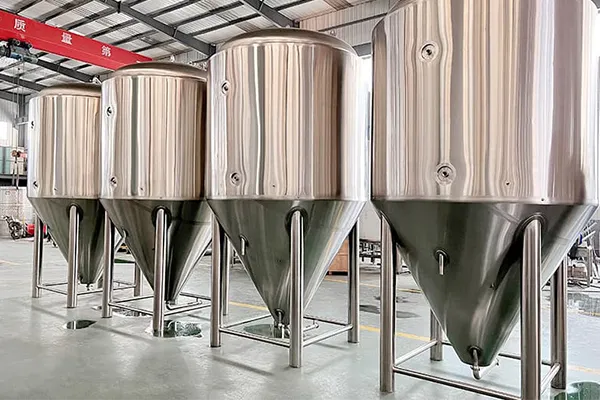
9. Does Every Brewery Need a Separate Brite Tank?
No. A very small brewery may package directly from a suitable fermenter or use a unitank that performs both functions. Whether a dedicated brite tank is worthwhile depends on production volume, packaging frequency, available space, and quality targets.
A separate brite tank becomes more valuable when:
- Fermentation finishes more frequently than packaging.
- The brewery needs stable carbonation across multiple batches.
- Finished beer needs temporary cold storage.
- Different beer styles require separate finishing schedules.
- The brewery wants to free fermenters for new batches.
- The production team needs more flexibility in packaging and distribution.
For a growing craft brewery, the main benefit is not simply clearer beer. It is better control over the production schedule.
However, a brite tank also adds investment, cleaning work, connections, and maintenance. A small brewery with a predictable packaging schedule may not need one immediately.
The right choice should be based on the brewery’s actual production plan, not on the assumption that more tanks always mean better performance.
10. How Can MICET Help You Select the Right Fermentation and Brite Tank System?
Every brewery has different production targets, beer styles, factory layouts, and expansion plans. A suitable tank configuration should reflect these conditions from the beginning.
As a professional brewery and beverage equipment manufacturer, MICET provides customized stainless steel brewing systems, Gärbehälter, and integrated brewery solutions for global B2B customers.
Our engineering approach considers:
- Brewhouse capacity and brewing frequency.
- Fermenter working volume and tank quantity.
- Brite tank capacity and packaging schedule.
- Cooling load and glycol system configuration.
- Pressure requirements and safety components.
- Tank connections, pipelines, and CIP arrangements.
- Factory layout and future expansion space.
For example, a 1,000L brewery project may require more than one fermenter and a separate bright tank to support multiple batches and packaging schedules. The exact tank quantity depends on fermentation time, beer style, cleaning turnaround, and finished product storage requirements.
MICET’s documented 1,000L turnkey project includes 8 × 1,000L fermentation tanks, 2 × 2,000L fermentation tanks, 4 × 1,000L bright tanks, and 1 × 2,000L bright tank. This configuration demonstrates how tank capacity and quantity can be planned around the production workflow rather than selecting vessels independently.
We also support CAD and 3D layout planning, equipment manufacturing, system integration, installation guidance, commissioning support, and after-sales service.
Whether you are opening a new craft brewery, expanding a commercial brewery, or upgrading an existing cellar, our team can help you evaluate the right combination of fermenters and brite tanks.
Share your target production volume, beer styles, packaging frequency, and factory layout with MICET. Our engineering team can help you develop a practical tank configuration for your brewery project.
Frequently Asked Questions About Fermenters and Brite Tanks
Is a fermenter the same as a brite tank?
No. A fermenter is designed for primary fermentation, where yeast converts wort sugars into alcohol and CO2. A brite tank is used after fermentation for clarification, carbonation, cold storage, and preparation for packaging.
Can beer ferment inside a brite tank?
A standard brite tank is designed for finished beer, not primary fermentation. Although some specialized vessels can support different operations, the tank must be engineered and equipped for the intended process.
Can a unitank replace a separate brite tank?
Yes, if it has the required pressure rating, carbonation equipment, temperature control, and sanitary connections. A standard fermenter without these features should not automatically be treated as a unitank.
How big should a brite tank be compared with a fermenter?
At minimum, its working capacity should accommodate the largest planned transfer batch. Additional capacity may be necessary when packaging is less frequent than fermentation or when multiple batches are blended.
Does a brite tank need a cooling jacket?
Not every design is identical, but temperature control is important for many commercial breweries. A cooling jacket can help maintain the required beer temperature during conditioning and storage.
What should I check before buying a brite tank?
Check its material, internal finish, pressure rating, pressure test documentation, cooling jacket, valves, carbonation stone, CIP connections, and working capacity. For used equipment, inspect the vessel’s history and condition carefully.
Wichtigste Erkenntnisse
- A fermenter and a brite tank have different roles in commercial brewing.
- A fermenter supports primary fermentation and yeast activity.
- A brite tank handles clarification, carbonation, cold storage, and packaging preparation.
- A unitank can combine both functions when properly designed and equipped.
- Stainless steel construction, sanitary fittings, and reliable cleaning systems are important for both vessels.
- Fermenter capacity should account for working volume and fermentation headspace.
- Brite tank sizing should consider packaging frequency, transfer volume, and blending requirements.
- Separate vessels can improve scheduling flexibility and free fermenters for new batches.
- Pressure ratings and safety devices must match the intended operating conditions.
- An experienced equipment manufacturer can help match tank quantity, capacity, cooling, and layout to your brewery’s production goals.