Poner en marcha un negocio de producción de alcohol implica más que comprar un alambique. Una selección deficiente de los equipos, una capacidad de producción inadecuada y conexiones de proceso ineficientes pueden aumentar los costos operativos y retrasar la producción. Trabajar con fabricantes experimentados de plantas destiladoras ayuda a construir un sistema que se adapte a sus productos, al espacio de su fábrica y a sus objetivos empresariales a largo plazo.
Una planta de destilación de alcohol es una instalación de producción integrada que utiliza equipos de fermentación, calentamiento, separación de vapor, condensación y almacenamiento para producir bebidas espirituosas como whisky, vodka, ginebra, ron y brandy. Una planta adecuada combina alambiques de olla, columnas de destilación, condensadores, tanques de fermentación, recipientes de almacenamiento, sistemas de refrigeración y controles de proceso según la capacidad de producción y los requisitos del producto.
Resumen del artículo
- ¿Qué es una planta de destilación de alcohol y cómo funciona?
- ¿Cómo afectan las materias primas y la fermentación al diseño de una planta destiladora?
- ¿Qué tipos de equipos de destilación necesitan las destilerías modernas?
- ¿Cómo elegir el sistema de destilación adecuado para diferentes bebidas espirituosas?
- ¿Cómo debe planificar la capacidad y la eficiencia de producción de una planta destiladora?
- ¿Por qué son importantes la calefacción, la refrigeración y los intercambiadores de calor?
- ¿Qué materiales y elementos de seguridad debe incluir una planta de destilación?
- ¿Cómo mejora la automatización la producción de alcohol?
- ¿Qué debe incluir una planta destiladora integral llave en mano?
- ¿Cómo seleccionar al fabricante adecuado de una planta de destilación de alcohol?
1. ¿Qué es una planta de destilación de alcohol y cómo funciona?
Una planta de destilación de alcohol es una instalación diseñada para producir bebidas espirituosas de alta graduación a partir de materias primas fermentadas. Combina varias etapas de producción, como la preparación de las materias primas, la fermentación, la destilación, la condensación, la purificación, el almacenamiento y el envasado.
El objetivo principal de la destilación es separar el alcohol y otros componentes volátiles de un líquido fermentado. El proceso utiliza las diferencias de volatilidad y comportamiento de ebullición para lograr la concentración de alcohol y las características del producto requeridas. El destilador puede ajustar la configuración de los equipos según el tipo de bebida espirituosa que se produzca.
Una planta destiladora de bebidas típica incluye:
| Equipamiento | Función principal |
|---|---|
| Sistema de preparación de materias primas | Prepara cereales, frutas u otras materias primas |
| Cocedor de mosto | Permite preparar materias primas a base de cereales |
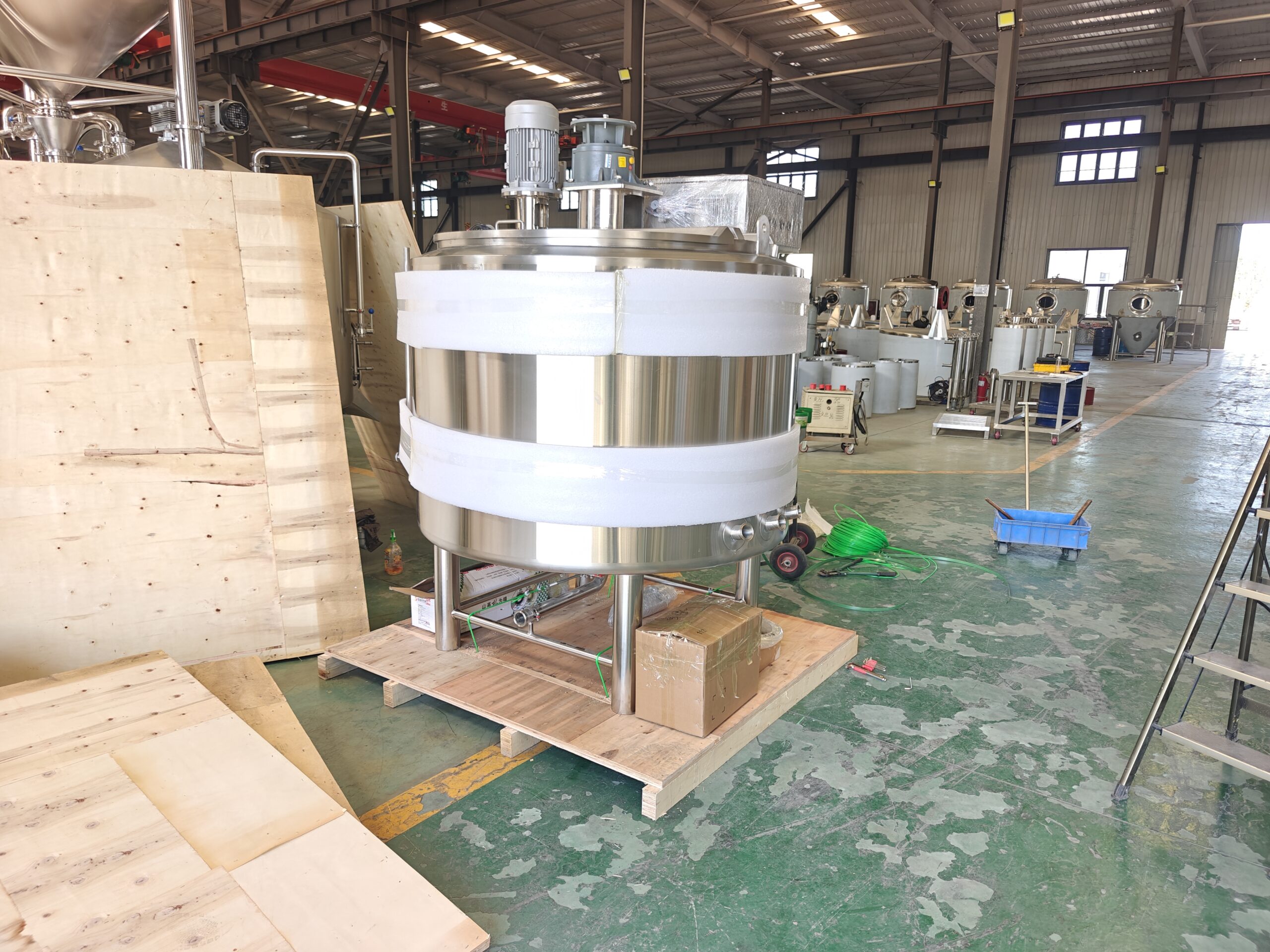
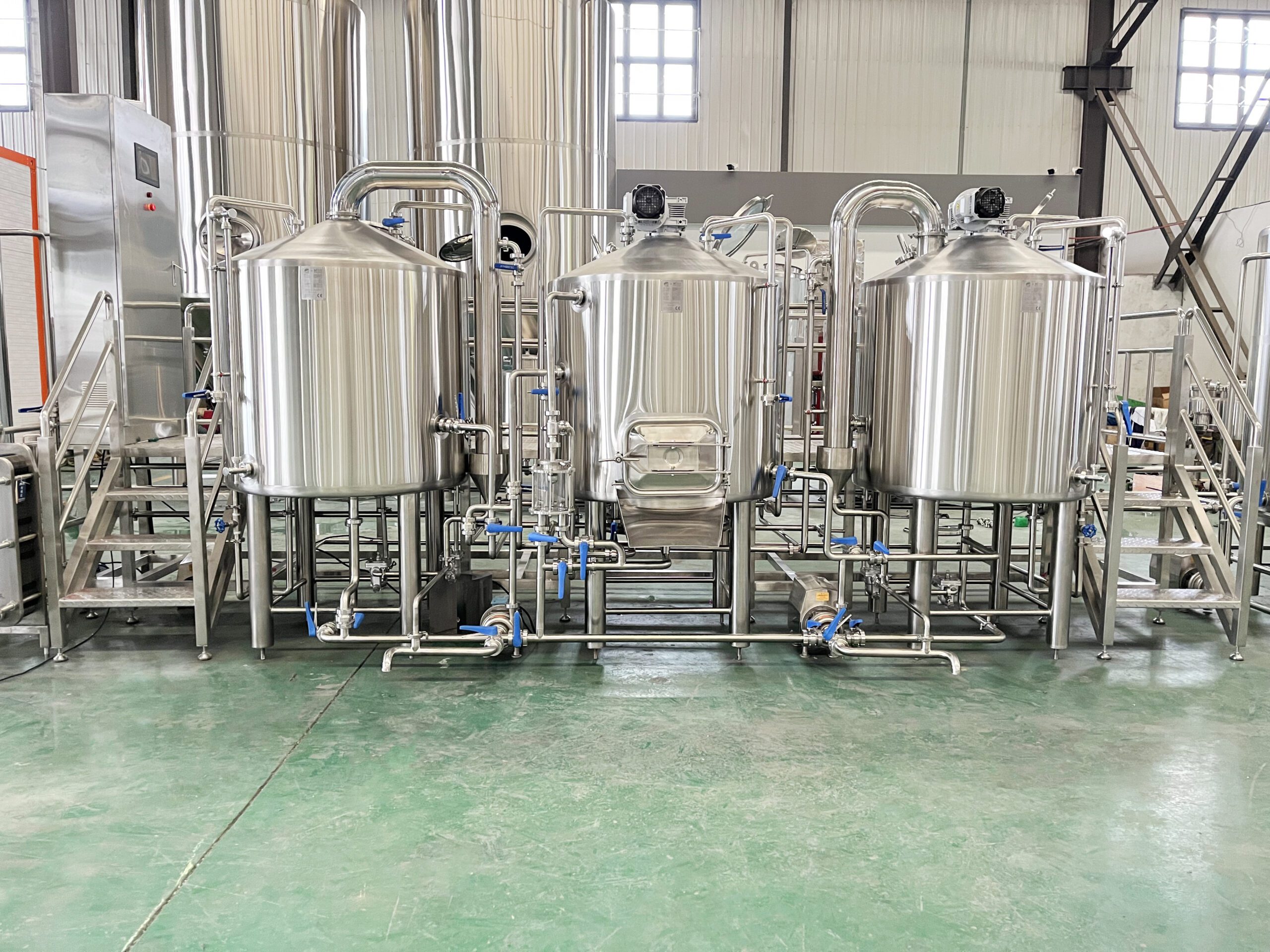
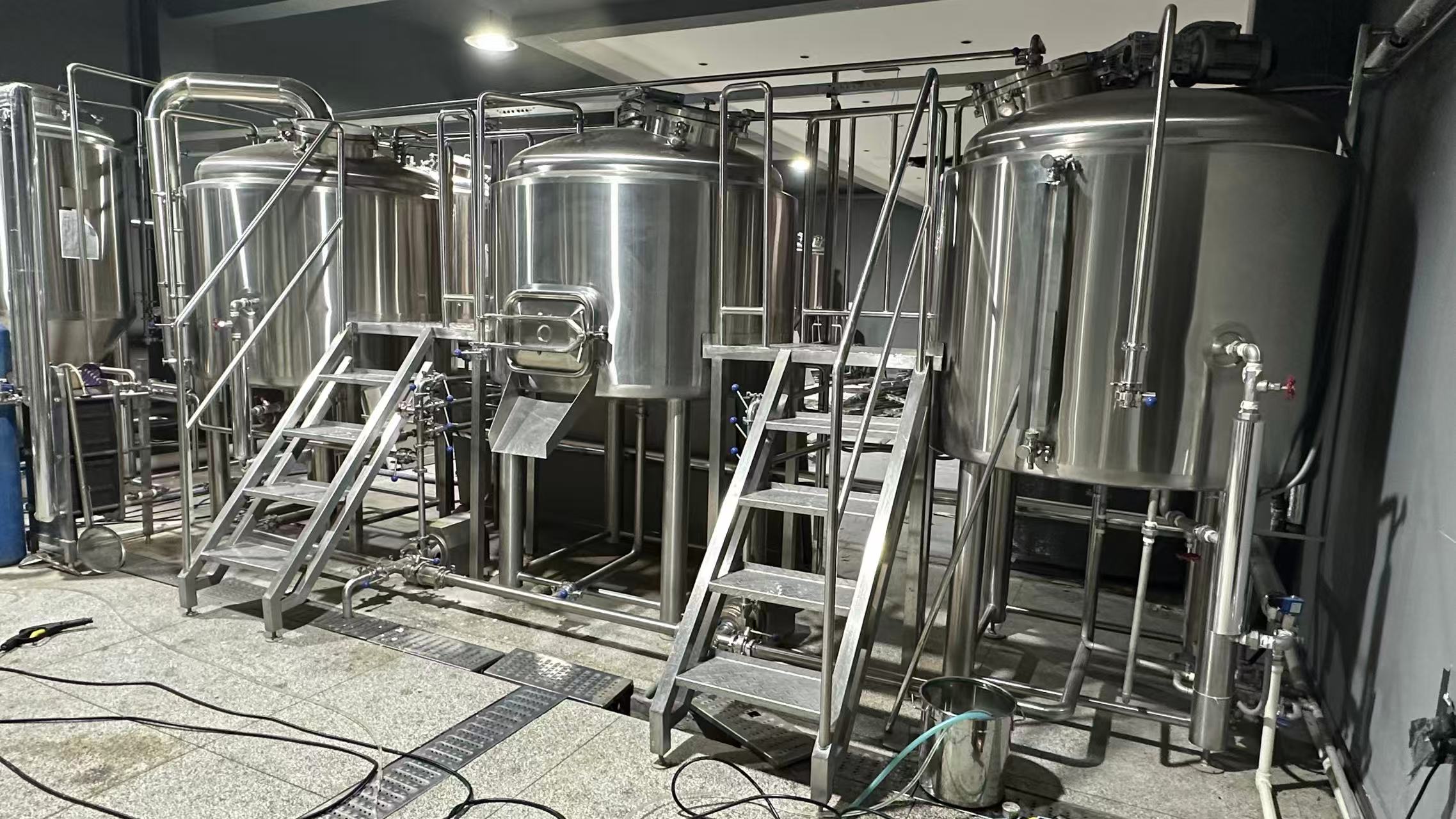
| Tanques de fermentación | Convierten los azúcares fermentables en alcohol |
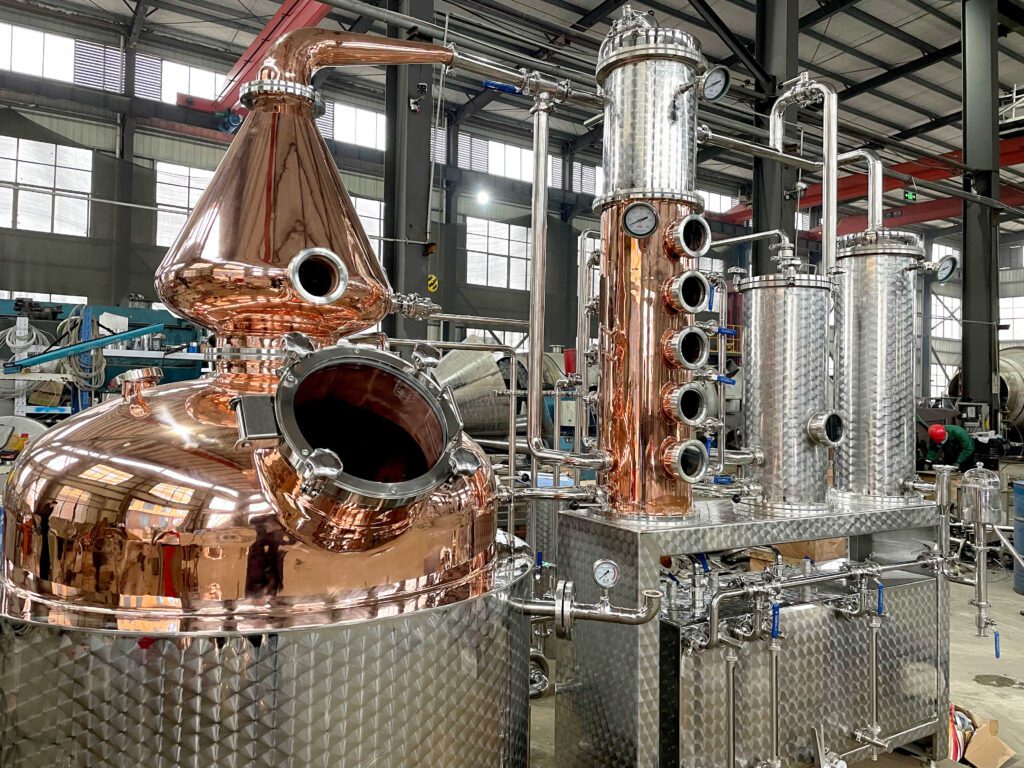
| Alambique | Permite la destilación tradicional por lotes |
| Columna de destilación | Permite una separación y rectificación controladas |
| Condensador | Convierte el vapor de alcohol en líquido |
| Tanque de recolección de alcohol | Recoge el líquido destilado |
| Tanques de almacenamiento y mezcla | Almacenar y preparar bebidas espirituosas terminadas |
| sistema CIP | Facilita la limpieza de los equipos |
| Panel de control | Supervisa y controla los parámetros de producción |
El proceso comienza con la preparación de las materias primas y la fermentación. Después de la fermentación, el líquido pasa a la unidad de destilación, donde el calentamiento controlado genera vapor. Luego, el condensador enfría el vapor y lo convierte en alcohol líquido.
Para los productores comerciales, todas las etapas deben funcionar conjuntamente. Un sistema de destilación bien diseñado mejora la estabilidad del proceso, la uniformidad del producto y la eficiencia de producción.
2. ¿Cómo afectan las materias primas y la fermentación al diseño de una planta de destilación?
Las materias primas desempeñan un papel importante a la hora de determinar el diseño de una destilería. Cada materia prima requiere diferentes métodos de preparación, condiciones de fermentación y configuraciones de equipos.
Las opciones habituales de materias primas incluyen:
- Granos: La cebada, el trigo, el maíz y otros cereales se utilizan para elaborar bebidas espirituosas a base de grano.
- Melaza: Se utiliza habitualmente en la producción de ron.
- Fruta: Se utiliza para elaborar aguardiente de frutas y otras bebidas espirituosas de especialidad.
- Malta: esencial para la producción de whisky y alcohol de malta.
- Materias primas a base de azúcar: Se utilizan en determinados procesos de fermentación.
El sistema de preparación debe adaptarse a las materias primas seleccionadas. Por ejemplo, una destilería basada en cereales puede necesitar equipos para la manipulación, molienda y maceración de cereales, así como equipos para preparar mosto o macerado. Una línea de producción de ron puede requerir equipos adecuados para manipular melaza y materiales de fermentación a base de azúcar.
¿Por qué es importante la capacidad de fermentación?
La fermentación determina la cantidad de líquido alcohólico disponible para la siguiente etapa de producción. Si los tanques de fermentación no pueden suministrar suficiente líquido, el equipo de destilación puede permanecer inactivo.
Una destilería comercial debe tener en cuenta:
- Volumen del lote de fermentación.
- Duración del ciclo de fermentación.
- Número de tanques de fermentación.
- Suministro de materias primas.
- Concentración de alcohol requerida antes de la destilación.
- Distillation schedule.
A professional manufacturer should calculate the relationship between fermentation capacity and still capacity rather than selecting each machine separately.
For example, a whisky producer may require several fermentation tanks to maintain a regular supply of fermented wash. A vodka producer targeting high-purity neutral alcohol may need a different fermentation and rectification arrangement.
MICET provides customized fermentation tanks and equipo de destilería for different beverage production requirements.
3. What Types of Distillation Equipment Do Modern Distilleries Need?
Different distillation plants use different equipment depending on production scale, spirit type, and operating method. The three main still configurations are pot stills, column stills, and hybrid stills.
Pot Still Systems
Best suited for traditional batch spirit production.
Pot stills are widely used for whisky, rum, brandy, and other flavor-focused spirits. They allow distillers to manage individual batches and adjust production conditions according to the recipe.
A typical pot still system includes:
- Distillation pot
- Heating system
- Still head or copper helmet
- Vapor pipe
- Condensador
- Spirit collection equipment
Copper components are commonly selected for traditional spirit production because copper interacts with certain sulfur compounds during distillation.
Column Still Systems
Best suited for controlled separation and higher throughput.
A column still uses multiple separation stages to control vapor and liquid contact. The number and arrangement of plates or sections influence the separation performance.
Column systems are commonly used for vodka and neutral spirit production. They can also be configured for other applications that require specific separation characteristics.
Hybrid Still Systems
Best suited for producers making several spirit styles.
A hybrid still combines features of pot still and column still designs. It gives producers more flexibility when developing multiple products.
| Tipo de alambique | Main Advantage | Typical Applications |
|---|---|---|
| Alambique tradicional | Traditional flavor development | Whisky, rum, brandy |
| Alambique de columna | Controlled separation and throughput | Vodka, neutral spirits |
| Alambique híbrido | Flexible production | Multi-product distilleries |
MICET manufactures and customizes these three core configurations according to spirit style, batch size, and automation requirements.
4. How Do You Choose the Right Distillation System for Different Spirits?
Choosing a distillation system starts with the final product. A whisky distillery has different equipment requirements from a vodka or gin production facility.
For example, whisky producers often focus on flavor development and copper contact. Vodka producers usually require more extensive separation and purification. Gin producers may need botanical infusion equipment to develop their desired aroma.
The following table provides a general reference:
| Spirit Type | Recommended Equipment | Main Design Consideration |
|---|---|---|
| Whisky | Pot still or hybrid still | Flavor development |
| Vodka | Columna fija | Neutral spirit and purity targets |
| Ginebra | Pot still with gin basket | Botanical extraction |
| Ron | Pot still or column still | Fermented molasses or sugar-based wash |
| Brandy | Alambique | Fruit character and aroma |
| Neutral spirit | Column distillation system | Separation and product specifications |
What About High-Purity Neutral Alcohol?
Some producers require extra neutral alcohol (ENA) or other high-purity neutral spirits.
These applications require suitable column configuration, reflux management, product monitoring, and downstream purification where specified. The equipment should be engineered around the required product specification rather than a general claim of high purity.
For vodka manufacturers, MICET offers customized distillation solutions, including a 20-layer copper distillation column and PLC-based process control options.
A professional distiller should discuss the target alcohol strength, throughput, product characteristics, and applicable local requirements before finalizing the system.
5. How Should You Plan Distillery Plant Capacity and Production Efficiency?
Production capacity is one of the most important decisions when planning a new alcohol plant.
A system that is too small may limit business growth. An oversized distillery plant can increase initial investment, utility costs, and unused equipment capacity.
Before selecting a production plant, calculate:
- Expected annual production.
- Required output per batch.
- Number of operating days.
- Duración del ciclo de fermentación.
- Distillation cycle time.
- Storage requirements.
- Future expansion plans.
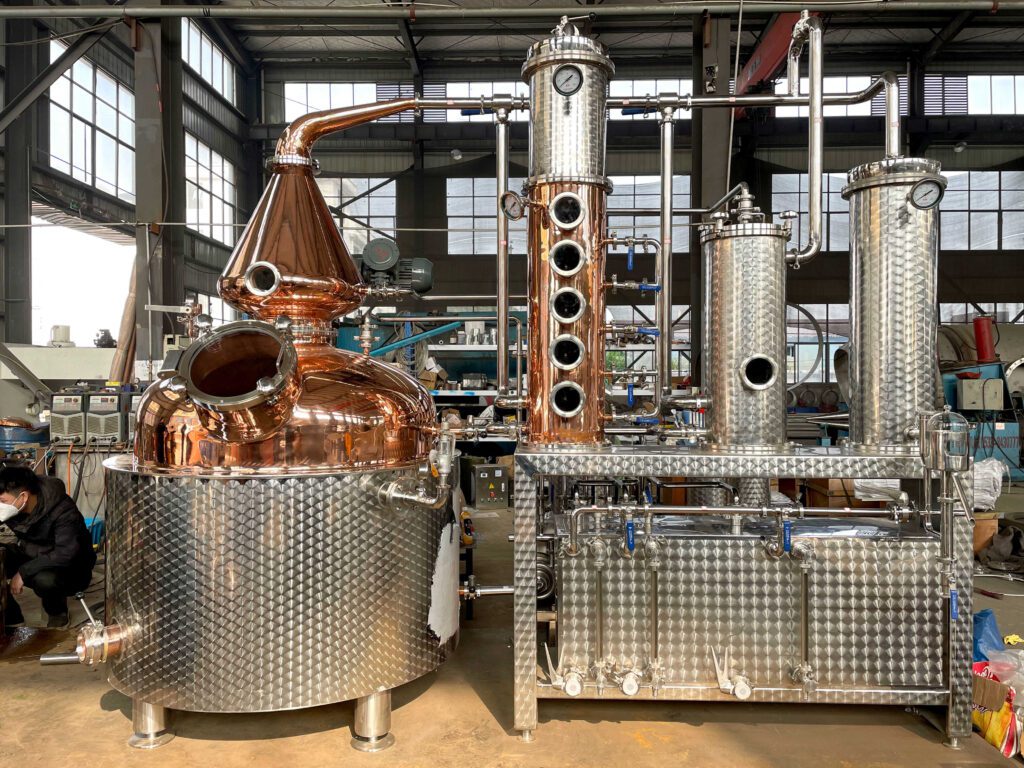
MICET Distillery Equipment Capacity Range
MICET provides distillery equipment configurations across several capacities.
| Equipment Capacity | Typical Project Positioning |
|---|---|
| 200L | Pilot production and small distilleries |
| 300L | Small-scale craft spirit production |
| 500L | Growing craft distilleries |
| 800 L | Expanded small commercial production |
| 1.000 L | Commercial craft distilleries |
| 1,500L | Growing commercial operations |
| 2.000 L | Medium-scale production |
| 3,000L | Proyectos comerciales más grandes |
| 5.000 L | Higher-capacity production facilities |
These capacities represent available equipment configurations, not guaranteed finished alcohol output. Actual production depends on working volume, raw materials, fermentation performance, distillation cycles, and product specifications.
Why Is Future Expansion Important?
A new distillery may start with a relatively small production target. However, successful products can create demand for higher output.
A scalable layout should leave room for:
- Additional fermentation tanks.
- Larger distillation columns.
- Extra storage tanks.
- New filtration equipment.
- Expanded cooling capacity.
- Additional packaging equipment.
This approach helps businesses expand without rebuilding the entire facility.
6. Why Are Heating, Cooling, and Heat Exchangers Important?
Heating and cooling systems have a direct effect on distillation performance.
The heating system provides the energy required to bring fermented liquid to the operating temperature. Steam heating, electric heating, and other suitable heating arrangements can be selected according to project requirements.
A condenser then cools the vapor and converts it into liquid. Its capacity must match the expected vapor load and operating conditions.
Main Utility Systems
| Utility | Propósito | Planning Consideration |
|---|---|---|
| Steam or electric heating | Supplies process heat | Heating capacity and energy source |
| Cooling water | Supports condensation | Water flow and temperature |
| Glycol system | Supports process cooling | Cooling load and temperature |
| Heat exchangers | Transfer heat between process streams | Thermal duty and flow |
| Water supply | Supports production and cleaning | Water quality and availability |
| Compressed air | Operates pneumatic equipment | Pressure and consumption |
How Can Heat Recovery Improve Energy Efficiency?
Heat exchangers can transfer heat from one process stream to another. For example, recovered heat may support preheating of incoming process liquid when the system is designed for this purpose.
This can reduce the amount of additional heating energy required.
However, the actual benefit depends on temperature differences, flow rates, operating schedules, and equipment design.
An industrial distillation plant should consider heating and cooling as one integrated system rather than treating them as separate accessories.
For international projects, utility design should also account for local electricity supply, steam availability, water conditions, and installation requirements.
7. What Materials and Safety Features Should a Distillery Plant Include?
Material selection affects sanitation, durability, maintenance, and product quality.
Stainless steel is widely used in fermentation tanks, storage tanks, process piping, and other product-contact equipment. Copper is also important in traditional spirit production.
A well-designed system may combine the two materials according to the intended application.
Stainless Steel vs. Copper
| Material | Ventajas | Aplicaciones comunes |
|---|---|---|
| Stainless Steel | Corrosion resistance, hygienic surface, easy cleaning | Tanks, pipes, storage vessels |
| Copper | Traditional distillation material and interaction with sulfur compounds | Still heads, columns, vapor-contact components |
The selected grade, thickness, surface finish, welding quality, and cleaning design should be documented in the technical specification.
What Safety Features Should Plant Manufacturers Provide?
Alcohol vapor is flammable. Therefore, safety engineering must be part of the original plant design.
Important considerations include:
- Suitable ventilation.
- Electrical equipment appropriate for the classified area.
- Pressure protection.
- Temperature monitoring.
- Emergency shutdown arrangements.
- Proper grounding and bonding.
- Safe vapor handling.
- Suitable pipework and valves.
- Operator training and maintenance procedures.
Equipment manufacturers should coordinate their design with local engineering and compliance professionals. Equipment supply alone does not replace local permits or site approvals.
8. How Does Automation Improve Alcohol Production?
Modern distilleries need stable process control to maintain consistent product quality.
Manual operation may be suitable for some small batch systems. However, growing facilities often benefit from PLC automation and digital monitoring.
A process control system can monitor:
- Heating temperature.
- Pressure.
- Liquid levels.
- Flow rates.
- Cooling conditions.
- Pump operation.
- Valve status.
- Production alarms.
Automation can help reduce operator workload and improve production repeatability.
Basic vs. Advanced Automation
| Feature | Basic Control | Advanced PLC Control |
|---|---|---|
| Temperature monitoring | Manual or digital display | Integrated sensors |
| Heating control | Operator adjustment | Automatic control |
| Valve operation | Manual | Automatic or pneumatic |
| Process monitoring | Local instruments | Central control panel |
| Alarm functions | Limitado | Configurable alarms |
| Production records | Manual | Optional digital records |
Not every distillery needs a fully automated production line.
A small craft distiller may prefer a simple control panel with essential temperature and safety functions. A larger commercial facility may benefit from integrated controls across fermentation, heating, cooling, and distillation.
MICET can configure control options according to the actual process, equipment arrangement, and operator requirements.
9. What Should a Complete Turnkey Distillery Plant Include?
A turnkey distillery project should cover more than the main still.
It should connect raw material preparation, fermentation, distillation, storage, cleaning, and packaging into one practical production layout.
A typical project may include:
| Production Section | Equipo Principal |
|---|---|
| Manejo de Materia Prima | Grain handling, milling, transfer equipment |
| Mash Preparation | Mash tun, mash cooker, heating system |
| Fermentación | Stainless steel fermentation tanks |
| Destilación Primaria | Pot still or hybrid still |
| Rectification | Column still and related components |
| Condensación | Condenser and cooling system |
| Almacenamiento | Spirit storage tanks |
| Blending | Blending tanks and transfer pumps |
| Limpieza | sistema CIP |
| Embalaje | Bottle filling and packaging equipment |
| Automatización | PLC, sensors, valves, and control panels |
A complete project also requires layout planning, utility connections, transportation, installation guidance, testing, and operator training.
How Does a Manufacturer Support the Whole Project?
Working with one experienced manufacturer can simplify coordination between different equipment groups.
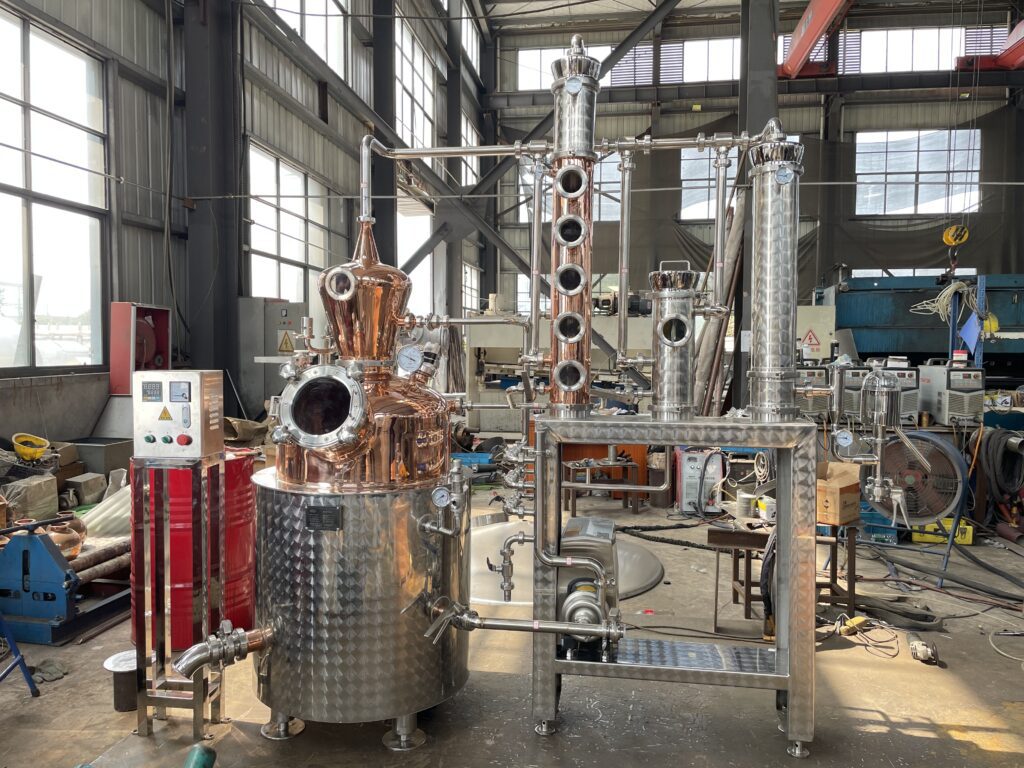
As a professional brewery, distillery, and beverage equipment manufacturing plant, MICET provides customized stainless steel brewing systems, fermentation tanks, brewhouse systems, and distillery solutions for global B2B customers.
Our project support focuses on:
- Customized equipment configuration.
- Production capacity planning.
- Equipment layout and integration.
- Stainless steel and copper fabrication.
- Process and utility coordination.
- Equipment inspection and testing.
- Installation and commissioning guidance.
- Long-term technical support.
We can also evaluate hybrid new-and-used equipment packages where suitable, helping customers manage initial investment while maintaining important safety and process requirements.
10. How Do You Select the Right Alcohol Distillation Plant Manufacturer?
Choosing between alcohol distillation plant manufacturers should involve more than comparing the best price.
A suitable manufacturer needs to understand your intended spirits, production capacity, site conditions, equipment configuration, and long-term operating goals.
Use the following checklist when evaluating a potential supplier:
| Evaluation Factor | What Buyers Should Confirm |
|---|---|
| Manufacturing capability | Factory production and fabrication experience |
| Process knowledge | Experience with the intended spirit type |
| Personalización | Capacity, still type, and layout options |
| Materials | Stainless steel and copper specifications |
| Process integration | Fermentation, distillation, storage, and cooling |
| Safety | Pressure protection and electrical requirements |
| Automatización | PLC, temperature, and process monitoring |
| Quality control | Inspection and testing documentation |
| Export experience | Packing, shipping, and technical documents |
| After-sales service | Installation guidance and spare parts |
What Information Should You Prepare Before Requesting a Quote?
To help the manufacturer prepare a suitable proposal, provide:
- Spirit type: whisky, gin, vodka, rum, brandy, or other products.
- Target production capacity: liters per batch or annual output.
- Preferred still type: pot, column, or hybrid.
- Raw materials and fermentation requirements.
- Available factory dimensions.
- Heating source and utility conditions.
- Automation requirements.
- Destination country and applicable standards.
- Project budget and expected delivery schedule.
MICET is a manufacturer and exporter of customized brewery, distillery, and beverage equipment. Our team can help develop a suitable plant configuration based on your production goals, available space, and investment plan.
Whether you are establishing a small craft distillery or expanding a commercial alcohol production facility, the right engineering partner can help reduce project risk and support stable operation.
Contact MICET to discuss your alcohol distillation plant project. Share your target capacity, spirit type, and factory layout to receive a customized equipment proposal.
Preguntas Frecuentes
What equipment is required for an alcohol distillation plant?
A typical plant requires raw material preparation equipment, fermentation tanks, pot or column stills, condensers, storage tanks, pumps, piping, cooling systems, and control panels. Additional equipment depends on the spirit type and production capacity.
¿Cuál es la diferencia entre un alambique de olla y un alambique de columna?
A pot still is mainly used for batch distillation and traditional flavor-focused spirits. A column still provides multiple separation stages and is often selected for neutral spirits and higher-throughput production. Hybrid systems combine features of both designs.
How much capacity does a commercial distillery need?
There is no universal capacity. A small craft distillery may begin with a 200L–500L system, while growing commercial producers may consider 1,000L–5,000L configurations. The correct choice depends on production targets, fermentation time, and operating schedules.
Can one distillery produce whisky, gin, vodka, and rum?
Yes, a suitably designed distillery can produce several spirit types. However, different products may require different still configurations, botanical baskets, fermentation arrangements, and cleaning procedures. The system should be designed around the planned product range.
What is the role of a distillation column?
A distillation column provides repeated vapor-liquid contact to support separation of alcohol and other volatile components. Its configuration, number of plates or sections, reflux arrangement, and operating conditions influence separation performance.
Do distillery plant manufacturers provide turnkey solutions?
Many professional manufacturers provide complete project services, including equipment design, manufacturing, layout planning, utility coordination, installation guidance, commissioning support, and technical service. The exact project scope should be confirmed in the quotation.
Key Points to Remember
- An alcohol distillation plant requires coordinated equipment from raw material preparation to finished spirit storage.
- Pot stills, column stills, and hybrid stills serve different production requirements.
- Raw materials and fermentation capacity influence the complete plant configuration.
- Production capacity should match actual demand and future expansion plans.
- Heating, cooling, condensers, and heat exchangers affect energy efficiency.
- Stainless steel and copper have different roles in professional distillery equipment.
- Safety engineering and local compliance must be considered before installation.
- PLC automation can improve process monitoring and production consistency.
- A turnkey distillery solution simplifies equipment integration and project coordination.
- Choosing an experienced manufacturer supports reliable production and long-term business growth.