










Nancy Shang | Founder and CEO | Published August 2026
A complete used 2-10 BBL brewing system includes a mash tun, kettle, hot liquor tank, pumps, heat exchanger, and control panel working together. Many listings sell these as separate line items. This guide breaks down what “complete” actually means and how to confirm it before wiring a deposit.
What “Complete” Actually Means at This Scale
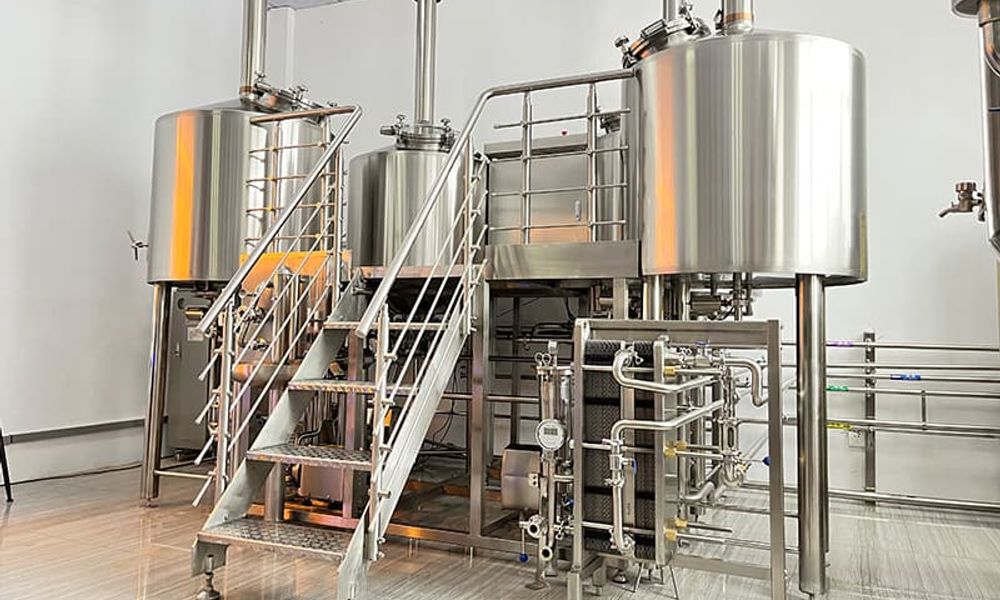
At the 2-10 BBL range, a brewhouse package typically bundles six components: mash tun, kettle, hot liquor tank (HLT), pumps, heat exchanger, and control panel. That’s the baseline configuration MICET ships as a compact brewhouse package for this capacity band. When a seller lists just a mash tun and kettle at a below-market price, the missing pieces — pumps, heat exchanger, controls — usually show up later as a second purchase, often at a worse price because now you’re buying single components instead of a package.
This matters more for used equipment than new. A new-equipment quote spells out exactly what’s included, line by line, before you sign anything. A used listing photograph doesn’t always show what’s in the crate, and sellers photographing a brewhouse from one angle can leave the HLT or control panel out of frame without meaning to mislead anyone.
Component-by-Component: What to Check
Mash tun and kettle. Confirm the working volume matches the stated BBL rating, not just the vessel’s total volume — a “10 BBL” tank with a 10 BBL total capacity might only mash efficiently at 8 BBL depending on grain bed depth. Ask for the actual working capacity, not the shell size.
Hot liquor tank. HLT sizing should roughly match or exceed brewhouse capacity, since it needs to supply both mash and sparge water in the same brew cycle. A mismatched HLT is one of the more common gaps in used listings — sellers sometimes swap in whatever HLT they have on hand rather than the one originally paired with the brewhouse.
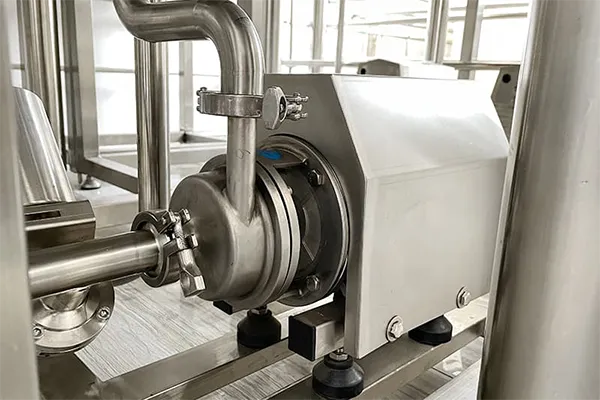
Pumps. Count them. A 2-10 BBL system typically needs at least two — one for wort transfer, one for hot liquor — sometimes three if whirlpool recirculation runs separately. Used listings that say “pumps included” without a count are worth a follow-up question.
Heat exchanger. This is the component most often missing entirely from used listings, since sellers sometimes retain it for their next build or sell it separately to a different buyer. Ask directly whether it’s a plate or tube-in-tube design and whether it’s rated for the flow rate your brewhouse produces.
Control panel. Voltage and phase matter here more than almost anything else on this list. A control panel built for 380V three-phase won’t run on a standard North American 208V/240V service without a transformer, and that’s a cost most buyers don’t budget for until they’ve already paid for shipping.
Common Gaps in Used System Listings
The most expensive mistake in used-equipment buying isn’t a bad price — it’s discovering a gap after the equipment has already shipped. Three gaps show up repeatedly:
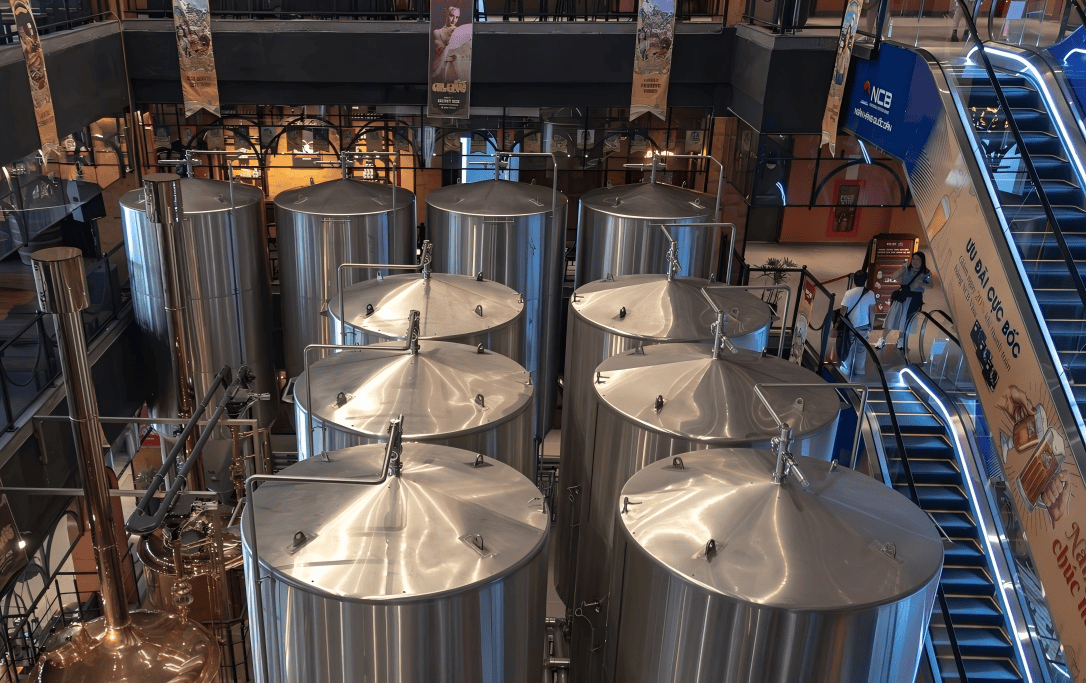
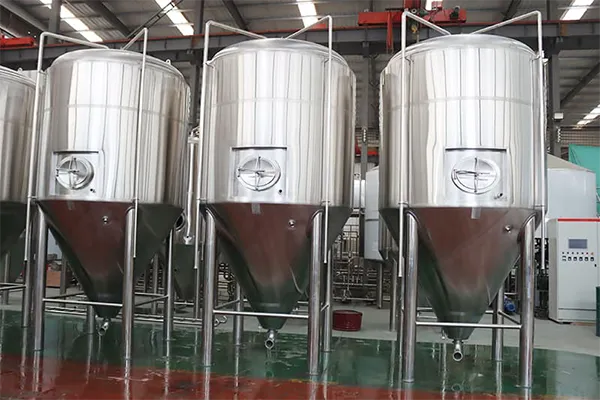
Sellers list the brewhouse and tanques de fermentación as one package, but the fermenters were purchased from a different manufacturer and use different tri-clamp fitting standards than the brewhouse. This isn’t a defect exactly, it’s just an incompatibility that costs money to fix with adapters.
Control panels get swapped out during a facility’s original installation to match local electrical code, and the panel currently attached to the equipment may not be the one it shipped with originally. Ask for the panel’s nameplate voltage and amperage directly rather than trusting “compatible with standard power.”
CIP (clean-in-place) fittings are sometimes removed before resale because the previous owner is reusing them on a replacement system. A brewhouse without CIP ports still functions, but manual cleaning on a 10 BBL kettle is a materially different labor cost than automated cleaning, and it’s not always disclosed upfront.

Pre-Shipment Verification Checklist
- Request an itemized parts listfrom the seller, matched against what’s physically in the listing photos — not a generic spec sheet for the model.
- Confirm working capacity, not shell capacity, for the mash tun, kettle, and HLT.
- Count and identify every pump, including horsepower and intended function (transfer, hot liquor, whirlpool).
- Verify heat exchanger presence and type— plate or tube-in-tube — and confirm it ships with the package rather than separately.
- Read the control panel nameplatefor voltage, phase, and amperage before assuming compatibility with your facility’s electrical service.
- Check for CIP fittings and portsif automated cleaning matters to your operation.
- Ask for current photos, not stock images from when the system was new, so you can see actual condition and confirm nothing has been removed.
- Request maintenance or service recordsif available — gaps here aren’t disqualifying, but they tell you what to inspect more closely on arrival.
Certification and Paper Trail: What to Ask For
Used brewing equipment sold through private or secondary channels typically doesn’t come with certificate numbers or a registration body attached to the individual unit — most listings reference general craftsmanship standards like ASME or CE without a specific document you can verify. That’s standard for this category, not a red flag on its own, but it does mean the certification conversation for used equipment is different from new equipment.
For comparison, new brewhouse equipment from established manufacturers is often backed by verifiable, dated certification — MICET’s pressure equipment, for instance, carries a PED Verification (certificate 3N231110.SICS093) issued by Ente Certificazione Macchine Srl, valid through November 2028. That kind of document is issued at the manufacturer and product-line level, not retroactively applied to a specific used unit changing hands between owners — so even equipment originally built by a certified manufacturer won’t carry that certificate forward automatically in a resale. If certification matters for your jurisdiction’s insurance or permitting requirements, ask the seller directly whether any documentation transfers with the sale, and don’t assume it does.
Pricing: What to Expect
Used 2-10 BBL system pricing isn’t publicly listed by most sellers, MICET included — it varies too much by condition, age, and what’s actually in the package to quote a standing range. Expect a quote-only process rather than a fixed price sheet, and treat any listing with a suspiciously round, unexplained price as a reason to ask more questions about condition rather than less.
New vs. Used: Weighing the Trade-off
| Factor | New 2-10 BBL System | Used 2-10 BBL System |
| Price | Fixed range, itemized quote | Varies, quote-only |
| Component completeness | Guaranteed by manufacturer spec sheet | Must be verified per listing |
| Certificación | Traceable to manufacturer’s current documents | Rarely transfers with individual units |
| Plazo de entrega | Manufacturing + shipping | Often shorter — equipment exists now |
| Condition risk | None (new build) | Requires inspection |
Compared to buying a new compact system outright, a used package can cut lead time significantly since the equipment already exists rather than waiting on a manufacturing queue. The trade-off is that verification work — the checklist above — replaces the certainty a new-equipment spec sheet provides.
Preguntas frecuentes
Q: Can I buy just the fermentation tanks separately from a used brewhouse package?
A: Yes, fermentation tanks and brewhouse equipment are typically sold as separate line items even within one used-equipment package, so mixing a used brewhouse with new or differently-sourced fermenters is common. Just confirm tri-clamp fitting compatibility between the two.
Q: Does a used system typically include installation support?
A: This varies by seller. Installation, remote support, and after-sales service are standard with new equipment purchases from established manufacturers, but used equipment sold secondhand usually doesn’t include installation — factor that cost in separately if you’re not doing it in-house.
Q: What’s the biggest cost buyers underestimate when buying used?
A: Electrical compatibility. A control panel built for a different regional voltage standard can require a transformer or full panel replacement, and that cost isn’t always visible in the listing price.
Q: Is a used 2-10 BBL system a realistic starting point for a first commercial brewery?
A: It can be, provided the package is verified complete using the checklist above. The capacity range fits early-stage commercial output, but a system missing a heat exchanger or CIP fittings effectively isn’t a 2-10 BBL “complete” system — it’s a partial one priced like a complete one.