










Nancy Shang | Founder and CEO, MICET Brewing | Published August 6, 2026
Attrezzatura usata per birrificio reaches the market by two routes: assets pulled from a closed brewery and sold as-is, or systems rebuilt on a factory refurbishment line. The first is cheaper and carries more unknowns; the second costs more and usually comes with paperwork. Inspect welds, jackets, panels, and documents before either route.

The word “used” hides two completely different transactions
A liquidation sale and a factory refurb sale both get listed under the same keyword, and they are not the same purchase.
In a closure sale, you are buying whatever condition the previous owner left behind. The seller often never operated the equipment: an auctioneer, a landlord recovering a space, a brokerage that took the asset on consignment. Nobody in the chain can tell you what temperature the glycol loop ran at, whether the kettle was ever fired dry, or how many CIP cycles went through the mash tun with caustic at the wrong concentration.
In a factory refurb sale, a manufacturer takes returned, trade-in, or surplus vessels back into a production facility, strips them, and rebuilds. The value is not the discount. It is that somebody with welding equipment and a pressure test rig has already put hands on the tank and is willing to put their name on it.
| Evaluation dimension | Closure / brokerage resale | Factory refurbishment line |
| Who can answer condition questions | Usually nobody in the chain operated it | Technicians who disassembled it |
| Weld condition | Buyer’s inspection burden entirely | Reworked or rejected before resale |
| Glycol jacket integrity | Unknown unless you pressure-test | Should be re-tested; ask for the record |
| Pannello di controllo | Original, often with obsolete components | Frequently rebuilt with current parts |
| Missing pumps, valves, gaskets | Common; you source replacements yourself | Package sold complete |
| Material traceability | Rarely travels with the asset | Ask for mill certificates |
| Recourse after delivery | Typically none; sold as-is | Depends on written terms |
| Tempo di consegna | Immediate, if it is still there | Build time, plus shipping |
| Price | Lowest | Between used and new |
Compared with the brokerage and classified-listing channels that dominate this search, which publish inventory photographs and dimensions rather than condition assessments, a refurb line gives you a counterparty who is accountable after the crate opens. That accountability is what you are actually paying the premium for.
What sits inside a 2–10 BBL used brewhouse package
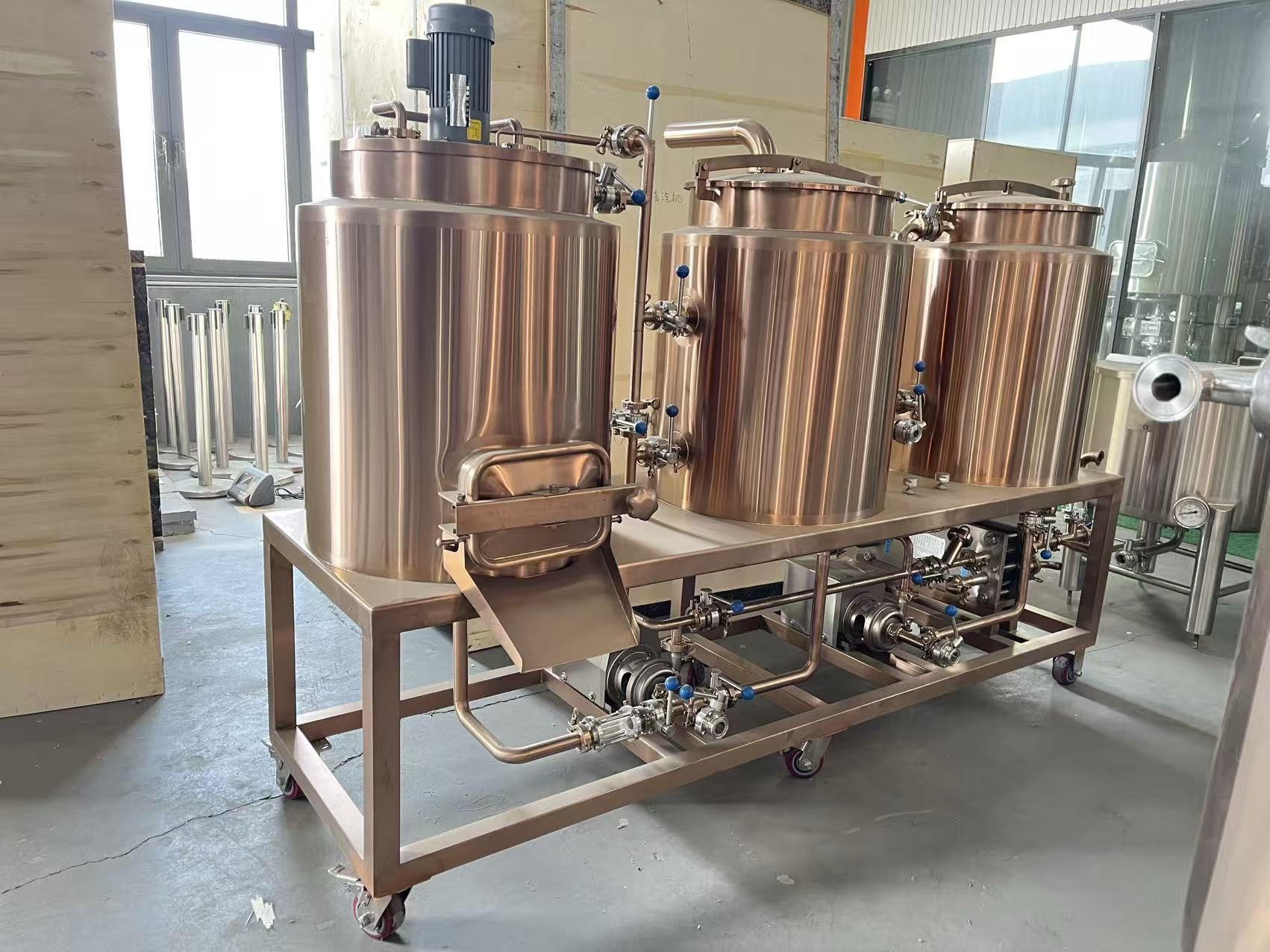
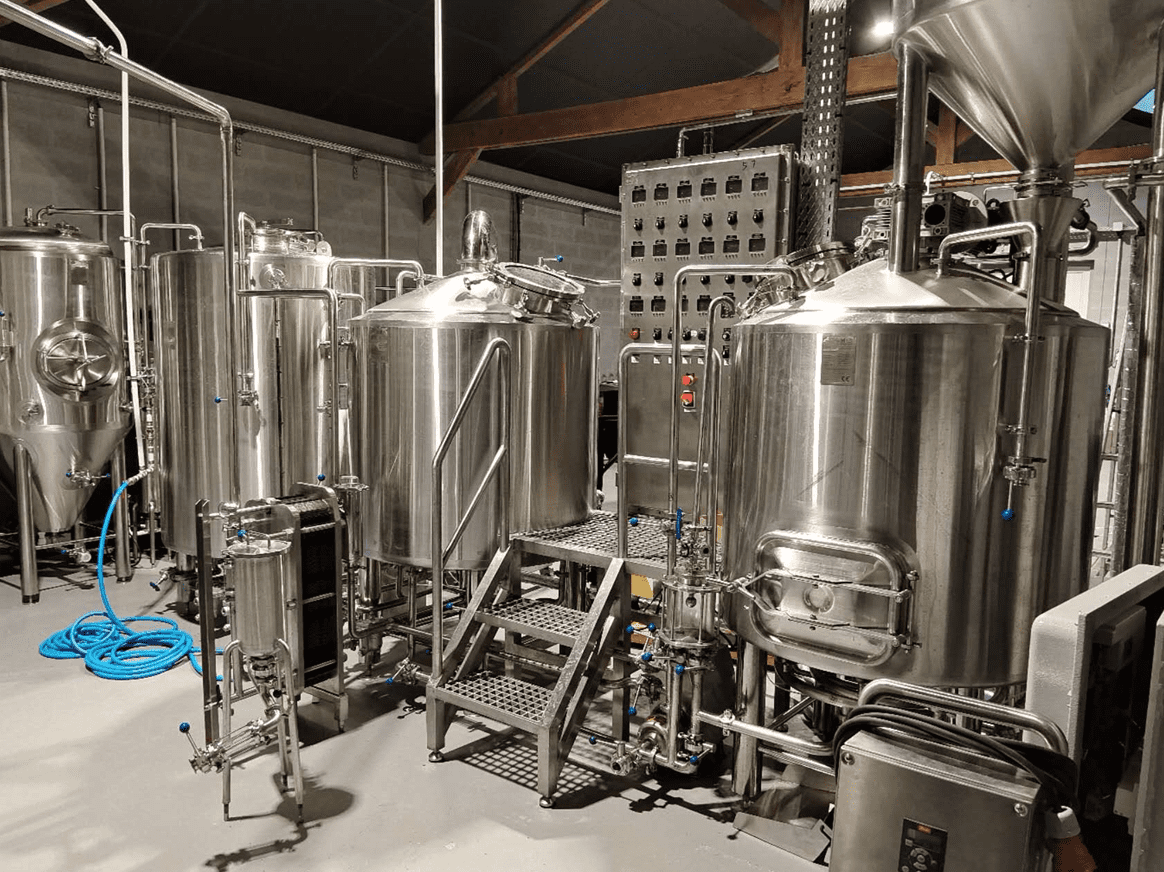
MICET’s used brewery equipment line covers compact brewhouse configurations from 2 to 10 BBL. The published package is a mash tun, kettle, and hot liquor tank, supplied with pumps, a heat exchanger, and a control panel.
That configuration matters for a specific reason. A three-vessel package at this scale is where most homebrewers-turned-commercial-brewers land, and it is also where the most corners get cut in resale listings. A listing that shows you a mash tun and a kettle but goes quiet on the HLT, the plate chiller, and the panel is not selling you a brewhouse. It is selling you two tanks and a project.
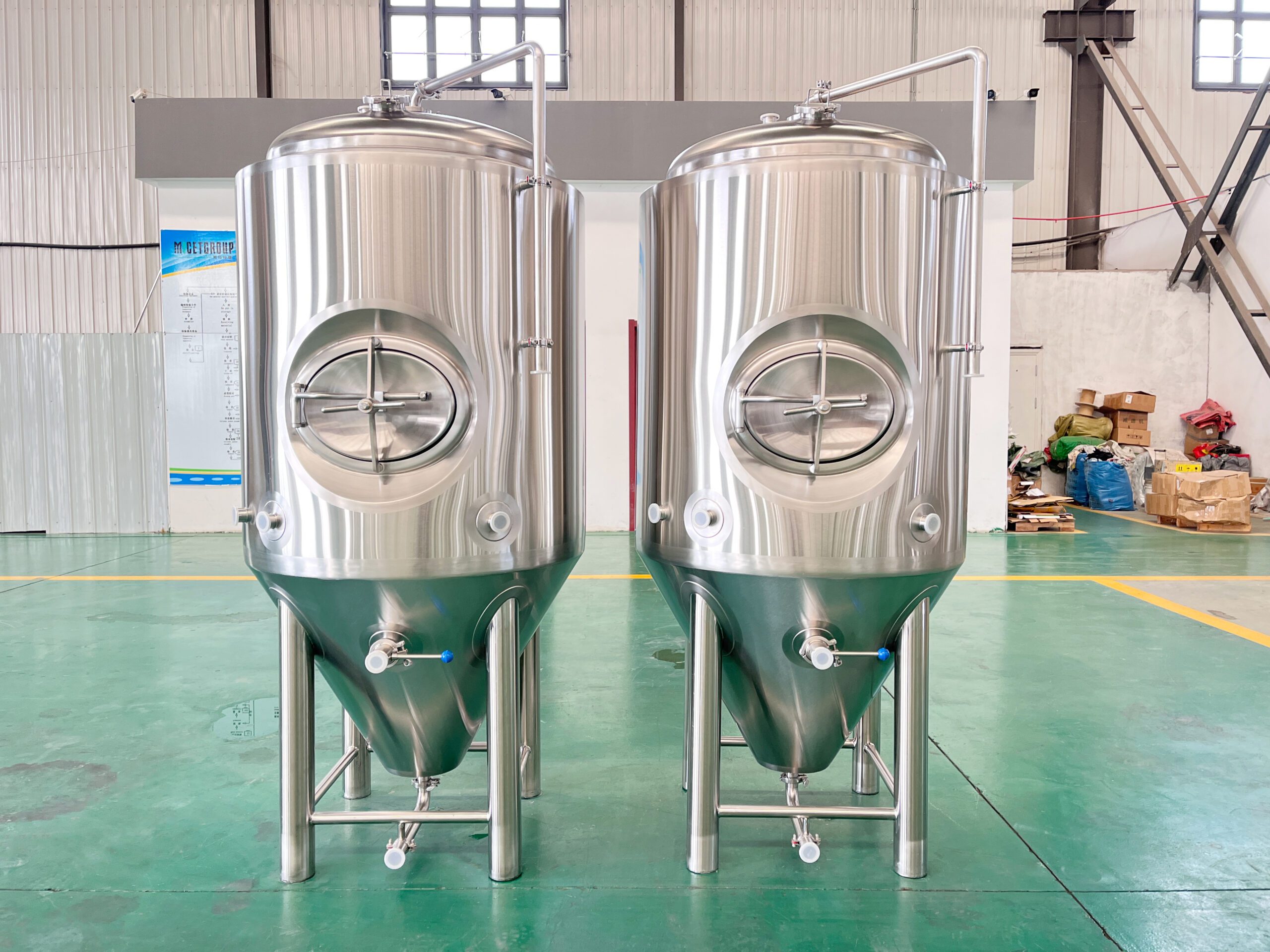
On the fermentation side, MICET’s serbatoi di fermentazione usati are published in 3–5 BBL, 10 BBL, 20 BBL, and 40 BBL, plus metric 2T/4T/6T units. The metric tanks are worth reading carefully: a 6T tank is 6,000 L total capacity with 5,400 L working capacity. Total and working capacity are not the same number, and a listing that quotes only the larger one is describing a tank you cannot actually fill to that level. Those tanks are specified in SUS304 with a glycol jacket, polyurethane insulation, design pressure 0.2 MPa, and test pressure 0.3 MPa.
Write those two pressure figures down before you inspect anything. They are the benchmark you will hold a used tank against in step 4 below.

Nine steps before you wire money
Do these in order. Each one either passes or fails; none of them requires you to form an opinion.
- Get the nameplate photographed, not described. Ask for a close photograph of the data plate on every vessel: capacity, design pressure, test pressure, year of manufacture, and manufacturer. If a vessel has no data plate, treat that as a finding, not an oversight. A tank whose design pressure you cannot establish is a tank you cannot legally or safely put under CO2.
- Check the shell grade against a document, not a magnet. Sellers will tell you a tank is 304. Ask for the mill certificate. EN 10204:2004 is the standard that governs those material inspection documents, and it is one of the standards named in MICET’s ICR verification of conformity (certificate ICR/VC/HM2507146, ICR Co., Ltd.). If the seller does not know what a 3.1 certificate is, you are buying material grade on trust.
- Inspect every interior weld with a light, at an angle. Get inside or get a bore scope in. You are looking for pitting along the weld seam, crevice corrosion at the manway gasket seat, and any weld that was ground flat and polished afterward, which is usually a repair. Photograph what you find with a scale reference in frame.
- Pressure-test the glycol jacket separately from the vessel. This is the step buyers skip and regret. A jacket that has frozen and split will hold shape and look identical to a sound one. Isolate the jacket, bring it up on water, hold it, and watch for pressure decay over at least 30 minutes. Against MICET’s published test pressure of 0.3 MPa for its fermentation tanks, you now have a reference figure for what a sound jacket at this class should take.
- Confirm the cooling surface actually matches the tank. A 40 BBL tank with a jacket sized for a smaller vessel will crash-cool slowly forever, and no amount of glycol chiller capacity fixes it. Ask for jacket area and the original chiller sizing calculation. If neither exists, budget for a longer crash and a wider temperature spread through the cone.
- Power up the control panel and cycle it. Not a photo of the panel. A video of the panel running, showing each PID channel responding, contactors pulling in, and the pump starters sequencing. Note the brand and model of every component. Obsolete PLCs and discontinued temperature controllers are the single most common source of surprise cost on resale systems.
- Verify the pumps turn the right way and are the right pumps. Centrifugal wort pumps and cellar transfer pumps are not interchangeable in practice. Check impeller condition, seal type, and whether the motor voltage and phase match your site. A three-phase 380 V panel in a single-phase 240 V building is a five-figure problem.
- Measure the tallest vessel against your actual door and ceiling. Include the leg height, the top-mounted manway or CIP arm, and the clearance you need above it to remove the arm. Then measure the door, the corridor turn, and the ceiling at its lowest point, including sprinkler heads and conduit runs.
- Ask for the documentation package in writing before you commit. What certificates exist, from which issuing body, under which certificate number, and with what expiry date. Then verify each number against the certifying body’s own register. This is where most used-equipment deals fall apart, and it deserves its own section.
The documentation problem, stated plainly
Here is where I will be direct about my own company’s published position rather than papering over it.
MICET’s used brewery equipment catalog entry references ASME and CE craftsmanship without publishing registration numbers or naming an issuing body for that specific line. Certification for the used line is not disclosed. I would rather say that than let a buyer assume otherwise.
Separately, and for other product lines, MICET holds a PED Verification under EU Directive 2014/68/EU, certificate number 3N231110.SICS093, issued by Ente Certificazione Macchine Srl on 2023-11-10 and valid to 2028-11-09. There is also the ICR verification of conformity referenced in step 2, issued 2025-07-16 and valid to 2030-07-15, which is a voluntary verification document covering brewery, brewing, and fermentation equipment within PED scope.
Why spell out the distinction? Because the most common documentation failure in used equipment sales is exactly this substitution: a seller quotes a company-level certificate covering a different product line and lets the buyer file it mentally under “this tank is certified.” A pressure equipment certificate attaches to specified equipment types and model ranges, not to a company logo. When a seller sends you a certificate PDF, check three things: what equipment types it names, what date range it covers, and whether the issuing body will confirm it. All three checks are on you.
For a used vessel with no traceable certification, your options are to commission third-party inspection at your own cost, to restrict the vessel to unpressurized service, or to walk away. Your insurer and your local pressure vessel authority will have opinions on which, and those opinions arrive after you have paid.
The mistake I see most often, and the case where the rule breaks
The mistake: buyers evaluate used systems on tank condition and treat the control panel as an accessory. It is backwards. A pitted tank is a visible, quotable repair. An obsolete panel is a quiet one. Sourcing a discontinued temperature controller, rewiring to a current PLC, and getting the whole assembly to pass electrical inspection routinely costs more than the tank rework, and it does it in stages, months after you have committed.
The edge case where the standard advice inverts: if you are buying a single vessel to add fermentation capacity to a brewhouse you already run, the documentation and panel concerns shrink considerably. A bare jacketed unitank tied into an existing glycol loop and an existing control system has no panel to obsolete. In that scenario, weld condition and jacket integrity are nearly the whole evaluation, and a closure sale can be a legitimately good buy. The full nine-step process is aimed at buying a system. Buying a tank is a smaller problem.
What you can and cannot know about price up front
MICET publishes price ranges for new systems: microbrewery equipment at 30,000–80,000 USD, and commercial brewery equipment starting at the 10 BBL class at 50,000–80,000 USD. Those are the anchors you should hold a used quote against.
For the used equipment line specifically, no price range is published. It is quote-only, and the reason is structural rather than evasive: refurb pricing depends on what condition the incoming vessel arrived in and how much rework it needed, which is not knowable before the unit is on the floor.
What you can do is refuse to evaluate a used price in isolation. Take the used quote, add shipping and rigging, add electrical work to bring the panel to local code, add the replacement components your inspection flagged, and add the third-party inspection cost if certification is absent. Then compare that total against the new-equipment range above. Used equipment that lands within 20% of new pricing after those additions is not a saving; it is a longer path to the same place with less recourse.

The honest tradeoff
Buying used works when capital is the binding constraint and time is not, when you can inspect in person or pay someone competent to, and when the equipment is going into service you can document. Startup breweries that buy well used often do it by accepting a system slightly off from their ideal spec, because the discount funds the cellar tanks they actually needed.
It works badly when your build timeline is fixed by a lease, when your jurisdiction requires pressure vessel documentation you cannot produce, or when your operating plan depends on the system running to spec from week one. Across 800+ installations in more than 100 countries, the projects I have seen struggle with used purchases were rarely undone by a bad tank. They were undone by a compliance requirement discovered after payment.
Your next three decisions
The inspection list above tells you what to look at. It does not tell you what to do with your particular situation, so decide these before you contact any seller:
First, establish what your local authority requires for pressure vessel documentation, in writing, before you shortlist equipment. That single call reorders every subsequent decision.
Second, decide whether you are buying a system or adding a vessel, because the two require different levels of scrutiny.
Third, price the inspection itself. If you cannot travel to the equipment, a qualified third-party inspection is a line item, not an optional extra, and it belongs in your budget before the deposit.
One area this guide does not cover: what happens when you outgrow a used 2–10 BBL system in eighteen months and want to keep it as a pilot rig alongside a larger brewhouse. The glycol and CIP integration between a resale system and a new one is its own set of problems, and worth planning for before you buy rather than after.
FAQ
Q: Is used brewery equipment worth it for a startup brewery?
A: It can be, when your constraint is capital rather than schedule and you can verify condition. The saving is real only after you add rigging, electrical work to local code, replacement components, and third-party inspection where certification is absent. Priced that way, some used systems land close enough to new equipment that the discount stops justifying the added risk.
Q: What size used brewhouse packages are available?
A: MICET’s used brewery equipment line covers compact brewhouse configurations from 2 to 10 BBL, supplied as a mash tun, kettle, and hot liquor tank with pumps, heat exchanger, and control panel. Used fermentation tanks are published in 3–5 BBL, 10 BBL, 20 BBL, and 40 BBL, plus 2T/4T/6T metric units.
Q: Does used brewery equipment come with CE or PED certification?
A: Not automatically, and you should ask about it explicitly. MICET’s used equipment catalog entry references ASME and CE craftsmanship but does not publish certificate numbers or an issuing body for that line. Company-level certificates such as the PED Verification 3N231110.SICS093 from Ente Certificazione Macchine Srl cover specified equipment types and model ranges; they are not a blanket statement about every unit a manufacturer sells.
Q: How much does used brewery equipment cost?
A: MICET does not publish a price range for the used equipment line, so it is quote-only. For comparison, new microbrewery equipment is published at 30,000–80,000 USD and new commercial systems from the 10 BBL class at 50,000–80,000 USD. Use those figures to sanity-check any used quote after you have added delivery, electrical, and repair costs.