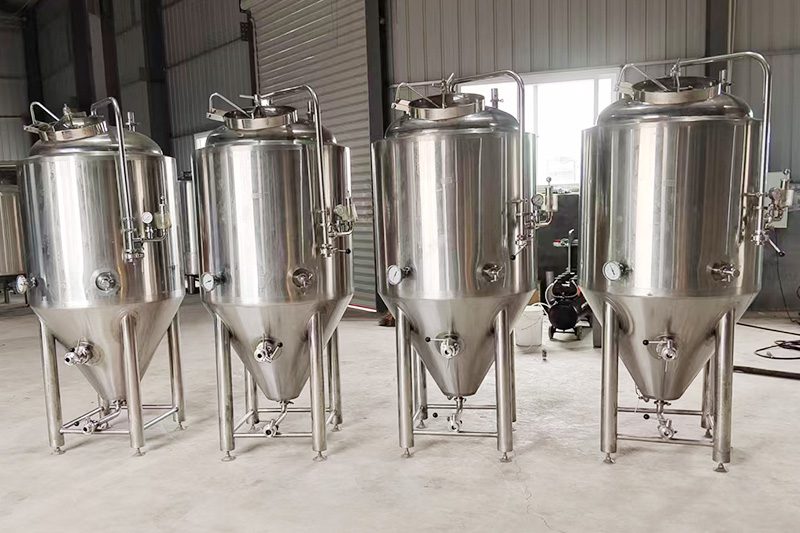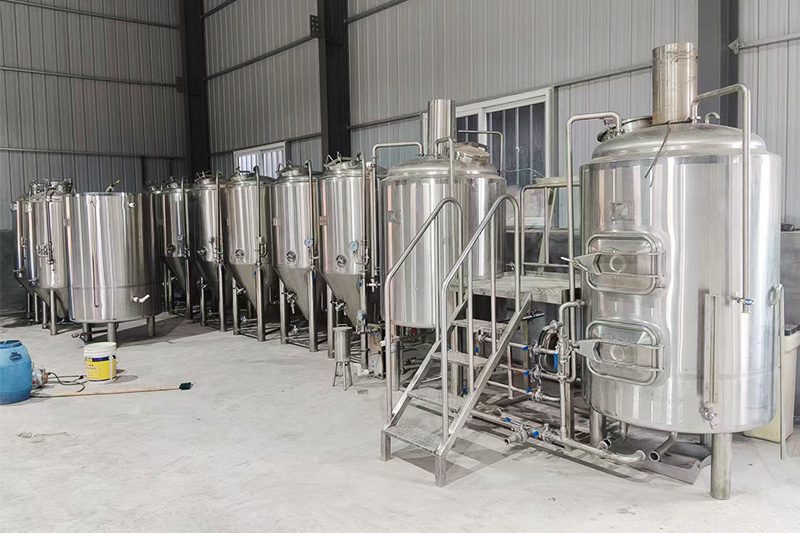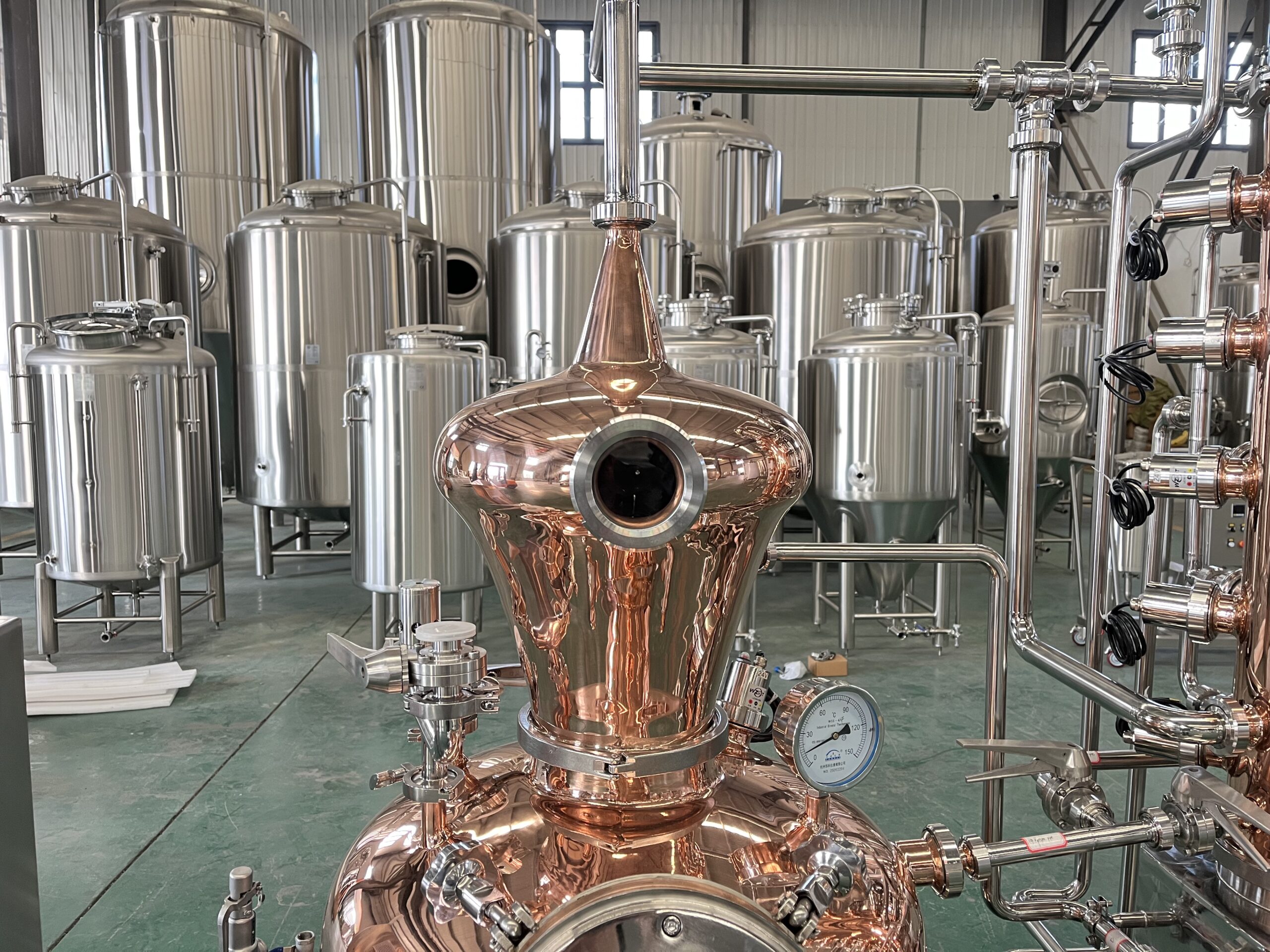


Adding fermentation capacity is a common challenge for growing breweries. However, buying another tank does not always solve the problem. If its cooling system, pipe connections, or working volume do not match your existing equipment, installation can become expensive and production may suffer.
Integrating a used stainless steel fermentation tank into an existing brewery requires more than checking its price and capacity. Buyers should match the tank’s working volume, cooling jacket, glycol connections, CIP system, sanitary fittings, control sensors, and physical dimensions with the current cellar. A hybrid new-and-used solution can help expand production while controlling investment.
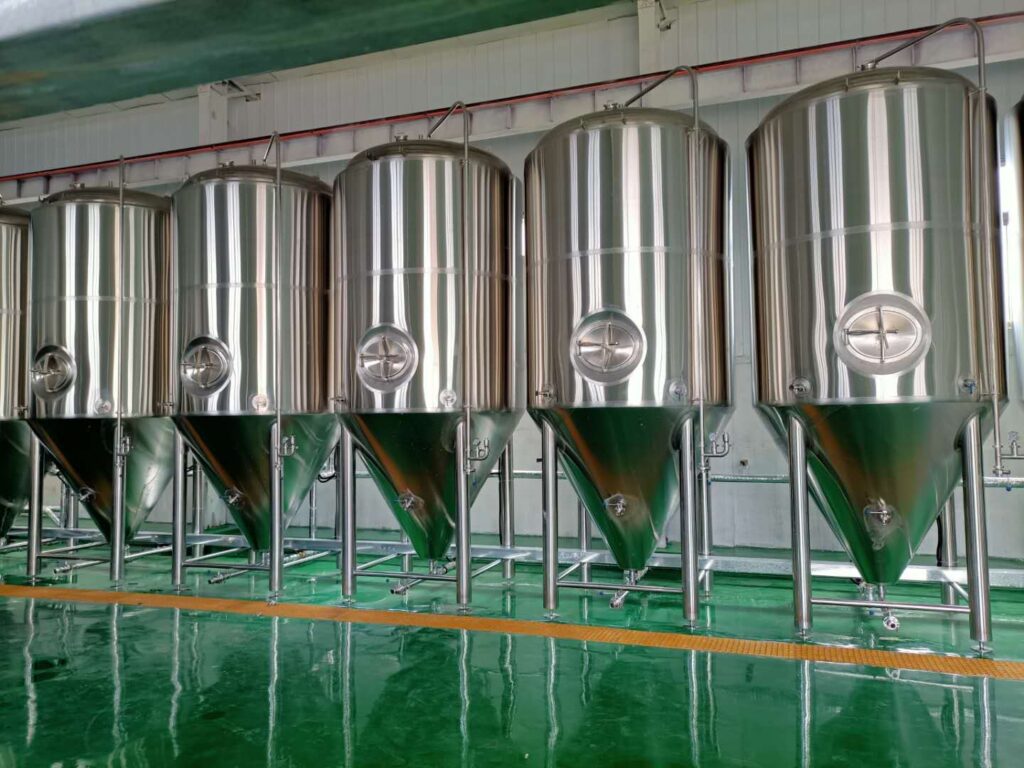
Artikel Gliederung
- Why Do Breweries Add Gebrauchte Gärtanks?
- How Do You Match Tank Capacity with Existing Brewing Equipment?
- Can a Used Tank Work with Your Existing Glycol Cooling System?
- How Do Tank Jackets and Insulation Affect Temperature Control?
- How Can You Connect a Used Fermenter to an Existing CIP System?
- Do Tank Connections, Valves, and Pipework Need Modification?
- How Do You Plan Cellar Space and Tank Installation?
- Should You Upgrade Controls and Accessories When Adding Used Tanks?
- Is a Hybrid New and Used Fermentation System a Better Investment?
- Häufig gestellte Fragen
1. Why Do Breweries Add Used Fermentation Tanks?
A brewery may have enough brewhouse capacity but still struggle to meet customer demand. The problem is often limited fermentation space rather than insufficient brewing output.
For example, a brewery operating a 2,000L brewhouse may produce enough wort each week, but its existing fermenters may remain occupied for several days during fermentation, maturation, and cleaning. Adding another tank can create room for overlapping batches and improve production scheduling.
Common reasons for adding used fermentation equipment include:
- Increasing fermentation capacity without replacing the brewhouse
- Supporting seasonal beer production
- Adding space for new beer styles
- Increasing output for local distribution
- Replacing an older or damaged tank
- Expanding kombucha, cider, or other beverage production
A used stainless steel tank can offer a cost-effective way to increase cellar capacity. However, the tank must work with the rest of the production system.
Which Businesses Can Benefit?
| Business Type | Potential Application |
|---|---|
| Craft breweries | Additional fermentation capacity |
| Microbreweries | Production expansion |
| Brauhäuser | More frequent small-batch production |
| Commercial breweries | Additional fermentation and conditioning space |
| Kombucha producers | Fermentation and beverage processing |
| Cider producers | Additional cider fermentation capacity |
| Beverage startups | Lower-cost production expansion |
The important point is to purchase a tank that solves a real production problem, not simply one that appears attractive in an online listing.
2. How Do You Match Tank Capacity with Existing Brewing Equipment?
Tank capacity should be based on the actual output of your brewhouse and the time each batch occupies a fermenter.
A tank that is too small may require splitting one batch into multiple vessels. A tank that is too large may leave valuable cellar space unused.
Start by identifying three figures:
- Brewhouse working volume per batch.
- Fermentation and conditioning time.
- Number of batches planned each week.
For example, a brewery producing 1,000L per batch may consider a 1,000L working-volume fermenter. However, the total tank capacity must also allow sufficient headspace for fermentation.
Common Used Fermentation Tank Capacities
MICET’s published used fermentation tank range includes several sizes for different production requirements.
| Tank Capacity | Typical Application |
|---|---|
| 300L | Pilot brewing and small beverage batches |
| 500L | Nano breweries and brewpubs |
| 1,000L | Small commercial breweries |
| 2,000L | Growing craft breweries |
| 2,500L | Microbrewery production |
| 5,000L | Larger production facilities |
| 10T–20T | Higher-volume beverage production |
These are published capacity options, not a guarantee of current stock availability. Actual working volume and configuration should be confirmed for each tank.
Total Capacity vs. Working Capacity
This difference is important when buying a tank.
- Total capacity: The tank’s complete internal volume.
- Working capacity: The recommended liquid volume during normal production.
- Headspace: The remaining space needed for fermentation activity and process operation.
For example, MICET’s published 2T, 4T, and 6T configurations show:
| Modell | Total Capacity | Working Capacity |
|---|---|---|
| 2T | 2,000L | 1,800L |
| 4T | 4,000L | 3,600L |
| 6T | 6,000L | 5,400L |
The 10% difference is an important planning allowance for these specific configurations.
International buyers may receive capacity information in liters, hL, gallon, or bbl. Always convert the figures into one unit before comparing a tank with your existing brewhouse.
A 2,000L vessel, for example, represents 20 hL. Do not assume that two tanks with the same advertised capacity have identical usable volumes.
3. Can a Used Tank Work with Your Existing Glycol Cooling System?
Cooling compatibility is one of the most important engineering questions when adding a used fermenter.
Most professional brewery fermenters use a cooling jacket connected to a glycol circulation system. The glycol removes heat generated during fermentation and helps maintain the required process temperature.
However, not every tank uses the same jacket design.
Differences may include:
- Jacket surface area
- Number of cooling zones
- Jacket position
- Inlet and outlet diameter
- Required glycol flow
- Operating temperature
- Pressure requirements
A tank with a larger cooling surface may require a different flow arrangement from an older vessel with a smaller jacket.
What Happens When the Cooling System Is Undersized?
If the existing chiller cannot handle the additional thermal load, the brewery may experience slow cooling, unstable fermentation temperatures, or poor cold-crashing performance.
This can affect production schedules and beer consistency.
Before connecting a new tank, calculate the combined cooling demand of all vessels that may operate at the same time.
The engineering review should consider:
- Existing chiller refrigeration capacity.
- Total volume of active fermentation.
- Expected fermentation heat load.
- Required cooling temperature.
- Glycol pump flow and pressure.
- Pipe length and pressure losses.
- Number of simultaneously operating cooling zones.
Our engineering team can evaluate whether the existing chiller is suitable or whether additional cooling equipment is required.
For related cooling and utility equipment, see MICET Auxiliary Brewing Equipment.
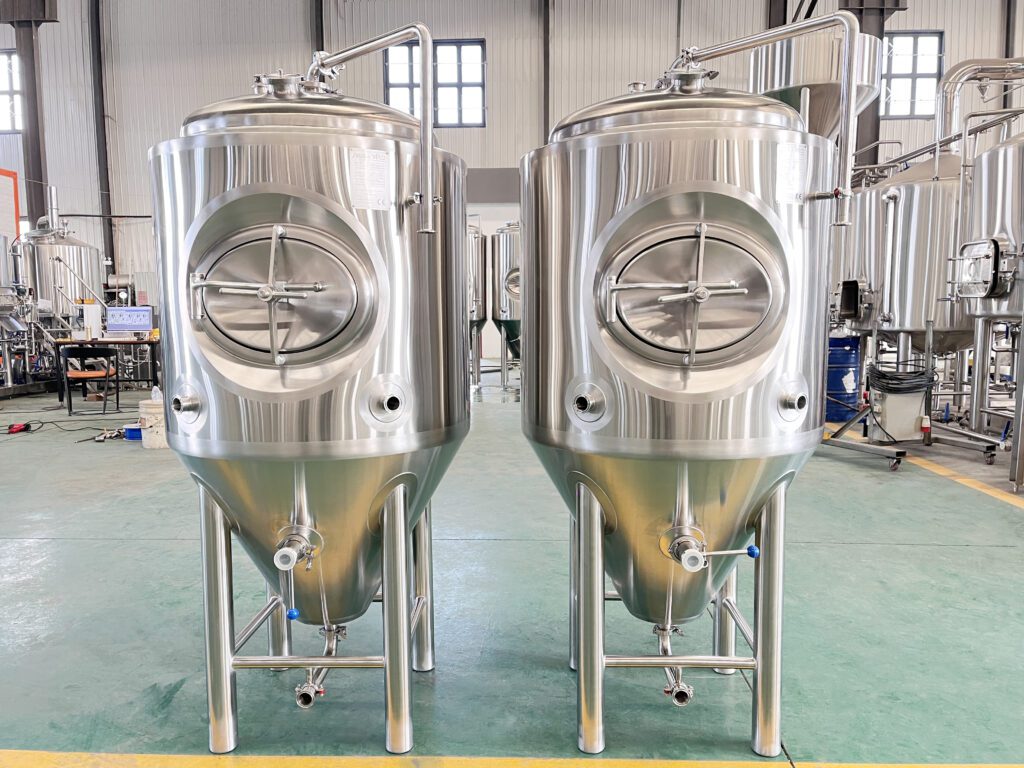
4. How Do Tank Jackets and Insulation Affect Temperature Control?
A cooling jacket is not simply an external feature. Its design influences how effectively a tank can control fermentation temperature.
Some tanks use dimple jackets around the cylindrical body. Others have cooling sections covering both the cylinder and cone.
The correct design depends on tank geometry, working volume, process temperature, and cooling requirements.
Compare Different Jacket Arrangements
| Design Feature | Main Function | Integration Consideration |
|---|---|---|
| Cylinder jacket | Removes heat from the main tank body | Check cooling area |
| Cone jacket | Helps control temperature near the yeast collection area | Check separate connections |
| Multi-zone jacket | Allows different cooling sections to operate independently | Requires suitable controls |
| Full insulation | Reduces external heat exchange | Check insulation thickness and condition |
Insulation is also important.
Polyurethane insulation is commonly used in professional brewery tanks. It helps reduce heat transfer between the liquid and surrounding environment, supporting more stable thermal regulation.
The external stainless steel or clad outer shell protects the insulation and gives the tank a finished appearance.
Can You Mix Different Tank Designs?
Yes, but the cooling arrangement must be engineered.
For example, an existing cellar may contain four tanks with single-zone jackets. Adding a used tank with two independent cooling zones may require a different manifold and control arrangement.
The objective is to ensure that each tank receives sufficient cooling without affecting the operation of other vessels.
Do not connect additional jacketed tanks simply because the pipe diameter looks compatible. Hydraulic flow, cooling load, and control logic must also be considered.
5. How Can You Connect a Used Fermenter to an Existing CIP System?
Cleaning is essential for breweries and beverage manufacturers.
A used fermentation tank must connect properly to the existing Clean-in-Place (CIP) system. Otherwise, cleaning may become difficult, inconsistent, or dependent on manual work.
Most professional fermenters use spray balls or rotary spray devices to distribute cleaning solutions across the internal surfaces.
When integrating another tank, review the following:
- CIP inlet position
- Spray ball type and coverage
- CIP return connection
- Required cleaning flow
- Pump capacity
- Pipe diameter
- Drainage arrangement
- Cleaning chemical compatibility
Why Is CIP Compatibility Important?
A spray ball needs sufficient flow and pressure to clean the tank effectively.
If the new vessel has a different internal diameter or height, the existing cleaning setup may not provide suitable coverage.
The CIP pump must also handle the additional flow demand if multiple tanks are cleaned at the same time.
For larger production facilities, a fixed CIP station may be more suitable. Smaller breweries may prefer a portable CIP cart, depending on the cleaning schedule.
Our approach is to review the tank’s internal cleaning design and match it with the existing CIP equipment.
Where necessary, we can add new spray devices, return connections, valves, or dedicated cleaning lines.
6. Do Tank Connections, Valves, and Pipework Need Modification?
A tank may have the correct capacity and cooling system but still be difficult to install because its connections do not match the existing brewery.
Different manufacturers may use different fitting standards, connection sizes, and outlet positions.
Common connection types include:
- Tri-clamp
- DIN
- SMS
- Threaded connections
- Sanitary flange connections
Before purchasing a tank, prepare a connection schedule.
| Connection | What to Confirm |
|---|---|
| Product inlet | Diameter and position |
| Beer outlet | Size, direction, and height |
| CIP inlet | Spray device and connection type |
| CIP return | Diameter and drainage route |
| Glycol inlet | Connection size and location |
| Glycol outlet | Flow direction and connection |
| Sample valve | Sanitary connection |
| Temperature port | Sensor type and position |
| Pressure outlet | Design requirements and safety devices |
When Should a Tank Be Modified?
Some modifications are relatively simple, such as replacing a valve or changing a sanitary connector.
Other changes require more engineering work.
For example, adding a new outlet to an insulated vessel may involve cutting through the outer shell, insulation, and internal structure. The modification must preserve the tank’s structural integrity and hygienic design.
The same principle applies to pressure equipment. A modification must not compromise the original pressure design or safety protection.
A process vessel should also not be confused with a general storage tank or mixing tanks. A fermenter requires suitable sanitary surfaces, process connections, and operating conditions.
Do not assume that an aluminum tank or an atmospheric storage vessel can replace a pressure-rated stainless steel fermenter.
7. How Do You Plan Cellar Space and Tank Installation?
Physical compatibility is just as important as process compatibility.
A tank can have the right volume and technical specifications but still fail to fit through the building entrance or operate efficiently in the available space.
Before confirming a purchase, prepare a cellar layout.
Key Dimensions to Review
Tank diameter: Check the available floor area and the distance between neighboring tanks.
Overall height: Include tank legs, top fittings, manways, and CIP equipment.
Service clearance: Operators need access to valves, sensors, manways, and maintenance points.
Outlet position: The beer outlet and cone discharge should align with the intended pipework and drainage system.
Transportation access: Check doors, loading areas, lifting equipment, and the route from the unloading point to the installation position.
A vertical tank may save floor space but require more ceiling clearance. A tank with a side manway may also need additional access space.
What About Floor Loading?
Large stainless steel vessels become very heavy when filled.
The installation team should calculate the combined weight of the tank, liquid, legs, and supporting structure.
Floor loading, drainage, foundation conditions, and equipment access must be reviewed before installation.
This is particularly important when installing a larger 2,000L–6,000L tank or expanding an existing cellar with several vessels.
A suitable layout should allow operators to move safely between tanks while maintaining efficient product transfer and cleaning routes.
8. Should You Upgrade Controls and Accessories When Adding Used Tanks?
A used tank does not always need a complete control system replacement.
However, older temperature sensors, valves, and control devices may not work with your current PLC or monitoring system.
A practical solution is to reuse the main tank body while upgrading selected components.
Recommended Upgrade Options
| Komponente | Possible Upgrade |
|---|---|
| Temperature sensor | PT100 sensor and compatible transmitter |
| Temperature controller | PID or PLC integration |
| Pressure protection | Suitable PRV and pressure gauge |
| Sampling | Sanitäres Probenahmeventil |
| Product transfer | New sanitary outlet valve |
| CIP | Spray ball and return connection |
| Monitoring | Temperature display and alarms |
| Automatisierung | PLC communication and control integration |
An agitator may be required for certain beverage processing applications, but it should not be added to a conventional beer fermenter without reviewing the product and process requirements.
For kombucha, cider, and other liquid products, tank configuration may differ from a standard beer fermentor.
A filter, mixing system, or additional process connection may also be needed in a wider beverage production line.
The goal is to keep the existing process stable while improving the new equipment where necessary.
9. Is a Hybrid New and Used Fermentation System a Better Investment?
Many breweries assume they must choose between an entirely new system and completely used equipment.
In practice, a hybrid solution can provide a better balance.
The main stainless steel tank may be reused, while important supporting equipment is upgraded with new components.
Example of a Hybrid Brewery Cellar
| Ausrüstung | Recommended Approach |
|---|---|
| Main fermentation tank | Used and refurbished |
| Tank shell and cone | Reuse after engineering evaluation |
| Glycol chiller | New or existing after capacity review |
| Glycol manifolds | New where required |
| CIP station | Existing or upgraded |
| Valves and gaskets | Replace where necessary |
| PLC controls | New or integrated |
| Temperature sensors | New where required |
| Sanitary pipework | Adapted to the new layout |
This approach can reduce investment in large vessels while keeping critical control and cleaning functions up to date.
How MICET Supports Hybrid Projects
MICET is a professional brewery and beverage equipment manufacturer providing customized stainless steel brewing systems, fermentation tanks, brewhouse systems, and turnkey brewery solutions for global B2B customers.
Our used equipment program covers more than simply sourcing second-hand tanks.
We review the customer’s existing equipment, production requirements, utilities, and installation space before recommending a configuration.
Our support can include:
- Used and refurbished fermentation tanks
- New stainless steel process equipment
- Glycol chillers and cooling systems
- CIP stations and cleaning equipment
- Pumps and sanitary pipework
- Valve and accessory upgrades
- PLC and temperature control integration
- Cellar layout planning
- Installation guidance and commissioning support
We also provide customized solutions for craft breweries, brewpubs, microbreweries, kombucha producers, cideries, wineries, and other beverage manufacturers.
You can learn more about our Used Fermentation Tank Solutions und Used Equipment Program.

A Practical Project Planning Example
Imagine a brewery with an existing 2,000L brewhouse that needs additional fermentation capacity.
Instead of replacing the entire brewery, the project team could:
- Review the existing fermentation schedule.
- Calculate the additional working volume required.
- Select a suitable used fermenter.
- Evaluate the existing glycol cooling capacity.
- Check CIP flow and return connections.
- Modify sanitary pipework where necessary.
- Integrate temperature sensors and controls.
- Complete commissioning before production.
The final configuration depends on the actual facility. This is why we recommend engineering the complete connection plan before shipping the tank.
If you are looking for used stainless steel fermentation tanks for sale, our team can help compare available capacities and determine whether an individual tank or a hybrid cellar package better fits your project.
10. Frequently Asked Questions
Can I connect a used fermentation tank to a new glycol chiller?
Yes. A used tank can work with a new glycol chiller if the cooling jacket, flow requirements, operating temperature, and control arrangement are compatible. The cooling system should be sized for the combined load of all connected tanks.
Can I use different sizes of fermentation tanks in one brewery?
Yes. Many breweries use a combination of tank capacities to support different batch sizes and beer styles. The cooling system, CIP setup, transfer pumps, and production schedule must be designed to accommodate the different vessels.
What stainless steel is suitable for used fermentation tanks?
SUS304 is widely used for brewery fermentation equipment, while SS316 may be selected for applications requiring different corrosion resistance characteristics. Confirm the actual material grade of each vessel rather than assuming all used tanks have the same specification.
Can a used fermenter be modified to fit an existing brewery?
Yes. Depending on its design, a tank may be modified with new valves, nozzles, outlets, CIP connections, sensors, or support structures. Structural and pressure-related changes require appropriate engineering evaluation.
Is it better to buy used tanks or new fermentation equipment?
Used tanks can reduce initial investment, especially when expanding an existing brewery. New equipment may be preferable when a project requires specific dimensions, advanced automation, or a completely customized configuration. A hybrid solution can combine both approaches.
What information should I provide when requesting a used fermentation tank quotation?
Provide your required working capacity, brewhouse size, existing glycol system, CIP configuration, tank installation dimensions, beverage type, operating pressure, and destination country. Photos or a drawing of your existing cellar can also help engineers evaluate compatibility.
Wichtigste Erkenntnisse
- Adding a used fermenter can increase brewery output without replacing the complete production line.
- Tank working capacity should match the existing brewhouse and fermentation schedule.
- Glycol cooling capacity must be reviewed before adding jacketed tanks.
- Different jacket zones may require changes to cooling manifolds and controls.
- CIP flow, spray coverage, and return connections must match the new vessel.
- Pipework, valves, sanitary fittings, and outlet positions may require modification.
- Cellar dimensions, floor loading, drainage, and installation access should be confirmed.
- New sensors, valves, and PLC controls can improve compatibility with older equipment.
- A hybrid new-and-used solution can balance investment, hygiene, and process reliability.
- An experienced brewery equipment manufacturer can help coordinate tank selection, engineering, installation, and future expansion.
The best used fermentation tank is not simply the one with the lowest purchase price. It is the one that fits your production schedule, connects smoothly to your existing equipment, and supports reliable operation over the long term.