










Poor temperature control, weak sanitation, or uncontrolled bottle fermentation can turn a promising kombucha recipe into an inconsistent and risky product. A clear process, healthy culture, suitable equipment, and routine testing help producers achieve stable flavor, acidity, carbonation, and commercial quality.
Kombucha brewing is the fermentation of sweetened tea with a symbiotic culture of bacteria and yeast, commonly called a SCOBY. The yeast converts sugar into alcohol and carbon dioxide, while bacteria turn part of that alcohol into organic acids. This process creates a tart, lightly sparkling fermented beverage that can be flavored, chilled, packaged, and sold.
This guide explains how kombucha is made, what happens during fermentation, how home production differs from commercial manufacturing, and which equipment supports safe and repeatable results. It is written for beverage startups, kombucha brewers, co-packers, distributors, investors, and established producers planning a larger facility.
Zusammenfassung
- Kombucha starts with brewed tea, sugar, starter liquid, and a living culture of bacteria and yeast.
- The visible SCOBY is only one part of the culture; previously fermented kombucha also carries active microorganisms and helps acidify a new batch.
- The first fermentation develops acidity and the main flavor profile, while the second fermentation is often used for flavoring and carbonation.
- Temperature, time, pH, sugar, oxygen exposure, and culture health all influence product consistency.
- Commercial producers need hygienic tanks, validated cleaning procedures, temperature control, testing, traceable recipes, and suitable packaging equipment.
- In the United States, kombucha that reaches 0.5% alcohol by volume or more at any time may fall under TTB alcohol regulations, including continued fermentation after packaging.
Artikel Gliederung
- What is kombucha, and why is it brewed from tea?
- What are a SCOBY and kombucha starter?
- How does kombucha fermentation work?
- How do you make kombucha during the first fermentation?
- What happens during secondary fermentation?
- How do tea, sugar, and flavor ingredients affect the recipe?
- What equipment is needed for home and commercial production?
- How do commercial fermentation tanks improve control?
- How should producers manage food safety, pH, and alcohol?
- How do you plan a turnkey kombucha brewing line?
1. What Is Kombucha, and Why Is It Brewed From Tea?
Kombucha is a fermented tea made by combining brewed tea, sugar, starter liquid, and a mixed culture of bacteria and yeast. The finished drink is usually tart, slightly sweet, and lightly sparkling. Producers may sell it unflavored or blend it with herbs, spices, fruit juice, or other permitted ingredients.
Traditional kombucha tea often begins with black tea or green tea. The tea provides flavor, color, nitrogen compounds, minerals, and plant-derived compounds that support the process. Sugar provides the main energy source for the microorganisms.
Colorado State University Extension describes kombucha as a lightly effervescent beverage made by fermenting sweetened tea with a starter culture of bacteria and yeasts. Its home-production guidance also notes that the process commonly takes about 7–10 days, although actual fermentation times may extend longer depending on conditions.
Kombucha is not simply cold tea with added flavor. It is an active biological product. The microorganisms continue to change the liquid during production and may keep working after filling unless the producer controls temperature, culture activity, sugar, and packaging conditions.
This continued activity creates both opportunity and risk. It can improve flavor complexity and natural carbonation, but it can also cause rising pressure, excess acidity, or a higher alcohol content.
2. What Are a SCOBY, Starter Tea, and Kombucha Culture?
SCOBY commonly means symbiotic culture of bacteria and yeast. It often appears as a pale, rubbery cellulose layer that forms across the surface of the tea.
The visible layer is sometimes called a kombucha mushroom, but it is not a true mushroom. It is a microbial cellulose structure formed during the fermentation process.
A healthy culture may contain several yeast and bacterial species. The exact mix varies between suppliers, regions, recipes, and production environments. Research reviews describe kombucha as a complex microbial system in which yeast breaks down sugar and produces ethanol, while acetic acid bacteria convert part of the ethanol into acids.
Is the SCOBY the same as starter liquid?
Not exactly.
The solid kombucha SCOBY contains microorganisms, but the liquid from a mature batch is also highly important. This liquid is commonly called:
- Kombucha starter
- Startertee
- Kombucha starter liquid
- Previously fermented kombucha
- Kombucha starter culture
The starter lowers the initial pH and introduces an active microbial population into the new sweetened tea. A visible pellicle alone does not provide complete process control.
For home brewing, people often use both starter tea and SCOBY. In commercial production, liquid culture management, microbial consistency, acidity, and batch records may matter more than the appearance of the cellulose layer.
What is a SCOBY hotel?
A SCOBY hotel is a container used to store extra culture layers in mature, acidic kombucha. It can provide backup culture for the next batch.
This idea is useful at a small scale, but a commercial producer should manage starter culture more systematically. Large facilities may establish controlled culture-propagation procedures, lot identification, sensory checks, pH records, and microbiological specifications.
3. How Does Kombucha Fermentation Work?
The kombucha fermentation process begins when the culture enters cooled, sweetened tea.
Yeast produces enzymes that break sucrose into simpler sugars. The yeast then converts part of those sugars into ethanol and carbon dioxide. Acetic acid bacteria use oxygen and convert part of the ethanol into acetic acid and other compounds.
A simplified process looks like this:
Tea + sugar
     ↓
Yeast activity
     ↓
Simple sugars → ethanol + carbon dioxide
     ↓
Bacterial activity
     ↓
Organic acids + changing flavor and acidity
The real process is more complex because different microorganisms interact at the same time. Their activity depends on:
- Tea type
- Sugar concentration
- Starter strength
- Temperature
- Oxygen availability
- Dauer der Gärung
- Vessel geometry
- Culture history
- Cleaning conditions
During primary fermentation, acidity generally rises while sweetness falls. The beverage may develop notes that range from fruity and mild to sharp and vinegar-like.
A longer fermentation does not automatically mean better quality. If the product ferments too long, it may become too acidic for the intended flavor profile. If it stops too early, it may remain overly sweet or biologically unstable.
Does kombucha always contain alcohol?
The process can produce alcohol because yeast converts sugar into ethanol. The final amount varies widely.
Temperature, yeast activity, sugar level, oxygen, tank depth, time, filtration, refrigeration, and continued fermentation all influence the final alcohol content.
In the United States, the Alcohol and Tobacco Tax and Trade Bureau states that kombucha is regulated as an alcohol beverage if it reaches 0.5% alcohol by volume or more during production, at bottling, or after bottling.
This makes alcohol testing an important operating control, not just a labeling question.
4. How Do You Make Kombucha During the First Fermentation?
The following process explains the basic principle of brewing kombucha at home. It is not a substitute for a validated commercial process or local food-safety requirements.
Basic kombucha recipe process
- Heat clean water.
- Steep suitable tea leaves or tea bags.
- Remove the tea.
- Dissolve sugar while the liquid is warm.
- Allow the sweetened tea to cool to room temperature.
- Transfer it to a clean food-grade vessel.
- Add kombucha starter liquid.
- Add the culture.
- Cover the opening with a clean, breathable cloth.
- Secure with a rubber band.
- Allow the mixture to ferment.
- Taste and test it before packaging.
The cloth allows air exchange while helping keep out insects and debris. An airtight lid is normally not used during traditional first fermentation because acetic acid bacteria benefit from oxygen.
Colorado State University Extension recommends using a clean fine-weave cover or coffee filter and lists glass, suitable stainless steel, and food-grade plastic as possible brewing-vessel materials. It also stresses cooling the tea before adding the living culture.
Adding a culture to hot tea can damage the microorganisms. The sweet tea should therefore cool fully before the kombucha starter and SCOBY are introduced.
What happens during first fermentation?
The first fermentation, also called primary fermentation, establishes the main kombucha flavor and acidity.
During this stage:
- Yeast begins consuming sugar.
- Bacteria produce acids.
- A new SCOBY may form on the surface.
- The tea becomes less sweet.
- The flavor becomes more tart.
- Small amounts of carbon dioxide and alcohol may develop.
The ideal end point is recipe-specific. It should be based on documented sensory, pH, sugar, acidity, and alcohol targets rather than on a fixed number of days alone.
Room temperature varies greatly between homes and regions. A recipe that performs well in a cool room may ferment much faster in a warm production area.
5. What Happens During Secondary Fermentation and Carbonation?
After the main fermentation, producers may transfer the liquid into pressure-capable kombucha bottles or a closed tank. Fruit, herbs, extracts, or other flavor ingredients may be added at this stage.
This is commonly called the second fermentation or secondary fermentation.
Residual sugar and added fruit can support continued fermentation. Carbon dioxide becomes trapped in the sealed package, creating natural carbonation.
First vs. second fermentation
| Process stage | Main purpose | Typical vessel condition | Main risks |
|---|---|---|---|
| First fermentation | Develop acidity and base flavor | Open or vented | Contamination, excess acidity, variable alcohol |
| Second fermentation | Add flavor and carbonation | Sealed or pressure-controlled | Overpressure, continued alcohol formation, sediment |
| Cold storage | Slow microbial activity | Refrigerated | Inadequate temperature control |
| Commercial conditioning | Standardize and prepare for filling | Controlled tank | Oxygen pickup, recipe variation |
Natural bottle carbonation can produce an appealing flavored kombucha, but it is hard to control at scale. Sugar, microorganisms, temperature, and package strength all affect pressure.
A small change in fruit juice addition may alter both flavor and fermentation rate. A warm distribution chain can also allow continued fermentation after the product leaves the plant.
Commercial manufacturers may therefore choose one of several approaches:
- Natural package fermentation
- Controlled tank carbonation
- Chilled filling
- Filtrierung
- Pasteurization
- Use of preservatives where permitted
- A combination of process controls
Each approach changes flavor, shelf life, live-culture claims, equipment needs, and regulatory obligations. There is no universal best method.
When does natural carbonation not apply?
Natural carbonation may be unsuitable when a producer needs:
- Tight package-pressure control
- Long unrefrigerated distribution
- Very low alcohol targets
- Minimal sediment
- Highly repeatable retail products
- Fast package turnaround
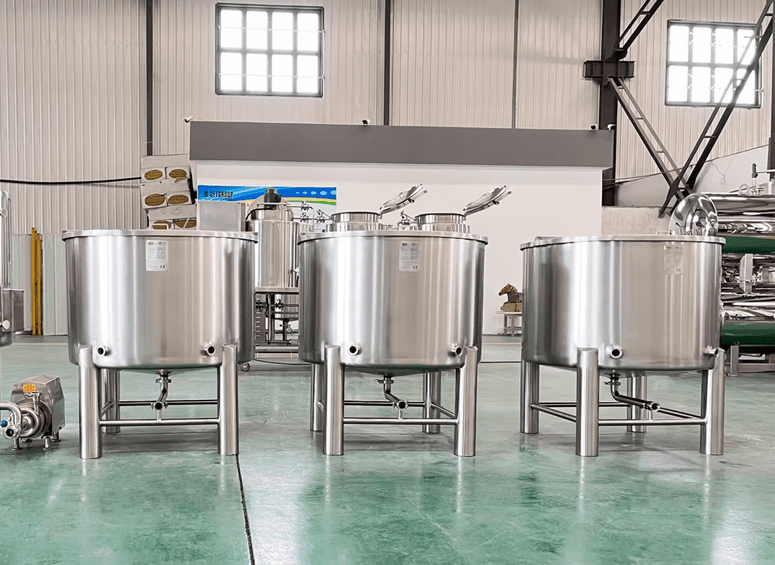
In those cases, tank conditioning and measured CO₂ addition may offer better control.
6. How Do Tea, Sugar, and Flavor Ingredients Affect Kombucha?
Tea selection shapes color, aroma, tannin, and the base flavor of the beverage.
Black tea often creates a strong and familiar kombucha profile. Green tea may produce a lighter taste. Blends can combine body and aroma.
Some producers experiment with herbs, flowers, coffee, botanicals, or alternative plant materials. These products may still use a kombucha-style fermentation, but culture behavior can change when the nutrient profile changes.
Why does sugar matter?
Sugar feeds the culture. However, adding more sugar does not guarantee a better or stronger ferment.
Too little sugar may limit microbial activity. Too much can leave an overly sweet product, increase alcohol formation, or extend the time required to reach the desired flavor.
Producers should track more than recipe weight. Useful measurements may include:
- Initial and final soluble solids
- pH
- Titratable acidity
- Temperature
- Time
- Alcohol by volume
- Sensory results
- Package pressure
When should flavors be added?
Flavor may be added before, during, or after fermentation, depending on the formulation.
Adding fruit early allows the microorganisms to transform more of its sugar and aroma. Adding it later may preserve a fresher fruit character but can increase package-fermentation risk.
Flavor inputs may also introduce:
- Natural microorganisms
- Pulp and sediment
- Allergens
- Additional sugar
- Color variation
- Cleaning challenges
A commercial kombucha recipe should define ingredient specifications, supplier approval, addition time, quantity, mixing method, and acceptance limits.
The FDA’s preventive-controls framework emphasizes hazard analysis, sanitation, process controls, monitoring, corrective action, and verification for covered food facilities.
7. What Equipment Is Needed for Home and Commercial Kombucha Brewing?
A basic home setup can be simple. Commercial kombucha brewing requires more control, capacity, cleanability, and documentation.
Home kombucha equipment
To make kombucha at home, a brewer may need:
- Tea kettle or pot
- Food-grade fermentation jar
- Clean cloth or filter
- Gummiband
- Measuring tools
- pH test method
- Funnel
- Kombucha bottles
- Refrigerator
A home batch of kombucha may be managed by taste and simple measurements. A commercial batch cannot rely only on appearance or taste because the financial, food-safety, and regulatory risks are much higher.
Commercial kombucha equipment
| Process step | Recommended equipment | Main purpose |
|---|---|---|
| Water preparation | Water filter or treatment system | Provide consistent brewing water |
| Tea extraction | Jacketed tea brewing tank | Heat water and extract tea |
| Zucker in die Mischung geben | Agitated blending tank | Dissolve and distribute ingredients |
| Kühlung | Plate heat exchanger or cooling jacket | Reduce temperature before culture addition |
| Gärung | Open or controlled fermentation tanks | Support microbial activity |
| Culture storage | Starter tank | Prepare and hold active culture |
| Flavor blending | Mischbehälter | Add fruit, juice, herbs, or extracts |
| Kühlung | Glycol chiller | Slow fermentation and manage product temperature |
| Reinigung | CIP-System | Clean tanks and process lines |
| Transfer | Sanitary pumps and piping | Move product hygienically |
| Verpackung | Bottle, can, or keg filling machine | Package finished kombucha |
| Quality control | pH, Brix, acidity, ABV, microbiology tools | Confirm product specifications |
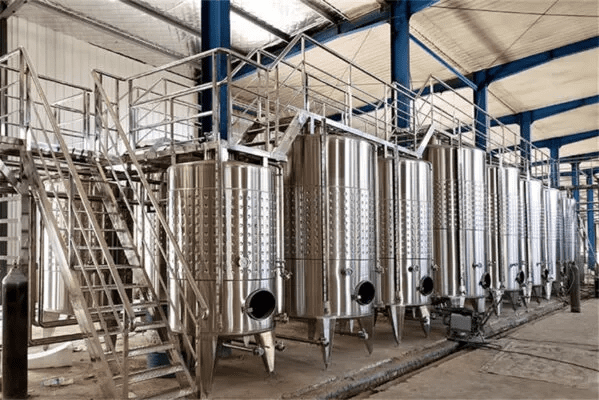
Commercial tanks may use:
- Sanitary stainless steel construction
- Cooling jackets
- Sample valves
- Temperature sensors
- Agitation
- Spray balls
- Sight glasses
- Load cells
- Pressure controls
- Cleanable piping connections
Not every producer needs every feature. A traditional open ferment may not require pressure capability or strong agitation. A filtered and force-carbonated product may need more closed tanks, cooling, and gas control.
8. How Do Commercial Fermentation Tanks Improve Control?
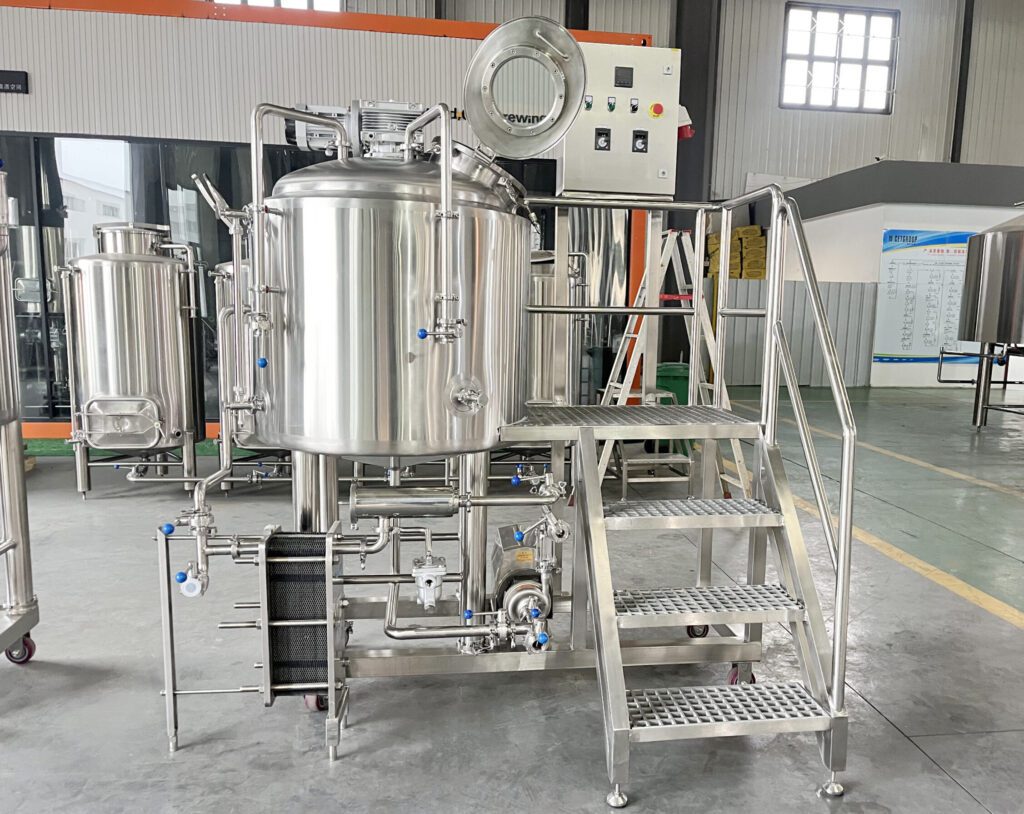
A home jar allows the operator to observe the culture directly. A commercial fermentation vessel must do more. It needs to support repeatable batches, cleaning, sampling, temperature management, and safe product transfer.
The tank design should match the process rather than copy standard beer equipment without review.
Beer fermenters are usually closed, pressure-rated, and cylindroconical. Traditional kombucha often relies more heavily on surface oxygen. A tall, narrow beer tank may therefore behave differently from a wider vessel designed for kombucha tea fermentation.
Important kombucha tank design factors
- Vessel height-to-diameter ratio
- Liquid depth
- Surface area
- Air exposure
- Cooling area
- Tank working volume
- Agitation method
- Sampling points
- Drainability
- Cleaning coverage
- Culture-removal method
- Future pressure requirements
A wide tank can provide more surface area for oxygen exposure, but it also uses more floor space. A closed tank offers better environmental protection, but it may need controlled aeration to support the desired bacterial activity.
This is a real engineering trade-off.
Open vs. closed fermentation tanks
| Feature | Open or vented tank | Closed controlled tank |
|---|---|---|
| Oxygen access | Hoch | Einstellbar |
| Contamination exposure | Höher | Unter |
| Process visibility | Easy | Requires ports or sensors |
| Pressure capability | Usually none | Optional |
| Cleaning control | Design-dependent | Easier to integrate with CIP |
| Automatisierung | Limited to moderate | Moderate to high |
| Beste Anwendung | Traditional process | Standardized commercial production |
From our equipment-manufacturing experience, tank capacity should be calculated using the full production cycle. A 5,000-liter tank is not available every day if the liquid occupies it for one or two weeks.
A simple planning formula is:
Required fermentation volume
= Planned weekly production
× Average fermentation time in weeks
÷ Expected saleable yield
The result should then be adjusted for cleaning time, starter preparation, flavoring, seasonal demand, rejected batches, and future growth.
9. How Should Producers Manage Food Safety, pH, and Alcohol?
Kombucha is acidic, but acidity alone does not remove the need for hygienic production.
Poor raw materials, dirty equipment, unsafe water, incorrect starter use, contaminated flavor ingredients, and weak packaging controls can still create product risks.
FDA Current Good Manufacturing Practices cover employee hygiene, plant and equipment design, sanitary operations, facility sanitation, and production controls. Covered facilities may also need a written hazard analysis and risk-based preventive controls under 21 CFR Part 117.
Commercial process-control checklist
- Approve tea, sugar, juice, and flavor suppliers.
- Use documented formulations.
- Calibrate pH, temperature, and other instruments.
- Define acceptable starter specifications.
- Record fermentation time and temperature.
- Test acidity and alcohol.
- Inspect for abnormal mold or odor.
- Use validated cleaning procedures.
- Control bottle pressure and refrigeration.
- Maintain lot traceability.
- Define hold-and-release procedures.
- Establish corrective actions for failed batches.
Why is alcohol control especially important?
Yeast may keep producing alcohol after the beverage is packaged. The bacteria may not reduce it at the same rate, especially when oxygen is limited inside a sealed bottle.
TTB specifically warns that a product bottled below 0.5% ABV may still become regulated if continued fermentation raises it to 0.5% or more later.
Commercial producers should therefore evaluate alcohol:
- During fermentation
- Before flavoring
- Before filling
- At release
- During shelf-life testing
- Under expected and abusive storage temperatures
This does not mean every producer must use the same test method. The method should be suitable for the product matrix and regulatory need.
Can kombucha health claims be used in marketing?
Producers should be cautious.
Kombucha contains fermentation-derived compounds, but human evidence for broad therapeutic claims remains limited. Product claims must comply with the laws of the market where the beverage is sold.
A responsible B2B producer should focus on measurable facts such as ingredients, live-culture status, sugar, acidity, alcohol, calories, and validated nutritional data rather than unsupported medical promises.
10. How Do You Plan a Turnkey Kombucha Brewing Line?
A commercial line should begin with the product and sales model—not with a tank catalog.
The first step is to define:
- Target annual output
- Batch size
- Dauer der Gärung
- Tea extraction method
- Culture strategy
- Flavor formats
- Carbonation method
- Package type
- Shelf-life goal
- Distribution temperature
- Alcohol target
- Automatisierungsgrad
These decisions determine the tanks, chilling load, pumps, piping, laboratory needs, and packaging equipment.
Illustrative turnkey process flow
Water treatment
      ↓
Tea extraction and sugar mixing
      ↓
Cooling
      ↓
Starter culture addition
      ↓
Primary fermentation
      ↓
Flavor blending
      ↓
Conditioning or filtration
      ↓
Cooling and carbonation
      ↓
Bottle, can, or keg filling
      ↓
Cold storage and distribution
Mini case study: Moving from home production to a commercial line
Consider a startup producing successful homemade kombucha in glass jars. The founders plan to increase production by buying several large beer fermenters.
That choice may create problems.
Their original process relies on a wide surface area, open oxygen exchange, manual flavoring, and natural carbonation. A tall closed beer tank changes those conditions.
A better commercial plan may include:
- A jacketed tea-preparation tank
- A sugar-blending system
- A rapid cooling loop
- Wide fermentation tanks with controlled air exchange
- A dedicated starter tank
- A sanitary flavor-blending tank
- Glycol cooling
- A small CIP skid
- A counter-pressure filling system
- Space for future tanks
The production team should test the new geometry before committing to a full-scale line. Pilot results can reveal changes in acidity, fermentation time, yeast behavior, flavor, and alcohol.
New or used kombucha equipment?
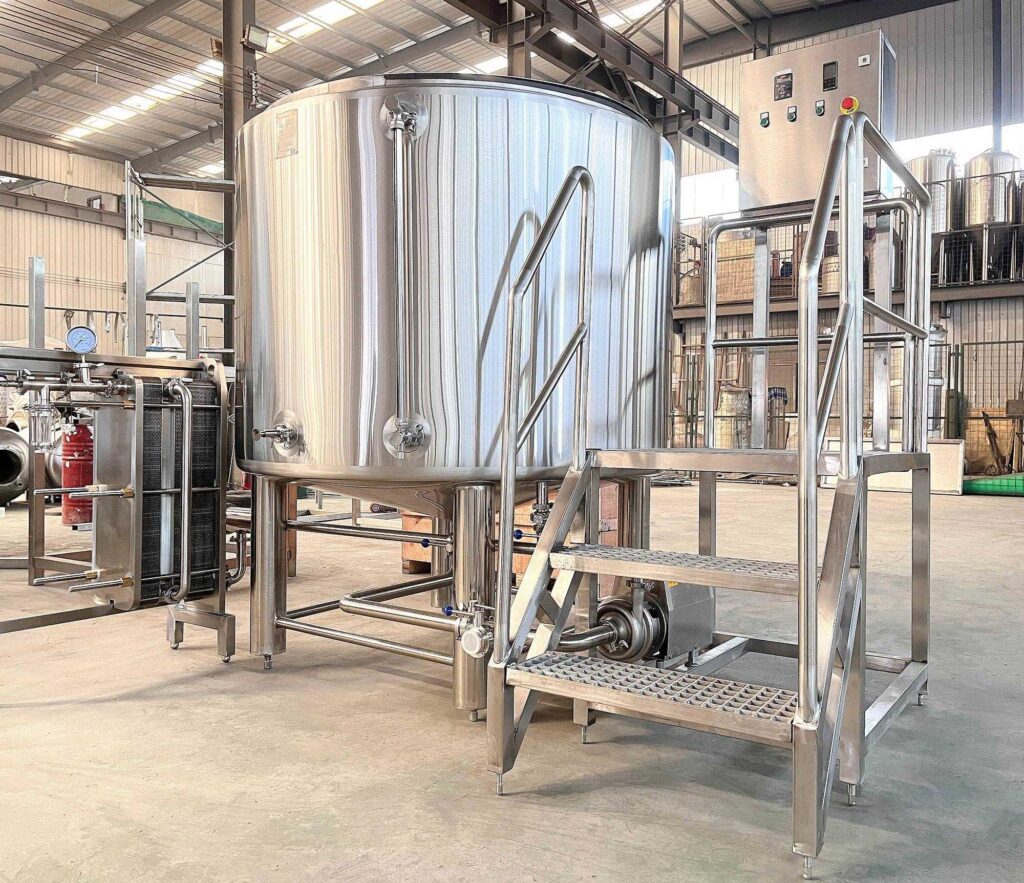
Used brewing equipment can reduce initial cost, but it should be evaluated carefully.
Check:
- Tank dimensions
- Working volume
- Cooling-jacket integrity
- Internal finish
- Drain position
- Previous product
- Valve condition
- Gasket availability
- Electrical compatibility
- Control-system age
- Cleaning access
- Pressure documentation
- Shipping and installation cost
A used beer tank may offer excellent value for a closed conditioning stage but may not suit open primary fermentation. The application matters more than the label on the equipment.
How Can a Beverage Equipment Manufacturer Reduce Project Risk?
Kombucha production combines tea preparation, living culture management, sanitation, cooling, blending, alcohol control, and packaging. Each stage affects the next.
As a professional brewery, winery, distillery, kombucha, and beverage equipment manufacturer, we assess the complete process before selecting tank sizes or automation.
Our project scope can include:
- Process review
- Capacity calculations
- CAD and 3D layout support
- New stainless steel tanks
- Used system evaluation
- Tea preparation vessels
- Fermentation tanks
- Starter tanks
- Blending tanks
- Glycol systems
- CIP units
- Sanitary piping
- Electrical controls
- Packaging integration
- Installation guidance
- Ausbildung des Bedienpersonals
- Global technical service
We also explain where a recommendation may not apply. For example, a pressure-rated tank is useful for closed carbonation, but it may be unnecessary for traditional open primary fermentation. Strong agitation improves ingredient blending, but continuous mixing may disturb a surface culture.
Good engineering protects the process rather than forcing every beverage into the same machine design.
Häufig gestellte Fragen
What is kombucha made from?
Traditional kombucha is made from water, tea, sugar, starter liquid, and a culture of bacteria and yeast. Producers may add fruit, juice, herbs, spices, or other flavors after the main fermentation.
What does a SCOBY do in kombucha?
A SCOBY introduces and supports the microbial culture that transforms sweetened tea. The yeast produces ethanol and carbon dioxide, while bacteria form acids and other fermentation compounds.
How long does kombucha take to ferment?
Home production commonly takes about 7–10 days, but the actual time depends on temperature, starter strength, recipe, vessel, and desired flavor. Commercial producers should use measured product targets rather than time alone.
Can kombucha become alcoholic?
Yes. Alcohol is produced during fermentation. In the United States, kombucha that reaches 0.5% ABV or more at any stage may become subject to TTB alcohol rules.
What is the difference between first and second fermentation?
The first fermentation develops the base acidity and flavor. The second fermentation usually occurs after flavoring or bottling and may increase carbonation. It can also raise pressure and alcohol if not controlled.
Do commercial producers need a SCOBY hotel?
Not necessarily. A small brewer may use a SCOBY hotel to hold backup culture. A commercial plant usually benefits from a documented starter-management system with controlled culture volume, pH, identity, and batch traceability.
Key Points to Remember
- Kombucha is a fermented beverage made from sweetened tea and a culture of bacteria and yeast.
- The liquid starter is as important as the visible SCOBY.
- Yeast creates ethanol and carbon dioxide; bacteria create organic acids.
- Fermentation time alone cannot define product readiness.
- Tea, sugar, temperature, oxygen, and vessel shape all affect the final result.
- Primary fermentation builds the base flavor and acidity.
- Secondary fermentation can add flavor and carbonation but also raises pressure and alcohol risks.
- Home equipment can be simple, while commercial production requires stronger sanitation, testing, traceability, and process control.
- Kombucha tanks should be designed around oxygen needs, vessel geometry, cooling, cleaning, and production volume.
- Commercial producers should monitor pH, acidity, sugar, temperature, alcohol, and package stability.
- Continued fermentation after filling can change both product quality and regulatory status.
- Used brewing equipment can work well when its design matches the intended kombucha process.
- Turnkey planning should cover tea preparation, culture, fermentation, blending, cooling, cleaning, packaging, and distribution.
Conclusion
Kombucha brewing is a controlled fermentation in which bacteria and yeast transform sweetened tea into a tart, complex beverage. The basic idea is simple. Commercial execution is not.
Stable production depends on culture quality, hygienic equipment, recipe control, temperature, oxygen, testing, packaging, and cold-chain planning.
For a new or expanding kombucha project, the most useful next step is to review the recipe, target output, fermentation time, alcohol limit, package format, building dimensions, and available utilities together. That evaluation makes it easier to identify the right new or used tanks, layout, cooling system, CIP capacity, and packaging line before major purchasing decisions are made.