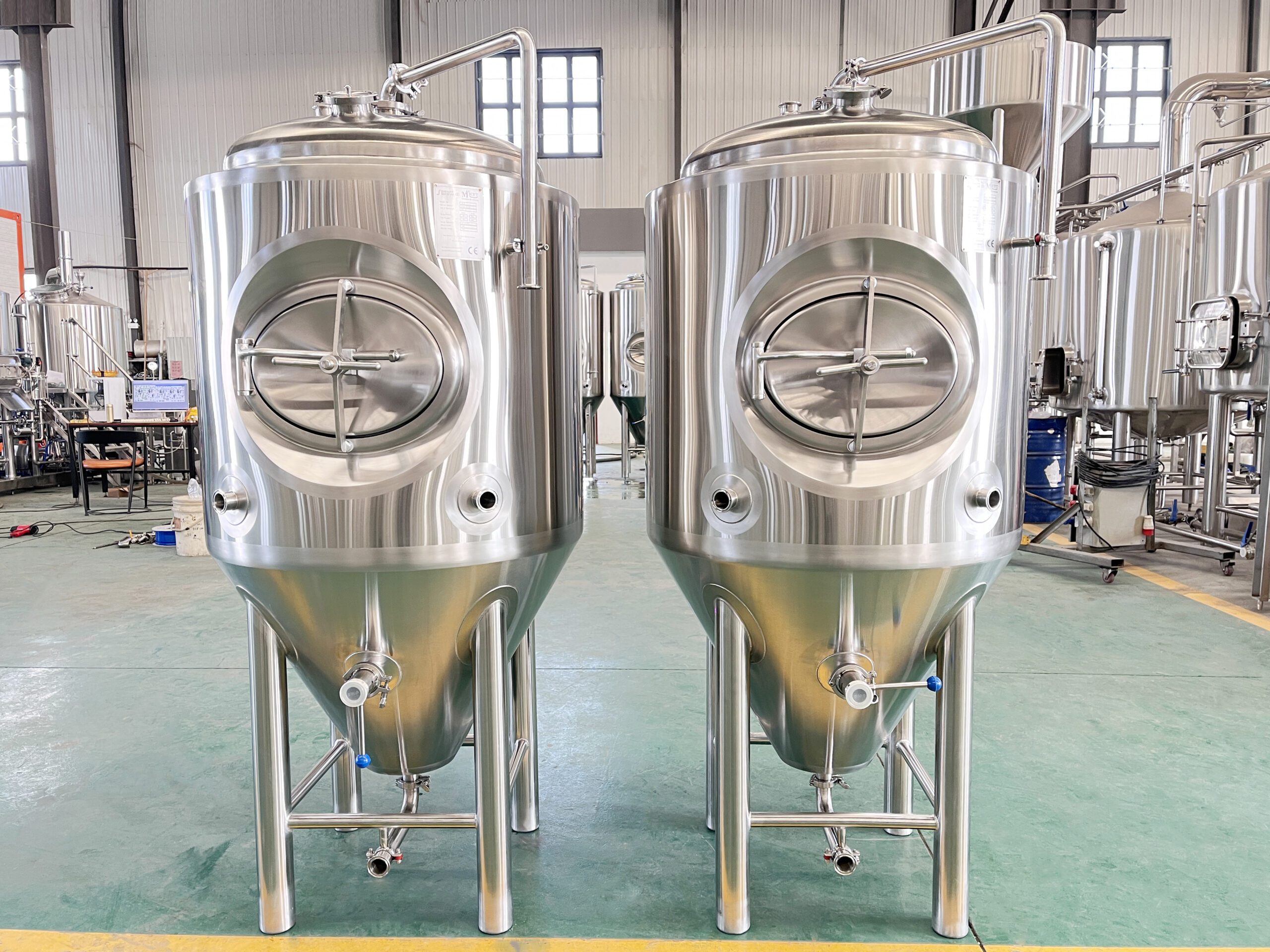
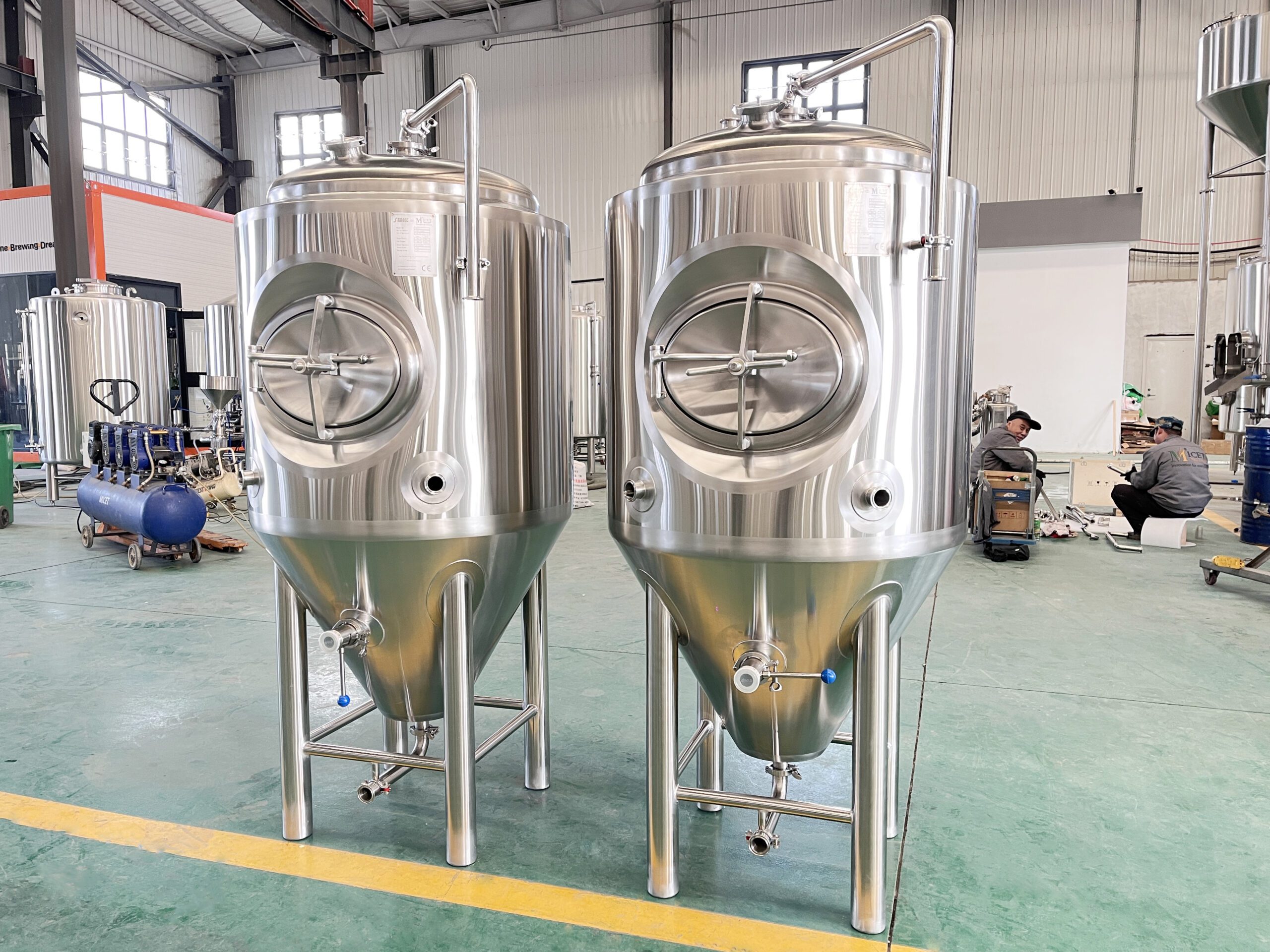
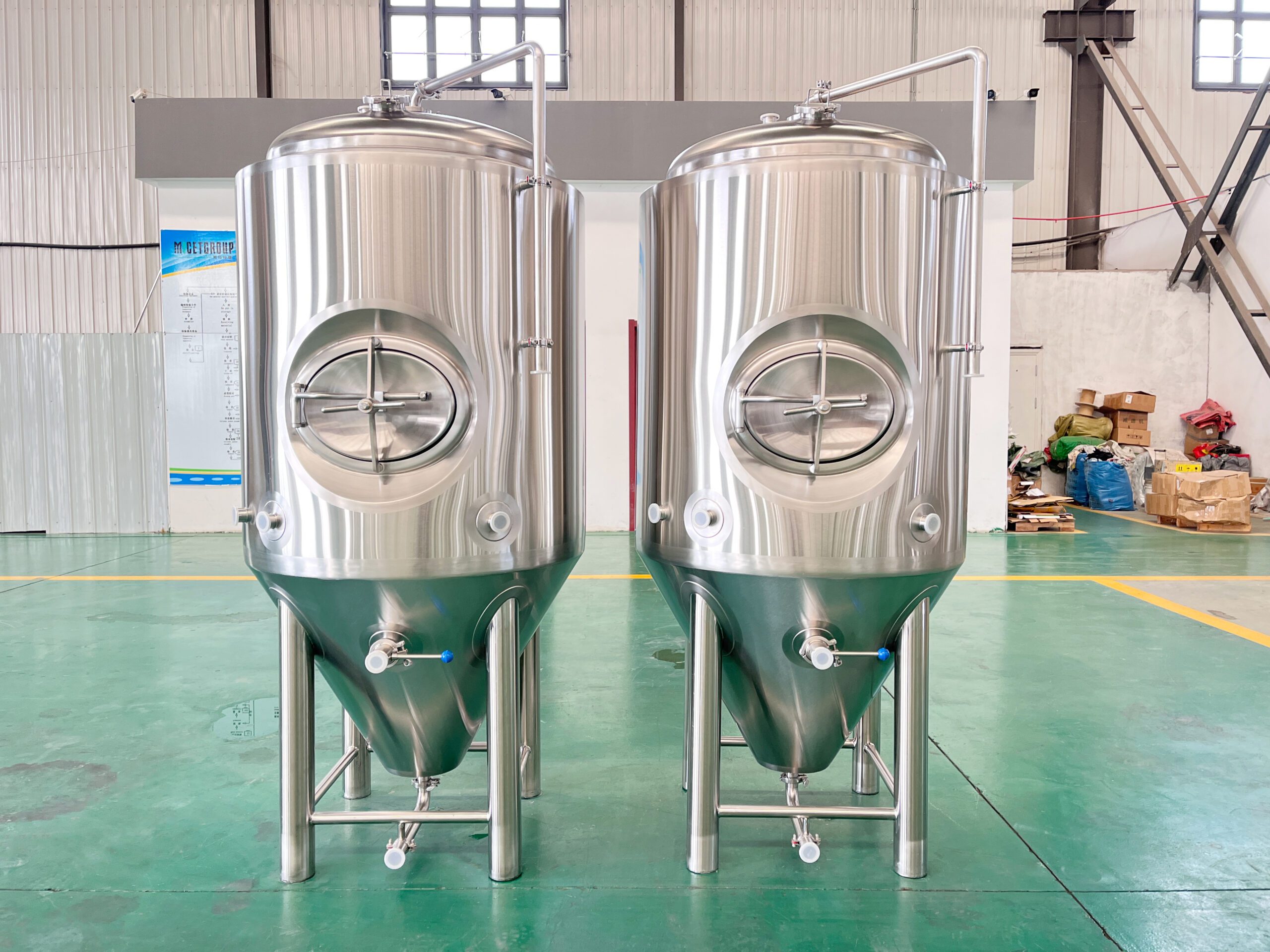
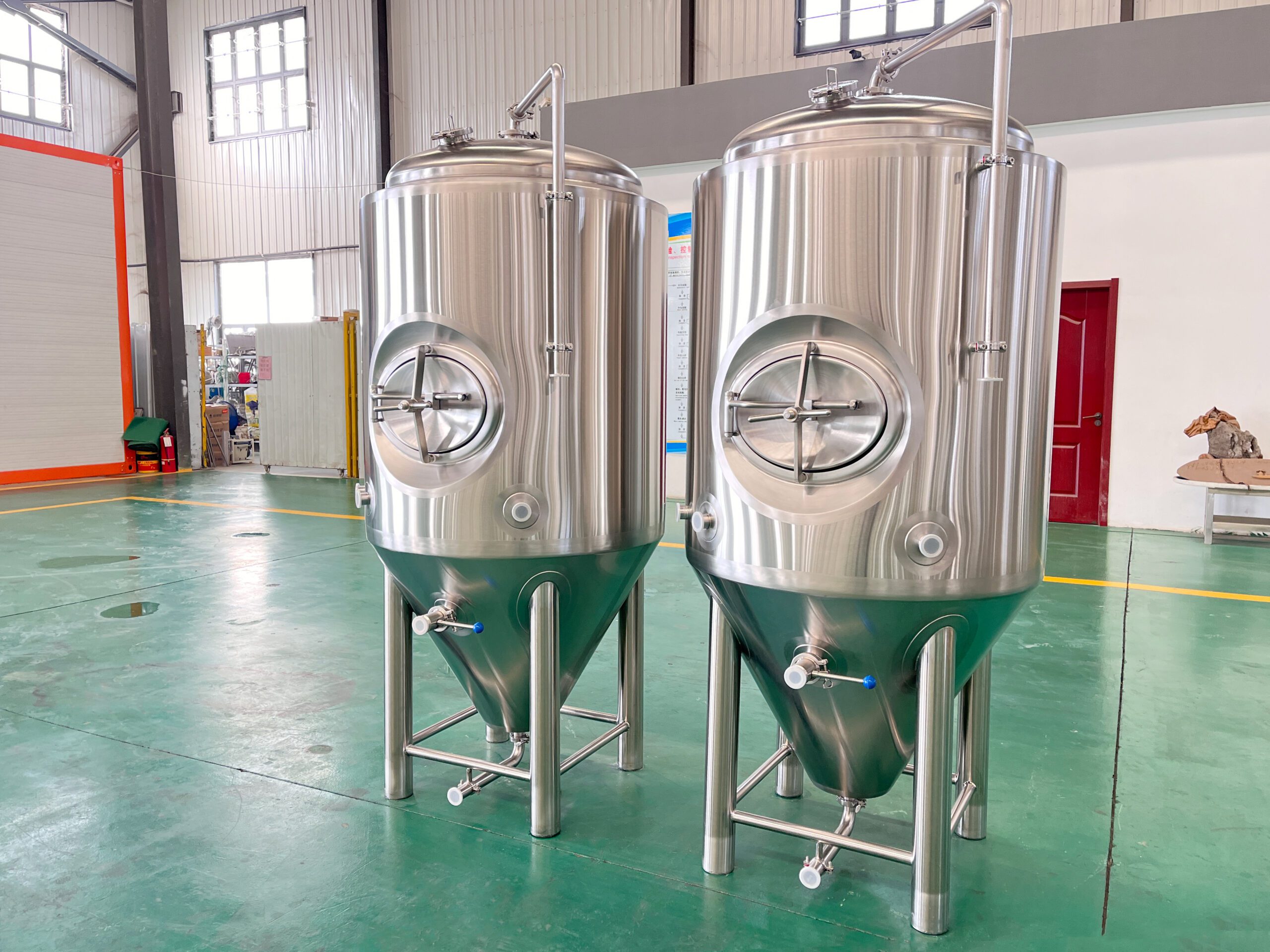
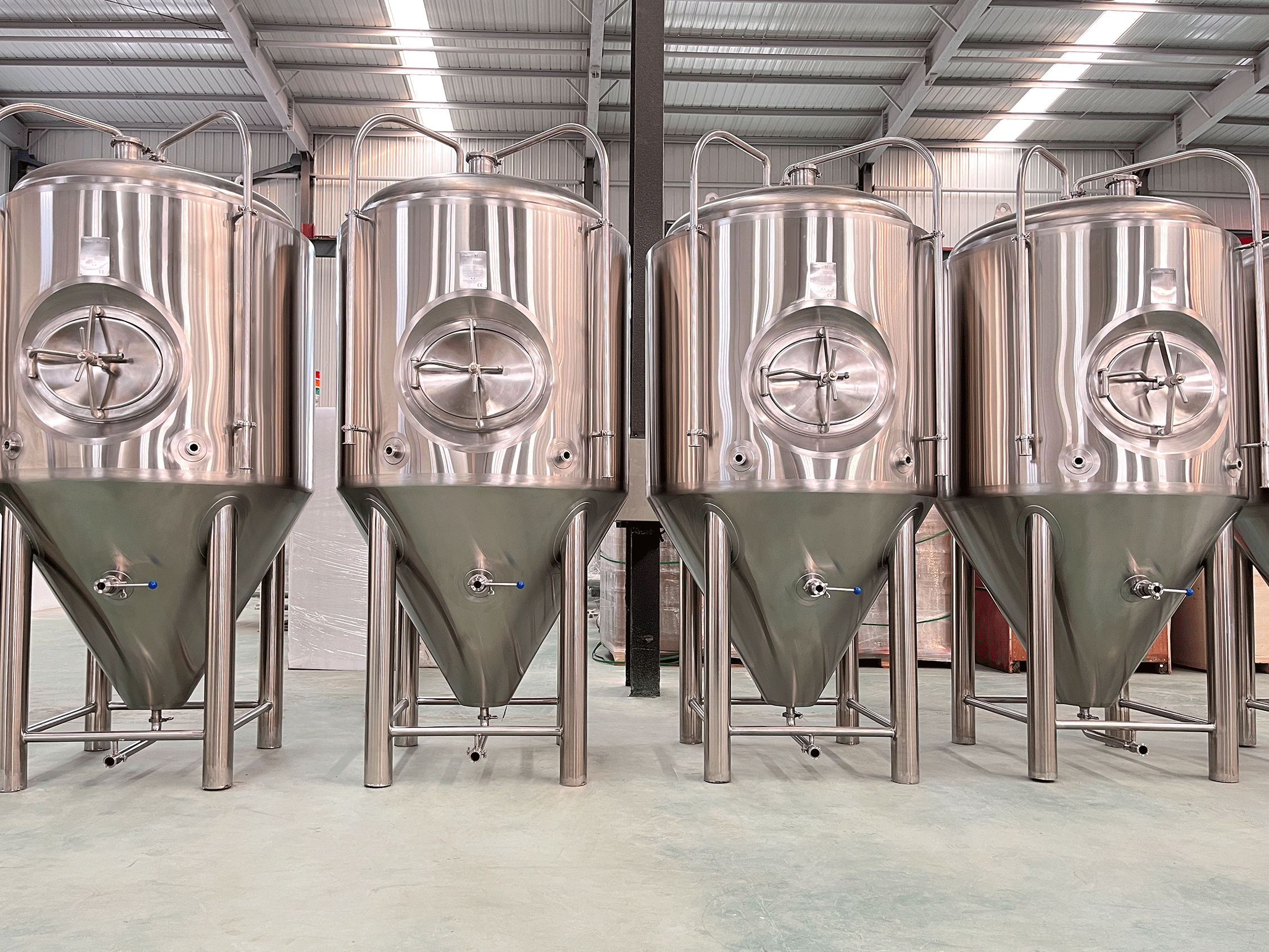
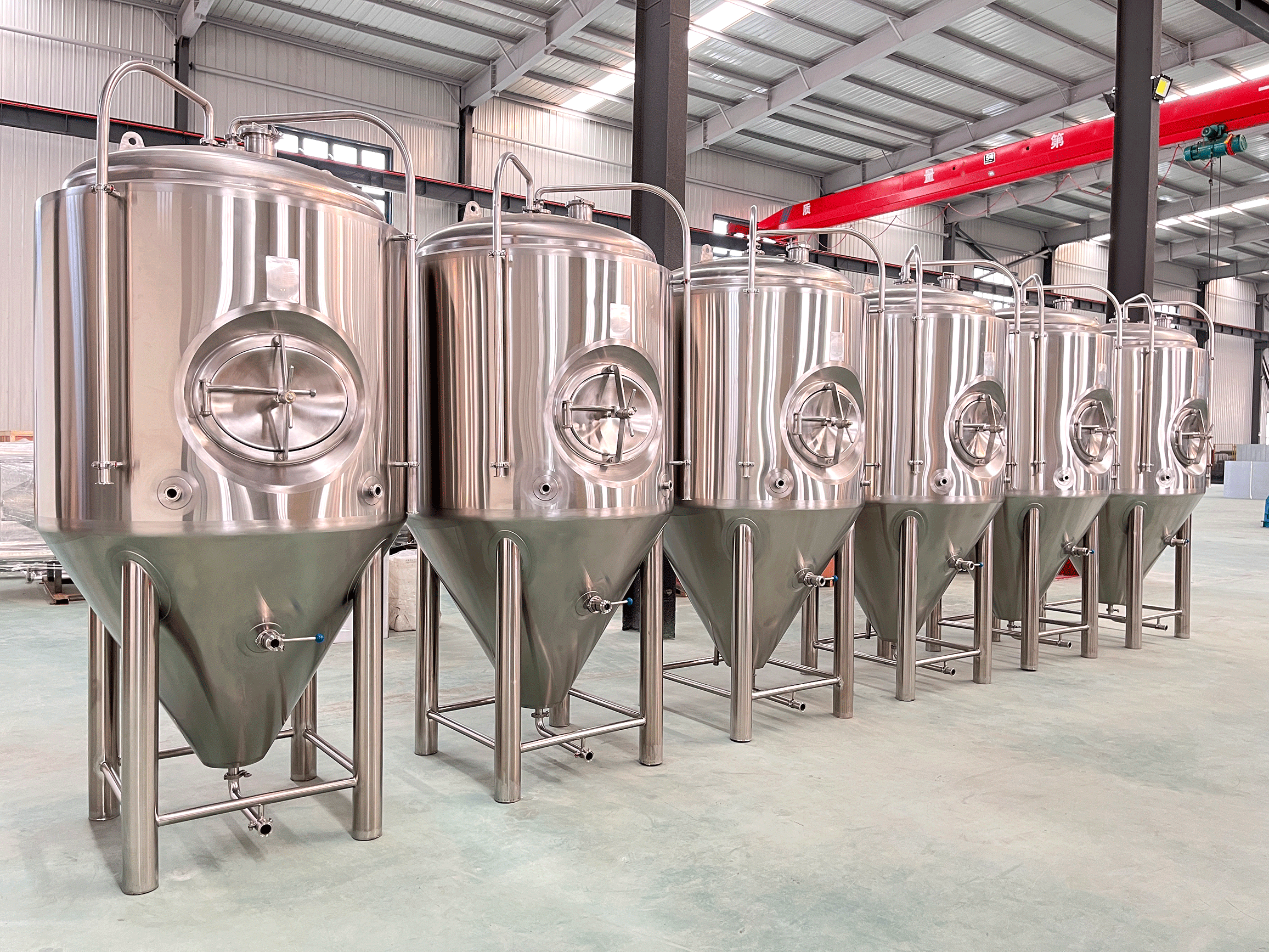
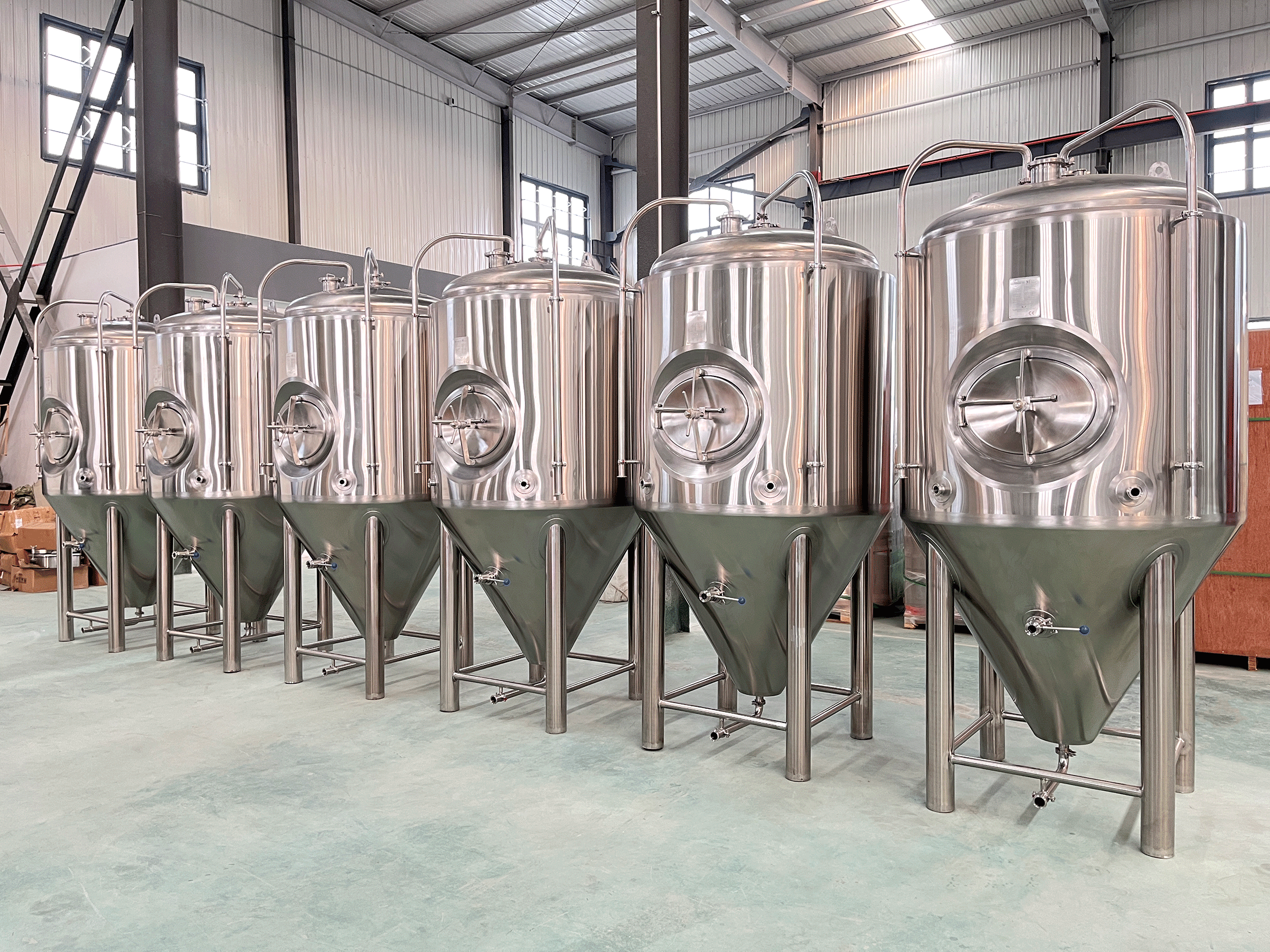
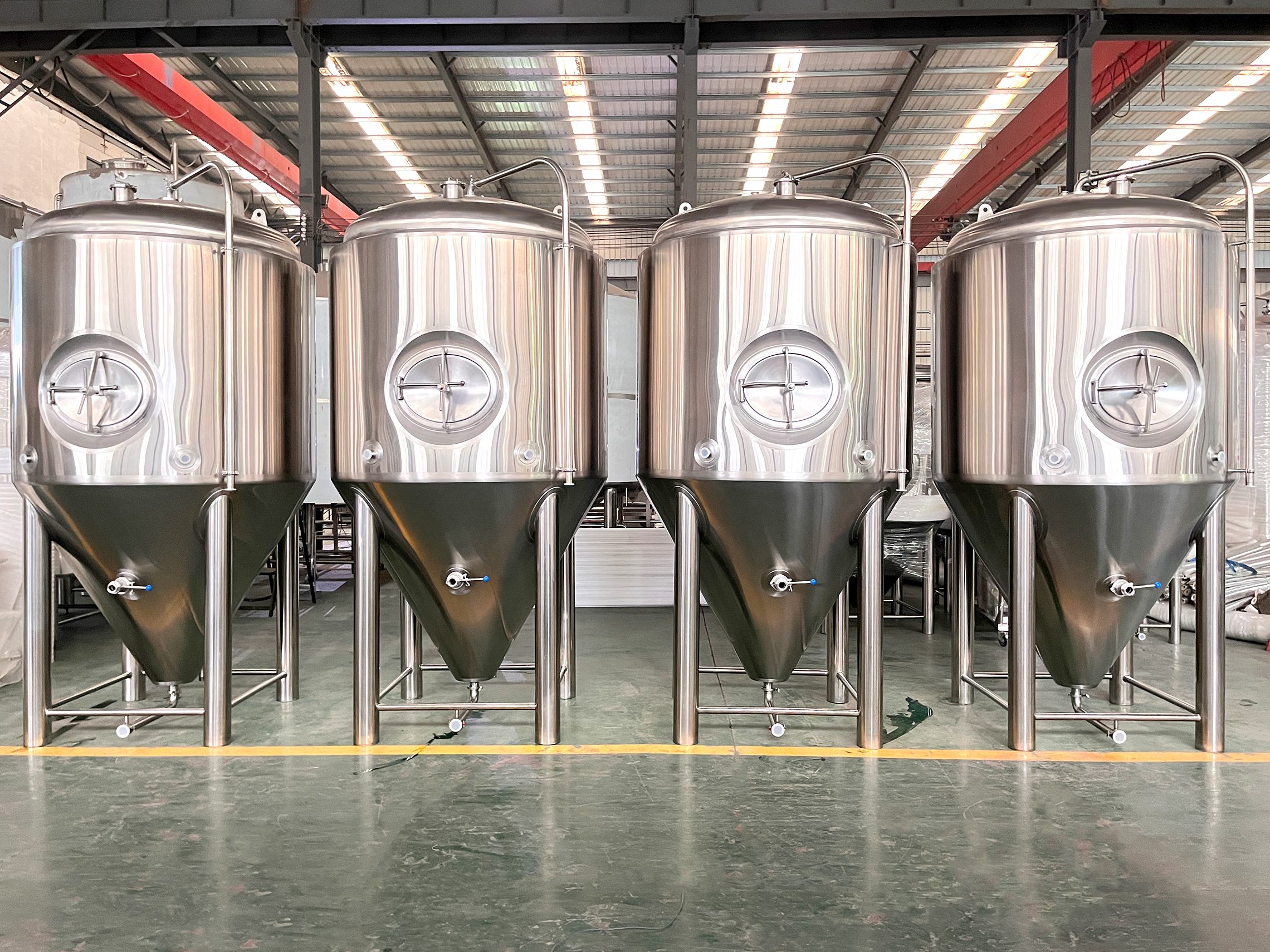
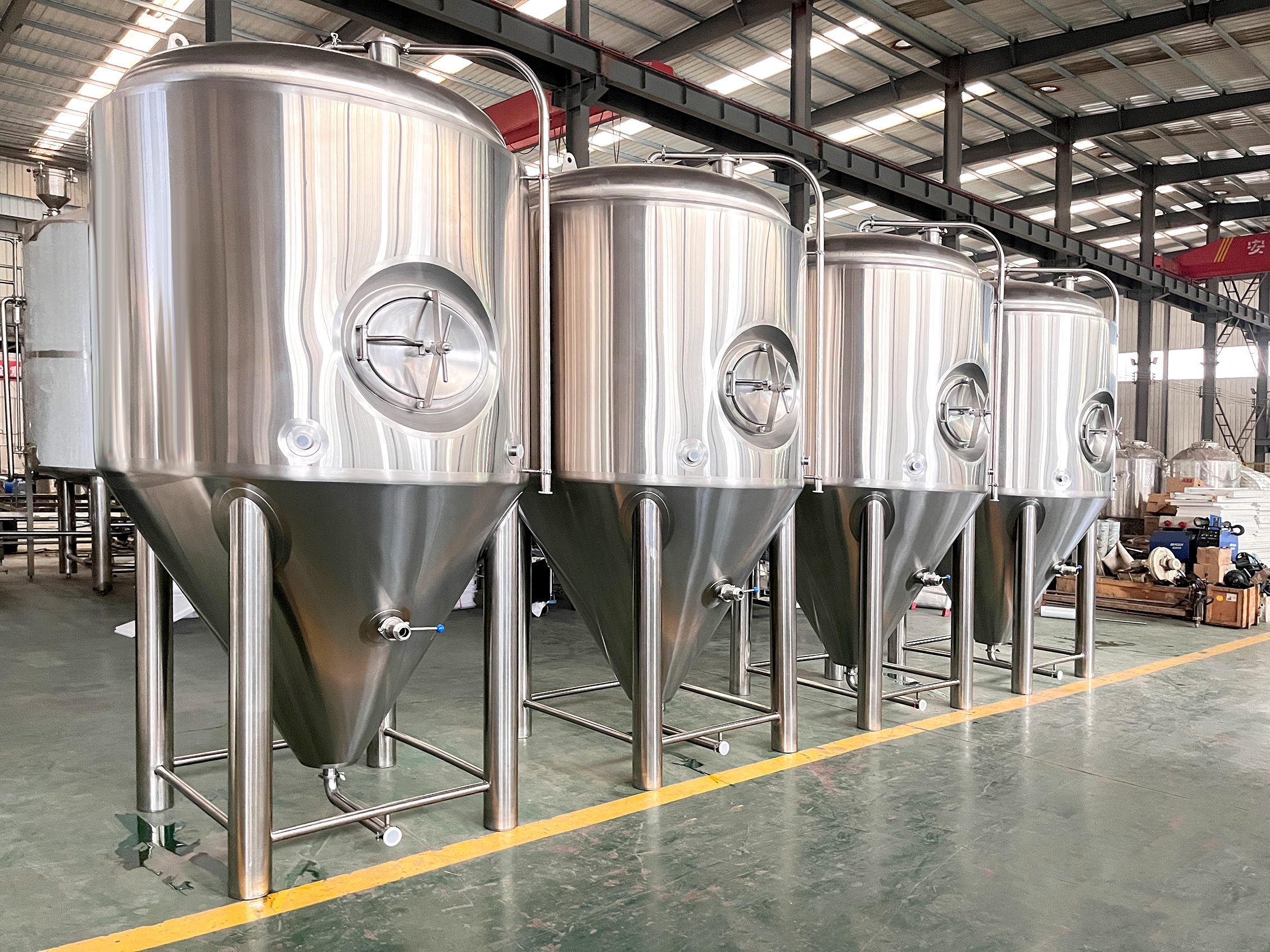
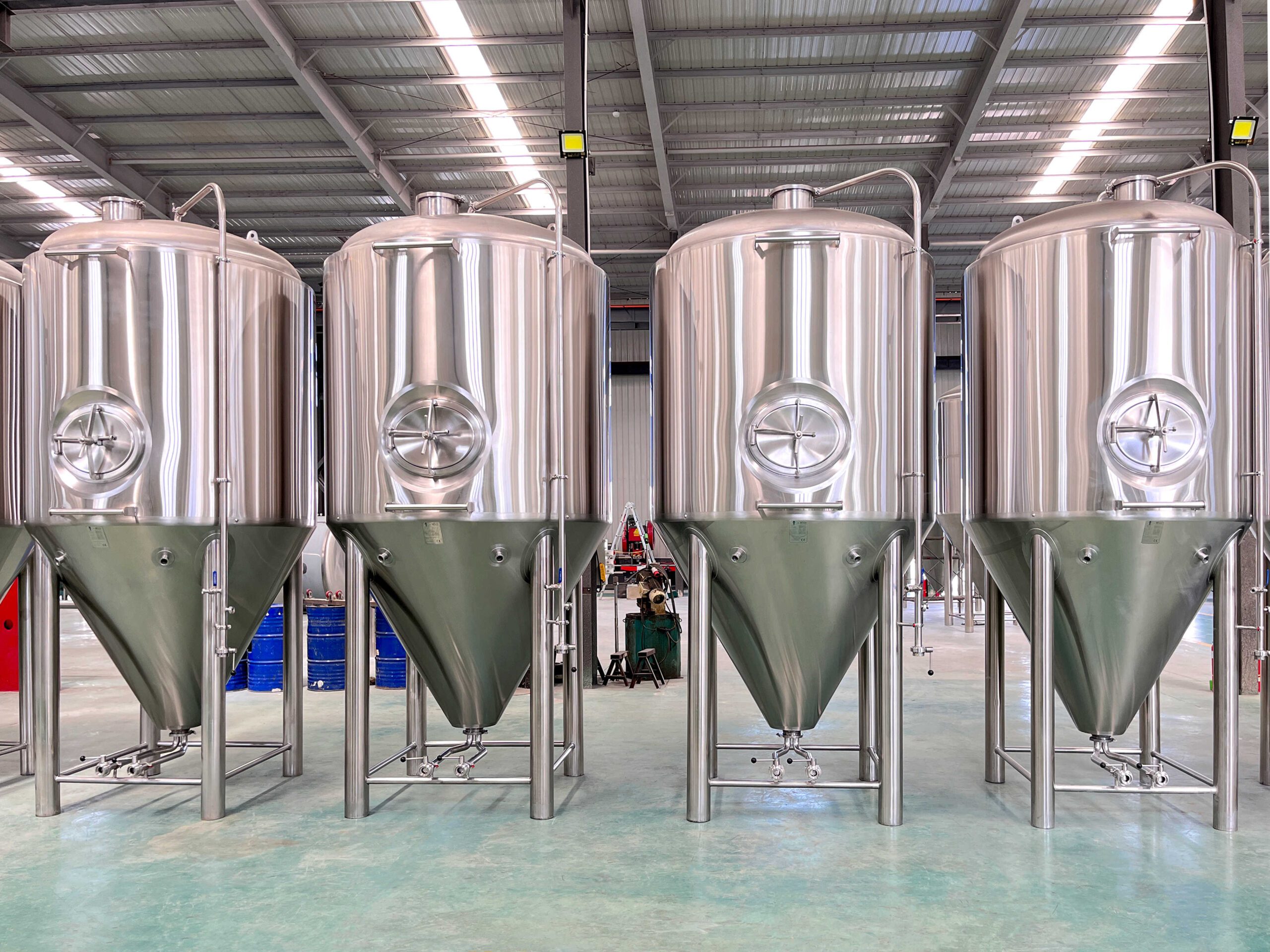
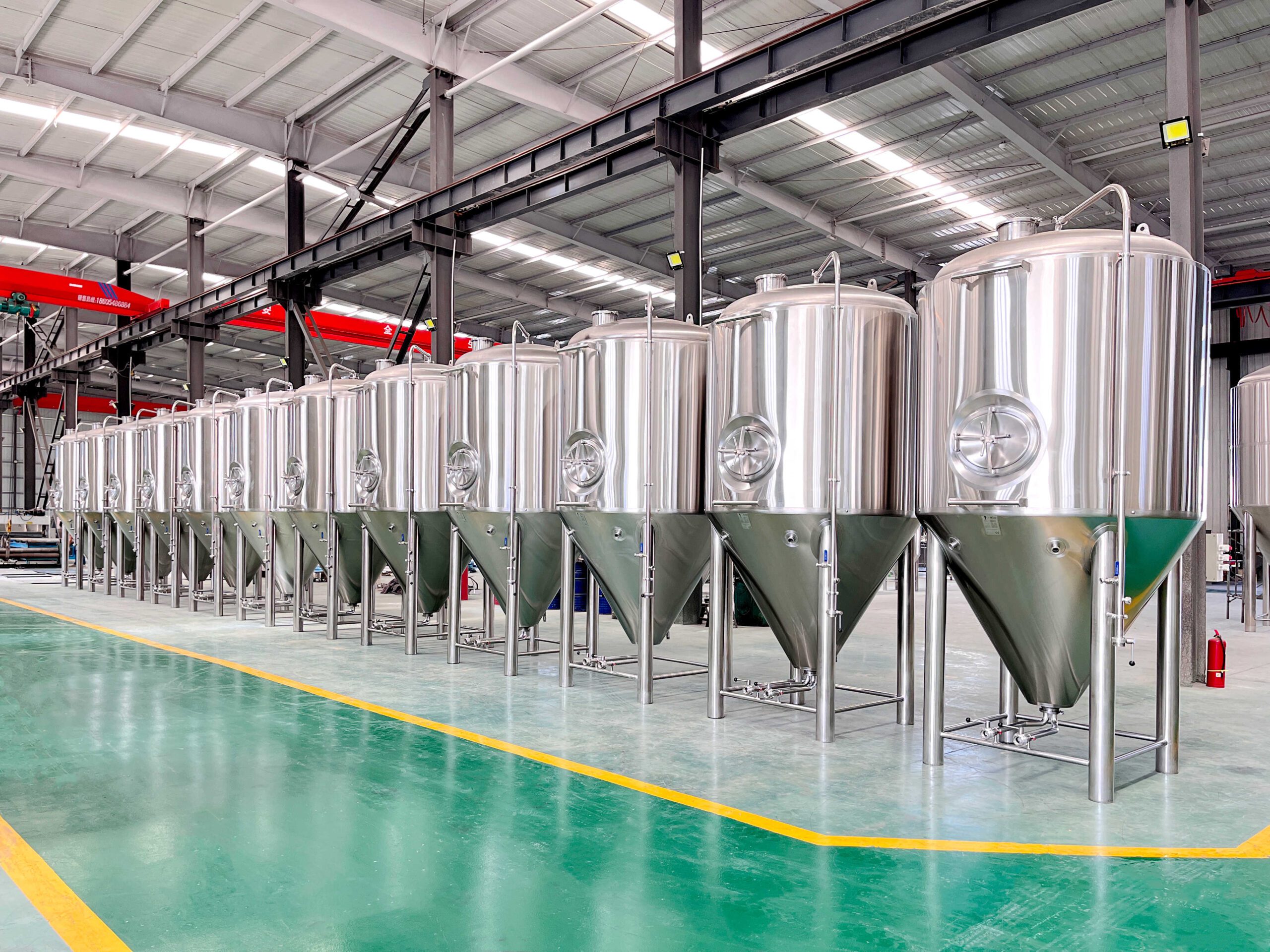
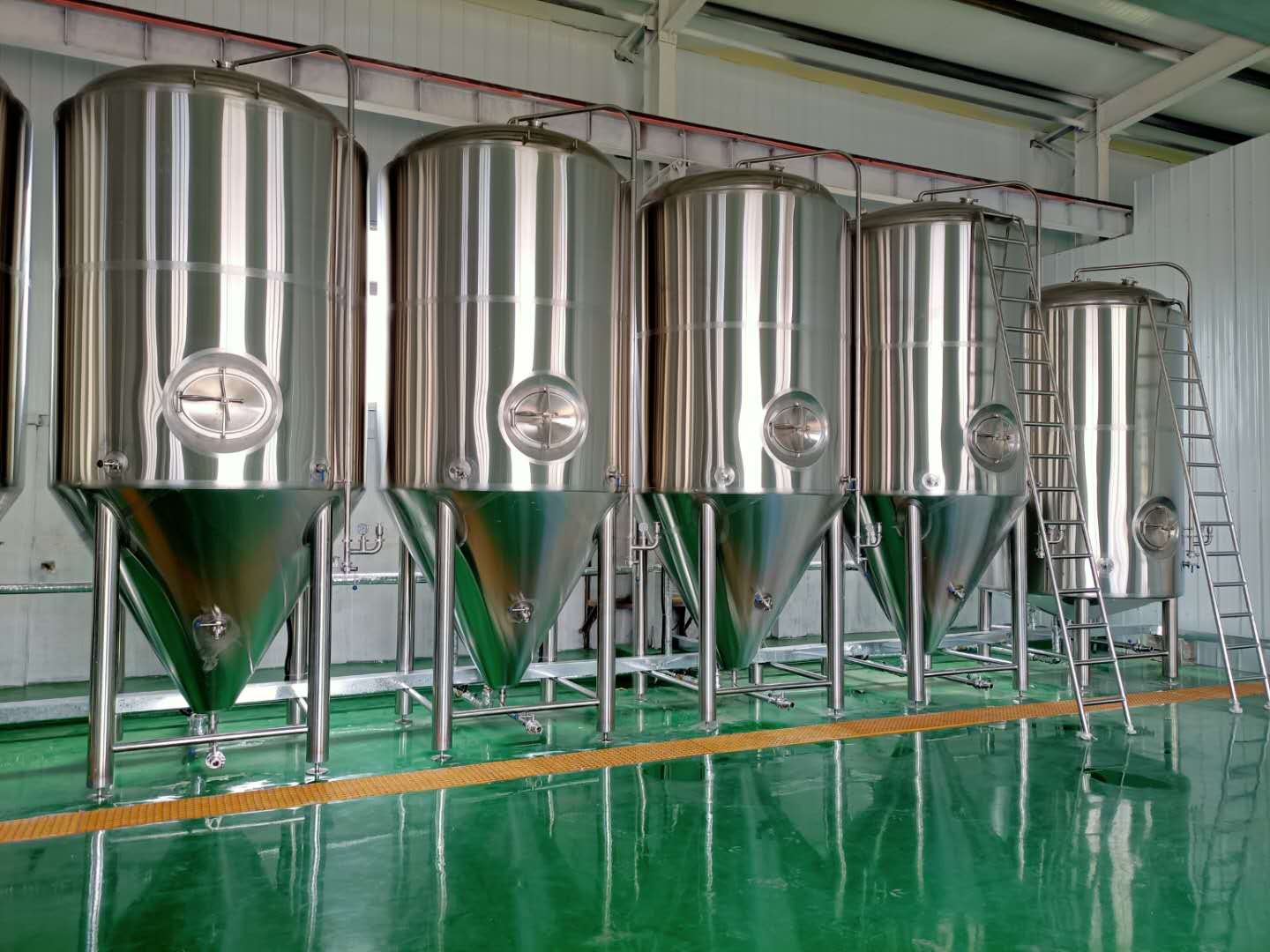
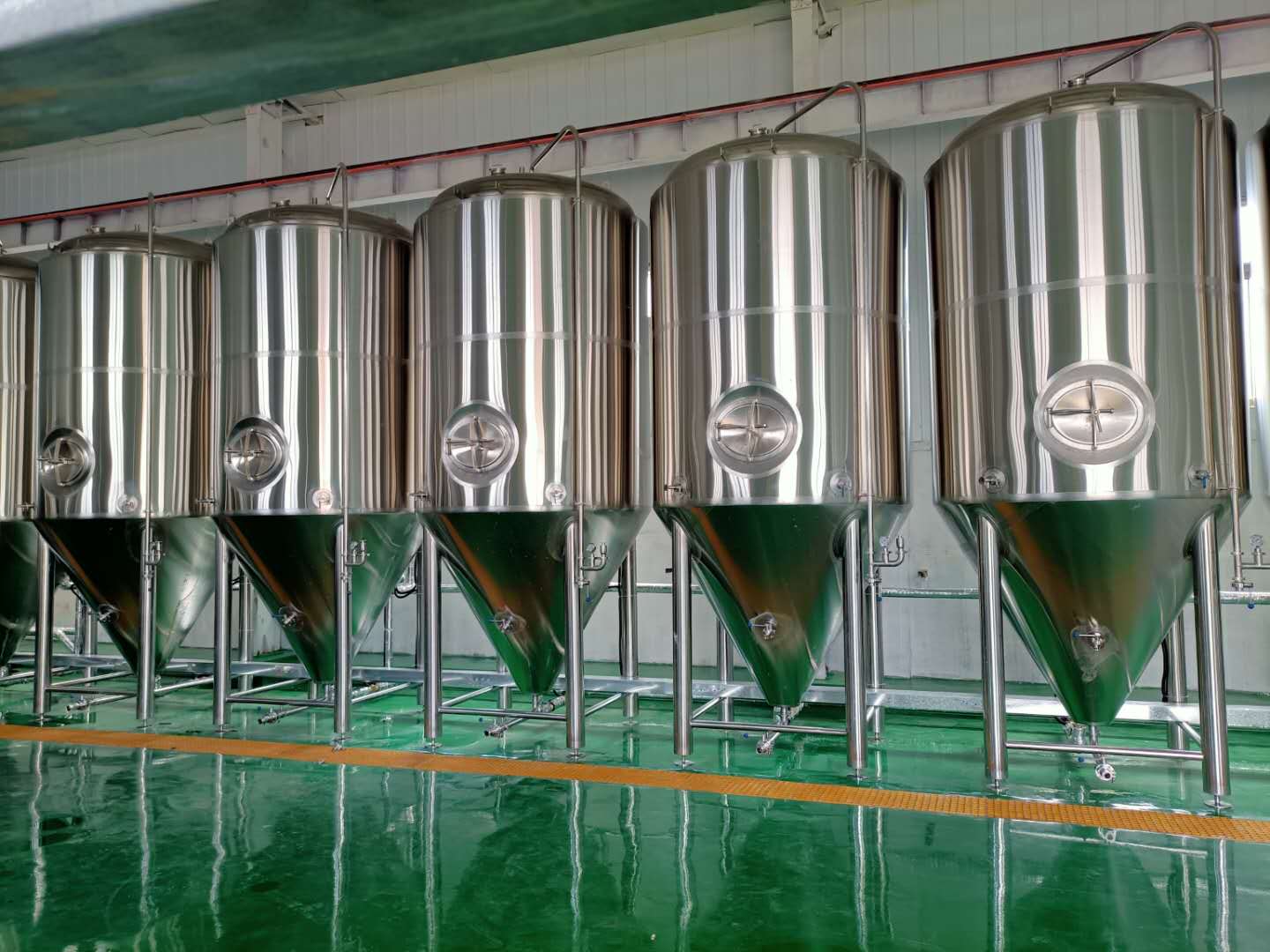
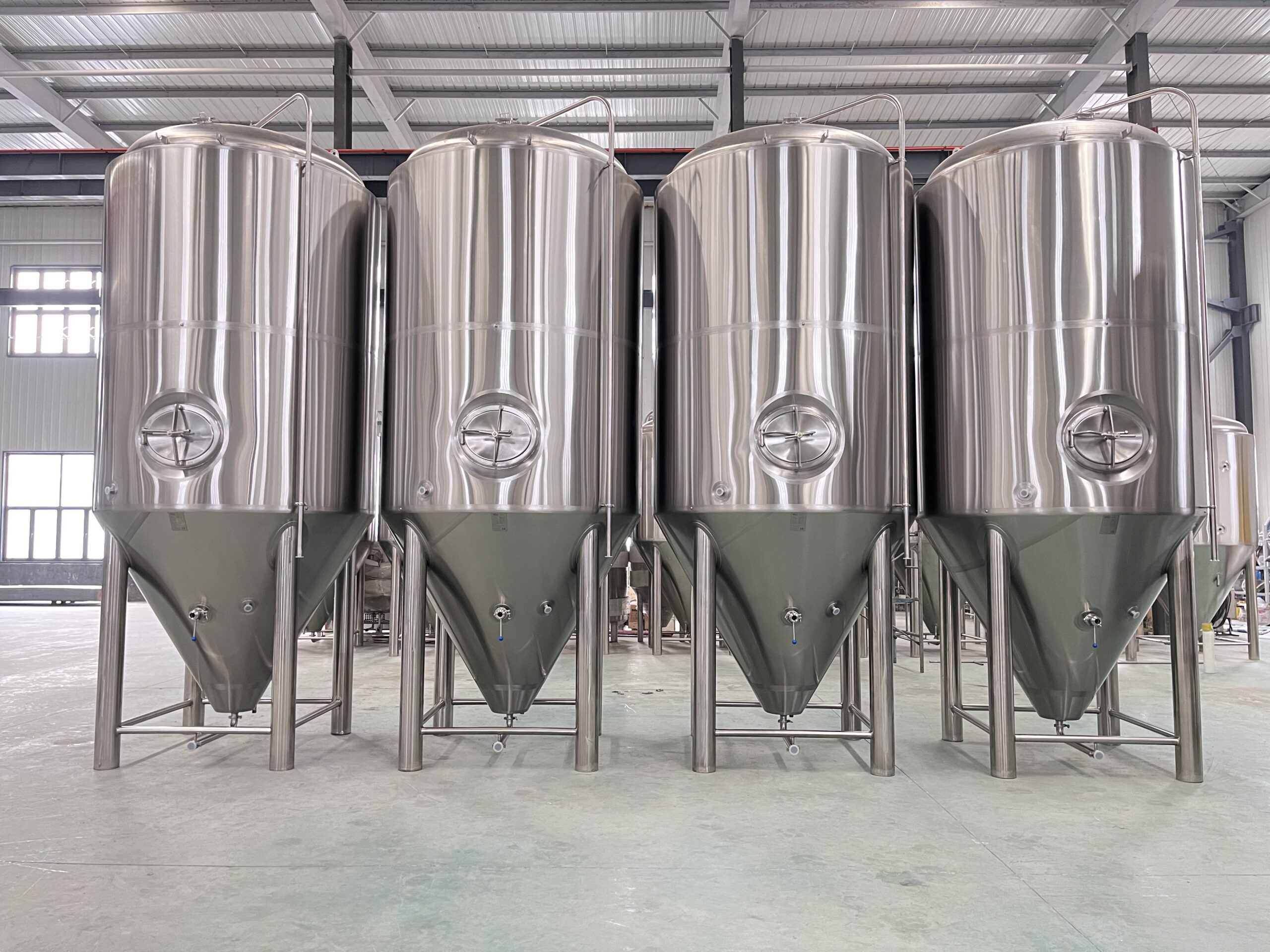
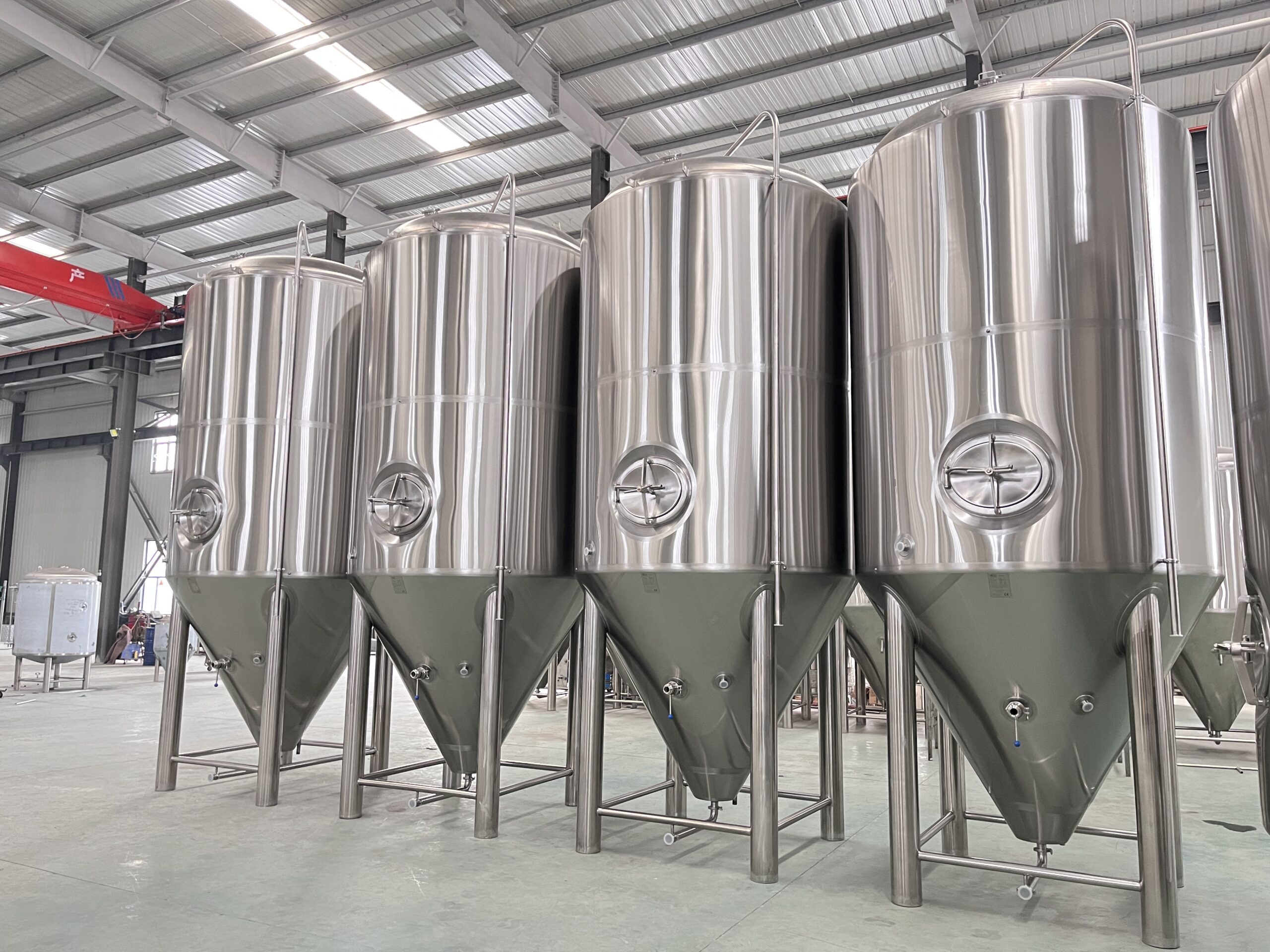
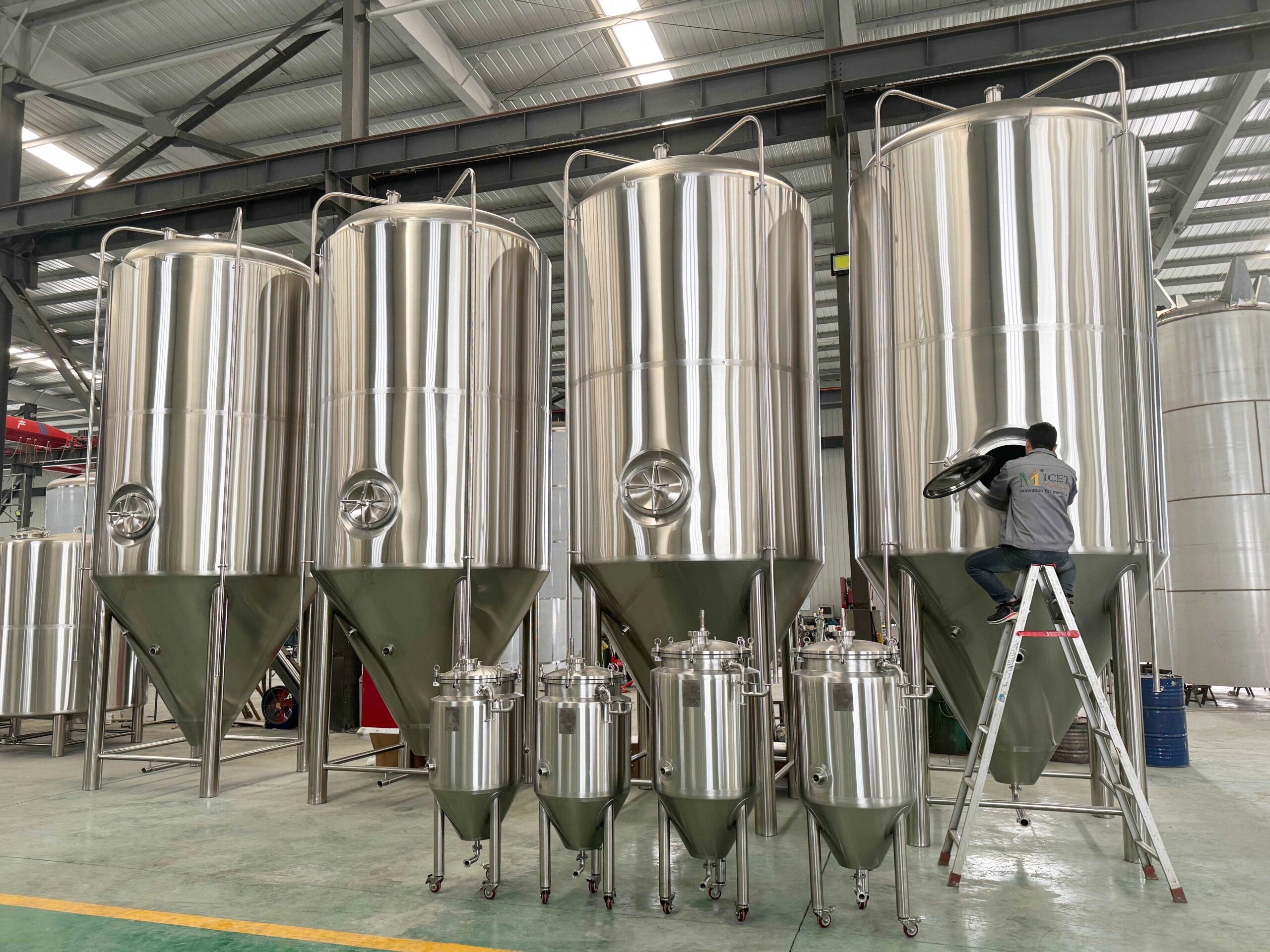
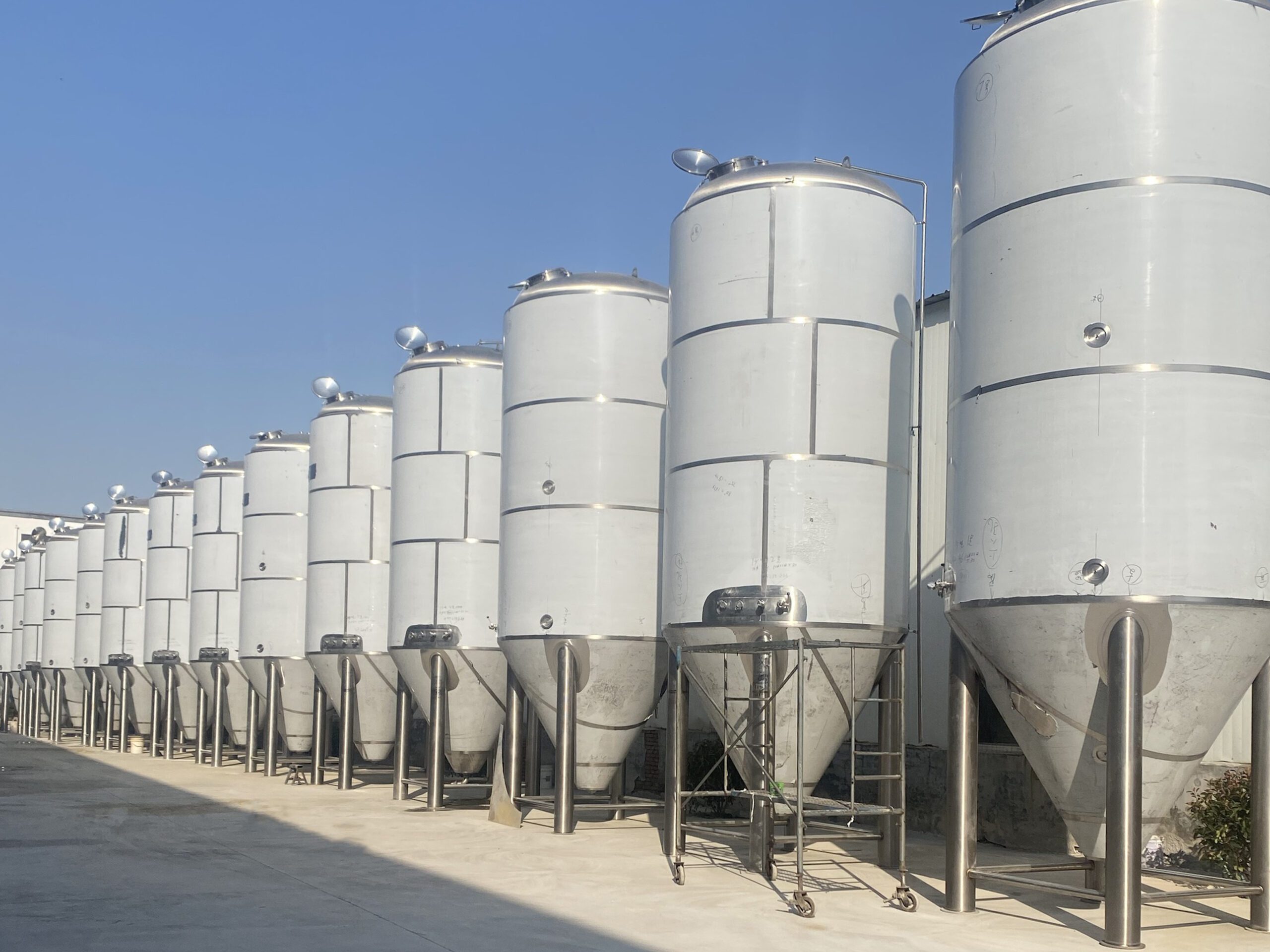
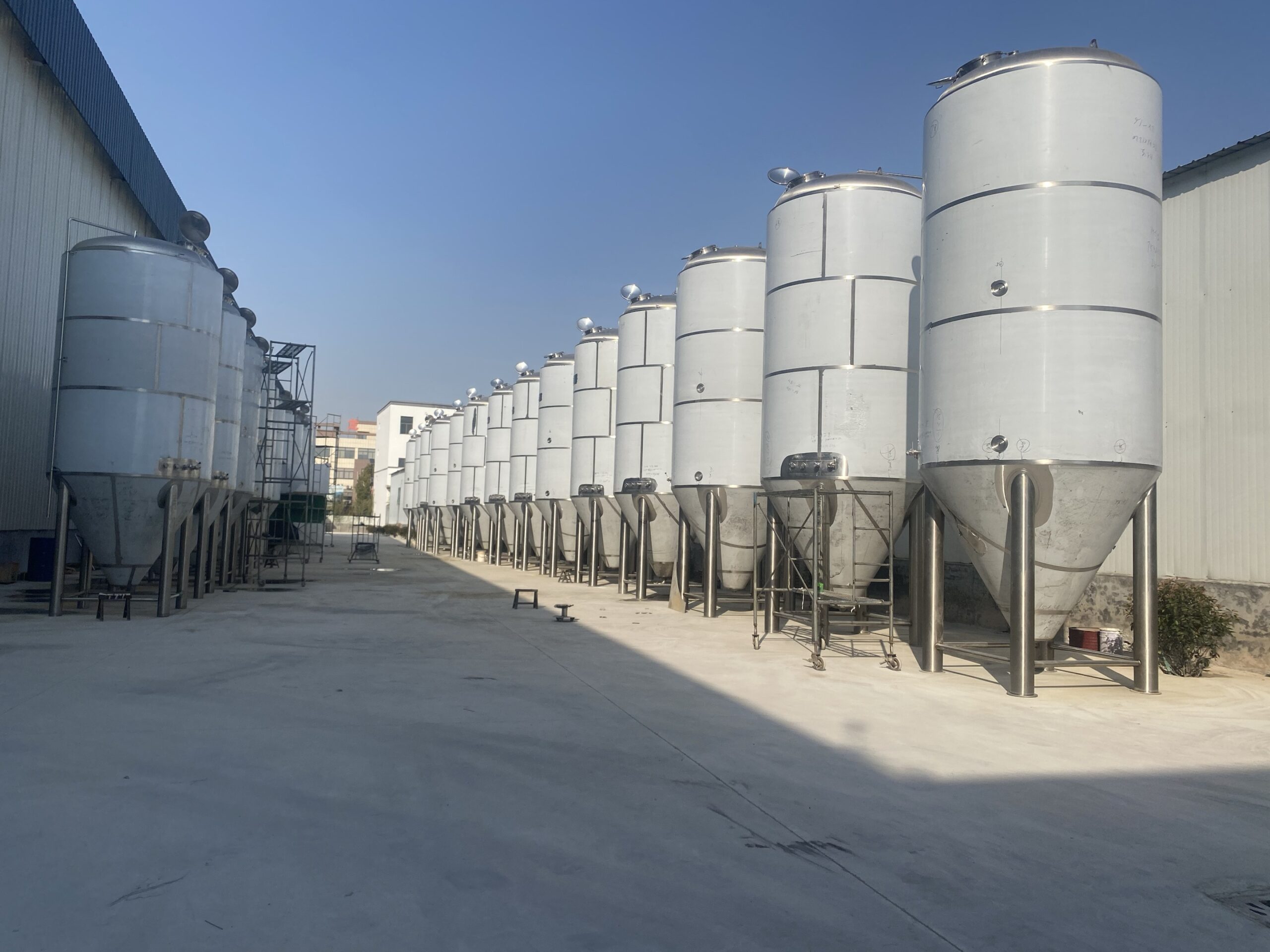
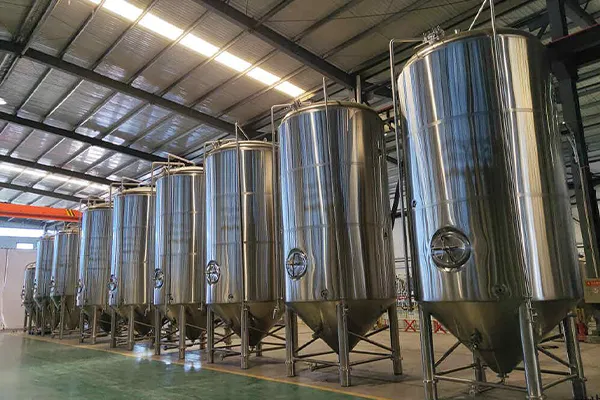
Choose from a wide range of capacities to match your brewhouse size, number of SKUs and production plan.
300L Used Fermentation Tank
Compact 300L stainless steel fermentation tank for pilot brewing, test batches or small kombucha / cider lines, pressure-tested and internally cleaned before shipment.
500L used fermentation tank suitable for nano breweries and restaurant breweries, with stainless-steel construction and optional cooling jacket for controlled fermentation.
1000L pre-owned fermentation tank for microbreweries and kombucha producers, supplied with basic fittings and inspected welds, ideal for small commercial production.
2000L used fermentation tank for growing craft breweries, with jacketed cooling and cone or dish bottom options, pressure-tested and ready for integration into your cellar.
2500L second-hand fermentation tank designed for higher-output microbreweries, supporting multiple batches per week and stable temperature control with glycol jackets.
High-capacity 5000L used fermentation tank for regional breweries or central production sites, suitable for beer, cider or other beverages, with tested pressure rating and hygienic internal finish.
This used 10T fermentation tank package uses MICET’s standard fermentation tank design and combines large-volume used fermenters with refurbished bright beer tanks.
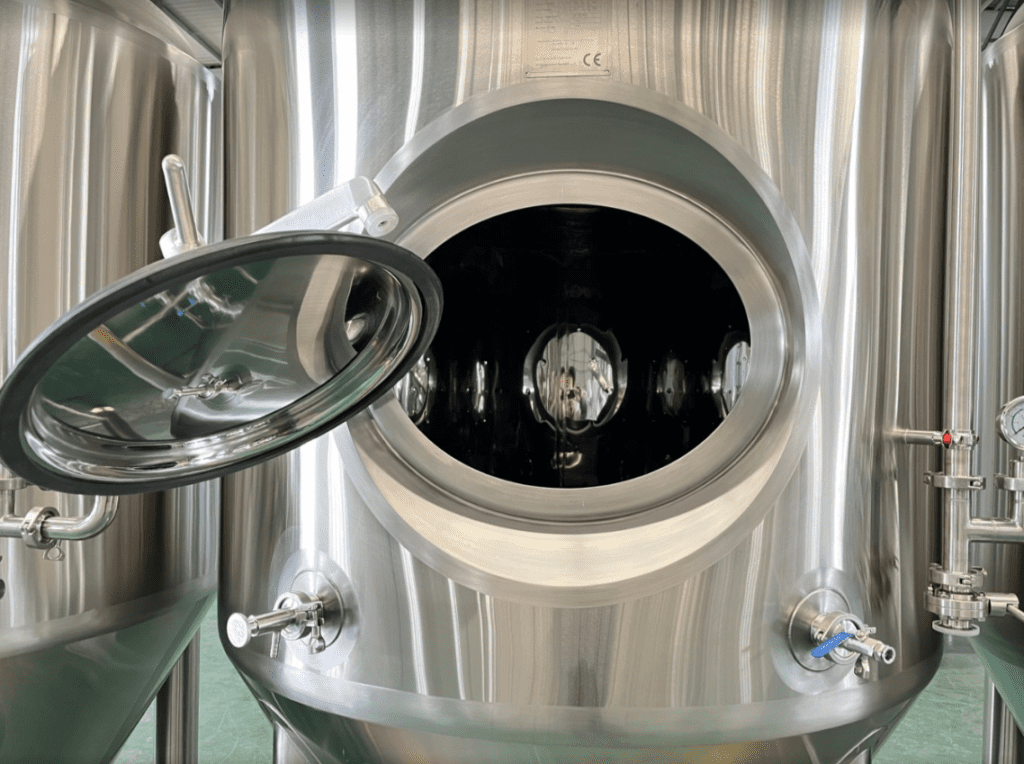
Before any used brewery equipment is offered to you, it goes through a strict refurbishment and quality control process in our factory. This helps you avoid hidden risks, reduce installation issues and put the system back into production as quickly as possible
Inspection & Pressure Test
We inspect the shell, cone, legs, jackets and welds for corrosion or damage, then perform pressure and leak tests on tank and jackets to confirm safe working pressure.
Internal Cleaning & Acid Passivation
The tank interior is deep-cleaned and descaled, then acid-passivated to restore stainless-steel corrosion resistance and create a smooth, hygienic, CIP-friendly surface.
Valve & Fitting Check / Replacement
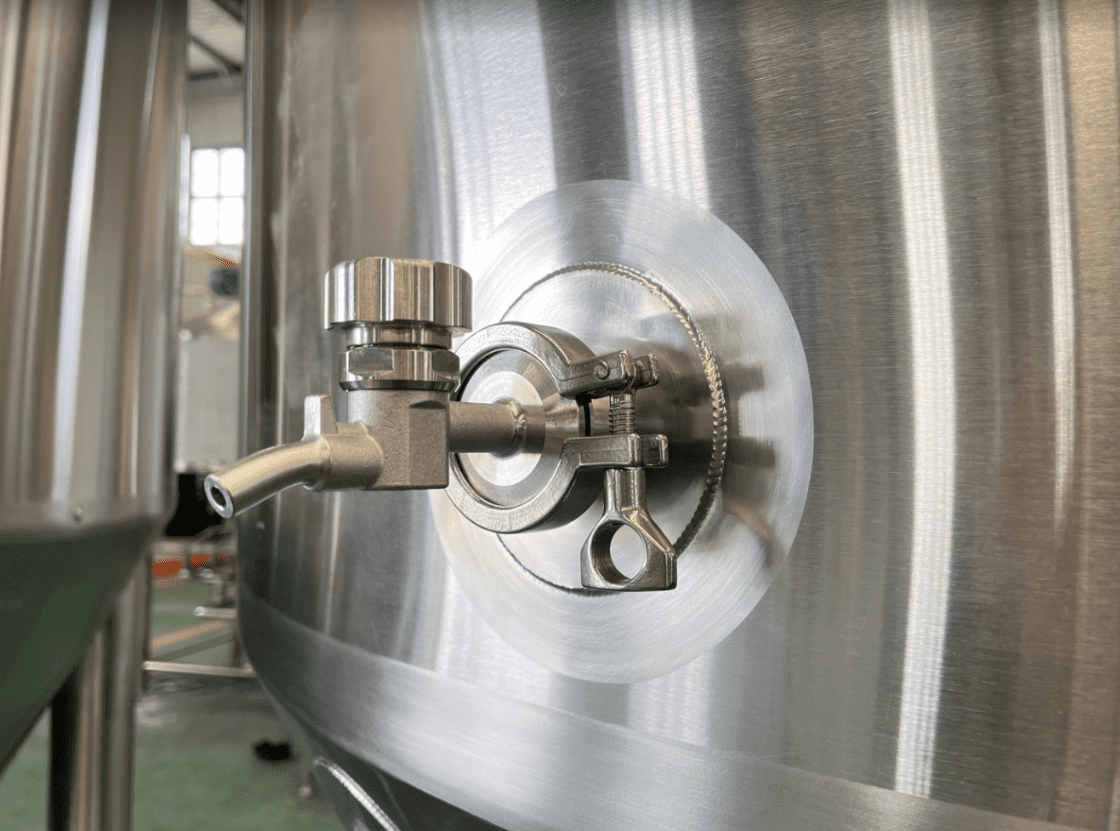
Manways, PRV, valves, gaskets, CIP spray balls and other fittings are checked; any worn or non-sanitary parts are repaired or replaced with food-grade components.
Final Inspection & Photo Report
We carry out a final visual check inside and outside the tank, then provide basic test records and photos, so you clearly see the real condition before packing and shipment.
Hybrid Fermentation Cellars – Used Tanks with New Cooling & CIP
In many cases, the best solution is used fermentation tanks or unitanks combined with new glycol chillers, pump skids, manifolds and CIP systems. We refurbish the tank body, jackets and fittings, then engineer new cooling, valves and cleaning loops around them. This keeps your main cellar volume cost-effective, while hygiene, temperature control and maintenance are handled by reliable new equipment.
Bize projenizden bahsedin, mühendislerimiz sizin için yeni + kullanılmış hibrit bir çözüm tasarlasın.
Temperature sensors, basic control panels, PLC integration options
CIP & Cleaning
CIP spray balls, CIP return connection, CIP set integration
Mechanical Modifications
Add/remove nozzles, change leg supports, adjust outlet height, add ladders or platforms
Müşteri Vakaları
MICET has performed actual installations in more than 100 countries—customized brewery, kombucha, distillery, winery systems, fermentation tanks, and stainless steel tanks.
Explore how we design, manufacture, install, and support turnkey projects from nano to commercial scale.
As the global craft beer industry continues to grow, many breweries are looking for reliable and affordable equipment to expand production while controlling investment costs. A high-quality used fermentation tank can be an excellent choice, offering professional performance at a significantly lower price than new equipment.
We currently have a well-maintained used 500L stainless steel fermentation tank available for sale. This tank has been professionally inspected, cleaned, and tested to ensure stable operation and excellent brewing performance. It is ideal for craft breweries, brewpubs, pilot brewing projects, beverage startups, and expanding production facilities.
Product Overview
The used 500L fermentation tank is one of the most popular sizes in the craft brewing industry. It provides the perfect balance between production flexibility and investment efficiency. Whether you are launching a new brewery or adding extra fermentation capacity, this tank can meet your requirements.
Manufactured from food-grade stainless steel, the tank is designed according to sanitary standards and is suitable for beer fermentation, cider production, kombucha fermentation, and other beverage applications.
Main Features
Capacity: 500 Liters
Material: Food-grade
SUS304 Stainless Steel
Double-Wall Construction with Glycol Cooling Jacket
PU Insulation for Temperature Stability
CIP Cleaning Spray Ball Included
Pressure Gauge and Sampling Valve
Ayarlanabilir Paslanmaz Çelik Ayaklar
Top or Side Manway Configuration
Safety Pressure Relief Valve
Mirror-Polished Interior Surface
Advantages of Choosing Used Equipment
Significant Cost Savings
Purchasing a used fermentation tank can reduce equipment investment by 30% to 60% compared with buying a new unit. This allows breweries to allocate more budget toward raw materials, packaging, marketing, or additional production equipment.
Faster Delivery
Unlike new equipment that may require several weeks or months of manufacturing time, used tanks are generally available for immediate shipment, helping breweries start production sooner and reduce waiting time.
Proven Performance
This tank has already been used in a production environment and has demonstrated reliable operational performance. After professional inspection and refurbishment, it is ready for continued service.
Sustainable Choice
Reusing brewing equipment contributes to environmental sustainability by extending equipment life cycles and reducing industrial waste.
All used equipment offered by our company undergoes a comprehensive inspection process before sale. We carefully evaluate tank integrity, welding quality, cooling jacket condition, valves, fittings, and overall appearance. The tank is thoroughly cleaned, pressure-tested, and prepared for shipment to ensure customers receive equipment that is ready for installation and operation. Photos, videos, and detailed inspection reports can be provided upon request.
Bize Ulaşın
If you are looking for a reliable and affordable used 500L fermentation tank, this unit represents an excellent opportunity to expand your brewery at a competitive cost. Contact us today for pricing, photos, videos, and shipping information. Our team will be happy to provide a customized quotation and help you select the right equipment for your brewing project.
Satılık Yüksek Kaliteli Kullanılmış 500L Craft Bira Bira Ekipmanı
Yatırım maliyetlerini kontrol ederken üretimi artırmak isteyen bira fabrikaları, brewpub'lar, restoranlar ve butik bira girişimleri için bu kullanılmış 500L butik bira üretim sistemi performans, güvenilirlik ve uygun fiyat arasında mükemmel bir denge sunar. Komple bira üretim tesisinin bakımı profesyonelce yapılmıştır ve iyi çalışır durumdadır, bu da onu ticari bira üretimi için ideal bir çözüm haline getirmektedir.
Komple Kullanılmış 500L Mayalama Sistemi Yapılandırması
Ekipman Adı
Şartname
Mash Tun
500L
Lauter & Whirlpool Tun
500L
Fermantasyon Tankı
500L
Glikol Su Tankı
1000L
Glikol Soğutucu
5 HP
Elektrikli Buhar Kazanı
50 kg/saat
Malt Değirmeni
150 kg/saat
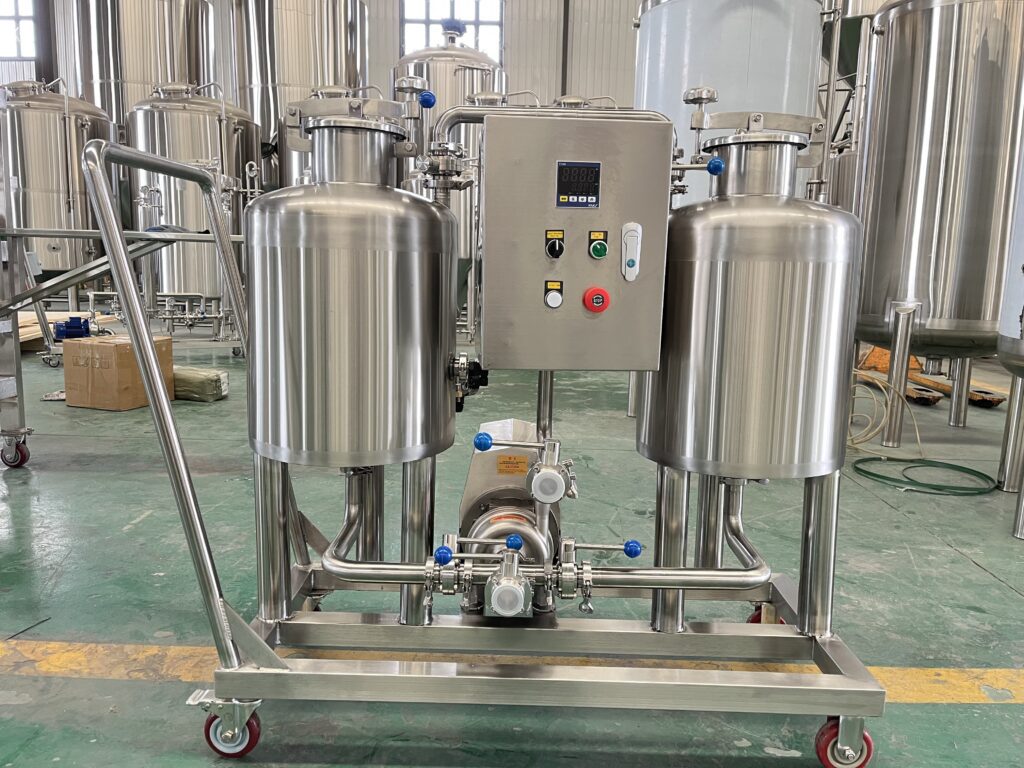
CIP Temizlik Arabası
Mobil Paslanmaz Çelik Tip
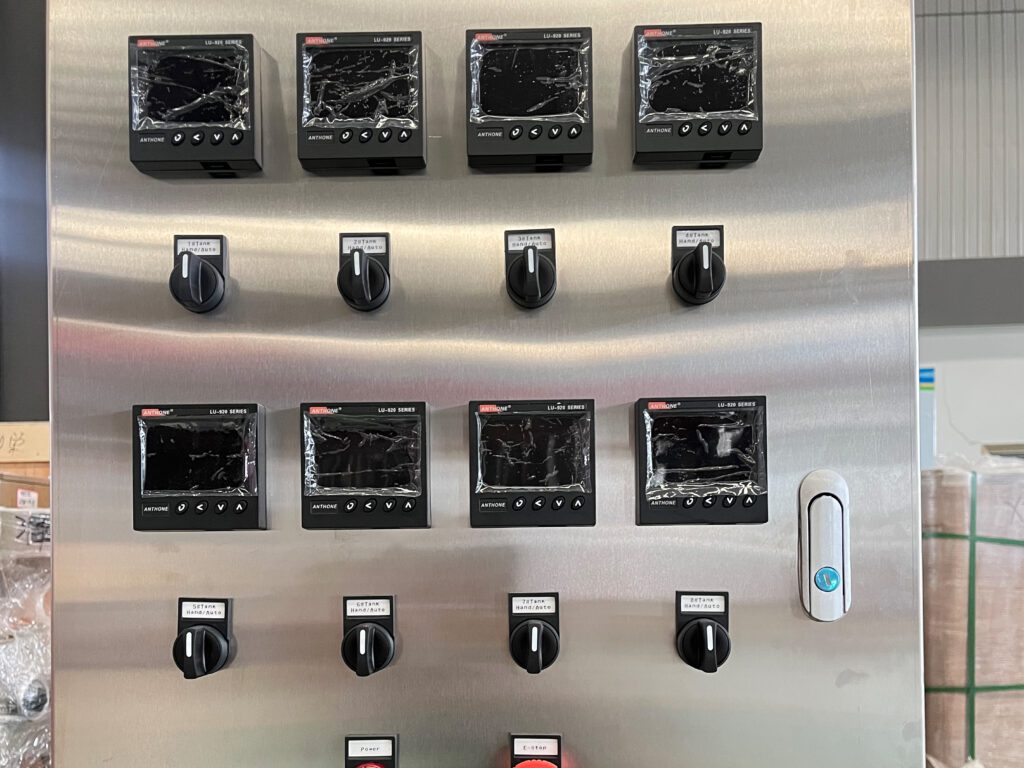
Elektrik Kontrol Kabini
Komple Kontrol Sistemi
Sistem, iki hazneli bir bira fabrikası konfigürasyonu olarak tasarlanmıştır ve zemin alanı gereksinimlerini en aza indirirken verimli şıra üretimi sağlar.
Verimli Demleme Kapasitesi
500L bira fabrikası IPA, Pale Ale, Lager, Stout, Wheat Beer ve mevsimlik özel biralar dahil olmak üzere çok çeşitli butik bira stilleri üretmek için uygundur.
Altı ile 500L fermantasyon tankları, bira üreticileri birden fazla bira tarifini aynı anda yönetebilir, üretim esnekliğini geliştirebilir ve genel bira üretimini artırabilir. Fermantasyon programlarına ve bira üretim sıklığına bağlı olarak ayda birkaç bin litre bira üretebilen sistem, küçük ticari bira fabrikaları ve büyüyen butik bira işletmeleri için uygundur.
Güvenilir Soğutma ve Sıcaklık Kontrolü
Bira fabrikası, fermantasyon ve bira şartlandırma süreçleri için istikrarlı soğutma performansı sağlayan 5HP glikol soğutucu ile eşleştirilmiş 1000L glikol su tankı içerir. Doğru sıcaklık kontrolü, üretim boyunca bira kalitesinin ve tutarlılığının korunmasına yardımcı olur.
Birlikte verilen 50 kg'lık elektrikli kazan, mayşe ve şıra üretimi için gerekli buhar ve ısı enerjisini sağlayarak verimli bira üretim operasyonları sağlar.
Kolay Temizlik ve Bakım
Özel bir CIP temizleme arabası, bira üreticilerinin tankları ve boru hatlarını verimli bir şekilde temizlemesini sağlayarak iş gücü gereksinimlerini azaltır ve sanitasyon standartlarını iyileştirir. Bira kalitesini korumak ve ekipmanın hizmet ömrünü uzatmak için doğru temizlik şarttır.
Paslanmaz çelik yapı, mükemmel korozyon direnci, dayanıklılık ve gıda sınıfı bira üretim gerekliliklerine uygunluk sunar.
Çeşitli Bira Üretim İşletmeleri için İdeal
Bu kullanılmış 500L bira üretim sistemi aşağıdakiler için uygundur:
El Sanatları Bira Fabrikaları
Brewpubs
Restoran Bira Fabrikaları
Taprooms
Pilot Bira Üretim Tesisleri
Sözleşmeli Bira Üretim Projeleri
Bira Fabrikası Genişleme Programları
İster yeni bir bira fabrikası kuruyor ister mevcut üretim kapasitenizi genişletiyor olun, bu sistem yeni ekipman satın almaya uygun maliyetli bir alternatif sunar.
Kullanılmış Bira Üretim Ekipmanı Satın Almanın Avantajları
Yeni bira üretim ekipmanlarıyla karşılaştırıldığında, kullanılmış bira üretim sistemleri çeşitli avantajlar sunar:
Daha düşük ilk yatırım
Daha hızlı teslimat ve kurulum
Kanıtlanmış operasyonel performans
Azaltılmış proje başlangıç maliyetleri
Daha yüksek yatırım getirisi
Birçok başarılı butik bira fabrikası, bütçe esnekliğini korurken iş büyümesini hızlandırmak için kaliteli ikinci el bira üretim ekipmanı kullanarak faaliyetlerine başlar veya genişletir.
Bize Ulaşın
Güvenilir bir kullanılmış 500L butik bira üretim sistemi arıyorsanız, bu eksiksiz bira üretim paketi üretim ihtiyaçlarınızı desteklemeye hazırdır. Ayrıntılı fotoğraflar, teknik özellikler, ekipman durum raporları, fiyatlandırma bilgileri ve dünya çapında nakliye çözümleri için bugün bize ulaşın.
Bira üretimine hızlı ve verimli bir şekilde başlamanıza yardımcı olmak için bira fabrikası yerleşim tasarımı, kurulum rehberliği, devreye alma desteği ve satış sonrası teknik yardım da sağlayabiliriz.
İspirto Damıtmak İçin Hangi Damıtım Ekipmanları Kullanılır? Ticari Damıtma Ekipmanları için Eksiksiz Bir Kılavuz
Doğru ekipman olmadan bir damıtımevi kurmak, ham maddeleri israf edebilir, ruh kalitesini düşürebilir ve ciddi güvenlik riskleri oluşturabilir. Damıtma sadece bir still gerektirmez. Tam bir damıtımevi fermente etme, ısıtma, buhar kontrolü, yoğunlaştırma, depolama, temizlik, test etme ve ambalajlama ekipmanı gerektirir.
Bir damıtımevi genellikle mash ekipmanları, bir mash tun, fermente edici, pot still veya column still, yoğunlaştırıcı, refulks sistemi, alım tankı, depolama tankları, filtrasyon ekipmanları, doğrulama araçları, CIP temizlik ekipmanları, pompalar, vanalar, borulama ve şişeleme ekipmanı kullanır. Ticari damıtım ayrıca güvenlik kontrolleri, havalandırma, sıcaklık kontrolü, hijyenik tasarım ve yasal uyum gerektirir.
Yönetici Özeti
Damıtımevi ekipmanı yalnızca still değildir. Tam bir sistem, mash hazırlığı, fermente etme, damıtma, yoğunlaştırma, ruh toplama, depolama, filtrasyon, doğrulama, temizlik ve ambalajlamayı içerir.
Damıtma, sıvı karışımları buhar davranışına göre ayırır, ardından buharı tekrar sıvı damıtılmış maddeye yoğunlaştırır.
Amerika Birleşik Devletleri'nde, bir damıtılmış ruhlar tesisi, alkollü içecek ruhları (örneğin votka, viski, cin, brendi, rom ve likörler) üretebilir, şişeleyebilir, işleyebilir, düzeltme yapabilir veya depolayabilir; ancak onay ve uyum gereklidir.
Ethanol buharı ve yanıcı sıvı yönetimi ciddi mühendislik kontrolleri gerektirir, buhar salınımını kontrol etmek ve ateşleme kaynaklarını ortadan kaldırmak dahil.
Bakır temas genellikle viski damıtımında kullanılır çünkü bakır yüzeyler ruh üretimindeki kükürt bileşenlerini azaltmaya yardımcı olabilir, ancak etkisi still tasarımına ve temas alanına bağlıdır.
Doğru damıtma ekipmanı, ruh türüne, parti boyutuna, ısıtma yöntemine, hijyen gereksinimlerine, yerel düzenlemelere ve işinizin büyüklüğüne bağlıdır.
Makale Anahatları
Herhangi bir damıtımevinde hangi ekipman kullanılır?
Damıtma sürecinde bir still ne yapar?
Pot still ile column still: hangi damıtma ekipmanı doğru?
Mash tun, fermente tankı ve fermente edici neden önemlidir?
Yoğunlaştırıcı, buhar yolu ve refulks nasıl damıtılmış madde kalitesini etkiler?
Hangi depolama tankları, doğrulama araçları ve filtrasyon ekipmanları gereklidir?
Bir damıtımevi içinde hijyenini destekleyen temizlik ekipmanı nedir?
Viski, votka, cin, brendi ve esans yağları için hangi ekipman gereklidir?
Ticari damıtım projeleri için hangi güvenlik ve uyum ekipmanları dikkate alınmalıdır?
B2B alıcılar ticari damıtımevi ekipmanını nasıl seçmelidir?
Herhangi bir damıtımevinde hangi ekipman kullanılır?
Her damıtma tesisinin temel ekipmanları, hammadde işleme araçları, hamur ekipmanıdır, fermantasyon tankları, bir damıtıcı, yoğuşturucu, alım tankı, depolama tankları, pompalar, vanalar, borulama, temizlik ekipmanları, test araçları ve paketleme ekipmanıdır. Kesin sistem, damıtan kişinin viski, votka, cin, brendi, rom, nötr ruhlar veya diğer damıtılmış ruh ürünleri yapmasına göre değişir.
Basit bir damıtımevi akışı şu şekilde görünür:
İşlem Aşaması
Kullanılan Ana Ekipman
Ham madde hazırlığı
Tahıl değirmeni, meyve ezici, şeker karıştırma tankı, su arıtma
Mash hazırlığı
Mash tun, ocak, karıştırıcı, ısıtma sistemi
Fermantasyon
Fermente edici, soğutma jaketi, maya yönetimi, sıcaklık kontrolü
Damıtma
Pot still, column still, ısıtma sistemi, refulks sistemi
Yoğunlaşma
Yoğunlaştırıcı, soğutma suyu sistemi, damıtılmış madde çıkışı
Toplama
Ruh alıcı, alkol boru hattı, hidrometre, doğrulama araçları
Manuel şişeleme hattı, dolum makinesi, mantar kapama, kapak kapama, etiketleme
Ticari projelerde, bir üretim planı olmadan ekipman seçimini parça parça yapmayı önermiyorum. Alkol damıtma işlemi ısı, etanol buharı, basınç, soğutma, temizlik ve düzenlemeleri içerir. Ekipman tek bir sistem olarak planlanmalıdır.
Bir profesyonel bira, damıtımevi, şarap fabrikası, kombucha ve içecek ekipmanları üreticisi olarak genellikle şu soruları sorarak başlıyoruz: Hangi içkiyi damıtmak istiyorsunuz, hangi parti büyüklüğüne ihtiyacınız var ve ürün nasıl paketlenecek veya olgunlaşacak? Bu yanıtlar tüm sistemi şekillendirir.
Bir Damıtıcı Damıtma Sürecinde Ne İşe Yarar?
Damıtıcı, fermente sıvıyı ısıtmak ve karışımdan alkol buharını ayırmak için kullanılan temel damıtma ekipmanıdır. Damıtma sırasında, farklı buhar davranışlarına sahip bileşenler sıvı ısıtıldıkça ayrılır. Buhar, damıtıcı sistemi aracılığıyla yol alır, biryoğuştuya girer, soğuyarak damıtılmış sıvı formuna geri döner.
Ruh üretiminde, damıtıcı kendiliğinden alkol üretmez. Alkol, mayanın fermente edilebilir şekerleri etanole dönüştürdüğü fermantasyondan gelir. Damıtıcı, ardından fermente yıkama, şarap, hamur veya bira benzeri sıvıdan alkol ve aroma bileşenlerini yoğunlaştırır ve ayırır.
Bir damıtıcı, damıtma sürecinde birkaç faktörü kontrol eder:
Isıtma hızı
Buhar yolu
Bakır veya paslanmaz çelik temas
Reflü seviyesi
Yoğuştu etkinliği
Toplama yöntemi
Kesim noktaları
Soğutma suyu akışı
Ürün alkol yüzdesi hedefi
Damıtıcı tasarımında küçük bir değişiklik, aroma, verim ve çalışma verimliliğini değiştirebilir. Uzun bir boyun daha fazla reflü oluşturabilir. Geleneksel bir kazan damıtıcı, daha ağır bir aromayı koruyabilir. Bir kolon damıtıcı, daha temiz, daha hafif bir ruh üretebilir. Doğru seçim, içki stiline bağlıdır.
Kazan Damıtıcı vs Kolon Damıtıcı: Hangi Damıtma Ekipmanı Doğru?
Kazan damıtıcı, genellikle lezzetli parti damıtımı için kullanılır. Genellikle whiskey, brendi, rom ve aroma ve bedenin önemli olduğu el yapımı ruhlar için seçilir. Geleneksel bir kazan damıtıcı genellikle bir kazan, baş veya kask, kol kolu, yoğuştu ve toplama çıkışı içerir.
Bir kolon damıtıcı, içinde tekrar eden buhar-sıvı teması oluşturmak için plakalar veya dolgu kullanır. Bu, ayırımı artırmaya yardımcı olur ve daha yüksek alkol yüzdesi üretebilir. Kolon damıtıcı sistemleri genellikle votka, cin baz ruh, nötr ruh ve saflık ile alkol yüzdesi üzerinde daha fazla kontrol gerektiren işlemler için kullanılır.
Ekipman Türü
Ana Güç
Ortak Kullanım
Kazan damıtıcı
Zengin aroma, parti kontrolü, geleneksel karakter
Whiskey, brendi, rom, el yapımı ruhlar
Kolon damıtıcı
Daha yüksek alkol yüzdesi, daha temiz ayırım, daha fazla reflü kontrolü
Votka, cin baz, nötr alkol
Hibrid damıtıcı
Kazan ve kolon özelliklerini birleştirir
Çoklu ürünlere sahip el yapımı damıtım tesisleri
Reflü kolon
Daha iyi ayırım ve daha temiz çıkış
Votka veya yüksek alkol ruhları
Botanik cin damıtıcı
Buhar veya sıvı infüzyon seçenekleri ekler
Cin ve aromalı ürünler
Takas basit. Kazan damıtıcı genellikle daha fazla karakter sunar ancak daha fazla zaman ve daha fazla kesim gerektirebilir. Kolon damıtıcı daha fazla kontrol ve daha yüksek alkol yüzdesi verir ancak bazı ağır aromaları çıkarabilir. Çoklu ürün damıtımevi için hibrid kazan-kolon sistemi pratik olabilir.
Neden Mash Tun, Fermantasyon Tankı ve Fermenter Önemli?
Bir damıtımevinin damıtmaya başlamadan önce fermente edilebilir alkol ihtiyacı vardır. Tahıl ruhları için süreç genellikle öğütme ve ezme ile başlar. Bir mash tun veya ocak, tahıl ve suyu kontrollü sıcaklık ve karıştırma ile karıştırır. Bu, ham maddelere ve tarife bağlı olarak nişastayı fermente edilebilir şekerlere dönüştürmeye yardımcı olur.
Ezildikten sonra, sıvı fermente ediciye geçer. Maya eklenir ve fermantasyon başlar. Fermenter, sıcaklık kontrolü, temizlik, güvenli transfer ve uygun çalışma hacmini desteklemelidir. Meyve ruhları veya brendi için fermantasyon, tahıl ezmesi yerine meyve suyu veya ezilmiş meyve ile başlayabilir.
Ticari bir fermenter şu niteliklere sahip olmalıdır:
Paslanmaz çelik veya uygun gıda sınıfı malzemeden yapılmış
Temizlenmesi kolay
Hijyenik vanalarla tasarlanmış
Parti planı için boyutlandırılmış
Sıcaklık kontrol mekanizmaları ile donatılmış
Gerekli yerlerde CIP temizliğine uyumlu
Güvenli erişim ve drenaj noktaları ile inşa edilmiş
Eğer fermantasyon dengesizse, damıtma her şeyi düzeltemez. Kötü fermantasyon, yan tatlar, düşük alkol verimi, mikrobiyal sorunlar veya tutarsız damıtılmış sıvı yaratabilir. İyi ruhlar, damıtıcıdan önce başlar.
Kondansatör, Buhar Yolu ve Reflü, Distilat Kalitesini Nasıl Etkiler?
Kondansatör, alkol buharını soğutur ve onu tekrar sıvı distilata dönüştürür. İyi bir kondansatör olmadan, buhar tam olarak yoğunlaşmayabilir, toplama kararsız hale gelir ve güvenlik riski artar. Kondansatör tasarımı, damıtma cihazının boyutu, ısıtma gücü, soğutma suyu temini ve beklenen buhar akışına uygun olmalıdır.
Buhar yolu da önemlidir. Buhar, bakır, paslanmaz çelik, bir kask, bir kuğu boynu, bir kolonu, tabakaları, dolgu, veya bir reflü bölümünden geçebilir. Daha fazla reflü, bir miktar buharın toplanmadan önce damıtma cihazına veya kolona yoğunlaşmasını ve geri dönmesini sağlar. Bu tekrar eden temas ruhun daha temiz ve daha yüksek dereceli olmasını sağlayabilir.
Bakır özel bir dikkati hak ediyor. Viski kükürt bileşenleri üzerine yapılan araştırmalar, bakır damıtma yüzeylerinin kükürt bileşenlerini temizleme yeteneğine sahip olduğu bildirildi, ancak kimya karmaşıktır ve her bakır pozisyonunun aynı etkiyi göstermediği unutulmamalıdır.
Viski, brendi ve bazı el yapımı ruhlar için, bakır teması aroma şekillendirmeye yardımcı olabilir. Vodka veya cin için, istenen ruh tarzına bağlı olarak bakır bölümleri olan paslanmaz çelik sistemler kullanılabilir. En iyi tasarım varsayılan olarak 'tamamen bakır' veya 'tamamen paslanmaz' değildir. Ürün kalitesi ve verim hedefleriyle uyumlu olmalıdır.
Hangi Depolama Tankları, Derecelendirme Araçları ve Filtrasyon Ekipmanlarına İhtiyaç Var?
Damıtma sonrası, distilatın geçici olarak tutulmasına, derecelendirme ayarlamasına, karıştırmaya, filtrasyona, olgunlaşmaya veya şişelemeye ihtiyaç olabilir. Depolama tankları, ruhları toplamak, karıştırmak, seyreltmek, dinlendirmek veya büyük ölçekli depolama için kullanılır. Genellikle paslanmaz çelikten yapılır ve hijyenik vanalar, seviye göstergeleri, havalandırmalar, kapaklar ve temizlik bağlantıları ile donatılır.
Derecelendirme araçları, damıtıcıların alkol oranını kontrol etmelerine yardımcı olur. Bir hidrometre veya alkolmetre, genellikle sıcaklık düzeltmesi ile birlikte, derecelendirmeyi veya ABV'yi ölçmek için kullanılır. Profesyonel işletmeler, özellikle vergi, etiketleme ve uyumluluk için doğruluk sağlamak amacıyla laboratuvar testlerini de kullanabilir.
Filtrasyon, ruh türüne bağlıdır. Vodka, berraklığı ve yumuşaklığı artırmak için aktivatör karbon filtreleri kullanabilir. Cin, bitkisel parçacıkların çıkarılmasını gerektirebilir. Brendi ve viski, tat tutma amacıyla daha az filtrasyon gerektirebilir. İyi bir filtrasyon sistemi, arzu edilen karakteri kaldırmadan ürün kalitesini artırmalıdır.
Ekipman
Amaç
Ruh alıcısı
Kondansatörden distilatı toplar
Depolama tankı
Karıştırma veya paketleme öncesinde ruhu tutar
Derecelendirme tankı
Seyreltme ve derecelendirme ayarlamasını destekler
Hidrometre / alkolmetre
Alkol gücünü kontrol eder
Aktif karbon filtreleri
Vodka parlatması için yaygındır
Kartuş veya plaka filtrasyonu
Şişelemeden önce parçacıkları çıkarır
Karıştırma tankı
Partileri karıştırır veya tadı ayarlar
Manuel şişeleme hattı
Küçük el yapımı üretim için uygundur
Bir Damıtım Tesisi İçin Hangi Temizlik Ekipmanları Hijyeni Destekler?
Bir damıtma tesisindeki hijyen, tat, güvenlik ve üretim verimliliğini etkiler. Temizlik ekipmanları şunları içerebilir: CIP sistemleri, sprey başlıkları, temizlik pompaları, kimyasal tanklar, hortumlar, drenaj sistemleri ve hijyenik donanımlar. CIP, yerinde temizleme anlamına gelir. Tankların ve boruların tamamen sökülmesine gerek olmadan temizlenmesini sağlar.
Damıtımevi temizliği, basit durulamadan farklıdır. Ekipman içinde mayşe kalıntısı, maya, meyve posası, şeker birikintileri, bitkisel yağlar ve mineral ölçek birikebilir. Bu kalıntılar sistem içinde kalırsa, bir sonraki partiyi etkileyebilir.
İyi tasarlanmış bir temizlik düzeni şunları desteklemelidir:
Güvenli kimyasal döngü
Kolay drenaj
Ölü köşeler olmamalı
Düzgün iç yüzeyler
Erişilebilir vanalar
Gerekirse çıkarılabilir filtreler
Düzenli denetim
Belgelendirilmiş temizlik adımları
B2B alıcıları için bu, düşük maliyetli ekipman ile profesyonel ekipman arasındaki en büyük farklardan biridir. damıtım ekipmanıdır. Temizlenmesi zor bir damıtma veya tank, duruş süreleri, iş gücü ve kalite sorunları nedeniyle maliyetli hale gelecektir.
Viski, Vodka, Cin, Brendi ve Esansiyel Yağlar İçin Hangi Ekipmanlar Gerekir?
Farklı ürünler farklı damıtma ekipmanları gerektirir. Viski damıtımı genellikle eziyet pişirme, fermantasyon tankları, alambik damıtıcıları veya hibrit damıtıcılar, yoğuşucular, ruh alıcılar, fıçılar ve depolama alanları kullanır. Brendi meyve işleme, fermantasyon, damıtma ve genellikle olgunlaşma gerektirir.
Vodka veya cin farklı bir plan gerektirir. Vodka genellikle daha temiz, daha yüksek dereceli bir ruh gerektirir, bu nedenle kolonu damıtma, reflü kontrolü, derecelendirme ve filtrasyon daha önemlidir. Cin, damıtıcının tarzına bağlı olarak, macerasyon, buhar infüzyonu veya bir cin sepeti ile bitkisel tatlandırma gerektirebilir.
Esansiyel yağlar içecek alkolü değildir, ancak bazı ekipman ilkeleri örtüşmektedir. Esansiyel yağ damıtımı genellikle buhar damıtması, bitki materyali sepetleri, kondansatörler, yağ-su ayırıcıları ve paslanmaz çelik kaplar kullanır. Tasarım odak noktası aroma yakalama, bitki materyali işleme ve ayırmadır.
Ürün
Yaygın Ekipman Odaklanması
Viski
Mash tun, fermentör, pot still, kondansatör, fıçı olgunlaştırma
1000L damıtma sistemi, büyüyen bir el yapımı damıtım tesisi için uygun olabilir, ancak boyut tek başına yeterli değildir. Isıtma yöntemi, yoğuşturucu kapasitesi, kolon tasarımı, temizlik erişimi ve bina altyapısı ürüne uygun olmalıdır.
Ticari Damıtma Projeleri Hangi Güvenlik ve Uyum Ekipmanlarını Düşünmeli?
Ticari damıtma, yanıcı sıvılar ve etanol buharı içerir. OSHA rehberi, etanol gibi yanıcı sıvılar için mühendislik kontrollerinin, yanıcı buhar salınımını önlemeye veya kontrol etmeye ve ateşleme kaynaklarını ortadan kaldırmaya odaklandığını açıklar.
Bir damıtma tesisi aşağıdaki güvenlik ekipmanlarını ve tasarım özelliklerini dikkate almalıdır:
Uygun havalandırma
Gerekli yerlerde patlamaya dayanıklı elektrik bileşenleri
Topraklama ve bağlama
Güvenli alkol depolama
Sıcaklık ve basınç izleme
Acil kapatma
Yangın koruma
Dökülme kontrolü
Açık drene
Güvenli erişim platformları
Yerel kodlara uygun oda tasarımı
Yasal uyum da önemlidir. Amerika Birleşik Devletleri'nde, TTB kuralları damıtılmış içki tesisleri operasyonlarını, izinlerini, kayıt işlemlerini, üretimi, şişelemeyi, işleme, depolama ve ilgili uyum konularını kapsar. Bir içecek damıtılmış içki tesisi, içki üretebilir, şişeleyebilir, düzeltme yapabilir, işleyebilir veya depolayabilir, ancak işletmecilerin geçerli kurallara uyması gerekmektedir.
Bu makale yasal tavsiye değildir. Her ticari damıtma tesisi, ekipman satın almadan veya kurulum yapmadan önce yerel yasaları, alkol lisanslama kurallarını, yangın kodlarını, elektrik kodlarını ve çevresel gereksinimleri kontrol etmelidir.
B2B Alıcıları Ticari Damıtma Ekipmanını Nasıl Seçmelidir?
B2B alıcıları, ticari damıtma ekipmanını katalog fotoğrafına göre değil, süreçlere göre seçmelidir. Bir başlangıç el yapımı damıtma tesisi, kurulu bir damıtma tesisi, restoran zinciri, içecek işleme şirketi, distribütör veya proje yatırımcısı, ürün adı benzer olsa bile çok farklı ekipmanlara ihtiyaç duyabilir.
Pratik bir satın alma kontrol listesi:
Soru
Neden Önemli?
Hangi ruhu üreteceksiniz?
Viski, votka, cin, brendi, rom veya uçucu yağlar farklı sistemler gerektirir.
Hangi parti boyutuna ihtiyacınız var?
Distil hacmini, fermente tankı boyutunu ve ısıtma yükünü tanımlar.
Hangi ham maddeleri kullanacaksınız?
Tahıl, meyve, melas veya botanikler, mayşeyi ve temizliği etkiler.
Dibek stilli mi kolonu mu kullanacaksınız?
Lezzet, alkol miktarı ve üretim tarzını kontrol eder.
Hangi ısıtma yöntemi mevcut?
Buhar, elektrik, gaz veya termal yağ, düzeni ve maliyeti etkiler.
Bakır teması gereksiz mi?
Bazı ruh stilleri ve aroma hedefleri için önemlidir.
Hangi alkol derecesine hedefleniyor?
Reflü, kolon tasarımı ve toplama stratejisini etkiler.
Sistemi nasıl temizleyeceksiniz?
CIP, erişim, vanalar ve duraklama sürelerini belirler.
Hangi ambalaj yöntemi planlanıyor?
Manuel şişeleme hattı veya otomatik dolum, düzeni etkiler.
Hangi destek gerekiyor?
CAD/3D düzeni, kurulum rehberi ve teknik hizmet riski azaltır.
Profesyonel deneyimlerimize göre, birçok damıtma projesi planlama aşamasında başarısız oluyor, çünkü alıcılar sadece aleme odaklanıyor. Alemin önemi var, ancak fermente, yoğuşturucu, soğutma sistemi, temizlik planı, depolama tankları ve güvenlik tasarımı da aynı derecede önemlidir.
Hangi Öneriler Her Damıtma Tesisine Uygulanmaz?
Her damıtma tesisi aynı sisteme ihtiyaç duymaz. Küçük bir el yapımı damıtıcı, yüksek otomasyondan çok esnekliğe ihtiyaç duyabilir. Bir votka üreticisi, kolon alemi ve filtrasyon gerektirebilir. Bir viski üreticisi, geleneksel dibek stilli tadını tercih edebilir. Bir brendi üreticisi, meyve işleme ve nazik damıtma odaklanabilir. Bir işleme şirketi, tekrarlanabilir temizlik, hızlı geçiş ve parti belgelerine ihtiyaç duyabilir.
Önemli ticari denge unsurları şunlardır:
Dibek stilli vs kolon stilli: Lezzet karakteri vs daha yüksek alkol miktarı ve ayrım.
Bakır vs paslanmaz çelik: Aroma yönetimi vs temizlik, maliyet ve dayanıklılık.
Manuel vs otomatik kontrol: Daha düşük başlangıç maliyeti vs tekrarlanabilir işletim.
Küçük parti vs büyük parti: Ürün esnekliği vs ölçek ekonomileri.
Açık düzen vs kompakt düzen: Kolay hizmet erişimi vs sınırlı bina alanı.
Temel filtrasyon vs. ileri filtrasyon: Tat koruma vs. netlik ve pürüzsüzlük.
En iyi sistem en pahalı olan değil, ürününüze, üretim kapasitenize, güvenlik gereksinimlerinize ve uzun vadeli iş planınıza uygun olan sistemdir.
Pratik Vaka İncelemesi: 1000L El Yapımı Damıtma Sistemi Planlaması
Bir başlangıç damıtması, viski ve cin için 1000L’lik bir sistem istedi. İlk olarak, alıcı sadece damıtıcı fiyatını sordu. Projeyi inceledikten sonra, tesisin ayrıca fermantasyon kapasitesine, soğutmaya, bitkisel işleme, alkol kanıtlamaya, depolamaya, temizlik yapmaya ve pratik bir manuel şişeleme hattına ihtiyacı olduğunu keşfettik.
Son ekipman planı şunları içeriyordu:
İhtiyaç
Ekipman Çözümü
Viski hamuru hazırlığı
Sıcaklık ve karıştırma kontrolü olan hamur kazanı
Fermantasyon
Parti programı için boyutlandırılmış paslanmaz çelik fermantörler
Viski damıtma
Bakır temas ve yoğuşturucu ile pot damıtıcı
Cin esnekliği
Bitkisel sepet ve kontrollü buhar yolu
Soğutma
Yoğuşturucu soğutma suyu sistemi
Alkol işlemleri
Alım tankı, kanıt tankı, depolama tankları
Temizlik
CIP pompası ve hijyenik sprey bağlantıları
Ambalajlama
Küçük parti ilanları için manuel şişeleme hattı
Düzen
İş akışı ve hizmet erişimi için CAD/3D planı
Bu proje, sık karşılaşılan bir dersi gösterdi: İyi damıtma ekipmanı, yalnızca damıtma anını değil, tüm üretim zincirini desteklemelidir.
Damıtma Ekipmanları Hakkında Sıkça Sorulan Sorular
Bir damıtma tesisinde hangi ekipman kullanılır?
Bir damıtımevi, ezme ekipmanları, fermantörler, damıtıcılar, yoğuşucular, geri akış sistemleri, ruh alıcılar, depolama tankları, pompalar, vanalar, borulama, filtrasyon sistemleri, alkol ölçüm aletleri, temizlik ekipmanları ve şişeleme ekipmanları kullanır.
Damıtma ekipmanının en önemli parçası nedir?
Damıtıcı, en görünür ekipman parçasıdır, ancak fermantör, yoğuşturucu, soğutma sistemi ve temizlik sistemi de önemlidir. Kötü fermantasyon veya yetersiz yoğuşturma, damıtıcı iyi yapılmış olsa bile kaliteyi bozabilir.
Bir pot still ile bir column still arasındaki fark nedir?
Bir pot damıtıcı genellikle parti damıtımı ve viski, rom ve brendi gibi tatlı ruhlar için kullanılır. Bir kolon damıtıcı, daha güçlü ayrıştırma ve daha yüksek alkol kanıtı için plakalar veya dolgu kullanarak, votka, cin baz ruhu ve nötr alkol için faydalıdır.
Damıtma ekipmanında paslanmaz çelik mi yoksa bakır mı daha iyidir?
Her ikisi de faydalı olabilir. Paslanmaz çelik dayanıklıdır, hijyeniktir ve temizlenmesi kolaydır. Bakır, sülfür bileşenlerini yönetmeye yardımcı olabilir ve birçok viski ve brendi damıtıcısı için gelenekseldir. Birçok ticari sistem, paslanmaz çelik ile bakır temas bölümlerini birleştirir.
Bir damıtma tesisi için bir hamur kazanına ihtiyacım var mı?
Ruh üretiminiz tahıl veya diğer nişasta bazlı hammaddelerden başlıyorsa bir hamur kazanına ihtiyacınız var. Eğer şarap, elma şırası, meyve yıkama veya satın alınan nötr ruhtan damıtıyorsanız, hamur ekipmanı ihtiyaçlarınız farklı olabilir.
Votka veya gin için hangi ekipman gereklidir?
Votka genellikle kolon damıtımı, geri akış kontrolü, kanıt, filtrasyon ve temiz depolama gerektirir. Cin, nötr ruh işlemesini, bitkisel tatlandırmayı, bir cin sepetini veya mayalama tankını, yoğuşturucuyu, depolamayı, filtrasyonu ve şişeleme ekipmanını gerektirebilir.
Alkolü evde damıtmak yasal mı?
Yasalar ülkeye ve bölgeye göre değişir. Amerika Birleşik Devletleri'nde, içki damıtılmış alkollerin üretimi düzenlenir ve ticari operasyonlar uygun onay ve uyumluluk gerektirir. Damıtma yapmadan önce her zaman yerel alkol yasalarını kontrol edin.
Önemli Çıkarımlar
Damıtma ekipmanları yalnızca bir damıtıcıdan çok daha fazlasını içerir.
Tam bir sistem hamur kazanı, fermantör, damıtıcı, yoğuşturucu, geri akış sütunu, alım tankı, depolama tankları, filtrasyon, kanıtlama, CIP temizliği ve şişeleme ekipmanını içerebilir.
Pot damıtıcılar genellikle viski ve brendi gibi tatlı ruhlar için kullanılır.
Kolon damıtıcılar genellikle votka veya nötr alkol gibi daha yüksek alkol kanıtına sahip ruhlar için kullanılır.
Fermantasyon kalitesi, damıtım kalitesini ve verimi önemli ölçüde etkiler.
Yoğuşturucu boyutlandırması ve soğutma suyu temini, güvenli buhar kontrolü için kritik öneme sahiptir.
Bakır temas bazı damıtma sistemlerinde sülfür bileşiği azaltımını etkileyebilir.
Paslanmaz çelik, hijyenik, dayanıklı ve temizlenmesi kolay olduğu için yaygın olarak kullanılır.
Ticari damıtma ciddi bir güvenlik planlaması gerektirir çünkü etanol ve alkol buharı yanıcıdır.
En iyi damıtma ekipman planı, ruh türü, parti boyutu, bina düzeni, ısıtma yöntemi, temizlik iş akışı, yasal gereklilikler ve gelecekteki büyüme ile eşleşmelidir.
Bir damıtma projesi için en güvenli bir sonraki adım bir süreç incelemesidir: damıtılacak ruh türünü, parti kapasitesini, ısıtma kaynağını, bina hizmetlerini, temizlik planını, paketleme yöntemini ve yerel uyumluluk ihtiyaçlarını onaylayın, ardından damıtıcının boyutunu veya tam ekipman düzenini seçin.
What Equipment Is Needed to Make Kombucha? A Practical Guide to Kombucha Brewing at Home and Commercial Scale
Bad kombucha equipment can lead to weak fermentation, mold risk, flat flavor, messy bottling, or unsafe pressure in bottles. Whether you brew kombucha at home or plan commercial production, the right tools help you control taste, safety, fizz, and repeatable quality.
To make kombucha, you need tea, cane sugar, water, a SCOBY, starter tea, a clean glass jar or stainless steel fermentation tank, breathable cover, rubber band, thermometer, pH test strips or meter, strainer, bottles for second fermentation, and cleaning tools. Commercial kombucha brewing also needs sanitary tanks, CIP cleaning, cooling, filtration, carbonation, filling, and quality control equipment.
Yönetici Özeti
Kombucha is a fermented tea made with sweetened tea and a SCOBY, a culture of bacteria and yeast that drives fermentation.
For safe homemade kombucha, pH control matters. Colorado State University notes kombucha should be below pH 4.2 but not below pH 2.5 for safe consumption.
A homebrew setup can start with a glass jar, coffee filter or tea towel, rubber band, starter tea, kombucha SCOBY, thermometer, test strips, and glass bottles.
Second fermentation creates carbonation, but pressure can build in bottles, so bottle choice and monitoring matter.
Commercial kombucha production requires stainless steel fermentation tanks, hygienic design, temperature control, pH/TA testing, safe packaging, and process records.
The best equipment depends on your goal: homemade kombucha, taproom-style batches, beverage co-packing, or scalable factory production.
Makale Anahatları
What is kombucha brewing, and why does equipment matter?
What basic equipment do you need to make kombucha at home?
Why are SCOBY, starter tea, and sweetened tea essential?
What jar, cover, rubber band, and brewing vessel should you use?
What tools help control fermentation, temp, and pH?
What bottles are needed for second fermentation and carbonation?
How do you make kombucha with a simple 1-gallon recipe?
What equipment is needed for commercial kombucha brewing?
What are the trade-offs between DIY kombucha kits and professional systems?
How should beverage businesses choose kombucha equipment?
What Is Kombucha Brewing, and Why Does Equipment Matter?
Kombucha brewing is the process of fermenting sweetened tea with a SCOBY. The word SCOBY means symbiotic culture of bacteria and yeast. During fermentation, yeast and bacteria work together to change sugar and tea into a tart, lightly fizzy fermented tea. Research describes kombucha as sugared tea fermented at ambient temperature with a cellulose pellicle made up of acetic acid bacteria and yeast.
Equipment matters because kombucha is alive. It needs air during the first fermentation, clean tools, the right room temperature, enough starter tea, and a safe vessel. Poor tools can slow the brew, invite fruit flies, increase contamination risk, or create inconsistent flavor. This is true whether you make kombucha at home in a wide-mouth jar or produce it in a commercial beverage facility.
From my experience as a brewery, distillery, winery, kombucha, and beverage equipment manufacturer, I usually tell buyers one thing first: kombucha eki̇pmanlari should support clean fermentation before it supports high output. A bigger tank is not useful if the process is hard to clean, hard to test, or hard to repeat.
What Basic Equipment Do You Need to Make Kombucha at Home?
To make kombucha at home, you need simple but clean tools. A beginner homebrew setup usually includes a glass jar, tea, organic cane sugar or cane sugar, starter liquid, a kombucha SCOBY, a breathable cover, rubber band, thermometer, pH test strips, strainer, and glass bottles for second fermentation.
A basic homemade kombucha equipment list looks like this:
Ekipman
Why You Need It
Glass jar or brewing jar
Holds the sweet tea, starter, and SCOBY
SCOBY
Starts the fermentation process
Starter tea
Acidifies the brew and protects the batch
Tea bags or loose leaf tea
Provides nutrients and flavor
Cane sugar
Feeds yeast and bacteria
Coffee filter or tea towel
Covers the jar while allowing airflow
Rubber band
Secures the cover and keeps fruit flies out
Thermometer
Helps monitor room temperature
pH test strips or meter
Checks acidity and safety range
Strainer
Removes tea leaves or fruit pieces
Glass bottles
Used for second fermentation and fizz
For beginners, this setup is enough to start brewing. A DIY kombucha kit may include many of these items, but you should still check the quality of the jar, bottles, and test strips. Cheap bottles may not handle pressure well during bottle conditioning.
Why Are SCOBY, Starter Tea, and Sweetened Tea Essential?
The SCOBY is the heart of kombucha brewing. It often looks like a pale, rubbery layer called a pellicle. This pellicle forms on the surface as the culture ferments sweet tea. Studies of SCOBY cultures show that kombucha communities commonly include yeast and acetic acid bacteria, with common genera such as Brettanomyces and Komagataeibacter found in many samples.
Starter tea is just as important as the SCOBY. It lowers the pH of the new batch at the start. This makes the brew less friendly to unwanted microbes. Colorado State University explains that acidification helps kombucha reach a safe pH and reduce contamination risk.
Sweetened tea provides food. You can use black tea, green tea, or a blend of black and green tea. The yeast consumes sugar and produces compounds that bacteria convert into organic acids. Without enough sugar, the kombucha may become sluggish. Without enough starter, the batch may not acidify fast enough.
What Jar, Cover, Rubber Band, and Brewing Vessel Should You Use?
For kombucha at home, a wide-mouth glass jar is usually the easiest choice. Glass is easy to see through, easy to clean, and does not react with acidic kombucha. A 1 gallon jar is common for a small batch of kombucha. A half-gallon jar is also useful when testing a new kombucha recipe or different flavors.
You should cover the jar with a coffee filter, tea towel, or tightly woven breathable cloth. The cover should allow oxygen to enter but keep fruit flies, dust, and insects out. A rubber band keeps the cover tight around the jar. Do not seal the first fermentation with an airtight lid because the SCOBY needs oxygen.
For commercial production, food-grade stainless steel is normally preferred. It is stronger, more hygienic, easier to clean, and better for controlled production. A commercial kombucha tank may include a manway, sanitary valves, CIP spray ball, cooling jacket, sample valve, temperature probe, and optional spigot or racking outlet.
What Tools Help Control Fermentation, Temp, and pH?
Kombucha fermentation depends on temperature, time, acidity, starter strength, and culture health. A simple thermometer helps you check room temperature. Kombucha usually ferments at room-temperature conditions, but very cold rooms can slow the process, while overly warm rooms can push faster acid production.
pH test strips or a pH meter help you monitor acidity. Colorado State University states that safe kombucha should be below pH 4.2 and not lower than pH 2.5. This is why test strips are not just “extra tools.” They help you know whether the brew is moving in the right direction.
For home use, test strips are usually enough. For professional beverage production, a pH meter, titratable acidity testing, alcohol testing, temperature logs, batch records, and sanitation checks become more important. Kombucha that rises above 0.5% ABV may be regulated as an alcoholic beverage in the United States, so commercial producers should test alcohol carefully.
What Bottles Are Needed for Second Fermentation and Carbonation?
After the first fermentation, many brewers move finished kombucha into bottles for second fermentation. This stage adds flavoring and carbonation. Fruit juice, herbs, ginger, berries, citrus, or other flavoring ingredients can create different flavors. The yeast consumes small amounts of sugar and produces carbon dioxide, which creates fizz.
Use strong glass bottles made for pressure, such as flip-top bottles designed for fermented drinks. Do not use weak decorative bottles. Pressure can build during second fermentation. If bottles are too weak, overfilled, or left too long at warm temperature, they may leak or break.
Second fermentation needs careful control. Use clean bottles, leave headspace, do not overdo sugar, and refrigerate when carbonation is ready. For commercial kombucha, carbonation can be controlled more safely with brite tanks, carbonation stones, pressure-rated vessels, and filling systems.
How Do You Make Kombucha With a Simple 1-Gallon Recipe?
A simple 1 gallon kombucha recipe usually starts with brewed tea, sugar, starter tea, and a SCOBY. Exact ratios vary by recipe and culture strength, but the basic process is easy to understand.
A beginner process may look like this:
Brew tea with tea bags or loose leaf tea.
Add cane sugar while the tea is hot and stir until dissolved.
Cool the sweet tea to room temperature.
Pour it into a clean glass jar.
Add starter tea and the kombucha scoby.
Cover the jar with a coffee filter or tea towel.
Secure it with a rubber band.
Let it ferment at room temperature.
Taste after several days.
Bottle the finished kombucha for flavoring or second fermentation.
Save starter tea and SCOBY for the next batch.
Colorado State University notes that kombucha is often fermented for 7–10 days, though timing can vary based on conditions and desired taste. A shorter brew may taste sweeter. A longer brew may taste more sour or vinegary. If the batch smells rotten, grows fuzzy mold, or looks unsafe, discard it.
What Equipment Is Needed for Commercial Kombucha Brewing?
Commercial kombucha brewing needs stronger, cleaner, and more controlled equipment than homemade kombucha. A beverage producer needs to repeat the same taste, acidity, carbonation, and package quality across every batch. This requires more than a glass jar.
A commercial kombucha line may include:
İşlem Aşaması
Professional Equipment
Tea brewing
Hot water tank, tea extraction vessel, filter or strainer
For a startup kombucha brand, not every item must be fully automatic on day one. But the equipment should be hygienic, scalable, and easy to clean. A poor layout can waste labor every day. A good layout supports smooth movement from tea brewing to fermentation, flavoring, carbonation, and filling.
What Are the Trade-Offs Between DIY Kombucha Kits and Professional Systems?
A DIY kombucha kit is good for learning. It is affordable, small, and easy to use. You can test black tea, green tea, fruit juice, loose leaf tea, and different flavors without much investment. But a DIY kit does not offer strong process control or commercial capacity.
Professional kombucha systems cost more, but they provide better sanitation, repeatability, temperature control, and production planning. They also reduce manual handling. For beverage co-packers, kombucha producers, brewpub chains, and project investors, these benefits can reduce long-term risk.
Option
Advantage
Limitation
DIY kombucha kit
Low cost, easy to start
Small volume, less control
Glass jar homebrew
Simple and visible
Not scalable
Small stainless tank
More durable, cleaner
Daha yüksek ön maliyet
Jacketed fermenter
Better temp control
Needs utilities
Full commercial line
Scalable and efficient
Requires planning and capital
The right choice depends on your goal. If you only want homemade kombucha, use simple tools. If you want a beverage business, plan for hygiene, testing, filling, cooling, and repeatable production.
How Should Beverage Businesses Choose Kombucha Equipment?
B2B buyers should not choose kombucha equipment only by tank volume. Start with the business model. Will you sell fresh kombucha on tap, bottled kombucha, canned kombucha, flavored kombucha, hard kombucha, or co-packed products for other brands? Each model needs different equipment.
A practical buyer checklist:
Soru
Neden Önemli?
What is the target batch size?
Defines tank volume and production plan
How many SKUs or flavors?
Affects flavoring tanks and scheduling
Do you need carbonation?
Requires pressure-rated equipment
Bottle, can, keg, or bulk pack?
Defines filling and packaging line
What is the target pH and acidity?
Defines testing and quality control
Do you need alcohol control?
Important for compliance and labeling
How will tanks be cleaned?
Determines CIP design
Is expansion planned?
Affects layout and utility sizing
What is the building layout?
Impacts workflow and installation
What technical support is needed?
Reduces startup and commissioning risk
As a professional brewery, distillery, winery, kombucha, and beverage equipment manufacturer, we often review the buyer’s process before recommending tanks. For global projects, we may support factory-direct supply, CAD/3D layout planning, sanitary stainless steel equipment, installation guidance, and long-term technical service.
What Recommendations Do Not Apply to Every Kombucha Project?
Not every kombucha project needs the same equipment. A home brewer does not need a stainless steel CIP system. A small taproom may not need a high-speed canning line. A large beverage co-packer should not rely on open jars or manual bottling.
Some trade-offs are important:
Glass jars are good for learning, but not for scalable commercial output.
Open fermentation can support oxygen exposure, but it must be protected from insects and contamination.
Second fermentation can make kombucha fizzy, but pressure risk must be managed.
More automation saves labor, but it increases upfront investment.
Filtration improves clarity, but it may change live culture profile.
Forced carbonation improves consistency, but it changes the craft-style bottle conditioning approach.
Professional advice should always match the real process, local rules, and market plan. Kombucha for a restaurant chain, kombucha for retail shelves, and kombucha for a small tasting room are different projects.
Practical Case Study: From Homemade Kombucha to Small Commercial Production
A startup beverage team came to us after making successful homemade kombucha in glass jars. Their flavor was good, but they had three problems: inconsistent acidity, slow bottling, and limited batch volume. They wanted to scale without losing the fresh fermented tea character.
We suggested a staged equipment plan:
Problem
Equipment-Based Improvement
Inconsistent pH
Add pH meter, batch records, controlled starter ratio
Add small mixing tank for fruit juice and flavoring
Unclear layout
Create CAD/3D flow from tea brewing to packaging
Cleaning risk
Add sanitary valves and CIP-ready tank design
The result was a more reliable kombucha brewing process. The team could still make your own kombucha-style product, but with better hygiene, clearer workflow, and stronger commercial control.
FAQs About Kombucha Equipment
What equipment do I need to make kombucha at home?
You need a glass jar, SCOBY, starter tea, sweetened tea, breathable cover, rubber band, thermometer, pH test strips, strainer, and glass bottles for second fermentation.
Can I brew kombucha without a SCOBY?
You usually need a kombucha SCOBY or strong starter from a previous batch. Store-bought kombucha may work only if it is raw, unflavored, and contains live culture, but results can be slower or less reliable.
What kind of jar is best for kombucha?
A wide-mouth glass jar is best for home kombucha. It is easy to clean, easy to cover, and does not react with acidic fermented tea.
Do I need pH test strips for homemade kombucha?
They are strongly recommended. pH strips or a pH meter help you check whether the fermentation is becoming acidic enough and not becoming too acidic.
What bottles are best for second fermentation?
Use strong pressure-rated glass bottles, such as flip-top bottles designed for fermented drinks. Avoid weak bottles because carbonation can build pressure.
What equipment is needed for commercial kombucha brewing?
Commercial kombucha production may need stainless steel fermentation tanks, tea brewing tanks, mixing tanks, cooling, pH and alcohol testing, carbonation equipment, filtration, filling machines, CIP cleaning, and sanitary piping.
How long does kombucha fermentation take?
Many home batches ferment around 7–10 days, but time depends on temperature, starter strength, sugar, tea, SCOBY health, and preferred taste.
Önemli Çıkarımlar
To make kombucha, you need tea, sugar, water, SCOBY, starter tea, a clean jar or tank, breathable cover, testing tools, and bottles.
The SCOBY and starter tea are essential for stable fermentation.
A glass jar works well for homemade kombucha, while stainless steel tanks are better for commercial brewing.
pH control is important because kombucha must become acidic enough to reduce contamination risk.
Second fermentation creates fizz, but bottle pressure must be managed carefully.
A DIY kombucha kit is good for learning, but commercial projects need hygienic, scalable equipment.
Beverage businesses should plan equipment around batch size, flavoring, carbonation, packaging, cleaning, and compliance.
Good kombucha equipment should make the process cleaner, safer, easier to repeat, and easier to scale.
For startup kombucha brands, brewpubs, beverage co-packers, wineries, distilleries, and project investors, a professional equipment review can help match the process, layout, and budget before purchasing.
As the global craft beer industry continues to expand, more breweries are seeking reliable and affordable brewing equipment to increase production capacity while controlling investment costs. A high-quality used brewery system offers an excellent opportunity to achieve professional brewing performance at a significantly lower cost than purchasing new equipment.
We currently have a well-maintained used 1000L beer brewing equipment available for sale. This brewing system has been professionally inspected and maintained to ensure stable operation and consistent brewing performance. It is an ideal solution for craft breweries, brewpubs, restaurants, startup brewing projects, and brewery expansion plans.
Product Overview
The 1000L brewery system is one of the most popular configurations for small and medium-sized craft breweries. It provides an ideal balance between production capacity, operational flexibility, and investment efficiency.
Manufactured from high-quality food-grade stainless steel, the system is designed to meet modern brewing requirements while ensuring durability, hygiene, and long service life. Whether you are launching a new brewery or upgrading your existing facility, this used brewing equipment can help you achieve your production goals with a lower investment.
Main Equipment Configuration
Öğe
Şartname
Brewhouse Capacity
1000L
Brewhouse Type
2-Vessel / 3-Vessel Brewhouse (Optional)
Fermentasyon Tankları
Multiple 1000L Stainless Steel Fermenters
Malzeme
SUS304 Food-Grade Stainless Steel
Soğutma Sistemi
Glycol Water Tank & Chiller
Isı Değiştirici
Stainless Steel Plate Heat Exchanger
Kontrol Sistemi
PLC Control or Manual Control
Pumps
Wort Pump & Glycol Pump
CIP System
CIP Cart with Cleaning Pump
Electrical Components
International Standard Electrical Components
Durum
Used, Tested and Ready for Operation
Advantages of Choosing Used Brewery Equipment
Significant Cost Savings
Compared with purchasing new brewery equipment, a used 1000L brewing system can significantly reduce startup costs and capital investment. This allows breweries to allocate more resources to raw materials, packaging, marketing, and future expansion.
Faster Delivery
Used equipment is generally available for immediate shipment, eliminating the long manufacturing lead times often associated with new brewery systems. This helps breweries start production and generate revenue more quickly.
Proven Brewing Performance
The equipment has been operated in a production environment and has demonstrated reliable performance. With proper maintenance and inspection, it continues to provide stable brewing results and efficient operation.
Flexible Brewing Applications
The 1000L capacity is suitable for producing a wide variety of beer styles, including:
Lager
Ale
IPA
Stout
Wheat Beer
Specialty Craft Beers
Its versatile design makes it an excellent choice for breweries seeking flexibility in recipe development and production planning.
Equipment Condition
This second-hand brewery equipment has been professionally maintained and remains in good working condition. The tanks feature sanitary interior polishing, high-quality welding, and efficient temperature control performance to help ensure consistent beer quality.
Before shipment, the equipment can be inspected and tested to verify operational reliability. Photos, videos, and detailed equipment information are available upon request.
Customization and Support
To meet different brewing requirements, the system can be customized according to customer needs, including:
Voltage Requirements
Heating Method Selection
Fermentasyon Tankı Sayısı
Brewery Layout Design
Utility Configuration
Our experienced team can also provide technical consultation, shipping arrangements, and brewery planning support to help ensure a successful project.
Bize Ulaşın
If you are looking for a reliable and affordable used 1000L beer brewing equipment system, this unit represents an excellent opportunity to expand your brewing capacity while controlling costs.
Contact us today for pricing, photos, videos, and detailed specifications. Our team will be happy to provide a customized solution and help you find the right brewery equipment for your brewing project.
Distillery Equipment & Turnkey Solutions: A Practical Guide to Choosing the Right Still, Distilling System, and Complete Production Line
Starting a distillery without the right equipment can create delays, safety risks, poor spirit quality, and wasted investment. A beautiful still is not enough. You need a complete process plan, compliant design, reliable utilities, and a supplier who understands real production.
Distillery equipment includes the mash system, fermenter, pot still or column still, condenser, cooling equipment, spirit receiver, tanks, pumps, piping, controls, and cleaning support used to produce spirits such as whisky, gin, rum, vodka, and brandy. A turnkey distillery solution covers layout, equipment design, manufacturing, installation guidance, commissioning support, and long-term technical service.
Yönetici Özeti
Distillery equipment should be selected by spirit type, batch size, heating method, distillation style, utility conditions, compliance needs, and future expansion.
A pot still is commonly used for whisky, brandy, rum, and flavorful spirits, while column stills and continuous stills are often used when higher efficiency or lighter spirit style is needed.
In the United States, a commercial distilled spirits business must first qualify with TTB by applying for a permit to operate; this is a regulatory step, not an equipment choice.
U.S. regulations for distilled spirits plants are covered under 27 CFR Part 19, including permits, production, storage, processing, records, and tax-related operations.
ASME’s Boiler and Pressure Vessel Certification Program covers design, fabrication, assembly, and inspection rules for pressure equipment; buyers should review pressure vessels carefully when selecting tanks and heated systems.
A reliable supplier should support CAD/3D layout, custom distillation equipment, sanitary fabrication, installation guidance, training, spare parts, and after-sales service.
Makale Anahatları
What Is Distillery Equipment?
What Equipment Is Needed for a Turnkey Distillery?
How Does a Still Work in a Distillation System?
Pot Still vs Column Still: Which Distilling Equipment Is Right?
What Spirits Can You Produce: Gin, Whisky, Rum, Vodka, and Brandy?
Why Do Materials Matter: Copper, Stainless Steel, or Both?
What Is Included in a Turnkey Distillery Solution?
How Do Capacity, Layout, and Utilities Affect Distillery Design?
What Safety, Compliance, and Pressure Vessel Details Matter?
How Should B2B Buyers Choose Distillation Equipment Manufacturers?
What Is Distillery Equipment?
Distillery equipment is the full set of machines, tanks, vessels, piping, and controls used to produce distilled spirits. It may include a mash tun, fermenter, distillation kettle, pot still, distillation column, condenser, spirit receiver, storage tanks, pumps, heat exchangers, cooling equipment, control cabinet, and cleaning accessories.
In simple words, the equipment helps turn a fermented liquid into a spirit. First, raw materials are prepared and fermented. Then the fermented liquid is heated in the still. Alcohol and aroma compounds vaporize, move through the system, condense, and are collected. The exact design changes depending on whether the distiller wants whisky, gin, rum, vodka, brandy, or another spirit.
For B2B buyers, the key point is this: distilling equipment should not be purchased as isolated parts. A still, fermenter, cooling system, piping layout, and control system must work together. If one part is poorly matched, the whole production process becomes harder to control.
What Equipment Is Needed for a Turnkey Distillery?
A turnkey distillery normally includes both production equipment and project support. The equipment side may include mashing, fermentation, distillation, cooling, receiving, storage, cleaning, and control systems. The project side may include layout planning, equipment manufacturing, installation guidance, commissioning support, operator training, and long-term service.
A typical turnkey distillery equipment list may include:
System Area
Main Equipment
Amaç
Raw material preparation
Milling or material handling equipment
Prepare grain, fruit, molasses, or other base materials
Mashing
Mash tun, hot water tank, agitator
Convert or mix fermentable materials
Fermantasyon
Fermentation tanks, cooling jacket, valves
Convert sugar into alcohol
Damıtma
Pot still, column stills, condenser
Separate and concentrate alcohol and aroma compounds
Soğutma
Chiller, cooling water system, heat exchangers
Support condensation and temperature control
Receiving
Spirit receiver, safe collection tank
Collect distillate
Storage
Stainless storage tanks or spirit tanks
Hold product before blending or aging
Temizlik
CIP pump, spray balls, cleaning tanks
Improve hygiene and maintenance
Kontrol
PLC/HMI or manual control panel
Monitor heating, pumps, and process points
For a startup craft distillery, a compact system ranging from 150L to several hundred liters may be enough for trial production or local sales. For a larger project, equipment may range from 1000L to 3000L or more, depending on spirit type, production goals, building size, and budget.
How Does a Still Work in a Distillation System?
A still is the core of a distillation system. It heats fermented liquid so alcohol and volatile compounds rise as vapor. The vapor then moves through a head, column, lyne arm, or condenser, depending on the design. After cooling, the vapor becomes liquid distillate.
A pot still is often valued for flavor retention. It is widely used in craft distilleries because it gives the distiller more character and batch control. A distillation column can provide more separation and higher purity, which is useful for spirits such as vodka or neutral spirit production.
The still must match the spirit style. A whisky producer may want copper contact and flavor complexity. A vodka producer may need stronger rectification. A gin producer may need botanical baskets or vapor infusion options. A rum producer may prefer equipment that supports molasses wash and flavor development.
Pot Still vs Column Still: Which Distilling Equipment Is Right?
A pot still is a batch distillation system. It is commonly used for whisky, brandy, rum, and craft spirits where aroma and body matter. It is simple in concept, but the shape, copper contact, heating method, and condenser design all affect final character.
A column still uses trays or packing to improve separation. It can create a lighter, cleaner spirit and can support higher efficiency. Continuous stills are suitable for some large-scale production needs where output and consistency are priorities.
A practical trade-off is clear. If you want a rich, craft-style spirit, a pot still may be better. If you need high-purity vodka or larger production efficiency, a column system may be better. Many distilleries combine both.
What Spirits Can You Produce: Gin, Whisky, Rum, Vodka, and Brandy?
Different spirits need different process planning. The Distilled Spirits Council tracks spirit categories such as American whiskey, brandy and cognac, gin, rum, vodka, tequila/mezcal, Scotch, Irish whiskey, and other categories, which shows the wide commercial range of the distillation industry.
Gin production may use neutral spirit plus botanicals. The equipment may include a gin basket, vapor infusion path, or botanical maceration tank. Buyers planning gin should discuss botanical loading, cleaning access, aroma control, and recipe flexibility.
Whisky requires mashing, fermentation, distillation, and usually aging. A whisky system may include mash tuns, fermenters, copper pot stills, spirit receivers, and storage support. Rum may start from molasses or sugarcane-based material and often benefits from fermentation and distillation choices that keep flavor depth. Vodka usually needs cleaner separation and higher rectification. Brandy is commonly linked to fruit or wine distillation and may require gentle heating and aroma protection.
For buyers, the lesson is simple: do not buy “one standard still” before defining the spirit. The best distillery equipment depends on your product, market, and production needs.
Why Do Materials Matter: Copper, Stainless Steel, or Both?
Distilling equipment is commonly made from stainless steel and copper. Each material has a role. Stainless steel is strong, cleanable, durable, and widely used for tanks, piping, platforms, and processing equipment. Copper is often used in stills because it supports traditional appearance and can influence spirit character.
A copper pot still offers visual appeal and process value for many craft spirits. Buyers often choose copper pot stills for whisky, brandy, and premium craft products. A stainless system with copper sections can also be a practical option. It may reduce cost and maintenance while still allowing copper contact where needed.
Malzeme
Main Benefits
Ortak Kullanım
Copper
Traditional appearance, flavor-related contact, premium look
The right choice depends on spirit style, budget, cleaning method, local water, maintenance ability, and brand image. A full copper still may look impressive, but it also needs proper care. A hybrid design can be easier for some operators.
What Is Included in a Turnkey Distillery Solution?
A turnkey solution is more than equipment delivery. It should help the buyer move from concept to operation with fewer mistakes. A strong turnkey distillery solution includes technical review, layout planning, equipment matching, fabrication, packing, shipping support, installation guidance, commissioning advice, and long-term service.
A good supplier should help review:
Spirit type and target product
Batch size and annual output
Building height and floor space
Heating method
Cooling water demand
Fermentation capacity
Local compliance needs
Packaging plan
Utilities and drainage
Operator workflow
Future expansion
As a professional brewery, distillery, winery, kombucha, and beverage equipment manufacturer, we support buyers with factory-direct supply, CAD/3D layout, turnkey engineering, installation guidance, and global technical service. We also support used brewing systems when buyers need cost-effective project options.
A real turnkey distillery solution should reduce project risk. It should not lock buyers into unnecessary equipment. It should help them choose what fits.
How Do Capacity, Layout, and Utilities Affect Distillery Design?
Capacity is not only about still volume. A 500L still may not produce efficiently if the fermenters, mash tun, cooling equipment, and receiving tanks are too small. A distillery is a system. The slowest part becomes the bottleneck.
Layout also matters. Operators need space to move, clean, load material, access valves, inspect the still, connect hoses, and maintain equipment. A poor layout can make daily work slower and less safe.
Utilities can decide whether a project runs smoothly. Heating may be electric, steam, direct fire, or an electrically heated bain-marie system. Cooling may require chilled water, city water, or a closed-loop system. The building must support drainage, ventilation, power, water, and safe workflow.
Distillery Planning Checklist
Planning Point
Neden Önemli?
Product type
Determines still design and process flow
Batch volume
Determines still, fermenter, and tank size
Fermantasyon süresi
Determines number of fermentation tanks
Heating method
Affects energy, control, and building requirements
Cooling system
Affects condensation and output stability
Building height
Determines still and column size limits
Floor load
Affects tank and platform placement
Drainage
Supports cleaning and safe operation
Ventilation
Supports safer working conditions
Expansion plan
Avoids early capacity limits
For both craft distilleries and large-scale plants, layout planning should happen before final manufacturing. CAD and 3D layout support can prevent many costly changes.
What Safety, Compliance, and Pressure Vessel Details Matter?
Distilleries handle flammable alcohol vapor, heated vessels, pumps, electrical systems, and cleaning chemicals. Safety must be built into the project from the beginning. Equipment design alone does not replace local codes, permits, fire review, ventilation planning, or operator training.
In the United States, TTB requires businesses that engage in distilled spirits operations to qualify by applying for a permit to operate. U.S. distilled spirits plant rules also cover production, storage, processing, records, and other operational requirements under 27 CFR Part 19.
Pressure vessels also deserve attention. ASME states that its Boiler and Pressure Vessel Certification Program conforms to rules governing design, fabrication, assembly, and inspection of boiler and pressure vessel components during construction. Buyers should confirm when equipment must meet ASME, CE, PED, or other local requirements.
Key safety and compliance points include:
Local alcohol production permit
Fire and explosion risk review
Ventilation and vapor management
Electrical classification
Pressure relief devices
Vacuum protection where needed
Safe heating system design
Proper grounding and bonding
Operator training
Cleaning chemical handling
Local inspection requirements
This section is not legal advice. Requirements change by country and region. Buyers should work with local authorities, licensed engineers, and compliance professionals before installation.
How Should B2B Buyers Choose Distillation Equipment Manufacturers?
Choosing distillation equipment manufacturers is a major decision. Buyers may compare known industry names such as ABE Equipment or Vendome Copper with international manufacturers and custom distillation equipment suppliers. The best choice depends on budget, design needs, delivery time, technical support, and after-sales expectations.
A serious supplier should not only sell a still. They should understand fermentation, distillation, utilities, layout, shipping, installation, and maintenance. They should also explain trade-offs clearly.
Supplier Evaluation Table
Evaluation Area
What to Ask
Experience
Have they supplied craft distilleries and large-scale projects?
Product Range
Do they offer pot still, column stills, fermenters, mash tuns, storage tanks, and cooling equipment?
Özelleştirme
Can they meet your specific needs for gin, whisky, rum, vodka, or brandy?
Materials
Can they provide copper equipment, stainless steel tanks, or hybrid designs?
Engineering
Do they provide CAD/3D layout and process review?
Fabrication
Are welds, polishing, fittings, and pressure vessels properly controlled?
Controls
Can they support manual, semi-auto, or PLC control?
Service
Do they provide installation guidance and maintenance and repair services?
Export
Can they support packing, shipping, and documentation?
After-sales
Are spare parts and remote support available?
For B2B buyers, the best distillery equipment is not simply the cheapest system. It is high-quality equipment designed for your product, building, and production plan.
What Are Common Mistakes When Buying Distilling Equipment?
One common mistake is buying by still volume only. A buyer may choose a 1000L still but forget that fermentation capacity, cooling water, and storage tanks must also match. This creates bottlenecks.
Another mistake is ignoring cleaning and maintenance. Distilling systems need access points, drainability, cleanable surfaces, safe valves, and service-friendly design. A beautiful copper still that is hard to clean can become a daily problem.
A third mistake is overlooking local compliance. Equipment may be well made, but installation still needs to satisfy local rules. Permit, fire, electrical, pressure, ventilation, and alcohol regulations should be reviewed early.
Mistakes to Avoid
Choosing equipment only by price
Buying before defining spirit type
Ignoring building height
Underestimating cooling needs
Forgetting fermentation capacity
Overlooking pressure vessel requirements
Selecting materials without maintenance planning
Ignoring operator workflow
Skipping layout review
Assuming one still can fit every product
Good project planning saves money before the equipment is manufactured.
When Does a Turnkey Distillery Solution Make Sense?
A turnkey distillery solution makes sense when the buyer wants coordinated support instead of managing every detail alone. It is especially helpful for startup distilleries, international projects, restaurant or hospitality groups, investors, and buyers entering distilling from brewing or beverage production.
Turnkey support is useful when:
You need help matching equipment to spirit type.
You want CAD or 3D layout before purchase.
You need a complete production line.
You need new and used equipment comparison.
You need export packing and shipping support.
You want installation guidance.
You need training and after-sales service.
However, turnkey may not be necessary for every buyer. An experienced distiller expanding a known system may only need one custom copper pot still, one fermenter, or one replacement tank. The right service level should match the buyer’s experience and project complexity.
FAQ About Distillery Equipment and Turnkey Solutions
What equipment is needed to start a distillery?
A distillery usually needs raw material preparation equipment, mash tun, fermenter, still, condenser, cooling system, spirit receiver, storage tanks, pumps, piping, controls, and cleaning support. The exact equipment depends on the spirit type and production scale.
Bir pot still ile bir column still arasındaki fark nedir?
A pot still is usually used for batch distillation and is common for whisky, rum, brandy, and craft spirits. A column still provides more separation and efficiency, making it useful for vodka, neutral spirit, and larger production systems.
Can one distillation system make gin, whisky, rum, vodka, and brandy?
One system may support multiple spirits if designed with flexibility, but not every system is ideal for every spirit. Gin may need botanical features, vodka may need higher rectification, and whisky may need copper contact and suitable fermentation planning.
What is a turnkey distillery?
A turnkey distillery is a complete project solution that may include equipment design, manufacturing, layout planning, shipping support, installation guidance, commissioning support, and technical service. It helps buyers reduce coordination risk.
Is copper or stainless steel better for distillery equipment?
Both materials have value. Copper is often used in stills for traditional appearance and spirit character. Stainless steel is widely used for tanks, frames, piping, and storage because it is durable and cleanable. Many systems use both.
What size distillery equipment should I choose?
Choose size based on target spirit, batch volume, fermentation time, daily output, building space, utilities, budget, and future expansion. Common craft systems may range from 150L to 3000L, but the right size depends on your production plan.
Do I need permits before buying distilling equipment?
For commercial alcohol production, permits and local approvals are usually required. In the United States, TTB requires distilled spirits businesses to qualify by applying for a permit to operate. Always check local rules before installation.
Önemli Çıkarımlar
Distillery equipment includes mashing, fermentation, distillation, cooling, receiving, storage, control, and cleaning systems.
A still must be selected based on spirit type, production process, flavor target, and capacity.
Pot stills are common for whisky, rum, brandy, and craft spirits.
Column stills and continuous stills are useful for higher purity or larger output.
Gin, vodka, rum, whisky, and brandy may require different equipment details.
Copper and stainless steel both have important roles in distilling equipment.
A turnkey distillery solution should include layout, equipment matching, manufacturing, shipping, installation guidance, and service.
Safety, local permits, fire review, pressure vessels, and ventilation should be considered early.
The best distillery equipment supplier should understand both production process and project execution.
Do not choose equipment only by price or still volume; choose based on complete production needs.
Kombucha Brewing Equipment: A Practical Guide to Choosing the Right Kit, Fermenter, Tank, and Commercial Kombucha Production System
A poor kombucha setup can cause weak flavor, unstable fermentation, contamination risk, or slow production. For home brewers, that is frustrating. For a business, it costs money. The solution is to choose the right equipment for your batch size, hygiene needs, and growth plan.
Kombucha brewing equipment includes the tools and vessels used to brew sweet tea, ferment it with SCOBY culture, monitor pH and temperature, add flavoring, bottle or keg the beverage, and maintain clean production. Basic home kits may use glass jars and bottles, while commercial kombucha production usually requires stainless steel tanks, sanitary fittings, CIP cleaning, cooling, filtration, and packaging systems.
Yönetici Özeti
Kombucha brewing equipment ranges from a simple home kit with a jar, cloth lid, SCOBY, tea, sugar, pH strip, and bottles to professional-grade stainless steel tanks and packaging lines.
Kombucha is made by fermenting sweet tea with a SCOBY, a symbiotic culture of bacteria and yeast; Colorado State University explains that the culture acidifies the tea and helps minimize contamination.
Finished kombucha is commonly acidic. Colorado State University states that safe consumption requires pH below 4.2 but not lower than 2.5.
Kombucha Brewers International describes kombucha as a fermented tea beverage that typically has a pH range of 2.3 to 3.8 and naturally contains organic acids, trace alcohol, and some carbonation.
In the United States, TTB alcohol regulations do not apply only when kombucha is never at or above 0.5% ABV during production, bottling, or after bottling.
For B2B projects, the right system should match batch volume, fermentation cycle, hygiene design, cooling needs, packaging format, space, utilities, and future expansion.
Makale Anahatları
What Is Kombucha Brewing Equipment?
What Equipment Do You Need to Brew Kombucha at Home?
What Is Included in a Basic Kombucha Brewing Kit?
What Equipment Is Needed for Commercial Kombucha Production?
Why Are Stainless Steel Kombucha Tanks Important for Scaling Up?
How Do You Control Fermentation, pH, and Temperature?
What Bottling, Kegging, and Packaging Equipment Do You Need?
How Do Cleaning, Sanitation, and CIP Affect Kombucha Quality?
Home Kit vs Commercial Kombucha Brewery System: What Is the Difference?
How Should B2B Buyers Choose the Right Kombucha Brewing Equipment Supplier?
What Is Kombucha Brewing Equipment?
Kombucha brewing equipment refers to the tools, vessels, tanks, and accessories used to make kombucha from tea, sugar, water, and kombucha culture. At a basic level, it helps you brew sweet tea, cool it, add SCOBY and starter liquid, allow fermentation, check pH, add flavor, and package the finished beverage.
For home brewing, the setup can be very simple. A glass jar, cloth cover, rubber band, pH strip, thermometer, funnel, and bottle may be enough for a small batch. For commercial kombucha, the equipment becomes more serious. You may need a stainless steel tank, sanitary pump, filter, cooling system, CIP cleaning unit, flavoring tank, carbonation control, and filling line.
In my work with beverage equipment projects, I often tell buyers this: kombucha is simple in theory, but professional production is not casual. The process must protect the scoby, control the fermentation environment, and keep every product contact surface clean.
What Equipment Do You Need to Brew Kombucha at Home?
For a home brewer, the basic goal is to brew a safe, clean, and tasty batch in a small volume. Most people start with a 1 gallon glass jar, a breathable cloth lid, tea, sugar, starter liquid, a SCOBY, and bottles for secondary fermentation.
Colorado State University explains that SCOBY and liquid are added to a food-grade vessel of brewed, cooled, sugar-sweetened tea, then lightly covered and fermented at room temperature, often for 7–10 days but sometimes longer.
A simple home setup may include:
Home Kombucha Tool
Amaç
Glass jar
Main fermentation vessel
Cloth lid or coffee filter
Keeps dust and insects out while allowing airflow
Rubber band
Holds the cover in place
Tea kettle
Used to brew tea
Thermometer
Helps check cooling and room temperature
pH strips or meter
Helps monitor acidity
Funnel
Helps transfer liquid into bottles
Swing top bottles
Used for carbonation and serving
Fine filter
Removes loose tea or fruit pieces
Labels
Helps track batch date and flavor
For home use, glass jars are common because they are easy to clean and easy to inspect. Michigan State University Extension notes that because kombucha has low pH, it is recommended to make and store it in glass containers or food-grade containers to reduce chemical hazard risks from unsuitable materials.
Used 1500L Kombucha Equipment
What Is Included in a Basic Kombucha Brewing Kit?
A basic kombucha brewing kit usually includes the essential items needed to start brewing kombucha. It may include a jar, SCOBY, starter liquid, tea, sugar, cloth cover, rubber band, pH strips, and instructions. Some kits may also include bottles, flavoring ideas, a thermometer, or a small filter.
A good kit should make the process easy for beginners. It should help the brewer understand the basics: make sweet tea, cool it, add the culture, cover the jar, wait for fermentation, measure pH, taste carefully, and bottle only when the beverage is ready.
For small users, a kit is enough. For a brand or café, a kit is not enough. Once the goal is to produce kombucha for sale, the process needs stronger equipment, better records, and repeatable control. That is when buyers move from jars and bottles to tanks, pumps, valves, temperature control, and packaging systems.
What Equipment Is Needed for Commercial Kombucha Production?
Commercial kombucha production needs more than a bigger jar. It needs a controlled process. A professional setup may include tea brewing equipment, sugar mixing tanks, cooling equipment, fermantasyon tankları, sanitary transfer pumps, filters, blending tanks, flavoring tanks, carbonation equipment, kegging or bottling lines, and cleaning systems.
A practical commercial kombucha production flow may look like this:
Production Stage
Equipment Needed
Main Purpose
Tea brewing
Kettle or hot water system
Extract tea flavor
Sugar mixing
Mixing tank
Dissolve sugar evenly
Soğutma
Heat exchanger or cooling tank
Cool sweet tea before culture addition
Primary fermentation
Fermentation tank
Ferment tea with SCOBY and starter
pH monitoring
pH meter or strip
Measure acidity
Flavoring
Karıştırma tankı
Add fruit, juice, herbs, or botanicals
Filtrasyon
Filter or screen
Remove fruit particles or loose solids
Carbonation
Carbonation stone or pressure tank
Add or manage bubbles
Ambalajlama
Bottle filler, kegging system, canning line
Prepare final product
Temizlik
CIP system
Clean tanks and pipelines
Kombucha Brewers International describes kombucha as a fermented beverage made with tea leaves, water, natural sweetener, and SCOBY or pellicle; the organization also notes that pH and fermentation characteristics are part of the beverage identity.
As a professional brewery, kombucha, winery, distillery, and beverage equipment manufacturer, we usually start by asking buyers about capacity, product style, packaging format, and market rules. A 50-liter pilot system and a 5,000-liter commercial kombucha line require very different planning.
Why Are Stainless Steel Kombucha Tanks Important for Scaling Up?
When a kombucha business grows, stainless steel equipment becomes important. A stainless steel kombucha tank is stronger, easier to clean, more durable, and better suited for professional production than many small containers.
A commercial fermenter can be designed with sanitary fittings, temperature control, sampling valves, spray balls, manways, and bottom outlets. These features help the brewer monitor, clean, and transfer product more efficiently.
For kombucha, material selection matters because the beverage is acidic. Food-grade stainless steel is commonly used in beverage plants because it supports hygienic design and long service life. However, buyers should confirm material grade, weld quality, internal polishing, fitting standards, and chemical compatibility before ordering.
For B2B buyers, the right equipment is not simply the largest tank. It is the tank that matches fermentation style, cleaning method, building height, floor load, batch size, utility supply, and packaging plan.
How Do You Control Fermentation, pH, and Temperature?
Kombucha fermentation is driven by bacteria and yeast in the culture. The yeast helps break down sugar, while bacteria help create beneficial acids. The result is a tart, lightly sweet, acidic beverage with complex flavor.
pH control is one of the most important safety and quality checks. Colorado State University states that safe consumption requires pH below 4.2 but not lower than 2.5. Pennsylvania’s kombucha brewing guidance also states that producers of unpasteurized bottled kombucha or other fermented beverages should aim for pH 4.2 or below and monitor pH as a preventive control.
Temperature also affects fermentation speed and flavor. If the environment is too cold, fermentation may be slow. If it is too warm, the brew may acidify too quickly or develop unwanted character. For commercial systems, temperature control can help create a more consistent and high-quality kombucha product.
Kombucha Monitoring Checklist
Control Point
What to Measure
Neden Önemli?
pH
Acidity level
Helps manage safety and taste
Temperature
Fermentation environment
Affects fermentation speed
Time
Batch duration
Helps repeat flavor profile
Sugar level
Remaining sweetness
Affects taste and carbonation
Alcohol
ABV level
Important for regulatory compliance
Aroma and taste
Sensory quality
Confirms product target
Visual condition
Mold, contamination, SCOBY health
Helps catch problems early
In the United States, alcohol level matters because kombucha at or above 0.5% ABV can fall under alcohol regulatory requirements; TTB explains that regulations do not apply only when kombucha is never at or above 0.5% ABV during production, bottling, or after bottling.
What Bottling, Kegging, and Packaging Equipment Do You Need?
After fermentation, kombucha may be filtered, flavored, carbonated, and packaged. Small brewers often use swing top bottles. Larger operations may use bottle fillers, canning lines, kegging systems, or bag-in-box solutions.
Colorado State University notes that fruit juice or other flavorings may be added after fermentation, and the beverage can then be carbonated for a bubbly character. This is where packaging choices become important.
For small batches, bottles may work well. For cafés, restaurants, and taprooms, kegging can reduce packaging waste and support draft service. For retail brands, bottles or cans may be better for distribution.
Packaging Options for Kombucha
Packaging Format
Best Use
Key Consideration
Swing top bottles
Home and small craft batches
Pressure buildup must be managed
Glass bottles
Retail and premium products
Breakage and shipping weight
Aluminum cans
Retail and distribution
Requires suitable filling line
Kegs
Taproom, restaurant, café
Needs draft system and cold storage
PET bottles
Some regional markets
Must match pressure and food safety needs
Kombucha packaging must manage carbonation and ongoing fermentation. If fermentation continues strongly after bottling, pressure can build. This is why pH, sugar, temperature, alcohol, carbonation, and cold storage all need professional control in commercial operations.
How Do Cleaning, Sanitation, and CIP Affect Kombucha Quality?
Cleaning is not optional. Kombucha is acidic, alive, and sensitive to unwanted contamination. Poor cleaning can damage flavor, shorten shelf life, and create safety issues.
For small-batch kombucha making, cleaning may involve washing jars, funnels, bottles, and cloth covers carefully. For commercial operations, cleaning usually requires CIP, sanitary piping, spray balls, pumps, and proper cleaning procedures.
A professional-grade system should reduce dead corners, rough welds, and hard-to-clean surfaces. This is why tank design, valve selection, hose quality, gasket material, and piping layout matter. A beautiful tank with poor sanitary design can still create problems.
CIP and Cleaning Design Checklist
Cleaning Item
Neden Önemli?
Spray ball coverage
Helps clean tank surfaces
Smooth welds
Reduces residue buildup
Sanitary valves
Improves cleanability
Drainability
Prevents standing liquid
Correct chemical use
Protects stainless steel
Separate tools
Reduces cross-contamination
Cleaning records
Supports quality control
Inspection access
Helps verify cleaning results
As a beverage equipment manufacturer, we design systems with cleaning in mind. A good tank should not only hold product. It should also be easy to clean, inspect, and maintain.
Home Kit vs Commercial Kombucha Brewery System: What Is the Difference?
A home kit is designed for learning and personal use. A commercial kombucha brewery system is designed for repeatable production, controlled quality, and business operation.
Öğe
Home Kombucha Kit
Commercial Kombucha System
Batch size
Often 1 gallon or small batches
Dozens to thousands of liters
Vessel
Glass jar or small container
Stainless steel tank or fermenter
Monitoring
pH strip, thermometer
pH meter, temperature control, records
Temizlik
Manual cleaning
CIP and sanitary process
Transfer
Hand pouring or siphon
Sanitary pump and piping
Flavoring
Manual fruit or juice addition
Blending tank and measured dosing
Ambalajlama
Hand bottle filling
Bottle, can, or kegging line
Kontrol
Basic instructions
SOP, QC, batch records
Goal
Personal brewing kombucha
Commercial kombucha production
The trade-off is clear. A kit is affordable and simple. A commercial system costs more but supports hygiene, efficiency, and scale. If you sell kombucha, equipment selection should support legal compliance, stable production, and repeatable product quality.
What Ingredients and Accessories Should Buyers Prepare?
Kombucha starts with a few core ingredients: water, tea, sugar, starter liquid, and SCOBY. Some producers use black tea, green tea, or blends. Some use organic ingredients for brand positioning. For flavoring, brands may use fruit, herbs, spices, botanicals, or juice.
Accessories also matter. A small operation may need pH strips, a thermometer, a funnel, a filter, a spigot, labels, bottles, and cleaning tools. A commercial plant may need flow meters, pressure gauges, sanitary hoses, clamps, gaskets, sample valves, and spare parts.
Ingredient and Accessory Checklist
Category
Examples
Core ingredient
Tea, sugar, starter, SCOBY
Monitoring accessory
pH strip, pH meter, thermometer, gauge
Transfer accessory
Hose, pump, filter, funnel
Packaging accessory
Bottle, cap, keg, label
Cleaning accessory
CIP spray ball, cleaning chemicals, brushes
Quality accessory
Sample valve, testing tools, batch records
The best accessory is the one that reduces risk. In professional kombucha production, every small item should support cleanliness, repeatability, and operator safety.
How Should B2B Buyers Choose the Right Kombucha Brewing Equipment Supplier?
For B2B buyers, the supplier should understand both beverage process and equipment manufacturing. Buying tanks from a general fabricator may look cheaper, but kombucha production has special needs: acidity, culture management, hygiene, flavoring, packaging, and possible alcohol control.
As a professional brewery, distillery, winery, kombucha, and beverage equipment manufacturer, we support global projects with factory-direct supply, turnkey engineering, CAD/3D layout support, installation guidance, and long-term technical service. We also supply used brewing systems when buyers need a cost-effective option.
When choosing a supplier, check:
Does the supplier understand kombucha production?
Can they design stainless steel fermentation tanks for acidic beverage use?
Can they support tea brewing, sugar mixing, fermentation, flavoring, cooling, and packaging?
Can they provide CAD or 3D layout support?
Can they help compare new and used equipment?
Do they understand sanitary fittings and CIP?
Can they support global shipping and installation guidance?
Can they customize tank size, port position, and control level?
Do they provide after-sales service and spare parts?
For startup craft beverage brands, restaurant chains, kombucha producers, beverage co-packers, distributors, agents, and project investors, equipment should not be bought as isolated parts. It should be planned as a complete production flow.
Common Mistakes When Buying Kombucha Brewing Equipment
One common mistake is starting with tank size before defining the process. A buyer may ask for a large tank, but the real issue may be cooling, packaging speed, or fermentation cycle. Capacity should be calculated from daily output, batch time, and market demand.
Another mistake is using beer equipment without checking kombucha requirements. Beer and kombucha share some stainless steel hardware, but kombucha has different acidity, culture, flavoring, and packaging concerns.
A third mistake is ignoring cleaning. If the tank, valves, or hoses are hard to clean, the operation becomes risky. Good production needs good cleaning.
Mistakes to Avoid
Buying only by price
Choosing the wrong material
Ignoring pH and alcohol monitoring
Underestimating packaging pressure
Forgetting cold storage needs
Using a poor cleaning design
Skipping layout review
Buying tanks that do not fit the building
Ignoring future expansion
A careful review before purchase can save months of trouble after installation.
When Do These Recommendations Not Apply?
Not every kombucha project needs a full stainless steel production line. A small test kitchen, product development room, or educational setup may only need jars, a small kettle, bottles, and a basic kit. If you are testing recipes, keep the system simple.
A large retail brand, however, should not rely on home-style equipment. Once product is sold widely, the operation needs stronger controls, better sanitation, batch records, stable packaging, and compliance planning.
So, do not overbuy too early. But do not underbuild when the business depends on consistent output.
FAQ About Kombucha Brewing Equipment
What equipment do I need to brew kombucha?
To brew kombucha at home, you need a glass jar, tea, sugar, SCOBY, starter liquid, cloth cover, pH strips, thermometer, funnel, and bottles. For commercial production, you may need stainless steel tanks, pumps, filters, cooling, CIP, flavoring tanks, and packaging equipment.
What is the best vessel for kombucha fermentation?
For home use, a clean food-grade glass jar is common. For commercial use, a stainless steel fermentation tank is usually better because it is durable, cleanable, and suitable for professional operation.
Can kombucha be brewed in stainless steel?
Yes, commercial kombucha is often produced in stainless steel equipment. Buyers should choose food-grade stainless steel, proper internal finishing, sanitary fittings, and a design suitable for acidic beverage production.
What size kombucha tank should I choose?
Tank size depends on batch volume, fermentation time, daily demand, packaging speed, and space. A small café may need a small fermenter, while a commercial kombucha brand may need multiple large tanks.
Do I need pH strips or a pH meter for kombucha?
Yes. pH monitoring is important for kombucha safety and quality. Home brewers may use pH strips, while commercial producers usually use a calibrated pH meter and batch records.
Is kegging kombucha better than bottling?
Kegging is useful for taprooms, cafés, restaurants, and draft service. Bottling or canning is better for retail distribution. The best choice depends on your sales channel and packaging plan.
What is the difference between a kombucha kit and commercial kombucha brewing equipment?
A kit is for small home batches and learning. Commercial equipment is designed for larger batches, sanitation, temperature control, transfer, flavoring, packaging, and consistent production.
Can kombucha equipment be customized?
Yes. Tanks, ports, valves, cooling jackets, platforms, control systems, and packaging lines can be customized based on capacity, process, layout, and market needs.
Önemli Çıkarımlar
Kombucha brewing equipment can be simple for home use or highly professional for commercial production.
A basic kit usually includes a jar, SCOBY, starter, tea, sugar, cover, pH strip, and bottle.
Commercial kombucha production needs tanks, pumps, cooling, filtration, flavoring, CIP, and packaging systems.
pH and temperature monitoring are essential for quality control.
Stainless steel kombucha tanks are better suited for scalable production.
Bottling, canning, and kegging each fit different business models.
Cleaning and sanitary design directly affect product quality.
Do not choose equipment only by tank size or price.
The right equipment should match batch size, fermentation cycle, packaging format, utilities, floor space, and expansion plan.
A reliable beverage equipment manufacturer can help review your process, compare options, and design a practical system.
Satılık Kullanılmış Fermantasyon Tankları: Bira Fabrikanız veya İçecek Projeniz için Doğru Paslanmaz Çelik Fermentörü Nasıl Seçersiniz?
Yanlış kullanılmış tankı satın almak iyi bir anlaşmayı maliyetli bir hataya dönüştürebilir. Gizli hasar, kötü sanitasyon, yanlış basınç derecesi veya eksik bağlantı parçaları üretimi geciktirebilir. Akıllıca yaklaşım, fermentörü incelemek, teknik özellikleri teyit etmek ve ekipmanı gerçek prosesinizle eşleştirmektir.
Satılık kullanılmış fermantasyon tankları bira fabrikaları ve şarap imalathaneleri için uygun maliyetli bir seçim olabilir, kombucha üreticileri, Tank paslanmaz çelik olduğunda, uygun şekilde denetlendiğinde, basınca uygun olduğunda, hijyenik olduğunda ve parti boyutu, soğutma ihtiyaçları, bağlantı parçaları, nakliye sınırları ve gelecekteki ölçek büyütme planlarıyla eşleştiğinde elma şarabı üreticileri ve içecek projeleri.
Yönetici Özeti
Kullanılmış fermantasyon tankları proje maliyetini düşürebilir ve teslim süresini kısaltabilir, ancak yalnızca tankın durumu, bağlantı parçaları, soğutma ceketi, basınç derecesi ve temizlik geçmişi dikkatlice kontrol edilirse.
Hijyenik temizlik, dayanıklılık ve uzun süreli ticari kullanımı desteklediği için profesyonel bira ve içecek üretiminde genellikle paslanmaz çelik fermantör tercih edilir.
Bira Üreticileri Birliği Bakım ve Mühendislik Alt Komitesi, 15 psi'nin üzerindeki tüm işlemler için ASME sınıfı bir tank kullanılmasını önermektedir.
Sanitasyon ciddiye alınmalıdır. Bira fabrikası sanitasyonu temel CIP'den daha fazlasını içerir ve üretim ortamındaki birden fazla öğe temiz bira üretimini destekleyebilir veya zarar verebilir.
Paslanmaz çelik uygun olmayan kimyasallardan zarar görebilir. Brewers Association Fıçı Bira Kalite El Kitabı, hidroklorik asidin paslanmaz çeliği aşındırdığı ve fıçı hatlarını temizlemek için kullanılmaması gerektiği konusunda uyarmaktadır.
Güvenilir bir kullanılmış tank tedarikçisi, alıcıların satın almadan önce çizimleri, fotoğrafları, teknik özellikleri, aksesuarları, yükleme, nakliye ve kurulum ihtiyaçlarını gözden geçirmelerine yardımcı olmalıdır.
Makale Anahatları
Kullanılmış Fermantasyon Tankları Nedir?
Bira Fabrikaları Neden Kullanılmış Fermentör Satın Alır?
Ne Tür Fermantasyon Tankları Mevcuttur?
Kullanılmış Paslanmaz Çelik Tank Nasıl İncelenir?
Hangi Boyutta Fermentör Seçmelisiniz?
Hangi Basınç Derecesi ve Güvenlik Ayrıntıları Önemlidir?
Temizlik, Sanitasyon ve Pasivasyon Tank Değerini Nasıl Etkiler?
Kullanılmış Fermentör vs Yeni Fermentör: Hangisi Daha İyi?
Kullanılmış Tank Satın Alımında Neler Olmalıdır?
B2B Alıcıları Güvenilir Bir Üretici veya Tedarikçiyi Nasıl Bulabilir?
Kullanılmış Fermantasyon Tankları Nedir?
Kullanılmış fermantasyon tankları kontrollü fermantasyon için tasarlanmış önceden sahip olunan kaplardır. Bir bira fabrikasında tank, mayanın şırayı biraya dönüştürdüğü yerdir. Diğer içecek projelerinde şarap, elma şarabı, kombucha veya diğer fermente içecekler için de bir fermentör kullanılabilir. Temel iş basittir: sıcaklık kontrolünü, hijyeni ve proses stabilitesini desteklerken ürünü güvenli bir şekilde tutmak.
Profesyonel bir fermantasyon tankı genellikle paslanmaz çelikten yapılır. Birçok bira fermantörü konik bir taban kullanır çünkü maya ve tortu altta toplanabilir ve çıkıştan çıkarılabilir. Bu, bira üreticilerinin maya toplama, durultma ve temizleme işlemlerini yönetmesine yardımcı olur.
B2B alıcıları için kullanılmış bir fermentör sadece ikinci el bir ekipman değildir. Bir üretim varlığıdır. Tank iyi inşa edilmiş ve bakımı düzgün yapılmışsa, uzun yıllar hizmet vermeye devam edebilir. Gizli kusurları varsa, kalite sorunları, onarım maliyetleri veya kurulum gecikmeleri yaratabilir.
Bira Fabrikaları Neden Kullanılmış Fermentör Satın Alır?
Birçok yeni bira fabrikası sahibi, başlangıçta bütçe kısıtlı olduğu için kullanılmış ekipman arar. Yeni bir bira fabrikası, glikol sistemi, fermentörler, parlak tanklar, paketleme hattı ve kurulum işleri hızla pahalı hale gelebilir. Kullanılmış bir tank satın almak ilk yatırımı azaltmaya yardımcı olabilir ve hammaddeler, musluk odası inşası, personel eğitimi ve pazarlama için daha fazla bütçe bırakabilir.
Yerleşik bira fabrikaları da hızlı kapasite artırımına ihtiyaç duyduklarında kullanılmış fermentörler satın alabilirler. Bira talebi beklenenden daha hızlı artarsa, yeni özel tanklar için beklemek üretimi yavaşlatabilir. İyi bir kullanılmış fermentör bazen, özellikle de tank envanterde zaten mevcutsa, projeye daha hızlı girebilir.
Ancak, düşük fiyat tek hedef değildir. En iyi anlaşma, parti büyüklüğünüze, zemin yüksekliğinize, soğutma sisteminize, proses basıncınıza, temizleme yönteminize ve içecek türünüze uyan tanktır. Ucuz ama yanlış bir tank ekonomik değildir. Bu, gerçekleşmeyi bekleyen bir gecikmedir.
Ne Tür Fermantasyon Tankları Mevcuttur?
İçecek üretiminde kullanılan birkaç yaygın tank türü vardır. En iyi seçim ürüne, sürece ve bina düzenine bağlıdır.
Tank Tipi
Ortak Kullanım
Ana Fayda
Konik fermentör
Bira, elma şarabı, kombucha
Kolay maya ve tortu giderme
Silindirik fermentör
Şarap, içecek saklama, fermantasyon
Basit tasarım ve esnek kullanım
Unitank
Bira fermantasyonu ve karbonatlaşma
Tek tankta fermente ve kondisyonlama yapabilir
Parlak bira tankı
Bira şartlandırma ve servis
Karbonatlaşmayı ve berrak birayı destekler
Depolama tankları
Şarap, su, içecek bazı, bitmiş sıvı
Esnek tutma ve tamponlama
Ceketli tank
Bira, kombucha, şarap, içecek üretimi
Sıcaklık kontrolü
Yalıtımlı tank
Soğuk depolama veya kontrollü fermantasyon
Sıcaklık kaybını azaltır
Bira üretimi için konik fermentör genellikle en yaygın seçimdir. Kombucha, şarap, elma şarabı ve meyve suyu projeleri için tank tasarımı farklı olabilir. Bazı üreticiler üst menfezlere ihtiyaç duyar. Bazıları yan menfezlere ihtiyaç duyar. Bazıları soğutma ceketlerine ihtiyaç duyar. Bazıları sıhhi püskürtme toplarına, raf kollarına, karbonatlama taşlarına, numune alma valflerine veya CIP portlarına ihtiyaç duyar.
Profesyonel bir bira fabrikası, içki fabrikası, şaraphane, kombucha ve içecek ekipmanı üreticisi olarak, genellikle alıcılara önce ürün hakkında sorular sorarız. Lager bira için bir tank her zaman kombucha için bir tankla aynı değildir. Bir şarap depolama tankı her zaman basınç dereceli bir bira fermentörü ile aynı değildir.
Kullanılmış Paslanmaz Çelik Tank Nasıl İncelenir?
Herhangi bir kullanılmış tank satın almadan önce inceleme yapılması şarttır. Fotoğraflar tek başına yeterli değildir. Alıcı tankın içini, dışını, kaynaklarını, bağlantı parçalarını, ayaklarını, ceketini, manşonunu, vanalarını ve varsa basınç etiketini kontrol etmelidir.
İç yüzeyle başlayın. İç yüzey pürüzsüz, temiz olmalı ve derin çizikler, ezikler, pas, ağır bira taşı, çukurlaşma veya kimyasal hasar içermemelidir. Hafif izler normal olabilir, ancak derin hasarlar temizlik ve sanitasyonu etkileyebilir.
Ardından dış gövdeyi kontrol edin. Yalıtım panellerine, soğutma ceketi bağlantılarına, çukur ceket durumuna, ayaklara, ayak pedlerine, kaldırma noktalarına ve destek yapısına bakın. Önden iyi görünen bir tankın arka, alt veya ceket bağlantı noktalarında hasar olabilir.
Kullanılmış Tank Muayene Kontrol Listesi
Denetim Noktası
Neleri Kontrol Etmeli
Neden Önemli?
İç yüzey
Çizikler, pas, çukurlaşma, kalıntı
Hijyen ve temizliği etkiler
Kaynaklar
Çatlaklar, kaba kaynaklar, onarım izleri
Güç ve sanitasyonu etkiler
Soğutma ceketi
Sızıntılar, basınç testi geçmişi, bağlantı parçaları
Sıcaklık kontrolünü etkiler
Kapak
Conta durumu, menteşe, basınç derecesi
Güvenliği ve çalışmayı etkiler
Valfler ve bağlantı noktaları
Boyut, diş, kelepçe standardı, eksik parçalar
Kurulum maliyetini etkiler
Ayaklar ve taban
Bükülmüş ayaklar, kaynak hasarı, tesviye ayakları
Kararlılığı etkiler
Basınç etiketi
Derecelendirme, sertifikasyon, test kaydı
Güvenli kullanımı etkiler
Tank boyutu
Çap, yükseklik, çalışma hacmi
Yerleşim ve parti planlamasını etkiler
Nakliye durumu
Yükleme yöntemi, paketleme, konteynere uygunluk
Arazi maliyetini etkiler
Kullanılmış bir tank hem üretim ihtiyaçları hem de nakliye ihtiyaçları göz önünde bulundurularak incelenmelidir. Büyük bir tank iyi bir fiyat olabilir ancak taşınması pahalı olabilir. Her zaman sadece listelenen fiyatı değil, toplam maliyeti de kontrol edin.
Hangi Boyutta Fermentör Seçmelisiniz?
Tank boyutu, bira üretim sisteminize ve üretim planınıza uygun olmalıdır. Bira üretim tesisiniz parti başına 10 varil üretiyorsa, fermentörünüz normalde yeterli tepe boşluğuyla bu parti hacmini desteklemelidir. Çift parti üretim planlıyorsanız, daha büyük bir kaba ihtiyacınız olabilir.
Yaygın bir planlama hatası, yalnızca bugünün çıktısı için tank satın almaktır. Yeni kurulan bir bira fabrikası küçük başlayabilir, ancak satışlar artarsa fermantasyon kapasitesi ilk darboğaz haline gelebilir. Öte yandan, çok büyük tanklar satın almak yer, soğutma enerjisi ve nakit israfına yol açabilir.
Bira için alıcılar genellikle şunları göz önünde bulundurur:
Bira fabrikası parti büyüklüğü
Fermantasyon süresi
Haftalık parti sayısı
Ürün Karması
Gecikme süresi
Kuru şerbetçiotu ihtiyaçları
Temizlik programı
Kullanılabilir kiler alanı
Gelecekteki genişleme planı
Kombucha, şarap, elma şarabı ve diğer içecek projeleri için tank boyutlandırması fermantasyon döngüsüne, harmanlama sürecine, depolama süresine, paketleme hızına ve ürün talebine bağlıdır.
Mahzeni bir sistem olarak planlamak iyi bir kuraldır. Fermentör, depolama tankları, soğutma ünitesi, CIP istasyonu, boru tesisatı, platform ve paketleme eki̇pmanlari birlikte çalışmalıdır.
Hangi Basınç Derecesi ve Güvenlik Ayrıntıları Önemlidir?
Basınç, kullanılmış bir fermentör alımında en önemli ayrıntılardan biridir. Bazı tanklar atmosferiktir. Bazıları düşük basınçlıdır. Bazıları fermantasyon basıncı, karbonatlama veya servis için tasarlanmıştır. Sadece güçlü göründüğü için bir tankın güvenli bir şekilde basınç tutabileceğini asla varsaymayın.
Bira Üreticileri Birliği Bakım ve Mühendislik Alt Komitesi, bira üreticilerine 15 psi'nin üzerinde basınç gerektiren tüm prosesler için ASME sınıfı bir tank kullanmalarını önermektedir. Bu, unitanklar, parlak bira tankları, basınçlı fermantasyon, karbonatlama ve kabın basınçlandırılabileceği her türlü proses için önemlidir.
ASME, sertifikasyon programlarının kamu güvenliği ve kalite ile bağlantılı olduğunu ve alıcıların sertifikalı şirketleri doğrulamak için ASME sertifika sahibi kaynaklarını kullanabileceğini açıklamaktadır.
Kullanılmış depolar için alıcılar kontrol etmelidir:
Basınç derecesi
Tasarım standardı
Emniyet valfi durumu
Basınç tahliye ayarı
Vakum tahliye koruması
Manway basınç uyumluluğu
Önceki basınç testi kaydı
Herhangi bir onarım veya modifikasyon geçmişi
Yerel kanun gereklilikleri
Basınçlı işler için derecelendirilmemiş bir tank kullanmayın. Bu, para tasarrufu yapılacak bir yer değildir.
Temizlik, Sanitasyon ve Pasivasyon Tank Değerini Nasıl Etkiler?
Bir fermantasyon tankı temizlenebilir olmalıdır. Dışının parlak olması içinin hijyenik olmasını garanti etmez. İçecek üretiminde sanitasyon lezzeti, raf ömrünü ve ürün güvenliğini etkiler.
Brewers Association, bir bira fabrikasında sanitasyonun iyi CIP uygulamalarından daha fazlasını içerdiğini, çünkü birçok öğenin temiz bira üretiminin lehine veya aleyhine çalışabileceğini belirtmektedir. Brewers Association Fıçı Bira Kalite Kılavuzu ayrıca bazı asit temizleyicilerin paslanmaz çeliğe zarar verebileceği konusunda uyarmaktadır; örneğin hidroklorik asit paslanmaz çeliği aşındırır ve fıçı hatlarını temizlemek için kullanılmamalıdır.
Pasivasyon bir diğer önemli konudur. Paslanmaz çelik koruyucu bir pasif tabakaya bağlıdır. Bir tank onarıldığında, çizildiğinde, agresif bir şekilde temizlendiğinde veya sert suya veya asidik ürünlere maruz kaldığında, uygun temizlik ve pasivasyona ihtiyaç duyabilir. Amerikan Homebrewers Association, temizlik adımlarından sonra sanitize etme veya son durulama dahil olmak üzere paslanmaz bira ekipmanının temizlenmesi ve pasifleştirilmesi konusunda pratik rehberlik sağlar.
Kullanılmış tanklar için alıcılar sormalıdır:
Tankta daha önce hangi ürün kullanıldı?
Bira, şarap, ekşi bira, kombucha veya başka bir ürün için mi kullanıldı?
Tank uygun kimyasallarla temizlendi mi?
Çukurlaşma veya korozyon belirtileri var mı?
Tank pasifleştirildi mi?
Tedarikçi dahili fotoğraflar veya denetim videosu sağlayabilir mi?
Püskürtme topları ve CIP bağlantı parçaları dahil mi?
Düzgün bir şekilde temizlenmiş ve bakımı yapılmış kullanılmış bir tank, geçmişi bilinmeyen daha ucuz bir tekneden daha yüksek değere sahiptir.
Kullanılmış Fermentör vs Yeni Fermentör: Hangisi Daha İyi?
Kullanılmış bir fermentör ve yeni bir fermentörün her birinin avantajları vardır. Doğru seçim bütçe, zamanlama, özelleştirme ihtiyaçları ve risk toleransına bağlıdır.
Karar Noktası
Kullanılmış Fermentör
Yeni Fermentör
Maliyet
Genellikle daha düşük ön maliyet
Daha yüksek ön maliyet
Teslim süresi
Stokta varsa genellikle daha hızlı
Özel üretim ise daha uzun
Özelleştirme
Mevcut tasarımla sınırlı
Tamamen özelleştirilebilir
Durum
Dikkatlice incelenmelidir
Yeni üretim kondisyonu
Garanti
Sınırlı olabilir
Genellikle daha net garanti koşulları
Bağlantı parçaları
Mevcut bağlantı noktaları sisteminizle eşleşmeyebilir
Sürecinize göre tasarlanabilir
Görünüş
Aşınma gösterebilir
Yeni bitiş
İçin en iyisi
Bütçeye duyarlı genişleme
Uzun vadeli özel projeler
Alıcı uygun fiyatlı ve hızlı bir çözüme ihtiyaç duyduğunda kullanılmış tanklar caziptir. Alıcı tam boyutlara, belirli bağlantı noktalarına, özel basınç derecesine, özel ceket tasarımına veya yepyeni bir görünüme ihtiyaç duyduğunda yeni tanklar daha iyidir.
Profesyonel deneyimlerimize göre, birçok alıcı karma bir strateji kullanmaktadır. Hızlı kapasite artırımı için kullanılmış fermantasyon tankları satın alabilir ve uzun vadeli büyüme için yeni özelleştirilmiş tanklar sipariş edebilirler. Bu, üretim gücü oluştururken nakit akışını kontrol etmenin pratik bir yolu olabilir.
Kullanılmış Tank Satın Alımında Neler Olmalıdır?
Kullanılmış bir tank satın alımı net olmalıdır. Depozito ödemeden veya teklif vermeden önce tam olarak nelerin dahil olduğunu teyit edin. Valfleri, contaları, bağlantı parçaları veya ayakları olmayan bir tank, değiştirildikten sonra daha pahalıya mal olabilir.
İyi bir liste şunları içermelidir:
Tank hacmi
Çalışma kapasitesi ve toplam kapasite
Malzeme sınıfı
Tank çapı ve yüksekliği
Ceket tipi
Yalıtım bilgileri
Basınç derecesi
Manway tipi
Valf ve bağlantı noktası listesi
Soğutma giriş ve çıkış boyutu
CIP püskürtme topu
Örnekleme valfi
Raf kolu
Termovel
Sıcaklık sensörü uyumluluğu
Fotoğraflar ve video
Yükleme yöntemi
Paketleme yöntemi
Nakliye boyutları
Durum notları
Bir satıcı net özellikler belirtmeden sadece “satılık fermantasyon tankları” diyorsa, dikkatli olun. Profesyonel bir tedarikçi yapılandırılmış bir spesifikasyon sayfası sağlayabilmelidir.
B2B Alıcıları Güvenilir Bir Üretici veya Tedarikçiyi Nasıl Bulabilir?
Alıcılar satılık tank ararken genellikle önce fiyat karşılaştırması yaparlar. Bu anlaşılabilir bir durumdur. Ancak profesyonel içecek projeleri için tedarikçinin becerisi de tank fiyatı kadar önemlidir.
Güvenilir bir kullanılmış tank tedarikçisi, yalnızca mevcut envanteri itmekle kalmayıp doğru eşleşmeyi bulmanıza yardımcı olmalıdır. Bira üretimi, içecek fermantasyonu, sıhhi tesisat, konteyner yükleme, uluslararası nakliye ve kurulum planlamasından anlamalıdırlar.
Profesyonel bir bira fabrikası, içki fabrikası, şaraphane, kombucha ve içecek ekipmanı üreticisi ve güvenilir bir kullanılmış bira üretim sistemi tedarikçisi olarak, alıcıları hem standart hem de özelleştirilmiş çözümlerle destekliyoruz. Çalışmalarımız bira fabrikası sistemlerini, fermantasyon tanklarını, konik bira fermentörlerini, depolama tanklarını kapsamaktadır, kullanılmış demleme sistemleri, anahtar teslim mühendislik, CAD/3D yerleşim desteği, kurulum rehberliği ve uzun vadeli küresel teknik servis.
İthalatçılar, distribütörler, bira fabrikası sahipleri, brewpub zincirleri, elma şarabı üreticileri için, şarap imalathaneleri, kombucha markalarını, içecek ortak ambalajcılarını, proje yatırımcılarını ve acenteleri, iyi bir tedarikçi desteklemelidir:
Teknik danışmanlık
Tank eşleştirme
Yeni ve kullanılmış ekipman karşılaştırması
Düzen incelemesi
Fotoğraflar ve denetim desteği
Bağlantı parçaları doğrulaması
İhracat ambalajı
Konteyner yükleme
Uluslararası nakliye desteği
Yedek parça ve satış sonrası servis
“Rakipsiz fiyatlar” içeren ucuz bir liste heyecan verici görünebilir, ancak profesyonel alıcılar yine de teknik özellikleri, inceleme ayrıntılarını ve toplam arazi maliyetini sormalıdır.
Alıcılar Satın Almadan Önce Hangi Takasları Anlamalı?
Kullanılmış tanklar akıllıca bir satın alma olabilir, ancak her proje için mükemmel değildirler. En büyük ödün esnekliktir. Kullanılmış bir tankın zaten sabit bir yüksekliği, çapı, bağlantı noktası konumu, ceket tasarımı, basınç derecesi ve görünümü vardır. Düzeninizi ve sürecinizi tanka uyarlamanız gerekir.
Bir başka değiş tokuş da denetim çabasıdır. Yeni ekipman yeni bir üretim süreci izler. Kullanılmış ekipman daha fazla kontrol gerektirir. Ekstra temizlik, pasivasyon, valf değişimi, conta değişimi veya port modifikasyonuna ihtiyacınız olabilir.
Üçüncü bir değiş tokuş ise nakliyedir. Bazen uzakta bulunan düşük maliyetli bir tank navlun, yükleme, gümrük ve iç nakliye sonrasında pahalı hale gelir. Bu durum özellikle özel işlem gerektiren büyük tanklar için geçerlidir.
Kullanılmış tanklar en iyi şu durumlarda işe yarar:
Boyut, sürecinize uygundur.
Durum açıkça doğrulanmıştır.
Basınç derecesi uygundur.
Bağlantı parçaları sisteminize uygundur.
Nakliye ücreti makul.
Tedarikçi, denetim ve ihracatı destekleyebilir.
Kullanılmış tanklar şu durumlarda uygun olmayabilir:
Tam özel boyutlara ihtiyacınız var.
Tavan yüksekliğiniz sınırlı.
Özel liman pozisyonlarına ihtiyacınız var.
Yerel yasalarınız yeni sertifikalı kaplar gerektirmektedir.
Son derece cilalı bir showroom görünümüne ihtiyacınız var.
Tankın geçmişi belirsizdir.
Pratik Vaka Çalışması: Kullanılmış Fermantasyon Tankları ile Bir Bira Fabrikasının Genişletilmesi
Bir bira fabrikasının 10 bbl'lik bir bira fabrikası olduğunu düşünün. IPA ve lager için talep beklenenden daha hızlı artıyor. İşletme sahibi tüm bira üretim sistemini değiştirmek istemiyor. Asıl sorun kiler kapasitesidir.
Bu durumda, kullanılmış fermantasyon tankları üretimi artırmanın en hızlı yolu olabilir. Bira fabrikası iki veya üç konik fermantör ekleyebilir, bunları mevcut glikol sistemine bağlayabilir ve haftalık üretim kapasitesini artırabilir.
Ancak alıcı ayrıntıları kontrol etmelidir. Tanklar kapıdan sığıyor mu? Kiler için çok mu uzunlar? Ceketler mevcut glikol soğutucu ile uyumlu mu? Vanalar uyumlu mu? Zemin ağırlığı taşıyabilir mi? Basınç değeri planlanan bira prosesine uygun mu?
Dikkatli bir inceleme, kullanılmış bir tank alımını başarılı bir genişlemeye dönüştürebilir. Aceleye getirilmiş bir satın alma, kurulum sorunları yaratabilir.
Satılık Kullanılmış Fermantasyon Tankları Hakkında SSS
Kullanılmış fermantasyon tankları yeni başlayan bir bira fabrikası için iyi bir seçim midir?
Evet, kullanılmış fermantasyon tankları, tank uygun şekilde denetlendiğinde, makul fiyatlı olduğunda ve planlanan bira üretimine uygun olduğunda yeni başlayan bir bira fabrikası için iyi bir seçim olabilir. Ön maliyeti azaltabilir ve projenin daha hızlı başlamasına yardımcı olabilirler.
Bira mayalayıcı için en iyi malzeme nedir?
Paslanmaz çelik, bira mayalayıcıları için en yaygın profesyonel malzemedir çünkü güçlü, temizlenebilir, dayanıklı ve ticari bira üretimine uygundur. Alıcılar yine de malzeme sınıfını, kaynak kalitesini ve iç yüzey durumunu teyit etmelidir.
Kullanılmış bir tank kombucha veya şarap için kullanılabilir mi?
Evet, bazı kullanılmış tanklar kombucha veya şarap için kullanılabilir, ancak alıcı önceki kullanımı, temizlik geçmişini, bağlantı parçalarını, basınç ihtiyaçlarını ve malzeme uyumluluğunu kontrol etmelidir. Kombucha ve asitli içecekler temizlik ve paslanmaz çelik durumuna ekstra dikkat gerektirebilir.
Konik fermentör nedir?
Konik fermentör, tabanı koni şeklinde olan bir fermantasyon tankıdır. Bira üretiminde konik taban, maya ve tortunun toplanmasına yardımcı olarak mayanın çıkarılmasını, temizlenmesini ve ürünün taşınmasını kolaylaştırır.
Kullanılmış bir mayalayıcı mı yoksa yeni bir tane mi almalıyım?
Daha hızlı teslimat ve daha düşük maliyete ihtiyacınız varsa ve tank özellikleri projenize uyuyorsa kullanılmış bir fermentör satın alın. Tam özelleştirme, özel bağlantı parçaları, yeni görünüm veya özel sertifikasyon gereksinimlerine ihtiyacınız varsa yeni bir fermentör seçin.
Kullanılmış bir tank satın almadan önce neleri kontrol etmeliyim?
İç yüzey durumunu, kaynakları, soğutma ceketini, basınç derecesini, manway'i, portları, valfleri, ayakları, önceki kullanımı, temizlik geçmişini ve nakliye boyutlarını inceleyin. Ayrıca bağlantı parçaları, contalar ve aksesuarların dahil edilip edilmediğini teyit edin.
Kullanılmış tanklar uluslararası olarak gönderilebilir mi?
Evet, kullanılmış tanklar uluslararası olarak sevk edilebilir, ancak tedarikçi boyutları, ambalajı, yükleme yöntemini, konteynere uygunluğu ve ihracat belgelerini onaylamalıdır. Nakliye maliyeti toplam satın alma değerlendirmesine dahil edilmelidir.
Önemli Çıkarımlar
Satılık ikinci el fermantasyon tankları, uygun maliyetli kapasiteye ihtiyaç duyan bira ve içecek üreticileri için akıllıca bir seçenek olabilir.
İyi bir kullanılmış tank, iç durum, kaynak kalitesi, basınç derecesi, soğutma ceketi, bağlantı noktaları, bağlantı parçaları ve nakliye boyutları açısından incelenmelidir.
Ticari bira ve içecek üretimi için genellikle paslanmaz çelik fermentör tercih edilir.
Konik fermentör, maya ve tortu yönetimine yardımcı olduğu için özellikle bira yapımında yaygındır.
Güvenli basınç değerinin üzerinde bir tank kullanmayın.
Temizlik, sanitasyon ve pasivasyon geçmişi tank değerini etkiler.
Kullanılmış tanklar daha uygun fiyatlıdır ancak yeni tanklara göre daha az özelleştirilebilir.
Kesin boyutlar, özel bağlantı parçaları veya özel sertifikasyon gerektiğinde yeni tanklar daha iyidir.
Güvenilir bir tedarikçi, kullanılmış ve yeni seçenekleri karşılaştırmaya, düzeni gözden geçirmeye, aksesuarları onaylamaya ve nakliyeyi desteklemeye yardımcı olmalıdır.
En iyi satın alma en ucuz tank değildir. Sürecinize, binanıza, bütçenize ve büyüme planınıza uyan tanktır.
Satılık İkinci El Bira Fabrikası Ekipmanları: Daha İyi Bira Üretmenize Yardımcı Olan Bira Ekipmanı Nasıl Satın Alınır?
Margins get tight fast when a brewery buys the wrong system. A low price can hide missing parts, bad welds, weak controls, or an expensive restart. The smarter path is simple: match the right equipment to your process, verify condition, and buy with a plan.
Used brewery equipment can be an excellent option when the system is hygienic, pressure-appropriate, complete enough for your process, and supported by a realistic installation and service plan. It is often best for brewhouses, tanks, utilities, and some packaging assets, but not always for automation-heavy lines or unknown-pressure vessels.
Yönetici Özeti
The used market is active because the U.S. brewing sector remains large and dynamic. The Brewers Association reported 9,736 small and independent breweries in operation in 2024, with 335 openings and 399 closings, which helps explain why used inventory keeps moving through the market.
In 2024, craft brewers produced 23.1 million barrels and craft’s U.S. beer market share by volume was 13.3%. That combination of scale and slower growth tends to create more resale, consolidation, and upgrade activity.
If a process tank will run above 15 psi, you should treat pressure-code review as non-negotiable. The Brewers Association and OSHA both point to special safety requirements for pressure vessels in that range.
For beer, kombucha, wine, and other food-grade liquids, cleanability matters as much as purchase cost. FDA cGMP and FSMA frameworks emphasize hygienic design, sanitary operations, and preventive controls.
A hybrid model is often best: buy used core vessels and utilities, then buy new controls, seals, some valves, sensors, and selected packaging modules.
My professional rule is this: never buy used brewing equipment because it is cheap; buy it because it is the right process fit, with manageable risk and clear recommissioning steps.
Outline
Why is used brewery equipment for sale getting more attention?
When does used brewery equipment make sense, and when is new better?
What equipment should you buy used first?
What should you inspect in a brewhouse, tank, filter, filler, and chiller?
How do you compare price, total cost, and the quality of a seller quote?
Which standards matter for stainless steel, pressure, and hygiene?
What system size fits a startup, regional producer, or co-packer?
Where should a serious buyer look: marketplace, auction, direct seller, or turnkey provider?
Can used systems work for kombucha, wine, spirits, cider, and cold brew coffee?
How do you reduce recommissioning risk in global projects?
Why is used brewery equipment for sale getting more attention?
The short answer is market pressure. In the U.S. and USA craft segment, demand has not disappeared, but growth has slowed. That changes buying behavior. More owners now prefer lower-capex expansion, partial retrofits, or a hybrid new-plus-used solution. At the same time, more assets return to the market after brewery closures, capacity changes, mergers, and project delays.
I see this every time I review a used brewhouse or packaging line. The strongest buyers are not chasing hype. They want an affordable way to start, expand, or replace capacity without freezing cash. For many craft breweries, that means a practical mix: a pre-owned mash kettle, used hot liquor tank, reconditioned fermenter, and new controls or a new CIP skid.
This is also why the used market is no longer just about beer brewing. Serious beverage producers now search for assets that can fit kombucha, cider, RTD, wine, spirits, coffee, and broader craft beverage production. Portland Kettle Works says its used division supports resale and recommissioning across Beer, coffee, distilling, kombucha, soda, CBD, and Wine, often after expansions, closures, acquisitions, repossessions, and lockouts.
brewery equipment
When does used brewery equipment make sense, and when is new better?
In my experience, used equipment makes the most sense when the process is stable, the geometry is easy to inspect, and the missing-value risk is low. That usually includes utility vessels, many cellar tanks, some brewhouses, mill and auger systems, glycol skids, and basic keg handling equipment. It can also work for selected beer brewing equipment in mature process layouts.
New equipment is usually better when your product is sensitive, your control logic is complex, or your packaging spec is strict. A used 4-head filler may look attractive on a sale listing, but if spares are unavailable, sensors are obsolete, or dissolved oxygen targets are tight, the total cost can quickly exceed a new module. The same caution applies to older canning lines, some tunnel pasteurizers, and advanced inline filter or flash-pasteurization setups.
Here is the decision table I use with clients:
Option Best For Main Advantage Main Risk Used only Tight budgets, simple process, proven layout Lowest upfront price Hidden repair and integration cost New only New flagship plants, strict packaging KPIs Warranty, consistency, documentation Higher capex Hybrid Most serious B2B projects Best balance of cost and control Requires good engineering review
For most projects, I recommend the hybrid route. Buy used heavy stainless steel assets. Buy new wear parts, seals, some controls, critical sensors, and selected packaging components. That approach is usually more efficient than buying everything new or everything used.
What equipment should you buy used first?
When I prioritize used assets, I start with the pieces that are expensive to fabricate but straightforward to inspect. That list often includes a mash tun, lauter tun, wort kettle, whirlpool, hot liquor tank, cold liquor tank, cellar tank, and non-complex transfer skids. If the surfaces are sound and the documentation is credible, these assets can offer very strong value.
A used fermenter can also be a good buy, but only if you verify jacket condition, shell quality, insulation integrity, fittings, manways, PRV setup, and internal finish. The same goes for brite tanks, yeast tanks, and beer kegs handling equipment. A low sticker price does not mean low lifecycle cost.
Packaging is where I get more selective. I treat every used filler, depalletizer, rinser, labeler, and bottle or can line as a control-and-parts question first, not a steel question. If the line depends on discontinued PLC hardware, custom servo logic, or hard-to-source change parts, it may be a poor fit even if it looks clean.
A practical buy-used-first list
Brewhouse vessels and utilities
Cellar tanks and some complete brewhouses
Glycol or utility chiller packages
Basic keg washers and transfer panels
Structural skids, platforms, and pipe racks
Some bulk handling and non-sensitive machinery
A buy-new-or-hybrid list
High-speed packaging
Advanced inline filter systems
Critical automation and recipe control
High-changeover package lines
Proprietary OEM-only subassemblies
What should you inspect in a brewhouse, tank, filter, filler, and chiller?
This is the section buyers skip too often. I never review used brewery equipment from photos alone. I want drawings, nameplates, pressure data, weld photos, interior surface photos, utility requirements, installed options, and a parts list. If possible, I want to see the operation history and the reason for shutdown or closure.
For a brewhouse, check false bottom condition, rake function if present, manway alignment, steam or electric heating integrity, pump history, platform damage, and CIP spray coverage. For each tank, inspect shell dents, jacket zones, insulation wet spots, PRV fittings, sample valves, thermowells, and the interior finish. A used filter needs media compatibility review, housing inspection, and a clear sanitation history. A filler needs change parts, control logic backup, calibration review, and a dry test or wet test if available.
For a chiller, I focus on compressor hours, refrigerant status, control panel condition, pump health, heat-exchanger fouling, and whether the unit matches local electrical standards. For exported projects, freight, local utility voltage, and spare-parts supply matter just as much as nameplate tons.
My used-equipment inspection checklist
Verify serial numbers and pressure ratings
Confirm original manufacture year and major repairs
Review welds, manways, nozzles, jackets, and insulation
Check valves, gaskets, seals, and every critical valve seat
Confirm CIP path, chemical compatibility, and drainability
Review automation files, HMI backups, and I/O list
Confirm spare parts, manuals, and commissioning support
Ask what is excluded from the sale
I also tell clients to look beyond steel. Missing clamps, sensors, cables, sample ports, a VFD, or a small skid-mounted pump package can delay startup far more than a visible dent.
How do you compare price, total cost, and the quality of a seller quote?
A real buying decision is never just about list price. It is about total landed cost, recommissioning cost, local compliance, and startup speed. I ask sellers for a detailed quote that separates asset cost, loading, crating, decommissioning, freight dimensions, missing parts, cleaning status, and whether any refurb work is included.
This matters because many listings promise unbeatable prices, but the math changes once you add freight, tax, local fabrication, controls upgrade, site piping, electrical work, and delayed startup. A cheap used package line can become expensive if you must rebuild guarding, replace actuators, and rewrite PLC logic.
I use this simple comparison model:
Cost Item
Used Asset
New Asset
What Buyers Miss
Purchase price
Lower
Higher
Missing components
Freight & rigging
Variable
Variable
Oversize and access limits
Refurbishment
Often moderate/high
Low
Seal, pump, control replacement
Startup time
Can be fast or slow
Usually predictable
Hidden schedule risk
Garanti
Limited
Stronger
Real service response matters
My advice: ask for three numbers, not one. Ask for price, restart cost, and full project cost. That is how professional buying and selling decisions stay grounded.
Which standards matter for stainless steel, pressure, and hygiene?
For food and drink plants, sanitary design is not optional. FDA says cGMP covers plant and equipment design, sanitary operations, facility sanitation, and production/process controls. FSMA preventive controls rules also require covered food facilities to maintain a food safety plan based on hazard analysis and risk-based controls.
For highly hygienic applications, ASME BPE is an important reference. It covers materials, design, fabrication, inspection, testing, and certification for fluid processing systems with higher hygienic requirements. I do not tell every brewery to build to pharmaceutical standards, but I do use BPE thinking when the product is sensitive, the cleanability risk is high, or the system may later serve kombucha, low-acid beverage products, or specialty fermentation.
Pressure is a separate issue. The Brewers Association notes that an ASME-rated brewing process tank is relevant where working pressure exceeds 15 psi, and OSHA warns that cracked or damaged pressure vessels can leak or rupture. If a cellar tank, bright tank, or carbonation vessel will operate above that threshold, the pressure-code review must happen before purchase, not after.
One more point: hygiene is not just a vessel issue. FDA’s sanitary transportation rule says vehicles and transportation equipment should be suitable, adequately cleanable, and able to maintain safe conditions when required. That matters when you relocate used assets internationally or move product-contact items between plants.
What system size fits a startup, regional producer, or co-packer?
The right size depends on more than desired output. It depends on SKU count, cellar days, packaging format, labor model, and whether you will brew for your own brand or for contract customers. A startup may do very well with a modest brewhouse and extra fermentation. A regional producer may need a more aggressive cellar-to-brewhouse ratio and better packaging flow.
In real projects, I often see early buyers focus on the brewhouse and underestimate fermentation and packaging. A 15bbl brewhouse with smart cellar balance can outperform a poorly planned larger system. A 20bbl plant can also be the wrong answer if the seller does not include enough glycol, control capacity, or floor-space logic per batch.
A simple sizing guide
Startup craft brewery: buy enough brewhouse capacity to launch, then protect fermentation flexibility
Commercial producer: design around packaging, uptime, and SKU turnover
Co-packer: prioritize changeover, sanitation, CIP, and QA space
Distillery, cider, wine, or kombucha producer: validate material compatibility, CIP chemistry, gas handling, and temperature profile
For mixed portfolios, I prefer a modular approach. A used brewhouse plus new cellar controls is often a better turnkey answer than a single oversized used line with weak documentation.
Where should a serious buyer look: marketplace, auction, direct seller, or turnkey provider?
Buyers now have more channels than ever. You can find assets through a direct seller, broker, auction, general marketplace, specialized beverage platform, or an engineering provider that buys, refurbishes, and recommissions systems. The channel matters because it changes risk.
Specialized channels usually understand what brewers actually need. Portland Kettle Works says its used division and Used-Brewing-Equipment.com handle appraisal, removal, refurbishment, transfer, sale, and recommissioning for beverage assets. That is valuable because the seller is not only listing steel; it is handling process context.
General industrial platforms can also matter. EquipNet describes itself as a major online venue for pre-owned manufacturing and packaging assets, and it also promotes surplus asset sales through direct sale and global auction channels. That makes it relevant when breweries buy from wider processing industries, not only from beer-specific sellers.
You may also see listings from top brands or known names such as GEA, Tiantai, Portland Kettle Works, or private integrators. My advice is simple: treat every platform as a lead source, not as proof of quality. The listing gets your attention. The engineering review earns the purchase.
Can used systems work for kombucha, wine, spirits, cider, and cold brew coffee?
Yes, but only when you respect process differences. A used brewery vessel may fit kombucha, wine, RTD, or cold brew coffee, but not automatically. Product acidity, dissolved gas, yeast or SCOBY behavior, temperature profile, oxygen exposure, and cleaning chemical compatibility all change the risk profile.
This is where a professional manufacturer or project engineer adds value. I work with clients who are not only brewers. They include distilleries, cider houses, wineries, coffee producers, restaurant groups, and global beverage producers. The right answer is often not “Can this used beer tank work?” but “What gaskets, controls, piping, finish standards, CIP steps, and utilities must change so this asset works safely and profitably?”
The good news is that many vessel-based systems are flexible. The same core stainless steel asset base can sometimes support beer, cider, wine, kombucha, or other beverage equipment applications after proper review and modification. That is especially true when you buy from a factory-direct manufacturer that can add missing skids, revise nozzles, provide CAD/3D layouts, and support installation guidance.
How do you reduce recommissioning risk in global projects?
This is where many deals win or fail. A used system is not really bought when payment is made. It is bought when it runs cleanly, safely, and profitably at your site. That means decommissioning, packing, export prep, layout fit, utilities, controls, and training all need attention.
I recommend a staged recommissioning plan:
Asset survey and document collection
Mechanical and sanitary review
Missing-parts list
Controls and utility compatibility check
Layout and piping model
Refurb scope and FAT/SAT logic
Installation guidance and commissioning
Spare-parts and service plan
I also advise buyers to plan for inventory changes. A line that looks complete on day one may not be complete by shipment day if parts are swapped, sold separately, or damaged during removal. That is why I insist on photo-locked packing lists and line-by-line handover notes.
Safety belongs here too. NIOSH notes that carbon dioxide exposure can cause headache, dizziness, breathing difficulty, and worse, while the Brewers Association continues to emphasize CO2 hazard awareness in brewery work. Recommissioning is not only about valves and pumps; it is about safe gas handling, ventilation, and startup procedure.
FAQs
Is used brewery equipment good for a new brewery?
Yes, often. For a new brewery, used systems can reduce capex and shorten procurement time. I usually recommend a hybrid build: used vessels and utilities, plus new wear parts, controls, and selected packaging items.
Kullanılmış bir mayalayıcı mı yoksa yeni bir tane mi almalıyım?
A used fermenter can be a smart buy if the pressure rating, jacket condition, weld quality, and interior finish check out. If your process runs higher pressure or your documentation is weak, new may be safer.
Are auction listings a good source for used brewing equipment?
Sometimes, yes. An auction can offer value, but it often offers less process support. I treat auction buys as higher-risk than direct engineering-backed sales unless the inspection access is excellent.
Can winery equipment and brewery equipment be shared?
Sometimes. Some winery equipment and brewery equipment assets overlap, especially tanks, pumps, and utility skids. But process chemistry, temperature profile, oxygen exposure, and sanitation requirements must be reviewed first.
How do I know whether a used tank is safe above 15 psi?
Do not guess. Verify the nameplate, design documents, and local code expectations. The Brewers Association says brewing process tanks above 15 psi generally require ASME-compliant design and fabrication review.
Key takeaways
Used brewery equipment works best when process fit, hygiene, pressure rating, and spare-parts support are all verified.
Buy used heavy stainless steel assets first; be more cautious with automation-heavy packaging.
Evaluate every asset by total landed cost, not just sale price.
If a vessel will run above 15 psi, pressure-code review is essential.
A hybrid approach is often the best path for startup and growth-stage projects.
The best supplier is not just a seller of steel, but a technical partner that can support layout, refurbishment, installation, and long-term service.
A sensible next step is not “buy now.” It is a structured review. If you are comparing listings, planning a plant expansion, or evaluating a used brewhouse equipment group package, the smartest move is to build a technical review sheet first, then request a detailed quote against your actual process, utilities, and growth plan.
Fermantasyon Mahzeni Projeleri & Yerinde Fotoğraflar
Bizim Fermantasyon Mahzeni Projeleri & Yerinde Fotoğraflar show used fermentation tanks installed in real breweries and beverage plants, so you can see actual layouts, tank rows and piping, and imagine how similar setups can work in your own project.
1. Bar Location: In addition to market research, it’s recommended to collect relevant market data when selecting a location. 2. Energy Supply: This includes essential conditions for operating a bar, such as water, electricity, and natural gas. 3. Interior Design: A simple yet tasteful design style is popular with consumers; the bar should have its own unique style. 4. Wine Knowledge: Operators need to be familiar with wine origins, varieties, serving temperatures, and food pairings, such as serving red wine at 16-18℃ and white wine at 8-12℃. 5. Team Training: Service staff need to master wine opening and pouring etiquette (e.g., pouring to 2/3 full), wine recommendation techniques, and emergency handling (e.g., handling intoxicated customers). 6. Marketing Strategy: In the initial stage, attract customers through membership programs and themed tasting events. Long-term customer relationships need to be maintained, such as by regularly holding wine knowledge lectures.
On average, the cost to open a wine bar can range from $50,000 to $300,000 or more. Several factors significantly influence this budget: The location of your wine bar greatly affects the cost. Rent in a high-traffic urban area will be substantially higher compared to a more subdued location in a small town or suburb.
Starting a wine bar requires substantial financial planning. Initial costs can include rent, renovations, licensing fees, inventory, and marketing expenses. Depending on the location and scale of your wine bar, these costs could range from $50,000 to over $500,000.
Opening a wine bar requires four main categories of equipment: storage, serving, basic operations, and atmosphere creation. The core elements are temperature-controlled wine storage and professional serving tools, while also considering customer experience and operational efficiency. These mainly include: 1. Storage Equipment: Crucial for ensuring wine quality, such as grape pre-processing equipment, wine tanks, refrigeration systems, control cabinets, oak barrel aging storage, cleaning systems, and corresponding bottling and dispensing equipment. 2. Serving Equipment: Enhancing service professionalism, such as corkscrews, decanters, and wine thermometers. 3. Basic Operational Equipment: Bar counters, refrigerators, cleaning and disinfection tools, etc. 4. Atmosphere Equipment: Lighting, sound system, and soft furnishings to create a conducive tasting environment.
Key factors inhibiting wine fermentation: 1. Abnormal temperature: Temperatures exceeding 30℃ or falling below the optimal range (20-30℃ for primary fermentation, 10-20℃ for secondary fermentation) will inhibit yeast activity and may even cause fermentation to stop. 2. Oxygen imbalance: Insufficient oxygen supply will result in insufficient yeast numbers, while excessive oxygen supply may lead to over-proliferation or oxidation problems. 3. Excessive sulfur dioxide: Adding too much sulfur dioxide will directly poison the yeast, affecting its reproduction and metabolism. 4. Raw material problems: Mold, damage, rot, or pesticide residues in grapes will inhibit yeast growth. 5. Low pH: When pH < 3.0, yeast fermentation capacity decreases significantly, easily generating volatile acids or ceasing activity. 6. Accumulation of fermentation products: Excessively high alcohol concentration or substances such as fatty acids produced by yeast metabolism will inhibit the continued fermentation process.

The fermentation is considered done when you either reach your desired sugar level or go “dry” at 0° Brix. A wine with 0.2% residual sugar contains two grams of sugar in a liter of wine. Dry wines are typically in the 0.2%-0.3% range, off-dry wines in the 1.0%-5.0% range, and sweet dessert wines are normally 5.0%-10%.
Homemade wine intended for personal consumption does not require a license. When brewing wine for personal enjoyment only, care should be taken to control methanol content and avoid contamination by other microorganisms.If intended for sale, a Food Business License and a business license are required.
The best container for fermenting wine depends on the stage and desired outcome, but stainless steel is the most popular and practical choice for modern winemaking, especially in commercial settings. It’s durable, easy to clean, doesn’t impart flavors, and allows for precise temperature control. For home winemakers, glass carboys and food-safe plastic buckets are good alternatives for primary fermentation, with glass being non-reactive and plastic being lightweight.
Tell Us Your Fermentation Tank Requirements
Send us your capacity, quantity, pressure and application, and we’ll match suitable used tanks from our inventory.
Micet Brew ile İletişime Geçin
1 iş günü içinde sizinle iletişime geçeceğiz, lütfen "@micetbrewing.com" son ekine dikkat edin. “@micetbrewing.com”.
*Gizliliğinize saygı gösteriyoruz. Gönderilen tüm bilgiler kesinlikle gizlidir.
Detaylarınız yalnızca talebinize yanıt vermek için kullanılacaktır. Hiçbir zaman istenmeyen e-postalar veya tanıtım mesajları göndermiyoruz.