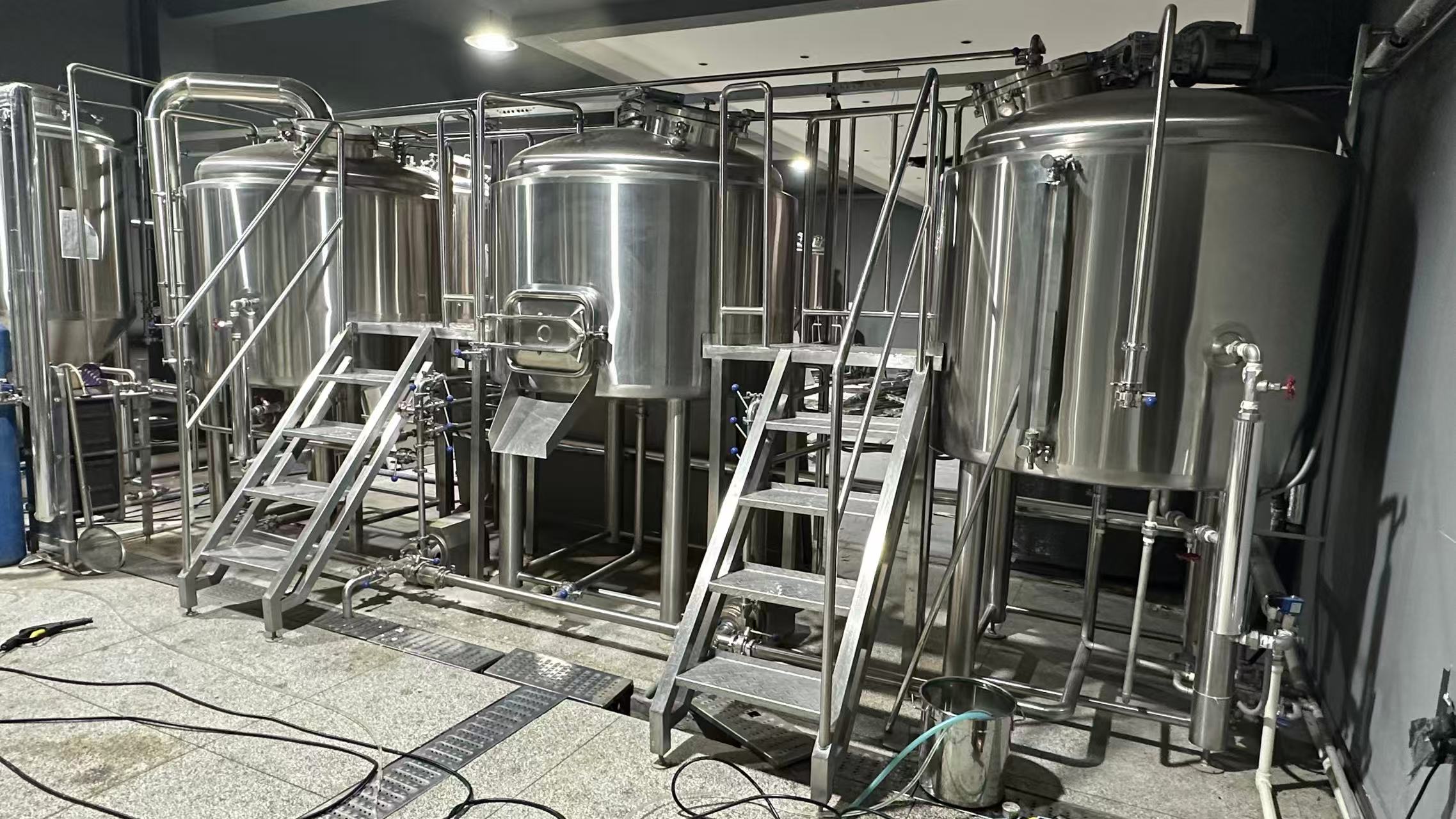
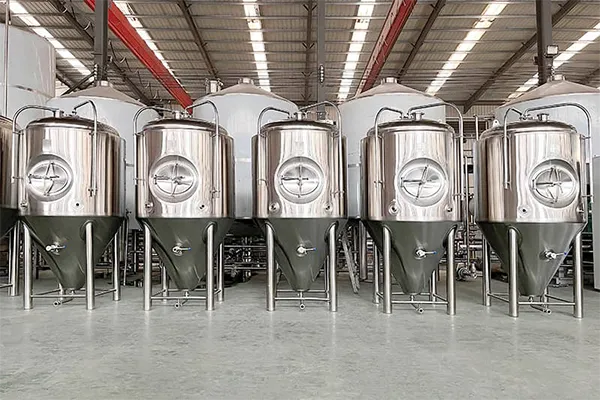
Eine falsche Ausrüstungswahl kann gutes Bier ruinieren, Energie verschwenden und die Produktion verlangsamen. Das Problem verschärft sich noch, wenn eine Brauerei wächst, ihre Tanks, Steuerungen oder das Reinigungskonzept jedoch nicht Schritt halten können. Die Lösung besteht darin, Brauereianlagen aus Edelstahl zu wählen, die genau auf Ihre Chargengröße, Hygieneanforderungen und Ihren langfristigen Brauplan abgestimmt sind.
Edelstahlanlagen für Brauereien werden eingesetzt, um Bier oder andere Getränke auf hygienische und langlebige Weise zu brauen, zu vergären, zu kühlen, zu lagern und abzufüllen. Ein vollständiges Brausystem umfasst in der Regel eine Maischepfanne, einen Sudkessel, einen Gärtank, einen Lagertank, ein Kühlsystem, ein Steuerungssystem, Ventile, Armaturen und ein Reinigungskonzept.
Zusammenfassung
- Edelstahl wird beim Brauen häufig eingesetzt, weil er robust, korrosionsbeständig, leicht zu reinigen und für heiße sowie kalte Produktionsphasen geeignet ist.
- Ein vollständiges Brausystem sollte auf Chargengröße, Bierstile, Platz im Gärkeller, Versorgungsinfrastruktur, Automatisierungsgrad und zukünftige Erweiterungspläne abgestimmt sein.
- Edelstahl 304 eignet sich für viele Bereiche der Bierproduktion, während für aggressive Reinigungschemikalien oder spezielle Flüssigkeiten möglicherweise ein höherwertiges Material erforderlich ist.
- Die richtige Gärtankkonstruktion unterstützt eine stabile Gärung, das Absetzen der Hefe, die Temperaturregelung und eine gleichbleibende Bierqualität.
- Bei gewerblichen Projekten sollten Käufer das Layout, die Tankdimensionierung, das Steuerungssystem, Ventile und Armaturen, die CIP-Reinigung, die Einbringungsmöglichkeiten bei der Montage sowie den After-Sales-Service prüfen.
- Ein professioneller Anbieter kann dabei helfen, vor dem Kauf Standardausrüstung, maßgeschneiderte Edelstahlkonstruktionen und schlüsselfertige Projektlösungen miteinander zu vergleichen.
Artikel Gliederung
- Why is stainless steel the standard choice for brewery equipment?
- What does a complete stainless steel brewing system include?
- How does the brewhouse turn mash into wort?
- Why do fermenters matter for beer quality and fermentation control?
- How should a brewery choose the right bbl or hectoliter capacity?
- What types of stainless steel are used in brewing equipment?
- How do temperature control and cleaning design affect daily brewing operations?
- What should buyers check when comparing suppliers and brewing solutions?
- When does home brewing equipment stop being enough?
- How can a turnkey stainless steel brewery support long-term growth?
Why Is Stainless Steel the Standard Choice for Brewery Equipment?
Rostfreier Stahl is the common material for modern brewing because it gives brewers a clean, strong, and long-lasting surface. It can handle hot water, wort, cleaning cycles, and daily production pressure. It also looks professional, which matters when customers can see the brewery from a taproom or restaurant.
The biggest advantages of stainless steel are corrosion resistance, long service life, and easy cleaning. Its surface forms a thin protective layer, which helps reduce rust risk when the material is used and maintained correctly. This is one reason stainless steel remains the main choice for brewers in today’s craft and commercial beer markets.
For a small craft project, the benefit is simple: less equipment replacement. For a large brewery, the benefit is even bigger: stable production, better hygiene control, and fewer unexpected shutdowns. Good beer starts with a good recipe, but it also needs reliable equipment.

What Does a Complete Stainless Steel Brewing System Include?
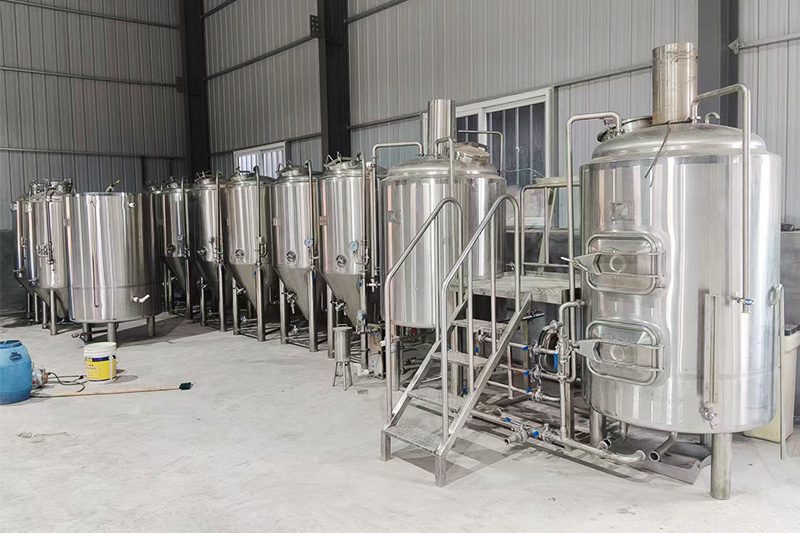
A complete brewing system is more than one shiny tank. It normally includes a brewhouse, hot water system, fermentation tanks, bright tank, cooling system, pump, pipeline, control system, valves, and fittings. Some projects also need kegging, canning, bottling, CIP cleaning, and steam or electric heating support.
The core brewing equipment should match the way you brew. A brewpub may need a compact system with simple controls. A production brewery may need multiple vessels, faster transfer, stronger automation, and more cellar capacity. A kombucha or beverage producer may need a different liquid flow, lower alcohol focus, or special temperature range.
As a professional brewery, distillery, winery, kombucha, and beverage equipment manufacturer, we usually begin with questions, not a price list. What do you want to produce? How often will you brew? How much space do you have? Do you need CAD or 3D layout support? These answers shape the right equipment plan.
How Does the Brewhouse Turn Mash Into Wort?
The brewhouse is where the brewing process begins. Grain and hot water meet in the mash stage. In simple terms, hot water helps convert starches into fermentable sugars. Then the liquid, called wort, moves through lauter, boiling, whirlpool, and cooling steps before it reaches fermentation.
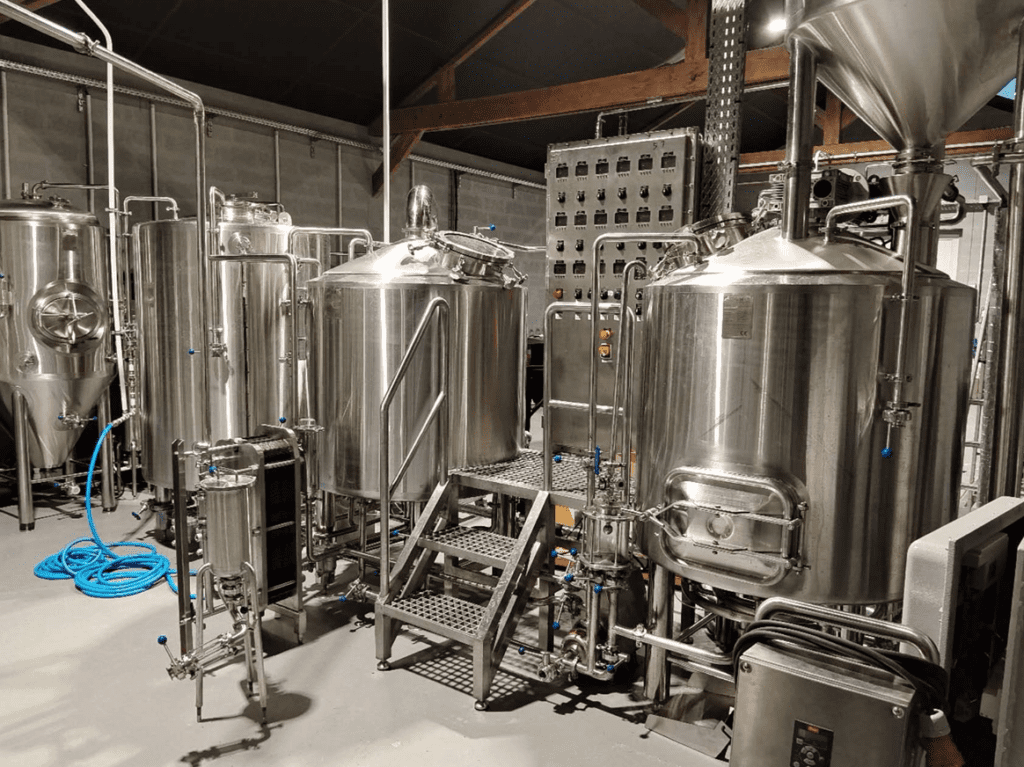
A basic brewhouse may include a mash tun, kettle, lauter vessel, whirlpool, platform, pumps, and heat exchanger. Smaller systems may combine some tuns to save space. Larger systems may separate each function to improve speed and control. The best choice depends on batch size, beer styles, and production schedule.
Here is a simple flow chart:
Milling
  ↓
Mash
  ↓
Lauter
  ↓
Boil in Kettle
  ↓
Whirlpool
  ↓
Cooling
  ↓
Fermentation
  ↓
Bright Tank
  ↓
Packaging or Serving
Every stage of the brewing process affects flavor, clarity, efficiency, and production time. A well-designed brewhouse helps the brewer repeat the same result, batch after batch.
Why Do Fermenters Matter for Beer Quality and Fermentation Control?
The fermenter is where yeast turns wort into beer. A good beer fermentation tank should support pressure safety, clean welding, smooth inner surfaces, cooling jackets, and precise temperature control. Fermentation temperature matters because yeast behavior changes when the liquid gets too warm or too cold.
Conical fermenters are common because the cone allows yeast to settle at the bottom. This helps with yeast handling, beer clarity, and cleaning. Stainless steel fermenters also support CIP cleaning, pressure transfer, and consistent beer quality when the design is correct.
Fermenters are designed for different production goals. A small brewer may need simple tanks for flexible recipes. Craft breweries may need multiple sizes for seasonal products. Commercial operations may need scalable fermentation capacity, automated valves, and integrated temperature control. The right tank makes daily work easier.
How Should a Brewery Choose the Right Bbl or Hectoliter Capacity?
Capacity planning is one of the most important decisions. A small 3 bbl system may work for a taproom or pilot room. A 5HL or 10HL system can fit a brewpub, small craft brewery, or restaurant chain. A 20HL system may suit a growing production site with distribution plans.
The mistake many buyers make is buying only for today. If the brewery grows quickly, the tanks fill up, the brew schedule gets crowded, and the team works harder than planned. Bigger is not always better, but too small can be painful.
Use this quick planning table:
| Projektart | Common Capacity | Best Fit | Main Risk |
|---|---|---|---|
| Home brewing upgrade | Small pilot size | Recipe testing | Not suitable for full commercial brewing |
| Brauereigasthaus | 3 bbl to 10HL | Onsite beer sales | Limited expansion space |
| Kleine Craft-Brauerei | 10HL to 20HL | Local sales and keg supply | Needs more cellar tanks |
| Regional brewery | 20HL+ | Distribution growth | Higher utility and installation cost |
| Beverage producer | Custom | Kombucha, cider, juice, cold brew | Different cleaning and process needs |
A strong supplier should help you choose the right size based on sales, batch frequency, ferment time, and future growth.
What Types of Stainless Steel Are Used in Brewing Equipment?
The most common material for beer tanks is 304 stainless steel. It is strong, clean, and suitable for many brewery applications. In more demanding environments, 316 material may be considered because it offers better resistance in some aggressive conditions. The final choice depends on liquid type, cleaning chemicals, chloride exposure, budget, and local standards.
High-quality stainless steel is not only about the grade number. Welding, polishing, surface finish, passivation, and cleaning access also matter. A tank made of stainless steel can still perform poorly if the welds are rough or the inner surface has dead corners.
Here is a practical comparison:
| Material Choice | Gemeinsame Nutzung | Vorteil | When to Review Carefully |
|---|---|---|---|
| 304 | Beer tanks, brewhouse, piping | Cost-effective and widely used | High chloride or harsh chemical exposure |
| 316 | Special beverage, higher corrosion demand | Better corrosion resistance in some cases | Higher cost |
| Mixed material | Frame, platform, support parts | Controls budget | Product-contact parts must be checked |
For sanitary production, focus on product-contact parts first. The liquid touches those surfaces. That is where quality matters most.
How Do Temperature Control and Cleaning Design Affect Daily Brewing Operations?
Temperature control keeps the brew stable. During mash, it affects sugar conversion. During fermentation, it affects yeast performance and flavor. During cold conditioning, it affects clarity and stability. Poor control can create off-flavors, slow fermentation, and uneven results.
Cleaning design is just as important. Equipment should be easy to clean and sanitize. Smooth surfaces, good drainage, proper spray balls, clean valves, and smart pipeline design reduce labor and risk. The FDA’s CGMP guidance for food production highlights cleanable equipment, sanitary operations, and process control as key concerns.
The Brewers Association also emphasizes draught system cleaning, sanitation, pressure balance, and beer quality in its Draught Beer Quality Manual. That point is useful beyond draught systems. Clean equipment protects flavor. Dirty equipment can ruin it fast.
What Should Buyers Check When Comparing Suppliers and Brewing Solutions?
A supplier should offer more than a quote. The right partner should review process flow, capacity, building layout, utility needs, delivery plan, installation support, spare parts, and long-term service. For global projects, language support and remote guidance also matter.
When comparing brewing solutions, ask for drawings, material details, tank specifications, valve lists, control system options, and packing photos. A professional supplier should explain what is included and what is not. Hidden gaps create hidden costs.
Verwenden Sie diese Käufer-Checkliste:
- Is the brewing equipment made for your exact product and batch size?
- Are product-contact parts made from suitable material?
- Are welds, polishing, and inner surfaces clearly specified?
- Does the design support CIP cleaning?
- Does the control system match your voltage and language needs?
- Are pumps, valves, fittings, platforms, and pipelines included?
- Can the supplier provide CAD/3D layout and installation guidance?
- Is after-sales support available after delivery?
Die beste Wahl ist nicht immer die günstigste. Entscheidend ist, dass sie das Gesamtrisiko des Projekts senkt.
Wann reicht eine Heimbrauausrüstung nicht mehr aus?
Das Heimbrauen ist eine hervorragende Möglichkeit, das Brauen zu erlernen. Viele erfolgreiche Brauer haben mit kleinen Töpfen, einfachen Gärbehältern und einer grundlegenden Heimbrauausrüstung angefangen. Marken wie ss brewtech und konische Tanks im Chronical-Stil sind fortgeschrittenen Hobbybrauern häufig vertraut. Diese Erfahrung fördert das handwerkliche Können.
Doch beim gewerblichen Brauen gelten andere Regeln. Sie benötigen reproduzierbare Chargen, eine sichere Beheizung, hygienisches Umpumpen, ein größeres Gärvolumen, eine stabile Kühlung, die Einhaltung gesetzlicher Vorschriften und eine schnellere Reinigung. Mit einer Heimbrauanlage lässt sich zwar gutes Bier brauen, sie ist aber möglicherweise nicht für die wöchentliche gewerbliche Bierproduktion geeignet.
Der Wendepunkt kommt, wenn Sie Bier verkaufen, viele Kunden bedienen oder eine zuverlässige Produktionsleistung benötigen. Dann wird die Brauanlage aus Edelstahl zu einem Produktionsmittel und ist nicht mehr nur ein Hobbygerät. Die Anlage muss Qualität sichern, Arbeitszeit schonen und das Geschäftseinkommen schützen.
Wie kann eine schlüsselfertige Edelstahlbrauerei langfristiges Wachstum unterstützen?
Eine schlüsselfertige Edelstahlbrauerei deckt das gesamte Projekt ab – von der Prozessplanung über die Anlagenplanung, Fertigung, Lieferung und Installation bis hin zum Service. Das ist hilfreich für Investoren in Neugründungen, Restaurantketten, Braugaststätten, Lohnabfüller für Getränke und Vertriebspartner im Ausland, die einen verantwortlichen Ansprechpartner benötigen.
Schlüsselfertig bedeutet nicht, dass jeder Käufer dieselbe Anlage benötigt. Eine moderne Brauerei braucht möglicherweise ein dampfbeheiztes Sudhaus, Gärtanks, einen Drucktank, ein Kühlgerät, Glykolleitungen, eine Fassabfüllanlage und eine automatische Steuerung. Für ein anderes Projekt kann eine kompakte elektrische Anlage mit geringerer Leistung geeignet sein. Unterschiedliche Brauziele erfordern unterschiedliche Ausrüstung.
Als Hersteller helfen wir Käufern, die technische Planung mit dem Geschäftsplan abzustimmen. Dazu gehören die Lieferung direkt ab Werk, Unterstützung bei der CAD-/3D-Layoutplanung, maßgefertigte Edelstahltanks, Unterstützung bei der Installation und langfristigen technischen Service weltweit. Es geht nicht darum, die größte Anlage zu verkaufen, sondern die richtige zu bauen.
Welche Zielkonflikte sollten Käufer vor der Bestellung verstehen?
Jede Brauanlage bringt Kompromisse mit sich. Eine kleine Anlage spart Platz, begrenzt aber die Produktionsmenge. Eine große Anlage erhöht die Kapazität, benötigt jedoch mehr Kapital, Strom, Wasser, Abwasserkapazität und Personal. Manuelle Steuerungen senken die Kosten, erhöhen aber den Arbeitsaufwand. Automatisierung spart Zeit, erhöht jedoch die technische Komplexität.
Nicht jede Empfehlung eignet sich für jedes Projekt. Eine Pilotbrauerei benötigt beispielsweise möglicherweise nicht denselben Automatisierungsgrad wie eine regionale Produktionsbrauerei. Ein Kombucha-Hersteller braucht unter Umständen nicht dasselbe Kochsystem wie eine Bierbrauerei. Eine Brennerei oder ein Weingut benötigt möglicherweise andere Tanks sowie andere Heiz- oder Fördersysteme.
Halten Sie vor der Bestellung Ihre Annahmen schriftlich fest:
| Annahme | Warum es wichtig ist |
|---|---|
| Wöchentliches Produktionsziel | Bestimmt die Auslegung des Sudhauses und die Anzahl der Tanks |
| Hauptproduktart | Bier, Kombucha, Cider, Wein oder Mischgetränke |
| Gebäudegröße | Beeinflusst Layout und Installation |
| Medienversorgung | Beeinflusst Heizung, Kühlung und Steuerung |
| Personalplanung | Hilft bei der Entscheidung zwischen manuellem und automatisiertem Betrieb |
| Expansionsziel | Verhindert, dass zu früh eine zu kleine Anlage gekauft wird |
Clear assumptions lead to better equipment decisions.
What Standards and Good Practices Support Better Equipment Choices?
For hygienic equipment, standards and guidance help buyers ask smarter questions. ASME BPE covers design, materials, fabrication, inspection, testing, and certification for equipment with high hygiene requirements. Not every brewery needs full ASME BPE certification, but its cleanability logic is useful.
FDA food CGMP guidance also reminds food and beverage producers to think about sanitary equipment, clean facilities, and process controls. Local rules vary by country, so buyers should always check local regulations before installation.
Stainless steel’s corrosion resistance comes from a chromium-rich passive layer on the surface. This is why cleaning, surface finish, and chemical use matter. Stainless equipment is durable, but not magic. Wrong chemicals, poor rinsing, and rough surfaces can still create problems.
Case Study: A Brewpub Planning a 10HL Stainless Steel Brewing System
A brewpub client wanted a 10HL system for house beer, seasonal recipes, and limited keg sales. At first, they focused on the brewhouse only. After reviewing the floor plan, we found the real limit was not the mash tun or kettle. It was cellar space.
We adjusted the plan with a balanced brewhouse, enough fermenters, one bright tank, a suitable chiller, and a simple control system. We also left space for two future fermentation tanks. The owner did not need to move walls later. That saved money.
This is the kind of work a project supplier should do. Good planning turns equipment into a working brewery, not just a purchase order.
FAQs About Stainless Steel Brewery Equipment
Why is stainless steel used for brewing beer?
Stainless steel is strong, clean, corrosion-resistant, and suitable for hot and cold brewing stages. It helps brewers clean equipment properly and protect beer quality during production.
Is 304 stainless steel good for brewery tanks?
Yes, 304 is widely used for many beer tanks and brewing systems. Buyers should still check welding, polishing, cleaning design, chemical exposure, and local requirements.
What equipment does a small brewery need?
A small brewery usually needs a brewhouse, fermenters, bright tank, chiller, pumps, valves, control system, hoses or piping, and cleaning tools. Packaging equipment depends on whether the brewery sells kegs, cans, or bottles.
How do I choose the right brewing system size?
Start with weekly sales target, batch frequency, beer styles, fermentation time, cellar space, and expansion plan. Do not choose only by the brewhouse size. Tank capacity and cooling capacity matter too.
Can one system brew beer, kombucha, and other beverages?
Sometimes yes, but the system must match the product. Kombucha, cider, wine, cold brew, and beer may need different heating, cooling, tank shape, cleaning, and control requirements.
Is turnkey brewery equipment better for overseas buyers?
For many overseas buyers, yes. Turnkey support can include layout design, manufacturing, packing, shipping advice, installation guidance, and technical service. This reduces project risk.
Wichtigste Erkenntnisse
- Stainless steel brewery equipment helps brewers build clean, stable, and long-lasting production systems.
- A complete brewing system must include the right balance of brewhouse, fermenter capacity, cooling, cleaning, controls, and packaging support.
- Capacity planning should match today’s sales and tomorrow’s growth.
- Material grade matters, but welding, polishing, drainage, and cleaning design matter just as much.
- Home brewing systems are useful for learning, but commercial brewing needs stronger process control and hygiene planning.
- A turnkey supplier can reduce mistakes by supporting layout, customization, manufacturing, installation, and after-sales service.
If you are planning a brewery, brewpub, kombucha line, winery project, distillery support system, or beverage production room, the next step is a technical review. Share your target capacity, floor plan, product type, and budget range, and our engineering team can help evaluate the most practical stainless steel brewing solution for your project.