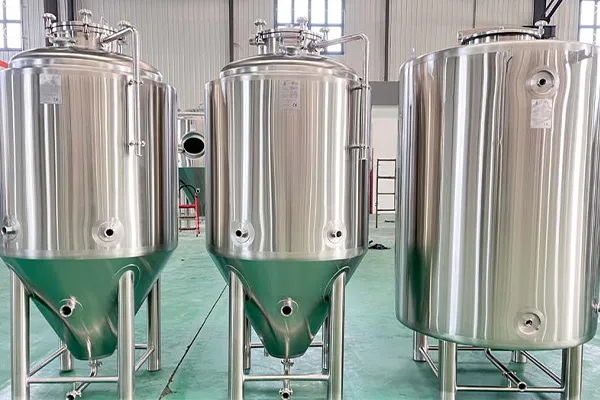
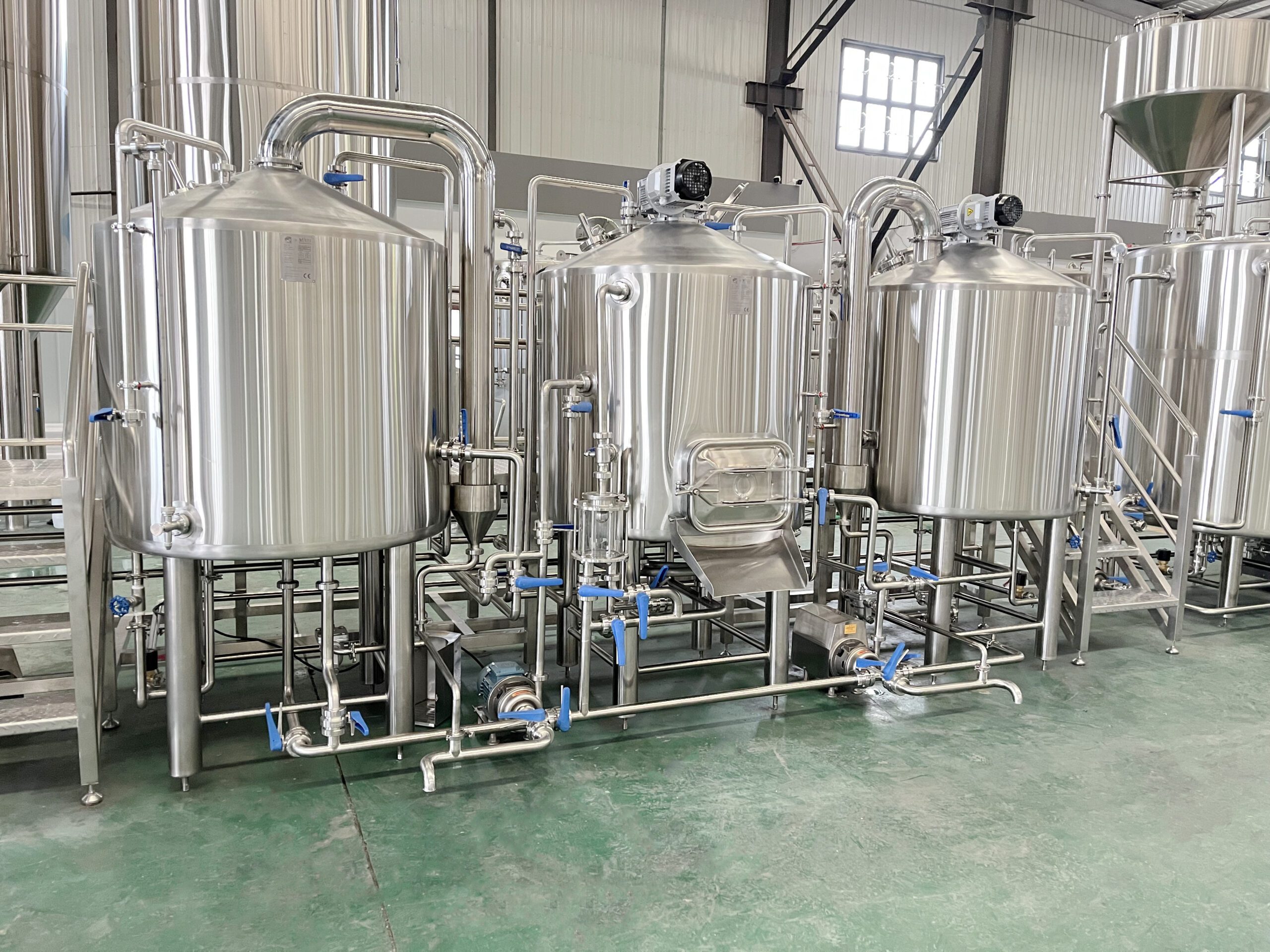
Une bonne recette peut tout de même échouer lorsque les cuves, le refroidissement, les pompes ou la capacité de fermentation ne fonctionnent pas en synergie. Ce problème devient encore plus coûteux à mesure que la production augmente. Un système de brassage de bière bien conçu relie chaque étape — de la manutention du malt au conditionnement — pour vous permettre de brasser avec régularité, de réduire les retards et de vous développer en limitant les risques.
A système de brassage commercial combine les cuves de la salle de brassage, la cave de fermentation, le refroidissement, la régulation, le nettoyage, les utilités et le conditionnement en un flux de production continu. La configuration idéale s'adapte à votre volume de brassin cible, votre production annuelle, vos styles de bière, l'espace disponible, la main-d'œuvre et vos projets d'agrandissement, plutôt que de simplement acheter les équipements les plus volumineux.
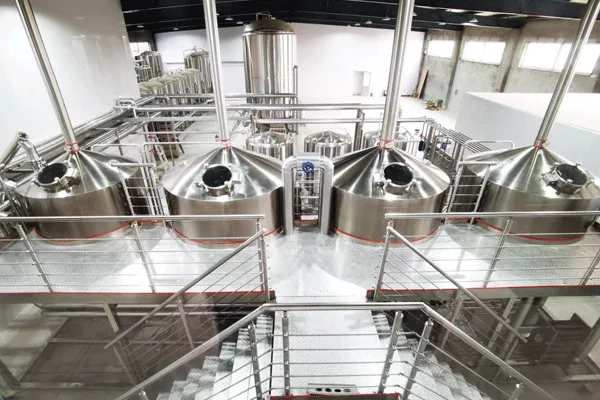
Schéma de l'article
- Qu'est-ce qu'un système de brassage commercial ?
- Comment le moût passe-t-il de l'empâtage à la fermentation ?
- Comment choisir la taille des brassins et la configuration de la salle de brassage ?
- Pourquoi la capacité de fermentation limite-t-elle souvent la production ?
- Quelles cuves en acier inoxydable et quelles utilités comptent le plus ?
- En quoi le matériel professionnel diffère-t-il des systèmes de brassage amateur ?
- Comment les pompes et le brassage automatisé améliorent-ils la régularité ?
- Comment planifier le refroidissement, le NEP et le conditionnement ?
- À quoi ressemble un système commercial équilibré ?
- Comment choisir le bon système pour assurer une croissance à long terme ?
- Foire aux questions
Qu'est-ce qu'un système de brassage commercial ?
Un système de brassage commercial est bien plus qu'une cuve reliée à un réservoir. Il s'agit d'un ensemble d'équipements coordonnés qui transforme des matières premières en une bière conditionnée et reproductible.
Côté chaud, une installation type peut comprendre :
- Moulin à malt
- Mash vessel
- Cuve de filtration
- Cuve d'ébullition
- Whirlpool
- Cuve d'eau chaude
- Pompe de process
- Échangeur de chaleur
- Ensembles de tuyauterie et de vannes
Côté froid, la production se poursuit à travers les cuves de fermentation, les cuves de garde, le refroidissement au glycol, les équipements de nettoyage, la tuyauterie de transfert et le matériel d'enfûtage ou une autre ligne de conditionnement.
En tant que fabricants d'équipements, nous considérons généralement ces différents postes comme un système complet. Une grande salle de brassage n'assure pas automatiquement un volume de production élevé si la partie froide ne peut pas accueillir un autre brassin.
Cette vision globale de l'installation devient de plus en plus cruciale. La Brewers Association a signalé que la production artisanale américaine a reculé d'environ 4 % en 2025, alors que 9 578 brasseries artisanales demeuraient en activité. Sur un marché mature, l'utilisation judicieuse des capitaux et la planification de la production comptent tout autant que la simple augmentation des capacités.
Comment le système de brassage achemine-t-il le moût de l'empâtage au fermenteur ?
Le brassage côté chaud commence lorsque le malt moulu entre dans la cuve d'empâtage. L'eau chaude active les enzymes qui transforment l'amidon des céréales en sucres fermentescibles. Dans le brassage tout grain, cette étape de conversion constitue l'un des points de contrôle les plus importants de tout le processus.
Après l'empâtage, le liquide traverse le lit de drêches et devient le moût doux. Le système achemine ensuite le moût vers la cuve d'ébullition, où le brasseur le porte à ébullition et ajoute le houblon selon le style de bière souhaité.
Voici à quoi ressemble un flux simplifié :
| Étape de production | Équipement principal | Objectif principal |
|---|---|---|
| Broyage | Moulin à malt | Préparer le grain concassé |
| Empâtage | Cuve d'empâtage | Convertir l'amidon en sucres |
| Filtration | Cuve filtre | Séparer le moût du grain |
| Ébullition | Cuve d'ébullition | Stériliser le moût et ajouter le houblon |
| Whirlpool | Cuve de whirlpool | Remove solids |
| Refroidissement | Échangeur de chaleur | Lower wort temperature |
| Fermentation | Conical tank | Let yeast create alcohol and flavor |
| Conditionnement | Fermentation or bright tank | Stabilize the beer |
| Emballage | Keg/can/bottle line | Prepare finished beer for sale |
Rapid cooling is especially important after boiling. A small wort chiller may serve a home brewer, but commercial production normally uses a sanitary plate heat exchanger connected to properly sized cooling equipment.
Once cooled, the wort moves into a conical fermentation vessel. The yeast begins converting fermentable sugars into alcohol, carbon dioxide, and flavor compounds.
La chimie est bien connue de quiconque apprend à brasser. Ce qui change à l'échelle commerciale, c'est l'obligation de répéter ce même procédé de manière parfaitement fiable des centaines de fois.
Comment la taille des brassins doit-elle orienter la conception de votre salle de brassage ?
La première question ne devrait pas être : « Quel est le meilleur système ? »
Une meilleure question est :
Quelle quantité de bière cette installation doit-elle produire par semaine, par mois et par an ?
Supposons que la salle de brassage prévue produise 1 000 litres par brassin. Un brassin par jour entraîne des besoins en équipements très différents de trois brassins par jour. Une même salle de brassage peut donc répondre à plusieurs niveaux de production selon la configuration des cuves, la main-d'œuvre, l'automatisation et la disponibilité des cuves.
Une relation de capacité simple
Volume de la salle de brassage × brassins par jour × jours de brassage = rendement théorique côté chaud
Mais la production théorique ne correspond pas au volume réel des ventes annuelles.
Vous devez également prendre en compte :
- Durée de fermentation
- Taux d'occupation des cuves
- Temps de nettoyage
- Pertes de bière
- Gamme de produits
- Seasonal demand
- Cadence de conditionnement
- Maintenance
- Organisation des équipes
C'est pourquoi la conception d'un système doit débuter par un modèle de production plutôt que par un catalogue.
Pour une petite brasserie artisanale, une installation compacte à deux cuves peut offrir une capacité suffisante. Une unité de production en pleine croissance tirera profit d'une configuration à trois ou quatre cuves, car des cuves distinctes permettent de lancer le brassin suivant plus rapidement.
L'objectif n'est pas d'installer plus de cuves que nécessaire. Il s'agit d'éviter qu'une étape plus lente ne bride l'ensemble de l'usine.
Pourquoi la capacité de fermentation détermine-t-elle souvent la production d'une brasserie ?
De nombreux acheteurs se concentrent d'abord sur la salle de brassage, car c'est là que débute le brassage de la bière. Cependant, dans la planification réelle de la production, la capacité de fermentation peut devenir la contrainte la plus importante.
Une salle de brassage peut réaliser plusieurs brassins au cours d'une journée de travail. En comparaison, un fermenteur peut rester occupé pendant des jours ou des semaines pendant que la levure termine la fermentation et que la bière mûrit.
Prenons cet exemple simple :
- Salle de brassage : 2 000 L
- Deux brassins par jour de production
- Cinq jours de brassage par semaine
- Occupation moyenne des cuves : 14 jours
La partie chaude peut potentiellement produire 20 000 L de moût chaque semaine. Cependant, si le nombre de cuves disponibles est insuffisant, le brasseur doit s'arrêter même si la salle de brassage dispose encore d'heures d'exploitation disponibles.
Exemple d'équilibrage des capacités
| Poste | Relative Capacity |
|---|---|
| Brasserie | ██████████ |
| Fermentation | ██████ |
| Refroidissement | █████████ |
| Emballage | ███████ |
In this example, adding another kettle would not solve the production problem. More fermentation capacity would.
When we plan equipment for B2B projects, we therefore consider the number and size of fermentation tanks together with the intended brew schedule.
This approach also helps when different types of beer require different tank occupancy times. A fast-moving ale and a longer-conditioned lager should not automatically receive identical cellar assumptions.
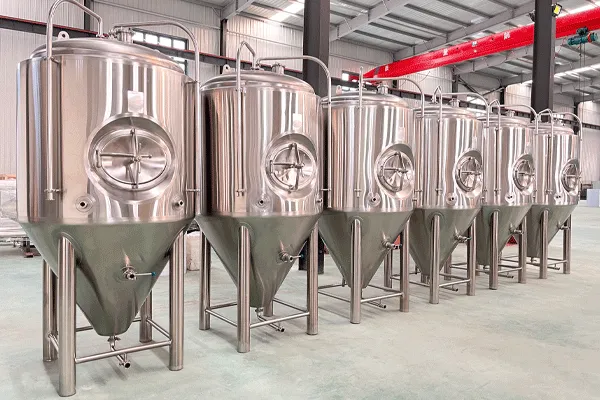
Which Stainless Steel Equipment and Utilities Matter Most?
For professional production, stainless steel is widely used because it is durable, corrosion-resistant, sanitary, and relatively easy to clean when the equipment is designed correctly.
However, simply specifying stainless steel does not guarantee a good production plant.
Buyers should also evaluate:
- Internal finish
- Welding quality
- Drainability
- Jacket arrangement
- Isolation
- Sanitary fittings
- Access points
- Pressure requirements
- Instrument placement
- Cleaning coverage
- Piping layout
A well-designed tank should support both the recipe and daily operations.
Utilities are equally important. A beautiful brewhouse cannot brew efficiently if electrical capacity, steam, glycol, water, compressed air, or drainage is undersized.
Core Utility Planning
| Utility | Typical Role |
|---|---|
| Eau chaude | Mash and cleaning |
| Steam or electric heat | Kettle and process heating |
| Glycol | Fermentation temperature control |
| Brewing water | Ingredient and process water |
| Compressed air | Pneumatic controls and packaging |
| CO₂ | Carbonation and transfers |
| Electricity | Pumps, controls, chillers and machines |
| Drainage | Cleaning and wastewater removal |
Some smaller facilities prefer electric brewing, especially when steam infrastructure is difficult to install. An electric kettle may simplify certain projects, but total power demand must still be calculated carefully.
The right heating method depends on production volume, building infrastructure, local utility costs, and the planned number of daily brews.
Home Brewing Kit vs Commercial Équipement de Brassage: What Changes at Scale?
Many people first encounter brewing through home brewing, an all-in-one brewing unit, or a small brewing kit.
Systems such as BrewZilla, an all-in-one brewing system, or other consumer products combine several functions into a compact appliance. Retail searches for a home brewing kit, homebrewing starter kits, or even phrases such as supplies – MoreBeer serve a very different buyer from an investor building a professional production site.
A home user may use a removable grain basket, compact electric kettle, and small conical tank to make beer at home. This type of all-in-one system can be useful for learning the basic steps.
For someone who wants to move to all-grain brewing, an all-grain system also provides more recipe control than basic extract brewing.
In extract brewing, the brewer may use malt extract or liquid malt extract instead of performing the complete mash conversion process. That can simplify making beer on a small scale.
Commercial production is different.
| Home Brewing | Commercial Production |
|---|---|
| Small batch of beer | Repeated production batches |
| Manual transfers | Sanitary piping and pumps |
| Grain basket | Dedicated mash/lauter vessels |
| Small cooling device | Engineered heat exchanger and glycol |
| Manual cleaning | CIP-ready equipment |
| Basic controller | Integrated process control |
| Personal consumption | Saleable finished beer |
| Flexible schedule | Production schedule and labor planning |
A commercial operator must think beyond whether the equipment can make good beer once. The system must make the same high-quality product repeatedly, safely, efficiently, and at a cost that supports the business.
The recipe still matters. Brewers may follow traditional practices, modern craft methods, or even ingredient restrictions influenced by the German beer purity law. But commercial equipment must support the intended recipe at production scale.
How Do Pumps and Automated Brewing Improve Repeatability?
A brewer can control a small brew manually. As volume and frequency increase, manual work becomes harder to repeat.
A properly selected pump moves water, wort, cleaning solution, and sometimes product between stages. Correct flow rate matters. Too little flow can slow the process; poor control can disturb the grain bed or create transfer problems.
Automation can also improve repeatability.
An automated brewing setup may control:
- Vessel temperature
- Pump operation
- Heating stages
- Agitation
- Water addition
- Transfer sequences
- Timing
- Alarms
That does not mean every project needs full automation.
A brewpub producing a limited number of batches may prefer a semi-automatic control panel because it gives the brewer direct control without unnecessary investment. A production operation running several brews per day may benefit from recipe-based controls and additional instrumentation.
The right automation level should therefore follow the business model.
From our manufacturing perspective, we normally discuss labor availability, planned daily output, recipe complexity, expansion, and operator experience before recommending a control architecture.
How Should Cooling, CIP, and Packaging Be Planned With the Brewhouse?
Hot-side capacity receives attention because customers can easily see the mash vessel and kettle. Supporting equipment receives less attention—but often decides whether the entire operation runs smoothly.
Refroidissement
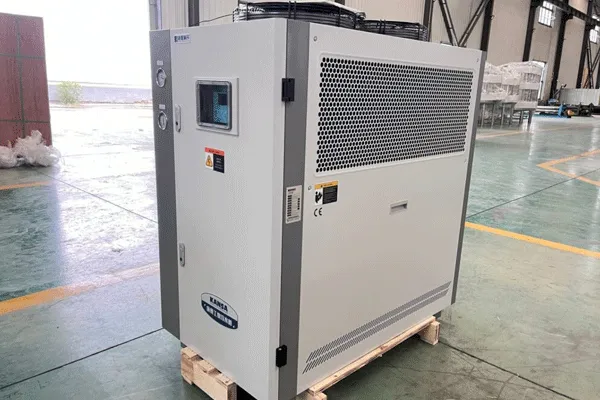
The heat exchanger must cool hot wort fast enough for the planned brew schedule. The glycol chiller must then maintain stable temperature control across fermentation and conditioning tanks.
An undersized cooling system can create a hidden production bottleneck.
Nettoyage
Cleaning also needs to be part of the original plan. The Brewers Association treats sanitation, cellaring, brewhouse operations, and packaging as connected production disciplines because quality can be gained or lost throughout the process.
A commercial facility may use a dedicated CIP unit to circulate cleaning solutions through tanks and piping. Proper drainage and spray coverage can reduce manual work and support repeatable cleaning procedures.
Emballage
Finally, the packaging line should match actual output.
If a plant can brew 20,000 liters each week but can only package a small part of that volume during normal working hours, packaging becomes the bottleneck.
Depending on the sales model, production may include:
- Kegging
- Canning
- Bottling
- Bright tank storage
- Carbonatation
- Labeling
- Coding
- Conveying
Planning these areas together makes transferring beer easier and reduces unnecessary handling.
What Does a Balanced Commercial Brewing Setup Look Like?
Consider an illustrative project rather than a real customer case.
A growing taproom wants to replace a pilot brewing setup with a larger production line. Demand supports roughly 2,000 L per brew, but the company also wants room for future distribution.
Buying only a larger brewhouse creates risk.
A more balanced planning process might look like this:
Step 1: Define Demand
Estimate weekly sales, seasonal peaks, packaged sales, and taproom demand.
Step 2: Set Brew Frequency
Determine whether the team expects one, two, or more brews per day.
Step 3: Model Fermentation
Calculate how many tanks are required based on average fermentation and conditioning time.
Step 4: Check Utilities
Confirm water, electrical power, heating, glycol, CO₂, compressed air, ventilation, and drainage.
Step 5: Check Packaging
Match kegging, cans, or bottles to expected finished volume.
Step 6: Reserve Expansion Space
Leave room for additional tanks, utilities, and piping connections.
The result might not be the largest system the customer can afford today.
It should instead be the system that allows the team to brew efficiently today while adding fermentation or packaging capacity later without rebuilding the entire plant.
That is an important distinction.
The best beer brewing system is rarely the system with the biggest vessel. It is the one with the fewest expensive mismatches.
How Do You Choose the Best Brewing System for Long-Term Growth?
Start with the business plan rather than the equipment list.
Before requesting a quotation, prepare information about:
- Target annual production
- Preferred batch size
- Number of brews per day
- Main beer styles
- Fermentation duration
- Packaging format
- Available floor space
- Building height
- Utility conditions
- Automation preference
- Local standards
- Expected expansion
This information allows an equipment manufacturer to develop a more useful proposal.
For example, two customers may both request a 1,000 L system. One plans to brew once a day for a taproom. The other plans three brews per day for wholesale distribution.
Their brewhouse size may look similar on paper, but the number of tanks, cooling load, automation, storage, CIP requirements, and packaging configuration can be completely different.
From Equipment Purchase to Engineering Project
This is why we approach commercial projects as more than equipment sales.
Our work can include:
- Capacity planning
- Tank configuration
- Brewhouse engineering
- Stainless steel fabrication
- Layout planning
- Utility coordination
- Control integration
- Packaging line matching
- Installation guidance
- Commissioning
- Operator training
- Expansion planning
- Long-term after-sales support
For a startup, these decisions reduce project risk.
For an existing producer, they can remove bottlenecks and increase output without automatically replacing every machine.
The objective is simple: create a production line where each part supports the next one.
Questions fréquemment posées
What equipment is included in a commercial brewing system?
A commercial setup may include malt milling, mash and lautering vessels, a brew kettle, whirlpool, hot liquor tank, pumps, heat exchanger, cuves de fermentation, bright tanks, glycol cooling, CIP equipment, controls, process piping, and équipements d'emballage.
The exact configuration depends on production volume and process requirements.
How many fermenters do I need for each brewhouse?
There is no fixed number. Fermenter quantity depends on batch volume, brews per day, brewing days per week, fermentation time, beer mix, and tank turnover.
A production model should be calculated before selecting the final tank quantity.
Is a two-vessel or four-vessel brewhouse better?
Neither is automatically better.
A two-vessel configuration can work well for lower daily throughput. Separating mash, lautering, boiling, and whirlpool functions into additional vessels can increase hot-side throughput when several brews are required each day.
Your production schedule should determine the configuration.
Can the same equipment produce different types of beer?
Yes. Many commercial systems can produce a wide range of recipes because mash profiles, hop additions, yeast strains, fermentation conditions, and conditioning schedules can be adjusted.
Some specialty products may require additional process equipment or dedicated tanks.
Can I start small and add more equipment later?
Yes, and this is often a smart approach.
A good layout can reserve space, piping connections, control capacity, and glycol capacity for future tanks. Planning expansion during the first project is normally easier than redesigning the facility later.
What information should I send an equipment manufacturer?
Send your target production capacity, brew frequency, preferred tank sizes, product range, building dimensions, utility information, packaging requirements, destination country, automation preference, and future expansion plan.
The more accurate the project information is, the more useful the equipment proposal can become.
Key Things to Remember
- A commercial brewing system should be designed as one production flow, not as a collection of separate tanks.
- Start with annual demand and required brew frequency before selecting vessel size.
- Hot-side output alone does not determine real production capacity.
- Fermentation capacity is often one of the first bottlenecks.
- Cooling, utilities, CIP, controls, and packaging must match the brewhouse.
- Stainless steel quality matters, but sanitary design and cleanability matter too.
- A small home brewery or homebrewing system teaches the basic process, but commercial production requires a very different level of engineering.
- More automation is not automatically better; choose controls that match labor and throughput.
- Leave room for future tanks and utility expansion.
- The best equipment configuration is the one that supports stable quality, practical labor, predictable production, and sustainable growth.
- Before buying, model the entire path from crushed grain and mash to fresh beer in the final package.
For investors, brewers, contractors, and beverage producers planning a new project or an expansion, a detailed production discussion should come before the equipment quotation. Capacity, layout, utilities, fermentation, and packaging should be engineered together. That is how a commercial system becomes a practical long-term asset rather than simply another group of tanks.