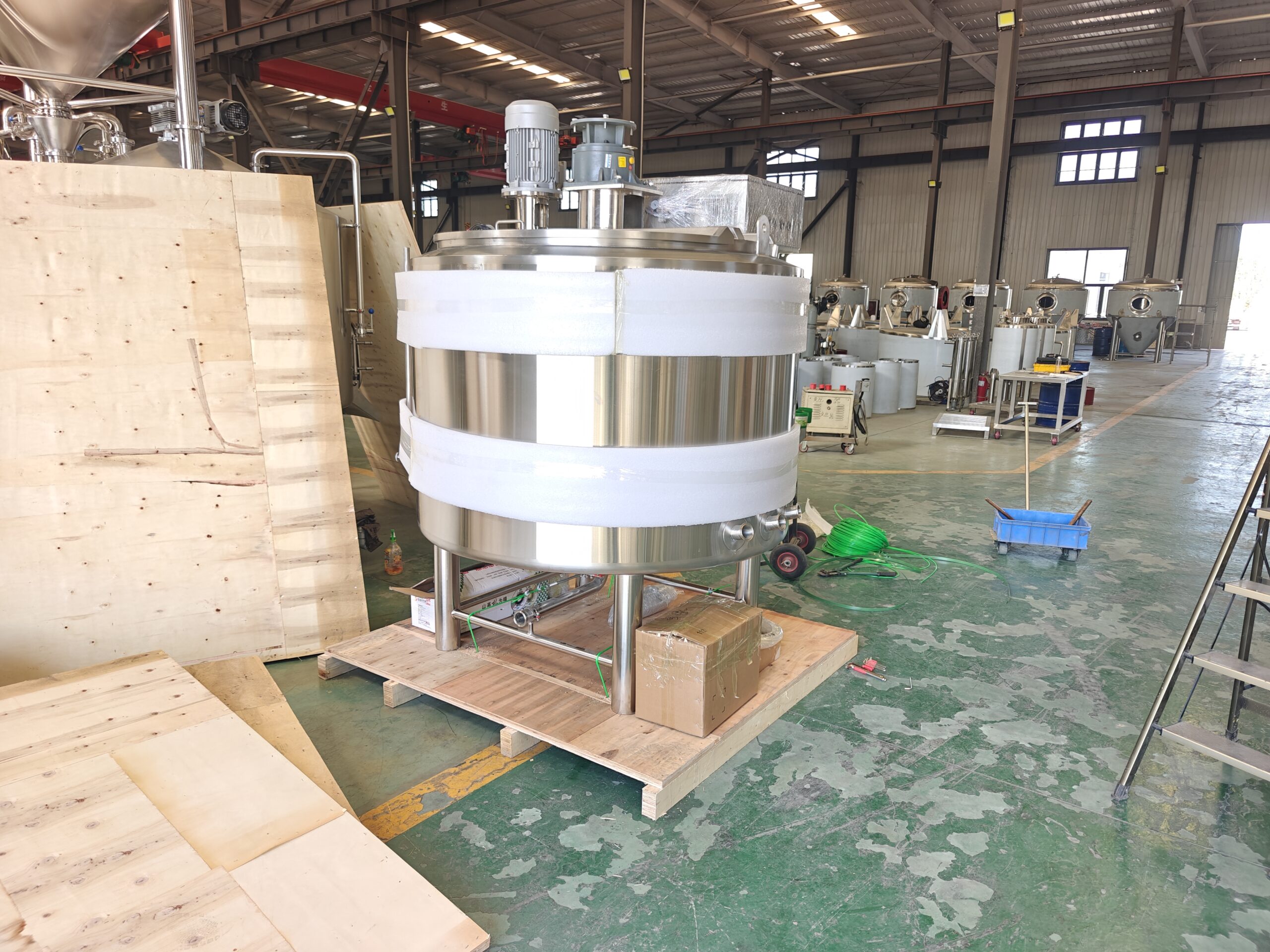
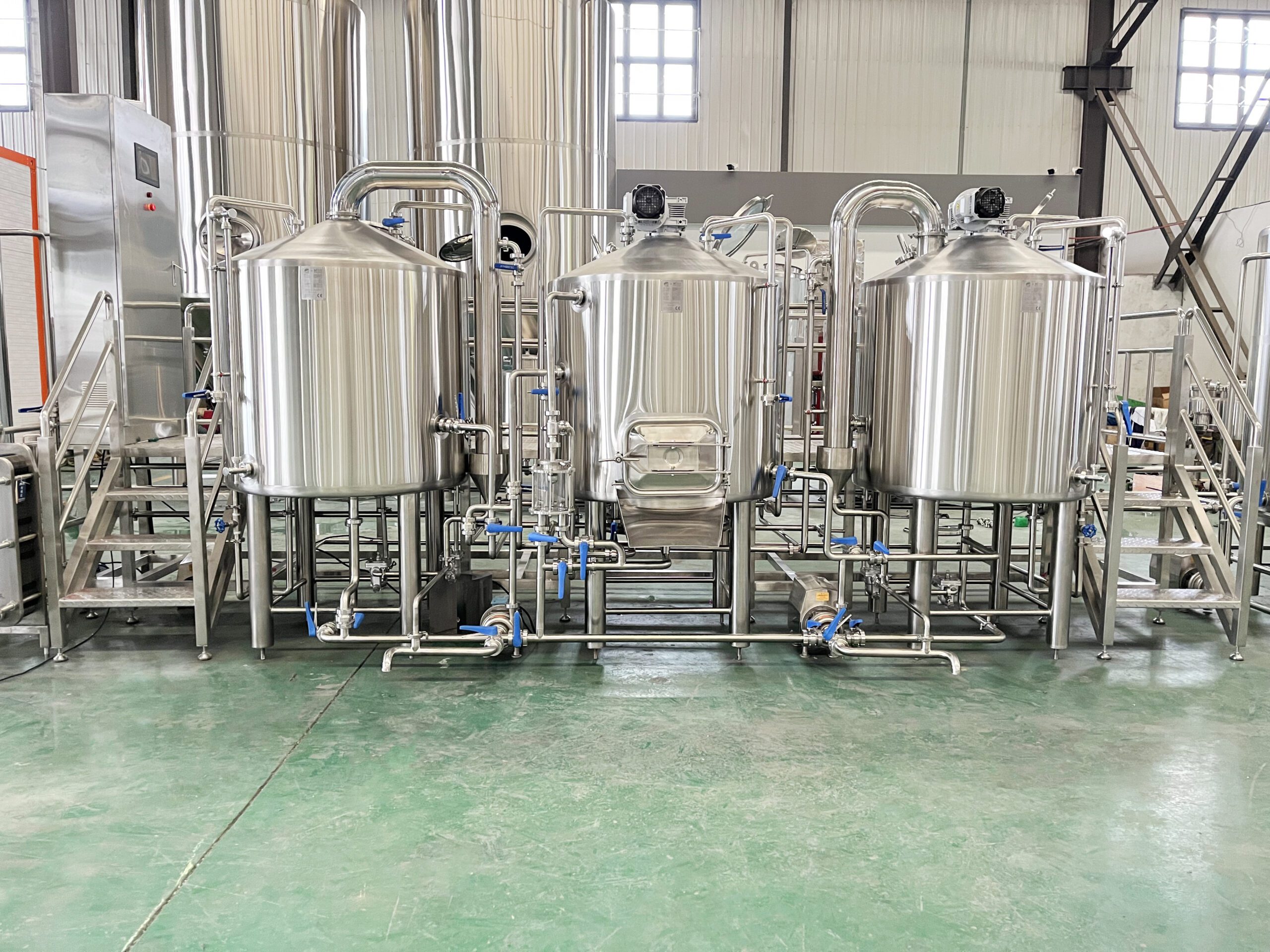
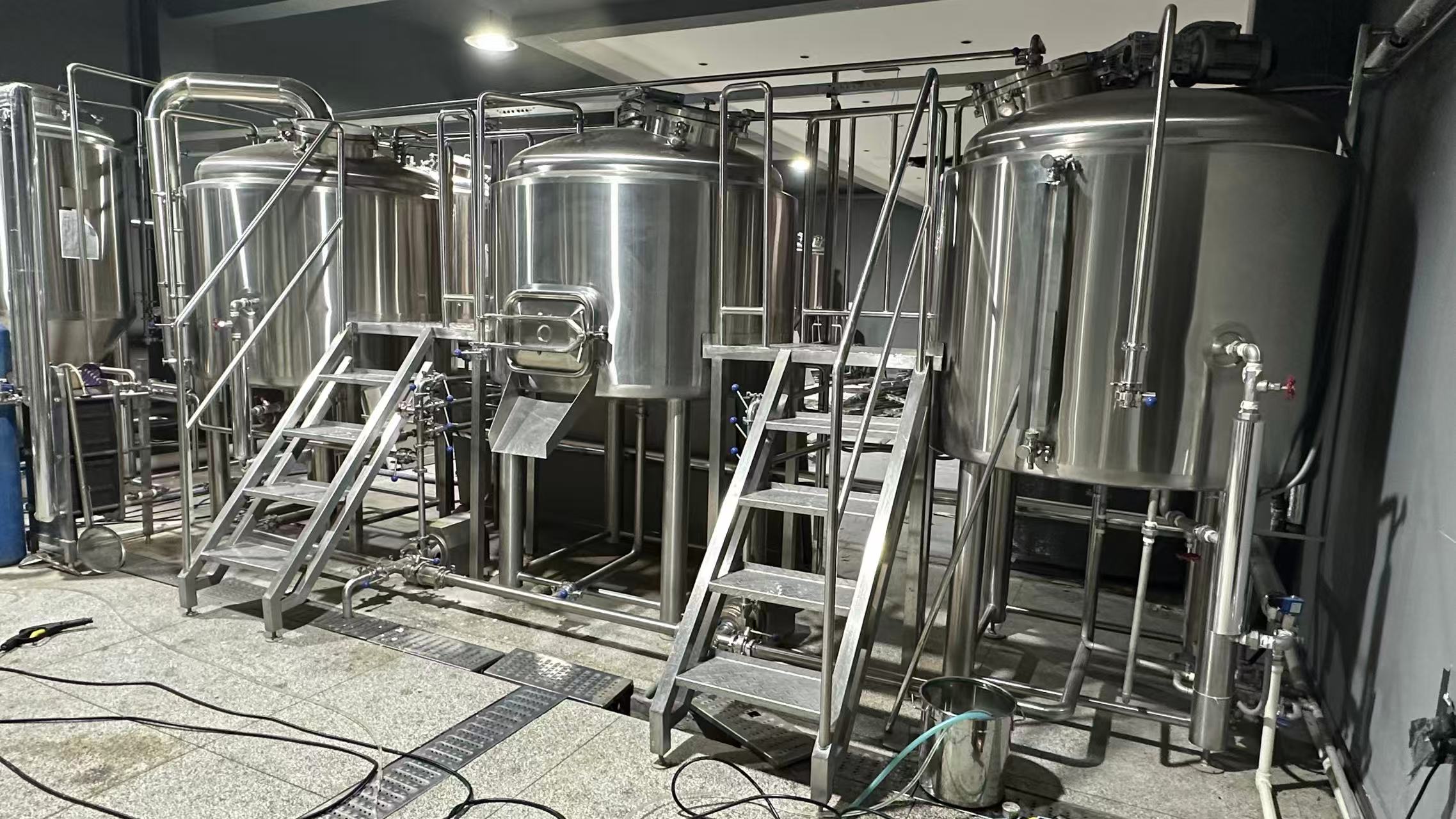
Una cantina può acquistare eccellenti serbatoi in acciaio inox e perdere comunque il controllo durante la vendemmia se l'impianto di raffreddamento è sottodimensionato. Più fermentazioni possono raggiungere il picco contemporaneamente, la temperatura ambiente può essere elevata e un refrigeratore sottodimensionato potrebbe andare in affanno proprio quando la cantina ne ha più bisogno. Un raffreddamento efficace parte dalla pianificazione del carico, non dall'ipotizzare i cavalli vapore.
Per dimensionare un refrigeratore a glicole per serbatoi di fermentazione del vino, calcola il calore da rimuovere dovuto al raffreddamento del prodotto, alla fermentazione attiva, agli apporti di calore ambientale, alle pompe e alle tubazioni, quindi determina quanti serbatoi potrebbero richiedere il raffreddamento contemporaneamente. Seleziona il refrigeratore in base alla sua capacità nominale alla temperatura effettiva del glicole e nelle effettive condizioni esterne, prevedendo un margine adeguato per i picchi della vendemmia e per la futura espansione.
Schema dell'articolo
- Perché il dimensionamento del refrigeratore a glicole è fondamentale durante la vendemmia?
- Cosa genera il carico termico in un serbatoio di fermentazione del vino?
- Come si calcola il carico termico iniziale di raffreddamento del vino?
- Quanto incide la fermentazione attiva sul fabbisogno di raffreddamento?
- Perché il carico simultaneo dei serbatoi è più importante del volume totale dei serbatoi?
- In che modo differiscono le esigenze di raffreddamento per il vino rosso e il vino bianco?
- Come pianificare la temperatura di mandata del glicole, la portata e le camicie dei serbatoi?
- Perché i serbatoi di accumulo, le pompe e le tubazioni influiscono sulle prestazioni di raffreddamento?
- Quali sono gli errori più comuni nel dimensionamento dei refrigeratori per cantine?
- Come dimensionare un impianto di raffreddamento in vista della futura espansione della cantina?
- Quali informazioni è opportuno fornire a un produttore di impianti?
- Domande frequenti
Perché il dimensionamento del refrigeratore a glicole è fondamentale durante la vendemmia?
Per gran parte dell'anno, l'impianto di refrigerazione di una cantina può sembrare sovradimensionato. La vendemmia cambia tutto.
L'uva può arrivare rapidamente. È possibile che più serbatoi vengano riempiti in un breve lasso di tempo. Alcuni serbatoi necessitano di un raffreddamento iniziale del prodotto, altri sono in piena fermentazione e un altro gruppo potrebbe essere già sottoposto a stabilizzazione tartarica o a stoccaggio a bassa temperatura.
Ciò genera un picco di carico frigorifero che può essere molto più elevato rispetto al carico medio annuo.
Anche la fermentazione stessa genera calore. L'UC Davis spiega che durante la fermentazione viene rilasciato calore e che una temperatura controllata male può influire sull'attività microbica, sulla ritenzione degli aromi, sull'estrazione e sull'andamento della fermentazione. Inoltre, la temperatura può variare all'interno del serbatoio anziché rimanere perfettamente uniforme.
Ecco perché sconsigliamo di scegliere un refrigeratore a glicole basandosi unicamente su un'affermazione del tipo:
«Ho sei serbatoi da 10.000 L, quindi datemi un refrigeratore per 60.000 L.»
Il volume totale installato dei serbatoi è un'informazione utile, ma non rappresenta il carico frigorifero.
Un approccio progettuale migliore si chiede:
- Quanto vino entra in ciascun serbatoio?
- A quale temperatura?
- Qual è la temperatura di fermentazione target?
- Con quale rapidità deve raffreddarsi il prodotto?
- Quanti serbatoi fermentano contemporaneamente?
- Quali serbatoi potrebbero richiedere la stabilizzazione tartarica a freddo?
- Qual è la condizione termica ambientale più elevata prevista?
- La cantina aggiungerà altri serbatoi in futuro?
Le risposte definiscono l'impianto di refrigerazione in modo molto più accurato rispetto alla capacità totale dei serbatoi.
Cosa genera il carico termico in un serbatoio di fermentazione del vino?
L'impianto di raffreddamento deve smaltire diverse tipologie di calore.
1. Carico di abbattimento termico del prodotto
È il calore da sottrarre quando il succo d'uva, il mosto o il vino devono essere raffreddati da una temperatura all'altra.
Ad esempio, l'uva può arrivare calda dal vigneto e la cantina potrebbe voler raffreddare il mosto prima o durante la fermentazione.
Questo carico può essere elevato, poiché migliaia di litri di liquido devono cambiare temperatura entro un numero limitato di ore.
2. Calore di fermentazione
Il metabolismo dei lieviti genera calore durante la conversione degli zuccheri nella fermentazione.
Il carico varia nel tempo. All'inizio della fermentazione può essere relativamente basso. Al culmine dell'attività dei lieviti, la produzione di calore aumenta. Successivamente, diminuisce di nuovo.
Ciò significa che il refrigeratore deve essere progettato in base alle condizioni operative di picco, e non solo alla temperatura media nell'arco di diversi giorni.
3. Apporto termico dall'ambiente
Il calore penetra anche attraverso:
- Pareti dei serbatoi
- Tubazioni non isolate
- Valvole e raccordi
- Aria calda della cantina
- Irraggiamento solare sui serbatoi esterni
- Passi d'uomo aperti durante la lavorazione
I serbatoi per vino in acciaio inox coibentati riducono questo apporto termico, ma non lo eliminano del tutto.
4. Calore delle pompe e del sistema
Anche le pompe del glicole, le pompe per il vino e altre apparecchiature meccaniche apportano una quantità minore di calore al sistema.
5. Other Winery Loads
The same chiller may also serve:
- Cold stabilization tanks
- Wine storage tanks
- Heat exchangers
- Juice chilling
- Other process tanks
The basic concept is:
Total Peak Cooling Load = Product Cooling + Fermentation Heat + Ambient Heat Gain + Auxiliary Loads + Simultaneous Process Loads
This is the number that matters.
Come si calcola il carico termico iniziale di raffreddamento del vino?
A useful first calculation is the sensible cooling load required to lower the temperature of the liquid.
The basic heat equation is:
Q = m × Cp × ΔT
Where:
- Q = heat to remove
- m = mass of product
- Cp = specific heat capacity
- ΔT = required temperature change
To convert this energy into refrigeration capacity, divide it by the time available:
Cooling Capacity = Q ÷ Cooling Time
Simplified Planning Example
Assume a winery has approximately 10,000L of juice entering a fermentation tank.
The product enters at approximately 25°C and should reach 15°C.
That means:
ΔT = 10°C
For preliminary calculations, juice or wine can be treated as roughly water-like before a detailed engineering correction is applied.
If we use approximately:
- Mass ≈ 10,000 kg
- Cp ≈ 4 kJ/kg·K
- Temperature reduction = 10 K
Quindi:
Q ≈ 10,000 × 4 × 10
Q ≈ 400,000 kJ
If this temperature reduction must happen within 10 hours:
400,000 ÷ 10 = 40,000 kJ/hour
That is roughly:
11 kW of average sensible cooling load
But this is not yet the required chiller capacity.
It does not include:
- Fermentation heat
- Ambient load
- Pump heat
- Glycol distribution losses
- Other tanks calling for cooling
- Cold stabilization
- Safety margin
This is why choosing an “11 kW chiller” from this single calculation would be a mistake.
The equation only establishes one part of the thermal load.
Quanto incide la fermentazione attiva sul fabbisogno di raffreddamento?
Fermentation is not a steady thermal process.
As yeast becomes more active, the tank produces more heat. That heat must be removed if the winemaker wants to hold the wine at its target fermentation temperature.
UC Davis notes that vigorous fermentation can generate enough heat to raise temperature significantly, and that excessive temperature may increase volatile aroma loss or stress microorganisms.
For red wine, the problem can be even more complex.
The cap may develop a different temperature from the liquid lower in the tank. UC Davis reports that cap temperatures can sometimes be considerably warmer than the bulk liquid during active red fermentation.
This has several engineering implications.
Jacket Area Matters
A large tank with too little cooling-jacket surface may have plenty of chiller capacity available at the central refrigeration unit but still remove heat too slowly from the product.
The refrigeration system and the tank therefore have to be designed together.
Mixing and Cap Management Matter
Pump-over, punch-down, or other cap-management methods influence temperature distribution.
A temperature sensor placed in only one location cannot always describe what is happening everywhere inside a large red wine fermenter.
Control Response Matters
Opening a glycol valve fully every time the tank becomes slightly warm may create overshoot if control logic is poor.
Stable fermentation needs not just refrigeration capacity but also:
- Correct jacket zoning
- Proper glycol flow
- Good temperature sensing
- Reliable control valves
- Suitable control logic
Cooling capacity is therefore a system property, not only a chiller specification.
Perché il carico simultaneo dei serbatoi è più importante del volume totale dei serbatoi?
Consider two wineries.
Winery A
- 6 × 10,000L fermentation tanks
- Only 2 tanks usually ferment at the same time
Winery B
- 6 × 10,000L fermentation tanks
- All 6 can enter active fermentation within the same harvest window
Both wineries have 60,000L total fermentation capacity.
Their peak cooling requirements may be very different.
This is the concept of simultaneous load.
| Articolo | Winery A | Winery B |
|---|---|---|
| Total tank volume | 60,000L | 60,000L |
| Number of tanks | 6 | 6 |
| Likely simultaneous active tanks | 2 | 6 |
| Harvest cooling demand | Lower | Much higher |
| Chiller requirement | Smaller | Larger |
A winery equipment supplier should therefore ask for the harvest schedule, not only the equipment list.
Create a simple timeline:
| Day | Tank 1 | Tank 2 | Tank 3 | Tank 4 |
|---|---|---|---|---|
| Monday | Fill/cool | — | — | — |
| Tuesday | Active ferment | Fill/cool | — | — |
| Wednesday | Active ferment | Active ferment | Fill/cool | — |
| Thursday | Ferment | Active ferment | Active ferment | Fill/cool |
| Friday | Ferment | Ferment | Active ferment | Active ferment |
This chart immediately shows why Thursday and Friday may matter more than the first day of harvest.
Design the refrigeration system around the realistic peak coincidence, not the annual average.
In che modo differiscono le esigenze di raffreddamento per il vino rosso e il vino bianco?
Red and white wines often operate under different fermentation strategies.
Penn State Extension notes that white wine fermentation is commonly carried out cooler than red wine fermentation, with cooler conditions helping preserve aroma and flavor in delicate wines.
That difference affects equipment design.
White Wine
White wine production may require:
- Greater initial juice cooling
- Lower fermentation temperatures
- Strong aroma retention
- Longer low-temperature fermentation
- Reliable jacket coverage
- Good insulation
The refrigeration system may therefore run for longer periods.
Red Wine
Red fermentation often takes place warmer, but the process creates another challenge: the cap.
Heat can accumulate unevenly, and cap management affects temperature distribution.
Red wine tanks may therefore need:
- Well-positioned jackets
- Multiple jacket zones on larger tanks
- Effective pump-over
- Suitable temperature sensors
- Control of peak fermentation heat
Rosé and Aromatic Fruit Wines
These products may also benefit from lower-temperature fermentation when aroma retention is a priority.
The practical conclusion is important:
A chiller cannot be sized correctly without knowing what the winery plans to make.
Ten tanks of red wine and ten tanks of cool-fermented aromatic white wine do not create the same refrigeration profile.
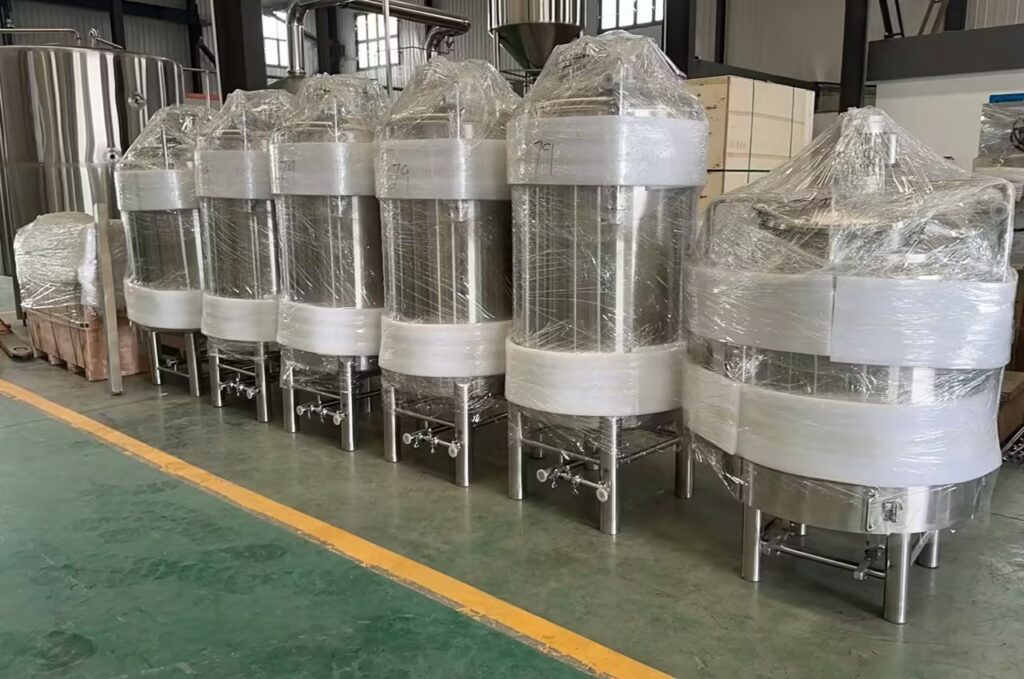
Come pianificare la temperatura di mandata del glicole, la portata e le camicie dei serbatoi?
A common mistake is looking only at refrigeration horsepower or kilowatts.
The chiller may produce enough theoretical cooling but still perform poorly if glycol does not move through the system correctly.
A practical cooling loop includes:
Chiller → Buffer Tank → Circulation Pump → Main Supply Header → Tank Control Valve → Cooling Jacket → Return Header → Chiller
Each component affects performance.
Glycol Temperature
Lower glycol temperature increases the temperature difference between coolant and wine, which can increase heat-transfer potential.
But colder is not always automatically better.
Very low glycol temperatures may:
- Reduce chiller efficiency
- Increase energy use
- Increase freeze risk
- Cause excessive local cooling
- Require stronger insulation
UC Davis notes that the area closest to a cooling jacket can become significantly cooler than the bulk liquid if the system is poorly managed.
The design goal should therefore be controlled heat removal, not simply the coldest possible glycol.
Glycol Flow
The jacket needs enough flow to carry heat away.
Too little flow can cause:
- Poor heat transfer
- Large supply/return temperature difference
- Slow tank cooling
- Uneven temperature control
Too much flow may require unnecessarily large pumps and piping.
The engineer should evaluate:
- Jacket pressure drop
- Required flow per tank
- Number of tanks cooling simultaneously
- Main header diameter
- Pump head
- Distance between chiller and tanks
Jacket Zoning
A 500L tank and a 15,000L tank should not automatically use the same jacket strategy.
Large tanks may benefit from independent cooling zones.
For example:
- Lower shell jacket
- Upper shell jacket
- Intercapedine del cono
Independent valves allow the control system to use only the required cooling area.
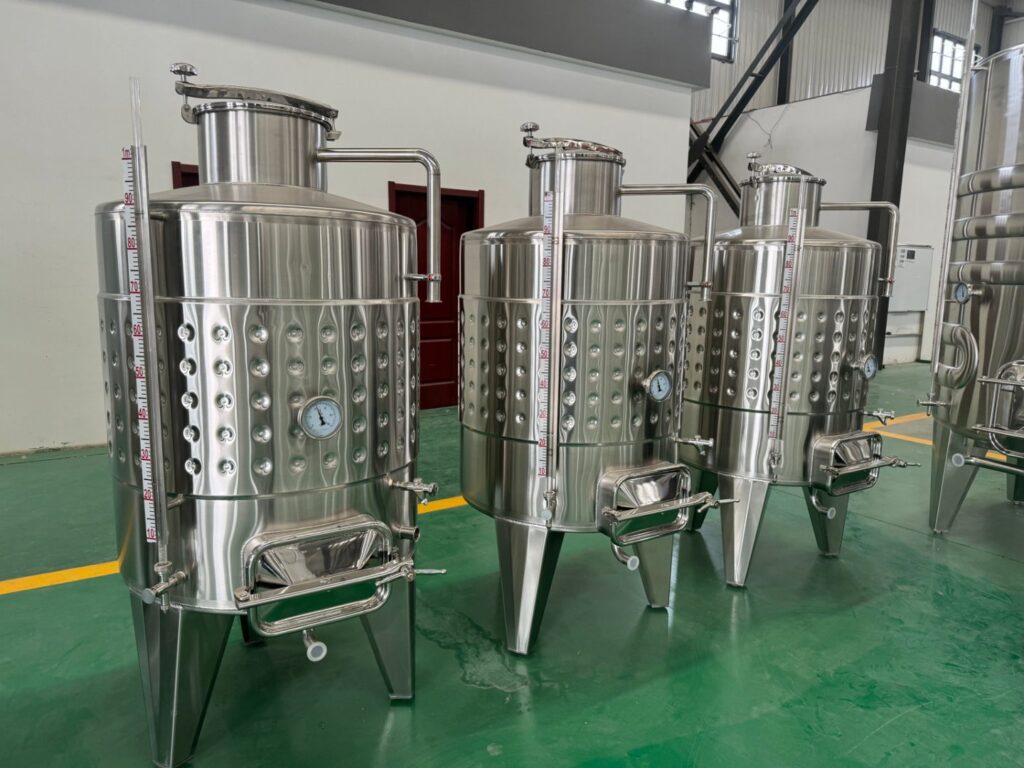
MICET’s current winery fermentation equipment already uses dimpled glycol cooling jackets with temperature-control integration across its commercial wine tank range.
Perché i serbatoi di accumulo, le pompe e le tubazioni influiscono sulle prestazioni di raffreddamento?
The chiller is only one component of the refrigeration system.
A correctly designed central system also needs adequate hydraulic capacity.
Buffer Tank
A glycol buffer tank stores chilled fluid and adds thermal mass to the cooling loop.
This can help:
- Reduce rapid compressor cycling
- Stabilize supply temperature
- Provide short-term cooling reserve
- Smooth sudden tank demand changes
Imagine three tank valves opening within a few minutes.
Without enough buffer volume and circulation capacity, supply temperature may rise rapidly before the chiller catches up.
Circulation Pump
The pump must provide enough flow at the required pressure.
It must overcome:
- Pipe friction
- Fittings
- Valvole
- Elevation
- Jacket pressure drop
- Heat exchanger resistance
Simply installing a bigger pump is not always better.
Excessive flow wastes power and can create control problems.
Tubazioni
Long pipe runs create both pressure loss and heat gain.
Good glycol piping should normally consider:
- Proper pipe diameter
- Isolamento
- Short practical routing
- Balanced branch design
- Service access
- Drain and vent points
- Expansion allowance
When we design a turnkey winery system, we therefore look at the tank room and utility layout together.
The chiller may sit outside the building, but its performance depends on everything between the refrigeration unit and the farthest fermentation tank.
Quali sono gli errori più comuni nel dimensionamento dei refrigeratori per cantine?
Several mistakes appear repeatedly in winery projects.
Mistake 1: Selecting by Total Liters
“Six 5,000L tanks = 30,000L chiller.”
There is no direct conversion like this.
The system must be sized from thermal load and production schedule.
Mistake 2: Ignoring Pull-Down Time
Cooling 10,000L by 10°C in 24 hours requires much less instantaneous capacity than doing the same job in 4 hours.
Always define the required cooling time.
Mistake 3: Ignoring Simultaneous Fermentation
One tank may be easy to control.
Five tanks reaching peak fermentation at once can create a completely different load.
Mistake 4: Buying a Chiller by Nameplate Capacity
A refrigeration unit may be advertised at a certain capacity under standard rating conditions.
Actual capacity can change when:
- Glycol supply temperature drops
- Outdoor air temperature rises
- Glycol concentration changes
- Condenser conditions change
Ask for the manufacturer’s performance table at your actual design condition.
Mistake 5: Undersizing the Glycol Pump
Enough refrigeration with insufficient circulation is still an underperforming cooling system.
Mistake 6: Ignoring Jacket Surface Area
A huge chiller cannot force heat through an undersized jacket quickly enough.
Mistake 7: Forgetting Harvest Expansion
Adding four tanks later may require replacing:
- Chiller
- Pompa
- Buffer tank
- Main piping
- Electrical service
Planning some spare capacity during the original build can be much cheaper than replacing the utility system later.
Come dimensionare un impianto di raffreddamento in vista della futura espansione della cantina?
Future expansion should be discussed before the first glycol pipe is installed.
Suppose a winery starts with:
- 4 × 5,000L tanks
but plans to reach:
- 8 × 5,000L tanks
within three years.
It may not make financial sense to buy full eight-tank refrigeration capacity on day one.
But it may make sense to install:
- Larger glycol main headers
- A larger buffer tank
- Pump skid space
- Spare control outputs
- Additional branch connection points
- Electrical capacity for another chiller module
This is a modular expansion strategy.
Option A: One Large Chiller
Advantages:
- Simple system
- Fewer refrigeration machines
- Centralized maintenance
Disadvantages:
- Larger initial investment
- Limited redundancy
- Low-load efficiency needs careful review
Option B: Modular Chillers
For example:
Stage 1: Chiller A
Stage 2: Add Chiller B
This can provide:
- Easier capacity expansion
- Partial redundancy
- Better load staging
The correct solution depends on the scale of the winery and local operating conditions.
The same principle applies to tanks.
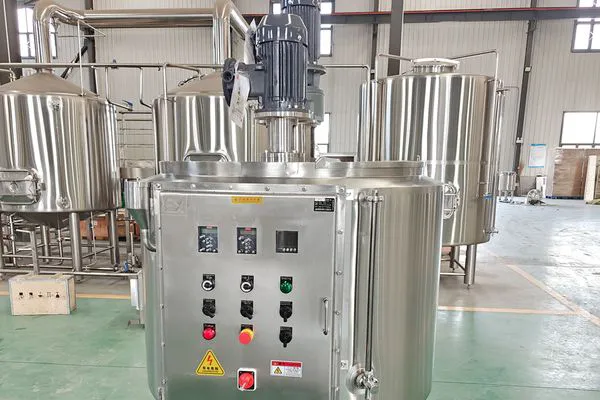
MICET currently offers winery fermentation tanks from small commercial sizes through 20,000L systems, so a utility design should consider whether today’s small cellar may later become a much larger production line.
Quali informazioni è opportuno fornire a un produttore di impianti?
A useful chiller quotation needs more than tank quantity.
Before requesting a cooling-system proposal, prepare this information:
| Project Information | Why We Need It |
|---|---|
| Number of tanks | Defines potential simultaneous load |
| Working volume per tank | Determines product mass |
| Wine types | Influences fermentation temperature |
| Product inlet temperature | Determines initial cooling load |
| Target temperature | Defines required ΔT |
| Required cooling time | Determines kW demand |
| Fermentation schedule | Identifies peak load |
| Cold stabilization needs | Adds major refrigeration demand |
| Cellar ambient temperature | Affects tank heat gain |
| Outdoor design temperature | Affects air-cooled chiller performance |
| Tank insulation | Influences heat gain |
| Jacket configuration | Determines heat-transfer ability |
| Distance to chiller | Affects pump and pipe sizing |
| Future tank quantity | Helps plan expansion |
A Simple Winery Engineering Example
Consider a winery installing:
- 6 × 10,000L stainless steel fermentation tanks
- Glycol jackets on each tank
- A central chiller
- Buffer tank
- Pump skid
- Automatic temperature controls
The wrong approach is:
“The winery has 60,000L, so size the chiller for 60,000L.”
Our preferred approach is:
- Determine which tanks are red and which are white.
- Establish fill temperature.
- Establish fermentation setpoints.
- Calculate product pull-down load.
- Estimate peak fermentation heat.
- Determine maximum simultaneous active tanks.
- Add cold stabilization and storage loads.
- Calculate glycol flow requirements.
- Check jacket heat-transfer capacity.
- Review chiller performance under local summer conditions.
- Add an appropriate engineering reserve.
- Check the planned expansion scenario.
This produces a system that reflects how the winery actually works.
As a professional brewery and beverage equipment manufacturer, MICET provides not only stainless steel wine fermentation tanks but also glycol chillers, buffer tanks, circulation pumps, cooling jackets, piping, controls, CIP systems, CAD/3D layout planning, installation guidance, and integrated winery equipment solutions.
If you are planning a new winery or adding fermentation tanks before the next harvest, send us your tank sizes, fermentation schedule, target temperatures, and cellar layout.
Our engineers can help match the tank system and refrigeration system as one project instead of treating them as separate purchases.
Domande frequenti
How big should a glycol chiller be for wine fermentation tanks?
There is no reliable liters-to-chiller-size rule. Required refrigeration capacity depends on product volume, starting temperature, target temperature, cooling time, fermentation heat, ambient conditions, simultaneous tank load, cold stabilization, and other process loads.
Can I size a winery chiller from the number of tanks?
Tank quantity is only one input. Two wineries with the same six tanks may need very different chiller capacities if one cools two tanks at a time and the other cools all six simultaneously.
Does white wine need more cooling than red wine?
White wines are often fermented at lower temperatures, so they may require more sustained cooling. Red fermentation may run warmer, but peak fermentation heat and hot cap zones can create demanding short-term cooling loads. The exact load depends on process conditions.
Why does my fermentation tank stay warm even though the chiller is running?
Possible causes include insufficient refrigeration capacity, low glycol flow, undersized piping, poor jacket coverage, incorrect control-valve operation, inadequate mixing, warm glycol supply, or a refrigeration unit operating outside its rated design conditions.
Is a buffer tank necessary in a winery glycol system?
Not every system uses the same design, but a buffer tank can add thermal mass, stabilize glycol temperature, reduce rapid compressor cycling, and help handle changing tank demand.
Should I oversize the glycol chiller for future expansion?
Some spare capacity is useful, but extreme oversizing is not always efficient or economical. A better approach may be to design larger headers, provide spare connections, reserve electrical capacity, and use modular chillers that can be expanded later.
Key Points to Remember
- Winery chiller sizing should be based on thermal load, not total tank liters.
- Product pull-down, fermentation heat, ambient heat gain, pumps, piping, and other process loads all matter.
- The required cooling time strongly affects chiller capacity.
- Peak simultaneous tank demand during harvest is more important than annual average load.
- White and red wine can create different cooling profiles.
- Glycol temperature and flow must match the tank’s cooling jacket.
- Jacket surface area can become a bottleneck even when the chiller is large enough.
- Buffer tanks and correctly sized circulation pumps help stabilize the cooling loop.
- Chiller capacity should be checked at the actual glycol and outdoor design temperatures.
- Cold stabilization can create a large additional refrigeration load.
- Future winery expansion should be included in piping, controls, utility, and plant-room planning.
- Tank design and cooling-system design should be completed together.
- A complete winery cooling proposal should include chiller, pump, buffer tank, piping, valves, controls, and tank jacket requirements.