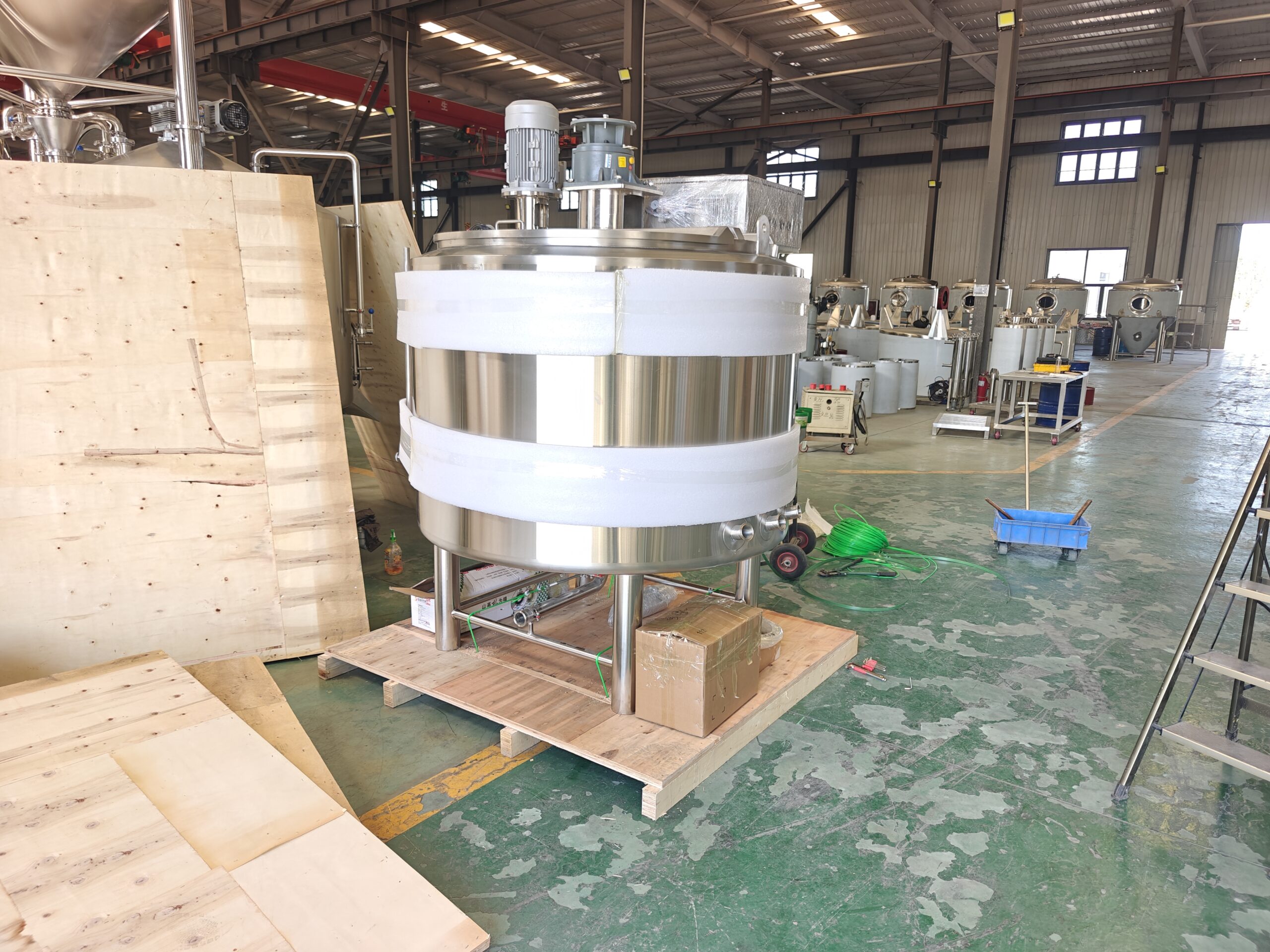
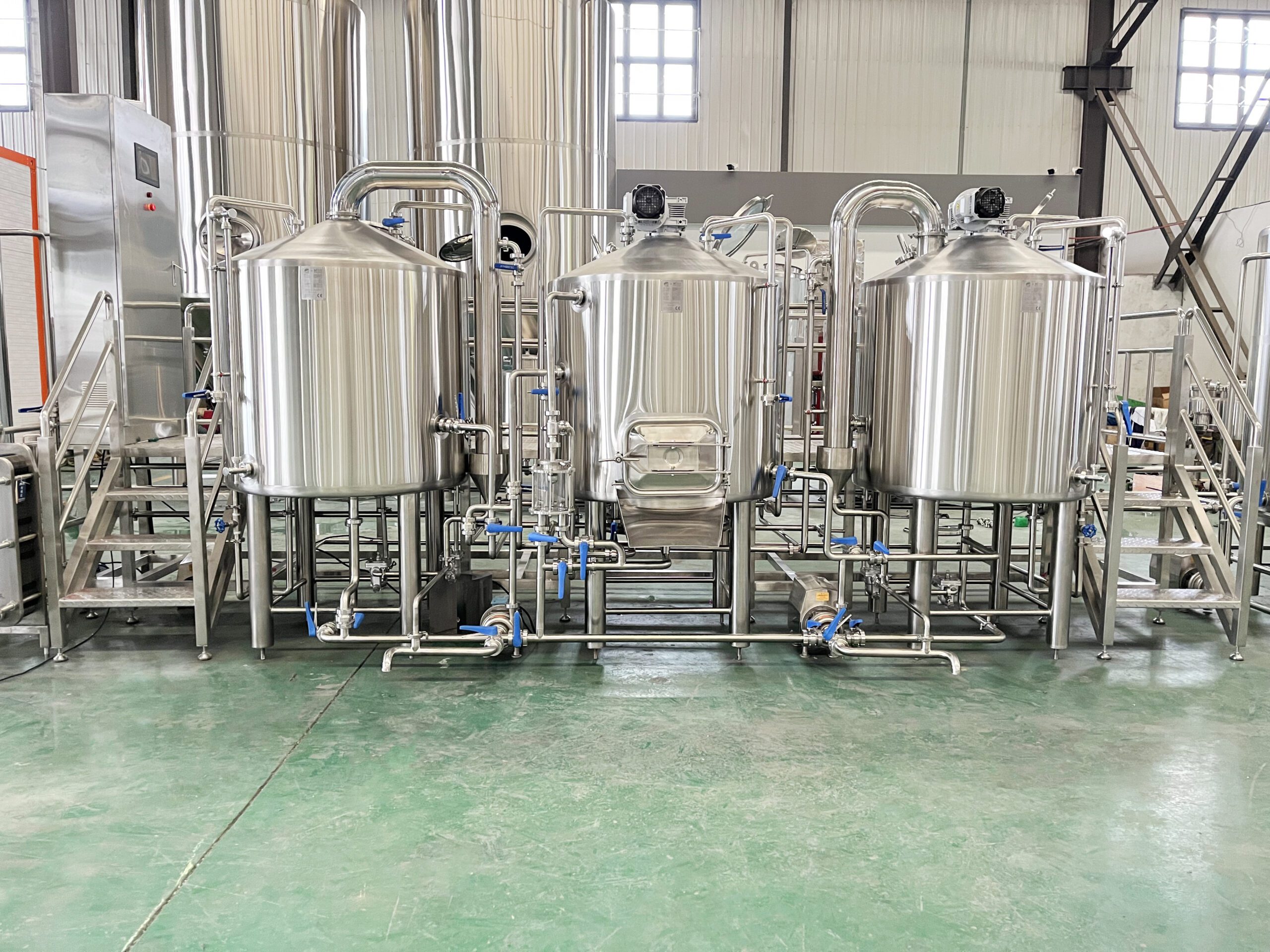
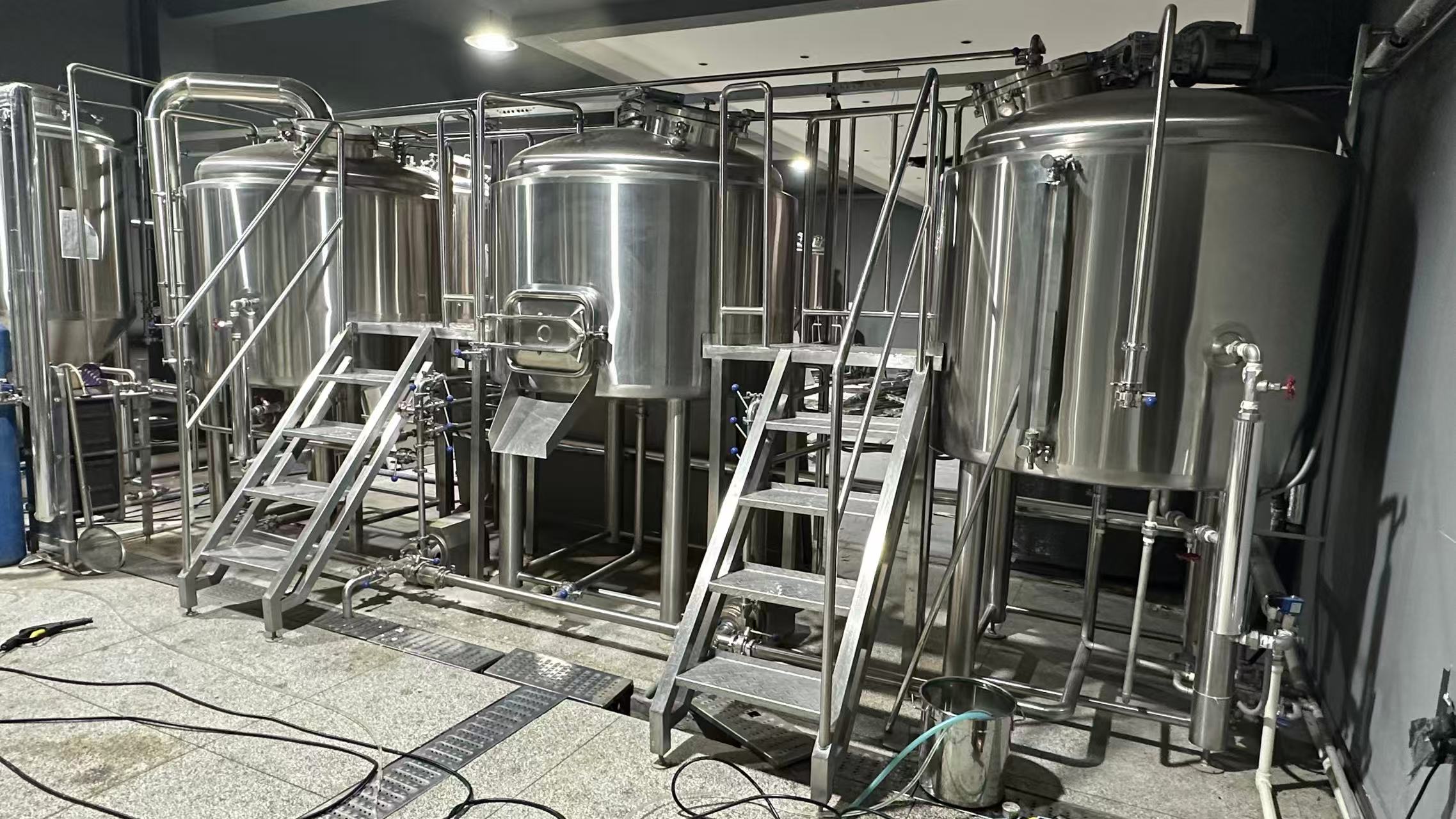
Poner en marcha una pequeña cervecería no siempre requiere una gran inversión en equipos completamente nuevos. Sin embargo, elegir un sistema incompleto o de capacidad insuficiente puede limitar la producción y aumentar los costos futuros. Un sistema de elaboración reacondicionado y bien adaptado ofrece una forma práctica de ingresar al mercado de la cerveza artesanal con equipos profesionales.
Los equipos de nanocervecería usados a la venta están disponibles en diferentes capacidades, configuraciones y niveles de reacondicionamiento. Para las cervecerías pequeñas, los sistemas de 100 l, 300 l y 500 l ofrecen distintas ventajas. La elección adecuada depende de la producción de cerveza prevista, la capacidad de fermentación, el espacio disponible, los suministros e instalaciones, las necesidades de envasado y los planes de expansión futura.

Resumen del artículo
- ¿Qué se entiende por equipo de nanocervecería?
- ¿Quién debería considerar los equipos usados de nanocervecería a la venta?
- 100 L vs. 300 L vs. 500 L: ¿qué sistema de elaboración es el adecuado para usted?
- What Is Included in a Complete Used Nano Brewhouse?
- ¿Cuántos fermentadores necesita una nanocervecería?
- ¿Qué configuración de sala de cocción y método de calentamiento debería elegir?
- ¿Qué tan importantes son los intercambiadores de calor, la refrigeración por glicol y el sistema CIP?
- What Packaging Equipment Should a Small Brewery Include?
- Equipos cerveceros usados vs. nuevos: ¿cuál es mejor para una cervecería pequeña?
- ¿Cómo conseguir una solución de nanocervecería lista para elaborar?
1. ¿Qué significa equipo de nanocervecería?
Una nanocervecería es una instalación de producción de cerveza a pequeña escala diseñada para lotes limitados, ventas locales, desarrollo de recetas u operaciones de taproom. En comparación con una gran cervecería comercial, requiere menos espacio físico y una menor inversión inicial en equipos.
El término no tiene una definición de capacidad única y universal. Para la gama actual de equipos usados de MICET, los sistemas de nanocervecería abarcan aproximadamente de 100 L a 500 L. Estos sistemas están diseñados para plantas piloto, bares, restaurantes, brewpubs y pequeñas cervecerías artesanales.
Un sistema de nanoelaboración típico incluye:
- Molino de malta
- Cuba de maceración o combinación de macerador y olla de cocción
- Lauter tun, where required
- Olla de cocción y whirlpool
- Hot liquor tank (HLT)
- Intercambiador de calor de placas
- Stainless steel fermenters
- Glycol cooling system
- Pumps, pipes, and valves
- Panel de control
- CIP cleaning equipment
The exact configuration depends on the brewing process and production target.
Una pequeña cervecería puede comenzar con una configuración compacta de 100 L para probar recetas y realizar ventas limitadas. Un brewpub concurrido puede requerir equipos de 300 L o 500 L para sostener una producción regular.
The important point is that a nano brewery still needs professional process equipment. A home brewing kit is not a substitute for a commercial brewing system designed for repeated operation.
2. ¿Quién debería considerar equipos usados de nanocervecería en venta?
Los equipos de nanocervecería usados pueden adaptarse a negocios que desean ingresar al mercado de la cerveza sin invertir de inmediato en una gran planta de producción.
Resulta especialmente útil para emprendedores que planean evaluar la demanda de los clientes antes de expandirse. Un sistema cervecero compacto también puede ayudar a restaurantes y bares consolidados a desarrollar sus propias marcas de cerveza.
Aplicaciones comunes
| Tipo de empresa | Capacidad adecuada a evaluar | Propósito Principal |
|---|---|---|
| Pilot brewery | 100 L | Desarrollo y prueba de recetas |
| Cervecería-restaurante | 100 L–300 L | Fresh beer for customers |
| Pequeño brewpub | 300L | Producción regular para taproom |
| Emprendimiento de cerveza artesanal | 300 L–500 L | Distribución comercial local |
| Small craft brewery | 500L | Increased production capacity |
| Centro de formación cervecera | 100 L–300 L | Enseñanza cervecera y pruebas de procesos |
Estas son sugerencias de planificación, no reglas fijas del sector. Los requisitos reales dependen de la demanda de ventas, la frecuencia de elaboración y el tiempo de fermentación.
El equipo usado también resulta atractivo cuando un negocio se está expandiendo o sustituyendo un sistema existente. Algunos activos de segunda mano entran al mercado debido al cierre de cervecerías, mejoras en las instalaciones o cambios en la estrategia de producción.
Sin embargo, comprar tanques usados individuales a diferentes vendedores puede generar problemas de compatibilidad. Un sistema completo y coordinado suele ser más fácil de integrar que varias máquinas independientes.
MICET ofrece paquetes de elaboración de cerveza reacondicionados en fábrica basados en sus diseños consolidados de equipos, con opciones de personalización técnica y soporte para proyectos.
3. 100 L vs. 300 L vs. 500 L: ¿cuál es el sistema de elaboración adecuado para usted?
La capacidad es uno de los factores más importantes a la hora de elegir un sistema de nanoelaboración de cerveza.
Una sala de cocción más grande no se traduce automáticamente en un mejor rendimiento comercial. Si la demanda de producción es baja, un equipo sobredimensionado puede aumentar los costos de suministros y dejar activos costosos infrautilizados.
Un sistema más pequeño puede ser más adecuado para un nuevo negocio que desea probar recetas y desarrollar una base de clientes locales.
Compare tres opciones de capacidad populares
| Especificación | Sistema de 100 l | Sistema de 300 l | Sistema de 500 L |
|---|---|---|---|
| Volumen útil de elaboración | 100 L | 300L | 500L |
| Equivalente aprox. en BBL de EE. UU. | 0.85 | 2.56 | 4.26 |
| Aplicación típica | Elaboración piloto | Brewpub | Small craft brewery |
| Fermentadores en el paquete publicado | 3 × 100 l | 2 × 300 l de volumen de trabajo | 2 × 500 L |
| Tanque de glicol | 200L | 800 L | 1000L |
| Calefacción | Eléctrico | Eléctrico | Eléctrico |
| Embalaje | Depende del proyecto | Llenadora de botellas semiautomática | Llenadora de botellas semiautomática |
Las conversiones a BBL utilizan el barril de cerveza estadounidense (aproximadamente 117,35 l). La producción real de trabajo y el volumen final envasado dependen del proceso de elaboración y de las mermas de producción.
¿Cuándo es una buena opción un sistema de elaboración de 100 l?
Un sistema de 100 l resulta útil para lotes piloto, desarrollo de recetas, restaurantes pequeños y negocios con requisitos de producción limitados.
Tiene un diseño compacto y permite elaborar diversas recetas de cerveza sin requerir una bodega grande.
La configuración usada de 100 L publicada por MICET incluye tres tanques de fermentación de 100 L, una disposición de sala de cocción de 100 L, un tanque de agua caliente de 100 L, un tanque de glicol de 200 L y un enfriador de aproximadamente 2 HP.
Este paquete es ideal para compradores que buscan una instalación profesional compacta en lugar de un conjunto de máquinas pequeñas sin relación entre sí.
Explore la Equipo de Mini Cervecería Usado de 100L configuración.
When Should You Choose 300L?
A 300L system offers more production volume while remaining suitable for smaller facilities.
It can be a practical choice for a brewpub or startup that has moved beyond occasional pilot batches and needs a more regular brewing schedule.
MICET’s published 300L package includes a brewhouse, two fermenters with approximately 300L effective working volume each, an 800L glycol tank, cooling equipment, CIP, and semi-automatic bottle filling.
See the Equipos de cervecería usados 300L specifications.
Is 500L Better for a Growing Craft Brewery?
A 500L system is worth considering when the business expects higher weekly output or needs more beer for local distribution.
MICET’s published 500L configuration includes a 500L brewhouse arrangement, two 500L fermenters, a 1000L glycol tank, a cooling system, CIP, and bottle-filling equipment.
It provides more production capacity than a 100L or 300L system, but buyers should also plan for greater utility demand, floor space, and packaging requirements.
Explore la Equipo de cervecería usado de 500L page for the published configuration.
4. What Is Included in a Complete Used Nano Brewhouse?
When searching for used brewery equipment for sale, buyers often find individual vessels, pumps, and accessories listed separately.
The problem is that these components may not work together without additional engineering.
A complete brewhouse should be treated as a connected production system.
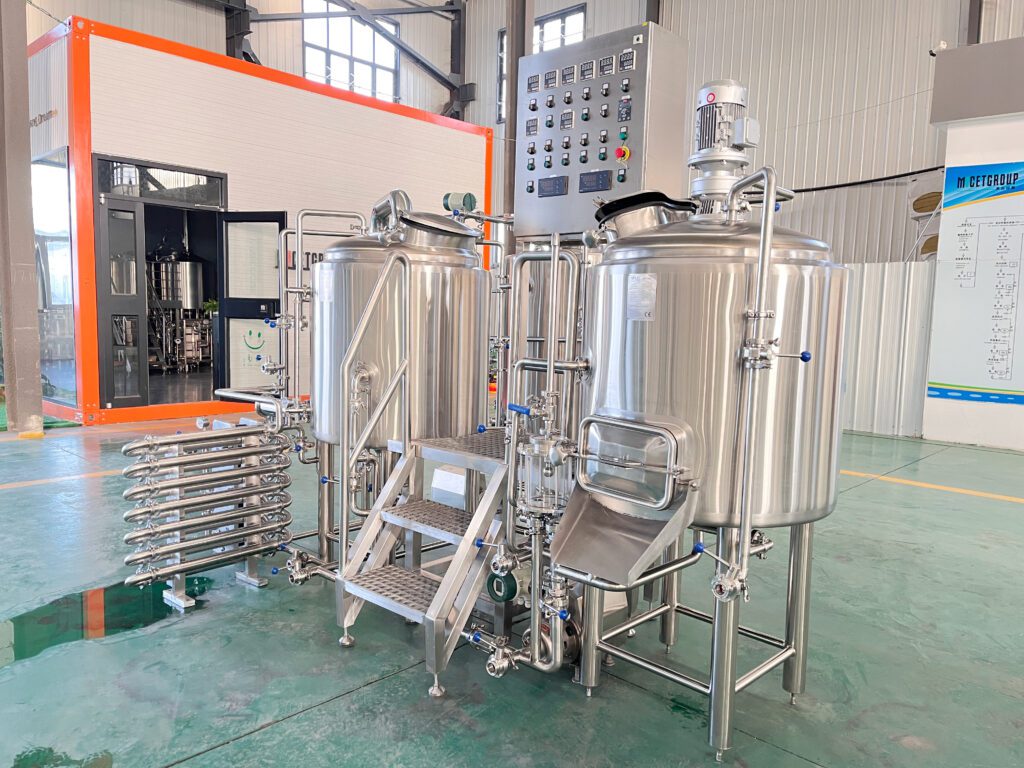
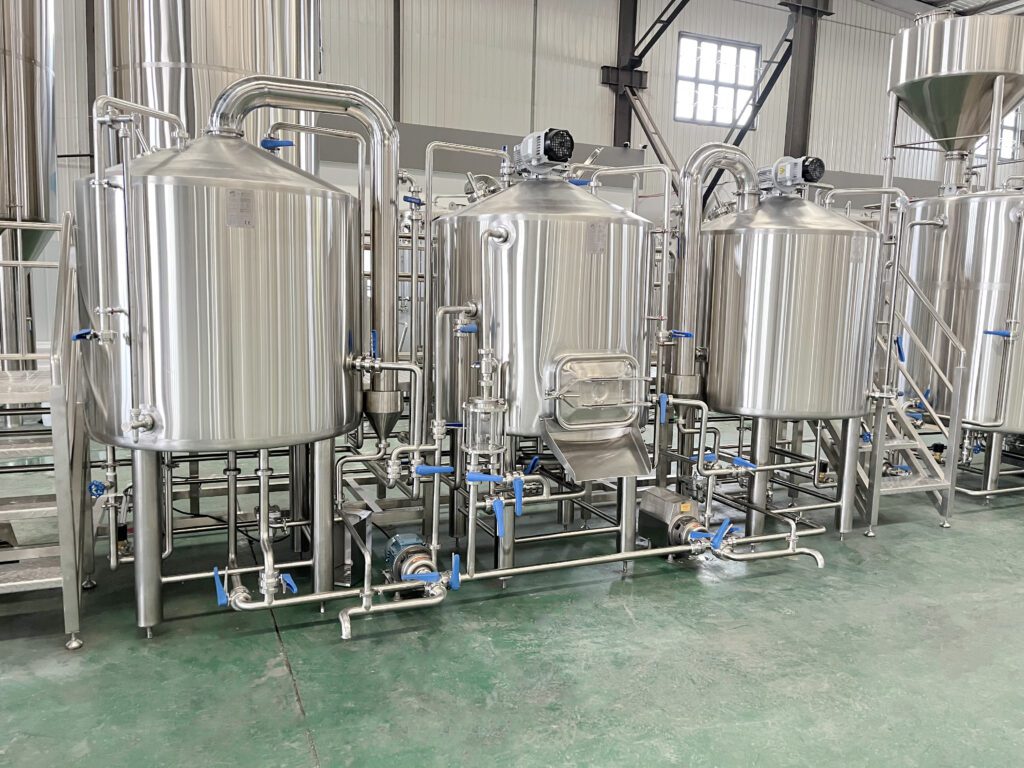
Main Brewhouse Components
Mash tun: Mixes crushed malt with hot water and supports the conversion of starch into fermentable sugars.
Lauter tun: Separates the liquid wort from spent grain.
Brew kettle: Boils the wort and supports hop additions.
Whirlpool: Helps separate hop particles and other solids before cooling.
Hot liquor tank: Stores heated brewing water for mashing and lautering.
Heat exchanger: Cools hot wort before it enters the fermenter.
Some compact systems combine functions in one vessel to reduce the equipment footprint. Other systems use separate vessels for greater process flexibility.
When reviewing a used package, confirm the actual vessel arrangement instead of relying only on labels such as 2 vessel or 3 vessel.
Also check the included pumps, valves, pipes, gaskets and clamps, control panel, and connection standards.
A system may look complete in product photos but still require additional components before it can operate at your facility.
5. How Many Fermenters Does a Nano Brewery Need?
The brewhouse determines how much wort you can produce in one brewing cycle. Fermentation capacity determines how much beer your business can process over time.
These two capacities must work together.
For example, a 300L brewhouse with only one 300L fermenter may become a production bottleneck if the beer needs several weeks of fermentation and conditioning.
A brewery with several fermenters can manage overlapping batches and different beer styles.
Fermentation Capacity Planning
Consider these factors:
- Number of brewing days per week
- Fermentation time for each beer style
- Conditioning and maturation time
- Cleaning and turnaround time
- Expected sales volume
- Seasonal demand
- Future expansion plans
A useful planning method is to estimate how many batches will be occupying fermenters at the same time.
For example, if you brew two batches each week and each batch occupies a fermenter for two weeks, you need enough cellar capacity to accommodate overlapping production, plus a practical operating buffer.
Do not simply match the fermenter volume to the brewhouse nameplate. Check working capacity, total capacity, and headspace.
Why Stainless Steel Fermenters Matter
Professional stainless steel fermenters provide a durable and hygienic environment for beer production.
Important features include:
- Conical bottom for yeast collection
- Cooling jackets for temperature control
- Aislamiento
- Sanitary manways
- Sampling valves
- CIP spray balls
- Pressure gauges and safety valves, where applicable
- Temperature sensors
A good fermenter should be easy to clean and suitable for the intended operating pressure.
For small breweries, properly matched fermenters can improve production scheduling and reduce unnecessary transfers.
6. Which Brewhouse Configuration and Heating Method Should You Choose?
A nano brewery may use a two-vessel or three-vessel brewing arrangement.
The choice depends on production requirements, available space, investment budget, and brewing workflow.
A 2 vessel system may combine mashing and boiling functions to reduce equipment costs. A 3 vessel system can separate more brewing stages and provide additional process flexibility.
Neither configuration is automatically superior.
Electric Brewhouse or Steam Heating?
Electric heating is common in compact brewing systems because it can be installed without a dedicated steam boiler.
It is especially useful for smaller facilities where steam infrastructure is not available.
However, the buyer must confirm the required electrical capacity before ordering.
For example, MICET’s published 300L electric mash/kettle configuration lists approximately 12kW of heating power, while the 500L configuration lists approximately 24kW.
These are equipment-specific examples, not universal requirements for every 300L or 500L brewery.
Before purchasing an electric brewhouse, confirm:
- Local voltage and frequency
- Single-phase or 3 phase power
- Total connected electrical load
- Heating element configuration
- Cable and breaker requirements
- Control panel compatibility
- Local electrical safety requirements
The same checks apply to pumps, motors, and cooling systems.
A system that works well in one country may require electrical adjustments before installation in another.
7. How Important Are Heat Exchangers, Glycol Cooling, and CIP?
A brewing system cannot operate reliably with only the main vessels.
The supporting systems are just as important.
Intercambiador de Calor
After boiling, wort needs to cool before entering the fermenter.
A plate heat exchanger uses cooling water and, where required, glycol or another suitable cooling medium to reduce wort temperature.
MICET’s published configurations provide useful examples:
| Sistema | Published Heat Exchanger Area |
|---|---|
| 100 L | Approximately 2m² |
| 300L | Approximately 4m² |
| 500L | Approximately 6m² |
The correct heat exchange capacity depends on wort flow, inlet temperature, target temperature, and cooling water conditions.
Glycol Cooling System
Fermentation creates heat. A chiller and glycol circulation system help maintain the required temperature inside jacketed fermenters.
The glycol tank, chiller, pumps, pipelines, and cooling jackets should be sized as one system.
MICET’s published nano packages use different glycol tank capacities according to the equipment configuration.
Sistema de limpieza CIP
CIP means Clean-in-Place. It allows cleaning solutions to circulate through vessels and process pipelines without dismantling the entire system.
For a commercial brewery, CIP helps improve cleaning consistency and reduce manual work.
When evaluating used equipment, check whether the CIP tanks, pumps, spray balls, return lines, and control components are included.
A complete nano brewery should have a practical cleaning plan from the beginning.
8. What Packaging Equipment Should a Small Brewery Include?
After fermentation and conditioning, beer needs to reach customers in a suitable package.
Your packaging choice depends on your business model.
A taproom may focus on kegs and draft service, while a retail-focused craft brewery may need a bottle or can line.
| Packaging Option | Suitable Equipment | Aplicación típica |
|---|---|---|
| Barril | Keg washer and filler | Bars and restaurants |
| Botella | Bottle filler and capper | Retail and local distribution |
| Lata | Can filling and seaming line | Retail and takeaway |
| Draft | Kegging and dispensing setup | Taprooms and brewpubs |
MICET’s published 300L and 500L packages include a semi-automatic 6-filling-head and 6-capping-head bottle machine, with a stated output of approximately 500 bottles per hour.
The actual output depends on the bottle format, operating conditions, and product handling.
A small brewery does not always need an automatic packaging line at the beginning. It may be more cost-effective to start with keg packaging and add a bottle or can line as sales grow.
A Cornelius-style keg or standard commercial beer keg may also be useful for selected small-batch or taproom applications, provided the filling and cleaning setup matches the intended container.
The key is to plan packaging capacity alongside fermentation capacity. There is little value in producing more beer than your packaging operation can handle.
9. Used vs New Brewing Equipment: Which Is Better for a Small Brewery?
Both new and used equipment can be suitable for a nano brewery project.
The right decision depends on budget, operating requirements, equipment condition, and the level of customization needed.
| Factor | Equipos usados | New Equipment |
|---|---|---|
| Initial investment | Often lower | Usually higher |
| Manufacturing lead time | May be shorter | Requires manufacturing time |
| Personalización | Depends on existing configuration | More flexible |
| Equipment condition | Requires inspection and refurbishment | New manufacturing condition |
| Piezas de repuesto | Must be confirmed | Easier to specify |
| Garantía | Depends on agreement | Manufacturer warranty |
| Instalación | Requires planning | Can be designed for the site |
A hybrid approach can also work well.
For example, a brewery may purchase refurbished stainless steel vessels while upgrading selected valves, pumps, gaskets, electrical components, and process controls.
This can balance initial investment with long-term reliability.
What Does Factory Refurbishment Mean?
Refurbishment should involve more than washing an old tank and repainting its exterior.
A professional process may include:
- Initial equipment inspection.
- Disassembly and internal cleaning.
- Weld and surface condition checks.
- Replacement of worn seals and gaskets.
- Pump, motor, and valve testing.
- Electrical and control checks.
- Tank and jacket pressure testing where applicable.
- CIP and leakage checks.
- Final inspection and export packing.
de MICET Equipo de cervecería usado program describes its inspection and refurbishment approach for different equipment capacities.
Buyers should request actual equipment photos, a component list, refurbishment scope, and relevant test records before confirming an order.
10. How Can You Get a Ready-to-Brew Nano Brewery Solution?
Choosing the right system starts with your production plan.
Before asking a manufacturer for a quotation, prepare a few basic details.
| Information | Example |
|---|---|
| Project type | Brewpub or small craft brewery |
| Target capacity | 100L, 300L, or 500L |
| Brewing frequency | Batches per week |
| Beer styles | Ale, lager, stout, IPA |
| Fermentation capacity | Number and volume of fermenters |
| Calefacción | Electric or steam |
| Refrigeración | Glycol chiller |
| Embalaje | Keg, bottle, or can |
| Installation location | Country and city |
| Available space | Building dimensions |
| Budget | Expected investment range |
This information helps the manufacturer recommend a suitable brewing configuration.
Why Choose MICET for Used Nano Brewery Equipment?
MICET is a professional brewery and beverage equipment manufacturer providing customized stainless steel brewing systems, fermentation tanks, brewhouse systems, and turnkey solutions for global B2B customers.
Our used equipment range includes compact systems designed for pilot breweries, brewpubs, restaurants, and small craft beer producers.
We focus on providing matched equipment packages rather than simply selling individual second-hand vessels.
Our project support can include:
- Used and refurbished brewhouse packages
- Stainless steel fermentation tanks
- Glycol cooling systems
- CIP cleaning equipment
- Pumps, valves, and sanitary piping
- Control panels and process controls
- CAD and 3D layout planning
- Equipment customization
- Installation guidance and commissioning support
- Piezas de recambio y servicio posventa
We also provide new equipment options for customers who need a different configuration or want to expand their production capacity.
Whether you need a compact 100L pilot brewery, a 300L brewpub system, or a 500L craft brewery package, our engineering team can help match the equipment to your process, available space, and investment plan.
Looking for used nano brewery equipment for sale?
Contact MICET with your preferred capacity, brewing concept, facility layout, and budget. We can help you review suitable equipment configurations and prepare a project-specific proposal.
Preguntas Frecuentes
What capacity is considered a nano brewery?
There is no single global capacity definition. MICET’s current used nano brewery equipment range focuses on systems from approximately 100L to 500L, suitable for pilot production, brewpubs, and small craft breweries.
Is a 300L nano brewery suitable for a brewpub?
Yes. A 300L system can be suitable for a brewpub that needs regular small-batch production. The final configuration should include enough fermentation capacity, cooling, cleaning, and packaging equipment to support the planned sales volume.
What is included in used nano brewery equipment?
A complete package may include a brewhouse, malt mill, fermenters, heat exchanger, glycol tank, chiller, pumps, control panel, CIP system, and packaging equipment. Always confirm the actual included items in the quotation.
¿Es confiable el equipo de cervecería usado?
It can be reliable when the equipment has been properly inspected, refurbished, and tested. Buyers should review tank condition, welding, pressure ratings, electrical systems, pumps, valves, cleaning arrangements, and available documentation.
Can a nano brewery expand to a microbrewery?
Yes. A brewery can expand by adding fermentation tanks, increasing brewhouse capacity, upgrading cooling, and improving packaging. However, future expansion should be considered during the initial layout and utility planning.
Does MICET offer both used and new nano brewery equipment?
Yes. MICET provides used and refurbished brewery equipment as well as new customized brewing systems. The appropriate solution depends on the buyer’s production requirements, budget, facility, and desired equipment configuration.
Principales conclusiones
- Used nano brewery equipment is suitable for pilot breweries, brewpubs, restaurants, and small craft beer businesses.
- MICET’s published nano equipment range includes 100L, 300L, and 500L systems.
- A 100L system is useful for pilot production and recipe testing.
- A 300L system offers a practical option for regular brewpub production.
- A 500L system provides more capacity for growing craft breweries.
- Working volume, total vessel volume, and finished beer output are not the same.
- Brewhouse, fermenters, glycol cooling, and CIP should be planned together.
- Electric heating requires careful checking of local voltage and electrical capacity.
- El equipo de envasado debe adaptarse a los canales de venta de la cervecería.
- El reacondicionamiento en fábrica debe incluir limpieza, inspección, sustitución de componentes y pruebas de funcionamiento.
- Una solución híbrida con equipos usados y nuevos puede ayudar a controlar la inversión manteniendo la confiabilidad.
- Elegir a un fabricante experimentado puede simplificar la personalización, la instalación y futuras ampliaciones.
Una nanocervecería exitosa no se define únicamente por el tamaño de su sala de cocción. Depende de lo bien que funcione en conjunto cada parte del sistema de producción. Elegir el paquete de equipos usados adecuado puede ayudar a que su negocio comience con una inversión manejable y trace un camino claro hacia el crecimiento futuro.