Un fermenteur conique facilite la récupération de la levure, mais le mauvais choix de système peut entraîner des fuites, des difficultés de nettoyage ou des limites pour la production future. FastFerment constitue un point de départ abordable pour les petits volumes. Bien comprendre sa conception et ses limites aide les brasseurs à déterminer à quel moment une cuve de fermentation commerciale devient un meilleur investissement.
The FastFerment conical fermenter is a food-grade plastic fermentation system designed mainly for homebrewing and small-batch beer, wine, and cider production. Its cone-shaped body, bottom valve, and removable collection ball help separate yeast and sediment. It is useful for learning conical fermentation, while commercial stainless steel fermenters offer greater capacity, integrated cooling, sanitary cleaning systems, and pressure-rated options.
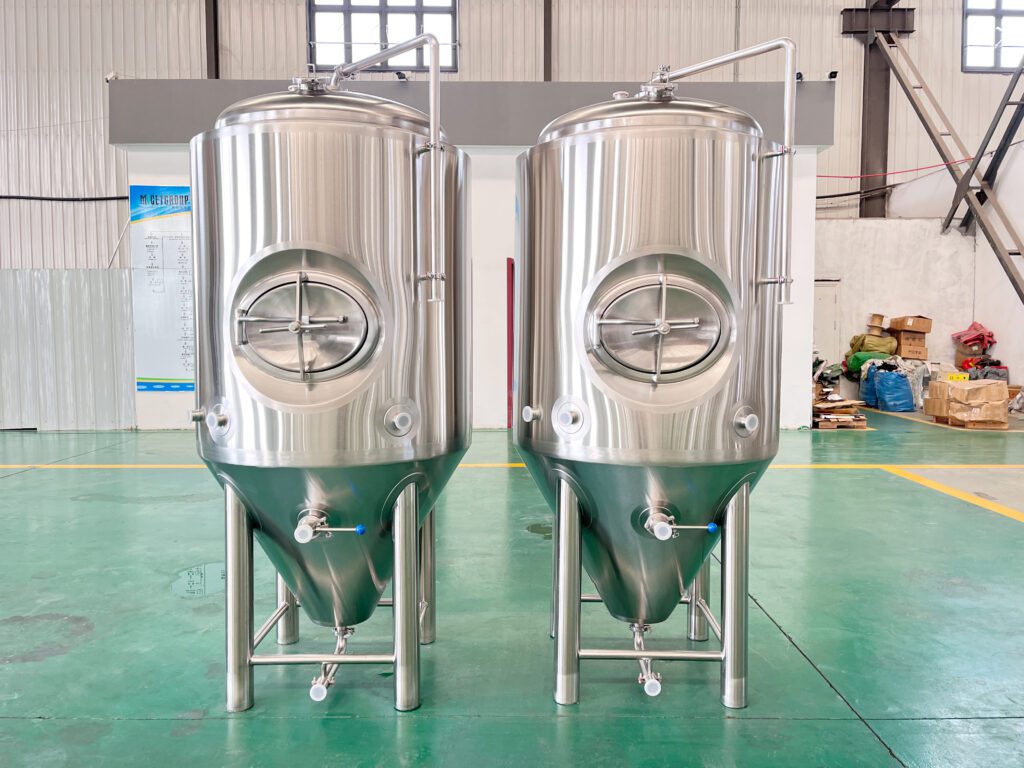
Schéma de l'article
- What Is the FastFerment Conical Fermenter?
- Comment fonctionne la boule de collecte FastFerment ?
- Quelles sont les caractéristiques principales et les avantages pour les brasseurs amateurs ?
- Quels problèmes peuvent survenir avec un FastFerment ?
- Le FastFerment peut-il gérer la fermentation primaire et secondaire ?
- How Do Temperature Control and Oxygen Exposure Affect Results?
- Comment le FastFerment se compare-t-il aux fermenteurs commerciaux en acier inoxydable ?
- Quand devriez-vous passer d'un FastFerment à une cuve plus grande ?
- Qu'est-ce qui change en passant de 30 L à 300 L, 500 L ou 1 000 L ?
- How Should You Choose Your Next Conical Fermenter?
1. Qu'est-ce que le fermenteur conique FastFerment ?
Le fermenteur conique FastFerment est un système de fermentation compact conçu pour les brasseurs amateurs, les vinificateurs de petites cuvées et les producteurs de boissons amateurs. Contrairement à un seau de fermentation classique ou à une bonbonne en verre, il est doté d'un fond conique qui dirige les levures et les sédiments vers une chambre de collecte amovible.
The familiar 7.9 US gallon model has a total capacity of approximately 30 liters. It is commonly used for batches of about 5 US gallons, leaving space for foam during active fermentation. The main vessel is made from food-grade HDPE plastic rather than stainless steel.
Ses composants standard comprennent :
| Composant | Fonction principale |
|---|---|
| Conical HDPE body | Contient la boisson en cours de fermentation |
| Bottom collection ball | Collects settled yeast and sediment |
| Union valve | Separates the main vessel from the collection chamber |
| Screw-top lid | Provides access for filling and cleaning |
| Barboteur | Releases fermentation gas |
| Doigt de gant | Permet de mesurer la température |
| Supports de fixation murale | Support the vessel |
| Hose and fittings | Support transfer to another container |
The cone is the most distinctive part of the design. As fermentation slows, yeast and other solids settle toward the bottom of the vessel.
C'est ce qui distingue le FastFerment d'un seau à fond plat, où les sédiments s'étalent sur tout le fond du récipient.
Cela rend également le produit attrayant pour les brasseurs qui souhaitent comprendre le fonctionnement des systèmes de fermentation coniques plus imposants avant d'investir dans du matériel commercial.
The 7.9-gallon model and its accessories are documented in FastFerment product specifications.
2. How Does the FastFerment Collection Ball Work?
The collection ball is one of the reasons homebrewers choose this type of equipment.
During fermentation, yeast and trub settle toward the bottom of the cone. The bottom valve connects the main vessel to a small removable chamber where some of this material can collect.
When used according to the manufacturer’s instructions, the system allows the brewer to isolate the collection chamber after sediment has settled.
The concept is simple: separate settled material without transferring the entire batch to another vessel.
Why Is Yeast Collection Useful?
Yeast harvesting can be useful for brewers who want to study yeast behavior or manage repeated small batches.
Une chambre de collecte amovible peut réduire les manipulations inutiles, mais la levure récoltée n'est pas automatiquement réutilisable. Son état dépend de la souche, de l'historique de fermentation, de l'hygiène, du stockage et d'autres facteurs.
For a small homebrew setup, the process can be convenient.
However, the collection chamber introduces extra connections that must remain clean and correctly sealed.
The brewer should inspect:
- Filetages de la boule de récupération
- Joints de vanne
- Joints d'étanchéité et joints toriques
- Surfaces de raccordement
- Accumulation de sédiments
- Signs of leakage
Ne dévissez pas la boule de collecte lorsque la vanne est ouverte ou lorsque l'ensemble se trouve sous une pression dangereuse.
How Is This Different From Commercial Yeast Harvesting?
Un fermenteur conique commercial en acier inoxydable utilise généralement une sortie inférieure sanitaire pour collecter ou évacuer les levures.
Au lieu d'une petite boule de collecte amovible, les systèmes plus grands peuvent transférer la levure vers un récipient de collecte dédié au moyen de vannes et de tuyauteries appropriées.
Cela permet aux opérateurs de gérer des volumes plus importants sans dépendre de petits raccords filetés en plastique.
The underlying idea is similar, but the engineering requirements are very different.
3. What Are the Main FastFerment Features and Benefits for Homebrewers?
A FastFerment can be an attractive step up from a standard fermentation bucket.
For home brew applications, it introduces several process features normally associated with professional conical vessels.
Gestion simplifiée des sédiments
The cone concentrates settling yeast and sediment near the bottom.
Cela facilite l'élimination des sédiments par rapport à un seau à fond plat, même si certaines matières solides peuvent demeurer dans la cuve.
Moins de transferts intermédiaires nécessaires
Certaines recettes de bière permettent d'effectuer la fermentation et la garde dans une seule et même cuve.
That may reduce the need to move beer into another carboy solely for routine sediment separation.
Réduire le nombre de transferts permet également de diminuer le temps de manipulation et l'exposition potentielle à l'oxygène.
Surveillance de la température
Le doigt de gant inclus permet d'insérer une sonde de température appropriée.
This helps the brewer monitor liquid temperature rather than relying only on room temperature.
Monitoring, however, is not the same as active temperature control.
Installation compacte
Le système peut être fixé au mur à l'aide de supports appropriés. Un support au sol compatible peut également être disponible.
This makes the design useful where the brewer has limited floor space.
Practical Learning
Son plus grand avantage est peut-être pédagogique.
Un brasseur peut apprendre comment la géométrie conique influe sur la sédimentation des levures, comment fonctionnent les vannes de fond et pourquoi l'hygiène devient plus importante lorsqu'une cuve comporte des raccords supplémentaires.
Ce sont des enseignements précieux avant de se lancer dans la production professionnelle de bière.
4. What Problems Can Occur With a FastFerment?
Un système conique en plastique présente des avantages, mais il comporte aussi des contraintes d'entretien.
Une vanne qui fuit, un filetage endommagé ou un joint mal positionné peuvent entraîner des pertes de produit. Comme le FastFerment comporte plusieurs raccords amovibles, les utilisateurs doivent faire preuve d'une grande vigilance lors du montage et du nettoyage.
Leaks Around the Bottom Valve
Une fuite peut survenir lorsqu'un joint est endommagé, qu'un raccord est mal monté ou qu'une pièce est trop serrée.
The correct response is to inspect the joint and follow the manufacturer’s assembly procedure.
Do not assume that additional tightening always fixes a leak. Excessive force may damage plastic threads.
Obstruction par les sédiments
Certaines recettes de bière produisent plus de trub ou de sédiments que d'autres.
A small outlet may become blocked by settled solids, especially when the batch contains a large amount of hop material or other particles.
C'est l'une des raisons pour lesquelles le dimensionnement de la sortie d'un fermenteur commercial dépend en partie des caractéristiques du produit et de la gestion des matières solides.
Cleaning Around Connections
La boule de collecte, la vanne de fond, le tuyau et les raccords filetés nécessitent tous une attention particulière.
Si des résidus subsistent au niveau d'un raccord, ils risquent de contaminer le brassin suivant.
Un petit système peut être nettoyé manuellement, tandis que les cuves commerciales plus grandes utilisent souvent un équipement de nettoyage en place (CIP) intégré.
Scratches and Material Wear
Food-grade plastic can be suitable for fermentation, but damaged surfaces are harder to inspect and clean.
Évitez les accessoires de nettoyage abrasifs ainsi que les produits chimiques ou les températures non conformes aux instructions du fabricant.
When a plastic vessel develops deep scratches, permanent odors, or damaged fittings, replacement may be more practical than continued use.
A simple maintenance checklist can prevent many problems:
| Objet | Ce qu'il faut vérifier |
|---|---|
| Corps principal | Fissures, rayures, décoloration |
| Collection ball | Seal condition and cleanliness |
| Vanne de fond | Movement and leakage |
| Couvercle | État du joint d'étanchéité |
| Barboteur | Clear gas-release path |
| Doigt de gant | Secure fitting |
| Système de fixation | Stable support and fasteners |
| Transfer hose | Propreté et usure |
These checks matter even for small homebrew batches.
5. Can FastFerment Handle Primary and Secondary Fermentation?
A major selling point of the FastFerment system is that a brewer may be able to complete primary fermentation and subsequent conditioning in the same vessel.
During primary fermentation, yeast converts fermentable sugars in the wort into alcohol and carbon dioxide.
Après la phase la plus active, les levures et les particules commencent à sédimenter. Le cône permet de concentrer une partie de ces matières au fond.
Le retrait des sédiments déposés peut rendre superflus les transferts supplémentaires pour certaines recettes.
However, this does not mean that every beer requires a separate secondary fermentation stage.
Many ales can remain in the primary vessel until they are ready for packaging. Other products may need extended conditioning, clarification, maturation, or transfer for specific process reasons.
La bonne démarche dépend du produit, et non des arguments marketing du fabricant du fermenteur.
Does the System Eliminate Racking?
Not entirely.
Même si la bière reste dans la même cuve pendant la fermentation et la garde, elle doit tôt ou tard être transférée dans un fût, une bouteille ou un autre récipient.
Le système permet de réduire le nombre de transferts, mais n'élimine pas chaque soutirage ni tout risque d'oxydation.
Un brasseur méticuleux doit toujours utiliser du matériel de transfert propre, des tuyaux appropriés et de bonnes pratiques de manipulation.
For commercial breweries, minimizing oxygen exposure becomes even more important because larger production batches may spend longer in storage and distribution.
6. Comment le contrôle de la température et l'exposition à l'oxygène influent-ils sur la fermentation ?
Yeast performance depends strongly on temperature.
Si un brassin chauffe trop, la fermentation peut générer des faux-goûts. S'il refroidit trop, l'activité des levures peut ralentir ou s'arrêter avant la fin de la fermentation.
The FastFerment thermowell helps a brewer monitor temperature, but the standard plastic vessel does not provide the integrated glycol cooling normally found on commercial jacketed fermentation tanks.
Un brasseur amateur peut donc utiliser une chambre de fermentation à température contrôlée ou un autre dispositif de refroidissement externe adapté.
Pourquoi la surveillance de la température ne suffit pas
Imagine a brewer measuring a fermentation temperature above the desired range.
Le doigt de gant indique au brasseur ce qui se passe.
Cela n'évacue pas la chaleur.
For small batches, an external fermentation chamber may provide enough cooling.
For a 500L or 1000L commercial system, cooling becomes an engineering requirement.
Commercial equipment commonly uses a temperature sensor, controller, cooling valve, glycol jacket, and chiller.
Cela permet de gérer plus régulièrement la chaleur générée pendant la fermentation.
What About Oxygen?
The FastFerment airlock allows fermentation gas to escape while limiting outside air exchange.
Cependant, ouvrir des raccords ou transférer la bière peut tout de même introduire de l'oxygène.
A plastic fermenter should not be treated as a pressure-rated vessel unless its manufacturer explicitly certifies that capability.
Ne mettez jamais sous pression un FastFerment standard pour effectuer une carbonatation forcée ou des transferts sous pression.
Commercial unitanks can support controlled-pressure operations only when the vessel and its safety equipment are designed and rated for those conditions.
7. How Does FastFerment Compare With Commercial Stainless Steel Conical Fermenters?
The biggest difference is not simply plastic versus stainless steel.
It is the complete operating environment.
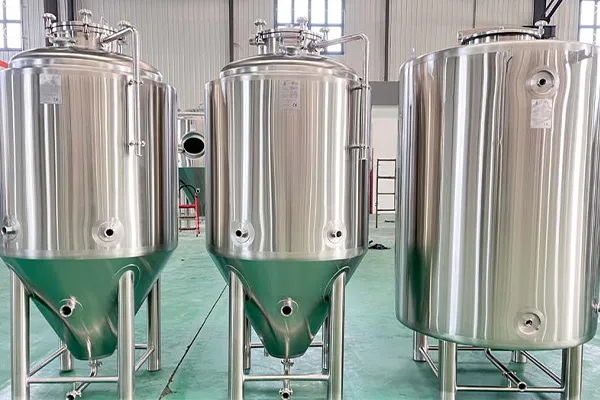
A FastFerment is designed mainly for small-batch fermentation. A commercial conical fermenter is designed for repeated production, larger working volumes, reliable cleaning, temperature management, and integration with other brewery systems.
| Feature | FastFerment 7.9 Gallon | Commercial Stainless Steel Conical Tank |
|---|---|---|
| Typical application | Homebrewing and small-batch testing | Microbrewery and commercial production |
| Matériau | Food-grade HDPE plastic | Commonly SUS304 or SUS316L |
| Total capacity | Approximately 30L | Often hundreds to thousands of liters |
| Yeast collection | Removable collection ball | Sanitary cone outlet |
| Temperature measurement | Doigt de gant | Industrial temperature sensors |
| Active cooling | External system if required | Integrated glycol jacket options |
| Pressure operation | Not assumed pressure-rated | Available on suitably rated vessels |
| Nettoyage | Mainly manual | Manual and/or CIP-ready |
| Product transfer | Hose and small fittings | Sanitary valves and process piping |
| Automatisation | Limitée | Manual, semi-automatic, or PLC options |
| Packaging integration | Small batches | Kegs, cans, bottles, or brite tanks |
The choice depends on what the brewer needs to accomplish.
For someone experimenting with recipes at home, a commercial tank may be unnecessary.
For a brewery selling hundreds of liters every week, a small plastic vessel usually creates too much manual handling and too little process capacity.
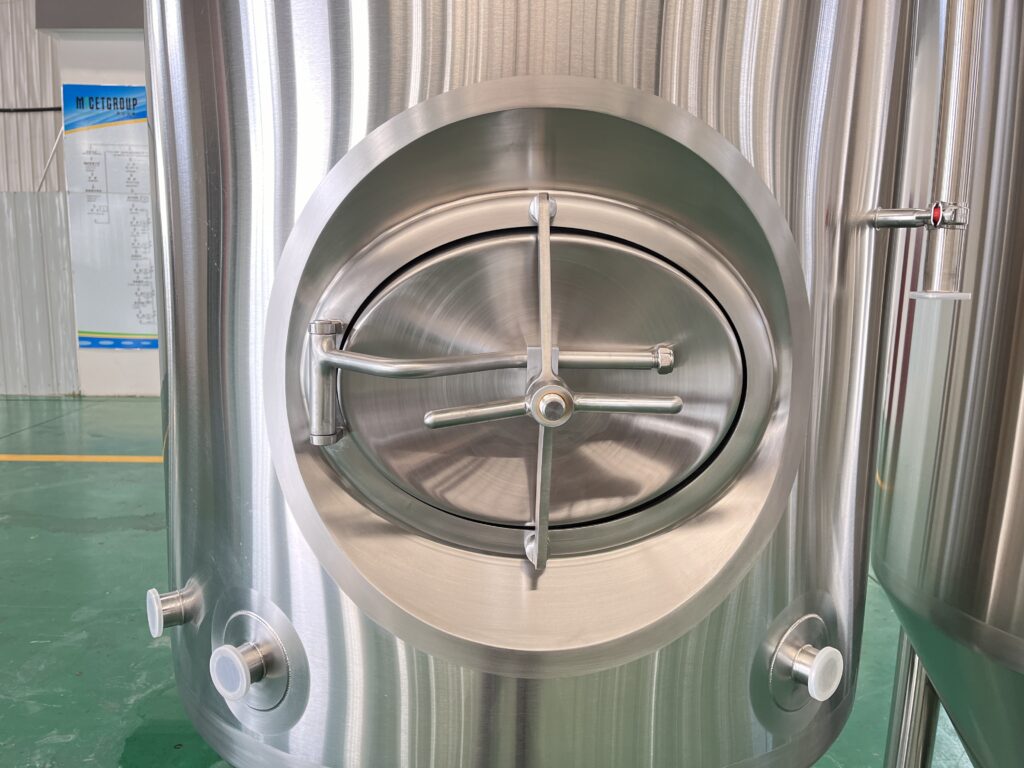
A professional system can also offer features such as insulation, cooling jackets, sampling valves, a racking arm, and an engineered sanitary outlet.
de MICET cuve de fermentation 500L d'occasion provides an example of a commercial configuration with a stainless steel conical body, cooling jackets, insulation, and CIP-ready internals.
These are differences in production capability, not just appearance.
8. When Should You Upgrade From FastFerment to a Larger Tank?
There is no fixed batch count that tells every brewer when to upgrade.
The decision depends on production goals, equipment utilization, sales demand, and the amount of manual work involved.
A homebrewer producing one batch occasionally may be happy with a FastFerment for years.
A small business planning weekly production or wholesale distribution faces a different situation.
Signs You May Need More Capacity
Consider a larger system when:
- You regularly need many small batches of the same product.
- Fermentation space limits production.
- Manual cleaning takes too much time.
- You need reliable temperature control.
- Several recipes must ferment simultaneously.
- You need better batch records and repeatability.
- Packaging requires more consistent output.
- You are preparing to operate a licensed commercial brewery.
At this point, the business case extends beyond the purchase price of one fermenter.
You should consider the cost of labor, cleaning, cooling, maintenance, utilities, and production delays.
Does a Bigger Tank Automatically Save Money?
No.
Larger tanks need more investment and may require a glycol system, additional floor space, stronger utilities, and installation support.
However, a correctly sized commercial tank can reduce the number of separate batches needed to achieve a target volume.
For a growing producer, this can simplify scheduling and improve operating consistency.
The key is to match capacity with realistic demand.
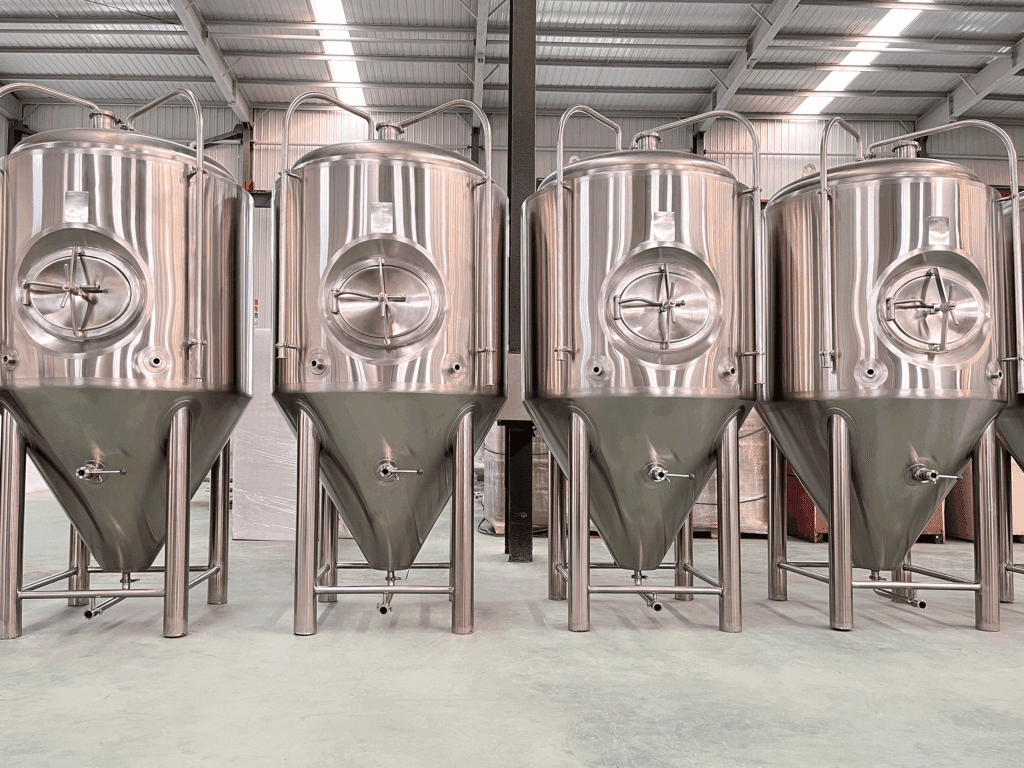
9. What Changes When Moving From 30L to 300L, 500L, or 1000L?
Moving from a homebrew conical to commercial fermentation is more than purchasing a bigger version of the same container.
The process becomes more complex as working volume increases.
A FastFerment 7.9-gallon model has a total capacity of approximately 30L, with a typical working batch around 5 US gallons or 19L.
For comparison, a commercial system may use 300L, 500L, or 1000L working-volume tanks.
Illustrative Capacity Comparison
| Système | Illustrative Working Batch | Relative to a 19L Homebrew Batch |
|---|---|---|
| FastFerment 7.9G | 19L | 1 batch |
| Commercial pilot fermenter | 300L | About 16 batches |
| Commercial fermenter | 500L | About 26 batches |
| Commercial fermenter | 1000L | About 53 batches |
These are volume equivalents only. They do not represent actual weekly output because fermentation time, cleaning, transfer losses, and production scheduling must also be considered.
The comparison illustrates why equipment scale changes the operating model.
What Becomes More Important?
1. Temperature management
A small batch may be cooled in a fermentation chamber. A larger production system normally needs dedicated cooling equipment.
2. Cleaning
Manually washing one compact plastic vessel is very different from cleaning a 1000L stainless steel fermentation tank.
CIP design, drainage, chemical compatibility, and inspection access become important.
3. Yeast management
Larger yeast quantities require appropriate collection, handling, sanitation, and storage procedures.
4. Production scheduling
A commercial brewery may operate several fermenters simultaneously. One vessel may contain a lager while another produces an ale or cider.
5. Quality control
The brewer may need routine batch records, gravity measurements, temperature history, and consistent operating procedures.
6. Packaging
A homebrewer can fill a few bottles or a keg. A commercial producer needs a packaging plan that matches finished beer output.
Illustrative Upgrade Scenario
Consider a small beverage startup currently testing recipes with 19L batches.
The team develops a beer that receives strong demand from local customers and decides to move toward a 500L production target.
At the testing stage, the main questions are recipe quality and customer response.
At the commercial stage, the questions change:
- Can the brewhouse produce enough wort?
- How many fermentation tanks are needed?
- How long will each beer occupy a tank?
- What glycol cooling capacity is required?
- How will the tanks be cleaned?
- How will the beer be transferred?
- Will finished beer go into kegs or cans?
- Does the building have enough space and drainage?
This is an illustrative scenario, not a published MICET customer project.
It shows why the next investment should be planned as a production system rather than simply replacing a small fermenter with a larger one.
10. How Should You Choose Your Next Conical Fermenter?
If you are moving beyond homebrew production, begin with your actual production requirements.
At MICET, our engineering approach focuses on how the fermentation equipment will work with the brewhouse, cooling system, cleaning process, and packaging plan.
Before requesting a quotation, prepare the following information:
| Requirement | What to Specify |
|---|---|
| Produit | Beer, cider, wine, kombucha, or another beverage |
| Batch capacity | Desired working volume |
| Production frequency | Batches per week |
| Fermentation schedule | Typical vessel occupancy |
| Temperature | Required fermentation and conditioning range |
| Matériau | SUS304 or SUS316L where appropriate |
| Pressure | Atmospheric or pressure-rated operation |
| Yeast handling | Collection or discharge requirements |
| Nettoyage | Manual cleaning or CIP |
| Emballage | Keg, bottle, can, or bulk transfer |
| Utilitaires | Electricity, glycol, water, drainage |
| Mise en page | Floor space, ceiling height, access |
| Expansion | Expected future capacity |
New or Refurbished Commercial Fermentation Tanks?
Both may be worth considering.
A new tank offers opportunities to customize its dimensions, fittings, cooling arrangements, and controls around the project.
A refurbished tank may offer a lower initial investment, provided the buyer can verify its condition, cleaning suitability, cooling system, and pressure documentation where applicable.
MICET supplies customized brewing and fermentation systems as well as used or refurbished equipment for suitable projects.
For reference, our cuve de fermentation d'occasion de 1000L page describes a stainless steel conical design with insulation, glycol cooling, sanitary fittings, and refurbishment-related information.
Why Work With an Equipment Manufacturer?
When moving from fast ferment homebrew systems to commercial production, buyers need more than a tank catalog.
The equipment must fit:
- The available building space
- Production batch sizes
- Cooling requirements
- Operator workflow
- Cleaning procedures
- Utility connections
- Packaging schedules
- Future expansion plans
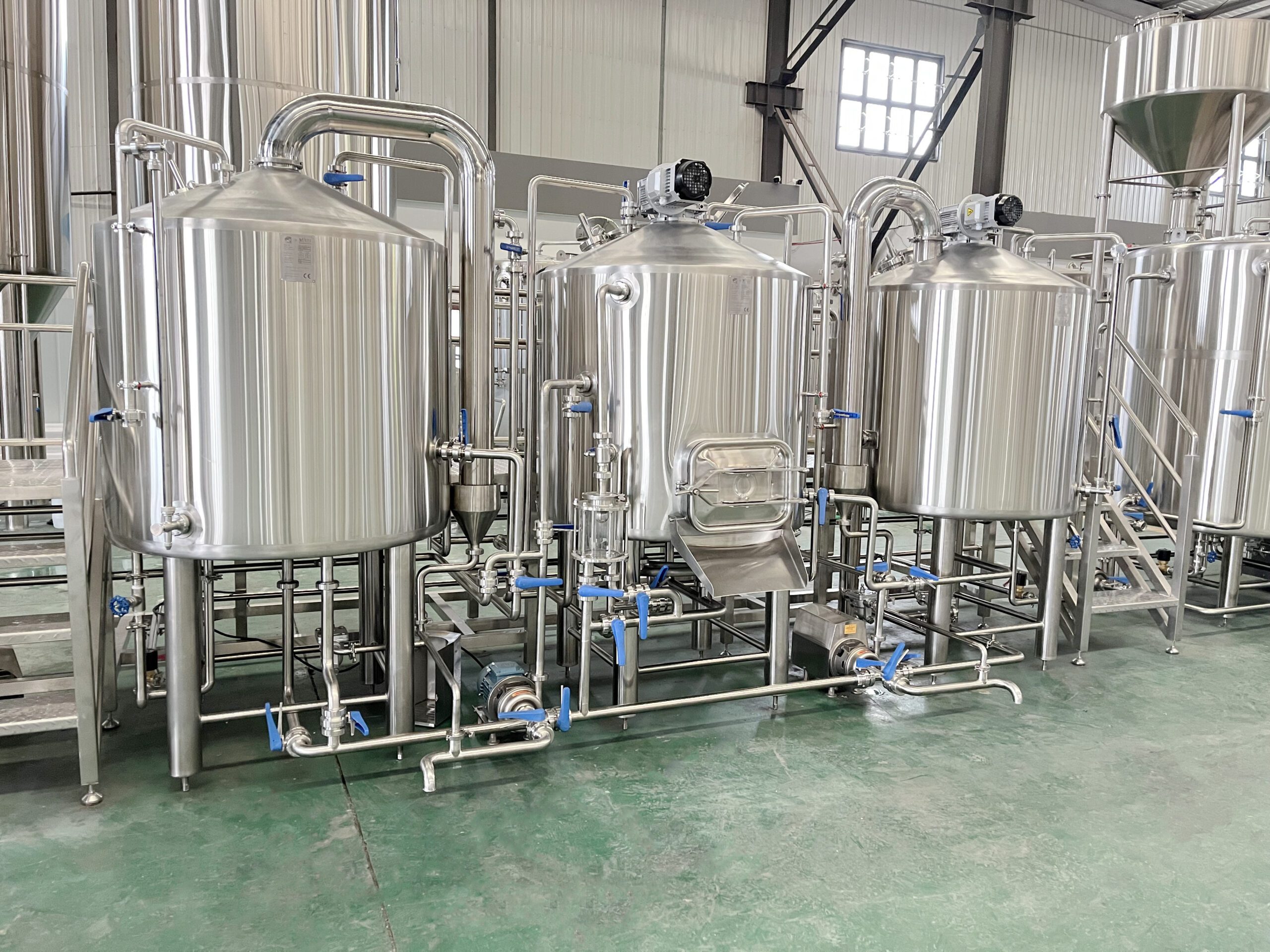
MICET supports stainless steel tank customization, brewhouse systems, CAD and 3D layout planning, integration of glycol cooling and other auxiliary equipment, installation guidance, and long-term technical support.
We help craft breweries, brewpubs, commercial beverage producers, cideries, and other B2B customers evaluate the complete production setup.
A small conical fermenter can be a useful place to learn.
When your production goals grow, the next step is choosing an integrated fermentation system designed around your process.
If you are planning to expand from small batches into commercial production, share your current batch size, target output, beverage type, and facility requirements with the MICET engineering team.
We can help you evaluate a suitable new or refurbished commercial fermentation configuration.
Questions fréquemment posées
What is a FastFerment conical fermenter?
The FastFerment is a homebrewing fermentation system with a cone-shaped plastic body, bottom valve, and removable collection ball. The popular 7.9 US gallon version has approximately 30L total capacity and is commonly used for batches around 5 US gallons.
Is FastFerment suitable for commercial brewing?
It is primarily designed for homebrewing and small-batch use. A commercial brewery generally needs larger capacity, more robust sanitation arrangements, active cooling, and equipment suited to its production and regulatory requirements.
Does FastFerment eliminate racking?
It may eliminate the need for a separate secondary vessel in some brewing processes, but finished beer must still be transferred for packaging or serving. Good transfer practices remain important for reducing oxygen exposure.
Can FastFerment be used for wine and cider?
Yes, the system is marketed for small-batch beer and wine production and may be suitable for cider making when used within its material and operating limits. The required cleaning, headspace, and fermentation procedures depend on the beverage.
Can you pressure-ferment or carbonate beer in a FastFerment?
Do not assume a standard plastic FastFerment is pressure-rated. It should not be used for pressure fermentation, forced carbonation, or pressure transfers unless the manufacturer explicitly approves that use and provides the required specifications.
What is the main advantage of a commercial stainless steel conical fermenter?
A commercial stainless steel conical fermenter can provide larger working volume, integrated glycol cooling, more robust cleaning capability, sanitary yeast handling, and suitable pressure-rated options. These features support repeatable production and integration into a professional brewery.
Principaux enseignements
- FastFerment is a specific homebrewing product, not a generic name for every conical fermenter.
- The common 7.9-gallon version uses food-grade HDPE plastic and has approximately 30L total capacity.
- Its collection ball helps manage yeast and sediment during small-batch fermentation.
- The cone design can reduce some unnecessary transfers but does not remove every transfer requirement.
- Valves, threads, gaskets, and the collection ball need careful cleaning and inspection.
- A thermowell helps monitor temperature, but active cooling usually requires additional equipment.
- Standard FastFerment systems should not be treated as pressure-rated vessels.
- Commercial stainless steel conical tanks support larger production volumes and more advanced process integration.
- The best time to upgrade depends on sales demand, batch frequency, production efficiency, and future growth.
- Moving from 30L homebrewing to 300–1000L commercial production requires planning beyond tank capacity.
- Cooling, sanitation, layout, utilities, and packaging are important parts of a commercial brewery project.
- Working with an experienced manufacturer can help match fermentation equipment with the complete production process.