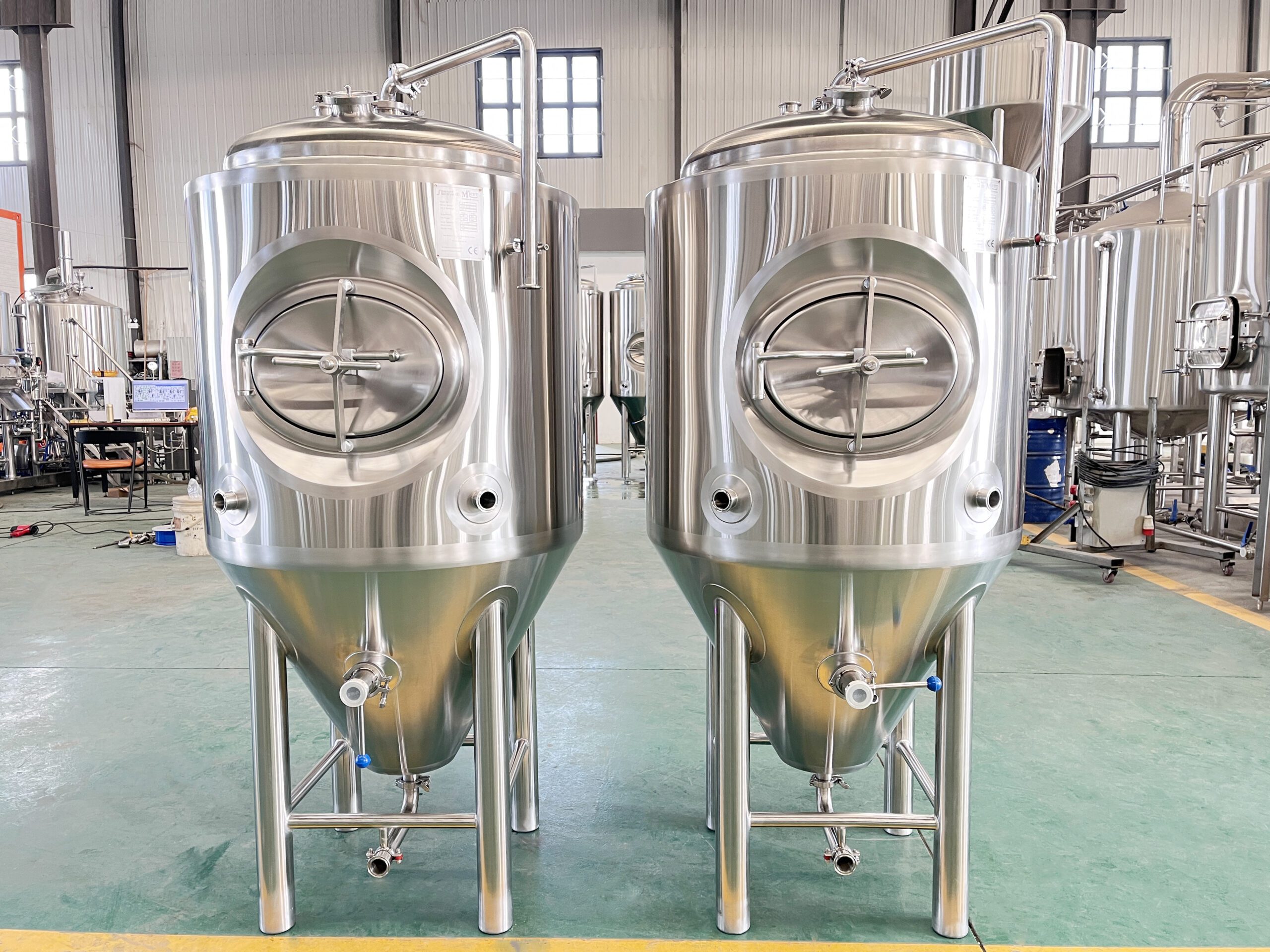
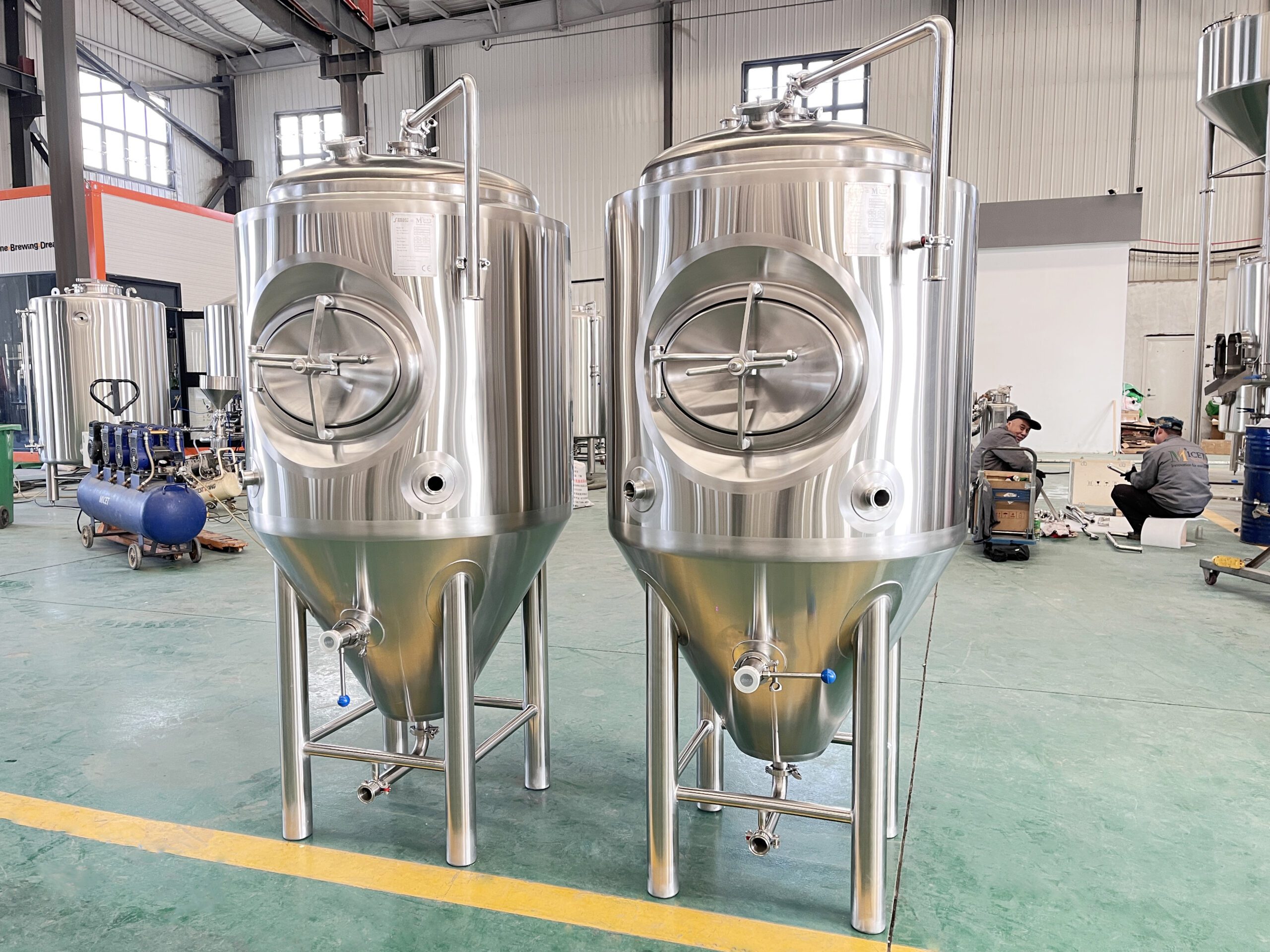
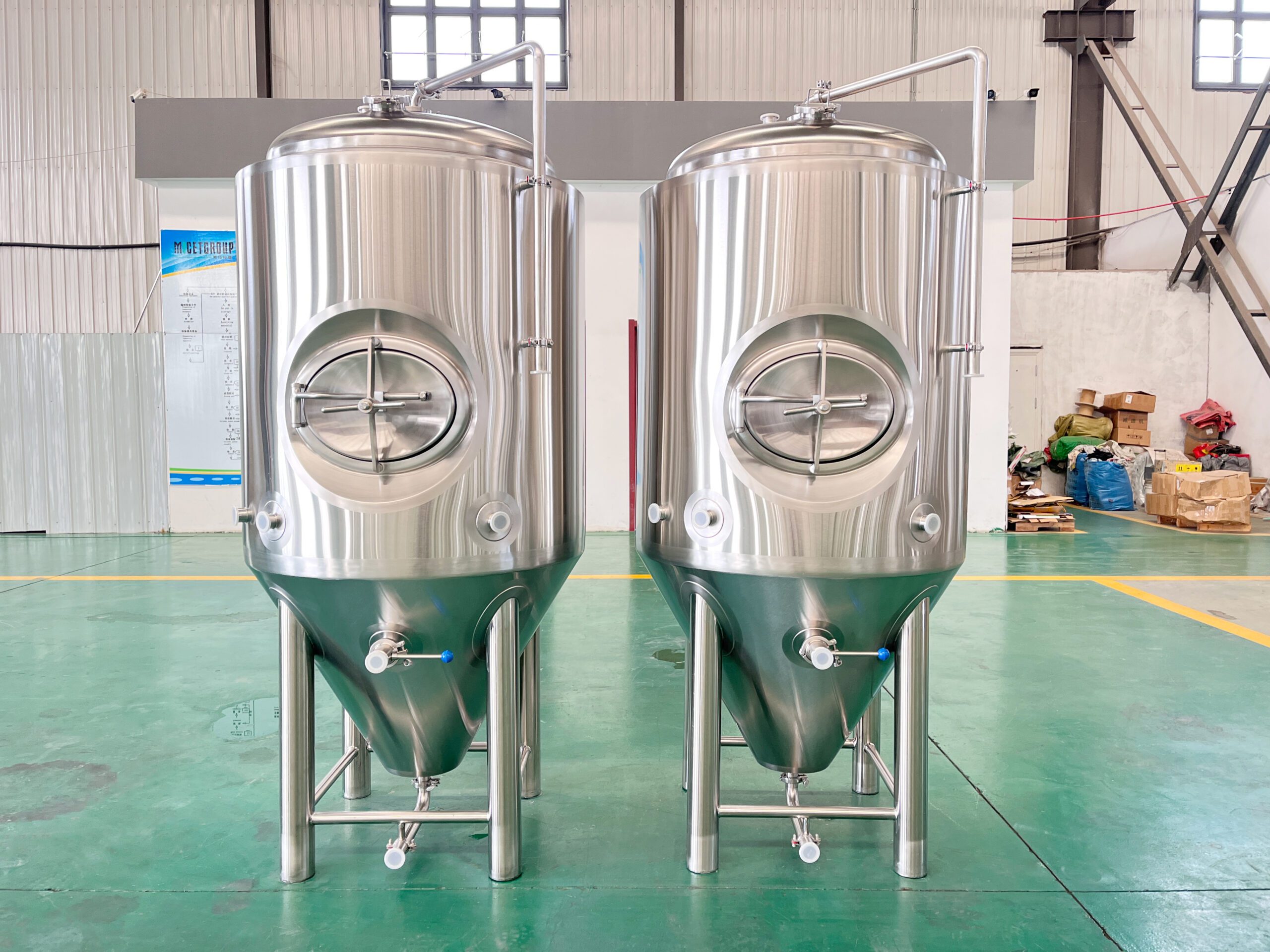
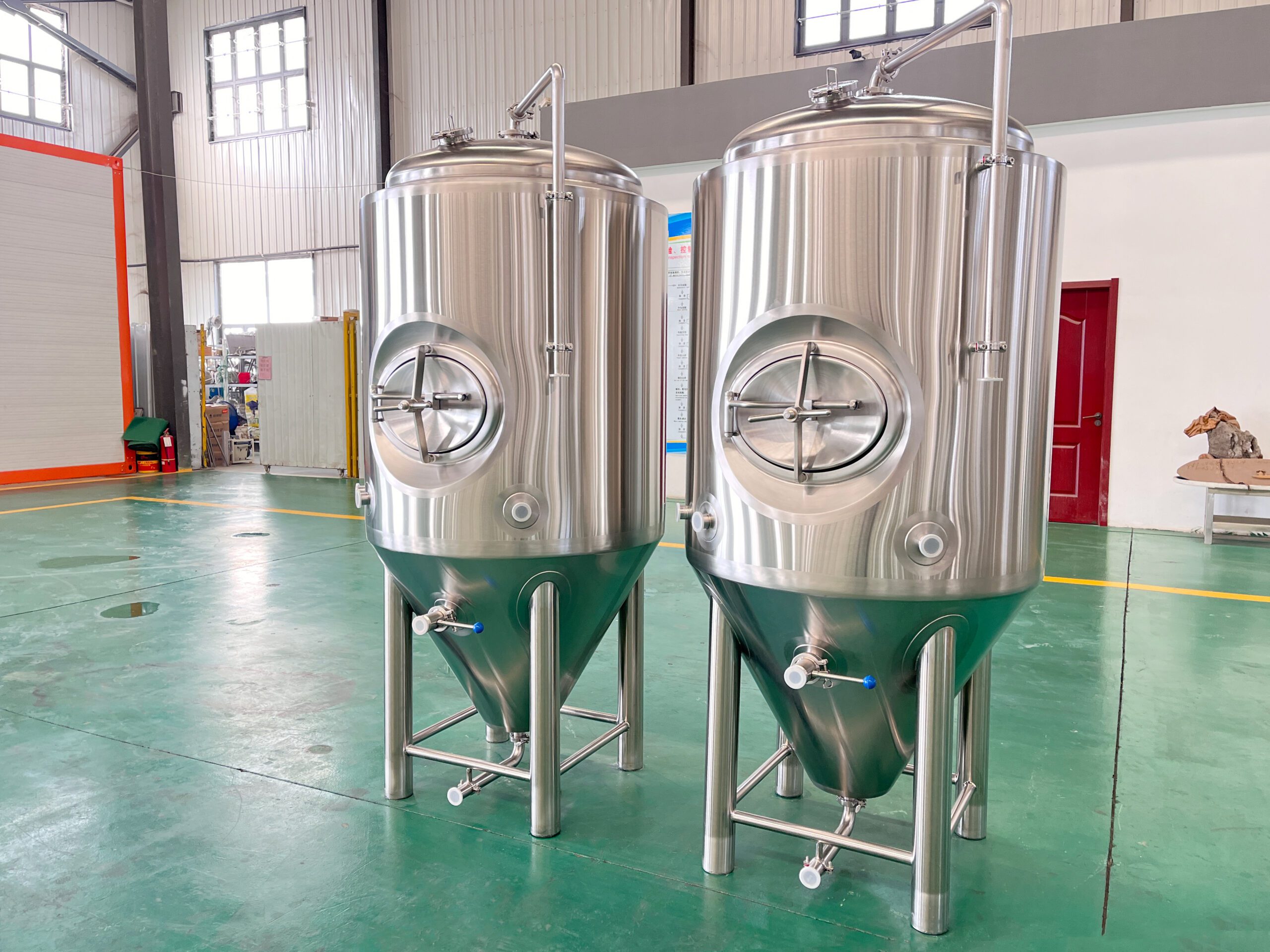
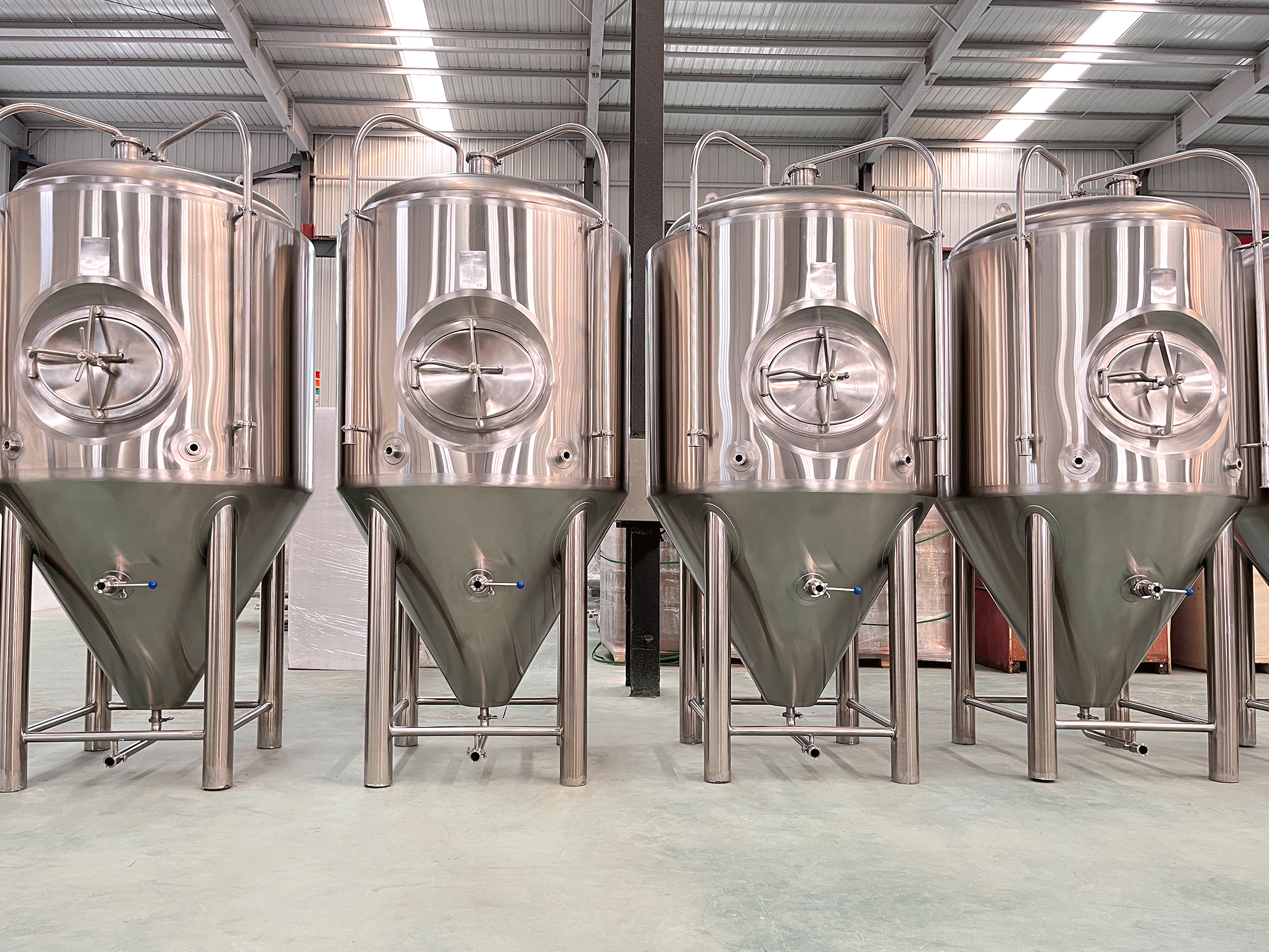
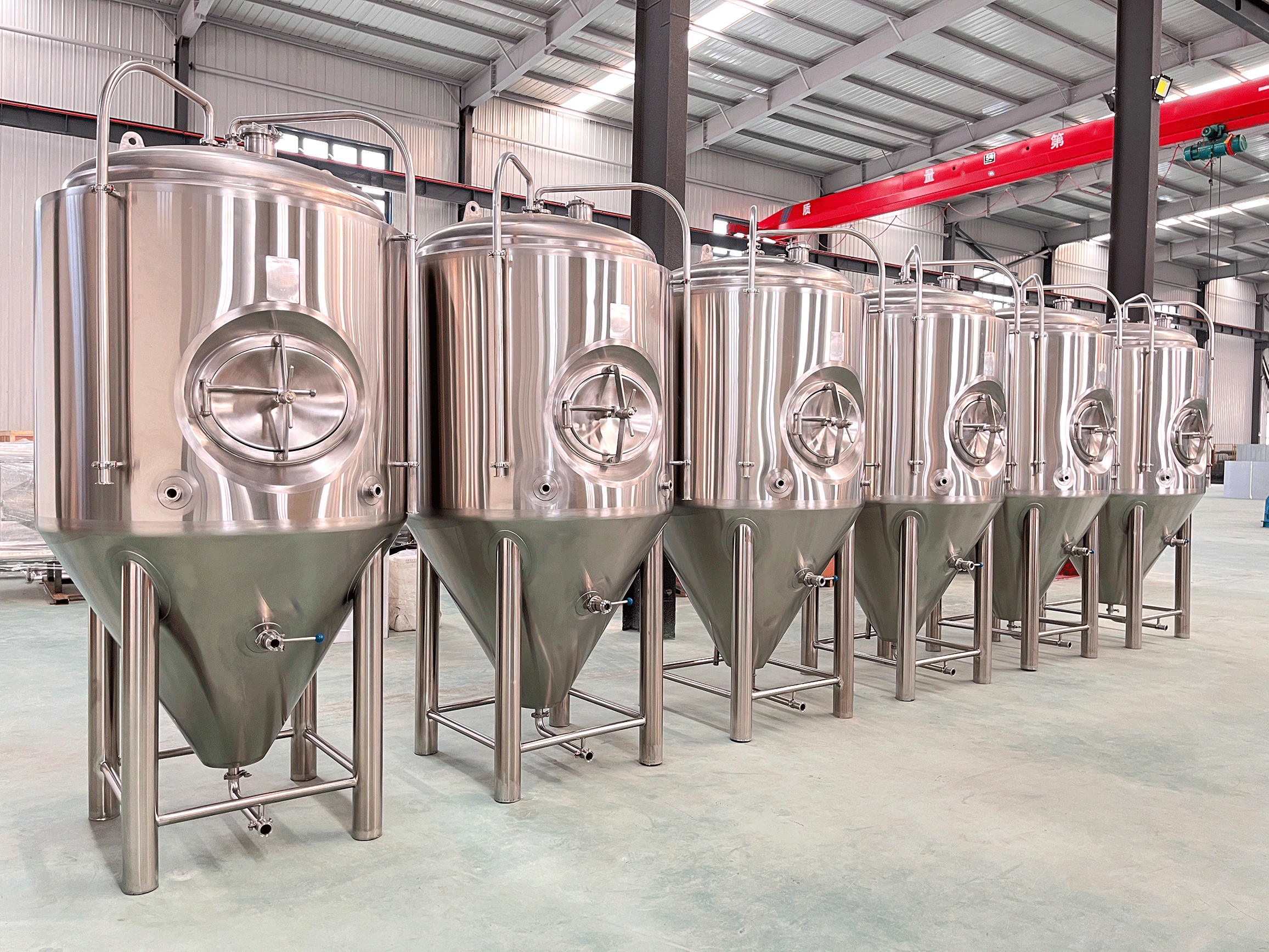
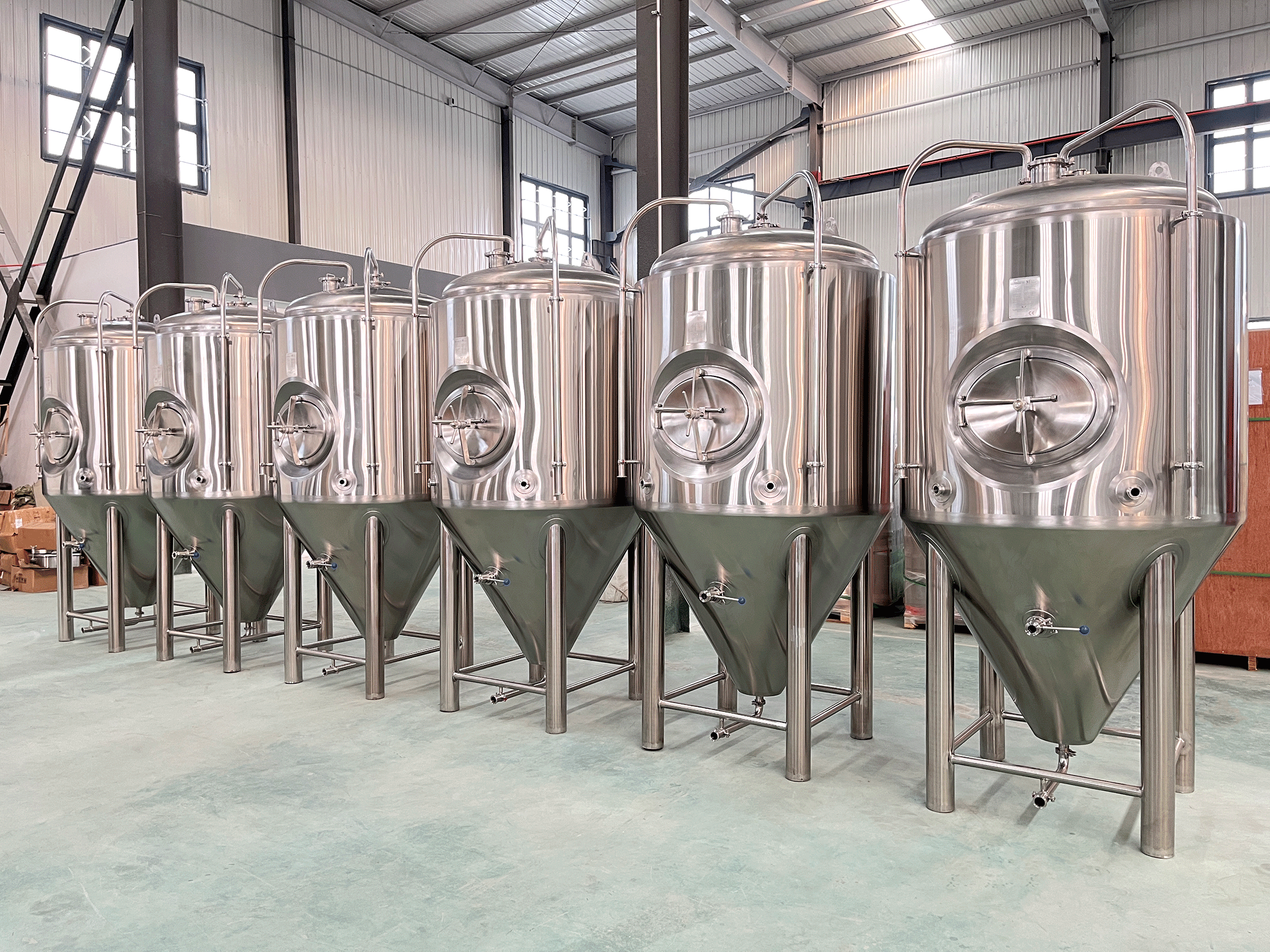
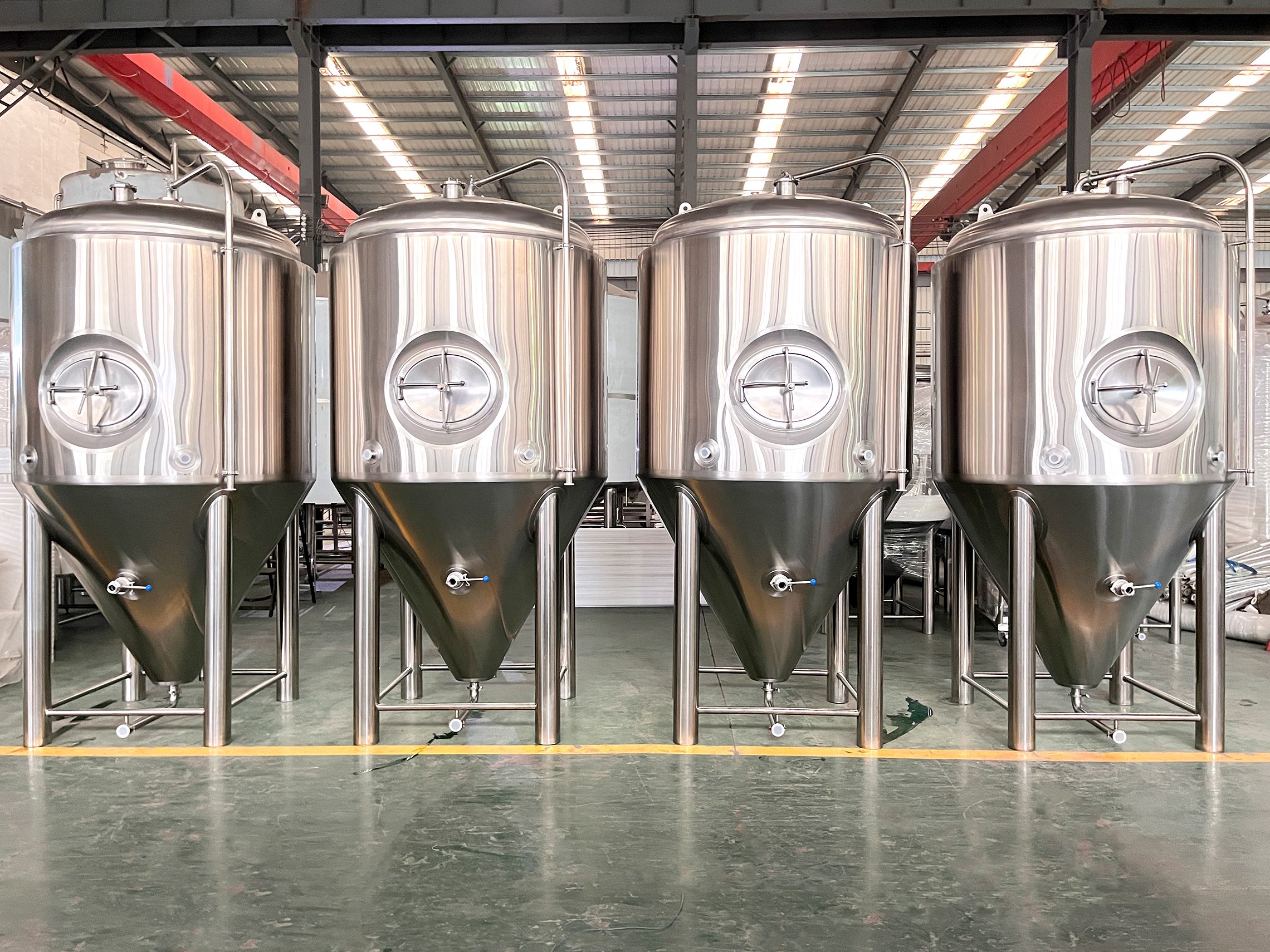
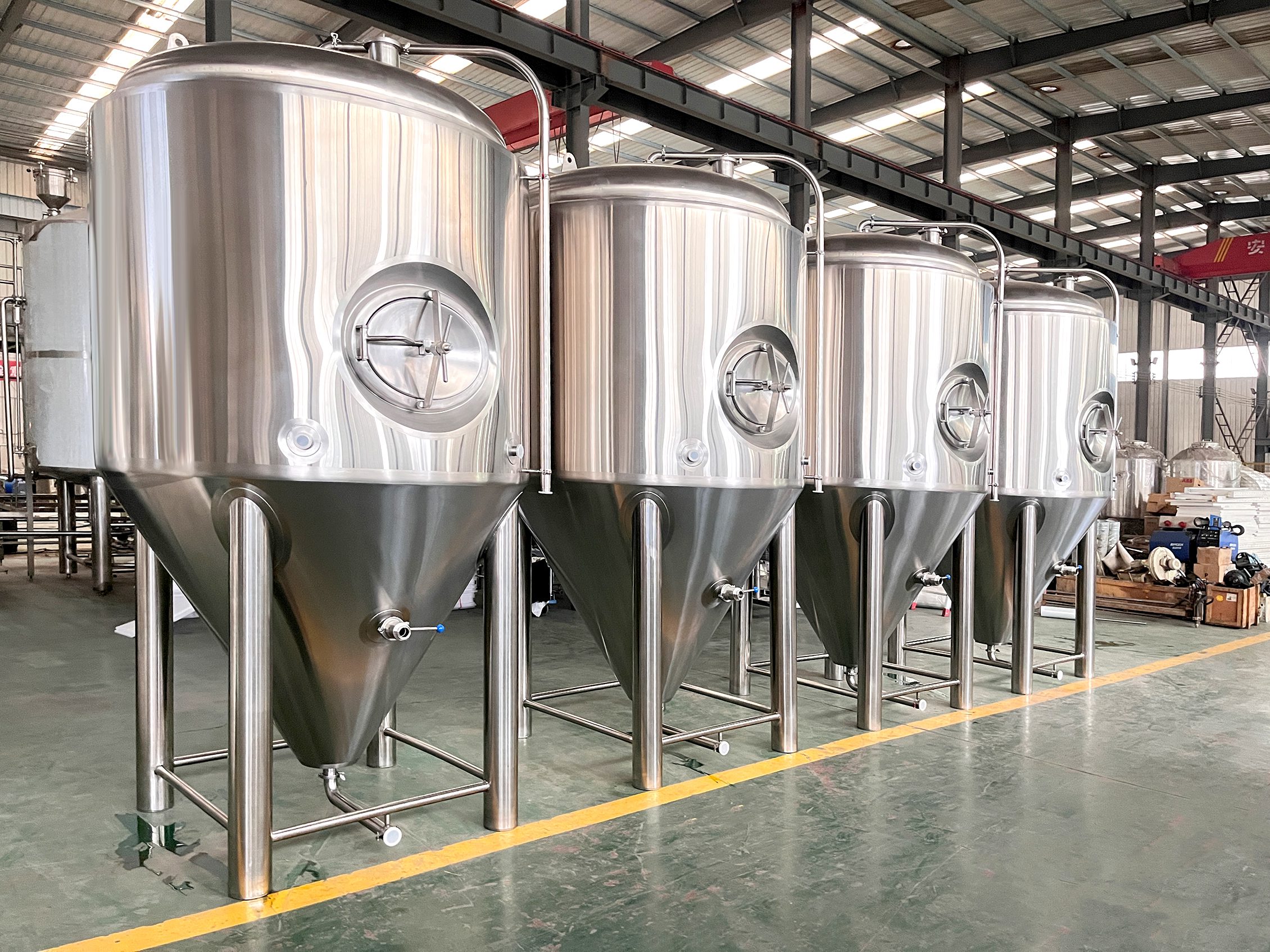
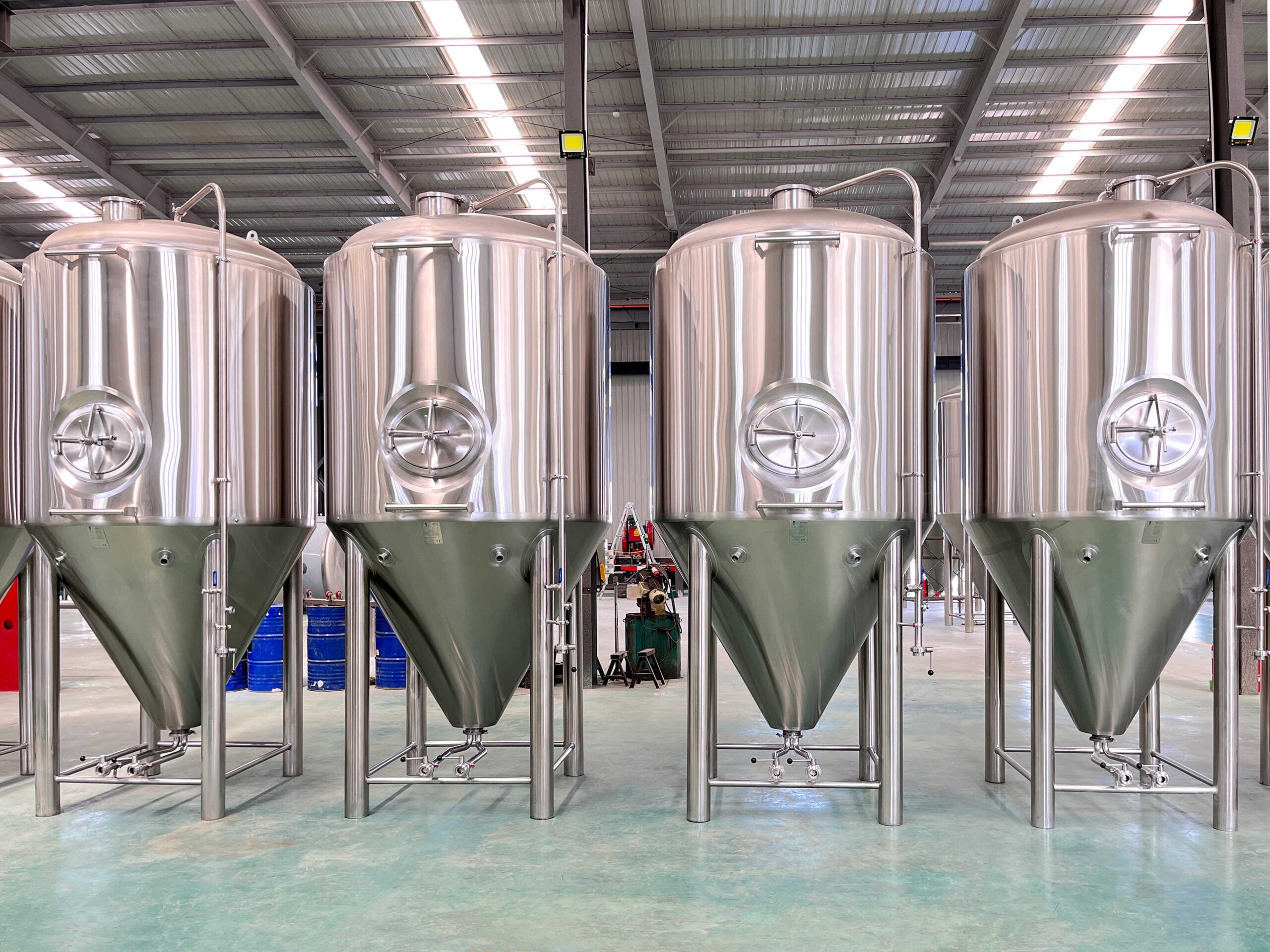
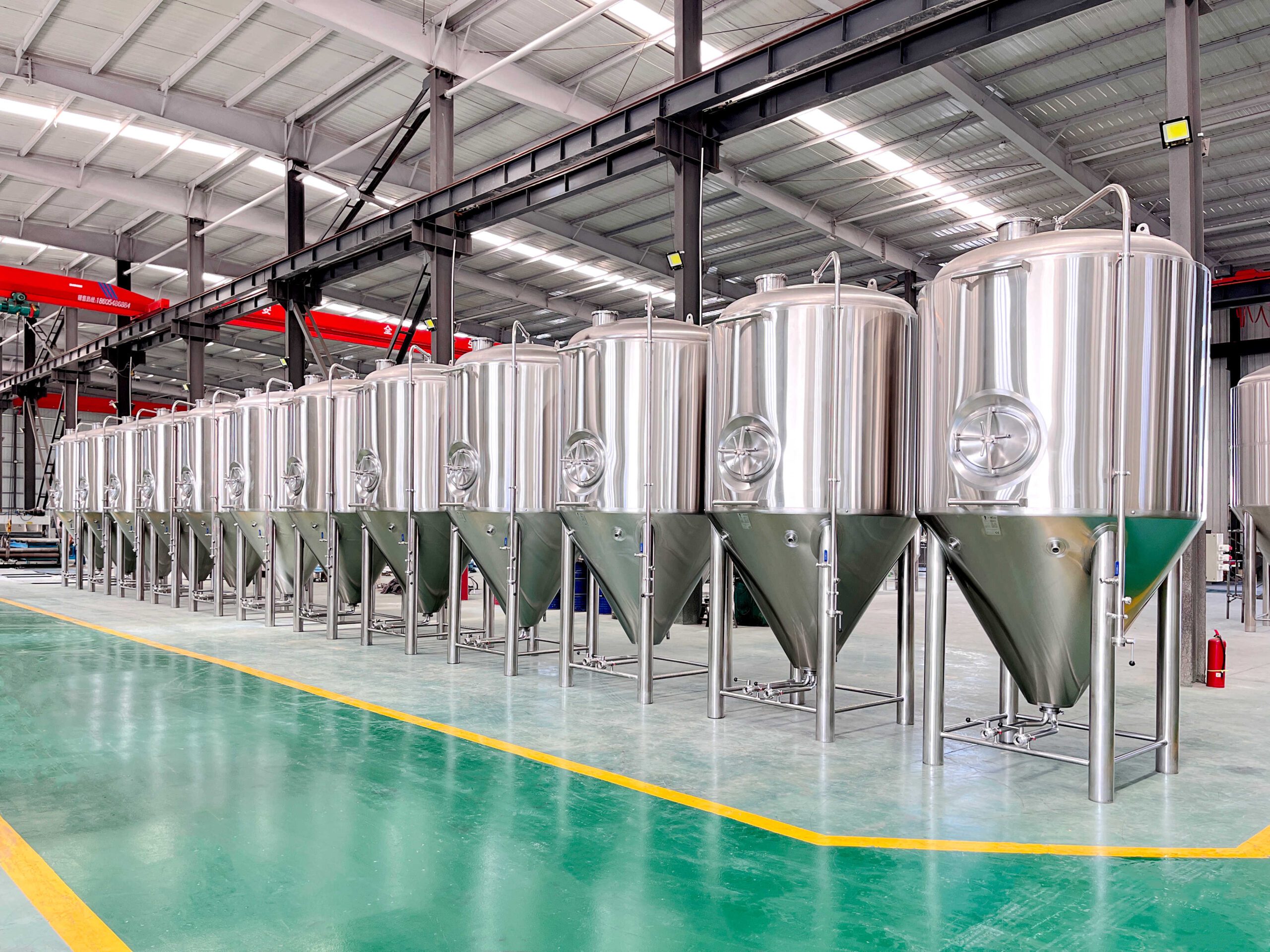
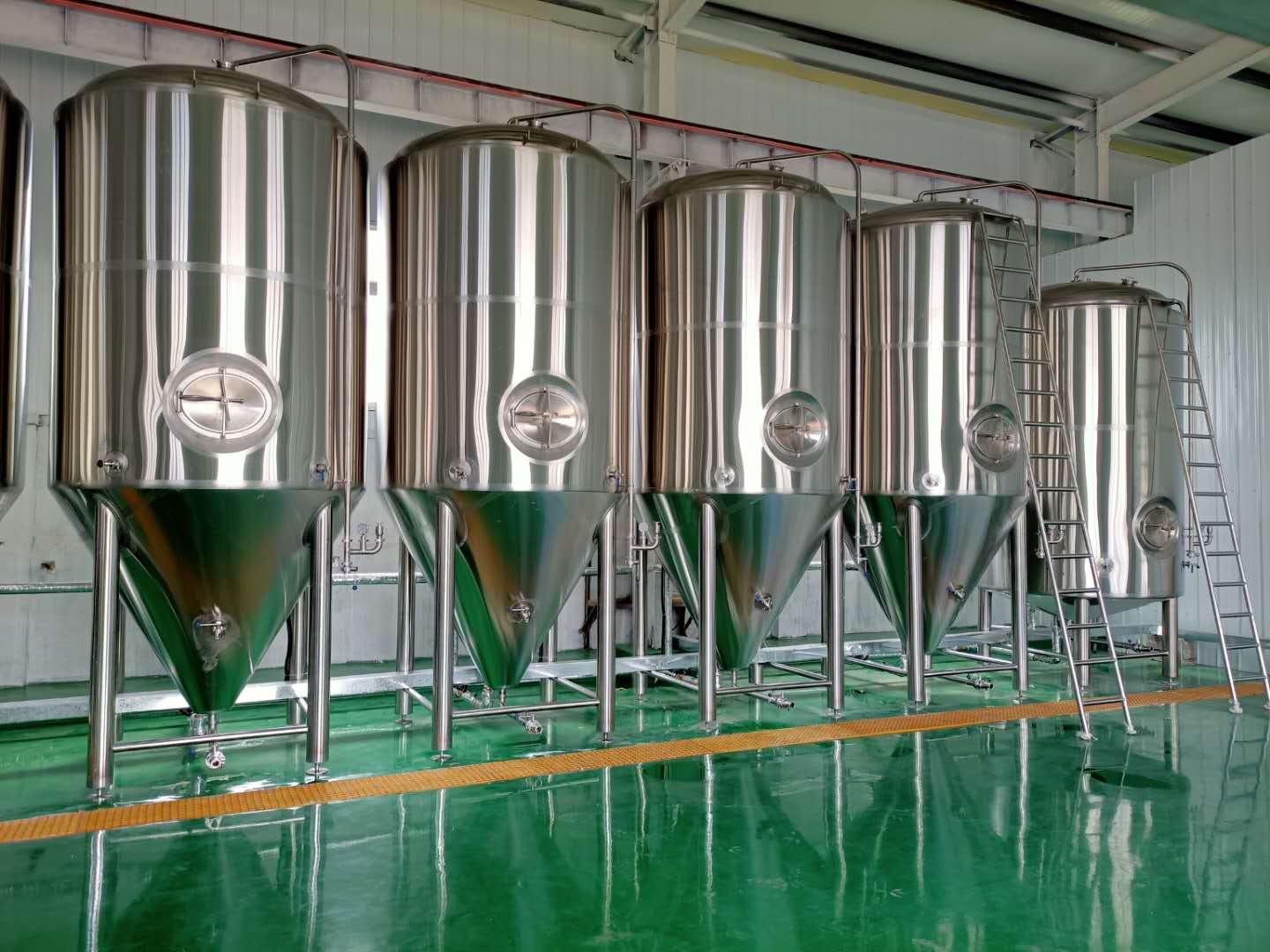
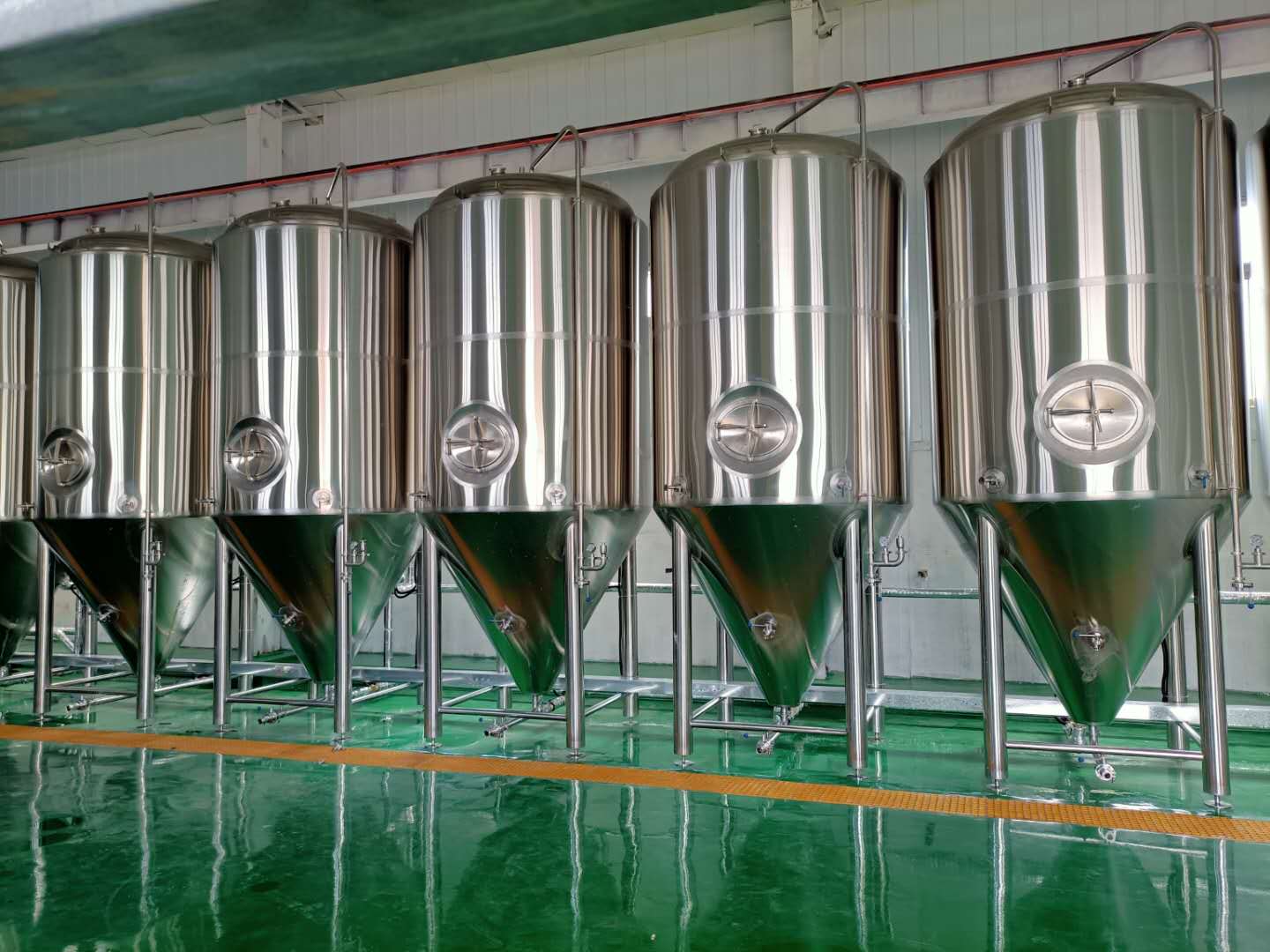
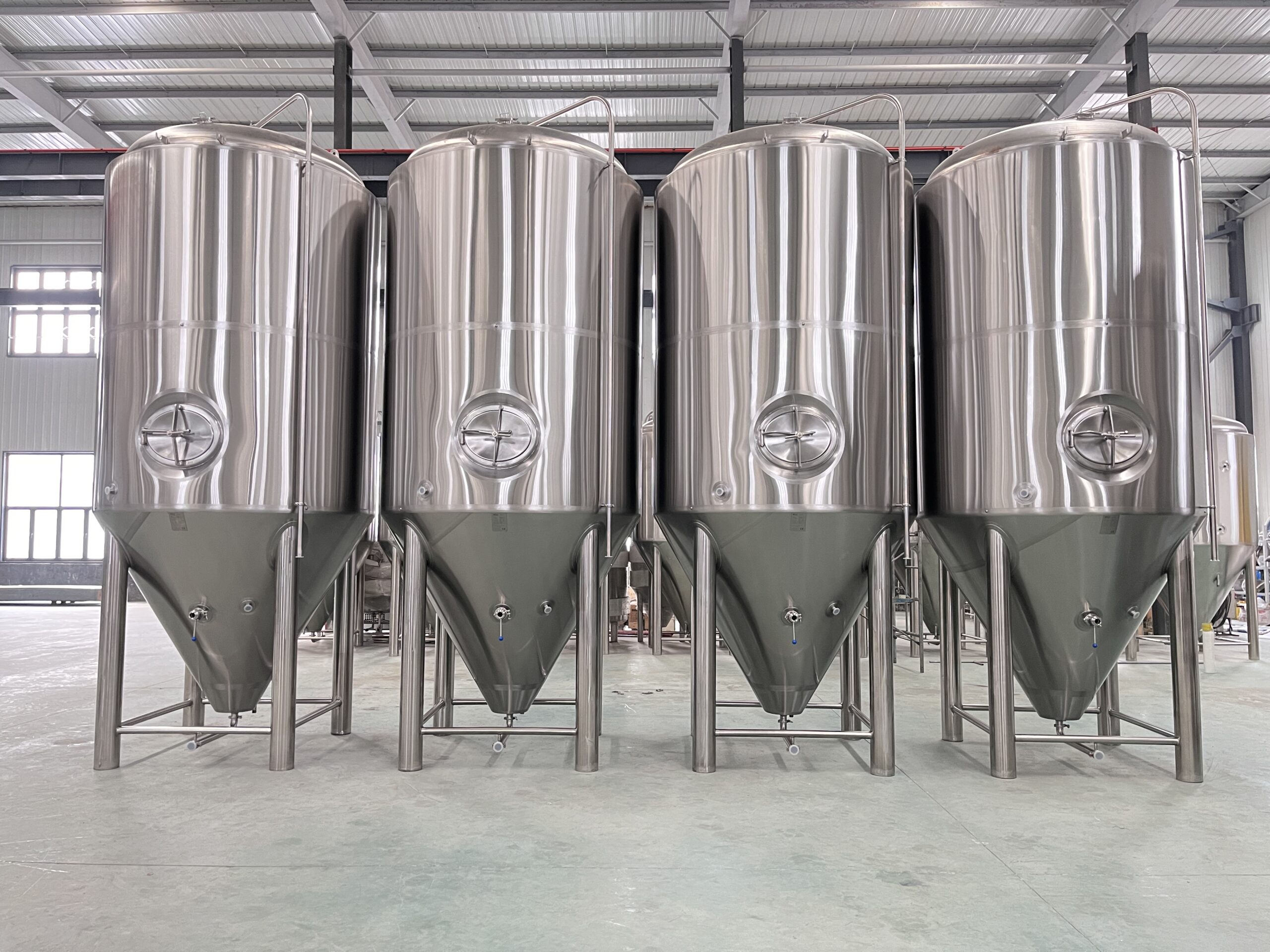
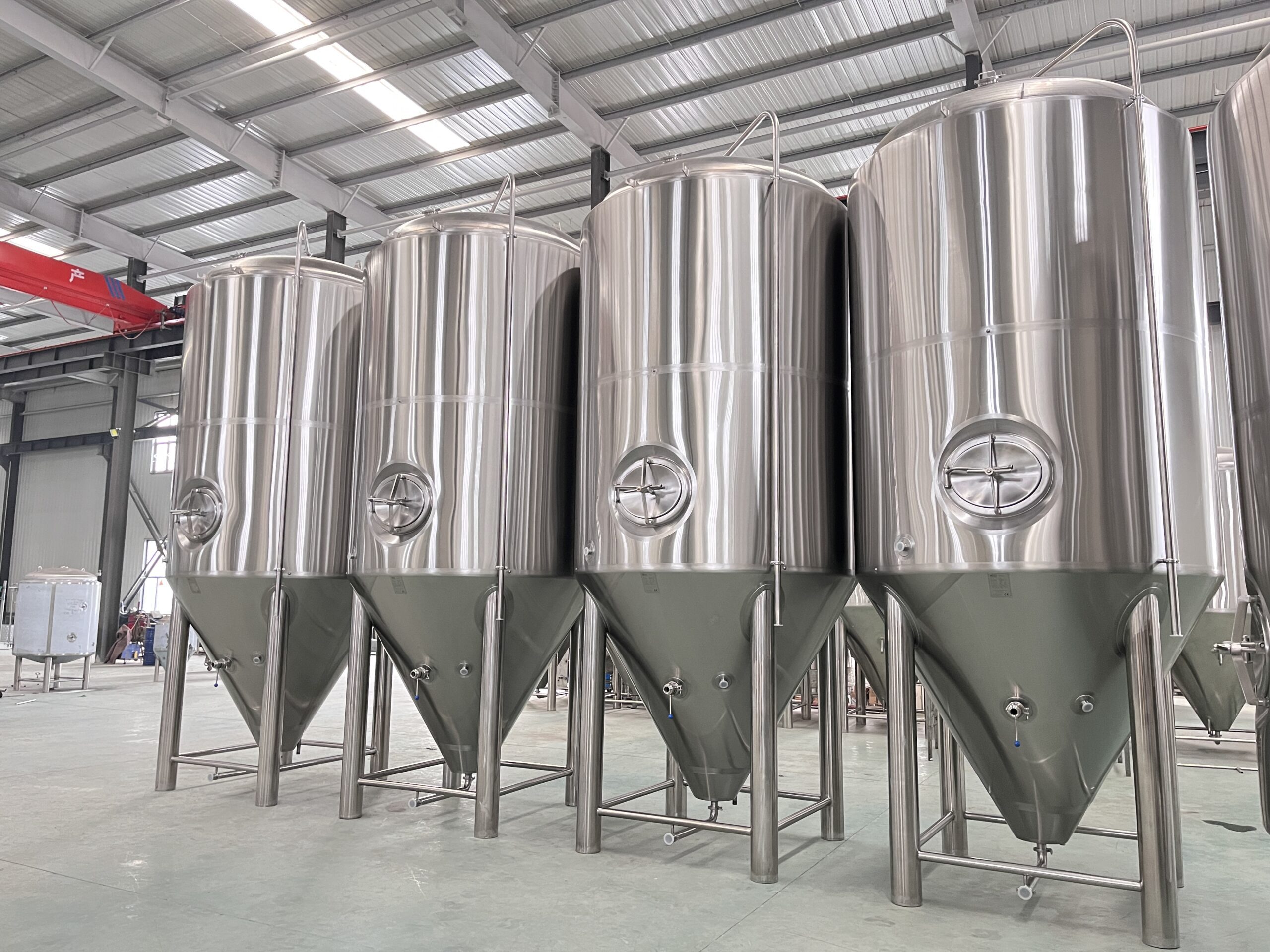
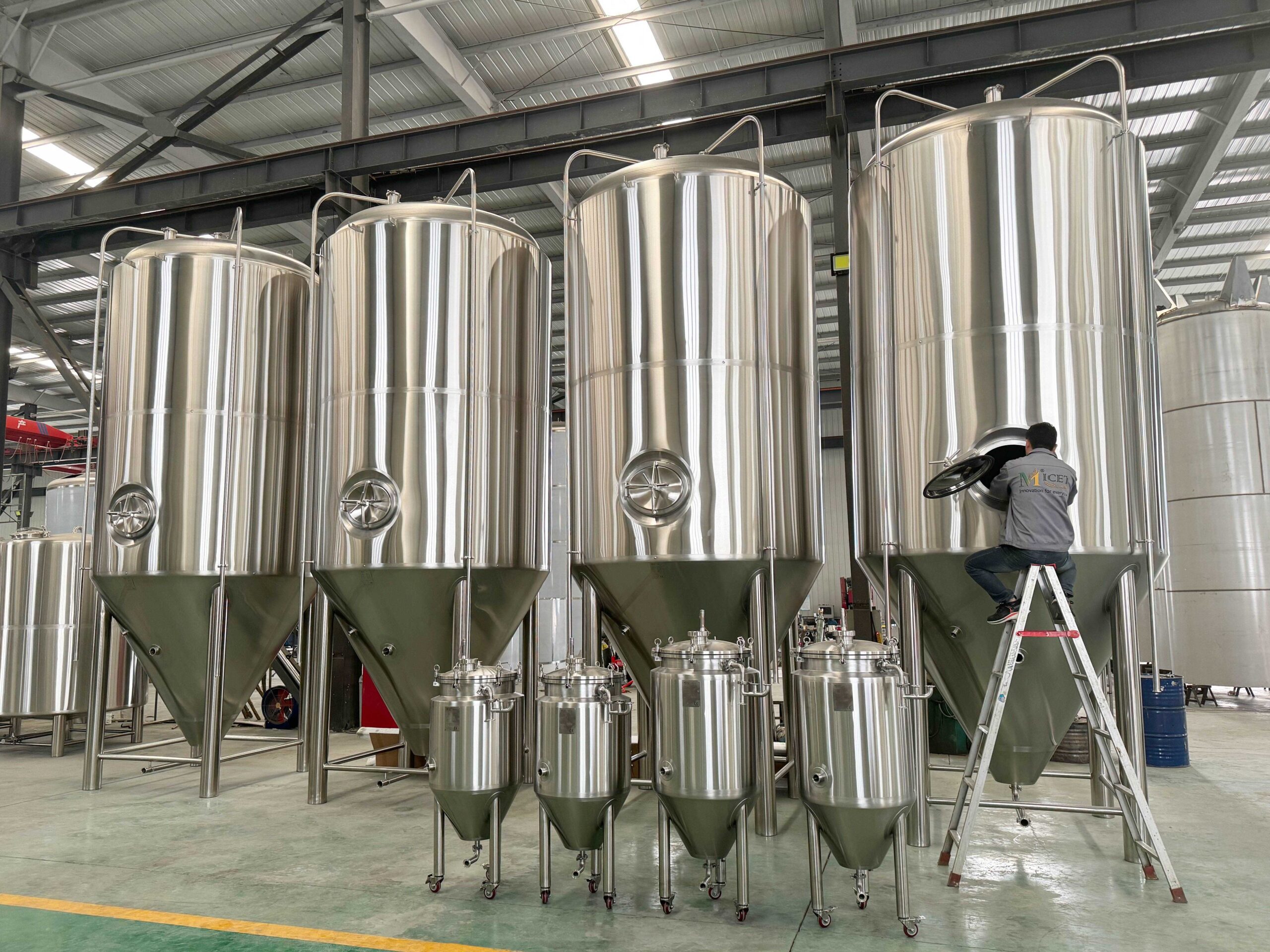
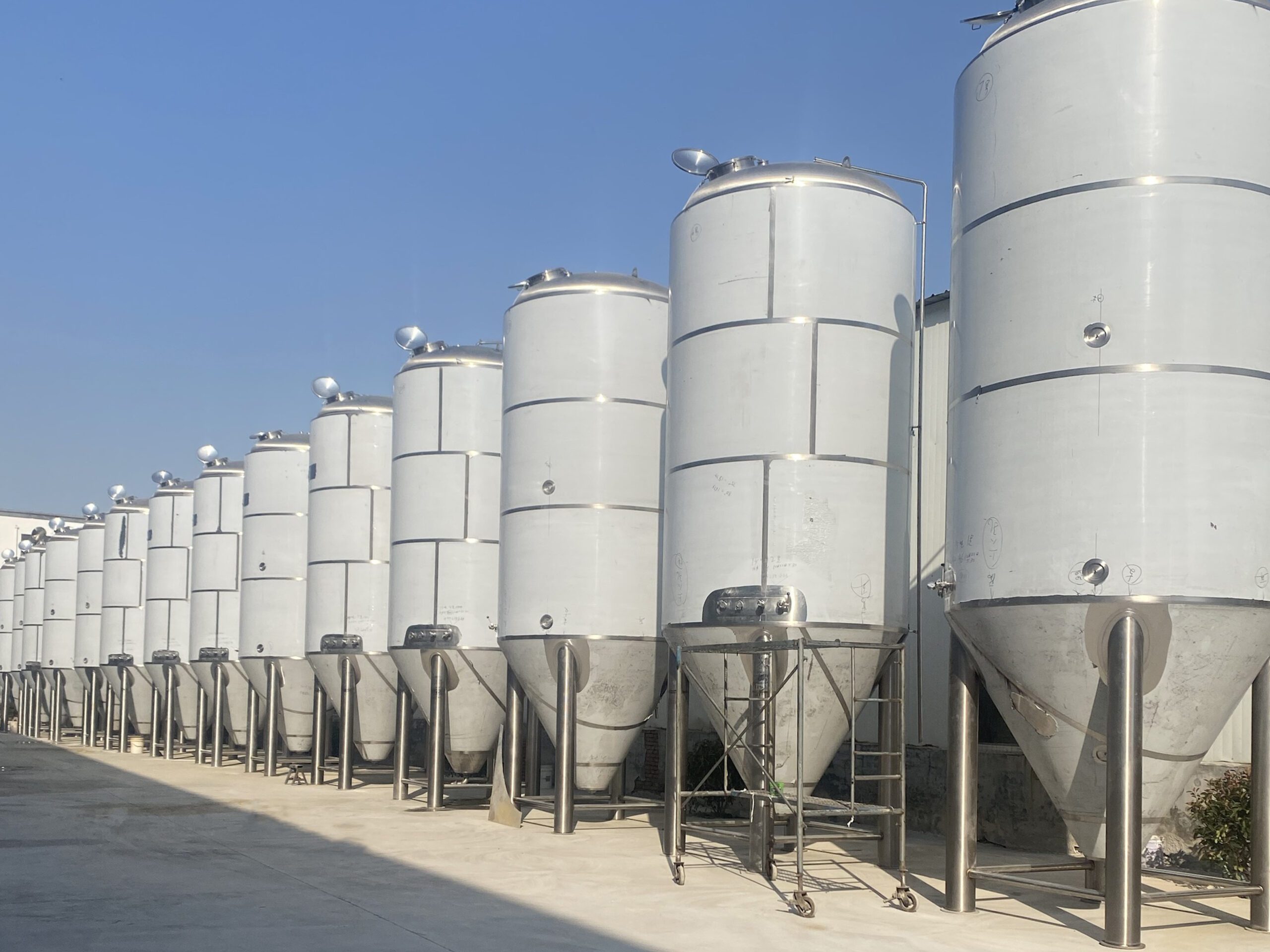
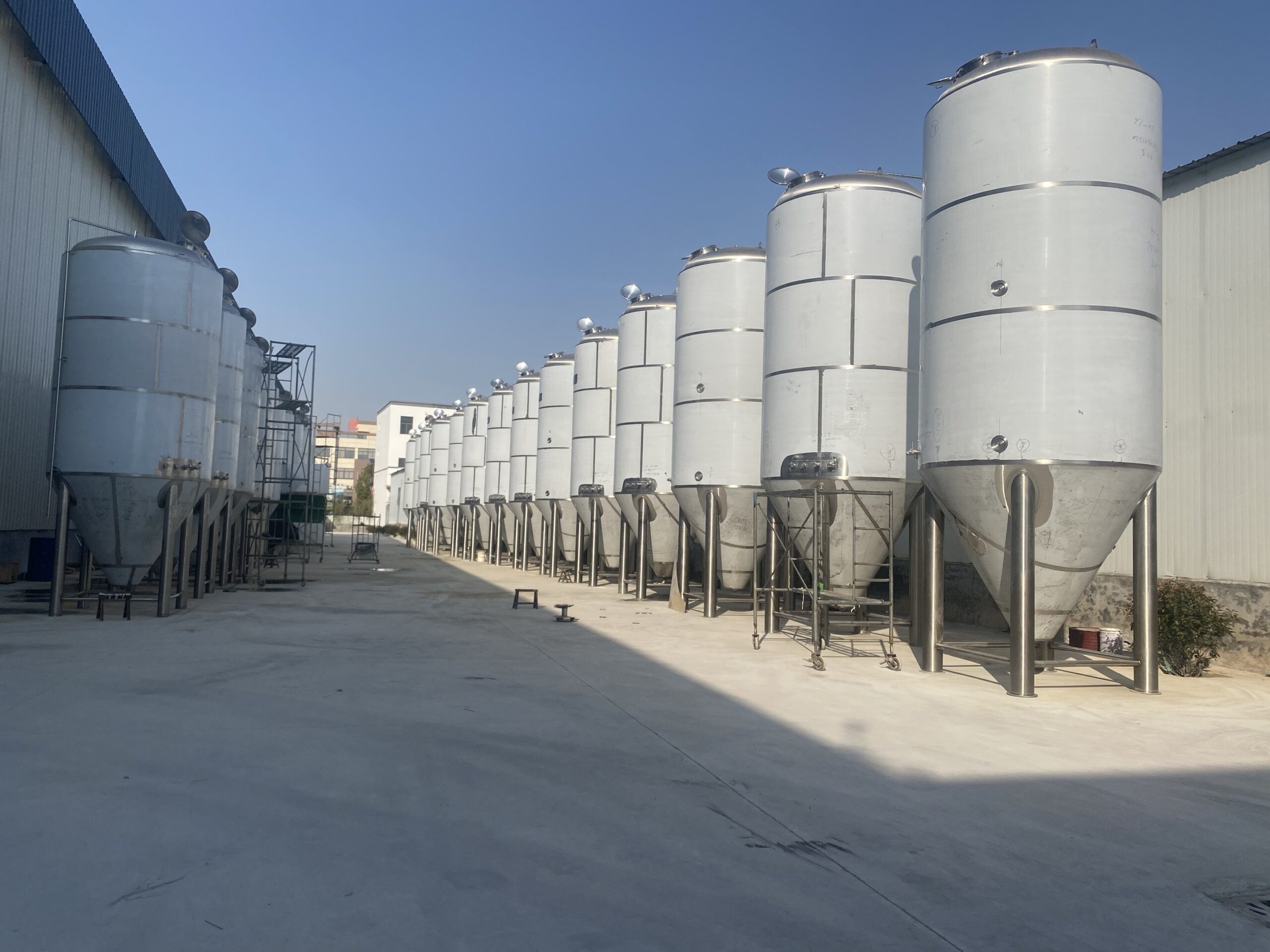
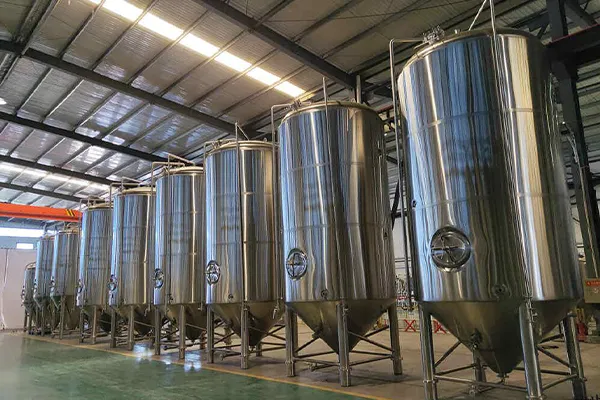
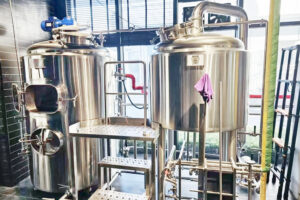
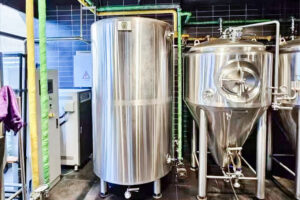
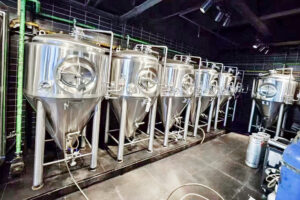
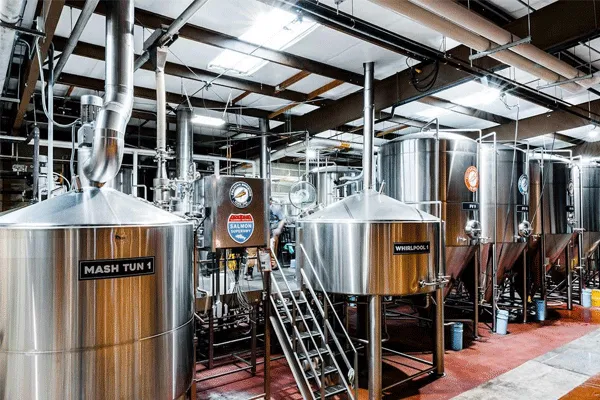
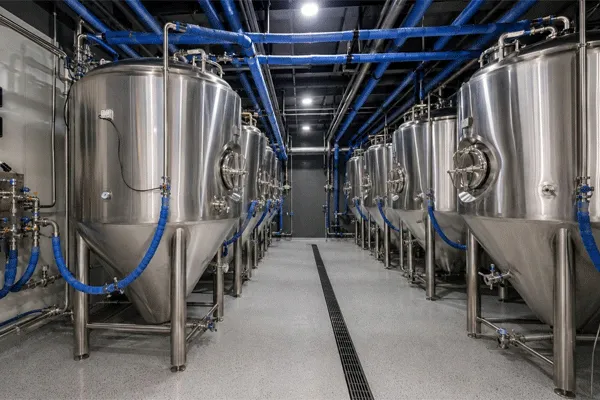
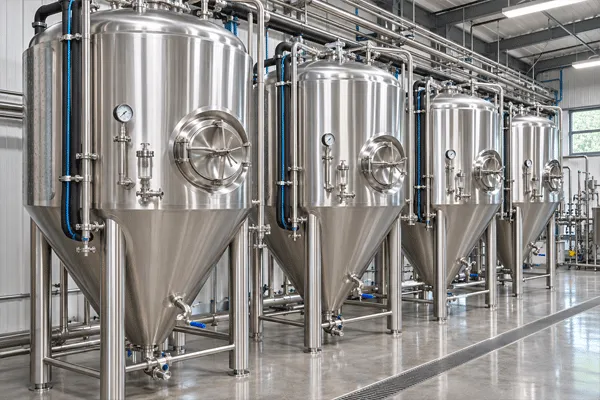
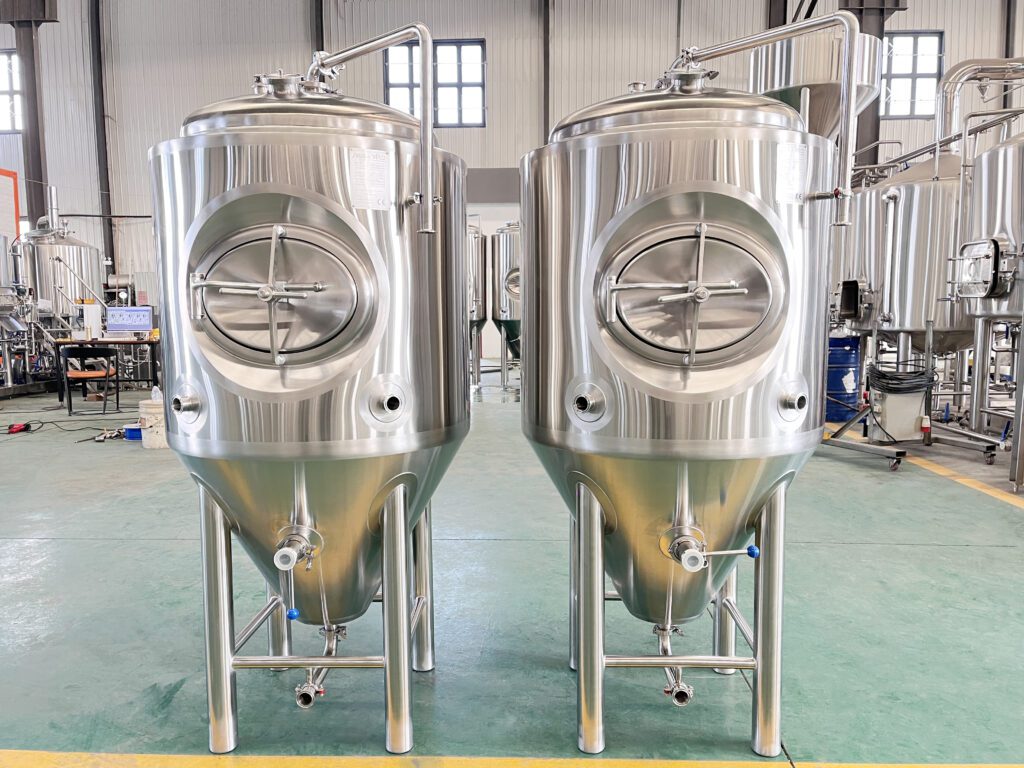
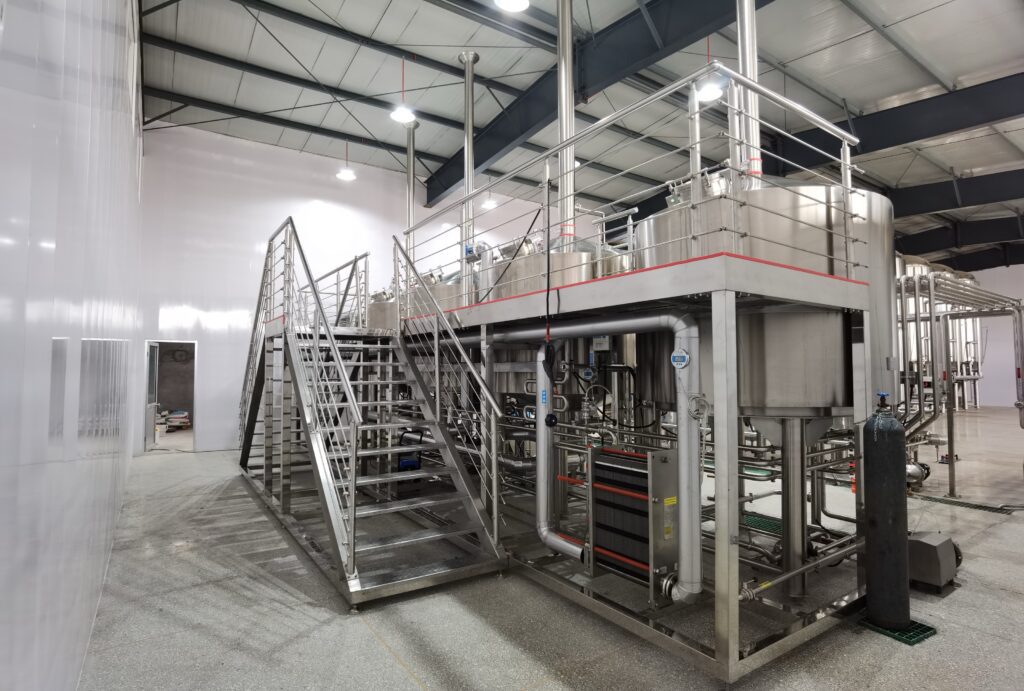
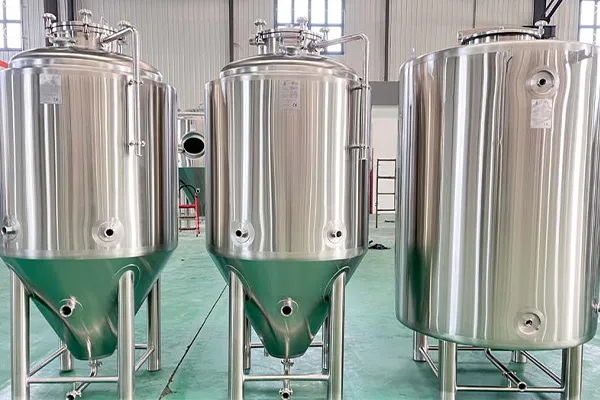
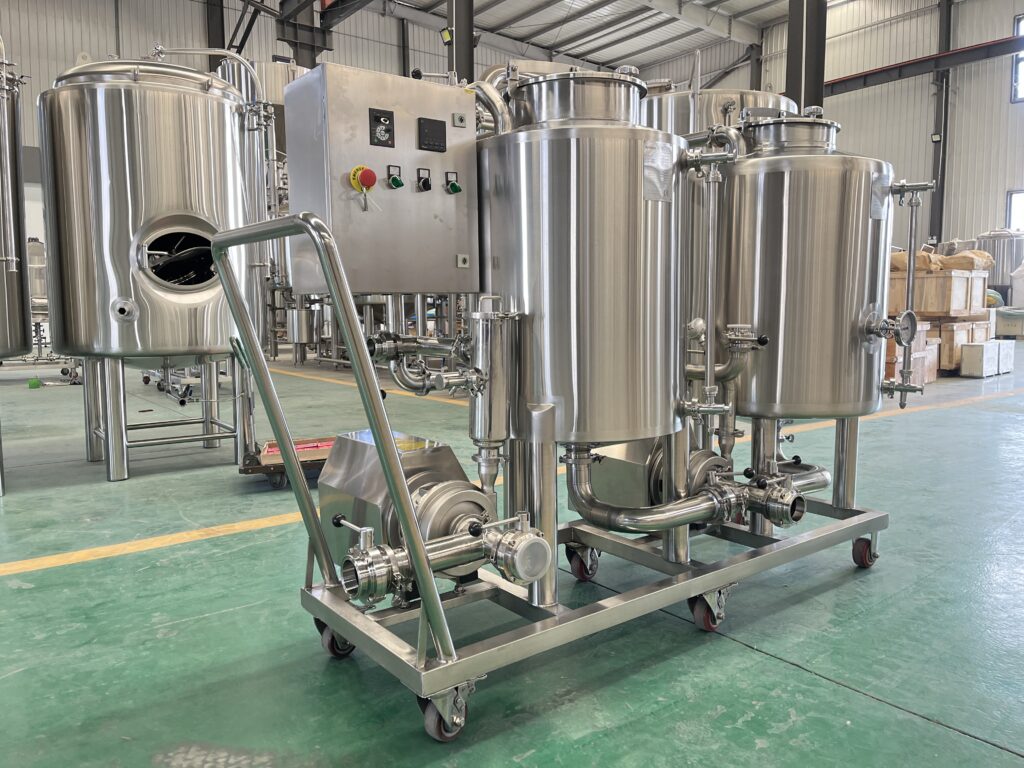
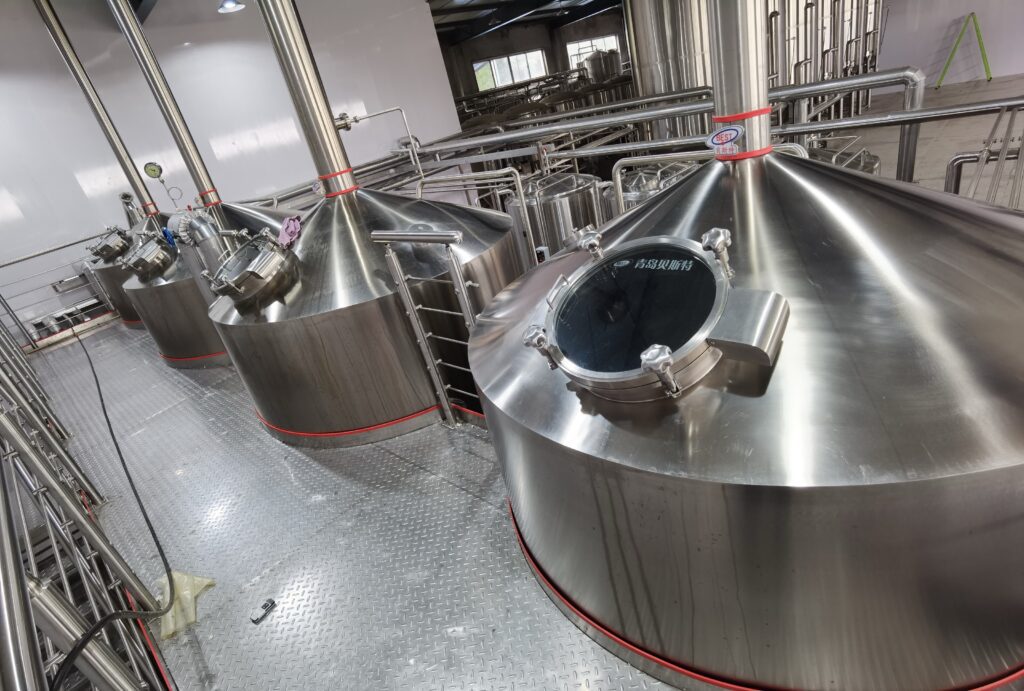
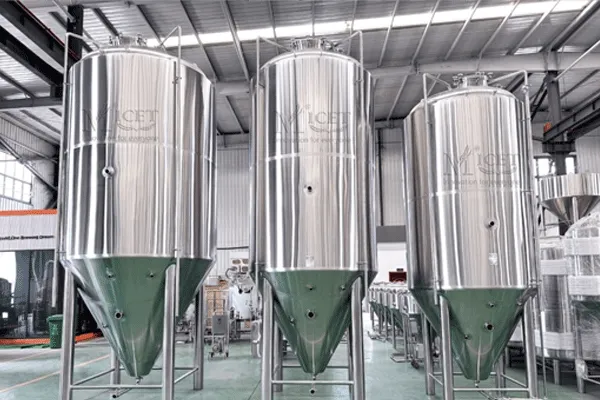
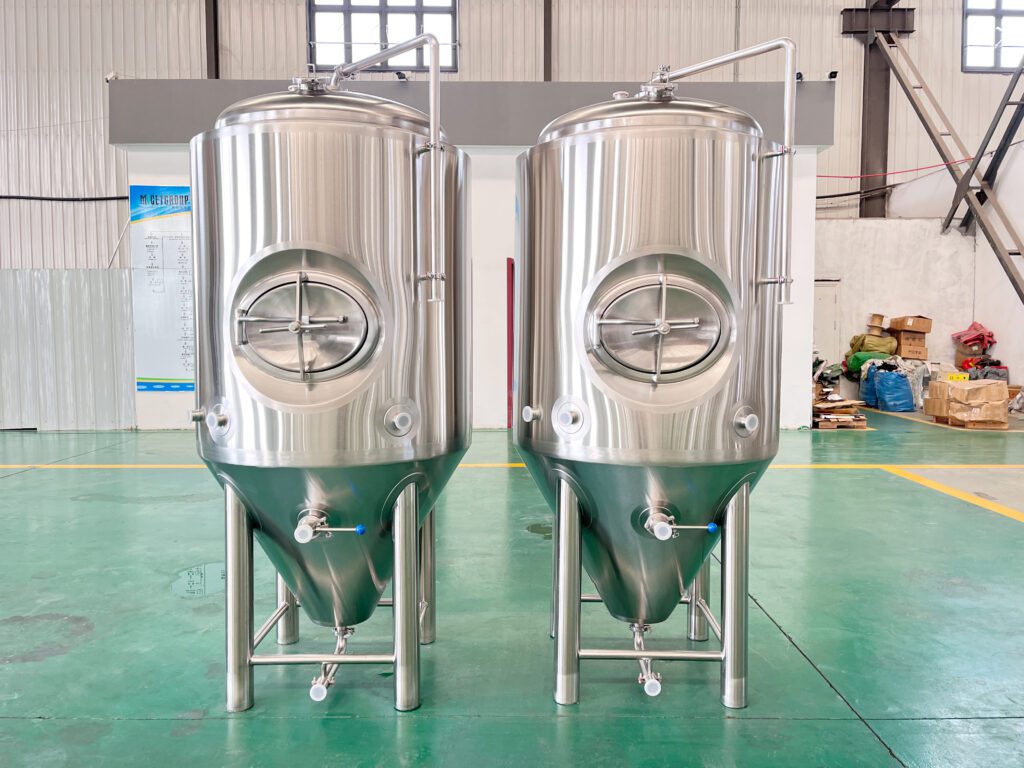
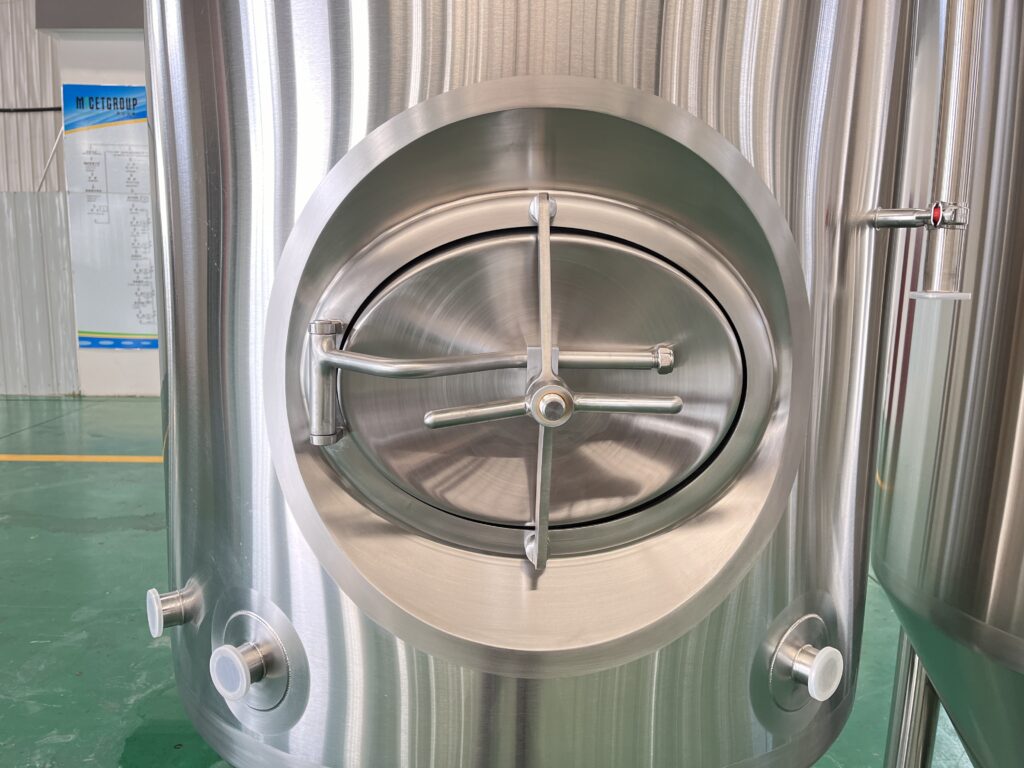
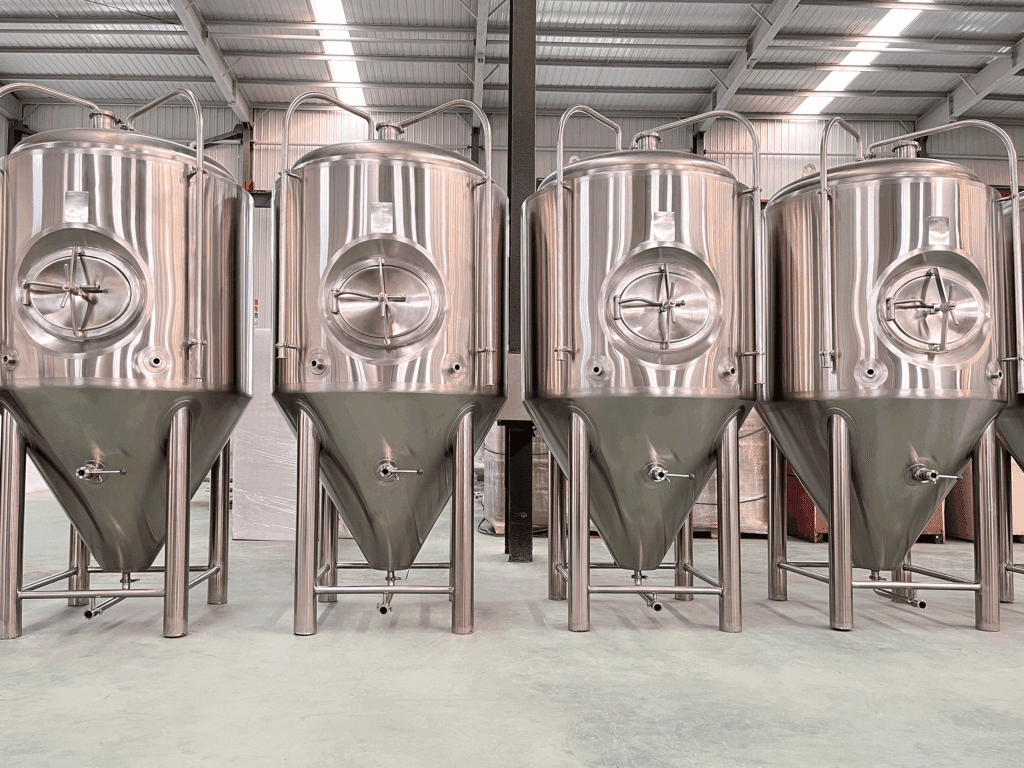
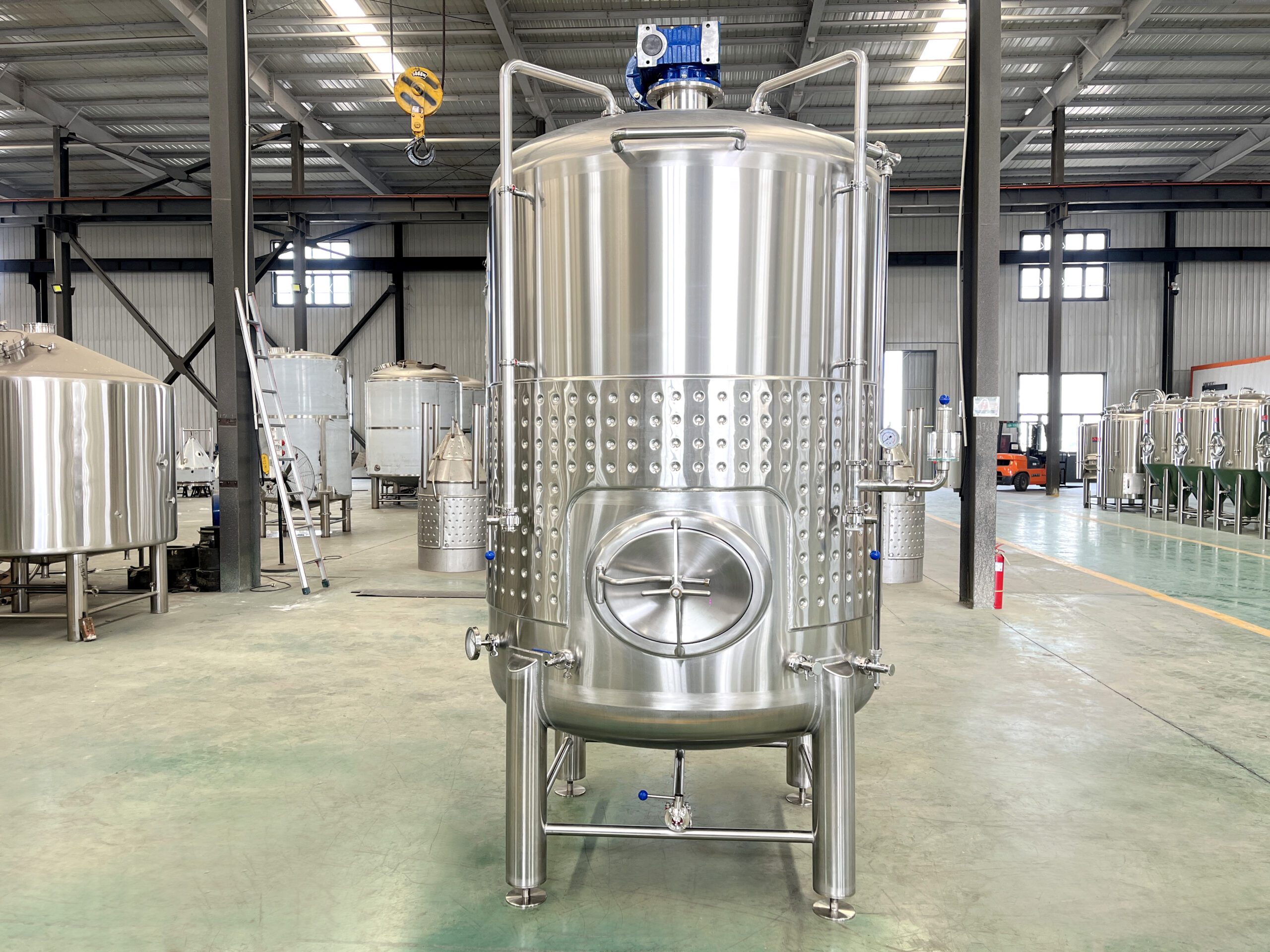
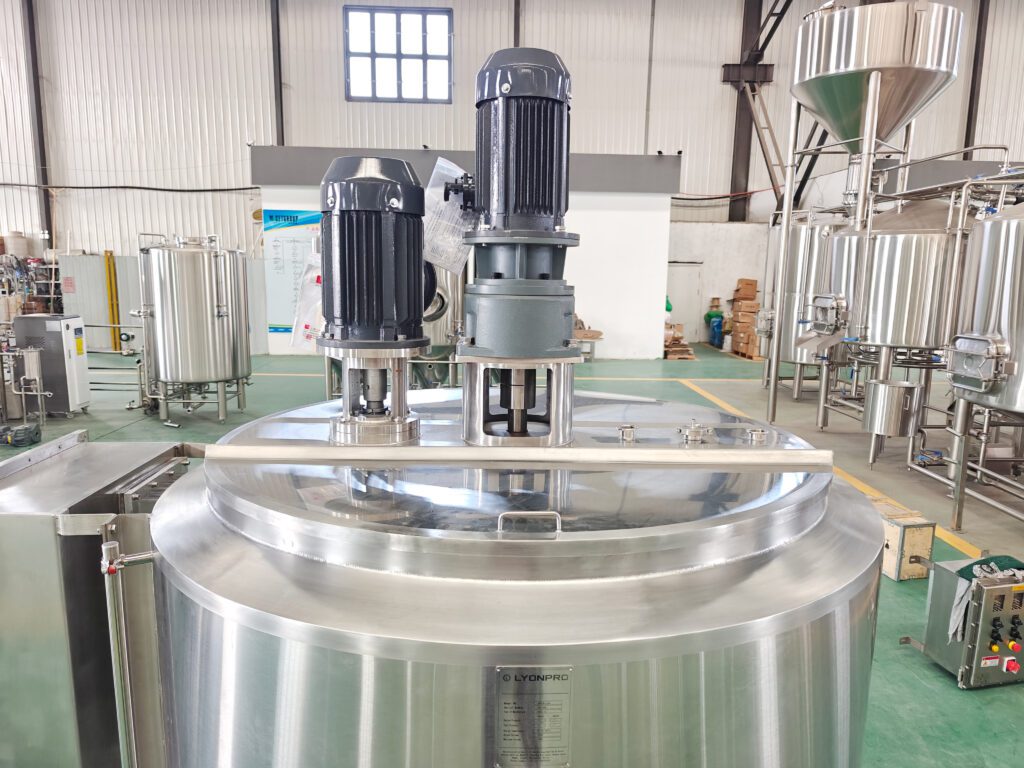
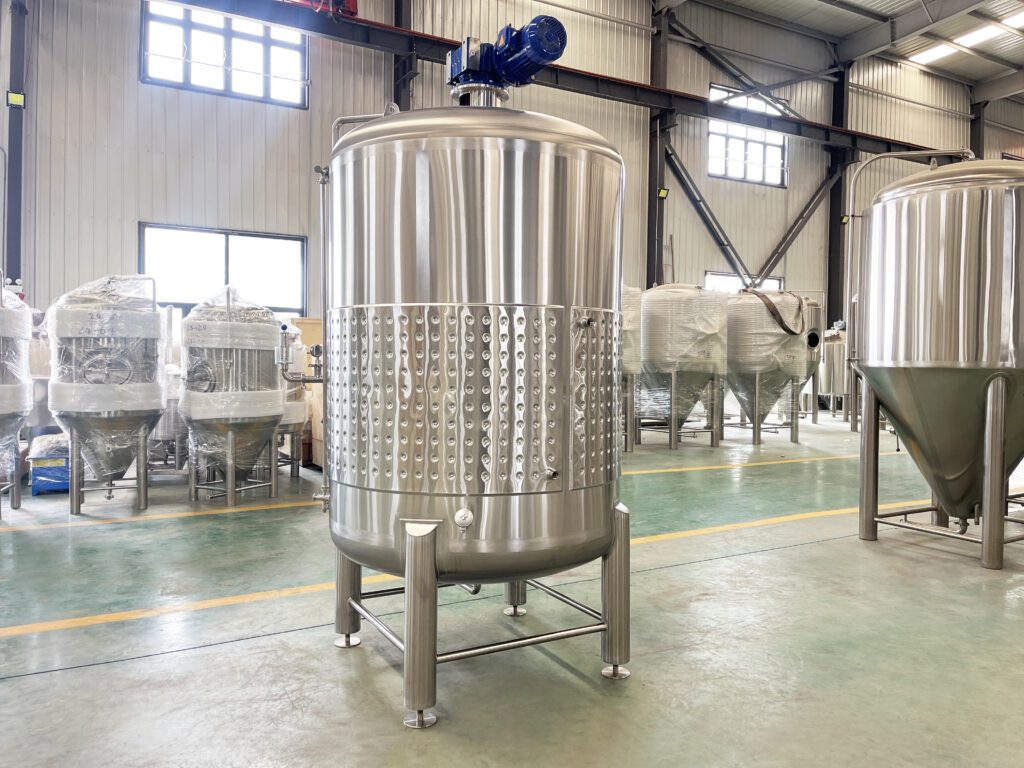
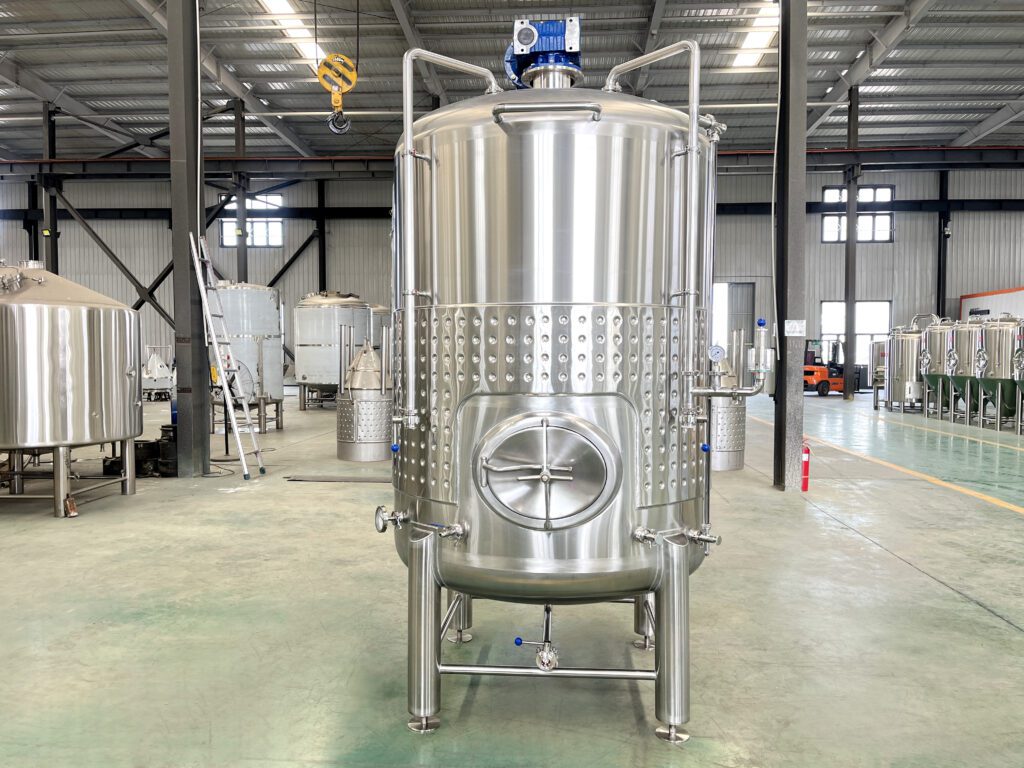
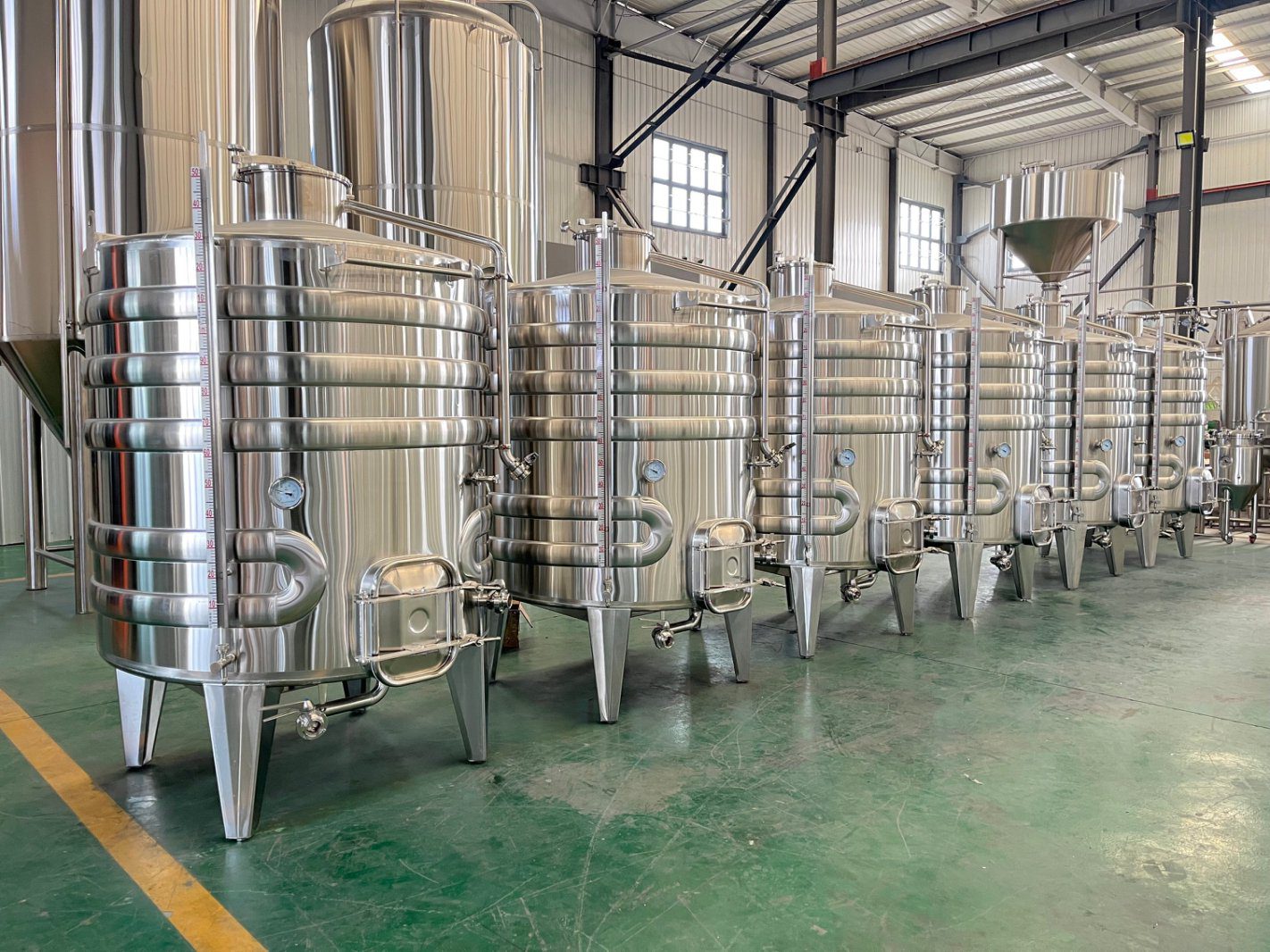
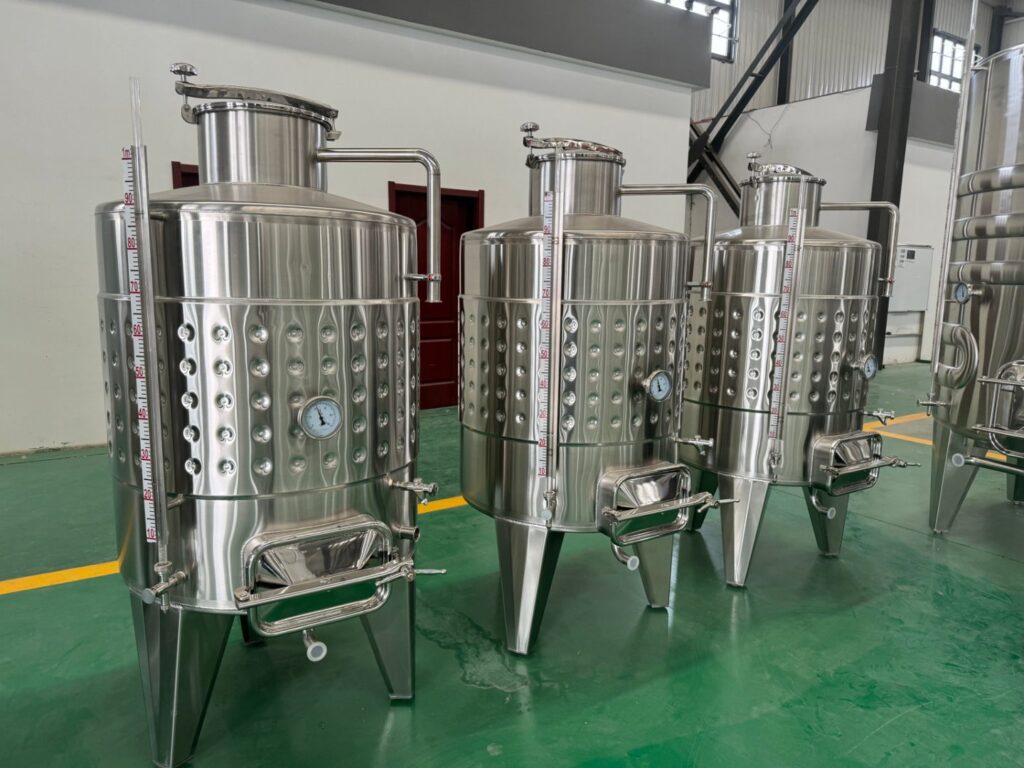
Scegli tra un'ampia gamma di capacità per adattarsi alle dimensioni del tuo impianto di produzione, al numero di referenze e al piano produttivo.
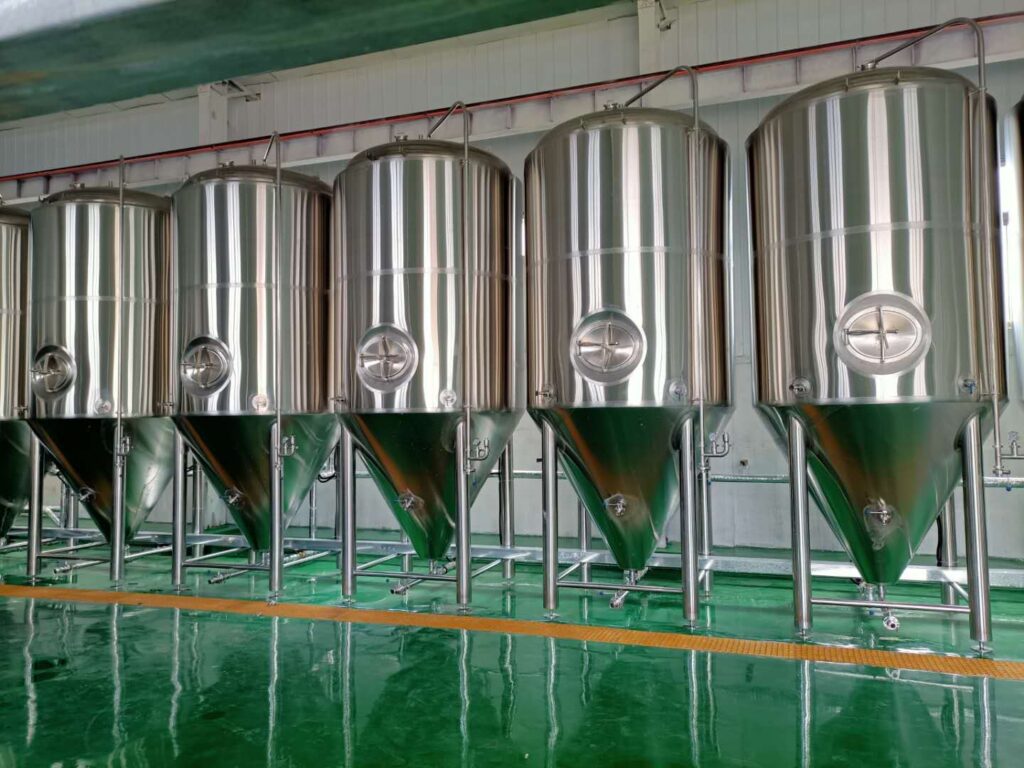
Fermentatore Usato da 300L
Fermentatore in acciaio inox compatto da 300L per birrificazione pilota, lotti di prova o piccole linee di kombucha / sidro, testato in pressione e pulito internamente prima della spedizione.
Fermentatore usato da 500L adatto a nano-birrifici e birrifici da ristorante, con struttura in acciaio inox e camicia di raffreddamento opzionale per una fermentazione controllata.
Fermentatore usato da 1000L per microbirrifici e produttori di kombucha, fornito con raccordi di base e saldature ispezionate, ideale per la piccola produzione commerciale.
Fermentatore usato da 2000L per birrifici artigianali in crescita, con raffreddamento a camicia e opzioni di fondo conico o a piatto, testato in pressione e pronto per l'integrazione nella tua cantina.
Fermentatore usato da 2500L progettato per microbirrifici ad alta produzione, in grado di supportare più lotti a settimana e un controllo stabile della temperatura con camicie a glicole.
Fermentatore usato ad alta capacità da 5000L per birrifici regionali o siti di produzione centrale, adatto per birra, sidro o altre bevande, con pressione di esercizio testata e finitura interna igienica.
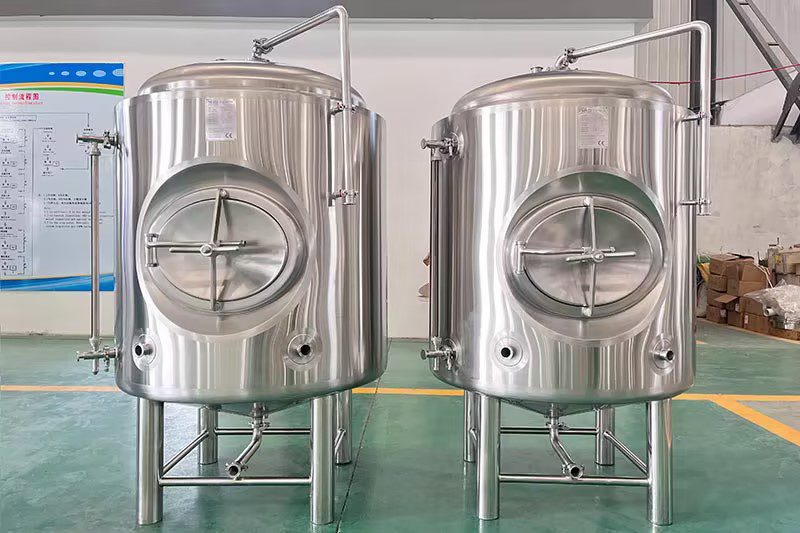
Questo pacchetto serbatoio di fermentazione 10T usato uses MICET’s standard fermentation tank design and combines large-volume used fermenters with refurbished bright beer tanks.
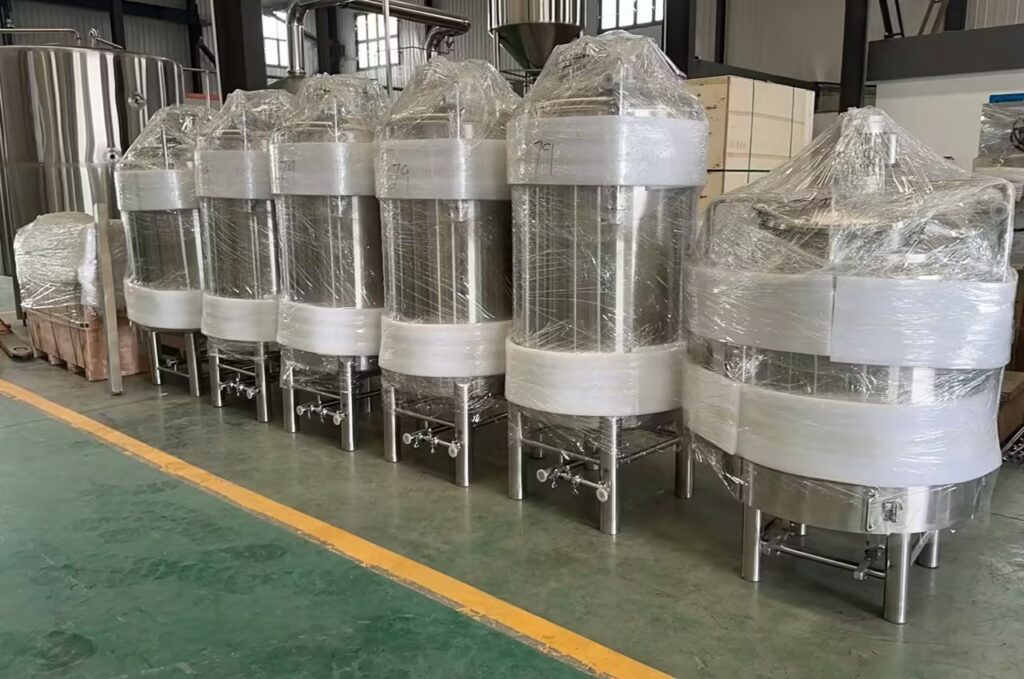
Prima che qualsiasi attrezzatura per birrifici usata ti venga offerta, passa attraverso un rigoroso processo di ricondizionamento e controllo qualità nella nostra fabbrica. Questo ti aiuta a evitare rischi nascosti, ridurre i problemi di installazione e rimettere il sistema in produzione il più rapidamente possibile
Inspection & Pressure Test
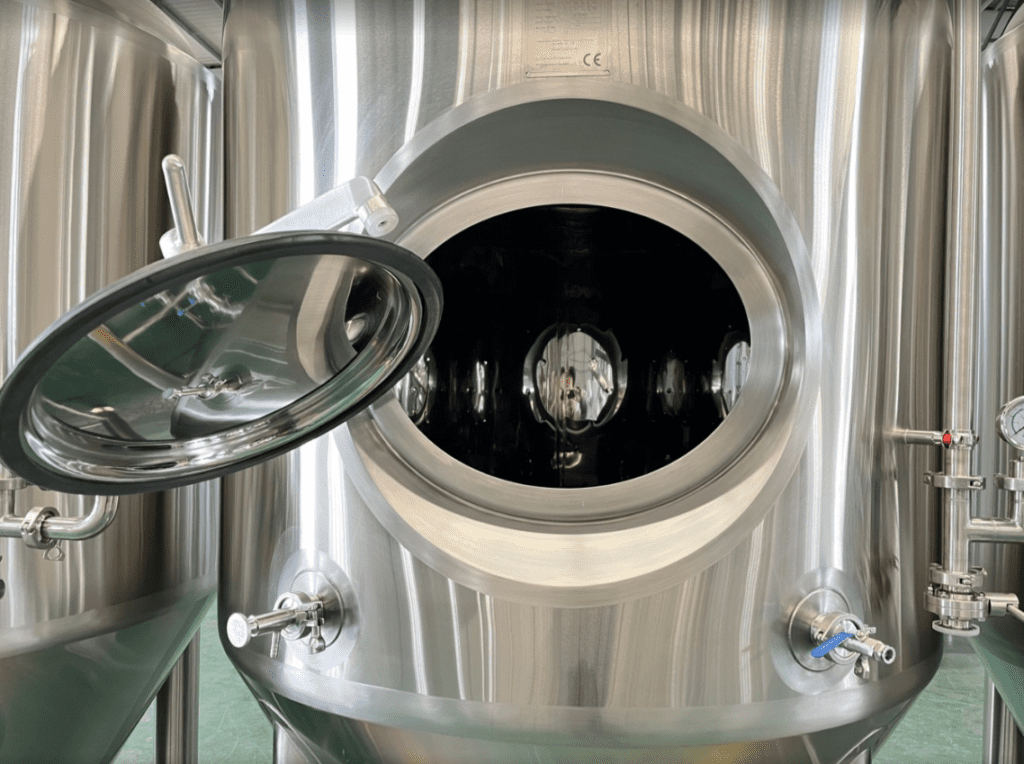
We inspect the shell, cone, legs, jackets and welds for corrosion or damage, then perform pressure and leak tests on tank and jackets to confirm safe working pressure.
Internal Cleaning & Acid Passivation
The tank interior is deep-cleaned and descaled, then acid-passivated to restore stainless-steel corrosion resistance and create a smooth, hygienic, CIP-friendly surface.
Valve & Fitting Check / Replacement
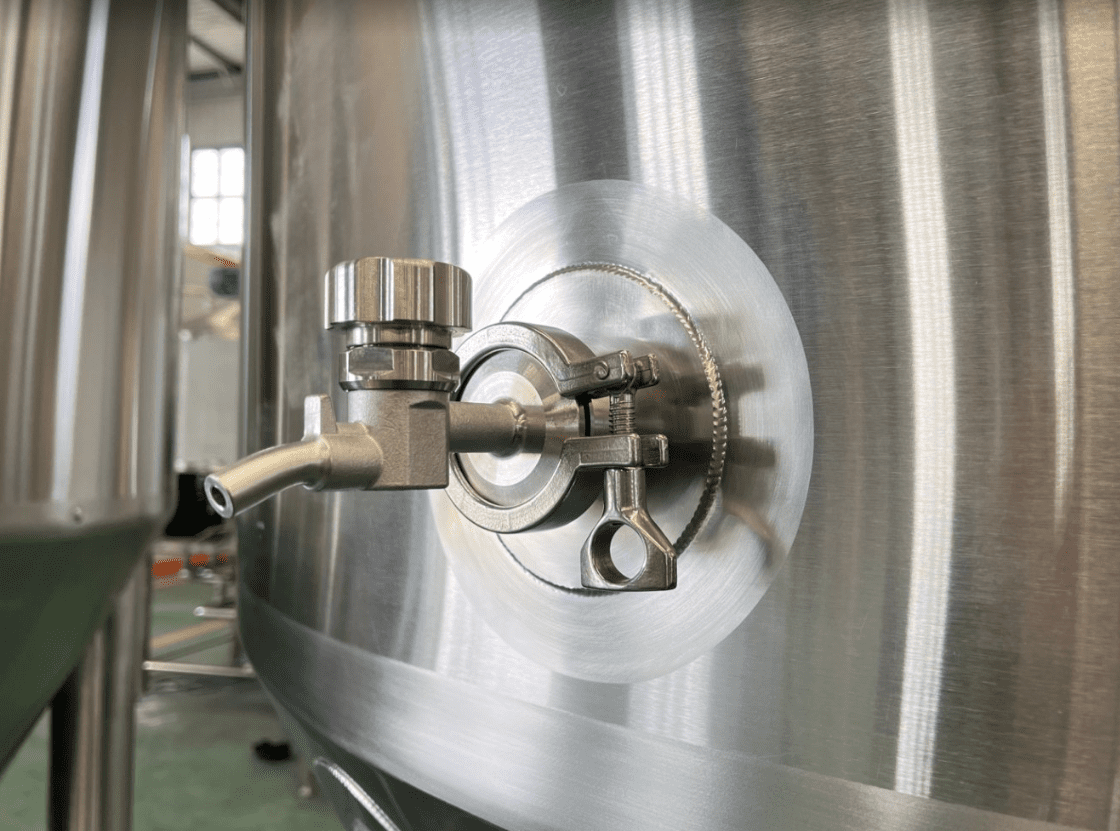
Manways, PRV, valves, gaskets, CIP spray balls and other fittings are checked; any worn or non-sanitary parts are repaired or replaced with food-grade components.
Final Inspection & Photo Report
We carry out a final visual check inside and outside the tank, then provide basic test records and photos, so you clearly see the real condition before packing and shipment.
Hybrid Fermentation Cellars – Used Tanks with New Cooling & CIP
In many cases, the best solution is used fermentation tanks or unitanks combinato con new glycol chillers, pump skids, manifolds and CIP systems. We refurbish the tank body, jackets and fittings, then engineer new cooling, valves and cleaning loops around them. This keeps your main cellar volume cost-effective, while hygiene, temperature control and maintenance are handled by reliable new equipment.
Parlateci del vostro progetto e i nostri ingegneri progetteranno una soluzione ibrida nuovo + usato su misura per voi.
MICET ha realizzato installazioni effettive in oltre 100 paesi—sistemi personalizzati per birrifici, kombucha, distillerie, cantine vinicole, serbatoi di fermentazione e serbatoi in acciaio inossidabile.
Scoprite come progettiamo, produciamo, installiamo e supportiamo progetti chiavi in mano dalla scala nano a quella commerciale.
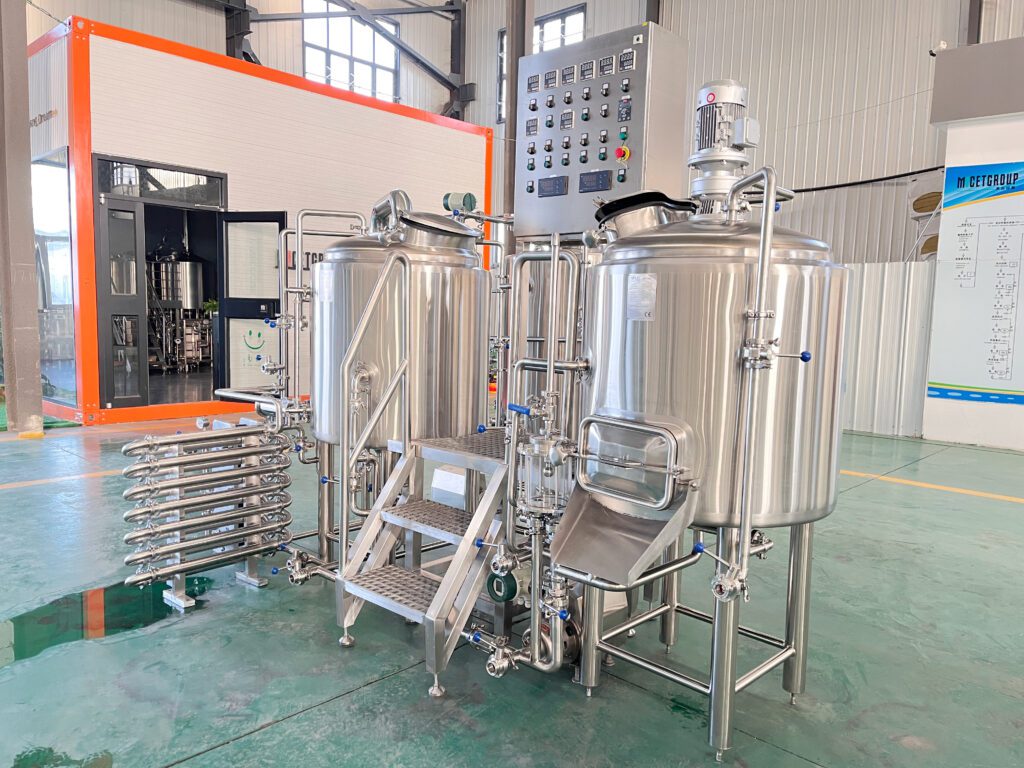
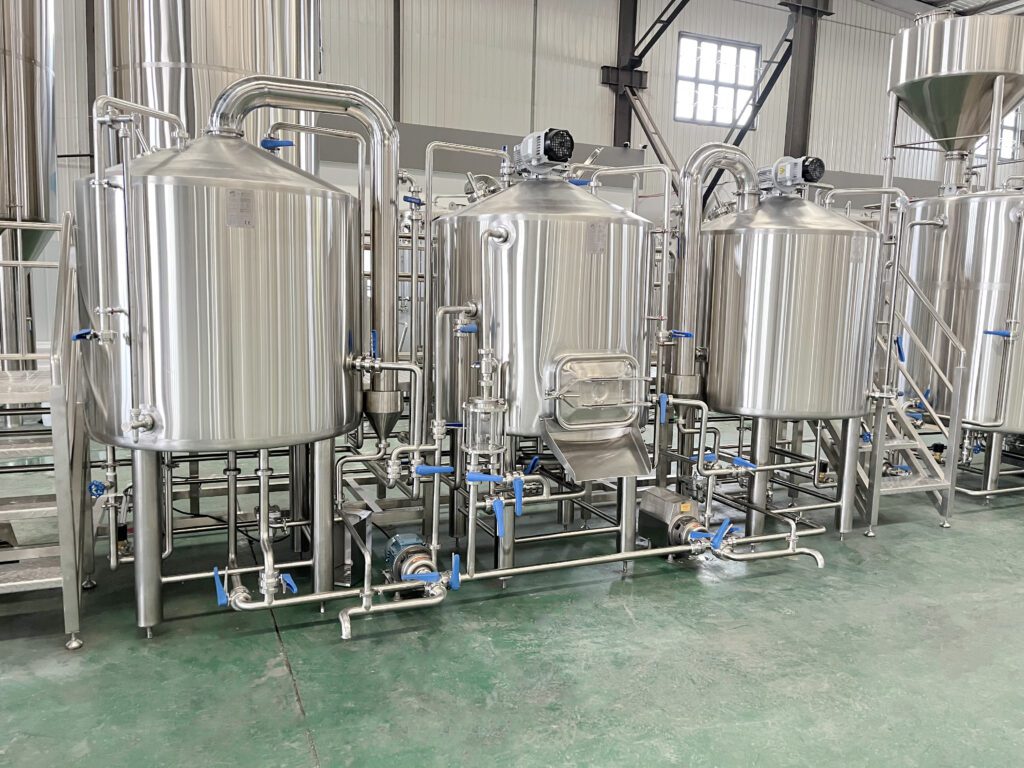
Impianto per birrificio usato da 500L a due corpi e tre tini in vendita
Used 500L two-body three-vessel brewery equipment is a high-quality complete brewing solution for craft breweries, brewpubs, restaurants, and small commercial beer production projects. This system combines a 500L brewhouse, eight fermentation tanks, automatic spent-grain discharge, PLC touchscreen control, and CIP cleaning equipment.
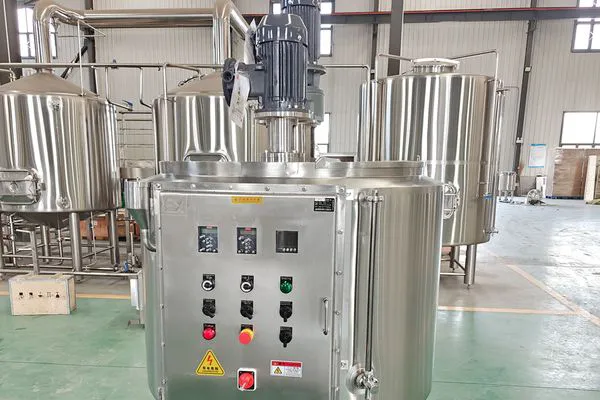
This used 500L two-body three-vessel brewery equipment package is also a complete used 500L brewing system with dual-side steam heating for stable and even heating. The lauter tun is equipped with a temperature-raising function, while the automatic discharge design helps improve brewhouse handling efficiency. The agitator supports forward rotation during mixing and reverse rotation during spent-grain discharge.
Compared with purchasing a new brewery system, this used 500L equipment package can help reduce the initial investment while retaining a professional configuration. The actual equipment condition, included accessories, and refurbishment scope should be confirmed before purchase.
Used 500L Brewery Equipment Configuration and Specifications
Attrezzatura
Specifiche
Brewing Capacity
500L
Brewhouse Configuration
Two-body, three-vessel system
Metodo di Riscaldamento
Dual-side steam heating
Tunnel di raffreddamento
Temperature-raising function and automatic spent-grain discharge
Agitation and Discharge
Forward rotation for mixing; reverse rotation for spent-grain discharge
Serbatoi di Fermentazione
8 × 500L side-manway conical fermenters
Fermenter Access
Side manway design for operation and maintenance
Sistema di controllo
PLC touchscreen control system
Sistema di Pulizia
CIP cleaning system
Main Application
Commercial craft beer brewing
Main Features of This Used 500L Brewing System
High-Quality Two-Body, Three-Vessel Brewhouse
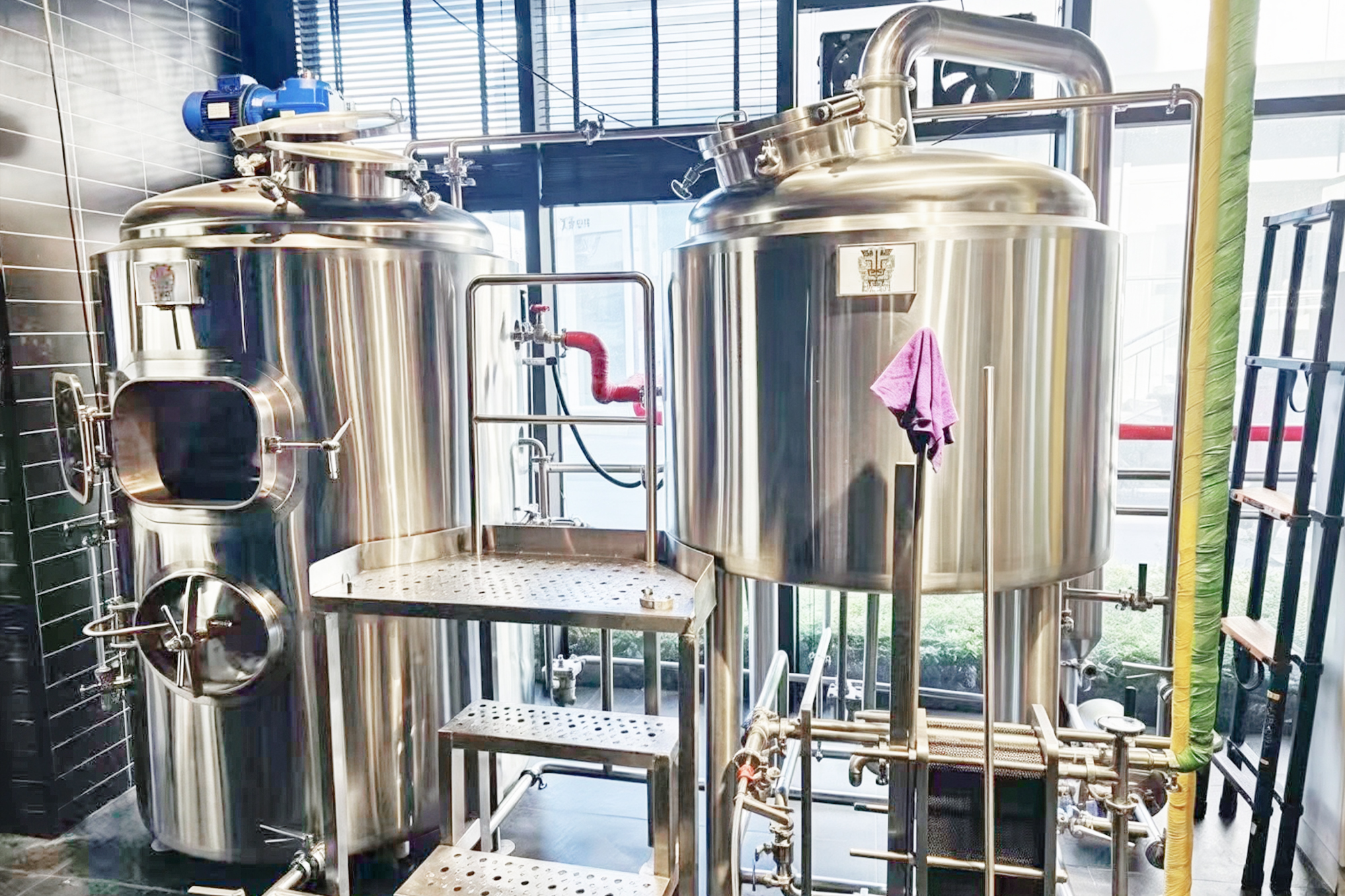
Il 500L brewhouse includes a mash/kettle tun, lauter tun, and whirlpool tank. This layout supports mashing, wort separation, boiling, and whirlpool clarification while maintaining an efficient production workflow.
The dual-side steam heating design helps provide more even heat distribution and stable process control during brewing. Steam heating is also suitable for commercial breweries that require reliable and repeatable heating performance.
Lauter Tun with Temperature-Raising Function
The lauter tun includes a temperature-raising function to support process adjustment during lautering. This feature can help brewers manage wort filtration and improve operational flexibility for different recipes.
The system also includes automatic spent-grain discharge. The agitator rotates forward during mixing and reverses during discharge, helping move the spent grain out of the lauter tun more efficiently and reducing manual handling.
Eight 500L Side-Manway Fermenters
The complete system includes eight 500L side-manway conical fermenters. Eight separate fermentation tanks provide a total nominal capacity of 4000L and allow the brewery to arrange different batches, recipes, and fermentation schedules independently.
The side-manway design provides convenient access for inspection, maintenance, and cleaning. The fermenters can be checked for stainless steel material, cooling jacket condition, pressure rating, valves, fittings, gauges, and CIP connections before purchase.
PLC Touchscreen Control System
The PLC touchscreen control system provides centralized operation and monitoring of the brewhouse and related equipment. Depending on the actual configuration, the system may control heating, agitator rotation, automatic grain discharge, pumps, temperature settings, and other process functions.
A PLC-based interface can simplify operation and improve process repeatability. Buyers should confirm the PLC brand, touchscreen language, control points, electrical specifications, and compatibility with local power standards.
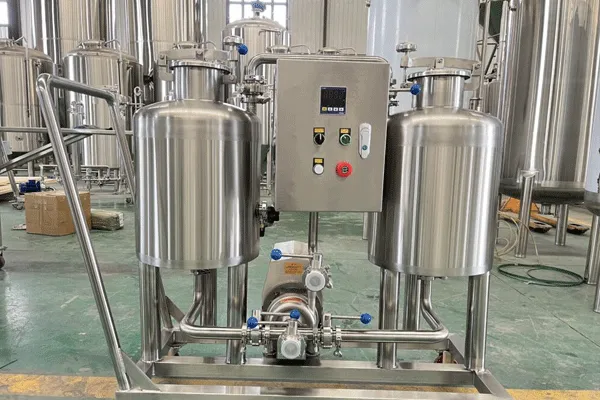
Sistema di pulizia CIP
The CIP cleaning system supports routine cleaning and sanitation of the brewhouse, fermentation tanks, pumps, and sanitary pipelines. Effective CIP cleaning helps reduce contamination risks and maintain stable beer quality during commercial production.
Applications of Used 500L Brewery Equipment
With eight 500L fermenters and a professional PLC-controlled brewhouse, this system is suitable for breweries that need multiple fermentation batches and efficient daily operation. It can be considered for:
Craft brewery startups
Brewpubs and restaurant breweries
Taprooms producing beer in-house
Piccoli birrifici commerciali
Pilot brewing and recipe development
Brewery expansion projects
The actual output depends on the number of brews per day, fermentation cycle, tank quantity, recipe, and operating efficiency.
What to Check Before Buying Used Brewery Equipment?
Before purchasing, buyers should request current photos, videos, detailed specifications, and available maintenance records. Important inspection points include:
Stainless steel material and internal surface condition
Eight fermenter capacities, pressure ratings, side manways, and cooling jackets
Dual-side steam heating system and steam connections
Lauter tun temperature-raising function
Forward/reverse agitator operation and automatic spent-grain discharge
PLC brand, touchscreen functions, electrical data, and control points
CIP tanks, pumps, pipelines, and spray devices
Equipment dimensions, shipping weight, and installation access
Used equipment may require deep cleaning, passivation, gasket replacement, pressure testing, jacket leak testing, or electrical function testing before commissioning.
Domande frequenti
Is this used 500L system suitable for a commercial brewery?
It can be suitable for brewpubs, microbreweries, restaurants, and small commercial brewing projects. Eight 500L fermenters provide a nominal total fermentation capacity of 4000L. Final suitability depends on the equipment condition, production schedule, and local utilities.
What are the main features of this 500L brewhouse?
The system features dual-side steam heating, a lauter tun with a temperature-raising function, automatic spent-grain discharge, forward/reverse agitator operation, a PLC touchscreen control system, and a CIP cleaning system.
What is the function of the forward and reverse agitator?
The agitator rotates forward during mixing and reverses during spent-grain discharge. This configuration supports both brewing operation and automatic discharge from the lauter tun.
What should I check on the side-manway fermenters?
Check the stainless steel material, internal surface, side-manway seal, cooling jacket, pressure rating, valves, gauges, CIP connection, and the condition of all eight 500L tanks.
What is the difference between used and new brewery equipment?
Used equipment may reduce the purchase cost and offer faster availability. New equipment provides more options for customized dimensions, updated controls, and exact system matching.
Can the equipment be shipped internationally?
International shipping can be arranged according to the equipment dimensions, packing requirements, destination regulations, and delivery terms.
Contact Us for Used 500L Brewery Equipment
If you are planning to start or expand a craft brewery, this used 500L two-body three-vessel brewery system can provide a cost-effective starting point for commercial beer production. Its dual-side steam heating, temperature-raising lauter tun, automatic spent-grain discharge, eight side-manway fermenters, PLC touchscreen control, and CIP system make it suitable for efficient and organized brewery operation.
Contact MICET to request current equipment photos, detailed specifications, equipment condition, pricing, and shipping information. Our team can help evaluate whether the system matches your brewery layout, production process, and future expansion plan.
Commercial Microbrewery Equipment: Commercial Brewing Equipment for a Flexible Beer Brewing System
A growing microbrewery often needs to produce several beer styles with different recipes, ingredients, and fermentation conditions. If its equipment cannot adapt, production becomes slower, cleaning takes longer, and product quality may vary. The solution is a flexible brewing system designed around multiple recipes and future growth.
Commercial microbrewery equipment is a coordinated set of brewing vessels, fermentation tanks, cooling systems, transfer equipment, and packaging machines designed for professional beer production. A flexible system allows breweries to produce different beer styles, manage separate fermentation conditions, simplify product changeovers, and maintain consistent quality as production grows.
Commercial Microbrewery Equipment: Commercial Brewing Equipment for a Flexible Beer Brewing System
Schema dell'articolo
What Makes Commercial Microbrewery Equipment Flexible?
How Do Different Beer Styles Affect Brewhouse and Kettle Requirements?
Which Brewing System Supports Different Grain Brewing Recipes?
How Should Fermenters and Conical Tanks Be Assigned to Different Beers?
Why Are Stainless Steel Tanks Important for Multi-Style Production?
How Do Pumps, Fittings, and Transfer Systems Support Product Separation?
How Should Wort Chillers and Glycol Systems Support Different Fermentation Profiles?
What Grain Handling and Mill Equipment Does a Flexible Brewery Need?
How Do Brite Tanks, Kegs, and Packaging Systems Support Different Products?
How Do You Choose a Commercial Brewing Equipment Manufacturer?
1. What Makes Commercial Microbrewery Equipment Flexible?
A modern microbrewery does not always produce one beer with one fixed recipe. Many craft breweries make pale ales, IPAs, lagers, stouts, wheat beers, and seasonal products. Each recipe may require different malt combinations, hop additions, yeast strains, fermentation temperatures, and conditioning periods.
This creates a challenge for equipment selection. A system designed only for one standard recipe may not provide enough flexibility when the brewery introduces new products. For example, a brewer making a traditional lager may need longer cold conditioning, while an IPA producer may need additional dry-hopping equipment and careful oxygen management.
Flexible commercial microbrewery equipment should support three important goals:
Recipe flexibility: Allow different malt bills, hop schedules, and brewing temperatures.
Production flexibility: Support different batch sizes and fermentation schedules.
Operational flexibility: Make cleaning, product transfers, and equipment maintenance easier.
A well-planned system does not require a separate production line for every beer style. Instead, it uses suitable shared equipment, dedicated vessels where necessary, and adaptable connections.
For a growing brewery, this approach can reduce unnecessary investment while making it easier to develop new craft beer products.
2. How Do Different Beer Styles Affect Brewhouse and Kettle Requirements?
Different beer styles place different demands on the hot side of a brewery. The brewhouse must handle the ingredients and brewing conditions required by the recipes.
For example, an IPA may use substantial hop additions, while a wheat beer requires a different grain bill and may need careful attention during lautering. A stout may use roasted malts that affect the grist composition and wort characteristics. These differences should be considered when selecting the mash tun, kettle, and supporting equipment.
Beer Style
Main Brewing Considerations
Equipment Planning
IPA
High hop additions and aroma preservation
Hop addition access and suitable whirlpool
Lager
Stable wort production and repeatability
Reliable heating and cooling
Stout
Different roasted malt composition
Suitable mash and lautering design
Wheat Beer
High wheat content in the grist
Effective mash mixing and lautering
Pale Ale
Balanced malt and hop profile
Flexible recipe control
Seasonal Beer
Changing ingredients and recipes
Adaptable vessels and cleaning
Why Does Kettle Configuration Matter?
Commercial brew kettles must provide enough working volume, heating capacity, and effective boiling performance. Their design also influences evaporation, hop utilization, and the ability to manage different recipes.
For breweries producing several styles, the kettle should support repeatable heating and efficient wort movement. The brewer should also consider manway access, cleaning coverage, heating method, and connections for pumps and transfer lines.
The right brewhouse makes it easier to develop recipes without changing the entire production system. This is particularly important for craft breweries that frequently introduce limited releases and seasonal beers.
3. Which Brewing System Supports Different Grain Brewing Recipes?
Grain selection is a key part of beer production. Different recipes may use pale malt, wheat, roasted barley, oats, rye, and specialty grains. These ingredients influence mash behavior, wort composition, and the final beer.
A flexible grain brewing system should support different grist compositions without creating unnecessary production difficulties.
The main equipment includes:
Mill: Crushes malt to the required particle size.
Mash tuns: Mix milled grain with controlled-temperature water.
Lautering equipment: Separates sweet wort from spent grain.
Kettle: Boils wort and supports hop additions.
Whirlpool: Helps separate hop material and other solids.
For recipes with higher wheat or oat content, mash viscosity and filtration behavior deserve particular attention. The brewhouse should provide suitable mixing and lautering performance for the planned grain bill.
Should You Choose a Multi-Vessel Brewhouse?
Different brewhouse configurations offer different advantages.
Configurazione
Main Characteristics
Applicazioni Idonee
2-vessel
Compact arrangement with combined functions
Piccoli birrifici commerciali
3-vessel
Separate mash, lautering, and kettle functions
Birrifici artigianali in crescita
4-vessel
More independent process operations
Higher production requirements
The correct configuration depends on recipe variety, batch schedule, available floor space, and investment budget.
For example, a brewery producing a 1 bbl pilot batch for recipe testing may need a different setup from a commercial brewery producing 5 bbl or 15 bbl batches. These are illustrative planning sizes, not fixed equipment requirements.
A professional manufacturer should consider how the brewer actually works rather than simply recommending more vessels.
4. How Should Fermenters and Conical Tanks Be Assigned to Different Beers?
Fermentation is one of the most important stages in beer production. Different yeast strains and beer styles require different fermentation conditions.
A lager and an ale may use similar raw materials, but their fermentation temperatures, yeast behavior, and conditioning times can differ significantly. If all production is forced into an inflexible tank schedule, the brewery may struggle to maintain a steady production plan.
A commercial fermenter should support suitable temperature management, safe pressure operation, sanitary transfer, and effective cleaning. A conical fermenter is particularly useful because its cone-shaped bottom helps collect yeast and sediment.
Dedicated Tanks or Shared Fermentors?
There are two common approaches to multi-style production.
Dedicated fermentation tanks
Some breweries assign specific tanks to certain beer families. This can simplify production planning and reduce the risk of flavor carryover or unwanted cross-contact.
Shared fermentation tanks
Other breweries use shared vessels for different recipes. This approach can save investment and floor space, but it requires reliable cleaning, suitable process scheduling, and proper verification before each new batch.
The decision depends on production volume, beer styles, fermentation time, and the brewery’s sanitation procedures.
Example of a Flexible Cellar Arrangement
Tank Group
Main Production Role
Fermenter Group A
Ale and pale ale
Fermenter Group B
Lager and longer-conditioning beers
Fermenter Group C
IPA and dry-hopped products
Serbatoi di maturazione
Final conditioning and packaging preparation
This is an illustrative arrangement. Actual tank assignments should follow the recipe, cleaning requirements, and production schedule.
MICET provides customized fermentation tanks and cellar equipment to help breweries build practical production configurations.
Commercial Microbrewery Equipment: Commercial Brewing Equipment for a Flexible Beer Brewing System
5. Why Are Stainless Steel Tanks Important for Multi-Style Production?
Stainless steel is widely used in professional beer production because it provides durability, corrosion resistance, and suitable hygienic surfaces.
When a brewery makes different products, the tank design becomes even more important. Different beer styles can leave different residues, including hop particles, yeast, proteins, and grain-related deposits.
High-quality stainless steel tanks should provide:
Suitable product-contact material.
Smooth internal surfaces.
Proper sanitary welding.
Effective drainage.
Suitable manways and outlets.
Compatible valves and fittings.
Appropriate cleaning access.
SUS304 is widely used in many brewery applications. SUS316L may be considered for more demanding chemical or corrosion conditions. The material should be selected according to the product, cleaning chemicals, and operating environment.
Why Does Tank Design Matter Beyond Material Grade?
A stainless steel vessel is only as useful as its overall design. Poorly positioned outlets, inaccessible connections, and areas that retain liquid can make cleaning difficult.
For a brewery producing several styles, tank design should support easy inspection, cleaning, and product transfer.
A good tank configuration also helps operators switch between different recipes with less unnecessary work.
6. How Do Pumps, Fittings, and Transfer Systems Support Product Separation?
Transfer equipment is often overlooked when planning a new brewery. However, pumps, hoses, fittings, and valves connect the entire production process.
During beer production, liquid moves from the brewhouse to the heat exchanger, then to the fermentation cellar, and eventually to conditioning or packaging equipment.
A suitable pump should match the required flow rate, liquid characteristics, and transfer conditions. It should also support sanitary operation and be compatible with the cleaning process.
What Should Buyers Check?
Componente
Important Consideration
Transfer Pump
Flow rate and product compatibility
Sanitary Fitting
Hygienic connection and easy maintenance
Hose
Material compatibility and cleaning
Valve
Suitable flow control and drainage
Pipeline
Correct diameter and efficient routing
Coupler
Compatibility with connected equipment
For breweries producing hop-heavy beers, transfer arrangements should also consider hop particles and other solids. Incorrect pump selection or poorly designed connections can create blockages and unnecessary product loss.
Separate transfer routes may be useful for selected products, especially when recipes contain strong flavors or special ingredients.
Good equipment integration helps reduce cross-contact risks and makes daily operation easier.
7. How Should Wort Chillers and Glycol Systems Support Different Fermentation Profiles?
Temperature management is essential for consistent beer quality. Different yeast strains and beer styles require different fermentation conditions, so the cooling system must support the complete cellar rather than only one tank.
A wort chiller cools hot wort before yeast is added. A glycol system then helps maintain the required temperature in jacketed fermentation tanks.
If cooling capacity is too low, the brewer may struggle to control fermentation when several tanks operate at the same time.
Main Cooling Equipment
Attrezzatura
Funzione
Wort Chiller
Cools wort before fermentation
Refrigeratore a glicole
Supplies cooling for tank jackets
Glycol Buffer Tank
Stores cooling medium
Circulation Pump
Moves glycol through the system
Temperature Controller
Manages cooling according to tank requirements
Why Should Cooling Be Planned for Peak Demand?
Imagine a brewery operating several fermenters simultaneously. One tank may require active fermentation cooling, another may need cold conditioning, and a new batch may be entering the cellar.
The cooling system must handle these combined demands.
A suitable design should consider:
Total tank volume.
Number of tanks operating simultaneously.
Fermentation temperature requirements.
Cold-conditioning requirements.
Ambient temperature.
Future tank additions.
For commercial brewing, cooling should be engineered together with serbatoi di fermentazione and production scheduling. A reliable system helps the brewer maintain precise temperature conditions across different beer styles.
Commercial Microbrewery Equipment: Commercial Brewing Equipment for a Flexible Beer Brewing System
8. What Grain Handling and Mill Equipment Does a Flexible Brewery Need?
Grain handling is the first physical production stage in a traditional brewery. Poor grain preparation can affect mash performance and create problems later in the brewing process.
A commercial grain handling system may include a malt mill, grain hopper, screw conveyor, weighing equipment, and a hydrator.
The mill should produce a suitable crush for the selected malt and brewhouse design. Too much fine material may affect lautering, while an unsuitable crush can reduce extraction efficiency.
What Should a Grain Handling System Include?
Attrezzatura
Scopo
Mulino a malto
Crushes grain
Grain Hopper
Holds malt before processing
Screw Conveyor
Transfers grain
Grain Hydrator
Mixes grain with water during feeding
Dust Collection
Helps manage airborne grain dust
Weighing System
Supports recipe accuracy
For a brewery producing several recipes, clear grain storage and accurate ingredient measurement are important. Different malt bills should be easy to identify and prepare.
The grain handling area should also have suitable ventilation, operator access, and cleaning arrangements.
Planning these details early can make the entire production area more organized and efficient.
9. How Do Brite Tanks, Kegs, and Packaging Systems Support Different Products?
Once fermentation and conditioning are complete, beer must move into a suitable packaging or serving system.
Different breweries have different sales channels. A brewpub may mainly sell draft beer, while a regional craft brewery may need cans, bottles, and kegs for distribution.
The packaging configuration should match the product portfolio and business model.
Brite tanks provide a useful buffer between fermentation and packaging. They can help prepare finished beer for filling while allowing fermenters to return to production.
A beer keg system is especially useful for breweries supplying bars, restaurants, and taprooms. The correct coupler, filling equipment, cleaning equipment, and transfer connections should be selected together.
For breweries selling several beer styles, packaging records and clear product identification also help reduce mistakes during product changes.
The goal is to create a packaging arrangement that supports the actual sales channels without adding unnecessary equipment.
10. How Do You Choose a Commercial Brewing Equipment Manufacturer?
Choosing a manufacturer is not simply about comparing tank prices. The right partner should understand the relationship between recipes, vessels, utilities, cleaning, and daily brewery operations.
An experienced manufacturer can help convert a production plan into a complete equipment configuration.
Before placing an order, buyers should review:
Manufacturing experience and production capability.
Customization options for brewhouse and cellar equipment.
Stainless steel grades and fabrication quality.
Tank specifications and cooling design.
Pumps, fittings, and pipeline integration.
CIP and sanitation arrangements.
Electrical and automation requirements.
Factory testing and quality inspection.
Installation and commissioning support.
Spare parts and long-term technical service.
Why Work with a Manufacturer Offering Integrated Brewing Solutions?
MICET is a professional brewery and beverage equipment manufacturing plant providing customized stainless steel brewing systems, fermentation tanks, brewhouse systems, and turnkey brewery solutions for global B2B customers.
We understand that different breweries have different recipes, production targets, and operating conditions. Our engineering approach focuses on matching equipment to the complete brewing process.
For customers who want to manage initial investment, we can also discuss suitable new, used, and hybrid equipment configurations.
Whether you are establishing a new microbrewery, upgrading an existing facility, or expanding your craft beer portfolio, the right equipment should support today’s production while leaving room for tomorrow’s growth.
Contact MICET to discuss your commercial microbrewery equipment project. Share your target batch size, beer styles, production schedule, and available floor space. Our team can help develop a customized brewing system that matches your business goals.
Domande frequenti
What equipment is essential for a commercial microbrewery?
A commercial microbrewery generally requires a brewhouse, malt mill, fermentation tanks, cooling equipment, pumps, sanitary pipelines, CIP equipment, and packaging machinery. The final configuration depends on production volume, beer styles, and sales channels.
Can one brewing system produce different beer styles?
Yes. A flexible brewing system can produce multiple beer styles by adjusting recipes, grain bills, hop additions, fermentation conditions, and cleaning procedures. Some products may require dedicated tanks or additional accessories.
What is the difference between a conical fermenter and a standard fermentation tank?
A conical fermenter has a cone-shaped bottom that helps collect yeast and sediment. This design supports yeast removal, product transfer, and cleaning. A standard tank may have a different bottom design and operating purpose.
How many fermenters does a commercial microbrewery need?
The number depends on brewhouse capacity, brewing frequency, fermentation time, conditioning requirements, and product variety. Breweries making both ales and longer-conditioning lagers may need more cellar capacity than breweries producing only fast-turnover beers.
Why is a glycol cooling system important for commercial brewing?
A glycol system supplies cooling to fermentation tank jackets and other connected equipment. It helps maintain suitable fermentation and conditioning temperatures, especially when multiple tanks operate simultaneously.
Can commercial microbrewery equipment be customized?
Yes. Manufacturers can customize vessel capacity, brewhouse configuration, tank connections, heating methods, cooling systems, control panels, and auxiliary equipment according to project requirements.
Key Points to Remember
Flexible commercial microbrewery equipment supports multiple beer styles and recipes.
Brewhouse and kettle configurations should match grain bills and brewing requirements.
Fermentation tanks should support different yeast strains and temperature profiles.
Stainless steel tank quality, sanitary fittings, and cleaning access affect long-term performance.
Pumps and transfer systems should support safe, efficient product movement.
Wort cooling and glycol capacity must match the full cellar’s operating requirements.
Grain mills and handling systems should support accurate recipe preparation.
Brite tanks, kegs, and packaging equipment should match the brewery’s sales channels.
Automation and modular design can make future expansion easier.
An experienced manufacturer can help integrate the complete production system rather than simply supplying individual machines.
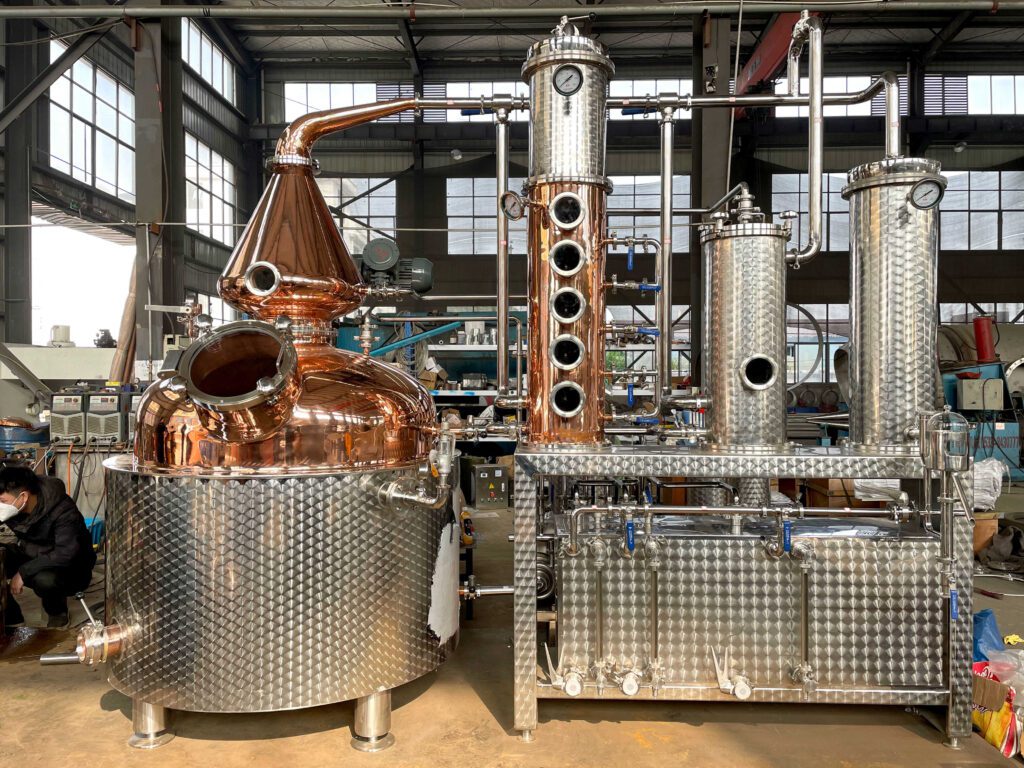
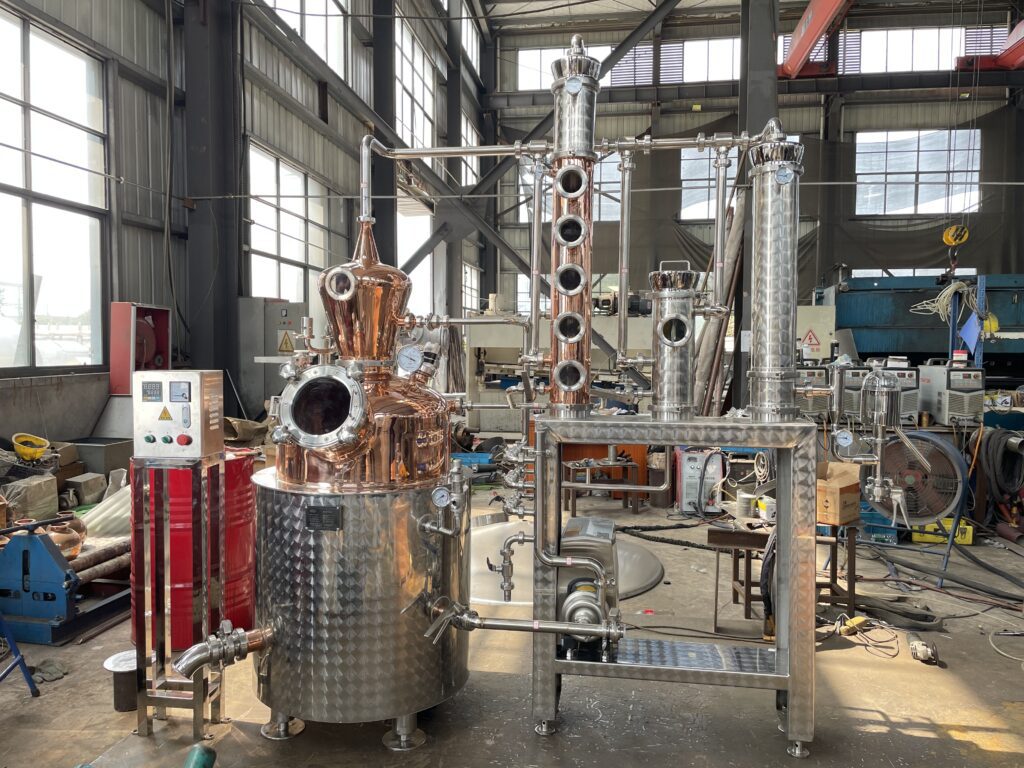
Produttori di impianti di distillazione dell'alcol: una guida completa alla progettazione e alla produzione di impianti di distillazione
Avviare un'attività di produzione di alcolici richiede molto più del semplice acquisto di un alambicco. La scelta di attrezzature inadeguate, una capacità produttiva non conforme e raccordi di processo inefficienti possono aumentare i costi operativi e rallentare la produzione. Collaborare con produttori di impianti di distillazione esperti permette di realizzare un sistema su misura per i propri prodotti, gli spazi produttivi e gli obiettivi aziendali a lungo termine.
An alcohol distillation plant is an integrated production facility that uses fermentation, heating, vapor separation, condensation, and storage equipment to produce beverage spirits such as whisky, vodka, gin, rum, and brandy. A suitable plant combines pot stills, column stills, condensers, fermentation tanks, storage vessels, cooling systems, and process controls according to production capacity and product requirements.
Produttori di impianti di distillazione dell'alcol: una guida completa alla progettazione e alla produzione di impianti di distillazione
Schema dell'articolo
What Is an Alcohol Distillation Plant and How Does It Work?
How Do Raw Materials and Fermentation Affect Distillery Plant Design?
Di quali tipi di impianti di distillazione hanno bisogno le distillerie moderne?
How Do You Choose the Right Distillation System for Different Spirits?
Come pianificare la capacità dell'impianto di distillazione e l'efficienza produttiva?
Why Are Heating, Cooling, and Heat Exchangers Important?
What Materials and Safety Features Should a Distillery Plant Include?
How Does Automation Improve Alcohol Production?
Cosa dovrebbe comprendere un impianto di distillazione completo chiavi in mano?
How Do You Select the Right Alcohol Distillation Plant Manufacturer?
1. What Is an Alcohol Distillation Plant and How Does It Work?
An alcohol distillation plant is a facility designed to produce concentrated alcoholic spirits from fermented raw materials. It combines several production stages, including raw material preparation, fermentation, distillation, condensation, purification, storage, and packaging.
The main purpose of distillation is to separate alcohol and other volatile components from a fermented liquid. The process uses differences in volatility and boiling behavior to achieve the required alcohol concentration and product characteristics. A distiller can adjust the equipment configuration according to the type of spirit being produced.
A typical beverage distillery plant includes:
Attrezzatura
Main Function
Raw material preparation system
Prepares grain, fruit, or other feedstock
Mash cooker
Supports preparation of grain-based materials
Fermentation tanks
Convert fermentable sugars into alcohol
Pentola ancora
Supports traditional batch distillation
Distillation column
Supports controlled separation and rectification
Condensatore
Converts alcohol vapor into liquid
Serbatoio di raccolta del distillato
Collects distilled liquid
Storage and blending tanks
Hold and prepare finished spirits
sistema CIP
Supports equipment cleaning
Pannello di controllo
Monitora e controlla i parametri di produzione
The process begins with raw material preparation and fermentation. After fermentation, the liquid moves to the distillation unit, where controlled heating creates vapor. The condenser then cools the vapor into liquid spirit.
For commercial producers, every stage must work together. A well-designed distillation system improves process stability, product consistency, and production efficiency.
2. How Do Raw Materials and Fermentation Affect Distillery Plant Design?
Raw materials play an important role in determining the design of a distillery. Different materials require different preparation methods, fermentation conditions, and equipment configurations.
Common feedstock options include:
Grains: Barley, wheat, corn, and other cereal grains are used in grain-based spirits.
Molasses: Commonly used in rum production.
Fruit: Used for fruit brandy and other specialty spirits.
Malt: Important for whisky and malt spirit production.
Materie prime a base di zucchero: impiegate in processi di fermentazione selezionati.
The preparation system should match the selected raw materials. For example, a grain-based distillery may need grain handling, milling, mashing, and wort or mash preparation equipment. A rum production line may require equipment suitable for handling molasses and sugar-based fermentation materials.
Perché la capacità di fermentazione è importante?
Fermentation determines how much alcohol-containing liquid is available for the next production stage. If fermentation tanks cannot supply enough liquid, the distillation equipment may remain idle.
A commercial distillery should consider:
Volume del lotto di fermentazione.
Fermentation cycle time.
Number of fermentation tanks.
Raw material supply.
Required alcohol concentration before distillation.
Distillation schedule.
A professional manufacturer should calculate the relationship between fermentation capacity and still capacity rather than selecting each machine separately.
Ad esempio, un produttore di whisky potrebbe richiedere diversi serbatoi di fermentazione per garantire un apporto costante di mosto fermentato. Un produttore di vodka che punta a ottenere alcol neutro ad alta purezza potrebbe invece necessitare di una diversa configurazione di fermentazione e rettifica.
MICET provides customized fermentation tanks and attrezzature per distilleria for different beverage production requirements.
3. What Types of Distillation Equipment Do Modern Distilleries Need?
Different distillation plants use different equipment depending on production scale, spirit type, and operating method. The three main still configurations are pot stills, column stills, and hybrid stills.
Pot Still Systems
Best suited for traditional batch spirit production.
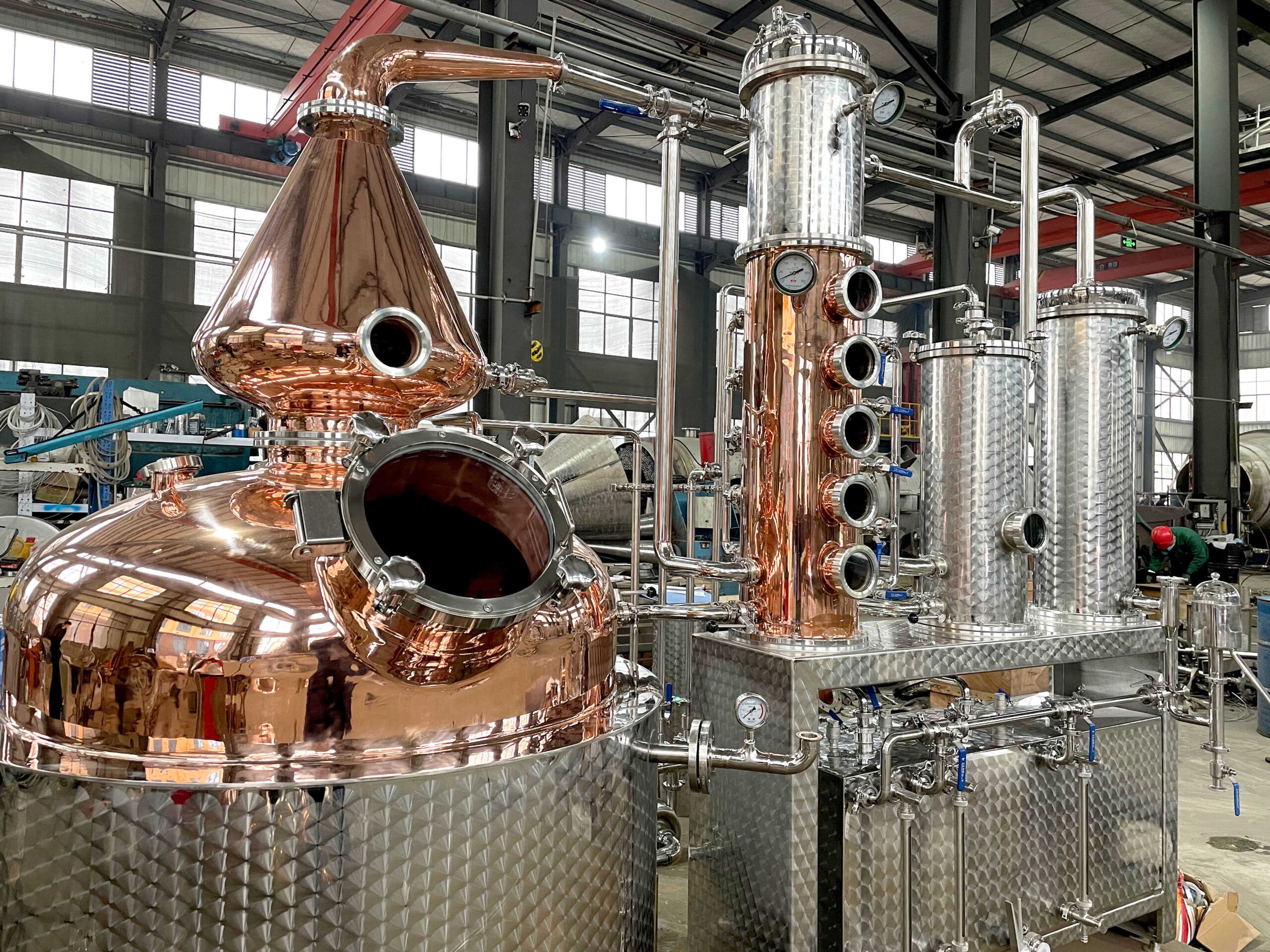
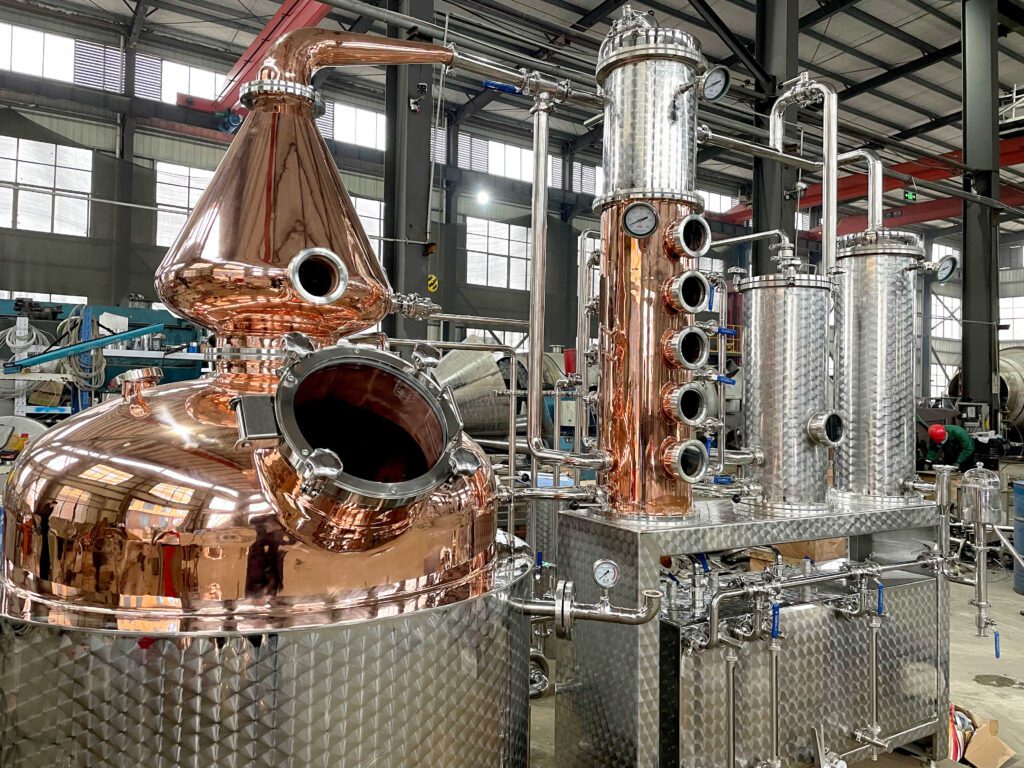
Gli alambicchi discontinui (pot still) sono ampiamente utilizzati per whisky, rum, brandy e altri distillati ricchi di aromi. Consentono ai mastri distillatori di gestire i singoli lotti e regolare i parametri di lavorazione in base alla ricetta.
A typical pot still system includes:
Distillation pot
Heating system
Duomo o elmo in rame
Vapor pipe
Condensatore
Apparecchiature per la raccolta del distillato
Copper components are commonly selected for traditional spirit production because copper interacts with certain sulfur compounds during distillation.
Column Still Systems
Best suited for controlled separation and higher throughput.
Un alambicco a colonna impiega stadi di separazione multipli per controllare il contatto tra vapore e liquido. Il numero e la disposizione dei piatti o delle sezioni influenzano l'efficienza di separazione.
Column systems are commonly used for vodka and neutral spirit production. They can also be configured for other applications that require specific separation characteristics.
Hybrid Still Systems
Best suited for producers making several spirit styles.
A hybrid still combines features of pot still and column still designs. It gives producers more flexibility when developing multiple products.
Still Type
Vantaggio Principale
Typical Applications
Pentola Ancora
Traditional flavor development
Whisky, rum, brandy
Colonna Ancora
Controlled separation and throughput
Vodka, neutral spirits
Alambicco ibrido
Flexible production
Distillerie multiprodotto
MICET manufactures and customizes these three core configurations according to spirit style, batch size, and automation requirements.
4. Come scegliere il sistema di distillazione adatto per i diversi distillati?
Choosing a distillation system starts with the final product. A whisky distillery has different equipment requirements from a vodka or gin production facility.
For example, whisky producers often focus on flavor development and copper contact. Vodka producers usually require more extensive separation and purification. Gin producers may need botanical infusion equipment to develop their desired aroma.
The following table provides a general reference:
Tipo di distillato
Recommended Equipment
Main Design Consideration
Il whisky
Pot still or hybrid still
Flavor development
Vodka
Colonna ancora
Neutral spirit and purity targets
Gin
Alambicco discontinuo (pot still) con cestello per botaniche
Estrazione botanica
Rum
Pot still or column still
Melassa fermentata o mosto a base di zucchero
Brandy
Pentola ancora
Fruit character and aroma
Neutral spirit
Column distillation system
Separation and product specifications
E per quanto riguarda l'alcol neutro ad alta purezza?
Alcuni produttori richiedono alcol etilico neutro di grado extra (ENA) o altri distillati neutri ad alta purezza.
These applications require suitable column configuration, reflux management, product monitoring, and downstream purification where specified. The equipment should be engineered around the required product specification rather than a general claim of high purity.
For vodka manufacturers, MICET offers customized distillation solutions, including a 20-layer copper distillation column and PLC-based process control options.
A professional distiller should discuss the target alcohol strength, throughput, product characteristics, and applicable local requirements before finalizing the system.
5. How Should You Plan Distillery Plant Capacity and Production Efficiency?
Production capacity is one of the most important decisions when planning a new alcohol plant.
A system that is too small may limit business growth. An oversized distillery plant can increase initial investment, utility costs, and unused equipment capacity.
Before selecting a production plant, calculate:
Produzione annua prevista.
Produzione richiesta per lotto.
Number of operating days.
Fermentation cycle time.
Distillation cycle time.
Storage requirements.
Future expansion plans.
MICET Distillery Equipment Capacity Range
MICET provides distillery equipment configurations across several capacities.
These capacities represent available equipment configurations, not guaranteed finished alcohol output. Actual production depends on working volume, raw materials, fermentation performance, distillation cycles, and product specifications.
Produttori di impianti di distillazione dell'alcol: una guida completa alla progettazione e alla produzione di impianti di distillazione
Why Is Future Expansion Important?
A new distillery may start with a relatively small production target. However, successful products can create demand for higher output.
A scalable layout should leave room for:
Additional fermentation tanks.
Larger distillation columns.
Extra storage tanks.
New filtration equipment.
Expanded cooling capacity.
Additional packaging equipment.
This approach helps businesses expand without rebuilding the entire facility.
6. Why Are Heating, Cooling, and Heat Exchangers Important?
Heating and cooling systems have a direct effect on distillation performance.
The heating system provides the energy required to bring fermented liquid to the operating temperature. Steam heating, electric heating, and other suitable heating arrangements can be selected according to project requirements.
A condenser then cools the vapor and converts it into liquid. Its capacity must match the expected vapor load and operating conditions.
Main Utility Systems
Utility
Scopo
Planning Consideration
Steam or electric heating
Supplies process heat
Heating capacity and energy source
Cooling water
Supports condensation
Water flow and temperature
Glycol system
Supports process cooling
Cooling load and temperature
Heat exchangers
Transfer heat between process streams
Thermal duty and flow
Water supply
Supports production and cleaning
Water quality and availability
Compressed air
Operates pneumatic equipment
Pressure and consumption
How Can Heat Recovery Improve Energy Efficiency?
Heat exchangers can transfer heat from one process stream to another. For example, recovered heat may support preheating of incoming process liquid when the system is designed for this purpose.
This can reduce the amount of additional heating energy required.
However, the actual benefit depends on temperature differences, flow rates, operating schedules, and equipment design.
An industrial distillation plant should consider heating and cooling as one integrated system rather than treating them as separate accessories.
For international projects, utility design should also account for local electricity supply, steam availability, water conditions, and installation requirements.
7. What Materials and Safety Features Should a Distillery Plant Include?
Material selection affects sanitation, durability, maintenance, and product quality.
Stainless steel is widely used in fermentation tanks, storage tanks, process piping, and other product-contact equipment. Copper is also important in traditional spirit production.
A well-designed system may combine the two materials according to the intended application.
Traditional distillation material and interaction with sulfur compounds
Still heads, columns, vapor-contact components
The selected grade, thickness, surface finish, welding quality, and cleaning design should be documented in the technical specification.
What Safety Features Should Plant Manufacturers Provide?
Alcohol vapor is flammable. Therefore, safety engineering must be part of the original plant design.
Important considerations include:
Suitable ventilation.
Electrical equipment appropriate for the classified area.
Pressure protection.
Temperature monitoring.
Emergency shutdown arrangements.
Proper grounding and bonding.
Safe vapor handling.
Suitable pipework and valves.
Operator training and maintenance procedures.
Equipment manufacturers should coordinate their design with local engineering and compliance professionals. Equipment supply alone does not replace local permits or site approvals.
8. How Does Automation Improve Alcohol Production?
Modern distilleries need stable process control to maintain consistent product quality.
Manual operation may be suitable for some small batch systems. However, growing facilities often benefit from PLC automation and digital monitoring.
A process control system can monitor:
Heating temperature.
Pressure.
Liquid levels.
Flow rates.
Cooling conditions.
Pump operation.
Valve status.
Production alarms.
Automation can help reduce operator workload and improve production repeatability.
Basic vs. Advanced Automation
Feature
Basic Control
Advanced PLC Control
Temperature monitoring
Manual or digital display
Integrated sensors
Heating control
Operator adjustment
Automatic control
Valve operation
Manual
Automatic or pneumatic
Process monitoring
Local instruments
Central control panel
Alarm functions
Limitata
Configurable alarms
Production records
Manual
Optional digital records
Not every distillery needs a fully automated production line.
A small craft distiller may prefer a simple control panel with essential temperature and safety functions. A larger commercial facility may benefit from integrated controls across fermentation, heating, cooling, and distillation.
MICET can configure control options according to the actual process, equipment arrangement, and operator requirements.
9. What Should a Complete Turnkey Distillery Plant Include?
It should connect raw material preparation, fermentation, distillation, storage, cleaning, and packaging into one practical production layout.
A typical project may include:
Production Section
Attrezzatura principale
Gestione delle materie prime
Grain handling, milling, transfer equipment
Mash Preparation
Mash tun, mash cooker, heating system
Fermentazione
Stainless steel fermentation tanks
Distillazione Primaria
Pot still or hybrid still
Rectification
Column still and related components
Condensazione
Condenser and cooling system
Immagazzinamento
Spirit storage tanks
Blending
Blending tanks and transfer pumps
Pulizia
sistema CIP
Imballaggio
Bottle filling and packaging equipment
Automazione
PLC, sensors, valves, and control panels
A complete project also requires layout planning, utility connections, transportation, installation guidance, testing, and operator training.
How Does a Manufacturer Support the Whole Project?
Working with one experienced manufacturer can simplify coordination between different equipment groups.
As a professional brewery, distillery, and beverage equipment manufacturing plant, MICET provides customized stainless steel brewing systems, fermentation tanks, brewhouse systems, and distillery solutions for global B2B customers.
Our project support focuses on:
Customized equipment configuration.
Production capacity planning.
Equipment layout and integration.
Stainless steel and copper fabrication.
Process and utility coordination.
Equipment inspection and testing.
Installation and commissioning guidance.
Long-term technical support.
We can also evaluate hybrid new-and-used equipment packages where suitable, helping customers manage initial investment while maintaining important safety and process requirements.
Produttori di impianti di distillazione dell'alcol: una guida completa alla progettazione e alla produzione di impianti di distillazione
10. How Do You Select the Right Alcohol Distillation Plant Manufacturer?
Choosing between alcohol distillation plant manufacturers should involve more than comparing the best price.
A suitable manufacturer needs to understand your intended spirits, production capacity, site conditions, equipment configuration, and long-term operating goals.
What Information Should You Prepare Before Requesting a Quote?
To help the manufacturer prepare a suitable proposal, provide:
Spirit type: whisky, gin, vodka, rum, brandy, or other products.
Target production capacity: liters per batch or annual output.
Preferred still type: pot, column, or hybrid.
Raw materials and fermentation requirements.
Available factory dimensions.
Heating source and utility conditions.
Automation requirements.
Destination country and applicable standards.
Project budget and expected delivery schedule.
MICET is a manufacturer and exporter of customized brewery, distillery, and beverage equipment. Our team can help develop a suitable plant configuration based on your production goals, available space, and investment plan.
Whether you are establishing a small craft distillery or expanding a commercial alcohol production facility, the right engineering partner can help reduce project risk and support stable operation.
Contact MICET to discuss your alcohol distillation plant project. Share your target capacity, spirit type, and factory layout to receive a customized equipment proposal.
Domande frequenti
What equipment is required for an alcohol distillation plant?
A typical plant requires raw material preparation equipment, fermentation tanks, pot or column stills, condensers, storage tanks, pumps, piping, cooling systems, and control panels. Additional equipment depends on the spirit type and production capacity.
Qual è la differenza tra un alambicco a vaso e uno a colonna?
A pot still is mainly used for batch distillation and traditional flavor-focused spirits. A column still provides multiple separation stages and is often selected for neutral spirits and higher-throughput production. Hybrid systems combine features of both designs.
How much capacity does a commercial distillery need?
There is no universal capacity. A small craft distillery may begin with a 200L–500L system, while growing commercial producers may consider 1,000L–5,000L configurations. The correct choice depends on production targets, fermentation time, and operating schedules.
Can one distillery produce whisky, gin, vodka, and rum?
Yes, a suitably designed distillery can produce several spirit types. However, different products may require different still configurations, botanical baskets, fermentation arrangements, and cleaning procedures. The system should be designed around the planned product range.
What is the role of a distillation column?
A distillation column provides repeated vapor-liquid contact to support separation of alcohol and other volatile components. Its configuration, number of plates or sections, reflux arrangement, and operating conditions influence separation performance.
Do distillery plant manufacturers provide turnkey solutions?
Many professional manufacturers provide complete project services, including equipment design, manufacturing, layout planning, utility coordination, installation guidance, commissioning support, and technical service. The exact project scope should be confirmed in the quotation.
Key Points to Remember
An alcohol distillation plant requires coordinated equipment from raw material preparation to finished spirit storage.
Pot stills, column stills, and hybrid stills serve different production requirements.
Raw materials and fermentation capacity influence the complete plant configuration.
Production capacity should match actual demand and future expansion plans.
Heating, cooling, condensers, and heat exchangers affect energy efficiency.
Stainless steel and copper have different roles in professional distillery equipment.
Safety engineering and local compliance must be considered before installation.
PLC automation can improve process monitoring and production consistency.
A turnkey distillery solution simplifies equipment integration and project coordination.
Choosing an experienced manufacturer supports reliable production and long-term business growth.
How to Integrate Used Stainless Steel Fermentation Tanks into an Existing Brewery Cellar
Adding fermentation capacity is a common challenge for growing breweries. However, buying another tank does not always solve the problem. If its cooling system, pipe connections, or working volume do not match your existing equipment, installation can become expensive and production may suffer.
Integrating a used stainless steel fermentation tank into an existing brewery requires more than checking its price and capacity. Buyers should match the tank’s working volume, cooling jacket, glycol connections, CIP system, sanitary fittings, control sensors, and physical dimensions with the current cellar. A hybrid new-and-used solution can help expand production while controlling investment.
How to Integrate Used Stainless Steel Fermentation Tanks into an Existing Brewery Cellar
Come si abbina la capacità del serbatoio alle attrezzature di produzione della birra esistenti?
Un serbatoio usato può funzionare con il sistema di raffreddamento a glicole esistente?
How Do Tank Jackets and Insulation Affect Temperature Control?
How Can You Connect a Used Fermenter to an Existing CIP System?
I raccordi, le valvole e le tubazioni del serbatoio richiedono modifiche?
Come si pianificano lo spazio in cantina e l'installazione dei serbatoi?
Should You Upgrade Controls and Accessories When Adding Used Tanks?
Is a Hybrid New and Used Fermentation System a Better Investment?
Domande frequenti
1. Perché i birrifici aggiungono serbatoi di fermentazione usati?
A brewery may have enough brewhouse capacity but still struggle to meet customer demand. The problem is often limited fermentation space rather than insufficient brewing output.
For example, a brewery operating a 2,000L brewhouse may produce enough wort each week, but its existing fermenters may remain occupied for several days during fermentation, maturation, and cleaning. Adding another tank can create room for overlapping batches and improve production scheduling.
Common reasons for adding used fermentation equipment include:
Increasing fermentation capacity without replacing the brewhouse
Supportare la produzione stagionale di birra
Adding space for new beer styles
Aumento della produzione per la distribuzione locale
Replacing an older or damaged tank
Expanding kombucha, cider, or other beverage production
Un serbatoio usato in acciaio inox può offrire un modo conveniente per aumentare la capacità della cantina. Tuttavia, il serbatoio deve essere compatibile con il resto del sistema di produzione.
Which Businesses Can Benefit?
Business Type
Potential Application
Craft breweries
Additional fermentation capacity
Microbreweries
Production expansion
Brewpub
More frequent small-batch production
Birrifici commerciali
Spazio aggiuntivo per fermentazione e maturazione
Produttori di kombucha
Fermentation and beverage processing
Cider producers
Additional cider fermentation capacity
Startup del settore delle bevande
Lower-cost production expansion
The important point is to purchase a tank that solves a real production problem, not simply one that appears attractive in an online listing.
2. How Do You Match Tank Capacity with Existing Brewing Equipment?
La capacità del serbatoio dovrebbe basarsi sulla produzione effettiva della sala cottura e sul tempo in cui ciascun lotto occupa un fermentatore.
Un serbatoio troppo piccolo potrebbe richiedere la suddivisione di un singolo lotto in più recipienti. Un serbatoio troppo grande potrebbe invece lasciare inutilizzato spazio prezioso in cantina.
Iniziate identificando tre valori:
Brewhouse working volume per batch.
Fermentation and conditioning time.
Number of batches planned each week.
For example, a brewery producing 1,000L per batch may consider a 1,000L working-volume fermenter. However, the total tank capacity must also allow sufficient headspace for fermentation.
Capacità comuni dei serbatoi di fermentazione usati
La gamma pubblicata da MICET di serbatoi di fermentazione usati include diverse dimensioni per differenti esigenze produttive.
Capacità del serbatoio
Typical Application
300L
Pilot brewing and small beverage batches
500L
Nanobirrifici e brewpub
1,000L
Piccoli birrifici commerciali
2,000L
Birrifici artigianali in crescita
2,500L
Microbrewery production
5,000L
Larger production facilities
10T–20T
Higher-volume beverage production
Queste sono opzioni di capacità a catalogo e non costituiscono una garanzia di disponibilità immediata a magazzino. Il volume operativo effettivo e la configurazione devono essere confermati per ciascun serbatoio.
Capacità totale vs capacità operativa
Questa differenza è importante quando si acquista un serbatoio.
Total capacity: The tank’s complete internal volume.
Capacità operativa: il volume di liquido consigliato durante la normale produzione.
Headspace: The remaining space needed for fermentation activity and process operation.
Ad esempio, le configurazioni da 2T, 4T e 6T a catalogo di MICET mostrano:
Modello
Total Capacity
Capacità operativa
2T
2,000L
1,800L
4T
4,000L
3.600L
6T
6,000L
5,400L
The 10% difference is an important planning allowance for these specific configurations.
International buyers may receive capacity information in liters, hL, gallon, or bbl. Always convert the figures into one unit before comparing a tank with your existing brewhouse.
Un serbatoio da 2.000 L, ad esempio, corrisponde a 20 hL. Non dare per scontato che due serbatoi con la stessa capacità dichiarata abbiano volumi utili identici.
3. Can a Used Tank Work with Your Existing Glycol Cooling System?
Cooling compatibility is one of the most important engineering questions when adding a used fermenter.
Most professional brewery fermenters use a cooling jacket connected to a glycol circulation system. The glycol removes heat generated during fermentation and helps maintain the required process temperature.
However, not every tank uses the same jacket design.
Differences may include:
Jacket surface area
Numero di zone di raffreddamento
Jacket position
Inlet and outlet diameter
Required glycol flow
Temperatura di esercizio
Requisiti di pressione
Un serbatoio con una superficie di raffreddamento maggiore può richiedere una configurazione di flusso diversa rispetto a un recipiente più vecchio con una camicia più piccola.
Cosa succede se il sistema di raffreddamento è sottodimensionato?
Se il refrigeratore esistente non è in grado di gestire il carico termico aggiuntivo, il birrificio potrebbe riscontrare un raffreddamento lento, temperature di fermentazione instabili o scarse prestazioni di cold crashing.
Ciò può influire sui programmi di produzione e sull'uniformità della birra.
Prima di collegare un nuovo serbatoio, calcola il fabbisogno complessivo di raffreddamento di tutti i recipienti che potrebbero funzionare contemporaneamente.
La valutazione tecnica dovrebbe considerare:
Capacità di refrigerazione del chiller esistente.
Volume totale di fermentazione attiva.
Carico termico previsto della fermentazione.
Temperatura di raffreddamento richiesta.
Portata e pressione della pompa del glicole.
Lunghezza delle tubazioni e perdite di pressione.
Numero di zone di raffreddamento funzionanti contemporaneamente.
Il nostro team di ingegneria può valutare se il refrigeratore esistente è idoneo o se sono necessarie apparecchiature di raffreddamento aggiuntive.
How to Integrate Used Stainless Steel Fermentation Tanks into an Existing Brewery Cellar
4. In che modo le camicie dei serbatoi e l'isolamento influenzano il controllo della temperatura?
Un'intercapedine di raffreddamento non è un semplice elemento esterno. La sua progettazione influisce direttamente sull'efficacia con cui il serbatoio riesce a controllare la temperatura di fermentazione.
Alcuni serbatoi utilizzano intercapedini bugnate attorno al corpo cilindrico. Altri presentano sezioni di raffreddamento che coprono sia il cilindro sia il cono.
La progettazione corretta dipende dalla geometria del serbatoio, dal volume operativo, dalla temperatura di processo e dai requisiti di raffreddamento.
Confronta diverse configurazioni delle camicie
Caratteristica di progettazione
Main Function
Considerazioni sull'integrazione
Intercapedine del cilindro
Rimuove il calore dal corpo principale del serbatoio
Controllare l'area di raffreddamento
Intercapedine del cono
Aiuta a controllare la temperatura vicino all'area di raccolta del lievito
Verificare le connessioni separate
Intercapedine multizona
Consente alle diverse sezioni di raffreddamento di funzionare in modo indipendente
Richiede controlli adeguati
Isolamento completo
Riduce lo scambio termico esterno
Verificare lo spessore e lo stato dell'isolamento
Anche l'isolamento è importante.
L'isolamento in poliuretano è comunemente utilizzato nei serbatoi professionali per birrifici. Contribuisce a ridurre il trasferimento di calore tra il liquido e l'ambiente circostante, favorendo una regolazione termica più stabile.
Il guscio esterno o il rivestimento in acciaio inossidabile protegge l'isolamento e conferisce al serbatoio un aspetto rifinito.
È possibile combinare serbatoi con design diversi?
Sì, ma la configurazione di raffreddamento deve essere progettata adeguatamente.
Ad esempio, una cantina esistente potrebbe contenere quattro serbatoi con camicie a zona singola. L'aggiunta di un serbatoio usato con due zone di raffreddamento indipendenti potrebbe richiedere un diverso collettore e una diversa configurazione di controllo.
L'obiettivo è garantire che ciascun serbatoio riceva un raffreddamento sufficiente senza compromettere il funzionamento degli altri recipienti.
Non collegare serbatoi aggiuntivi a camicia semplicemente perché il diametro dei tubi sembra compatibile. È necessario considerare anche il flusso idraulico, il carico di raffreddamento e la logica di controllo.
5. Come si può collegare un fermentatore usato a un sistema CIP esistente?
La pulizia è essenziale per i birrifici e i produttori di bevande.
Un serbatoio di fermentazione usato deve collegarsi correttamente all'impianto Clean-in-Place (CIP) esistente. In caso contrario, la pulizia potrebbe diventare difficoltosa, non uniforme o dipendente dal lavoro manuale.
La maggior parte dei fermentatori professionali utilizza sfere di lavaggio fisse o rotanti per distribuire le soluzioni detergenti su tutte le superfici interne.
Quando si integra un altro serbatoio, verificare quanto segue:
Posizione dell'ingresso CIP
Tipo e copertura della sfera di lavaggio
Collegamento di ritorno CIP
Portata di lavaggio richiesta
Capacità della pompa
Diametro della tubazione
Configurazione del drenaggio
Compatibilità con i prodotti chimici di pulizia
Perché la compatibilità con il CIP è importante?
Una sfera di lavaggio richiede portata e pressione sufficienti per pulire efficacemente il serbatoio.
Se il nuovo recipiente ha un diametro interno o un’altezza diversi, l’impianto di pulizia esistente potrebbe non garantire una copertura adeguata.
La pompa CIP deve inoltre gestire la portata aggiuntiva richiesta se più serbatoi vengono puliti contemporaneamente.
Per gli impianti di produzione più grandi, una stazione CIP fissa può essere più adatta. I birrifici più piccoli possono preferire un carrello CIP portatile, a seconda del programma di pulizia.
Il nostro approccio consiste nell'esaminare la progettazione della pulizia interna del serbatoio e nell'abbinarla alle apparecchiature CIP esistenti.
Ove necessario, possiamo aggiungere nuovi dispositivi di spruzzatura, connessioni di ritorno, valvole o linee di pulizia dedicate.
6. Le connessioni del serbatoio, le valvole e le tubazioni richiedono modifiche?
Un serbatoio può avere la capacità e il sistema di raffreddamento corretti, ma risultare comunque difficile da installare se i suoi raccordi non sono compatibili con l'impianto esistente del birrificio.
Produttori diversi possono utilizzare standard di raccordo, dimensioni delle connessioni e posizioni delle uscite differenti.
I tipi di raccordo più comuni includono:
Tri-clamp
DIN
SMS
Connessioni filettate
Connessioni flangiate sanitarie
Prima di acquistare un serbatoio, prepara un elenco delle connessioni.
Collegamento
Cosa verificare
Ingresso prodotto
Diametro e posizione
Uscita della birra
Dimensioni, orientamento e altezza
Ingresso CIP
Tipo di dispositivo di lavaggio e di connessione
Ritorno CIP
Diametro e percorso di scarico
Ingresso glicole
Dimensioni e posizione degli attacchi
Uscita glicole
Direzione del flusso e collegamento
Valvola di campionamento
Attacco sanitario
Porta per sonda di temperatura
Tipo e posizione del sensore
Uscita in pressione
Requisiti di progettazione e dispositivi di sicurezza
Quando è necessario modificare un serbatoio?
Alcune modifiche sono relativamente semplici, come sostituire una valvola o cambiare un raccordo sanitario.
Altre modifiche richiedono un maggiore lavoro di ingegneria.
Ad esempio, l'aggiunta di una nuova uscita su un serbatoio isolato può richiedere il taglio del guscio esterno, dell'isolamento e della struttura interna. La modifica deve preservare l'integrità strutturale del serbatoio e il design igienico.
Lo stesso principio vale per le apparecchiature a pressione. Una modifica non deve compromettere la progettazione a pressione originaria o i dispositivi di sicurezza.
Un serbatoio di processo non deve inoltre essere confuso con un comune serbatoio di stoccaggio o con serbatoi di miscelazione. Un fermentatore richiede superfici sanitarie idonee, connessioni di processo adeguate e condizioni operative appropriate.
Non bisogna presumere che un serbatoio in alluminio o un recipiente di stoccaggio atmosferico possano sostituire un fermentatore in acciaio inossidabile omologato per la pressione.
7. Come pianificare lo spazio di cantina e l’installazione dei serbatoi?
La compatibilità fisica è importante quanto quella di processo.
Un serbatoio può avere il volume e le specifiche tecniche ideali, ma non passare dall'ingresso dell'edificio o non operare in modo efficiente nello spazio disponibile.
Prima di confermare un acquisto, prepara una planimetria della cantina.
Dimensioni principali da verificare
Diametro del serbatoio: verificare l’area disponibile sul pavimento e la distanza tra i serbatoi adiacenti.
Altezza complessiva: includere le gambe del serbatoio, i raccordi superiori, i passi d'uomo e le apparecchiature CIP.
Spazio per la manutenzione: gli operatori devono poter accedere a valvole, sensori, passi d'uomo e punti di manutenzione.
Posizione dell’uscita: l’uscita della birra e lo scarico del cono devono essere allineati con le tubazioni e il sistema di drenaggio previsti.
Accesso per il trasporto: verificare porte, aree di carico, attrezzature di sollevamento e il percorso dal punto di scarico alla posizione di installazione.
Un serbatoio verticale può far risparmiare spazio a pavimento, ma può richiedere una maggiore distanza dal soffitto. Un serbatoio con passo d'uomo laterale può inoltre necessitare di ulteriore spazio di accesso.
E il carico sul pavimento?
I grandi recipienti in acciaio inossidabile diventano molto pesanti quando vengono riempiti.
Il team di installazione dovrebbe calcolare il peso complessivo del serbatoio, del liquido, delle gambe e della struttura di supporto.
Prima dell’installazione è necessario verificare la portata del pavimento, il drenaggio, le condizioni delle fondamenta e l’accessibilità delle attrezzature.
Ciò è particolarmente importante quando si installa un serbatoio più grande da 2.000 L–6.000 L o si amplia una cantina esistente con diversi recipienti.
Una disposizione adeguata dovrebbe consentire agli operatori di muoversi in sicurezza tra i serbatoi, garantendo al contempo percorsi efficienti per il trasferimento del prodotto e la pulizia.
8. Conviene aggiornare i sistemi di controllo e gli accessori quando si aggiungono serbatoi usati?
Un serbatoio usato non richiede sempre la sostituzione completa del sistema di controllo.
Tuttavia, i sensori di temperatura, le valvole e i dispositivi di controllo più vecchi potrebbero non essere compatibili con il PLC o il sistema di monitoraggio attuale.
Una soluzione pratica consiste nel riutilizzare il corpo principale del serbatoio, ammodernando alcuni componenti selezionati.
Opzioni di aggiornamento consigliate
Componente
Possibile aggiornamento
Sensore di temperatura
Sensore PT100 e trasmettitore compatibile
Termoregolatore
Integrazione PID o PLC
Protezione dalla sovrapressione
Valvola PRV e manometro idonei
Campionamento
Valvola di campionamento sanitaria
Trasferimento del prodotto
Nuova valvola di uscita sanitaria
CIP
Sfera di lavaggio e raccordo di ritorno
Monitoraggio
Visualizzazione della temperatura e allarmi
Automazione
Comunicazione PLC e integrazione dei sistemi di controllo
Un agitatore può essere necessario per alcune applicazioni di lavorazione delle bevande, ma non dovrebbe essere aggiunto a un fermentatore convenzionale per birra senza prima valutare i requisiti del prodotto e del processo.
Per kombucha, sidro e altri prodotti liquidi, la configurazione del serbatoio può differire da quella di un fermentatore standard per birra.
In una linea di produzione di bevande più ampia potrebbero essere necessari anche un filtro, un sistema di miscelazione o un collegamento di processo aggiuntivo.
L’obiettivo è mantenere stabile il processo esistente, migliorando al contempo le nuove attrezzature dove necessario.
9. Un sistema di fermentazione ibrido tra nuovo e usato è un investimento migliore?
Molti birrifici ritengono di dover scegliere tra un impianto interamente nuovo e uno composto esclusivamente da attrezzature usate.
In pratica, una soluzione ibrida può offrire un equilibrio migliore.
Il serbatoio principale in acciaio inossidabile può essere riutilizzato, mentre le apparecchiature ausiliarie più importanti vengono aggiornate con nuovi componenti.
Esempio di cantina ibrida per birrificio
Attrezzatura
Approccio consigliato
Serbatoio principale di fermentazione
Usato e ricondizionato
Mantello e cono del serbatoio
Riutilizzo previa valutazione tecnica
Refrigeratore di glicole
Nuovo o esistente, previa verifica della capacità
Collettori del glicole
Nuovo dove necessario
Stazione CIP
Esistente o aggiornato
Valvole e guarnizioni
Sostituire dove necessario
Controlli PLC
Nuovo o integrato
Sensori di temperatura
Nuovo dove necessario
Tubazioni sanitarie
Adattato al nuovo layout
Questo approccio consente di ridurre gli investimenti in recipienti di grandi dimensioni, mantenendo al contempo aggiornate le funzioni critiche di controllo e lavaggio.
Come MICET supporta i progetti ibridi
MICET è un produttore professionale di attrezzature per birrifici e bevande, che fornisce sistemi di produzione della birra in acciaio inox personalizzati, serbatoi di fermentazione, impianti di cottura e soluzioni complete per birrifici destinati a clienti B2B di tutto il mondo.
Il nostro programma per le attrezzature usate va ben oltre la semplice ricerca di serbatoi di seconda mano.
Prima di consigliare una configurazione, esaminiamo le attrezzature esistenti del cliente, le esigenze produttive, le utenze disponibili e lo spazio di installazione.
Il nostro supporto può includere:
Serbatoi di fermentazione usati e ricondizionati
Nuove apparecchiature di processo in acciaio inox
Refrigeratori a glicole e sistemi di raffreddamento
Stazioni CIP e attrezzature per la pulizia
Pompe e tubazioni sanitarie
Aggiornamenti di valvole e accessori
Integrazione del PLC e del controllo della temperatura
Pianificazione della disposizione della cantina
Guida all'installazione e supporto alla messa in servizio
Forniamo inoltre soluzioni personalizzate per birrifici artigianali, brewpub, microbirrifici, produttori di kombucha, sidrerie, cantine vinicole e altri produttori di bevande.
How to Integrate Used Stainless Steel Fermentation Tanks into an Existing Brewery Cellar
Un esempio pratico di pianificazione del progetto
Si immagini un birrificio con una sala cottura esistente da 2.000 L che necessita di ulteriore capacità di fermentazione.
Invece di sostituire l'intero birrificio, il team di progetto potrebbe:
Esaminare il programma di fermentazione esistente.
Calcolare il volume di lavoro aggiuntivo necessario.
Selezionare un fermentatore usato adatto.
Valutare la capacità di raffreddamento a glicole esistente.
Verificare i raccordi di mandata e ritorno del sistema CIP.
Modificare le tubazioni sanitarie dove necessario.
Integrare sensori e controlli di temperatura.
Completare la messa in servizio prima della produzione.
La configurazione finale dipende dalle caratteristiche effettive dell’impianto. Per questo consigliamo di progettare il piano completo dei collegamenti prima di spedire il serbatoio.
Se cercate serbatoi di fermentazione usati in acciaio inossidabile in vendita, il nostro team può aiutarvi a confrontare le capacità disponibili e a determinare se per il vostro progetto sia più adatto un singolo serbatoio o un pacchetto di cantina ibrida.
10. Domande frequenti
È possibile collegare un serbatoio di fermentazione usato a un nuovo refrigeratore a glicole?
Sì. Un serbatoio usato può funzionare con un nuovo refrigeratore a glicole se la camicia di raffreddamento, i requisiti di portata, la temperatura di esercizio e la configurazione dei controlli sono compatibili. Il sistema di raffreddamento deve essere dimensionato per il carico combinato di tutti i serbatoi collegati.
Posso utilizzare serbatoi di fermentazione di diverse dimensioni nello stesso birrificio?
Sì. Molti birrifici utilizzano serbatoi di diverse capacità per gestire cotte di dimensioni diverse e vari stili di birra. Il sistema di raffreddamento, l'impianto CIP, le pompe di trasferimento e il programma di produzione devono essere progettati per adattarsi ai diversi serbatoi.
Quale acciaio inossidabile è adatto per i serbatoi di fermentazione usati?
SUS304 è ampiamente utilizzato per le attrezzature di fermentazione della birra, mentre SS316 può essere scelto per applicazioni che richiedono caratteristiche diverse di resistenza alla corrosione. Verifica la qualità effettiva del materiale di ogni recipiente, senza presumere che tutti i serbatoi usati abbiano le stesse specifiche.
È possibile modificare un fermentatore usato per adattarlo a un birrificio esistente?
Sì. A seconda della sua progettazione, un serbatoio può essere modificato aggiungendo nuove valvole, bocchelli, scarichi, connessioni CIP, sensori o strutture di supporto. Le modifiche strutturali e quelle relative alla pressione richiedono un'adeguata valutazione ingegneristica.
È meglio acquistare serbatoi usati o attrezzature di fermentazione nuove?
I serbatoi usati possono ridurre l’investimento iniziale, soprattutto quando si amplia una birreria esistente. Le apparecchiature nuove possono essere preferibili quando un progetto richiede dimensioni specifiche, un’automazione avanzata o una configurazione completamente personalizzata. Una soluzione ibrida può combinare entrambi gli approcci.
Quali informazioni devo fornire per richiedere un preventivo per un serbatoio di fermentazione usato?
Indica la capacità di lavoro richiesta, le dimensioni dell'impianto di produzione del mosto, il sistema a glicole esistente, la configurazione CIP, le dimensioni disponibili per l'installazione del serbatoio, il tipo di bevanda, la pressione di esercizio e il paese di destinazione. Anche fotografie o un disegno della cantina esistente possono aiutare i tecnici a valutare la compatibilità.
Punti di forza
L'aggiunta di un fermentatore usato può incrementare la produzione del birrificio senza dover sostituire l'intera linea di produzione.
La capacità utile del serbatoio deve essere adeguata all'impianto di cottura esistente e al programma di fermentazione.
Prima di aggiungere serbatoi con camicia di raffreddamento, è necessario verificare la capacità di raffreddamento del sistema a glicole.
Diverse zone della camicia possono richiedere modifiche ai collettori di raffreddamento e ai sistemi di controllo.
La portata del CIP, la copertura di lavaggio e i collegamenti di ritorno devono essere compatibili con il nuovo serbatoio.
Tubazioni, valvole, raccordi sanitari e posizioni delle uscite potrebbero richiedere modifiche.
È necessario verificare le dimensioni della cantina, il carico sul pavimento, il drenaggio e l’accesso per l’installazione.
Nuovi sensori, valvole e controlli PLC possono migliorare la compatibilità con le apparecchiature più datate.
Una soluzione ibrida che combina nuovo e usato può bilanciare investimento, igiene e affidabilità del processo.
Un produttore esperto di impianti per birrifici può aiutare a coordinare la scelta dei serbatoi, la progettazione, l'installazione e gli ampliamenti futuri.
Il miglior serbatoio di fermentazione usato non è semplicemente quello con il prezzo di acquisto più basso. È quello che si adatta al programma di produzione, si collega senza problemi alle apparecchiature esistenti e garantisce un funzionamento affidabile nel lungo periodo.
Attrezzature usate per nanobirrifici in vendita: confronto tra impianti da 100 L, 300 L e 500 L
Starting a small brewery does not always require a large investment in brand-new equipment. However, choosing an undersized or incomplete system can limit production and increase future costs. A well-matched refurbished brewing system offers a practical way to enter the craft beer market with professional equipment.
Used nano brewery equipment for sale is available in different capacities, configurations, and levels of refurbishment. For small breweries, 100L, 300L, and 500L systems offer different advantages. The right choice depends on expected beer output, fermentation capacity, available space, utilities, packaging needs, and future expansion plans.
Attrezzature usate per nanobirrifici in vendita: confronto tra impianti da 100 L, 300 L e 500 L
Schema dell'articolo
What Does Nano Brewery Equipment Mean?
Who Should Consider Used Nano Brewery Equipment for Sale?
100L vs 300L vs 500L: Which Brewing System Is Right for You?
What Is Included in a Complete Used Nano Brewhouse?
How Many Fermenters Does a Nano Brewery Need?
Which Brewhouse Configuration and Heating Method Should You Choose?
How Important Are Heat Exchangers, Glycol Cooling, and CIP?
What Packaging Equipment Should a Small Brewery Include?
Used vs New Brewing Equipment: Which Is Better for a Small Brewery?
How Can You Get a Ready-to-Brew Nano Brewery Solution?
1. What Does Nano Brewery Equipment Mean?
A nano brewery is a small-scale beer production facility designed for limited batches, local sales, recipe development, or taproom operations. Compared with a large commercial brewery, it requires less floor space and a smaller initial equipment investment.
The term does not have one universal capacity definition. For MICET’s current used equipment range, nano brewery systems cover approximately 100L to 500L. These systems are designed for pilot plants, bars, restaurants, brewpubs, and small craft breweries.
A typical nano brewing system includes:
Mulino per malto
Mash tun or mash/kettle combination
Lauter tun, where required
Brew kettle and whirlpool
Hot liquor tank (HLT)
Scambiatore di calore a piastre
Stainless steel fermenters
Glycol cooling system
Pumps, pipes, and valves
Pannello di controllo
CIP cleaning equipment
The exact configuration depends on the brewing process and production target.
A small brewery may start with a compact 100L setup for recipe testing and limited sales. A busy brewpub may need 300L or 500L equipment to support regular production.
The important point is that a nano brewery still needs professional process equipment. A home brewing kit is not a substitute for a commercial brewing system designed for repeated operation.
2. Who Should Consider Used Nano Brewery Equipment for Sale?
Used nano brewery equipment can suit businesses that want to enter the beer market without immediately investing in a large production facility.
It is especially useful for entrepreneurs who plan to test customer demand before expanding. A compact brewing system can also help established restaurants and bars develop their own beer brands.
Common Applications
Business Type
Suitable Capacity to Evaluate
Scopo Principale
Pilot brewery
100L
Recipe development and testing
Restaurant brewery
100L–300L
Fresh beer for customers
Small brewpub
300L
Regular taproom production
Craft beer startup
300L–500L
Local commercial distribution
Piccolo birrificio artigianale
500L
Increased production capacity
Brewery training center
100L–300L
Brewing education and process testing
These are planning suggestions, not fixed industry rules. Actual requirements depend on sales demand, brewing frequency, and fermentation time.
Used equipment is also attractive when a business is expanding or replacing an existing system. Some second-hand assets enter the market through brewery closures, facility upgrades, or changes in production strategy.
However, buying individual used tanks from unrelated sellers can create compatibility problems. A complete, matched system is often easier to integrate than several unrelated machines.
MICET offers factory-refurbished brewing packages based on its established equipment designs, with options for technical customization and project support.
3. 100L vs 300L vs 500L: Which Brewing System Is Right for You?
Capacity is one of the most important factors when choosing a nano brewing system.
A larger brewhouse does not automatically mean better business performance. If production demand is low, oversized equipment can increase utility costs and leave expensive assets underused.
A smaller system may be more suitable for a new business that wants to test recipes and build a local customer base.
Compare Three Popular Capacity Options
Specifiche
100L System
300L System
500L System
Working brew volume
100L
300L
500L
Approx. US BBL equivalent
0.85
2.56
4.26
Typical application
Pilot brewing
Brewpub
Piccolo birrificio artigianale
Fermenters in published package
3 × 100L
2 × 300L working volume
2 × 500L
Glycol tank
200L
800L
1000L
Riscaldamento
Electric
Electric
Electric
Imballaggio
Project dependent
Semi-auto bottle filler
Semi-auto bottle filler
BBL conversions use the US beer barrel (approximately 117.35L). Actual working output and finished packaged volume depend on the brewing process and production losses.
When Is a 100L Brewing System a Good Choice?
A 100L system is useful for pilot brewing, recipe testing, small restaurants, and businesses with limited production requirements.
It has a compact footprint and can support several different beer recipes without requiring a large cellar.
MICET’s published used 100L configuration includes three 100L fermentation tanks, a 100L brewhouse arrangement, a 100L hot liquor tank, a 200L glycol tank, and an approximately 2HP chiller.
This package is suitable for buyers who want a compact professional setup rather than a collection of unrelated small machines.
A 300L system offers more production volume while remaining suitable for smaller facilities.
It can be a practical choice for a brewpub or startup that has moved beyond occasional pilot batches and needs a more regular brewing schedule.
MICET’s published 300L package includes a brewhouse, two fermenters with approximately 300L effective working volume each, an 800L glycol tank, cooling equipment, CIP, and semi-automatic bottle filling.
A 500L system is worth considering when the business expects higher weekly output or needs more beer for local distribution.
MICET’s published 500L configuration includes a 500L brewhouse arrangement, two 500L fermenters, a 1000L glycol tank, a cooling system, CIP, and bottle-filling equipment.
It provides more production capacity than a 100L or 300L system, but buyers should also plan for greater utility demand, floor space, and packaging requirements.
4. What Is Included in a Complete Used Nano Brewhouse?
When searching for used brewery equipment for sale, buyers often find individual vessels, pumps, and accessories listed separately.
The problem is that these components may not work together without additional engineering.
A complete brewhouse should be treated as a connected production system.
Main Brewhouse Components
Mash tun: Mixes crushed malt with hot water and supports the conversion of starch into fermentable sugars.
Lauter tun: Separates the liquid wort from spent grain.
Brew kettle: Boils the wort and supports hop additions.
Whirlpool: Helps separate hop particles and other solids before cooling.
Hot liquor tank: Stores heated brewing water for mashing and lautering.
Heat exchanger: Cools hot wort before it enters the fermenter.
Some compact systems combine functions in one vessel to reduce the equipment footprint. Other systems use separate vessels for greater process flexibility.
When reviewing a used package, confirm the actual vessel arrangement instead of relying only on labels such as 2 vessel or 3 vessel.
Also check the included pumps, valves, pipes, gaskets and clamps, control panel, and connection standards.
A system may look complete in product photos but still require additional components before it can operate at your facility.
Attrezzature usate per nanobirrifici in vendita: confronto tra impianti da 100 L, 300 L e 500 L
5. How Many Fermenters Does a Nano Brewery Need?
The brewhouse determines how much wort you can produce in one brewing cycle. Fermentation capacity determines how much beer your business can process over time.
These two capacities must work together.
For example, a 300L brewhouse with only one 300L fermenter may become a production bottleneck if the beer needs several weeks of fermentation and conditioning.
A brewery with several fermenters can manage overlapping batches and different beer styles.
Fermentation Capacity Planning
Consider these factors:
Number of brewing days per week
Fermentation time for each beer style
Conditioning and maturation time
Cleaning and turnaround time
Expected sales volume
Seasonal demand
Future expansion plans
A useful planning method is to estimate how many batches will be occupying fermenters at the same time.
For example, if you brew two batches each week and each batch occupies a fermenter for two weeks, you need enough cellar capacity to accommodate overlapping production, plus a practical operating buffer.
Do not simply match the fermenter volume to the brewhouse nameplate. Check working capacity, total capacity, and headspace.
Why Stainless Steel Fermenters Matter
Professional stainless steel fermenters provide a durable and hygienic environment for beer production.
Important features include:
Conical bottom for yeast collection
Cooling jackets for temperature control
Isolamento
Sanitary manways
Sampling valves
CIP spray balls
Pressure gauges and safety valves, where applicable
Sensori di temperatura
A good fermenter should be easy to clean and suitable for the intended operating pressure.
For small breweries, properly matched fermenters can improve production scheduling and reduce unnecessary transfers.
6. Which Brewhouse Configuration and Heating Method Should You Choose?
A nano brewery may use a two-vessel or three-vessel brewing arrangement.
The choice depends on production requirements, available space, investment budget, and brewing workflow.
A 2 vessel system may combine mashing and boiling functions to reduce equipment costs. A 3 vessel system can separate more brewing stages and provide additional process flexibility.
Neither configuration is automatically superior.
Electric Brewhouse or Steam Heating?
Electric heating is common in compact brewing systems because it can be installed without a dedicated steam boiler.
It is especially useful for smaller facilities where steam infrastructure is not available.
However, the buyer must confirm the required electrical capacity before ordering.
For example, MICET’s published 300L electric mash/kettle configuration lists approximately 12kW of heating power, while the 500L configuration lists approximately 24kW.
These are equipment-specific examples, not universal requirements for every 300L or 500L brewery.
Before purchasing an electric brewhouse, confirm:
Local voltage and frequency
Single-phase or 3 phase power
Total connected electrical load
Heating element configuration
Cable and breaker requirements
Control panel compatibility
Local electrical safety requirements
The same checks apply to pumps, motors, and cooling systems.
A system that works well in one country may require electrical adjustments before installation in another.
7. How Important Are Heat Exchangers, Glycol Cooling, and CIP?
A brewing system cannot operate reliably with only the main vessels.
The supporting systems are just as important.
Scambiatore di calore
After boiling, wort needs to cool before entering the fermenter.
A plate heat exchanger uses cooling water and, where required, glycol or another suitable cooling medium to reduce wort temperature.
MICET’s published configurations provide useful examples:
Sistema
Published Heat Exchanger Area
100L
Approximately 2m²
300L
Approximately 4m²
500L
Approximately 6m²
The correct heat exchange capacity depends on wort flow, inlet temperature, target temperature, and cooling water conditions.
Glycol Cooling System
Fermentation creates heat. A chiller and glycol circulation system help maintain the required temperature inside jacketed fermenters.
The glycol tank, chiller, pumps, pipelines, and cooling jackets should be sized as one system.
MICET’s published nano packages use different glycol tank capacities according to the equipment configuration.
Sistema di pulizia CIP
CIP means Clean-in-Place. It allows cleaning solutions to circulate through vessels and process pipelines without dismantling the entire system.
For a commercial brewery, CIP helps improve cleaning consistency and reduce manual work.
When evaluating used equipment, check whether the CIP tanks, pumps, spray balls, return lines, and control components are included.
A complete nano brewery should have a practical cleaning plan from the beginning.
Attrezzature usate per nanobirrifici in vendita: confronto tra impianti da 100 L, 300 L e 500 L
8. What Packaging Equipment Should a Small Brewery Include?
After fermentation and conditioning, beer needs to reach customers in a suitable package.
Your packaging choice depends on your business model.
A taproom may focus on kegs and draft service, while a retail-focused craft brewery may need a bottle or can line.
Packaging Option
Suitable Equipment
Typical Application
Fusto
Keg washer and filler
Bars and restaurants
Bottiglia
Bottle filler and capper
Retail and local distribution
Lattina
Can filling and seaming line
Retail and takeaway
Draft
Kegging and dispensing setup
Taprooms and brewpubs
MICET’s published 300L and 500L packages include a semi-automatic 6-filling-head and 6-capping-head bottle machine, with a stated output of approximately 500 bottles per hour.
The actual output depends on the bottle format, operating conditions, and product handling.
A small brewery does not always need an automatic packaging line at the beginning. It may be more cost-effective to start with keg packaging and add a bottle or can line as sales grow.
A Cornelius-style keg or standard commercial beer keg may also be useful for selected small-batch or taproom applications, provided the filling and cleaning setup matches the intended container.
The key is to plan packaging capacity alongside fermentation capacity. There is little value in producing more beer than your packaging operation can handle.
9. Used vs New Brewing Equipment: Which Is Better for a Small Brewery?
Both new and used equipment can be suitable for a nano brewery project.
The right decision depends on budget, operating requirements, equipment condition, and the level of customization needed.
Factor
Attrezzature usate
Attrezzatura nuova
Initial investment
Often lower
Usually higher
Manufacturing lead time
May be shorter
Requires manufacturing time
Personalizzazione
Depends on existing configuration
More flexible
Equipment condition
Requires inspection and refurbishment
New manufacturing condition
Ricambi
Must be confirmed
Easier to specify
Garanzia
Depends on agreement
Manufacturer warranty
Installazione
Requires planning
Can be designed for the site
A hybrid approach can also work well.
For example, a brewery may purchase refurbished stainless steel vessels while upgrading selected valves, pumps, gaskets, electrical components, and process controls.
This can balance initial investment with long-term reliability.
What Does Factory Refurbishment Mean?
Refurbishment should involve more than washing an old tank and repainting its exterior.
A professional process may include:
Initial equipment inspection.
Disassembly and internal cleaning.
Weld and surface condition checks.
Replacement of worn seals and gaskets.
Pump, motor, and valve testing.
Electrical and control checks.
Tank and jacket pressure testing where applicable.
CIP and leakage checks.
Final inspection and export packing.
Di MICET Attrezzatura per Birreria Usata program describes its inspection and refurbishment approach for different equipment capacities.
Buyers should request actual equipment photos, a component list, refurbishment scope, and relevant test records before confirming an order.
10. How Can You Get a Ready-to-Brew Nano Brewery Solution?
Choosing the right system starts with your production plan.
Before asking a manufacturer for a quotation, prepare a few basic details.
Informazioni
Example
Project type
Brewpub or small craft brewery
Target capacity
100L, 300L, or 500L
Brewing frequency
Batches per week
Beer styles
Ale, lager, stout, IPA
Capacità di fermentazione
Number and volume of fermenters
Riscaldamento
Electric or steam
Raffreddamento
Refrigeratore di glicole
Imballaggio
Keg, bottle, or can
Installation location
Country and city
Available space
Building dimensions
Budget
Expected investment range
This information helps the manufacturer recommend a suitable brewing configuration.
Why Choose MICET for Used Nano Brewery Equipment?
MICET is a professional brewery and beverage equipment manufacturer providing customized stainless steel brewing systems, fermentation tanks, brewhouse systems, and turnkey solutions for global B2B customers.
Our used equipment range includes compact systems designed for pilot breweries, brewpubs, restaurants, and small craft beer producers.
We focus on providing matched equipment packages rather than simply selling individual second-hand vessels.
Our project support can include:
Used and refurbished brewhouse packages
Stainless steel fermentation tanks
Glycol cooling systems
CIP cleaning equipment
Pumps, valves, and sanitary piping
Control panels and process controls
CAD and 3D layout planning
Equipment customization
Guida all'installazione e supporto alla messa in servizio
Spare parts and after-sales service
We also provide new equipment options for customers who need a different configuration or want to expand their production capacity.
Whether you need a compact 100L pilot brewery, a 300L brewpub system, or a 500L craft brewery package, our engineering team can help match the equipment to your process, available space, and investment plan.
Looking for used nano brewery equipment for sale?
Contact MICET with your preferred capacity, brewing concept, facility layout, and budget. We can help you review suitable equipment configurations and prepare a project-specific proposal.
Domande frequenti
What capacity is considered a nano brewery?
There is no single global capacity definition. MICET’s current used nano brewery equipment range focuses on systems from approximately 100L to 500L, suitable for pilot production, brewpubs, and small craft breweries.
Is a 300L nano brewery suitable for a brewpub?
Yes. A 300L system can be suitable for a brewpub that needs regular small-batch production. The final configuration should include enough fermentation capacity, cooling, cleaning, and packaging equipment to support the planned sales volume.
What is included in used nano brewery equipment?
A complete package may include a brewhouse, malt mill, fermenters, heat exchanger, glycol tank, chiller, pumps, control panel, CIP system, and packaging equipment. Always confirm the actual included items in the quotation.
Le attrezzature per birrifici usate sono affidabili?
It can be reliable when the equipment has been properly inspected, refurbished, and tested. Buyers should review tank condition, welding, pressure ratings, electrical systems, pumps, valves, cleaning arrangements, and available documentation.
Can a nano brewery expand to a microbrewery?
Yes. A brewery can expand by adding fermentation tanks, increasing brewhouse capacity, upgrading cooling, and improving packaging. However, future expansion should be considered during the initial layout and utility planning.
Does MICET offer both used and new nano brewery equipment?
Yes. MICET provides used and refurbished brewery equipment as well as new customized brewing systems. The appropriate solution depends on the buyer’s production requirements, budget, facility, and desired equipment configuration.
Punti di forza
Used nano brewery equipment is suitable for pilot breweries, brewpubs, restaurants, and small craft beer businesses.
MICET’s published nano equipment range includes 100L, 300L, and 500L systems.
A 100L system is useful for pilot production and recipe testing.
A 300L system offers a practical option for regular brewpub production.
A 500L system provides more capacity for growing craft breweries.
Working volume, total vessel volume, and finished beer output are not the same.
Brewhouse, fermenters, glycol cooling, and CIP should be planned together.
Electric heating requires careful checking of local voltage and electrical capacity.
Packaging equipment should match the brewery’s sales channels.
Factory refurbishment should include cleaning, inspection, component replacement, and functional testing.
A hybrid used-and-new equipment solution may help control investment while maintaining reliability.
Choosing an experienced manufacturer can simplify customization, installation, and future expansion.
A successful nano brewery is not defined by the size of its brewhouse alone. It depends on how well every part of the production system works together. Choosing the right used equipment package can help your business start with a manageable investment and build a clear path toward future growth.
Craft Beer Equipment Suppliers: How to Compare Quotes and Specifications
Choosing a supplier from headline prices alone can leave a brewery with missing pumps, undersized cooling, or unclear installation duties. When every quote uses a different scope, comparison becomes guesswork. A structured RFQ gives every supplier the same brief and makes technical gaps visible before you sign.
To compare craft beer equipment suppliers, send each one the same request for quotation (RFQ), including your production target, brewhouse specifications, tank requirements, utilities, packaging needs, and delivery scope. Then compare working capacity, materials, included equipment, exclusions, testing, installation, warranty, and total project cost—not just the headline price.
Craft Beer Equipment Suppliers: How to Compare Quotes and Specifications
Schema dell'articolo
Why Do Craft Beer Equipment Suppliers Provide Different Quotes?
What Information Should You Include in a Brewery Equipment RFQ?
How Do You Compare Brewhouse, Mash Tun, and Kettle Specifications?
Which Stainless Steel and Fabrication Standards Should You Request?
How Should You Specify Fermenters, Brite Tanks, Cooling, and CIP?
What Auxiliary Equipment and Essential Connections Should Be Included?
How Do You Compare Automation, Control Systems, and Testing?
Which Bottle, Keg, Can, and Draft Packaging Requirements Matter?
How Should You Compare Equipment Prices, Delivery, and Warranty?
What Should You Confirm Before Signing the Brewery Equipment Contract?
1. Why Do Craft Beer Equipment Suppliers Provide Different Quotes?
When contacting several craft beer equipment suppliers, buyers often receive quotations with very different prices. One supplier may offer a complete brewing system, while another only includes the main stainless steel vessels. Both may describe their offers as a complete brewery package.
This creates a serious problem. A lower quotation does not always represent a lower project cost. Missing pumps, cooling equipment, electrical connections, cleaning systems, and installation services may need to be purchased separately.
The first step is to understand that every supplier must quote against the same technical requirements.
For example, a brewery requiring a 1,000L working-volume brewhouse should clarify whether the supplier is quoting:
1,000L nominal vessel capacity or working output
A complete brewhouse or individual vessels
Fermentation tanks and bright beer tanks
Glycol cooling and temperature controls
CIP cleaning equipment
Pumps, valves, pipes, and fittings
Packaging and filling equipment
Installation and commissioning support
A retail homebrew kit or BIAB brewing setup serves a different purpose from a professional commercial brewing system. Small-scale beer kits are useful for recipe development, but they should not be used as the benchmark when evaluating industrial equipment quotations.
The goal is to compare complete technical solutions, not simply compare product prices.
2. What Information Should You Include in a Brewery Equipment RFQ?
A good RFQ helps manufacturers understand the project before they prepare a quotation. Without enough information, even an experienced supplier may make assumptions about capacity, utilities, and equipment configuration.
Before contacting suppliers, prepare a short project brief.
RFQ Information
Details to Provide
Project type
New brewery, brewpub, expansion, or replacement
Beverage
Craft beer and intended beer styles
Batch capacity
300L, 500L, 1000L, 2000L, or BBL
Annual output
Expected yearly production
Brewing frequency
Batches per day and brew days per week
Fermentazione
Required number and working volume of tanks
Imballaggio
Bottle, can, keg, or draft
Automazione
Manual, semi-automatic, or automatic
Building
Floor plan, ceiling height, and available space
Utenze
Voltage, frequency, water, heating, and cooling
Budget
Expected investment range
Schedule
Target manufacturing and installation dates
You should also describe your future production plans. A startup may initially need a compact brewing system, but it should consider whether additional fermenters or packaging capacity will be needed within the next few years.
At MICET, we use these details to understand the complete project rather than recommend equipment based only on one capacity figure. Our customized stainless steel brewing systems, fermentation tanks, and turnkey solutions can be configured around the customer’s production goals and facility conditions.
A simple RFQ request template
You can send the following information to each supplier:
Project location and company background
Target batch size and annual beer output
Preferred brewhouse configuration
Fermentation tank quantity and capacity
Required stainless steel grade
Heating and cooling preferences
Formato del packaging
Automation requirements
Building drawings and utility information
Required delivery schedule
This gives every supplier a common starting point and reduces unnecessary communication.
3. How Do You Compare Brewhouse, Mash Tun, and Kettle Specifications?
The brewhouse is the core of a brewery. Its design influences production speed, wort quality, energy use, and the number of batches operators can complete.
However, a 1,000L brewhouse from one supplier may not deliver the same practical output as another supplier’s 1,000L system.
Ask suppliers to state the working volume, total vessel volume, expected wort output, and operating assumptions separately.
Compare the main brewing vessels
Attrezzatura
Important Specifications
Tino di ammostamento
Working volume, heating method, agitator, insulation
Lauter tun
False bottom, raking system, drainage
Caldaia per la produzione
Working volume, heating capacity, vapor outlet
Whirlpool
Tangential inlet, separation design, drainage
Hot liquor tank
Capacity, heating, insulation, temperature control
Scambiatore di calore
Cooling capacity, plate area, connections
The number of vessels also affects the brewing workflow.
A two-vessel system combines selected functions to reduce the footprint and initial equipment investment. A three-vessel system separates more process stages, which may improve scheduling flexibility. A four-vessel arrangement may be suitable for more complex recipes or higher production demands.
Neither configuration is automatically better. The correct choice depends on production frequency, available space, recipe requirements, and operator workload.
When comparing proposals, ask suppliers to explain how the mash, lautering, boiling, and wort transfer stages work together. A good technical proposal should show the complete brewing process rather than only list vessel names.
4. Which Stainless Steel and Fabrication Standards Should You Request?
Stainless steel quality is a major factor in the long-term performance of professional brewing equipment.
However, simply stating that a tank is made from food-grade stainless steel is not enough. Buyers should request clear material and fabrication specifications.
Important material and construction details
Specifiche
Cosa verificare
Material grade
SUS304 or SUS316L, according to application
Inner shell thickness
Actual thickness in millimeters
Outer shell
Material and thickness
Surface finish
Internal polishing requirements
Welding
Welding process and inspection requirements
Isolamento
Type and thickness
Cooling jacket
Structure, coverage, and design conditions
Pressure rating
Design, working, and test pressure where applicable
Fittings
Sanitary connection types and dimensions
The internal surface deserves particular attention. Poor welds, rough areas, and difficult-to-clean connections may allow product residue to remain inside the vessel.
For breweries, sanitary design should support effective cleaning and inspection. The EHEDG Hygienic Design Principles provide a useful reference for buyers reviewing food-processing equipment design.
Pressure-rated vessels require additional attention. Ask the supplier which design code and local requirements apply to the project, and request documentation for the specific equipment rather than relying on a general company certificate.
The ASME Boiler and Pressure Vessel Code is one important reference for projects where ASME pressure-vessel construction is required.
Do not compare tanks based on appearance alone. Compare documented materials, construction, pressure requirements, and cleaning design.
5. How Should You Specify Fermenters, Brite Tanks, Cooling, and CIP?
The fermentation cellar can become a major production bottleneck if its capacity does not match the brewhouse.
For this reason, suppliers should quote the fermentation system according to your actual production schedule.
Do not simply request four fermenters without explaining their intended working volume or how often you plan to brew.
For each fermenter, specify:
Working and total capacity
Tank dimensions
Stainless steel grade
Internal and external shell thickness
Cooling jacket arrangement
Insulation requirements
Sensori di temperatura
Manway and sampling valves
CIP spray ball
Pressure rating, where required
Bottom outlet and yeast discharge arrangement
Brite tanks should be specified separately. Their requirements may include carbonation stones, pressure controls, cooling jackets, sampling connections, and packaging outlets.
Craft Beer Equipment Suppliers: How to Compare Quotes and Specifications
Cooling and CIP must be quoted as connected systems
A fermenter with a glycol jacket cannot provide effective cooling without a correctly sized chiller, glycol circulation pump, and distribution system.
Ask each supplier to explain the cooling load assumptions and how the chiller supports simultaneous fermentation, cooling, and other operations.
The CIP system also needs to match the number and size of vessels. Request details about cleaning tanks, pumps, circulation flow, pipelines, spray devices, and control arrangements.
MICET provides commercial fermentation tanks, bright beer tanks, cooling systems, and cleaning solutions as part of customized brewery projects. Buyers can explore our Fermentation Tank Equipment range when preparing their RFQ.
6. What Auxiliary Equipment and Essential Connections Should Be Included?
A brewery needs more than a brewhouse and fermenters. Supporting equipment connects the production stages and helps operators move ingredients, wort, beer, water, and cleaning solutions.
When comparing suppliers, pay close attention to auxiliary equipment because it is often excluded from basic quotations.
Attrezzatura
Procurement Details
Mulino per malto
Capacity, motor power, roller configuration
Pompe
Flow rate, motor power, material
Scambiatore di calore a piastre
Heat exchange area and cooling performance
Refrigeratore di glicole
Cooling capacity and operating conditions
Glycol tank
Working volume and insulation
CIP skid
Tank quantity, pump capacity, controls
Trattamento delle acque
Required treatment capacity
Steam boiler
Heating capacity and local utility compatibility
Air compressor
Pressure and air demand
CO2 system
Supply and connection requirements
Tubazioni
Material, diameter, and installation scope
Valvole e raccordi
Type, size, quantity, and connection standard
Small components matter too. Tubing, gaskets, clamps, valve handles, sensors, and spare parts should be included in the equipment schedule.
For example, a quotation may include the main pumps but exclude the sanitary fittings needed to connect them to the tanks. Another supplier may include complete piping and connection accessories.
The difference affects both cost and installation time.
Ask for a complete Bill of Materials (BOM) showing the quantity, specification, and supply responsibility for each item. If the project includes a mobile service cart, access platform, or maintenance equipment, list those separately as well.
This makes it easier to identify missing items before production begins.
7. How Do You Compare Automation, Control Systems, and Testing?
Automation affects how operators control the brewing process. It can improve repeatability, reduce manual work, and make production easier to monitor.
However, more automation does not always mean better equipment.
A small craft brewery may work well with a manual or semi-automatic system. A larger production facility may benefit from PLC control, HMI operation, variable-frequency drives, and automatic process sequences.
When comparing suppliers, ask them to provide:
Control panel specifications
PLC and HMI configuration
Temperature and pressure sensors
Pump and motor control
Valve operation method
Alarm and safety functions
Manual override options
Electrical diagrams
Operating instructions
Automation testing scope
What should be tested before shipment?
A Factory Acceptance Test (FAT) helps buyers check agreed equipment functions before shipment.
The test plan should match the equipment and contract. It may cover:
Equipment quantity and appearance.
Material and specification verification.
Welding and surface inspection.
Motor and pump operation.
Sensor and controller response.
Valve and connection checks.
Control panel operation.
Pressure or leak testing where applicable.
Documentation and packing inspection.
Do not simply write “FAT included” in the purchase contract. Define what will be tested, what records will be supplied, and which party must approve the results.
For automated brewing systems, request a demonstration of the agreed operating sequence. The brewer should be able to understand how the system handles each stage and what happens when an alarm occurs.
8. Which Bottle, Keg, Can, and Draft Packaging Requirements Matter?
Packaging is another area where equipment quotations can differ significantly.
A brewery selling mainly through its taproom may prioritize kegs and draft service. A brewery supplying retailers may need bottle or can filling equipment.
Before requesting a quotation, decide which packaging formats you will use during the first stage of operation.
Packaging Format
Attrezzatura principale
Key Requirements
Bottiglia
Rinser, bottle filler, capper
Filling accuracy and oxygen control
Lattina
Can filler and seamer
Filling performance and sealing
Fusto
Keg washer and filler
Cleaning and filling sequence
Draft
Keg system and dispensing equipment
Pressure, temperature, and line design
Growler
Suitable filling equipment
Filling hygiene and handling
If your business plans to sell beer in bottles, specify the bottle size, filling speed, filling method, and bottle closure type. Also confirm whether bottle caps, cappers, rinsing equipment, labeling, and packaging accessories are included.
For keg and draft operations, check couplers, filling connections, cleaning equipment, and gas requirements.
MICET supplies Attrezzature per il confezionamento della birra for bottle, can, and keg applications. Share your brewhouse capacity and packaging plans so the filling equipment can be matched to the production system.
9. How Should You Compare Equipment Prices, Delivery, and Warranty?
Once technical proposals are received, the next step is commercial comparison.
The most common mistake is selecting the lowest price without checking the full scope.
A better approach is to create a quotation comparison sheet.
Supplier quotation comparison template
Evaluation Item
Supplier A
Supplier B
Supplier C
Brewhouse configuration
Capacità operativa
Fermentation tanks
Stainless steel grade
Sistema di raffreddamento
sistema CIP
Pumps and fittings
Control system
Packaging equipment
Technical drawings
FAT and inspection
Installation support
Garanzia
Ricambi
Manufacturing lead time
Shipping terms
Total quoted price
Use three labels when comparing every item:
Included: Clearly included in the supplier’s quotation.
Excluded: Must be purchased separately.
Clarification required: The quotation does not provide enough information.
Consider the total project cost
The equipment purchase price is only one part of the investment.
Other costs may include:
International transportation
Customs duties and import taxes
Insurance
Unloading and lifting
Site preparation
Electrical and plumbing work
Installation and commissioning
Formazione degli operatori
Spare parts and maintenance
Shipping terms should be written clearly. Confirm the named delivery location, the applicable Incoterms edition, and who is responsible for freight, insurance, customs clearance, unloading, and final delivery.
Warranty terms also deserve attention. Ask what components are covered, when the warranty starts, how replacement parts are supplied, and who pays for transportation or technical service.
A well-prepared quotation comparison makes hidden costs visible before the purchase order is signed.
Craft Beer Equipment Suppliers: How to Compare Quotes and Specifications
10. What Should You Confirm Before Signing the Brewery Equipment Contract?
Once the technical and commercial comparison is complete, the final step is to convert the approved proposal into a clear purchase contract.
Do not rely only on emails or general product descriptions. Important specifications should appear in the contract or its approved technical attachments.
Documents to confirm before manufacturing
Document
Scopo
Technical specification
Confirms materials, capacity, and equipment features
General arrangement drawing
Shows equipment dimensions and positions
P&ID
Explains process piping, valves, and instruments
Electrical diagram
Defines power and control connections
Equipment list
Confirms quantity and configuration
Utility schedule
Defines water, electricity, heating, and cooling needs
Quality inspection plan
Defines inspection and testing
Delivery schedule
Establishes manufacturing and shipping milestones
Warranty document
Defines coverage and responsibilities
Operation manual
Supports safe operation and maintenance
The contract should also clarify the responsibility of the buyer and supplier.
For example, the equipment manufacturer may supply the vessels, control panels, and specified piping, while the buyer arranges local electrical connections, building work, drainage, and lifting services.
These boundaries should be agreed before production.
What happens after the equipment arrives?
The project does not end when the equipment reaches the destination.
A proper handover may involve:
Equipment installation
Utility connection checks
Pipeline inspection
Electrical commissioning
Control system testing
Cleaning verification
Formazione degli operatori
Final documentation
Spare-parts handover
A Site Acceptance Test (SAT) can be used to verify agreed functions after installation. Its scope should be defined before shipment so the buyer and supplier understand the acceptance criteria.
How can MICET support your brewery project?
MICET is a professional brewery and beverage equipment manufacturing plant providing customized stainless steel brewing systems, fermentation tanks, brewhouse systems, and turnkey brewery solutions for global B2B customers.
Our engineering approach focuses on matching equipment to the real production process.
We can support project planning through:
Customized brewhouse and fermentation configurations
Equipment manufacturing and fabrication
CAD and 3D brewery layout planning
Process and equipment integration
Cooling and CIP system planning
Technical documentation
Export packing and shipping coordination
Guida all'installazione e supporto alla messa in servizio
Long-term technical and after-sales service
We serve craft breweries, brewpubs, taprooms, microbreweries, commercial breweries, beverage startups, and engineering contractors.
We also offer new, used, and selected refurbished equipment options for projects with different investment requirements.
Rather than recommending the most expensive package, we focus on the configuration that matches your production target, building conditions, and future expansion plans.
If you are comparing craft beer equipment suppliers for a new brewery or expansion project, send MICET your RFQ, building layout, target capacity, and preferred equipment configuration. Our engineering team can review your requirements and prepare a project-specific proposal.
Domande frequenti
How many craft beer equipment suppliers should I contact?
Contacting three to five qualified suppliers is a practical starting point for many projects. More important than the number is ensuring that every supplier receives the same technical brief, equipment list, and commercial requirements.
What information should I send when requesting a brewery equipment quotation?
Provide your target batch size, annual production, brewhouse configuration, fermentation capacity, packaging method, building dimensions, utility information, automation preference, and delivery schedule. A site drawing is also useful for accurate layout planning.
Should I choose the cheapest brewery equipment supplier?
Not necessarily. Compare the technical scope, material quality, included accessories, cooling, CIP, installation, shipping, warranty, and spare-parts support. A lower initial price may lead to higher total costs if important equipment or services are excluded.
Does a brewery equipment quotation include fermentation tanks?
Not always. Some suppliers quote only the brewhouse, while others provide a complete system. Always confirm the quantity, working capacity, cooling arrangement, pressure rating, fittings, and cleaning provisions for each tank.
What is a Factory Acceptance Test for brewing equipment?
A Factory Acceptance Test is an agreed inspection and testing process completed before equipment shipment. Depending on the contract, it may include visual inspection, specification checks, motor operation, control testing, and pressure or leak tests where applicable.
Can a brewery equipment manufacturer customize a complete brewing system?
Yes. A professional manufacturer can configure the brewhouse, fermenters, bright tanks, cooling, CIP, controls, and packaging connections according to production requirements and site conditions. Customization should be documented in approved technical drawings and specifications.
Punti di forza
Contacting multiple craft beer equipment suppliers is only useful when they receive the same RFQ.
A detailed project brief helps manufacturers prepare more accurate proposals.
Compare actual working capacity instead of relying only on nominal tank volume.
Include fermenters, brite tanks, cooling, CIP, pumps, and auxiliary equipment in the scope comparison.
Confirm automation functions, electrical diagrams, and testing requirements.
Packaging equipment should match your sales channels and expected output.
Compare total project costs, not just the equipment purchase price.
Confirm shipping terms, exclusions, warranty, and after-sales responsibilities in writing.
Approve technical drawings and equipment specifications before manufacturing.
Plan installation, commissioning, and operator training before shipment.
Work with a manufacturer that understands both equipment fabrication and the complete brewery production process.
The best craft beer equipment supplier is not simply the one offering the lowest quotation. It is the one that can turn your production requirements into a clearly specified, technically matched, and commercially deliverable brewery system.
Forniture per la produzione commerciale di vino e birra: come pianificare un sistema produttivo completo
Acquistare forniture per la produzione di vino e birra da fornitori diversi può portare ad attrezzature incompatibili, costi superflui e ritardi nella produzione. Un'attività di successo nel settore delle bevande ha bisogno di più che semplici macchinari individuali. Ha bisogno di un sistema di produzione coordinato, progettato tenendo conto della qualità del prodotto, della capacità, dell'igiene e della crescita futura.
La produzione commerciale di vino e birra richiede sistemi di produzione della birra adeguatamente abbinati, serbatoi di fermentazione, attrezzature di lavorazione, sistemi di raffreddamento, soluzioni per la pulizia, attrezzature per il trasferimento e linee di confezionamento. Scegliere un produttore di attrezzature esperto aiuta i produttori di bevande a integrare questi sistemi, controllare i costi di produzione, mantenere una qualità costante ed espandere la capacità man mano che cresce la domanda.
Forniture per la produzione commerciale di vino e birra: come pianificare un sistema produttivo completo
Schema dell'articolo
Cosa si intende per attrezzature per la produzione di vino e birra nel settore commerciale?
È possibile produrre sia vino sia birra in un unico stabilimento?
Quali attrezzature per la produzione di birra acquistare per prime?
Di cosa ha bisogno una cantina oltre a un serbatoio di fermentazione?
Quali recipienti di fermentazione e materiali sono adatti a ciascun prodotto?
I kit per la produzione casalinga di birra, le damigiane in plastica e le attrezzature per piccoli lotti sono adatti a una produzione su scala più ampia?
Quali attrezzature possono condividere le linee di produzione di vino e birra?
Come pianificare la pulizia, la progettazione igienico-sanitaria e il CIP?
In che modo imbottigliamento, confezionamento e stoccaggio influiscono sulla scelta delle attrezzature?
Come scegliere il fornitore giusto di attrezzature commerciali?
1. Cosa si intende per attrezzature per la produzione di vino e birra nel settore commerciale?
L’espressione «attrezzature per la produzione di vino e birra» può avere significati molto diversi a seconda dell’acquirente. Per un principiante, può indicare un kit per la produzione casalinga di birra, bottiglie, ingredienti, contenitori in plastica e piccoli strumenti per la fermentazione. Per un produttore commerciale, indica l’intera gamma di macchinari e sistemi ausiliari necessari per produrre bevande con risultati costanti.
Gli acquirenti commerciali dovrebbero guardare oltre i singoli prodotti. Un birrificio ha bisogno di attrezzature per la lavorazione dei cereali, l'ammostamento, la bollitura, il raffreddamento, la fermentazione e il confezionamento. Una cantina può richiedere sistemi per la lavorazione dell'uva, la pressatura, la fermentazione, lo stoccaggio, la filtrazione e l'imbottigliamento.
La differenza è importante nella scelta di un fornitore. Un negozio al dettaglio di forniture per la produzione della birra può vendere ingredienti per la produzione casalinga e piccoli accessori, mentre un produttore industriale di attrezzature fornisce sistemi progettati per il funzionamento continuo delle attività commerciali.
Tipo di acquirente
Esigenze tipiche
Priorità principale
Birraio amatoriale
Piccoli kit, bottiglie, damigiane
Praticità
Birrificio artigianale
Sala cottura, fermentatori, raffreddamento
Qualità costante della birra
Cantina commerciale
Lavorazione dell’uva, serbatoi per il vino, pompe
Capacità produttiva
Startup nel settore delle bevande
Sistemi di lavorazione e fermentazione
Controllo degli investimenti
Grande produttore di bevande
Linee di produzione integrate
Efficienza e scalabilità
Per gli acquirenti B2B, la domanda più importante non è semplicemente dove acquistare i materiali per la produzione. È se il fornitore sia in grado di offrire apparecchiature che funzionino insieme come un unico sistema produttivo.
In MICET ci concentriamo su sistemi di produzione della birra in acciaio inossidabile personalizzati, serbatoi di fermentazione e soluzioni complete per bevande destinate a clienti commerciali di tutto il mondo.
2. Un unico stabilimento può produrre sia vino sia birra?
Sì. Uno stabilimento per bevande progettato adeguatamente può produrre sia vino sia birra. Questo approccio è interessante per gli investitori che desiderano diversificare la gamma di prodotti, utilizzare le infrastrutture esistenti e servire diversi mercati e segmenti di clientela.
Tuttavia, il vino e la birra hanno processi produttivi diversi. La produzione della birra inizia con la preparazione del malto, l’ammostamento, la separazione del mosto, la bollitura e la fermentazione. La produzione del vino inizia solitamente dalla lavorazione dell’uva o della frutta, dalla pigiatura, dalla pressatura e dalla fermentazione.
Uno stabilimento combinato dovrebbe quindi utilizzare, quando necessario, apparecchiature di lavorazione separate e specifiche per ciascun prodotto, pianificando al contempo con attenzione le infrastrutture condivise.
Le infrastrutture potenzialmente condivisibili includono:
Sistemi di trattamento e approvvigionamento dell’acqua
Alcuni allacciamenti per le utenze
Building drainage and wastewater systems
Glycol cooling infrastructure, when properly sized
Selected packaging equipment, when compatible
Laboratory and quality-control facilities
Not every piece of equipment should be shared. Fermentation tanks, product-contact hoses, transfer pumps, and processing vessels must be evaluated for material compatibility, cleaning requirements, and contamination risks.
For example, a brewery and winery may use the same general cooling plant, but each vessel needs suitable temperature-control connections and independent process management.
The goal is to create a flexible facility without compromising product quality.
3. Which Beer-Making Equipment Should You Source First?
Beer production depends on a coordinated sequence of equipment. Buying a brewhouse without planning fermentation capacity or cooling can create problems before production even begins.
A commercial beer production system normally includes the following stages:
Production Stage
Attrezzatura principale
Funzione
Malt preparation
Mulino per malto
Crushes malt
Ammassamento
Tino di ammostamento
Converts starch into fermentable sugars
Lautering
Lauter tun
Separates wort from grain
Bollitura
Caldaia per la produzione
Boils wort and supports hop addition
Raffreddamento
Scambiatore di calore a piastre
Cools wort before fermentation
Fermentazione
Stainless fermenters
Produces beer through yeast activity
Condizionamento
Serbatoi Brite
Clarifies and carbonates beer
Imballaggio
Filling equipment
Packages finished beer
The brewhouse configuration depends on production targets. A small craft brewery may use a two-vessel system, while a larger operation may benefit from three- or four-vessel arrangements.
The fermentation cellar is equally important. Brewers should calculate tank requirements according to weekly brewing frequency, fermentation time, conditioning time, and cleaning schedules.
A brewery that plans to brew several times per week needs enough fermentation capacity to support overlapping batches.
MICET provides customized brewing systems and commercial configurations, including compact 500L brewery solutions. See our 500L Attrezzatura per birreria for an example of an integrated setup with brewhouse vessels, fermenters, glycol cooling, CIP, and filling equipment.
4. What Does a Winery Need Beyond a Fermentation Tank?
A winery needs more than storage and fermentation tanks. The complete production process starts with raw material handling and continues through processing, fermentation, clarification, storage, and packaging.
For grape wine, the equipment must handle the seasonal arrival of fruit. This creates a special challenge: the processing line needs enough capacity to handle large amounts of grapes during a relatively short harvest period.
A suitable production plan should consider the relationship between grape intake, crushing speed, pressing capacity, available fermentation volume, and cellar space.
Fruit wine producers may also need equipment for different raw materials, including apples, berries, cherries, and other fruit.
Matching Equipment to the Winery’s Production Process
Process
Equipment Considerations
Grape receiving
Receiving bins and sorting equipment
Crushing
Crusher and destemmer
Pressing
Suitable wine press
Fermentazione
Stainless steel wine tanks
Controllo della temperatura
Glycol chiller and cooling jackets
Transfer
Food-grade pumps and sanitary hoses
Clarification
Filtration equipment
Immagazzinamento
Wine storage tanks
Imballaggio
Bottle filling and closing equipment
The correct configuration depends on the wine style and production volume. Red wine production, for example, may require special access and arrangements for managing grape skins and floating solids. White wine production often places greater emphasis on juice handling and temperature management.
MICET offers winery fermentation equipment for grape wine, fruit wine, and cider production, with published tank capacities ranging from 500L to 20,000L. The equipment configuration can include cooling jackets, sanitary fittings, and customized connections.
5. Which Fermentation Vessels and Materials Fit Each Product?
Fermentation equipment is one of the most important investments for both breweries and wineries.
The vessel must match the beverage, working volume, fermentation conditions, cleaning process, and production schedule.
For home wine making, beginners may use plastic buckets or a glass carboy. These containers are practical for small batches but are not designed to support the requirements of a commercial winery.
Commercial producers generally prefer stainless steel tanks because they offer durability, sanitary surfaces, and options for temperature control.
Comparing Common Fermentation Containers
Vessel Type
Typical Application
Commercial Suitability
Plastic bucket
Home fermentation
Limitata
Glass carboy
Small wine batches
Limitata
Plastic fermenter
Homebrew and testing
Limitata
Stainless steel tank
Commercial wine production
Alto
Jacketed conical tank
Commercial beer fermentation
Alto
Variable-capacity wine tank
Wine fermentation and storage
Alto
Material selection also matters.
SUS304 stainless steel is widely used in food and beverage equipment because of its corrosion resistance and hygienic properties. SUS316L may be suitable for applications requiring additional resistance to certain corrosive conditions.
When choosing a tank, consider:
Stainless steel grade
Internal surface finish
Tank wall thickness
Working and total capacity
Cooling jacket configuration
Manway position
Valve and outlet arrangement
Cleaning system
Requisiti di pressione
A tank should never be selected by volume alone. Its internal design must match the product and process.
6. Can Homebrew Kits, Plastic Carboys, and Small-Batch Equipment Scale Up?
Homebrew equipment is useful for testing recipes and learning production techniques. A beginner can start making wine or beer with a relatively simple kit containing a fermentation container, airlock, siphon, measuring tools, and bottles.
Wine making kits may also include concentrated juice or other ingredients. A home brewer can use these products to make wine at home without investing in a full grape-processing line.
However, scaling up changes the requirements.
A small carboy may hold only a limited quantity of product. A commercial producer needs larger vessels, reliable temperature control, sanitary transfer equipment, and a repeatable cleaning process.
The same principle applies to beer. A home brew kit may be suitable for recipe development, but a commercial brewery requires a brewhouse, fermentation cellar, cooling system, pumps, and packaging equipment.
Homebrew vs Commercial Production
Factor
Homebrew
Commercial Production
Batch size
Small
Hundreds or thousands of liters
Fermentazione
Buckets or carboys
Stainless steel tanks
Controllo della temperatura
Room or small chamber
Integrated cooling
Pulizia
Manual
Manual or CIP
Transfer
Siphon and small hoses
Sanitary pumps and pipelines
Imballaggio
Manual bottling
Commercial filling lines
Production planning
Flexible
Scheduled and documented
Home wine making supplies and retail beer supplies serve a different market from industrial equipment.
A beverage startup should not simply multiply a homebrew recipe and buy larger containers. It should redesign the process around production volume, operating costs, sanitation, and future expansion.
7. Which Equipment Can Wine and Beer Production Lines Share?
A combined wine and beer facility can reduce investment costs by sharing selected supporting systems.
However, equipment compatibility must be confirmed before sharing any process component.
For example, a central water treatment system can supply both production lines if its capacity and water quality meet both processes.
A glycol chiller may also serve multiple jacketed tanks if the cooling load, temperature requirements, distribution design, and control system are correctly calculated.
Some packaging equipment may be adaptable to different beverage products. However, product viscosity, carbonation, filling temperature, bottle dimensions, and cleaning requirements must be considered.
Shared vs Dedicated Equipment
Attrezzatura
Sharing Potential
Important Consideration
Trattamento delle acque
Alto
Water quality and capacity
Refrigeratore di glicole
Possible
Combined cooling load
Stazione CIP
Possible
Validated cleaning sequences
Pompe
Conditional
Product compatibility and sanitation
Transfer hoses
Generally dedicated
Cross-contamination risk
Fermentation tanks
Conditional
Design and process compatibility
Packaging line
Conditional
Filling and changeover requirements
Storage tanks
Conditional
Product and material compatibility
For example, a brewery fermenter may not be suitable for every red wine fermentation process because the required access, solids handling, and cap-management design can differ.
Similarly, a wine tank should not automatically be used for pressure fermentation or beer carbonation without checking its pressure rating and fittings.
The best solution is to identify which systems can be shared and which should remain dedicated.
This is where an experienced equipment manufacturer can help reduce unnecessary investment without creating process risks.
8. How Should Cleaning, Sanitary Design, and CIP Be Planned?
Cleaning is a key part of commercial beverage production.
Residue from yeast, sugar, proteins, fruit solids, and other ingredients can remain inside tanks, pipes, valves, and pumps. If operators do not remove it correctly, the next batch may suffer from contamination or unwanted flavors.
A professional production facility should plan cleaning systems alongside the main equipment.
A typical CIP arrangement may include:
Cleaning solution tanks
Hot-water supply
CIP circulation pump
Supply and return pipelines
Spray balls or rotary spray devices
Valves and control components
Drainage and wastewater connections
The CIP system should be designed around the number of tanks, pipe length, vessel geometry, and cleaning requirements.
Not every vessel requires the same cleaning sequence. Wine tanks and beer fermenters may have different residues and operating conditions.
The cleaning chemicals, temperature, flow, contact time, and final rinse should follow a suitable validated procedure. The Penn State Extension guide to cleaning and sanitizing winery equipment provides additional technical guidance.
Good sanitary design starts before the equipment is manufactured.
Smooth product-contact surfaces, suitable welds, properly selected valves, accessible fittings, and effective drainage all contribute to easier cleaning.
MICET considers these details when configuring stainless steel beverage systems for commercial customers.
Serbatoi di Fermentazione
9. How Do Bottling, Packaging, and Storage Affect Equipment Sourcing?
Packaging should be included in the initial project plan rather than treated as an afterthought.
A brewery may sell draft beer through kegs, while another business may focus on cans or bottles. A winery usually needs a bottle-oriented packaging process, although other packaging formats may suit certain products.
Each option changes the required equipment and production layout.
Common Packaging Options
Prodotto
Packaging Format
Attrezzatura
Birra artigianale
Fusto
Keg washer and filler
Birra artigianale
Lattina
Can filling and seaming line
Birra artigianale
Bottiglia
Bottle filler and capper
Wine
Glass bottle
Wine bottle filler and corker
Vino di frutta
Bottle or other suitable package
Product-compatible filling system
Bevande funzionali
Bottle or can
Beverage filling and sealing equipment
Packaging capacity must match upstream production.
Imagine a brewery that can produce more beer than its filling line can package. Finished beer will accumulate in storage tanks, which may affect production scheduling.
The same problem can occur in a winery if fermentation and storage capacity exceed the available bottling capacity.
Storage requirements also vary. Finished wine may need different conditions from beer awaiting distribution.
For this reason, tank quantity, storage volume, packaging speed, and product delivery schedules should be considered together.
MICET also supplies beverage and packaging equipment for integrated production planning. See our Attrezzatura per Bevande solutions.
10. How Do You Choose the Right Commercial Equipment Supplier?
Choosing a supplier is one of the most important decisions in a beverage project.
A supplier should understand more than the individual machine. It should understand how the equipment works within the complete production process.
A reliable manufacturer should be able to explain its technical specifications, material choices, manufacturing process, customization options, and after-sales support.
What Should You Ask Before Placing an Order?
1. Does the supplier manufacture the equipment?
Understand whether you are dealing with a direct manufacturer, distributor, or trading company.
2. Can the equipment be customized?
Tank dimensions, cooling jackets, manways, valves, and connections may need to match your facility.
3. Are technical drawings available?
Request equipment drawings and layout plans before confirming the order.
4. Can the supplier integrate different systems?
The brewhouse, fermenters, cooling equipment, CIP system, and packaging line should be planned together.
5. What quality checks are performed?
Ask about material verification, weld inspection, pressure testing where applicable, surface finish, and equipment testing.
6. What happens after delivery?
Installation guidance, commissioning support, operating instructions, spare parts, and technical communication are important for overseas buyers.
Why Consider MICET for Your Beverage Production Project?
MICET is a professional brewery and beverage equipment manufacturing plant providing customized stainless steel brewing systems, fermentation tanks, brewhouse systems, and turnkey beverage solutions.
Our equipment solutions serve:
Craft breweries and microbreweries
Brewpubs and taprooms
Commercial beer producers
Wineries and cideries
Startup del settore delle bevande
Produttori di kombucha
Distilleries
Project investors and engineering contractors
We focus on matching equipment specifications to the customer’s production goals.
Our project support can include equipment configuration, CAD and 3D layout planning, manufacturing, quality inspection, export packing, installation guidance, and after-sales technical support.
We also offer new and selected refurbished equipment options, allowing suitable projects to consider different investment structures.
Rather than simply selling individual machines, our goal is to help customers build practical production systems that support stable operation and future expansion.
Planning a new brewery, winery, or combined beverage facility?
Contact MICET with your product type, expected capacity, facility dimensions, and project budget. Our engineering team can help evaluate the equipment configuration and develop a solution that matches your production requirements.
Domande frequenti
What equipment is needed to make both wine and beer commercially?
A combined facility generally needs a beer brewhouse, wine processing equipment, fermentation tanks, cooling systems, pumps, cleaning equipment, storage vessels, and suitable packaging machinery. Some utilities may be shared, while product-specific equipment should remain separate.
Can one manufacturer supply both wine and beer making equipment?
Yes. Some professional beverage equipment manufacturers provide both brewery systems and winery equipment. Buyers should check whether the supplier has the technical capability to design each process rather than simply offering general-purpose tanks.
What is the difference between homebrew supplies and commercial brewing equipment?
Homebrew supplies are designed for small batches and manual operation. Commercial brewing equipment is designed for larger production volumes, sanitary operation, repeatable processing, integrated cooling, and efficient cleaning.
Is stainless steel better than plastic for commercial fermentation?
Stainless steel is generally preferred for commercial production because it is durable, hygienic, easy to maintain, and suitable for integration with cooling and CIP systems. Plastic containers may still be useful for small-scale testing and certain applications.
Can brewery equipment also be used for wine production?
Some tanks and supporting systems may be suitable for both applications, but compatibility depends on the vessel design, material, fittings, pressure rating, and cleaning requirements. Open-top red wine fermentation, for example, may require different tank access and solids-handling arrangements from beer fermentation.
How do I calculate the equipment capacity needed for a new beverage factory?
Start with your expected annual output, batch size, production frequency, fermentation duration, storage time, and packaging schedule. Then calculate the required working volume and number of vessels. Also consider cleaning time, seasonal demand, and future expansion.
Punti di forza
Wine and beer production require different process-specific equipment, even when operated in one facility.
Commercial equipment planning should focus on complete production systems rather than individual making supplies.
A brewery needs a coordinated brewhouse, fermentation cellar, cooling, cleaning, and packaging arrangement.
A winery needs equipment matched to grape or fruit handling, pressing, fermentation, storage, and bottling.
Stainless steel tanks are generally more suitable than homebrew plastic containers for commercial production.
Some utilities and supporting systems can be shared when properly engineered.
Product-contact equipment must meet appropriate sanitation and compatibility requirements.
Packaging capacity should match fermentation and storage capacity.
A qualified manufacturer should provide technical drawings, customization, quality inspection, and after-sales support.
Planning for future expansion can reduce unnecessary equipment replacement and project costs.
The right commercial beverage equipment is not simply a collection of machines. It is a coordinated investment in production quality, operating efficiency, and long-term business growth.
Fermentatore conico FastFerment: caratteristiche, limiti e quando passare ai serbatoi commerciali
A conical fermenter can make yeast collection easier, but choosing the wrong system may create leaks, cleaning problems, or limits on future production. FastFerment offers an accessible starting point for small batches. Understanding its design and limitations helps brewers decide when a commercial fermentation tank becomes the better investment.
The FastFerment conical fermenter is a food-grade plastic fermentation system designed mainly for homebrewing and small-batch beer, wine, and cider production. Its cone-shaped body, bottom valve, and removable collection ball help separate yeast and sediment. It is useful for learning conical fermentation, while commercial stainless steel fermenters offer greater capacity, integrated cooling, sanitary cleaning systems, and pressure-rated options.
Fermentatore conico FastFerment: caratteristiche, limiti e quando passare ai serbatoi commerciali
Schema dell'articolo
What Is the FastFerment Conical Fermenter?
How Does the FastFerment Collection Ball Work?
What Are the Main Features and Benefits for Homebrewers?
What Problems Can Occur With a FastFerment?
Can FastFerment Handle Primary and Secondary Fermentation?
How Do Temperature Control and Oxygen Exposure Affect Results?
How Does FastFerment Compare With Commercial Stainless Steel Fermenters?
When Should You Upgrade From FastFerment to a Larger Tank?
What Changes When Moving From 30L to 300L, 500L, or 1000L?
How Should You Choose Your Next Conical Fermenter?
1. What Is the FastFerment Conical Fermenter?
The FastFerment conical fermenter is a compact fermentation system made for homebrewers, small-batch winemakers, and hobby beverage producers. Unlike a conventional fermentation bucket or glass carboy, it has a cone-shaped bottom that directs yeast and sediment toward a removable collection chamber.
The familiar 7.9 US gallon model has a total capacity of approximately 30 liters. It is commonly used for batches of about 5 US gallons, leaving space for foam during active fermentation. The main vessel is made from food-grade HDPE plastic rather than stainless steel.
Its standard components include:
Componente
Main Function
Conical HDPE body
Holds the fermenting beverage
Bottom collection ball
Collects settled yeast and sediment
Union valve
Separates the main vessel from the collection chamber
Screw-top lid
Provides access for filling and cleaning
Airlock
Releases fermentation gas
Thermowell
Allows temperature measurement
Wall-mount brackets
Support the vessel
Hose and fittings
Support transfer to another container
The cone is the most distinctive part of the design. As fermentation slows, yeast and other solids settle toward the bottom of the vessel.
This makes a FastFerment different from a flat-bottomed bucket, where sediment spreads across the floor of the container.
It also makes the product interesting to brewers who want to understand how larger conical fermentation systems work before investing in commercial equipment.
The 7.9-gallon model and its accessories are documented in FastFerment product specifications.
2. How Does the FastFerment Collection Ball Work?
The collection ball is one of the reasons homebrewers choose this type of equipment.
During fermentation, yeast and trub settle toward the bottom of the cone. The bottom valve connects the main vessel to a small removable chamber where some of this material can collect.
When used according to the manufacturer’s instructions, the system allows the brewer to isolate the collection chamber after sediment has settled.
The concept is simple: separate settled material without transferring the entire batch to another vessel.
Why Is Yeast Collection Useful?
Yeast harvesting can be useful for brewers who want to study yeast behavior or manage repeated small batches.
A removable collection chamber may reduce unnecessary handling, but harvested yeast is not automatically suitable for reuse. Its condition depends on strain, fermentation history, sanitation, storage, and other factors.
For a small homebrew setup, the process can be convenient.
However, the collection chamber introduces extra connections that must remain clean and correctly sealed.
The brewer should inspect:
Collection-ball threads
Valve seals
Gaskets and O-rings
Connection surfaces
Sediment buildup
Signs of leakage
Do not unscrew the collection ball while the valve is open or while the assembly is under unsafe pressure.
How Is This Different From Commercial Yeast Harvesting?
A commercial stainless steel conical fermenter normally uses a sanitary bottom outlet for collecting or discharging yeast.
Instead of a small detachable collection ball, larger systems may transfer yeast to a dedicated collection vessel through suitable valves and piping.
This allows operators to manage larger volumes without relying on small threaded plastic fittings.
The underlying idea is similar, but the engineering requirements are very different.
3. What Are the Main FastFerment Features and Benefits for Homebrewers?
A FastFerment can be an attractive step up from a standard fermentation bucket.
For home brew applications, it introduces several process features normally associated with professional conical vessels.
Easier Sediment Management
The cone concentrates settling yeast and sediment near the bottom.
This can make removing sediment easier than using a flat-bottomed bucket, although some solids may still remain inside the vessel.
Less Need for Additional Transfers
Some beer recipes can complete fermentation and conditioning in one container.
That may reduce the need to move beer into another carboy solely for routine sediment separation.
Fewer transfers can also reduce handling time and potential exposure to oxygen.
Temperature Monitoring
The included thermowell provides a place to insert a suitable temperature probe.
This helps the brewer monitor liquid temperature rather than relying only on room temperature.
Monitoring, however, is not the same as active temperature control.
Compact Installation
The system can be mounted to the wall using appropriate supports. A compatible floor stand may also be available.
This makes the design useful where the brewer has limited floor space.
Practical Learning
Perhaps its greatest benefit is educational.
A brewer can learn how conical geometry affects yeast settling, how bottom valves work, and why sanitation becomes more important when a vessel has additional connections.
These are useful lessons before moving into professional beer production.
4. What Problems Can Occur With a FastFerment?
A plastic conical system has advantages, but it also has maintenance challenges.
A leaking valve, damaged thread, or poorly seated gasket can cause product loss. Because the FastFerment has several removable connections, users need to pay close attention during assembly and cleaning.
Leaks Around the Bottom Valve
A leak may occur when a seal is damaged, a connection is assembled incorrectly, or a fitting is overtightened.
The correct response is to inspect the joint and follow the manufacturer’s assembly procedure.
Do not assume that additional tightening always fixes a leak. Excessive force may damage plastic threads.
Sediment Clogging
Some beer recipes produce more trub or sediment than others.
A small outlet may become blocked by settled solids, especially when the batch contains a large amount of hop material or other particles.
This is one reason commercial fermenter outlet sizing is based partly on product characteristics and solids handling.
Cleaning Around Connections
The collection ball, bottom valve, hose, and threaded fittings all require attention.
If residue remains in a connection, it can become a contamination risk for the next batch.
A small system may be cleaned manually, while larger commercial vessels often use integrated Clean-in-Place (CIP) equipment.
Scratches and Material Wear
Food-grade plastic can be suitable for fermentation, but damaged surfaces are harder to inspect and clean.
Avoid abrasive cleaning tools and chemicals or temperatures that exceed the manufacturer’s instructions.
When a plastic vessel develops deep scratches, permanent odors, or damaged fittings, replacement may be more practical than continued use.
A simple maintenance checklist can prevent many problems:
Articolo
What to Check
Main body
Cracks, scratches, discoloration
Collection ball
Seal condition and cleanliness
Bottom valve
Movement and leakage
Lid
Gasket condition
Airlock
Clear gas-release path
Thermowell
Secure fitting
Mounting system
Stable support and fasteners
Transfer hose
Cleanliness and wear
These checks matter even for small homebrew batches.
Fermentatore conico FastFerment: caratteristiche, limiti e quando passare ai serbatoi commerciali
5. Can FastFerment Handle Primary and Secondary Fermentation?
A major selling point of the FastFerment system is that a brewer may be able to complete primary fermentation and subsequent conditioning in the same vessel.
During primary fermentation, yeast converts fermentable sugars in the wort into alcohol and carbon dioxide.
After the most active stage, yeast and particles begin settling. The cone helps concentrate some of that material at the bottom.
Removing settled sediment may make additional transfers unnecessary for certain recipes.
However, this does not mean that every beer requires a separate secondary fermentation stage.
Many ales can remain in the primary vessel until they are ready for packaging. Other products may need extended conditioning, clarification, maturation, or transfer for specific process reasons.
The correct approach depends on the product, not on the fermenter manufacturer’s marketing claims.
Does the System Eliminate Racking?
Not entirely.
Even if beer remains inside the same vessel during fermentation and conditioning, it must eventually move into a keg, bottle, or another container.
The system may reduce the number of transfers, but it does not eliminate every transfer or every risk of oxidation.
A careful brewer should still use clean transfer equipment, suitable hoses, and good handling procedures.
For commercial breweries, minimizing oxygen exposure becomes even more important because larger production batches may spend longer in storage and distribution.
6. How Do Temperature Control and Oxygen Exposure Affect Fermentation?
Yeast performance depends strongly on temperature.
If a batch becomes too warm, fermentation may produce unwanted flavors. If it becomes too cold, yeast activity may slow or stop before fermentation is complete.
The FastFerment thermowell helps a brewer monitor temperature, but the standard plastic vessel does not provide the integrated glycol cooling normally found on commercial jacketed fermentation tanks.
A homebrewer may therefore use a temperature-controlled fermentation chamber or another suitable external cooling arrangement.
Why Temperature Monitoring Is Not Enough
Imagine a brewer measuring a fermentation temperature above the desired range.
The thermowell tells the brewer what is happening.
It does not remove the heat.
For small batches, an external fermentation chamber may provide enough cooling.
For a 500L or 1000L commercial system, cooling becomes an engineering requirement.
Commercial equipment commonly uses a temperature sensor, controller, cooling valve, glycol jacket, and chiller.
This makes it possible to manage the heat generated during fermentation more consistently.
What About Oxygen?
The FastFerment airlock allows fermentation gas to escape while limiting outside air exchange.
However, opening connections or transferring beer can still introduce oxygen.
A plastic fermenter should not be treated as a pressure-rated vessel unless its manufacturer explicitly certifies that capability.
Never pressurize a standard FastFerment to perform forced carbonation or pressure transfers.
Commercial unitanks can support controlled-pressure operations only when the vessel and its safety equipment are designed and rated for those conditions.
7. How Does FastFerment Compare With Commercial Stainless Steel Conical Fermenters?
The biggest difference is not simply plastic versus stainless steel.
It is the complete operating environment.
A FastFerment is designed mainly for small-batch fermentation. A commercial conical fermenter is designed for repeated production, larger working volumes, reliable cleaning, temperature management, and integration with other brewery systems.
The choice depends on what the brewer needs to accomplish.
For someone experimenting with recipes at home, a commercial tank may be unnecessary.
For a brewery selling hundreds of liters every week, a small plastic vessel usually creates too much manual handling and too little process capacity.
A professional system can also offer features such as insulation, cooling jackets, sampling valves, a racking arm, and an engineered sanitary outlet.
Di MICET tanica da fermentazione usata da 500L provides an example of a commercial configuration with a stainless steel conical body, cooling jackets, insulation, and CIP-ready internals.
These are differences in production capability, not just appearance.
8. When Should You Upgrade From FastFerment to a Larger Tank?
There is no fixed batch count that tells every brewer when to upgrade.
The decision depends on production goals, equipment utilization, sales demand, and the amount of manual work involved.
A homebrewer producing one batch occasionally may be happy with a FastFerment for years.
A small business planning weekly production or wholesale distribution faces a different situation.
Signs You May Need More Capacity
Consider a larger system when:
You regularly need many small batches of the same product.
Fermentation space limits production.
Manual cleaning takes too much time.
You need reliable temperature control.
Several recipes must ferment simultaneously.
You need better batch records and repeatability.
Packaging requires more consistent output.
You are preparing to operate a licensed commercial brewery.
At this point, the business case extends beyond the purchase price of one fermenter.
You should consider the cost of labor, cleaning, cooling, maintenance, utilities, and production delays.
Does a Bigger Tank Automatically Save Money?
No.
Larger tanks need more investment and may require a glycol system, additional floor space, stronger utilities, and installation support.
However, a correctly sized commercial tank can reduce the number of separate batches needed to achieve a target volume.
For a growing producer, this can simplify scheduling and improve operating consistency.
The key is to match capacity with realistic demand.
Fermentatore conico FastFerment: caratteristiche, limiti e quando passare ai serbatoi commerciali
9. What Changes When Moving From 30L to 300L, 500L, or 1000L?
Moving from a homebrew conical to commercial fermentation is more than purchasing a bigger version of the same container.
The process becomes more complex as working volume increases.
A FastFerment 7.9-gallon model has a total capacity of approximately 30L, with a typical working batch around 5 US gallons or 19L.
For comparison, a commercial system may use 300L, 500L, or 1000L working-volume tanks.
Illustrative Capacity Comparison
Sistema
Illustrative Working Batch
Relative to a 19L Homebrew Batch
FastFerment 7.9G
19L
1 batch
Commercial pilot fermenter
300L
About 16 batches
Commercial fermenter
500L
About 26 batches
Commercial fermenter
1000L
About 53 batches
These are volume equivalents only. They do not represent actual weekly output because fermentation time, cleaning, transfer losses, and production scheduling must also be considered.
The comparison illustrates why equipment scale changes the operating model.
What Becomes More Important?
1. Temperature management
A small batch may be cooled in a fermentation chamber. A larger production system normally needs dedicated cooling equipment.
2. Cleaning
Manually washing one compact plastic vessel is very different from cleaning a 1000L stainless steel fermentation tank.
CIP design, drainage, chemical compatibility, and inspection access become important.
A commercial brewery may operate several fermenters simultaneously. One vessel may contain a lager while another produces an ale or cider.
5. Quality control
The brewer may need routine batch records, gravity measurements, temperature history, and consistent operating procedures.
6. Packaging
A homebrewer can fill a few bottles or a keg. A commercial producer needs a packaging plan that matches finished beer output.
Illustrative Upgrade Scenario
Consider a small beverage startup currently testing recipes with 19L batches.
The team develops a beer that receives strong demand from local customers and decides to move toward a 500L production target.
At the testing stage, the main questions are recipe quality and customer response.
At the commercial stage, the questions change:
Can the brewhouse produce enough wort?
How many fermentation tanks are needed?
How long will each beer occupy a tank?
What glycol cooling capacity is required?
How will the tanks be cleaned?
How will the beer be transferred?
Will finished beer go into kegs or cans?
Does the building have enough space and drainage?
This is an illustrative scenario, not a published MICET customer project.
It shows why the next investment should be planned as a production system rather than simply replacing a small fermenter with a larger one.
10. How Should You Choose Your Next Conical Fermenter?
If you are moving beyond homebrew production, begin with your actual production requirements.
At MICET, our engineering approach focuses on how the fermentation equipment will work with the brewhouse, cooling system, cleaning process, and packaging plan.
Before requesting a quotation, prepare the following information:
Requirement
What to Specify
Prodotto
Beer, cider, wine, kombucha, or another beverage
Batch capacity
Desired working volume
Production frequency
Batches per week
Fermentation schedule
Typical vessel occupancy
Temperature
Required fermentation and conditioning range
Materiale
SUS304 or SUS316L where appropriate
Pressure
Atmospheric or pressure-rated operation
Yeast handling
Collection or discharge requirements
Pulizia
Manual cleaning or CIP
Imballaggio
Keg, bottle, can, or bulk transfer
Utenze
Electricity, glycol, water, drainage
Layout
Floor space, ceiling height, access
Expansion
Expected future capacity
New or Refurbished Commercial Fermentation Tanks?
Both may be worth considering.
A new tank offers opportunities to customize its dimensions, fittings, cooling arrangements, and controls around the project.
A refurbished tank may offer a lower initial investment, provided the buyer can verify its condition, cleaning suitability, cooling system, and pressure documentation where applicable.
MICET supplies customized brewing and fermentation systems as well as used or refurbished equipment for suitable projects.
For reference, our fermentatore usato da 1000L page describes a stainless steel conical design with insulation, glycol cooling, sanitary fittings, and refurbishment-related information.
Why Work With an Equipment Manufacturer?
When moving from fast ferment homebrew systems to commercial production, buyers need more than a tank catalog.
The equipment must fit:
The available building space
Production batch sizes
Cooling requirements
Flusso di lavoro dell'operatore
Cleaning procedures
Utility connections
Packaging schedules
Future expansion plans
MICET supports stainless steel tank customization, brewhouse systems, CAD and 3D layout planning, integration of glycol cooling and other auxiliary equipment, installation guidance, and long-term technical support.
We help craft breweries, brewpubs, commercial beverage producers, cideries, and other B2B customers evaluate the complete production setup.
A small conical fermenter can be a useful place to learn.
When your production goals grow, the next step is choosing an integrated fermentation system designed around your process.
If you are planning to expand from small batches into commercial production, share your current batch size, target output, beverage type, and facility requirements with the MICET engineering team.
We can help you evaluate a suitable new or refurbished commercial fermentation configuration.
Domande frequenti
What is a FastFerment conical fermenter?
The FastFerment is a homebrewing fermentation system with a cone-shaped plastic body, bottom valve, and removable collection ball. The popular 7.9 US gallon version has approximately 30L total capacity and is commonly used for batches around 5 US gallons.
Is FastFerment suitable for commercial brewing?
It is primarily designed for homebrewing and small-batch use. A commercial brewery generally needs larger capacity, more robust sanitation arrangements, active cooling, and equipment suited to its production and regulatory requirements.
Does FastFerment eliminate racking?
It may eliminate the need for a separate secondary vessel in some brewing processes, but finished beer must still be transferred for packaging or serving. Good transfer practices remain important for reducing oxygen exposure.
Can FastFerment be used for wine and cider?
Yes, the system is marketed for small-batch beer and wine production and may be suitable for cider making when used within its material and operating limits. The required cleaning, headspace, and fermentation procedures depend on the beverage.
Can you pressure-ferment or carbonate beer in a FastFerment?
Do not assume a standard plastic FastFerment is pressure-rated. It should not be used for pressure fermentation, forced carbonation, or pressure transfers unless the manufacturer explicitly approves that use and provides the required specifications.
What is the main advantage of a commercial stainless steel conical fermenter?
A commercial stainless steel conical fermenter can provide larger working volume, integrated glycol cooling, more robust cleaning capability, sanitary yeast handling, and suitable pressure-rated options. These features support repeatable production and integration into a professional brewery.
Punti di forza
FastFerment is a specific homebrewing product, not a generic name for every conical fermenter.
The common 7.9-gallon version uses food-grade HDPE plastic and has approximately 30L total capacity.
Its collection ball helps manage yeast and sediment during small-batch fermentation.
The cone design can reduce some unnecessary transfers but does not remove every transfer requirement.
Valves, threads, gaskets, and the collection ball need careful cleaning and inspection.
A thermowell helps monitor temperature, but active cooling usually requires additional equipment.
Standard FastFerment systems should not be treated as pressure-rated vessels.
Commercial stainless steel conical tanks support larger production volumes and more advanced process integration.
The best time to upgrade depends on sales demand, batch frequency, production efficiency, and future growth.
Moving from 30L homebrewing to 300–1000L commercial production requires planning beyond tank capacity.
Cooling, sanitation, layout, utilities, and packaging are important parts of a commercial brewery project.
Working with an experienced manufacturer can help match fermentation equipment with the complete production process.
Produttori di attrezzature per il settore alimentare e delle bevande: come scegliere un partner per la lavorazione delle bevande invece di un fornitore di attrezzature per la ristorazione
Choosing the wrong equipment supplier can leave a beverage plant with mismatched tanks, poor cleaning access, weak temperature control, or a filling line that cannot keep up. The real problem is often simple: restaurant equipment and beverage processing equipment serve completely different production needs.
The right food and beverage equipment manufacturer for a beverage factory should understand sanitary processing, stainless steel tanks, mixing, temperature control, CIP, water treatment, filling, utilities, layout, and automation. Restaurant equipment suppliers mainly serve kitchens and foodservice operations, while beverage processing manufacturers engineer complete production systems for repeatable industrial output.
Produttori di attrezzature per il settore alimentare e delle bevande: come scegliere un partner per la lavorazione delle bevande invece di un fornitore di attrezzature per la ristorazione
Schema dell'articolo
What Is the Difference Between Beverage Processing Equipment and Restaurant Equipment?
What Equipment Does a Beverage Production Plant Actually Need?
Why Does Hygienic Design Matter More Than a Large Product Catalog?
How Should a Manufacturer Match Equipment to Your Beverage Process?
What Should You Check in Stainless Steel Tanks, Piping, and Food-Contact Parts?
How Important Are CIP, Water Treatment, Refrigeration, and Utilities?
How Should Filling and Packaging Capacity Match Processing Capacity?
What Role Do Automation and Process Controls Play?
Manufacturer, Supplier, or Equipment Company: Which Should You Choose?
What Should Global B2B Buyers Ask Before Placing an Order?
How Can MICET Support Beverage Processing Projects?
Domande frequenti
What Is the Difference Between Beverage Processing Equipment and Restaurant Equipment?
The phrase food and beverage equipment manufacturers covers several very different industries.
A commercial restaurant may need kitchen equipment such as an oven, fryer, grill, countertop refrigerator, food warmers, ice machine, cooker, and food preparation equipment. These machines prepare food or drinks close to the point of sale.
A beverage factory has a different job.
It must turn raw materials into repeatable batches, process those batches under controlled conditions, move liquid hygienically between stages, and package finished products at a planned production rate.
That usually requires beverage equipment such as:
Water treatment systems
Mixing and blending tanks
Syrup or ingredient preparation tanks
Fermentation vessels where applicable
Heating or cooling systems
Carbonation equipment
Filtrazione
Pasteurization or sterilization
Holding tanks
Sanitary pumps
Process piping
Sistemi CIP
Filling machines
Labeling and packaging systems
PLC or other process controls
The difference is important because a company that is excellent at supplying commercial kitchen equipment may have little experience engineering a sanitary beverage line.
Equipment Category
Restaurant / Foodservice
Beverage Manufacturing
Main purpose
Prepare or serve food
Manufacture beverages in batches
Typical equipment
Oven, fryer, grill, warmer
Tanks, filters, pumps, fillers
Production scale
Meal/service based
Batch or continuous processing
Pulizia
Manual + routine kitchen sanitation
Sanitary design + CIP where applicable
Controlli
Appliance-level
Process-level
Tubazioni
Limitata
Often extensive
Automazione
Basic appliance control
Recipe, temperature, pump and valve control
Layout focus
Chef workflow
Product flow + utility flow + cleaning
A commercial kitchen and a beverage factory may both belong to the food and beverage industry, but their equipment needs are not the same.
That is the first thing a B2B buyer should understand.
What Equipment Does a Beverage Production Plant Actually Need?
There is no universal list.
A carbonated beverage plant, juice line, tea plant, kombucha operation, cold brew coffee facility, brewery, and functional drink factory can share some equipment while requiring very different process steps.
A useful way to plan the project is to divide the factory into stages.
1. Water Preparation
Water often forms a major part of the final beverage.
Depending on incoming water quality, the system may require:
Sediment filtration
Activated carbon
Softening
RO treatment
Precision filtration
UV or another treatment stage where appropriate
The exact configuration should follow the raw-water analysis and product requirements.
2. Ingredient Preparation and Mixing
Mixing tanks may handle:
Sugar solutions
Juice concentrates
Tea extracts
Flavors
Functional ingredients
Coffee extracts
Other liquid or soluble ingredients
Tank design should match viscosity, solids content, mixing speed, heating requirements, and batch size.
3. Processing
Depending on the product, processing may include:
Filtrazione
Riscaldamento
Raffreddamento
Carbonatazione
Pasteurization
Fermentazione
Clarification
4. Buffer and Storage
A holding tank can separate upstream processing from downstream filling.
This is important because the production system does not always run at one perfectly constant speed.
5. Filling and Packaging
The finished product may go into:
Bottiglie di vetro
PET bottles
Cans
Kegs
Other containers
The production line should be designed as one system rather than a collection of unrelated machines.
MICET’s current beverage range is built around this integrated approach, combining processing tanks with water treatment, mixing, carbonation, sterilization, filling, and related systems.
Why Does Hygienic Design Matter More Than a Large Product Catalog?
A supplier may offer hundreds of machines.
That does not automatically make it the right supplier for a beverage production line.
For liquid food processing, equipment design must support cleanability, drainage, material compatibility, and contamination control.
The FDA’s Current Good Manufacturing Practice framework covers plant equipment, sanitary operations, facility sanitation, and production controls. FDA guidance also emphasizes that food-contact surfaces should be durable, corrosion-resistant, smooth, non-toxic, and easy to clean.
EHEDG makes the same basic point from an engineering perspective: poor hygienic design creates equipment that is difficult to clean and can increase contamination risk.
For buyers, this means checking details that do not always appear in a marketing brochure.
Look at:
Internal surface finish
Weld quality
Tank drainage
Dead-leg control
Valve placement
Gasket material
Pipe routing
Spray-device coverage
Pump selection
Accessible maintenance points
Product-contact material documentation
A beautiful stainless steel tank can still have poor hygienic design.
Likewise, a state-of-the-art control screen cannot compensate for an outlet that leaves product sitting at the bottom of a vessel.
Why This Is Different From Foodservice Equipment
A commercial oven, fryer, refrigerated display, or warmer may also require good sanitation, but it normally does not form part of a closed liquid-processing circuit.
A beverage plant has additional concerns:
Tank → valve → pump → pipe → heat exchanger → tank → filler
Every connection becomes part of the process.
That is why industrial food processing equipment requires system-level thinking.
How Should a Manufacturer Match Equipment to Your Beverage Process?
A good equipment manufacturer should ask questions before recommending machines.
If a supplier immediately sends the same standard quotation to every buyer, that is a warning sign.
For a beverage project, we normally want to understand:
What beverage are you making?
What is the recipe?
What is the daily production target?
What is the batch size?
Does the product contain pulp or solids?
Is it carbonated?
Does it need heating?
Does it need cooling?
What packaging format will you use?
What filling speed is required?
How many products will share the line?
How often will you change recipes?
How will the equipment be cleaned?
What utilities are available?
Consider viscosity.
Thin flavored water can move through the system differently from fruit beverages containing solids.
Now consider temperature.
A cold-fill product may need a very different process from one requiring thermal treatment.
Then consider carbonation.
A carbonated beverage requires controlled CO2 handling, while a still beverage may not need a carbonation unit at all.
A professional manufacturer should therefore start from a process flow.
Once the process is defined, each machine can be sized around it.
That is much more reliable than buying individual machines and trying to connect them later.
Produttori di attrezzature per il settore alimentare e delle bevande: come scegliere un partner per la lavorazione delle bevande invece di un fornitore di attrezzature per la ristorazione
What Should You Check in Stainless Steel Tanks, Piping, and Food-Contact Parts?
Stainless steel is widely used in beverage production because of its durability, corrosion resistance, and cleanable surface.
But “stainless steel” alone is not a complete specification.
Buyers should confirm:
Material Grade
SUS304 is widely used for many beverage applications.
SUS316L may be considered where the formulation, water chemistry, cleaning chemicals, or operating environment creates more demanding corrosion conditions.
Tank Working Volume
Do not confuse nominal volume with working capacity.
A 2,000L vessel may not be intended to operate with exactly 2,000L of every product under every process condition.
Ask for:
Volume totale
Effective working volume
Recommended filling level
Headspace requirements
Agitator Design
Mixing equipment should match:
Product viscosity
Powder addition
Solids content
Desired mixing time
Foaming tendency
A high-speed mixer is not automatically better.
Weld and Internal Finish
Poor weld finishing can make cleaning more difficult.
Ask the supplier how product-contact welds are fabricated, finished, inspected, and documented.
Valves and Fittings
Review:
Sample valves
Bottom outlets
Sanitary butterfly valves
Check valves
Pressure controls where required
Instrument ports
CIP connections
A good system should be designed around operation and maintenance, not just manufacturing convenience.
How Important Are CIP, Water Treatment, Refrigeration, and Utilities?
Very important.
Many beverage buyers focus first on the large processing tanks because they are visually impressive.
But utility systems often determine whether those tanks can operate efficiently.
CIP
A CIP system can circulate cleaning solutions through compatible processing tanks, pipelines, pumps, and other equipment without dismantling the entire line.
EHEDG notes that cleaning and disinfection programs must consider equipment design as well as the type of residue being removed.
A CIP system may include:
Cleaning tanks
Riscaldamento
Pompe
Return loops
Spray devices
Controlli
The correct setup depends on the process.
Refrigeration
Cooling can serve:
Fermentation tanks
Mixing tanks
Cold storage
Heat exchangers
Product holding
A chiller should be selected from the actual heat load, not simply by tank volume.
Steam and Hot Water
Some systems need heating for:
Product processing
Pulizia
Hot-water preparation
Pasteurization
Pompe
Pump type and size affect:
Flow
Product shear
Solids handling
Transfer time
CIP performance
Trattamento dell'Acqua
Poor water quality can affect the finished beverage and may also create scaling or maintenance problems.
MICET’s current auxiliary range includes glycol chillers, CIP units, pumps, steam/hot-water systems, water treatment, control panels, filters, pasteurization equipment, and carbonation systems.
This is why the best equipment selection is often based on the whole utility network.
How Should Filling and Packaging Capacity Match Processing Capacity?
A beverage factory is only as fast as its bottleneck.
Suppose the processing area can prepare 2,000 liters per hour.
Now suppose the filling system can only package 800 liters per hour.
The processing line will eventually wait for packaging.
The opposite creates a different problem.
A high-speed filler cannot operate efficiently if upstream production cannot supply enough beverage.
They do not need to be exactly equal every minute, but they must work together.
Example
Assume a factory produces a 500ml drink.
If the filler runs at:
2,000 bottles/hour
then theoretical liquid demand is:
2,000 × 0.5L = 1,000L/hour
But real planning also needs to consider:
Stops
Pulizia
Bottle changeover
Label changeover
Product changeover
Operator breaks
Maintenance
Rejects
Therefore, equipment should not be selected using theoretical nameplate output alone.
A filling-line quotation should clearly state:
Container type
Formato del contenitore
Rated speed
Proprietà del prodotto
Filling method
Cap type
Changeover requirements
Upstream buffer requirement
For export buyers, equipment documentation matters too. MICET’s available filling-equipment documentation covers bottle, keg, can, and automatic filling systems across multiple rated capacities.
What Role Do Automation and Process Controls Play?
Automation should make a beverage plant easier to operate.
It should not make a simple process unnecessarily complicated.
A control system may monitor or manage:
Tank temperature
Mixer speed
Pump operation
Valve status
Filling sequence
Trattamento delle acque
Carbonatazione
Cleaning cycles
Alarm conditions
For a small startup, simple controls may be enough.
A larger beverage plant producing several recipes may benefit from more advanced automation solutions.
Automation Can Improve Repeatability
If operators manually set every valve and pump differently from shift to shift, process variation increases.
A properly designed control sequence can help standardize:
Mixing time
Product temperature
Transfer sequence
Cleaning steps
Tank selection
But good automation starts with good process engineering.
Adding more sensors does not fix a poor layout.
Likewise, an expensive controller cannot solve an undersized pump or badly routed pipe.
A manufacturer should define the process first and automate the right tasks second.
Manufacturer, Supplier, or Equipment Company: Which Should You Choose?
Not every supplier is a manufacturer.
That distinction becomes important in customized projects.
Restaurant Supply Company
A restaurant supply company usually sells a broad range of ready-made equipment and supplies.
This may include:
Fryer
Commercial ovens
Ice machine
Commercial coffee makers
Refrigeration equipment
Countertop appliances
Food holding and warming equipment
That business model works well for many commercial foodservice buyers.
But beverage processing is different.
Equipment Distributor
A distributor may source machines from several manufacturers.
This gives buyers more choice, but technical responsibility may be divided between multiple companies.
Manufacturer
A manufacturer can usually control more of the design and fabrication process.
This becomes useful when you need to customize:
Tank size
Fittings
Jacket configuration
Mixer type
Outlet position
Platform height
Tubazioni
Controlli
Engineering Manufacturer / System Integrator
For a complete beverage plant, this is often the most useful model.
The supplier does not simply manufacture individual machines.
It helps make sure the machines work together.
Supplier Type
Adatto Per
Restaurant equipment dealer
Kitchen and foodservice operation
General distributor
Standard standalone machines
Equipment manufacturer
Custom machines and tanks
Process-system manufacturer
Integrated beverage line
Engineering integrator
Complex multi-machine factory projects
MICET positions itself as a manufacturer rather than a reseller and currently provides CAD/3D process layouts, equipment customization, system integration, installation guidance, and long-term technical support.
What Should Global B2B Buyers Ask Before Placing an Order?
The lowest quotation is not always the lowest-cost project.
A cheap machine that causes repeated downtime, product loss, difficult cleaning, or slow spare-parts support can become expensive very quickly.
Before selecting a food and beverage equipment supplier, ask these questions.
Process Questions
Can you provide a complete process flow?
Which machines are included?
Which machines are optional?
What capacity assumptions are being used?
What is the working volume of each tank?
Engineering Questions
Can you provide CAD or 3D layout drawings?
How are pipes routed?
What utilities are required?
What floor load and ceiling height are needed?
Where will operators perform maintenance?
Manufacturing Questions
What stainless grade is used?
What internal finish is specified?
How are welds inspected?
Which components are outsourced?
What testing happens before shipment?
Commissioning Questions
Is installation support included?
Can the system be commissioned remotely?
Are operating manuals supplied?
Are spare parts identified before shipment?
Aftermarket Service Questions
Who handles troubleshooting?
What spare parts should be stocked?
What is the expected response process?
Are control-program backups provided?
How is technical support handled after commissioning?
This is especially important for international projects where engineers cannot simply drive to the factory when something fails.
Strong aftermarket service should be discussed during procurement, not after the first breakdown.
Produttori di attrezzature per il settore alimentare e delle bevande: come scegliere un partner per la lavorazione delle bevande invece di un fornitore di attrezzature per la ristorazione
How Can MICET Support Beverage Processing Projects?
A beverage project should begin with the product and production target.
Not with a machine catalog.
MICET currently supports beverage systems for products including carbonated drinks, juice, tea, flavored water, and functional beverages. Published configurations combine stainless steel tanks with processing, water treatment, carbonation, sterilization, and filling systems.
Our engineering process can include:
Production-capacity planning
Stainless steel tank customization
Mixing-system selection
Heating and cooling configuration
Trattamento delle acque
Filtrazione
Carbonatazione
CIP
Pumps and sanitary piping
Riempimento e confezionamento
Electrical controls
CAD and 3D layout planning
Export packing
Installation guidance
Remote commissioning support
After-sales technical support
Example Project Planning Logic
Suppose a beverage startup wants a 2,000L batch system.
Instead of simply quoting one 2,000L tank, we would need to understand:
What product is being manufactured?
How many batches per day?
Does it require heating?
Does it require refrigeration?
Does it require filtration?
Is carbonation required?
How long does each process step take?
What packaging format will be used?
What filling capacity is needed?
Will another product use the same line?
What expansion is expected in two or three years?
That information determines whether the project needs one tank, several tanks, a buffer tank, different agitators, larger utilities, or additional processing equipment.
MICET’s published 2000L attrezzature per bevande configuration uses the same integrated logic: water treatment, mixing, optional carbonation, sterilization, and filling are treated as parts of one beverage system rather than unrelated purchases.
Plan for Expansion Early
A beverage startup may begin with one product.
Two years later, it may add:
Another bottle size
A canning line
Carbonated products
A second mixing tank
Higher output
New formulations
A modular line can make expansion easier.
That may mean installing:
Spare piping connections
Additional electrical capacity
Larger utility headers
Extra floor space
Expandable controls
The goal is not to overbuild the factory on day one.
The goal is to avoid designing a plant that becomes impossible to expand.
If you are planning a beverage factory, send MICET your beverage type, daily output, batch size, packaging format, utility conditions, and factory layout. Our engineering team can help you develop an integrated equipment configuration instead of purchasing machines one by one.
Domande frequenti
What is the difference between foodservice equipment and beverage processing equipment?
Foodservice equipment is generally used to prepare, hold, refrigerate, cook, or serve food and drinks in restaurants, cafés, hotels, and similar operations. Beverage processing equipment is used to manufacture beverages at production scale through processes such as water treatment, mixing, filtration, fermentation, carbonation, pasteurization, storage, and filling.
What should I look for in a beverage equipment manufacturer?
Look for experience in sanitary stainless steel fabrication, process engineering, tank design, utilities, CIP, pumps, controls, filling integration, layout planning, testing, installation support, and after-sales service.
Is stainless steel necessary for commercial beverage equipment?
Stainless steel is widely used because it offers durability, corrosion resistance, and cleanable food-contact surfaces. The exact stainless grade should be selected according to the beverage, cleaning chemicals, water quality, and operating conditions.
Should I buy beverage processing machines from separate suppliers?
You can, but multi-supplier projects require more coordination. Buyers must make sure tank capacities, pumps, pipe sizes, controls, utilities, and filling speeds are compatible. One integrated supplier can simplify engineering responsibility, though the best procurement model depends on the project.
How do I calculate the correct beverage equipment capacity?
Start with daily finished output, then work backward through filling hours, processing time, batch size, cleaning time, changeovers, and process losses. Do not select tanks only from nominal liters or filling machines only from maximum rated speed.
Can one beverage line make several products?
Often yes, but the design must consider recipe differences, viscosity, solids, carbonation, temperature, allergen or hygiene requirements, cleaning procedures, and container formats. Some products may require dedicated equipment or piping.
Key Points to Remember
Restaurant equipment and beverage processing equipment serve different purposes.
Commercial kitchen equipment focuses on food preparation and service; beverage manufacturing equipment focuses on controlled production.
Do not select a supplier simply because it offers a large range of products.
Hygienic design, cleanability, drainage, weld quality, and sanitary piping are critical.
Choose equipment according to the actual beverage recipe and process.
Come dimensionare un refrigeratore a glicole per i serbatoi di fermentazione del vino durante la vendemmia
Una cantina può acquistare eccellenti serbatoi in acciaio inox e perdere comunque il controllo durante la vendemmia se l'impianto di raffreddamento è sottodimensionato. Più fermentazioni possono raggiungere il picco contemporaneamente, la temperatura ambiente può essere elevata e un refrigeratore sottodimensionato potrebbe andare in affanno proprio quando la cantina ne ha più bisogno. Un raffreddamento efficace parte dalla pianificazione del carico, non dall'ipotizzare i cavalli vapore.
Per dimensionare un refrigeratore a glicole per serbatoi di fermentazione del vino, calcola il calore da rimuovere dovuto al raffreddamento del prodotto, alla fermentazione attiva, agli apporti di calore ambientale, alle pompe e alle tubazioni, quindi determina quanti serbatoi potrebbero richiedere il raffreddamento contemporaneamente. Seleziona il refrigeratore in base alla sua capacità nominale alla temperatura effettiva del glicole e nelle effettive condizioni esterne, prevedendo un margine adeguato per i picchi della vendemmia e per la futura espansione.
Come dimensionare un refrigeratore a glicole per i serbatoi di fermentazione del vino durante la vendemmia
Schema dell'articolo
Perché il dimensionamento del refrigeratore a glicole è fondamentale durante la vendemmia?
Cosa genera il carico termico in un serbatoio di fermentazione del vino?
Come si calcola il carico termico iniziale di raffreddamento del vino?
Quanto incide la fermentazione attiva sul fabbisogno di raffreddamento?
Perché il carico simultaneo dei serbatoi è più importante del volume totale dei serbatoi?
In che modo differiscono le esigenze di raffreddamento per il vino rosso e il vino bianco?
Come pianificare la temperatura di mandata del glicole, la portata e le camicie dei serbatoi?
Perché i serbatoi di accumulo, le pompe e le tubazioni influiscono sulle prestazioni di raffreddamento?
Quali sono gli errori più comuni nel dimensionamento dei refrigeratori per cantine?
Come dimensionare un impianto di raffreddamento in vista della futura espansione della cantina?
Quali informazioni è opportuno fornire a un produttore di impianti?
Domande frequenti
Perché il dimensionamento del refrigeratore a glicole è fondamentale durante la vendemmia?
Per gran parte dell'anno, l'impianto di refrigerazione di una cantina può sembrare sovradimensionato. La vendemmia cambia tutto.
L'uva può arrivare rapidamente. È possibile che più serbatoi vengano riempiti in un breve lasso di tempo. Alcuni serbatoi necessitano di un raffreddamento iniziale del prodotto, altri sono in piena fermentazione e un altro gruppo potrebbe essere già sottoposto a stabilizzazione tartarica o a stoccaggio a bassa temperatura.
Ciò genera un picco di carico frigorifero che può essere molto più elevato rispetto al carico medio annuo.
Anche la fermentazione stessa genera calore. L'UC Davis spiega che durante la fermentazione viene rilasciato calore e che una temperatura controllata male può influire sull'attività microbica, sulla ritenzione degli aromi, sull'estrazione e sull'andamento della fermentazione. Inoltre, la temperatura può variare all'interno del serbatoio anziché rimanere perfettamente uniforme.
Ecco perché sconsigliamo di scegliere un refrigeratore a glicole basandosi unicamente su un'affermazione del tipo:
«Ho sei serbatoi da 10.000 L, quindi datemi un refrigeratore per 60.000 L.»
Il volume totale installato dei serbatoi è un'informazione utile, ma non rappresenta il carico frigorifero.
Un approccio progettuale migliore si chiede:
Quanto vino entra in ciascun serbatoio?
A quale temperatura?
Qual è la temperatura di fermentazione target?
Con quale rapidità deve raffreddarsi il prodotto?
Quanti serbatoi fermentano contemporaneamente?
Quali serbatoi potrebbero richiedere la stabilizzazione tartarica a freddo?
Qual è la condizione termica ambientale più elevata prevista?
La cantina aggiungerà altri serbatoi in futuro?
Le risposte definiscono l'impianto di refrigerazione in modo molto più accurato rispetto alla capacità totale dei serbatoi.
Cosa genera il carico termico in un serbatoio di fermentazione del vino?
L'impianto di raffreddamento deve smaltire diverse tipologie di calore.
1. Carico di abbattimento termico del prodotto
È il calore da sottrarre quando il succo d'uva, il mosto o il vino devono essere raffreddati da una temperatura all'altra.
Ad esempio, l'uva può arrivare calda dal vigneto e la cantina potrebbe voler raffreddare il mosto prima o durante la fermentazione.
Questo carico può essere elevato, poiché migliaia di litri di liquido devono cambiare temperatura entro un numero limitato di ore.
2. Calore di fermentazione
Il metabolismo dei lieviti genera calore durante la conversione degli zuccheri nella fermentazione.
Il carico varia nel tempo. All'inizio della fermentazione può essere relativamente basso. Al culmine dell'attività dei lieviti, la produzione di calore aumenta. Successivamente, diminuisce di nuovo.
Ciò significa che il refrigeratore deve essere progettato in base alle condizioni operative di picco, e non solo alla temperatura media nell'arco di diversi giorni.
3. Apporto termico dall'ambiente
Il calore penetra anche attraverso:
Pareti dei serbatoi
Tubazioni non isolate
Valvole e raccordi
Aria calda della cantina
Irraggiamento solare sui serbatoi esterni
Passi d'uomo aperti durante la lavorazione
I serbatoi per vino in acciaio inox coibentati riducono questo apporto termico, ma non lo eliminano del tutto.
4. Calore delle pompe e del sistema
Anche le pompe del glicole, le pompe per il vino e altre apparecchiature meccaniche apportano una quantità minore di calore al sistema.
5. Other Winery Loads
The same chiller may also serve:
Cold stabilization tanks
Wine storage tanks
Heat exchangers
Juice chilling
Other process tanks
The basic concept is:
Total Peak Cooling Load = Product Cooling + Fermentation Heat + Ambient Heat Gain + Auxiliary Loads + Simultaneous Process Loads
This is the number that matters.
Come si calcola il carico termico iniziale di raffreddamento del vino?
A useful first calculation is the sensible cooling load required to lower the temperature of the liquid.
The basic heat equation is:
Q = m × Cp × ΔT
Where:
Q = heat to remove
m = mass of product
Cp = specific heat capacity
ΔT = required temperature change
To convert this energy into refrigeration capacity, divide it by the time available:
Cooling Capacity = Q ÷ Cooling Time
Simplified Planning Example
Assume a winery has approximately 10,000L of juice entering a fermentation tank.
The product enters at approximately 25°C and should reach 15°C.
That means:
ΔT = 10°C
For preliminary calculations, juice or wine can be treated as roughly water-like before a detailed engineering correction is applied.
If we use approximately:
Mass ≈ 10,000 kg
Cp ≈ 4 kJ/kg·K
Temperature reduction = 10 K
Quindi:
Q ≈ 10,000 × 4 × 10
Q ≈ 400,000 kJ
If this temperature reduction must happen within 10 hours:
400,000 ÷ 10 = 40,000 kJ/hour
That is roughly:
11 kW of average sensible cooling load
But this is not yet the required chiller capacity.
It does not include:
Fermentation heat
Ambient load
Pump heat
Glycol distribution losses
Other tanks calling for cooling
Cold stabilization
Safety margin
This is why choosing an “11 kW chiller” from this single calculation would be a mistake.
The equation only establishes one part of the thermal load.
Quanto incide la fermentazione attiva sul fabbisogno di raffreddamento?
Fermentation is not a steady thermal process.
As yeast becomes more active, the tank produces more heat. That heat must be removed if the winemaker wants to hold the wine at its target fermentation temperature.
UC Davis notes that vigorous fermentation can generate enough heat to raise temperature significantly, and that excessive temperature may increase volatile aroma loss or stress microorganisms.
For red wine, the problem can be even more complex.
The cap may develop a different temperature from the liquid lower in the tank. UC Davis reports that cap temperatures can sometimes be considerably warmer than the bulk liquid during active red fermentation.
This has several engineering implications.
Jacket Area Matters
A large tank with too little cooling-jacket surface may have plenty of chiller capacity available at the central refrigeration unit but still remove heat too slowly from the product.
The refrigeration system and the tank therefore have to be designed together.
Mixing and Cap Management Matter
Pump-over, punch-down, or other cap-management methods influence temperature distribution.
A temperature sensor placed in only one location cannot always describe what is happening everywhere inside a large red wine fermenter.
Control Response Matters
Opening a glycol valve fully every time the tank becomes slightly warm may create overshoot if control logic is poor.
Stable fermentation needs not just refrigeration capacity but also:
Correct jacket zoning
Proper glycol flow
Good temperature sensing
Reliable control valves
Suitable control logic
Cooling capacity is therefore a system property, not only a chiller specification.
Perché il carico simultaneo dei serbatoi è più importante del volume totale dei serbatoi?
All 6 can enter active fermentation within the same harvest window
Both wineries have 60,000L total fermentation capacity.
Their peak cooling requirements may be very different.
This is the concept of simultaneous load.
Articolo
Winery A
Winery B
Total tank volume
60,000L
60,000L
Number of tanks
6
6
Likely simultaneous active tanks
2
6
Harvest cooling demand
Lower
Much higher
Chiller requirement
Smaller
Larger
A winery equipment supplier should therefore ask for the harvest schedule, not only the equipment list.
Create a simple timeline:
Day
Tank 1
Tank 2
Tank 3
Tank 4
Monday
Fill/cool
—
—
—
Tuesday
Active ferment
Fill/cool
—
—
Wednesday
Active ferment
Active ferment
Fill/cool
—
Thursday
Ferment
Active ferment
Active ferment
Fill/cool
Friday
Ferment
Ferment
Active ferment
Active ferment
This chart immediately shows why Thursday and Friday may matter more than the first day of harvest.
Design the refrigeration system around the realistic peak coincidence, not the annual average.
In che modo differiscono le esigenze di raffreddamento per il vino rosso e il vino bianco?
Red and white wines often operate under different fermentation strategies.
Penn State Extension notes that white wine fermentation is commonly carried out cooler than red wine fermentation, with cooler conditions helping preserve aroma and flavor in delicate wines.
That difference affects equipment design.
White Wine
White wine production may require:
Greater initial juice cooling
Lower fermentation temperatures
Strong aroma retention
Longer low-temperature fermentation
Reliable jacket coverage
Good insulation
The refrigeration system may therefore run for longer periods.
Red Wine
Red fermentation often takes place warmer, but the process creates another challenge: the cap.
Heat can accumulate unevenly, and cap management affects temperature distribution.
Red wine tanks may therefore need:
Well-positioned jackets
Multiple jacket zones on larger tanks
Effective pump-over
Suitable temperature sensors
Control of peak fermentation heat
Rosé and Aromatic Fruit Wines
These products may also benefit from lower-temperature fermentation when aroma retention is a priority.
The practical conclusion is important:
A chiller cannot be sized correctly without knowing what the winery plans to make.
Ten tanks of red wine and ten tanks of cool-fermented aromatic white wine do not create the same refrigeration profile.
Come dimensionare un refrigeratore a glicole per i serbatoi di fermentazione del vino durante la vendemmia
Come pianificare la temperatura di mandata del glicole, la portata e le camicie dei serbatoi?
A common mistake is looking only at refrigeration horsepower or kilowatts.
The chiller may produce enough theoretical cooling but still perform poorly if glycol does not move through the system correctly.
A practical cooling loop includes:
Chiller → Buffer Tank → Circulation Pump → Main Supply Header → Tank Control Valve → Cooling Jacket → Return Header → Chiller
Each component affects performance.
Glycol Temperature
Lower glycol temperature increases the temperature difference between coolant and wine, which can increase heat-transfer potential.
But colder is not always automatically better.
Very low glycol temperatures may:
Reduce chiller efficiency
Increase energy use
Increase freeze risk
Cause excessive local cooling
Require stronger insulation
UC Davis notes that the area closest to a cooling jacket can become significantly cooler than the bulk liquid if the system is poorly managed.
The design goal should therefore be controlled heat removal, not simply the coldest possible glycol.
Glycol Flow
The jacket needs enough flow to carry heat away.
Too little flow can cause:
Poor heat transfer
Large supply/return temperature difference
Slow tank cooling
Uneven temperature control
Too much flow may require unnecessarily large pumps and piping.
The engineer should evaluate:
Jacket pressure drop
Required flow per tank
Number of tanks cooling simultaneously
Main header diameter
Pump head
Distance between chiller and tanks
Jacket Zoning
A 500L tank and a 15,000L tank should not automatically use the same jacket strategy.
Large tanks may benefit from independent cooling zones.
For example:
Lower shell jacket
Upper shell jacket
Intercapedine del cono
Independent valves allow the control system to use only the required cooling area.
MICET’s current winery fermentation equipment already uses dimpled glycol cooling jackets with temperature-control integration across its commercial wine tank range.
Perché i serbatoi di accumulo, le pompe e le tubazioni influiscono sulle prestazioni di raffreddamento?
The chiller is only one component of the refrigeration system.
A correctly designed central system also needs adequate hydraulic capacity.
Buffer Tank
A glycol buffer tank stores chilled fluid and adds thermal mass to the cooling loop.
This can help:
Reduce rapid compressor cycling
Stabilize supply temperature
Provide short-term cooling reserve
Smooth sudden tank demand changes
Imagine three tank valves opening within a few minutes.
Without enough buffer volume and circulation capacity, supply temperature may rise rapidly before the chiller catches up.
Circulation Pump
The pump must provide enough flow at the required pressure.
It must overcome:
Pipe friction
Fittings
Valvole
Elevation
Jacket pressure drop
Heat exchanger resistance
Simply installing a bigger pump is not always better.
Excessive flow wastes power and can create control problems.
Tubazioni
Long pipe runs create both pressure loss and heat gain.
Good glycol piping should normally consider:
Proper pipe diameter
Isolamento
Short practical routing
Balanced branch design
Service access
Drain and vent points
Expansion allowance
When we design a turnkey winery system, we therefore look at the tank room and utility layout together.
The chiller may sit outside the building, but its performance depends on everything between the refrigeration unit and the farthest fermentation tank.
Quali sono gli errori più comuni nel dimensionamento dei refrigeratori per cantine?
Several mistakes appear repeatedly in winery projects.
Mistake 1: Selecting by Total Liters
“Six 5,000L tanks = 30,000L chiller.”
There is no direct conversion like this.
The system must be sized from thermal load and production schedule.
Mistake 2: Ignoring Pull-Down Time
Cooling 10,000L by 10°C in 24 hours requires much less instantaneous capacity than doing the same job in 4 hours.
Always define the required cooling time.
Mistake 3: Ignoring Simultaneous Fermentation
One tank may be easy to control.
Five tanks reaching peak fermentation at once can create a completely different load.
Mistake 4: Buying a Chiller by Nameplate Capacity
A refrigeration unit may be advertised at a certain capacity under standard rating conditions.
Actual capacity can change when:
Glycol supply temperature drops
Outdoor air temperature rises
Glycol concentration changes
Condenser conditions change
Ask for the manufacturer’s performance table at your actual design condition.
Mistake 5: Undersizing the Glycol Pump
Enough refrigeration with insufficient circulation is still an underperforming cooling system.
Mistake 6: Ignoring Jacket Surface Area
A huge chiller cannot force heat through an undersized jacket quickly enough.
Mistake 7: Forgetting Harvest Expansion
Adding four tanks later may require replacing:
Chiller
Pompa
Buffer tank
Main piping
Electrical service
Planning some spare capacity during the original build can be much cheaper than replacing the utility system later.
Come dimensionare un impianto di raffreddamento in vista della futura espansione della cantina?
Future expansion should be discussed before the first glycol pipe is installed.
Suppose a winery starts with:
4 × 5,000L tanks
but plans to reach:
8 × 5,000L tanks
within three years.
It may not make financial sense to buy full eight-tank refrigeration capacity on day one.
But it may make sense to install:
Larger glycol main headers
A larger buffer tank
Pump skid space
Spare control outputs
Additional branch connection points
Electrical capacity for another chiller module
This is a modular expansion strategy.
Option A: One Large Chiller
Advantages:
Simple system
Fewer refrigeration machines
Centralized maintenance
Disadvantages:
Larger initial investment
Limited redundancy
Low-load efficiency needs careful review
Option B: Modular Chillers
For example:
Stage 1: Chiller A
Stage 2: Add Chiller B
This can provide:
Easier capacity expansion
Partial redundancy
Better load staging
The correct solution depends on the scale of the winery and local operating conditions.
The same principle applies to tanks.
MICET currently offers winery fermentation tanks from small commercial sizes through 20,000L systems, so a utility design should consider whether today’s small cellar may later become a much larger production line.
Come dimensionare un refrigeratore a glicole per i serbatoi di fermentazione del vino durante la vendemmia
Quali informazioni è opportuno fornire a un produttore di impianti?
A useful chiller quotation needs more than tank quantity.
Before requesting a cooling-system proposal, prepare this information:
Project Information
Why We Need It
Number of tanks
Defines potential simultaneous load
Working volume per tank
Determines product mass
Wine types
Influences fermentation temperature
Product inlet temperature
Determines initial cooling load
Target temperature
Defines required ΔT
Required cooling time
Determines kW demand
Fermentation schedule
Identifies peak load
Cold stabilization needs
Adds major refrigeration demand
Cellar ambient temperature
Affects tank heat gain
Outdoor design temperature
Affects air-cooled chiller performance
Tank insulation
Influences heat gain
Jacket configuration
Determines heat-transfer ability
Distance to chiller
Affects pump and pipe sizing
Future tank quantity
Helps plan expansion
A Simple Winery Engineering Example
Consider a winery installing:
6 × 10,000L stainless steel fermentation tanks
Glycol jackets on each tank
A central chiller
Buffer tank
Pump skid
Automatic temperature controls
The wrong approach is:
“The winery has 60,000L, so size the chiller for 60,000L.”
Our preferred approach is:
Determine which tanks are red and which are white.
Establish fill temperature.
Establish fermentation setpoints.
Calculate product pull-down load.
Estimate peak fermentation heat.
Determine maximum simultaneous active tanks.
Add cold stabilization and storage loads.
Calculate glycol flow requirements.
Check jacket heat-transfer capacity.
Review chiller performance under local summer conditions.
Add an appropriate engineering reserve.
Check the planned expansion scenario.
This produces a system that reflects how the winery actually works.
As a professional brewery and beverage equipment manufacturer, MICET provides not only stainless steel wine fermentation tanks but also glycol chillers, buffer tanks, circulation pumps, cooling jackets, piping, controls, CIP systems, CAD/3D layout planning, installation guidance, and integrated winery equipment solutions.
If you are planning a new winery or adding fermentation tanks before the next harvest, send us your tank sizes, fermentation schedule, target temperatures, and cellar layout.
Our engineers can help match the tank system and refrigeration system as one project instead of treating them as separate purchases.
Domande frequenti
How big should a glycol chiller be for wine fermentation tanks?
There is no reliable liters-to-chiller-size rule. Required refrigeration capacity depends on product volume, starting temperature, target temperature, cooling time, fermentation heat, ambient conditions, simultaneous tank load, cold stabilization, and other process loads.
Can I size a winery chiller from the number of tanks?
Tank quantity is only one input. Two wineries with the same six tanks may need very different chiller capacities if one cools two tanks at a time and the other cools all six simultaneously.
Does white wine need more cooling than red wine?
White wines are often fermented at lower temperatures, so they may require more sustained cooling. Red fermentation may run warmer, but peak fermentation heat and hot cap zones can create demanding short-term cooling loads. The exact load depends on process conditions.
Why does my fermentation tank stay warm even though the chiller is running?
Possible causes include insufficient refrigeration capacity, low glycol flow, undersized piping, poor jacket coverage, incorrect control-valve operation, inadequate mixing, warm glycol supply, or a refrigeration unit operating outside its rated design conditions.
Is a buffer tank necessary in a winery glycol system?
Not every system uses the same design, but a buffer tank can add thermal mass, stabilize glycol temperature, reduce rapid compressor cycling, and help handle changing tank demand.
Should I oversize the glycol chiller for future expansion?
Some spare capacity is useful, but extreme oversizing is not always efficient or economical. A better approach may be to design larger headers, provide spare connections, reserve electrical capacity, and use modular chillers that can be expanded later.
Key Points to Remember
Winery chiller sizing should be based on thermal load, not total tank liters.
Product pull-down, fermentation heat, ambient heat gain, pumps, piping, and other process loads all matter.
The required cooling time strongly affects chiller capacity.
Peak simultaneous tank demand during harvest is more important than annual average load.
White and red wine can create different cooling profiles.
Glycol temperature and flow must match the tank’s cooling jacket.
Jacket surface area can become a bottleneck even when the chiller is large enough.
Buffer tanks and correctly sized circulation pumps help stabilize the cooling loop.
Chiller capacity should be checked at the actual glycol and outdoor design temperatures.
Cold stabilization can create a large additional refrigeration load.
Future winery expansion should be included in piping, controls, utility, and plant-room planning.
Tank design and cooling-system design should be completed together.
A complete winery cooling proposal should include chiller, pump, buffer tank, piping, valves, controls, and tank jacket requirements.
Progetti di cantine di fermentazione e foto in loco
Il nostro Progetti di cantine di fermentazione e foto in loco show used fermentation tanks installed in real breweries and beverage plants, so you can see actual layouts, tank rows and piping, and imagine how similar setups can work in your own project.
Key factors inhibiting wine fermentation: 1. Abnormal temperature: Temperatures exceeding 30℃ or falling below the optimal range (20-30℃ for primary fermentation, 10-20℃ for secondary fermentation) will inhibit yeast activity and may even cause fermentation to stop. 2. Oxygen imbalance: Insufficient oxygen supply will result in insufficient yeast numbers, while excessive oxygen supply may lead to over-proliferation or oxidation problems. 3. Excessive sulfur dioxide: Adding too much sulfur dioxide will directly poison the yeast, affecting its reproduction and metabolism. 4. Raw material problems: Mold, damage, rot, or pesticide residues in grapes will inhibit yeast growth. 5. Low pH: When pH < 3.0, yeast fermentation capacity decreases significantly, easily generating volatile acids or ceasing activity. 6. Accumulation of fermentation products: Excessively high alcohol concentration or substances such as fatty acids produced by yeast metabolism will inhibit the continued fermentation process.
La fermentazione si considera completata quando si raggiunge il livello di zucchero desiderato oppure si arriva a “secco” a 0° Brix. Un vino con lo 0,2% di zucchero residuo contiene due grammi di zucchero in un litro di vino. I vini secchi rientrano tipicamente nell'intervallo 0,2%-0,3%, i vini semi-secchi nell'intervallo 1,0%-5,0%, mentre i vini da dessert dolci sono normalmente tra il 5,0% e il 10%.
Il vino fatto in casa destinato al consumo personale non richiede una licenza. Quando si produce vino solo per uso personale, occorre prestare attenzione a controllare il contenuto di metanolo ed evitare contaminazioni da parte di altri microrganismi. Se destinato alla vendita, sono necessarie una Licenza per Attività Alimentare e una licenza commerciale.
Il miglior contenitore per la fermentazione del vino dipende dalla fase e dal risultato desiderato, ma l'acciaio inossidabile è la scelta più diffusa e pratica per la vinificazione moderna, specialmente in ambito commerciale. È resistente, facile da pulire, non rilascia sapori e consente un controllo preciso della temperatura. Per i vinificatori casalinghi, le damigiane di vetro e i secchi di plastica per uso alimentare sono buone alternative per la fermentazione primaria, con il vetro che è non reattivo e la plastica che è leggera.
Tell Us Your Fermentation Tank Requirements
Send us your capacity, quantity, pressure and application, and we’ll match suitable used tanks from our inventory.
Contatta Micet Brew
Ti contatteremo entro 1 giorno lavorativo, prestare attenzione all'email con il suffisso ‘@micetbrewing.com’.
*Rispettiamo la tua privacy. Tutte le informazioni fornite sono strettamente riservate.
I tuoi dettagli verranno utilizzati solo per rispondere alla tua richiesta. Non inviamo mai email non richieste o messaggi promozionali.